01
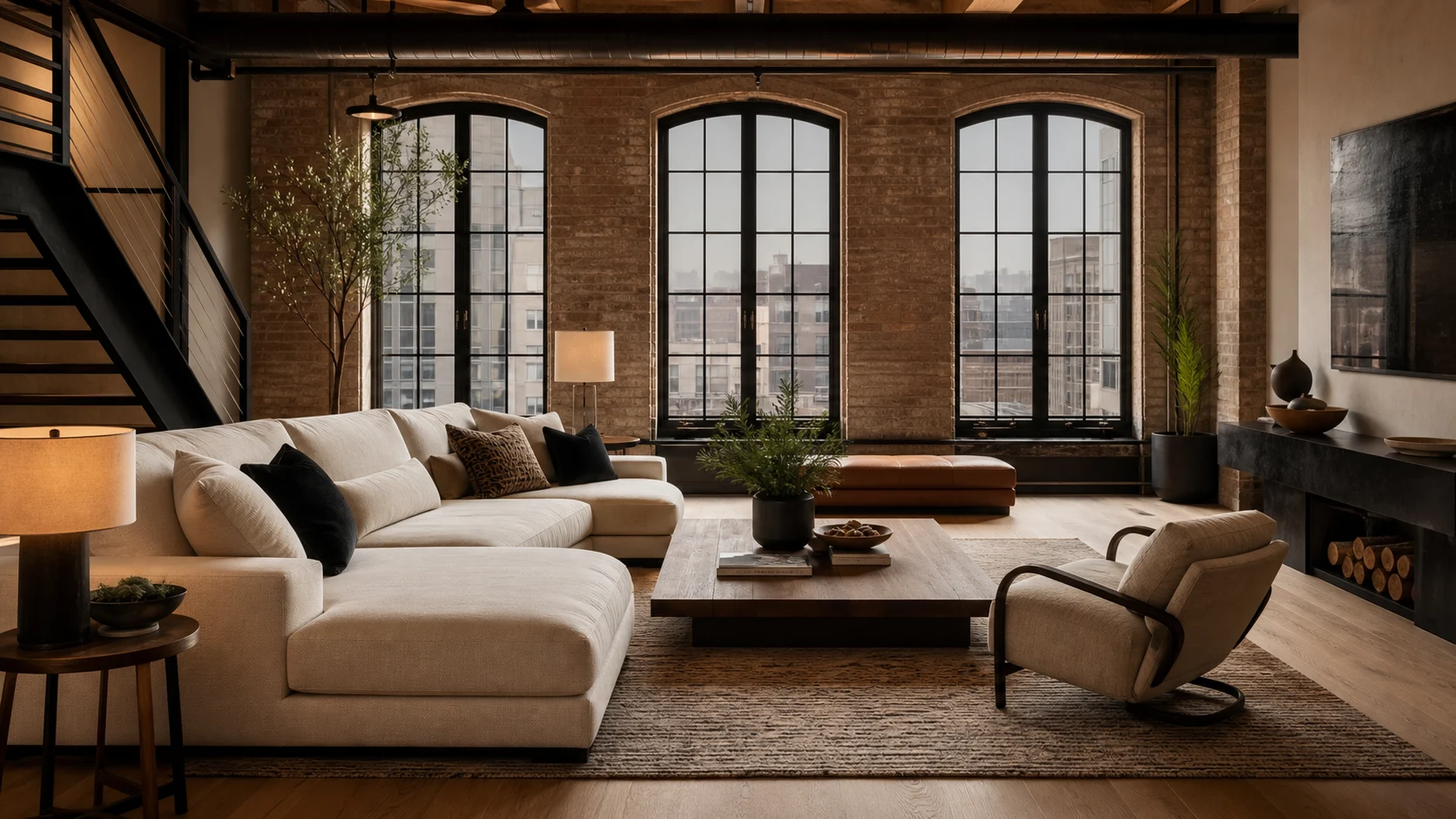
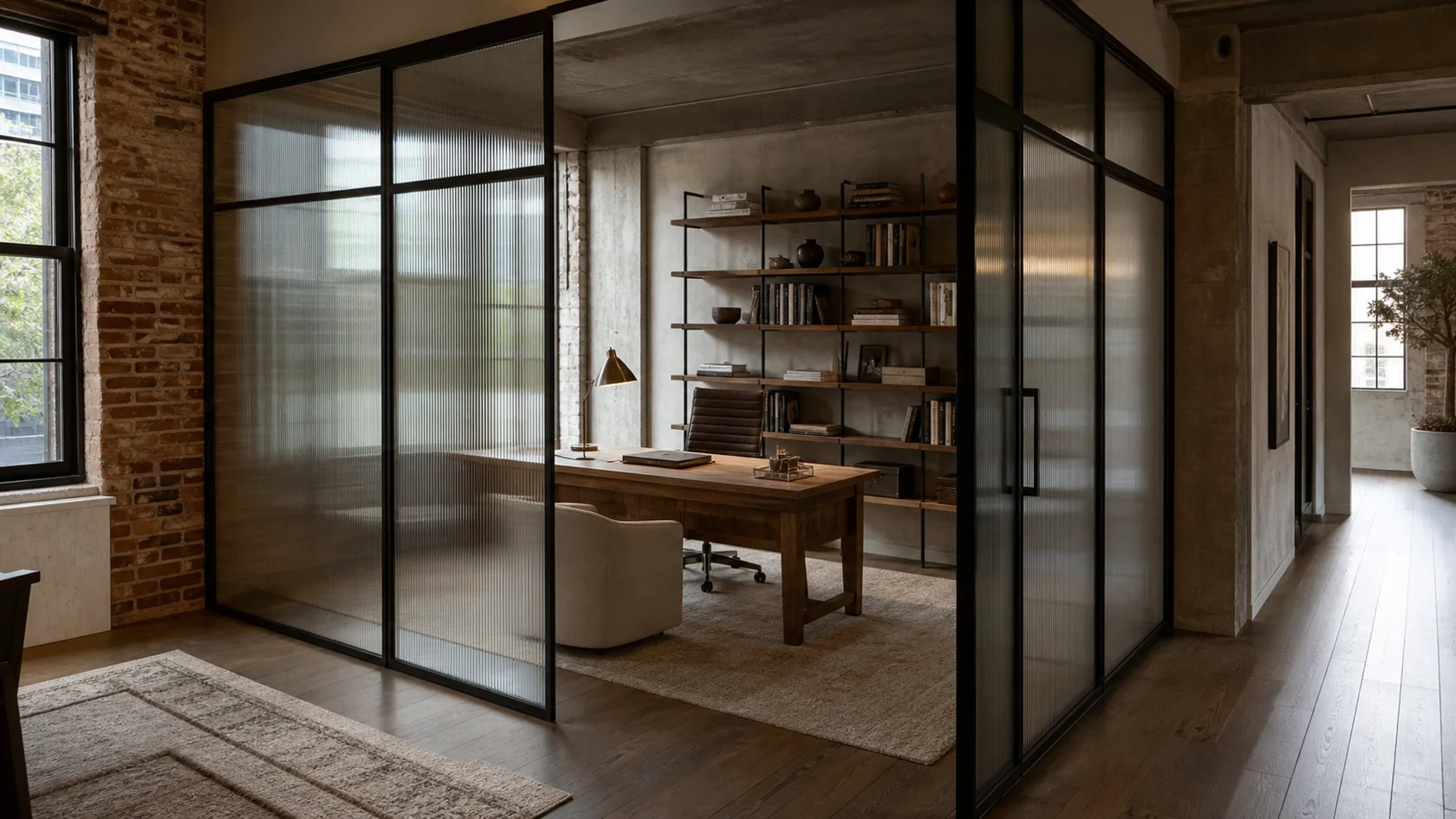
Glass Loft
A raw architectural backdrop is balanced by upholstery cut with the precision of tailored clothing. Check desk depth, side daylight and cable storage before treating the composition as finished.
Five genuinely different industrial chic approaches to the home office, each built around a new plan, architectural condition or time of day.
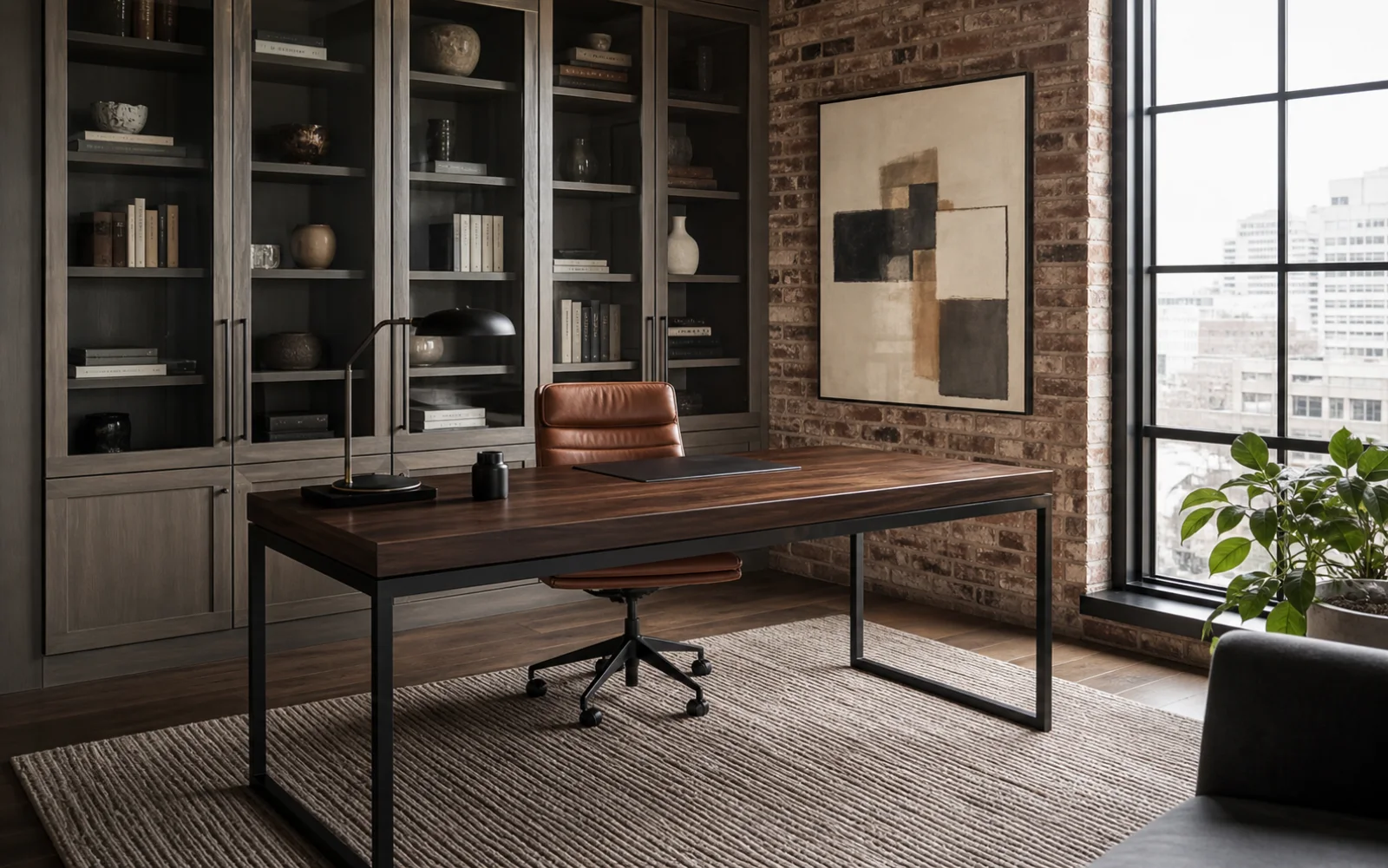
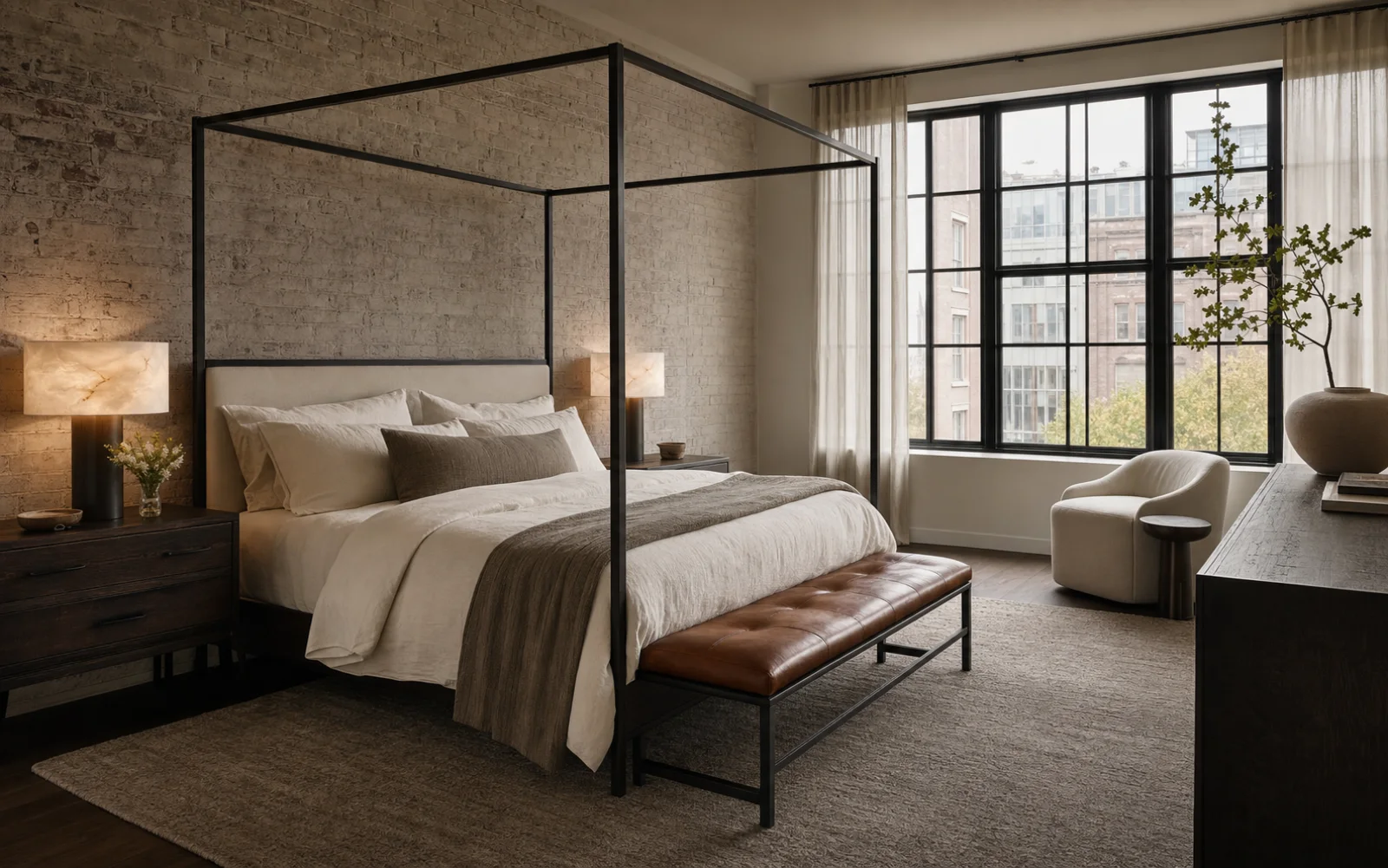
Industrial Chic pairs one legible loft layer with tailored furniture, refined stone and warm metal so raw architecture feels deliberate and residential. In the home office, that idea must still support focused work, ergonomic support and storage that controls visual noise.
A dark oak desk, acoustic textile and fluted-glass storage can sharpen the workspace without borrowing theatrical factory props. Keep either brick, concrete or steel as the raw lead, then counter it with one polished material and soft upholstery instead of glossing every surface.
Use these examples to choose the version of the style that fits your architecture, light and square footage.
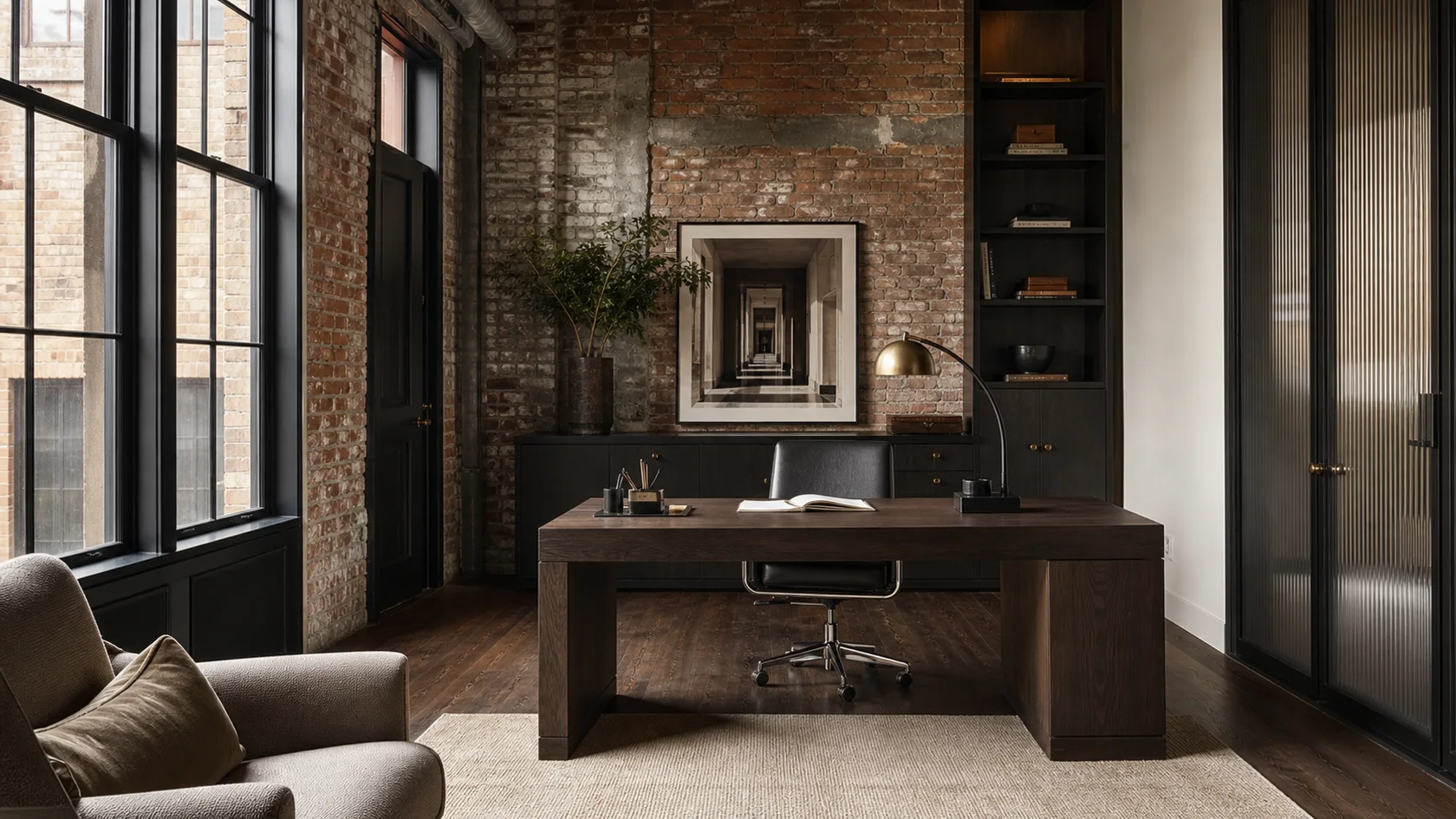
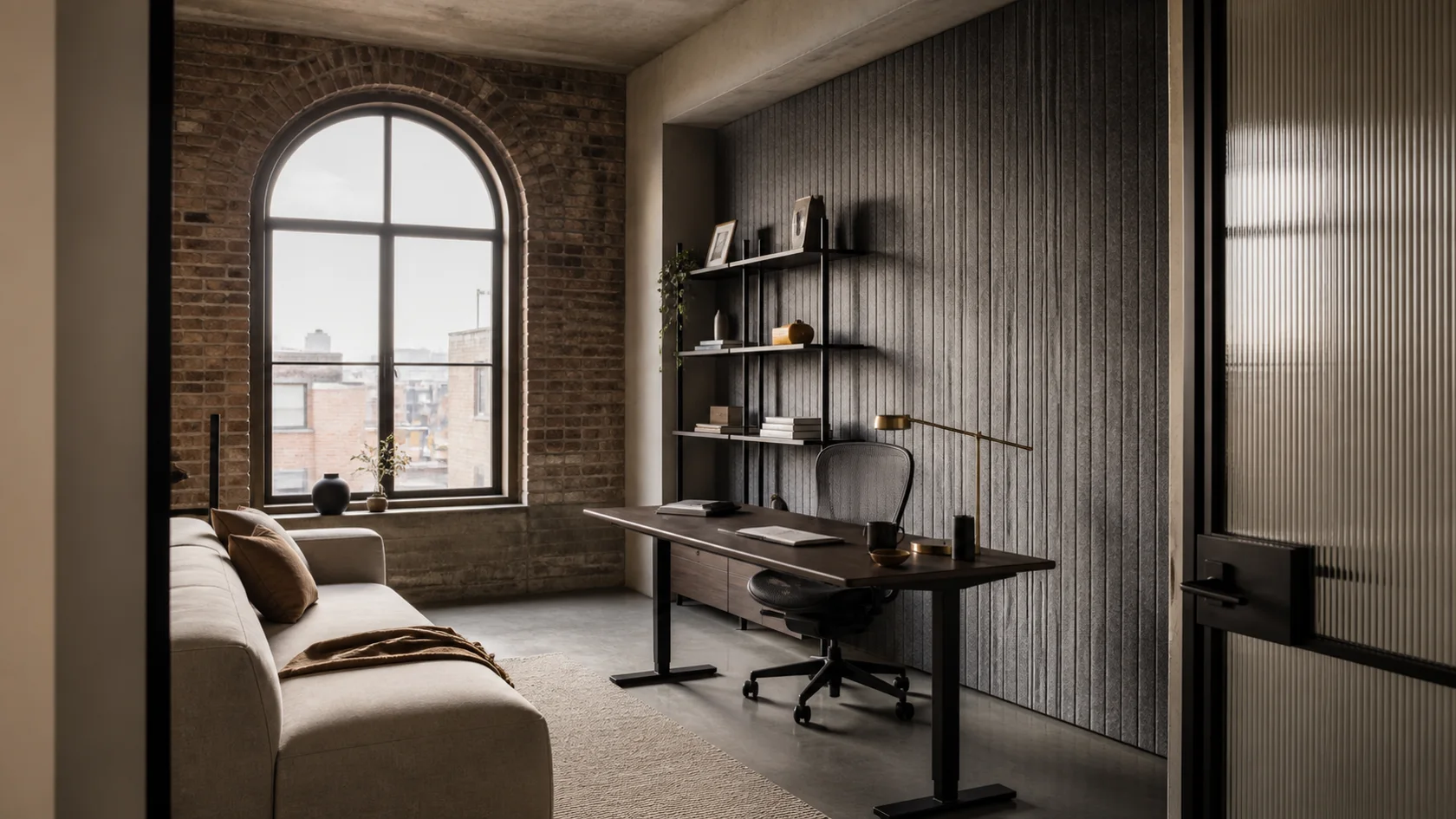
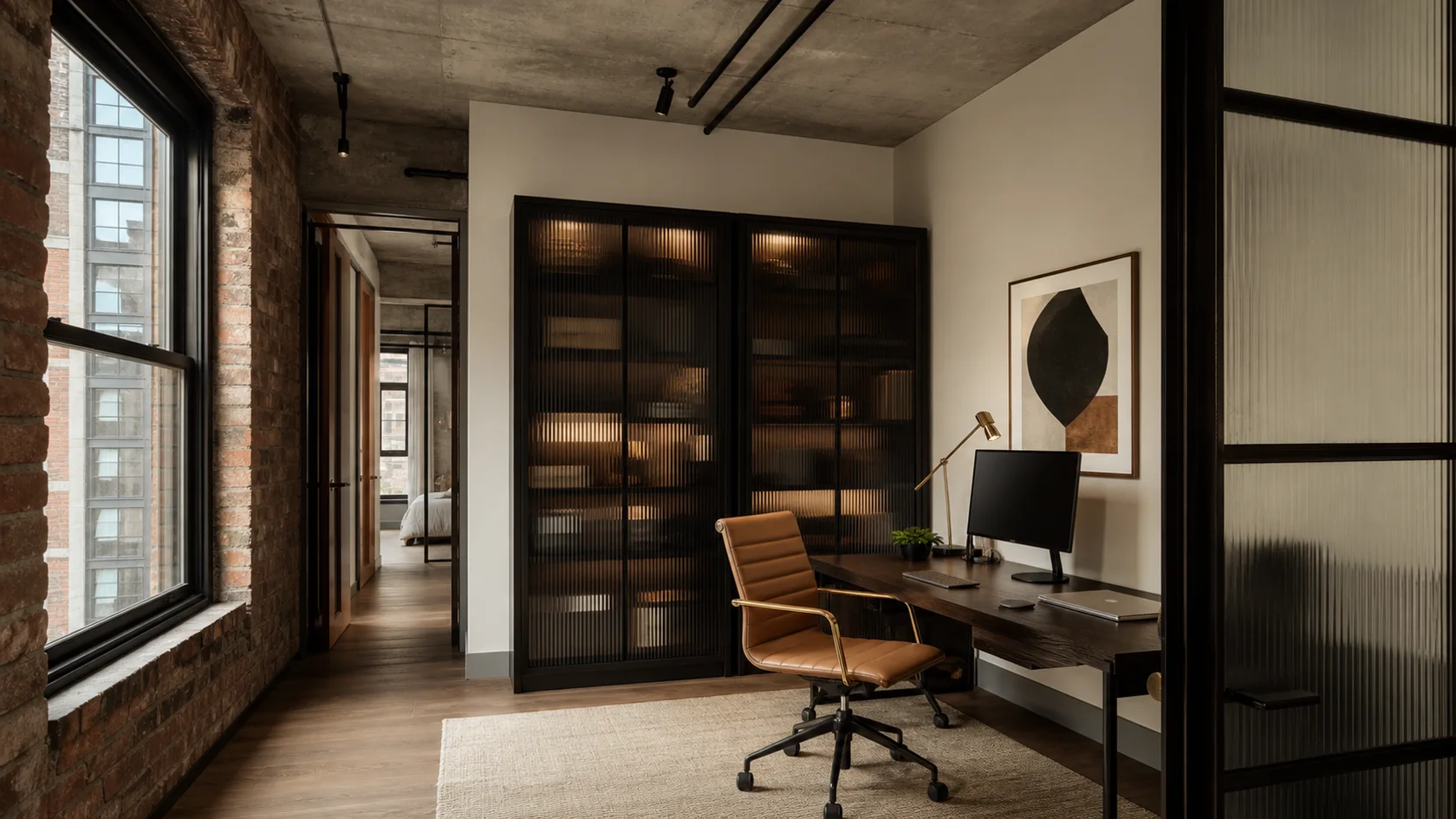
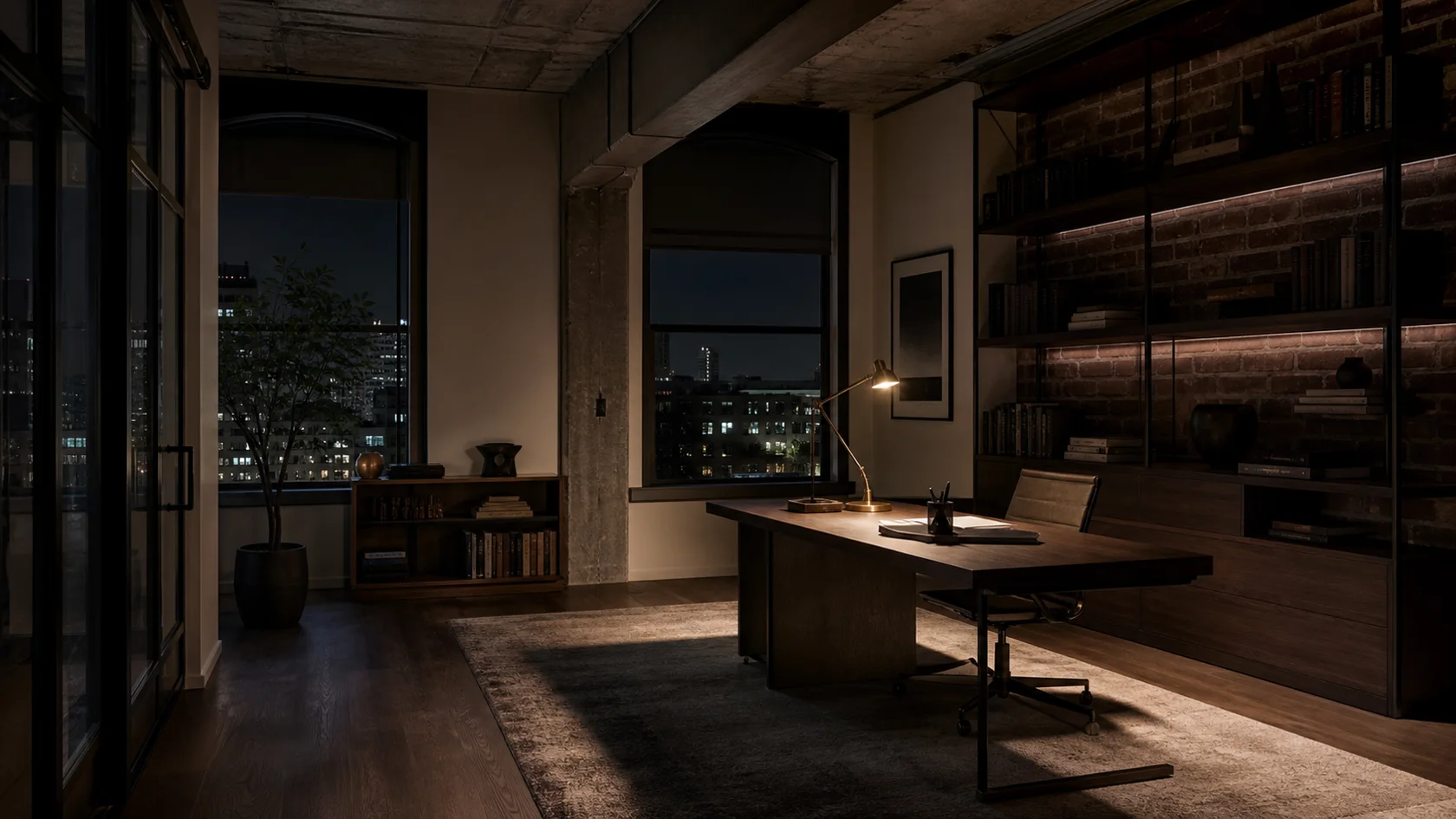
Use the style where it helps the room work: seating, circulation, focal point and material balance.
Side light usually gives useful illumination without placing a bright window directly behind the monitor.
Measure the monitor, keyboard, task lamp and cable route before deciding desk depth and storage.
Use drawers and cabinets for paper, chargers and supplies; reserve open shelves for a small edited group.
If space allows, add one reading chair or standing surface away from the main desk.
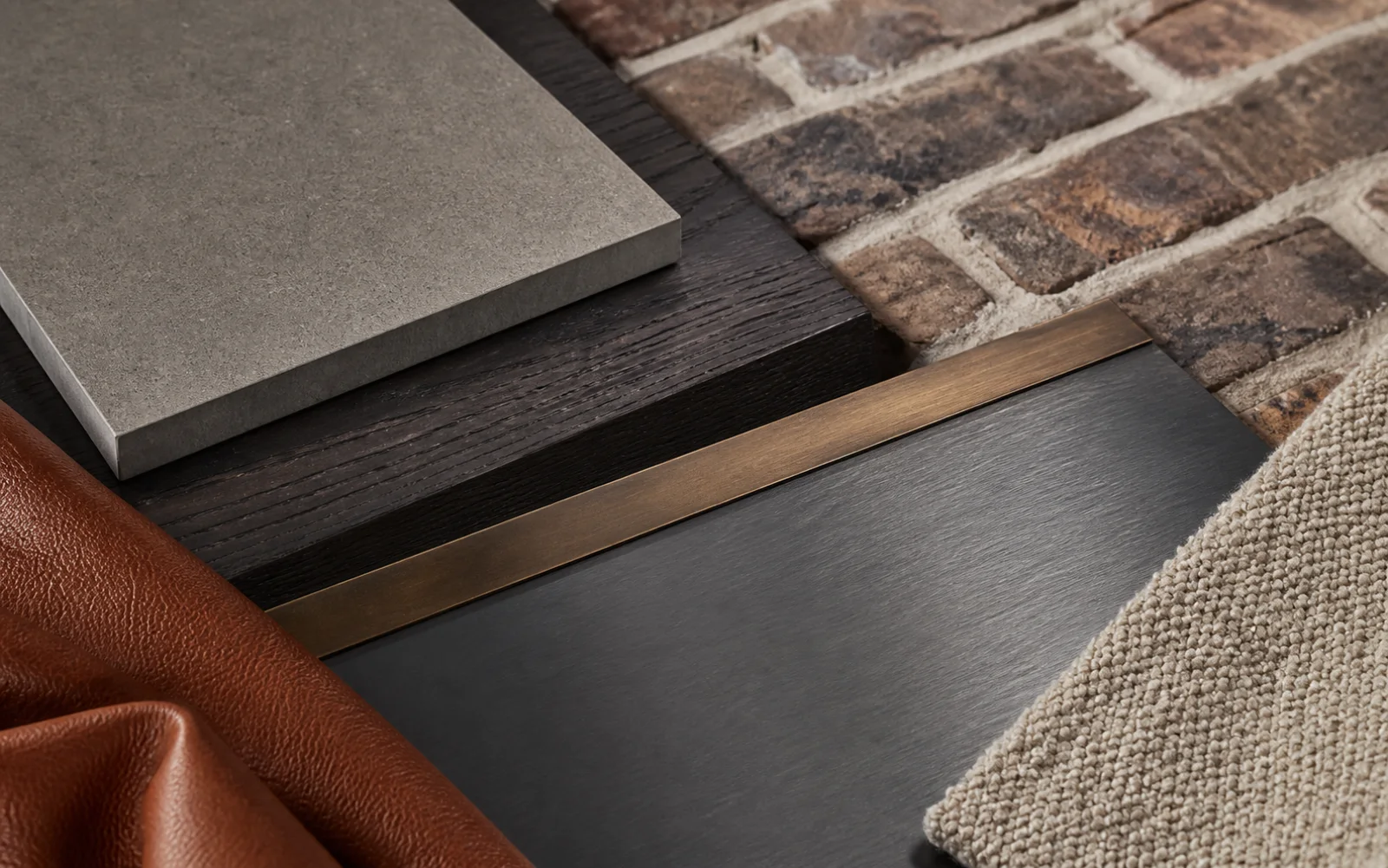
Start with warm plaster and oatmeal, add smoked oak for depth, then use blackened metal as an outline. Cognac and aged brass should appear as small warm notes.
A soft mineral ground that keeps brick and metal from making the room too dark.
Provides depth in cabinetry and tables with more warmth than flat black.
Best on frames, lighting and narrow outlines rather than broad uninterrupted surfaces.
A warm, durable accent for benches, chairs and one statement seat.
Bouclé, wool and linen soften the architectural contrast and improve acoustics.
Charcoal steel, aged brick or smooth concrete should define one architectural field.
Cream, camel and warm taupe upholstery makes the industrial shell feel composed.
Smoked oak or walnut brings depth without competing with the building fabric.
Restrained bronze, honed stone and ribbed glass add refinement at selected touchpoints.
For this room, a few strong choices can carry the style better than adding more decor.
A dark oak desk, acoustic textile and fluted-glass storage can sharpen the workspace without borrowing theatrical factory props. Choose this work surface by real dimensions, comfort and maintenance needs before judging its finish.
Keep either brick, concrete or steel as the raw lead, then counter it with one polished material and soft upholstery instead of glossing every surface.
Keep either brick, concrete or steel as the raw lead, then counter it with one polished material and soft upholstery instead of glossing every surface.
Keep either brick, concrete or steel as the raw lead, then counter it with one polished material and soft upholstery instead of glossing every surface.
Use these checks to keep the industrial chic character clear without compromising how the home office works.
Allow enough depth for equipment and forearm support rather than choosing only by silhouette.
Turn the desk perpendicular to strong daylight or add an adjustable shade.
Combine a limited display zone with closed files and cable management.