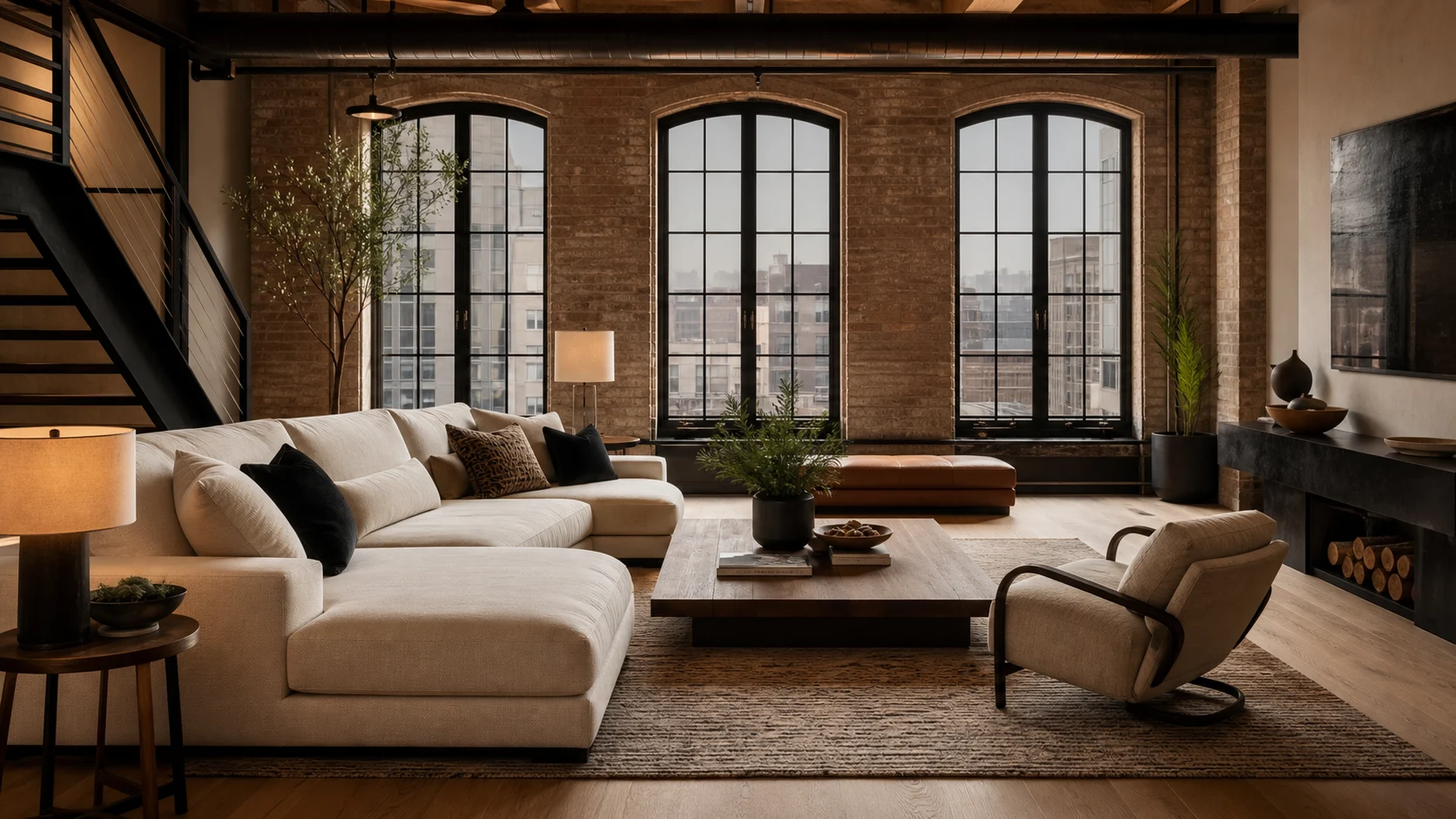
Tailored modular sofa
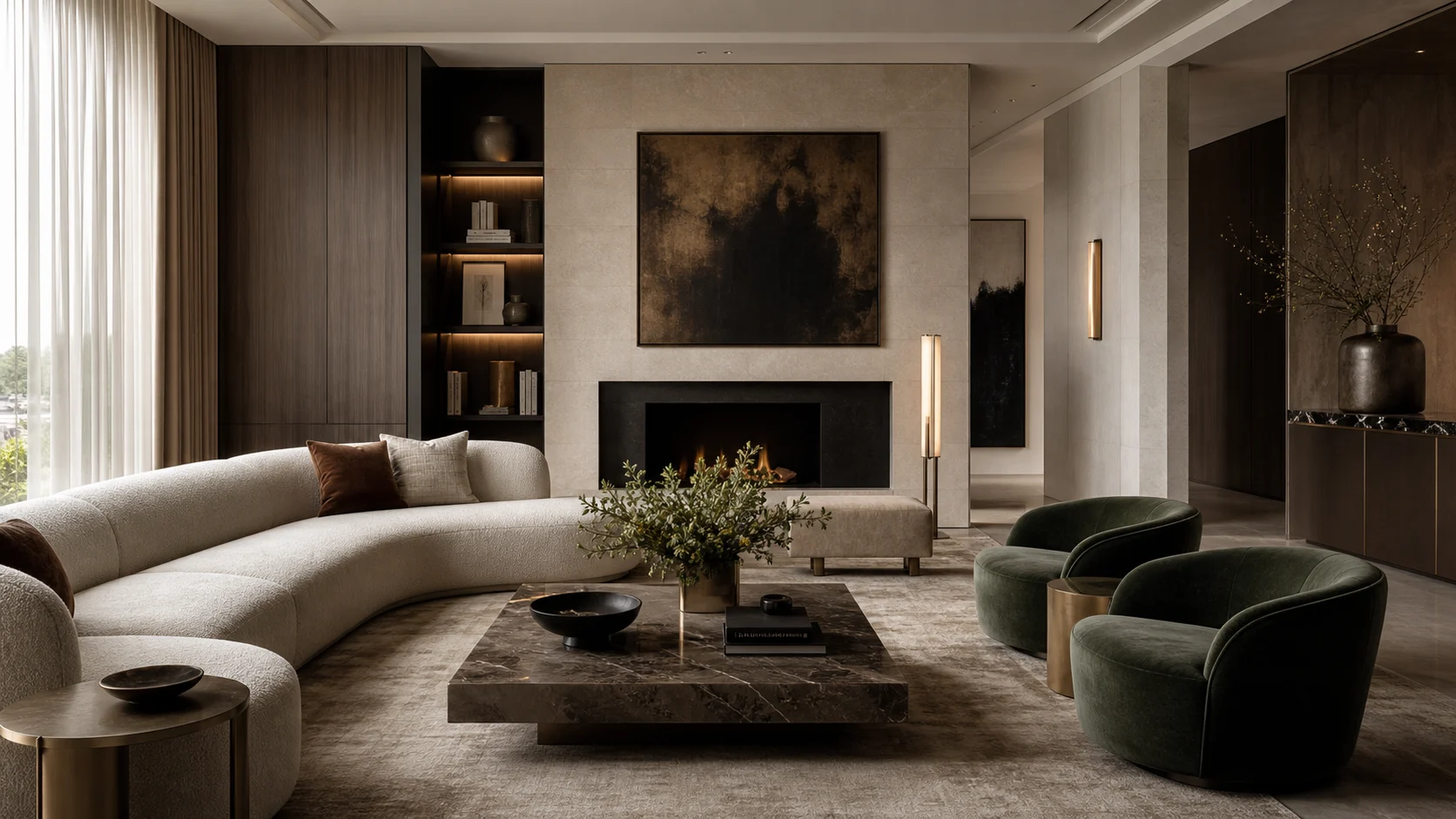
Choose a generous low profile in warm ivory to soften brick and dark framing.
Loft character edited through tailored furniture, tactile fabrics and polished details—warm enough for daily life, structured enough to stay sharp.
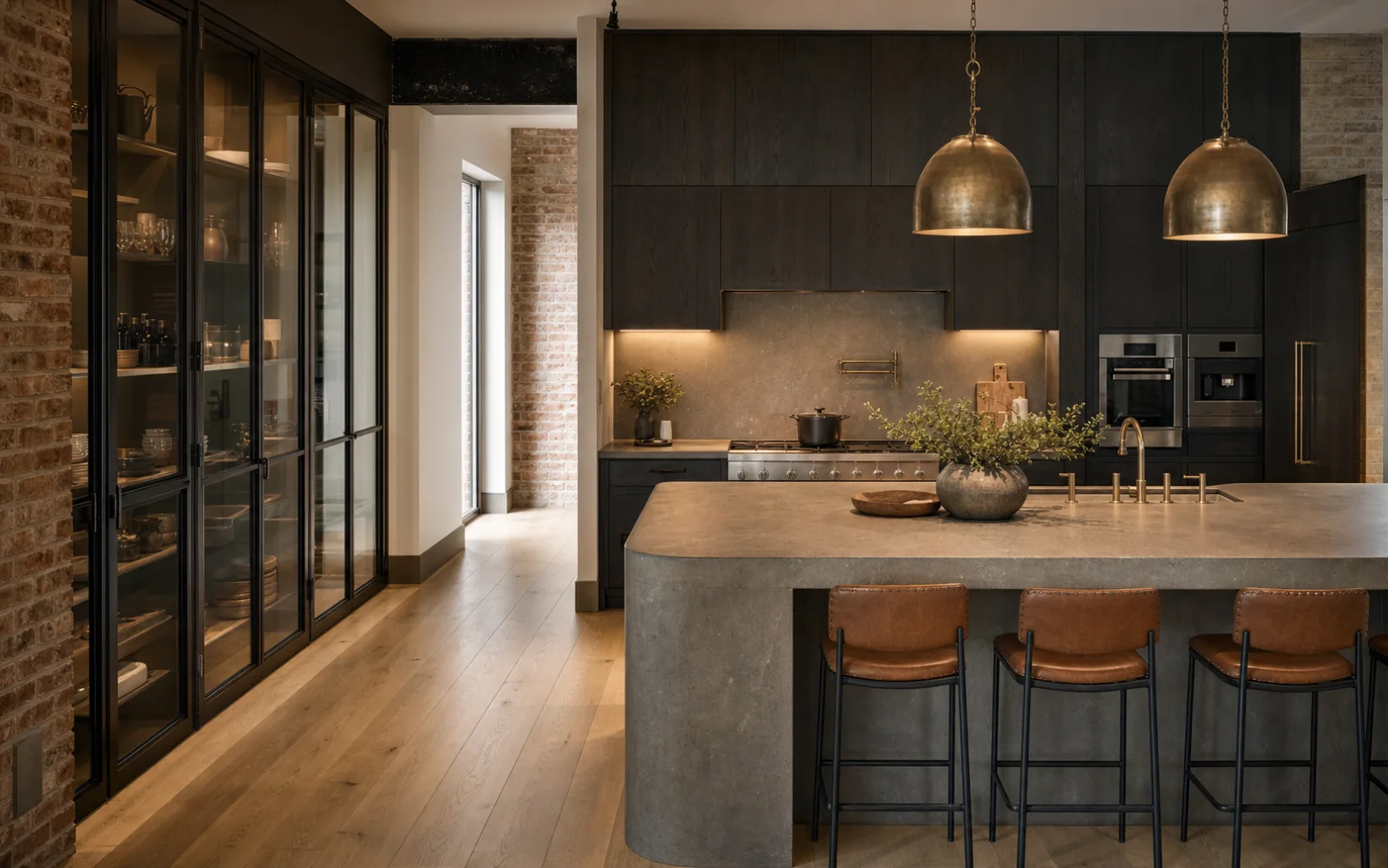
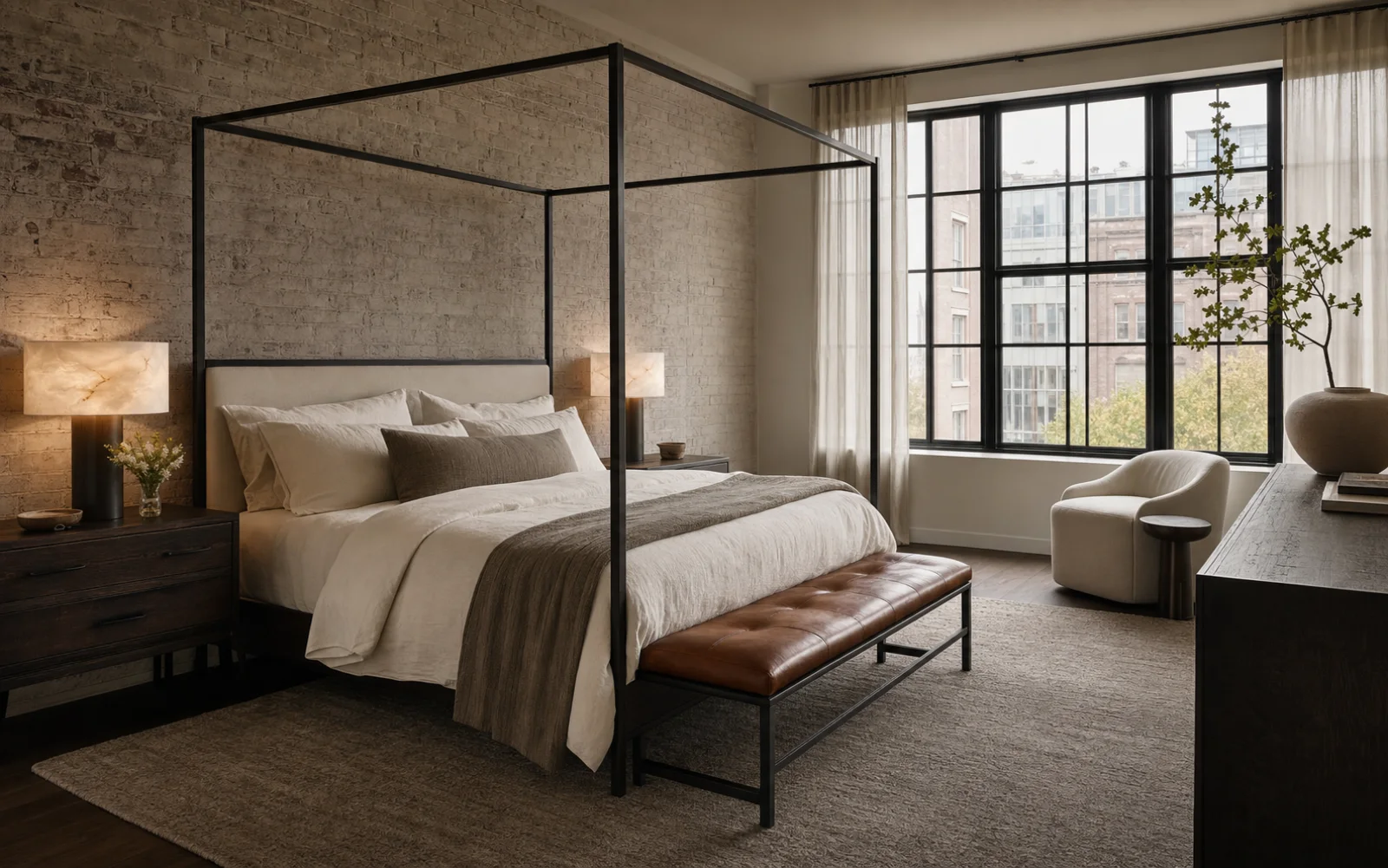
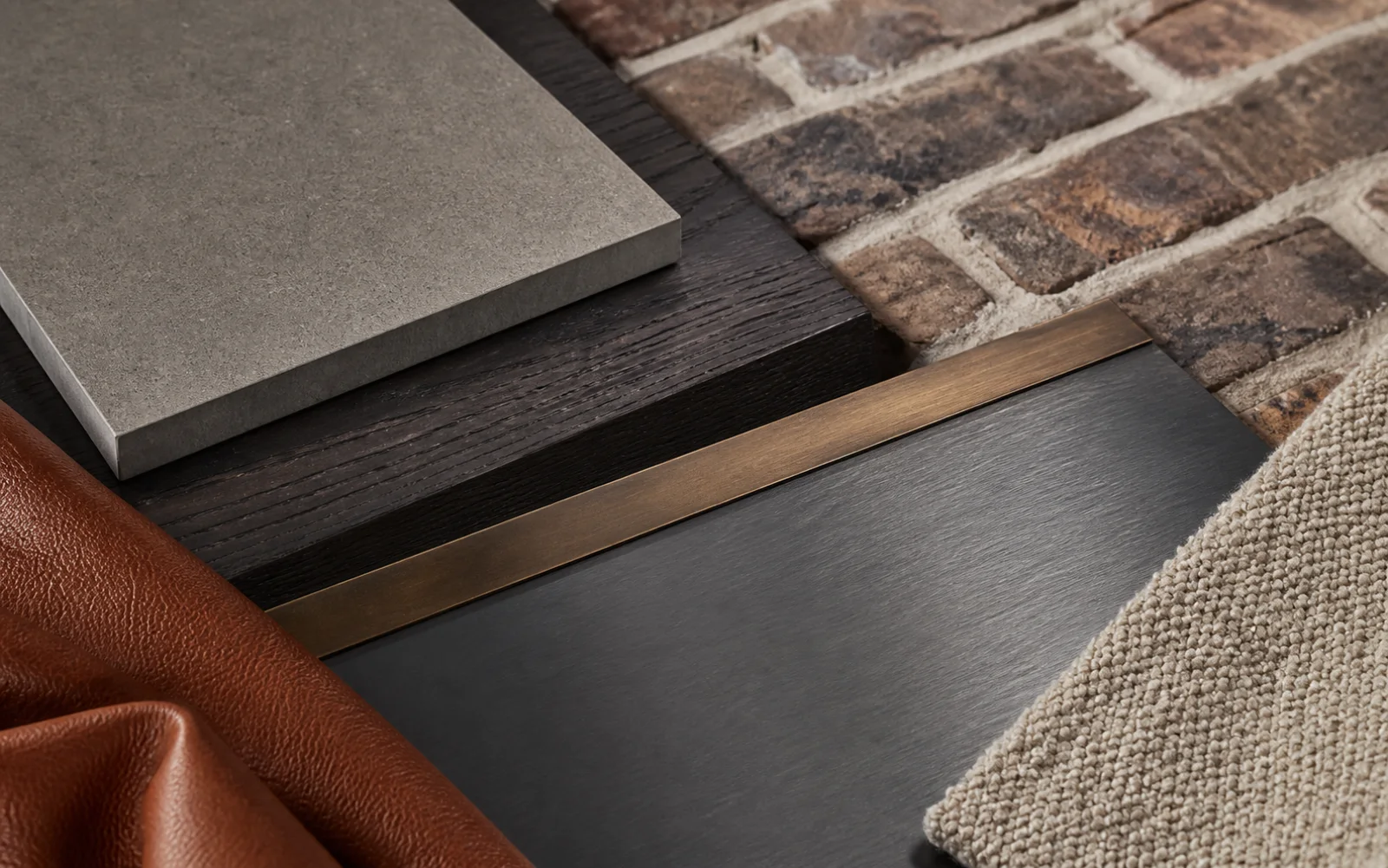
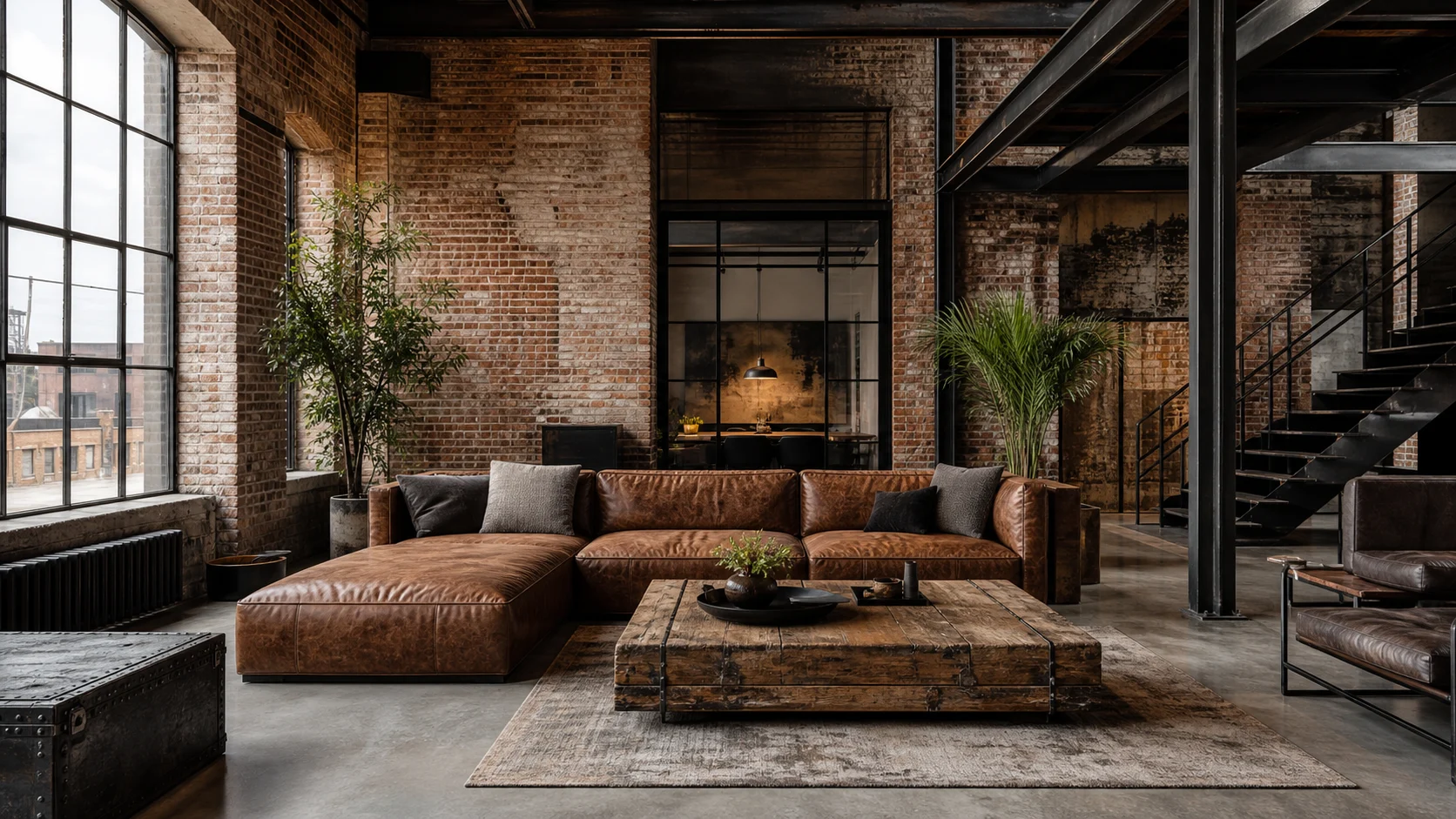
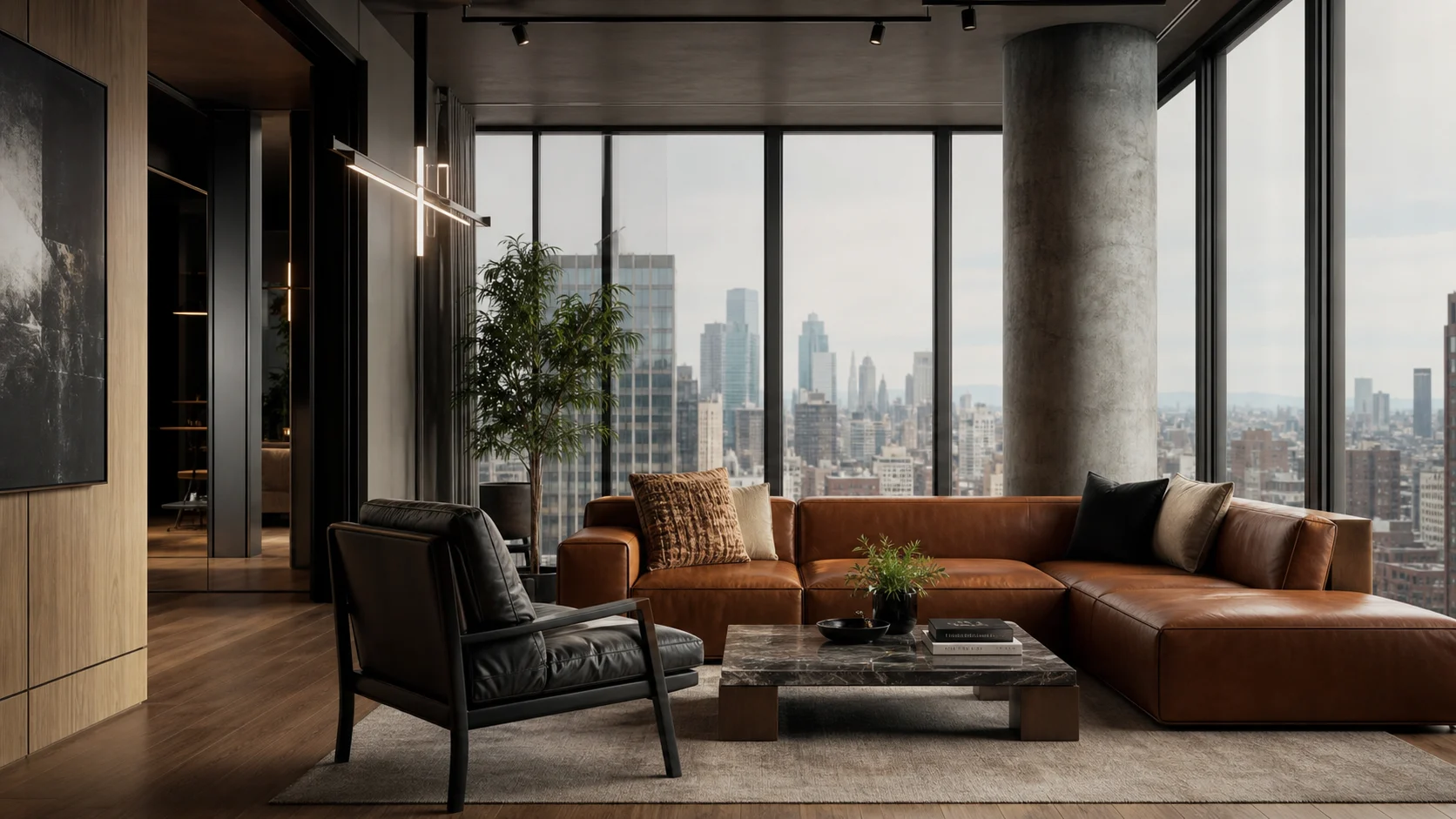
Industrial chic retains a few architectural cues associated with lofts—brick, dark metal, large glazing and open volume—but edits them through a more polished residential lens. Clean-lined upholstery, fine timber cabinetry, honed stone, art and considered lighting carry as much weight as the raw shell.
The style works through contrast rather than accumulation. A brick pier beside warm plaster is more effective than four distressed surfaces; a slim steel frame feels sharper beside bouclé or linen. Unlike strict industrial design, historical building fabric is welcome but not required, provided new materials are credible and restrained.
Choose one architectural feature—brick, concrete or steel—and give adjacent planes a quieter, finished treatment.
Tailored seating, full-size rugs and curtains prevent dark metal and masonry from dominating the room.
Aged brass belongs on lights or hardware, not repeated across every leg, frame and accessory.
Brick and black frames create context while plaster, oak and stone keep the architecture composed.
Deep sofas, upholstered dining chairs and layered bedding replace the austerity of workshop furniture.
Bouclé, leather and honed stone sit beside smoked timber and matte metal without artificial distressing.
A few refined focal pieces lift the room beyond a literal warehouse reference.
Set one generous pale sofa against the darker shell and repeat black only in slim structural lines.
Limewash brick, add sheer curtains and use crisp bedding so the room feels calm rather than raw.
Balance a dark table with upholstered chairs and one sculptural pendant instead of multiple factory fixtures.
Choose a precise desk and concealed storage; let leather and a ribbed rug provide the tactile layer.
Combine dark oak with honed stone, then keep brick to a single edge or opening.
Fluted glass and a leather bench introduce texture while hiding coats and visual clutter.
Start with warm plaster and oatmeal, add smoked oak for depth, then use blackened metal as an outline. Cognac and aged brass should appear as small warm notes.
A soft mineral ground that keeps brick and metal from making the room too dark.
Provides depth in cabinetry and tables with more warmth than flat black.
Best on frames, lighting and narrow outlines rather than broad uninterrupted surfaces.
A warm, durable accent for benches, chairs and one statement seat.
Bouclé, wool and linen soften the architectural contrast and improve acoustics.
A low-sheen dark grain makes storage and tables feel substantial without appearing factory-rough.
Warm gray stone gives kitchens and consoles a refined mineral plane without polished glare.
Smooth patina and nubby textile create the tactile counterpoint that defines the chic layer.
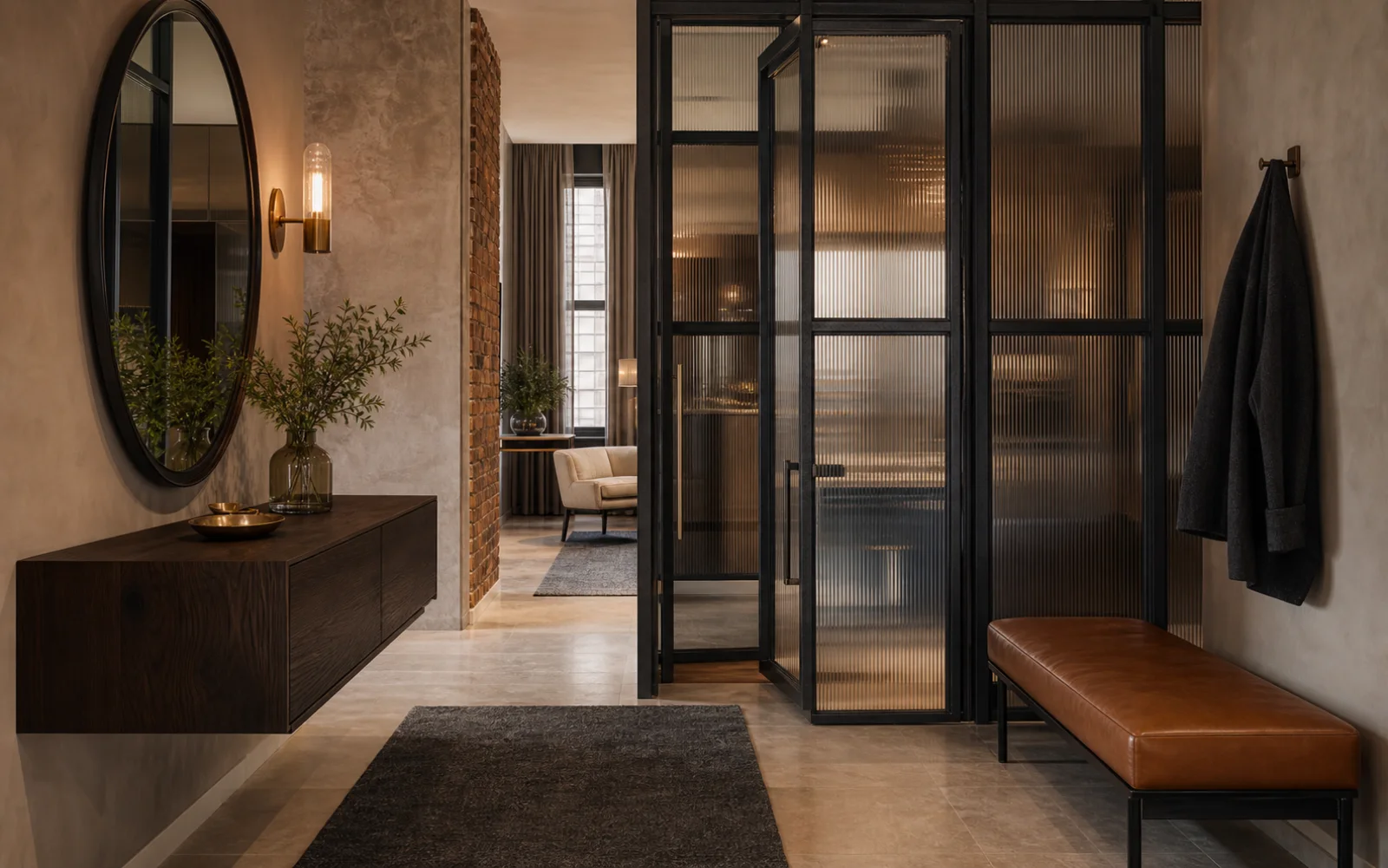
Slim framing adds structure while textured glass conceals storage and shares light.
Build the room as a controlled conversation between rough and polished. If every element belongs to the same side, the result becomes either themed industrial or generic luxury.
Keep a brick wall, concrete plane or steel-framed opening as the architectural starting point.
Add warm plaster, dark oak cabinetry and tailored upholstery with clean seams.
Use a large wool rug, linen curtains, leather and one nubby fabric at body level.
Limit black frames, brass and sculptural objects until each has clear visual space.
When the room feels wrong, change the underlying decision before adding more decor.
Keep patina on one authentic anchor and specify clean finishes elsewhere.
Increase warm plaster, pale upholstery and soft window treatments before adding more lighting effects.
Use blackened metal as the main frame and aged brass only on small focal details.
Favor honed surfaces, quiet art and tactile fabric over crystal, mirror and high-polish gold.
Industrial chic sits between raw loft character and polished contemporary living. Its difference is not simply adding luxury to Industrial, but carefully controlling how much roughness and refinement appear together.
Rougher, more architectural and more dependent on authentic adaptive-reuse fabric.
Choose industrial chic when comfort and finish should lead while loft references remain controlled.
Tailored upholstery, honed stone and art soften brick, steel and exposed volume.
More eclectic and metropolitan, with broader freedom in color, art and contemporary forms.
Choose industrial chic when the palette should stay rooted in metal, brick, leather and loft-like contrast.
A consistent raw-versus-refined material dialogue replaces general city layering.
Smoother, brighter and more overtly luxurious through stone, metal and precise symmetry.
Choose industrial chic for visible patina and darker tactile character rather than pristine polish.
Brick, smoked oak and black frames interrupt the luxury finish.
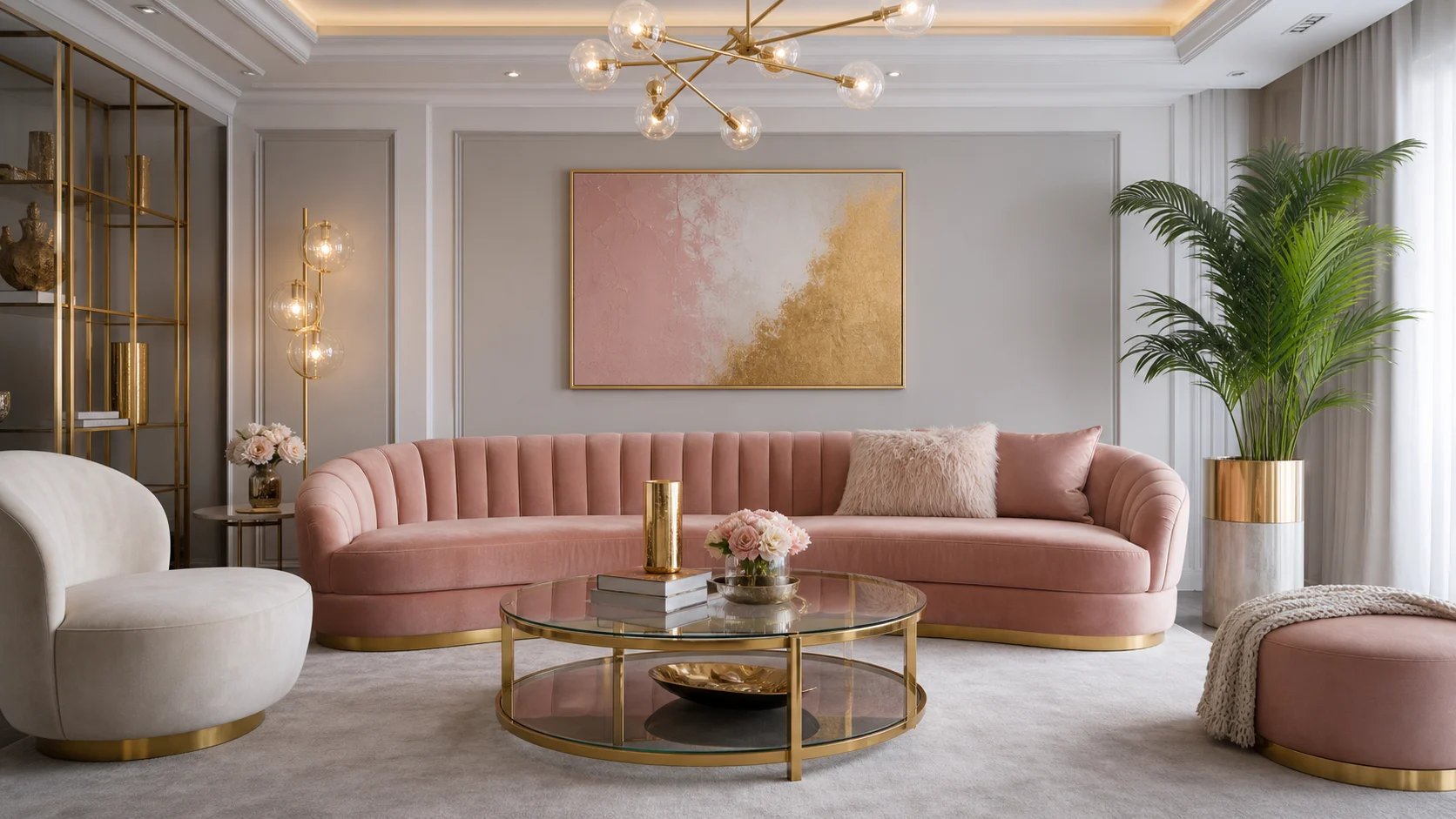
More decorative and reflective, with stronger curves, jewel tones and metallic sparkle.
Choose industrial chic for restraint, matte texture and architectural contrast.
Aged brass and leather replace mirror, crystal and high-shine accents.
Look for pieces with precise silhouettes and tactile finishes. One excellent sofa, pendant or leather bench does more than a collection of warehouse-style accessories.
Choose a generous low profile in warm ivory to soften brick and dark framing.
A fine black outline gives the room structure without adding visual weight.
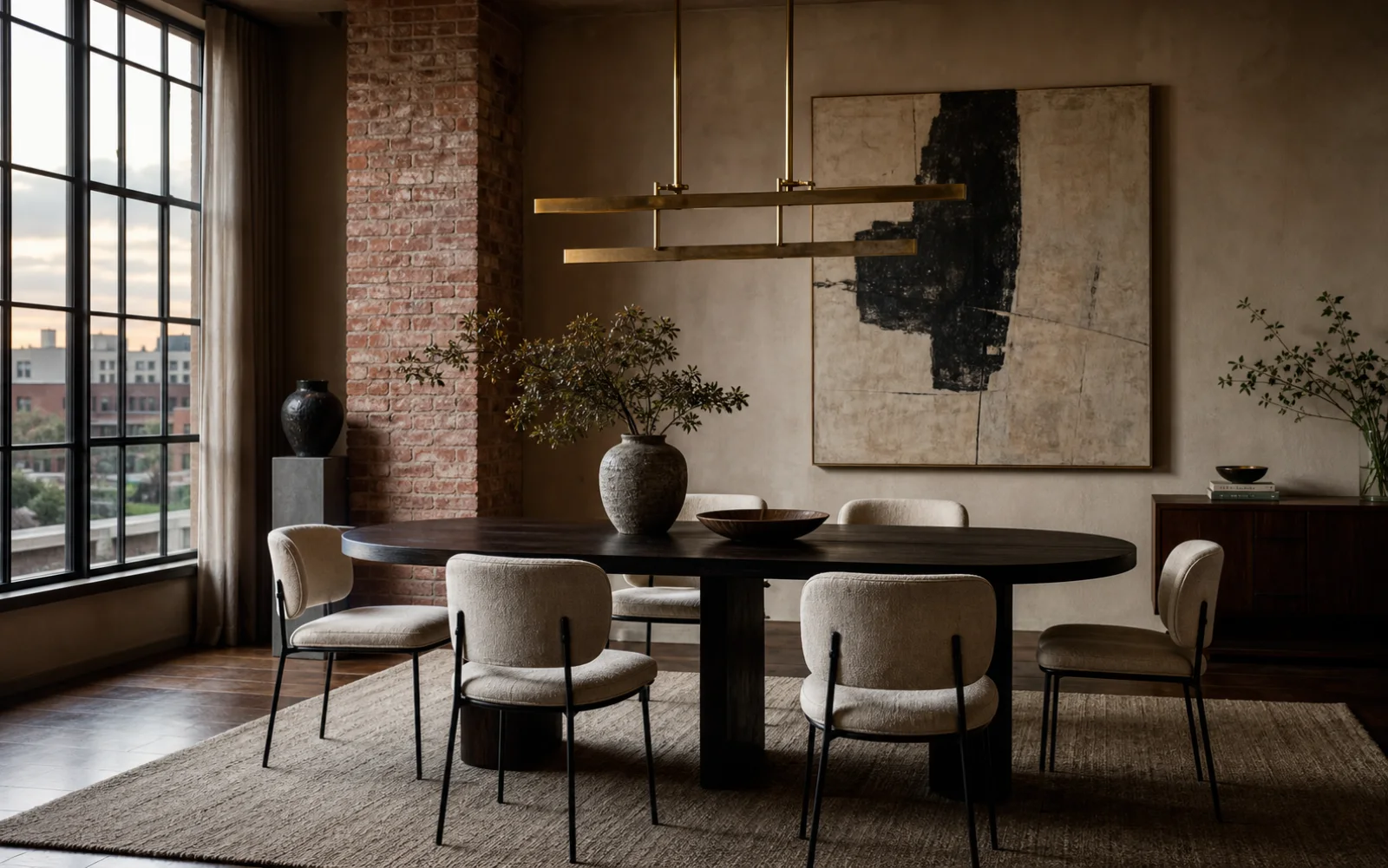
Curved ends improve circulation and temper the harder architectural geometry.
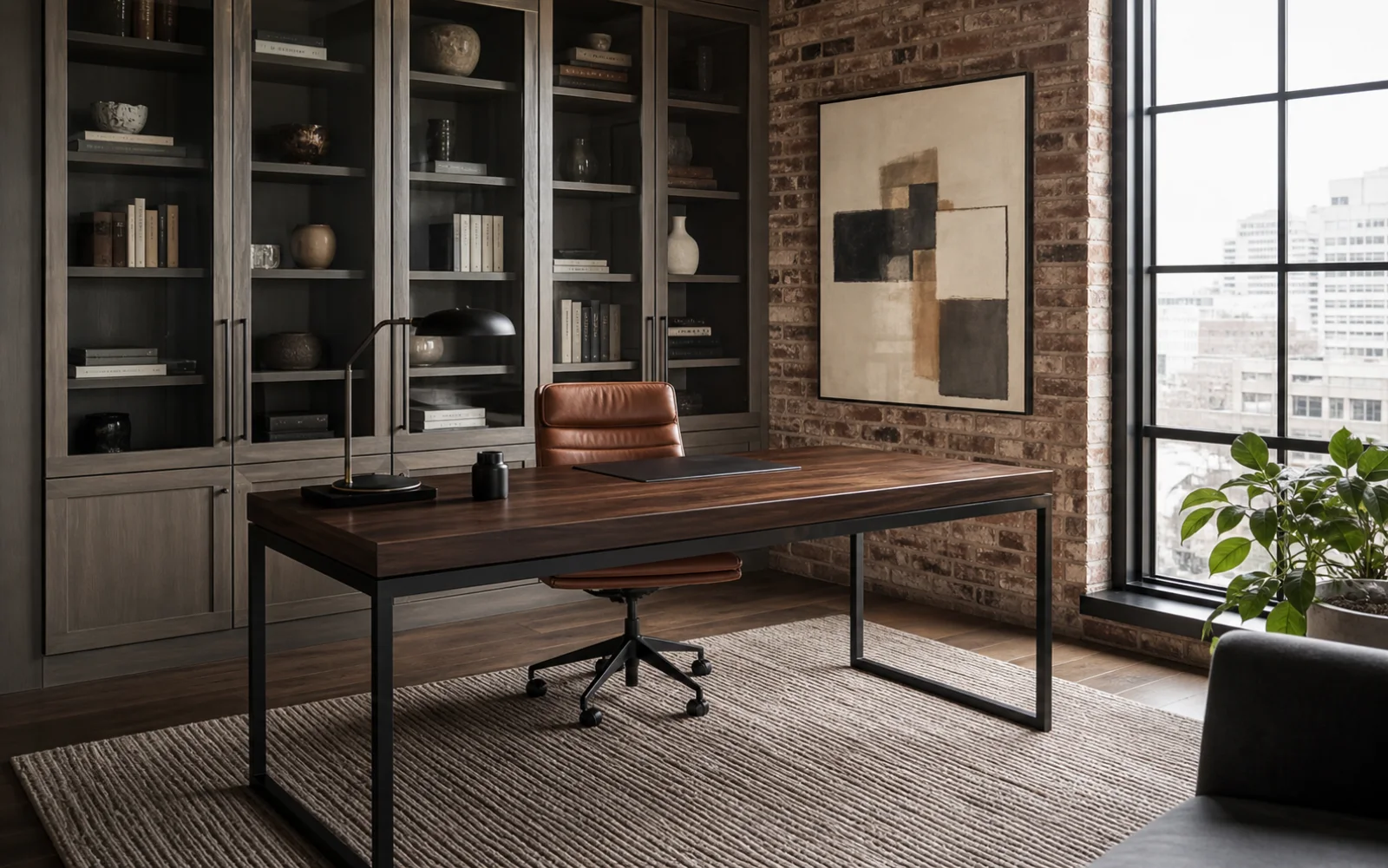
Choose supportive proportions and natural patina rather than decorative vintage styling.
A warm matte surface bridges dark cabinetry, metal frames and lighter flooring.
Use it to conceal practical storage while retaining light and a crisp metal rhythm.