01
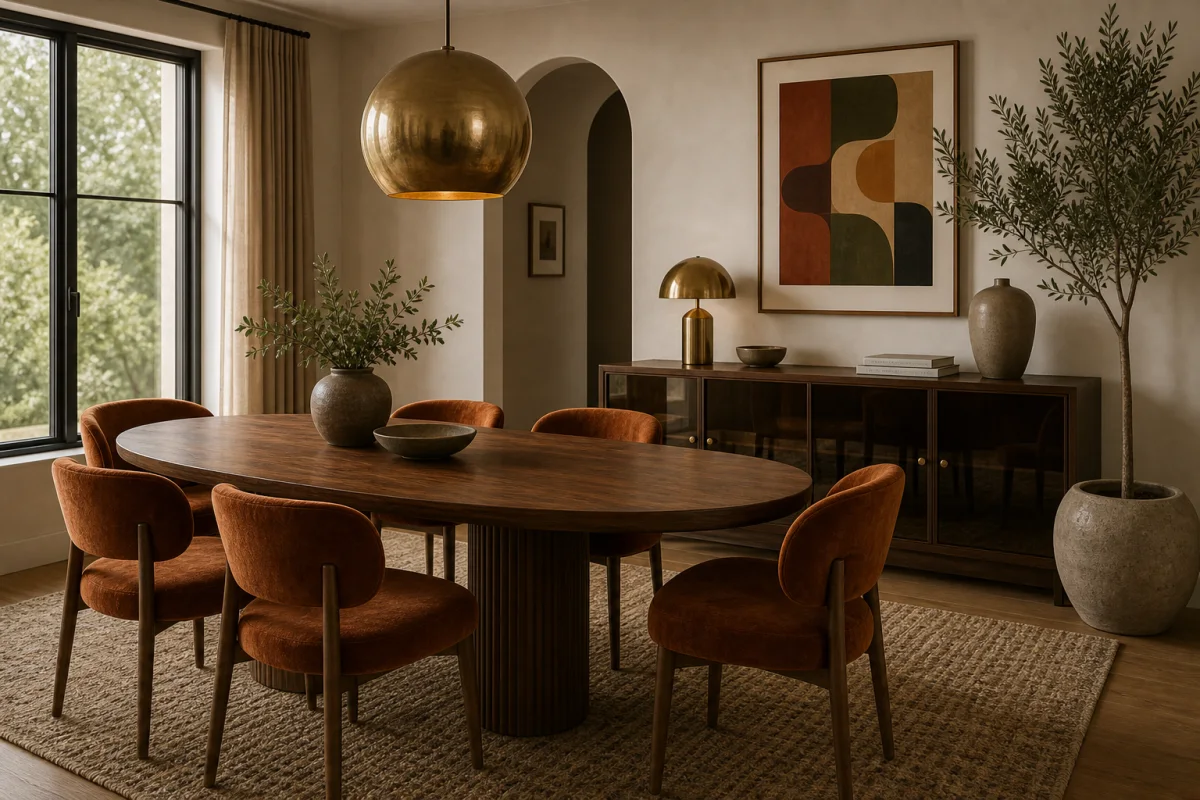
Retro dining room
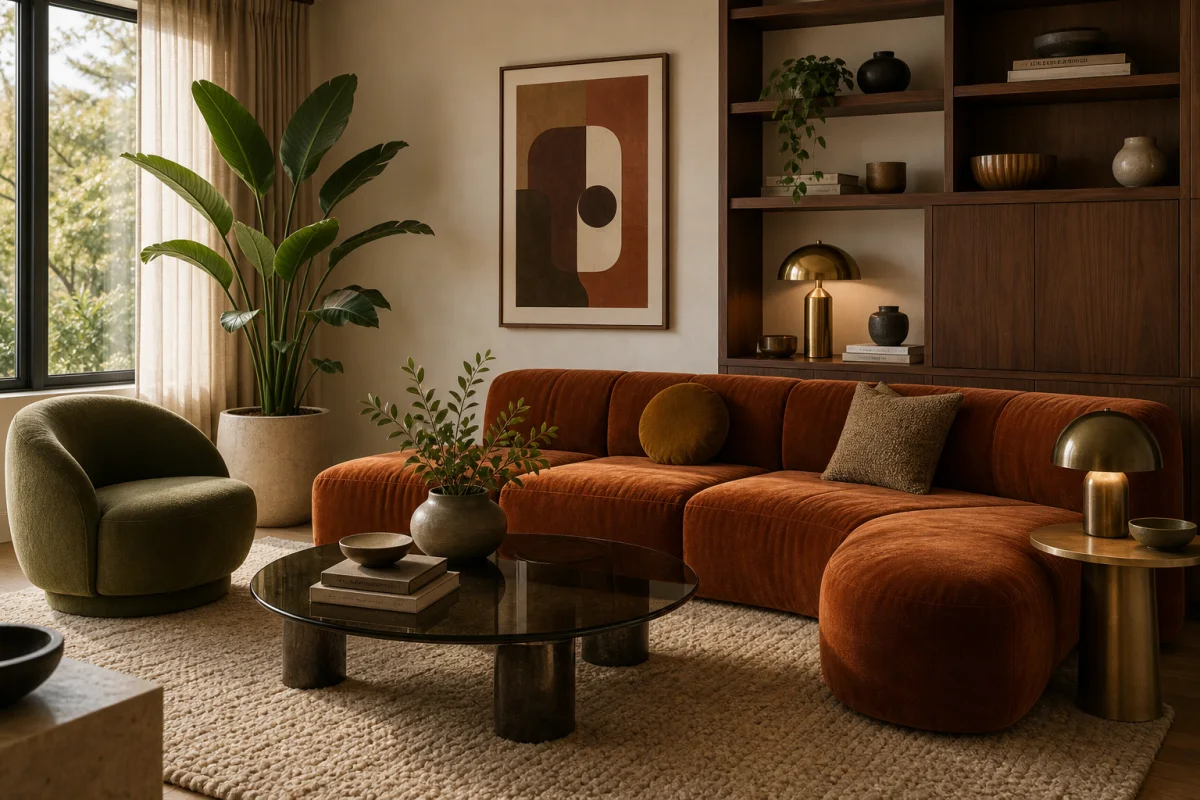
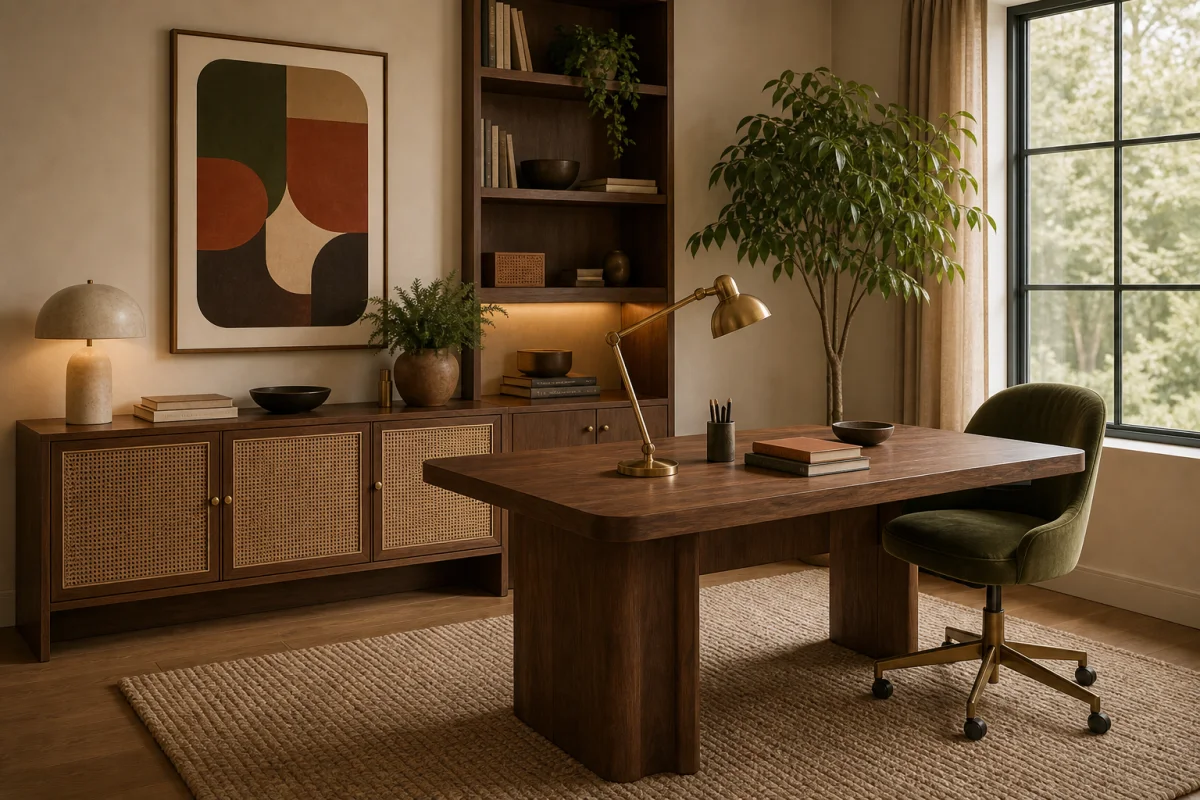
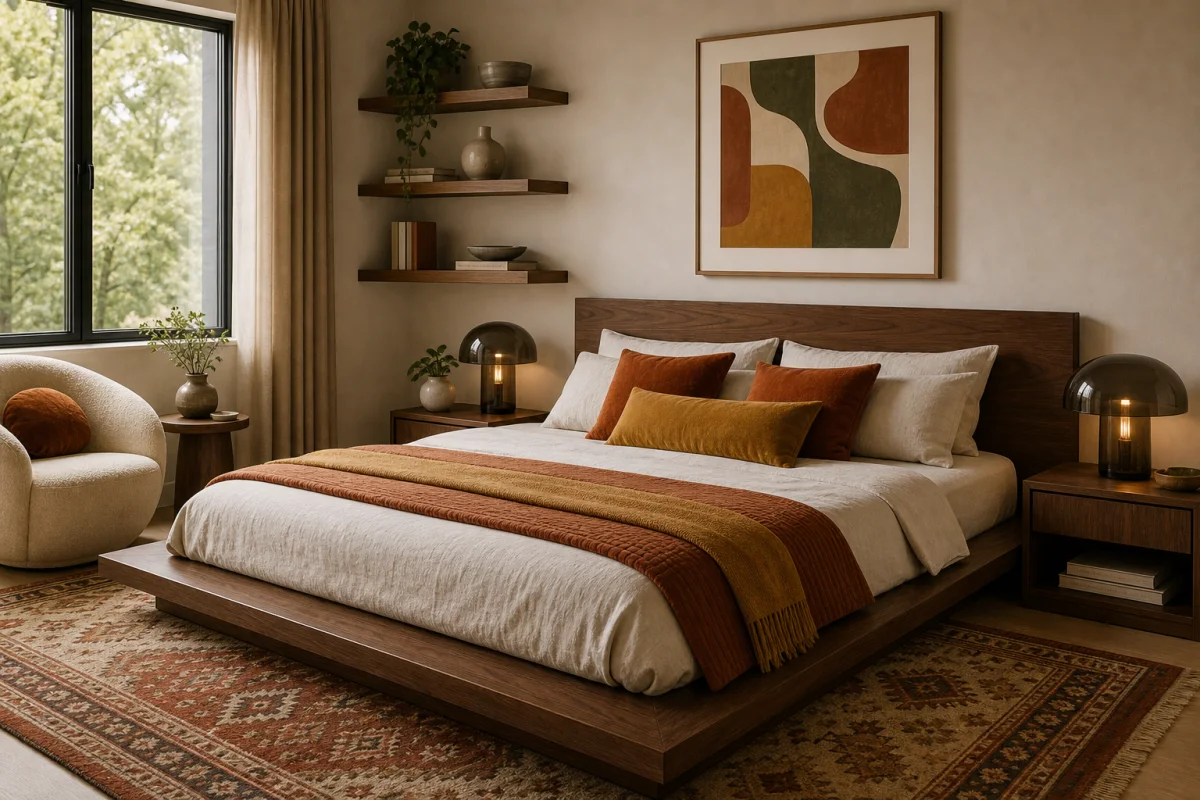
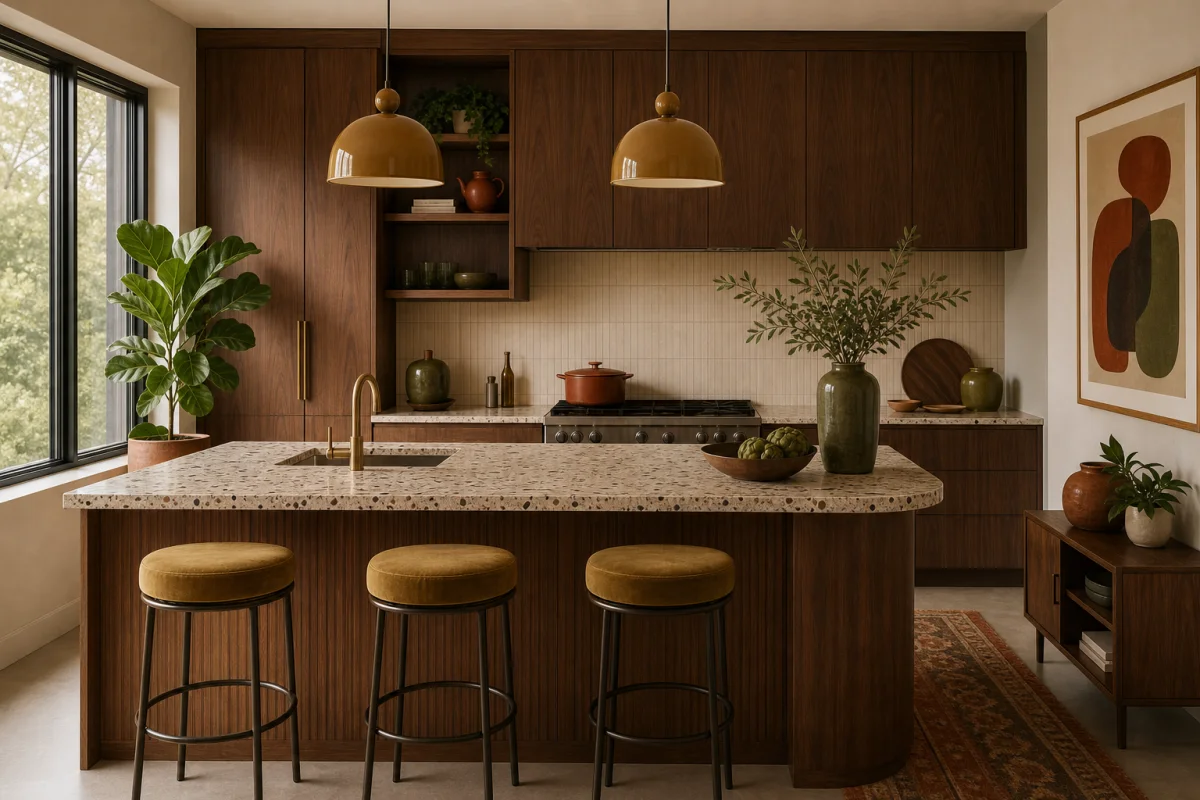
Warm wood, round light and earthy color make the dining room relaxed.
Ideas, layouts, colors and materials for a 70s interior design dining room — plus the pieces that make the look work.
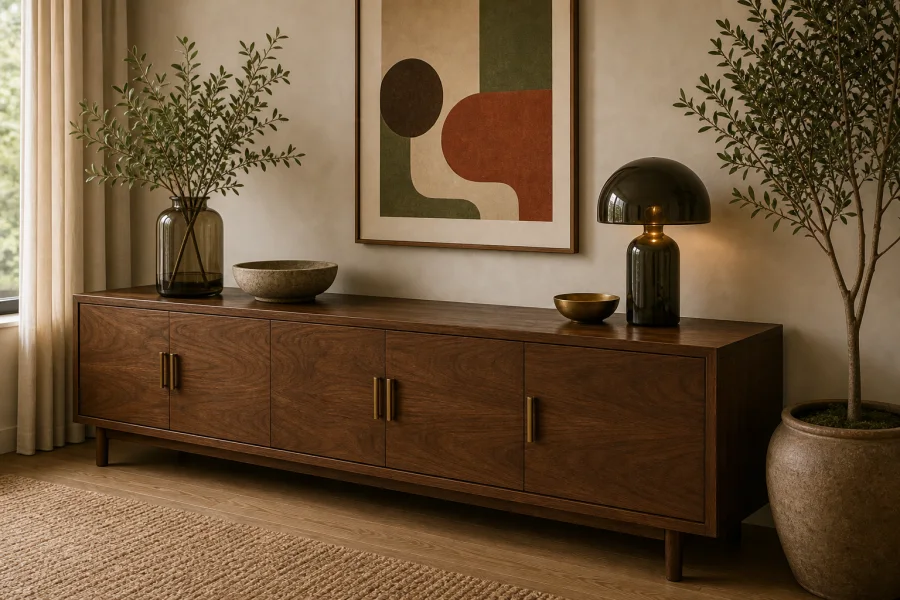
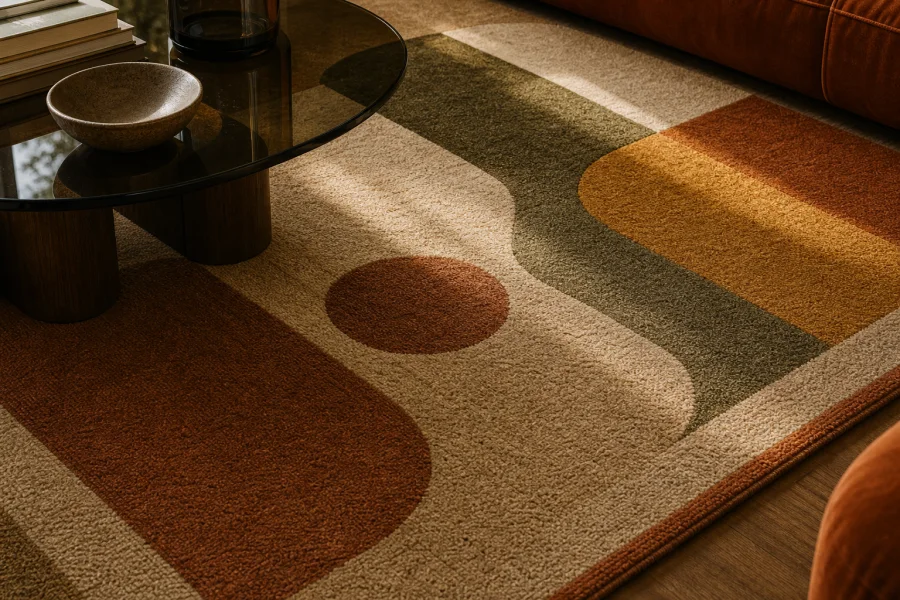
A 70s dining room can feel warm and social without becoming theatrical. Use a walnut table or sideboard, globe lighting, one earthy color and a controlled pattern.
Keep the table usable and the lighting warm. The retro feeling should come from silhouette, wood and finish mix rather than crowded styling.
Use these examples to choose the version of the style that fits your architecture, light and square footage.
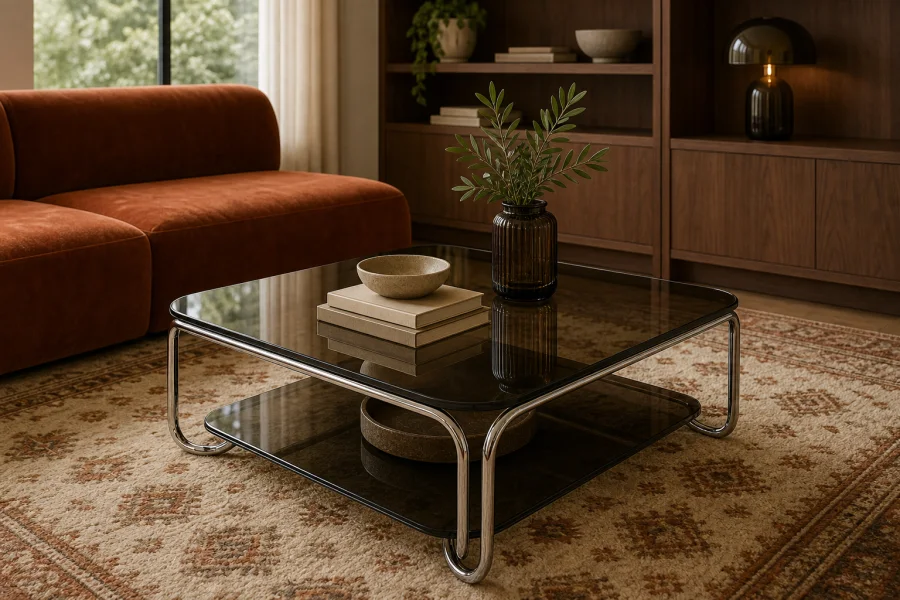
Use the style where it helps the room work: seating, circulation, focal point and material balance.
A globe or brass fixture should sit in clear relationship to the dining table.
One strong wood anchor is enough.
A rug or art can carry pattern while chairs and walls stay calmer.
Low, warm furniture still needs practical clearance.
A 70s palette should feel warm and layered, but not muddy. Start with cream and walnut, choose one dominant retro color, then add one supporting color and a small reflective accent.
Keeps walnut and retro colors from becoming too heavy.
The main grounding tone for storage, tables, frames and wall units.
Use through velvet, cushions, rugs or ceramics for instant warmth.
Works well in lighting, art, upholstery or small accents.
Balances rust and walnut with a calmer natural note.
Cream and tan keep the dining room bright enough.
Walnut or teak anchors the table, chairs or sideboard.
Rust, ochre and olive work in chairs, art or rugs.
Smoked glass, brass or chrome should be a supporting note.
For this room, a few strong choices can carry the style better than adding more decor.
A clear lighting cue over the dining zone.
Storage with retro warmth.
One controlled pattern layer.
Adds reflection and lightness.
Use these checks to keep the 70s interior design character clear without compromising how the dining room works.
Use one patterned element and keep the rest quieter.
Use refined materials rather than props.
Balance wood with cream walls, glass and warm light.