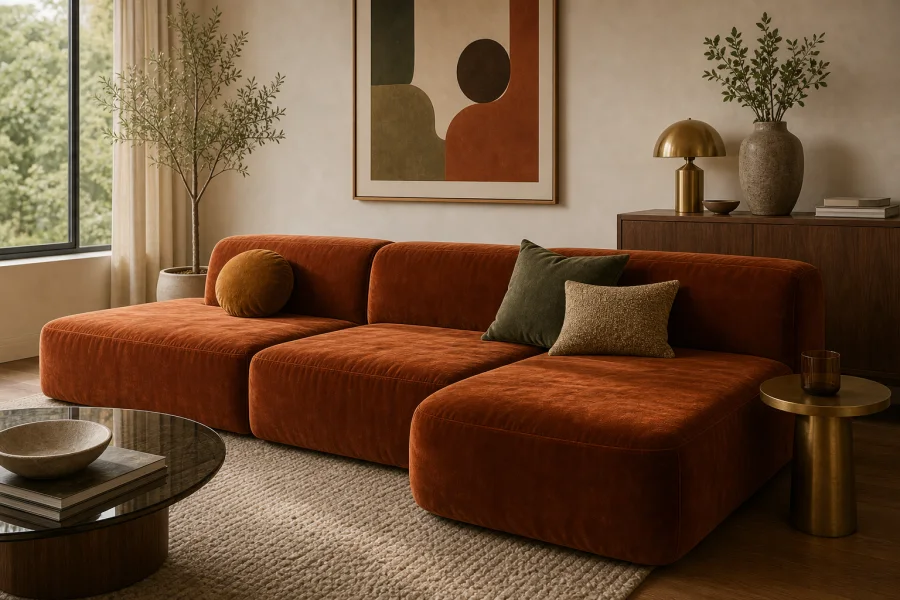
Rust modular sofa
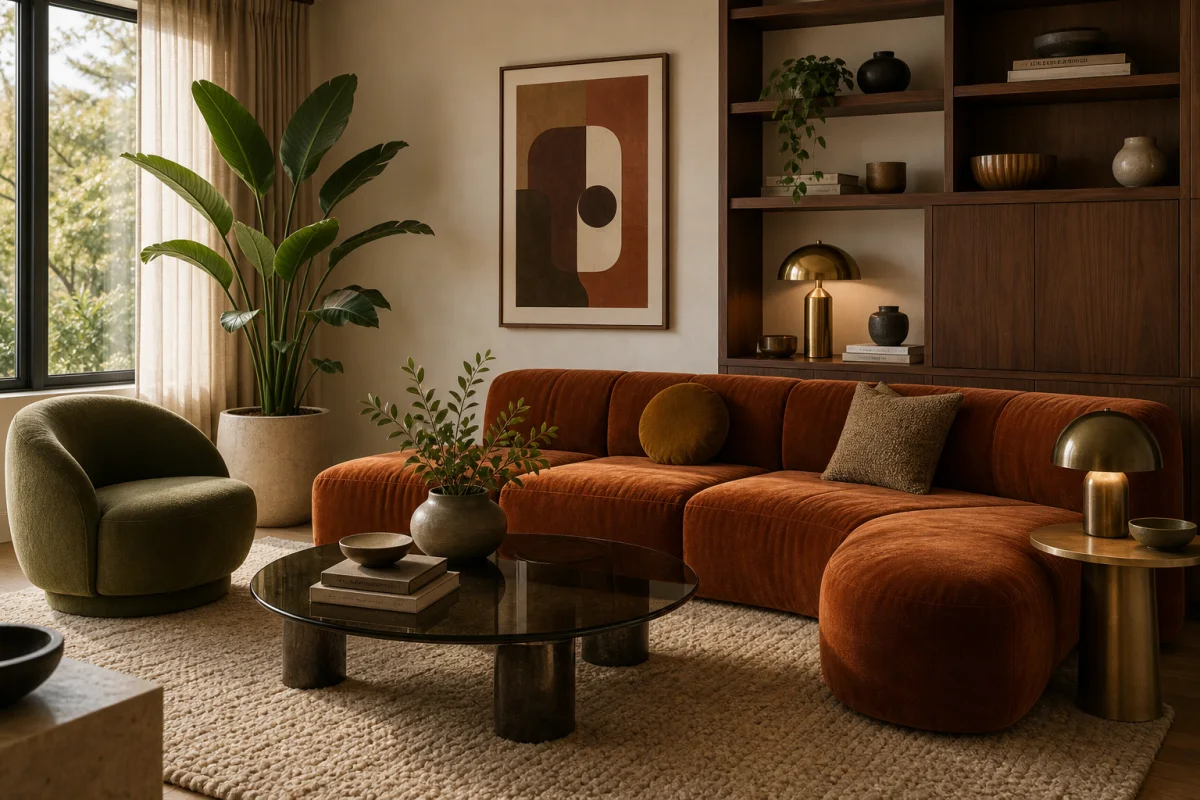
Low velvet seating gives the room warmth and the right relaxed profile.
A refined take on retro interiors: low silhouettes, walnut, velvet, smoked glass, brass and warm earth tones without turning the room into a theme set.
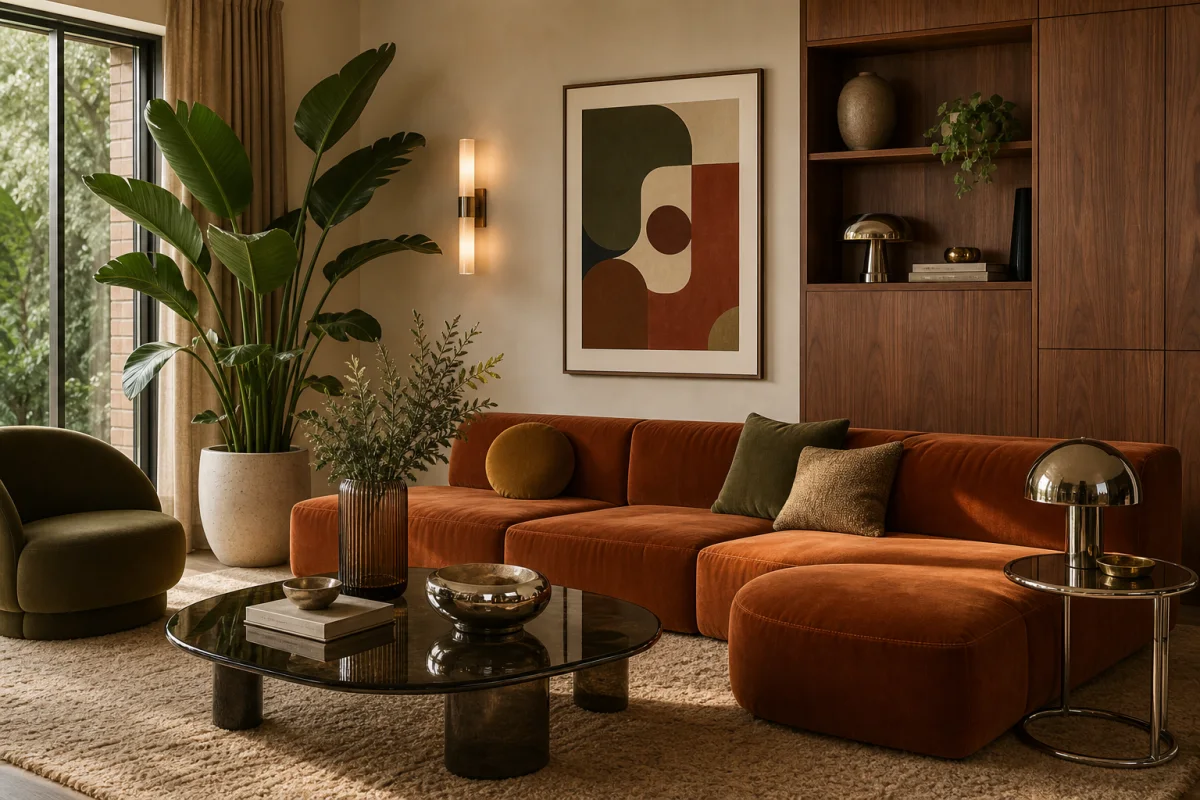
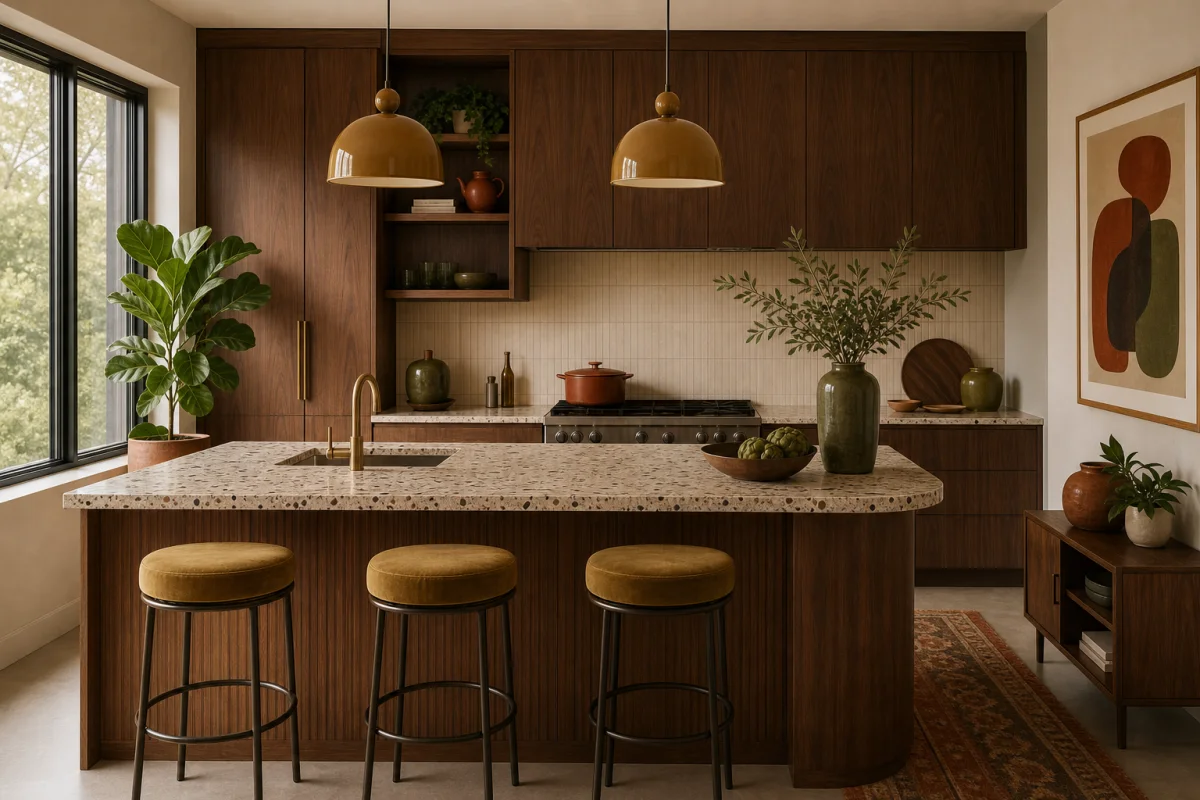
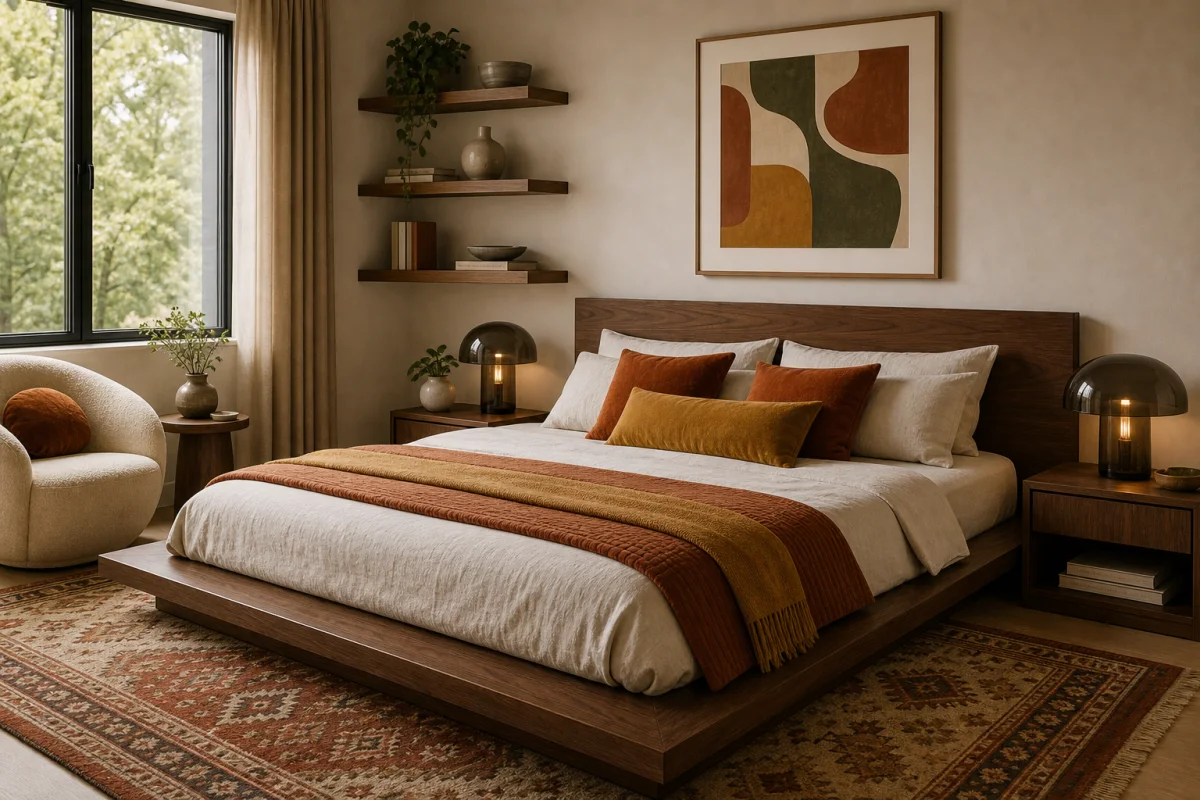
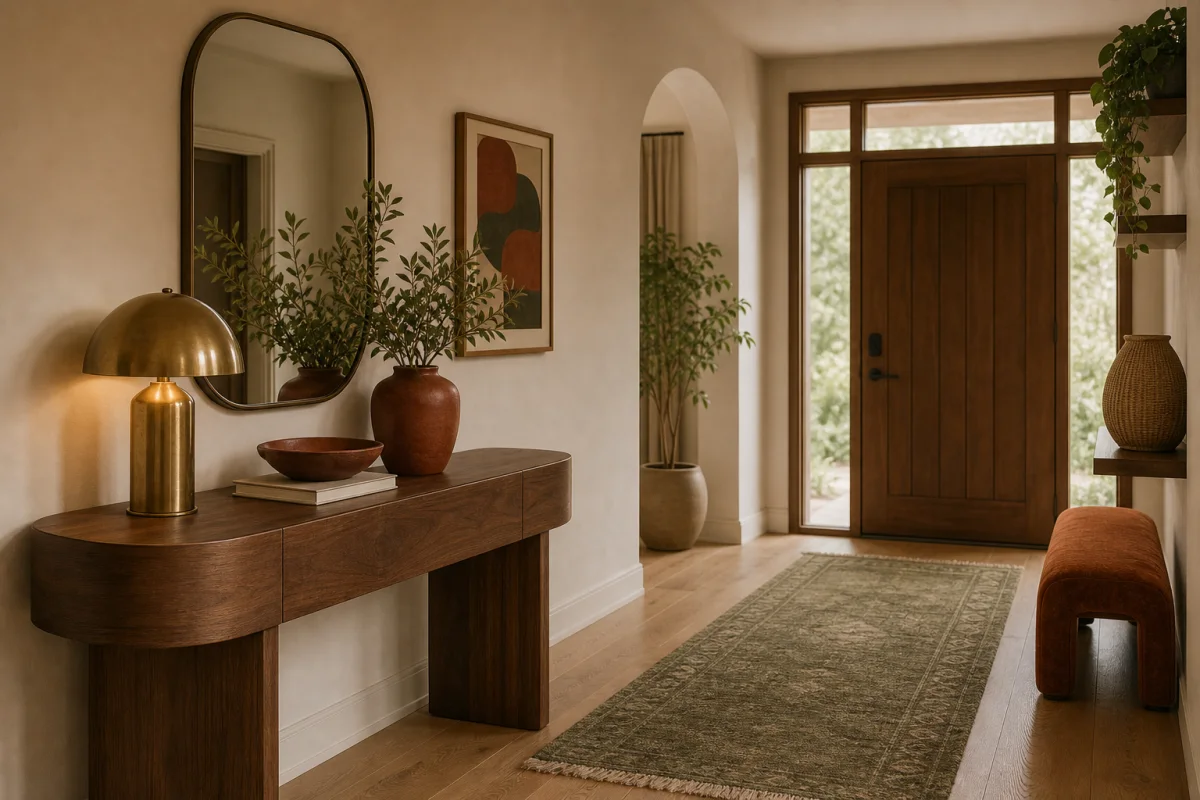
70s interior design uses the visual language of the 1970s: low seating, walnut furniture, velvet, smoked glass, chrome or brass, earthy color and bold but grounded pattern. The current version works best when those cues are edited instead of copied literally.
A modern 70s room should feel warm, relaxed and collected, not like a costume. Choose one or two strong retro anchors, then balance them with clean walls, good storage, current lighting and enough negative space for the shapes and colors to breathe.
Modular sofas, platform beds and low tables instantly give the room a relaxed 70s profile.
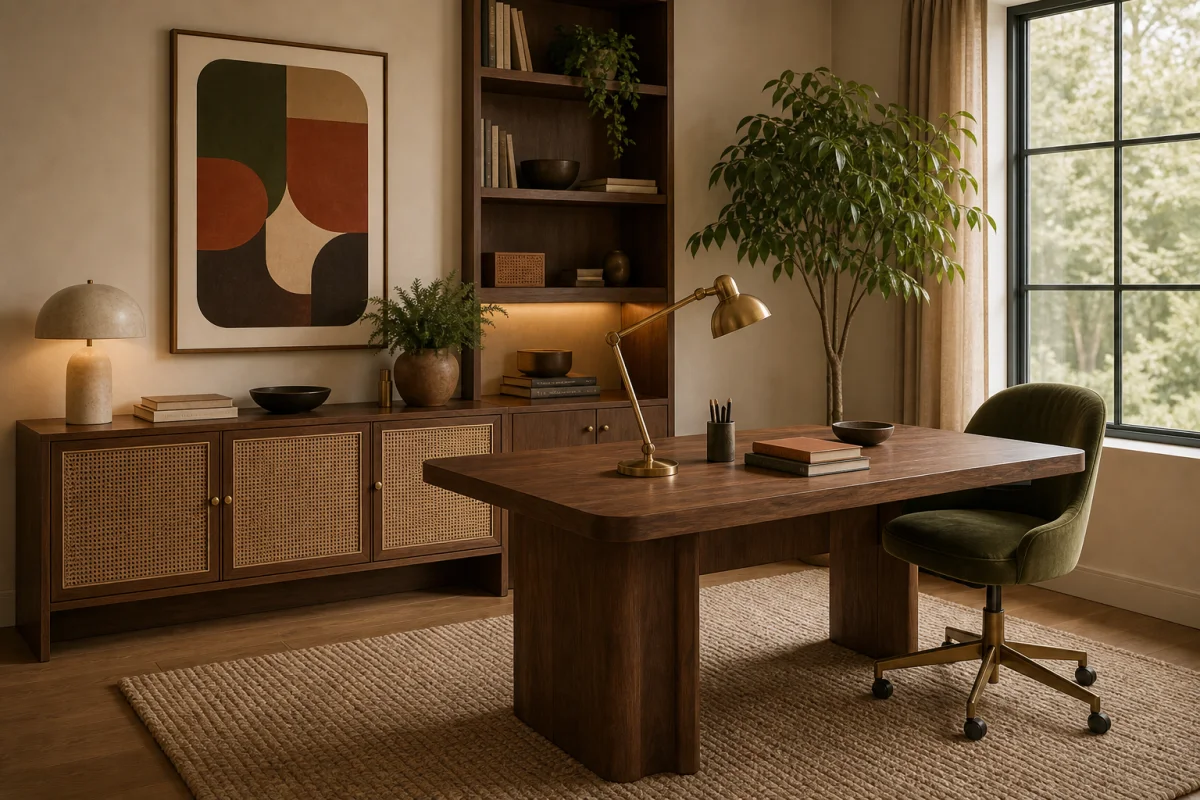
Wood keeps rust, ochre and olive from feeling like loose accent colors.
The goal is memory and warmth, not a room full of novelty objects.
Modular sofas, low beds, rounded chairs and grounded tables create the relaxed 70s silhouette.
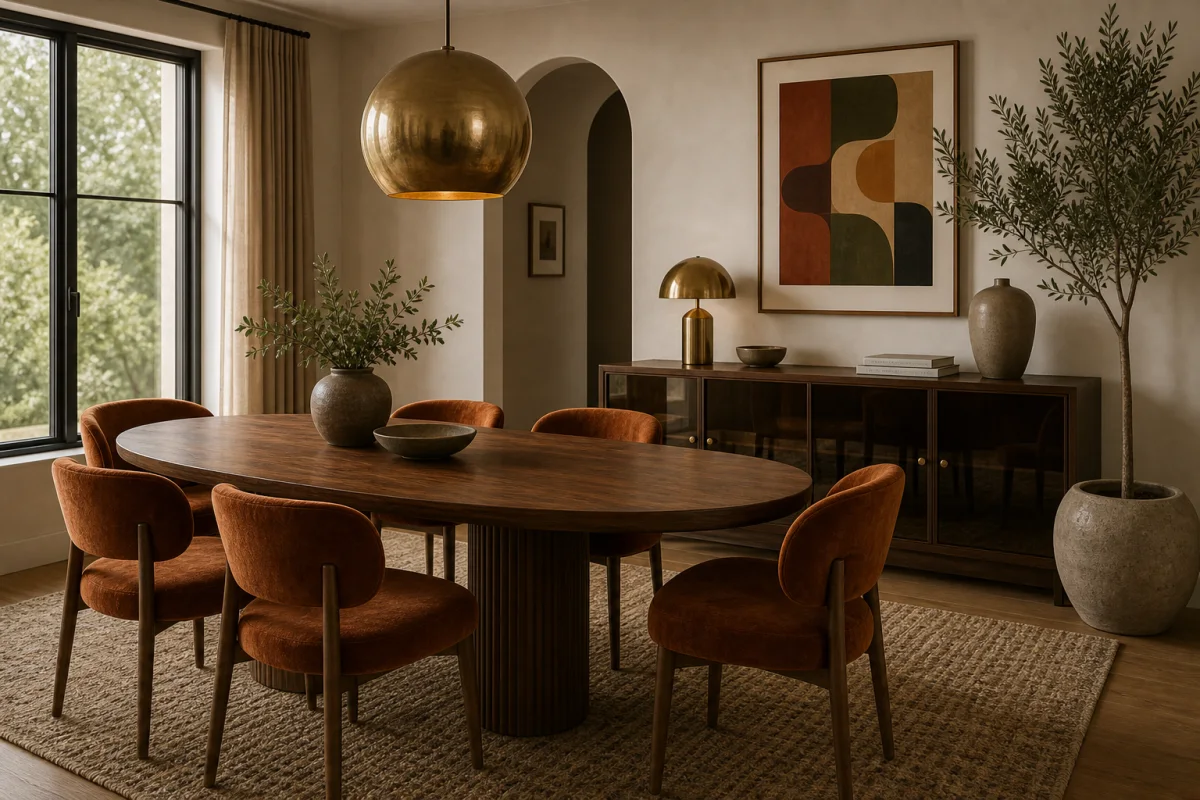
Walnut, smoked glass, brass, chrome and ceramic make the palette feel rich without needing many objects.
Rust, ochre, olive, cream and brown feel more current than bright orange everywhere.
A rug, artwork or cushion can carry the retro rhythm better than pattern on every surface.
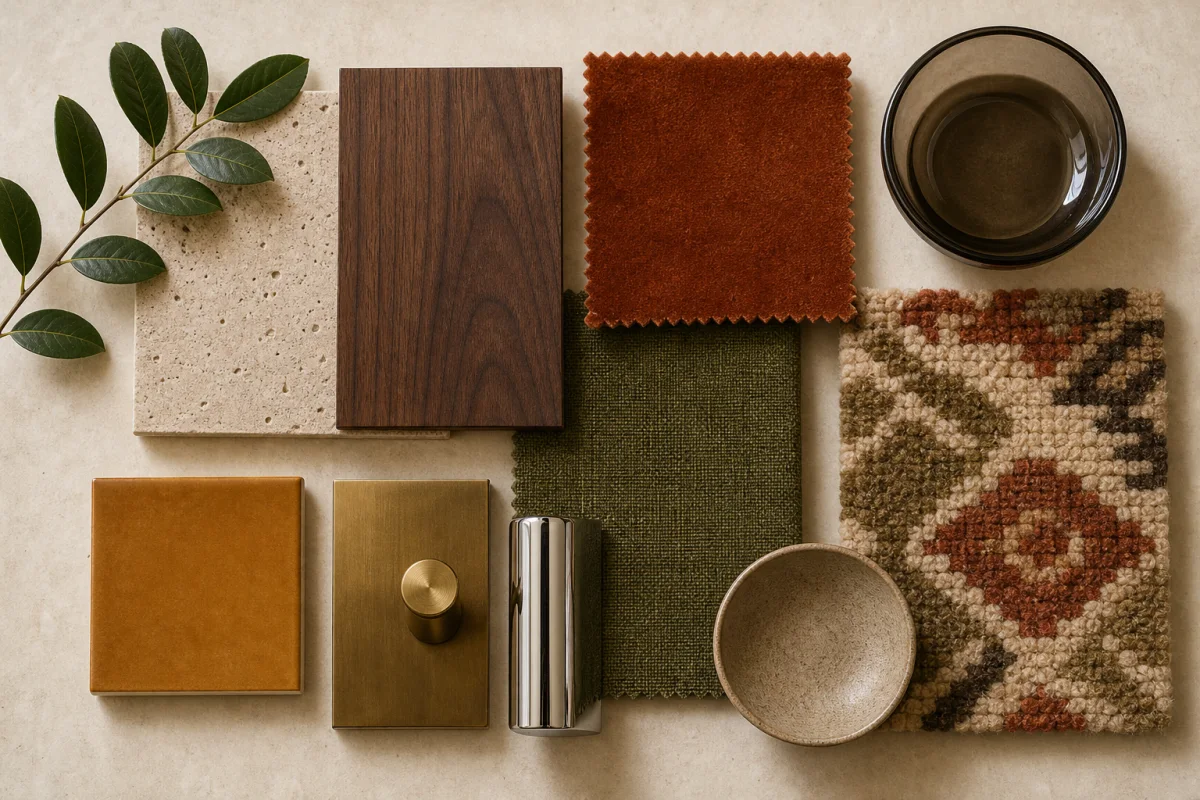
A 70s palette should feel warm and layered, but not muddy. Start with cream and walnut, choose one dominant retro color, then add one supporting color and a small reflective accent.
Keeps walnut and retro colors from becoming too heavy.
The main grounding tone for storage, tables, frames and wall units.
Use through velvet, cushions, rugs or ceramics for instant warmth.
Works well in lighting, art, upholstery or small accents.
Balances rust and walnut with a calmer natural note.
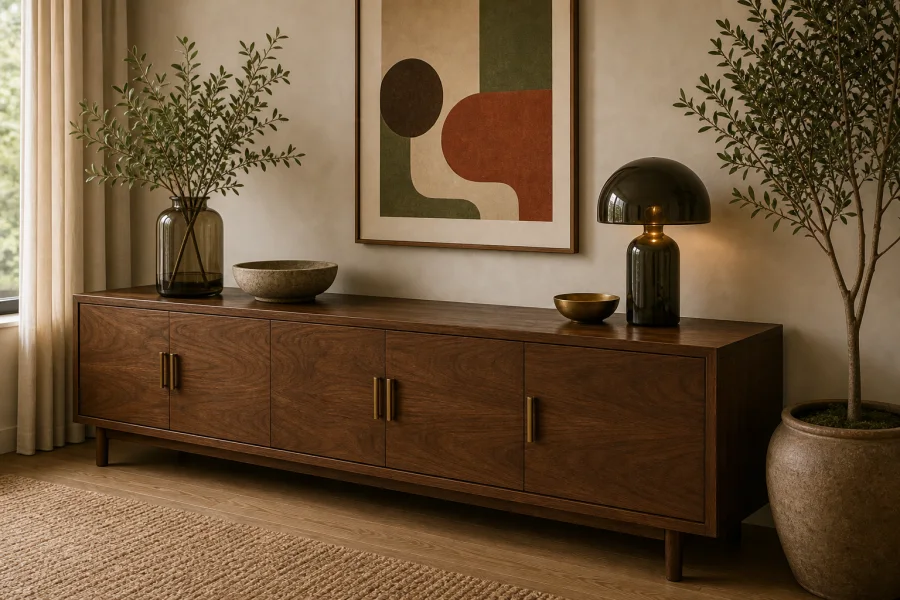
The cleanest way to bring in 70s warmth through storage, tables and wall units.
Adds saturated color and softness, especially on low seating.
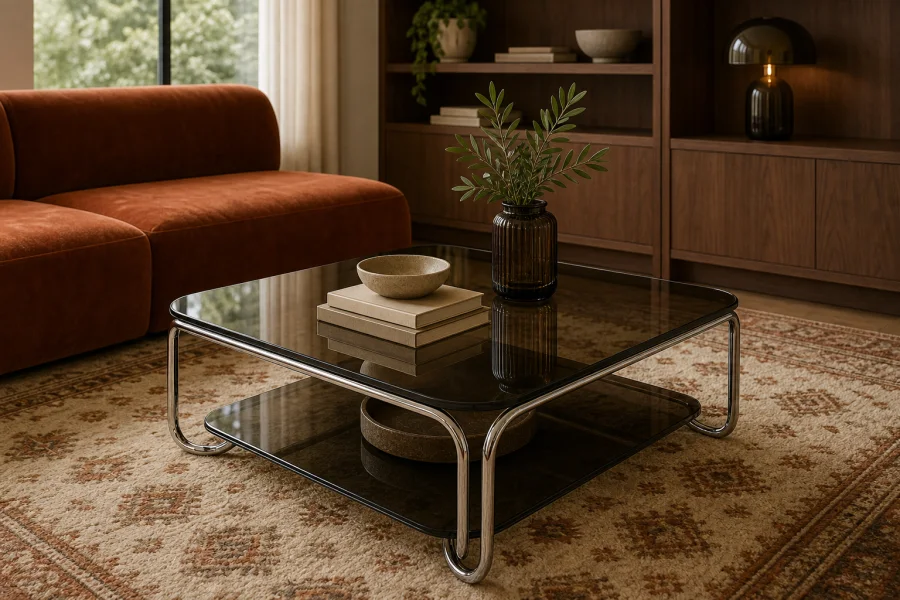
Gives tables and accents a retro reflective layer without visual clutter.
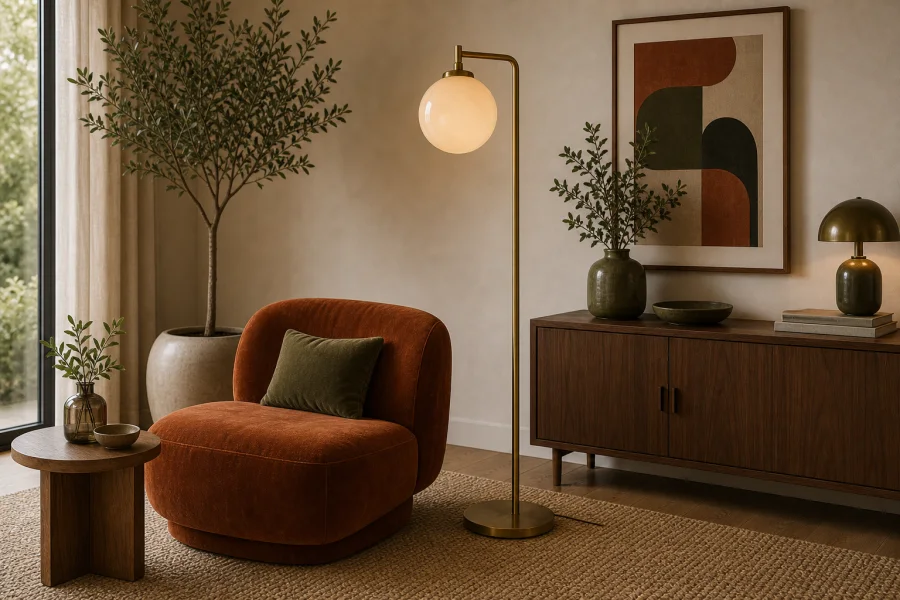
Use in lamps, trays and legs for shine, but keep the shapes simple.
70s interiors can overlap with mid-century, contemporary and organic modern spaces. The difference is the warm retro tension: lower furniture, richer color and reflective materials.
Cleaner, earlier and more restrained.
Choose 70s interior design if you want warmer colors, lower silhouettes and more texture.
Add rust velvet, smoked glass, walnut wall storage and rounder lounge shapes.
More formal, symmetrical and classic.
Choose 70s if you want a more relaxed room with lower furniture and bolder color.
Swap ornate profiles for walnut slabs, globe lighting and earthy upholstery.
Cleaner, lighter and more current.
Choose 70s if contemporary rooms feel too neutral and you want more personality.
Keep the layout clean, then add retro color, walnut and one patterned piece.
Softer, curvier and more neutral.
Choose 70s if you want warmth with stronger color and a more nostalgic furniture language.
Use walnut, rust, ochre and smoked glass instead of only pale wood and plaster.
A refined 70s room needs only a few strong anchors. Start with one low furniture piece, one walnut piece and one retro material accent, then edit the rest.
Low velvet seating gives the room warmth and the right relaxed profile.
Smoked glass adds a retro reflective layer without taking up visual weight.
Globe lighting brings the decade in through shape rather than novelty.
A low walnut cabinet grounds the palette and hides everyday clutter.
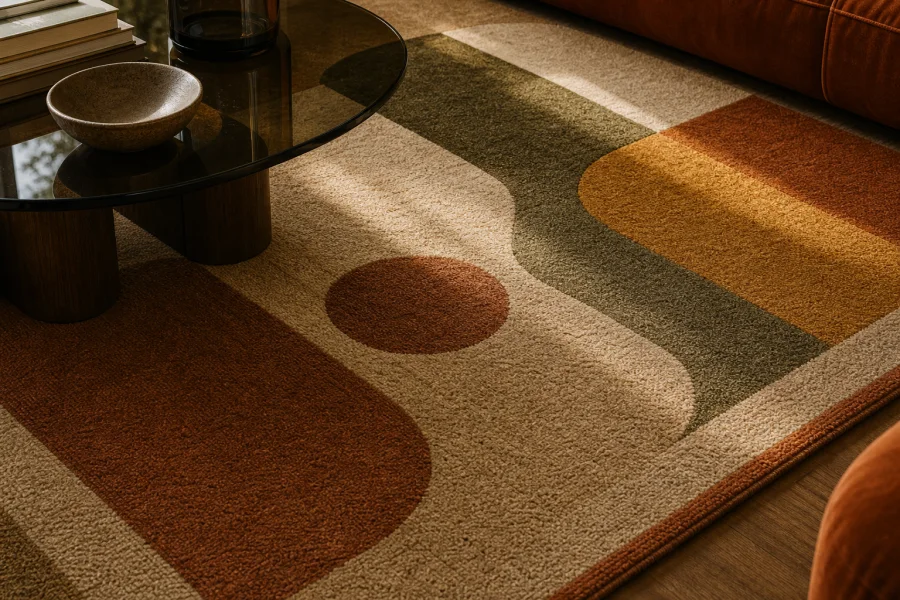
Use one patterned rug to add rhythm without covering every surface in print.
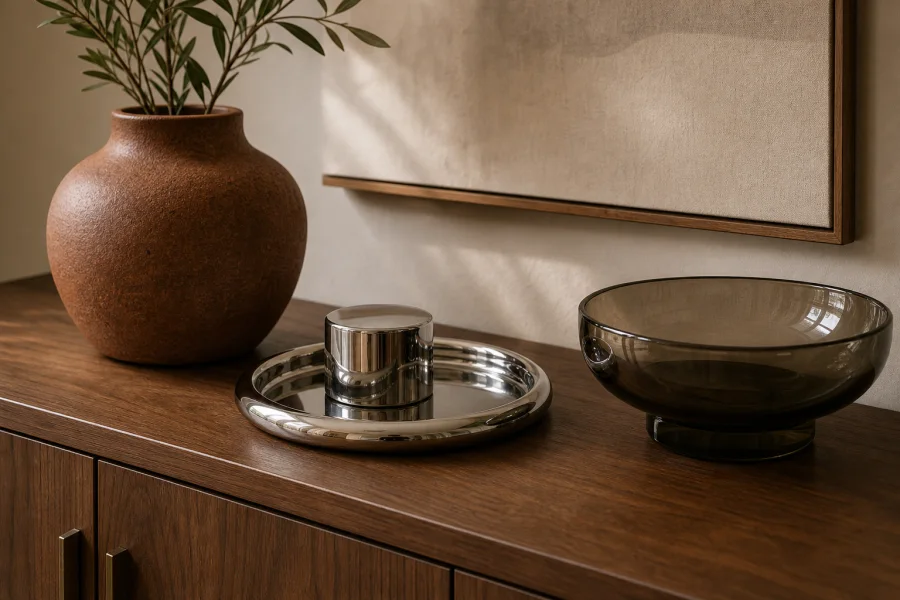
Small accents can repeat the palette and finish mix without feeling themed.