01
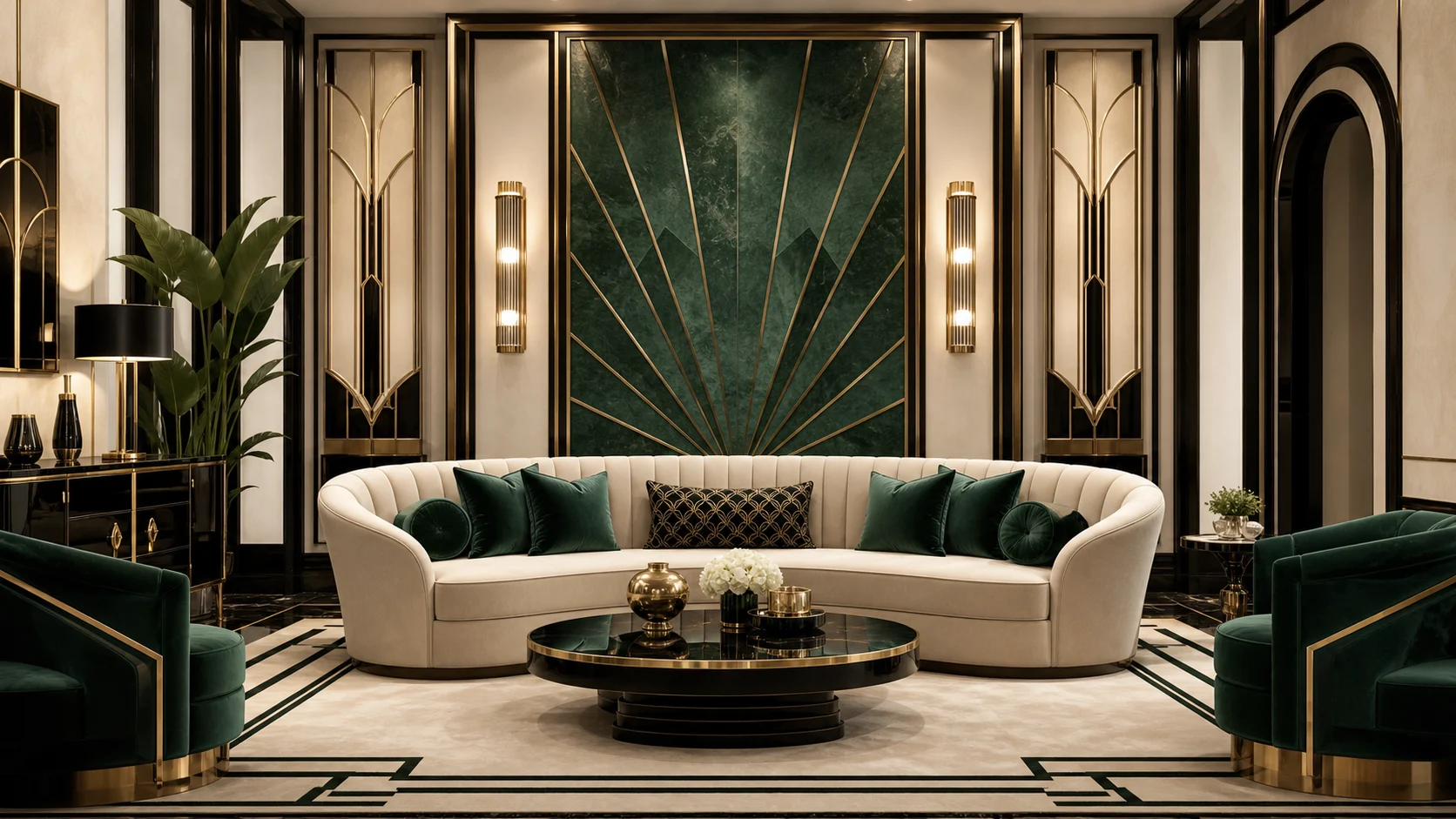
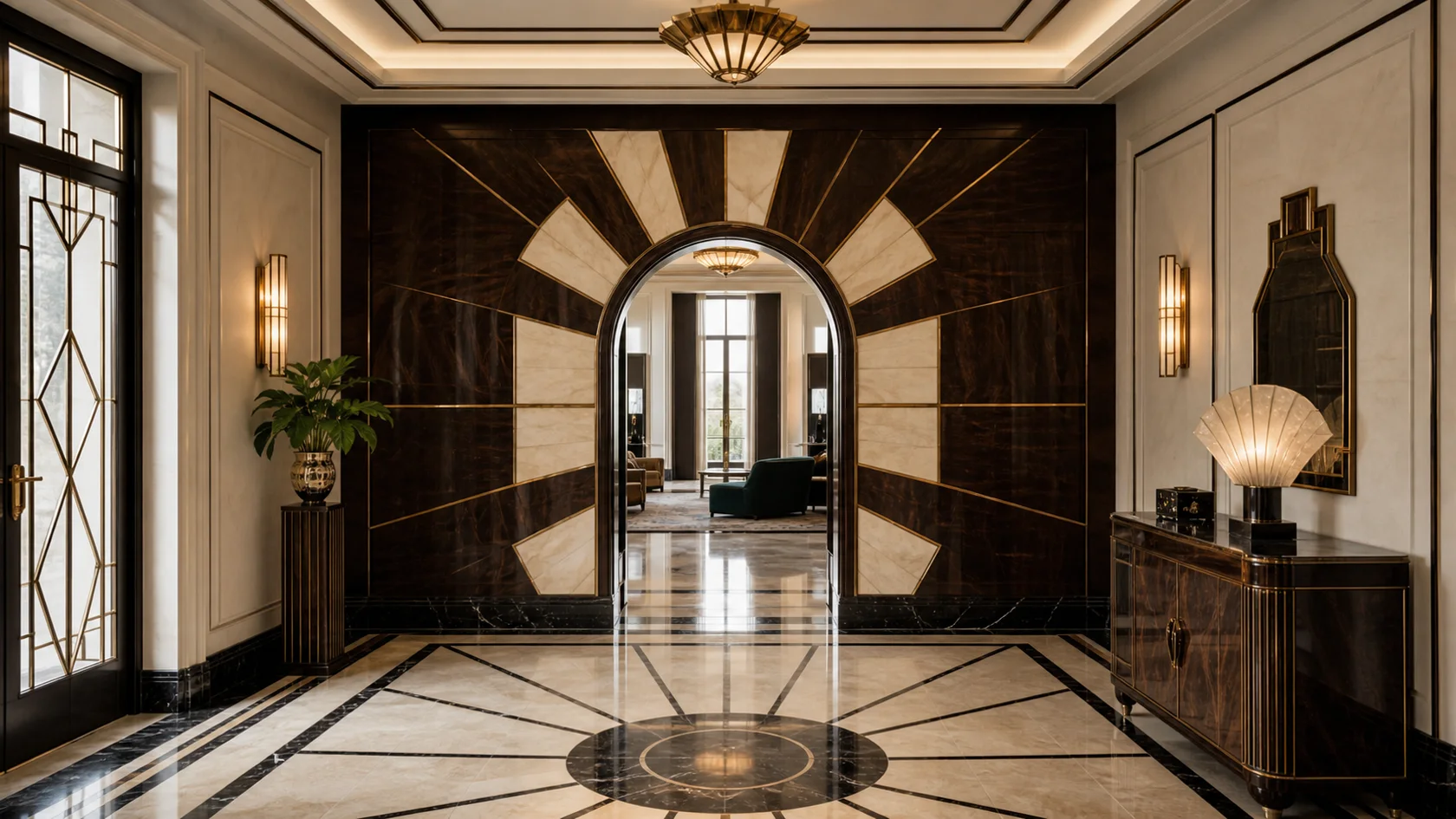
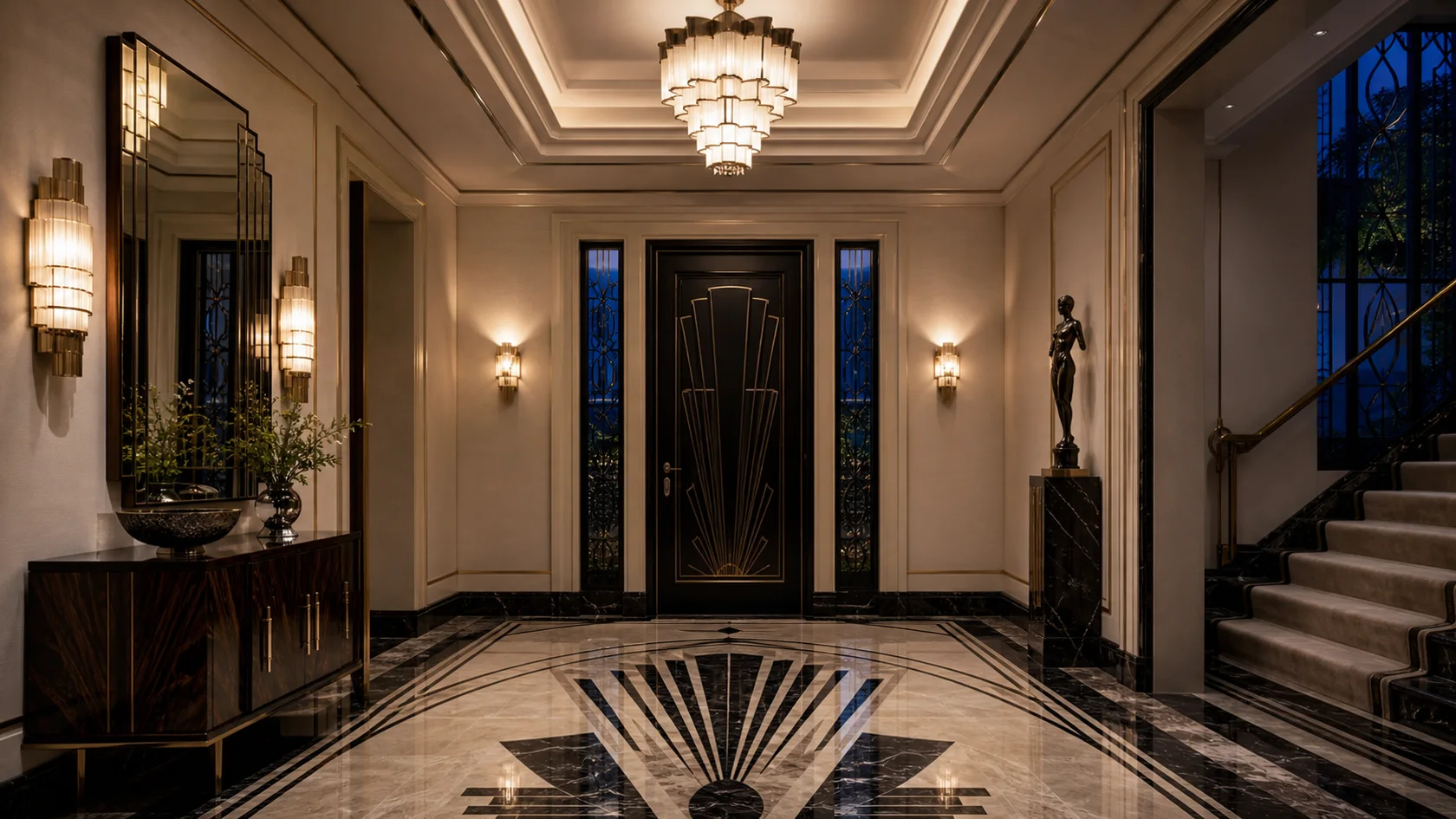
Sunburst Portal
Stepped architecture sets a disciplined rhythm and gives symmetry a clear reason beyond decoration. Protect the door swing and give shoes, coats and keys a defined place at the point of arrival.
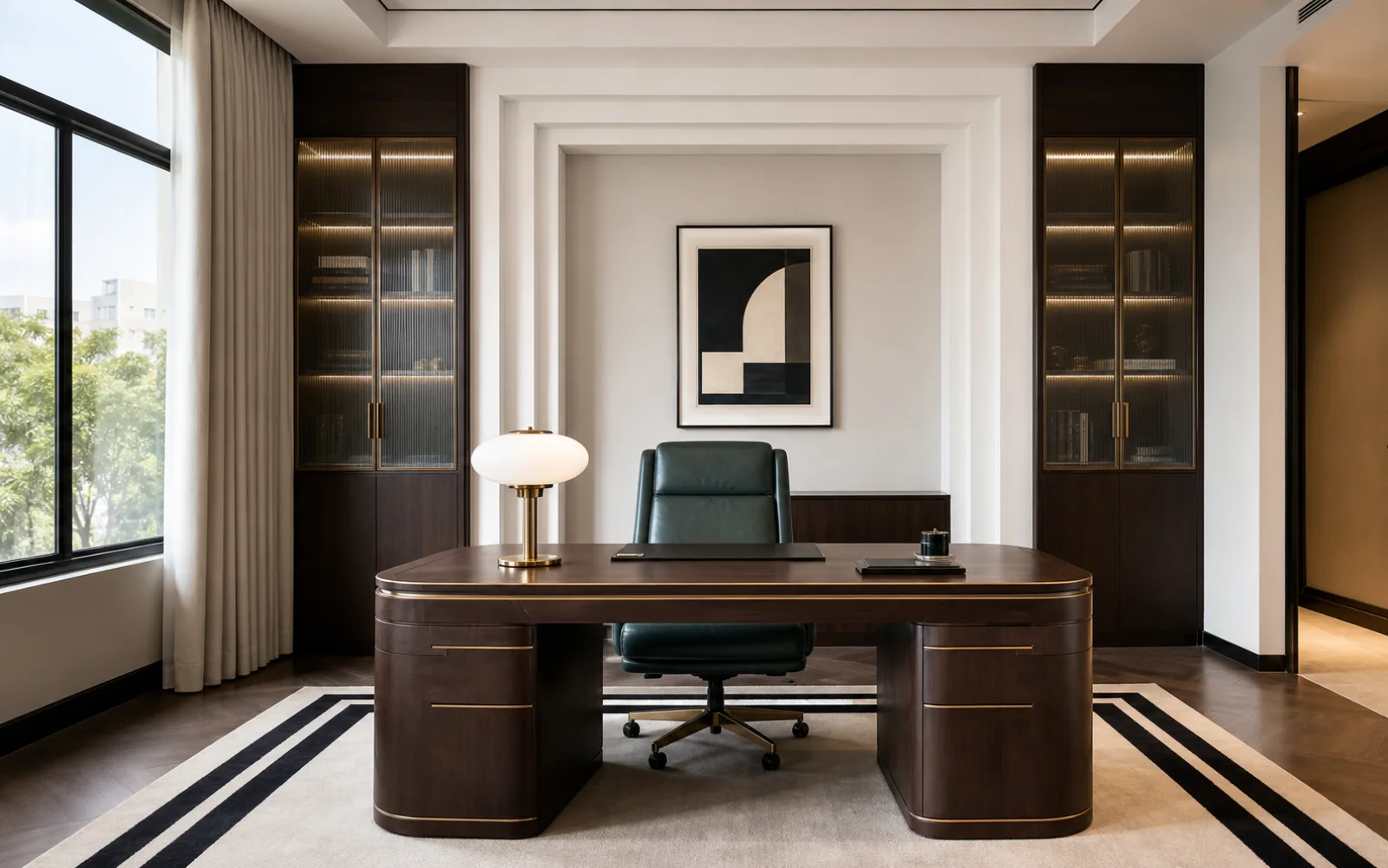
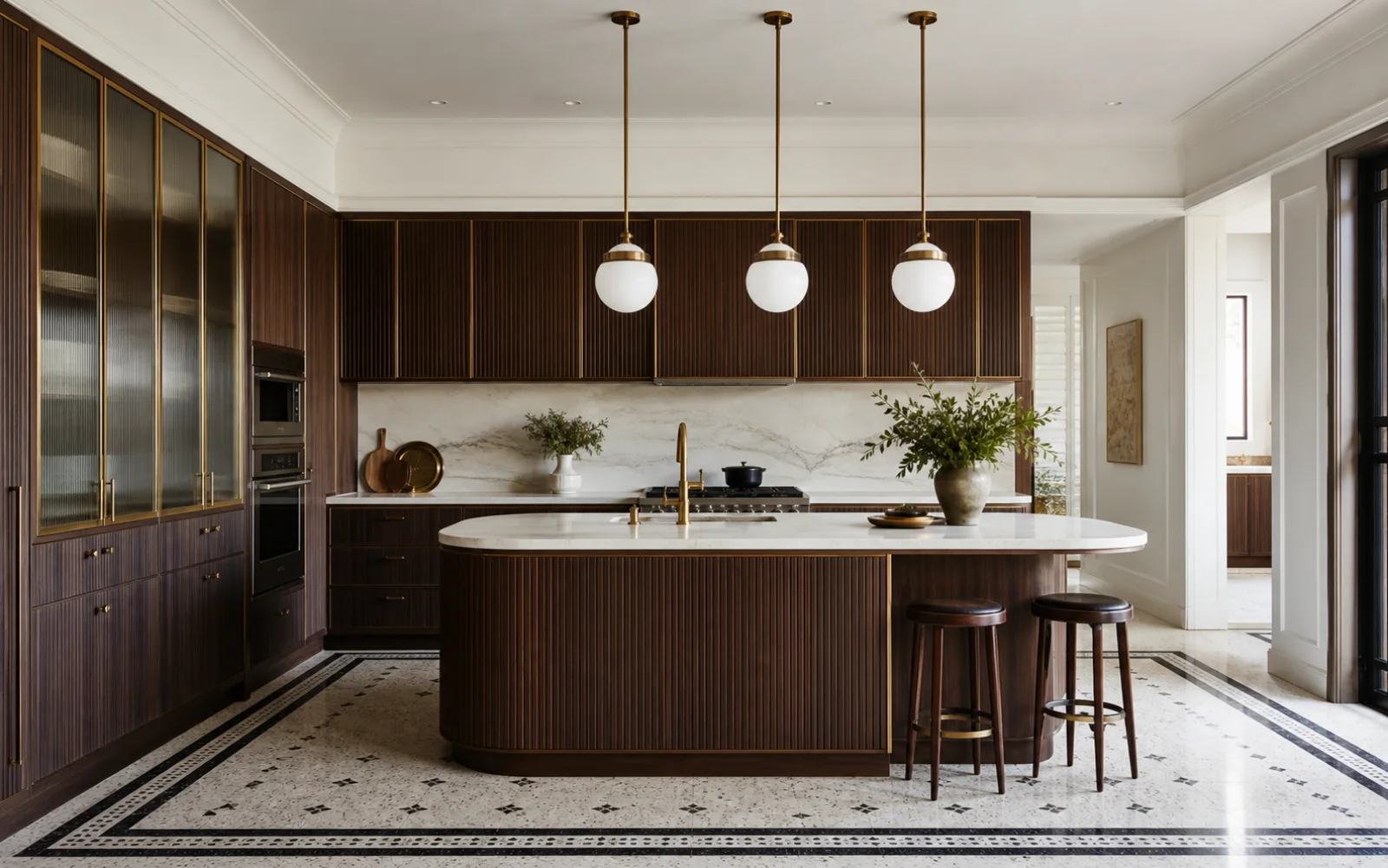
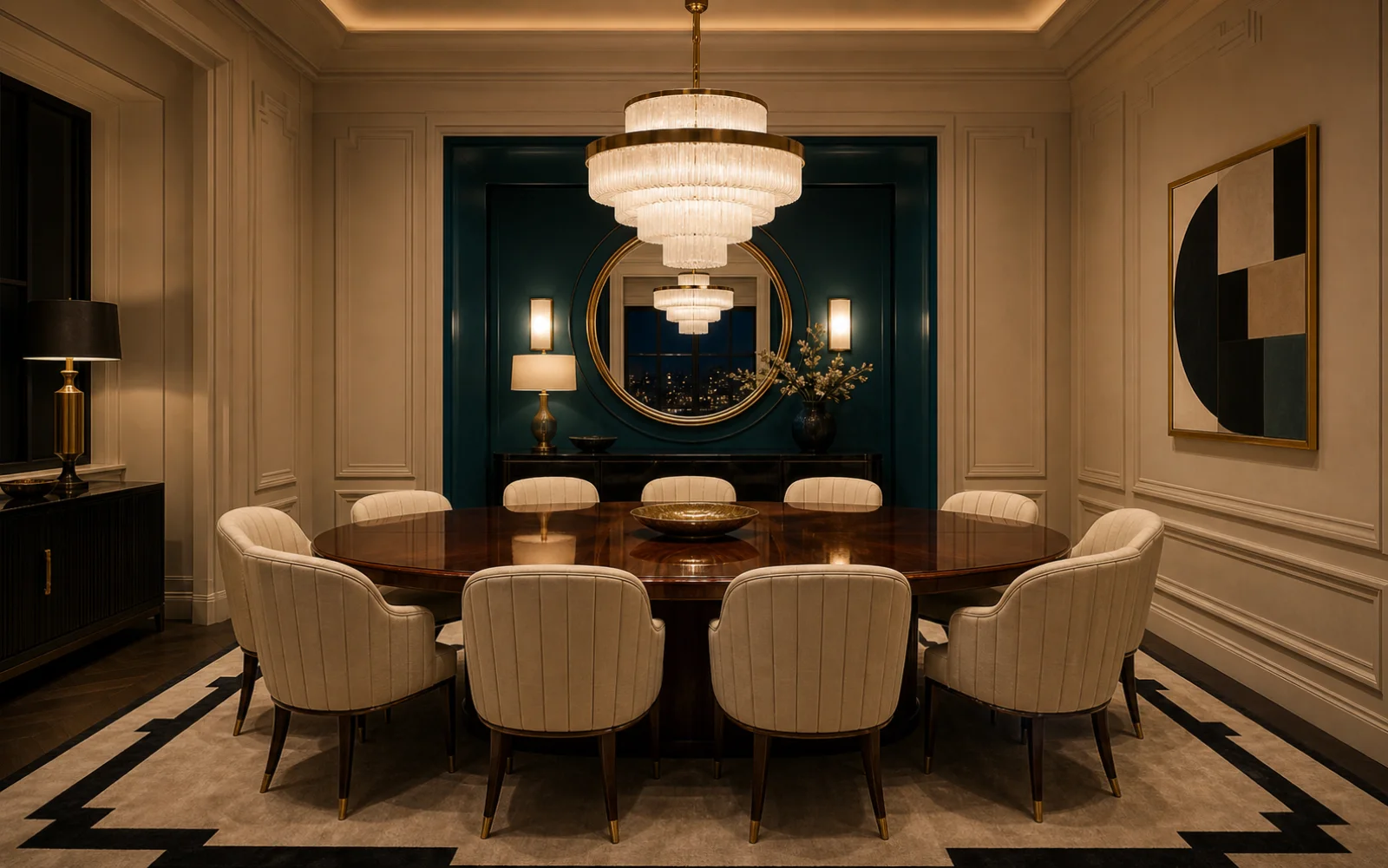
Five materially and spatially different art deco approaches to the entryway, from a clear daytime plan to a controlled evening mood.
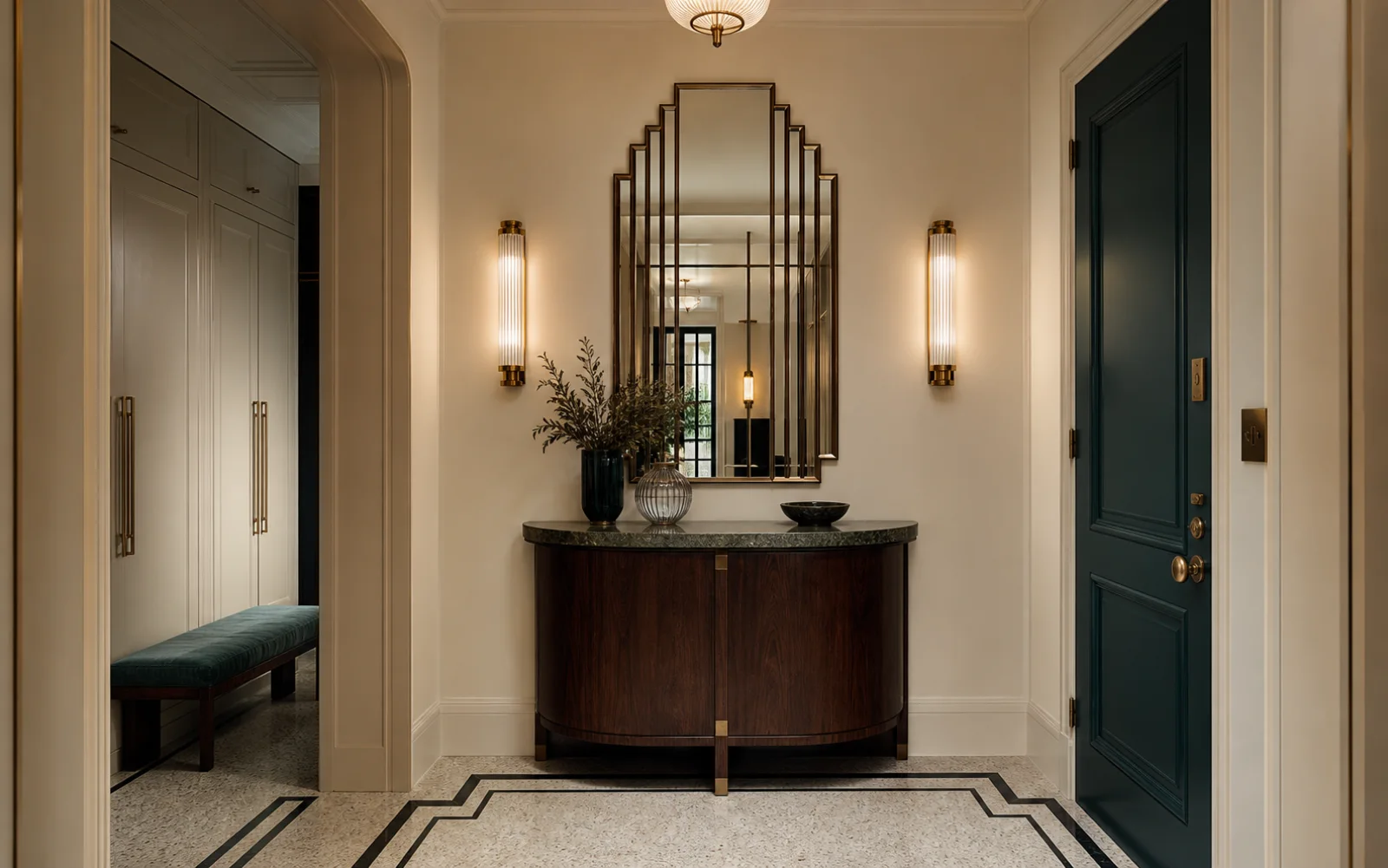
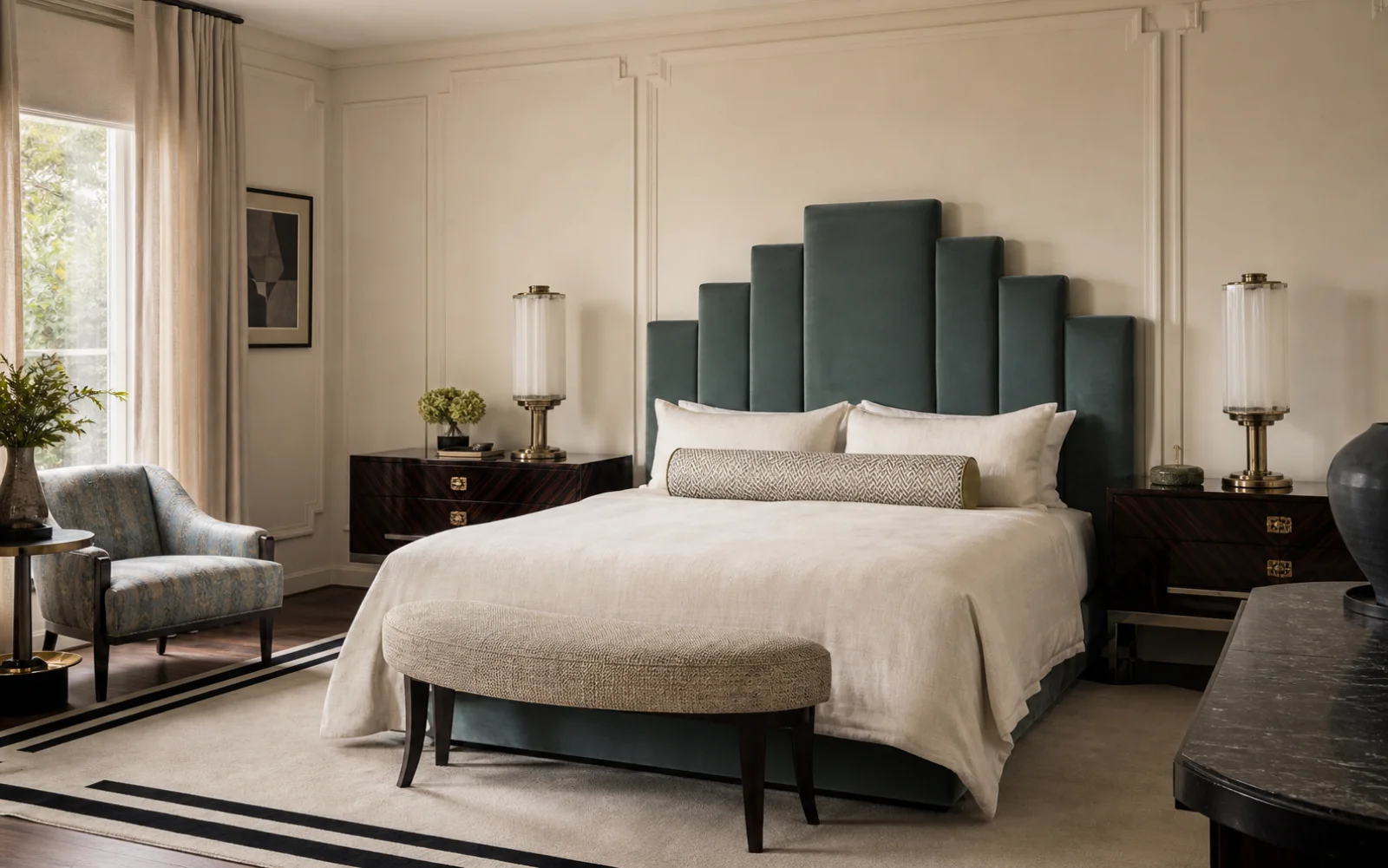
Art Deco organizes luxury through stepped geometry, strong symmetry, lacquered timber, patterned stone and jewel color rooted in the interwar decorative arts. In the entryway, that identity must still support arrival, quick storage and an uncluttered transition into the home.
A geometric floor border or stepped console can mark arrival without narrowing the passage or turning every wall into a motif. Select one geometric system—stepped, fan, arch or chevron—and repeat it at different scales instead of stacking unrelated motifs.
Use these examples to choose the version of the style that fits your architecture, light and square footage.
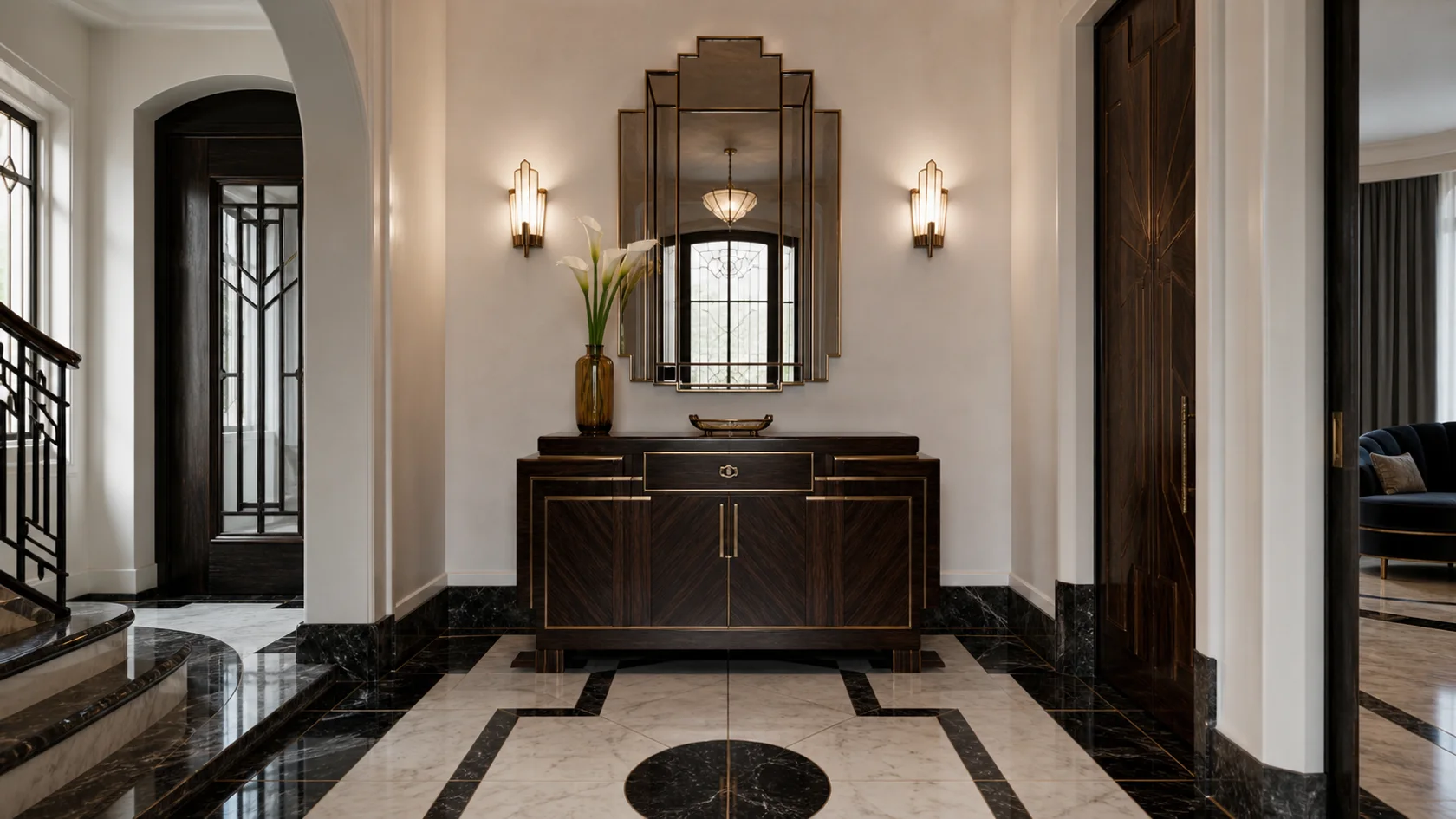
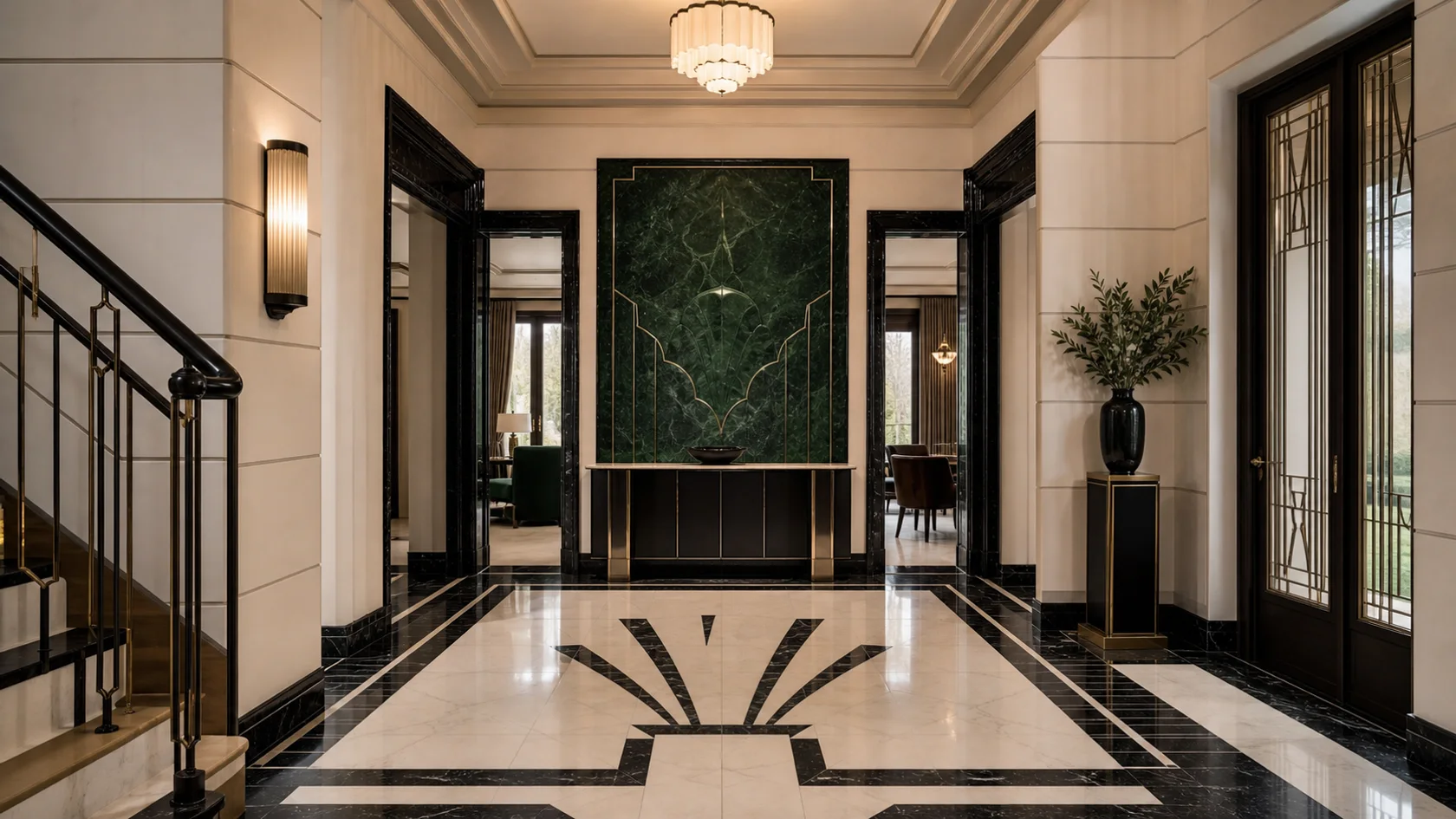
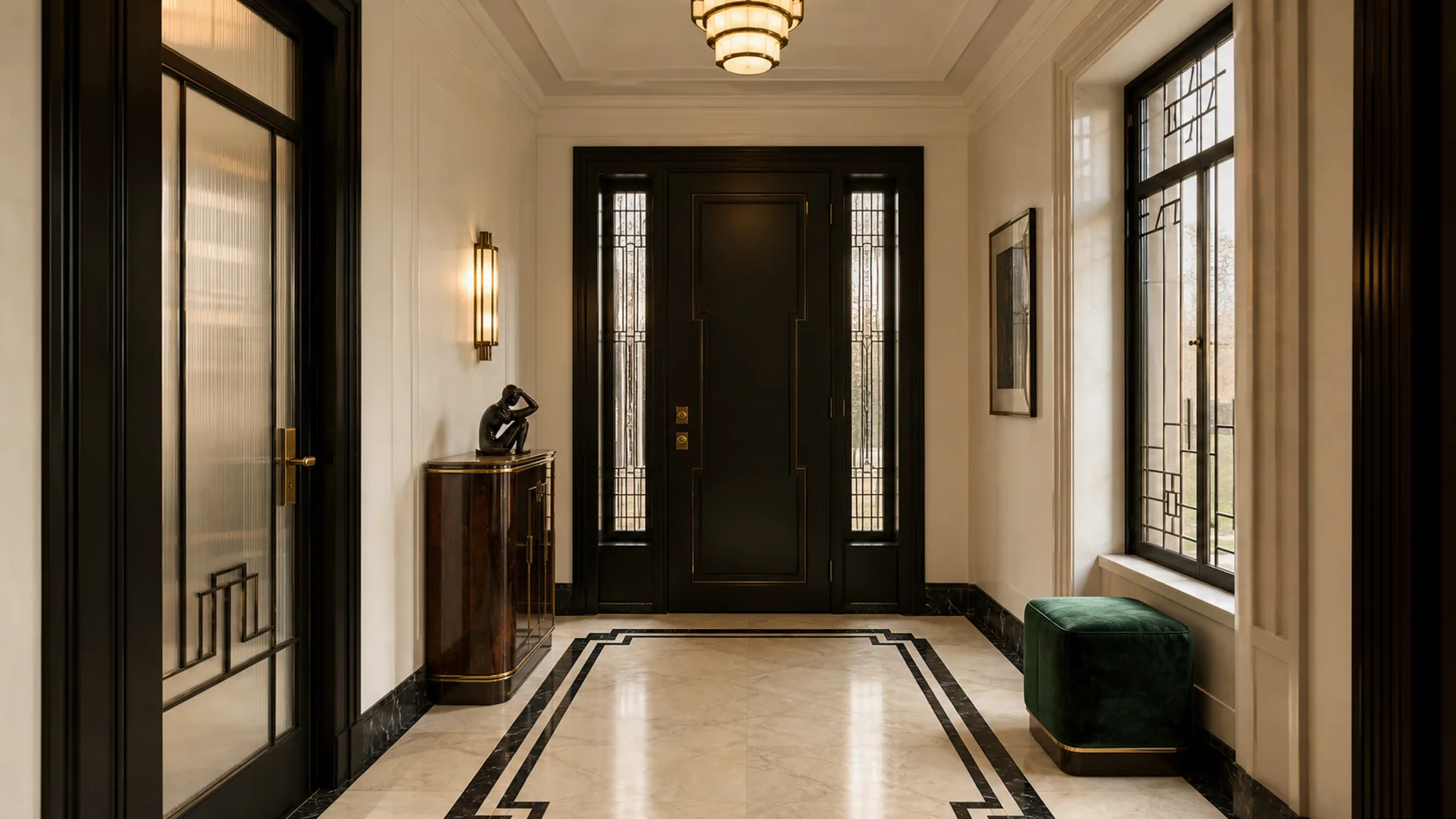
Use the style where it helps the room work: seating, circulation, focal point and material balance.
Place benches, cabinets and baskets outside the full arc of the front door.
Give shoes, coats, keys and bags a specific place close to where each item is used.
Shallow storage and one strong object make a narrow hall feel intentional without crowding it.
Combine practical threshold light with a washable runner or resilient floor at the highest-wear zone.
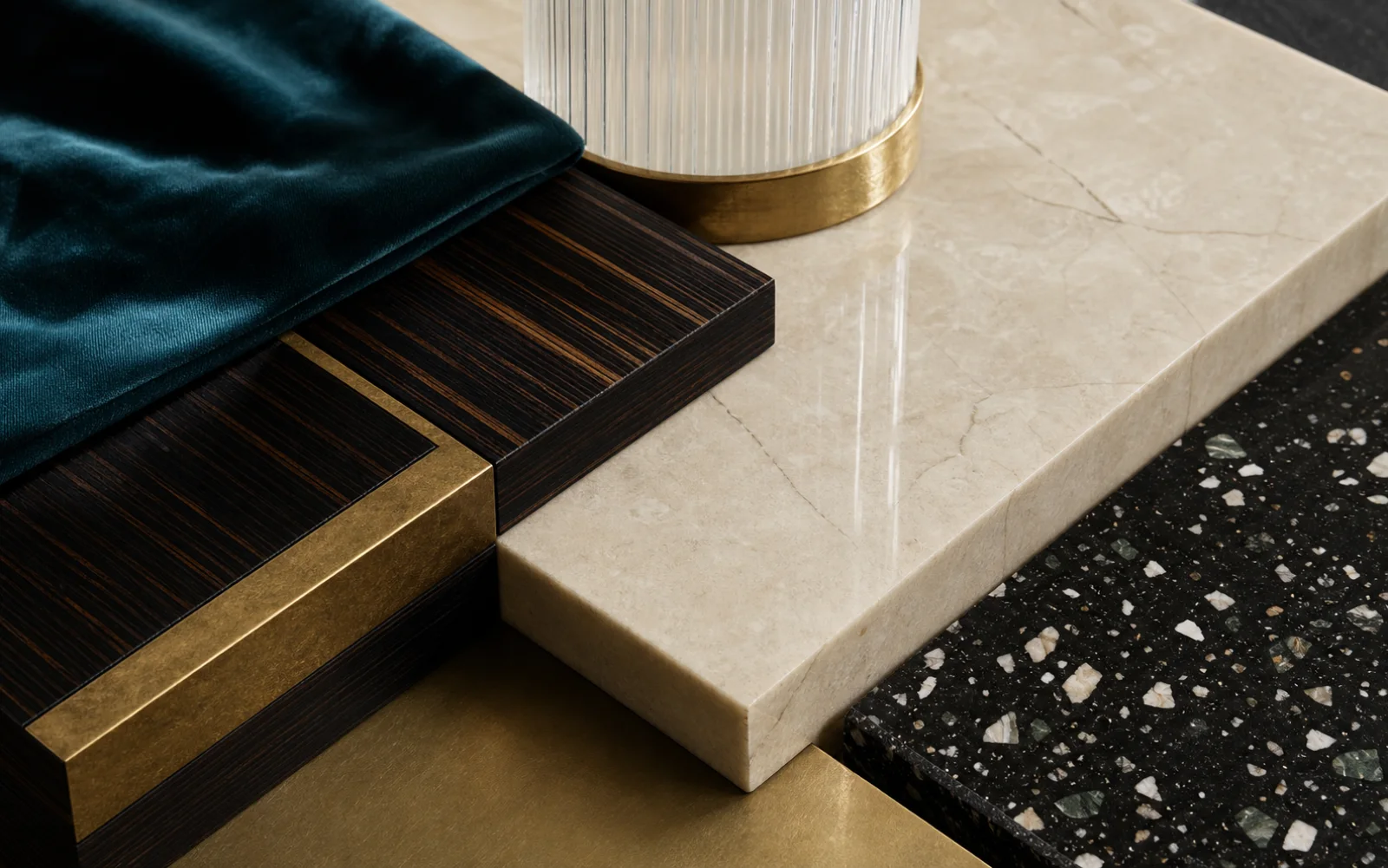
Let ivory occupy the largest area, use ebony and black to draw the geometry, and reserve teal plus aged brass for focal depth and fine articulation.
Provides breathing room around dark veneer, metal and saturated lacquer.
A striped dark timber for statement cabinetry, tables and precise book-matched panels.
A period-credible jewel tone suited to one niche, door or upholstery family.
Use as thin inlay, light framing and hardware rather than a large color field.
Defines floor borders and fine outlines that sharpen the pale mineral base.
Ivory, black and deep brown create the clear graphic structure associated with the style.
Emerald, sapphire, oxblood or aubergine should occupy one substantial upholstery or wall plane.
Brass, bronze and nickel should trace geometry through inlay, lighting and narrow frames.
Bookmatched veneer, marble and dense velvet provide richness through real surface variation.
For this room, a few strong choices can carry the style better than adding more decor.
A geometric floor border or stepped console can mark arrival without narrowing the passage or turning every wall into a motif. Confirm the bench or console by dimensions, comfort and maintenance before selecting its decorative finish.
Select one geometric system—stepped, fan, arch or chevron—and repeat it at different scales instead of stacking unrelated motifs.
Select one geometric system—stepped, fan, arch or chevron—and repeat it at different scales instead of stacking unrelated motifs.
Select one geometric system—stepped, fan, arch or chevron—and repeat it at different scales instead of stacking unrelated motifs.
Use these checks to keep the art deco character clear without compromising how the entryway & hallway works.
Choose shallow wall-mounted storage and protect the minimum walking width.
Add ventilated drawers or a cabinet so the floor remains clear.
Provide a small tray or ledge for keys before adding art or objects.