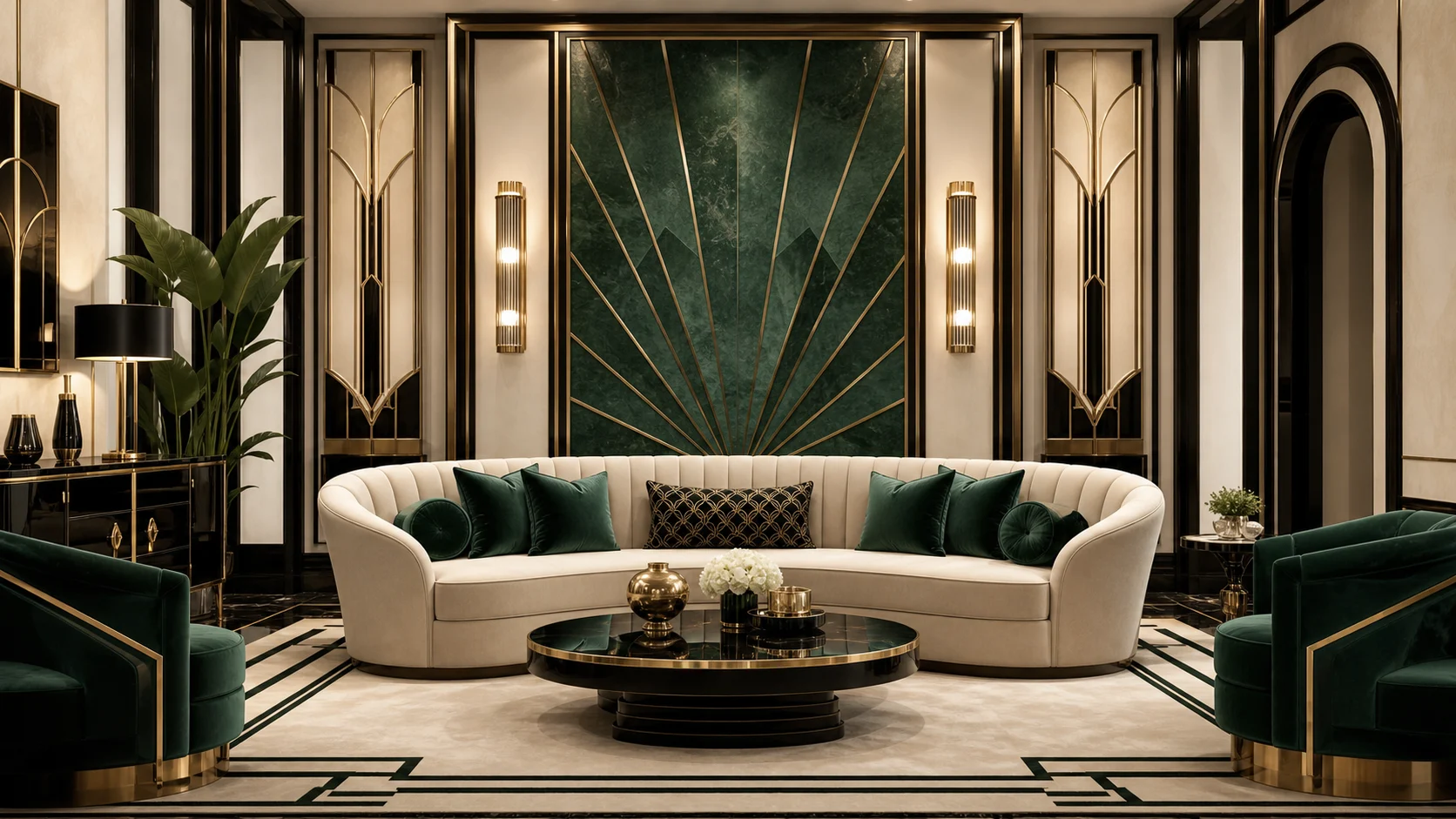
Curved channel sofa
Choose a broad continuous curve and restrained upholstery so the form can anchor the axis.
Streamlined rooms shaped by axial composition, stepped profiles and luxurious material contrast—not a collection of Jazz Age motifs.
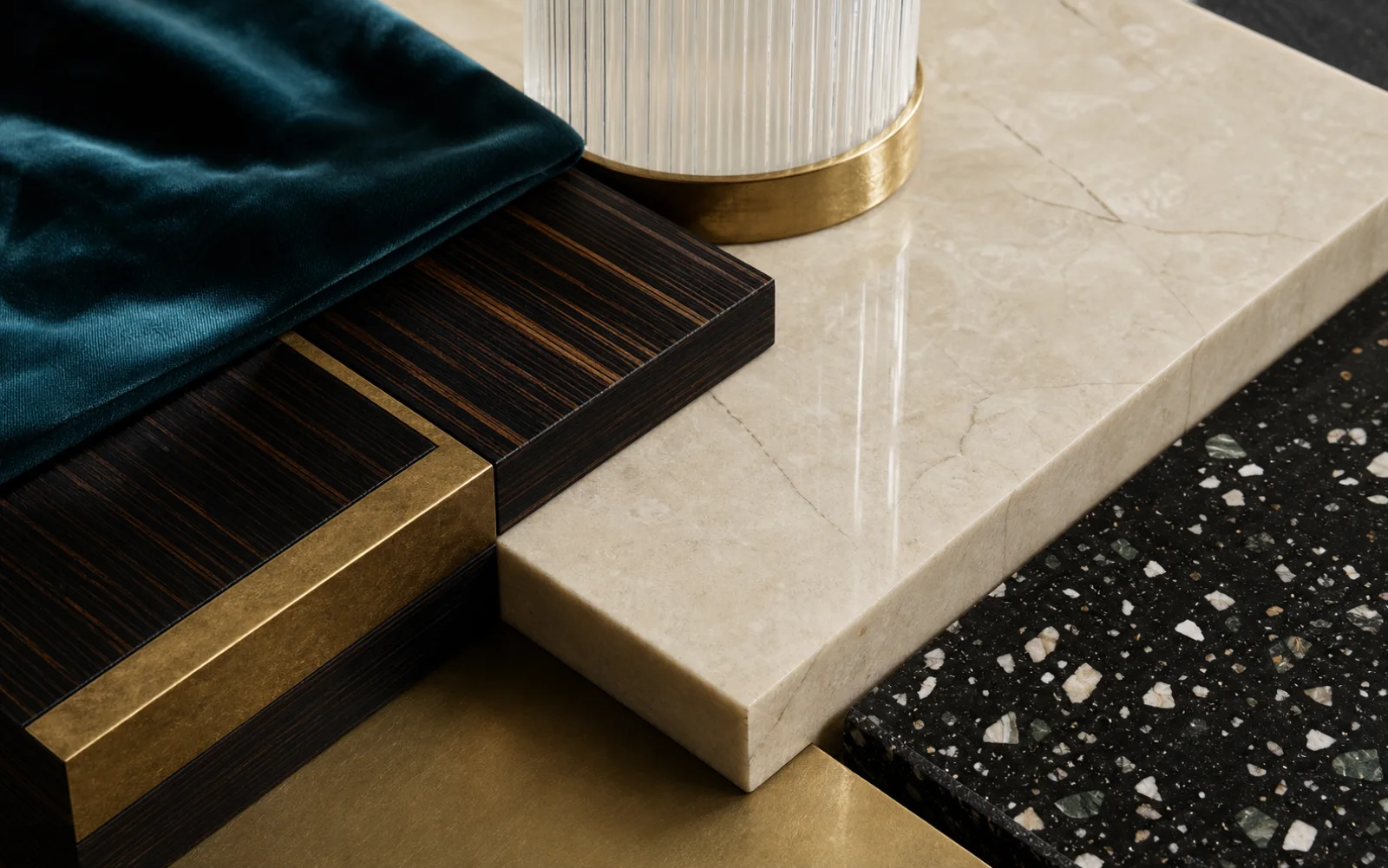
Art Deco emerged in the 1920s and 1930s as a decorative language of modernity, craft and machine-age precision. Interiors use strong axes, stepped outlines, sweeping curves and repeated verticals, enriched with figured woods, lacquer, stone, glass, metal inlay and saturated color.
A convincing contemporary interpretation begins with proportion and fabrication rather than symbols. One stepped surround, bordered floor or fluted cabinet rhythm can establish the style. Supporting surfaces should be calmer so precious materials and exact junctions remain legible instead of becoming themed decoration.
Align the main table, bed or sofa with a doorway, panel or light before adding decorative geometry.
Carry one stepped edge, radius or vertical rhythm across two or three elements instead of applying fan motifs everywhere.
Thin inlay, book-matched veneer and flush glass framing are more authentic than broad areas of bright gold.
Furniture, lighting and wall panels align to create a formal sequence and a clear focal point.
Ziggurat profiles coexist with rounded corners, tiered lights and smooth horizontal furniture.
Figured timber and velvet gain definition beside pale stone, black borders and fine metal lines.
Opal globes, fluted glass and vertical sconces turn artificial light into part of the geometry.
Center seating on one architectural panel and use the rug border to reinforce the axis rather than adding more motifs.
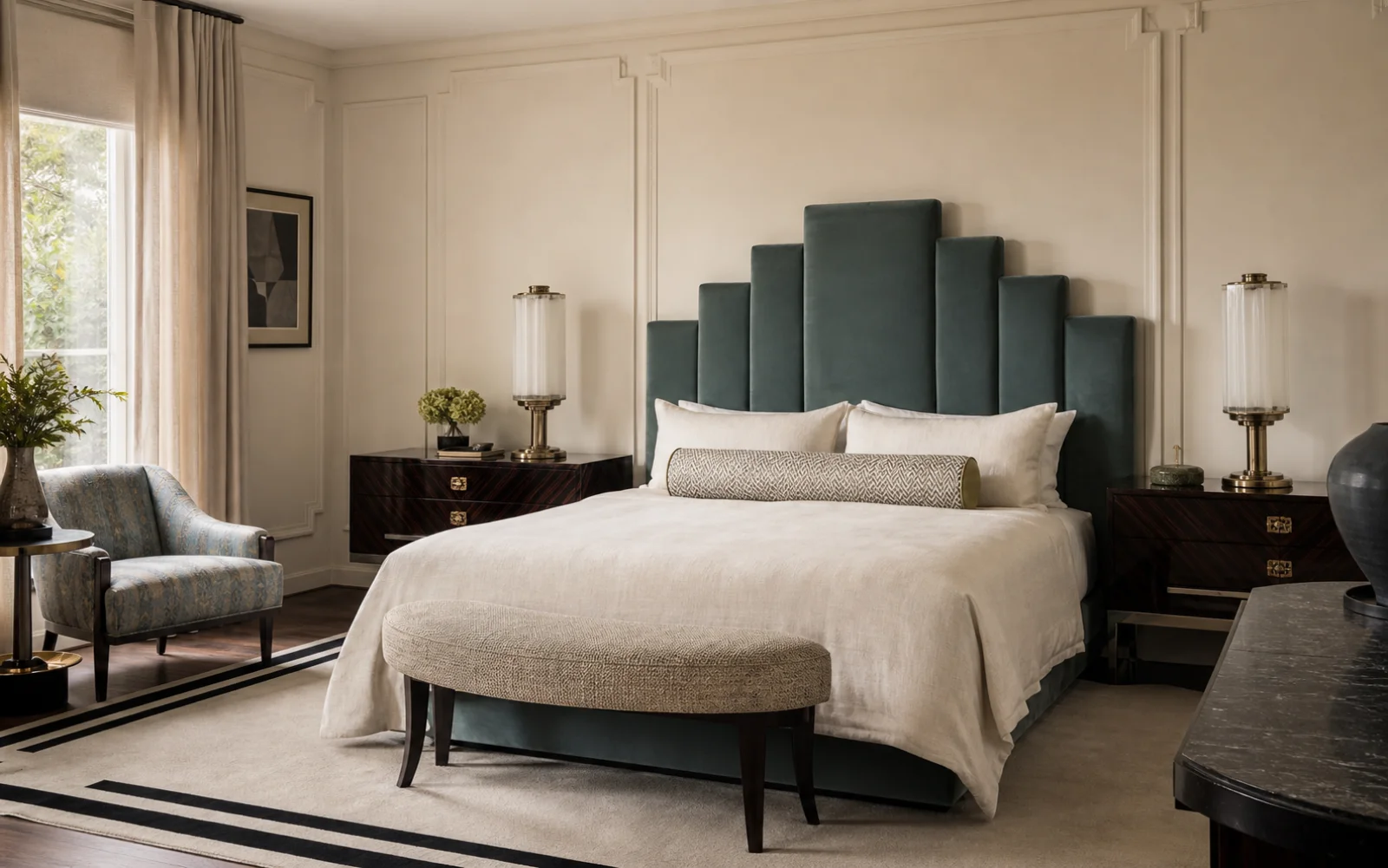
Let a stepped upholstered headboard carry the style; keep bedding, curtains and surrounding walls quiet.
Pair an oval figured-wood table with a tiered opal light and comfortable channel-backed chairs.
Use rounded desk corners, fine inlay and fluted-glass storage while retaining proper ergonomics and cable control.
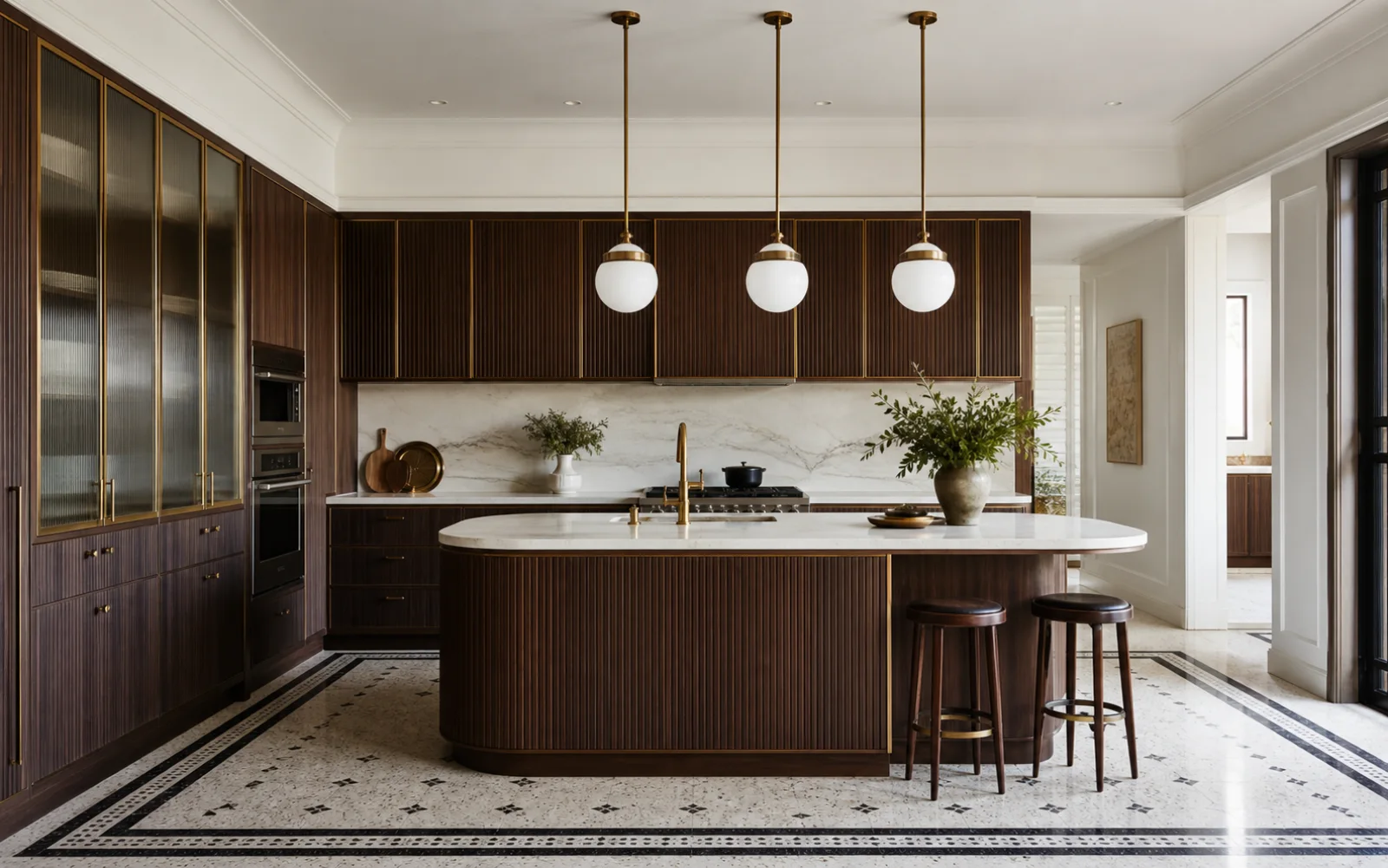
Build rhythm through ribbed timber and slim metal lines; keep stone work surfaces durable and largely unpatterned.
A stepped mirror, vertical sconces and bordered floor can create a complete Deco moment in a small footprint.
Let ivory occupy the largest area, use ebony and black to draw the geometry, and reserve teal plus aged brass for focal depth and fine articulation.
Provides breathing room around dark veneer, metal and saturated lacquer.
A striped dark timber for statement cabinetry, tables and precise book-matched panels.
A period-credible jewel tone suited to one niche, door or upholstery family.
Use as thin inlay, light framing and hardware rather than a large color field.
Defines floor borders and fine outlines that sharpen the pale mineral base.
Striped veneer and a narrow brass line express craft and precision without applied ornament.
Vertical texture obscures storage, catches light and introduces rhythm to cabinetry.
Dense color and fine pile bring softness to stepped and linear forms.
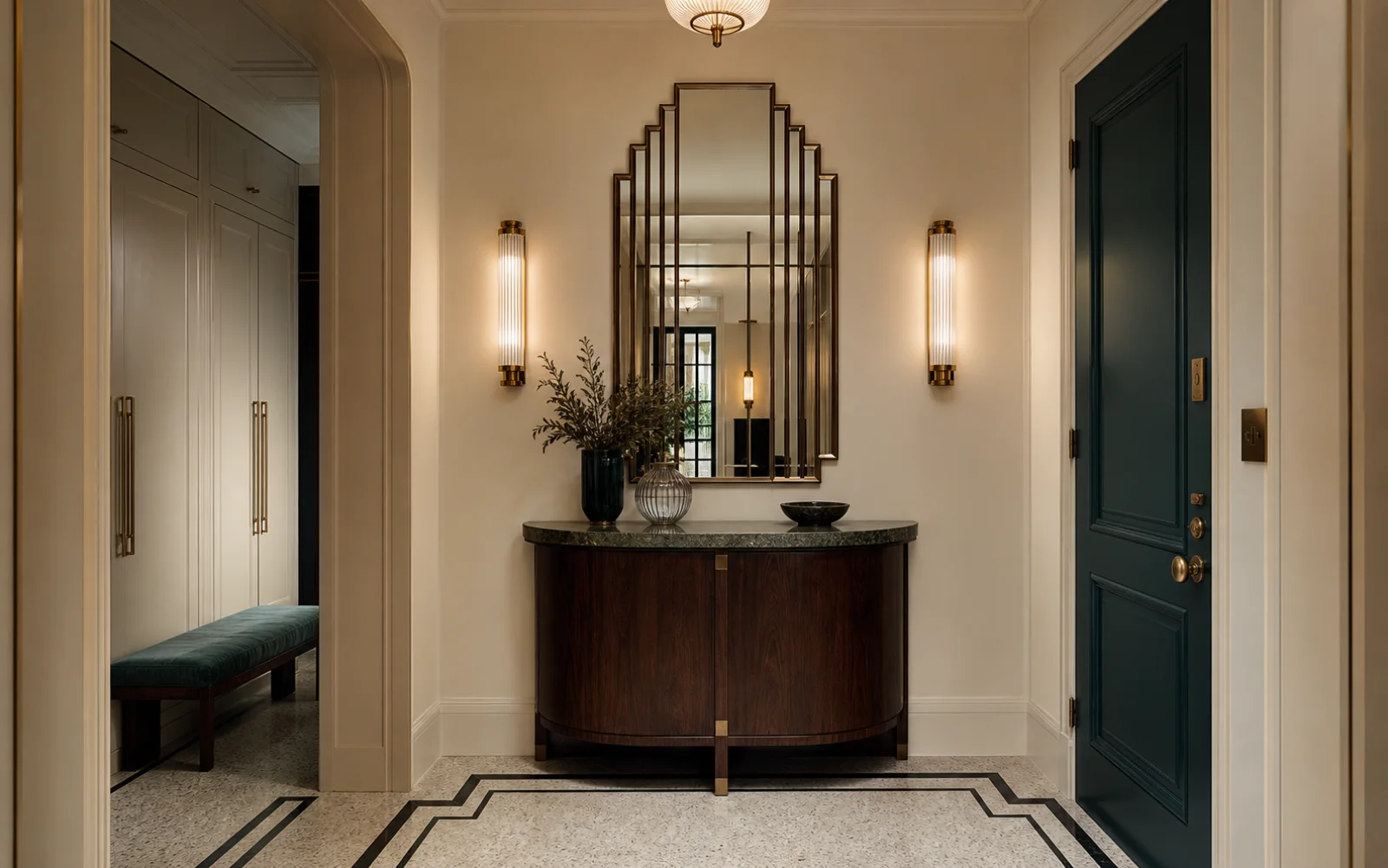
Pale slabs and dark aggregate borders translate graphic Deco flooring into durable surfaces.
Treat Art Deco as a system of alignment, profiles and material junctions. Choose one primary gesture and let smaller repetitions support it.
Select the room’s focal wall and align the main furniture and light with it.
Work with a step, radius or repeated vertical and carry it across a few related details.
Combine one figured dark timber, one pale mineral surface and one restrained metal finish.
Use teal or another jewel tone in a niche or textile so it reads as volume, not scattered accessories.
When the room feels wrong, change the underlying decision before adding more decor.
Remove symbolic repetition and reinforce one architectural geometry instead.
Increase ivory, pale stone and warm timber; reduce metal to thin functional lines.
Choose domestic seating, closed storage and calm textiles; remove signage and novelty accessories.
Set furniture clearances first, then fit borders and axes to the usable plan.
Art Deco shares glamour with several neighboring styles, but its defining quality is disciplined geometry enriched by craft—not sparkle alone.
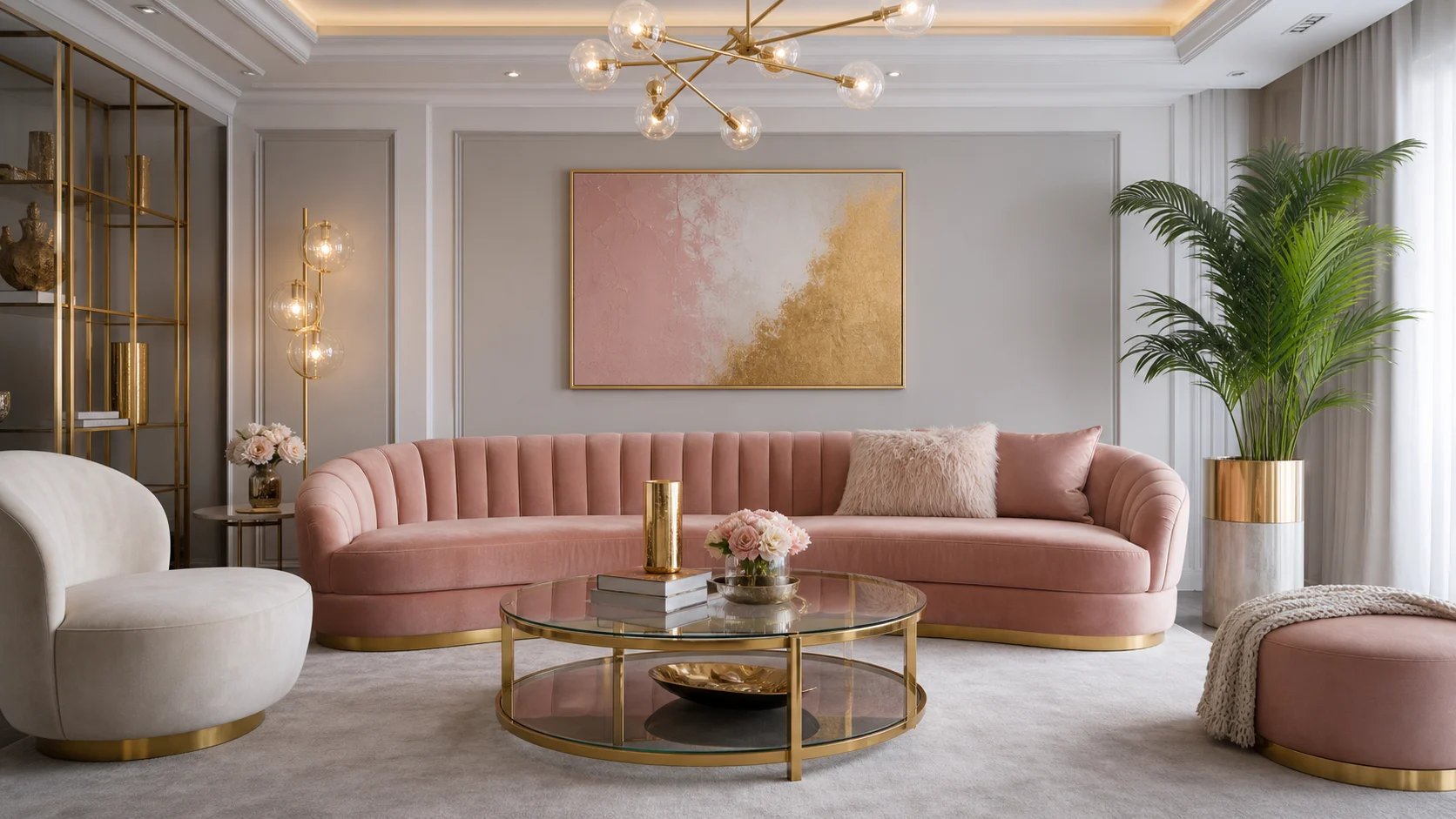
Softer, more contemporary and driven by plush curves and atmospheric reflection.
Choose Art Deco for stronger axes, crafted geometry and historically rooted material contrast.
Stepped profiles and veneer inlay replace free-form sculptural glamour.
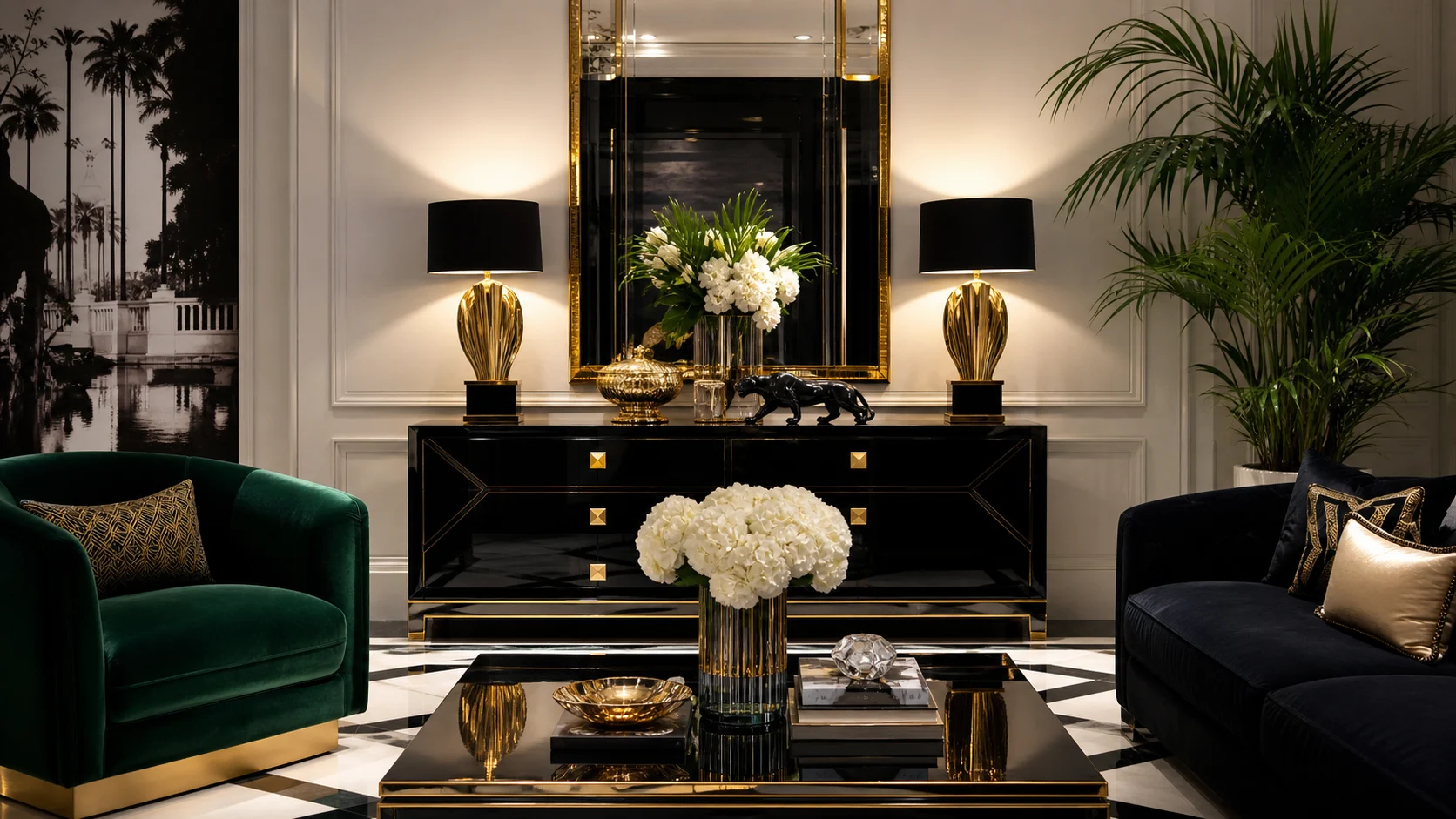
More theatrical, eclectic and decorative through lacquer, pattern and dramatic styling.
Choose Art Deco when geometry and fabrication should organize the drama.
Formal rhythm and machine-age precision replace layered show-business fantasy.
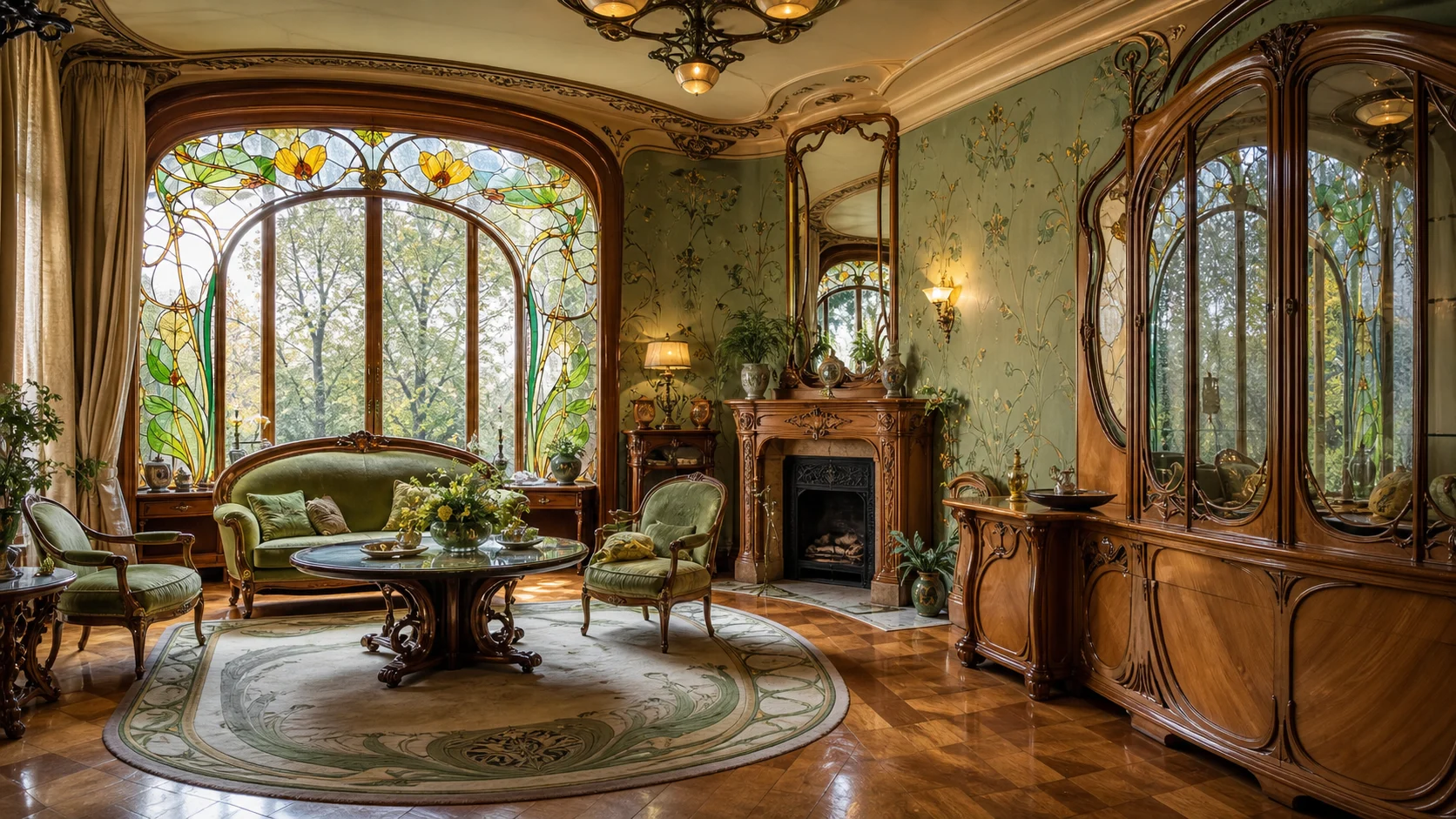
More organic and asymmetrical, drawing on vines, flowers and flowing structural lines.
Choose Art Deco for abstract geometry, symmetry and streamlined modernity.
Steps, rays and repeated verticals replace botanical curves.
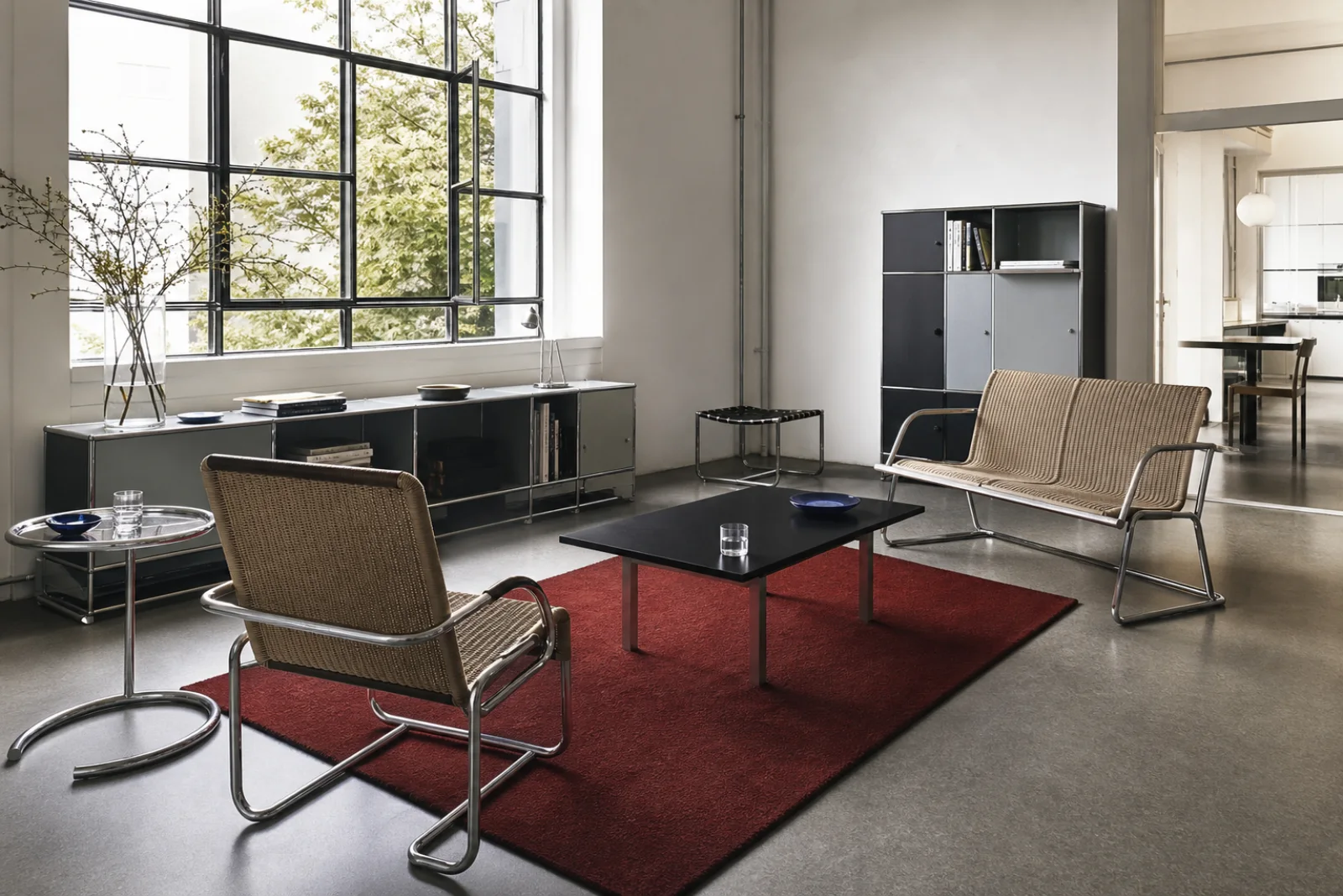
More functional, economical and stripped of decorative luxury.
Choose Art Deco when modern geometry should be enriched by craft, color and precious finish.
Veneer, inlay and opal light elaborate the modern framework.
Invest in one piece with credible proportion and fabrication. A strong veneer cabinet or opal light is more useful than many motif-driven accessories.
Choose a broad continuous curve and restrained upholstery so the form can anchor the axis.
One tiered silhouette establishes the bedroom without patterned bedding or novelty décor.
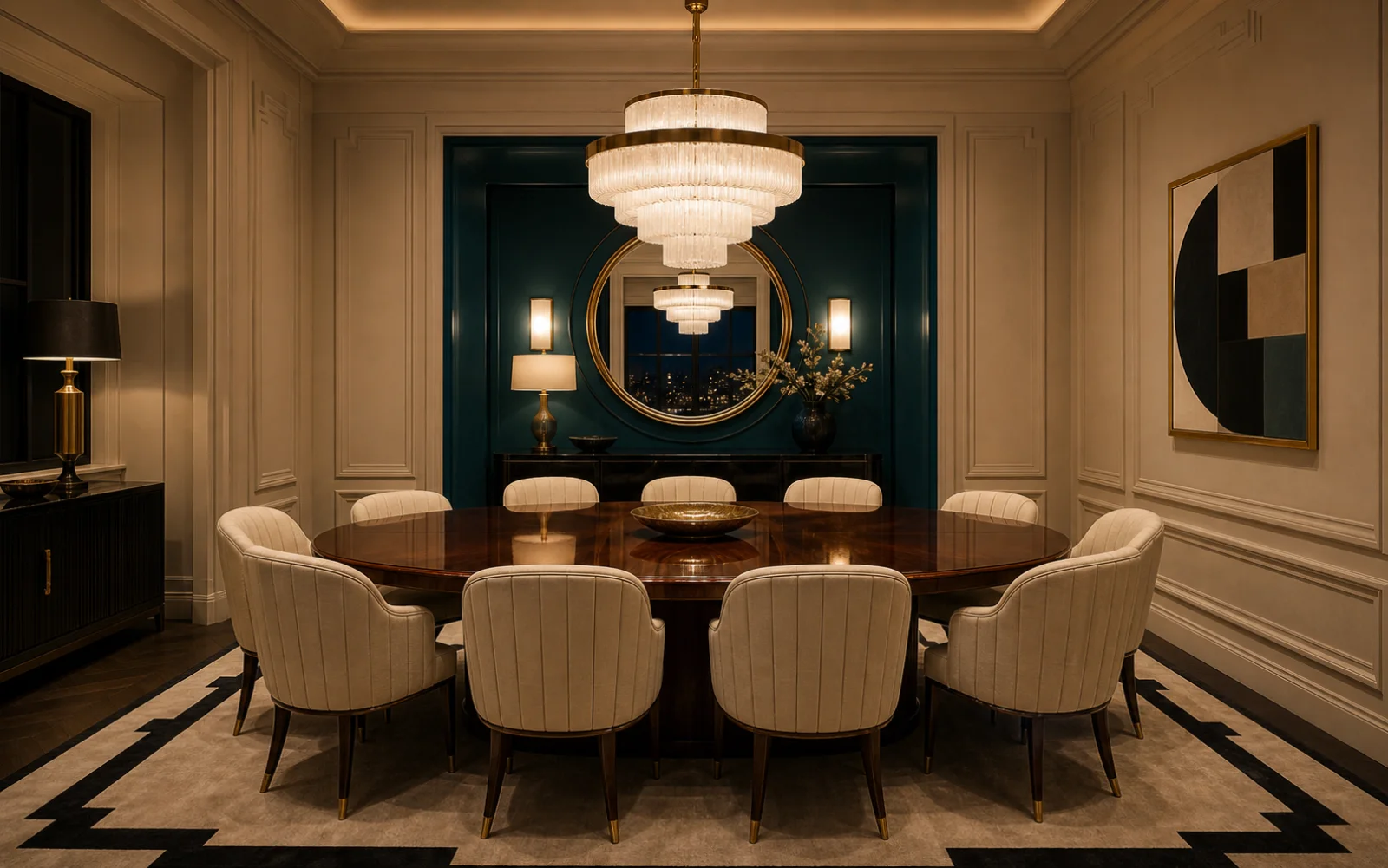
Check scale and dimming; stacked diffused light should illuminate the table without glare.
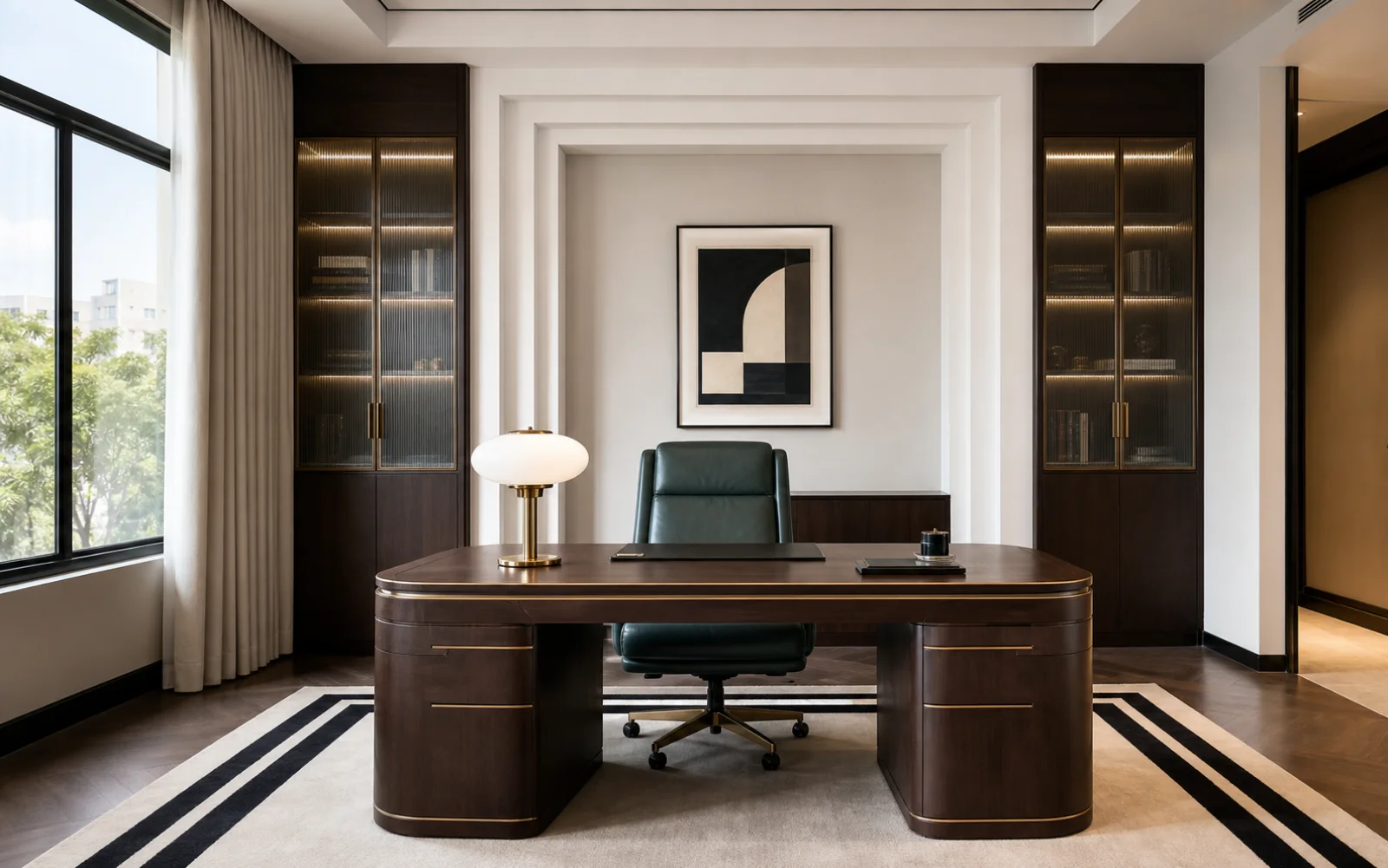
Rounded corners and fine inlay can coexist with cable access and an ergonomic chair.
Use repeated vertical texture on selected fronts and keep frequently touched edges simple.
Place it on the central axis and pair with vertical light rather than additional wall motifs.