01
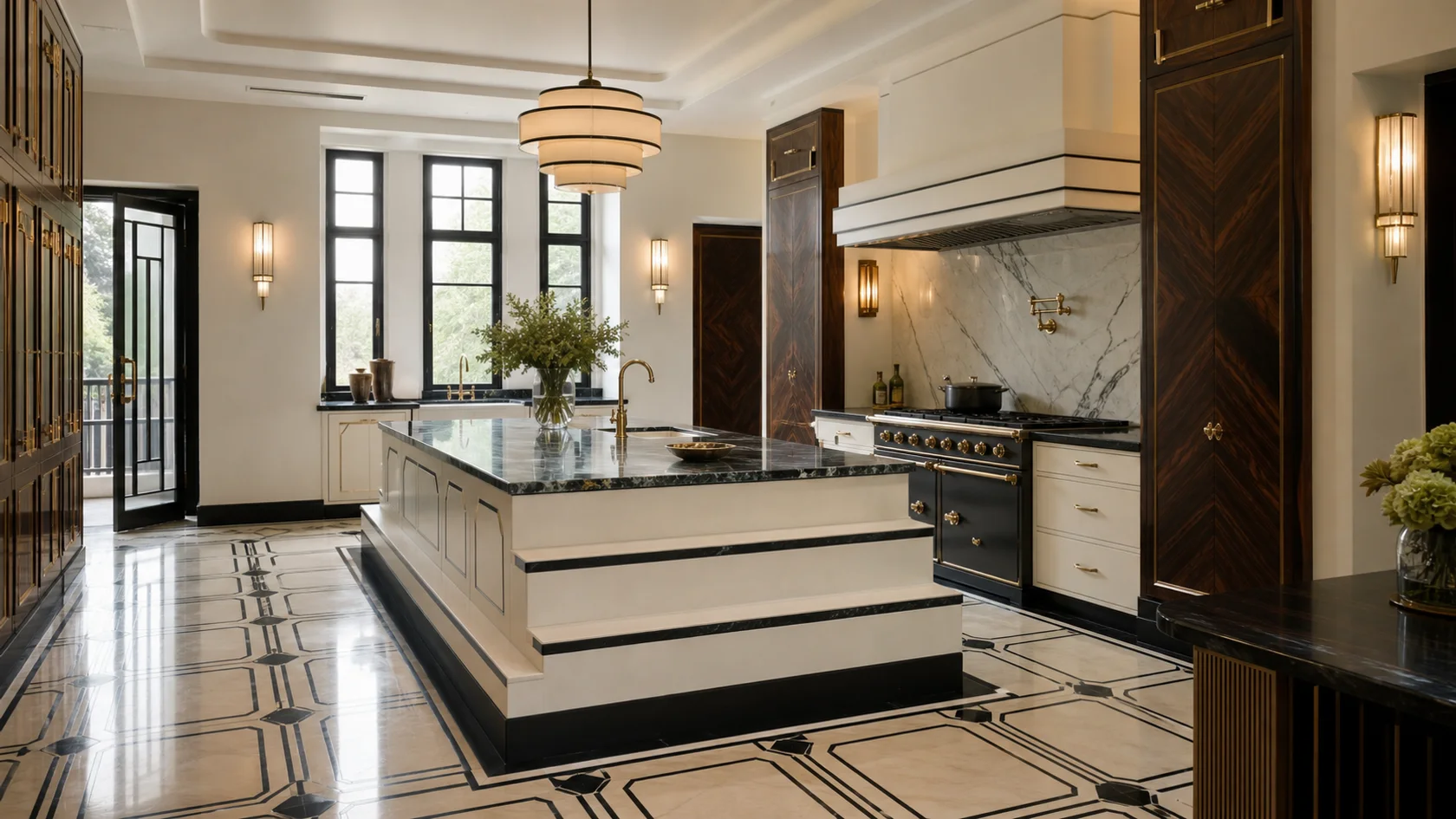
Stepped Island
Stepped architecture sets a disciplined rhythm and gives symmetry a clear reason beyond decoration. Verify work aisles, appliance openings and uninterrupted task light around the preparation zone.
Five materially and spatially different art deco approaches to the kitchen, from a clear daytime plan to a controlled evening mood.
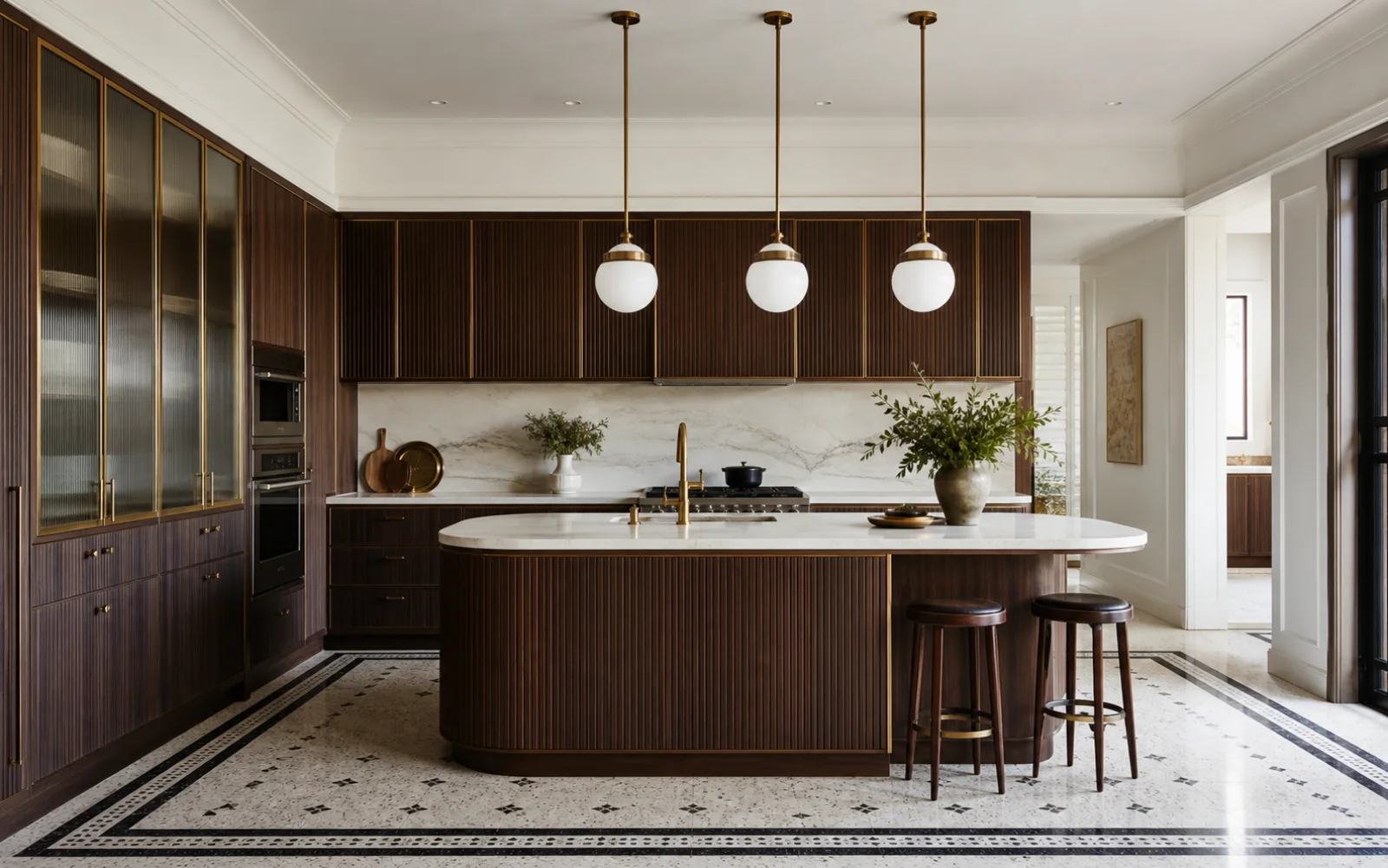
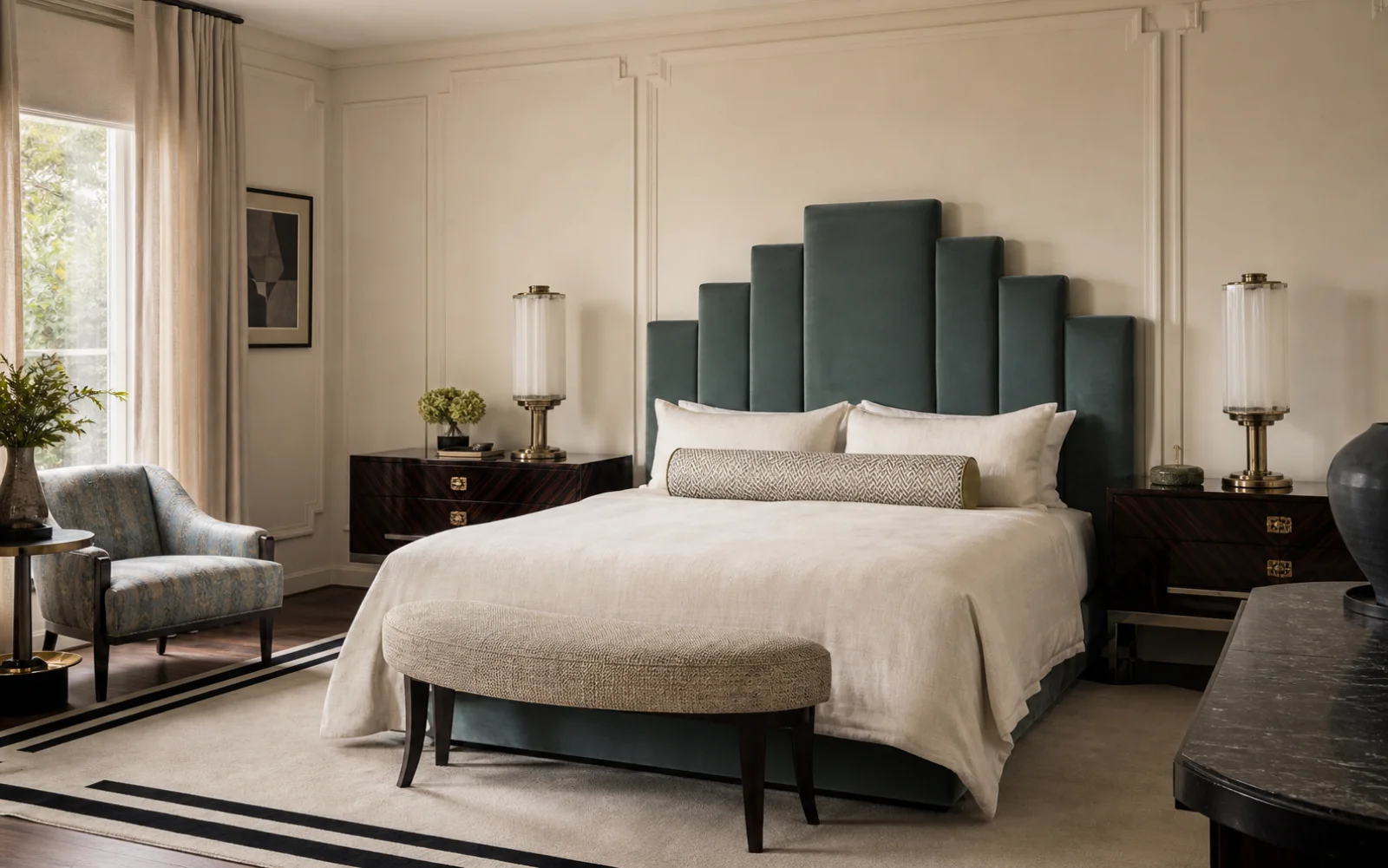
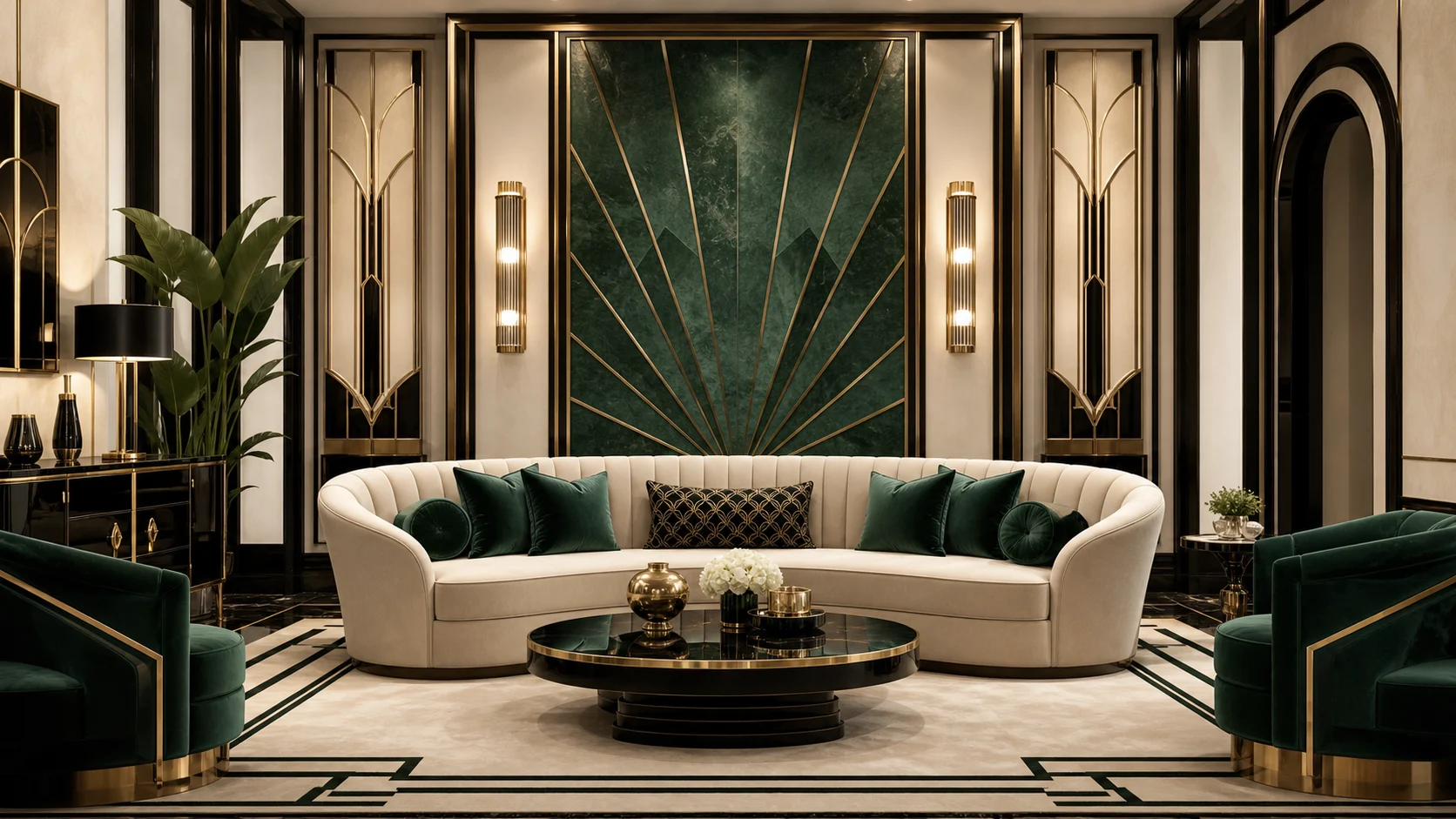
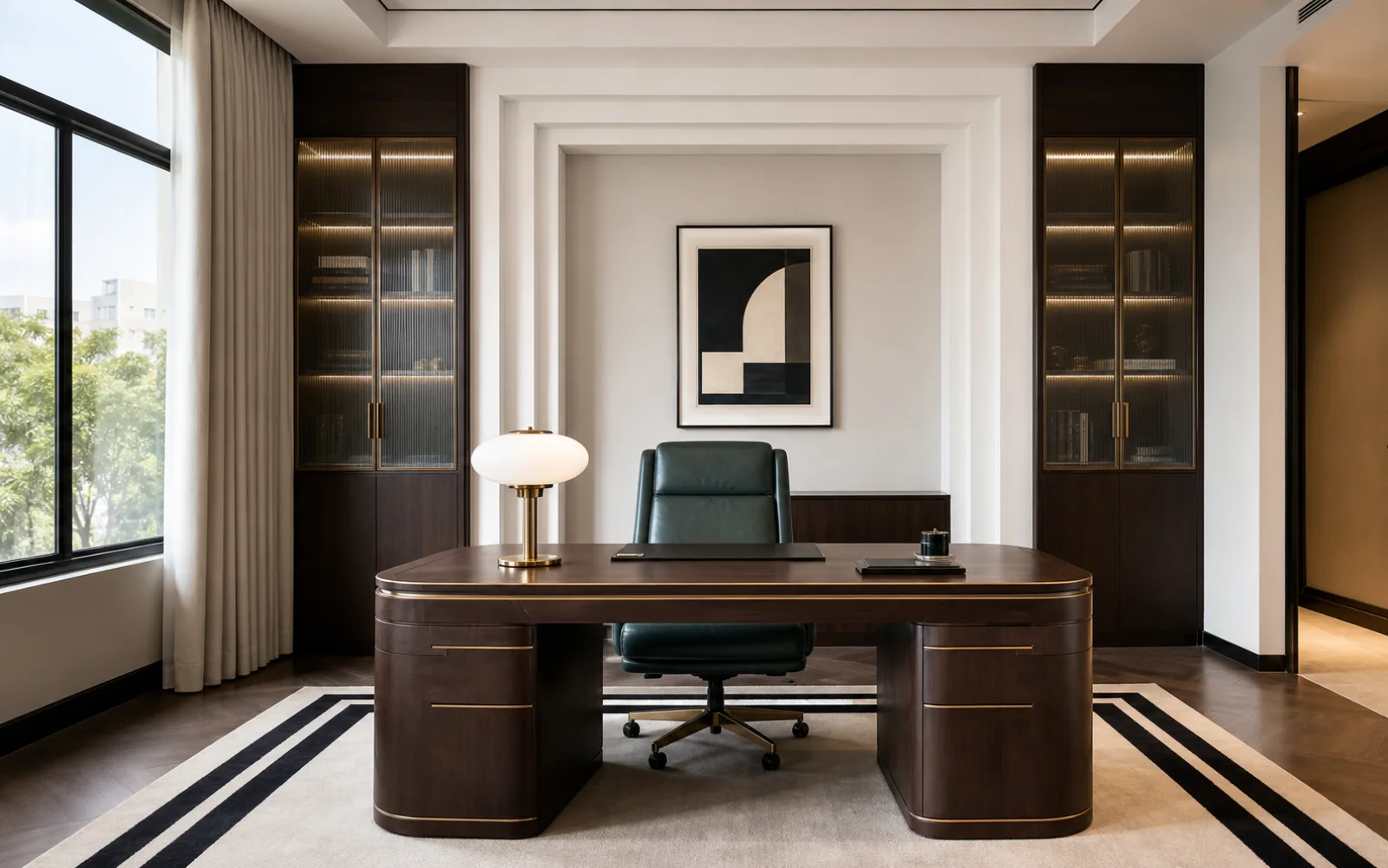
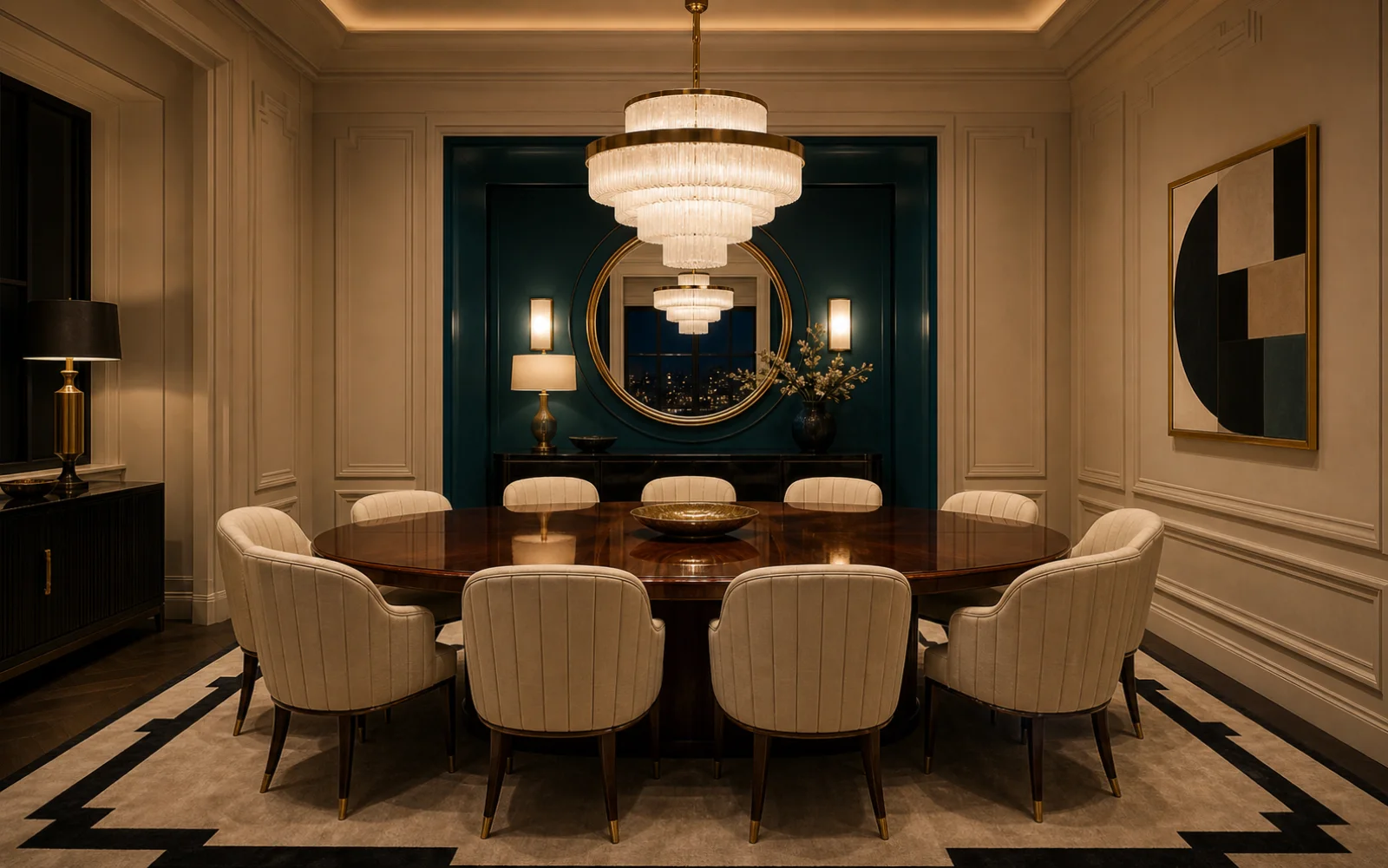
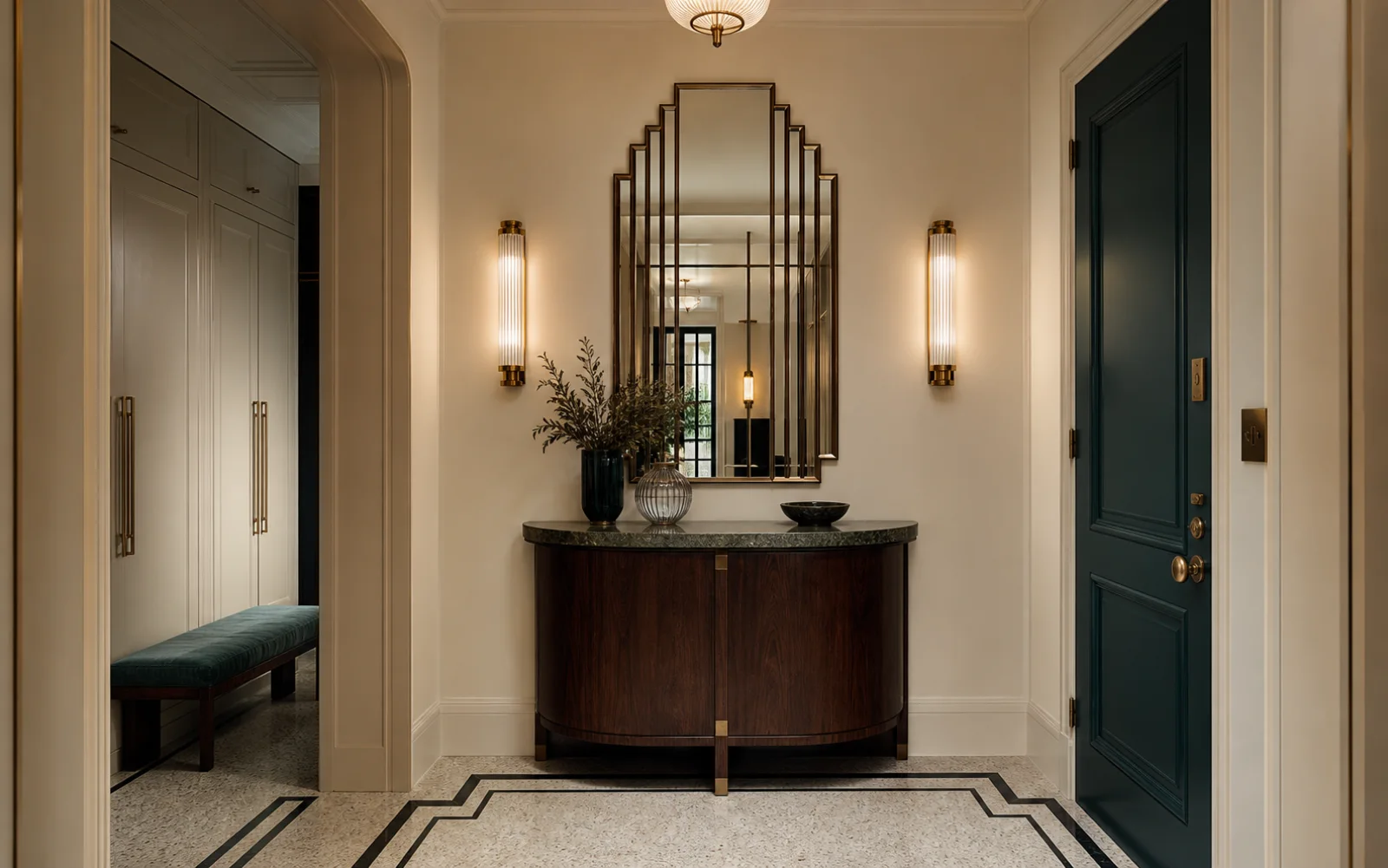
Art Deco organizes luxury through stepped geometry, strong symmetry, lacquered timber, patterned stone and jewel color rooted in the interwar decorative arts. In the kitchen, that identity must still support safe preparation, useful storage and durable surfaces arranged around a clear workflow.
Translate the style through cabinet rhythm, stone pattern and lighting; preparation zones must remain uncluttered and easy to clean. Select one geometric system—stepped, fan, arch or chevron—and repeat it at different scales instead of stacking unrelated motifs.
Use these examples to choose the version of the style that fits your architecture, light and square footage.
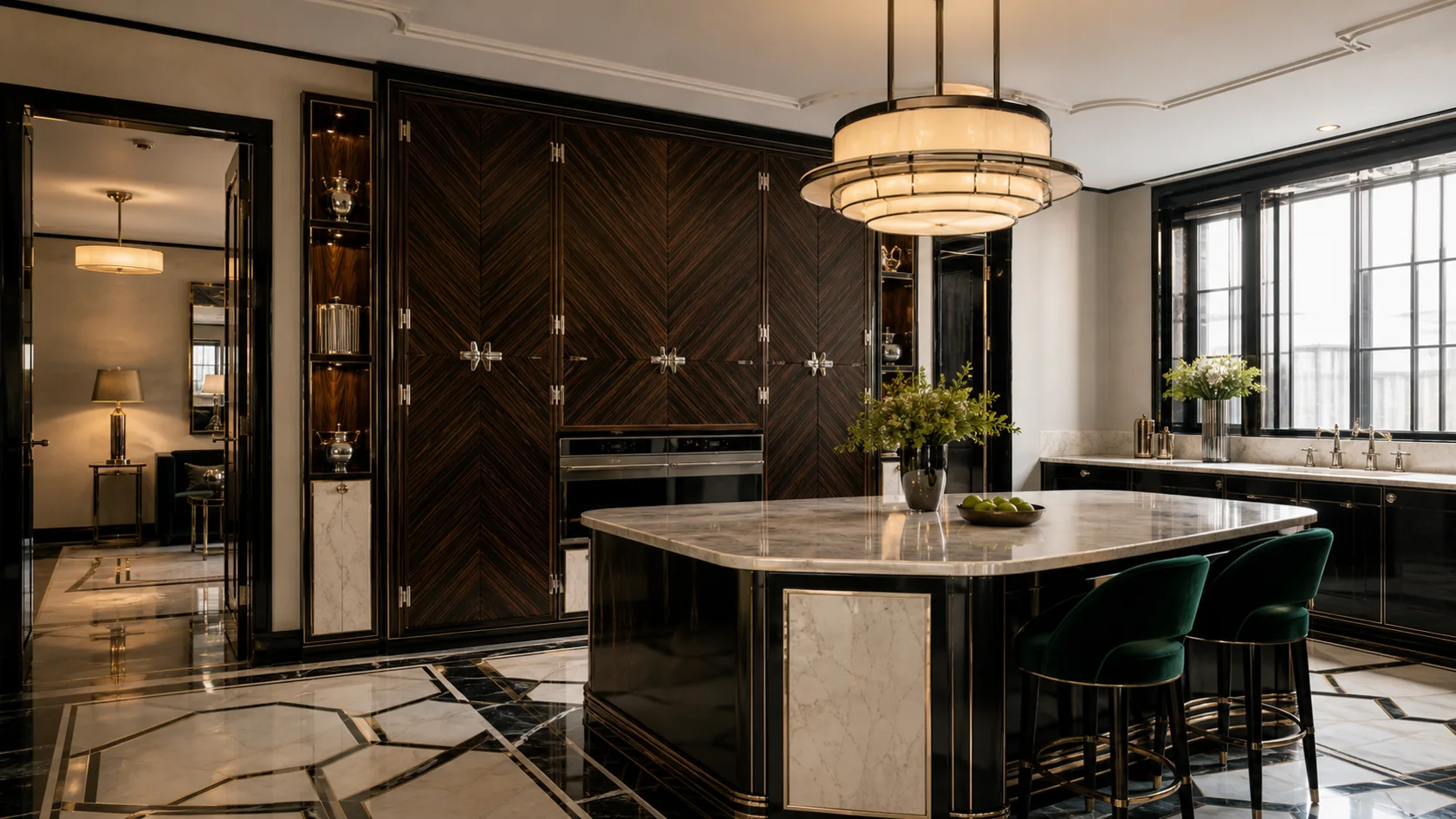
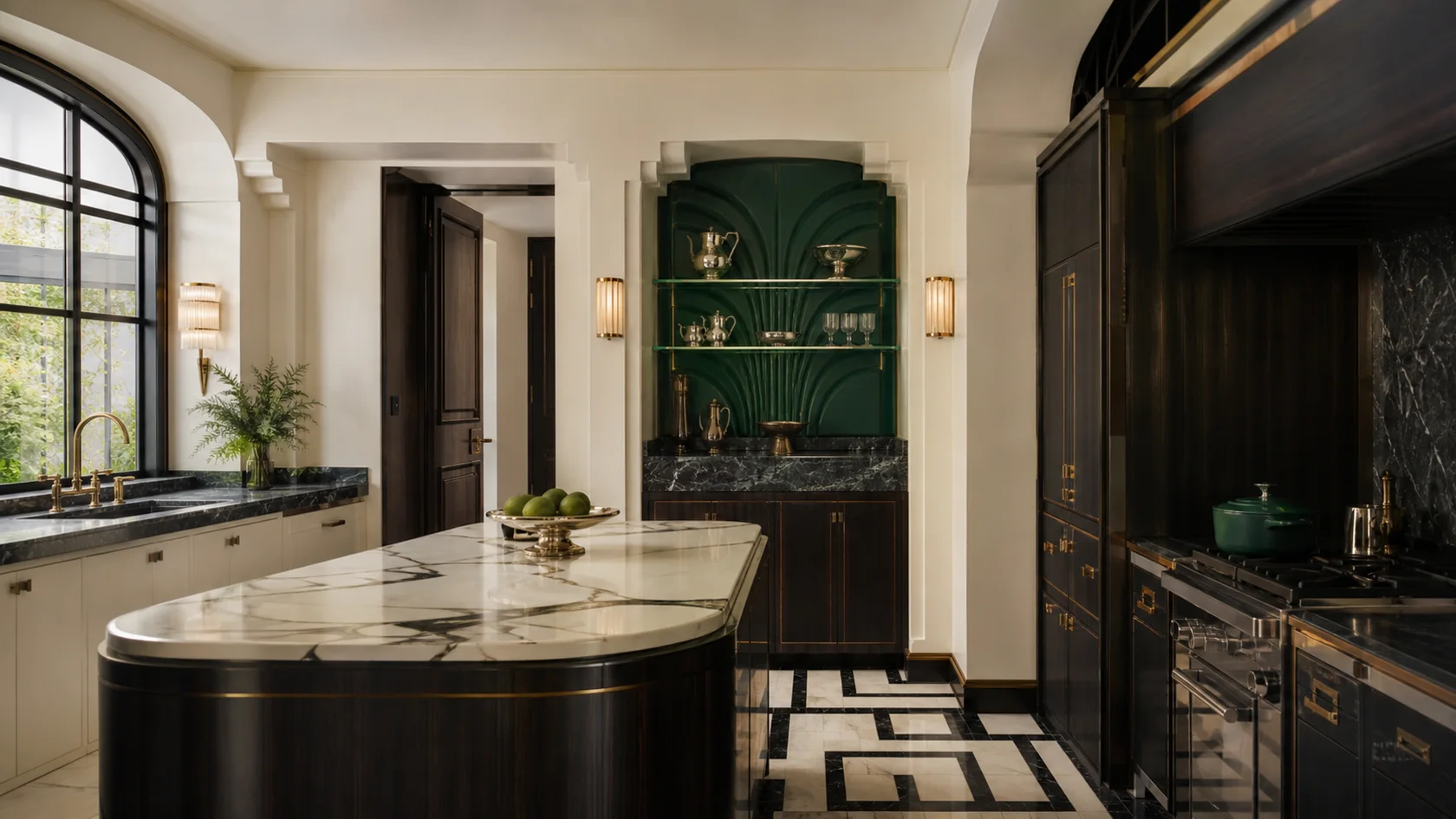
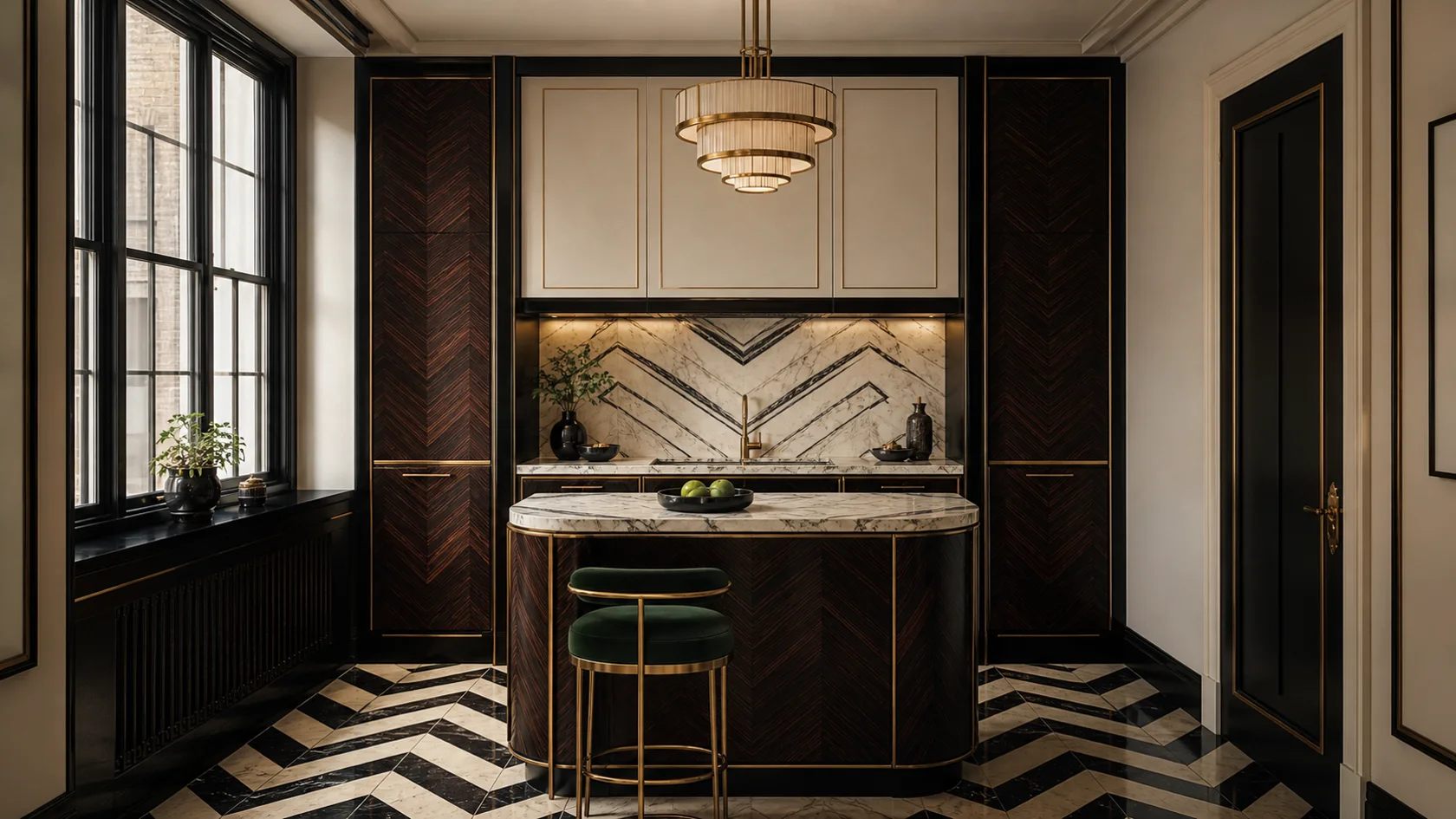
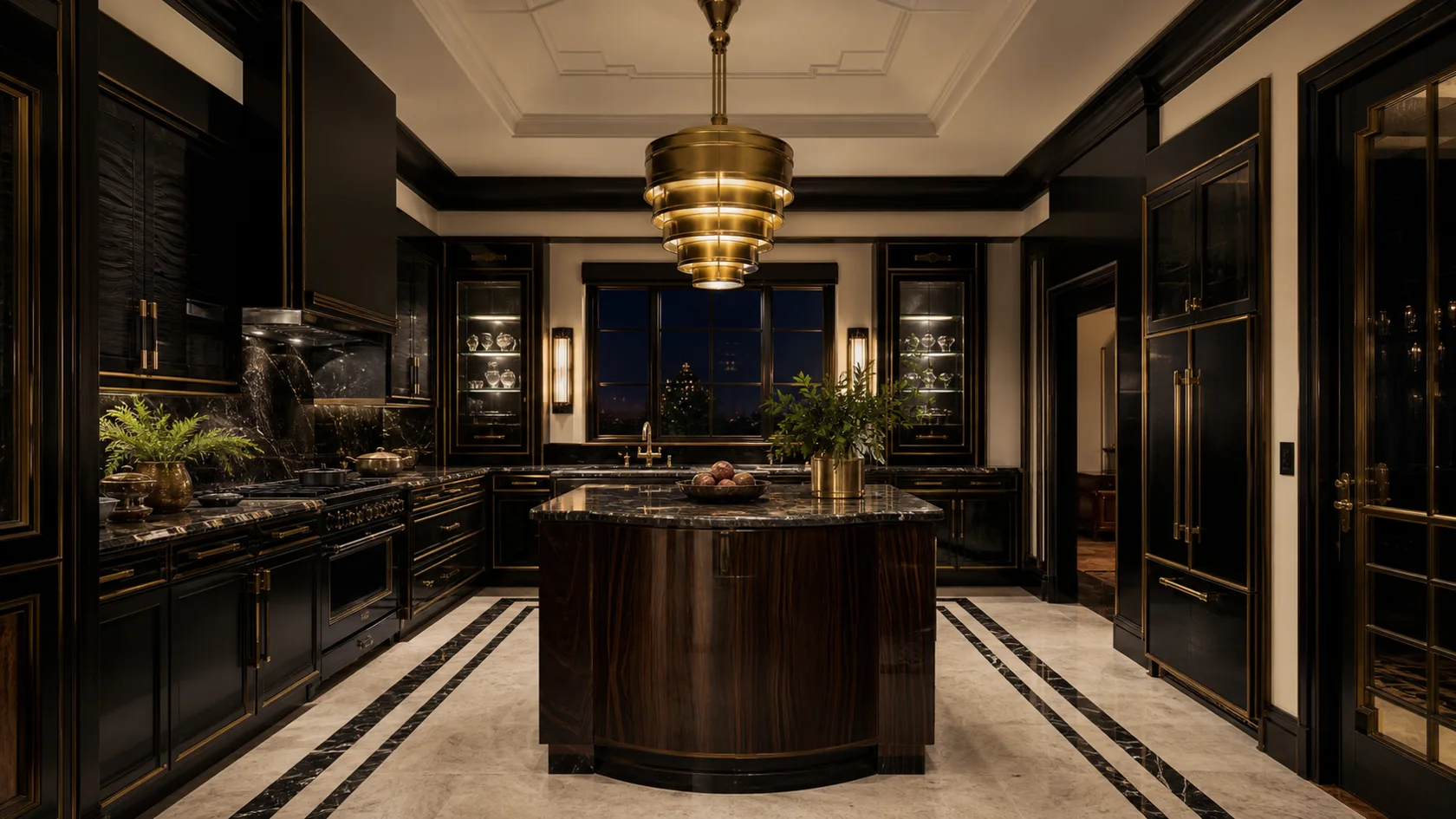
Use the style where it helps the room work: seating, circulation, focal point and material balance.
Keep the sink, cooking zone and cold storage connected without routing household traffic through the main prep area.
Check appliance doors, drawer pulls and seated overhangs before fixing the island or peninsula footprint.
Let one shelf or niche hold useful objects while full-height storage absorbs pantry goods and small appliances.
Worktop light should be continuous and shadow-free; pendants can then provide atmosphere rather than basic visibility.
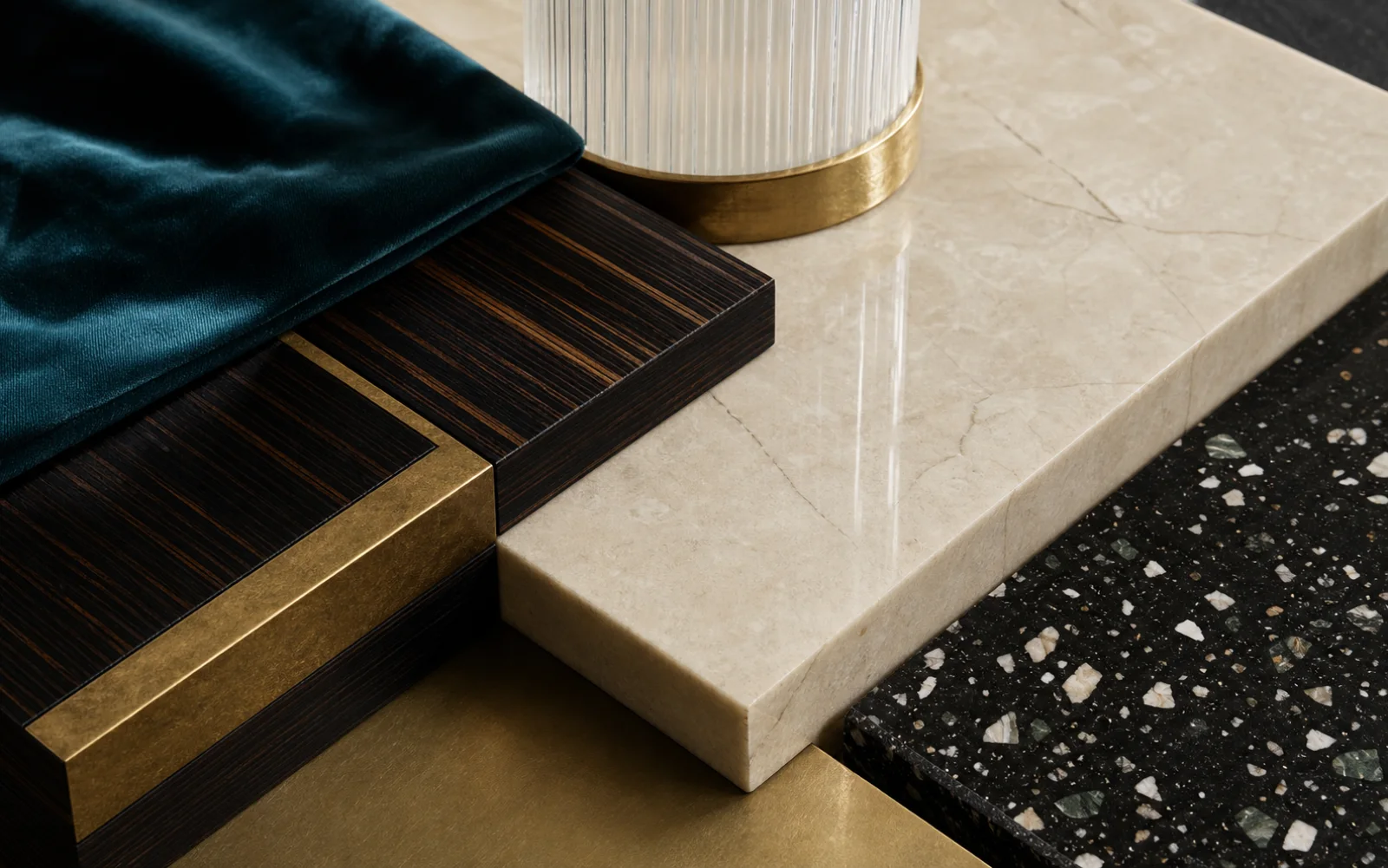
Let ivory occupy the largest area, use ebony and black to draw the geometry, and reserve teal plus aged brass for focal depth and fine articulation.
Provides breathing room around dark veneer, metal and saturated lacquer.
A striped dark timber for statement cabinetry, tables and precise book-matched panels.
A period-credible jewel tone suited to one niche, door or upholstery family.
Use as thin inlay, light framing and hardware rather than a large color field.
Defines floor borders and fine outlines that sharpen the pale mineral base.
Ivory, black and deep brown create the clear graphic structure associated with the style.
Emerald, sapphire, oxblood or aubergine should occupy one substantial upholstery or wall plane.
Brass, bronze and nickel should trace geometry through inlay, lighting and narrow frames.
Bookmatched veneer, marble and dense velvet provide richness through real surface variation.
For this room, a few strong choices can carry the style better than adding more decor.
Translate the style through cabinet rhythm, stone pattern and lighting; preparation zones must remain uncluttered and easy to clean. Confirm the cabinet system by dimensions, comfort and maintenance before selecting its decorative finish.
Select one geometric system—stepped, fan, arch or chevron—and repeat it at different scales instead of stacking unrelated motifs.
Select one geometric system—stepped, fan, arch or chevron—and repeat it at different scales instead of stacking unrelated motifs.
Select one geometric system—stepped, fan, arch or chevron—and repeat it at different scales instead of stacking unrelated motifs.
Use these checks to keep the art deco character clear without compromising how the kitchen works.
Reduce its depth or use a freestanding table when the working aisles cannot remain clear.
Display only frequently used pieces and keep bulk food or appliances behind doors.
Use a quieter cabinet field and give the worktop or island one clear material role.