01
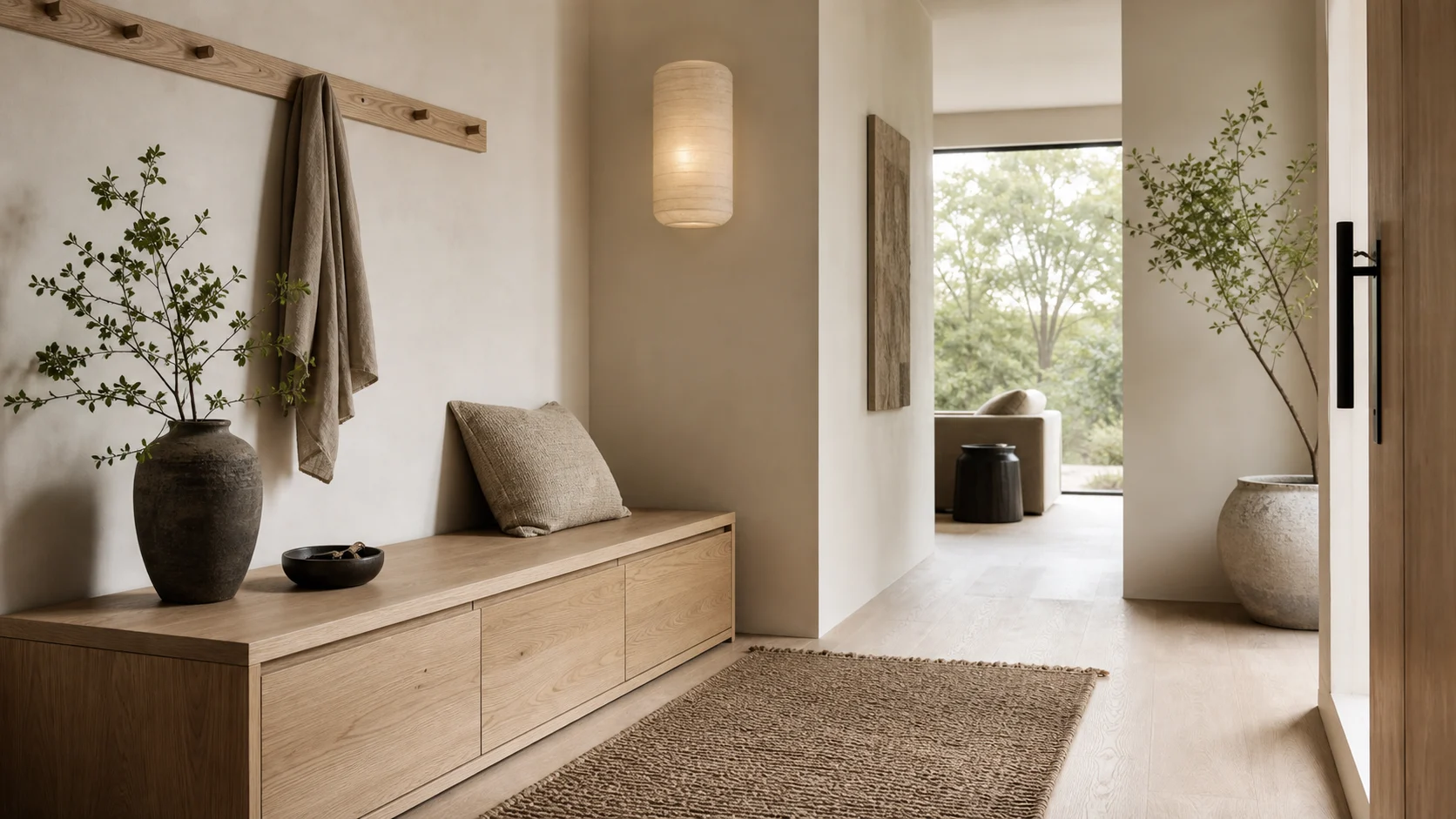
Storage bench entry
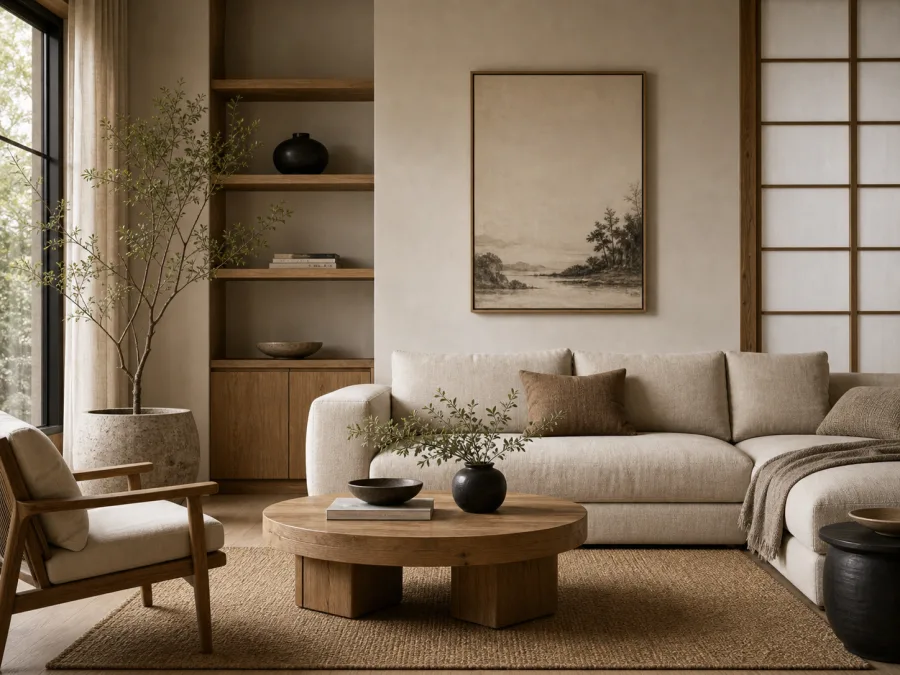
A bench and closed storage keep the first impression calm.
Ideas, layouts, colors and materials for a japandi entryway & hallway — plus the pieces that make the look work.
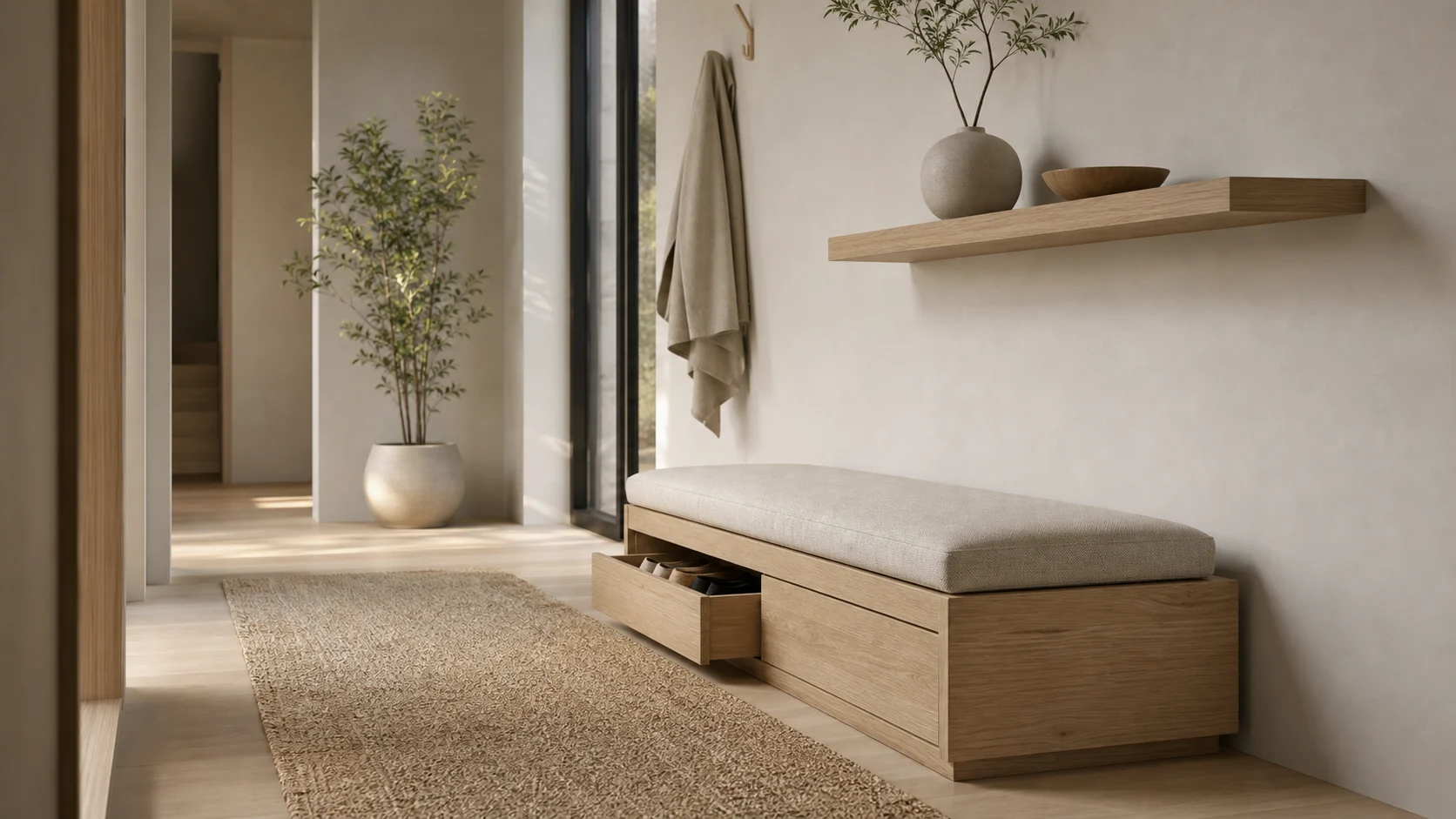
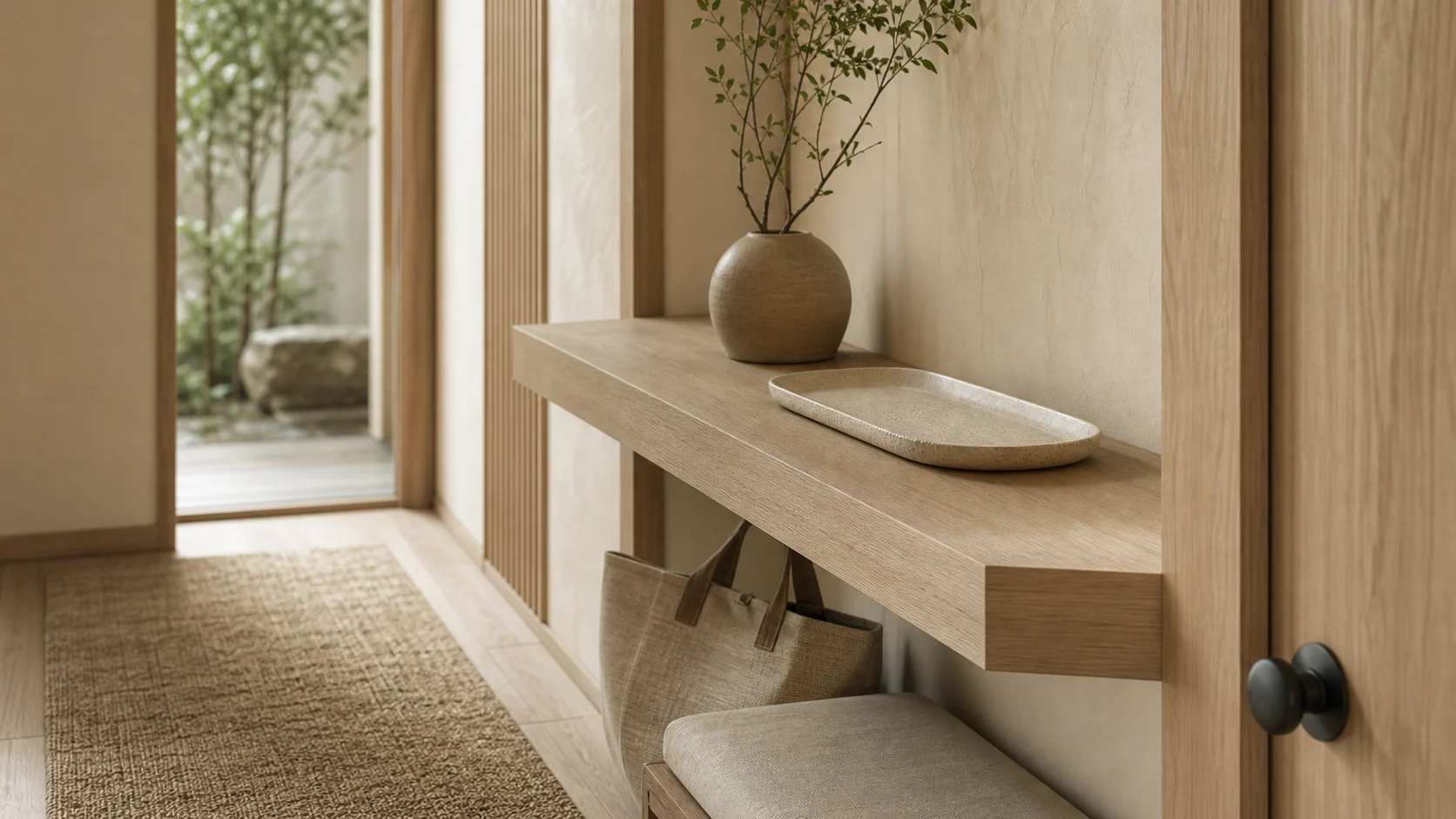
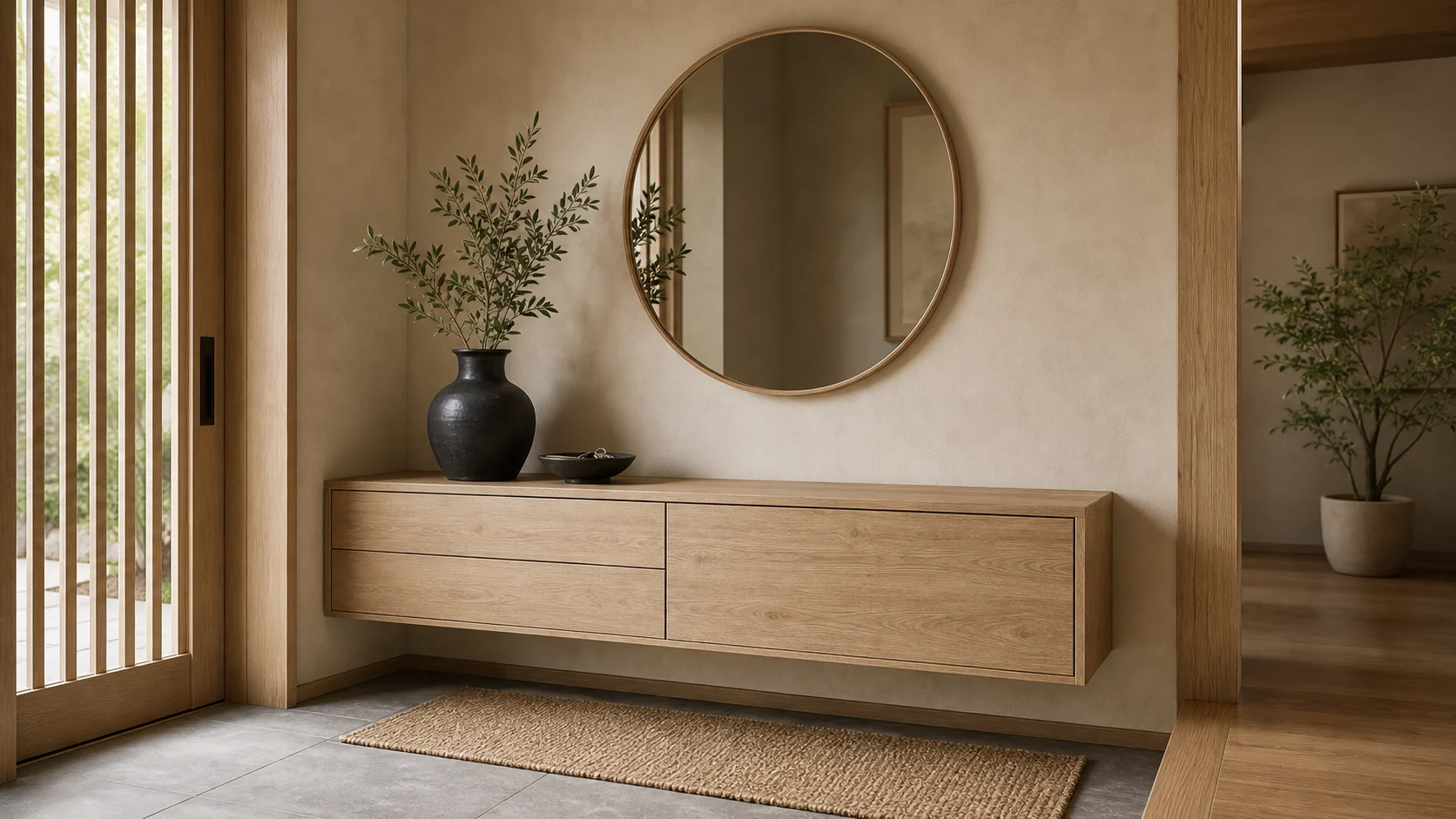
A Japandi entryway has to control clutter immediately. Shoes, coats, bags and keys need a calm place to land so the first impression stays quiet.
Use shallow storage, pale wood, warm walls and one tactile accent. The entry should feel useful before it feels decorative.
Use these examples to choose the version of the style that fits your architecture, light and square footage.
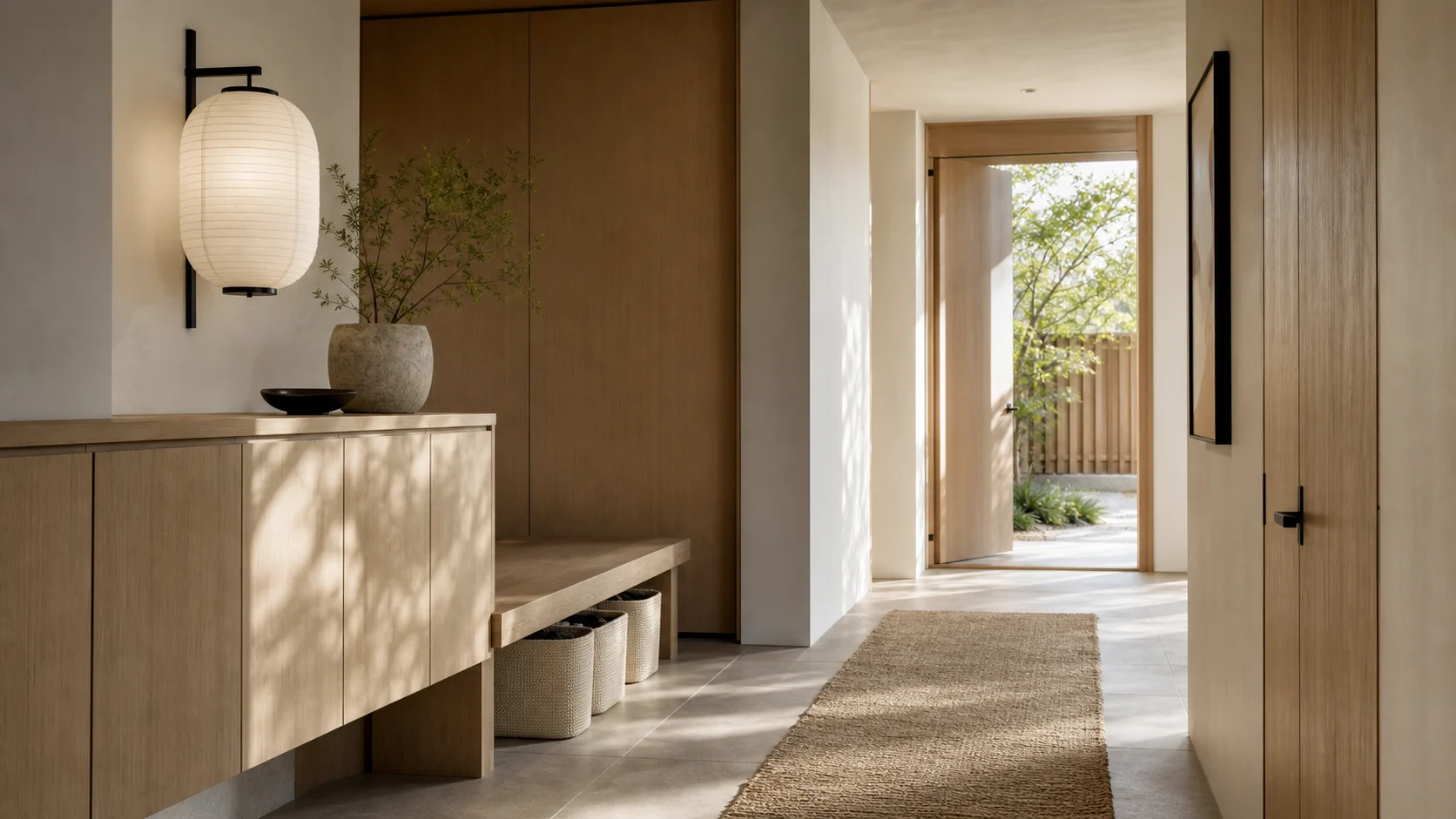
Use the style where it helps the room work: seating, circulation, focal point and material balance.
Plan where shoes, keys, coats and bags go before choosing decorative pieces.
A narrow bench, slim shelf or wall hooks keep circulation clear in hallways.
Closed baskets, drawers and bench storage preserve the calm more than open displays.
A ceramic vessel, low lamp, mirror or art piece is enough for a small entry.
A good Japandi palette starts with warmth, then adds just enough contrast to keep the room from feeling flat. The safest route is warm white walls, pale wood, oat textiles and a few ink-dark accents.
Use it for walls and ceilings so the space feels soft rather than stark.
The main warmth layer for floors, tables, beds, benches and storage.
A gentle textile color for sofas, bedding, curtains and cushions.
Use it sparingly in ceramics, frames, lighting cords or small hardware.
A natural accent through plants, art or a single painted detail.
Warm white, oat and mushroom keep narrow entries from feeling cold.
Pale oak or ash adds warmth through a bench, shelf or frame.
Woven mats, linen baskets and paper light make the entry feel softer.
Black ceramic or soft charcoal should be small and intentional.
For this room, a few strong choices can carry the style better than adding more decor.
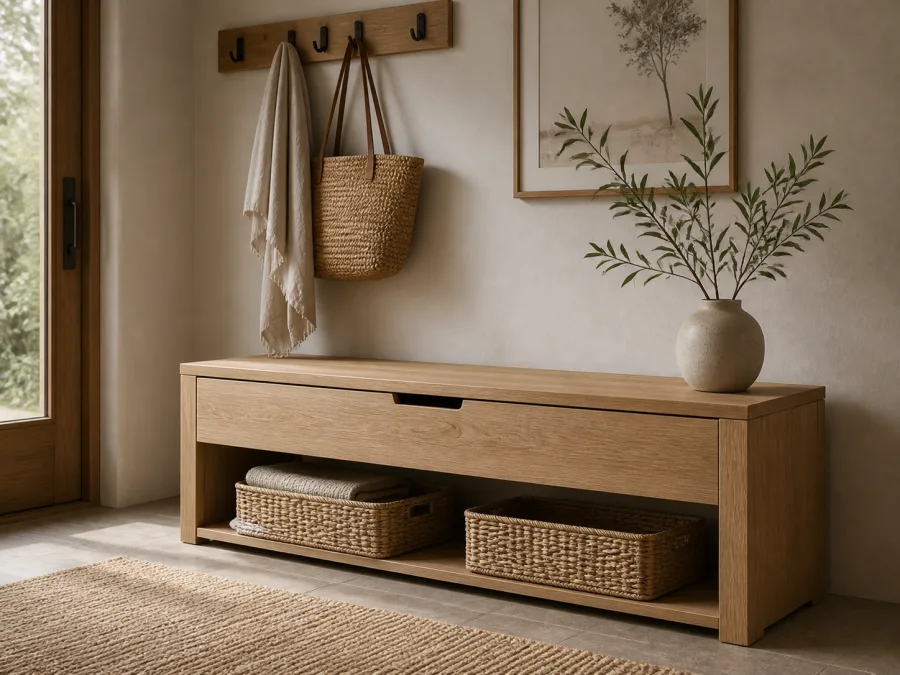
Combines sitting, storage and a low furniture profile.
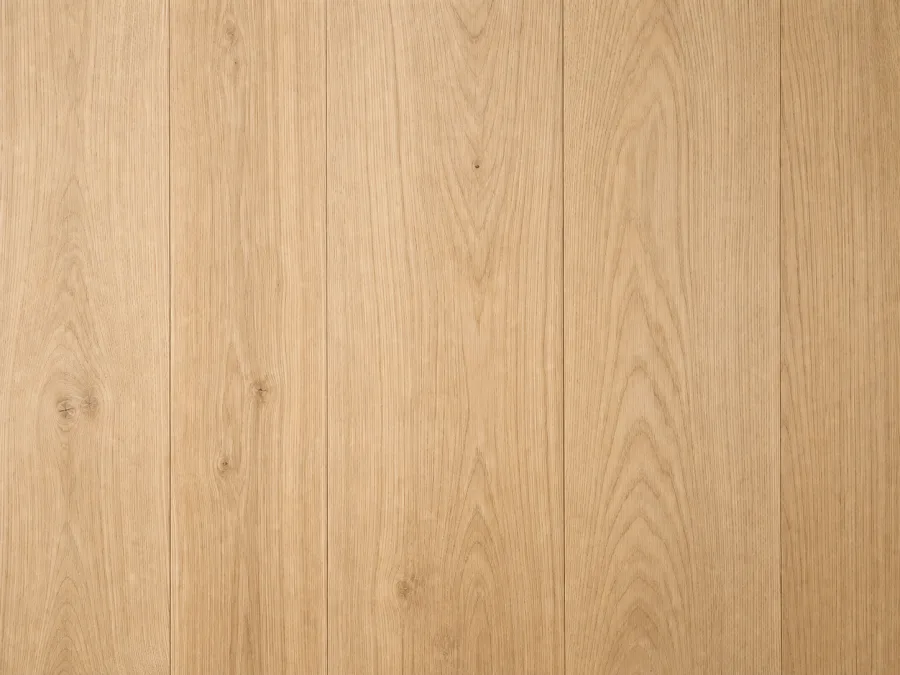
Adds warmth without making the hallway visually heavy.
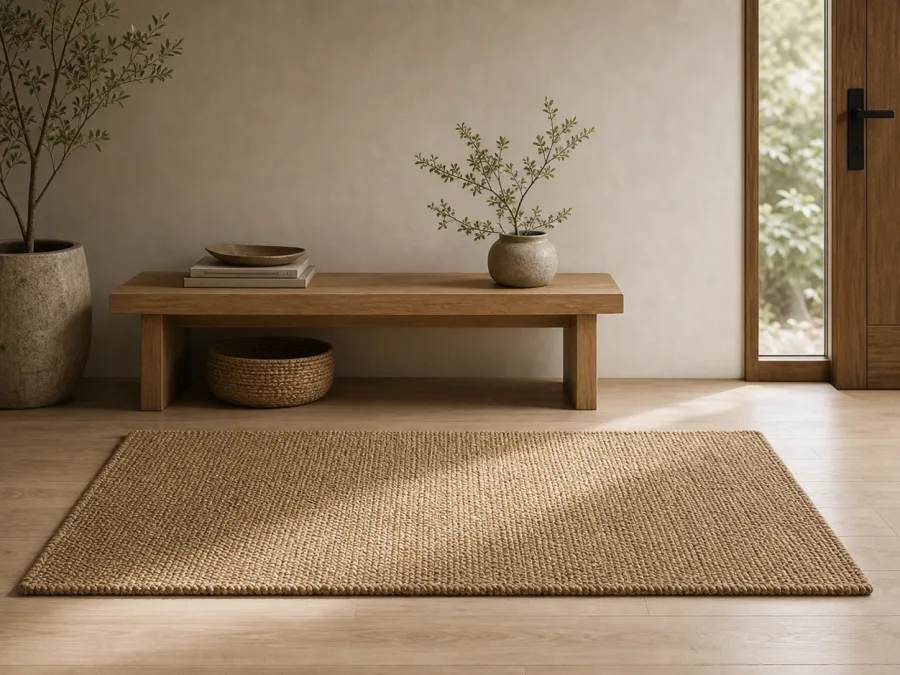
Handles daily use while keeping texture quiet.
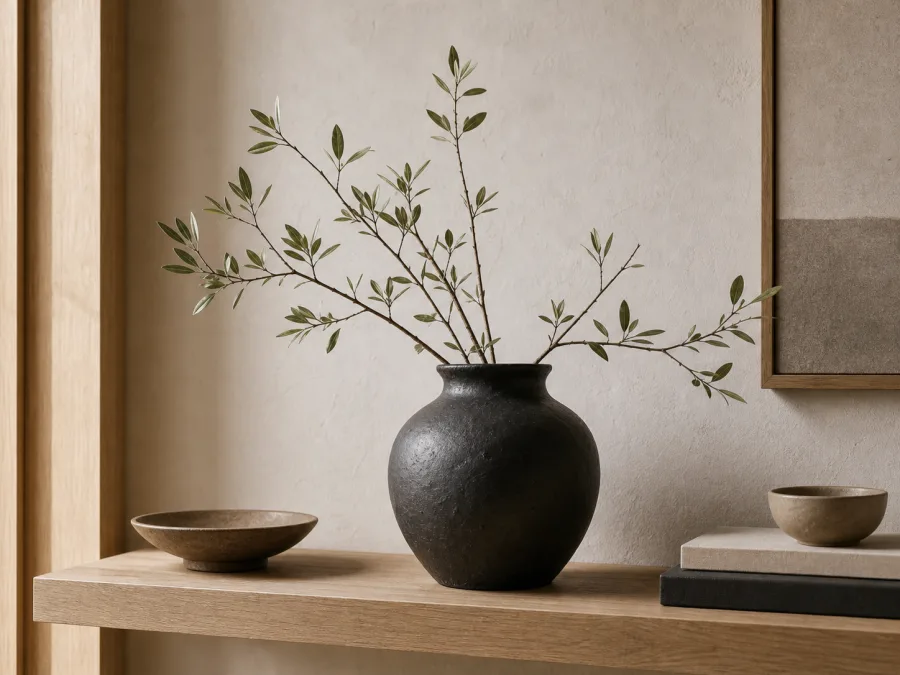
A small grounding accent for a shelf or console.
Use these checks to keep the japandi character clear without compromising how the entryway & hallway works.
Open hooks can become visual clutter. Mix them with closed storage.
The entry will not stay calm if every daily item remains visible.
Use shallow pieces so the entry still feels open.