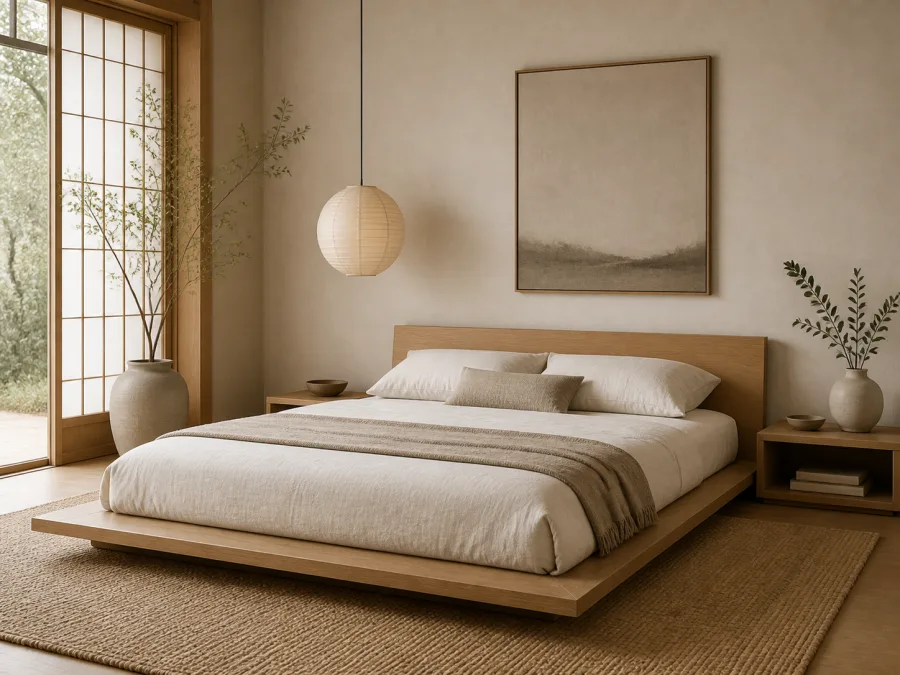
Low platform bed
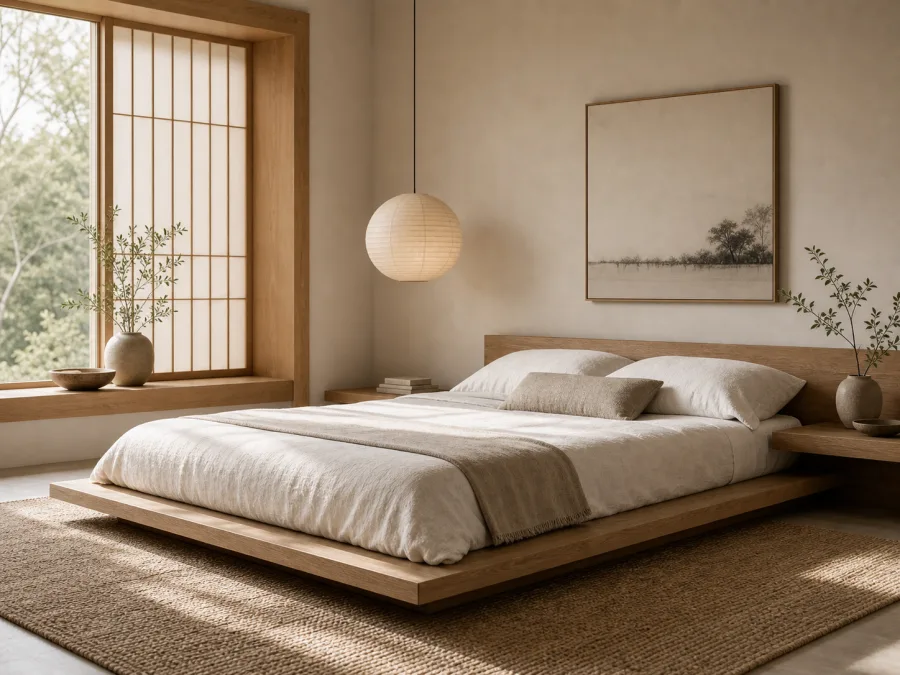
A low bed changes the room immediately. Keep the frame pale, simple and close to the floor.
Japanese restraint meets Scandinavian warmth: low furniture, pale wood, paper light, quiet texture and rooms that feel edited without feeling empty.
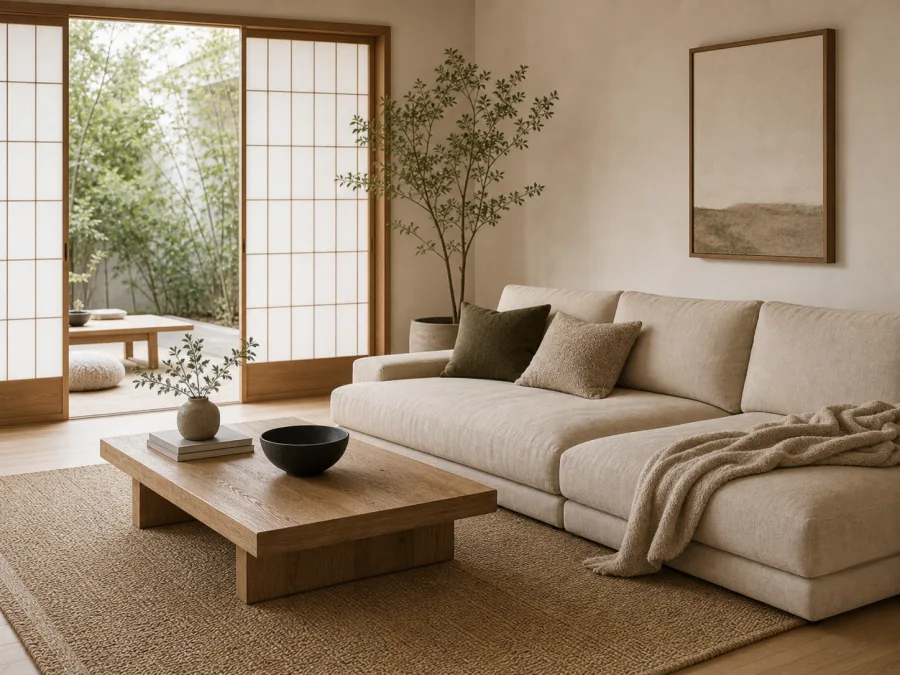
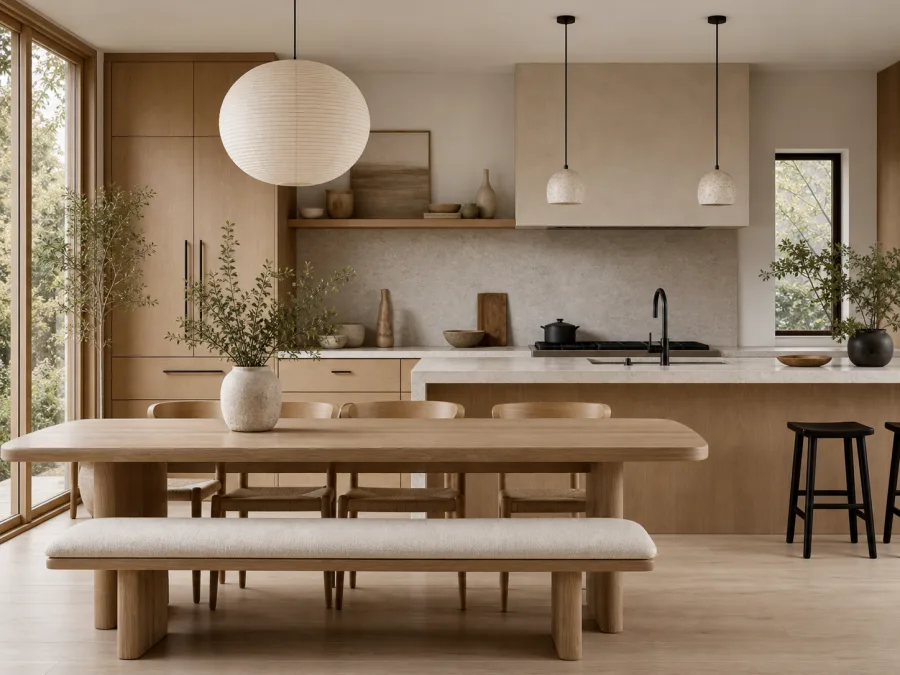
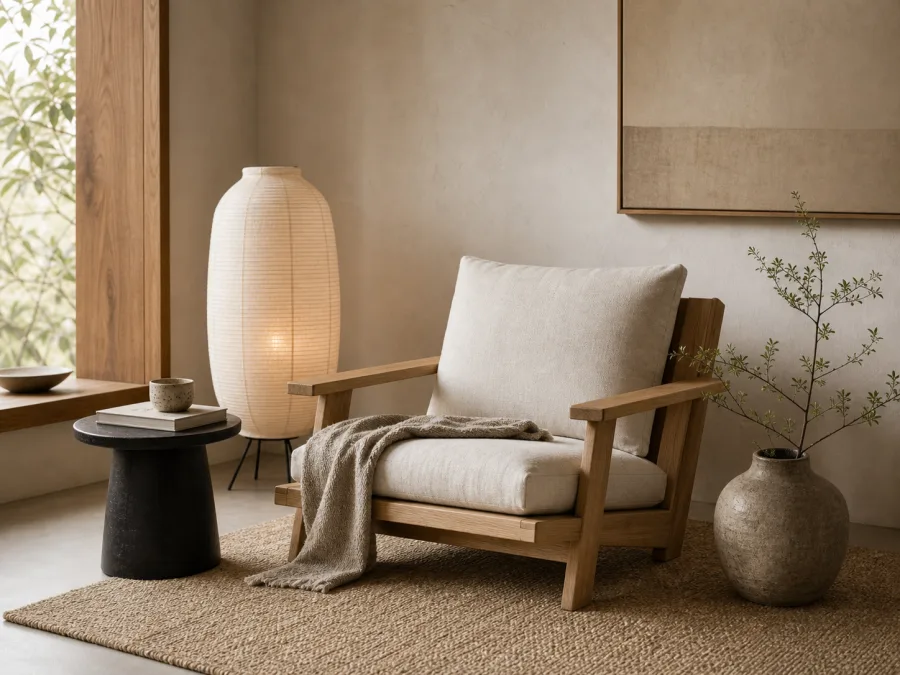
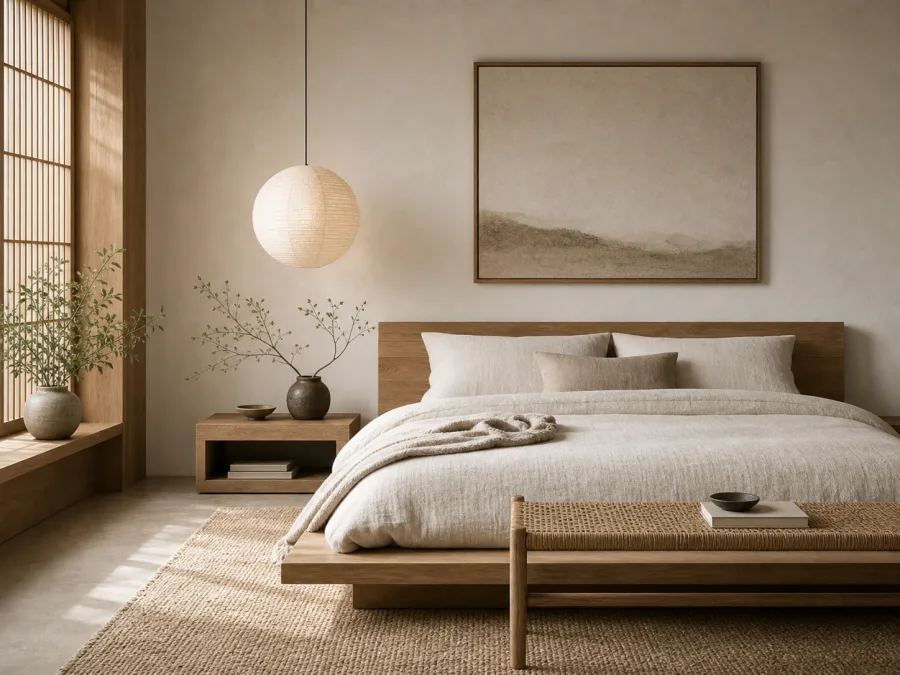
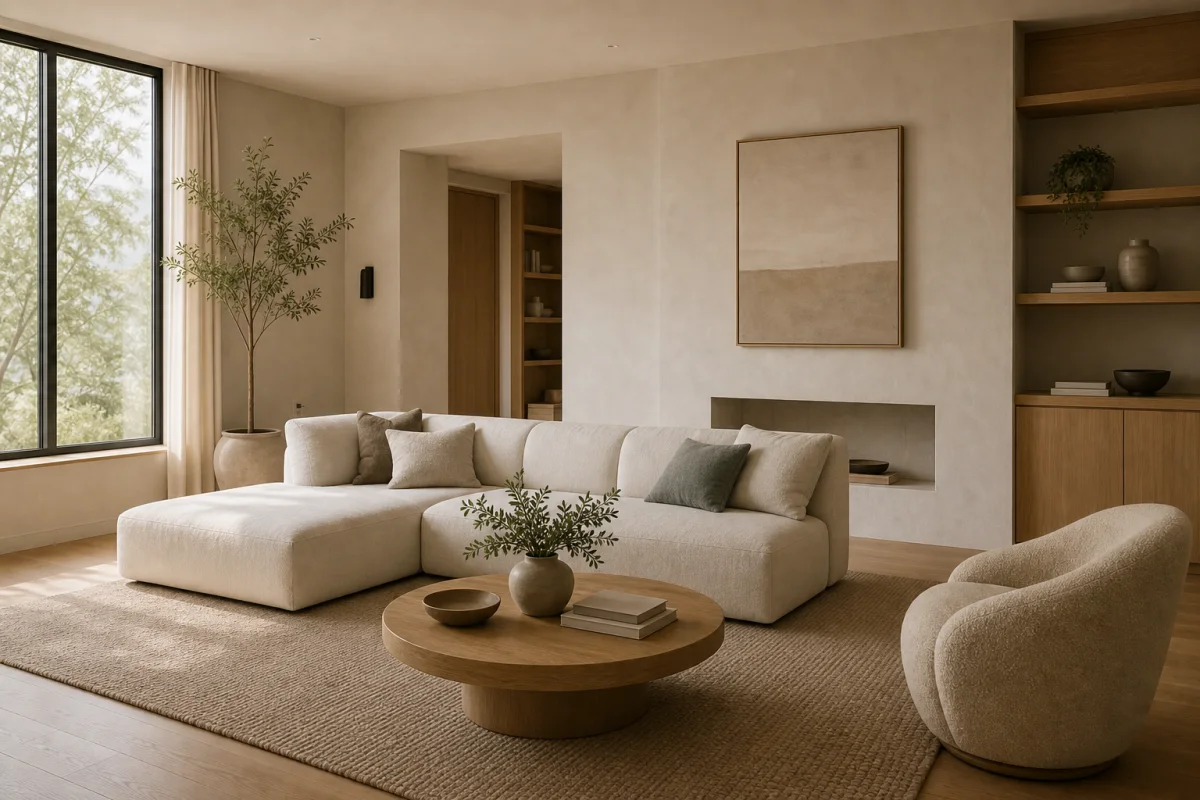
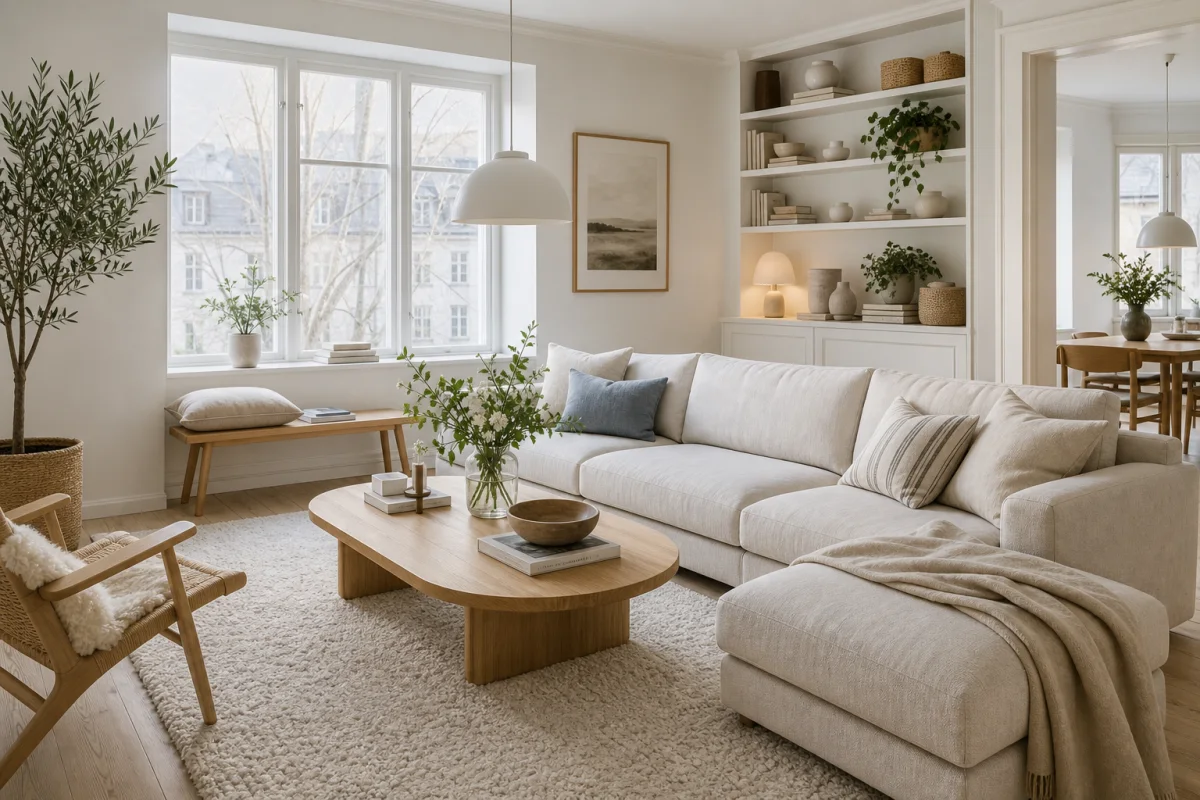
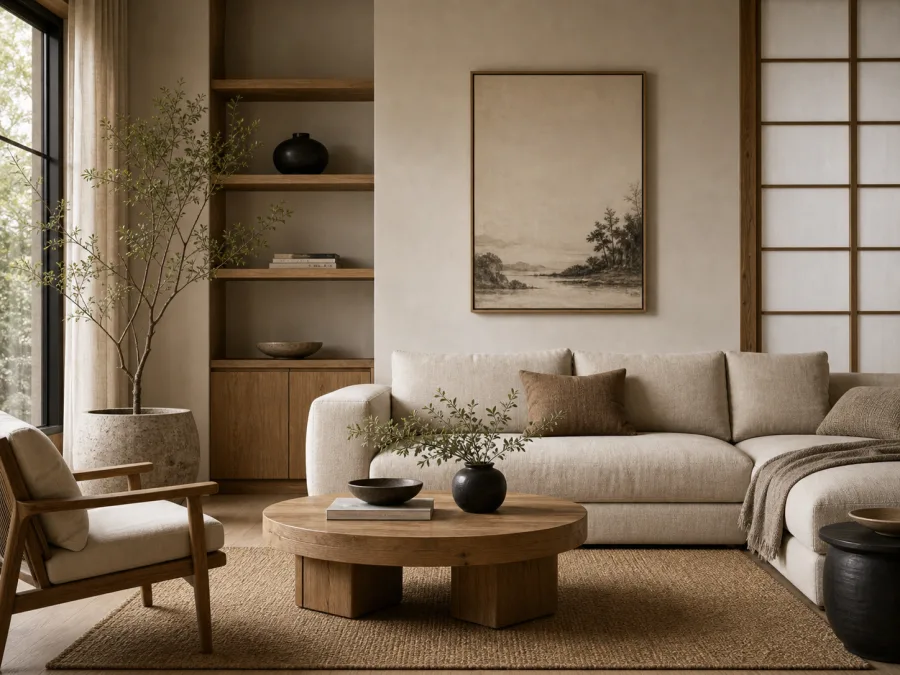
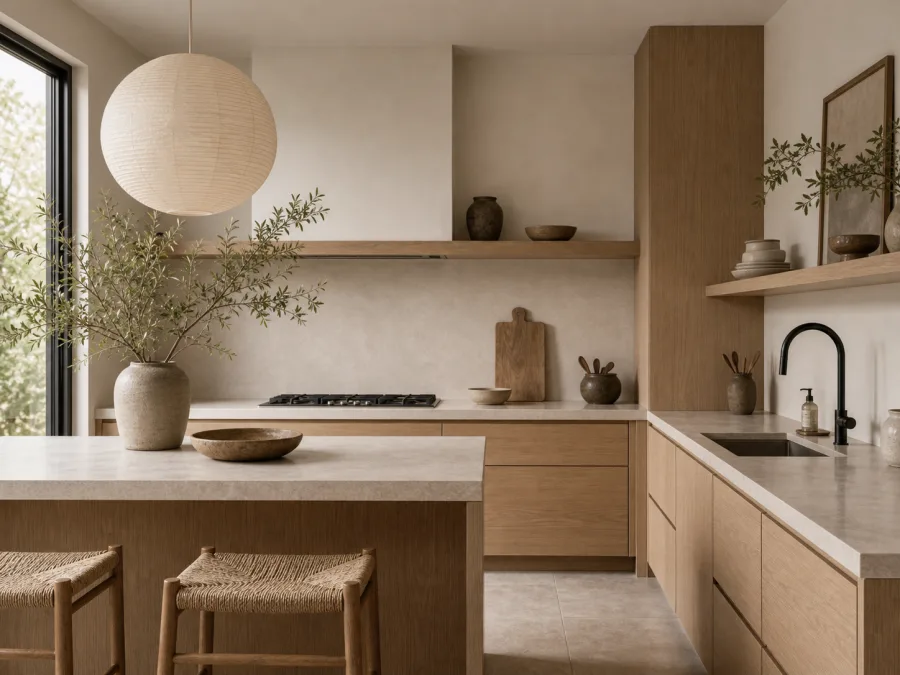
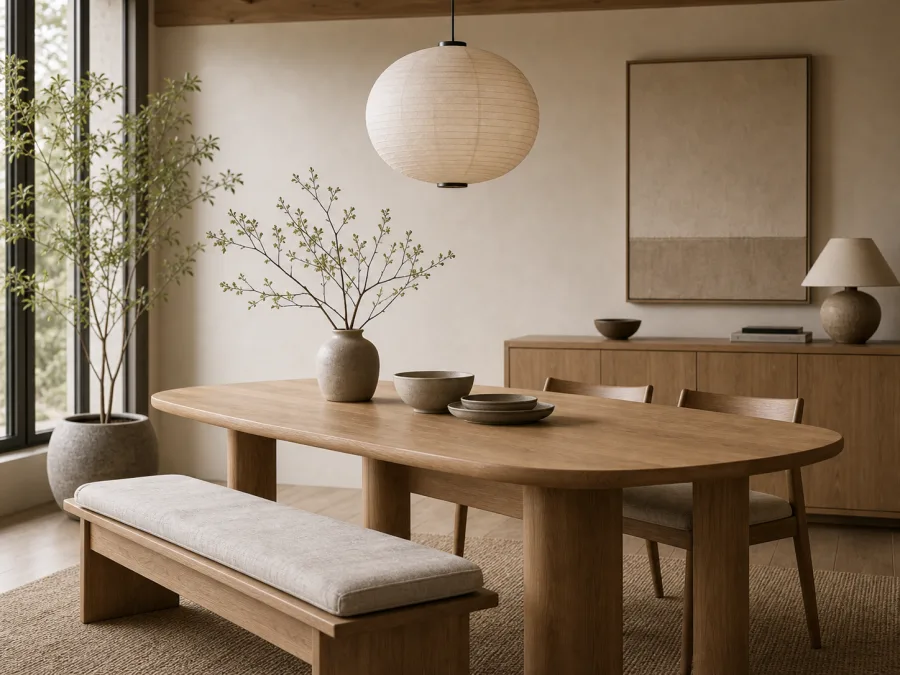
Japandi interior design combines the quiet discipline of Japanese spaces with the comfort and practicality of Scandinavian rooms. The look is simple, but not sterile: low furniture, pale wood, paper lamps, linen, woven texture and handmade ceramics do most of the visual work.
The value of Japandi is not that it removes everything. It makes each visible object earn its place. A room feels Japandi when storage is calm, furniture sits low, light is soft and the palette stays warm enough to feel human.
Low lines, empty space, asymmetry and natural imperfection keep the room quiet.
Pale oak, linen, wool and practical storage stop the space from becoming austere.
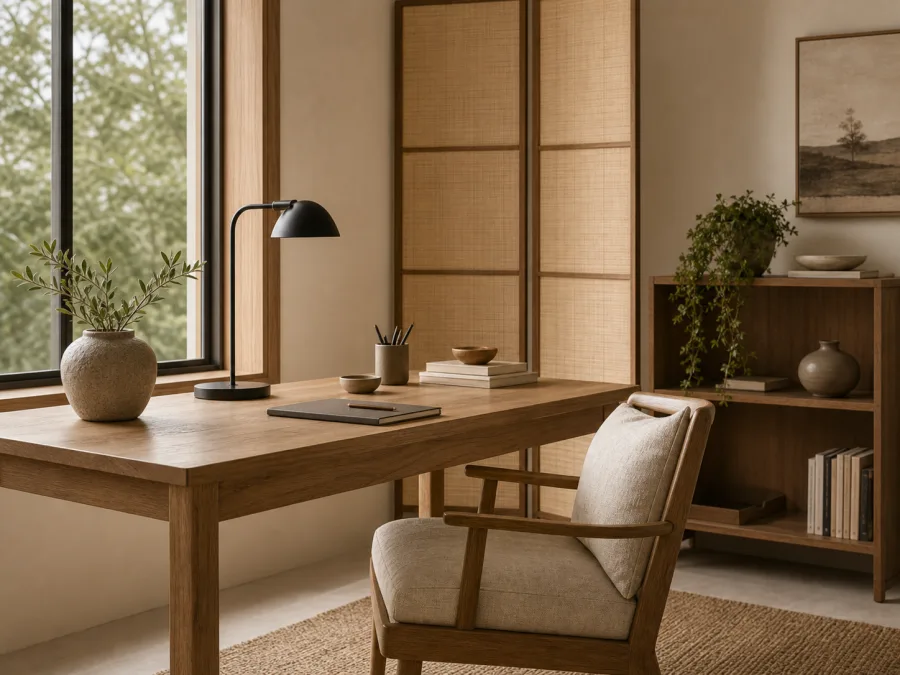
The room should feel composed, not themed. Choose fewer pieces and make them useful.
Platform beds, low coffee tables and simple lounge chairs make the room feel calm and close to the floor.
Warm white, oat, pale oak and ink black create quiet contrast without turning the space cold.
Paper lanterns, linen shades and diffused daylight are central because the style depends on atmosphere, not decoration.
Ceramics, woven mats, linen, paper and imperfect wood grain add character while keeping the room uncluttered.
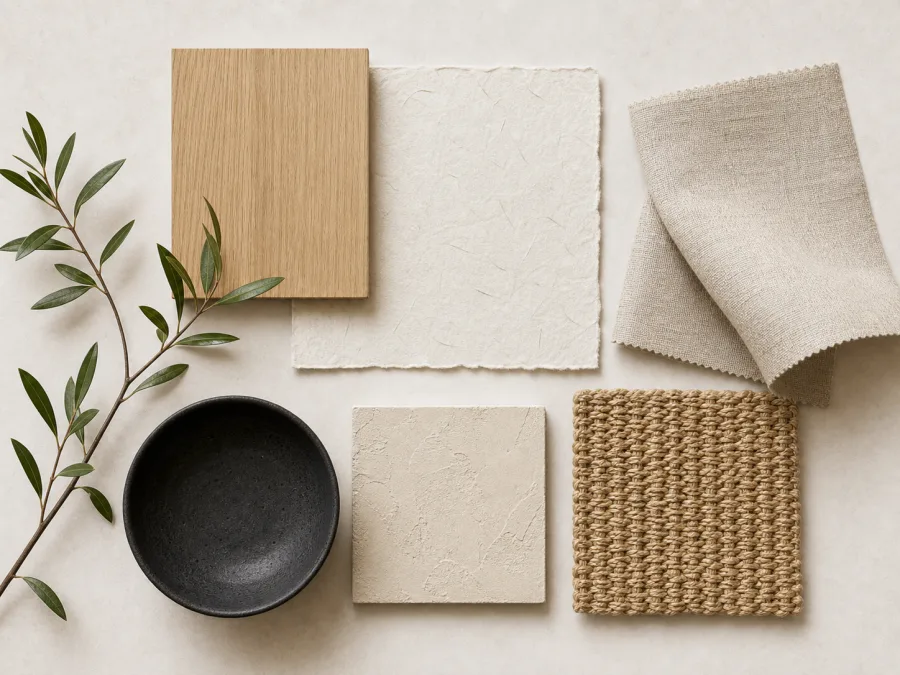
A good Japandi palette starts with warmth, then adds just enough contrast to keep the room from feeling flat. The safest route is warm white walls, pale wood, oat textiles and a few ink-dark accents.
Use it for walls and ceilings so the space feels soft rather than stark.
The main warmth layer for floors, tables, beds, benches and storage.
A gentle textile color for sofas, bedding, curtains and cushions.
Use it sparingly in ceramics, frames, lighting cords or small hardware.
A natural accent through plants, art or a single painted detail.
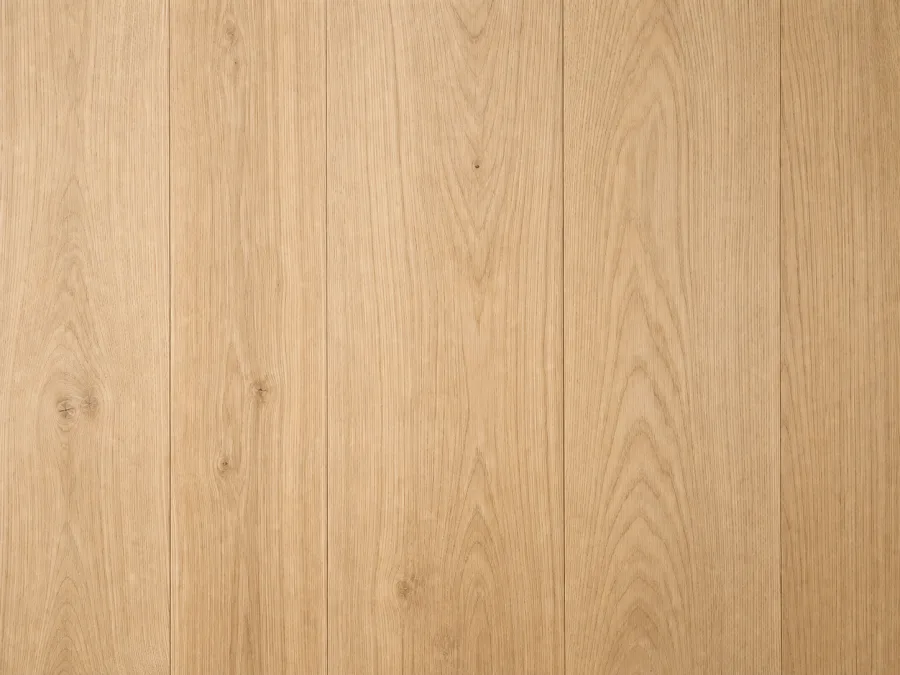
The foundation material. Use it for low furniture, storage, floors and benches.
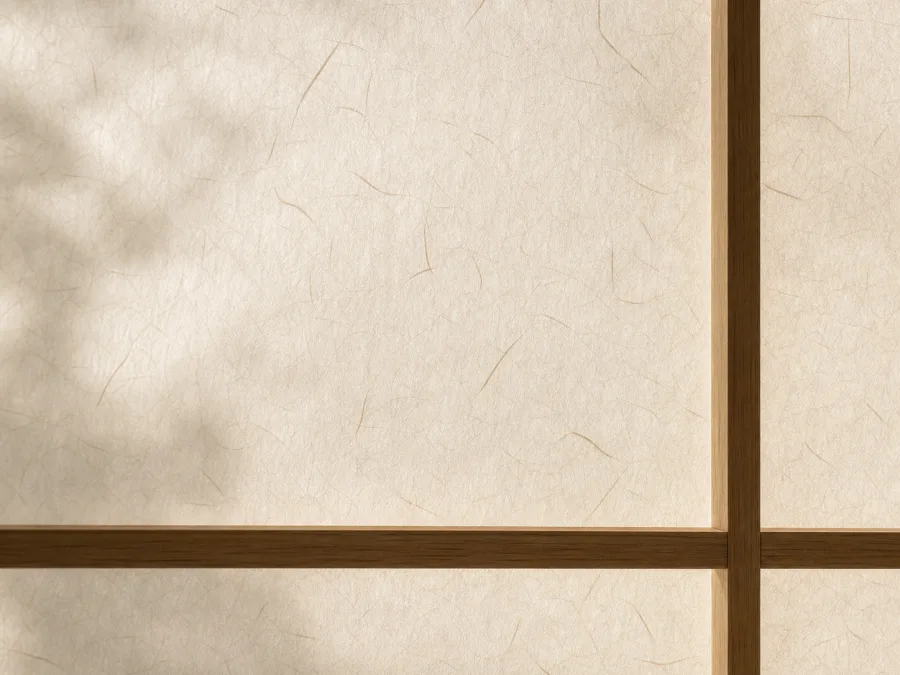
Softens light through lamps, screens and shades so the room feels calm.
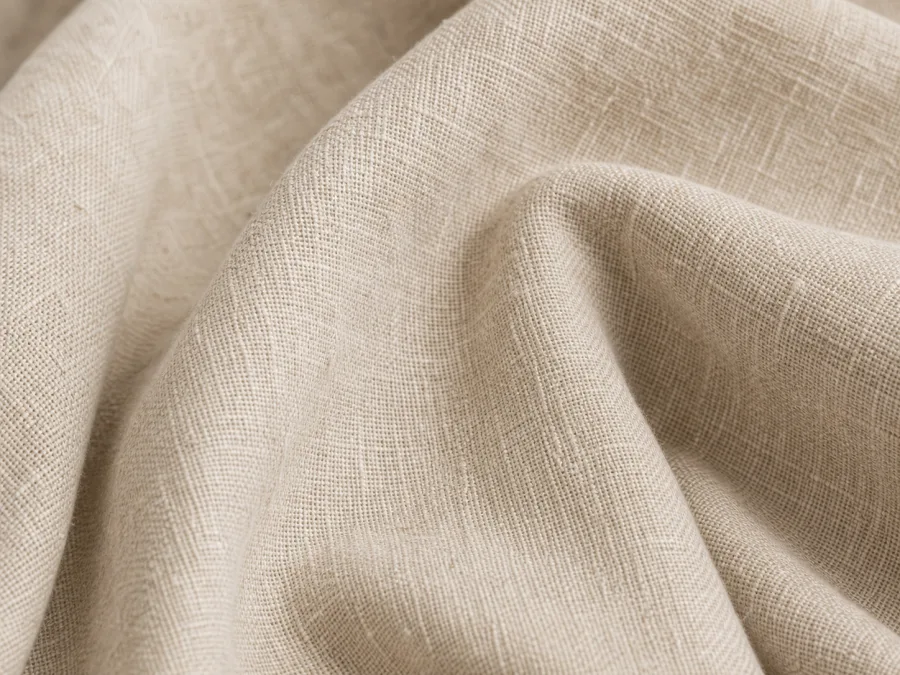
Adds comfort without visual noise. Best for sofas, bedding and curtains.
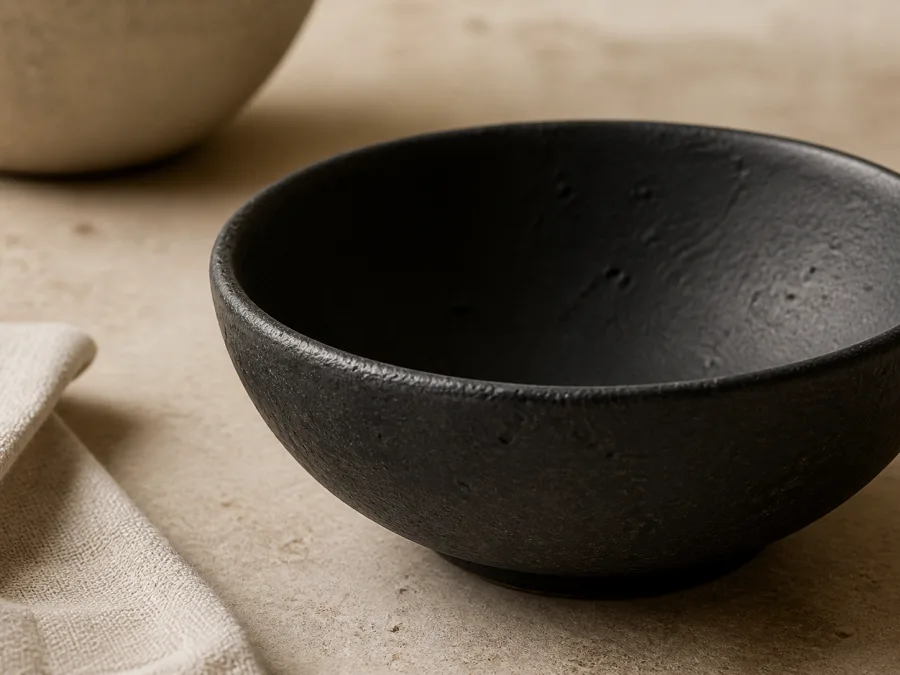
A small grounding accent that feels handmade rather than decorative.
Japandi sits between several quiet styles. Comparing the differences helps you decide whether the room should feel warmer, stricter, softer or more handmade.
Cleaner, sharper and often more empty.
Choose Japandi if you want minimalism with warmth, texture and visible natural materials.
Look for low oak furniture, linen, paper lamps and handmade ceramics rather than pure white surfaces.
Brighter, lighter and more casual.
Choose Japandi if you want Scandinavian comfort with more restraint, lower furniture and quieter styling.
Use fewer small accessories and bring in Japanese cues like paper light, asymmetry and low silhouettes.
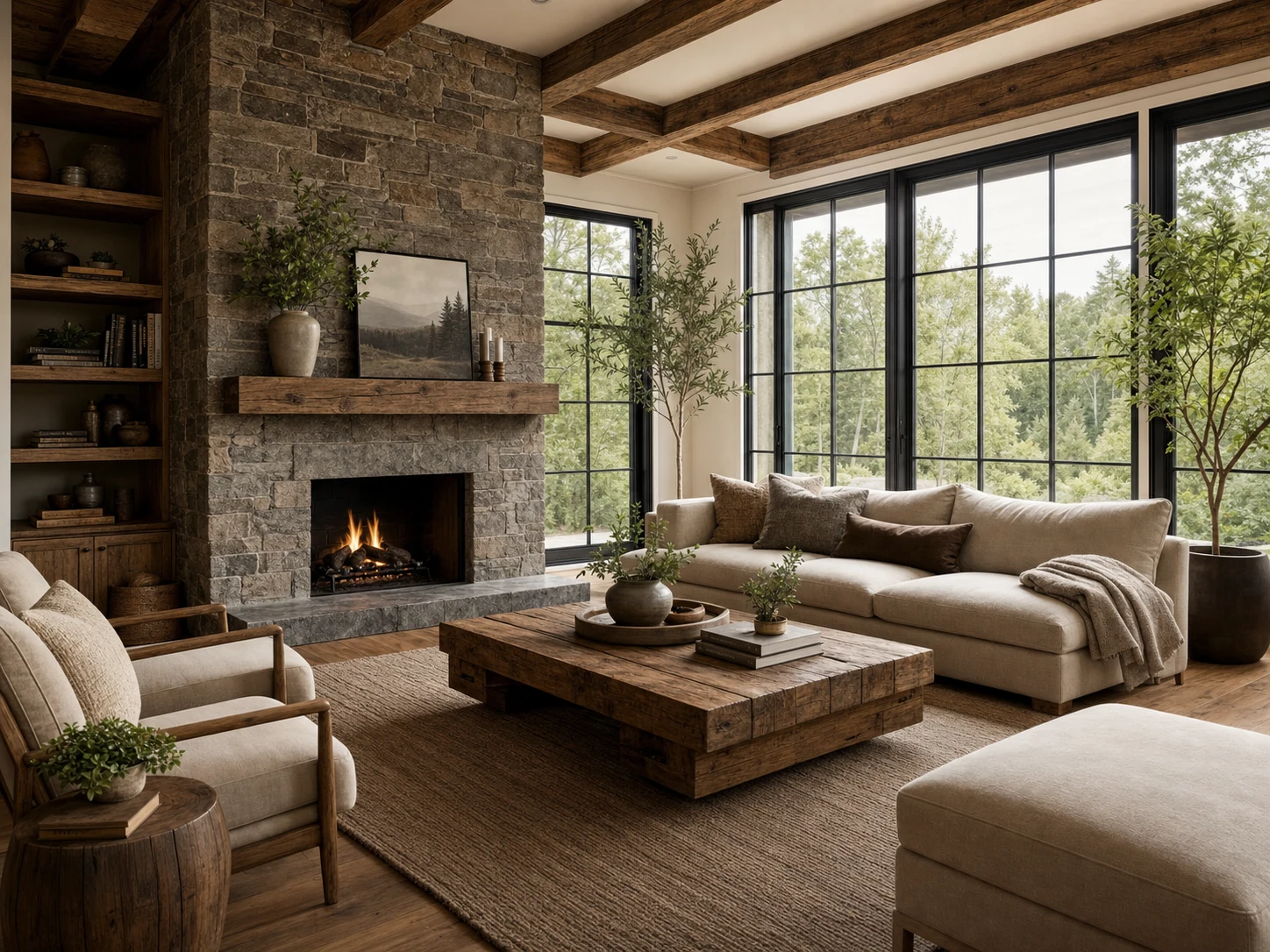
Heavier, more textured and more grounded.
Choose Japandi if you prefer pale wood, lighter rooms and less visual weight.
Replace chunky wood and stone with pale oak, rice paper, linen and a small black ceramic accent.
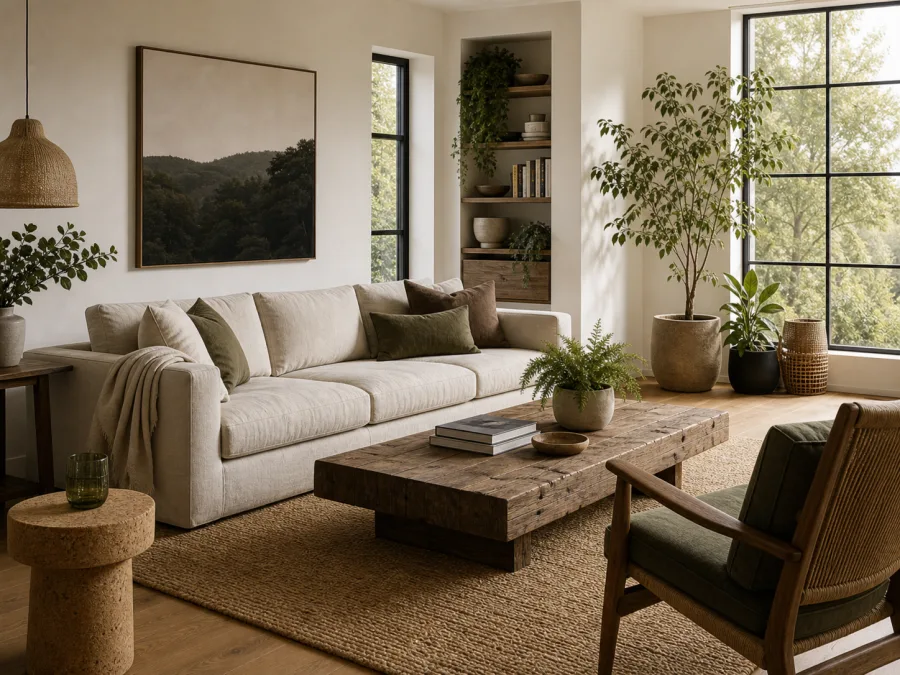
More weathered, imperfect and earthy.
Choose Japandi if you want imperfection in a cleaner, more functional room.
Let one handmade object show irregularity while furniture and storage stay simple.
Japandi does not need many objects. These pieces carry the look because they shape the height, light, texture and daily usefulness of the room.
A low bed changes the room immediately. Keep the frame pale, simple and close to the floor.
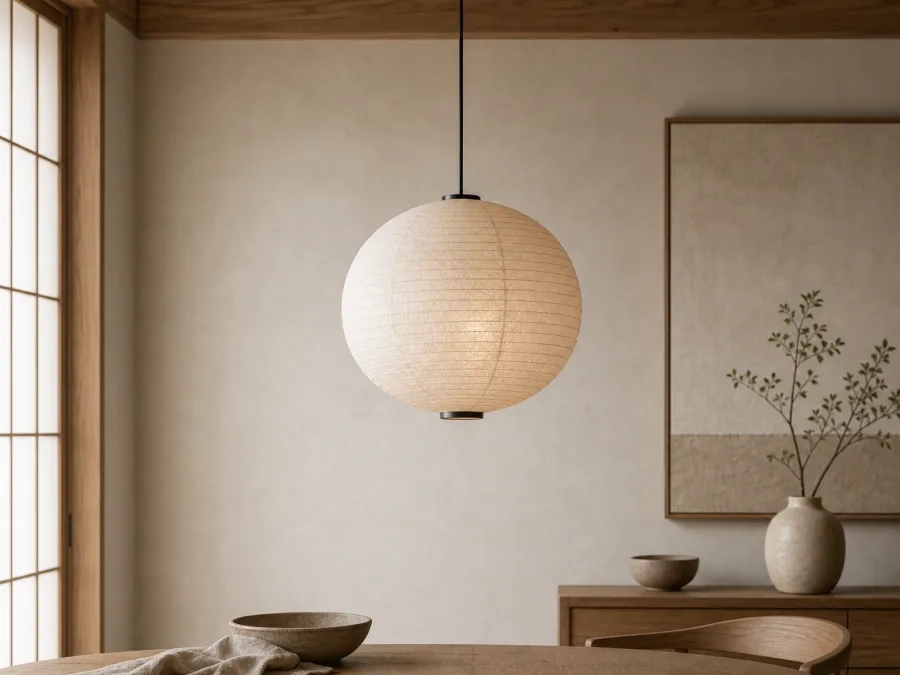
Soft paper light is one of the fastest ways to make a minimal room feel gentle.
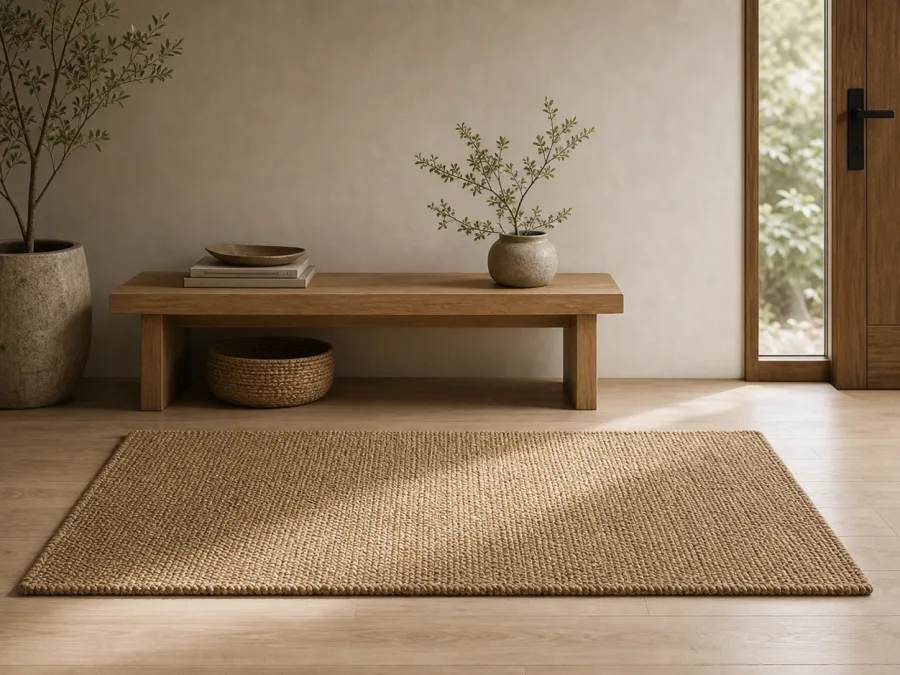
Use natural fiber underfoot to add texture without adding pattern or clutter.
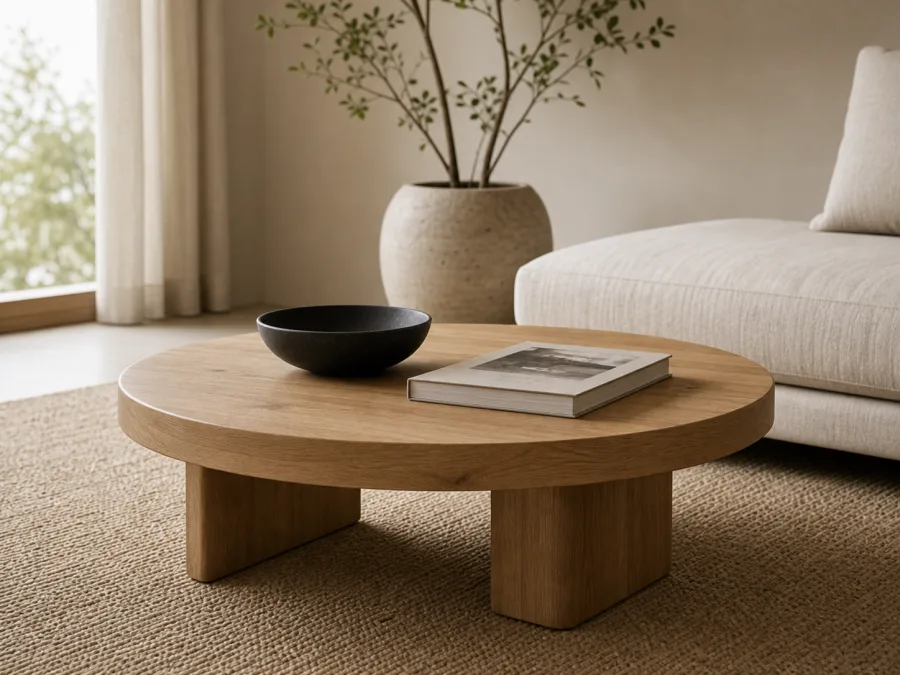
Choose a simple table with rounded edges and visible but quiet grain.
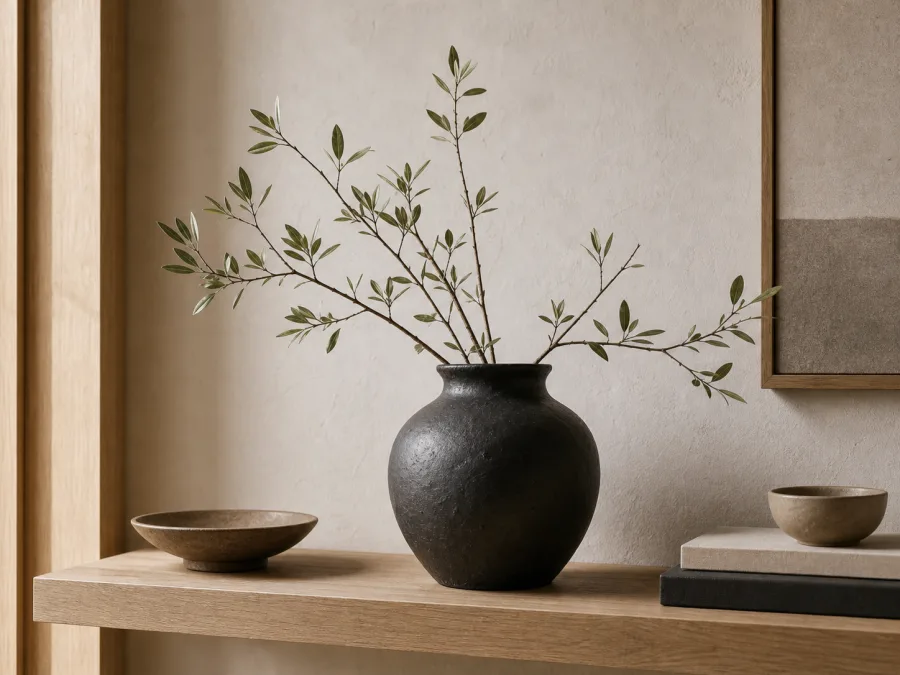
One dark handmade object gives the palette depth without making the room heavy.
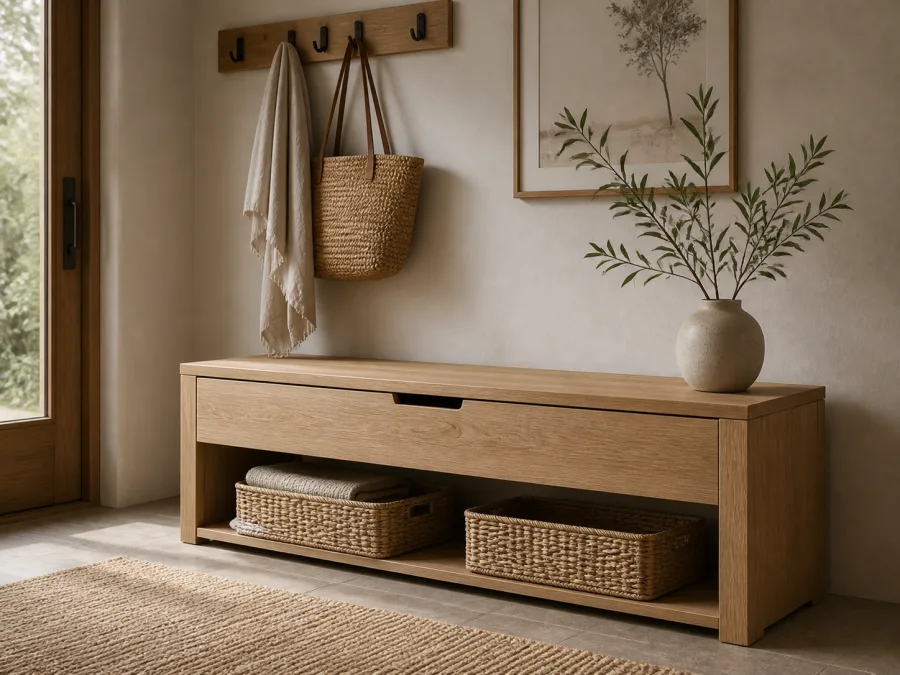
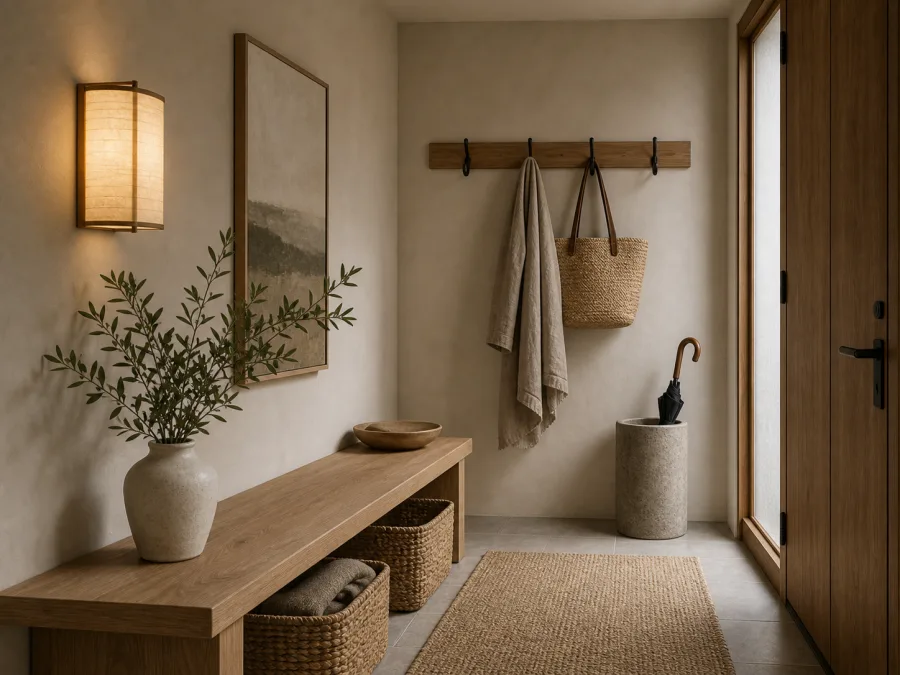
Japandi works best when storage is calm. A bench keeps the room useful and edited.