01
Warm cabinet kitchen
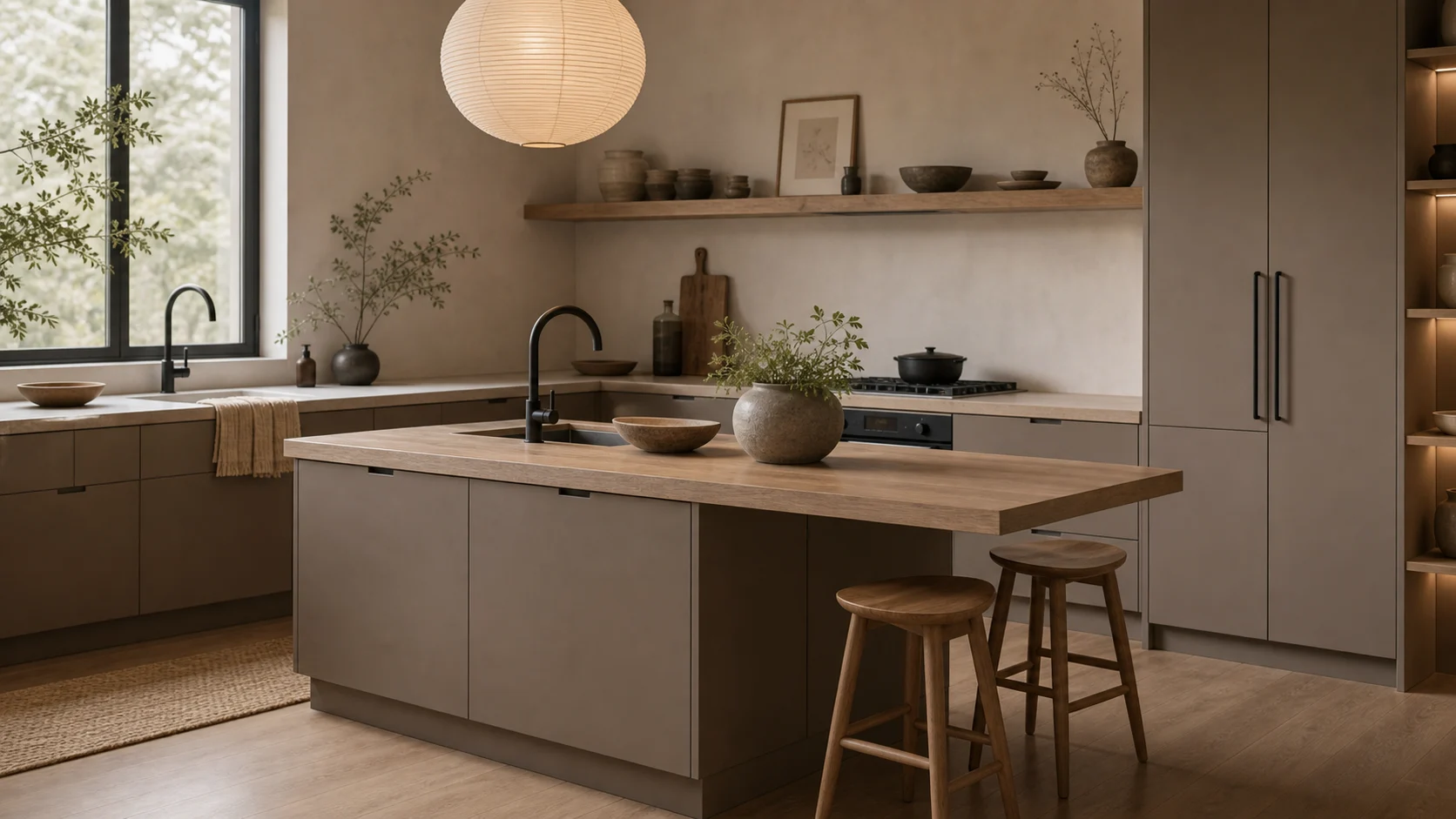
Warm neutral cabinets and pale wood keep the kitchen calm without feeling sterile.
Ideas, layouts, colors and materials for a japandi kitchen — plus the pieces that make the look work.
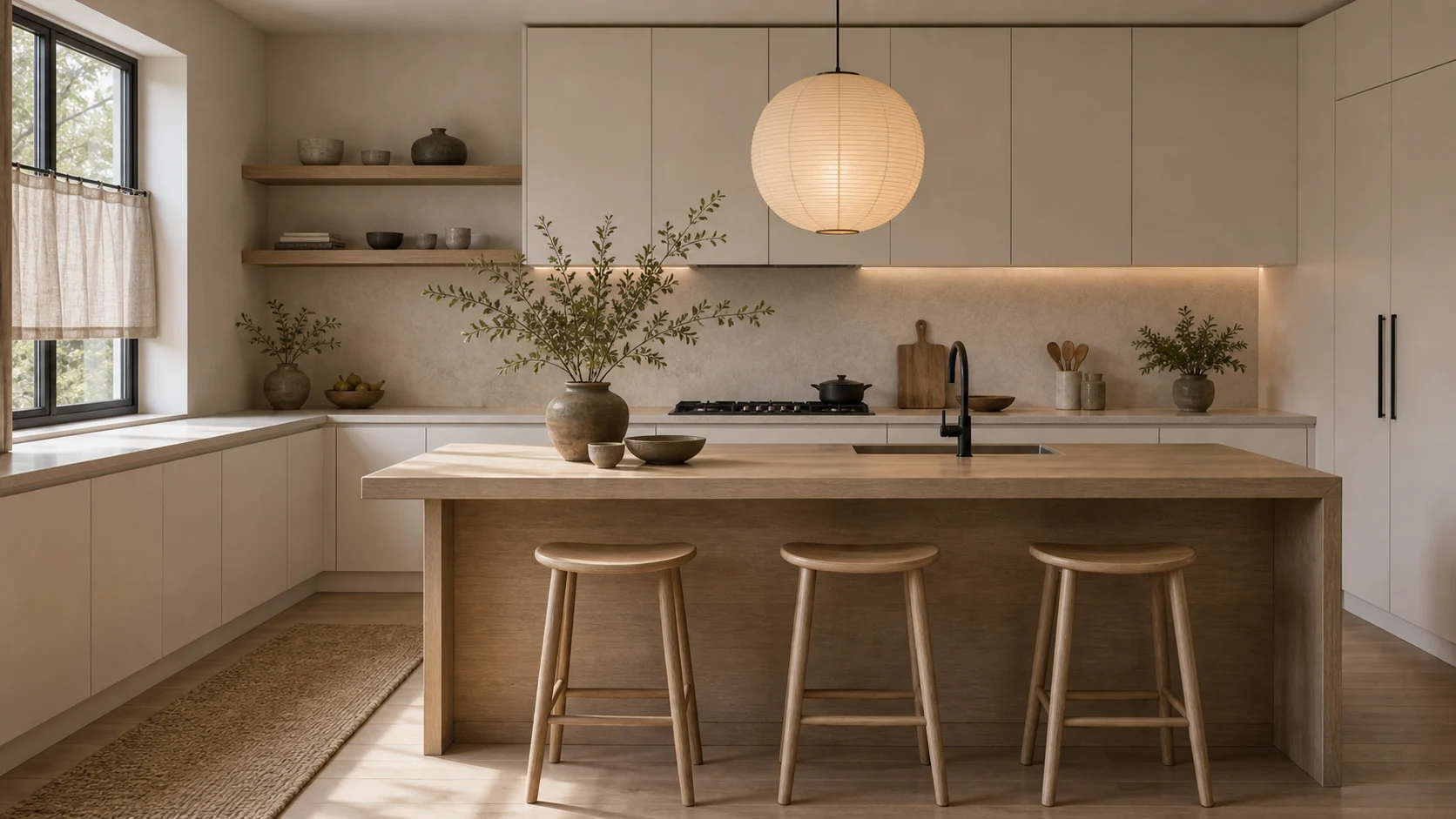
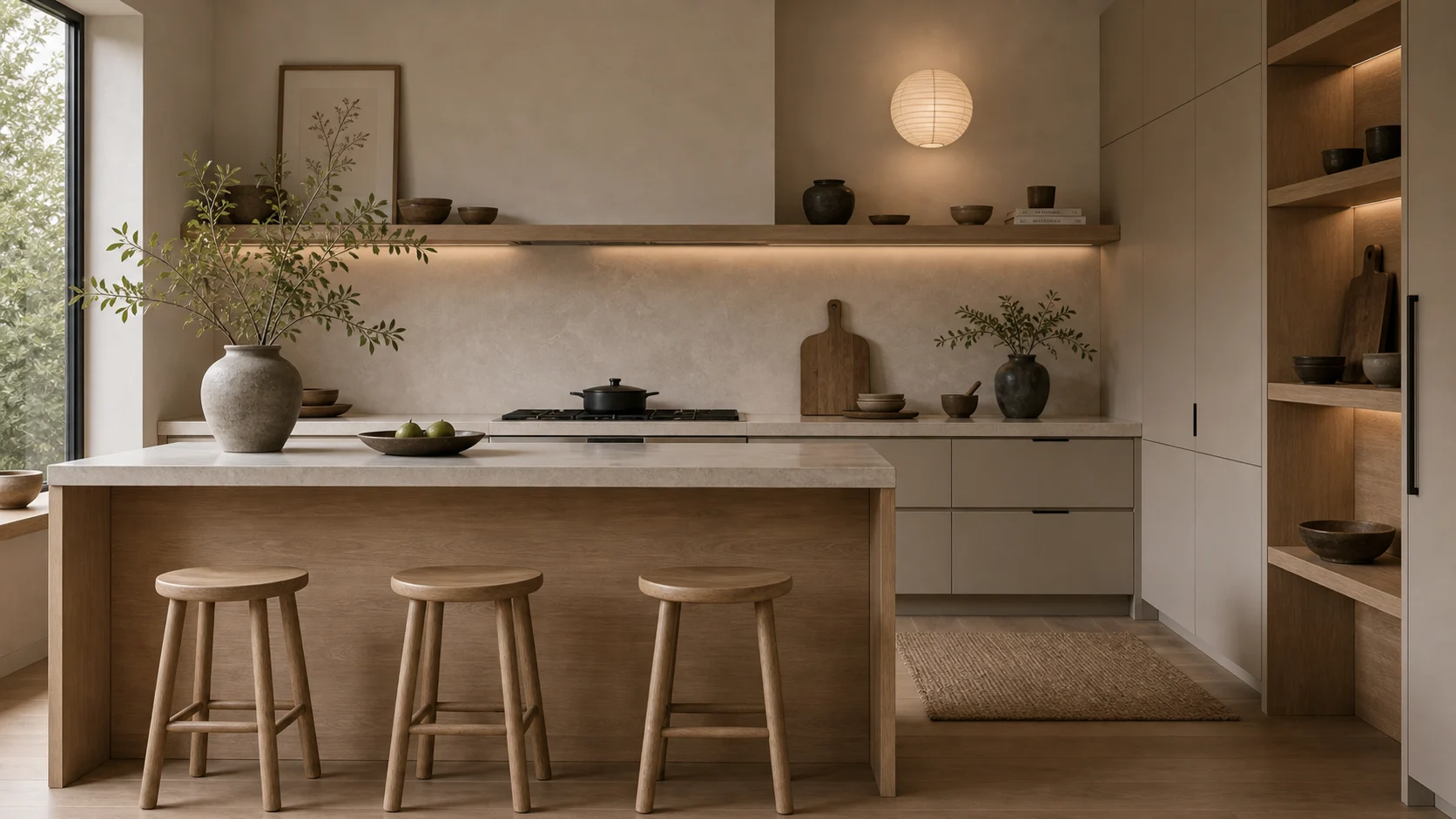
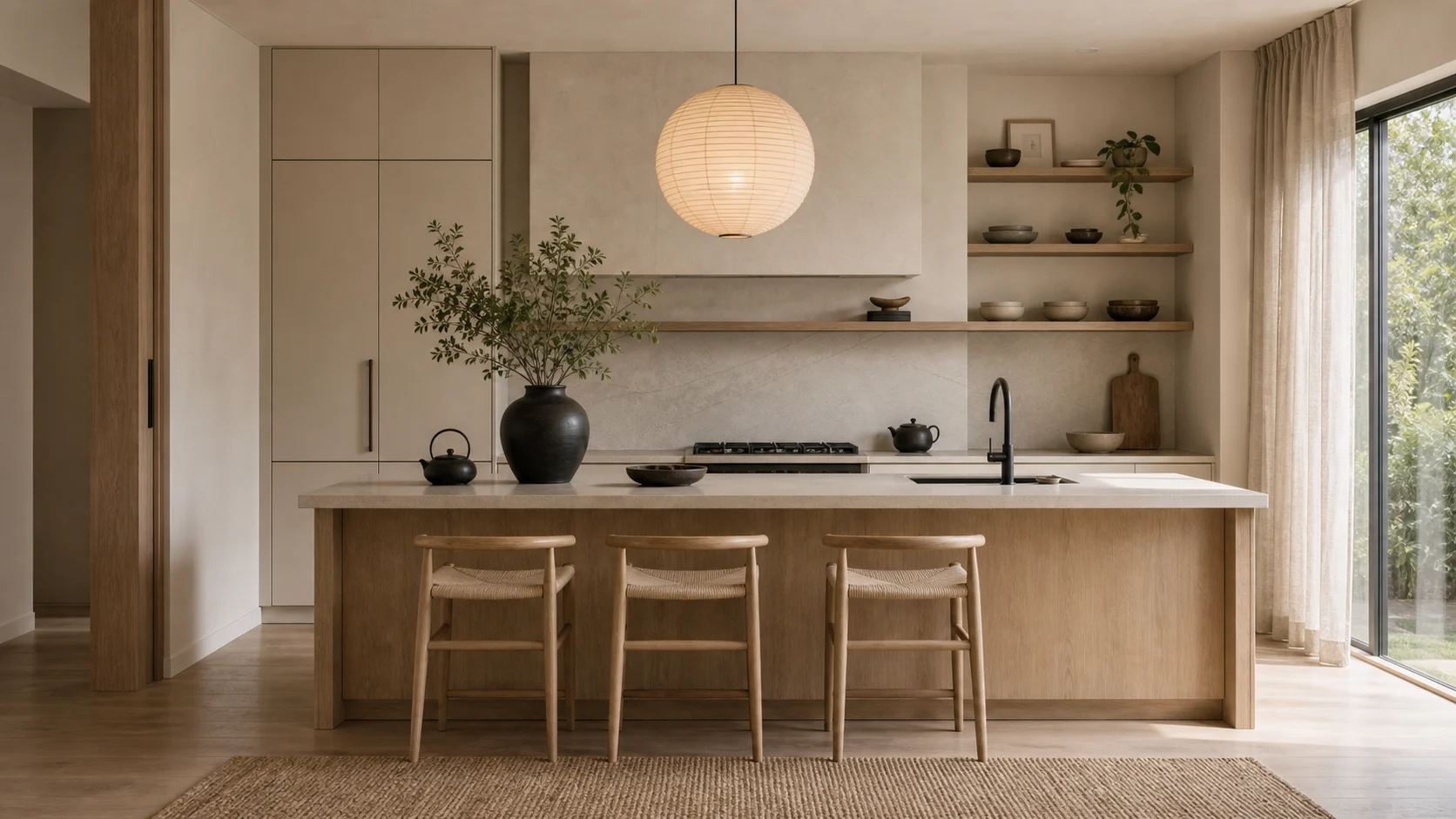
A Japandi kitchen should feel calm because the storage and surfaces are controlled. The goal is not an empty kitchen; it is a kitchen where useful objects have a place and materials feel soft.
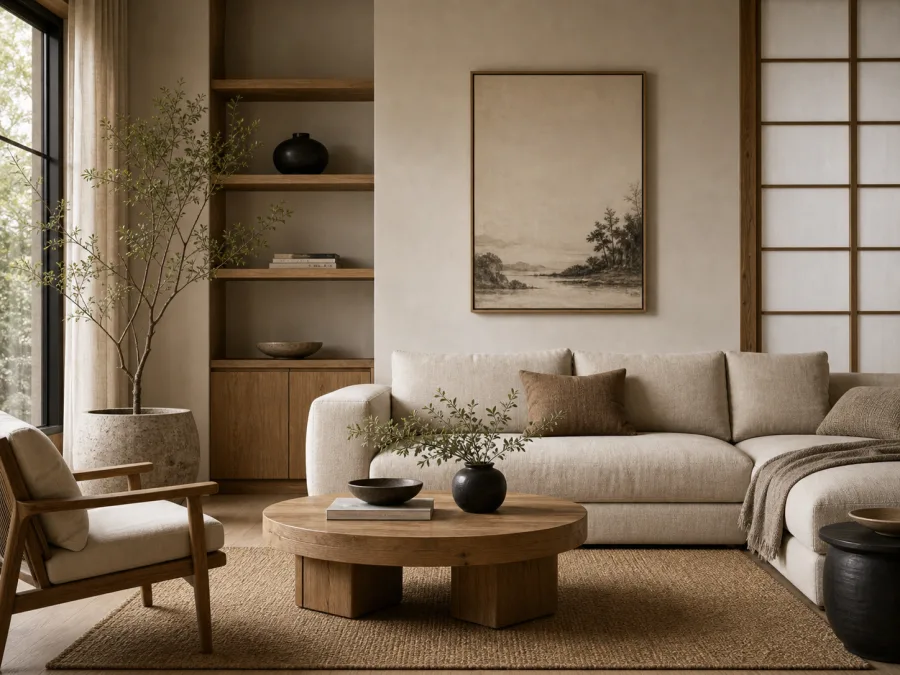
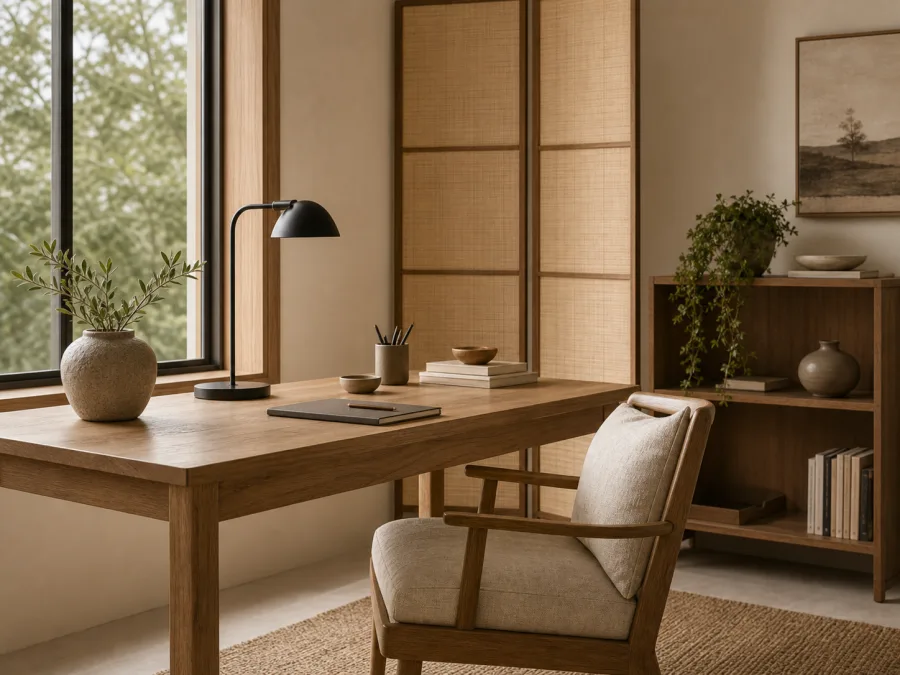
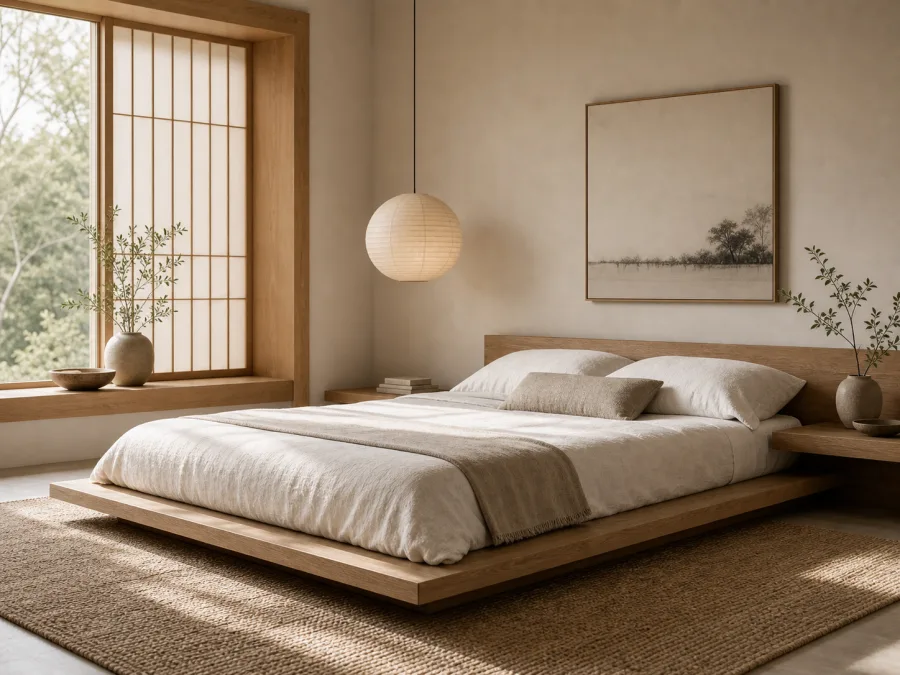
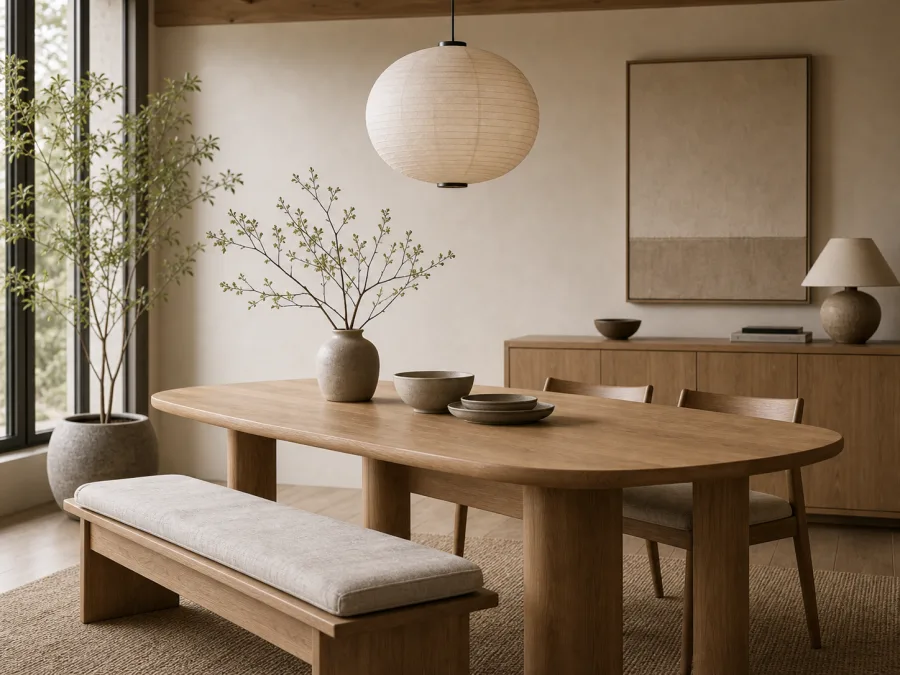
Use warm neutral cabinets, pale wood, quiet stone, paper or fabric light and a few handmade pieces. Keep open shelves edited so the room stays functional.
Use these examples to choose the version of the style that fits your architecture, light and square footage.
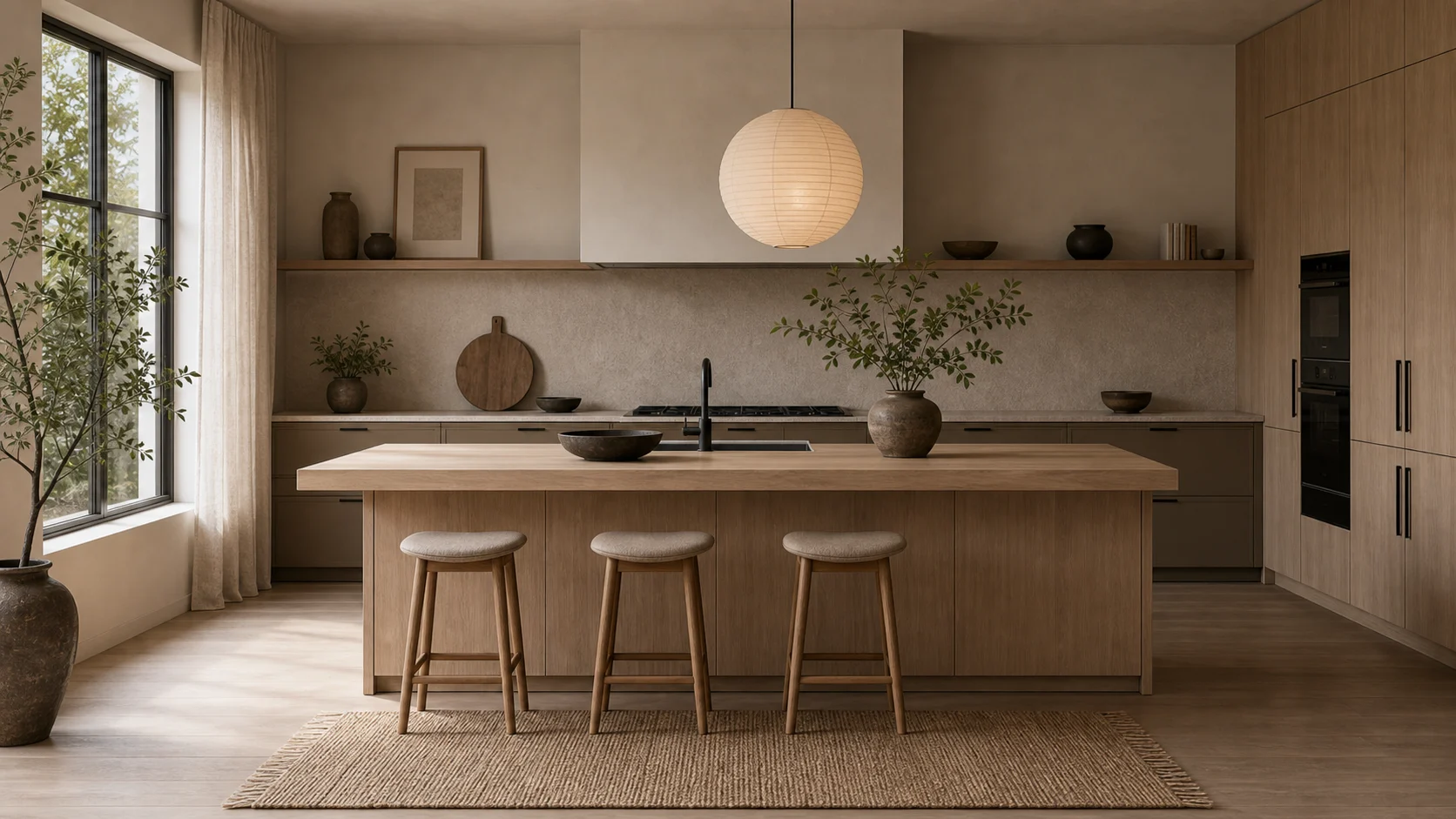
Use the style where it helps the room work: seating, circulation, focal point and material balance.
Store daily tools close by, but keep the visible counter surface calm.
Use shelves for a few ceramics or bowls, not every dish you own.
Shelves, stools, trays and handles are good places for pale wood warmth.
Paper light, linen cafe curtains or woven texture prevent the kitchen from feeling too hard.
A good Japandi palette starts with warmth, then adds just enough contrast to keep the room from feeling flat. The safest route is warm white walls, pale wood, oat textiles and a few ink-dark accents.
Use it for walls and ceilings so the space feels soft rather than stark.
The main warmth layer for floors, tables, beds, benches and storage.
A gentle textile color for sofas, bedding, curtains and cushions.
Use it sparingly in ceramics, frames, lighting cords or small hardware.
A natural accent through plants, art or a single painted detail.
Warm white, oat and mushroom cabinets feel softer than glossy white.
Pale oak or ash adds warmth through shelves, stools and small furniture.
Black ceramic or slim charcoal details keep the palette from becoming flat.
Rice paper, linen, woven mats and handmade ceramics add softness.
For this room, a few strong choices can carry the style better than adding more decor.
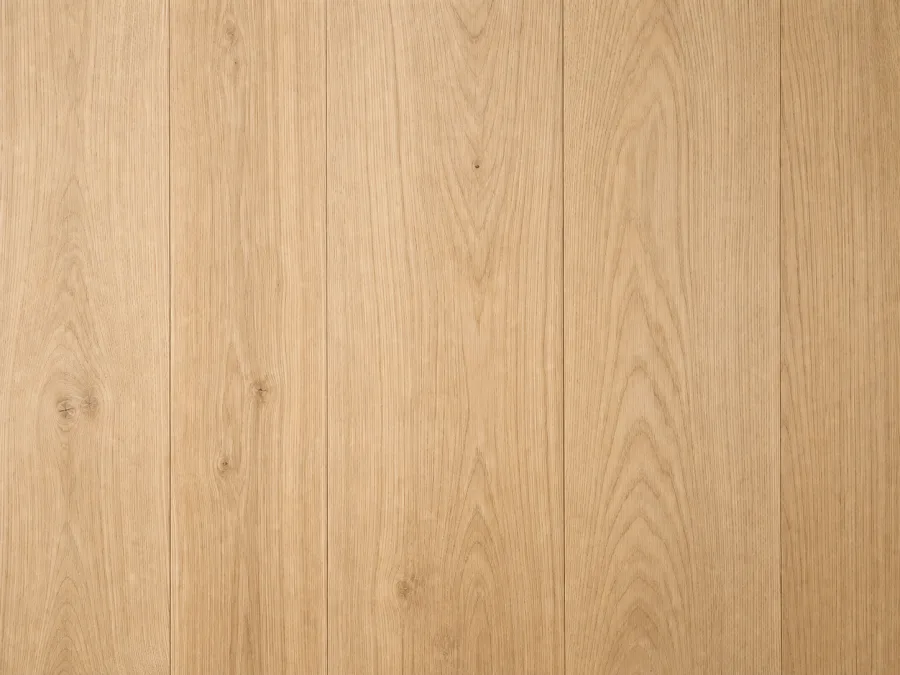
Use it for shelves, stools, trays and simple storage details.
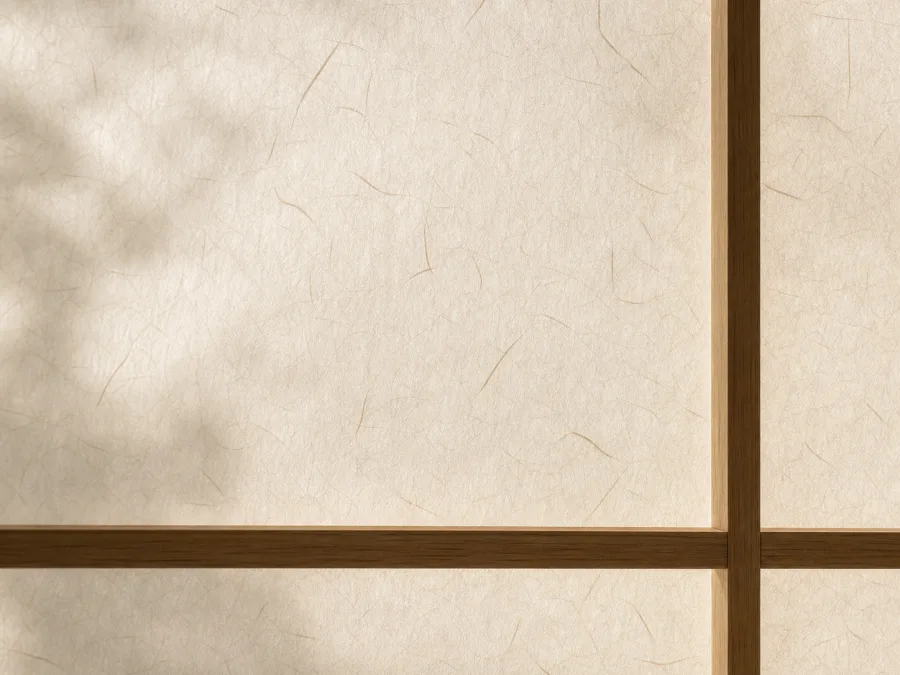
Diffused light makes clean cabinets feel warmer.
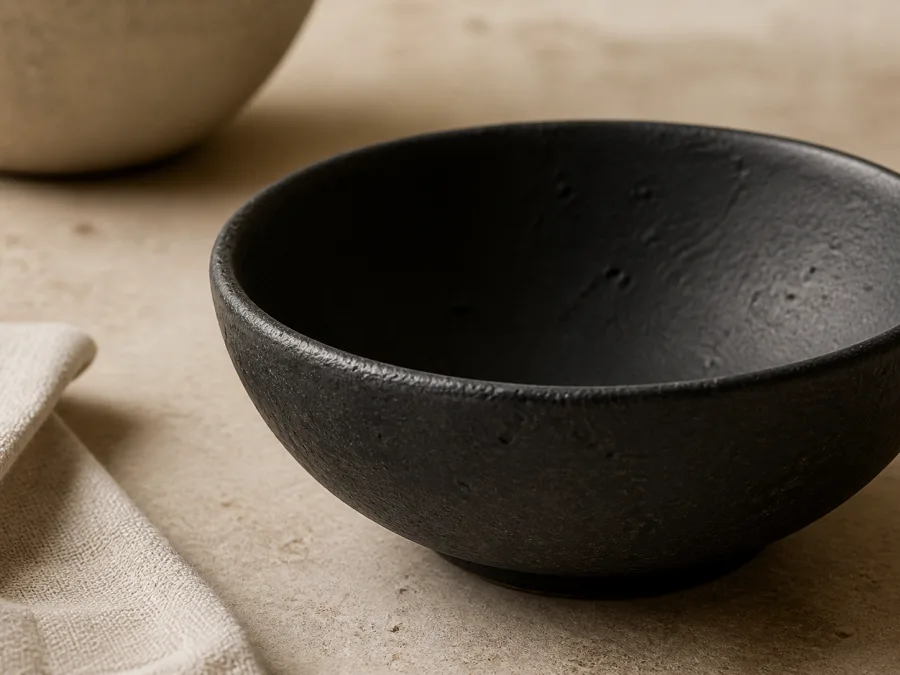
A small dark accent grounds the kitchen without clutter.
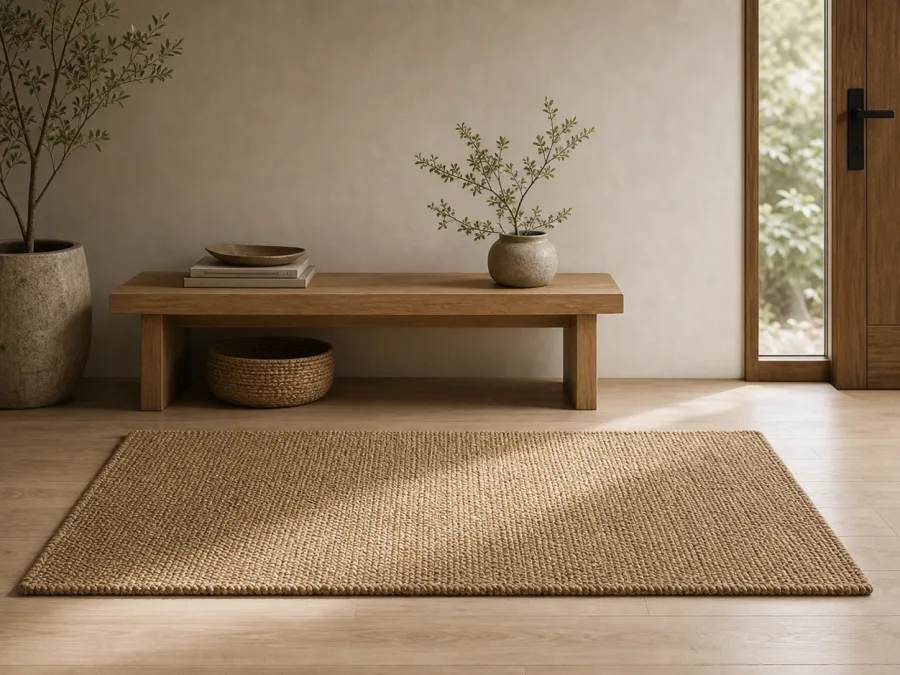
Natural fiber softens hard floors and stone surfaces.
Use these checks to keep the japandi character clear without compromising how the kitchen works.
Open shelving becomes visual noise quickly. Keep only the calmest pieces visible.
Choose warmer, matte finishes so the room feels tactile.
Japandi kitchens depend on practical storage more than styling.