01
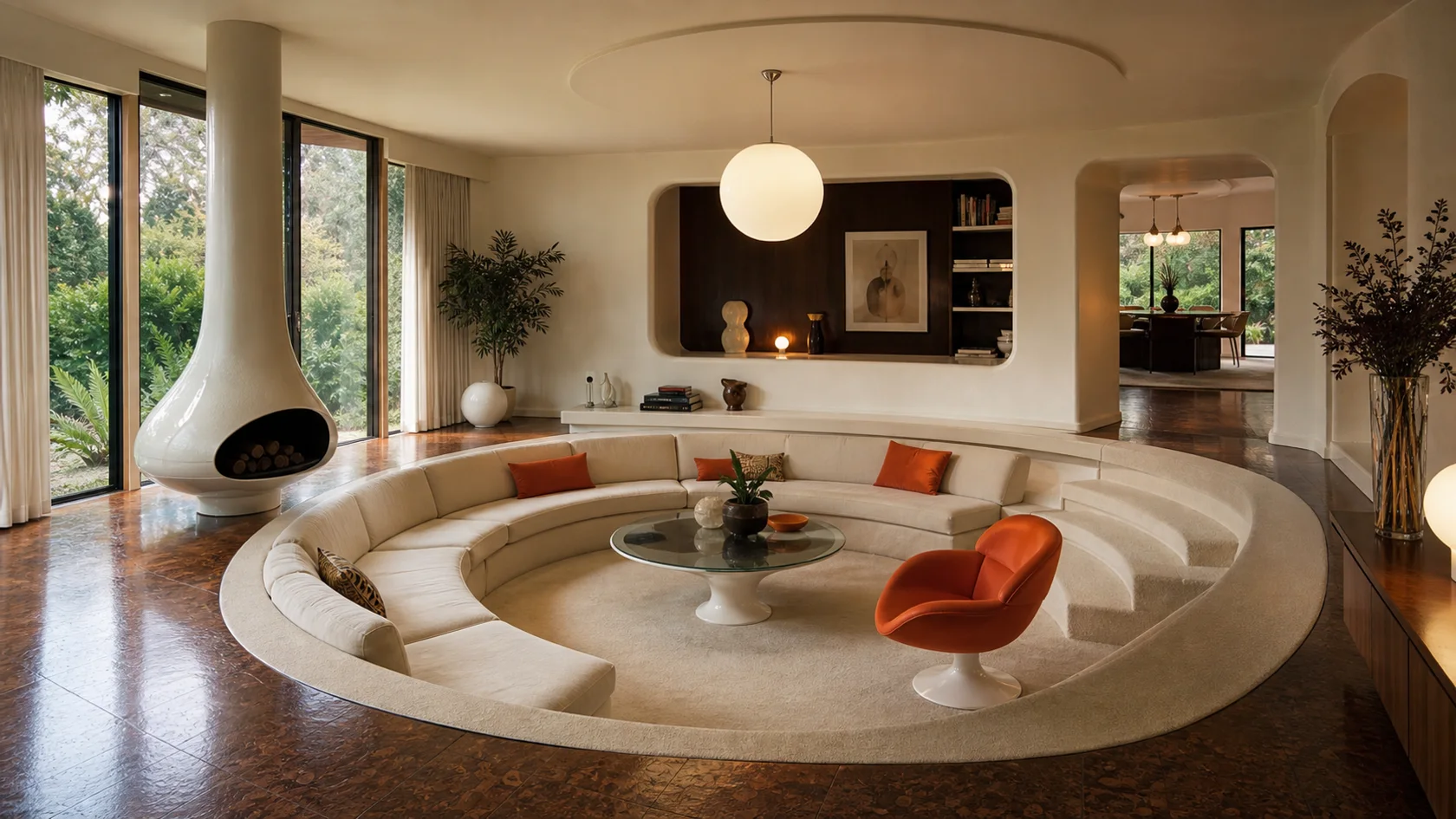
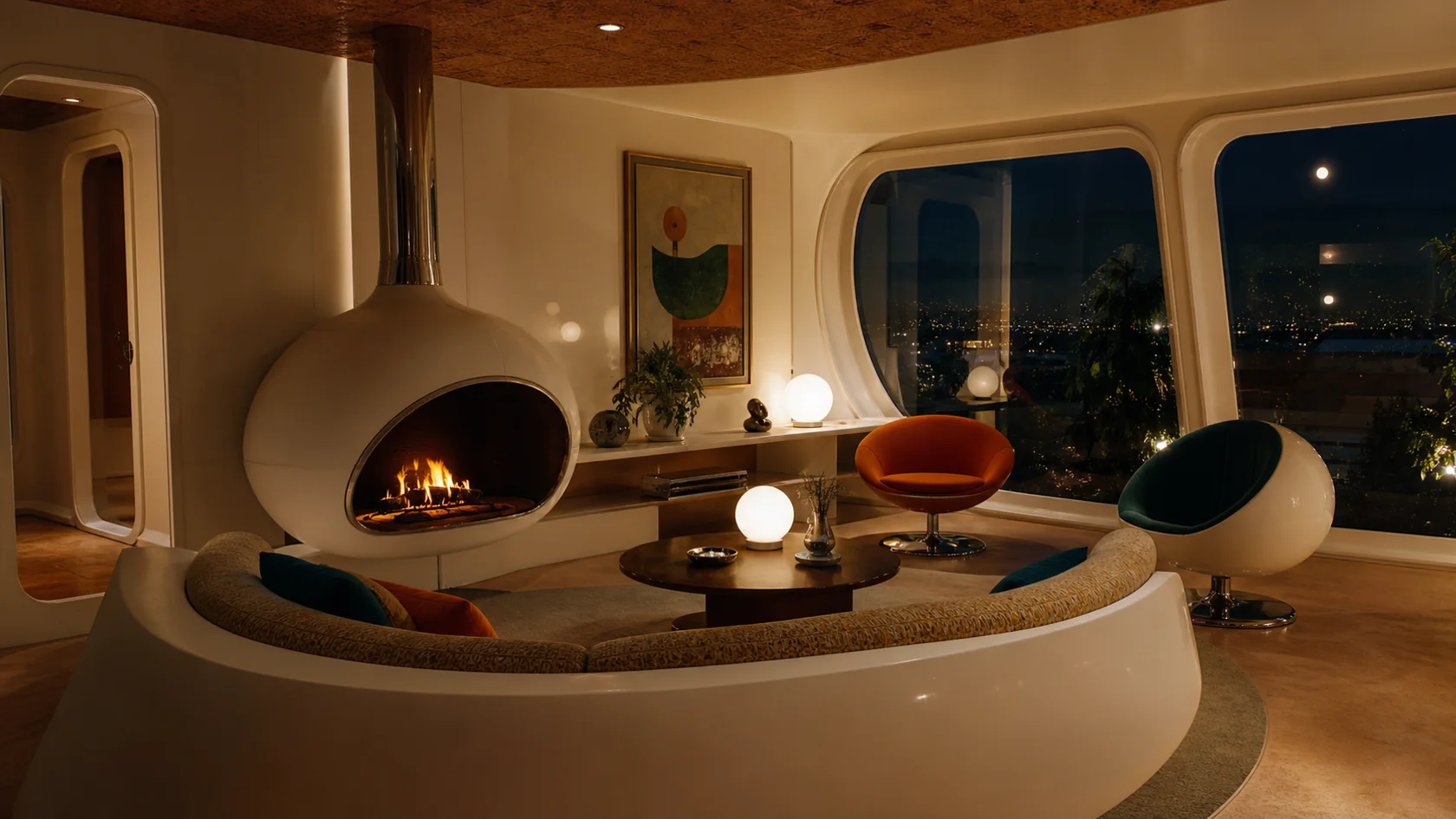
Sunken Lounge
A single capsule-shaped architectural move supplies the fantasy while practical contemporary furniture keeps it inhabitable. Keep every seat within easy reach of the central table and outside the main walking route.
Five genuinely different retrofuturism approaches to the living room, each built around a new plan, architectural condition or time of day.
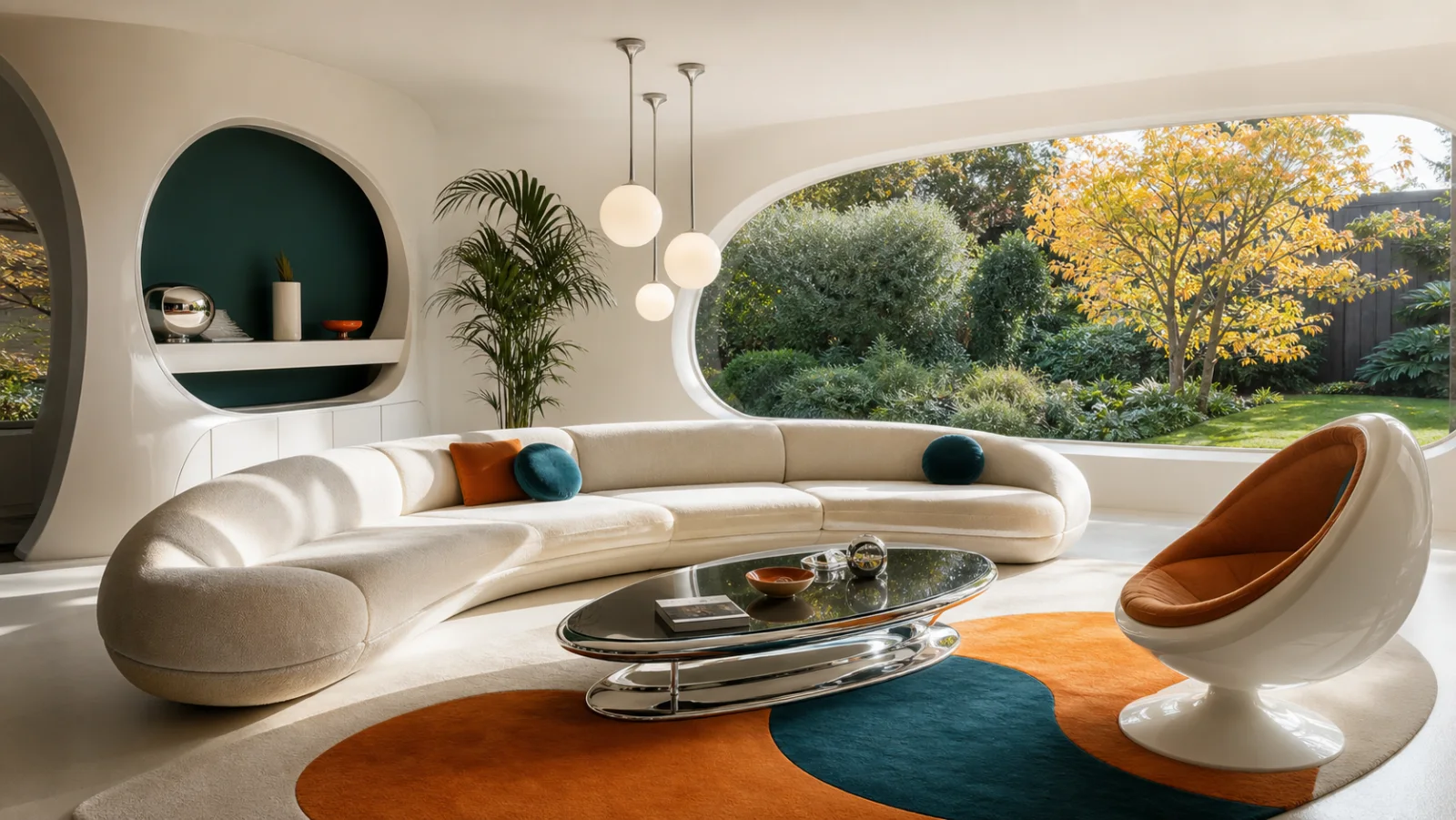
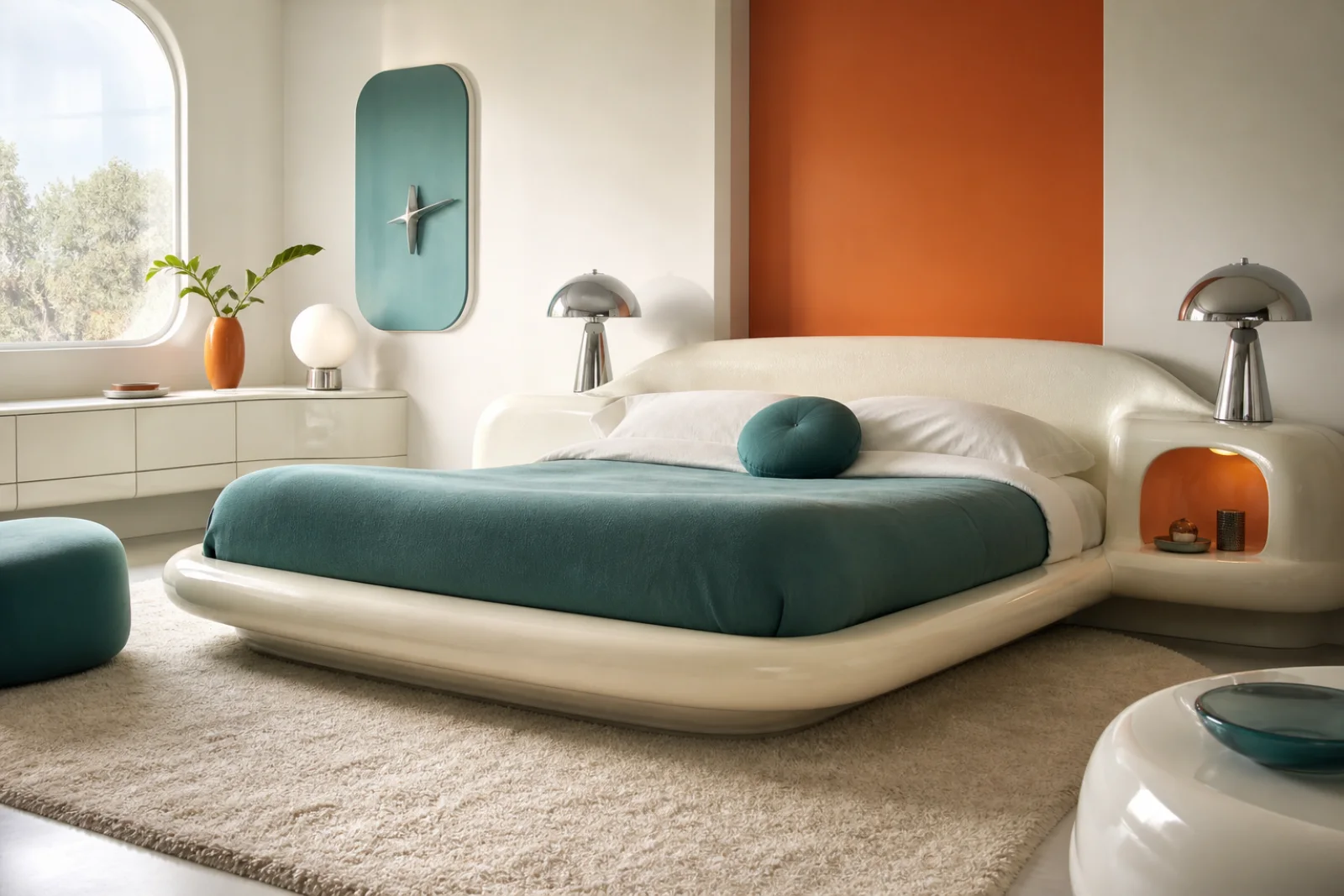
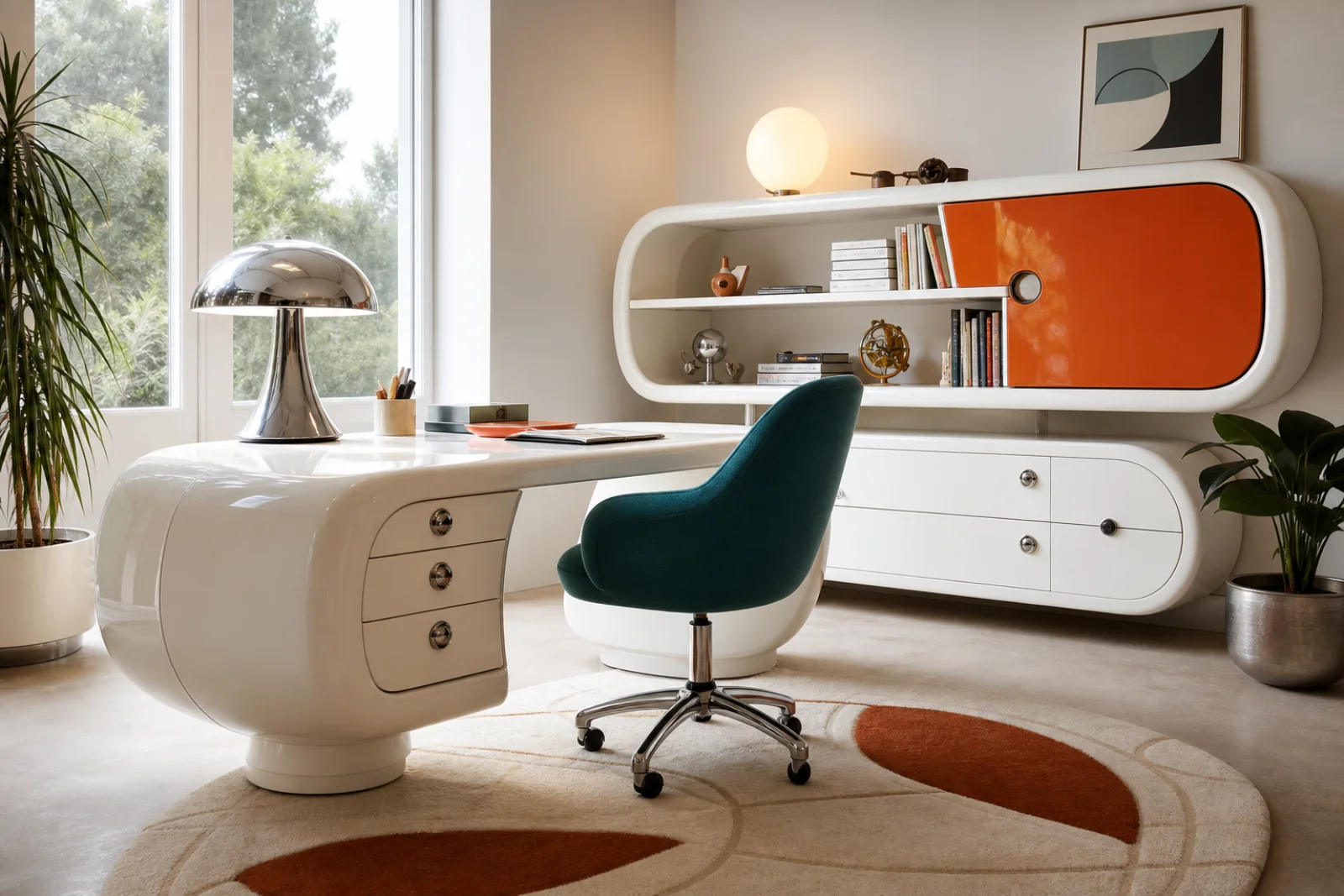
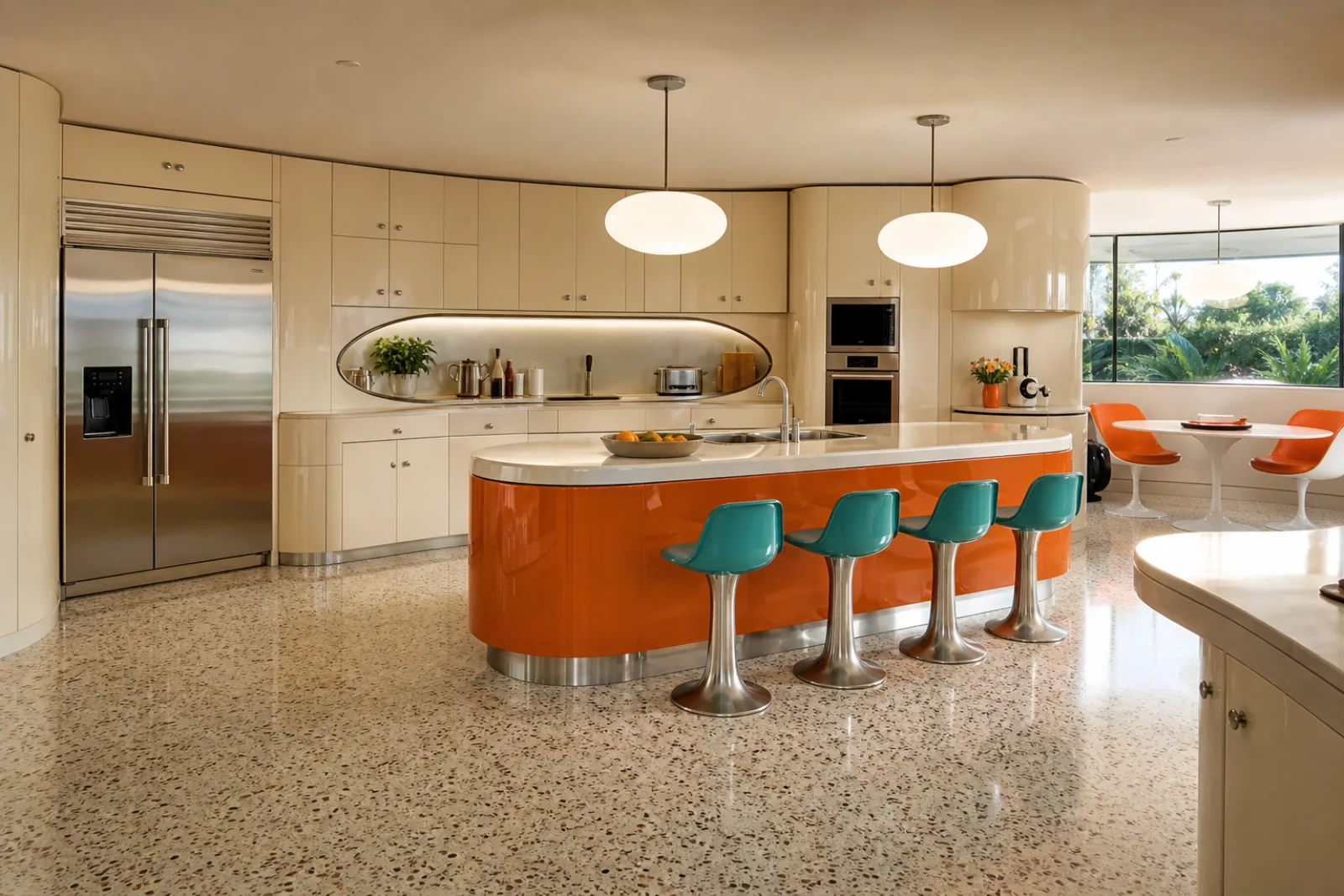
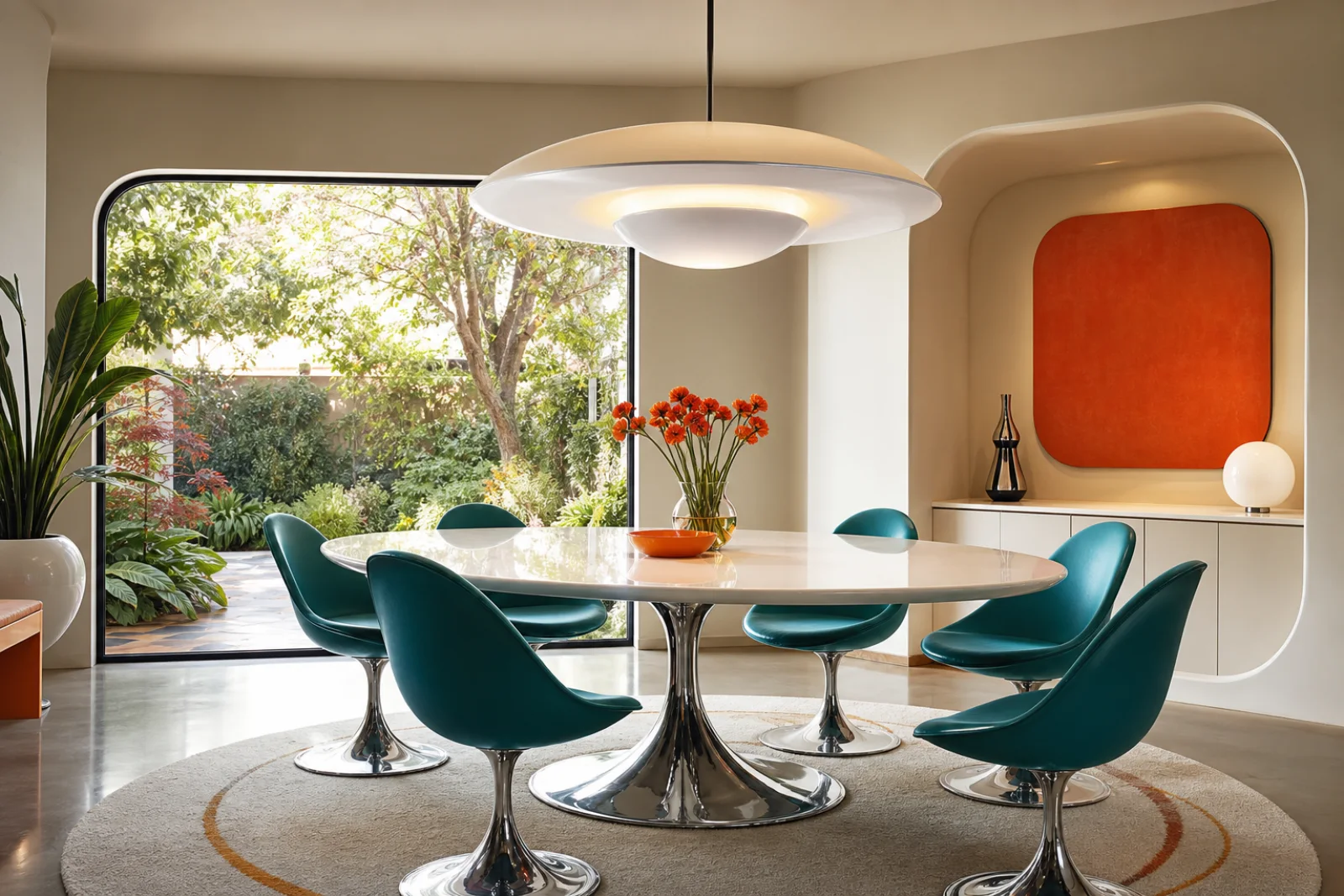
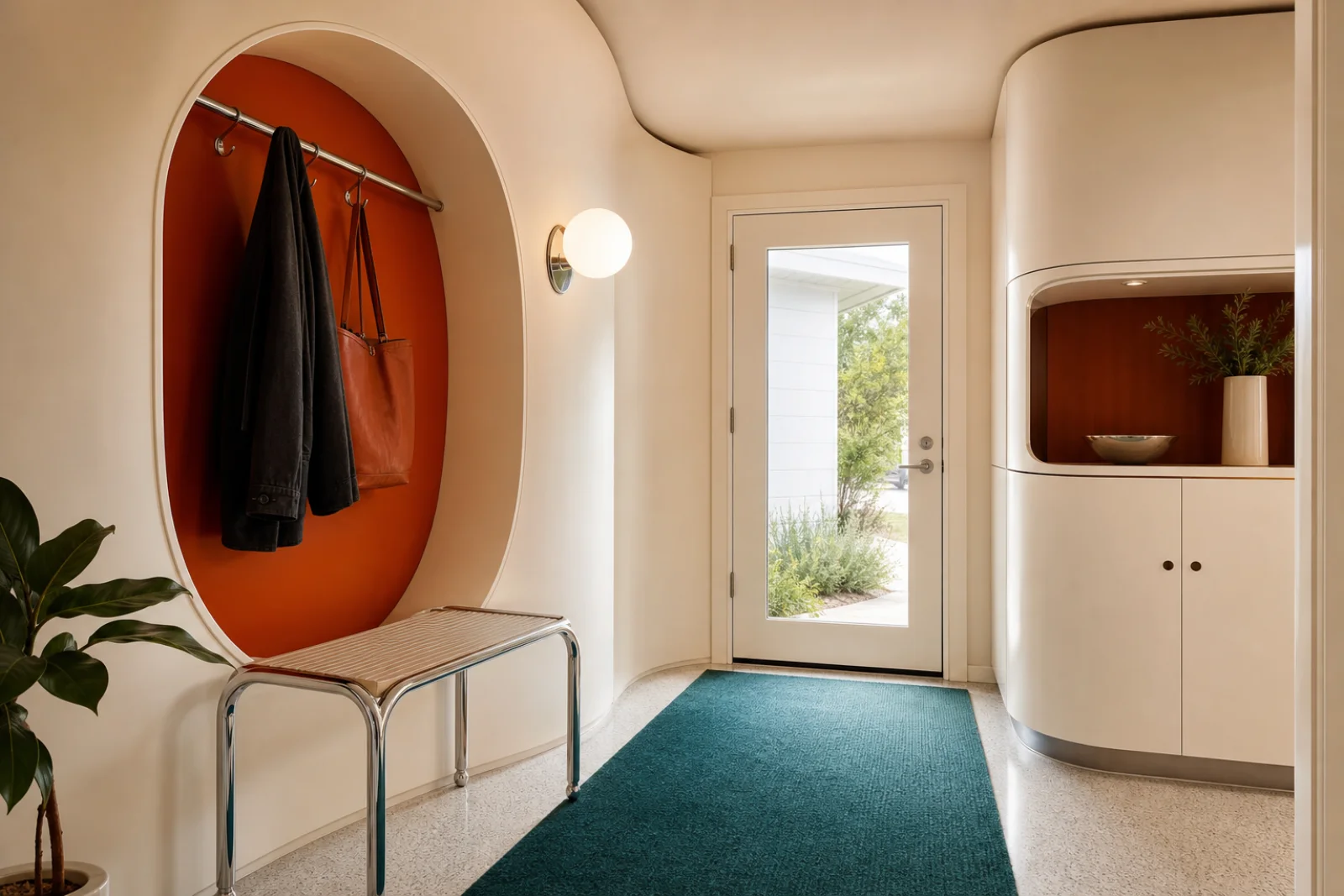
Retrofuturism revisits the optimistic future imagined between the 1950s and 1970s through capsule curves, molded forms, chrome and disciplined color. In the living room, that idea must still support conversation, everyday comfort and one readable focal point.
A sunken or curved seating group can create the period signal, provided tables remain reachable and the main route stays straightforward. Choose one unmistakable Space Age form, support it with simpler contemporary pieces and leave novelty props out of the room.
Use these examples to choose the version of the style that fits your architecture, light and square footage.
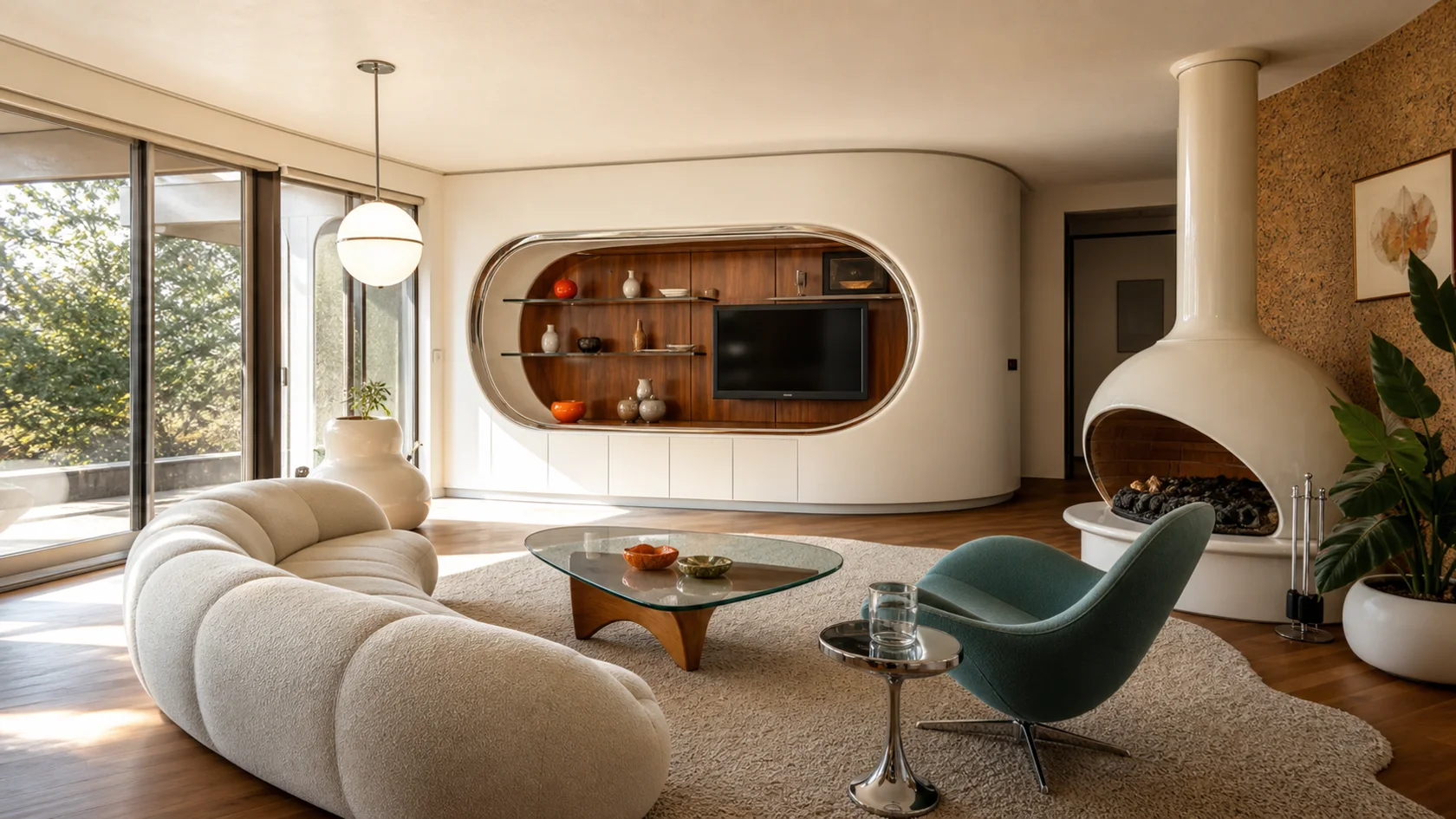
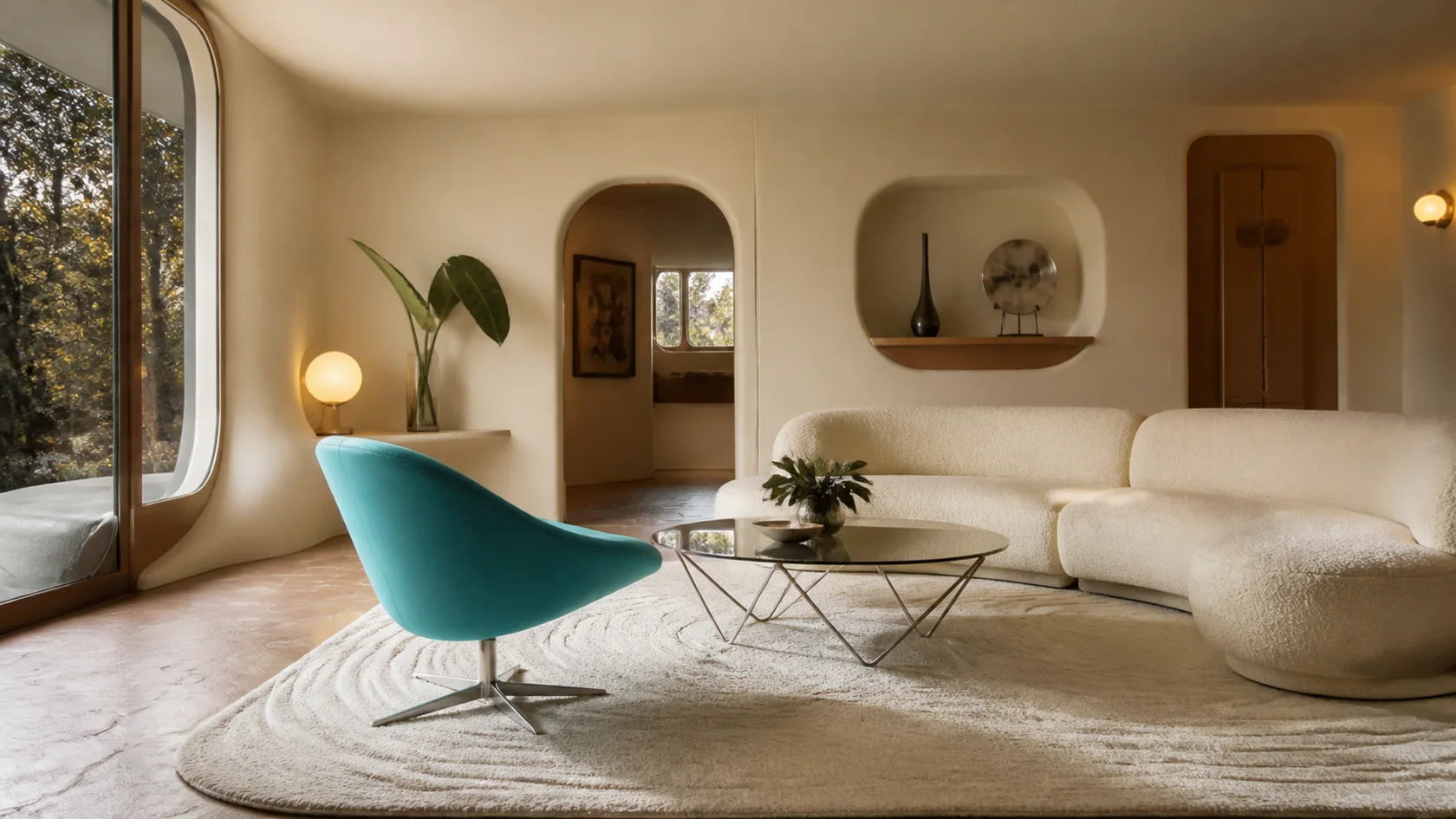
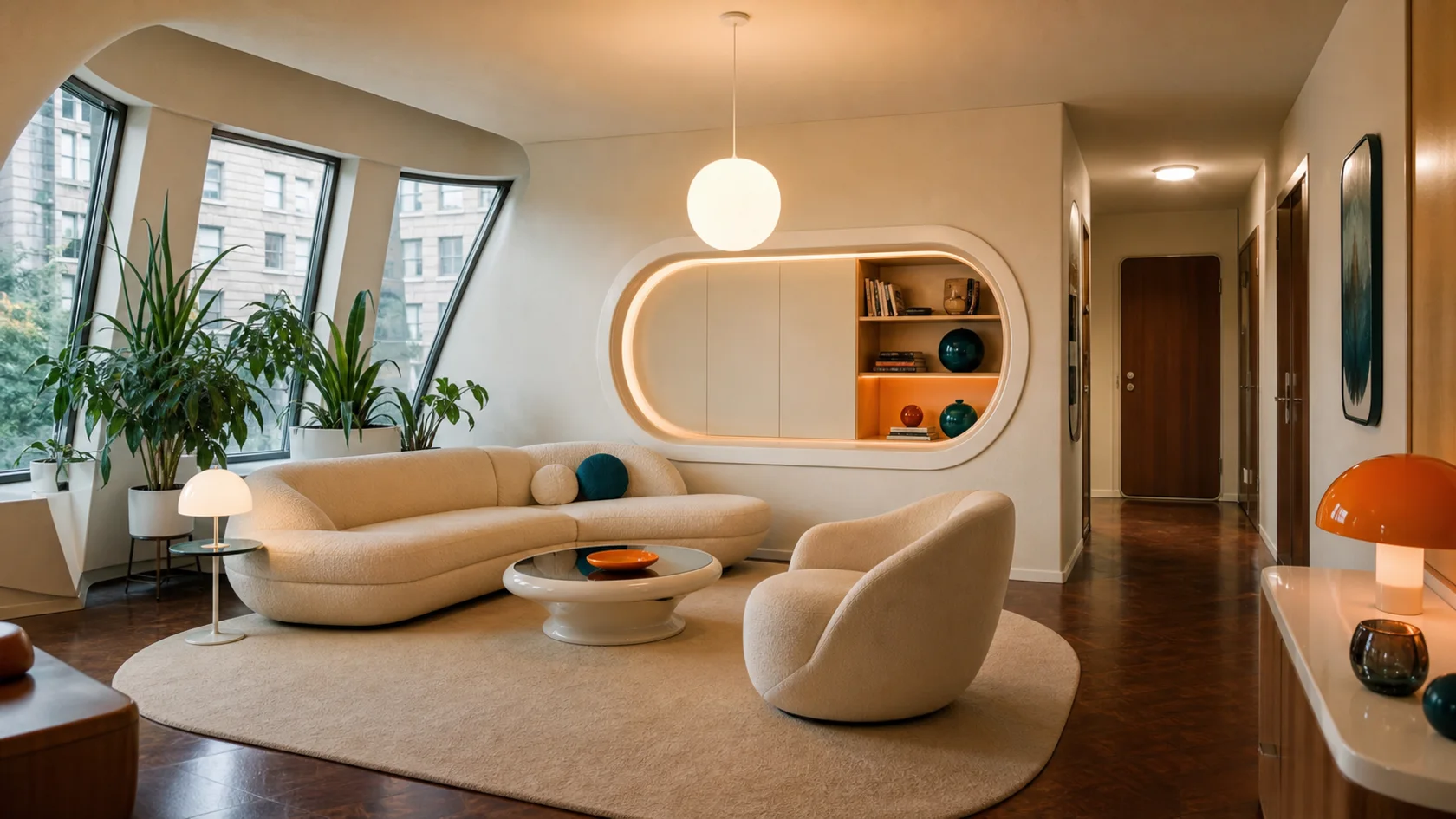
Use the style where it helps the room work: seating, circulation, focal point and material balance.
Keep the main sofa, chairs and table close enough for conversation without closing the route through the room.
Let a hearth, view, artwork or media wall set the furniture direction before adding small objects.
Keep the route from the doorway to adjacent rooms outside the central rug and seating zone.
Use upholstery, a generous rug and curtains to temper stone, timber, glass or metal.
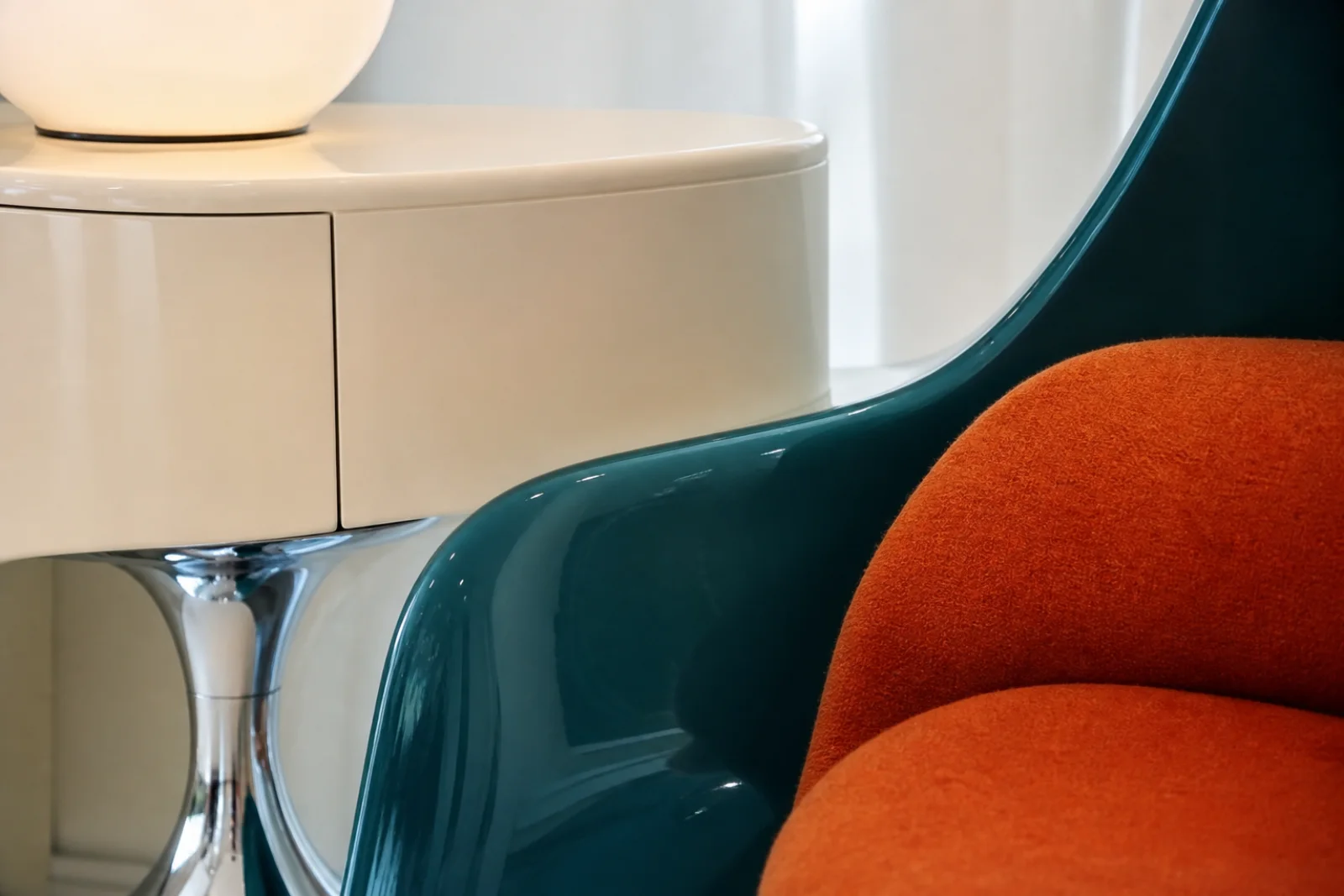
Let cream and white occupy most of the room, then pair one warm accent with one cooler counterpoint. Chrome should reflect the colors rather than become a separate theme.
The soft light base that keeps molded white forms from feeling clinically bright.
A broad, energetic accent for one wall panel, island, rug shape or upholstered form.
A cooler counterweight that gives orange and chrome more depth.
Use on pedestals, lamp stems and fine furniture edges, not every available surface.
Connects glossy shells, ceilings and rounded architecture without adding another hue.
Warm cream and soft white keep curved architecture bright and prevent the room from feeling like a film set.
Use orange, teal or cobalt on one molded element or graphic plane, not on every accessory.
Chrome and polished steel belong on slender bases, lamps and edges where they can catch light.
Walnut, cork or muted brown gives the futuristic geometry a believable residential counterweight.
For this room, a few strong choices can carry the style better than adding more decor.
A sunken or curved seating group can create the period signal, provided tables remain reachable and the main route stays straightforward. Choose this primary seating by real dimensions, comfort and maintenance needs before judging its finish.
Choose one unmistakable Space Age form, support it with simpler contemporary pieces and leave novelty props out of the room.
Choose one unmistakable Space Age form, support it with simpler contemporary pieces and leave novelty props out of the room.
Choose one unmistakable Space Age form, support it with simpler contemporary pieces and leave novelty props out of the room.
Use these checks to keep the retrofuturism character clear without compromising how the living room works.
Pull at least part of the seating group inward so the room has a clear social center.
Choose one primary focal point and let the television, view and artwork take supporting roles.
Resolve seat depth, table reach and lighting before adding decorative layers.