01
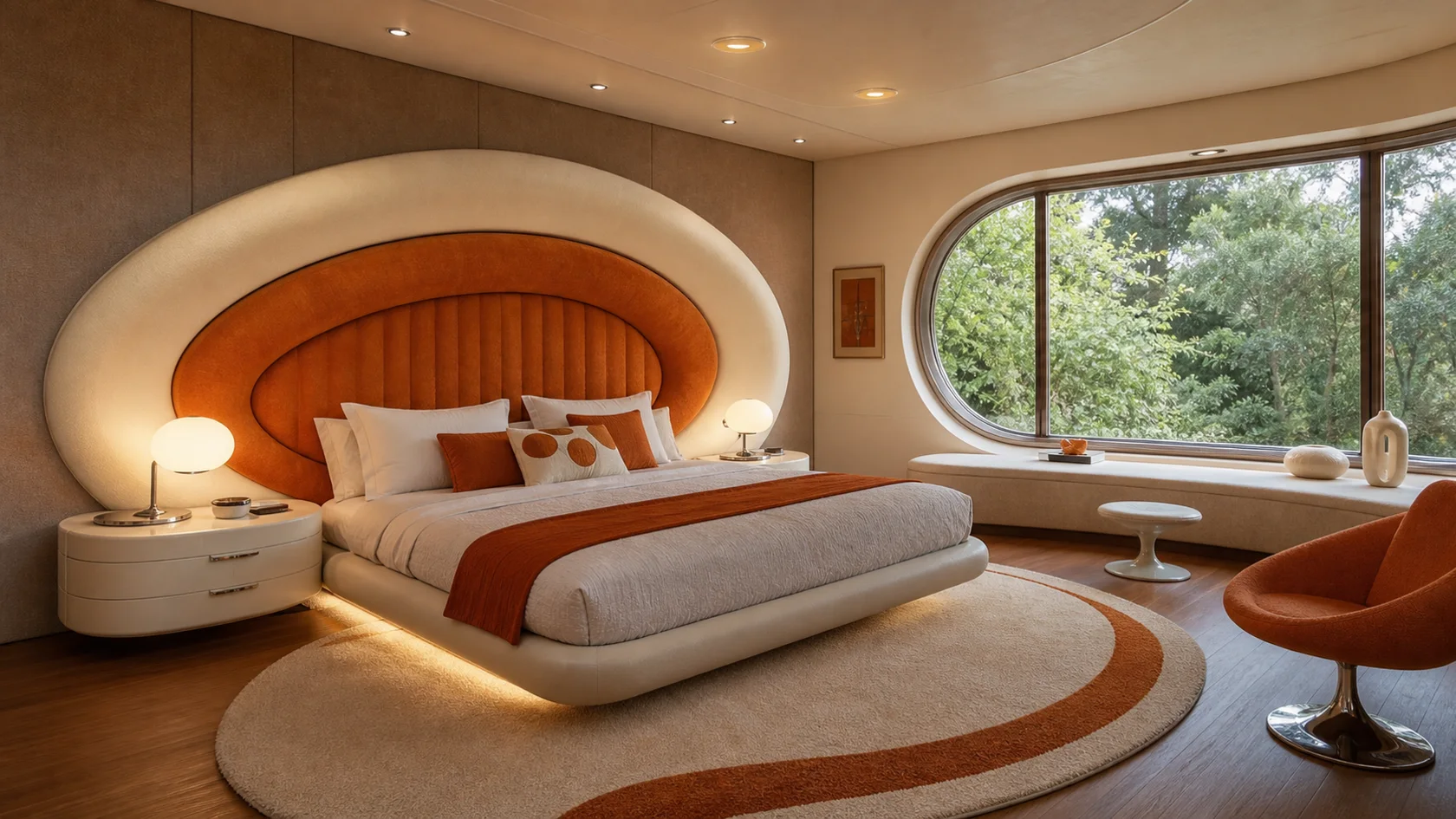
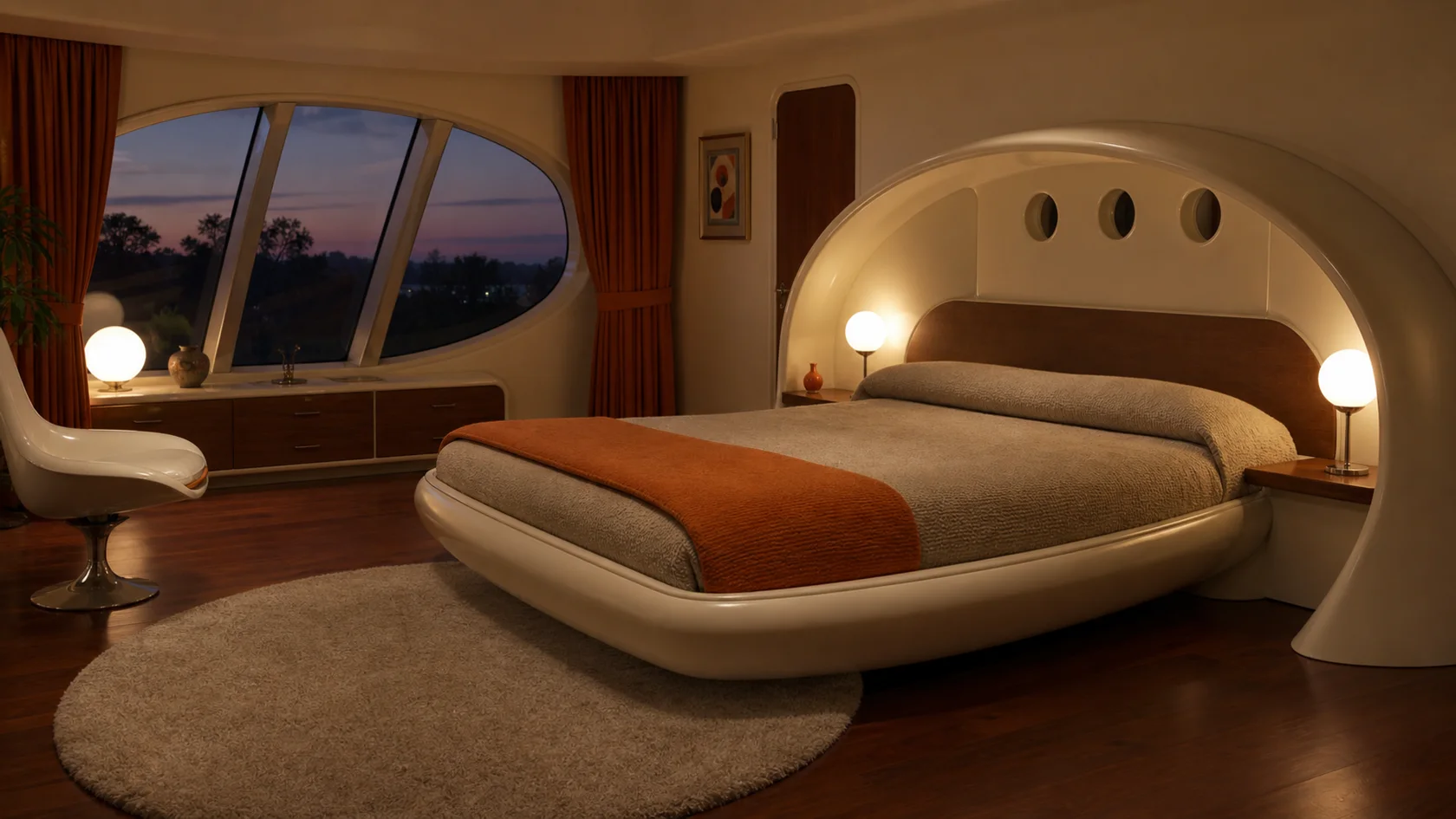
Orbit Bed
A single capsule-shaped architectural move supplies the fantasy while practical contemporary furniture keeps it inhabitable. Preserve a calm bedside zone and a clear path from the door to storage.
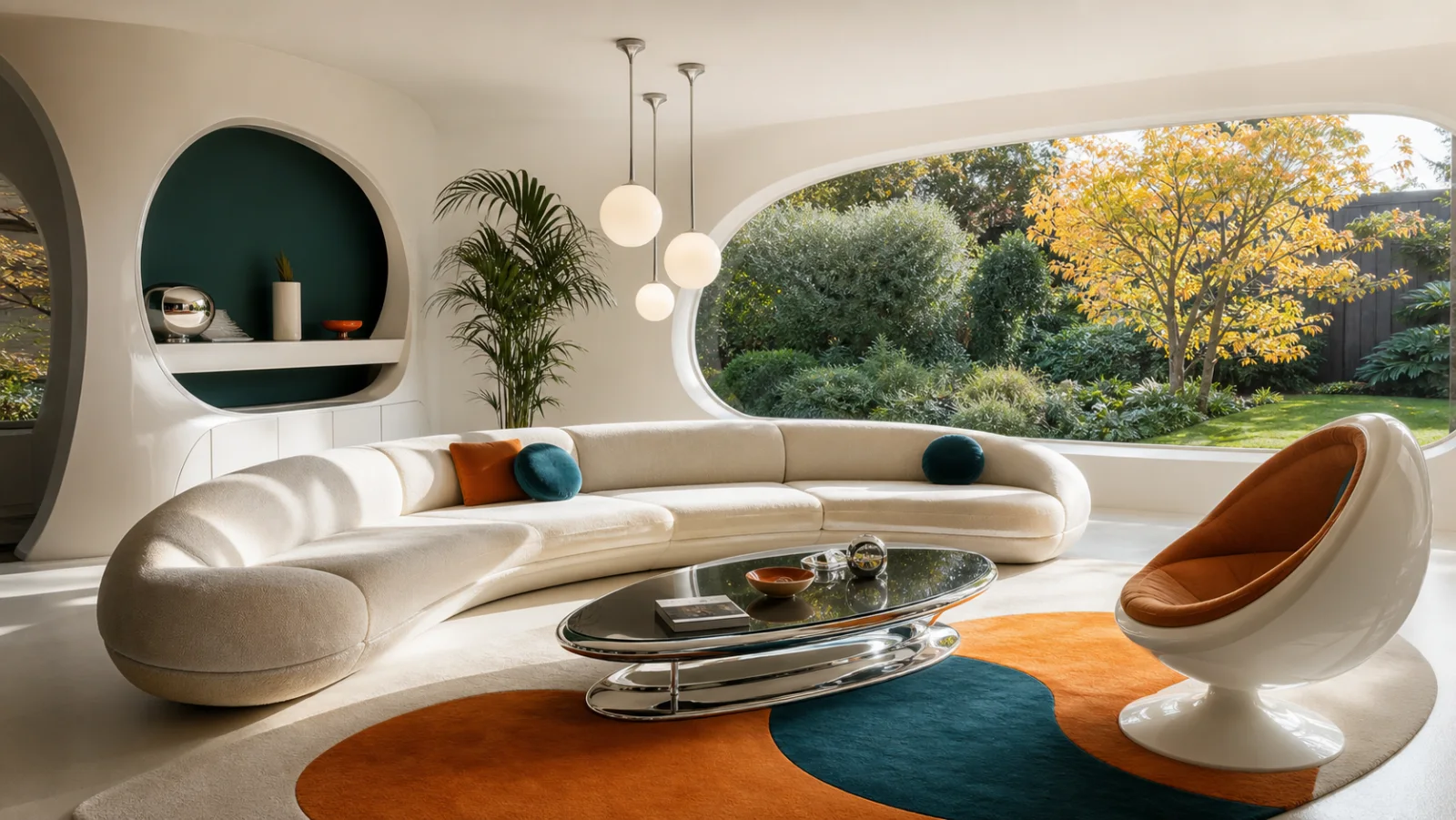
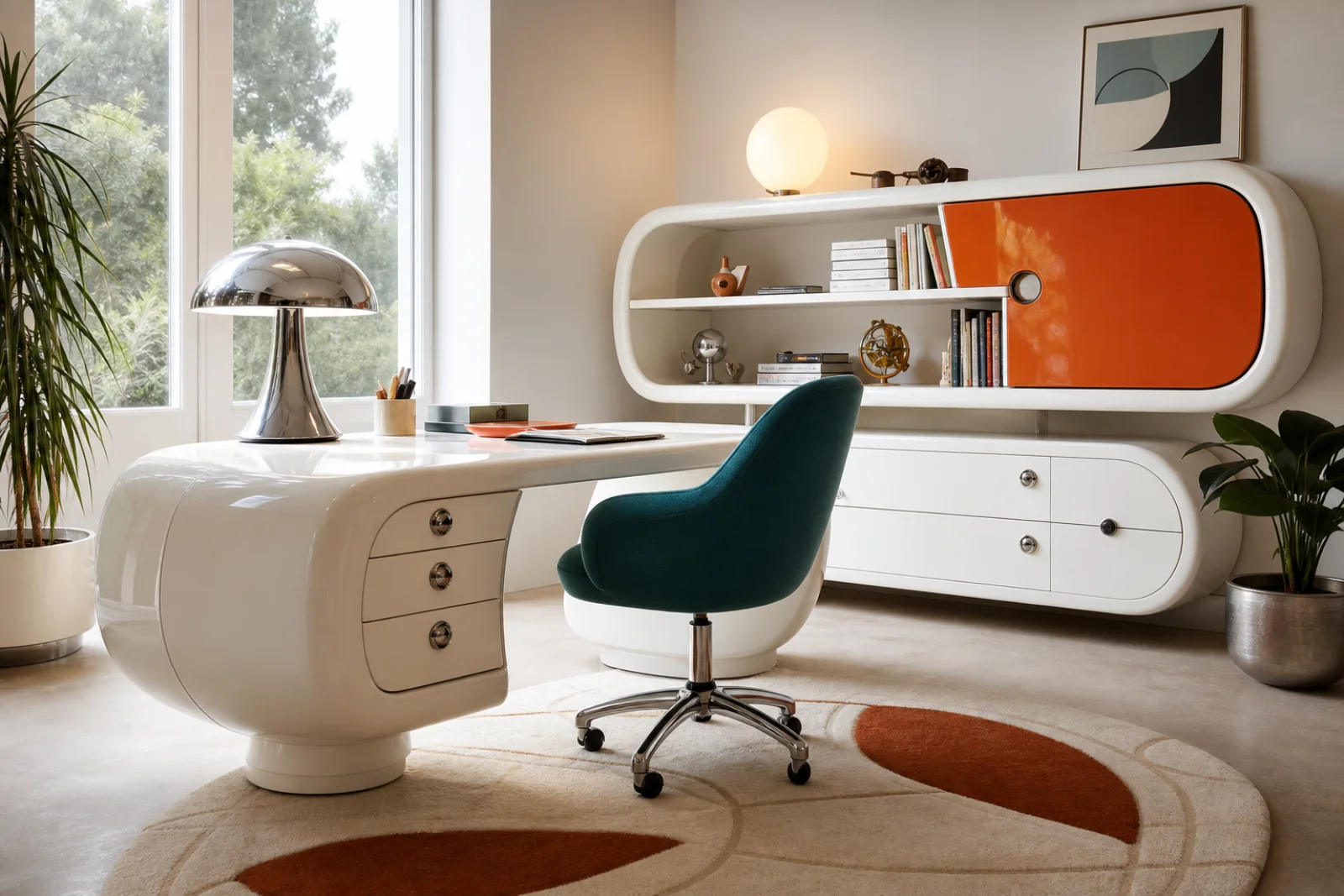
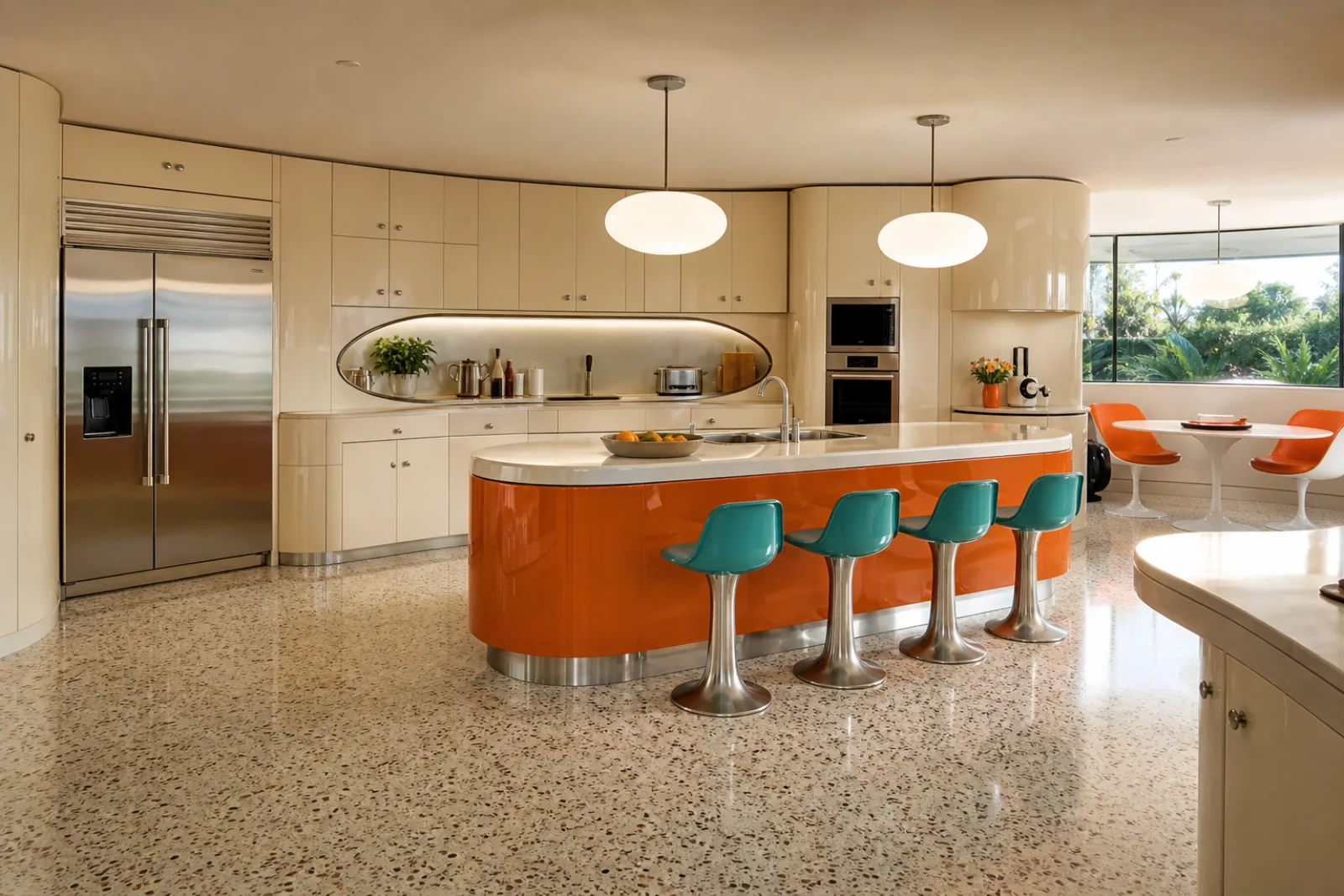
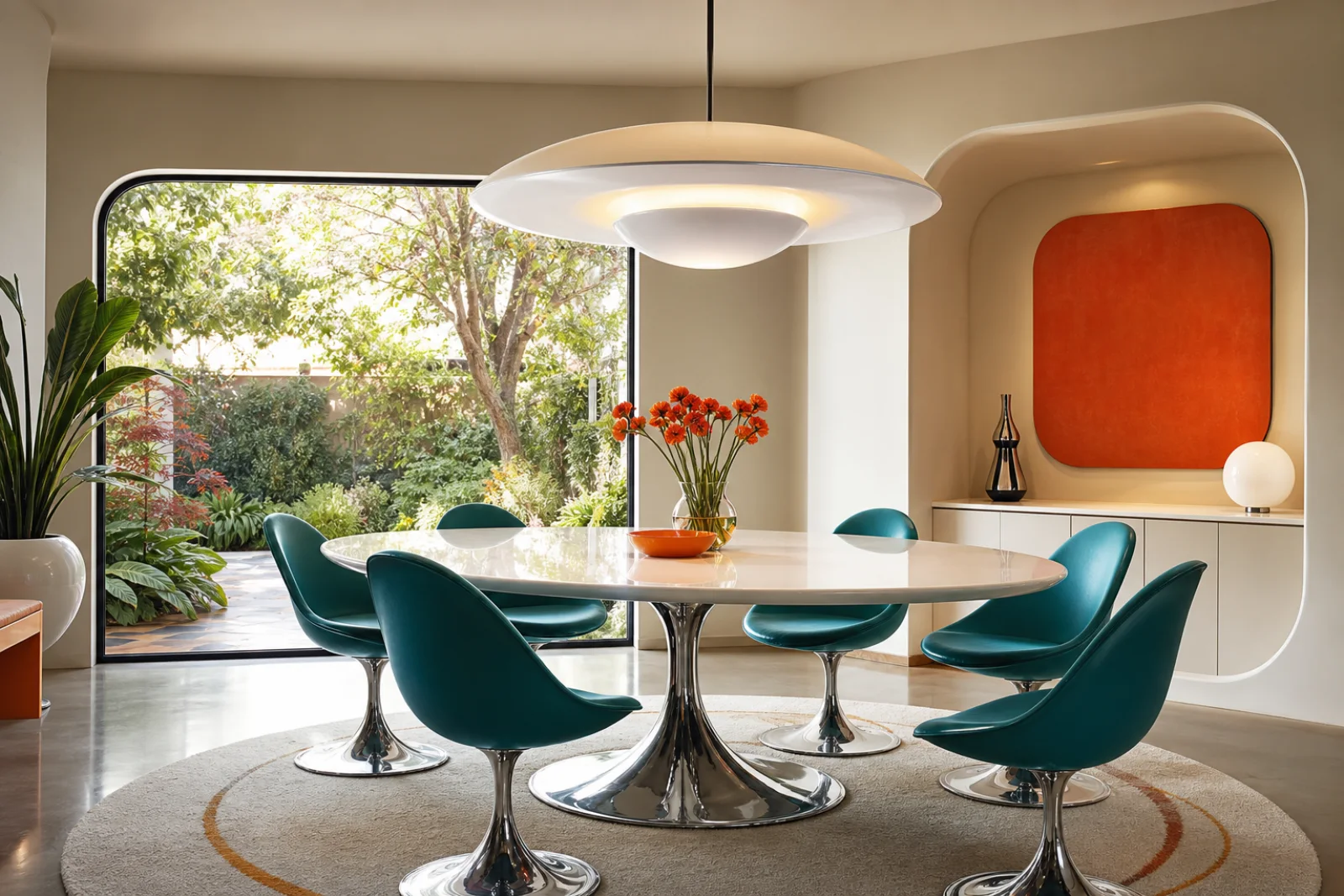
Five genuinely different retrofuturism approaches to the bedroom, each built around a new plan, architectural condition or time of day.
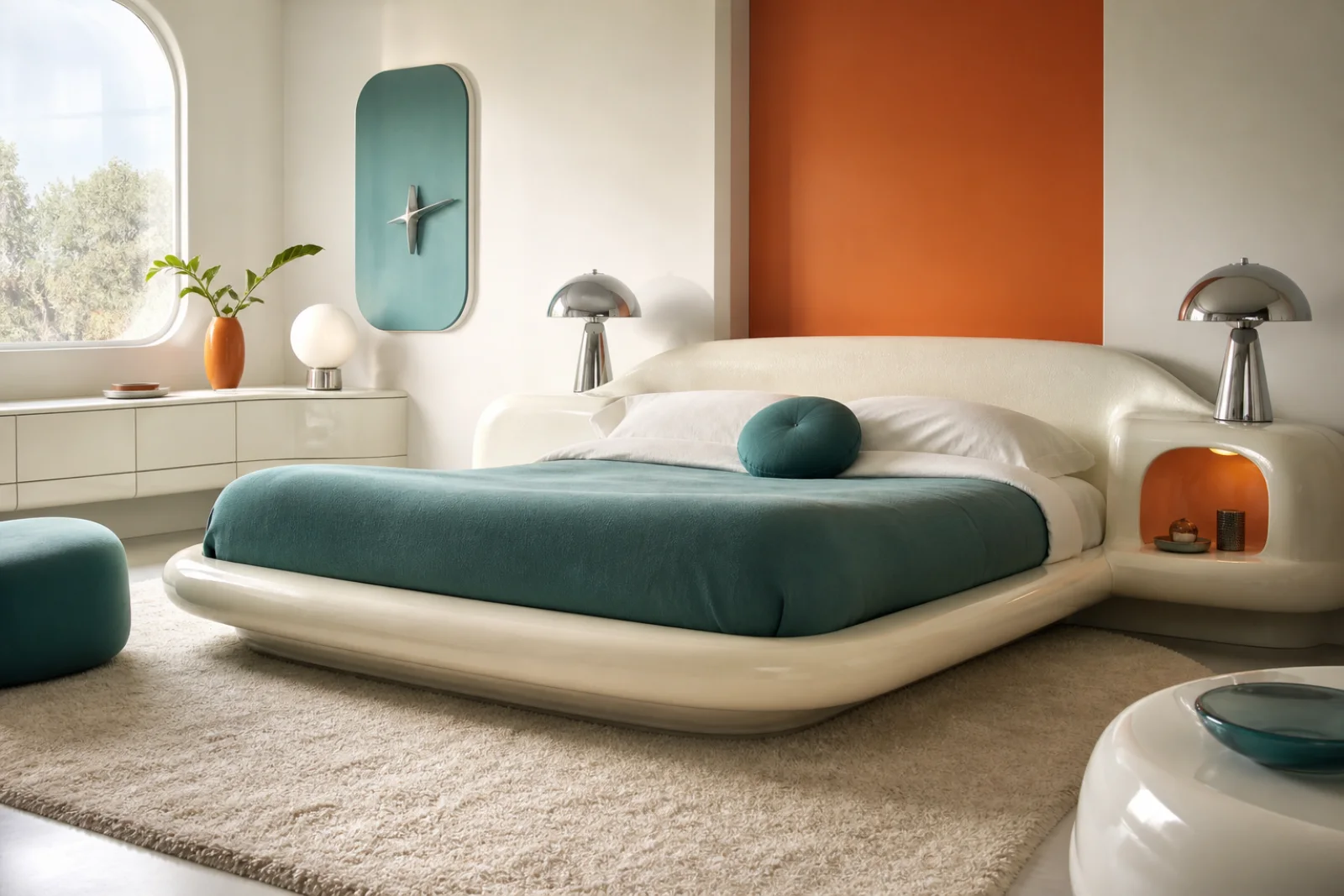
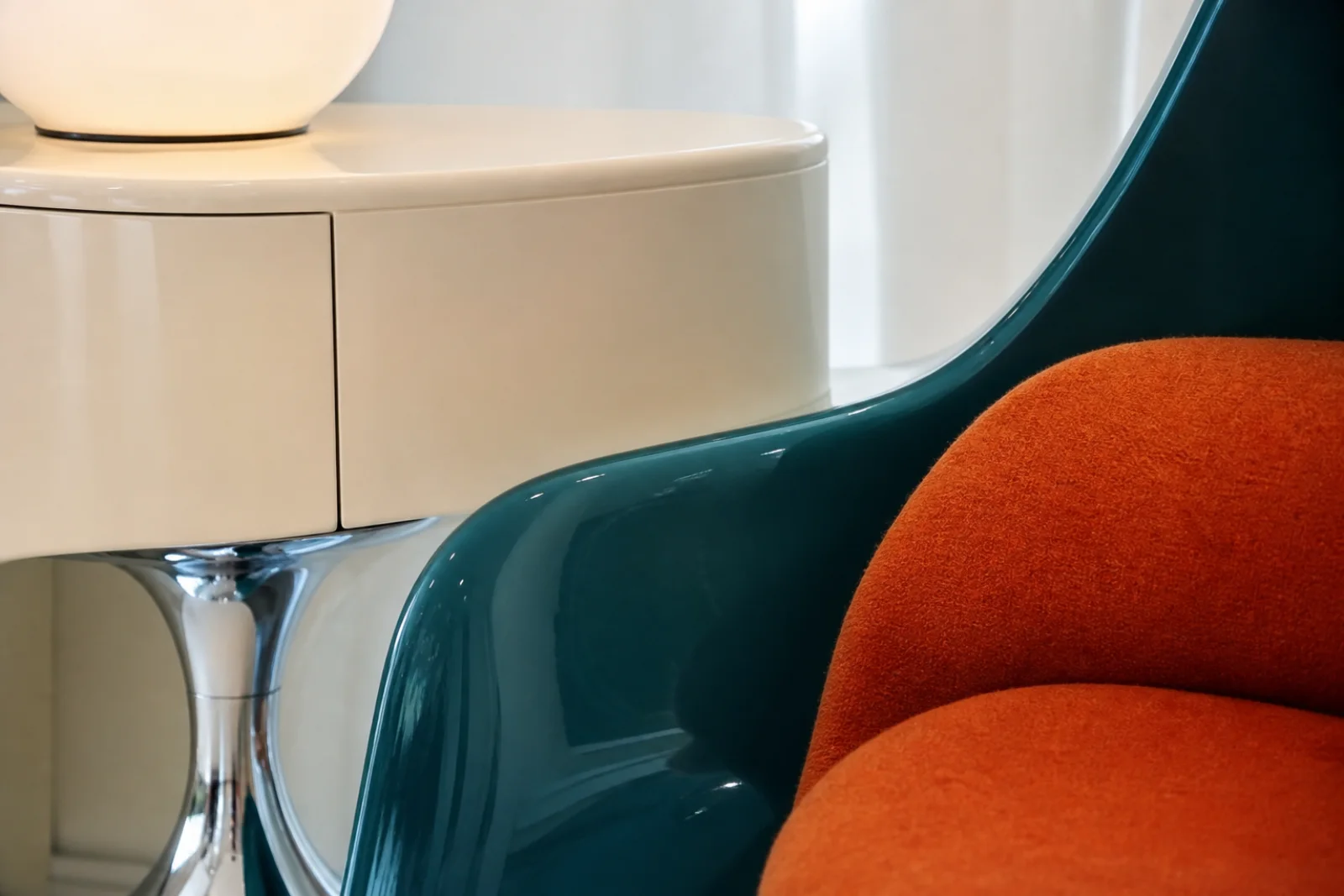
Retrofuturism revisits the optimistic future imagined between the 1950s and 1970s through capsule curves, molded forms, chrome and disciplined color. In the bedroom, that idea must still support rest, low visual stimulation and an unobstructed route around the bed.
Use a rounded headboard or capsule niche as the hero, then quiet the rest of the room so sleep is not competing with the concept. Choose one unmistakable Space Age form, support it with simpler contemporary pieces and leave novelty props out of the room.
Use these examples to choose the version of the style that fits your architecture, light and square footage.
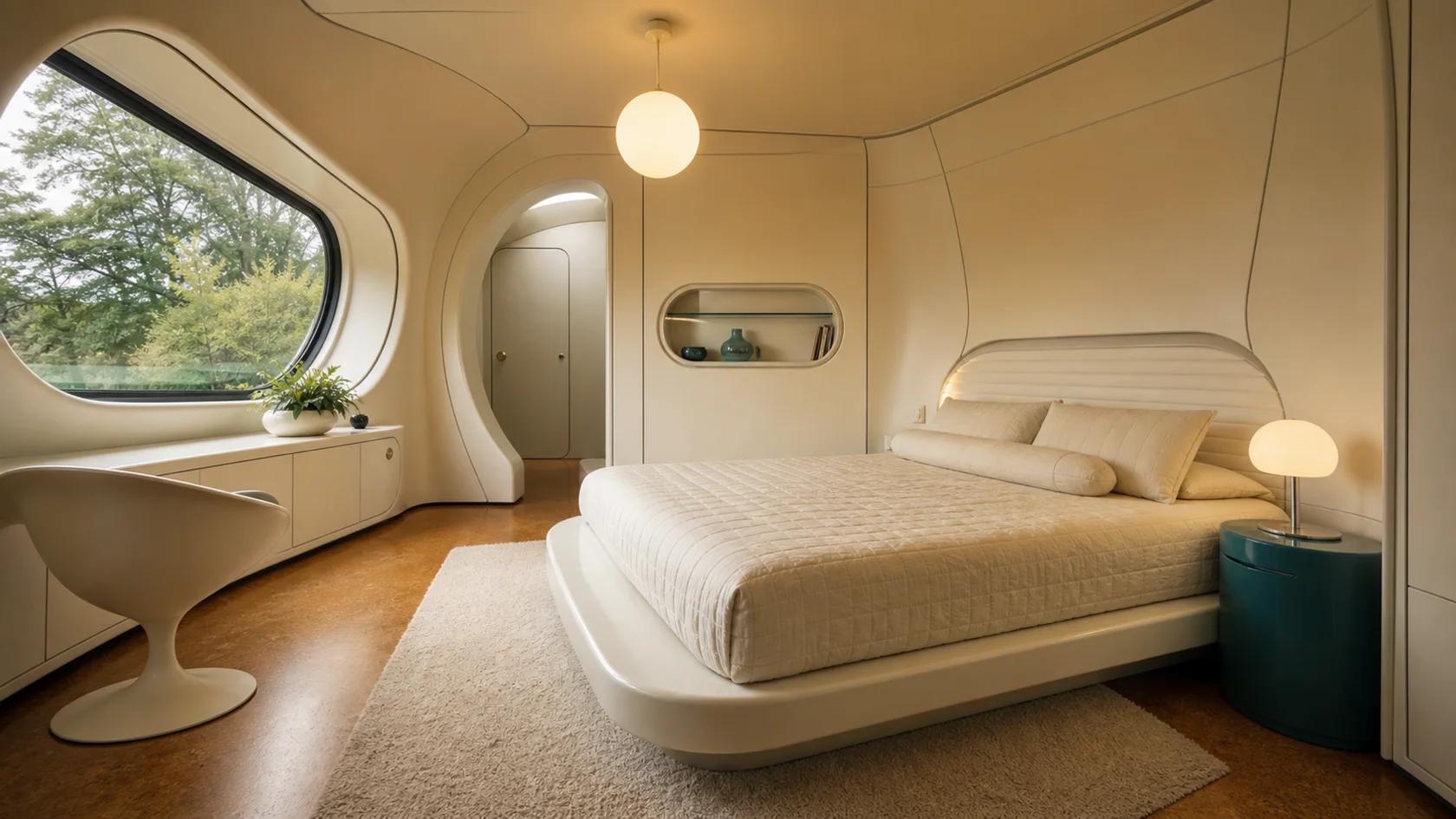
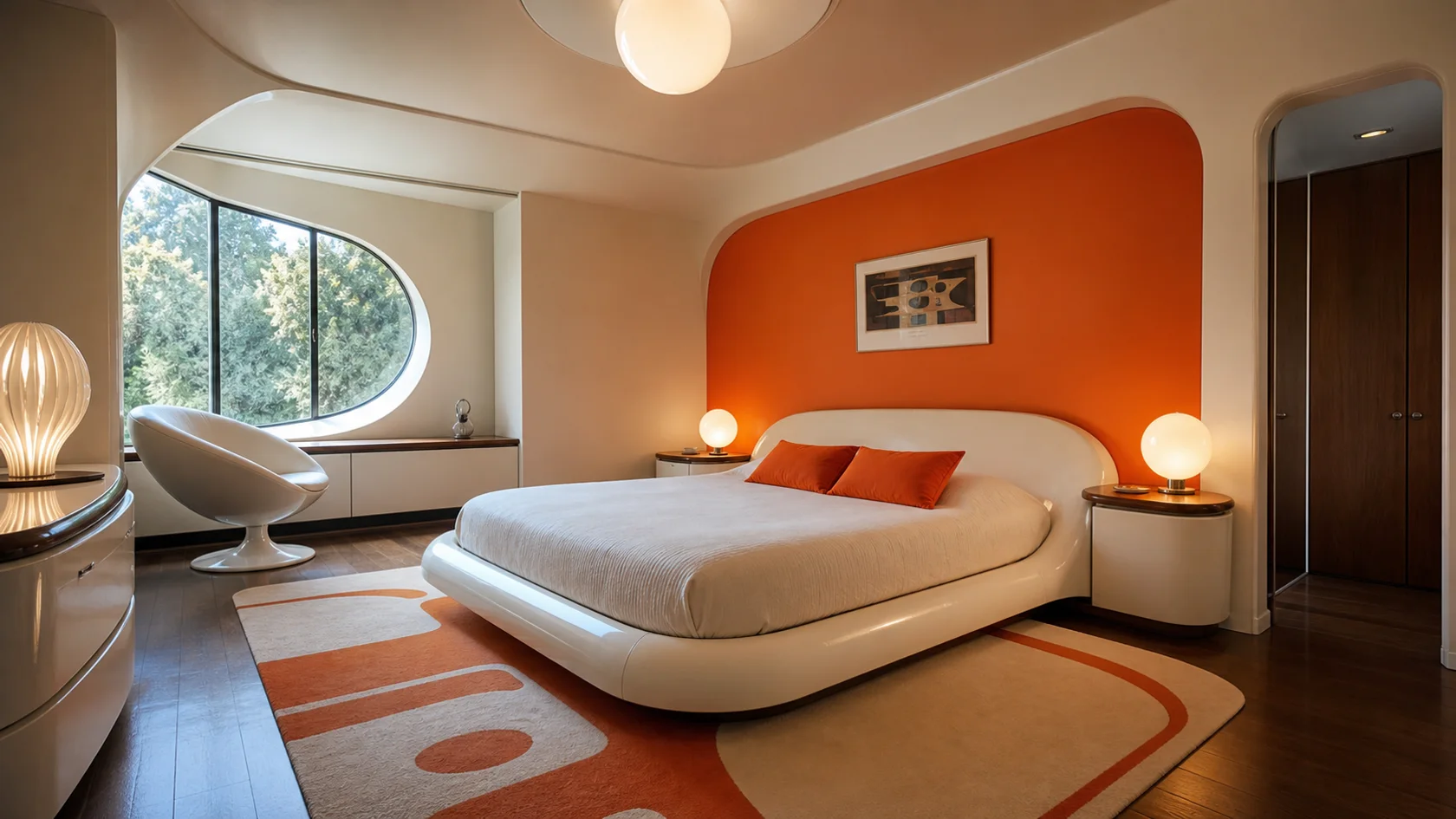
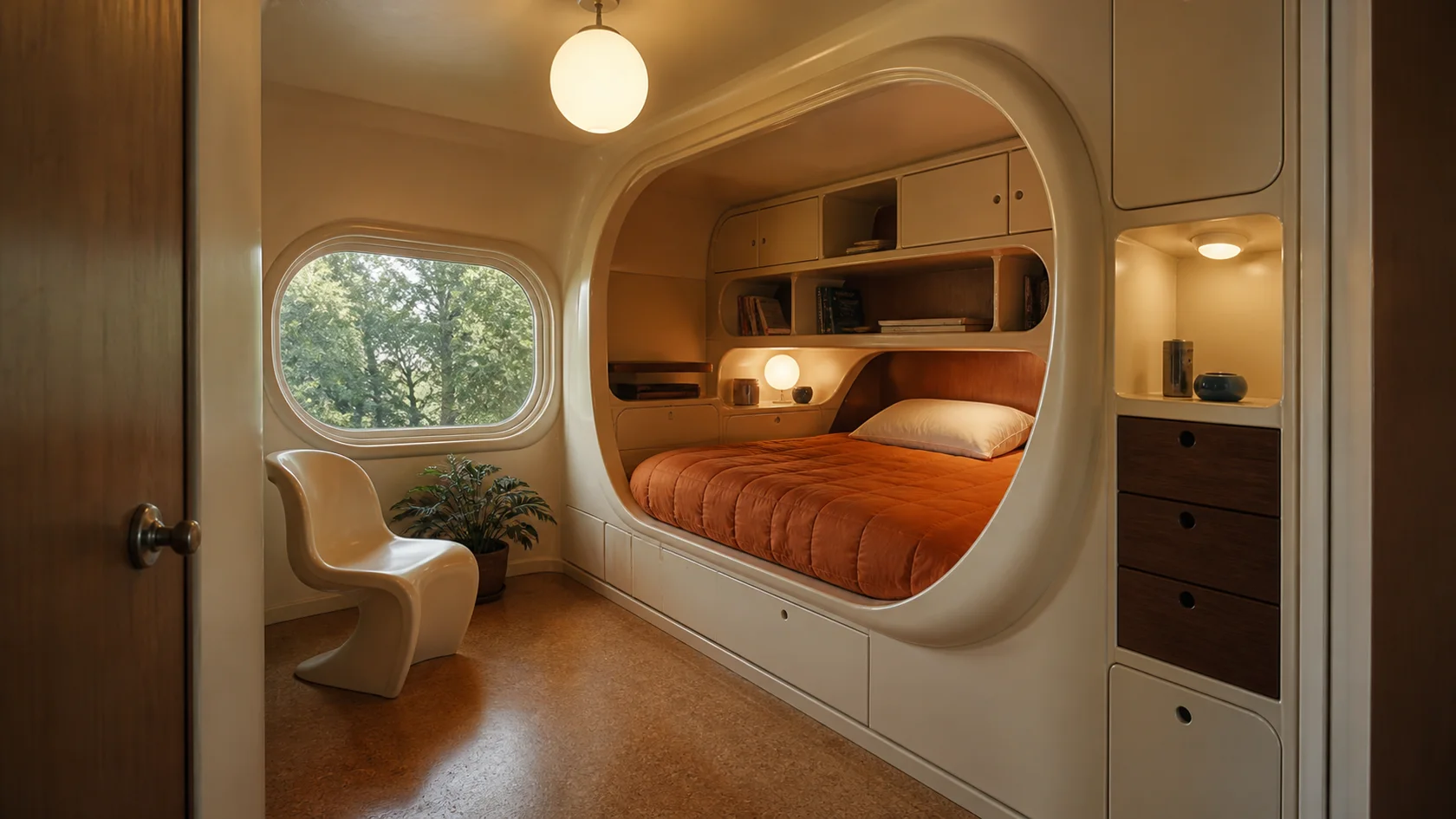
Use the style where it helps the room work: seating, circulation, focal point and material balance.
Place the headboard away from the busiest doorway when possible and preserve a clear approach on both sides.
A flush wardrobe or one resolved chest is calmer than several unrelated storage pieces.
Use bedside and concealed light below eye level instead of relying on a bright central ceiling fixture.
Prioritize breathable bedding, a tactile rug and curtains before decorative objects.
Let cream and white occupy most of the room, then pair one warm accent with one cooler counterpoint. Chrome should reflect the colors rather than become a separate theme.
The soft light base that keeps molded white forms from feeling clinically bright.
A broad, energetic accent for one wall panel, island, rug shape or upholstered form.
A cooler counterweight that gives orange and chrome more depth.
Use on pedestals, lamp stems and fine furniture edges, not every available surface.
Connects glossy shells, ceilings and rounded architecture without adding another hue.
Warm cream and soft white keep curved architecture bright and prevent the room from feeling like a film set.
Use orange, teal or cobalt on one molded element or graphic plane, not on every accessory.
Chrome and polished steel belong on slender bases, lamps and edges where they can catch light.
Walnut, cork or muted brown gives the futuristic geometry a believable residential counterweight.
For this room, a few strong choices can carry the style better than adding more decor.
Use a rounded headboard or capsule niche as the hero, then quiet the rest of the room so sleep is not competing with the concept. Choose this bed and headboard by real dimensions, comfort and maintenance needs before judging its finish.
Choose one unmistakable Space Age form, support it with simpler contemporary pieces and leave novelty props out of the room.
Choose one unmistakable Space Age form, support it with simpler contemporary pieces and leave novelty props out of the room.
Choose one unmistakable Space Age form, support it with simpler contemporary pieces and leave novelty props out of the room.
Use these checks to keep the retrofuturism character clear without compromising how the bedroom works.
Use ledges or compact tables that preserve the route around the bed.
Repeat a narrow family of tones and let weave, not pattern count, create depth.
Layer low bedside light with a dim ambient source for a calmer evening transition.