01
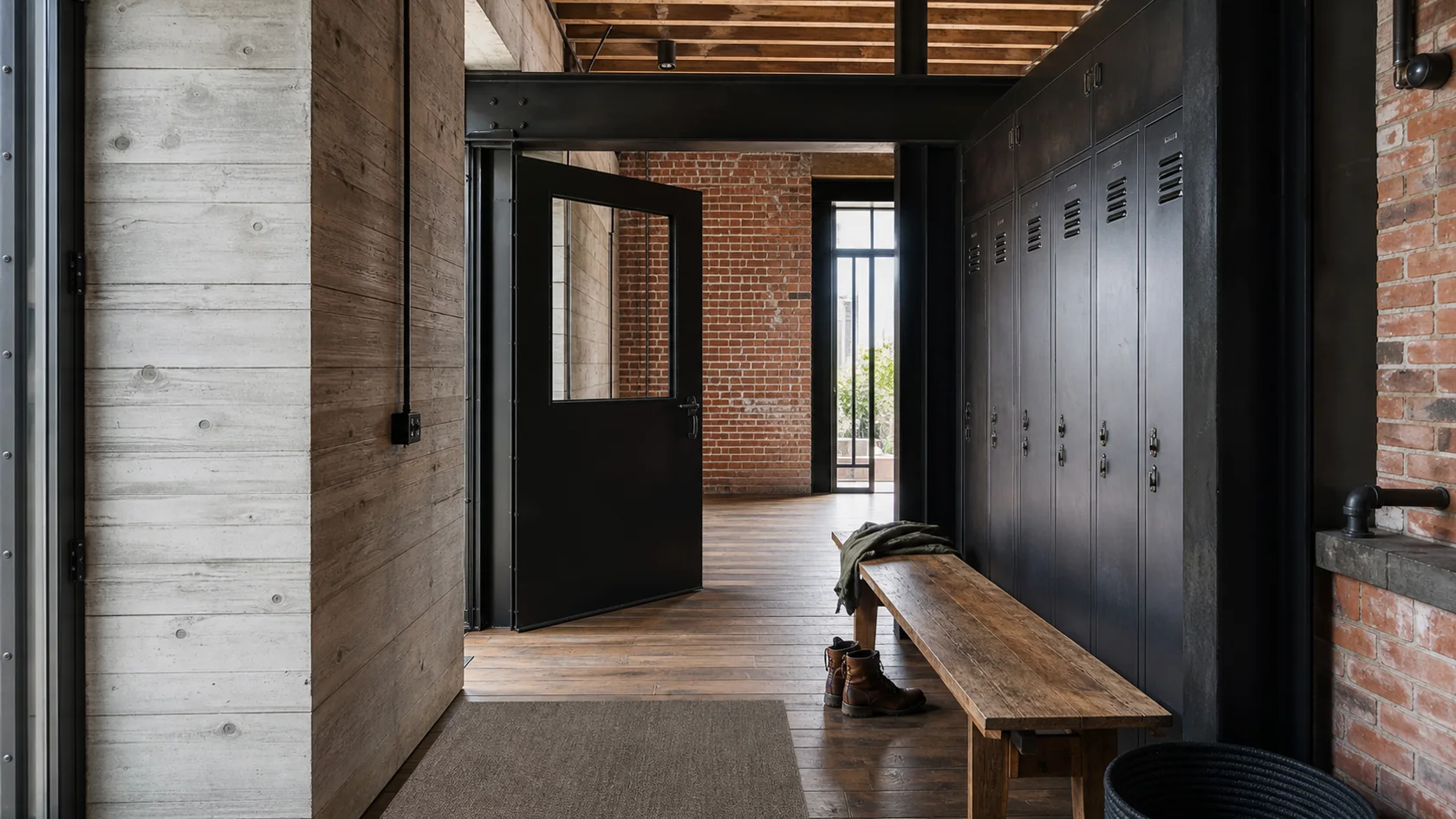
Steel Locker
Existing brick or concrete remains visible as building history, with repairs treated honestly instead of disguised. Protect the door swing and give shoes, coats and keys a defined place at the point of arrival.
Five genuinely different industrial approaches to the entryway, each built around a new plan, architectural condition or time of day.
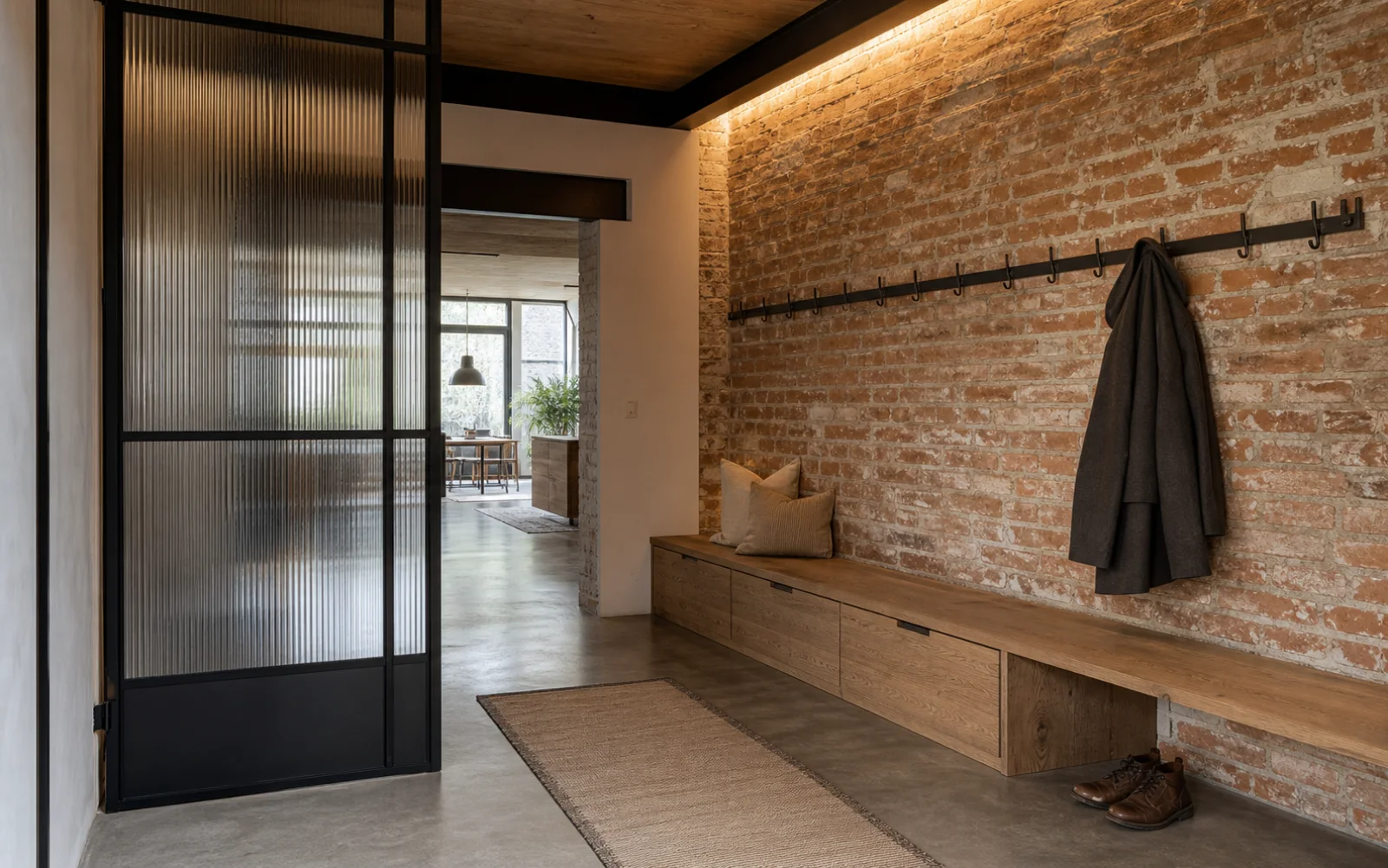
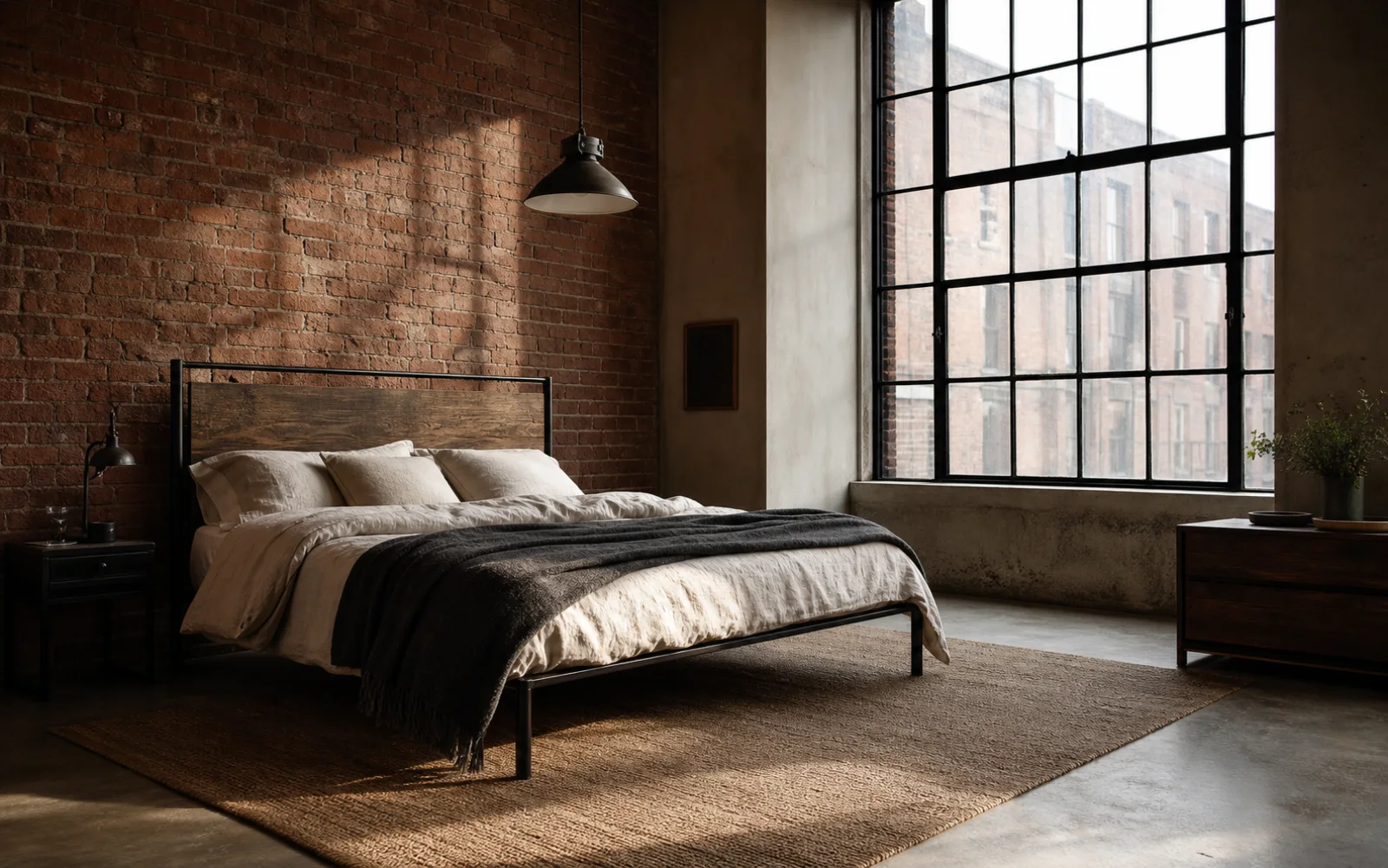
Industrial adapts honest brick, concrete, steel and timber building fabric for residential use while preserving evidence of structure and age. In the entryway, that idea must still support arrival, quick storage and an uncluttered transition into the home.
Use a tough threshold floor, a real bench and ventilated storage; the utilitarian language should solve arrival rather than decorate it. Repair authentic surfaces, expose only systems worth seeing and spend as much attention on acoustics, warmth and task light as on the raw shell.
Use these examples to choose the version of the style that fits your architecture, light and square footage.
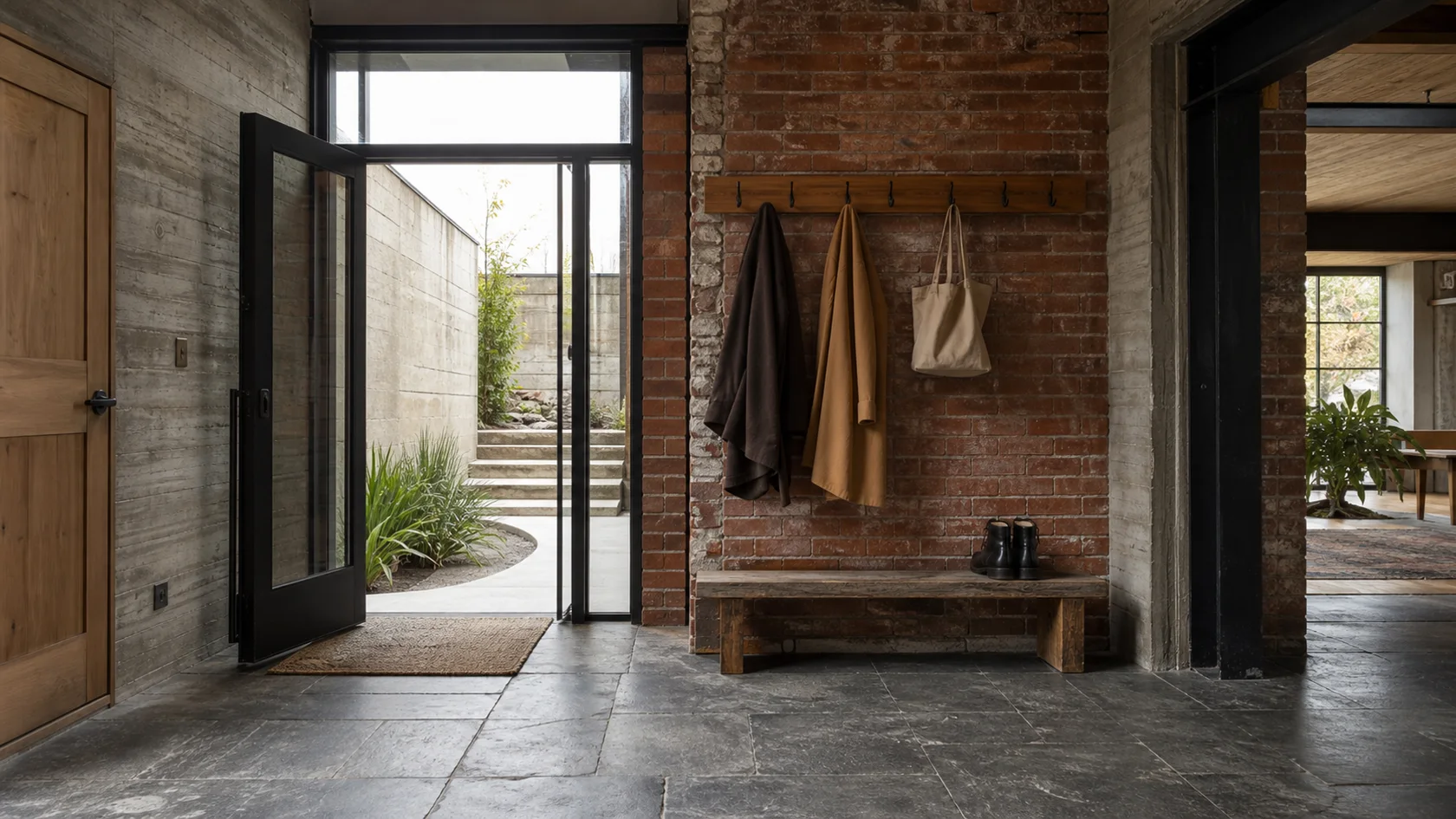
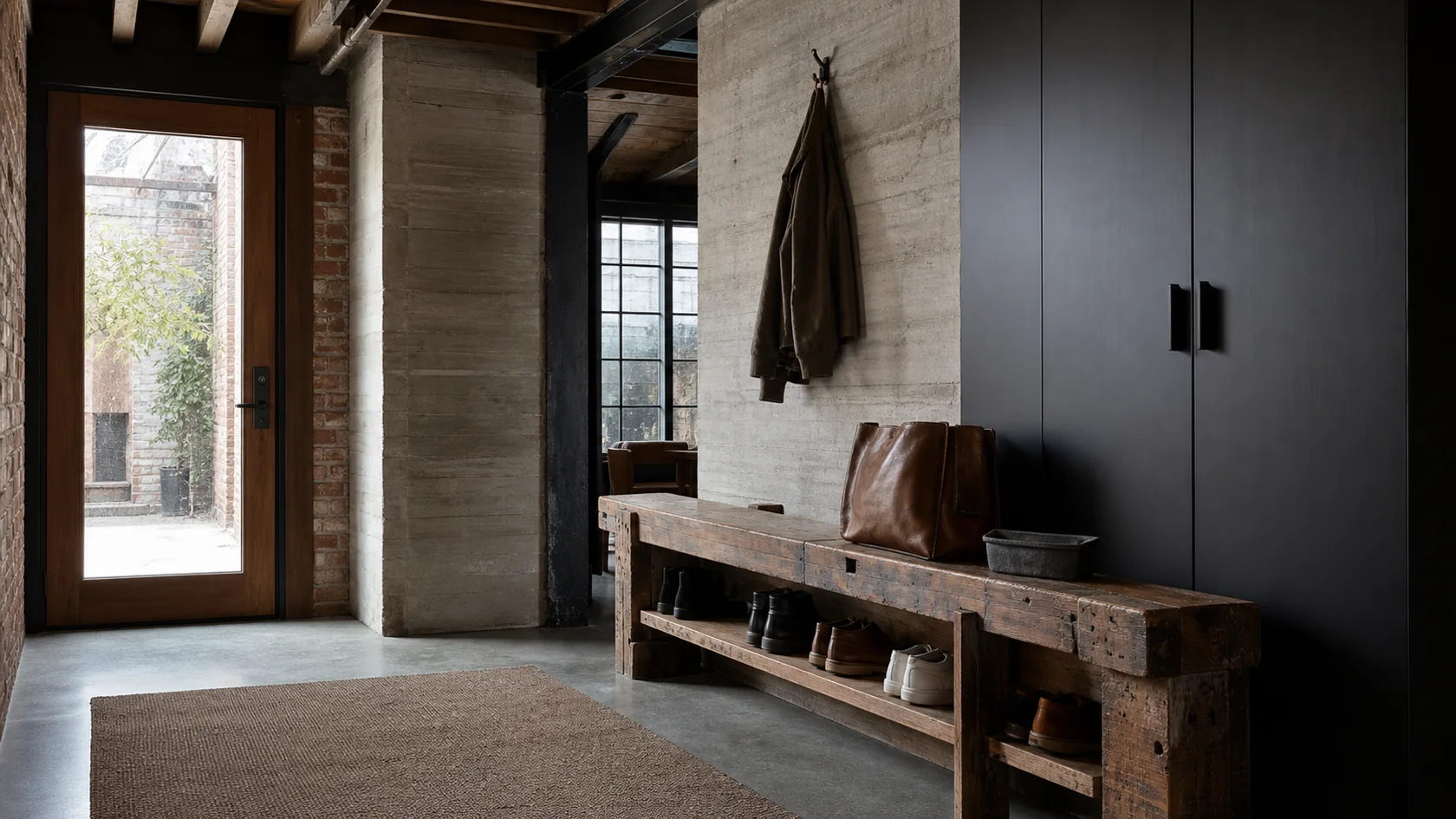
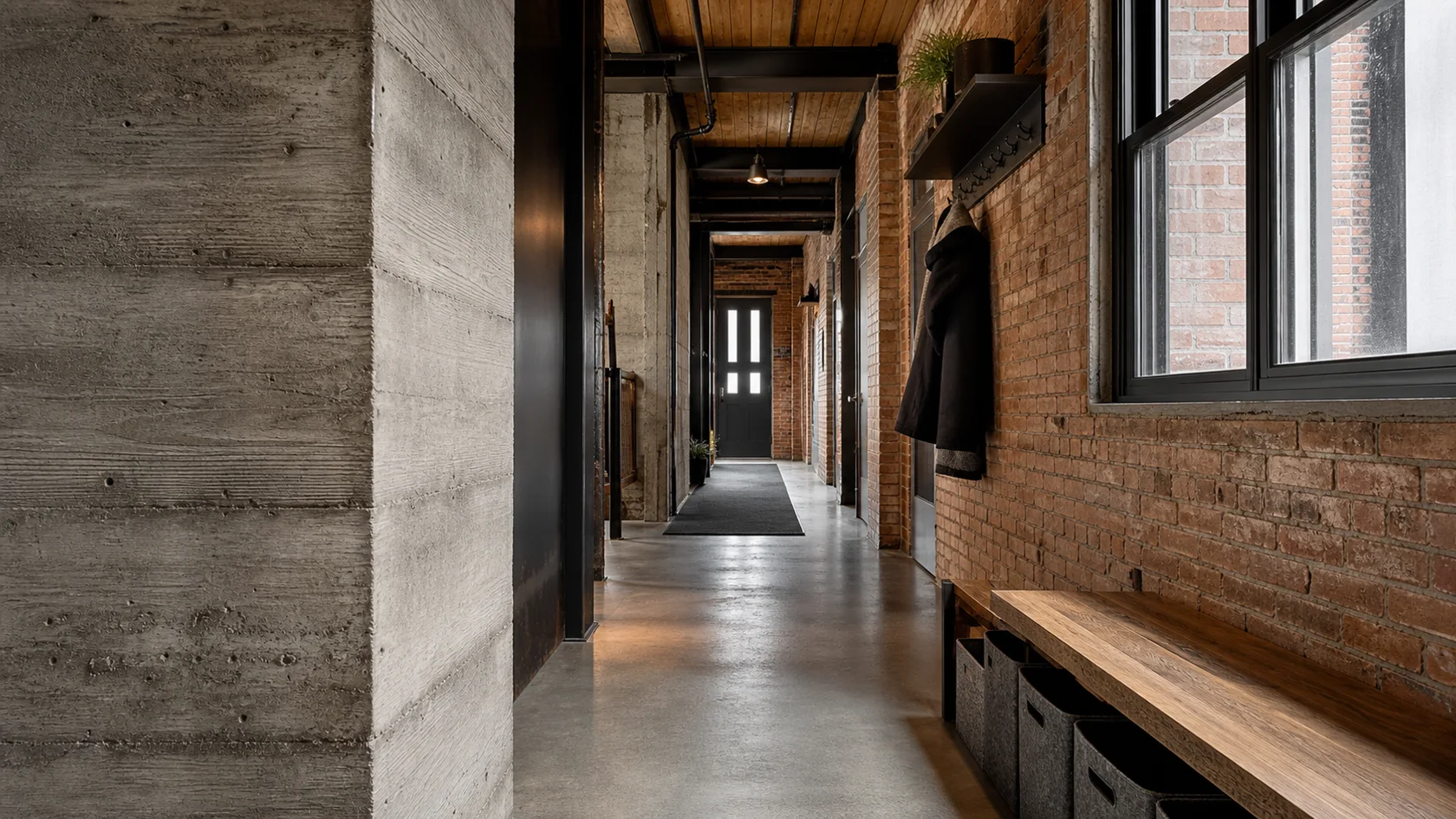
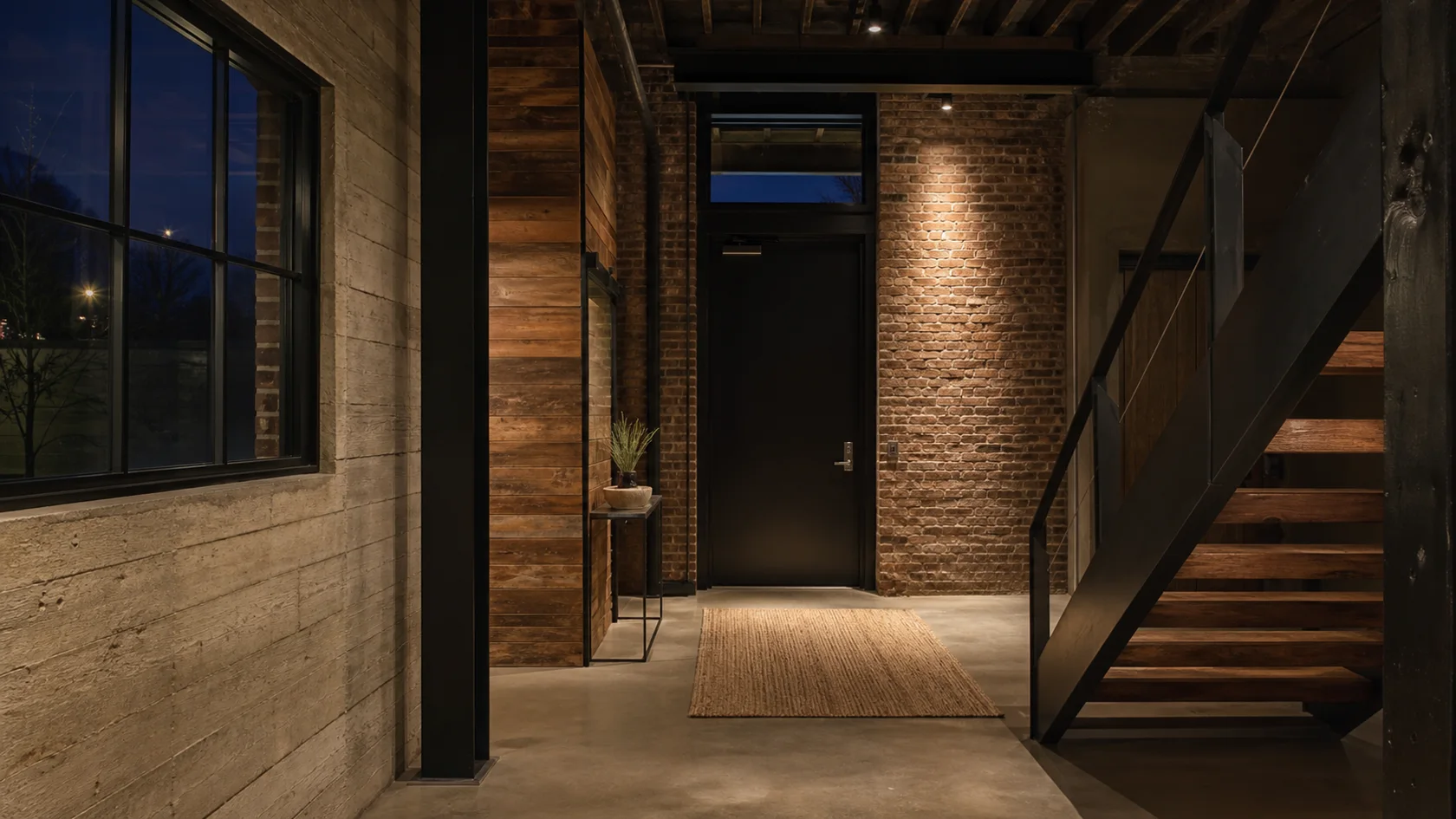
Use the style where it helps the room work: seating, circulation, focal point and material balance.
Place benches, cabinets and baskets outside the full arc of the front door.
Give shoes, coats, keys and bags a specific place close to where each item is used.
Shallow storage and one strong object make a narrow hall feel intentional without crowding it.
Combine practical threshold light with a washable runner or resilient floor at the highest-wear zone.
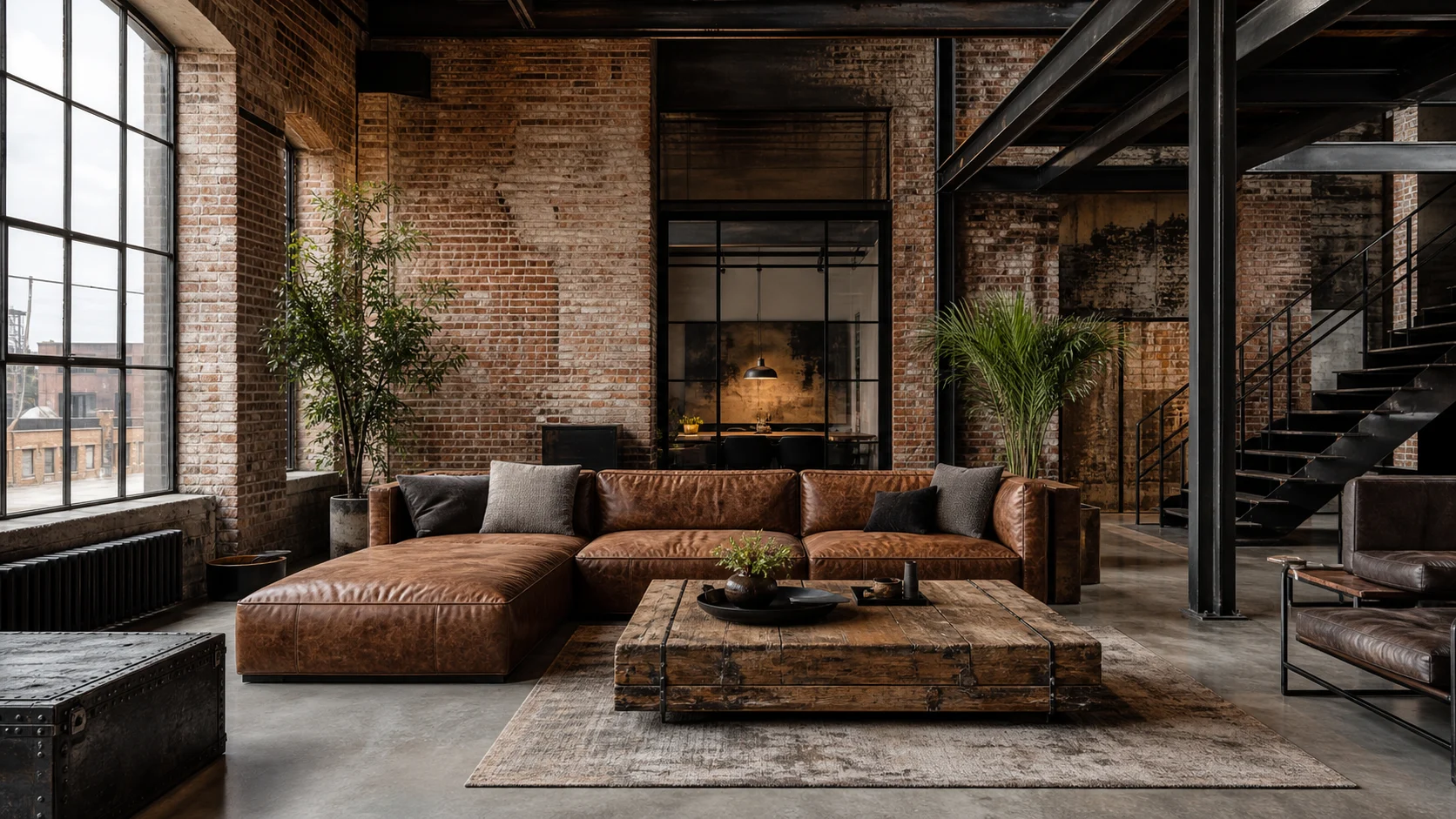
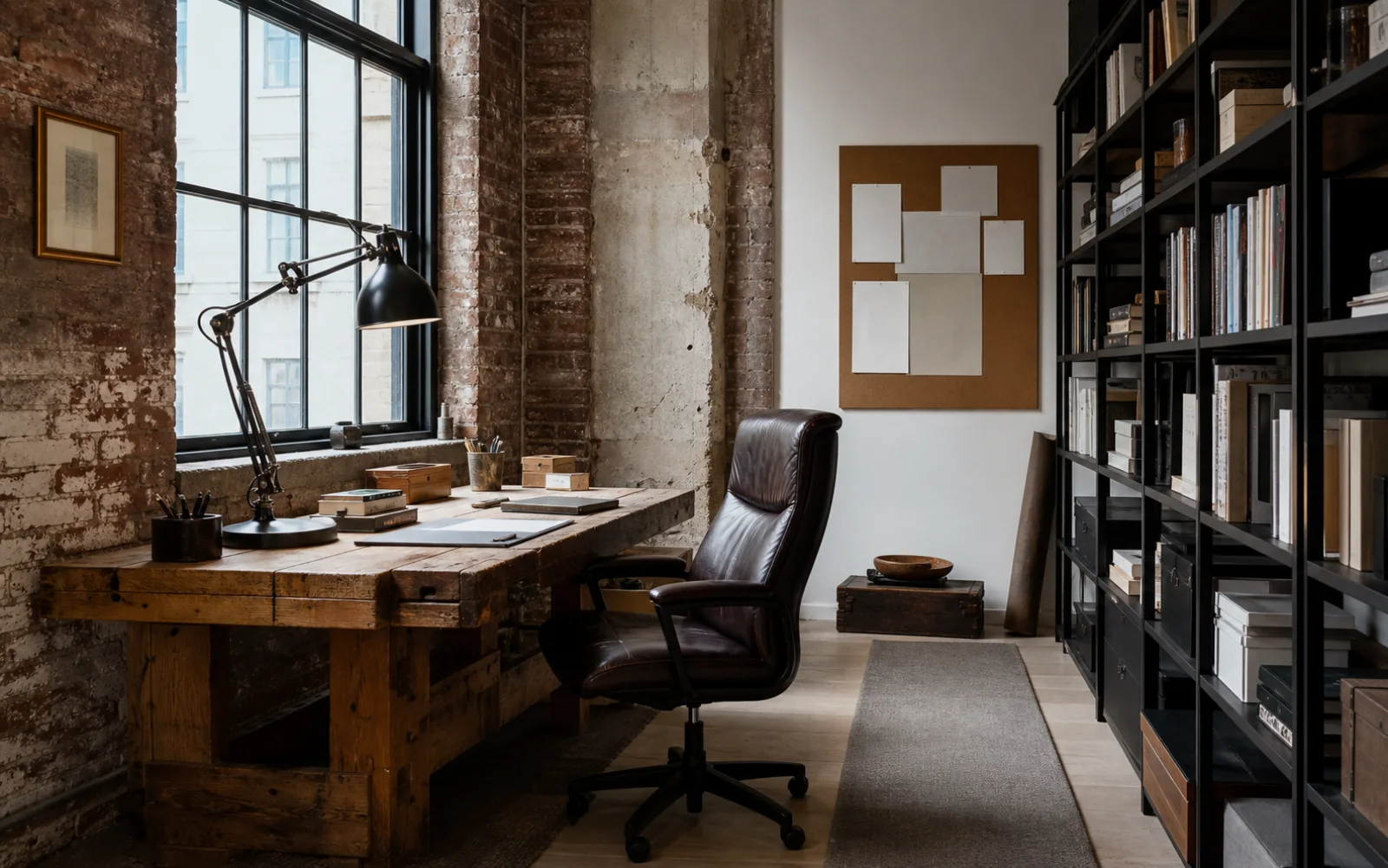
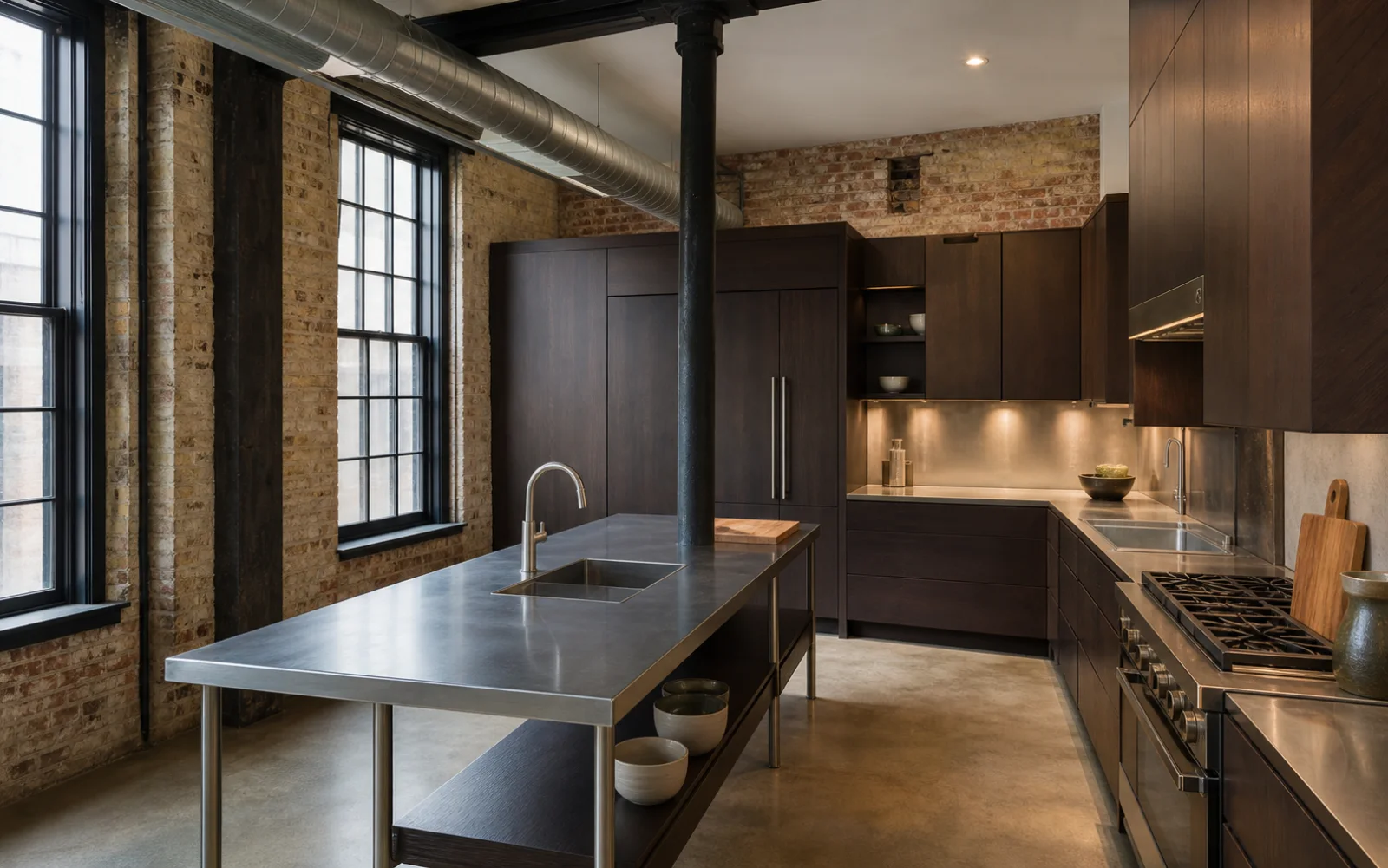
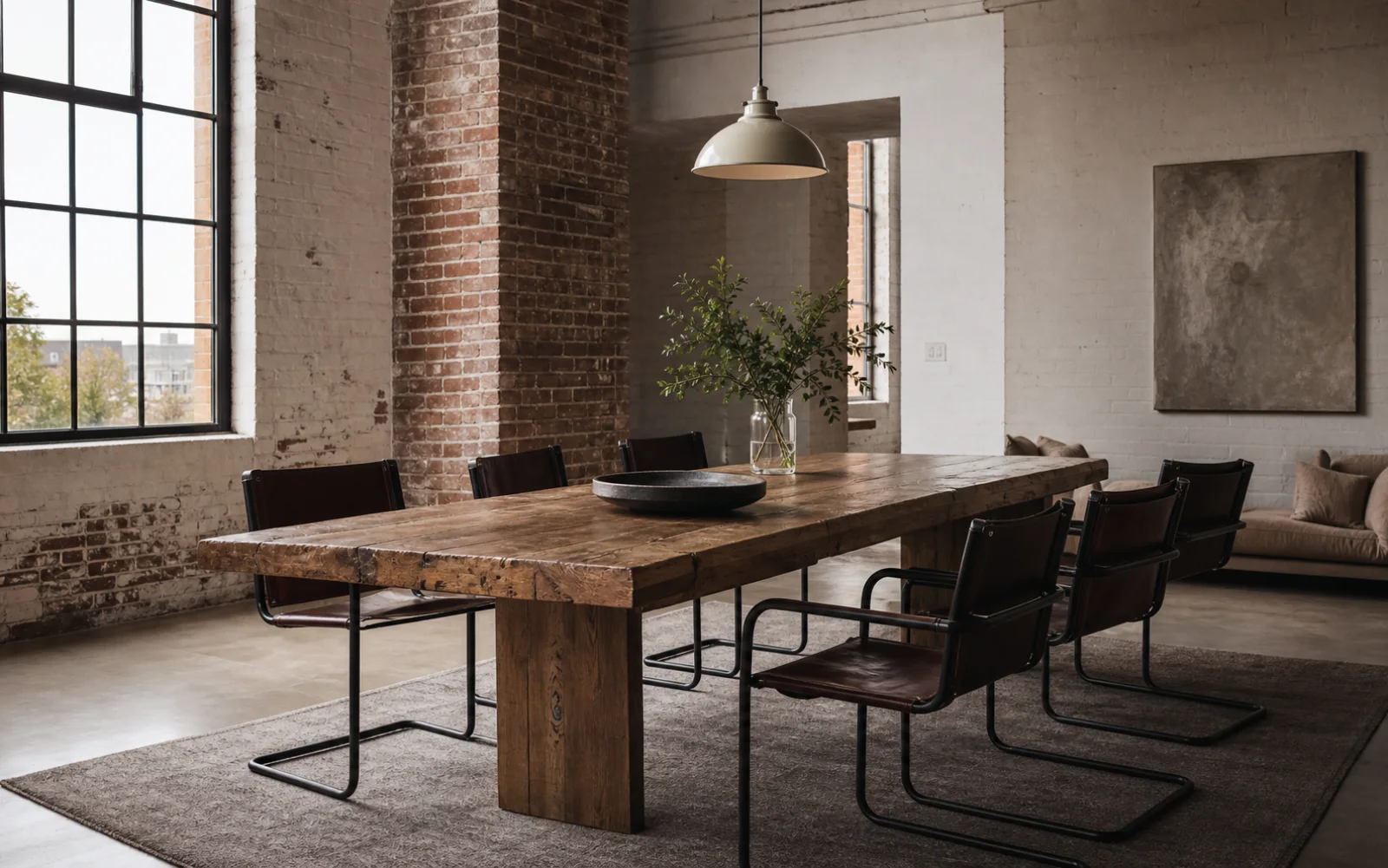
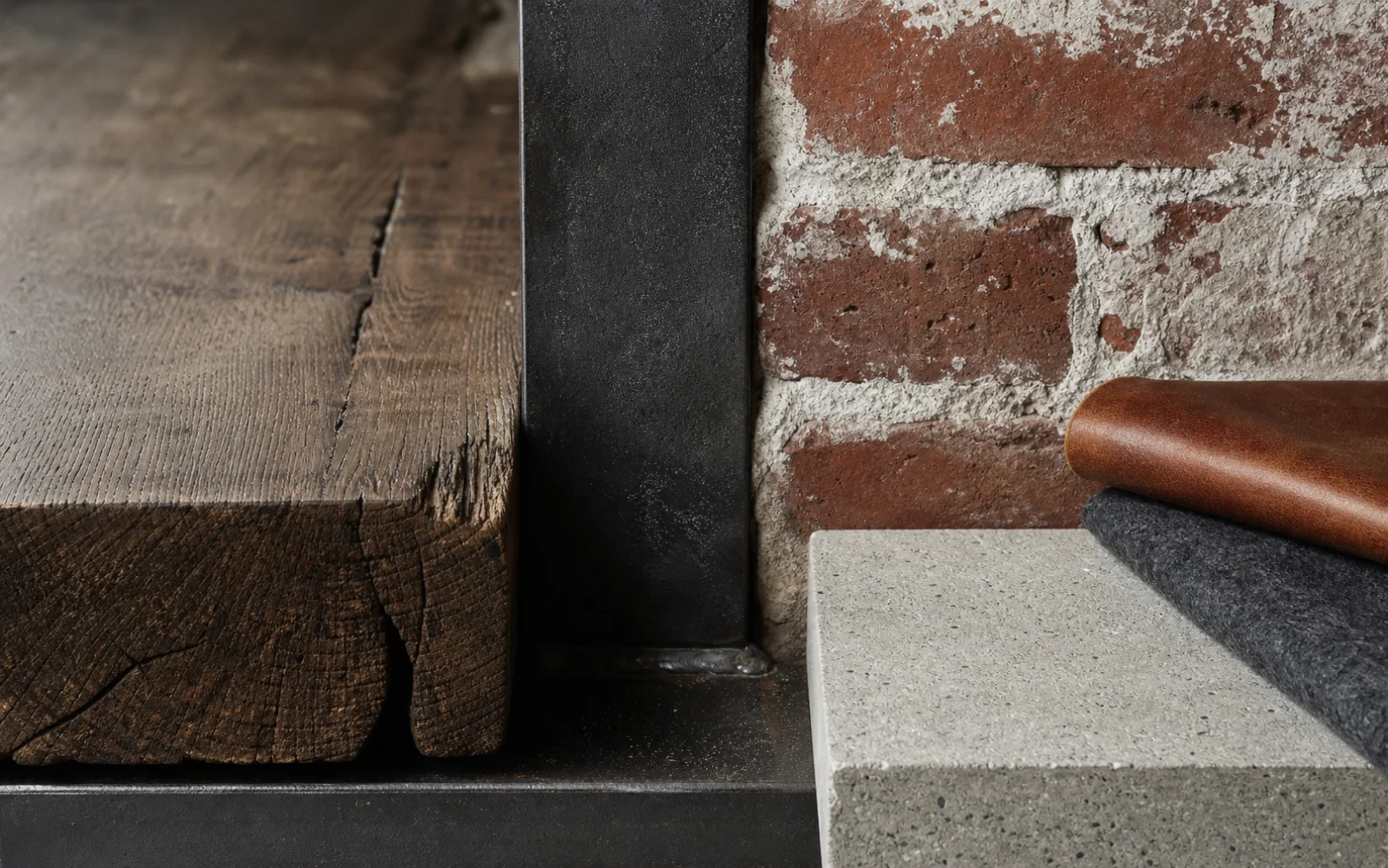
Let masonry and concrete establish the palette. Repeat charcoal in a few structural lines, then add timber, leather and wool where the body touches the room.
A pale mineral neutral that links repaired brick, plaster and concrete.
Use the existing masonry as a focal field rather than repeating rust red on every object.
Frames openings, shelving and furniture with a quiet structural line.
Adds grain and warmth through tables, benches and cabinet fronts.
A restrained cognac accent that develops real patina through use.
Mortar, aged brick and concrete gray should come from real structural surfaces where possible.
Blackened steel and iron describe frames, stairs and useful hardware rather than decorative pipe motifs.
Reclaimed timber, cognac leather and tobacco tones make the hard shell comfortable.
Wool, felt and heavy linen absorb sound while preserving the restrained workshop palette.
For this room, a few strong choices can carry the style better than adding more decor.
Use a tough threshold floor, a real bench and ventilated storage; the utilitarian language should solve arrival rather than decorate it. Choose this bench or console by real dimensions, comfort and maintenance needs before judging its finish.
Repair authentic surfaces, expose only systems worth seeing and spend as much attention on acoustics, warmth and task light as on the raw shell.
Repair authentic surfaces, expose only systems worth seeing and spend as much attention on acoustics, warmth and task light as on the raw shell.
Repair authentic surfaces, expose only systems worth seeing and spend as much attention on acoustics, warmth and task light as on the raw shell.
Use these checks to keep the industrial character clear without compromising how the entryway & hallway works.
Choose shallow wall-mounted storage and protect the minimum walking width.
Add ventilated drawers or a cabinet so the floor remains clear.
Provide a small tray or ledge for keys before adding art or objects.