01
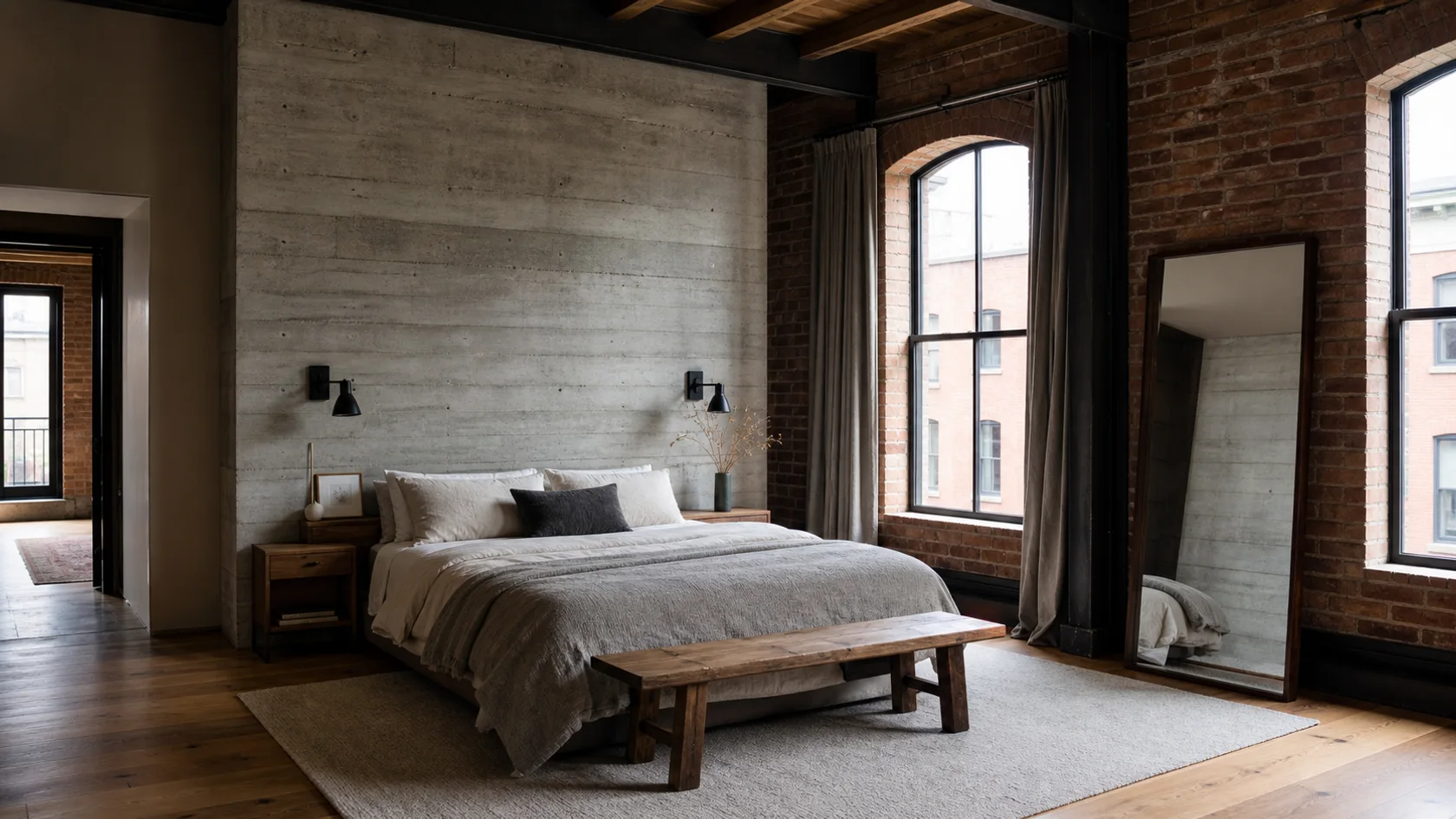
Concrete Shell
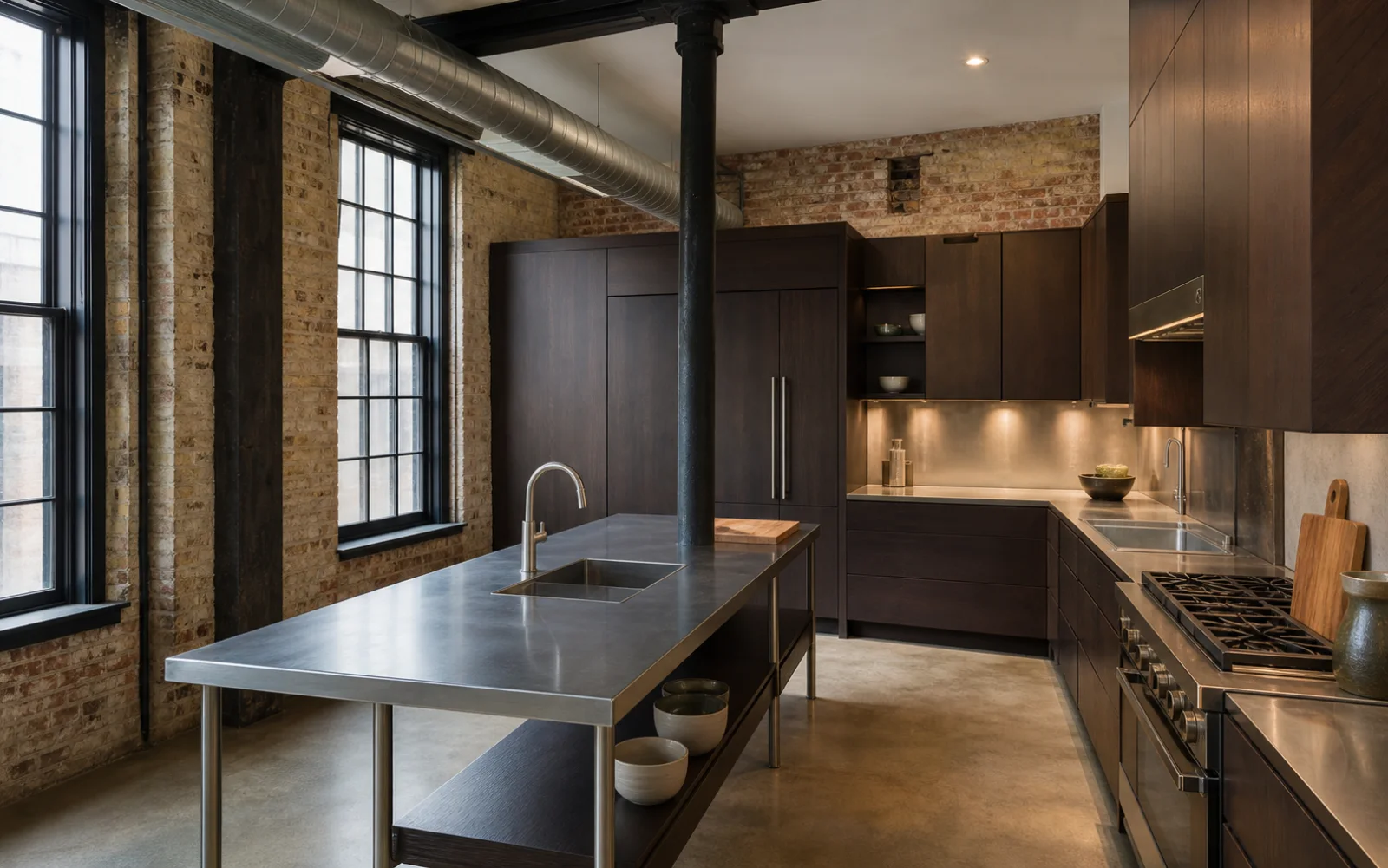
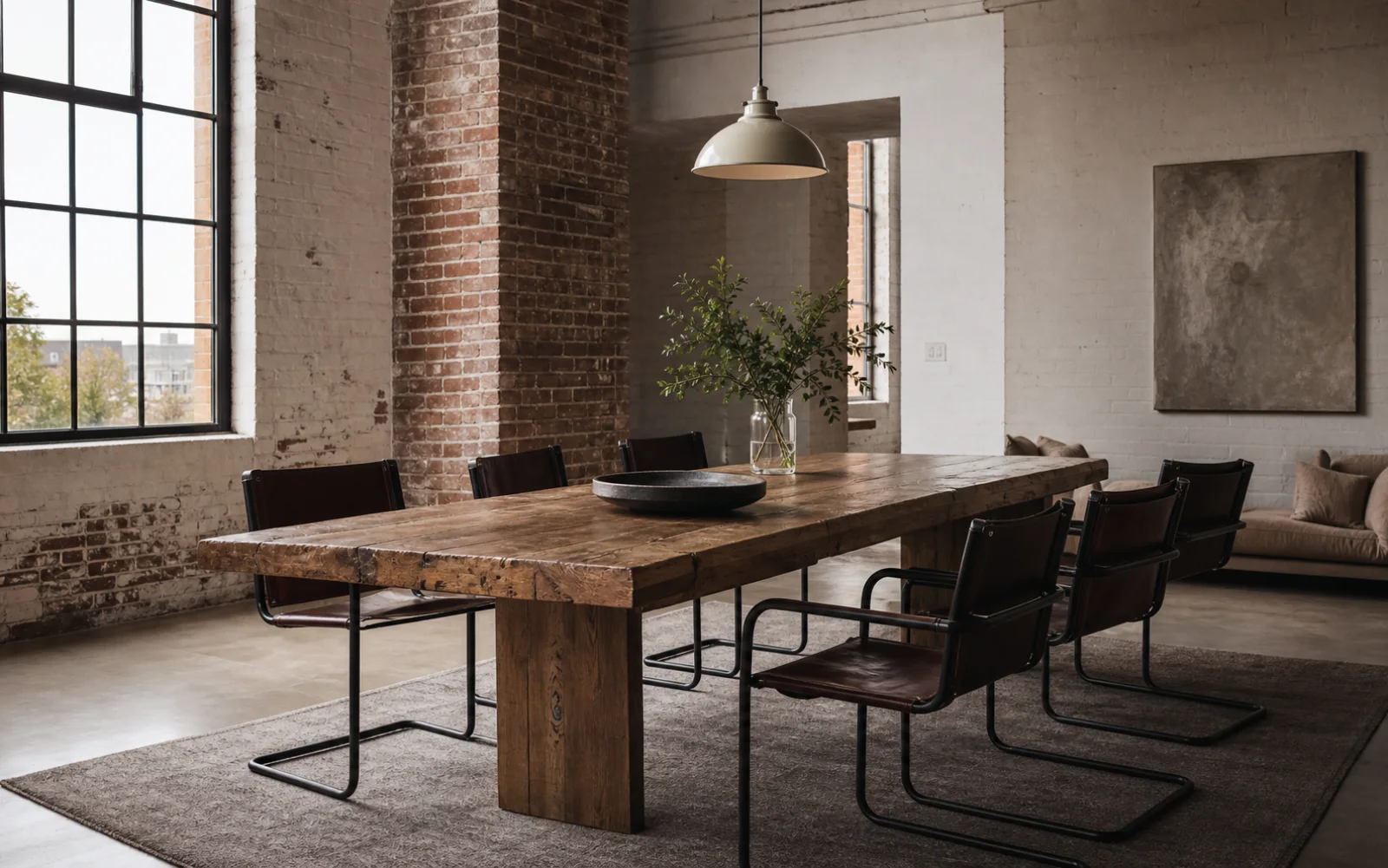
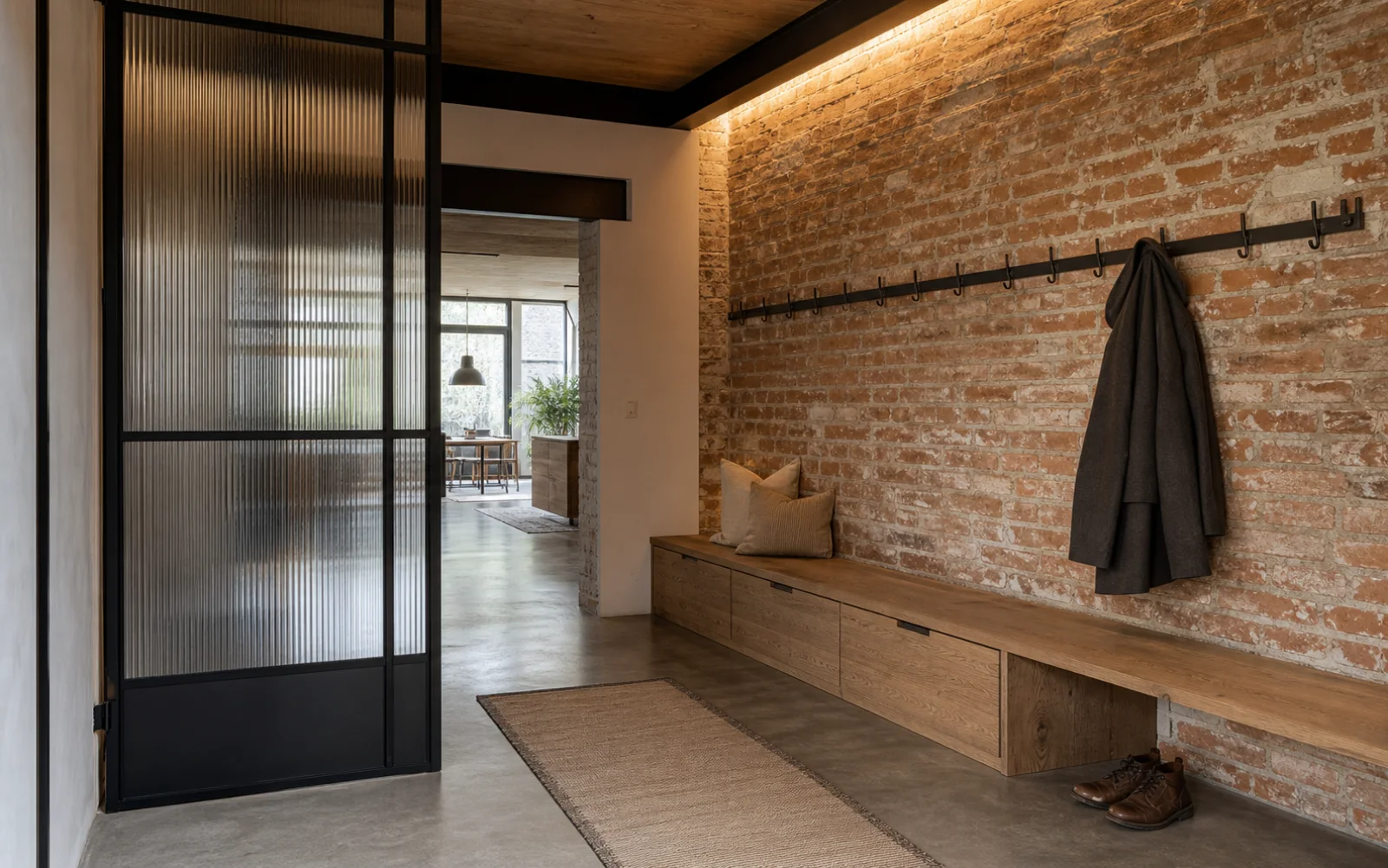
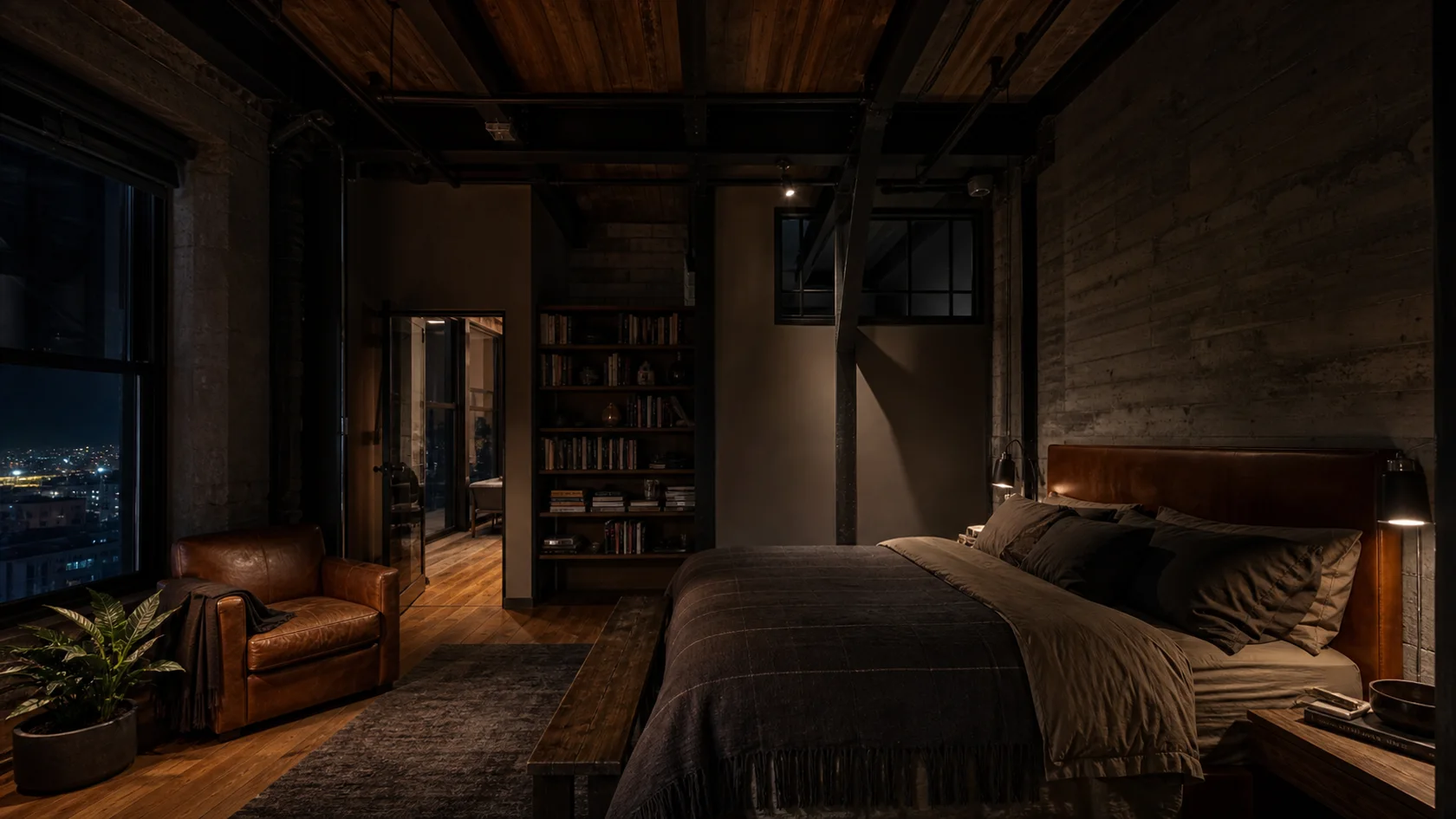
Existing brick or concrete remains visible as building history, with repairs treated honestly instead of disguised. Preserve a calm bedside zone and a clear path from the door to storage.
Five genuinely different industrial approaches to the bedroom, each built around a new plan, architectural condition or time of day.

Industrial adapts honest brick, concrete, steel and timber building fabric for residential use while preserving evidence of structure and age. In the bedroom, that idea must still support rest, low visual stimulation and an unobstructed route around the bed.
Temper masonry and steel near the bed with wool, timber and a low warm light layer so architectural honesty does not become physical harshness. Repair authentic surfaces, expose only systems worth seeing and spend as much attention on acoustics, warmth and task light as on the raw shell.
Use these examples to choose the version of the style that fits your architecture, light and square footage.

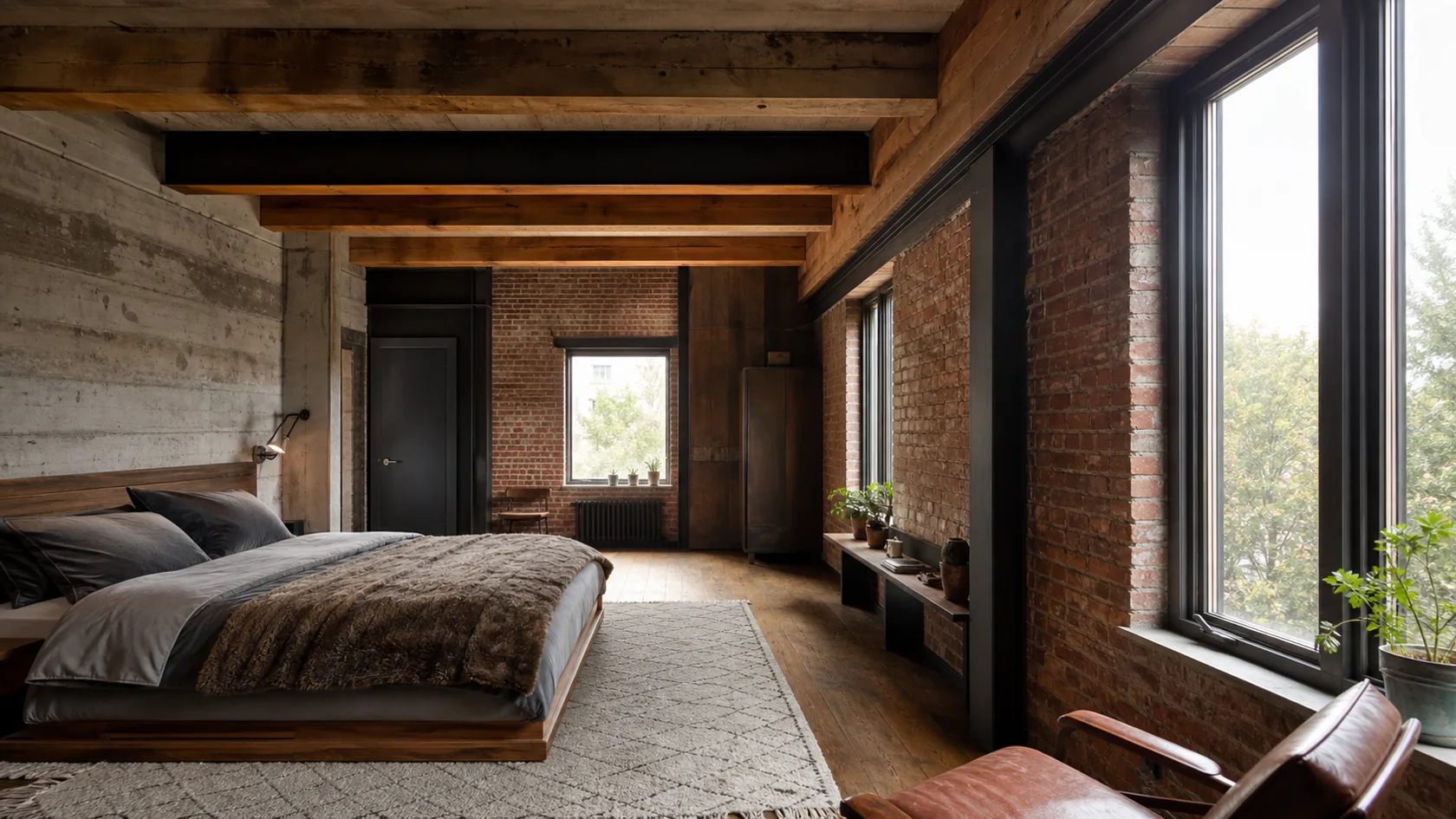
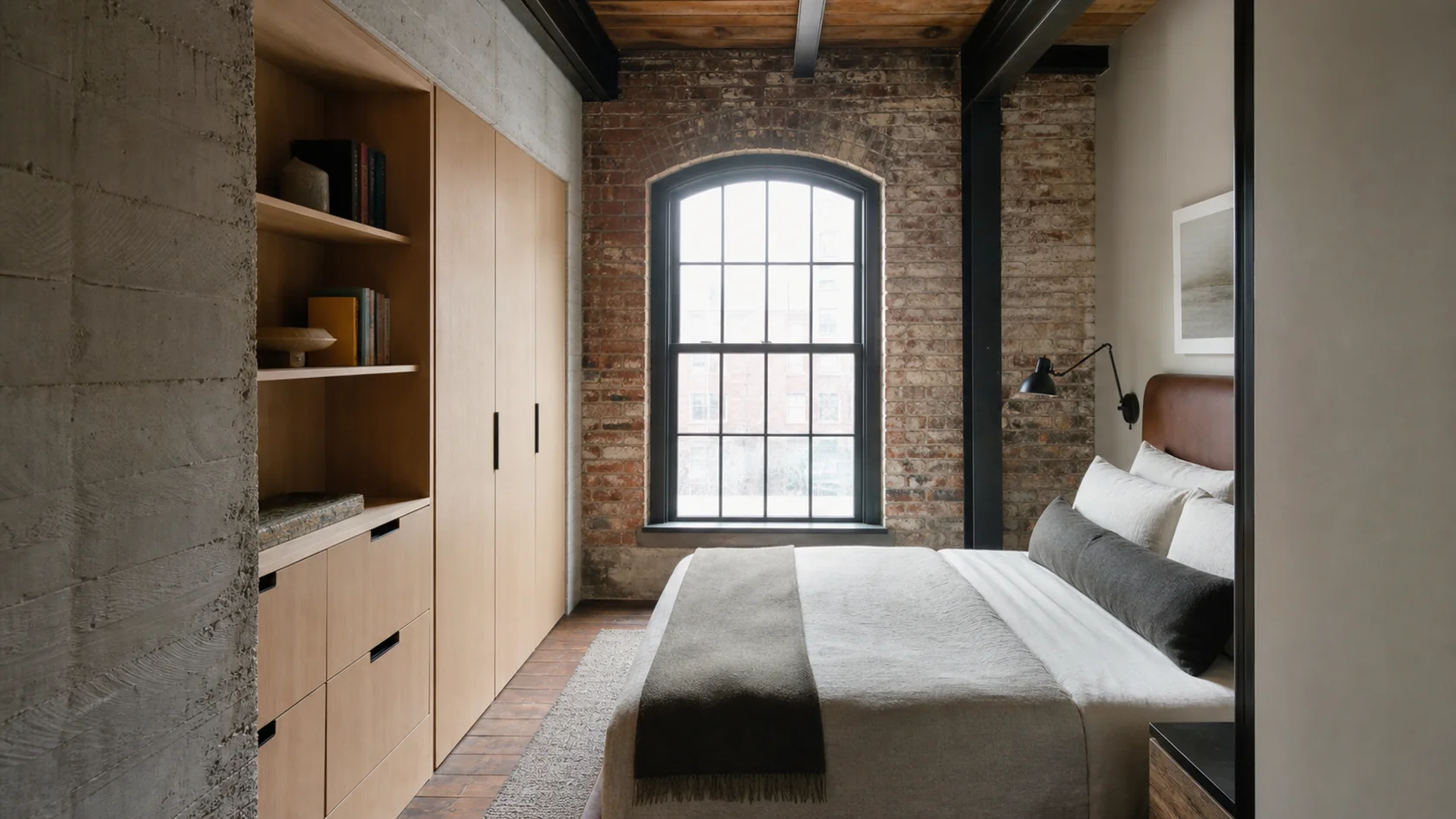
Use the style where it helps the room work: seating, circulation, focal point and material balance.
Place the headboard away from the busiest doorway when possible and preserve a clear approach on both sides.
A flush wardrobe or one resolved chest is calmer than several unrelated storage pieces.
Use bedside and concealed light below eye level instead of relying on a bright central ceiling fixture.
Prioritize breathable bedding, a tactile rug and curtains before decorative objects.
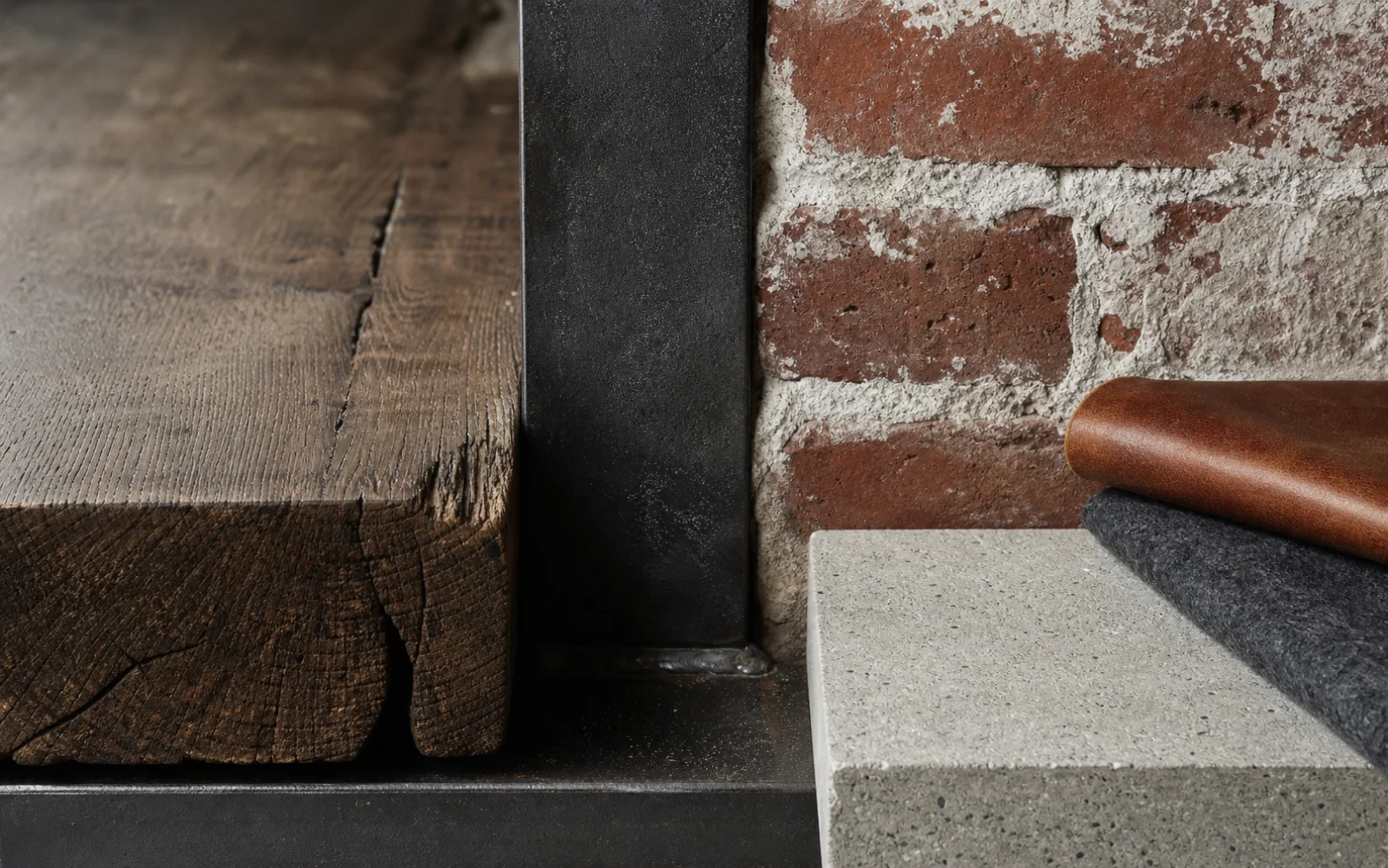
Let masonry and concrete establish the palette. Repeat charcoal in a few structural lines, then add timber, leather and wool where the body touches the room.
A pale mineral neutral that links repaired brick, plaster and concrete.
Use the existing masonry as a focal field rather than repeating rust red on every object.
Frames openings, shelving and furniture with a quiet structural line.
Adds grain and warmth through tables, benches and cabinet fronts.
A restrained cognac accent that develops real patina through use.
Mortar, aged brick and concrete gray should come from real structural surfaces where possible.
Blackened steel and iron describe frames, stairs and useful hardware rather than decorative pipe motifs.
Reclaimed timber, cognac leather and tobacco tones make the hard shell comfortable.
Wool, felt and heavy linen absorb sound while preserving the restrained workshop palette.
For this room, a few strong choices can carry the style better than adding more decor.
Temper masonry and steel near the bed with wool, timber and a low warm light layer so architectural honesty does not become physical harshness. Choose this bed and headboard by real dimensions, comfort and maintenance needs before judging its finish.
Repair authentic surfaces, expose only systems worth seeing and spend as much attention on acoustics, warmth and task light as on the raw shell.
Repair authentic surfaces, expose only systems worth seeing and spend as much attention on acoustics, warmth and task light as on the raw shell.
Repair authentic surfaces, expose only systems worth seeing and spend as much attention on acoustics, warmth and task light as on the raw shell.
Use these checks to keep the industrial character clear without compromising how the bedroom works.
Use ledges or compact tables that preserve the route around the bed.
Repeat a narrow family of tones and let weave, not pattern count, create depth.
Layer low bedside light with a dim ambient source for a calmer evening transition.