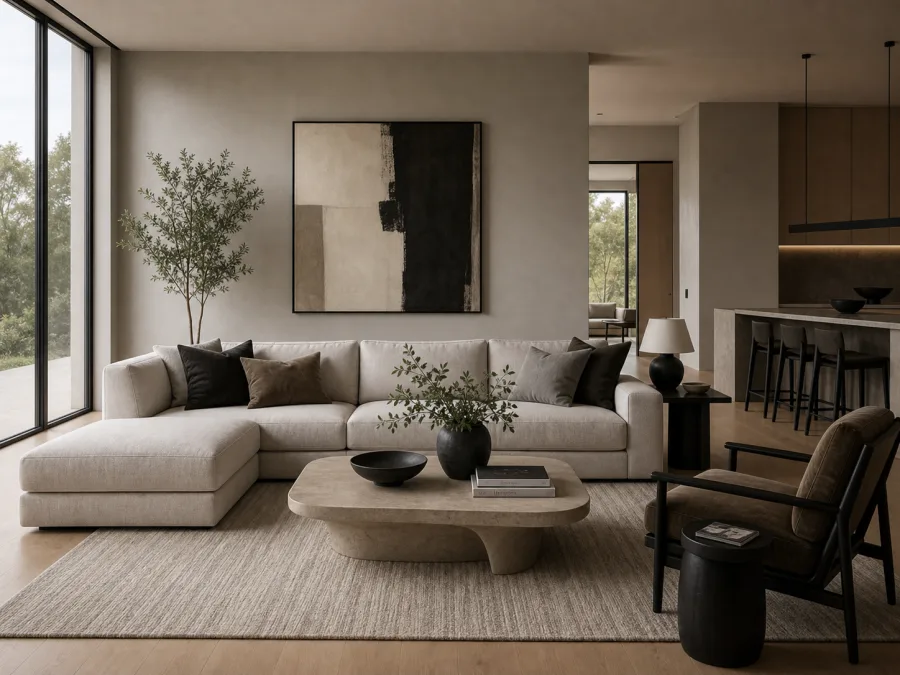
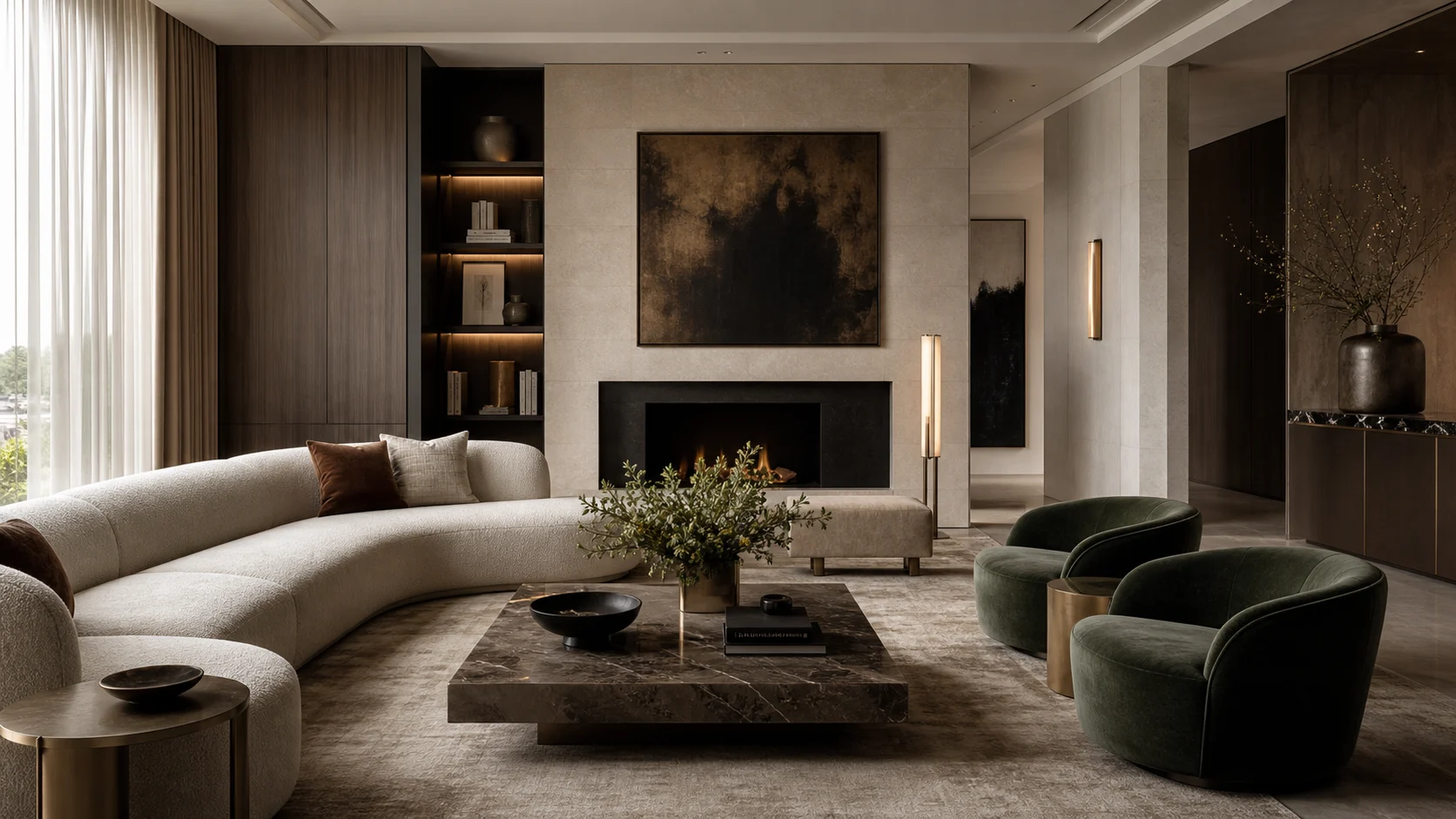
Generous tailored sofa
Look for deep comfort, controlled seams and upholstery that holds a large silhouette.
Modern rooms elevated through generous scale, exceptional natural materials, tailored upholstery and detailing that rewards close inspection.
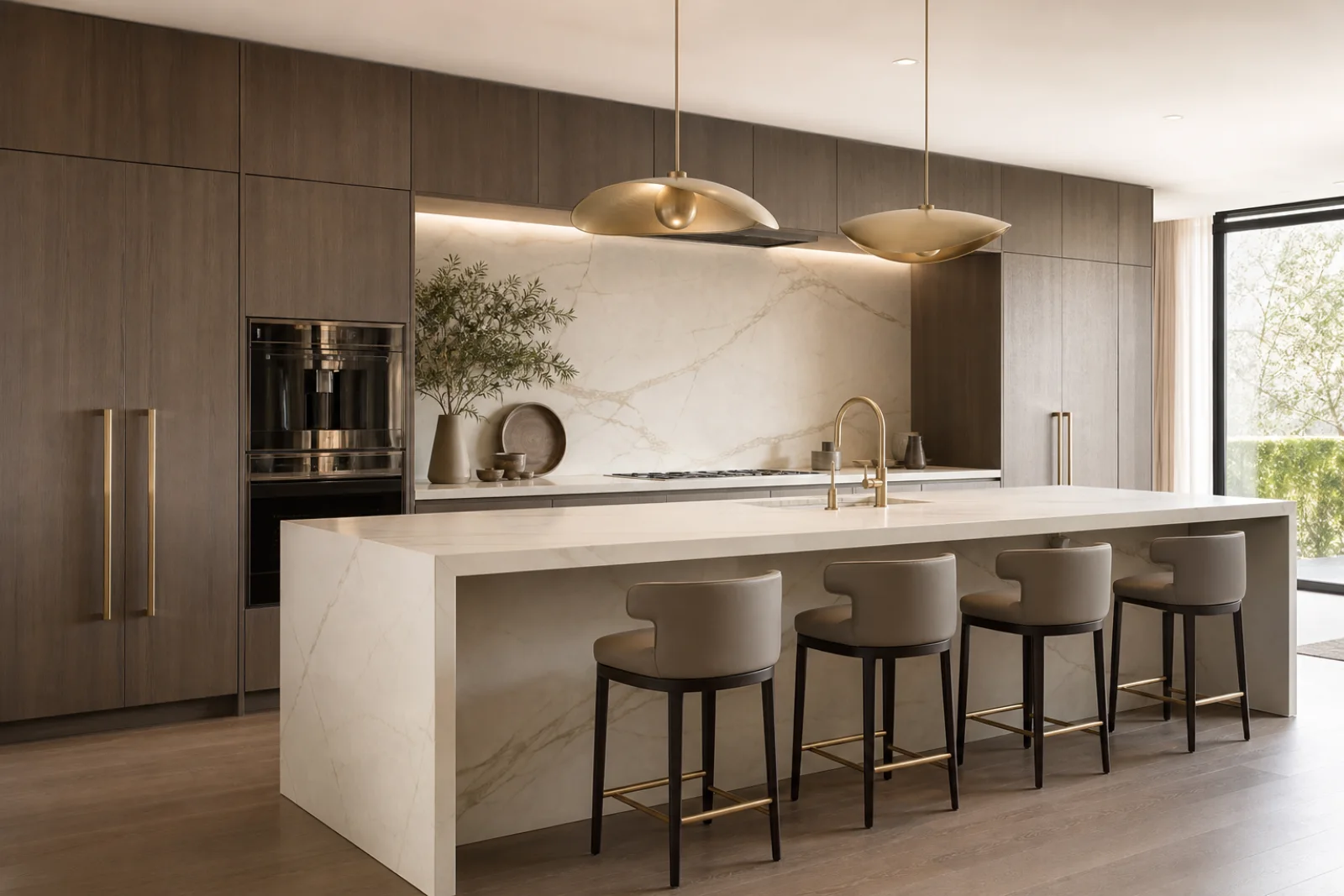
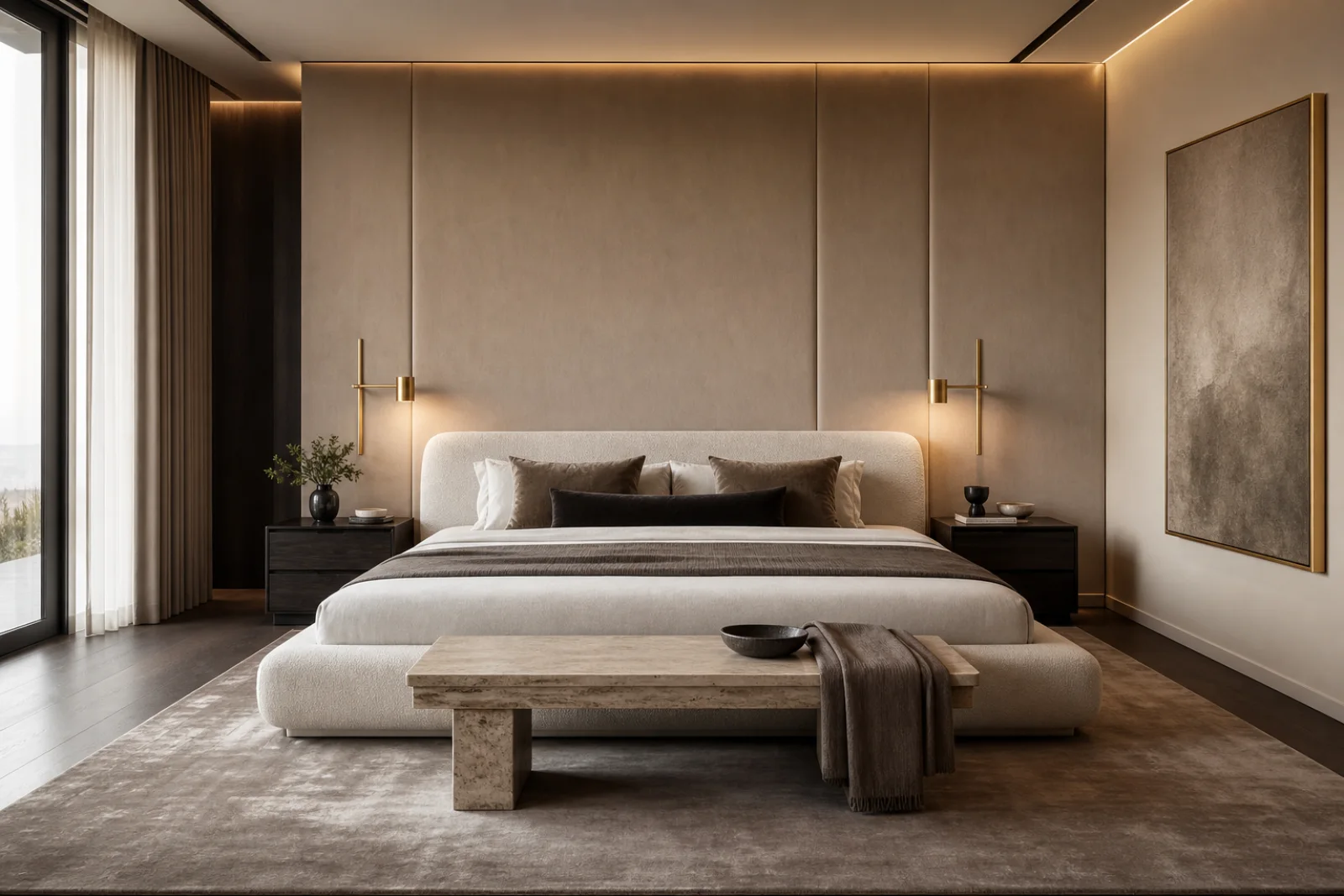
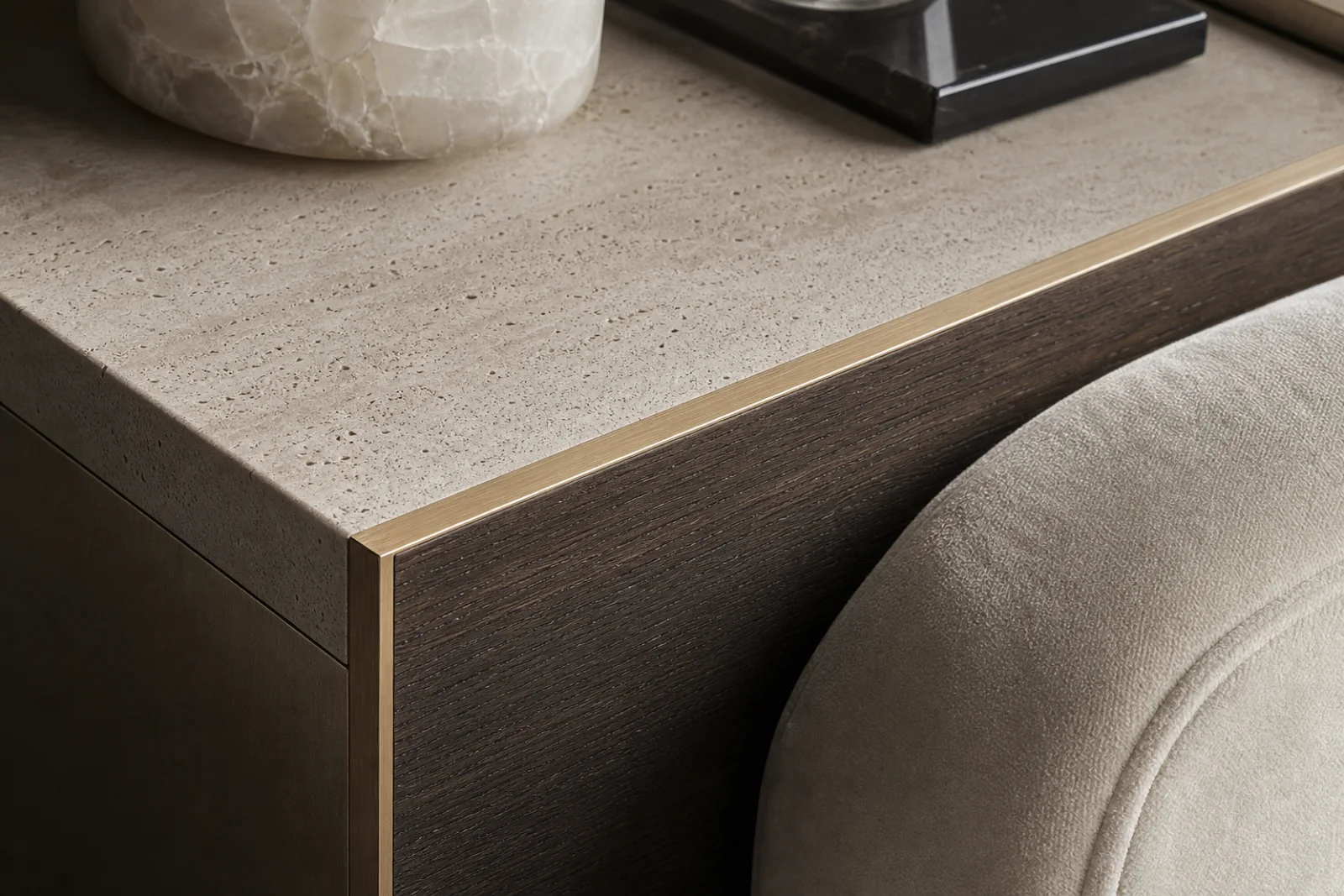
Luxe modern interior design applies a restrained modern language to exceptional materials and bespoke execution. The layout remains clear and furniture forms stay simple, but stone is used in larger uninterrupted planes, cabinetry aligns precisely, upholstery is tailored and metal details are integrated rather than added as decoration.
The distinction from glam is important. Luxe modern rooms do not depend on sparkle, mirrors or many statement objects. Their value is visible in proportion, stone selection, joinery, lighting control and how finishes meet. A quiet palette allows those details to remain legible without making the interior feel ostentatious.
One full-height stone panel or tailored sofa can carry more presence than several decorative luxury cues.
Shadow gaps, aligned grain and flush hardware reveal the difference between expensive-looking and well resolved.
Honed stone and smoked wood dominate; brass, lacquer or alabaster provides a limited luminous accent.
Large slabs, continuous veining and substantial edges give kitchens, fireplaces and walls architectural weight.
Storage, doors and display niches align with wall panels so the room reads as a single composition.
Wool, velvet and leather use controlled seams, deep comfort and generous proportions rather than decorative tufting.
Indirect coves, integrated shelf light and precise task fixtures shape surfaces without filling ceilings with visible hardware.
Let one generous sofa and one stone or timber plane establish the hierarchy.
Use a full-height upholstered wall and integrated lights instead of multiple decorative layers.
Scale the pendant to the table and leave enough space for the materials to read.
Conceal equipment inside smoked-oak joinery and keep the desktop visually continuous.
Reserve the strongest stone for one uninterrupted island or backsplash composition.
Frame the arrival with symmetrical light and hidden storage, not a crowded console.
Keep the palette close in value, then separate surfaces through grain, pile, stone movement and a small amount of warm metal.
A luminous base for stone, upholstery and broad wall planes without reading as stark white.
Connects velvet, leather, plaster and warm stone across the middle of the palette.
Creates depth in paneling and cabinetry while retaining visible natural grain.
Use as a fine edge, light fitting or inlay rather than a dominant gold surface.
Grounds pale stone and keeps the scheme from becoming uniformly cream.
Travertine, limestone or restrained marble brings weight without the glare of a polished finish.
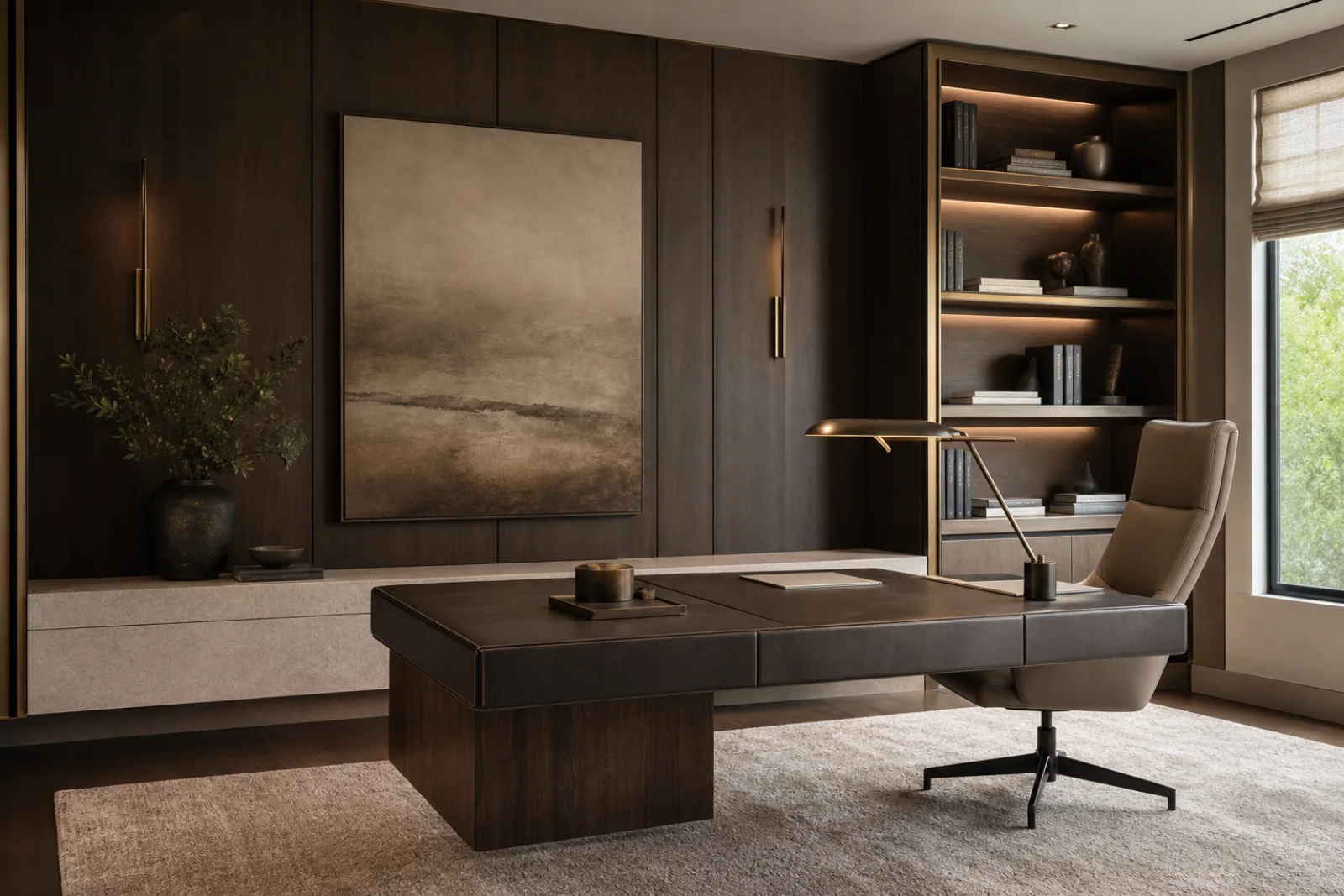
Darkened timber adds depth and makes slim brass or stone junctions easier to read.
Dense, low-luster textiles soften stone and lacquer while keeping the silhouette tailored.
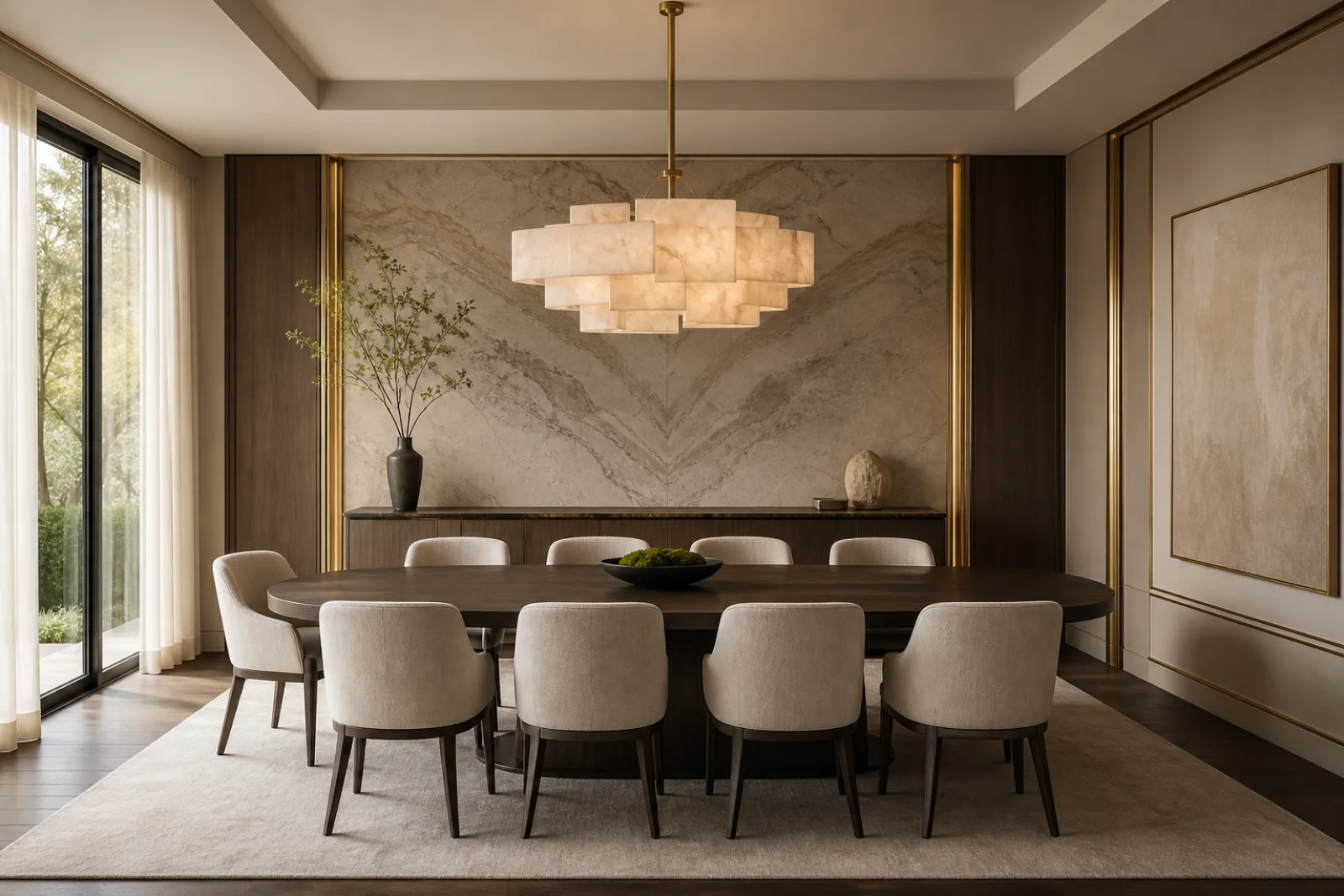
A controlled luminous layer for lighting, inlays and small architectural edges.
Invest in the elements that are hardest to replace. Luxe modern quality begins with surfaces, joinery and light before loose decoration.
Let a stone slab, smoked-oak wall or upholstered plane carry the strongest visual value.
Align doors, panels, shelves and metal trims before selecting decorative objects.
Combine indirect, integrated and focused light so the material changes through the day.
Use one warm metal and keep at least three quarters of the visible finishes matte or honed.
When the room feels wrong, change the underlying decision before adding more decor.
Reduce metal to fine edges and lights; let stone and wood dominate.
Add personal art, books and residentially comfortable upholstery.
Choose one hero material and specify quieter supporting finishes.
Redirect budget toward joinery, lighting control, upholstery and durable stone.
Luxe modern shares clean lines with modern and contemporary interiors, but its identity comes from execution: scale, material selection, tailored comfort and exact junctions.
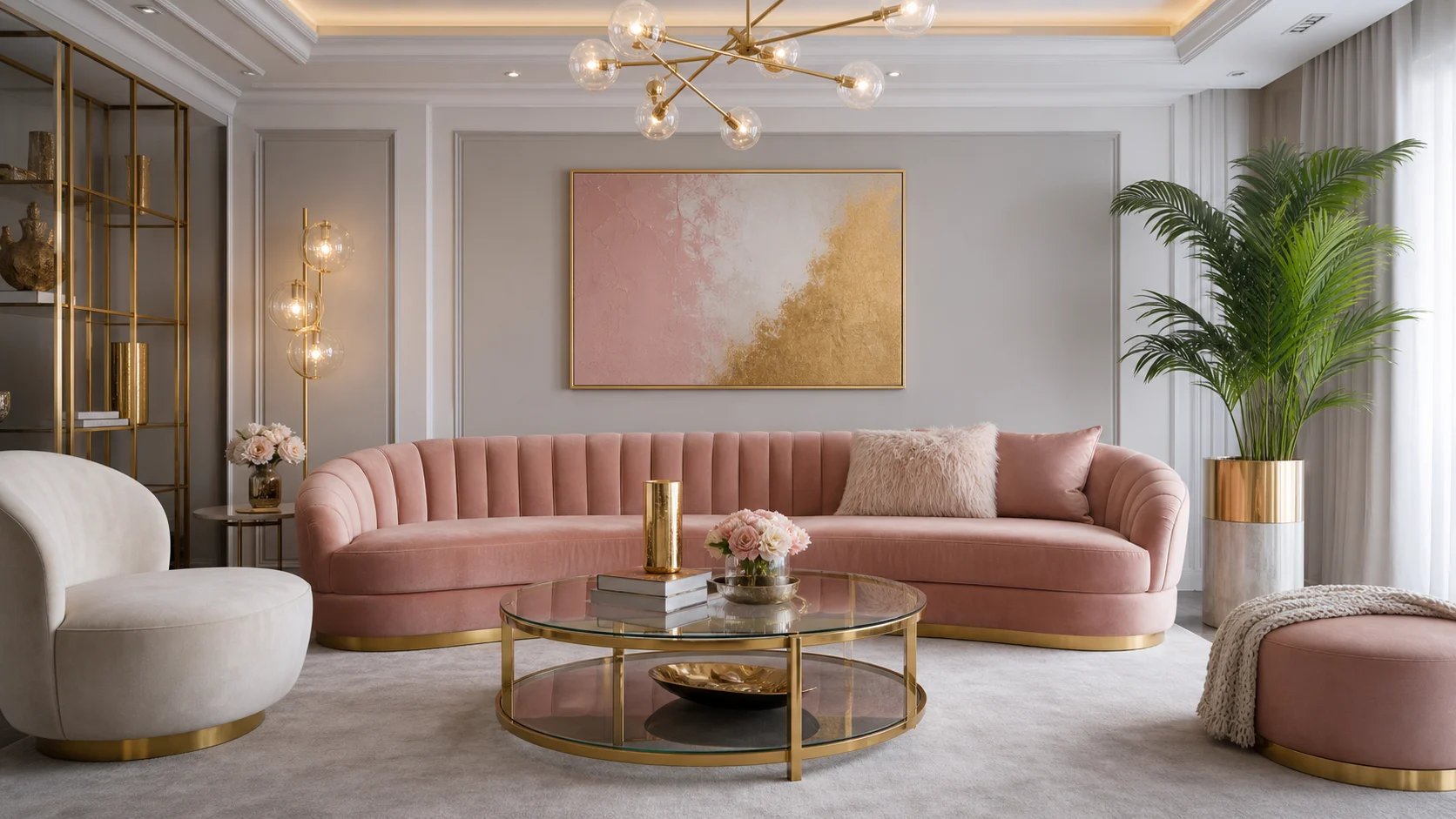
More sparkling, theatrical and dependent on mirrors, polished metal and plush contrast.
Choose luxe modern for quieter surfaces, stronger architecture and fewer decorative signals.
Honed stone and smoked oak replace mirrored furniture and overt metallic shine.
More trend-responsive and open to pale sculptural curves and changing finishes.
Choose luxe modern when bespoke execution and enduring material quality matter more than current form trends.
Look for aligned panels, tailored seams and restrained stone rather than novelty silhouettes.
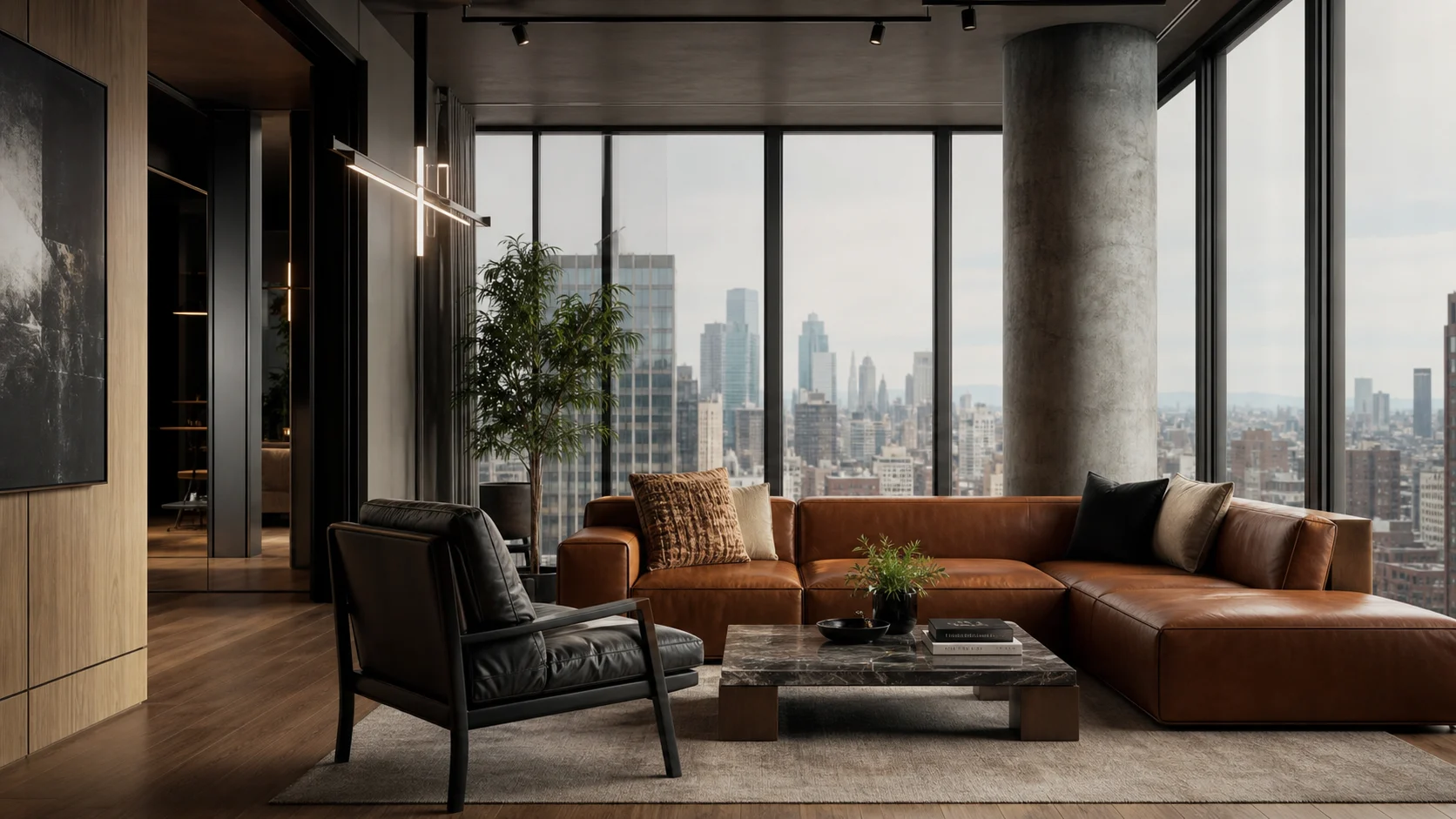
Darker, edgier and more focused on concrete, city context and compact utility.
Choose luxe modern for a calmer palette, finer junctions and more generous material use.
Travertine, alabaster and bronze replace concrete, black steel and worn leather.
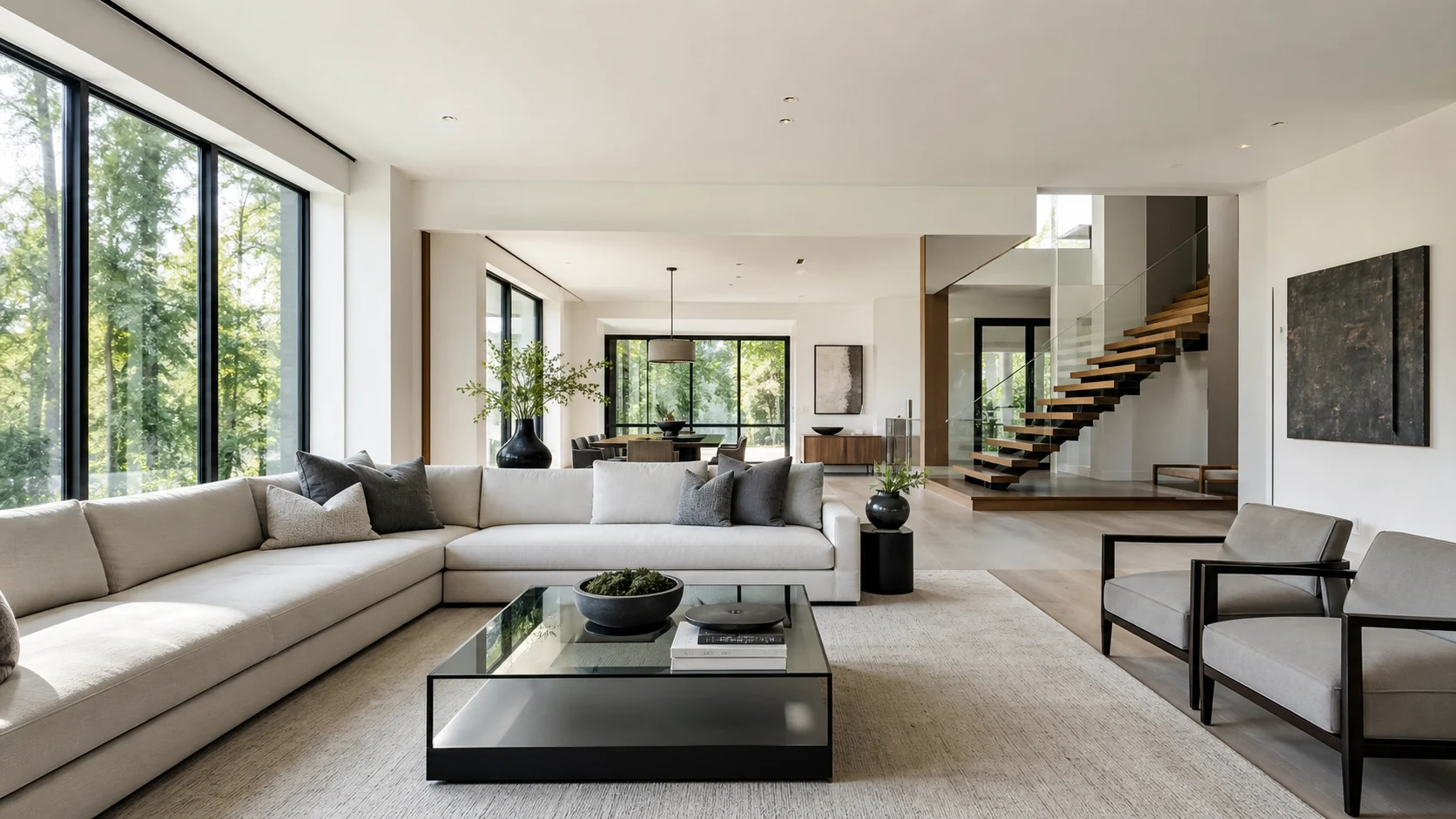
More functional, graphic and rooted in twentieth-century structural clarity.
Choose luxe modern if the modern framework should feel softer, more tailored and materially elevated.
Use deep upholstery, stone planes and integrated light instead of steel-and-glass contrast.
Avoid assembling luxury through many shiny objects. Choose fewer pieces with convincing scale, real material and details that remain satisfying at close range.
Look for deep comfort, controlled seams and upholstery that holds a large silhouette.
A full-height headboard wall combines acoustic softness, scale and integrated lighting.
A broad, simple form lets stone, lighting and tailored chairs provide the detail.
Leather at the work surface adds comfort and quiet texture without ornament.
Prioritize a well-selected slab, accurate book matching and practical worktop durability.
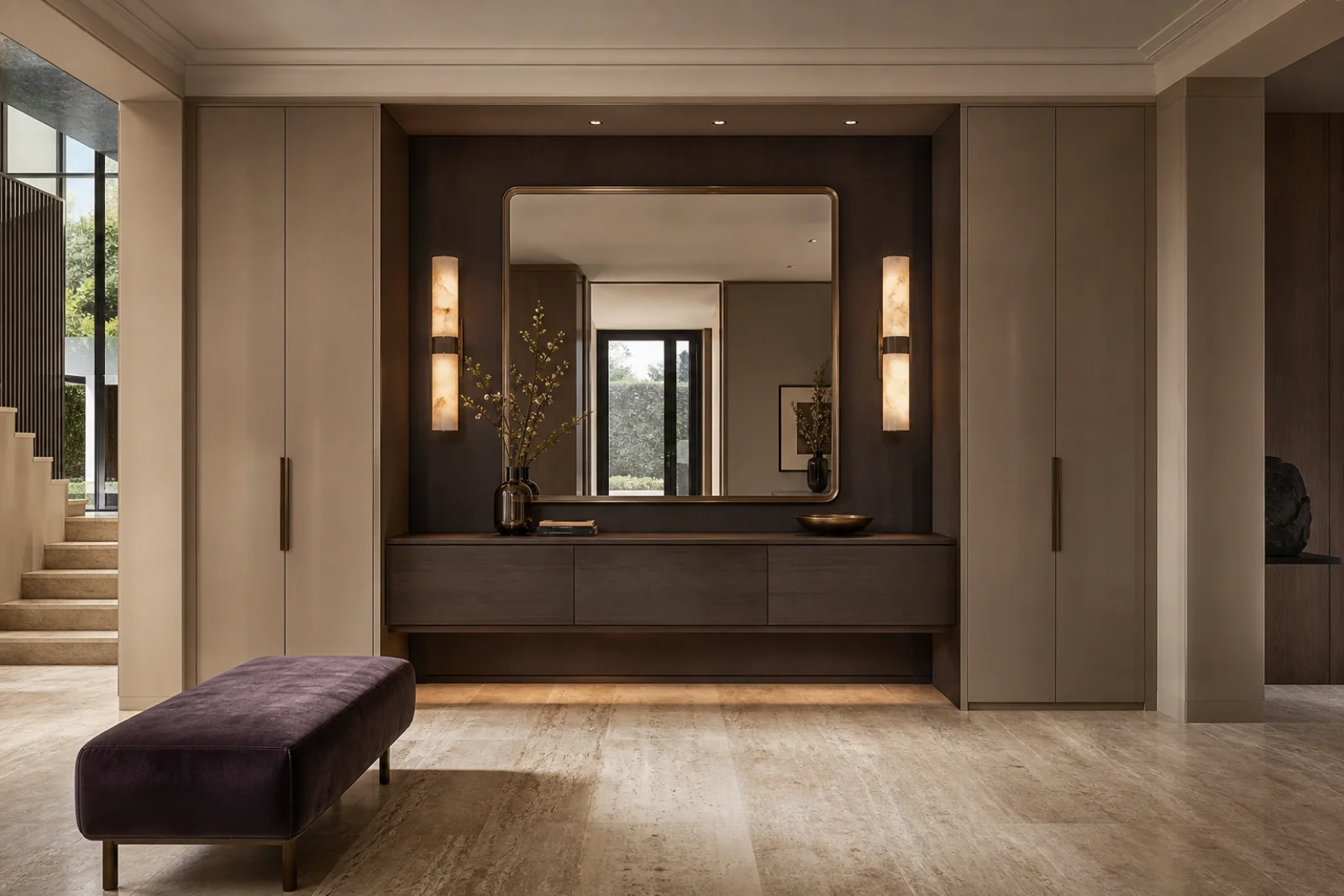
Natural translucent stone creates a warmer glow than a highly reflective decorative fixture.