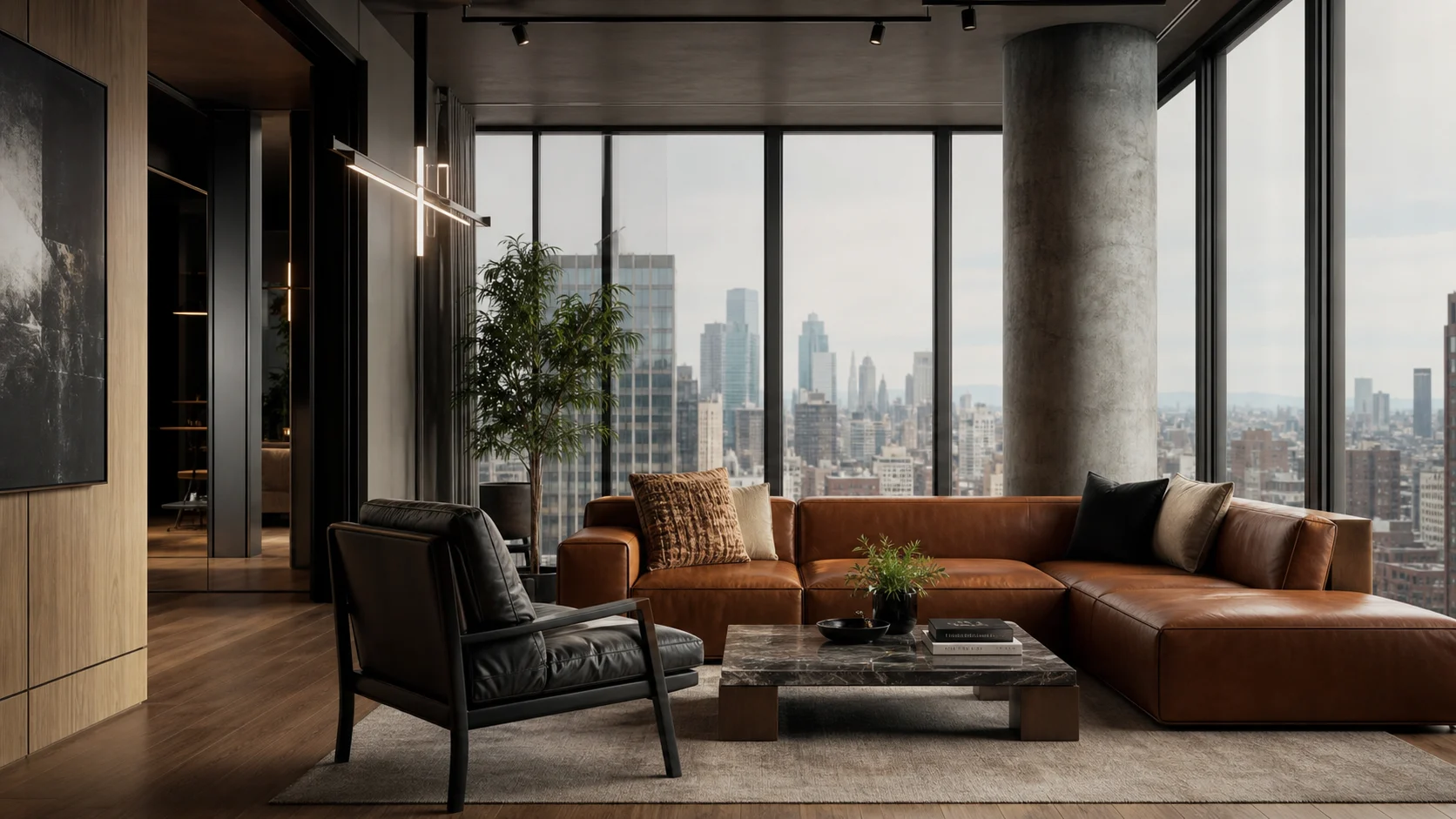
Low charcoal sofa
Choose a deep, simple profile that grounds an open apartment without blocking the view.
Metropolitan rooms that balance architectural edge, compact planning and tactile comfort through a layered mix of raw and refined materials.
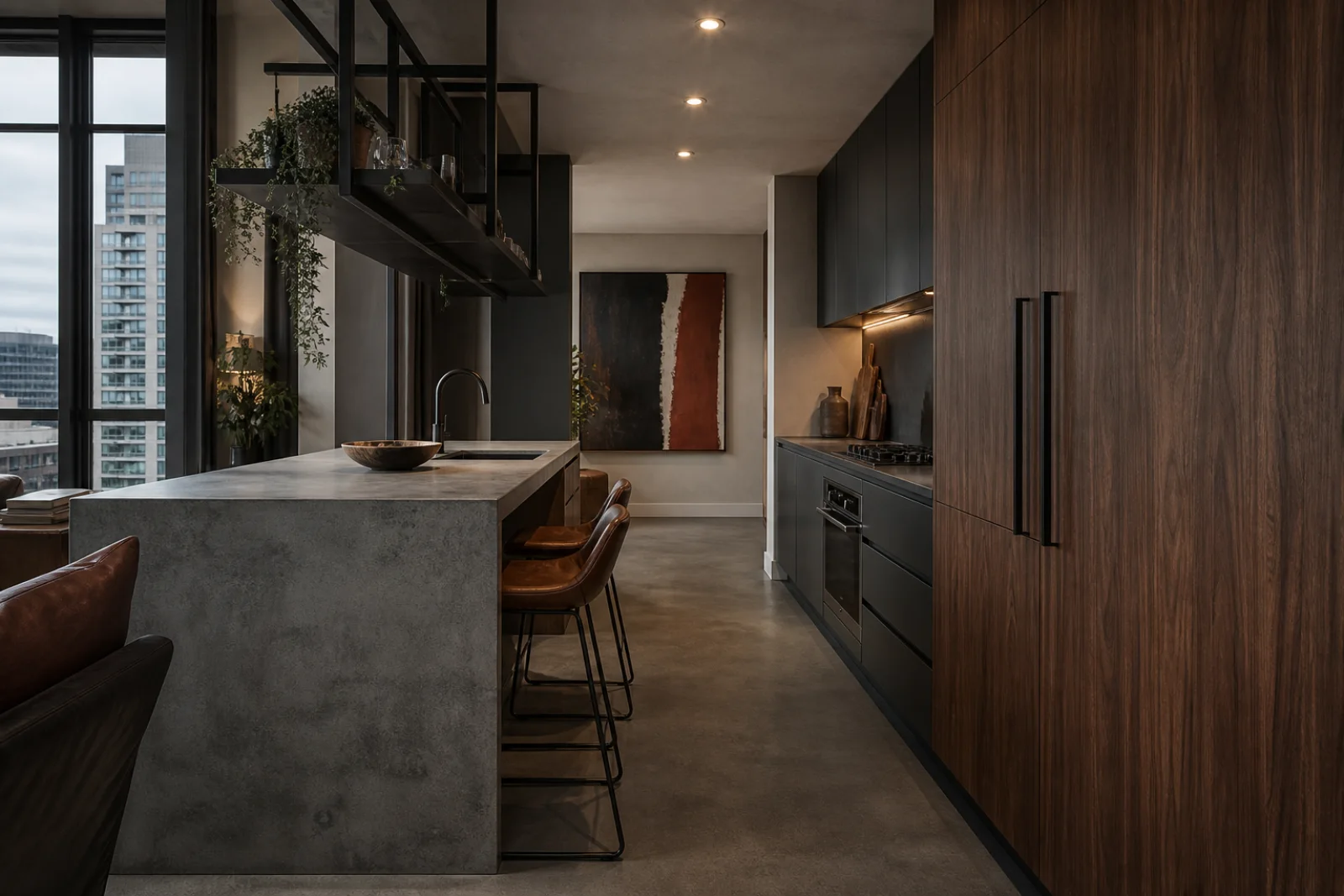
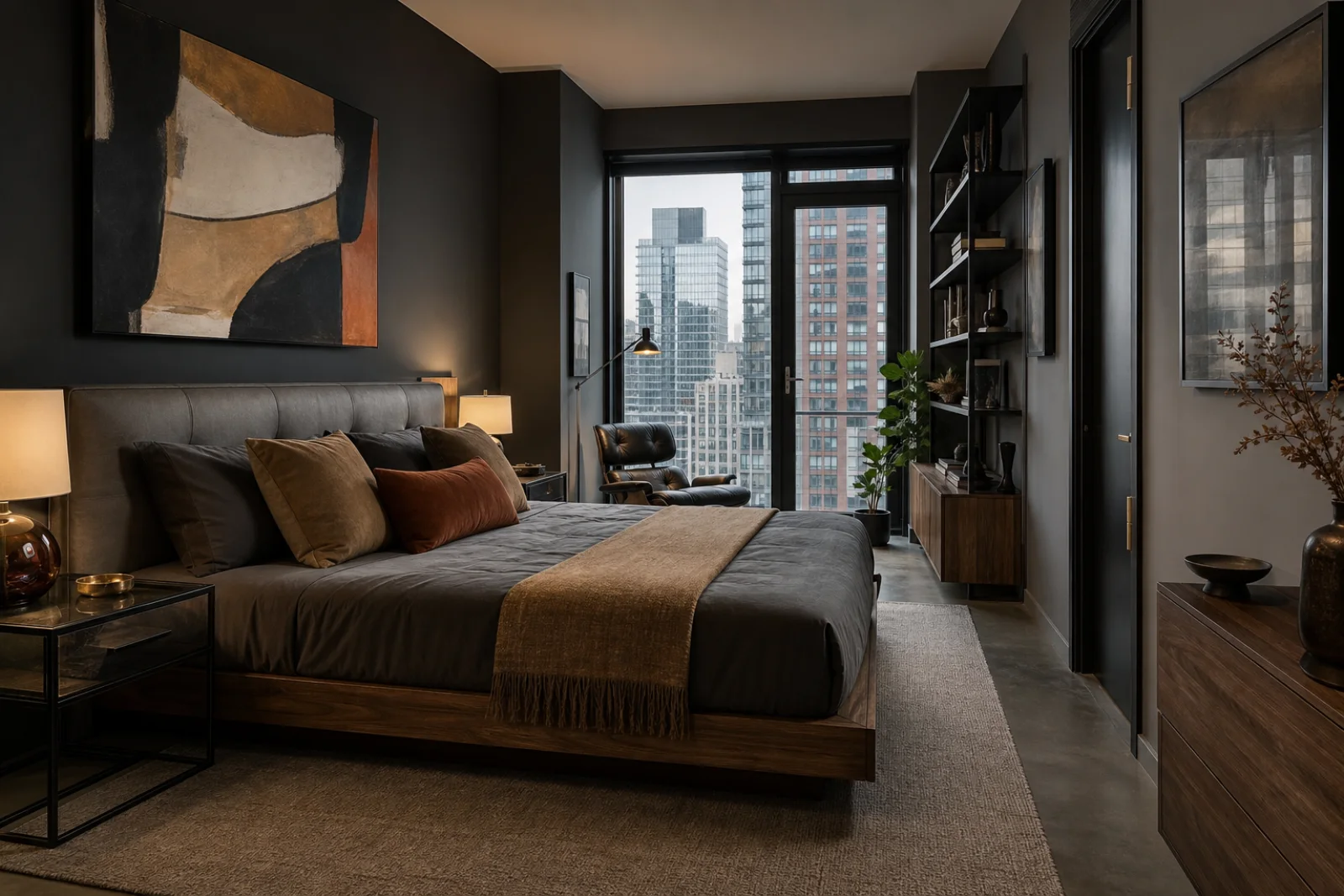
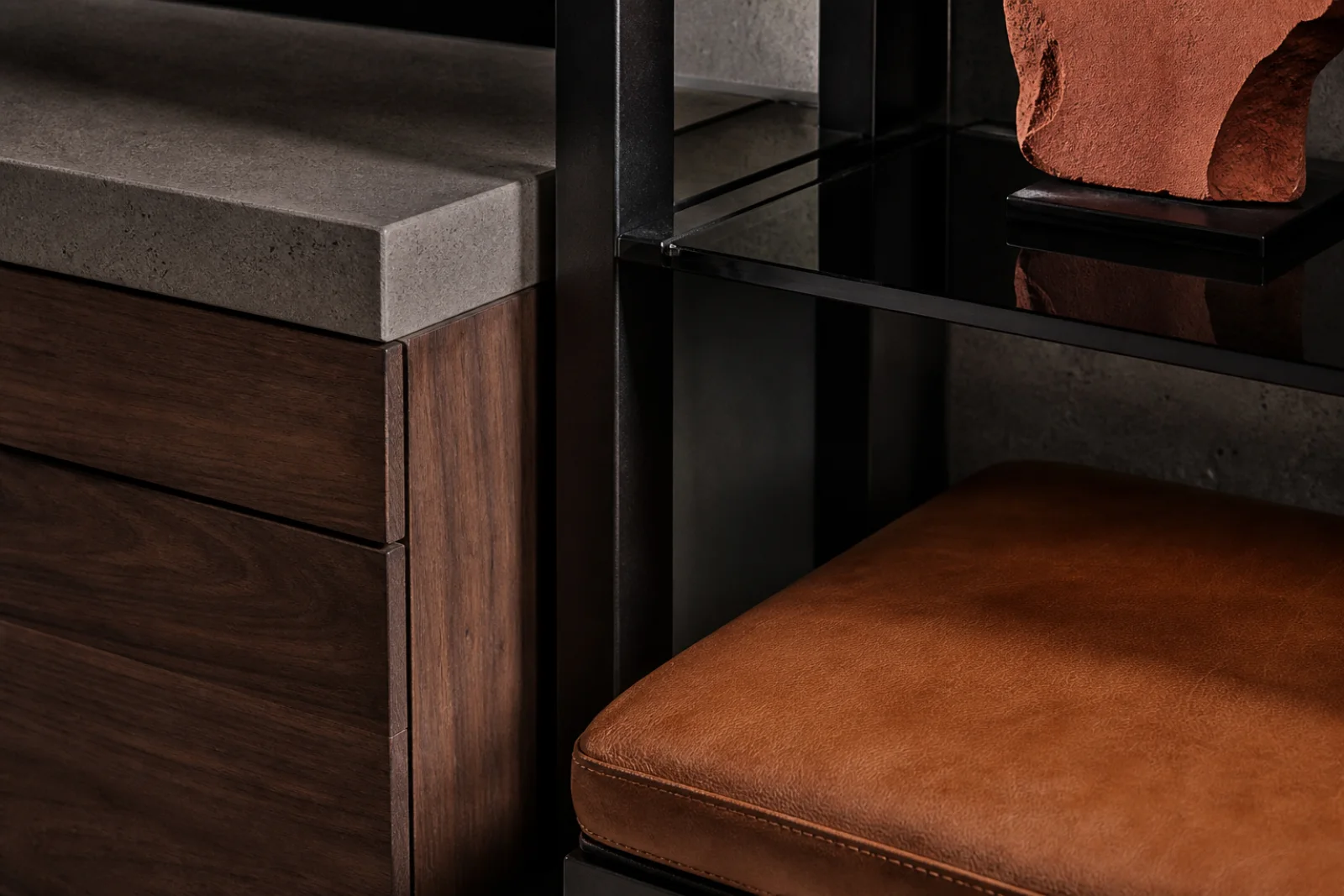
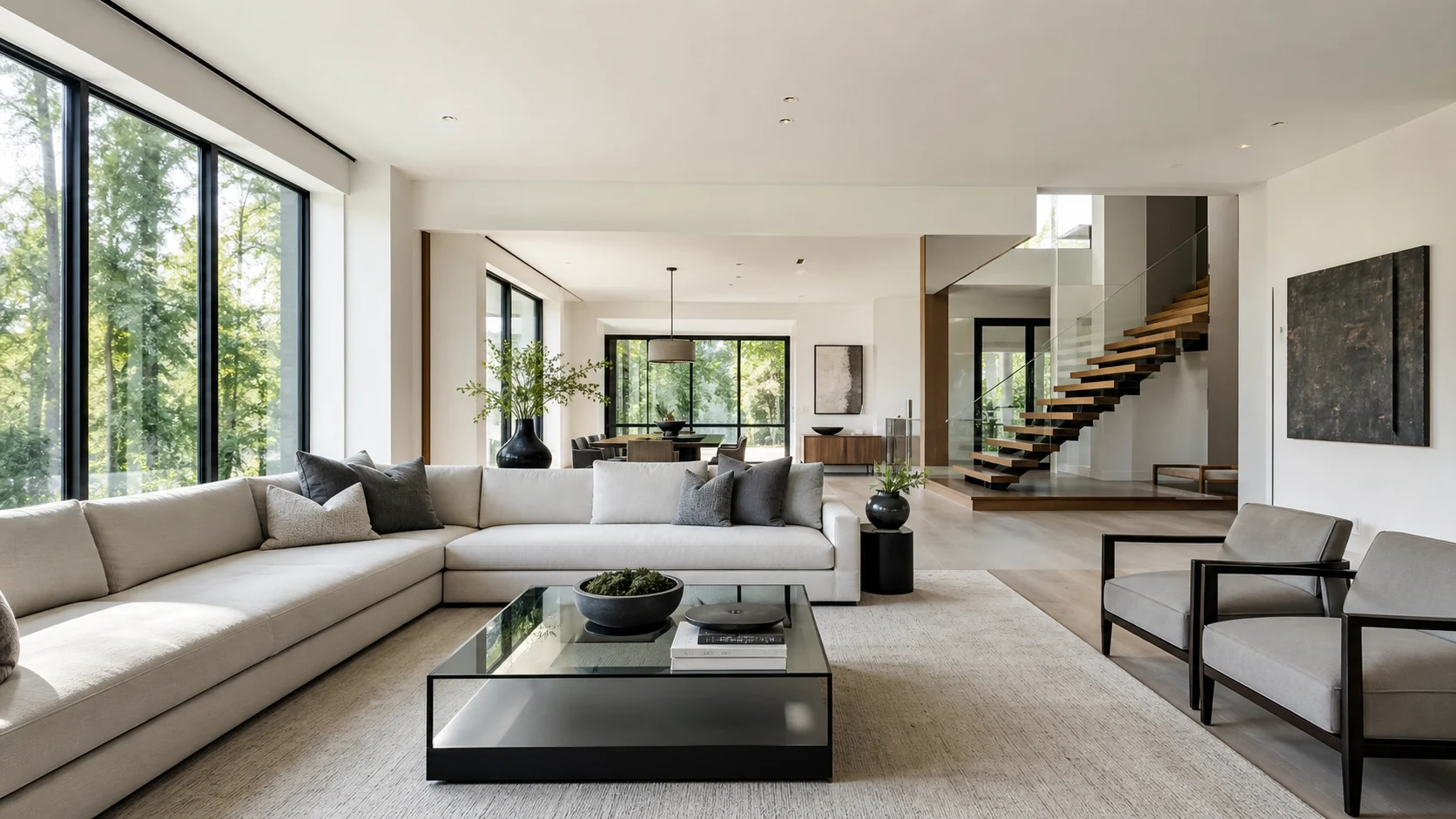
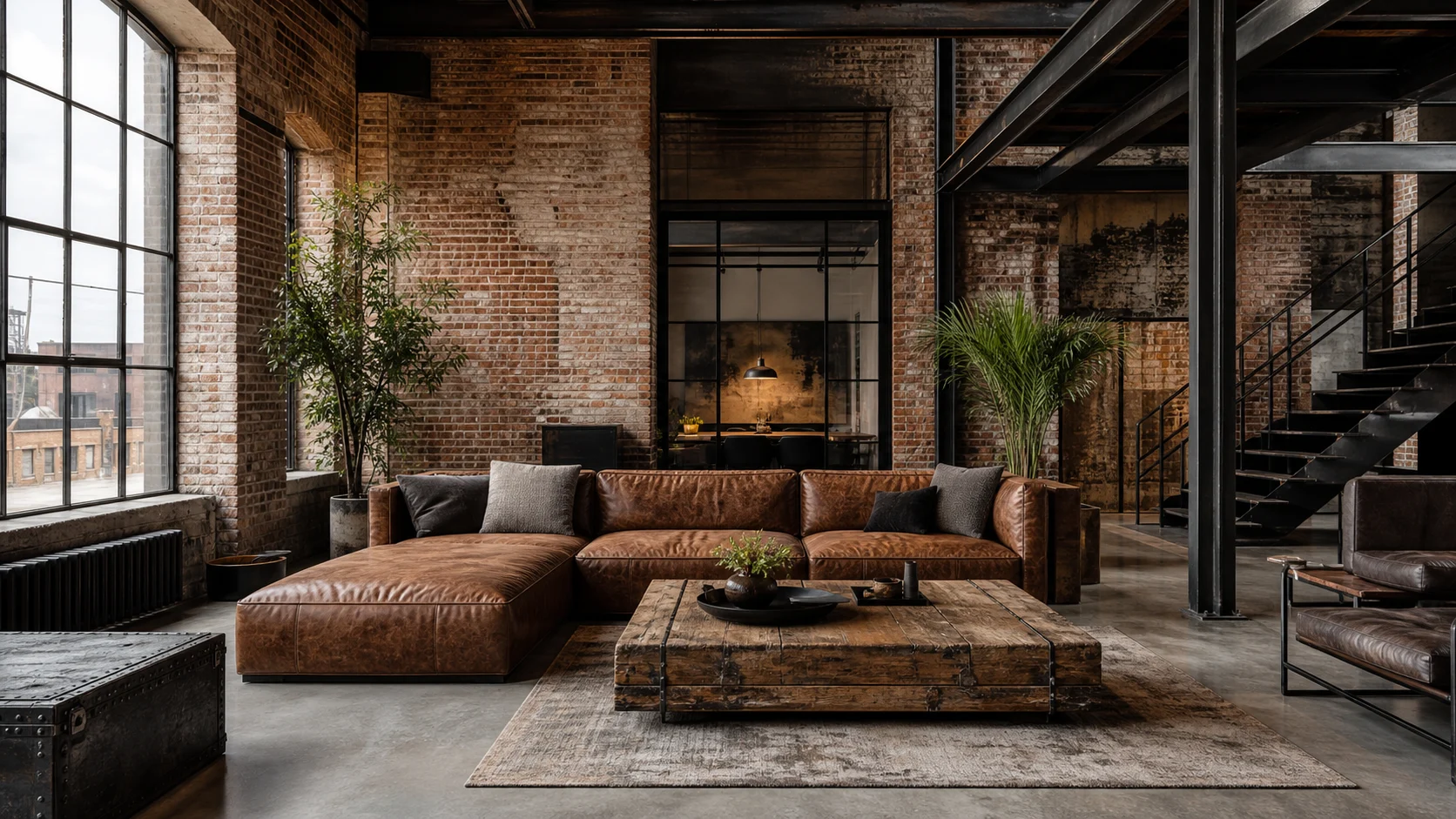
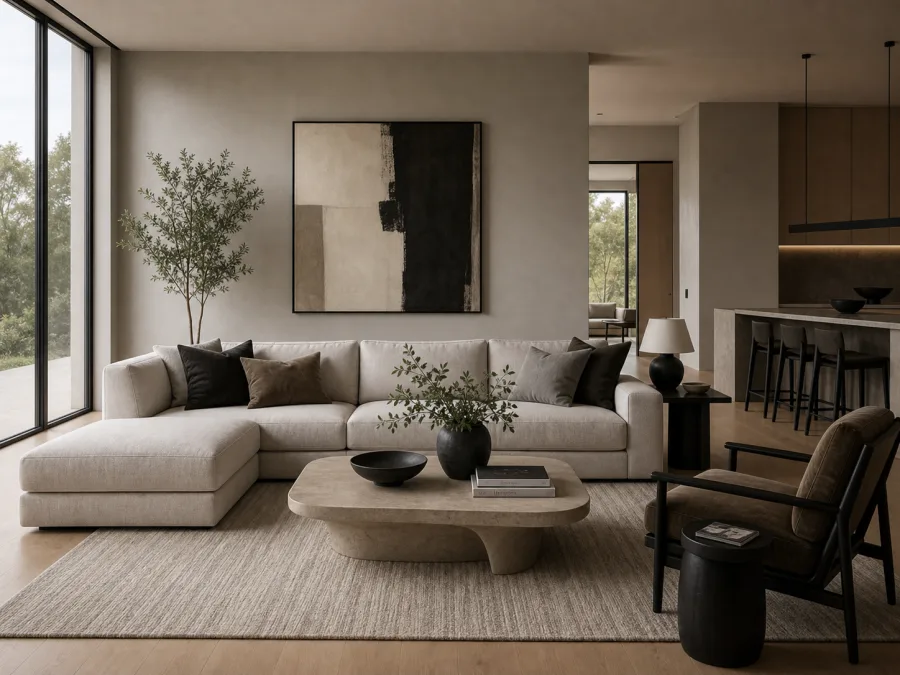
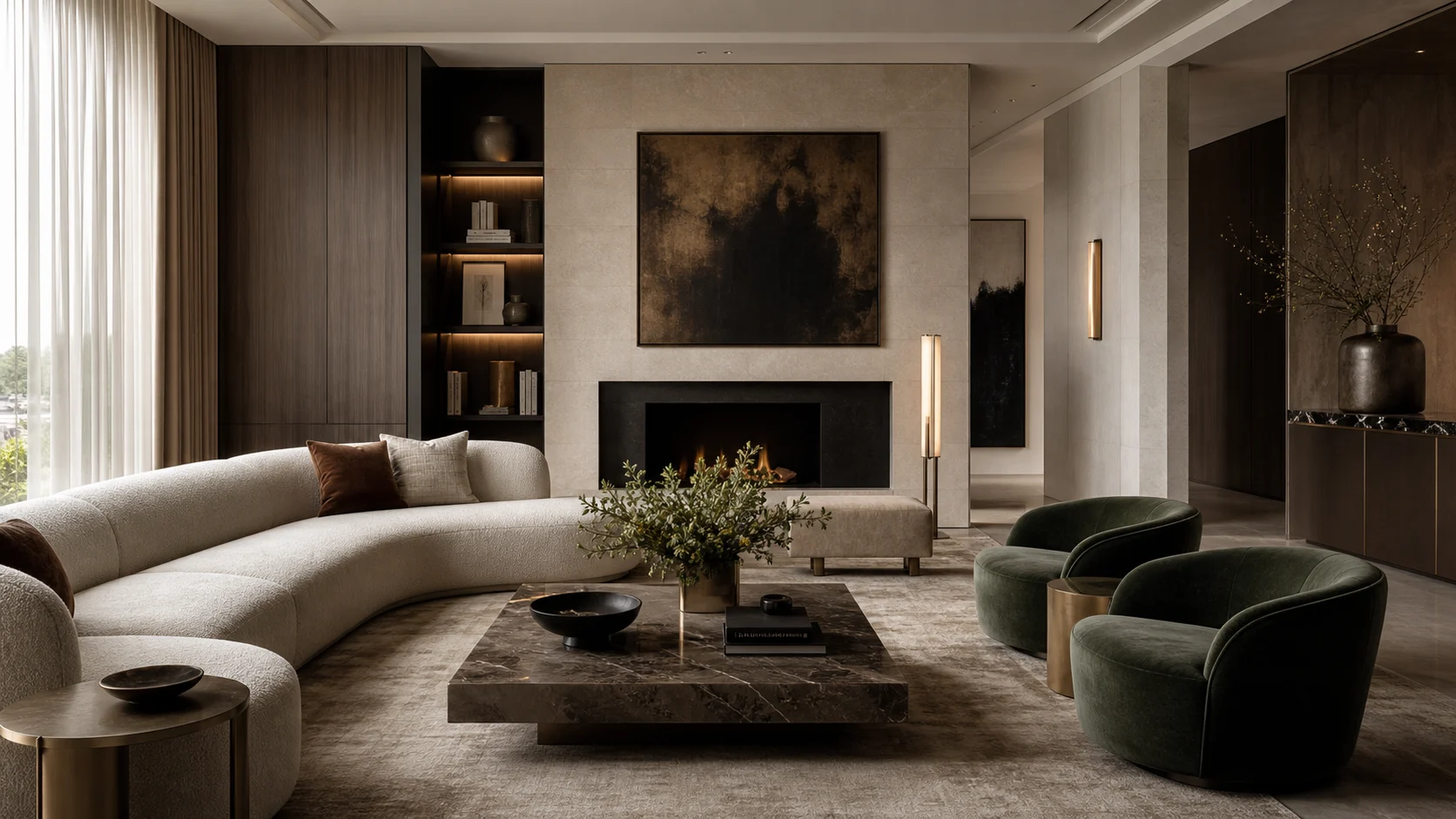
Urban modern interior design adapts modern and industrial influences to the realities of city living. It uses efficient layouts, integrated storage and a controlled mix of concrete, dark metal, glass, walnut and leather. The result is sharper and more layered than minimalism, but more finished and residential than a raw industrial loft.
The style is shaped as much by context as by furniture. Large windows, concrete columns, compact rooms and skyline views become part of the composition. Warm materials and focused lighting are then used to prevent the harder architecture from making the home feel commercial or severe.
Windows, structural columns and long views can serve as visual features instead of being hidden.
Concrete or black steel feels more residential beside walnut, wool and worn-in leather.
Full-height cabinetry and built-in niches solve compact living while reinforcing the darker architectural palette.
Charcoal, smoke and concrete gray create depth when separated by differences in sheen and texture.
One large abstract work gives compact rooms focus without scattering many small decorative objects.
Concrete, steel and smoked glass are balanced by walnut, camel leather and dense woven rugs.
Lighting, rugs, islands and storage walls divide open apartments without adding unnecessary partitions.
Aim seating toward both the city view and one strong art or media wall.
Keep the shell dark, then use wool, linen and warm pools of light around the bed.
Use a substantial table with visually lighter metal or leather chairs.
Place the desk near daylight and use one storage wall to contain work equipment.
Group tall cabinets tightly and use the island to separate cooking from living.
Build a lit niche into full-height storage so the compact foyer still has a focal point.
Build the palette in values: concrete as the middle, charcoal as structure, walnut and camel as warmth, then one muted rust accent for focus.
A mineral middle tone for floors, columns, counters or plaster rather than every painted wall.
The structural dark used for storage, doors, frames and selective wall planes.
Adds depth and grain without breaking the metropolitan palette with pale wood.
A warm contact color for chairs, cushions or a bench inside the darker shell.
A small art or textile accent that connects brick, leather and evening city light.
A low-sheen mineral surface gives the room urban weight without looking unfinished.
Use on tall storage or broad cabinet planes to warm charcoal and concrete.
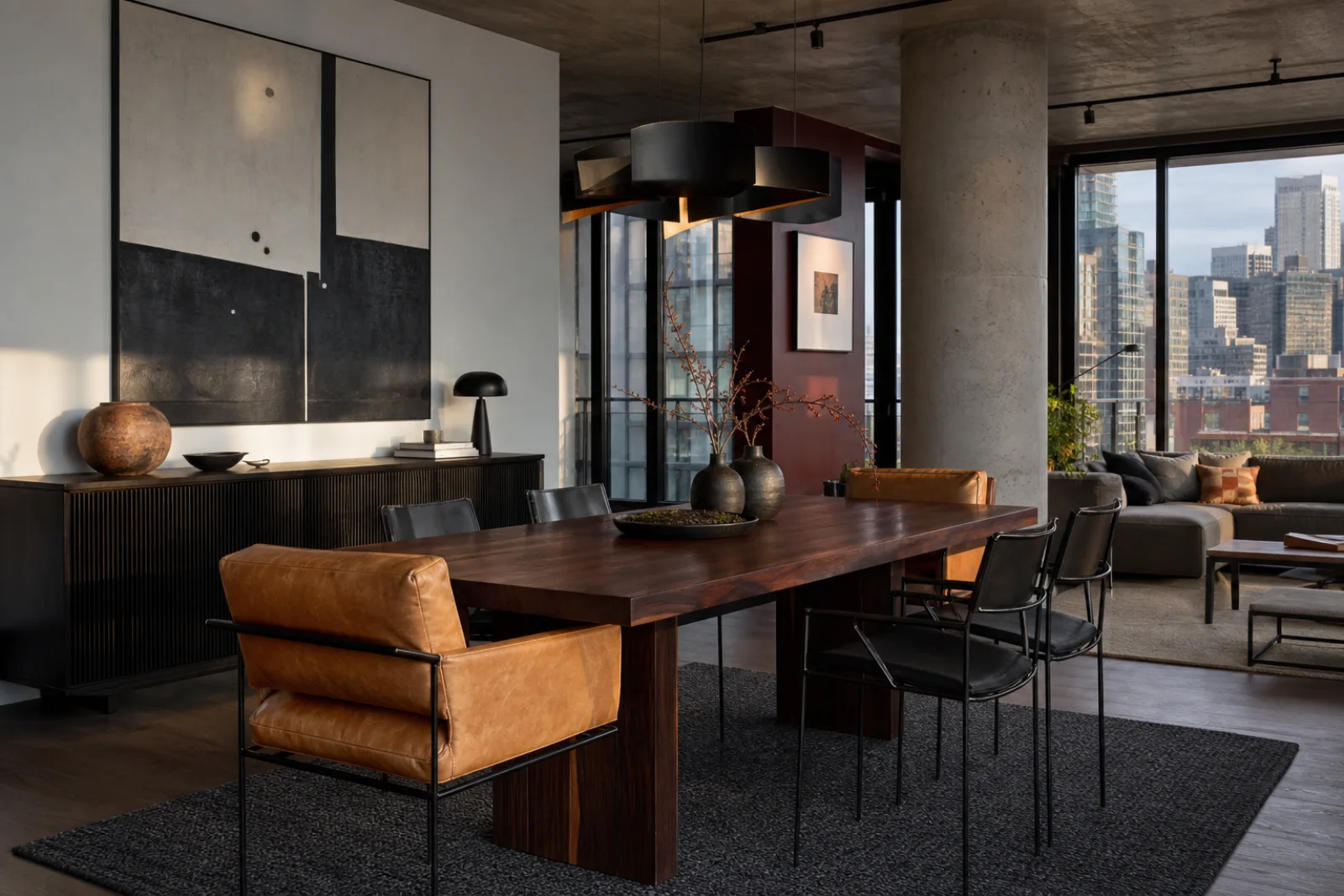
Aged leather adds warmth, body and a slightly informal counterpoint to hard architecture.
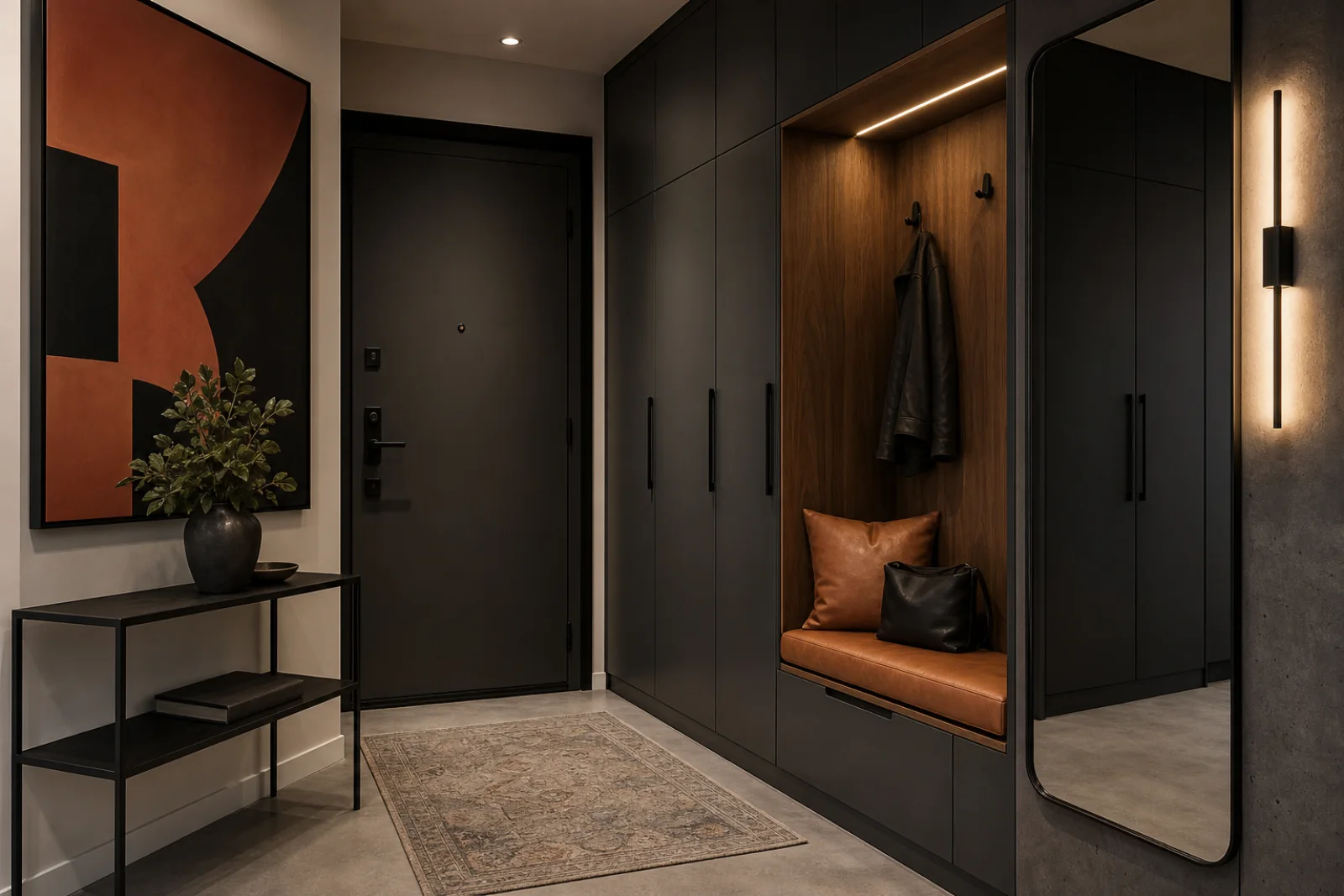
Slim frames and smoked reflections introduce edge without the bulk of raw industrial fabrication.
Urban modern works through controlled contrast. Decide where the room should feel hard, dark and warm before choosing individual furniture.
Treat a city window, concrete column or long wall as the first compositional anchor.
Place charcoal on one storage wall or kitchen run instead of scattering black everywhere.
Use walnut where the eye rests and leather or wool where the body touches the room.
Choose one work large enough to balance glazing, cabinetry or an exposed structural surface.
When the room feels wrong, change the underlying decision before adding more decor.
Keep ceilings and selected walls lighter; direct warm light onto walnut and artwork.
Add softer textiles, personal books and residential-scale lighting.
Remove decorative pipes and faux brick; keep only materials justified by the architecture.
Let one raw texture lead and quiet the remaining finishes.
Urban modern borrows from modern, contemporary and industrial design, but its defining challenge is city living: compact space, hard architecture and the need to make both feel residential.
Cleaner, brighter and more rooted in an established architectural language.
Choose urban modern for denser material layering, moodier color and a stronger city-apartment context.
Concrete, smoked glass, camel leather and oversized art soften the strict modernist grid.
Rougher, more warehouse-driven and more willing to expose ducts, pipes and brick.
Choose urban modern if you want the edge of concrete and metal with tailored storage and comfortable finishes.
Raw structure appears selectively rather than becoming the whole theme.
More current, fluid and likely to use pale sculptural forms or luxury surfaces.
Choose urban modern for darker contrast, compact utility and a less polished metropolitan mood.
Use walnut, leather and black frames instead of marble, bouclé and sweeping curves.
More glamorous, reflective and focused on premium finishes.
Choose urban modern if concrete, art and city character matter more than shine and symmetry.
Favor honed mineral surfaces and worn-in leather over polished stone and metallic sparkle.
Prioritize pieces that solve storage, zoning and comfort. Decorative “loft” objects rarely contribute as much as one good cabinet, light or artwork.
Choose a deep, simple profile that grounds an open apartment without blocking the view.
Dark timber warms a moody bedroom while keeping the silhouette direct and compact.
Camel or black leather brings comfort and patina beside concrete and steel.
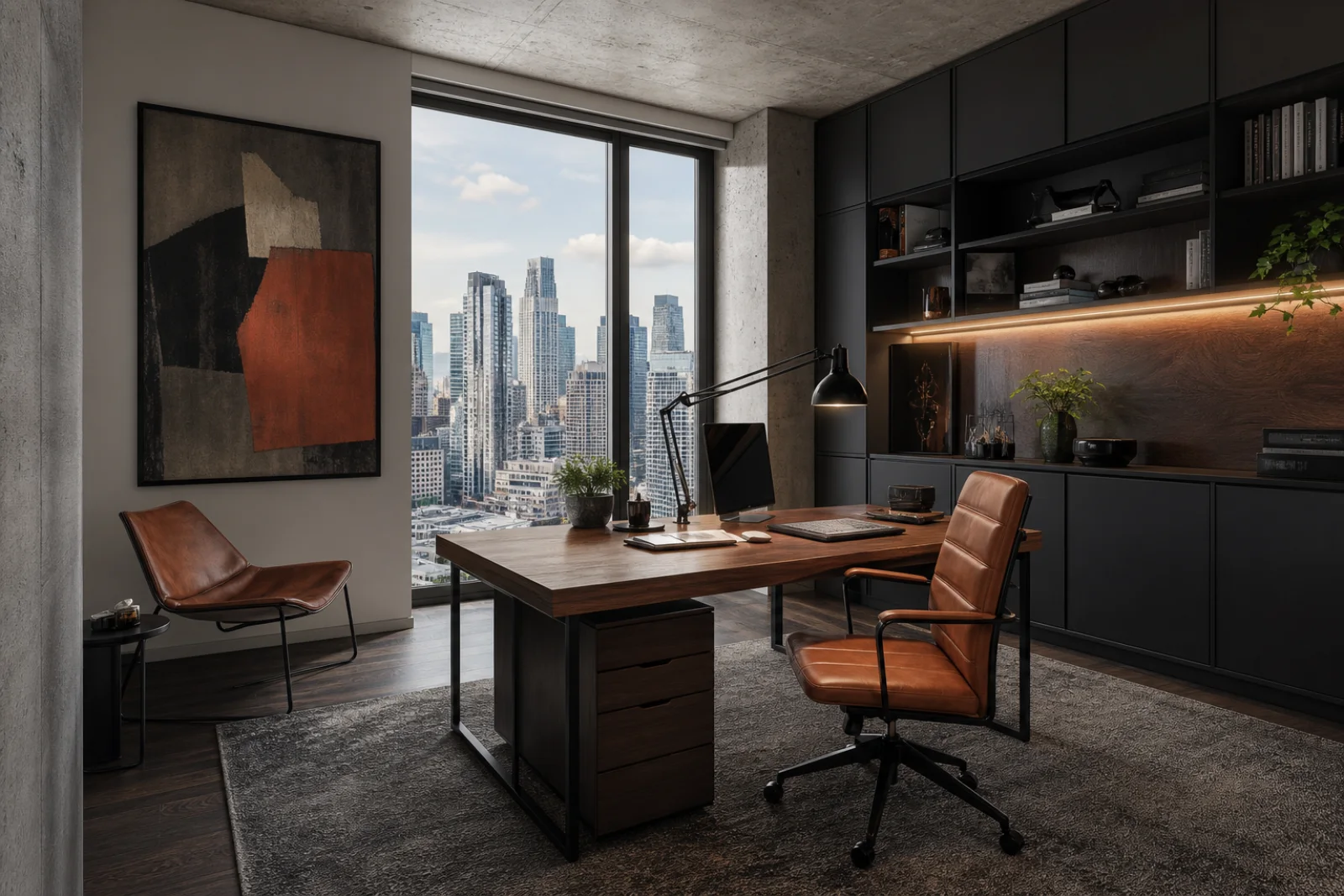
Full-height cabinetry absorbs equipment, books and daily visual noise in one move.
A single mineral block can zone the kitchen and carry the raw side of the palette.
Use one large composition to give a small foyer presence without furniture clutter.