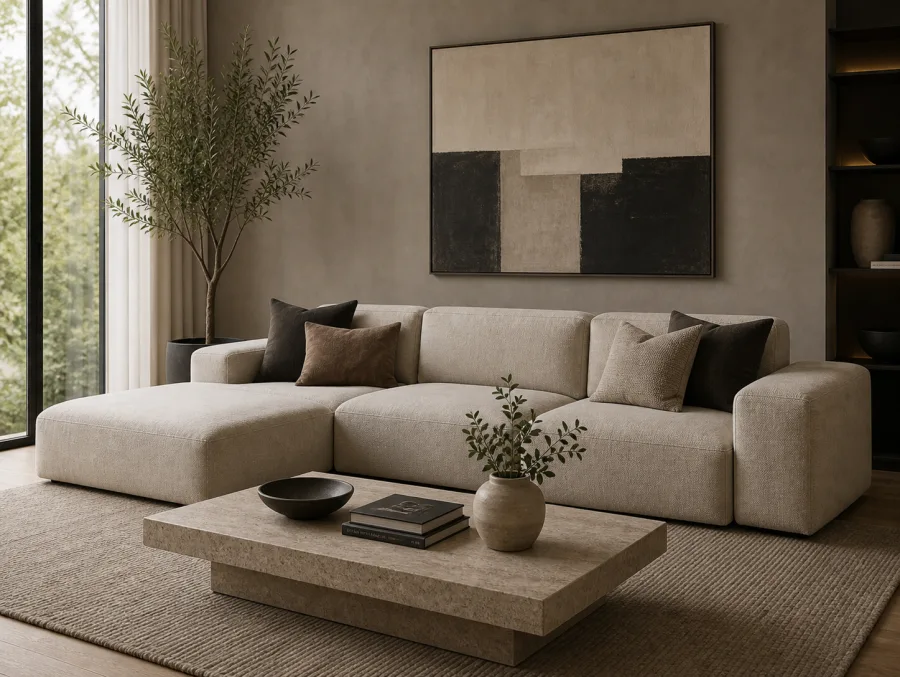
Modular low sofa
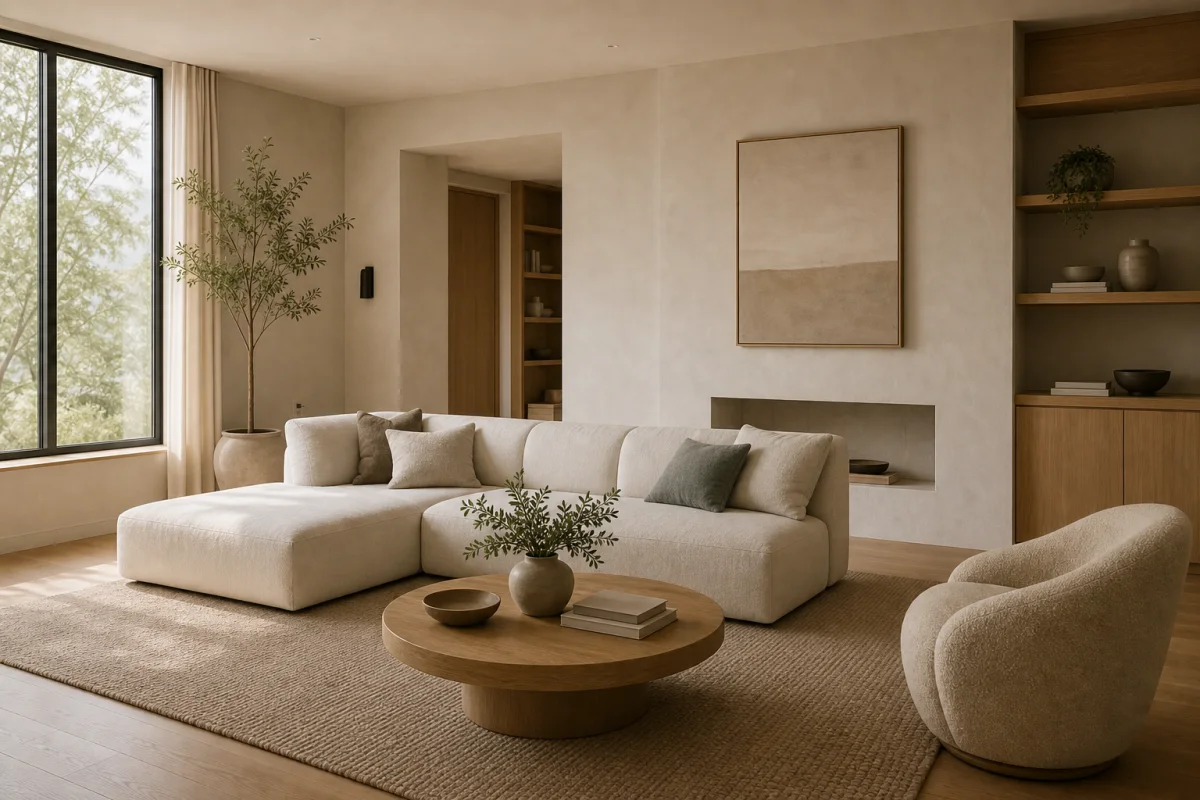
Choose a generous shape with simple lines so the room feels current but still comfortable.
Current rooms with clean lines, open layouts, practical storage, warm neutrals and sculptural pieces that feel polished without becoming cold.
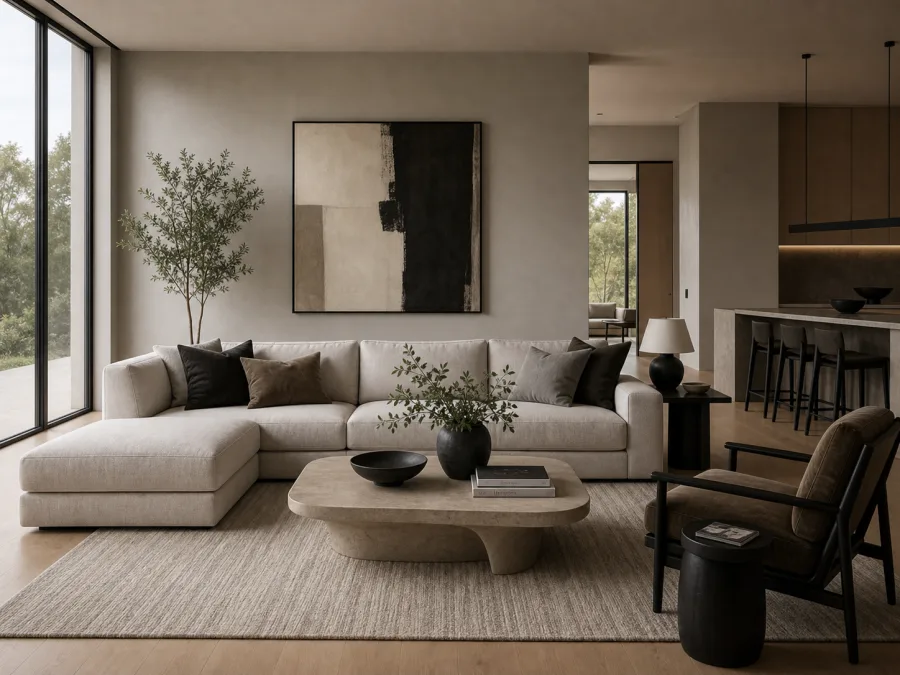
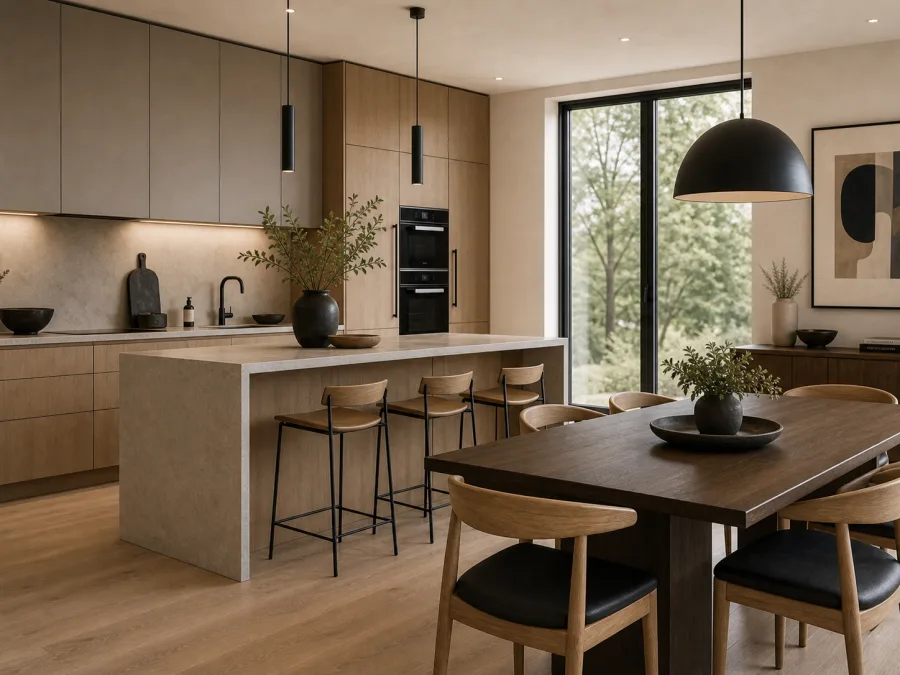
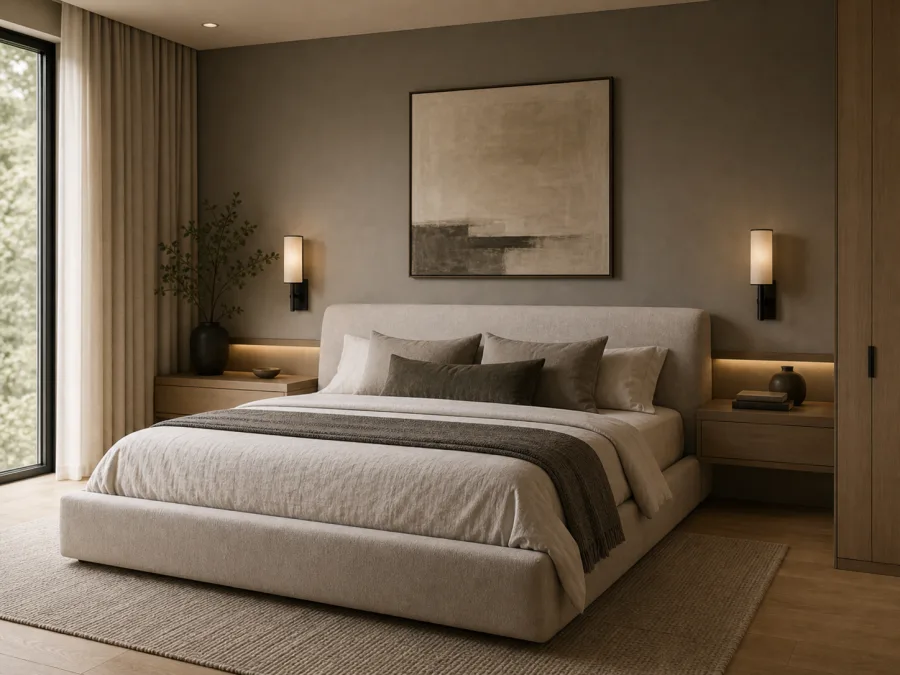
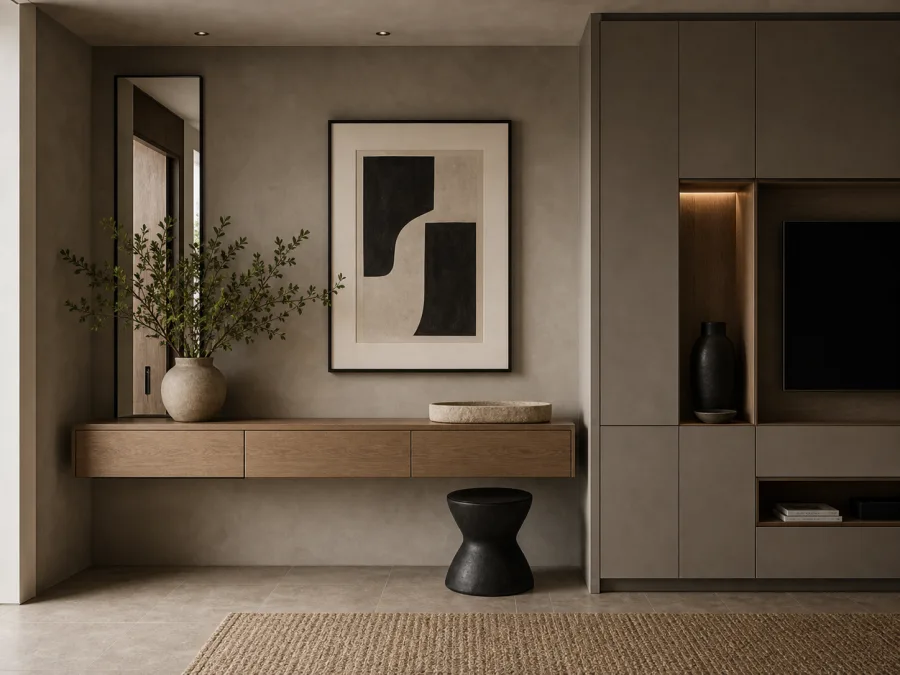
Contemporary interior design is about what feels current now: clean silhouettes, open space, integrated storage, warm neutral color, simple materials and a few sculptural pieces that give the room shape.
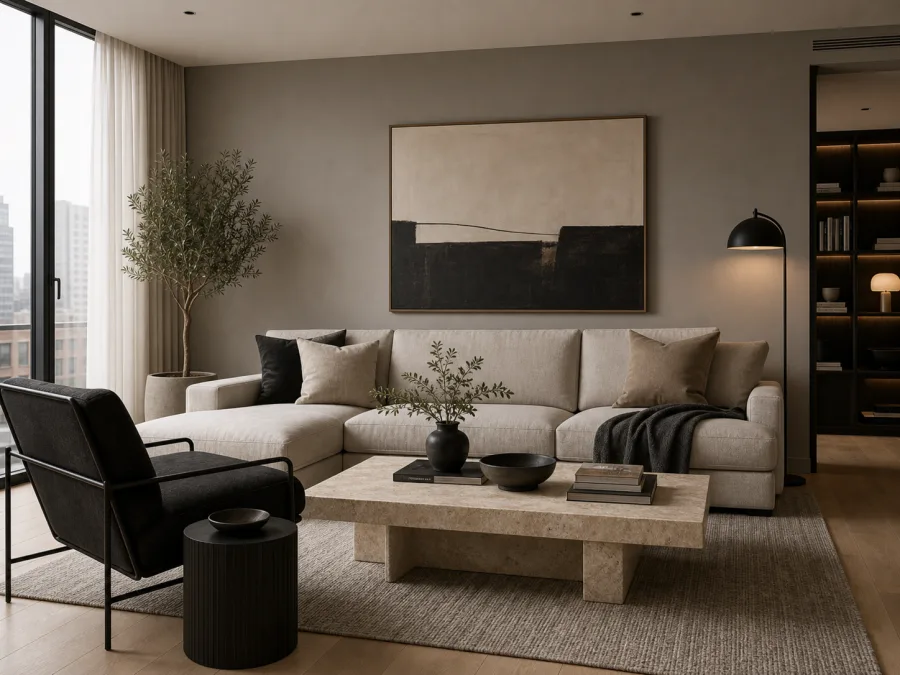
Unlike strict minimalism, contemporary rooms do not have to feel empty. The strongest version uses comfort and function as part of the design: a generous sofa, a quiet stone table, soft lighting, hidden storage and art that gives the room a clear focal point.
Contemporary design should feel fresh and livable, not like a cold showroom or concept render.
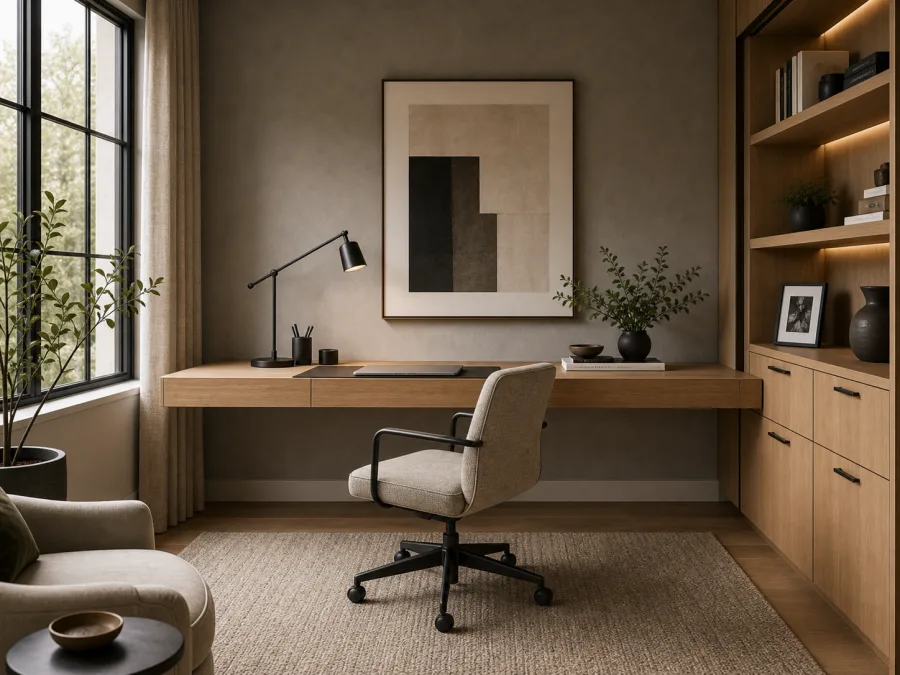
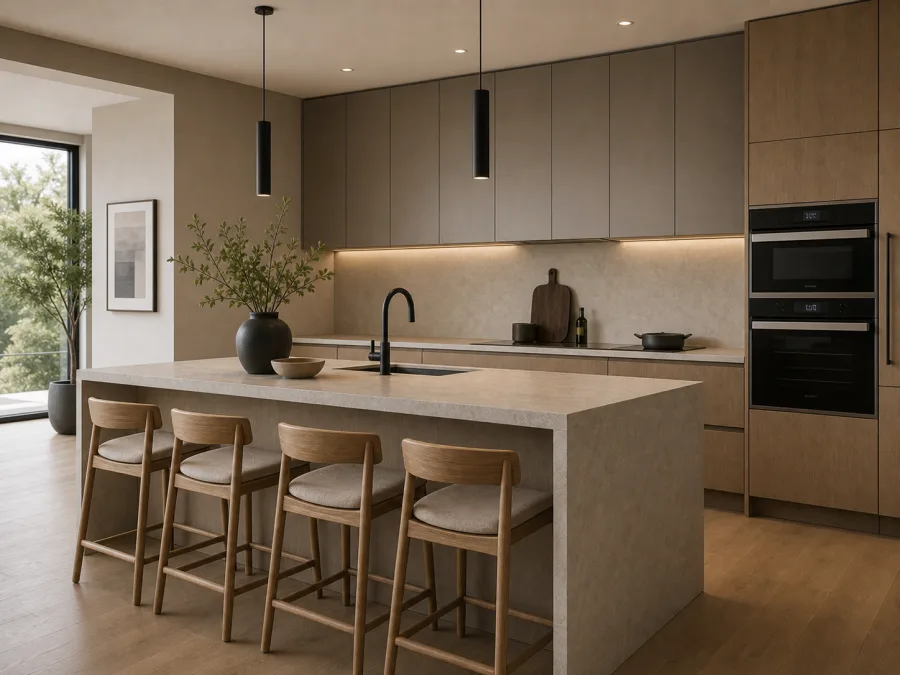
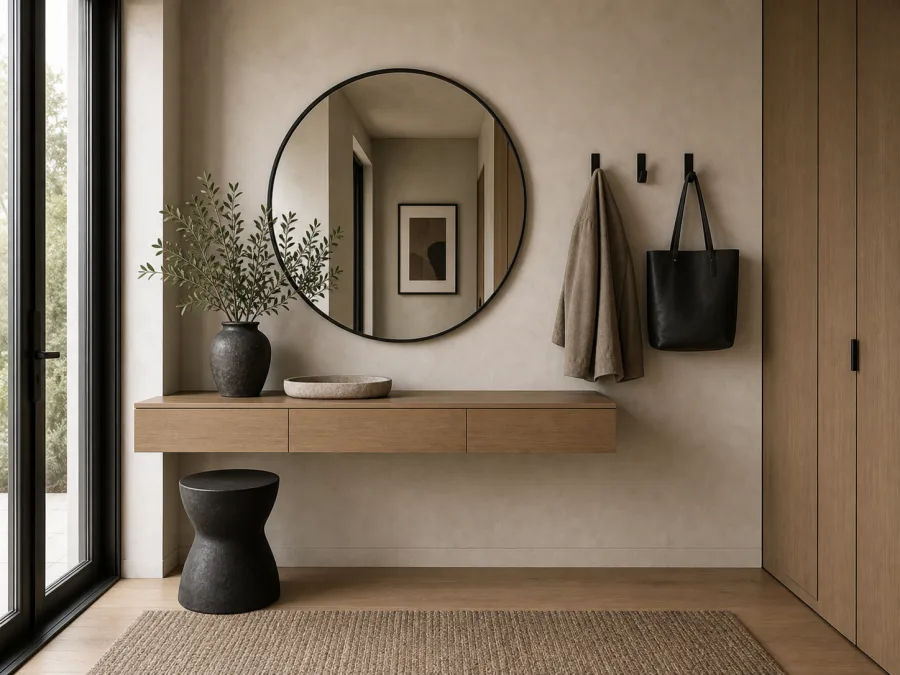
Flat fronts, floating consoles and built-ins keep visual noise low without removing daily function.
A sculptural chair, stone table or large artwork can do the work that pattern or trim would do in older styles.
Furniture usually has simple profiles, lower visual weight and fewer decorative details.
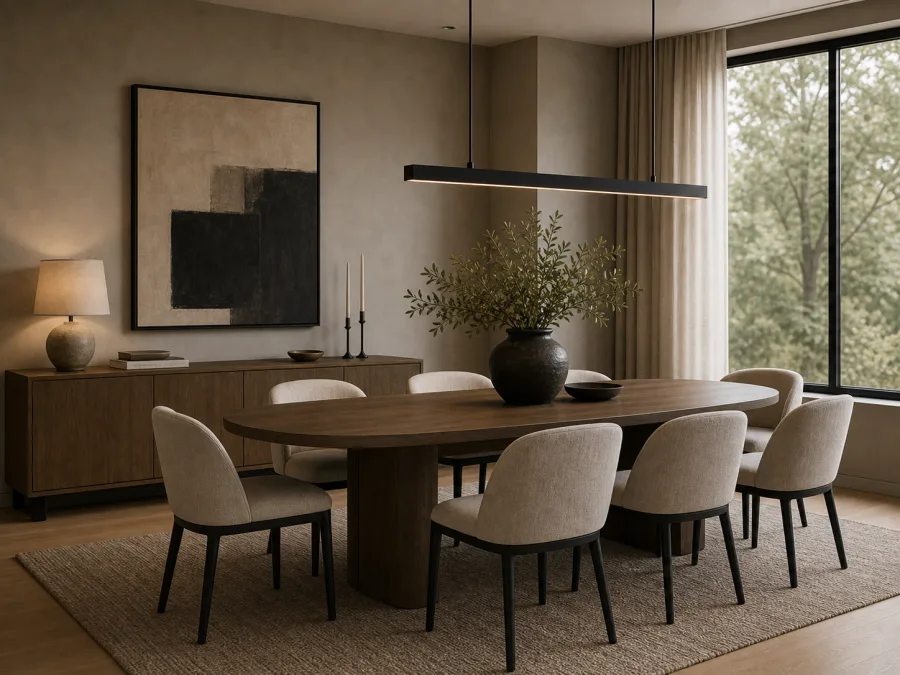
Rooms often connect living, dining and kitchen areas while using rugs, lighting and furniture placement to define zones.
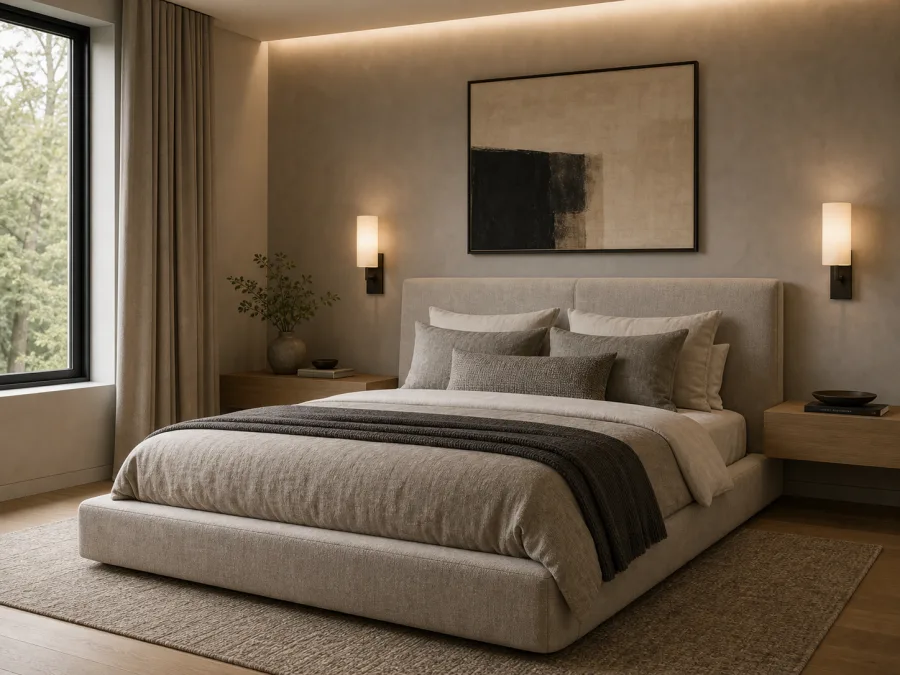
Warm gray plaster, pale oak, honed stone and textured upholstery keep the room clean without making it sterile.
One large artwork, pendant, chair or coffee table can create focus without filling the room with accessories.
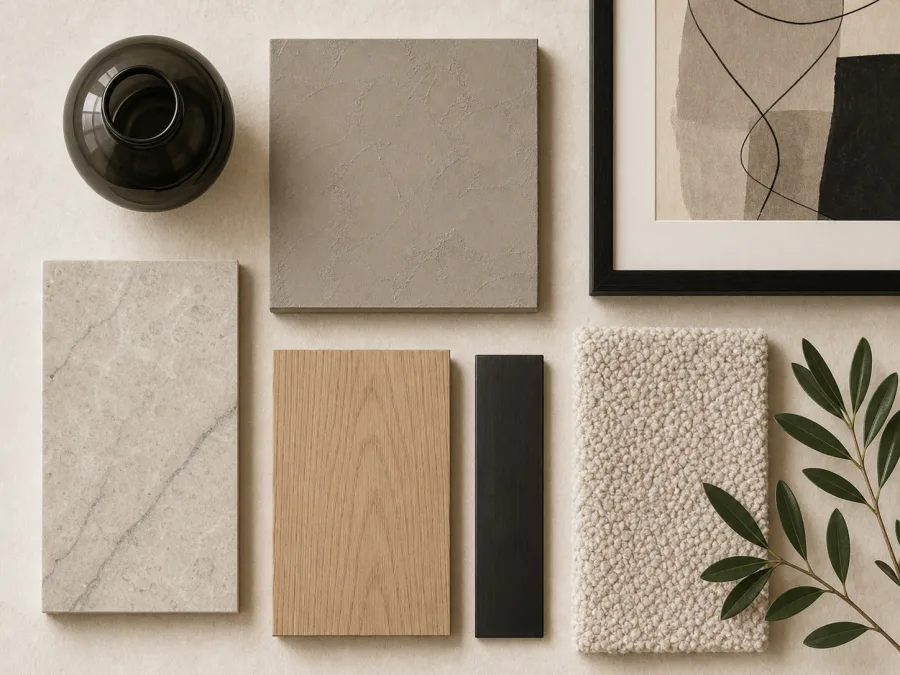
A contemporary palette works best when it feels clean, warm and edited. Start with ivory or warm gray, add wood for comfort, then use black and stone tones to give the room definition.
Use it for walls, ceilings or large upholstery so the room feels bright but not stark.
A contemporary base color for plaster, rugs, cabinetry or upholstered pieces.
Adds warmth to clean rooms through floors, chairs, storage and tables.
Use it in frames, pendants, hardware and chair legs for crisp structure.
A grounding mid-tone for stone tables, counters, ceramics or textured walls.

Adds depth to plain walls and keeps the palette soft instead of flat.
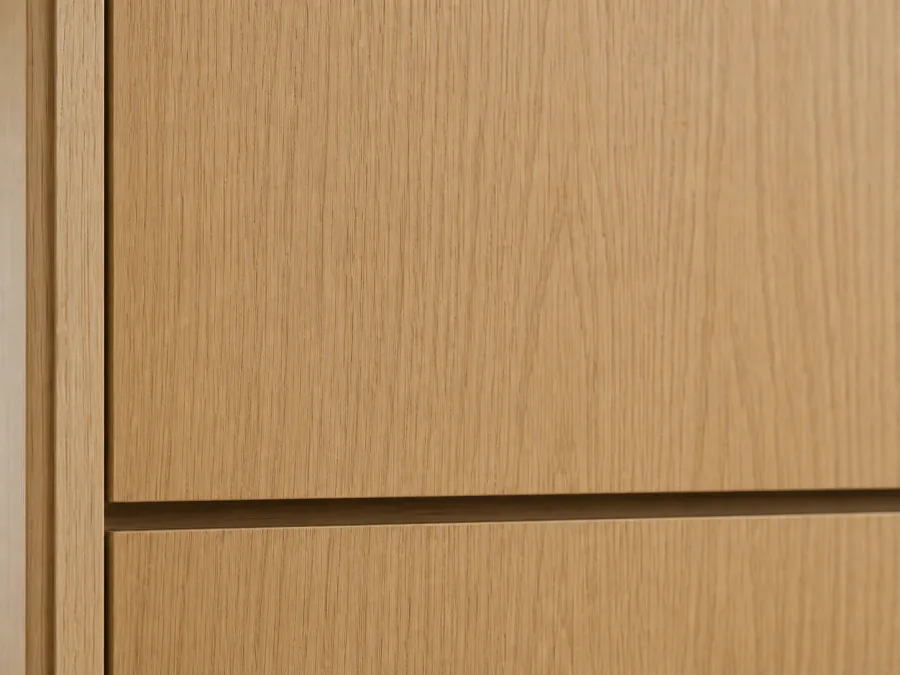
A clean warmth layer for cabinets, floors, stools and sideboards.
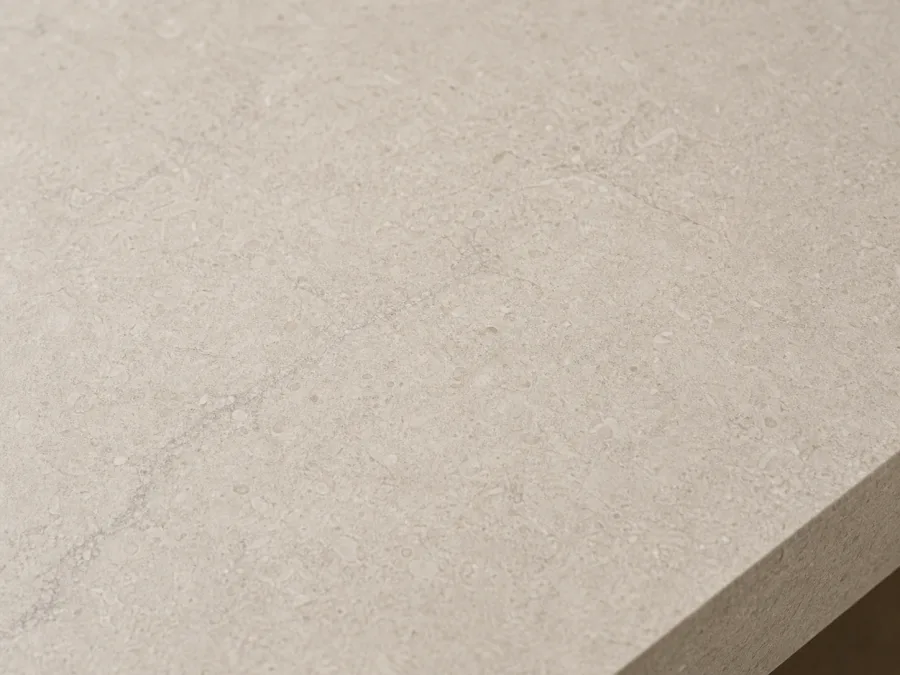
Gives tables, counters and trays a calm sculptural weight.
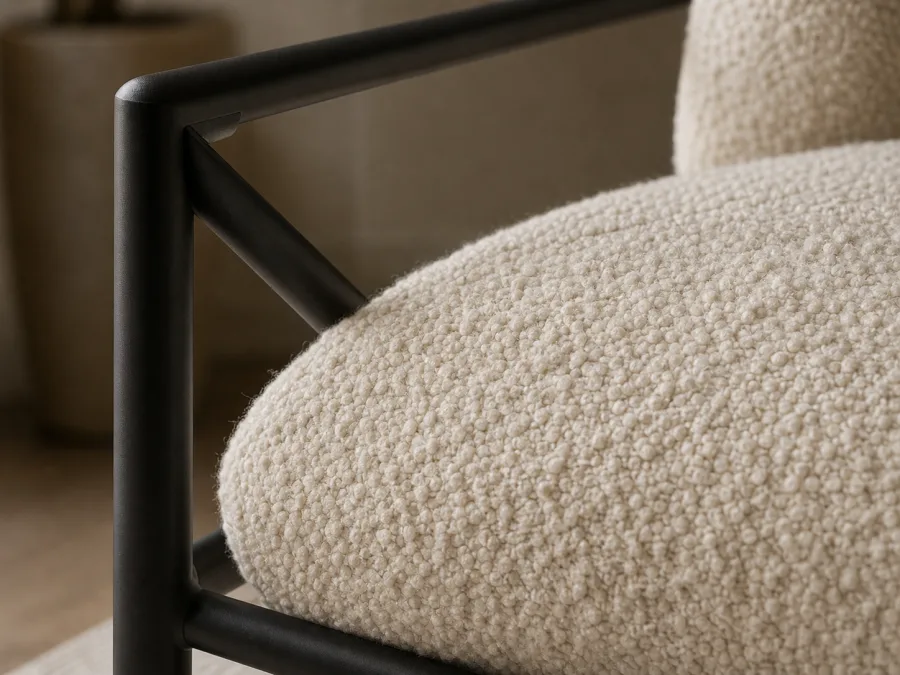
Pairs crisp structure with soft texture so the room feels sharp but comfortable.
Contemporary design is close to several modern styles. The difference usually comes down to how warm, strict, textured or polished you want the room to feel.
More reduced, stricter and often emptier.
Choose contemporary if you want clean design with more comfort, storage and visual warmth.
Use a generous sofa, textured upholstery, art and warm materials rather than only blank space.
More classic, layered and formal.
Choose contemporary if you prefer simpler profiles, fewer patterns and a more current furniture language.
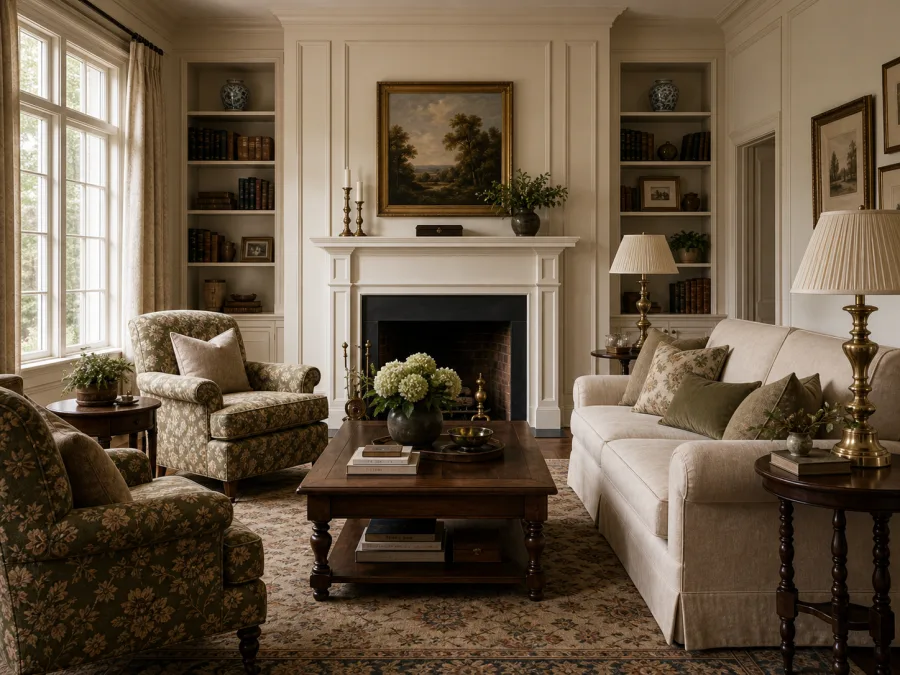
Replace rolled arms, ornate frames and patterned textiles with slab storage, clean upholstery and large art.
More textured, earthy and grounded.
Choose contemporary if you want a lighter, cleaner room with less raw material weight.
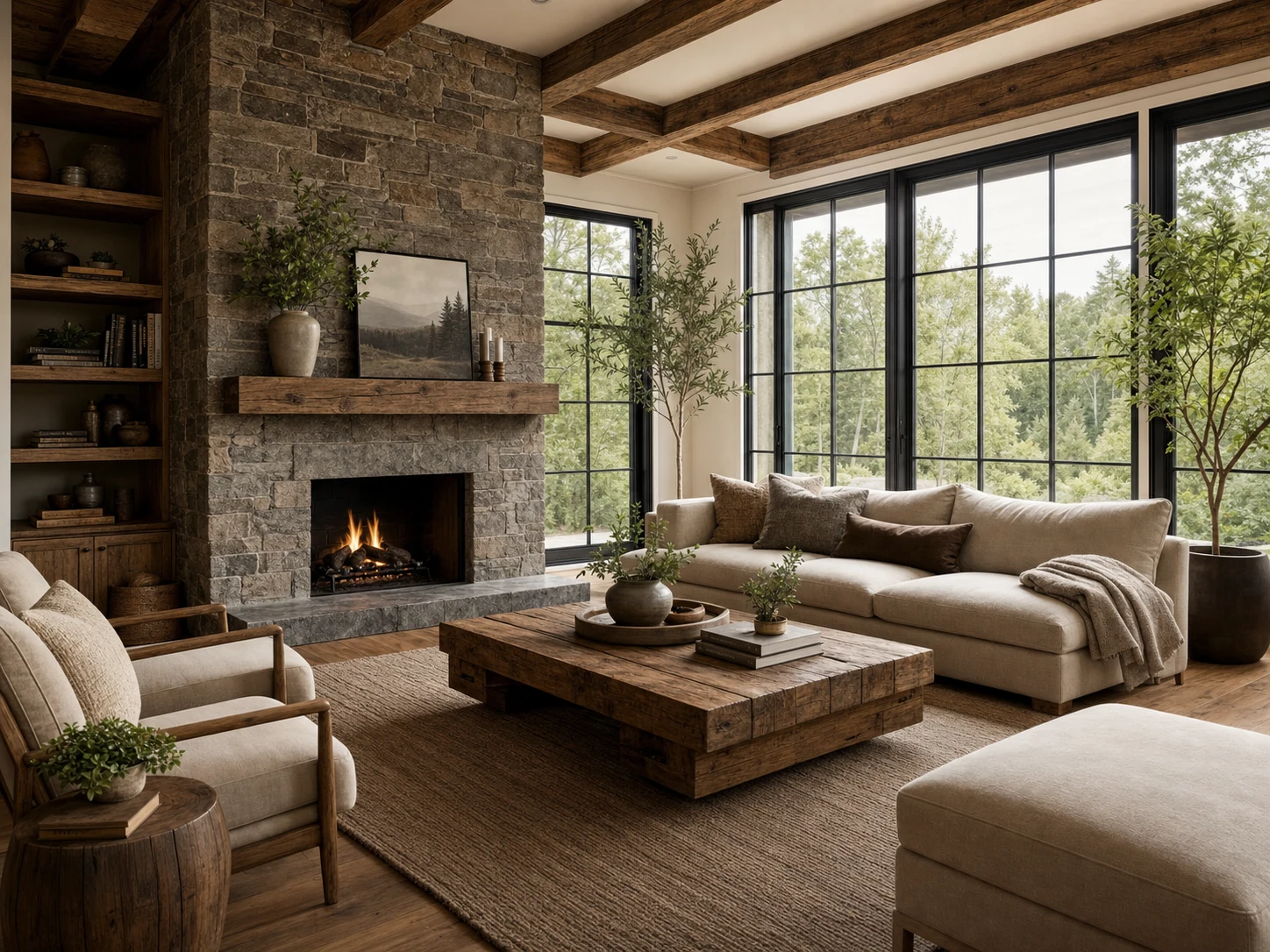
Use plaster, honed stone, pale oak and soft black instead of heavy beams, rough stone and rustic decor.
Softer, curvier and more nature-forward.
Choose contemporary if you want cleaner edges, stronger structure and more urban polish.
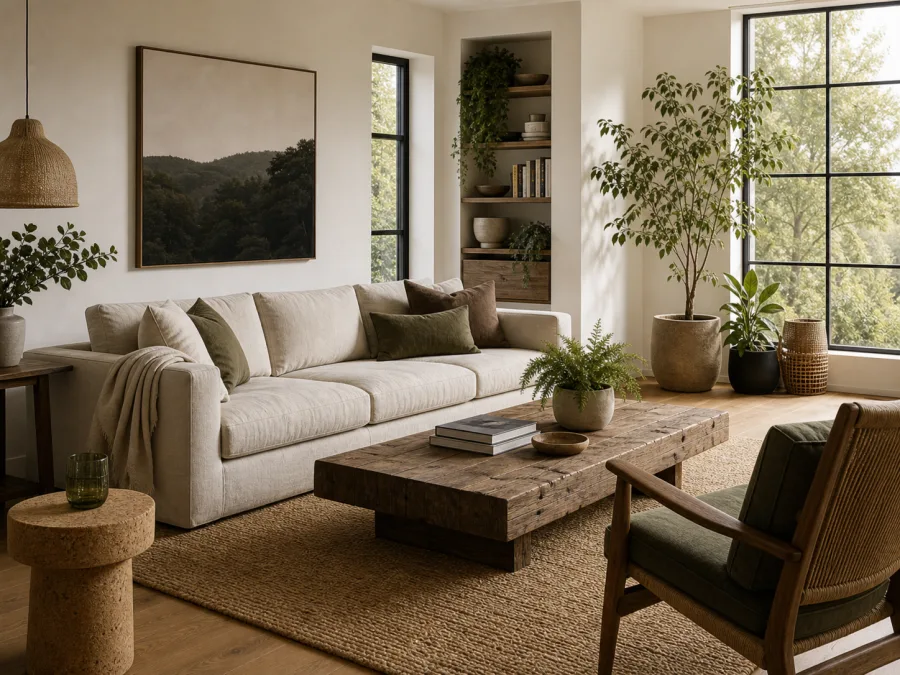
Balance curves with sharper storage, linear lighting and more defined black accents.
A contemporary room does not need many decorative objects. The right large pieces create shape, storage, comfort and a clear focal point.
Choose a generous shape with simple lines so the room feels current but still comfortable.
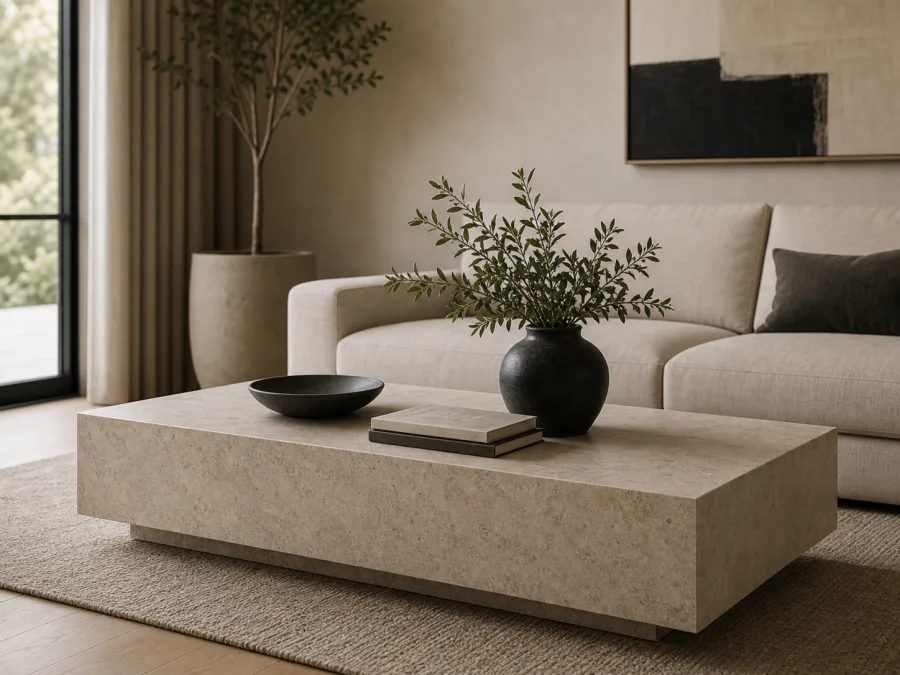
A honed stone table adds sculptural weight without adding ornament.
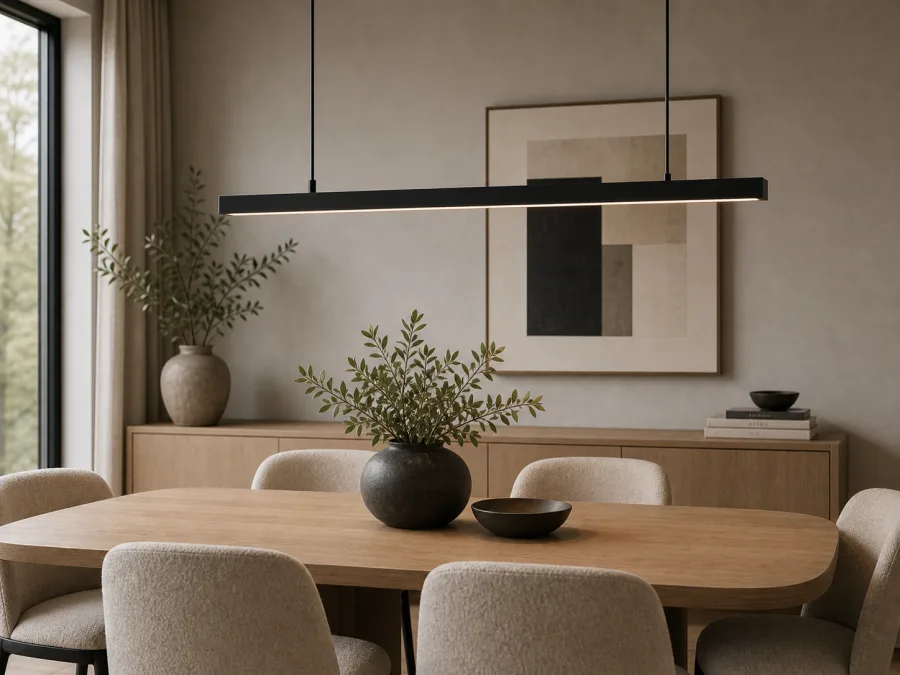
Slim lighting helps define dining or kitchen zones in open-plan rooms.
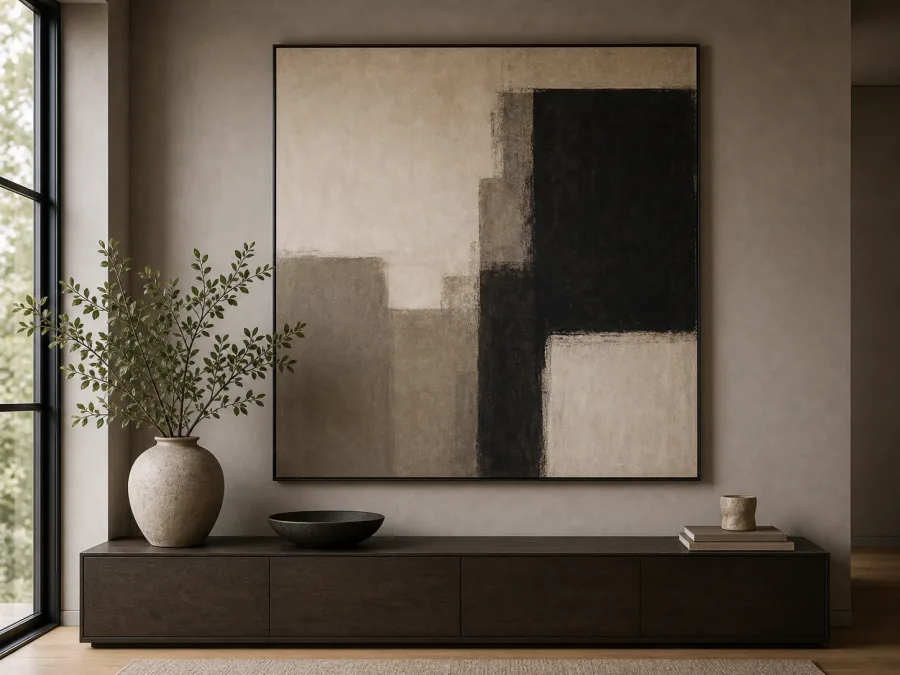
One oversized piece creates focus and color control better than many small objects.
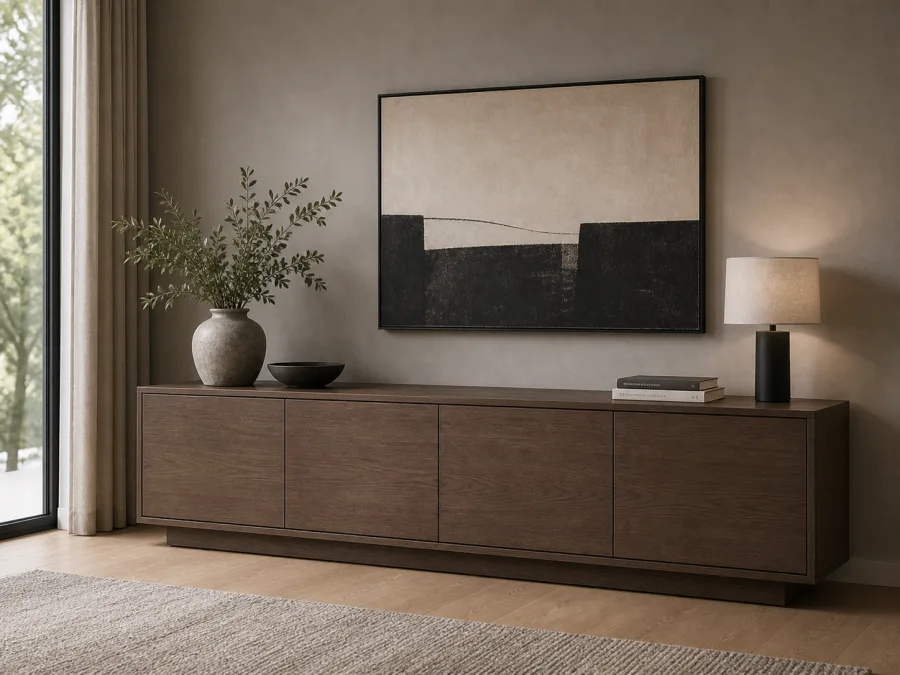
Flat-front storage keeps daily clutter hidden while preserving the clean look.
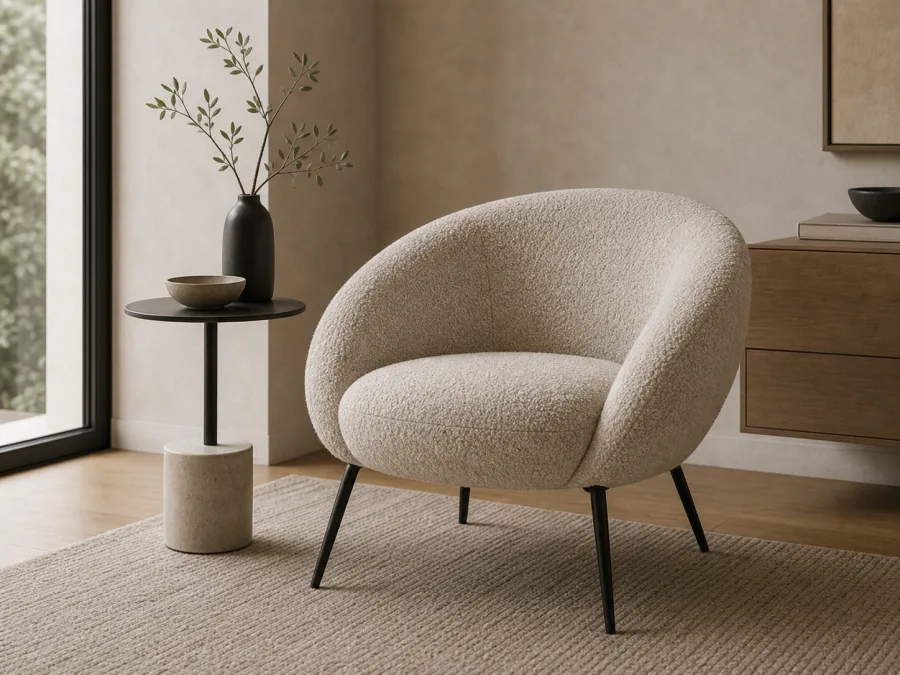
Use one expressive chair to soften straight lines and give the room personality.