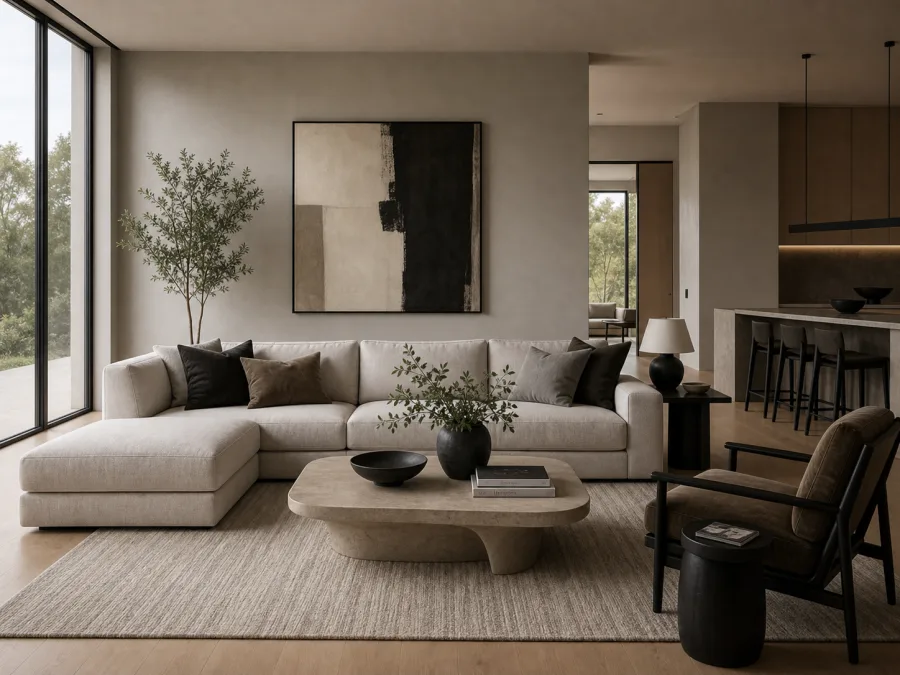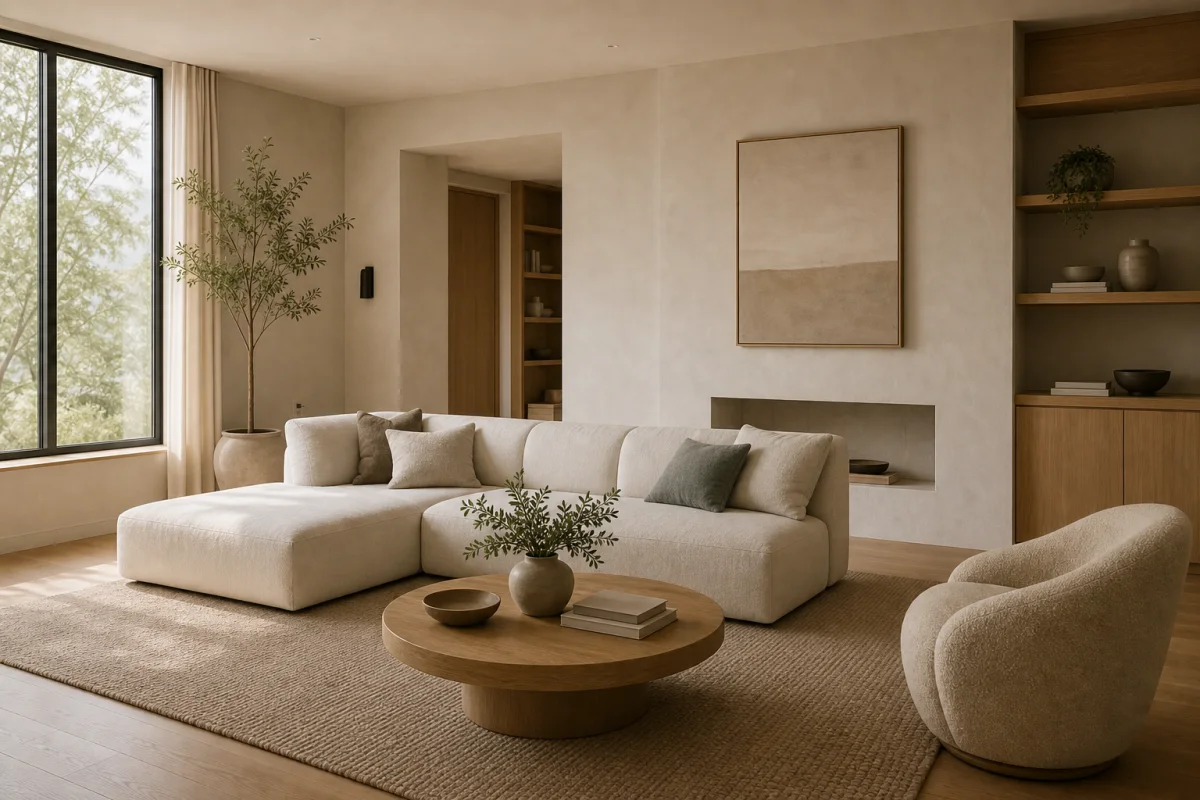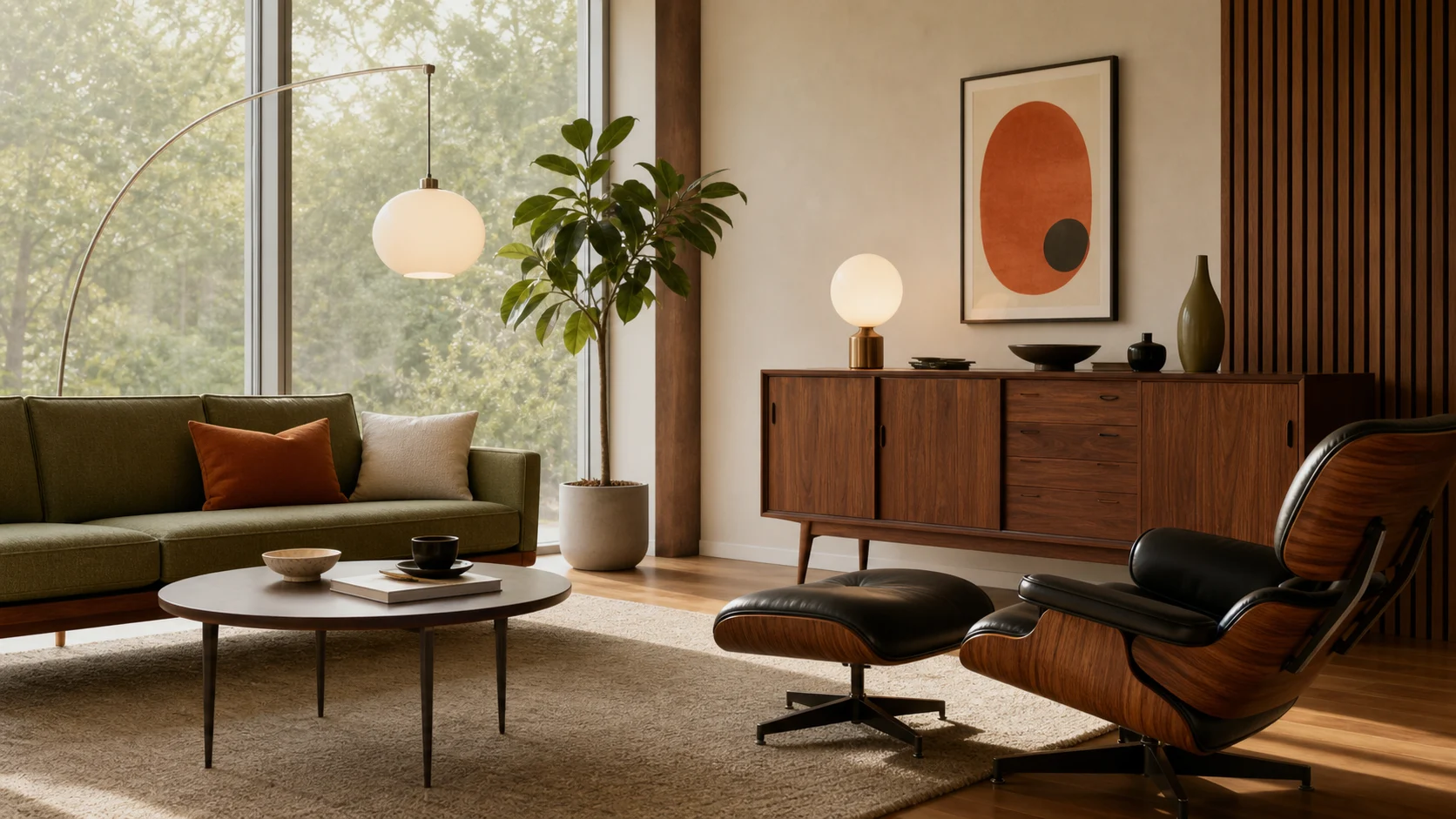
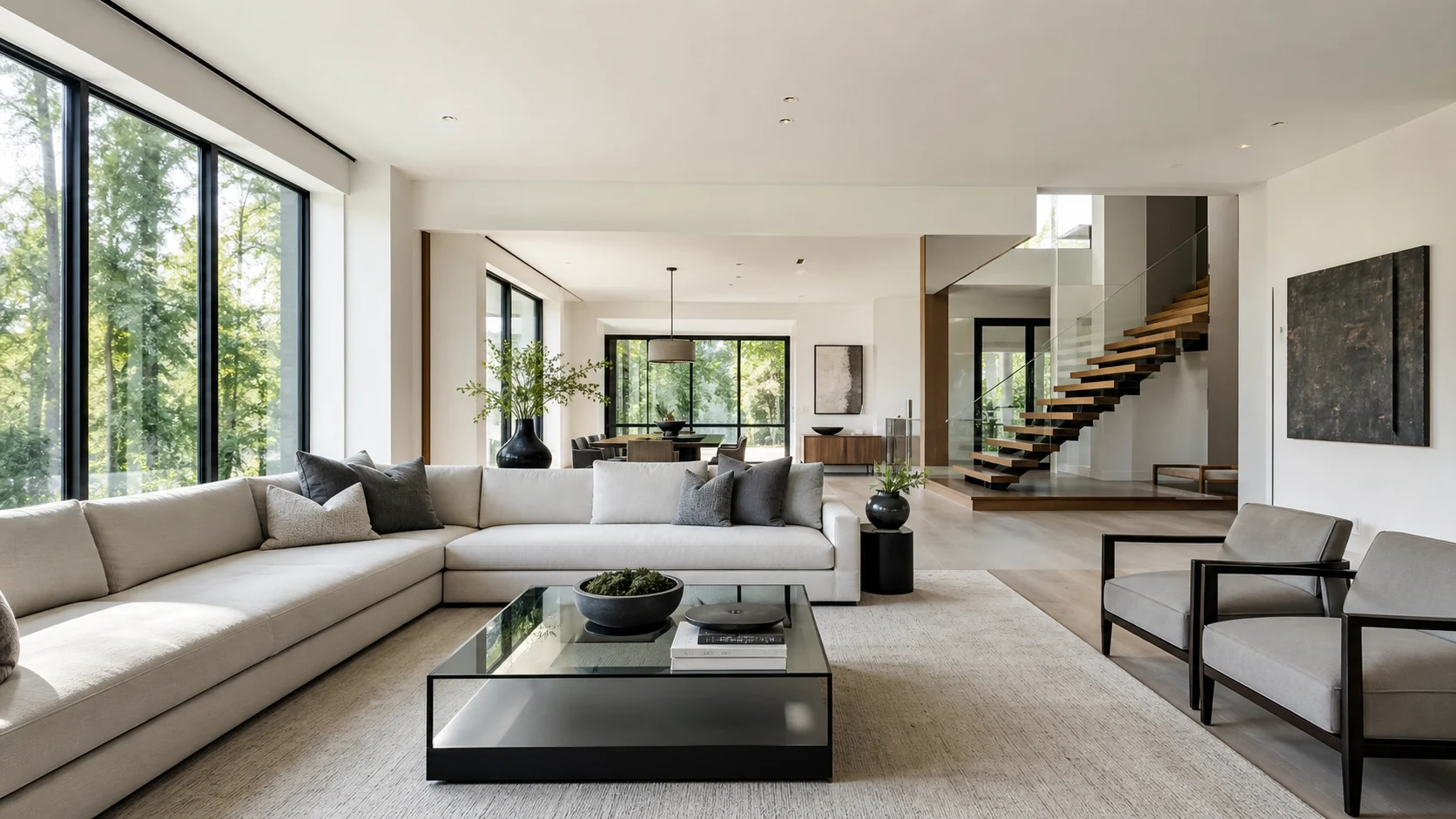
Low linear sofa
A long, restrained profile anchors an open room without blocking sight lines.
Functional rooms shaped by clear geometry, open planning, honest materials and a deliberate relationship between structure and furniture.
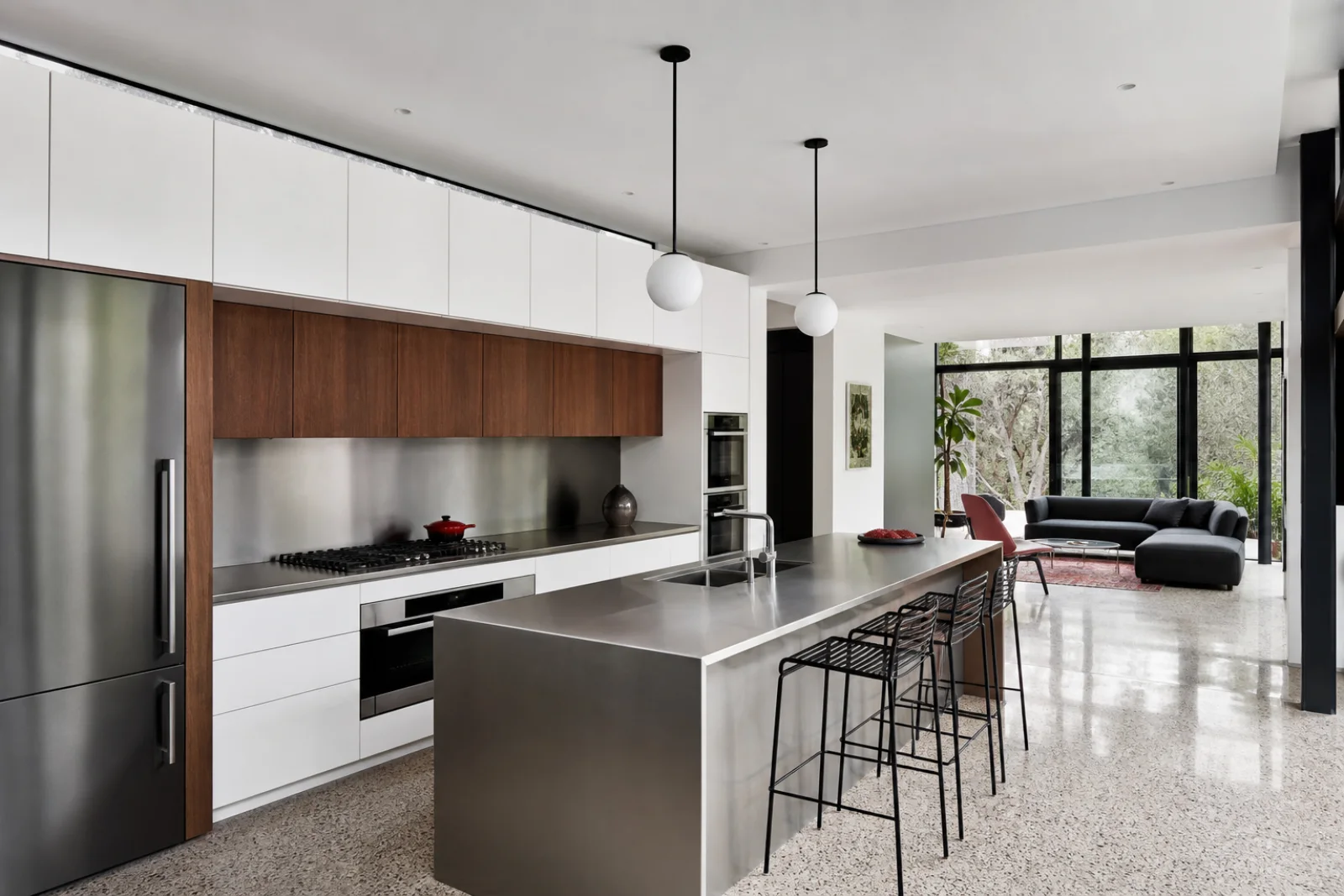
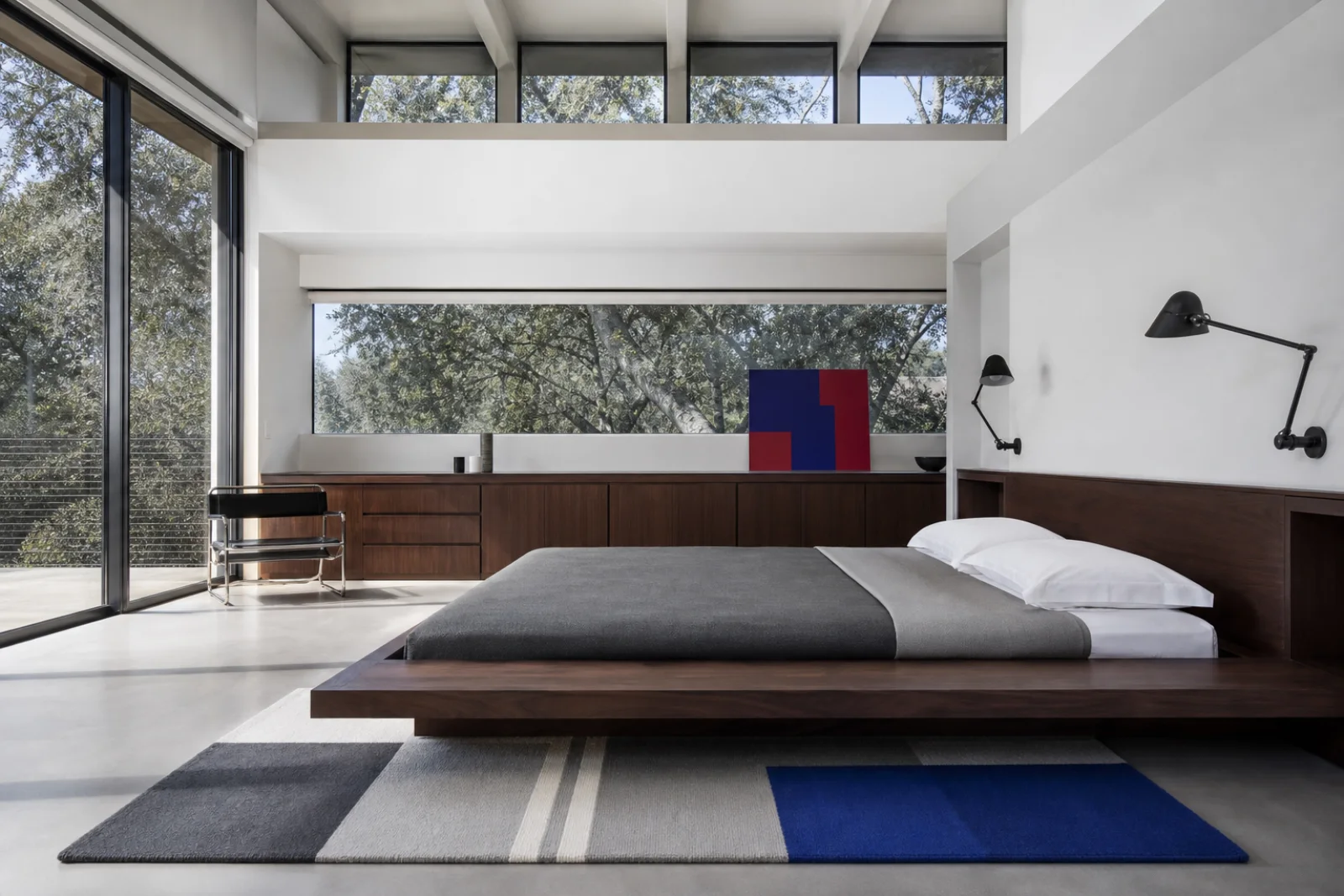
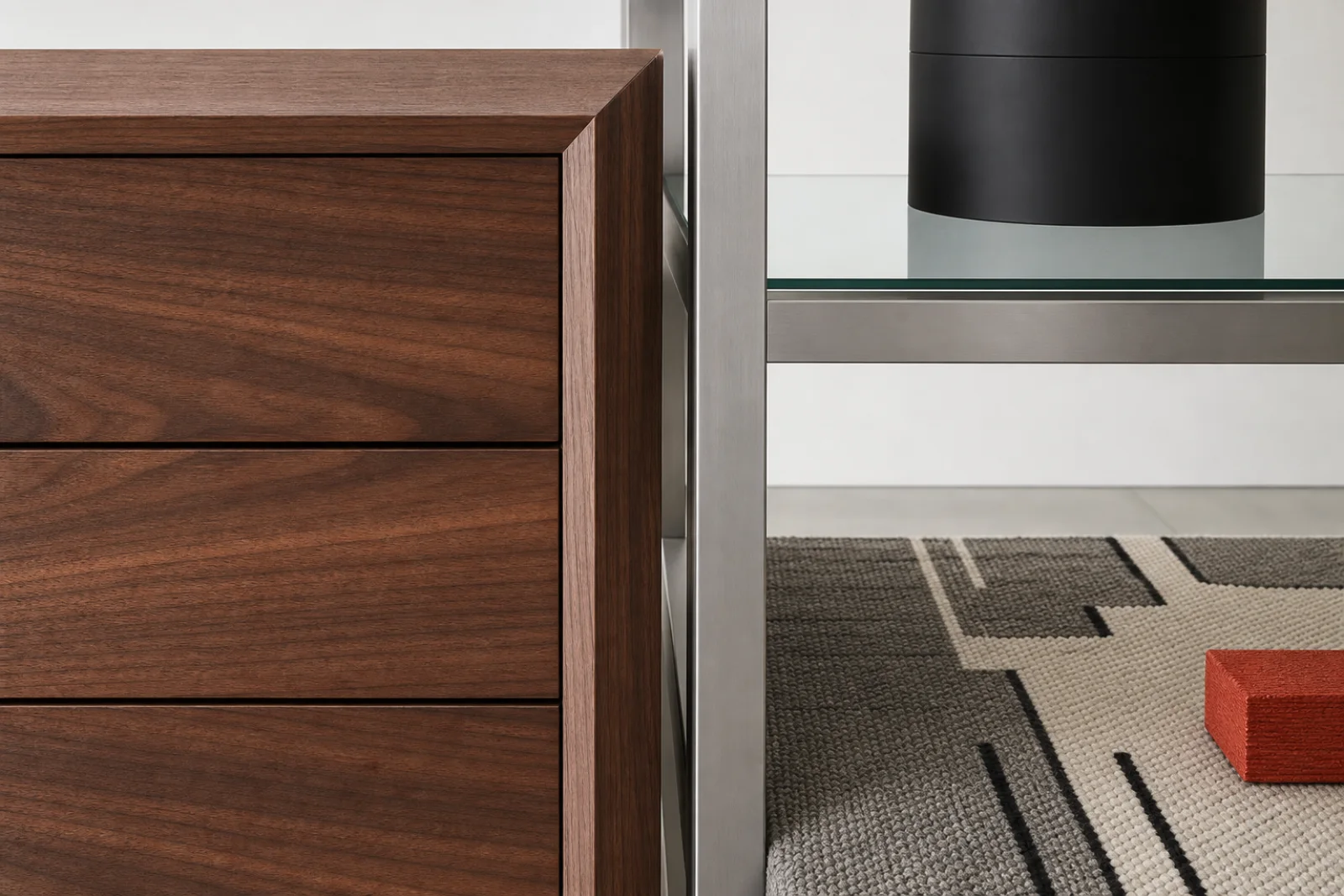
Modern interior design grows from the modernist movement of the early-to-mid twentieth century. It favors useful forms, open planning, structural clarity and materials such as glass, steel, concrete, leather and wood. Furniture usually follows simple geometry, while built-ins and windows reinforce the architecture rather than disguise it.
Modern does not simply mean current. Contemporary design changes with the present moment; modern design refers to a more established language of horizontal lines, functional furniture and reduced ornament. A successful room feels composed and efficient, but it still uses wood, upholstery and color to remain livable.
Circulation, sight lines and furniture zones are resolved before accessories enter the room.
Steel reads as steel, glass remains visually light and wood provides warmth without carved ornament.
Dark frames, warm timber and pale planes make the construction and furniture easier to read.
Living, dining and kitchen areas can connect visually while rugs, lighting and furniture establish distinct functions.
Long cabinets, low seating, window grids and planar tables create a controlled horizontal rhythm.
Built-ins align with walls and architectural bays so storage becomes part of the composition.
A single red, blue or yellow accent can energize a restrained base without turning into a full decorative palette.
Use low seating to preserve long views through an open plan.
Repeat one horizontal datum across bed, lights and built-in storage.
Align the pendant, table and rug on one clear architectural axis.
Build storage into a grid and keep the working plane visually continuous.
Group tall functions together; preserve uninterrupted prep surfaces elsewhere.
Let concealed storage form one wall and keep the circulation line open.
Modern color works as part of the composition: pale architectural planes, one warm wood, dark structural lines and a small graphic accent.
The light plane for walls and ceilings; choose a neutral white that keeps edges crisp.
A concentrated warmth layer for cabinetry, tables and long built-in elements.
Connects appliances, frames, hardware and concrete or terrazzo surfaces.
Defines window grids, lighting, furniture frames and architectural joints.
Use once in art, a chair or a small object to interrupt the neutral structure.
Long, consistent panels emphasize geometry while natural grain prevents the room from feeling clinical.
Use on work surfaces, frames or hardware where precision and durability matter.
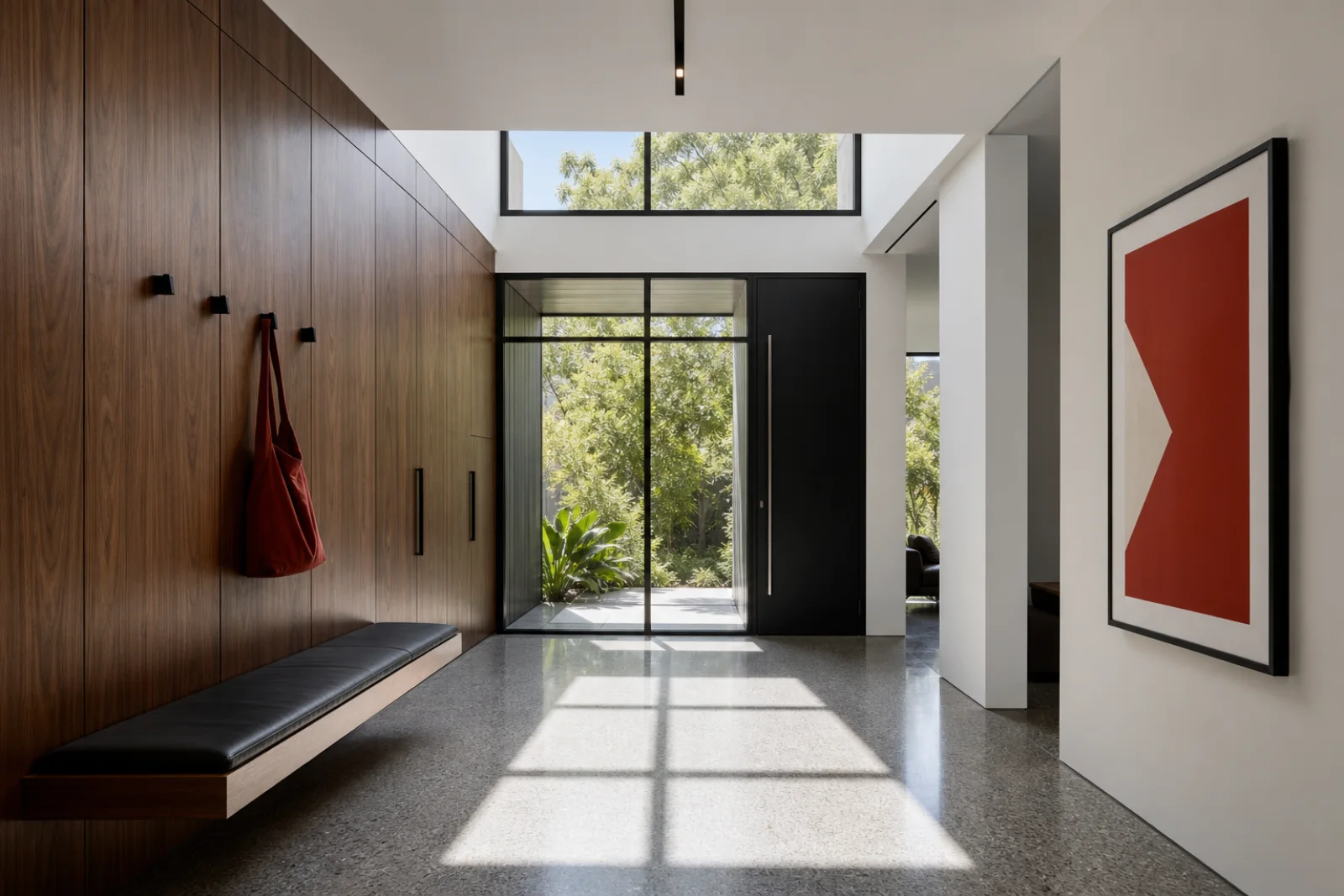
Maintains daylight and long sight lines while black frames make the structural grid visible.
Softens hard planes and can introduce controlled pattern without applied ornament.
Resolve the architecture and furniture zones first. Modern rooms become noisy when styling tries to repair an unclear plan.
Identify the strongest window, wall and cabinet lines; align major furniture with them.
Use rugs and pendants to define functions while keeping 90 cm circulation routes clear.
Repeat one wood, one dark metal and one pale architectural surface throughout.
Choose a single artwork, chair or object in a controlled red, blue or yellow.
When the room feels wrong, change the underlying decision before adding more decor.
Add walnut, wool and leather without weakening the geometry.
Let one important piece lead; use quieter supporting furniture.
Rebuild zones around rugs, lighting and clear circulation axes.
Remove trend decor and reinforce horizontal lines, honest materials and functional forms.
The word modern is often used as a synonym for new. Here it describes a specific design language: functional planning, reduced ornament, geometric form and materials expressed clearly.
More fluid, trend-responsive and open to current curves, finishes and luxury cues.
Choose modern if you prefer an established functional language and stronger architectural geometry.
Look for horizontal built-ins, steel frames, walnut planes and furniture derived from simple forms.
More reductive and focused on visual absence.
Choose modern if you want clearer material contrast, visible structure and more graphic furniture.
Walnut, tubular steel and controlled color make modern rooms more articulated.
More period-specific, furniture-led and associated with tapered legs and organic silhouettes.
Choose modern if you want a broader architectural approach rather than a recognizable 1940s–60s furniture vocabulary.
Emphasize open planning, glass walls and built-ins instead of collecting retro pieces.
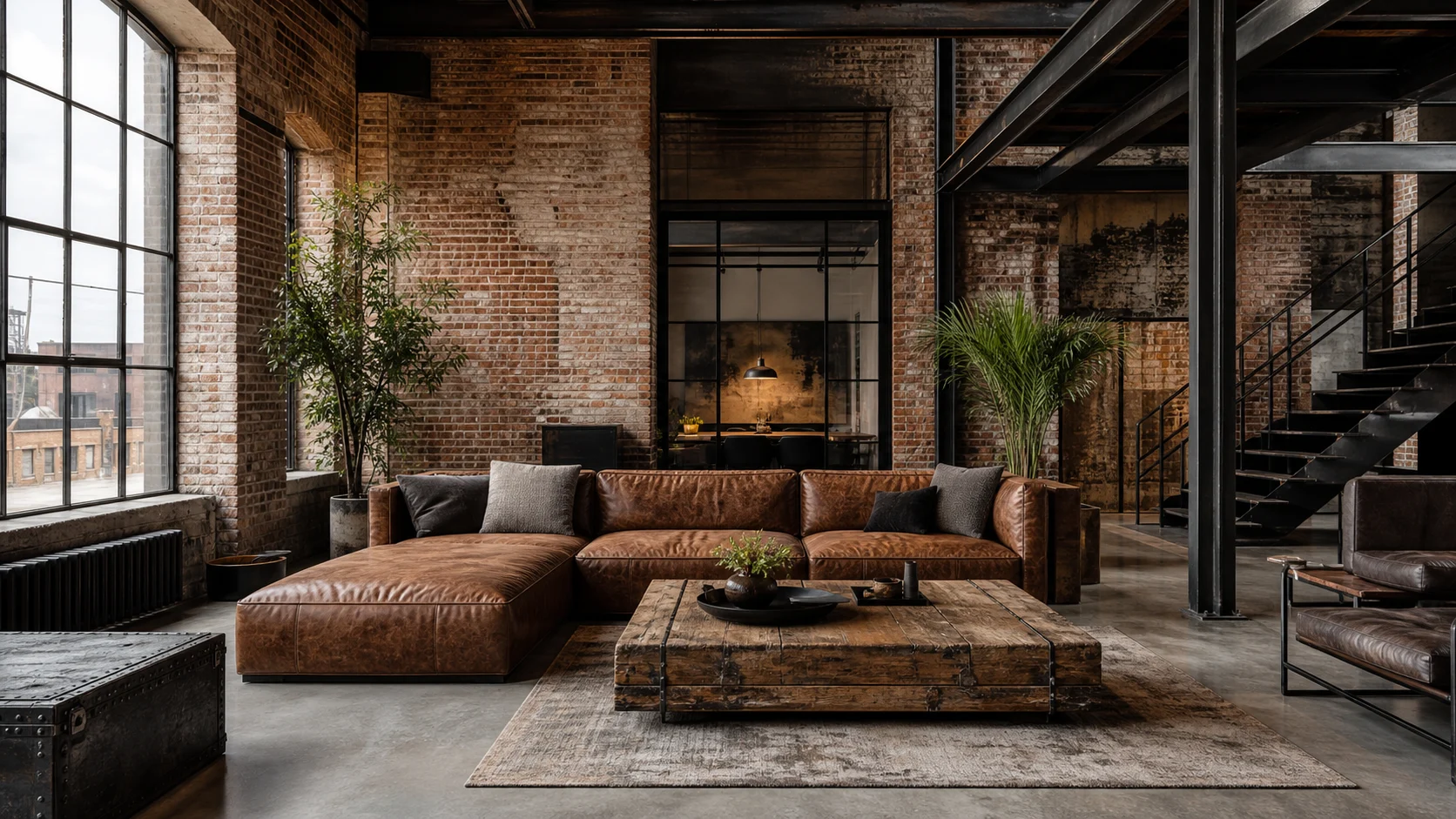
Rougher, darker and more focused on exposed building systems.
Choose modern if you like steel and glass but want cleaner junctions and a more residential finish.
Use precise frames and finished planes rather than exposed brick, ducts and distressed metal.
Choose pieces for proportion and construction, not because each one looks like a design icon. The room needs a hierarchy, not a showroom of statements.
A long, restrained profile anchors an open room without blocking sight lines.
Look for an integrated headboard, precise edges and storage aligned to the same datum.
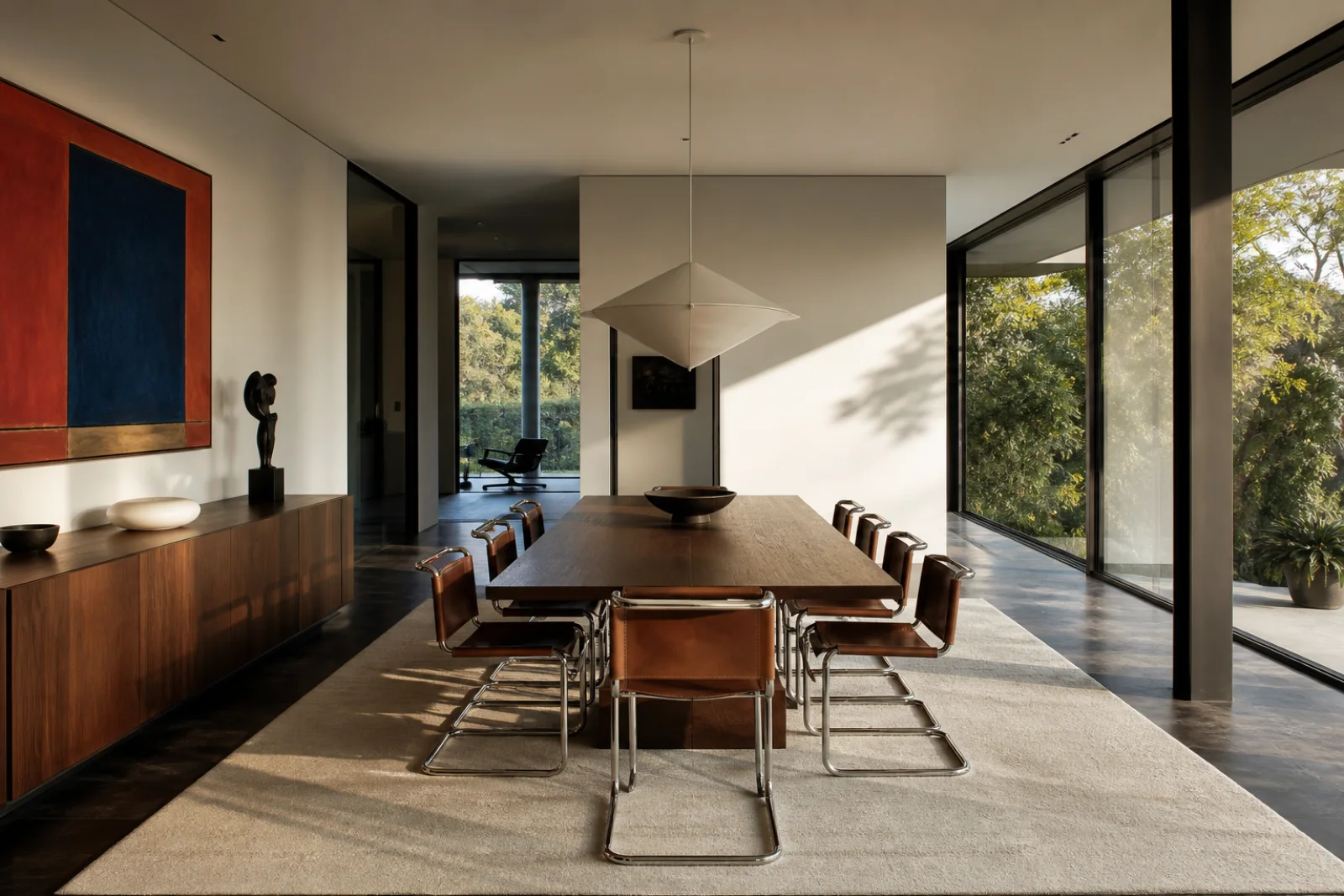
Tubular or flat steel adds lightness and contrast beside a substantial wood table.
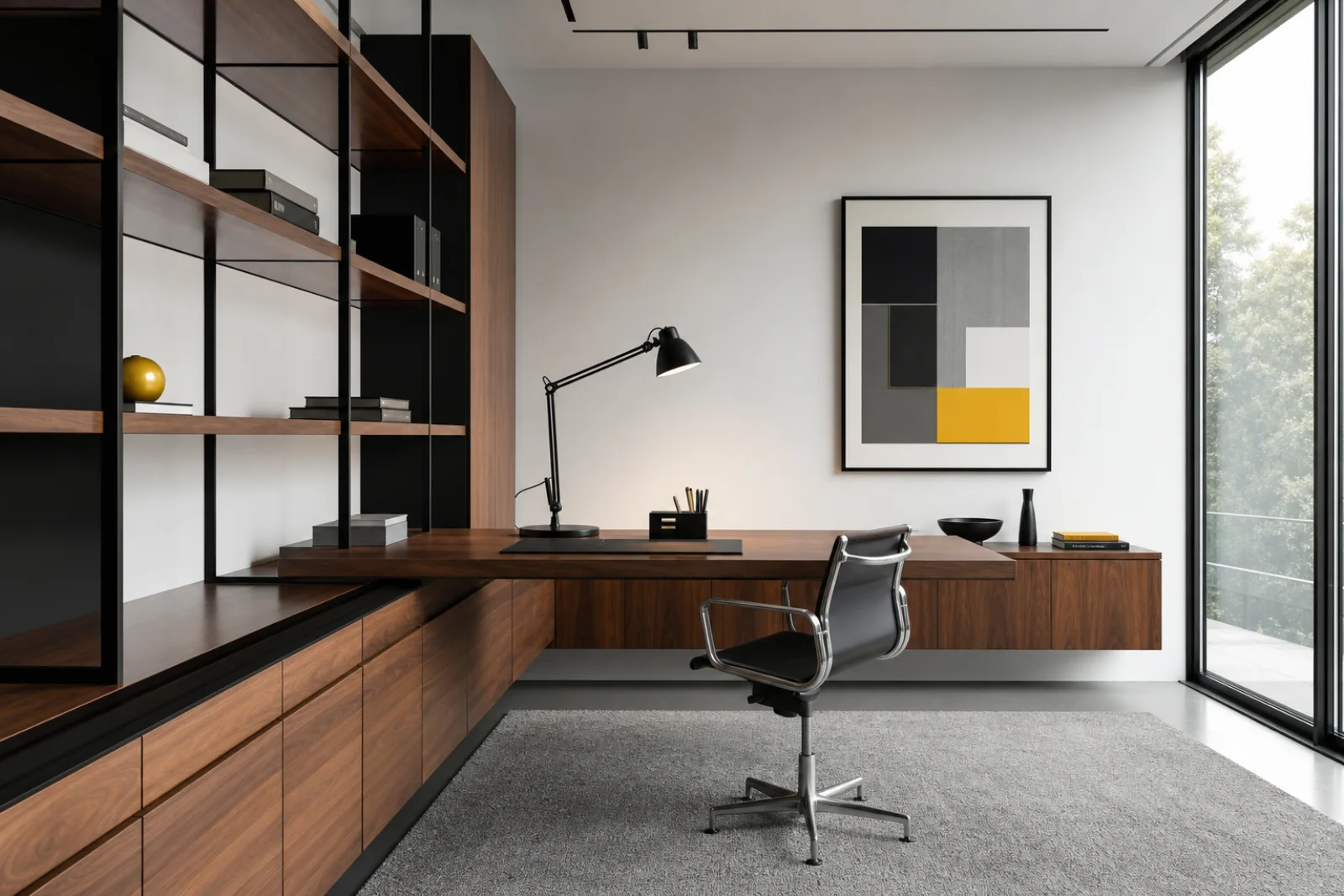
A functional articulated lamp adds useful mechanical detail instead of decoration.
Durable, hygienic steel sharpens the kitchen and reflects light without ornamental veining.
One clear shape or primary accent can give the architectural palette a focal point.