01
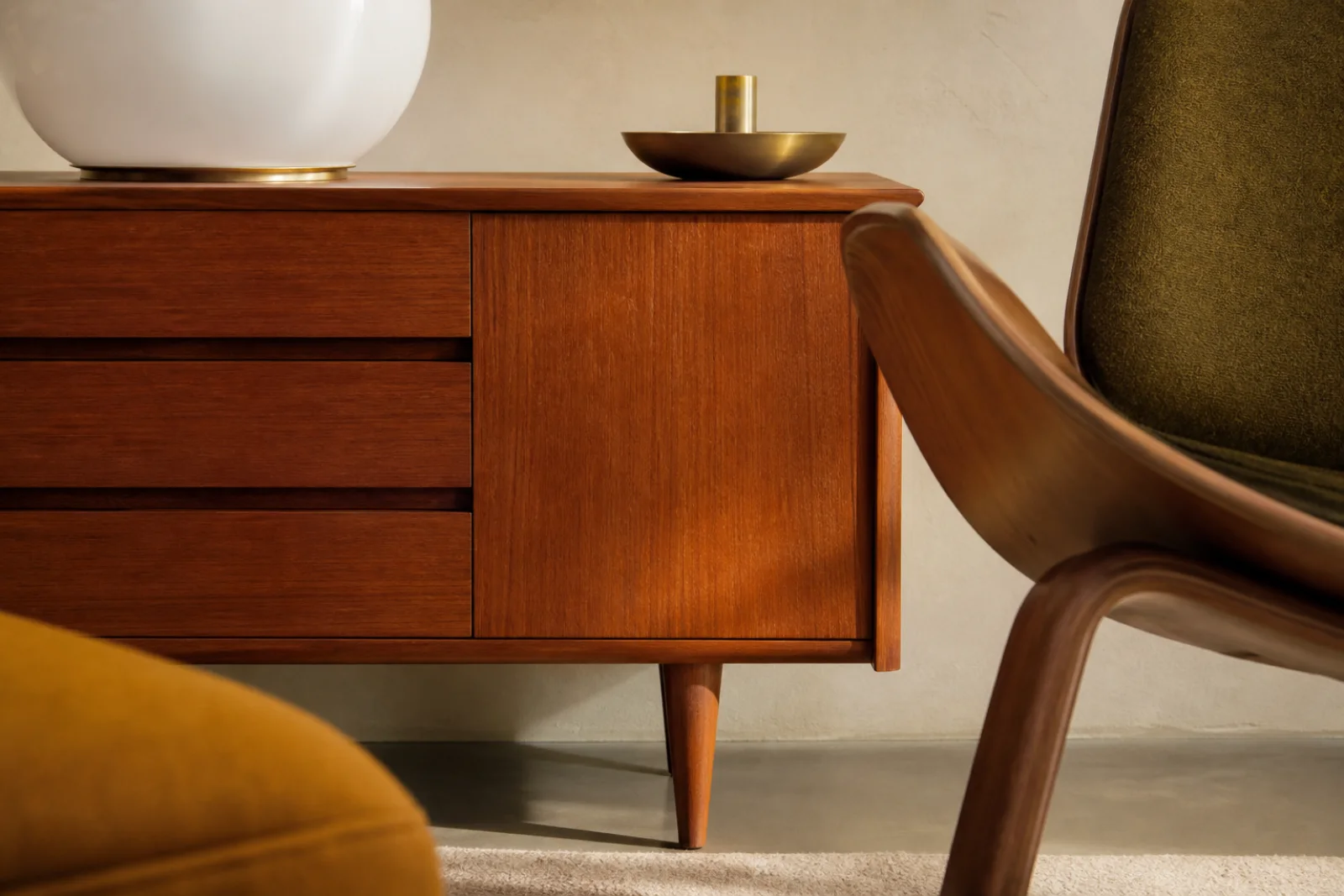
Teak
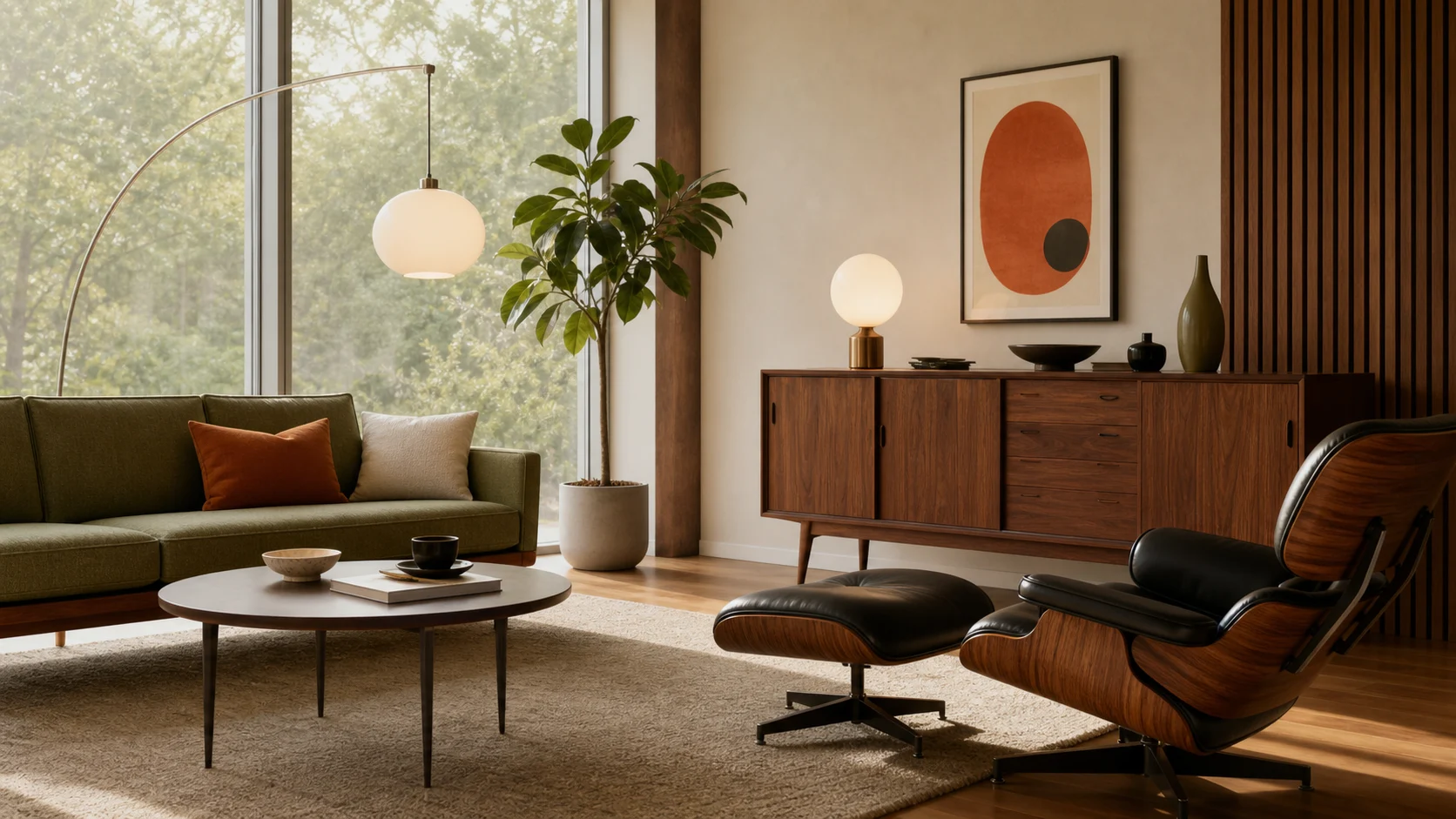
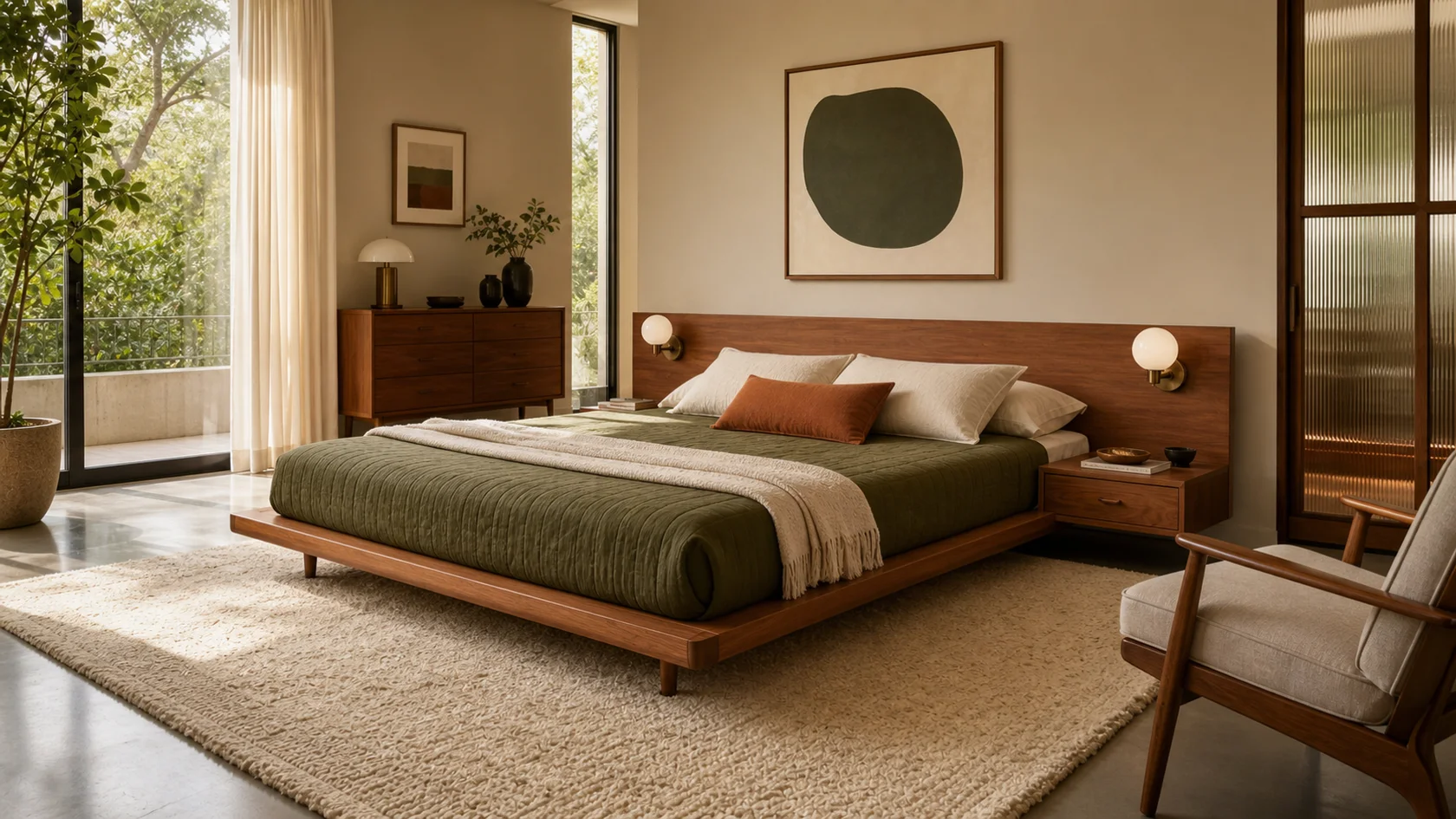
A strong horizontal gesture supplies the period character while contemporary upholstery supports daily use. Preserve a calm bedside zone and a clear path from the door to storage.
Five useful ways to translate mid-century modern into a bedroom, with different footprints, light conditions and storage needs.
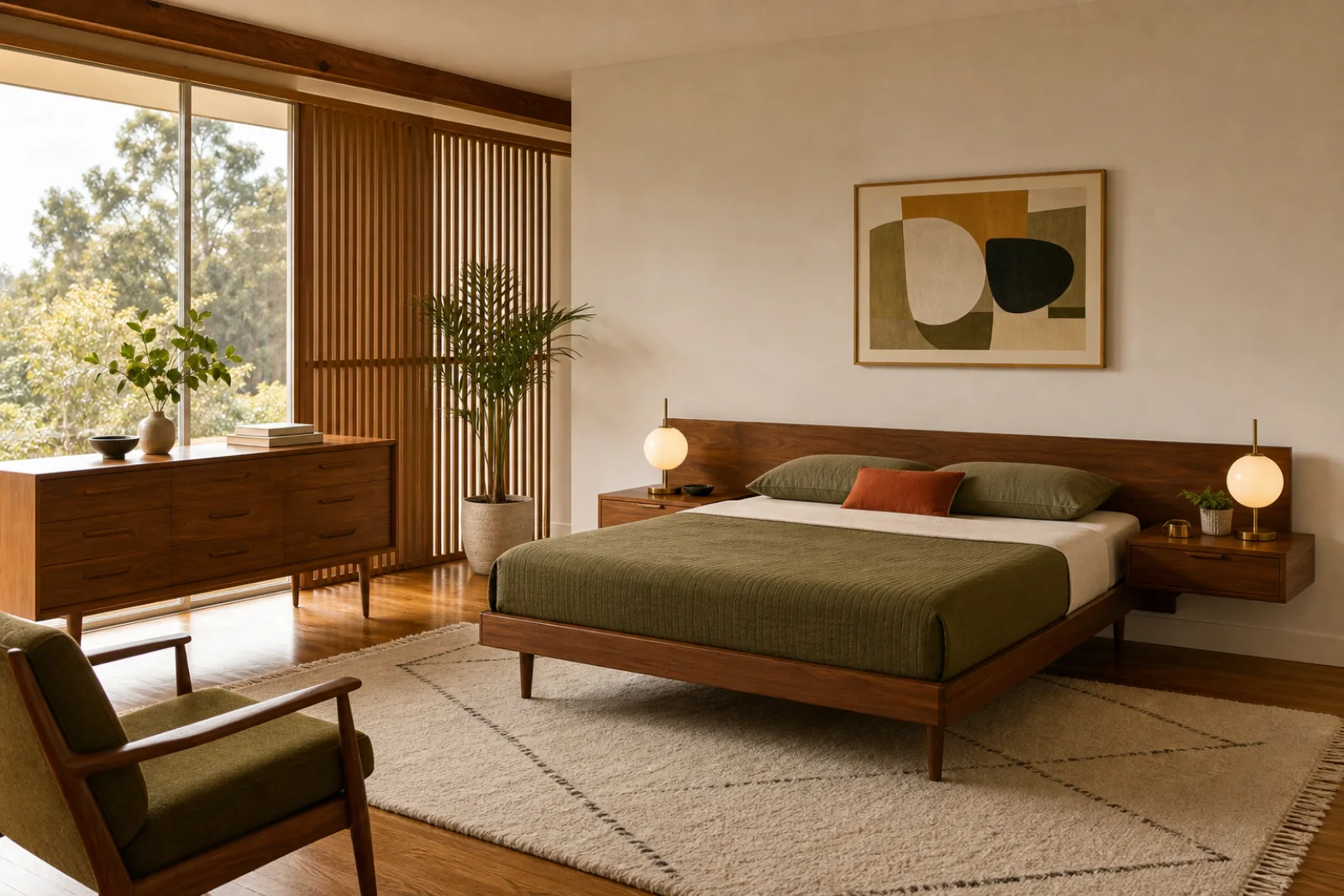
A mid-century modern bedroom works when the style supports rest, low visual stimulation and an unobstructed route around the bed. Mid-Century Modern combines low horizontal furniture, warm timber and optimistic color with present-day comfort and storage.
Use one or two period signals per room and leave enough visual rest that the interior feels current rather than staged as a set. The five variations below change the plan and architecture, not simply the camera angle or accessory color.
Use these examples to choose the version of the style that fits your architecture, light and square footage.
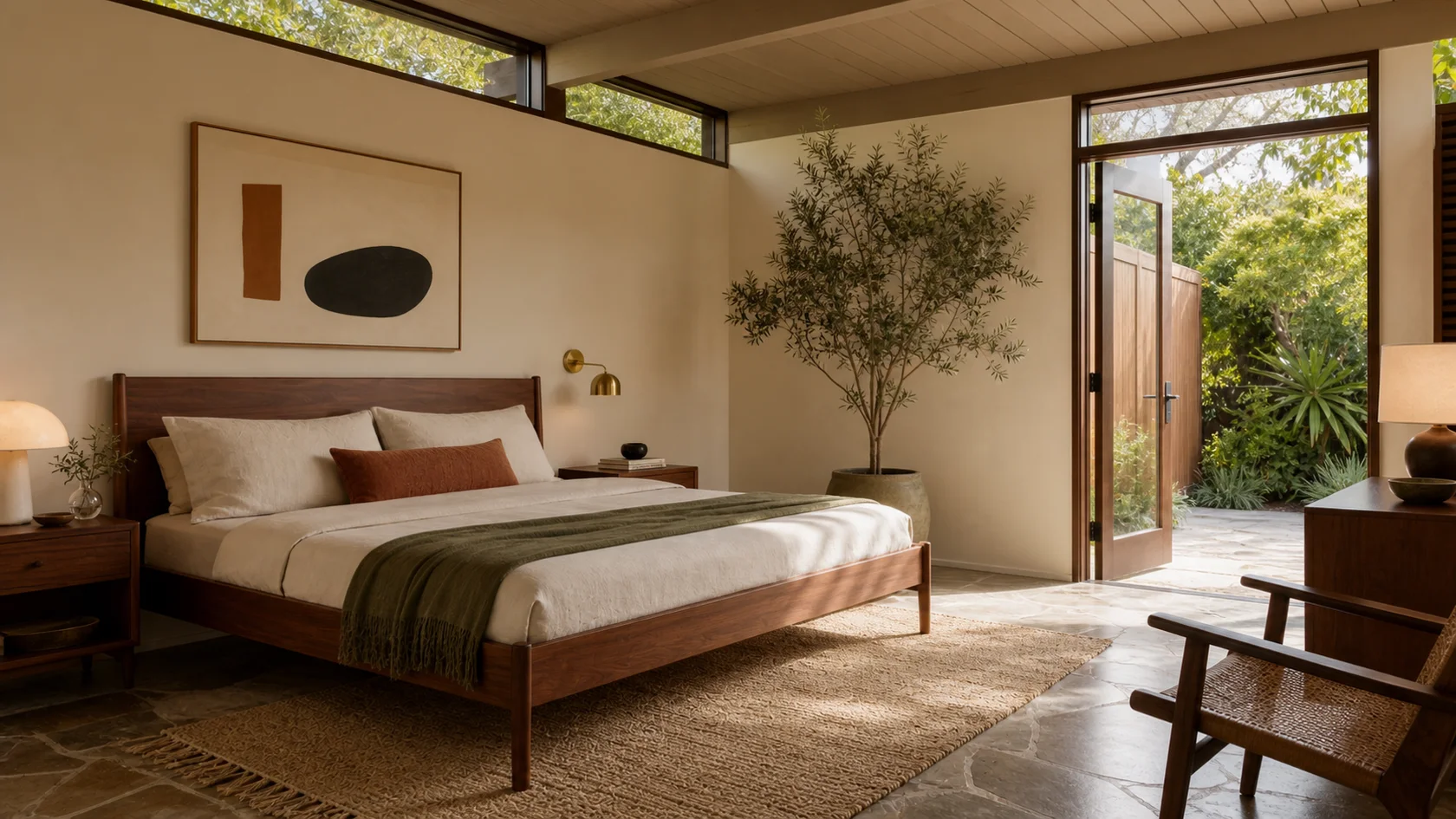
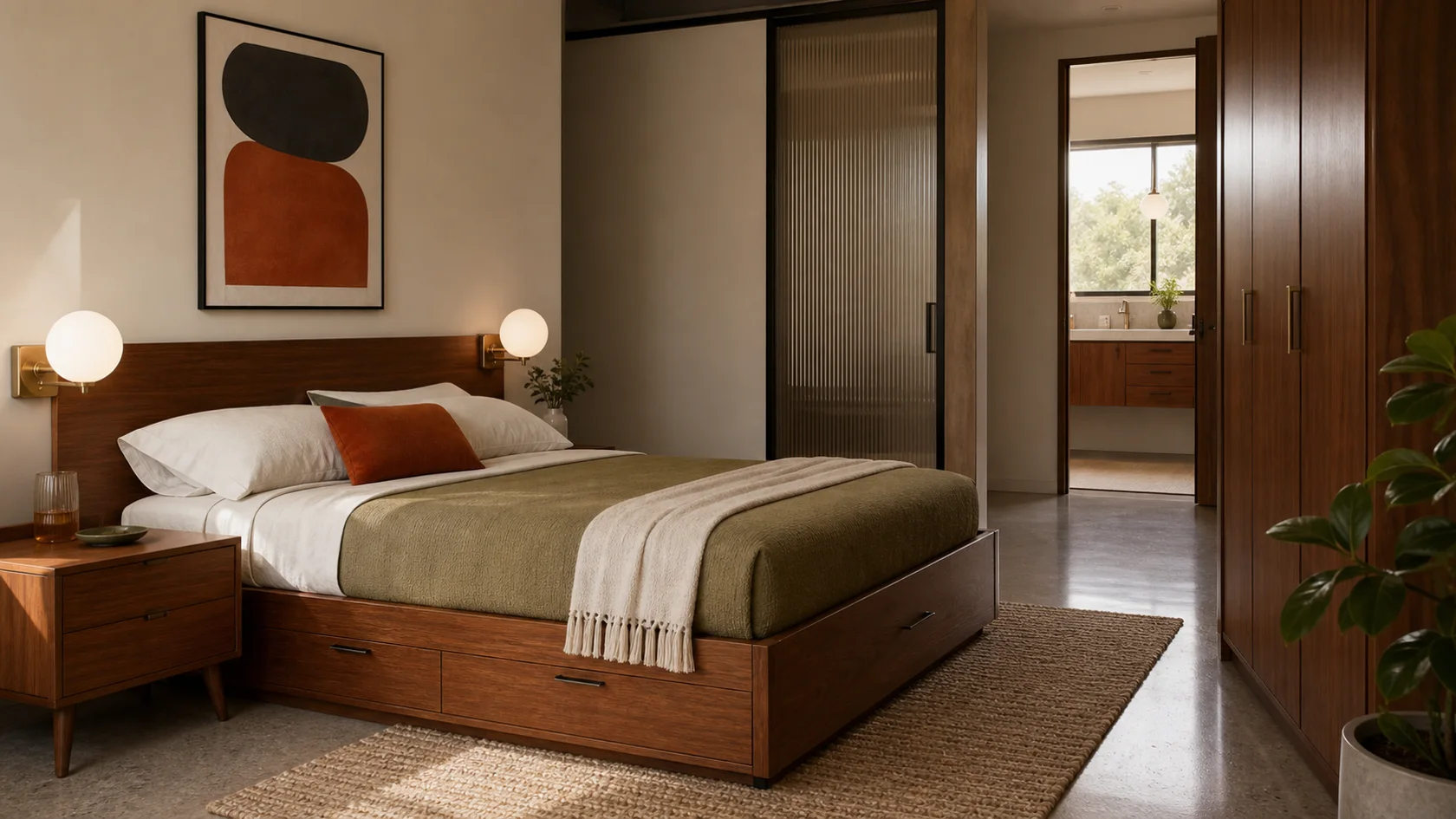
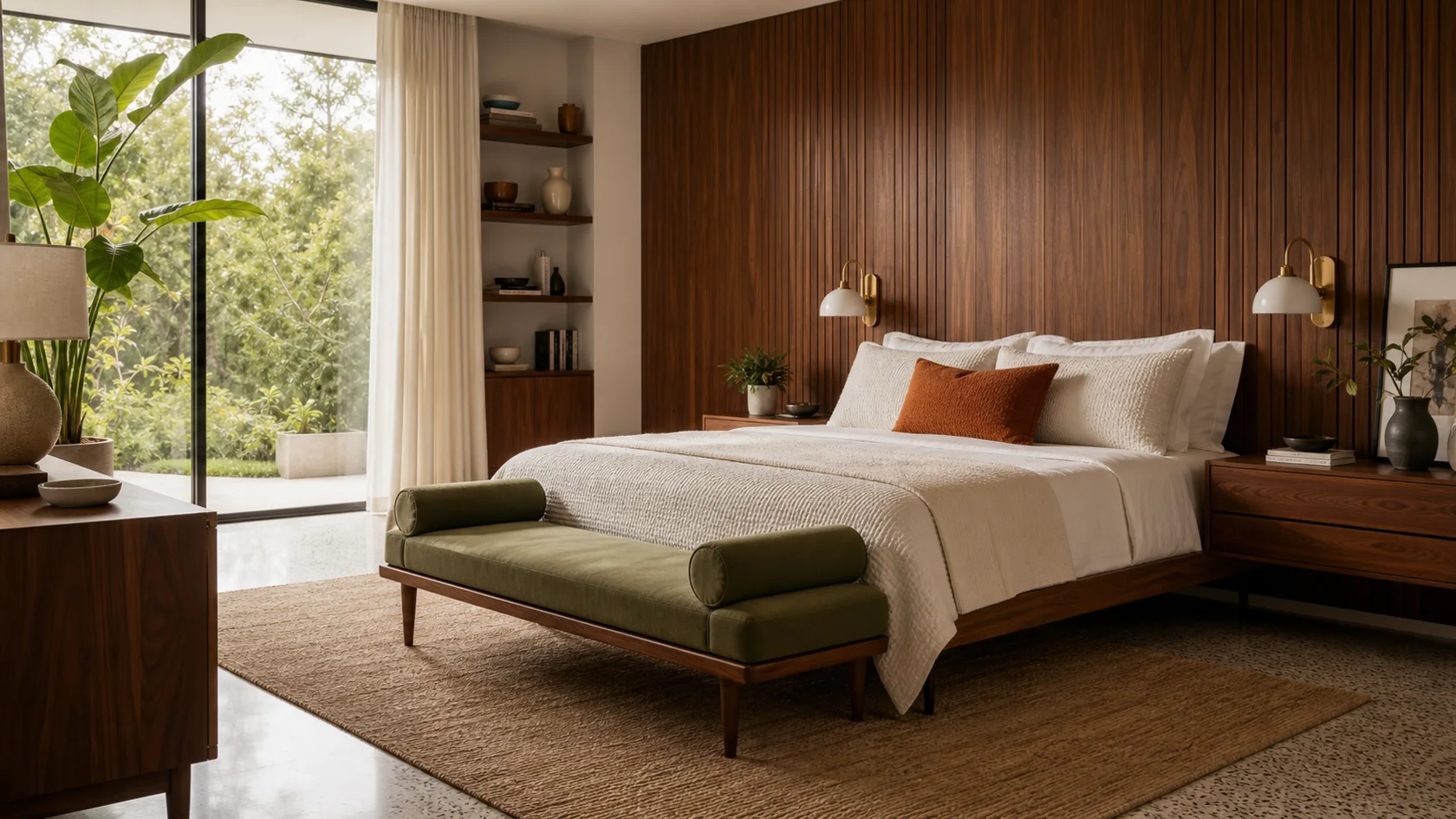
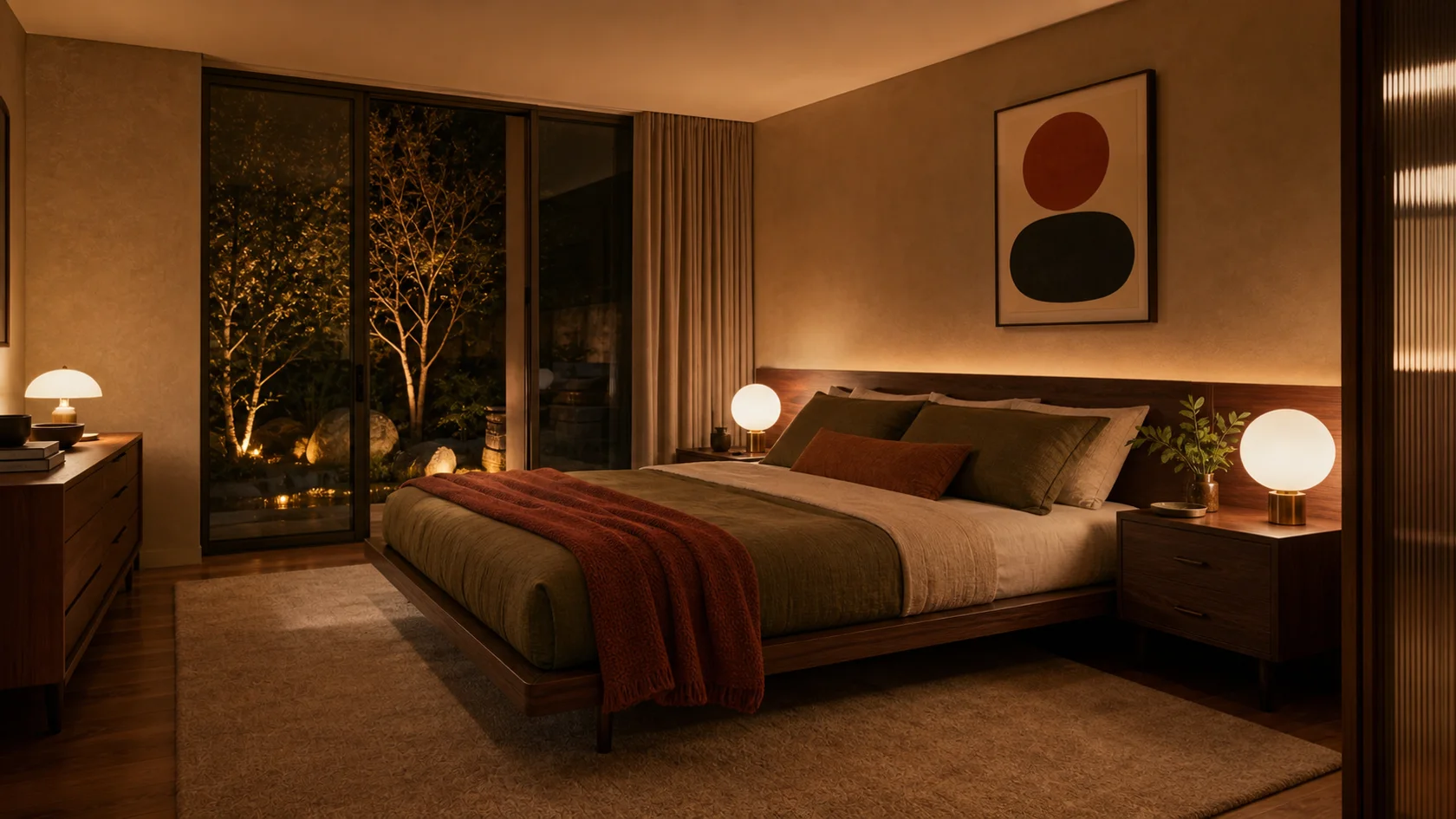
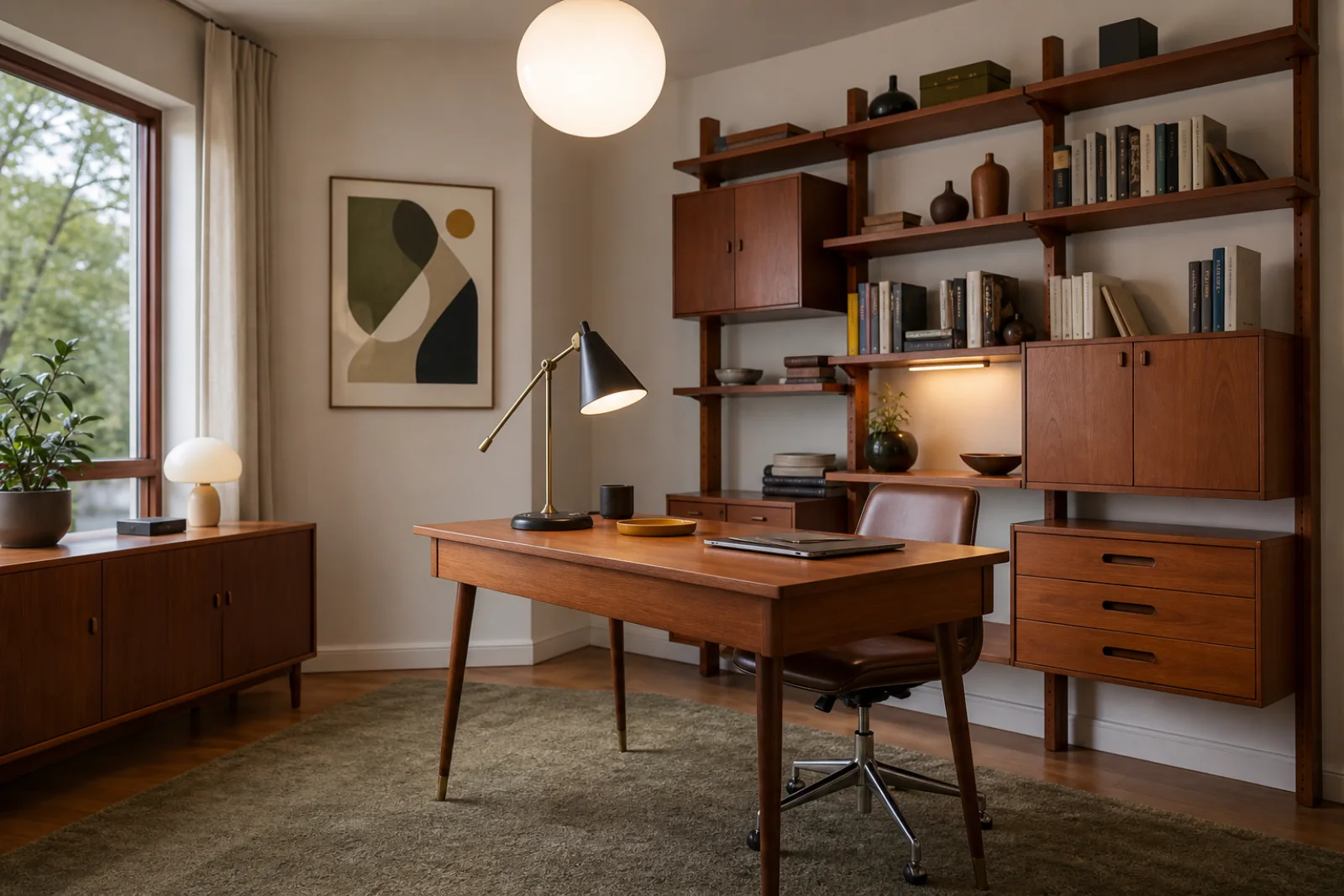
Use the style where it helps the room work: seating, circulation, focal point and material balance.
Place the headboard away from the busiest doorway when possible and preserve a clear approach on both sides.
A flush wardrobe or one resolved chest is calmer than several unrelated storage pieces.
Use bedside and concealed light below eye level instead of relying on a bright central ceiling fixture.
Prioritize breathable bedding, a tactile rug and curtains before decorative objects.
Start with cream and timber, then choose one earthy warm accent and one smaller cool counterpoint. The room should feel collected, not color-coded by decade.
A soft background that allows warm timber and stronger period colors to remain clear.
The orange-brown timber note associated with many Scandinavian and British casegoods of the era.
Works on wool upholstery, curtains or one cabinet front without feeling overly bright.
A compact warm accent for a chair, textile, ceramic or abstract artwork.
A cooler counterpoint that prevents walnut, rust and mustard from becoming monotonous.
Walnut or teak provides the dominant warm structure.
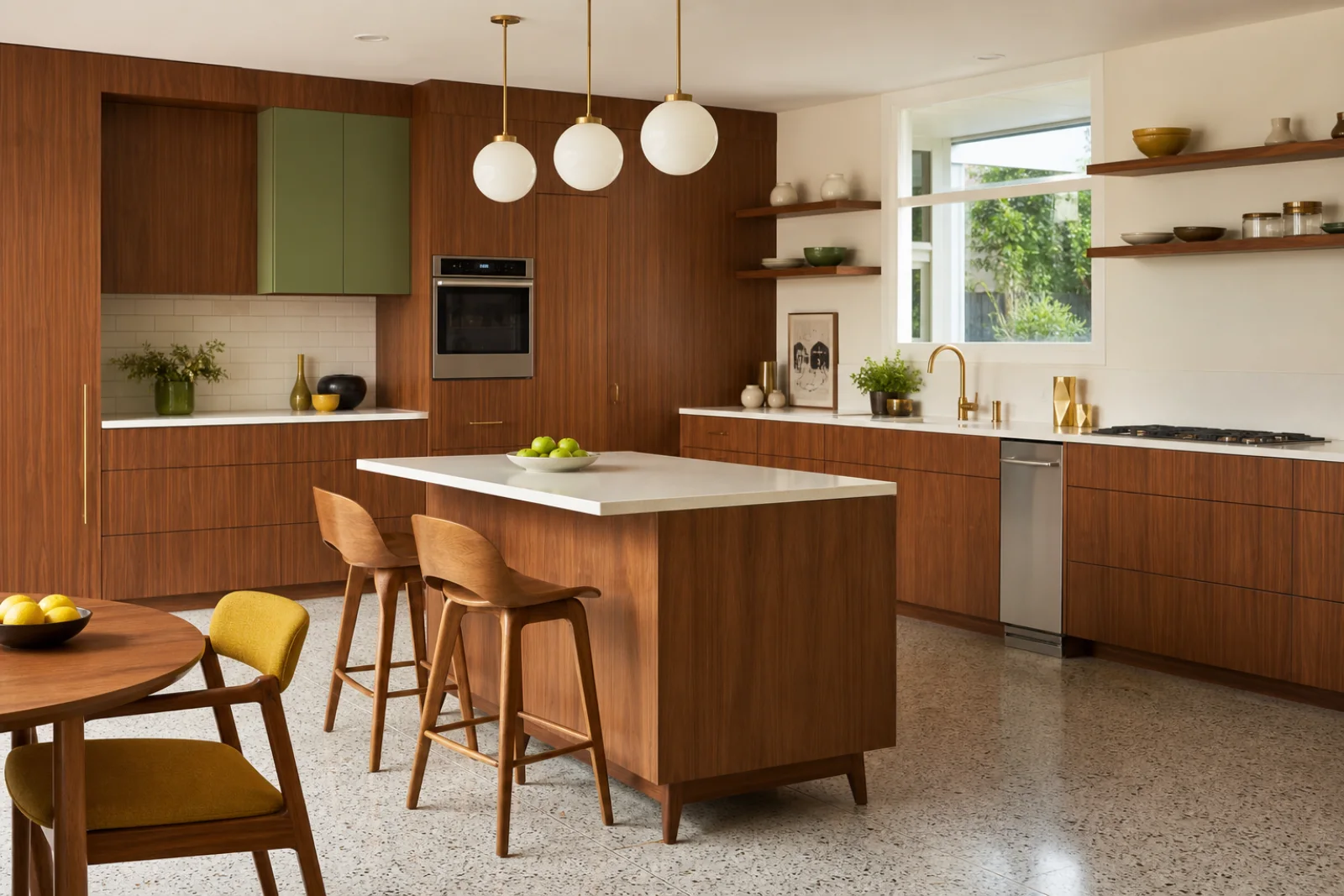
Cream plaster, stone or terrazzo keeps the room bright.
Olive, rust or ochre should lead in one upholstery or joinery plane.
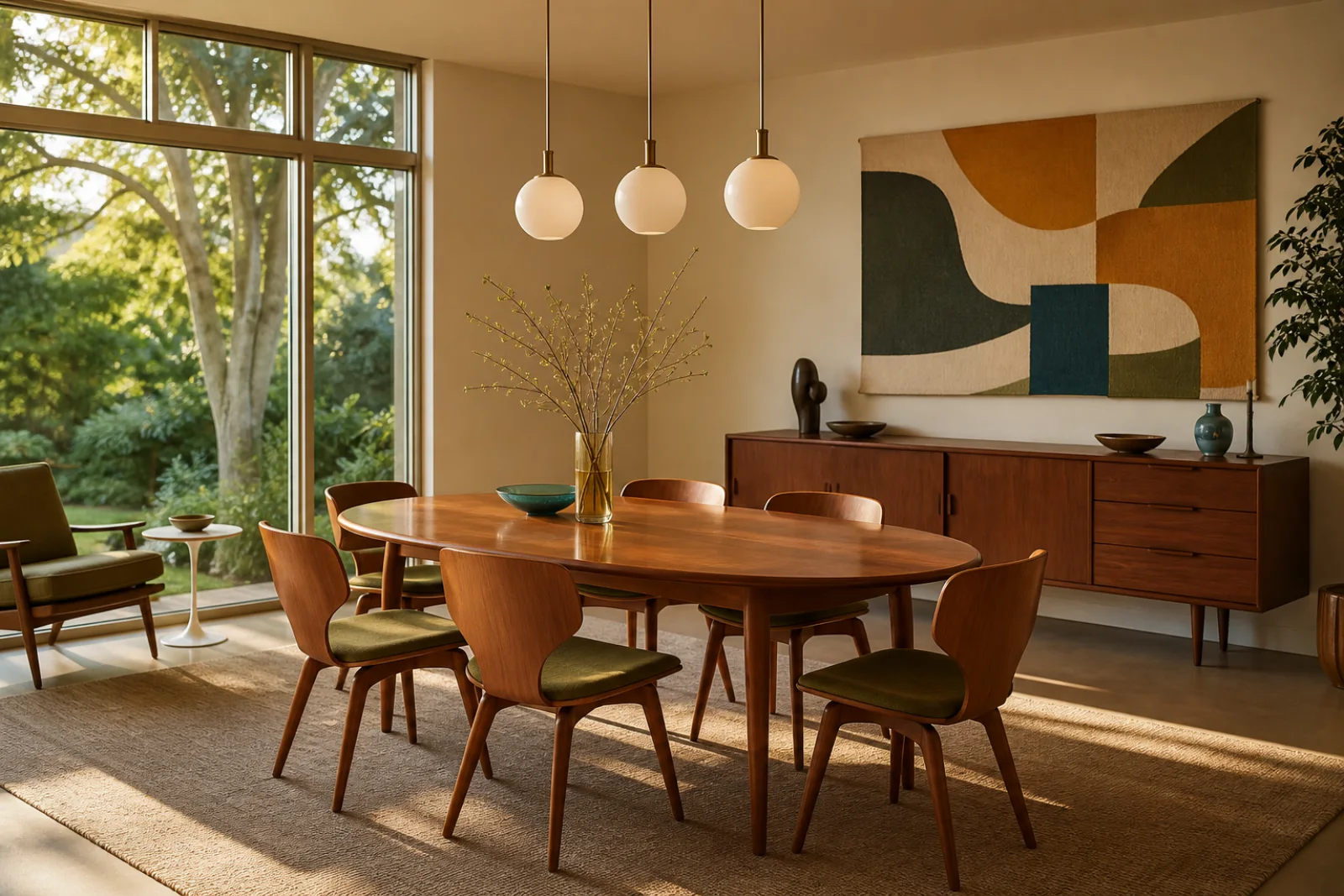
Black and brass belong on slim legs, frames and globe-light fittings.
For this room, a few strong choices can carry the style better than adding more decor.
Choose the main bed and headboard for real comfort and scale; its silhouette should carry the room before smaller styling arrives.
Use one or two period signals per room and leave enough visual rest that the interior feels current rather than staged as a set.
Use one or two period signals per room and leave enough visual rest that the interior feels current rather than staged as a set.
Use one or two period signals per room and leave enough visual rest that the interior feels current rather than staged as a set.
Use these checks to keep the mid-century modern character clear without compromising how the bedroom works.
Use ledges or compact tables that preserve the route around the bed.
Repeat a narrow family of tones and let weave, not pattern count, create depth.
Layer low bedside light with a dim ambient source for a calmer evening transition.