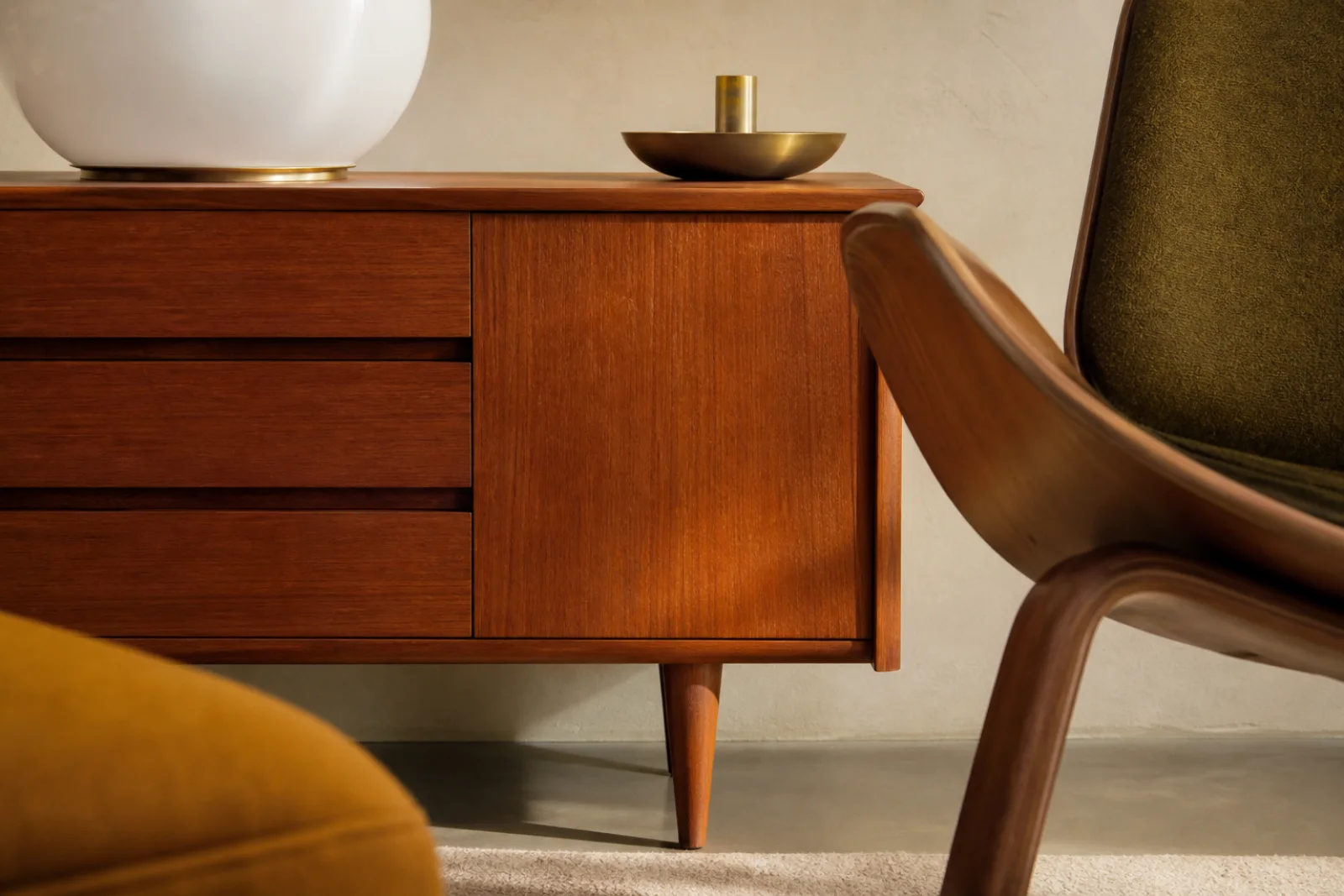
Low teak sideboard
Look for a long body, restrained pulls and legs that feel proportional rather than fragile.
Postwar optimism expressed through warm timber, light-footed furniture, practical storage and organic forms made for everyday life.
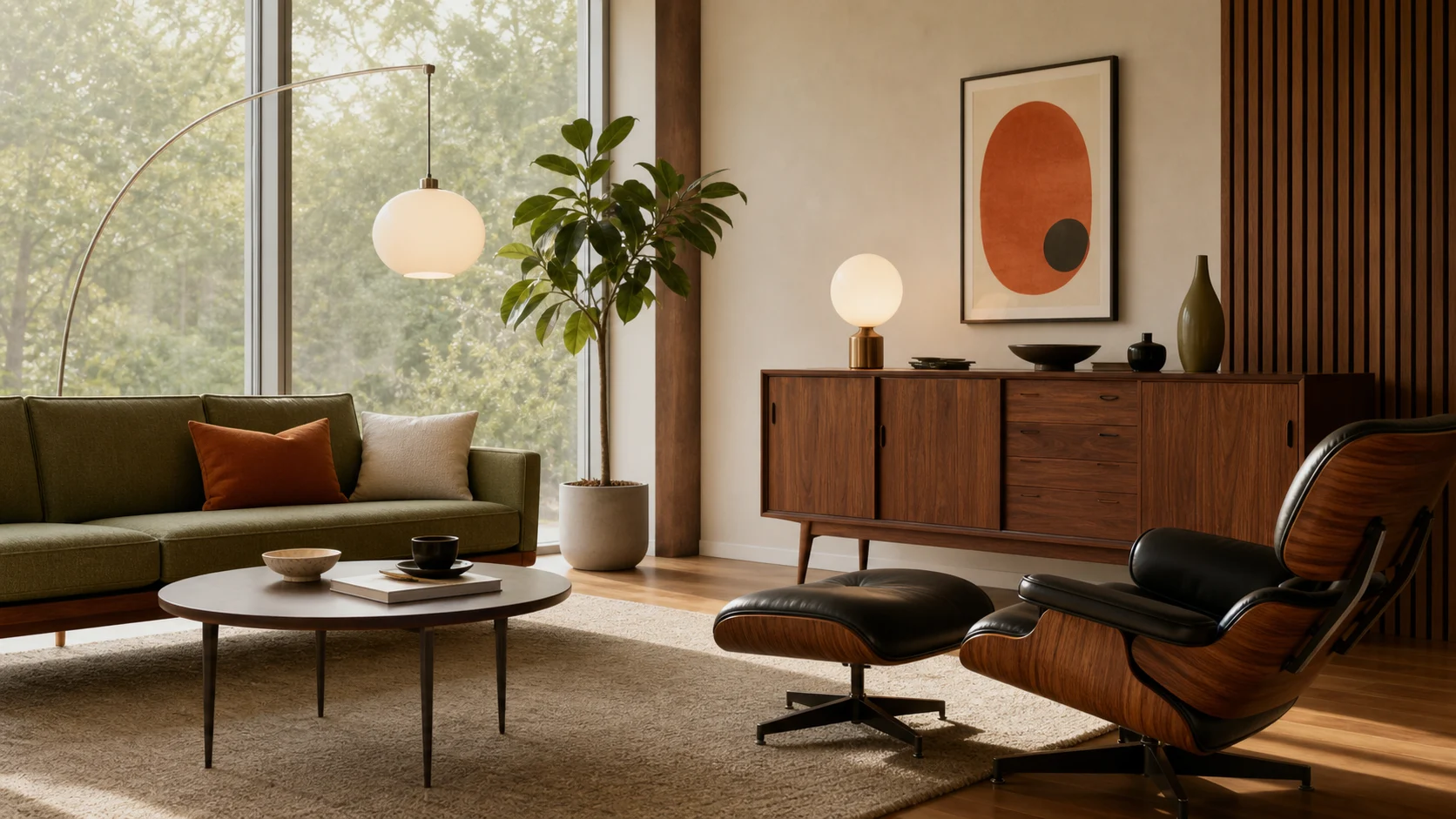
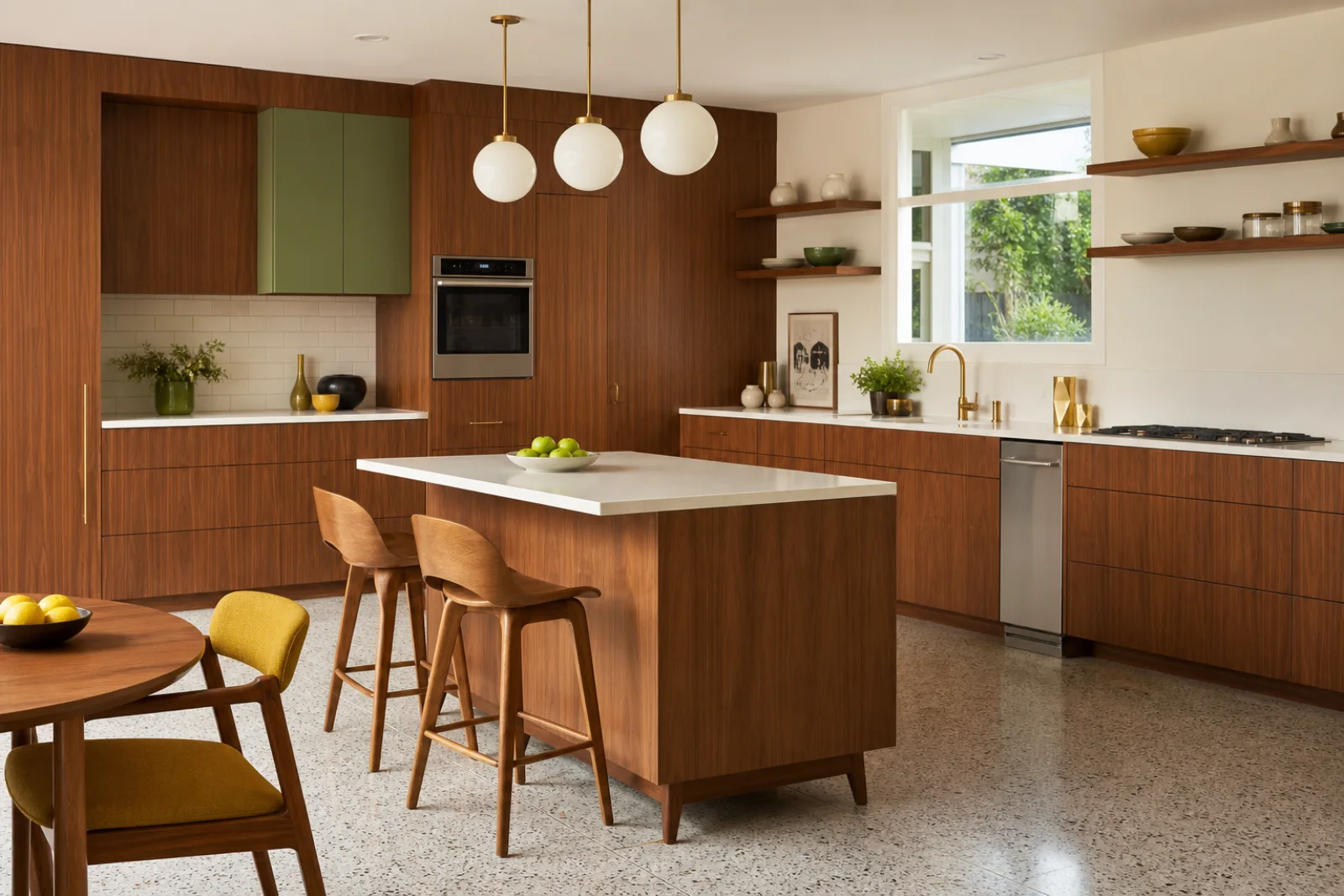
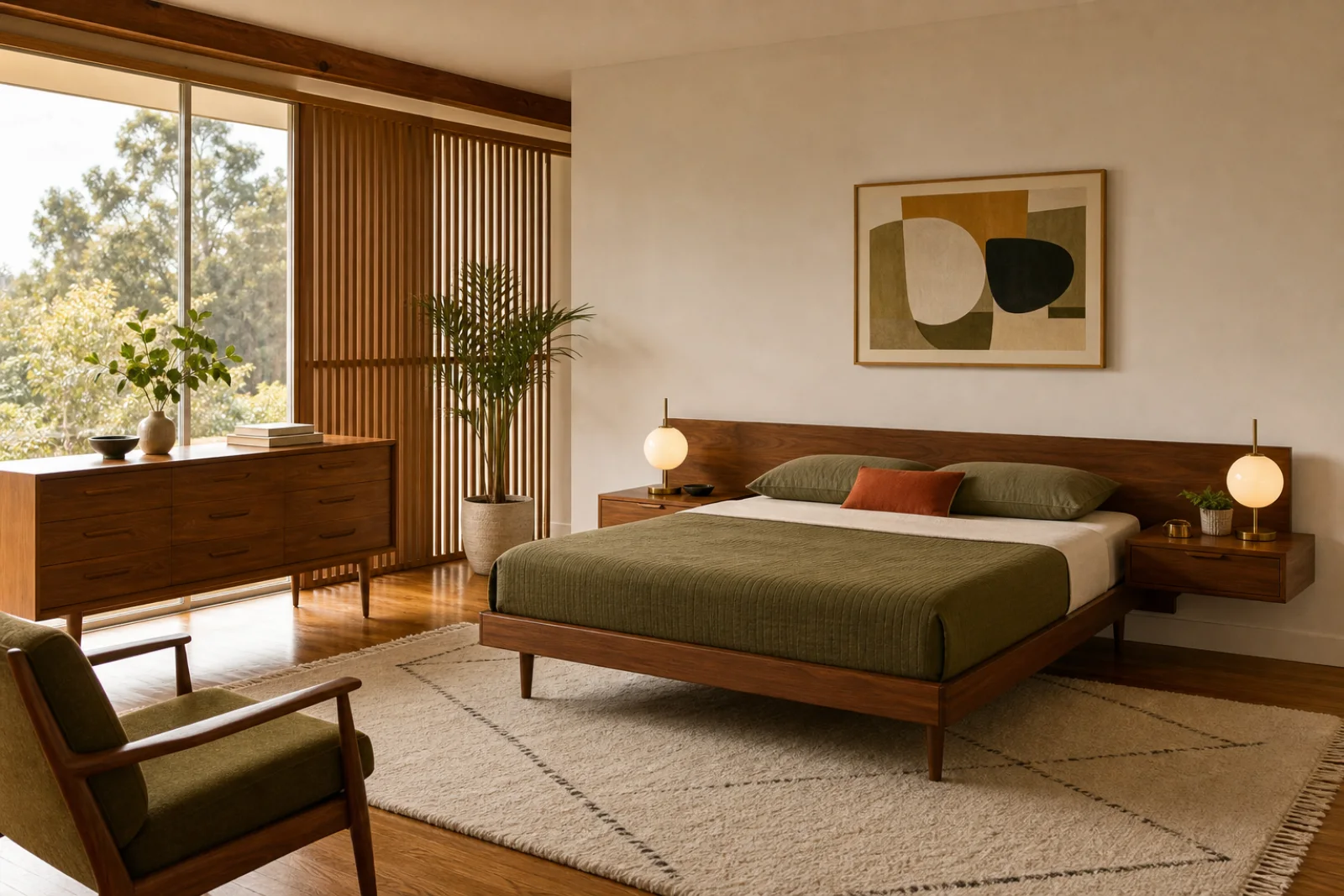
Mid-century modern describes a postwar design movement, most strongly associated with the late 1940s through the 1960s. Furniture became lighter, simpler and easier to manufacture, while designers explored molded plywood, fiberglass, tubular metal and warm woods such as teak and walnut. The result was practical design with a distinctly optimistic character.
Unlike the broader modern style, mid-century modern is recognized most quickly through its furniture: tapered legs, low cabinets, compact lounge chairs, gentle organic curves and modular wall systems. The current version works best when these period signals are used selectively rather than turning the home into a complete historical set.
Tapered legs and slim frames expose more floor, making substantial storage feel lighter.
Rectangular cabinets are balanced by curved plywood, globe lights and rounded upholstery.
Olive, ochre, rust and muted blue animate teak and walnut without overpowering them.
Tables, beds and cabinets narrow toward the floor, creating a recognizable light-footed silhouette.
Low sideboards, dressers and wall units use clean fronts, subtle pulls and expressive grain.
Plywood shells, curved backs and compact lounge forms soften otherwise rectilinear rooms.
Opal glass spheres and directional metal shades bring period character through useful illumination.
Pair one sculptural lounge chair with a quieter sofa and low teak storage.
Use an integrated walnut headboard and globe lights instead of themed accessories.
Curved plywood chairs add softness around a simple oval or rectangular table.
A modular wall unit keeps books, files and display within one period-appropriate system.
Combine flat wood fronts with pale counters and one olive or ochre cabinet accent.
A leggy credenza provides storage without visually narrowing the passage.
Start with cream and timber, then choose one earthy warm accent and one smaller cool counterpoint. The room should feel collected, not color-coded by decade.
A soft background that allows warm timber and stronger period colors to remain clear.
The orange-brown timber note associated with many Scandinavian and British casegoods of the era.
Works on wool upholstery, curtains or one cabinet front without feeling overly bright.
A compact warm accent for a chair, textile, ceramic or abstract artwork.
A cooler counterpoint that prevents walnut, rust and mustard from becoming monotonous.
Straight grain and warm color suit long sideboards, wall systems and compact desks.
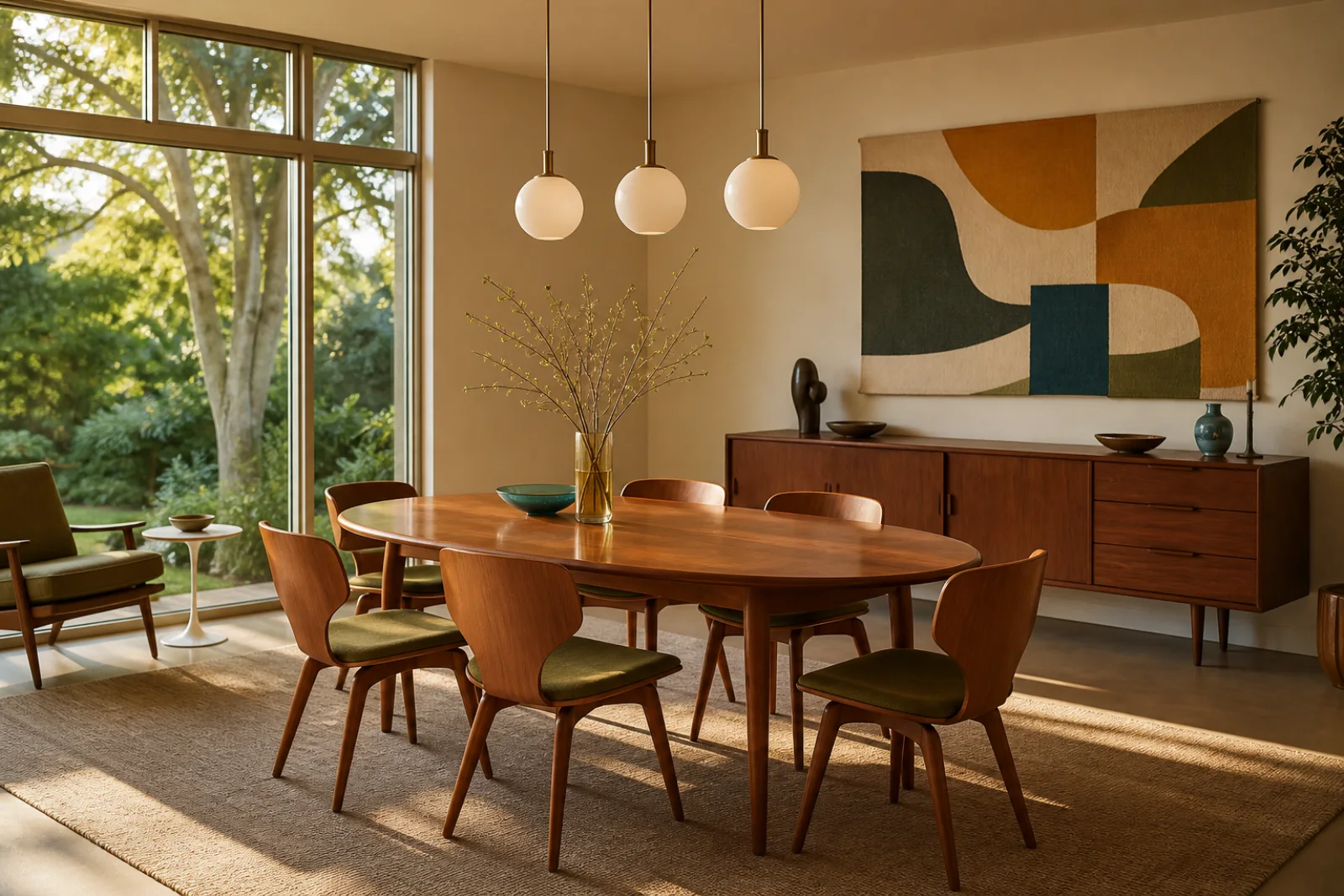
Curved shells create ergonomic forms with less visual weight than thick upholstery.
Olive, ochre and oatmeal wool give clean furniture silhouettes a tactile surface.
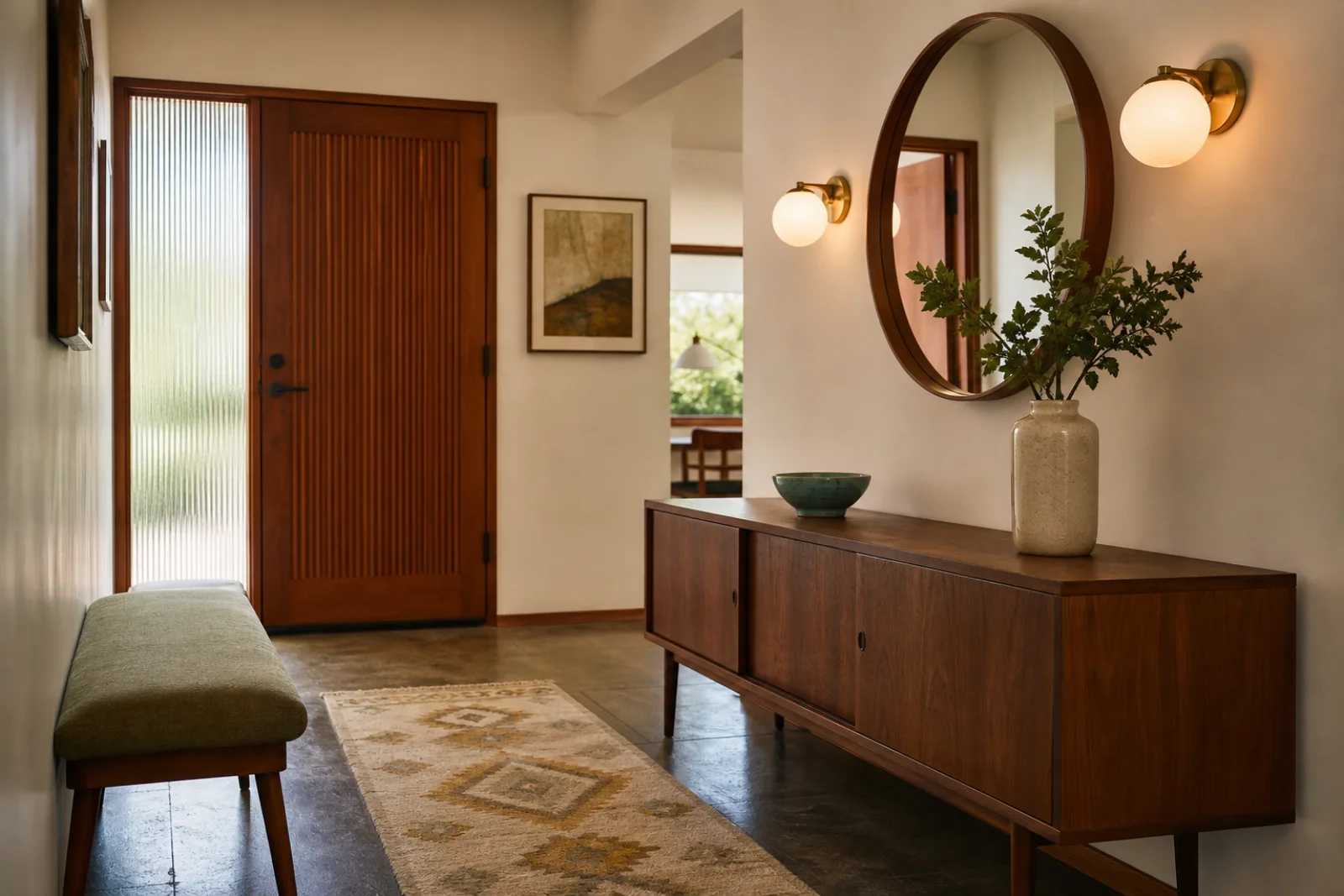
Globe lighting diffuses light while a small brass detail adds period warmth.
Build the room around two or three period signals. Restraint keeps the result architectural rather than nostalgic.
Let teak or walnut dominate; avoid mixing several orange and brown finishes at equal strength.
Combine one rectangular casegood, one curved seat and one globe or cone light.
Use raised furniture selectively so the room feels light, but ground the seating with a generous rug.
Use olive, ochre or muted blue on one substantial textile rather than many novelty objects.
When the room feels wrong, change the underlying decision before adding more decor.
Keep two or three strong period anchors and use quiet contemporary supporting pieces.
Balance teak and walnut with cream, olive, charcoal and a cooler accent.
Remove starbursts and novelty props; let proportion and materials signal the era.
Ground the composition with one sofa, rug or cabinet that has greater visual mass.
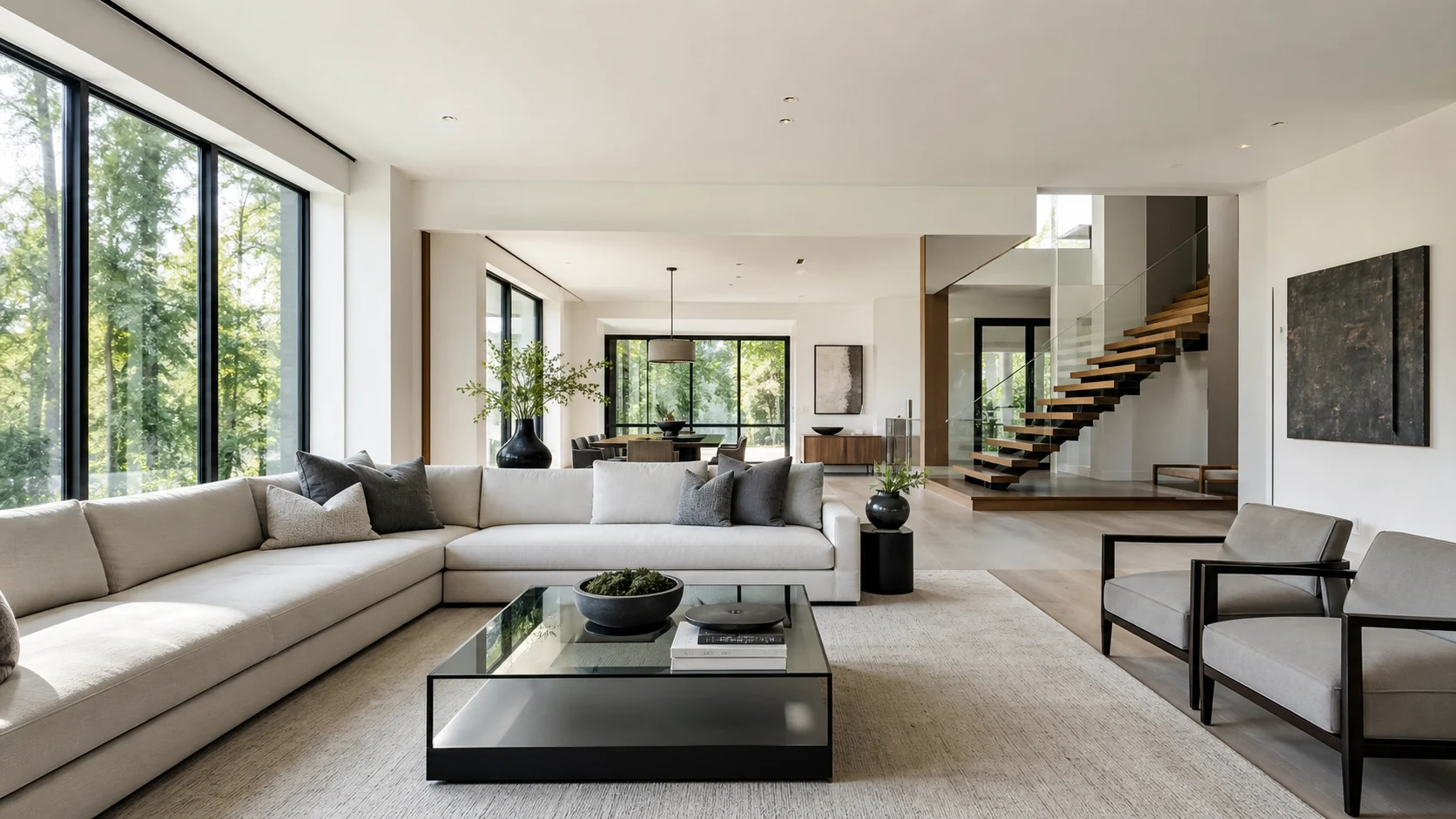
Mid-century modern belongs to the wider modern movement, but it has a more specific time frame and furniture vocabulary. The distinction prevents every clean wood interior from receiving the same label.
Broader, more architectural and less tied to a specific furniture period.
Choose mid-century modern if tapered legs, molded forms and postwar color are central to the room.
Furniture and lighting carry the identity more strongly than the architectural grid.
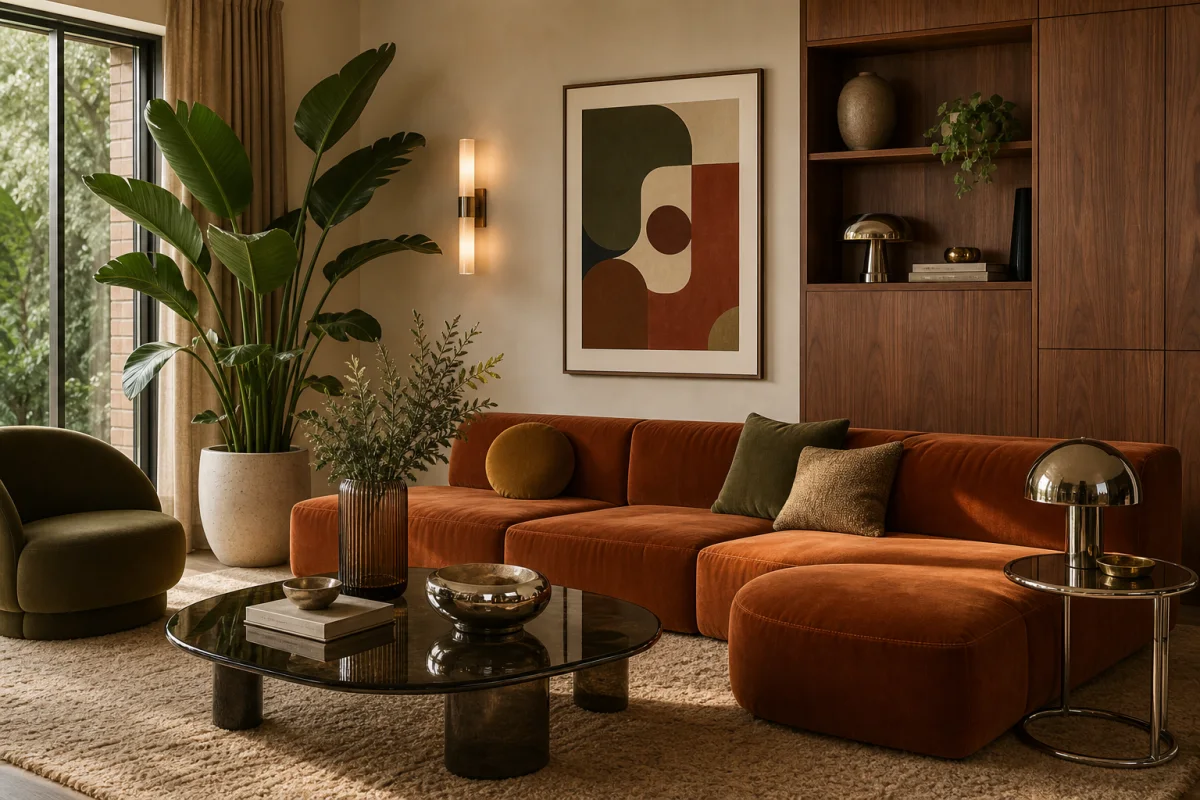
Lower, richer and more expressive through velvet, smoked glass and bolder earth color.
Choose mid-century modern for lighter silhouettes, cleaner timber casegoods and a less lounge-like mood.
Prefer teak, plywood and tapered legs over rust velvet, chrome and deep modular seating.
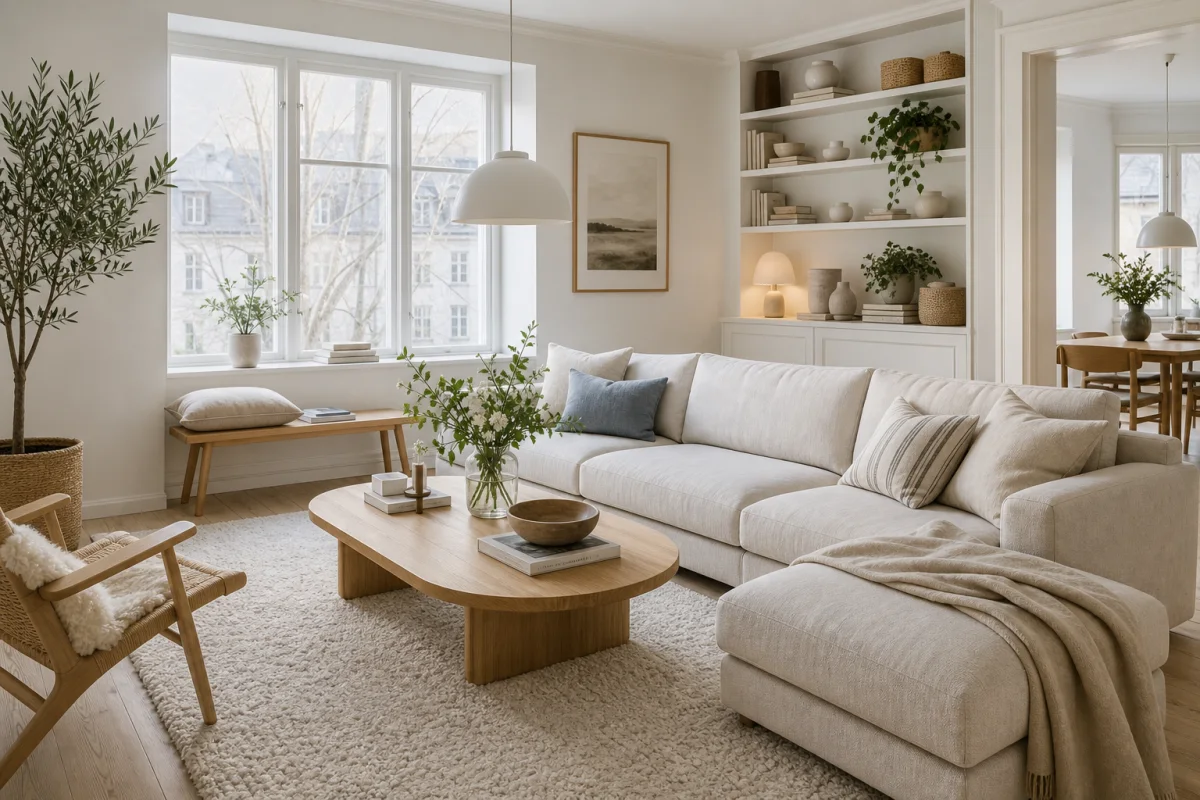
Paler, more casual and more focused on light wood and everyday coziness.
Choose mid-century modern for darker timber, sharper period cues and stronger accent color.
Walnut sideboards, molded chairs and globe lights replace pale pine and informal textiles.
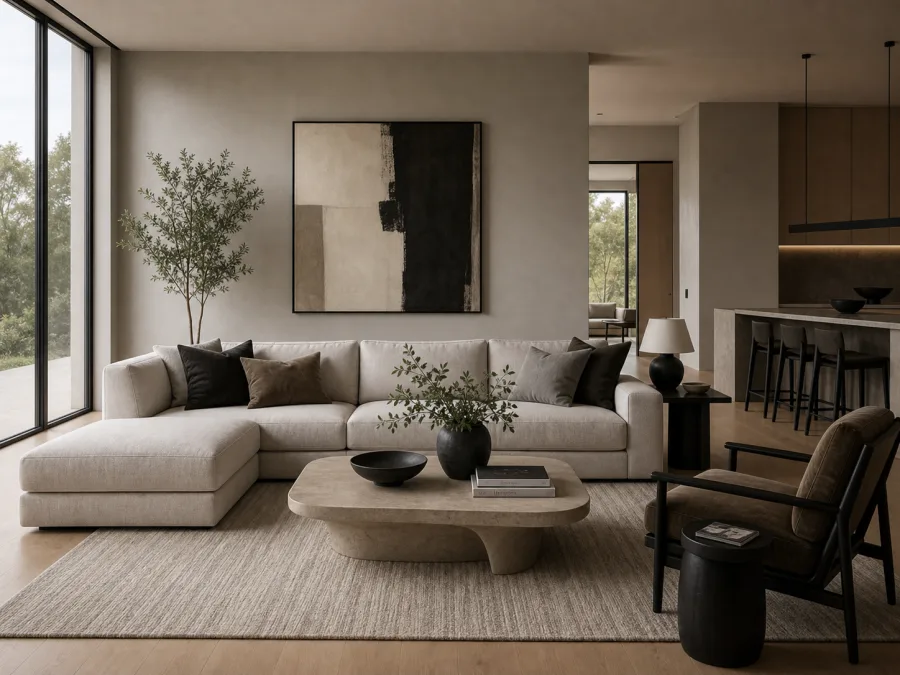
More current, larger in scale and open to trend-driven curves and luxury finishes.
Choose mid-century modern when compact proportions and recognizable postwar forms feel more personal.
Use leggy casegoods and period lighting rather than oversized sculptural furniture.
A convincing room does not require famous originals. Look for proportion, construction and material cues rather than designer-name replicas.
Look for a long body, restrained pulls and legs that feel proportional rather than fragile.
An integrated headboard and floating nightstands deliver the period language without extra decor.
The curved shell should support the back while keeping the dining area visually light.
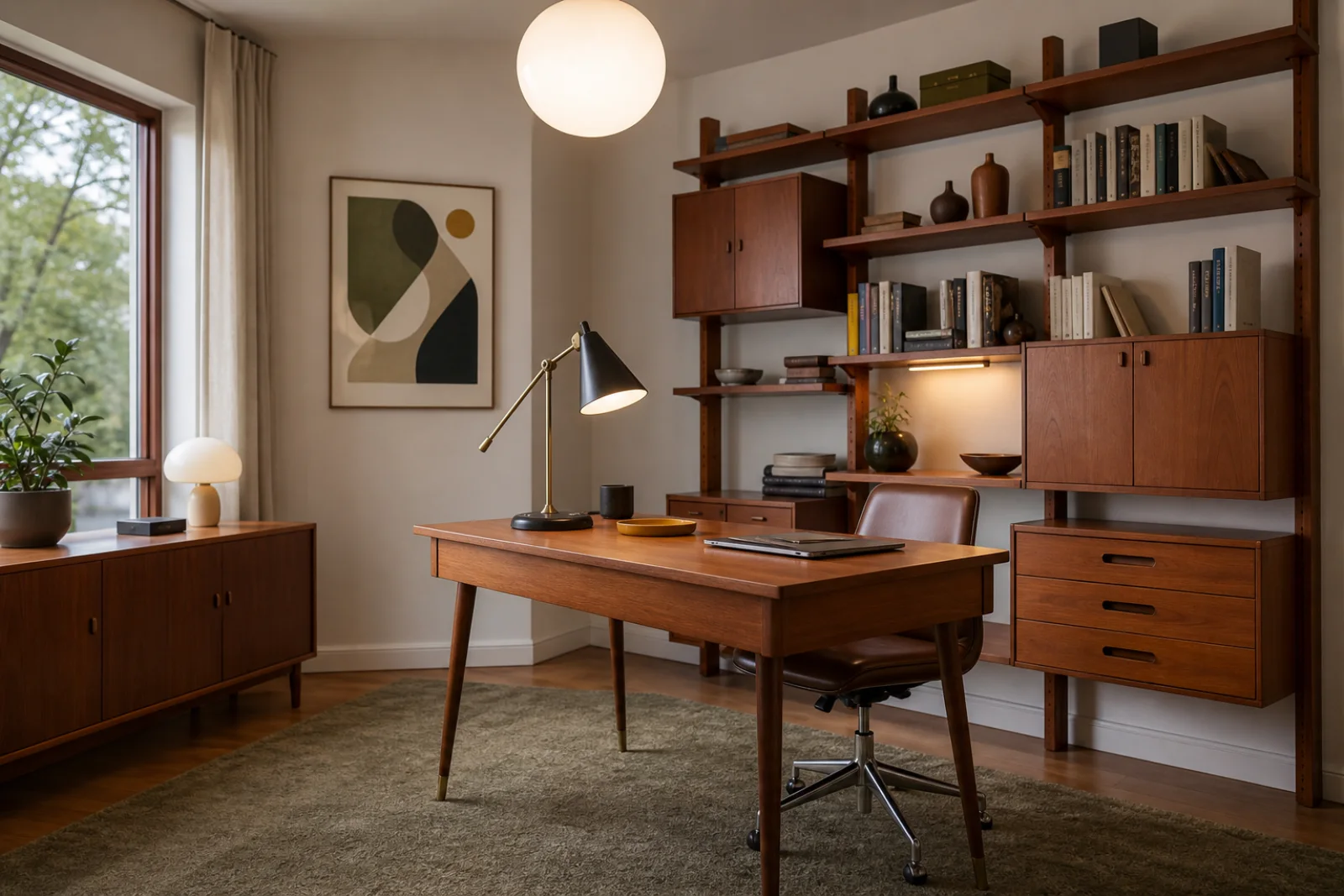
Adjustable shelves and small cabinets combine display, books and practical storage.
A simple white globe introduces the era more quietly than a novelty fixture.
Sliding doors hide daily clutter while visible floor keeps a narrow hall open.