01
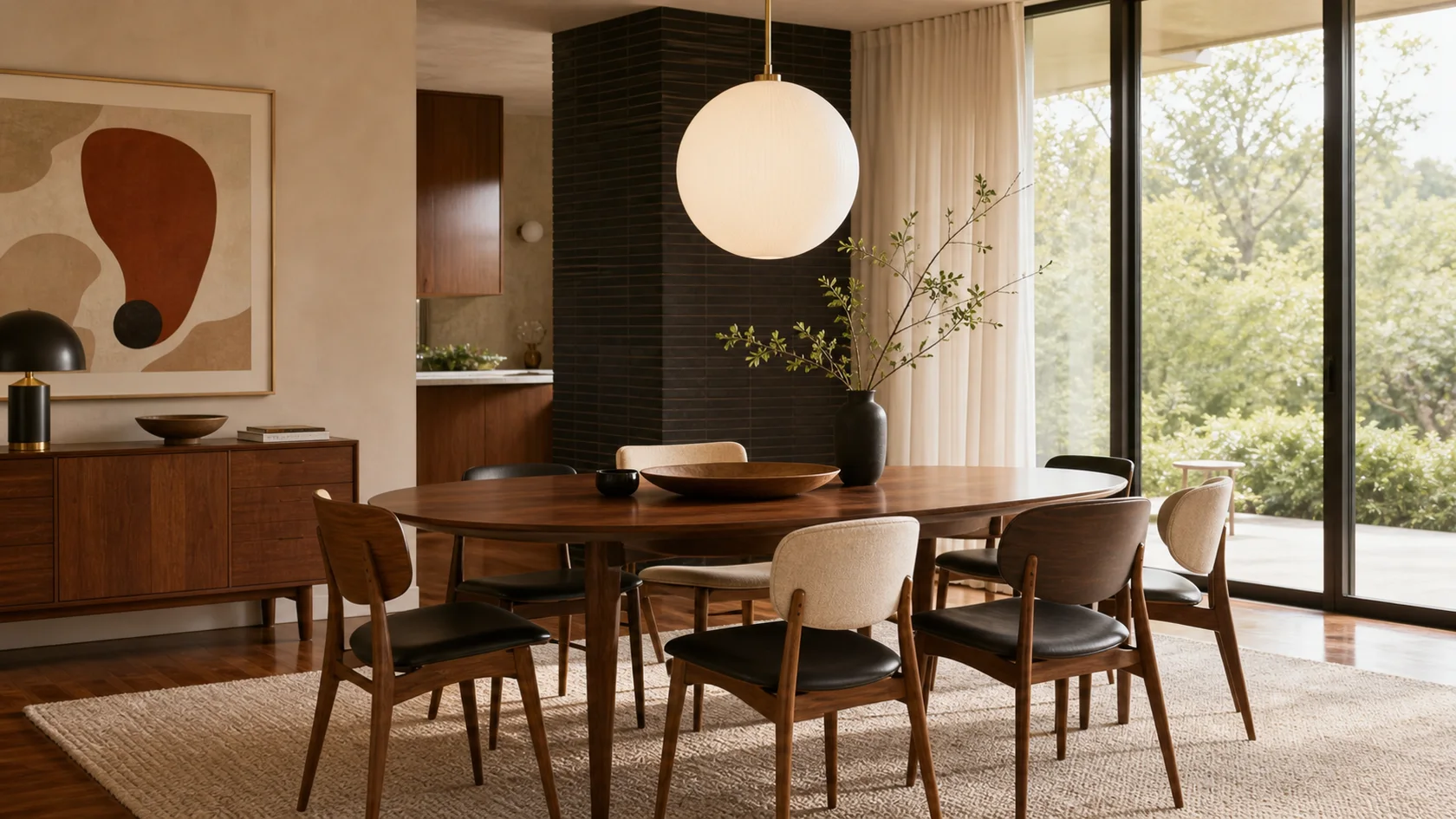
Oval
A strong horizontal gesture supplies the period character while contemporary upholstery supports daily use. Allow occupied chairs to pull out comfortably and keep the pendant aligned with the tabletop.
Five useful ways to translate mid-century modern into a dining room, with different footprints, light conditions and storage needs.
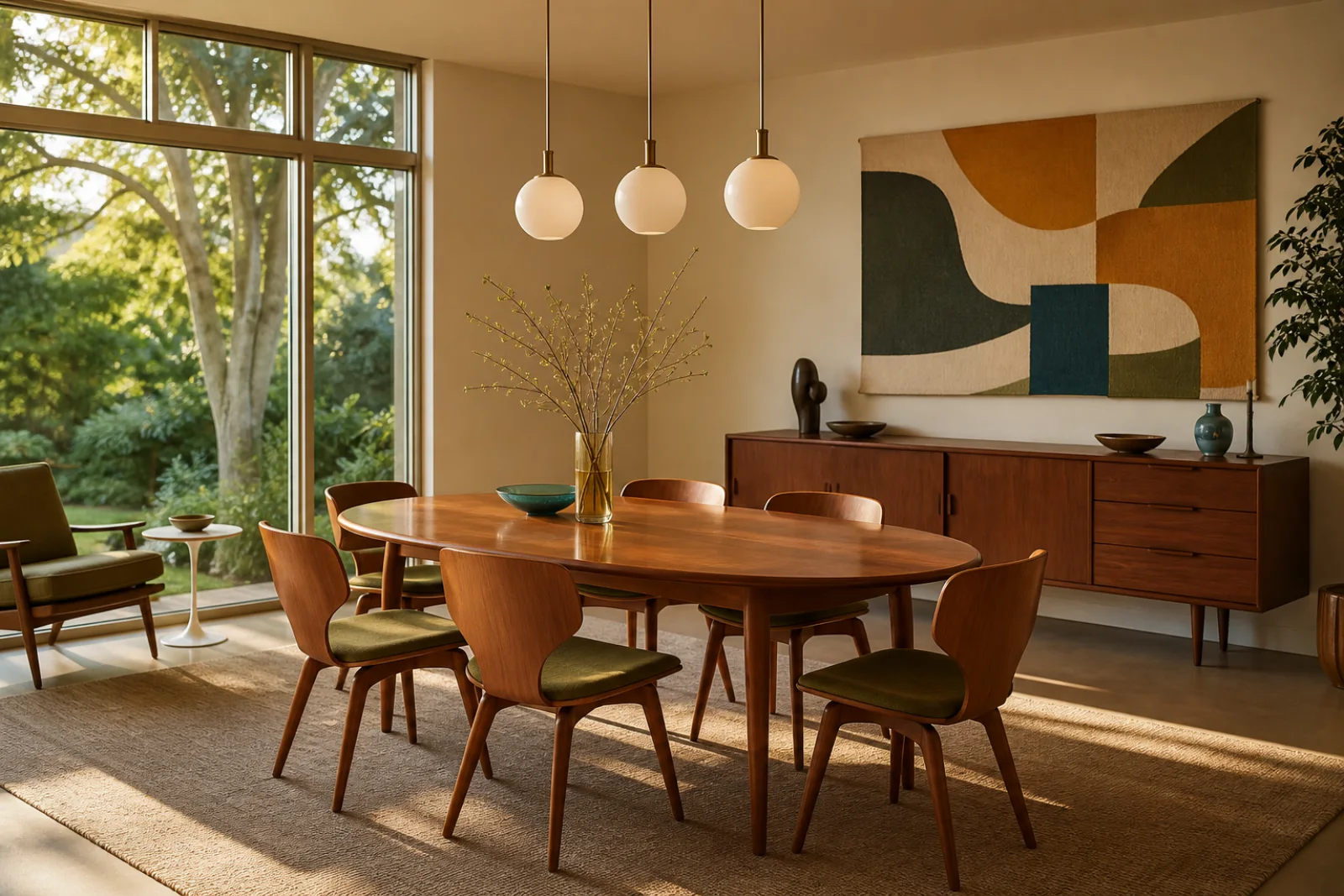
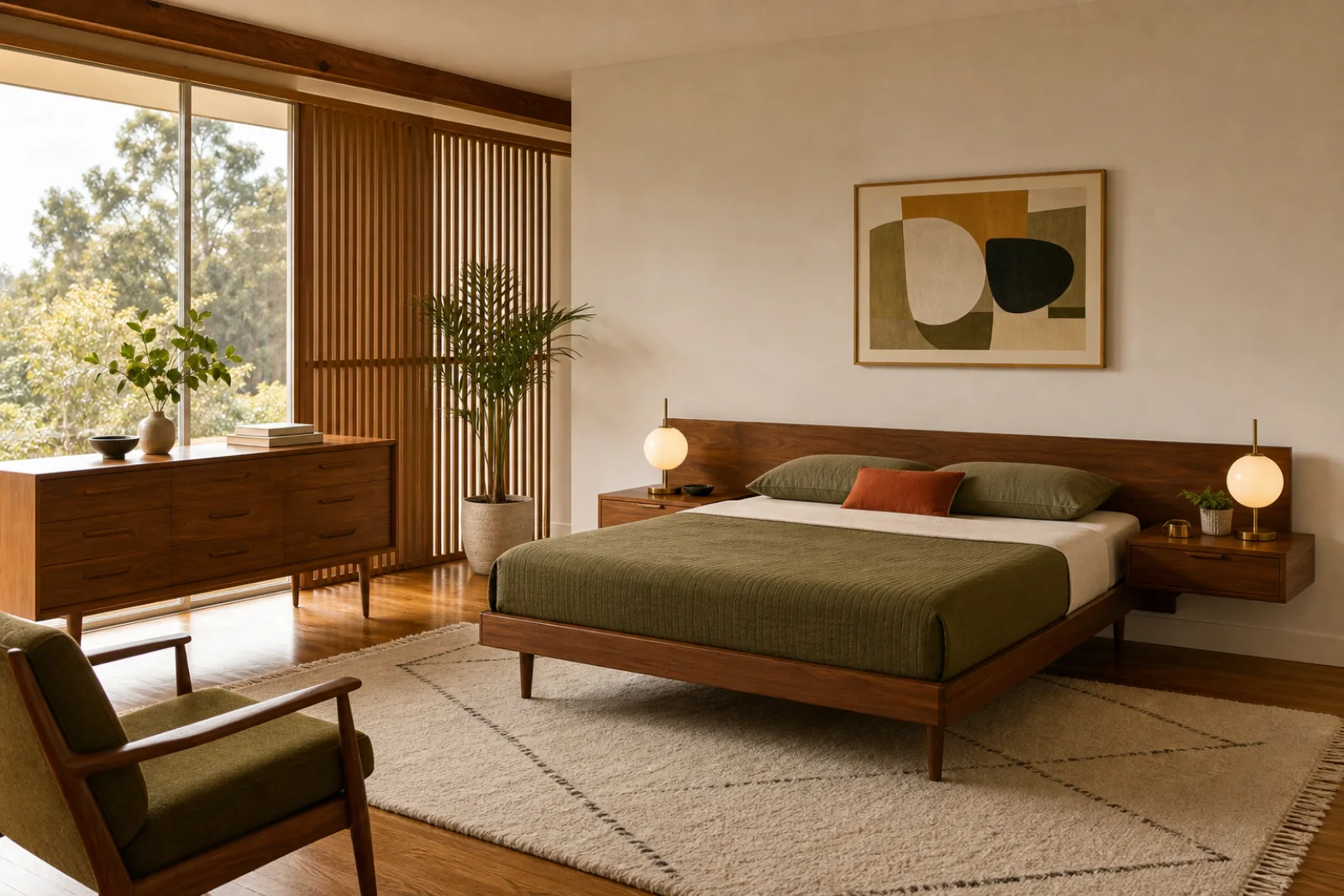
A mid-century modern dining room works when the style supports comfortable gatherings, chair clearance and light centered on the table rather than the room. Mid-Century Modern combines low horizontal furniture, warm timber and optimistic color with present-day comfort and storage.
Use one or two period signals per room and leave enough visual rest that the interior feels current rather than staged as a set. The five variations below change the plan and architecture, not simply the camera angle or accessory color.
Use these examples to choose the version of the style that fits your architecture, light and square footage.
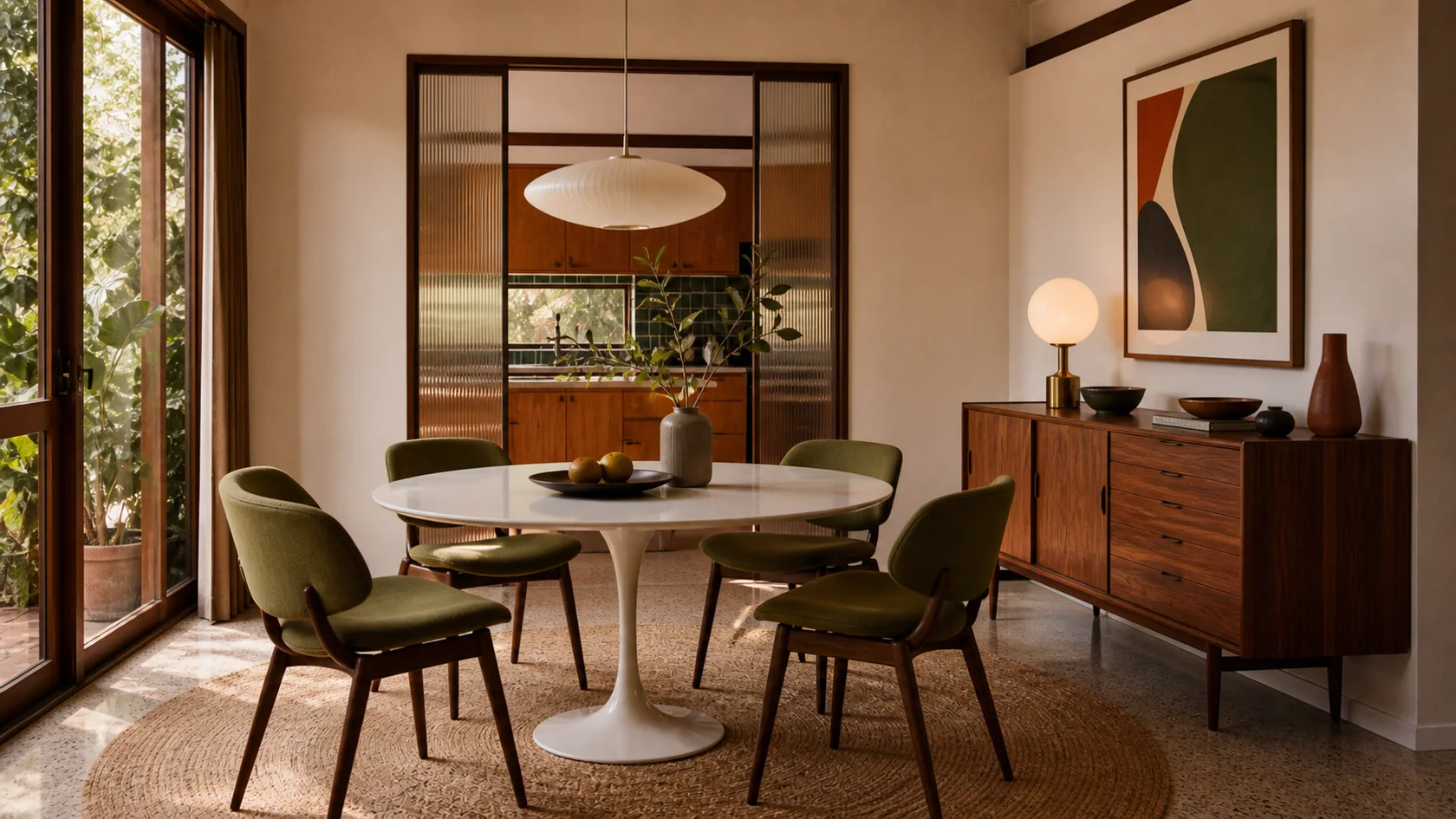
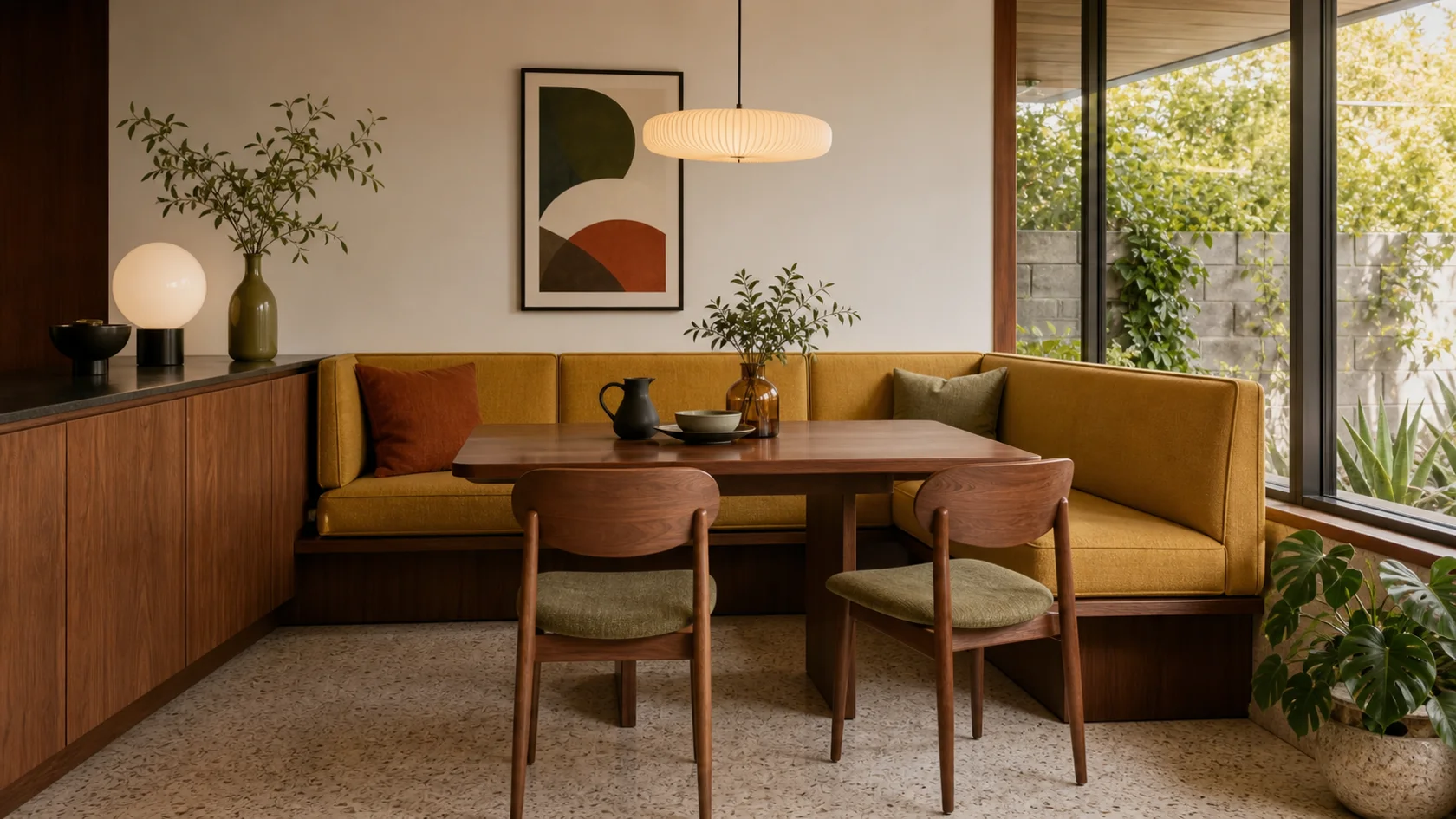
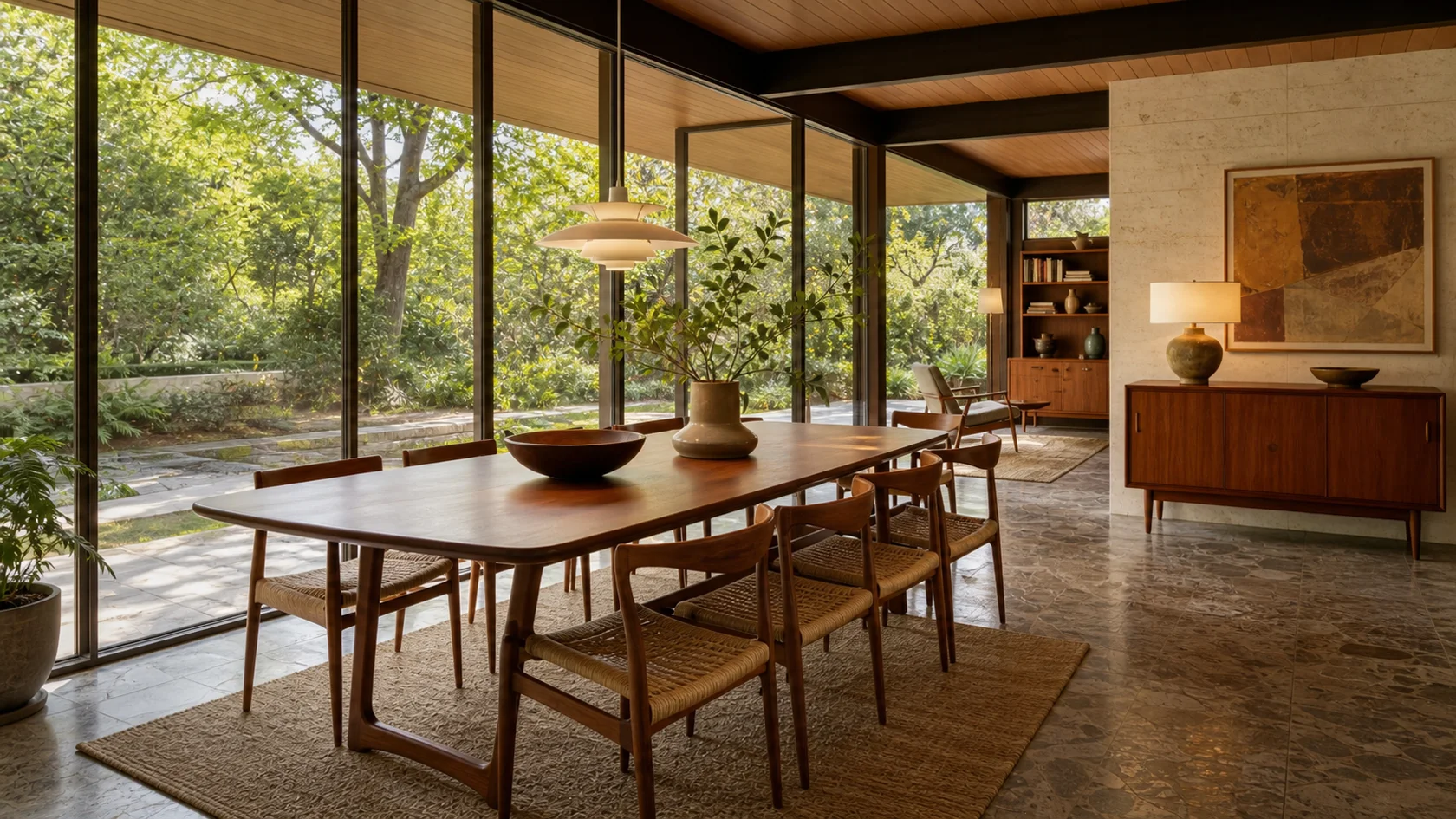
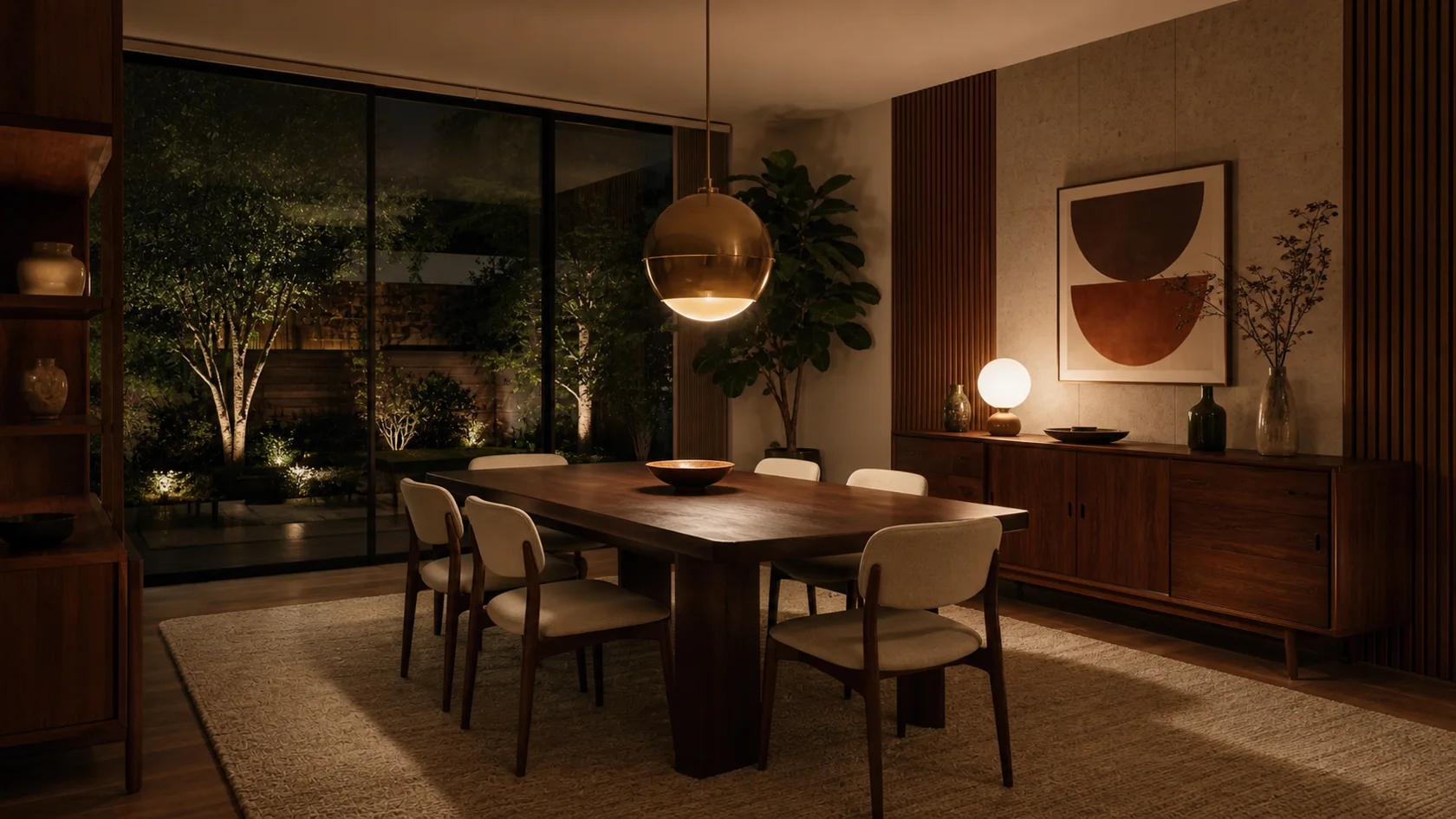
Use the style where it helps the room work: seating, circulation, focal point and material balance.
Allow chairs to pull out without blocking the main route, then choose round, oval or rectangular geometry.
Hang the fixture from the table center even when the table is not centered in the architectural room.
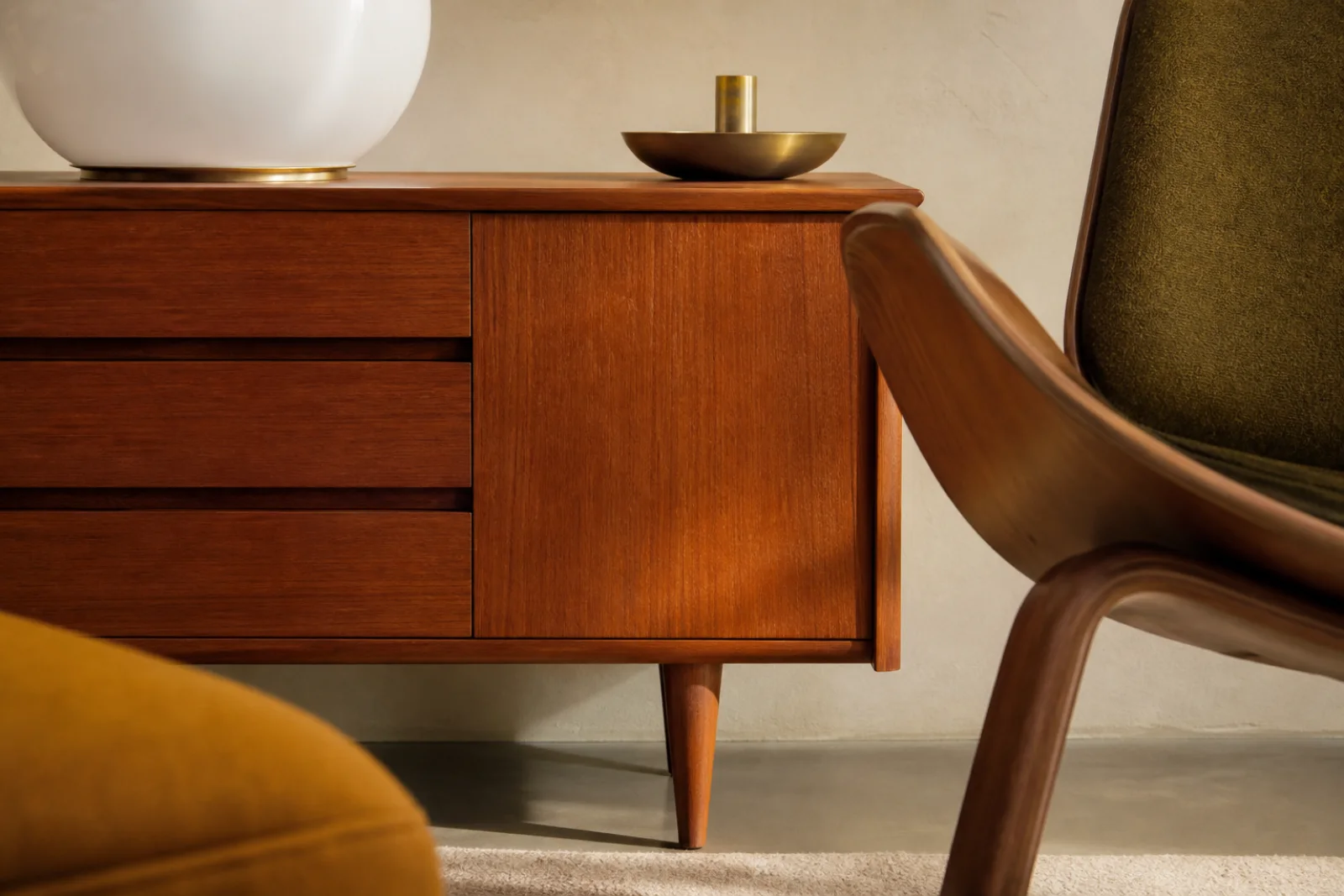
A shallow sideboard or wall niche should support meals without narrowing chair clearance.
Curtains, upholstery or a rug can soften a room dominated by timber, stone or glass.
Start with cream and timber, then choose one earthy warm accent and one smaller cool counterpoint. The room should feel collected, not color-coded by decade.
A soft background that allows warm timber and stronger period colors to remain clear.
The orange-brown timber note associated with many Scandinavian and British casegoods of the era.
Works on wool upholstery, curtains or one cabinet front without feeling overly bright.
A compact warm accent for a chair, textile, ceramic or abstract artwork.
A cooler counterpoint that prevents walnut, rust and mustard from becoming monotonous.
Walnut or teak provides the dominant warm structure.
Cream plaster, stone or terrazzo keeps the room bright.
Olive, rust or ochre should lead in one upholstery or joinery plane.
Black and brass belong on slim legs, frames and globe-light fittings.
For this room, a few strong choices can carry the style better than adding more decor.
Choose the main dining table for real comfort and scale; its silhouette should carry the room before smaller styling arrives.
Use one or two period signals per room and leave enough visual rest that the interior feels current rather than staged as a set.
Use one or two period signals per room and leave enough visual rest that the interior feels current rather than staged as a set.
Use one or two period signals per room and leave enough visual rest that the interior feels current rather than staged as a set.
Use these checks to keep the mid-century modern character clear without compromising how the dining room works.
Include pull-out depth and the route behind occupied seats in the plan.
Relate the light to the table position so the composition stays coherent.
Leave enough clear surface for serving and use one low centerpiece.