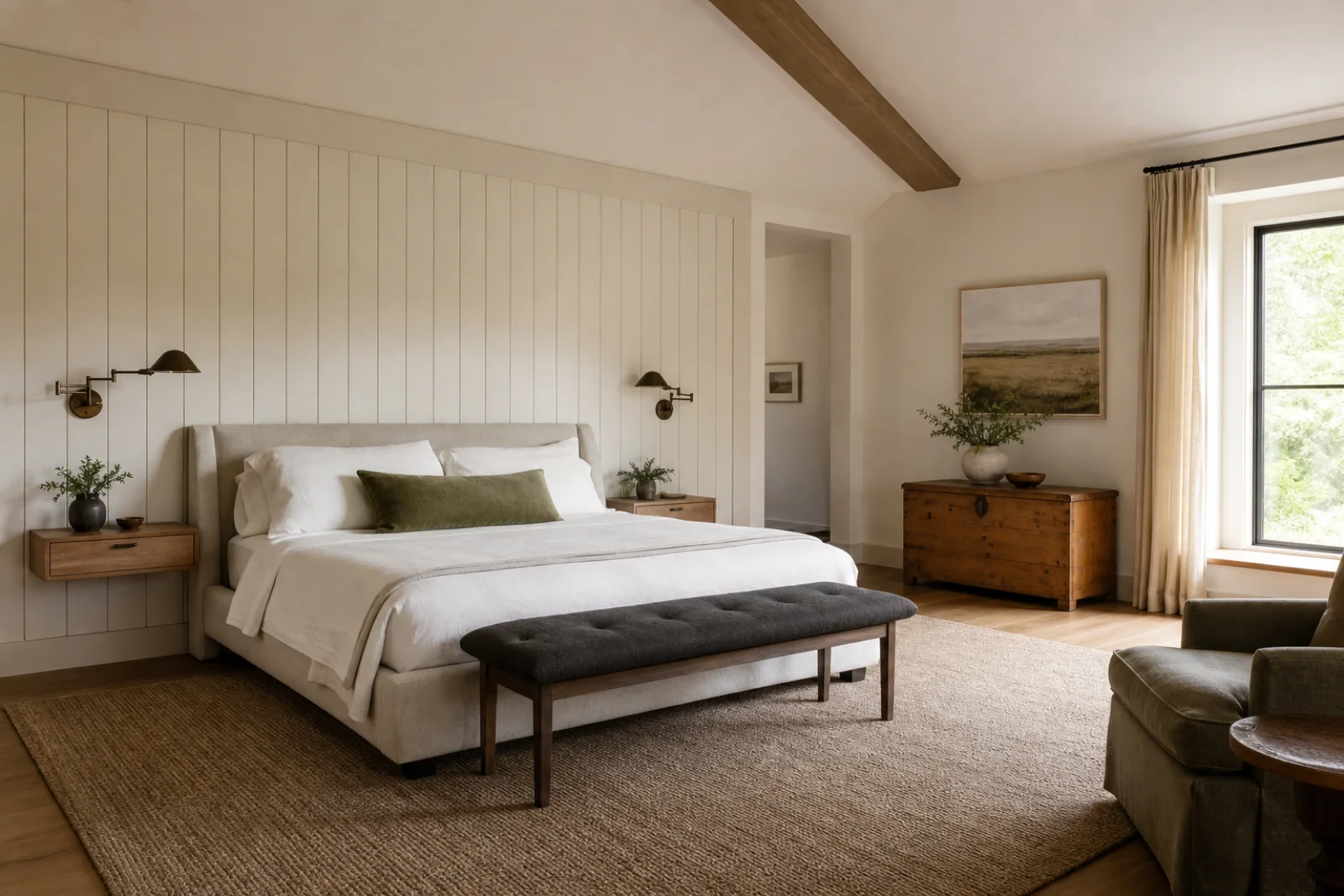
Upholstered platform bed
Choose a simple silhouette in textured flax with enough clearance for the room’s modern circulation.
Contemporary planning gains warmth from familiar profiles, tactile wood and finishes that are precise without feeling precious.
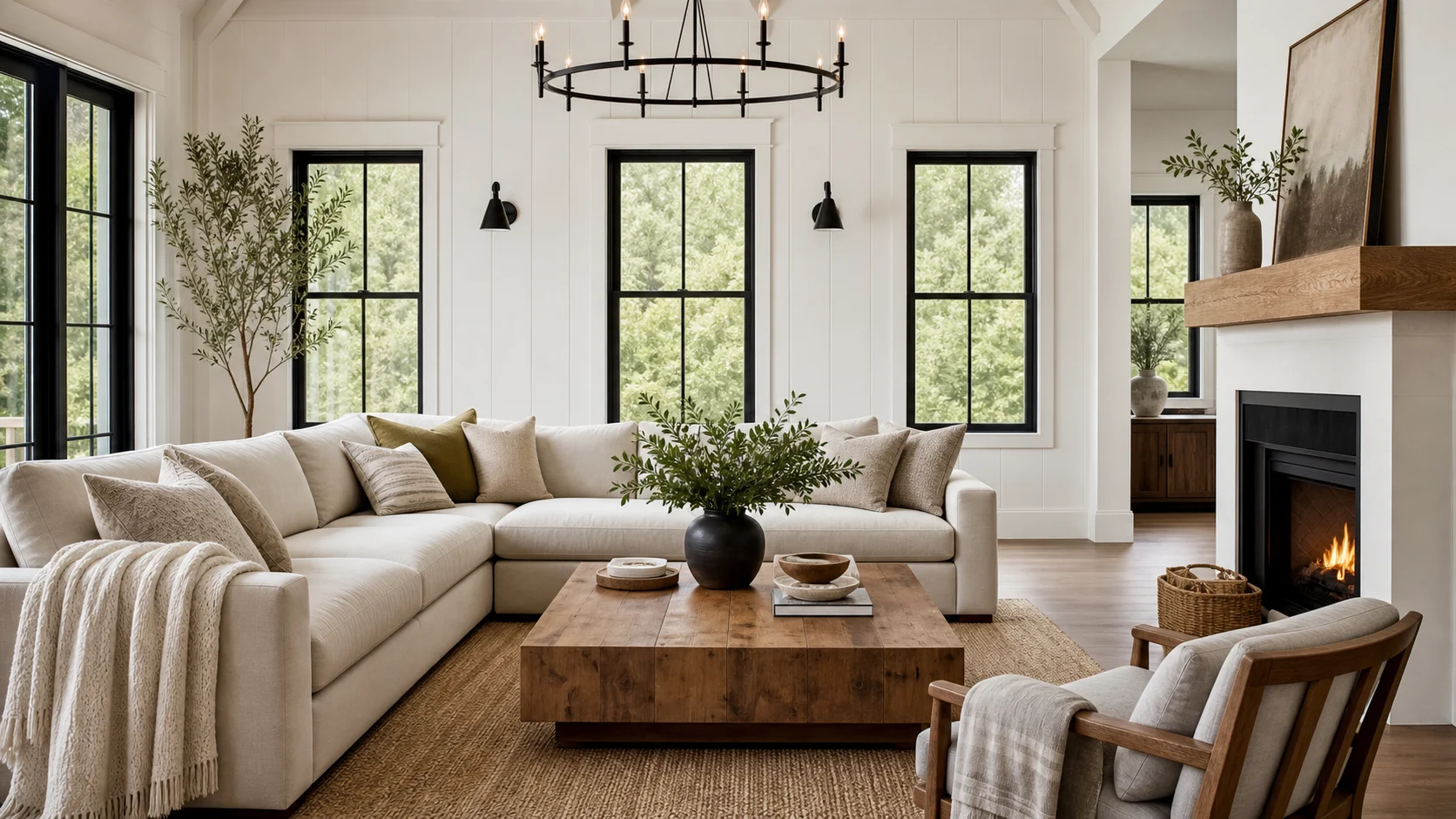
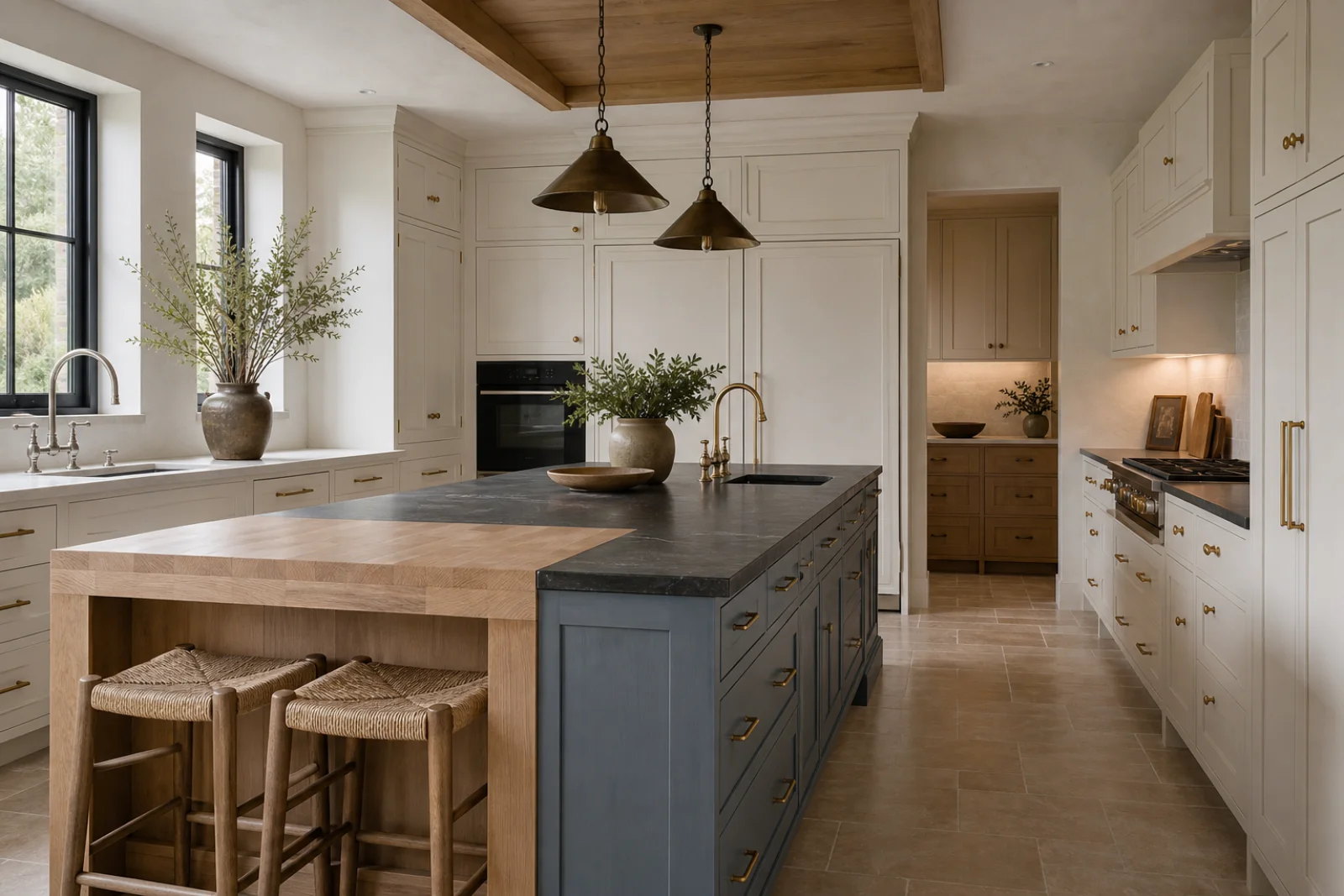
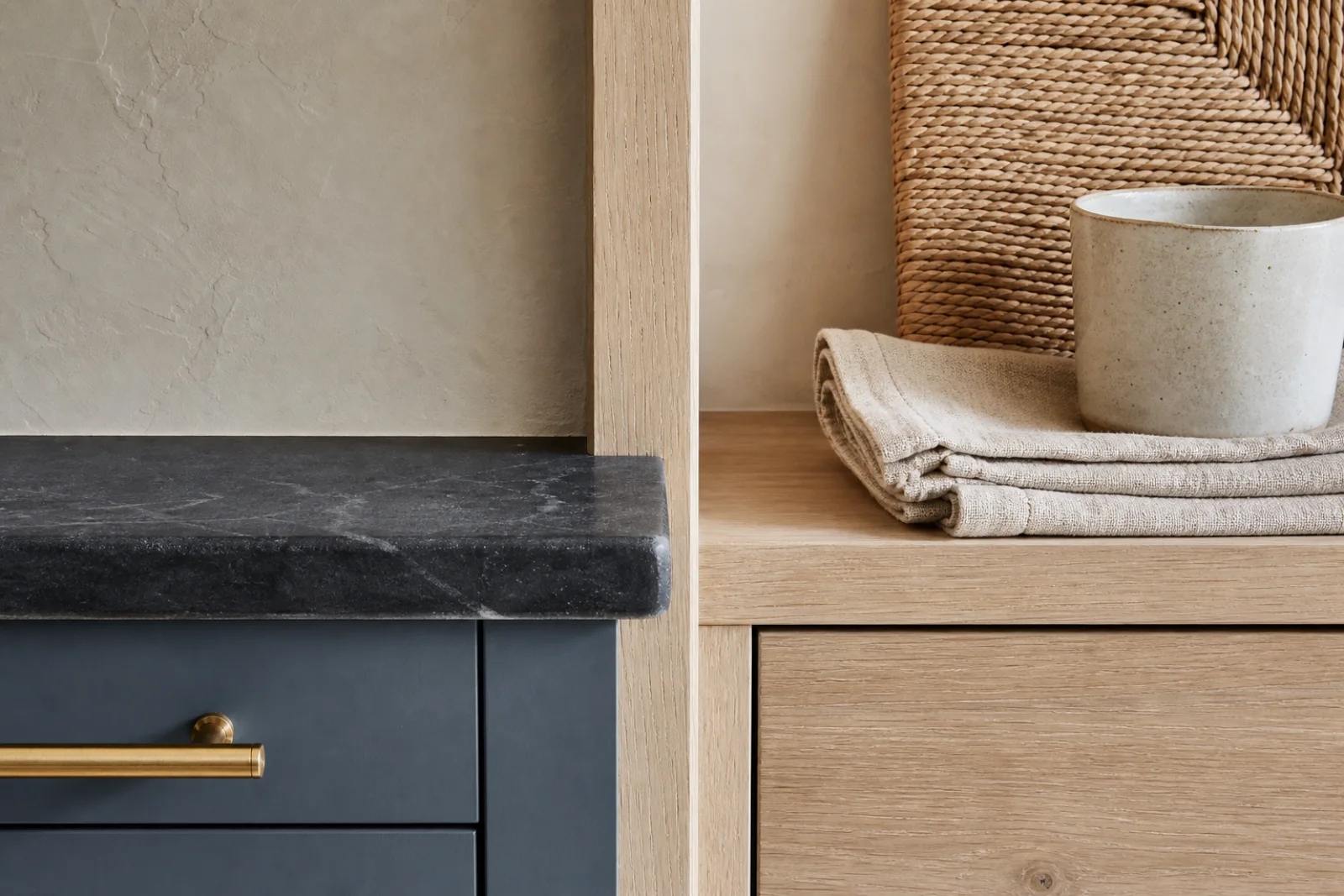
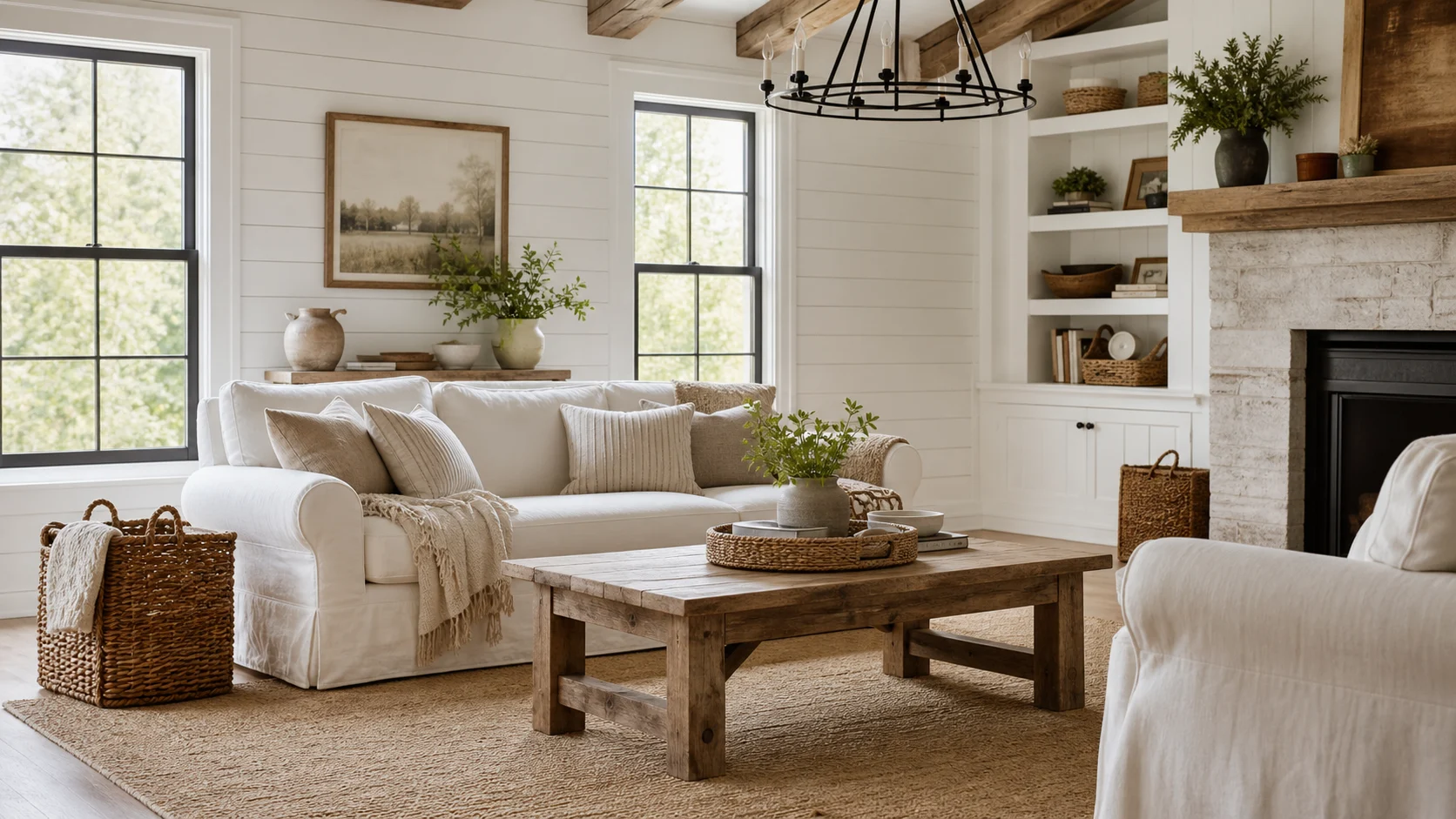
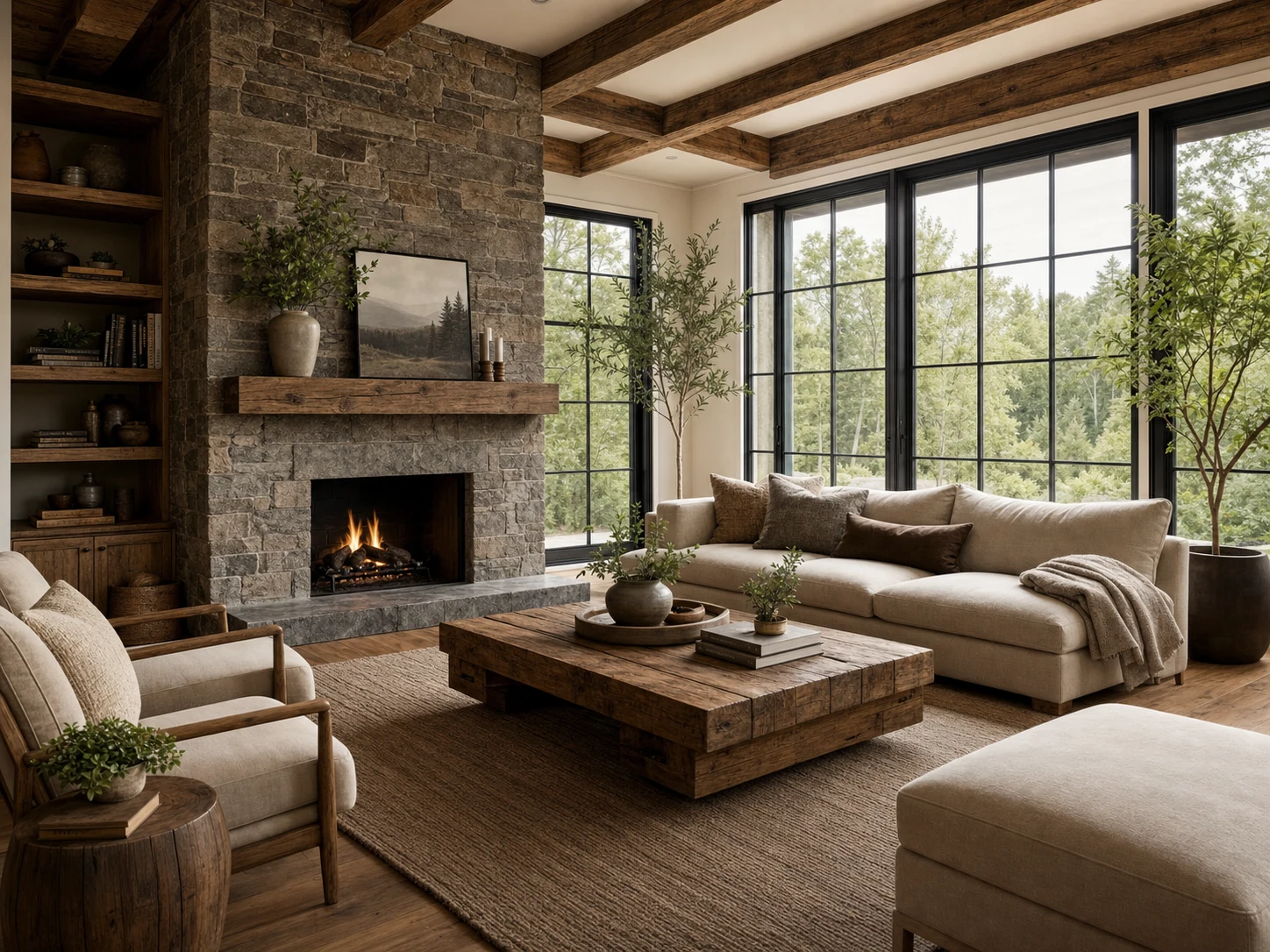
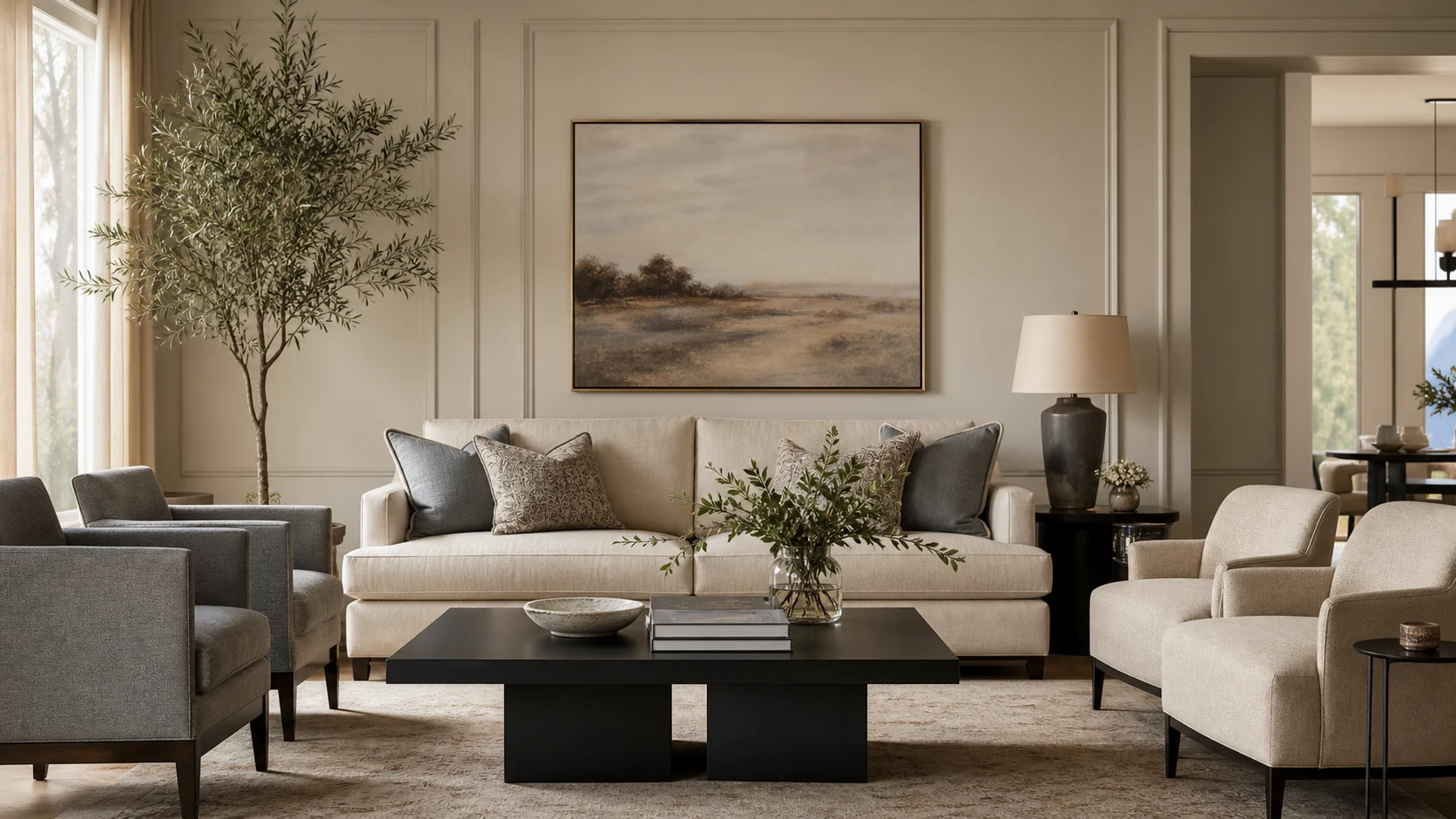
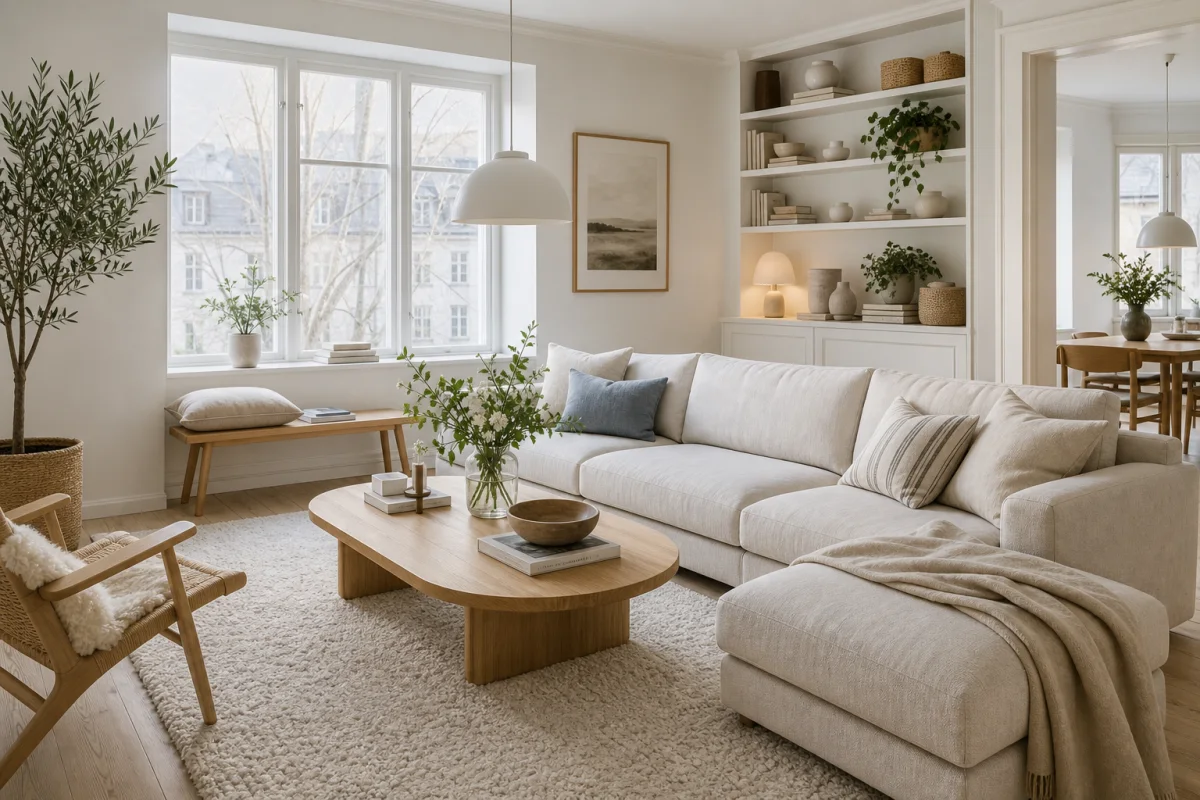
Modern Farmhouse combines the spatial clarity of a contemporary home with the approachable material language of farmhouse interiors. Open routes, integrated appliances, built-in storage and simplified furniture create order; oak, lime plaster, soapstone, rush and aged metal keep that order from feeling clinical.
The strongest version depends on proportion rather than motifs. A broad pantry wall may use traditional inset doors, but its uninterrupted composition is modern. An oak table may feel familiar, yet its softened oval profile is current. This selective translation is more convincing than repeating black windows, shiplap and barn references in every room.
Use integrated storage, clean circulation and discreet technology as the contemporary foundation.
An inset cabinet door, spindle chair or cased opening is enough to establish the farmhouse connection.
Where plaster meets oak or stone meets painted joinery, make the edge precise and let texture remain visible.
Full-height cabinetry absorbs daily clutter and creates calm, continuous room elevations.
Oval tables, simple upholstered beds and broad linen shades avoid both strict minimalism and period imitation.
Warm plaster and pale oak carry most of the room; soapstone, bronze or painted color defines key working zones.
Inset doors, rush seats and cased openings appear once or twice, not as a decorative theme applied everywhere.
Use contemporary seating around one low timber anchor, then limit black metal to lighting or window frames rather than repeating it on every object.
Combine a plain upholstered bed with integrated oak ledges and one vintage chest; keep paneling to the headboard wall only.
Choose an oval table and clean rush-seat chairs, with a large linen pendant providing softness instead of a rustic chandelier.
Build storage wall-to-wall, leaving a generous oak work surface and enough visual rest around a supportive leather chair.
Assign dark soapstone or smoke blue to one working volume while warm-white cabinetry recedes around integrated appliances.
Use closed floor-to-ceiling storage around an oak bench niche so daily belongings disappear without making the hall sterile.
Let lime white and oak occupy most of the room. Use smoke blue or olive on one architectural volume, then reserve charcoal and bronze for small functional lines.
A warm architectural field that reads softer than crisp showroom white.
Defines an island, cabinet bank or niche without relying on pure black.
Brings visible grain to furniture, bench niches and selected ceiling details.
Works on entry storage or one textile plane as a quiet landscape reference.
Adds narrow warmth through pulls and lights while avoiding shiny decorative brass.
Subtle hand movement gives broad walls depth without introducing decorative pattern.
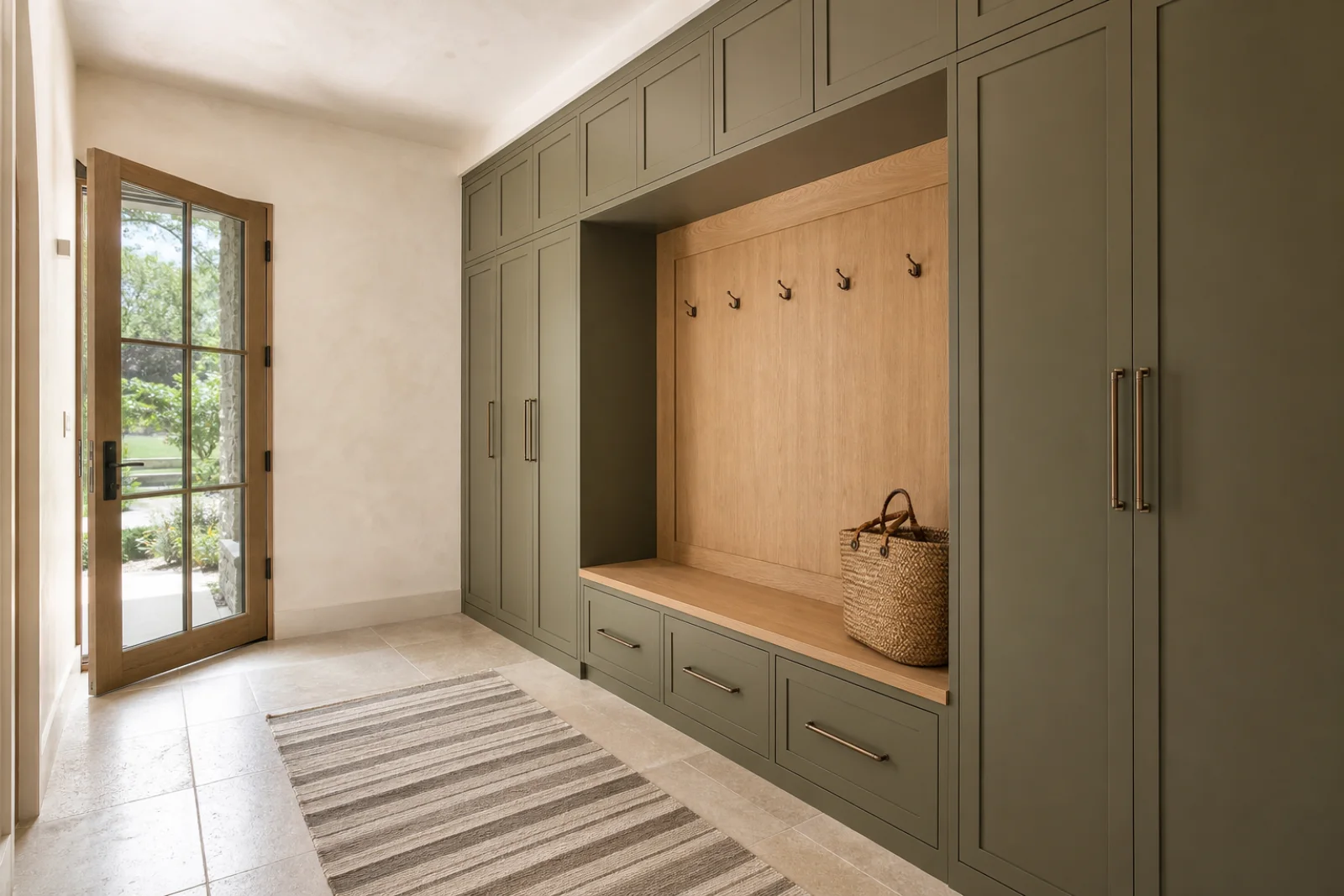
Consistent grain keeps large integrated elements calm while retaining natural warmth.
A matte dark worktop grounds preparation zones and develops a quiet, repairable patina.
Dry woven texture softens precise joinery through seats, shades and light upholstery.
Resolve the modern function first, then introduce farmhouse character through a few material and profile decisions rather than surface decoration.
Clear the main route and consolidate storage into continuous walls or purposeful built-ins.
Use oak on the table, island end, bench niche or one ceiling plane—not all at once.
Select inset doors, rush seating or a cased opening as the familiar architectural signal.
Introduce smoke blue, putty, olive or aged bronze before adding another black accent.
When the room feels wrong, change the underlying decision before adding more decor.
Keep dark contrast on one or two functional elements and use aged bronze or painted pulls elsewhere.
Panel one meaningful wall or cabinet niche and return the rest to warm plaster.
Add a large wool rug, linen shades and upholstered seating where conversation happens.
Measure island aisles, chair pull-out space and sofa depth before choosing visually substantial pieces.
Modern Farmhouse succeeds through translation: contemporary space planning and technology are made approachable with a limited set of familiar forms and tactile, repairable materials.
More accumulated and domestic, using freestanding painted furniture, modest rooms and storage organized around household routines.
Choose Modern Farmhouse for integrated systems, cleaner elevations and contemporary scale.
Continuous cabinetry replaces a mix of dressers, tables and peg rails.
More material-led and architectural, often using rough stone, reclaimed timber and sharper old-new contrast.
Choose Modern Farmhouse for tailored joinery, familiar domestic profiles and a lighter finish.
Inset painted cabinetry replaces exposed rugged structure.
More polished and classically balanced, blending traditional moldings with contemporary furniture and refined fabrics.
Choose Modern Farmhouse for simpler rural references, matte working materials and a more relaxed finish.
Rush, oak and soapstone replace formal trim and dressier upholstery.
Lighter and more reductive, favoring pale timber, compact forms and less architectural trim.
Choose Modern Farmhouse when substantial storage and recognizable heritage profiles should remain visible.
Inset joinery and broad cased openings replace lean Nordic detailing.
Buy pieces that bridge clean geometry and touchable material. Avoid products whose only farmhouse credential is a decorative label or artificially distressed finish.
Choose a simple silhouette in textured flax with enough clearance for the room’s modern circulation.
Verify aisle widths, appliance openings and seating overhang before treating the island as a visual centerpiece.
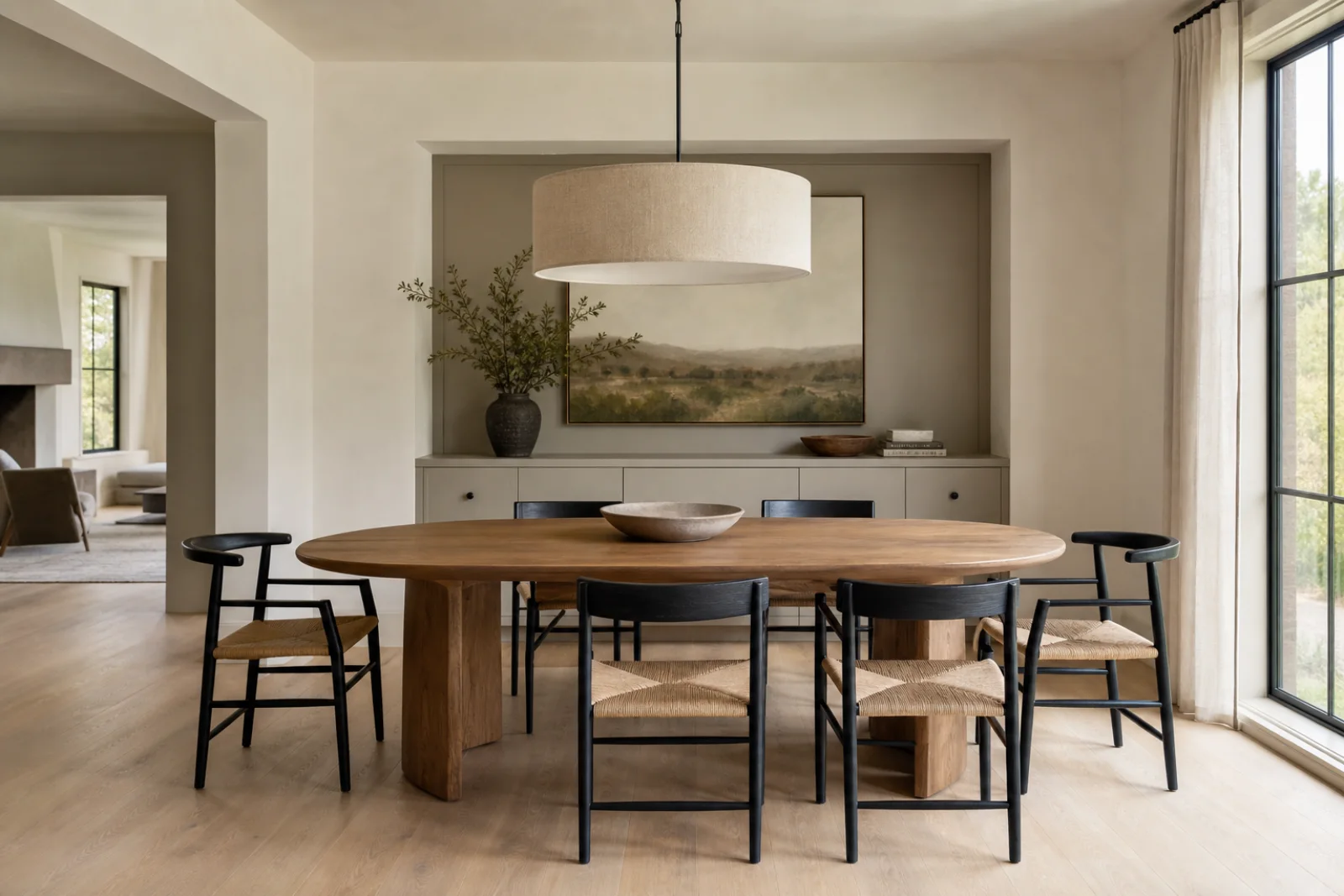
A softened outline improves circulation while natural grain provides the familiar farmhouse note.
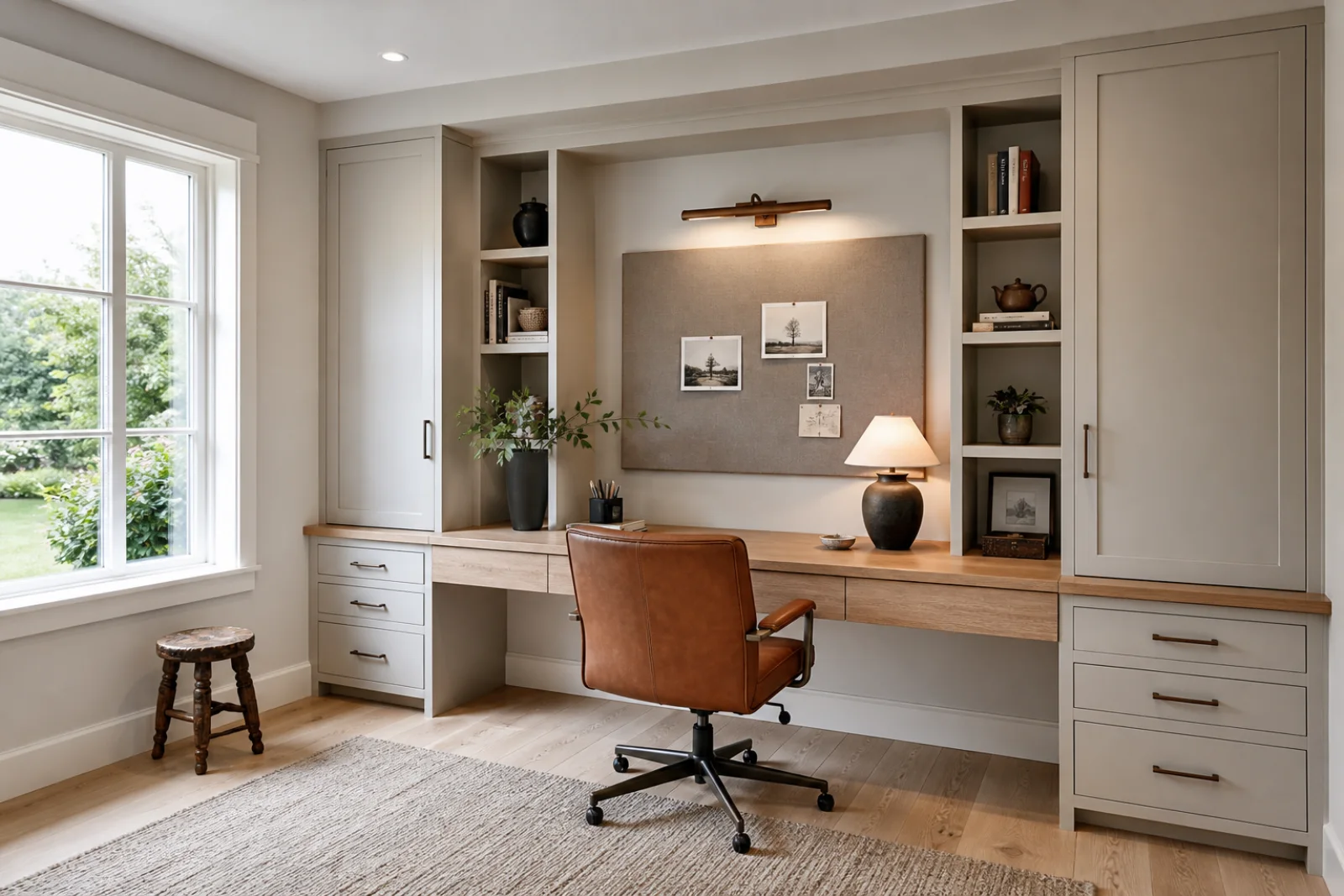
Balance closed files with a few open niches and keep the worktop deep enough for real equipment.
Use durable matte paint and divide interiors around actual coats, shoes, bags and charging needs.
Repeat one restrained finish at working touch points rather than outlining the entire room.