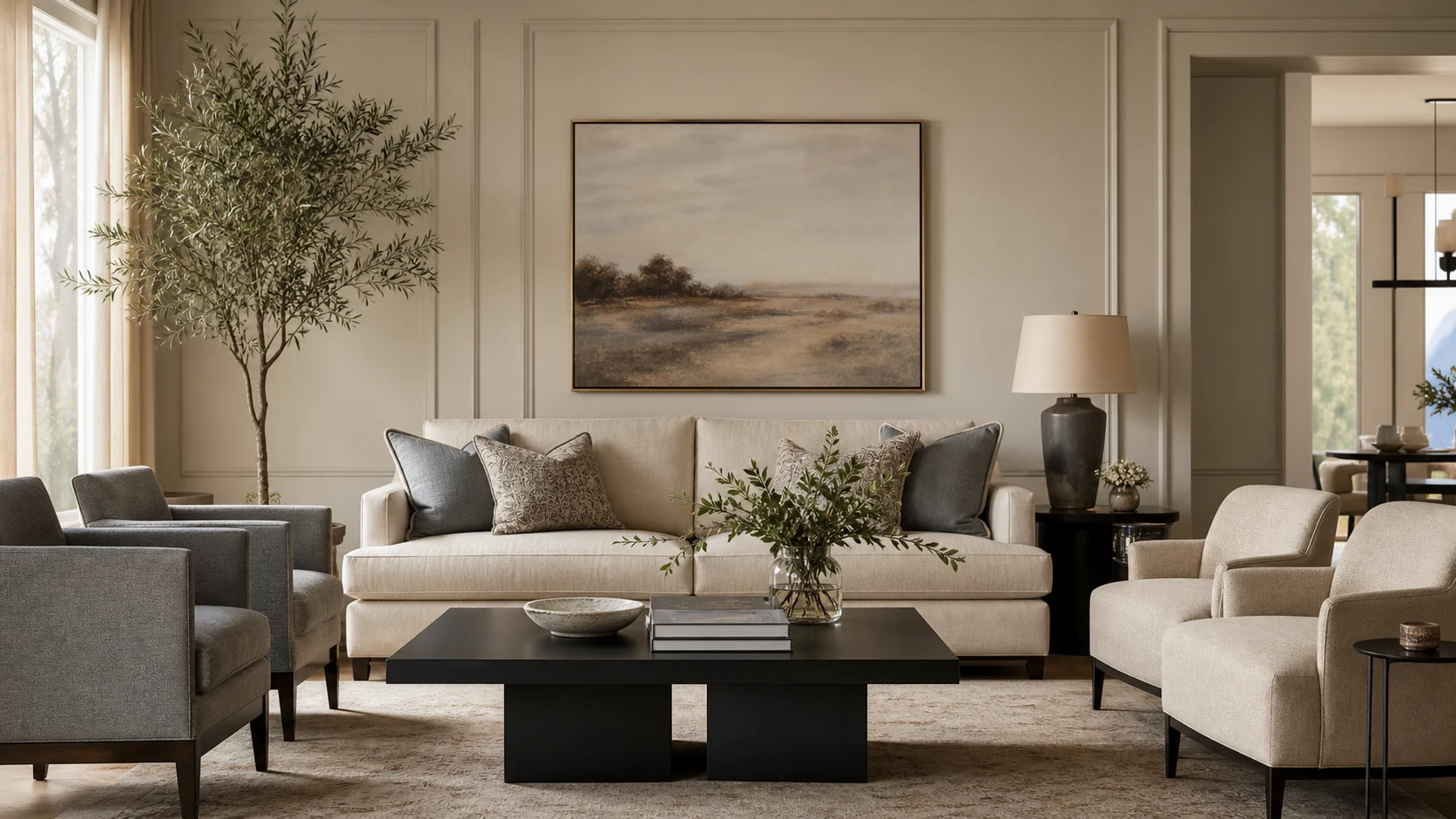
Clean-arm linen sofa
A familiar rectangular form with contemporary seat depth works against detailed walls without competing.
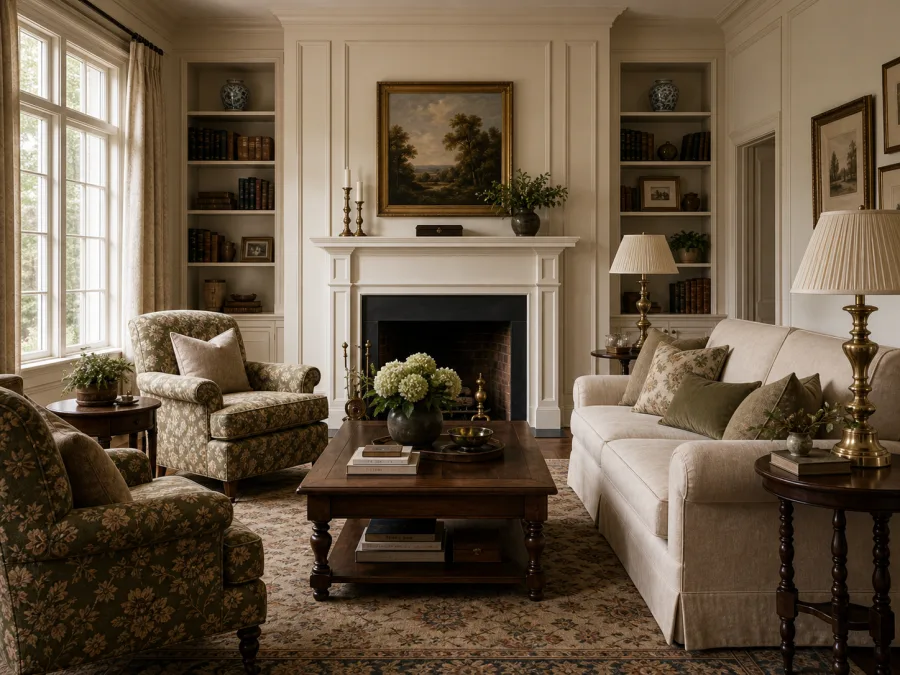
Classic room structure and familiar materials recalibrated for contemporary comfort, simpler silhouettes and a quieter everyday rhythm.
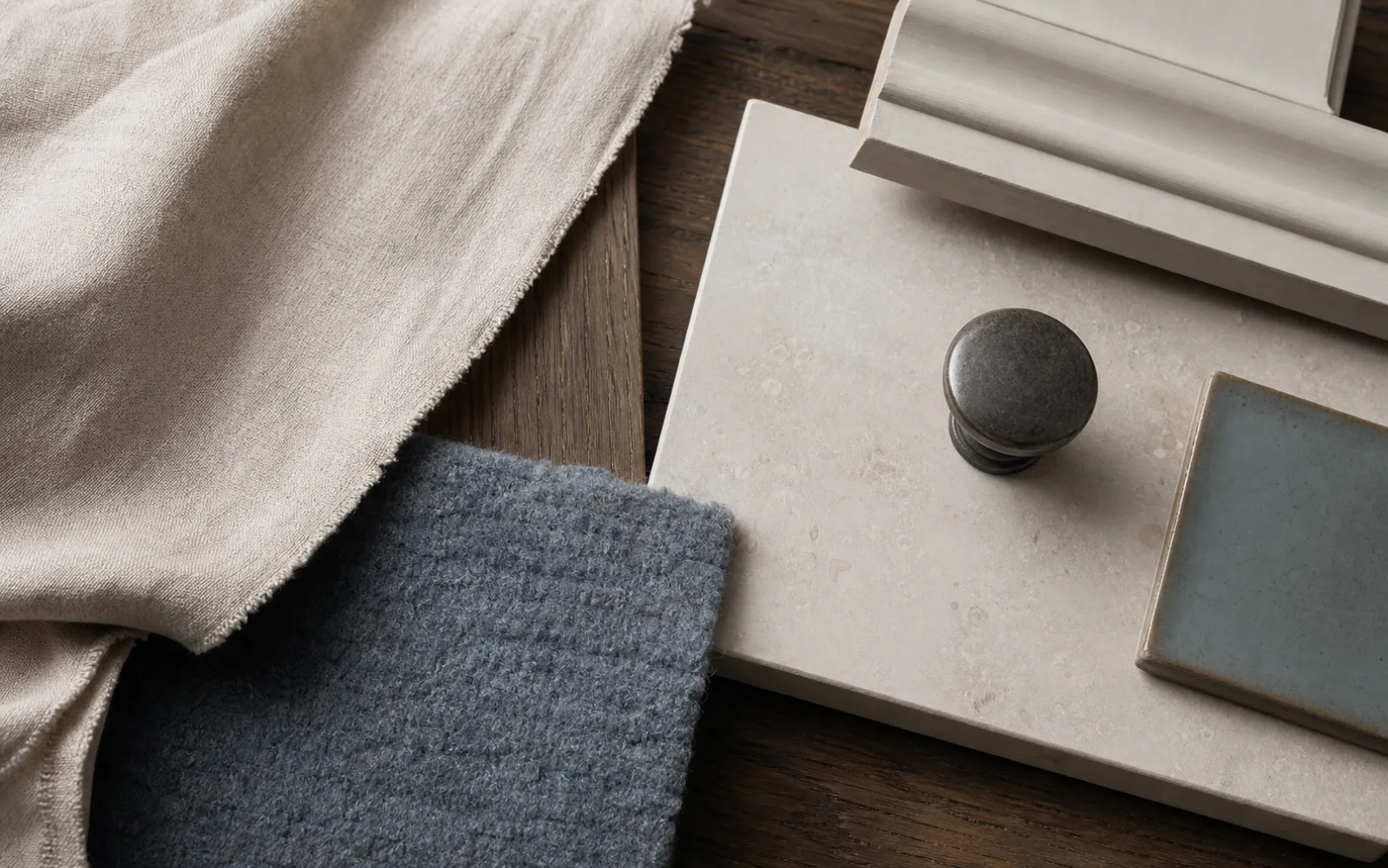
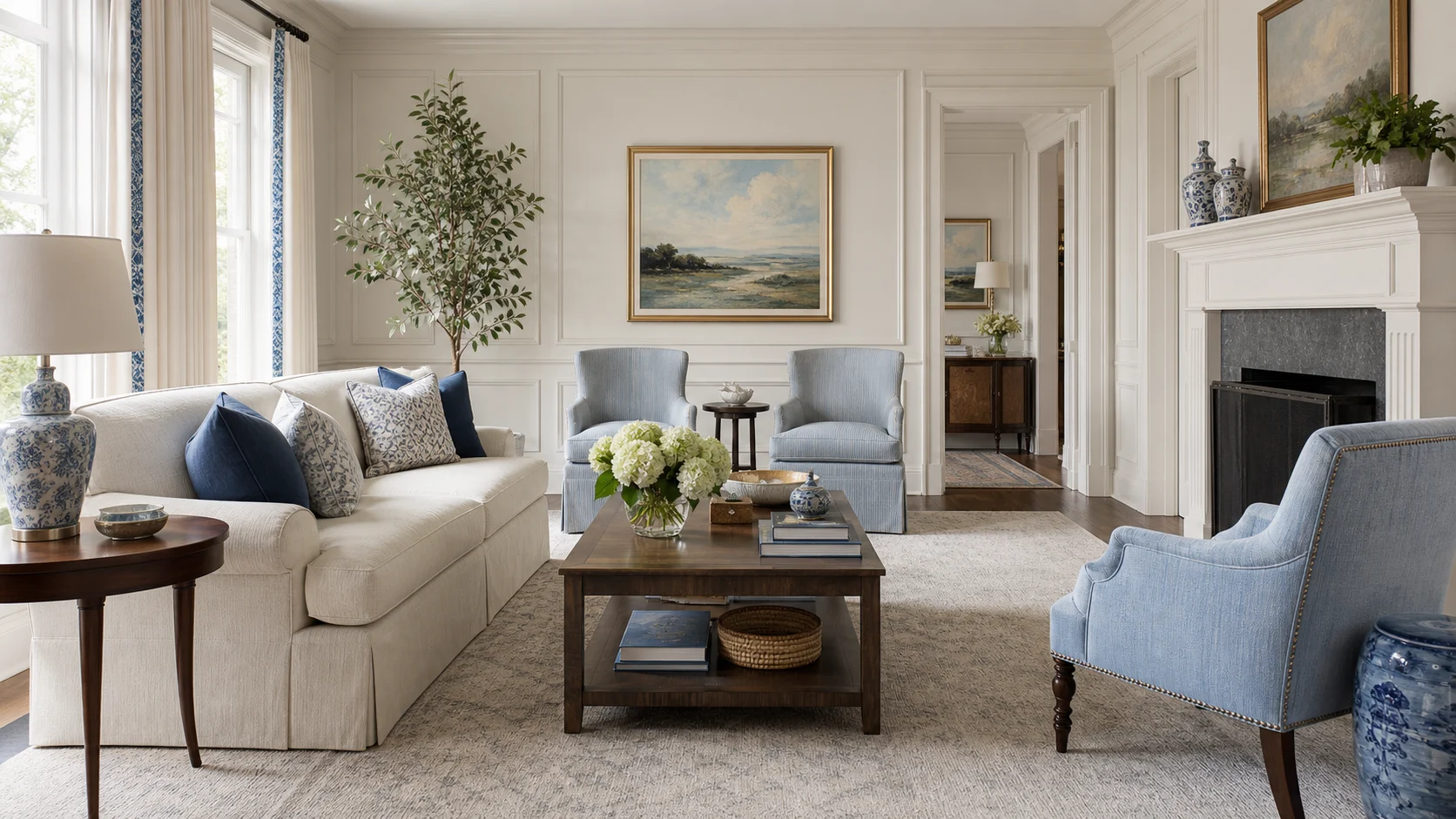
Transitional interior design bridges traditional architecture and contemporary living. Panel molding, inset cabinetry, familiar timber and balanced layouts provide continuity; cleaner furniture profiles, simpler lighting, matte finishes and more generous circulation keep the result current.
The goal is not a fifty-fifty mixture in every object. Usually the room shell carries the classic language while furniture and function are edited for today. A limited material family connects both sides: oak can appear in a contemporary table and traditional cabinet, while linen and wool soften each without signaling a specific period.
Let walls and built-ins carry classic detail, then choose simpler freestanding pieces with comfortable modern proportions.
Using one timber tone across different silhouettes creates continuity without buying a matching suite.
A dark table, blue-gray textile or blackened-bronze light gives pale rooms definition more effectively than extra accessories.
Shallow molding, inset cabinetry and framed openings establish tradition without ornate buildup.
Seat depth, ergonomic work chairs and generous circulation respond to daily life rather than formal display.
Oak, linen, wool, ceramic and honed stone recur in different forms to bridge old and new.
Blue-gray, charcoal or dark timber prevents ivory and taupe from flattening into one value.
Use a simple sofa and clean coffee table within paneled walls; vary the armchair shapes instead of matching a full set.
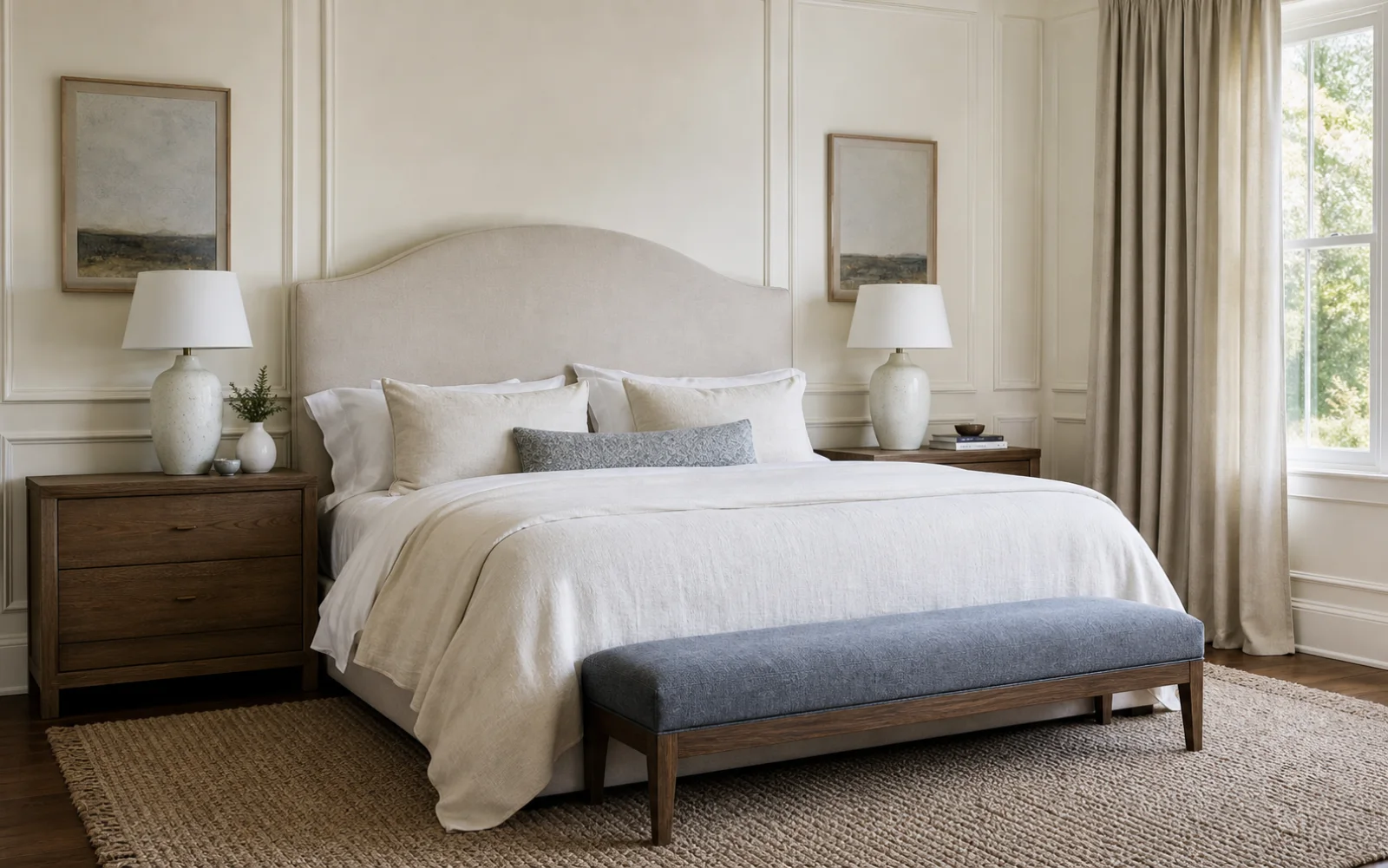
Pair an arched linen headboard with plain oak chests and use blue-gray on one bench or cushion family.
A substantial oak table and upholstered contemporary chairs can sit comfortably beneath a restrained shaded chandelier.
Keep classic detail on built-ins while specifying an ergonomic chair, clear desk surface and closed cable storage.
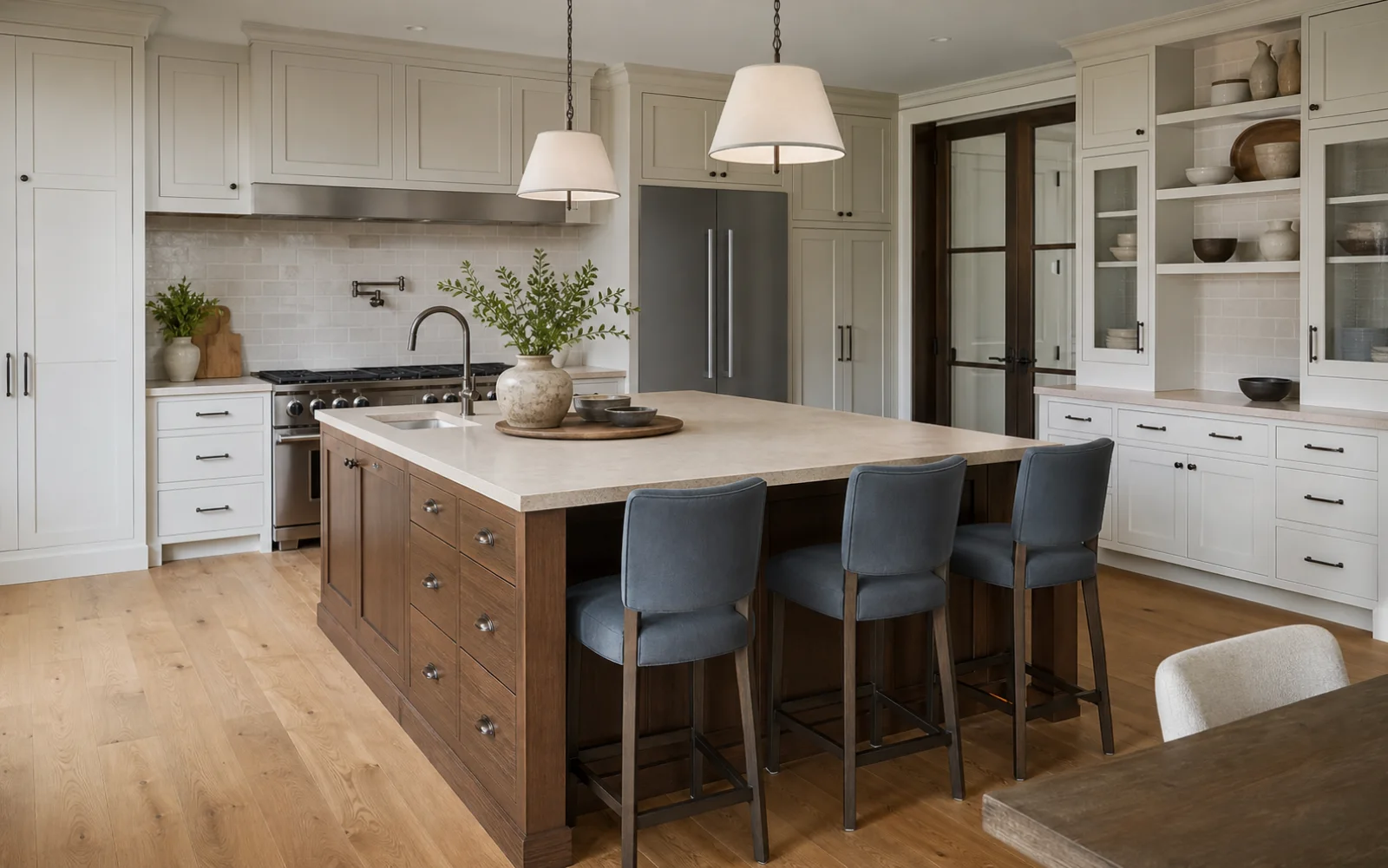
Use inset doors with simplified rails, a darker timber island and honed stone that tolerates daily work.
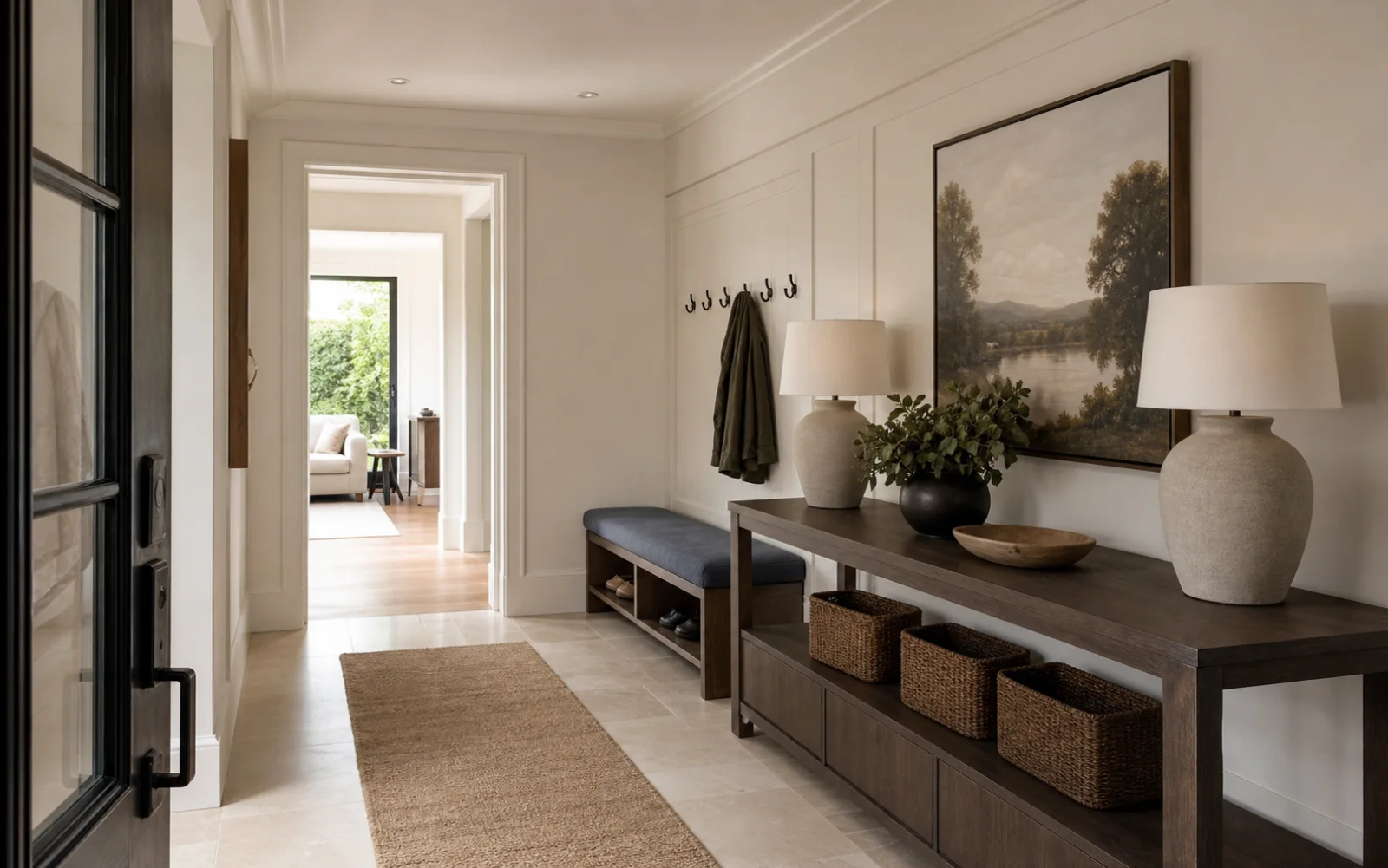
Combine hooks, shoe storage and a bench with one large artwork; practical arrival needs should shape the composition.
Use ivory and taupe for the envelope, repeat one oak tone across major pieces, then introduce blue-gray or charcoal in a single connected textile or cabinetry family.
A warmer alternative to pure white for molding, cabinetry and large upholstery.
Connects linen, wool, ceramic and limestone without turning every surface beige.
Provides enough grain and depth to anchor pale rooms without appearing formal or heavy.
A calm contrasting note for upholstery, grasscloth or painted storage.
A low-luster hardware finish that bridges traditional shapes and contemporary restraint.
A medium or dark grain gives traditional and contemporary furniture a shared material language.
Dry, matte texture creates comfort and subtle contrast without decorative shine.
A quiet mineral work surface suits classic cabinetry and clean modern detailing.
Opaque glaze and aged metal add tactile depth while remaining visually understated.
Decide which layer will carry history and which will update function. A clear division produces a calmer result than mixing classic and modern cues into every object.
Retain or add proportional molding, cabinetry and framed openings where they improve the room.
Choose sofas, beds, dining chairs and desks for present-day comfort and ergonomic dimensions.
Set one timber tone, one stone family and a small group of matte natural textiles.
Use blue-gray, charcoal or blackened bronze to define focal furniture and lighting.
When the room feels wrong, change the underlying decision before adding more decor.
Add a darker timber anchor and one muted color with a clear, repeated role.
Repeat material or upholstery while varying silhouettes and source periods.
Align molding and cabinetry with openings and room proportions instead of adding isolated trim.
Echo the room’s timber, textile or color in the cleaner contemporary furniture.
Transitional is a practical bridge rather than a decorative theme: it preserves useful classic order while updating proportion, comfort and finish for contemporary life.
More historically specific, formal and detailed through furniture profiles, ornament and symmetry.
Choose transitional when classic architecture should support simpler contemporary living.
Cleaner silhouettes and matte restraint replace period consistency.
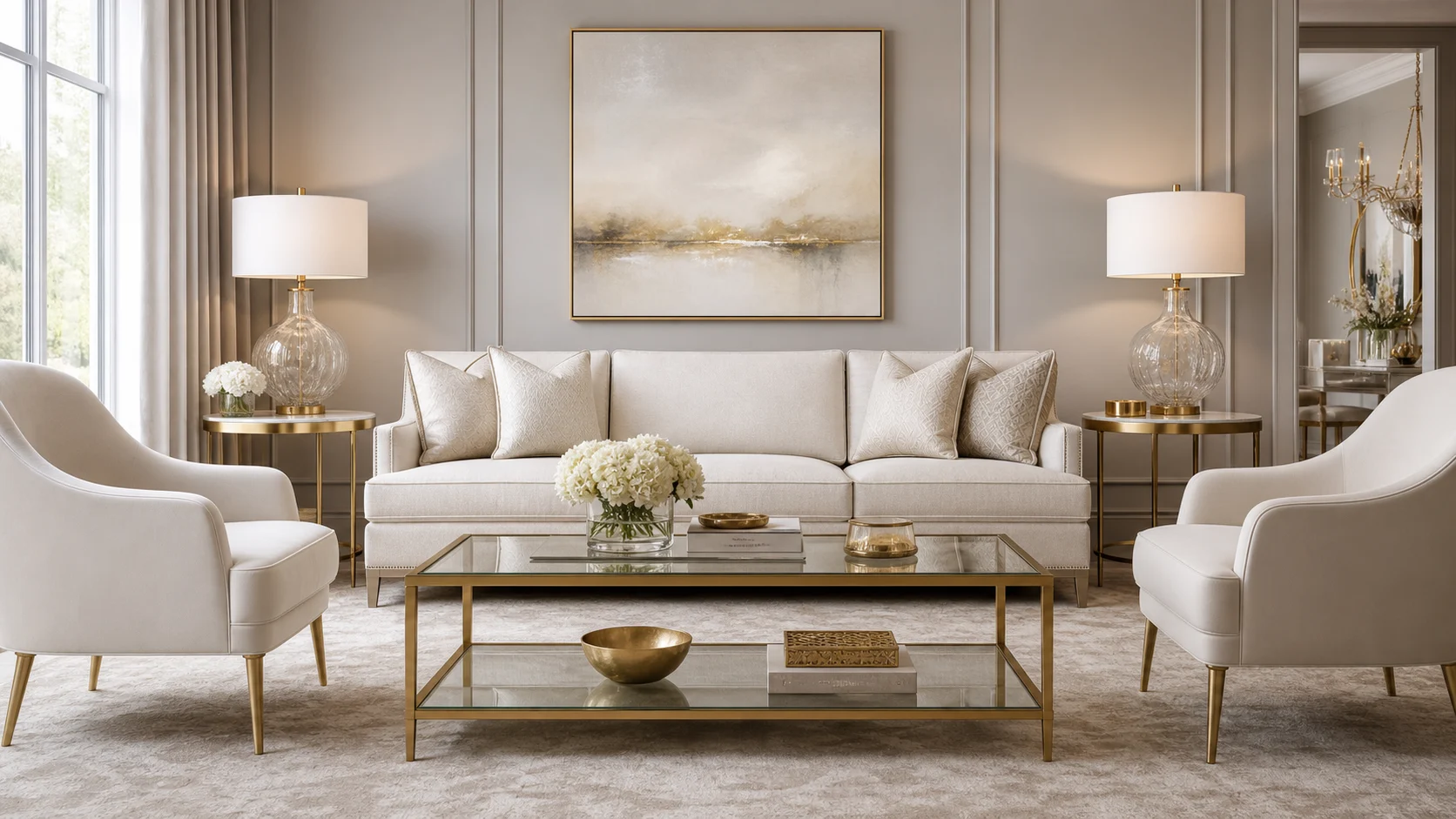
More polished and formal through velvet, mirror, glass and light-catching metal.
Choose transitional when durability, calm texture and everyday comfort matter more than visible luster.
Linen, ceramic and pewter replace mirror, nickel and sheen.
More expressive and willing to refresh classic motifs through color, pattern and antiques.
Choose transitional for a quieter, more neutral bridge between classic and contemporary.
Material continuity replaces the more decorative reinterpretation of tradition.
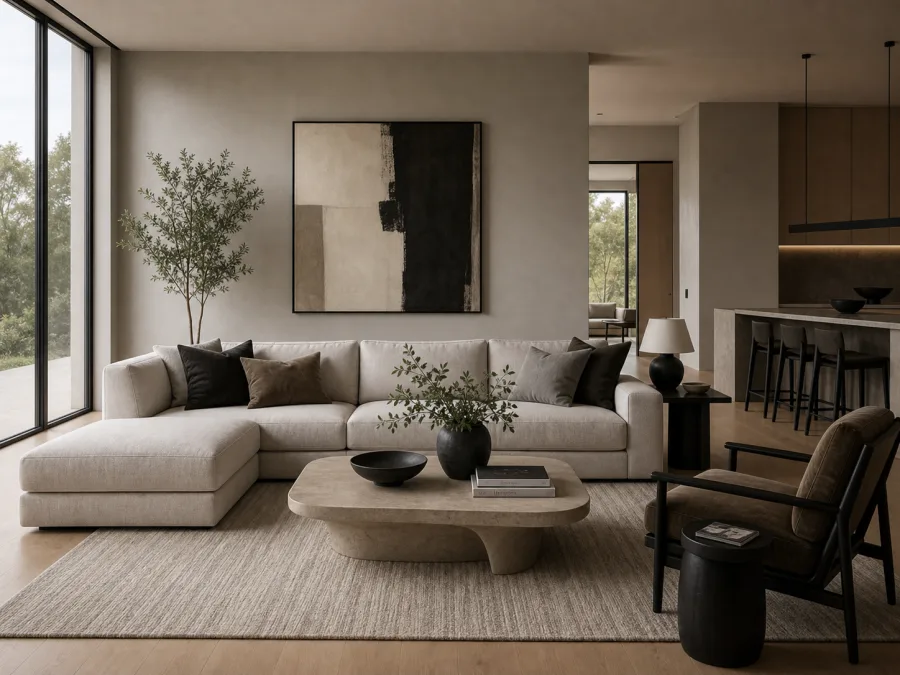
More current, fluid and less dependent on inherited architectural references.
Choose transitional when familiar room order and crafted millwork should remain visible.
Molding, inset cabinetry and oak temper present-day furniture.
Choose well-proportioned, durable pieces that can connect both sides of the room. Shared material matters more than matching style labels.
A familiar rectangular form with contemporary seat depth works against detailed walls without competing.
One shallow traditional curve is enough when the surrounding chests and bedding stay simple.
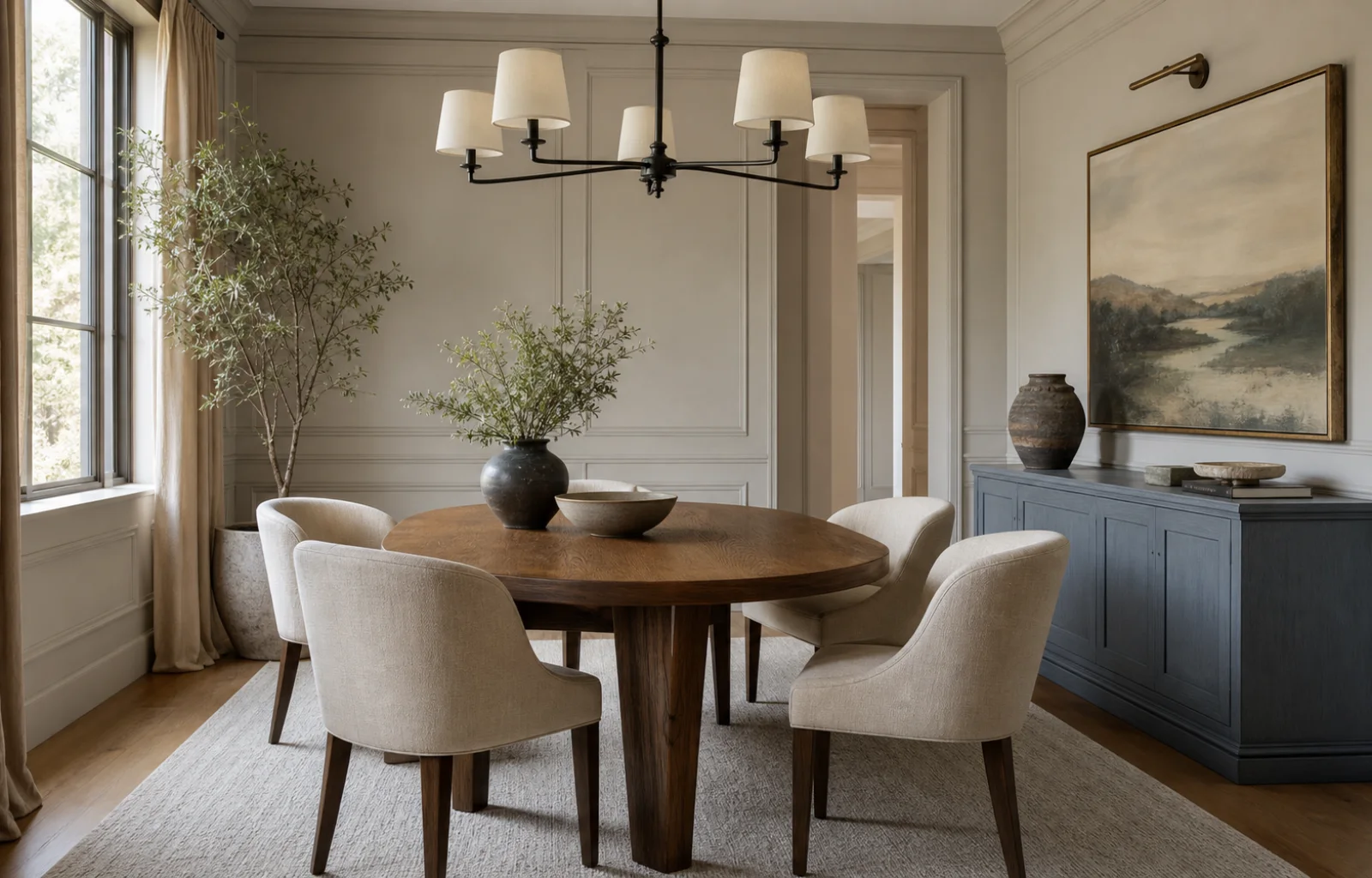
Choose solid construction and a softened edge that accommodates both classic and modern chairs.
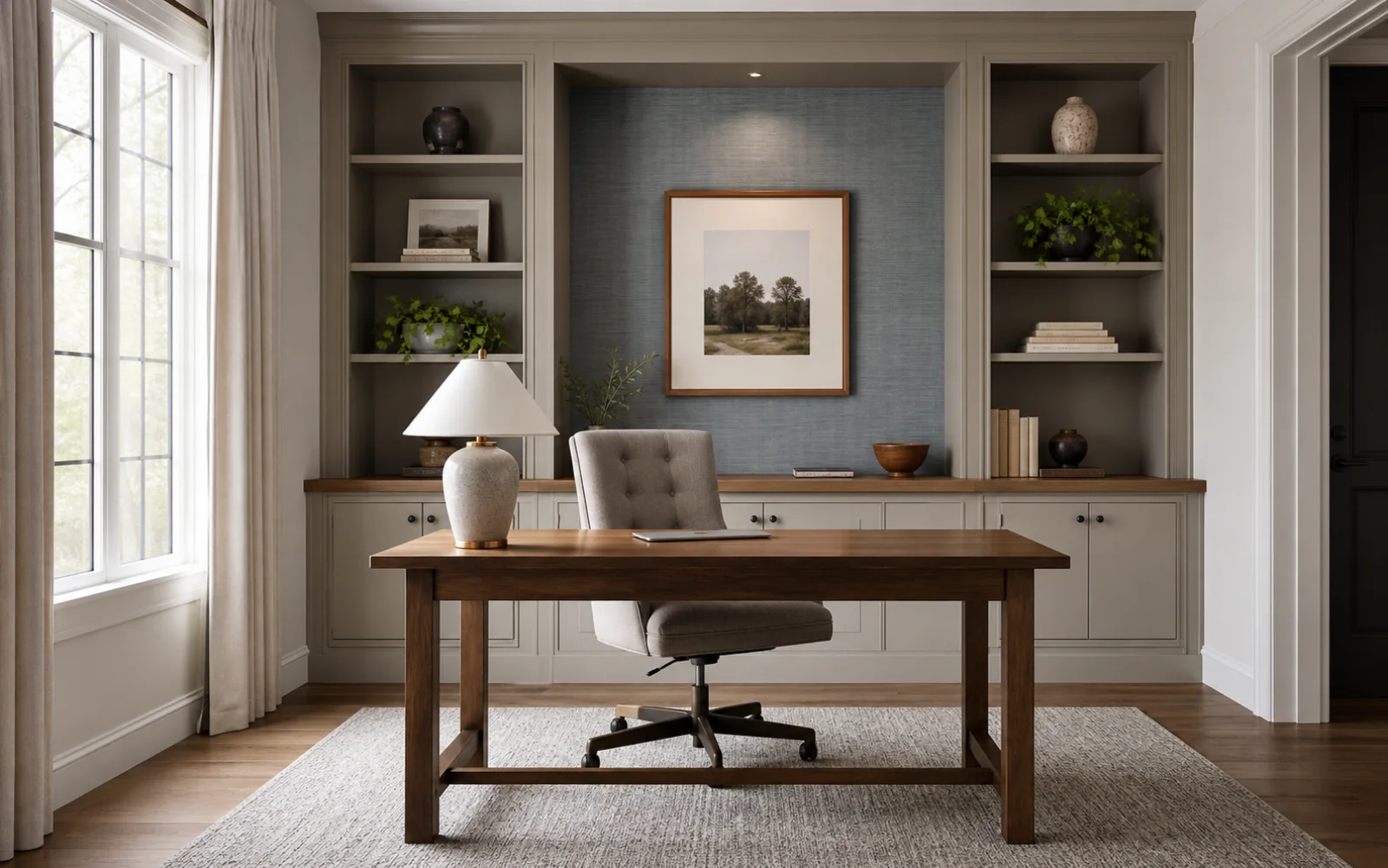
Shallow molding and closed lowers provide continuity while keeping equipment and files out of view.
A contrasting oak base gives pale inset cabinetry definition and a durable family gathering point.
Combine comfortable upholstery, shoe storage and a straightforward timber frame.