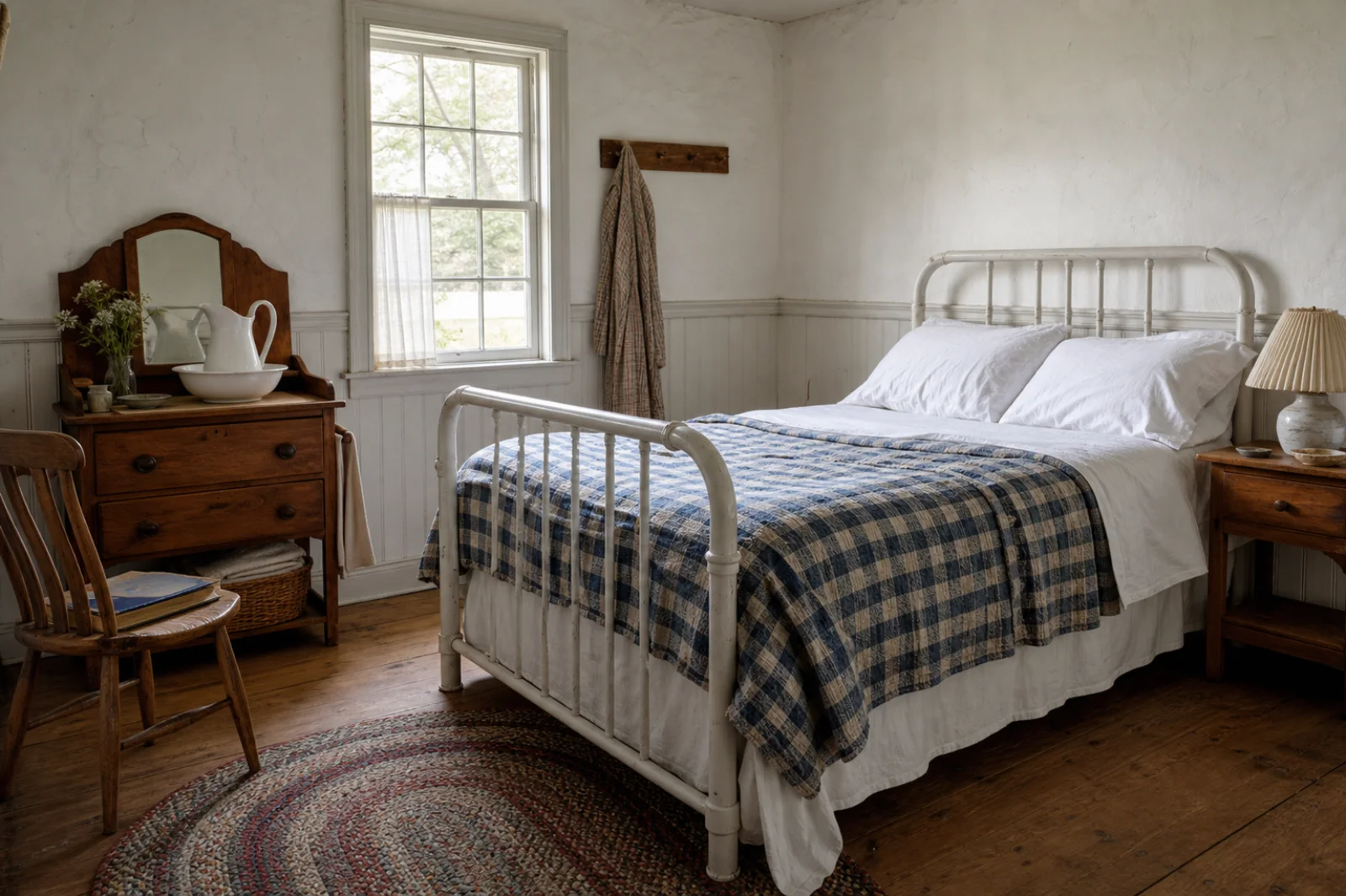
Painted iron bed
Check frame stability and mattress dimensions, then keep bedding simple enough for frequent washing.
A working home made welcoming through painted furniture, useful storage and familiar materials that improve with daily life.
Farmhouse design grew from rooms expected to work hard: kitchens for cooking and preserving, entries for wet boots, tables for meals and household tasks, and cupboards built wherever storage was needed. Its character comes from direct, repairable solutions—painted joinery, scrubbed pine, peg rails, cotton ticking, woven baskets and stoneware—rather than from one fixed historical look.
The style feels hospitable because daily life remains visible but organized. A pitcher can stay on the table, coats can hang by the door and chairs need not match exactly. What matters is a shared scale, a limited paint palette and enough empty surface for the next task. This functional domestic rhythm separates Farmhouse from heavier Rustic interiors and from the polished black-and-white formula of Modern Farmhouse.
Place hooks, drawers, work surfaces and lighting where cooking, dressing or arriving actually happens.
Built-in storage keeps order; a movable table, dresser or pantry cupboard makes the room feel accumulated and adaptable.
Link mismatched useful furniture with two or three related paint colors instead of buying a coordinated collection.
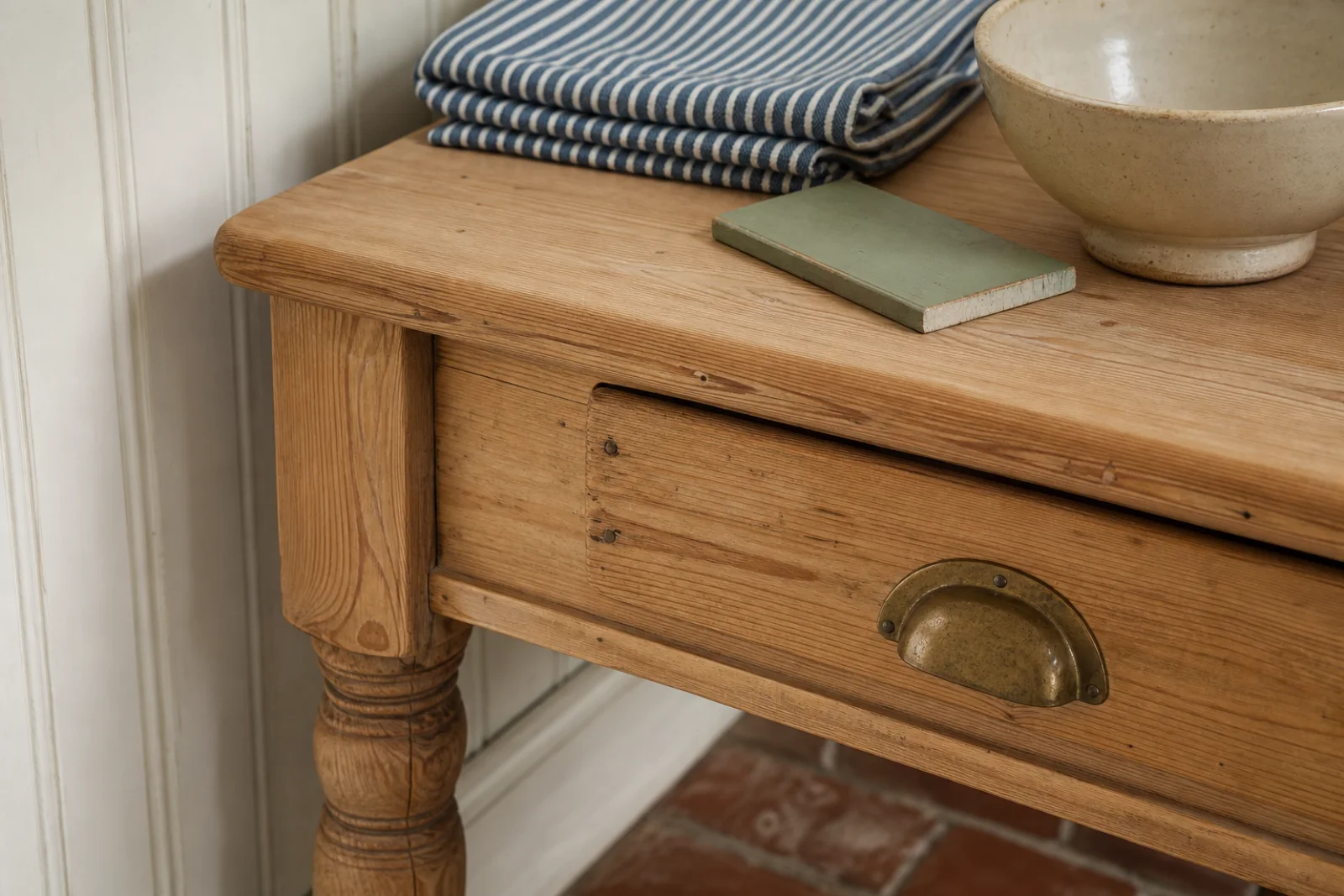
Pine tables, dressers and counters are sized for real tasks and allowed to develop even, useful wear.
Cupboards, benches and peg rails use soft color to organize the room without looking like fitted showroom cabinetry.
Ticking, checks and plain cotton appear on small, replaceable surfaces suited to everyday laundering.
Chairs and case pieces can differ in age when their scale, palette and level of simplicity remain related.
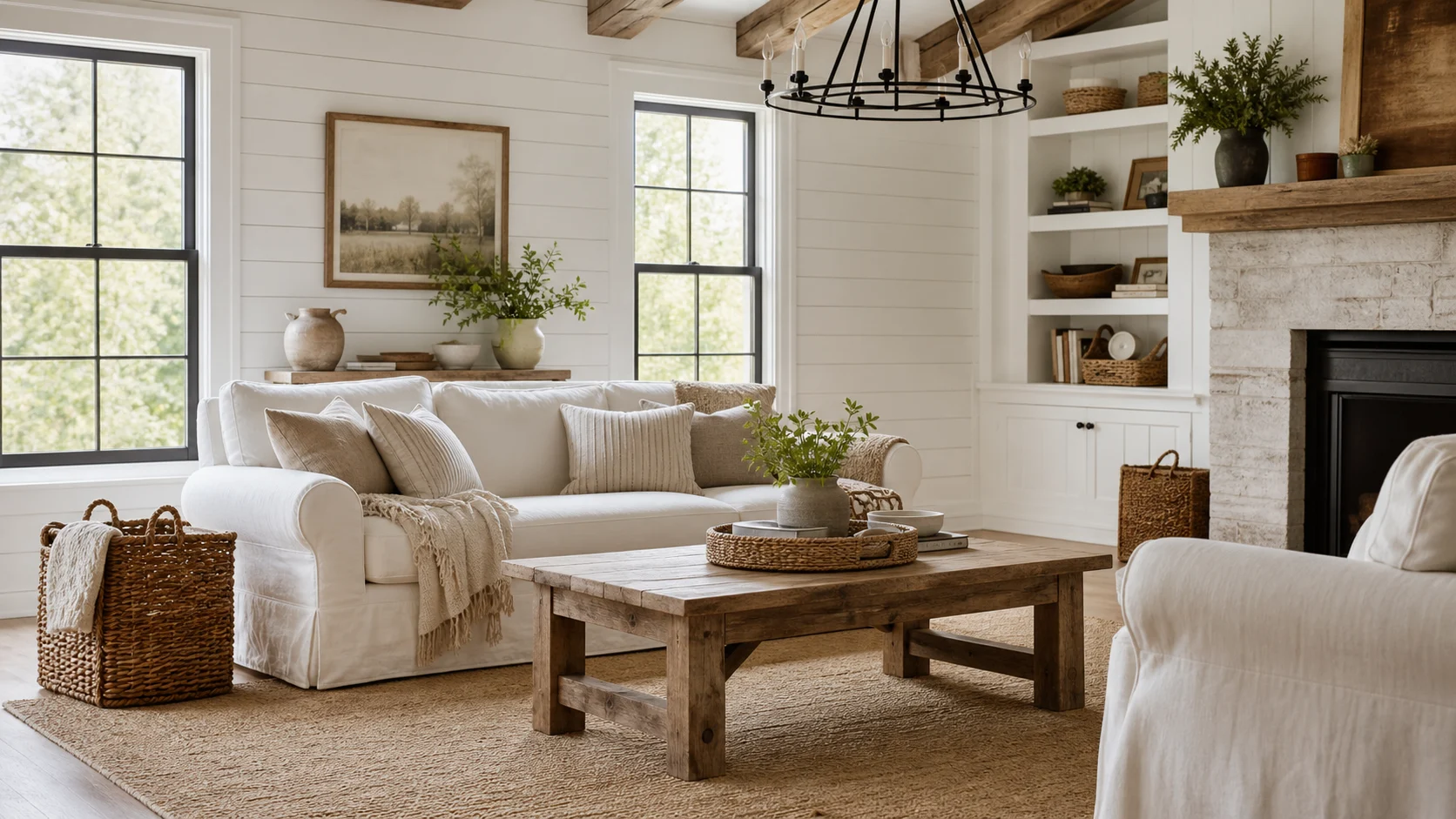
Use washable slipcovers and one pine table, then concentrate baskets near the activity they serve instead of scattering them as decoration.
Pair a simple iron bed with cotton checks, a braided rug and one dresser that can hold both clothing and a washstand-style display.
Let a scrubbed table take daily wear; connect mismatched spindle chairs through two muted paint colors and consistent seat height.
Adapt a pine desk with a comfortable chair, paperwork cupboard and peg rail so household craft does not crowd the working surface.
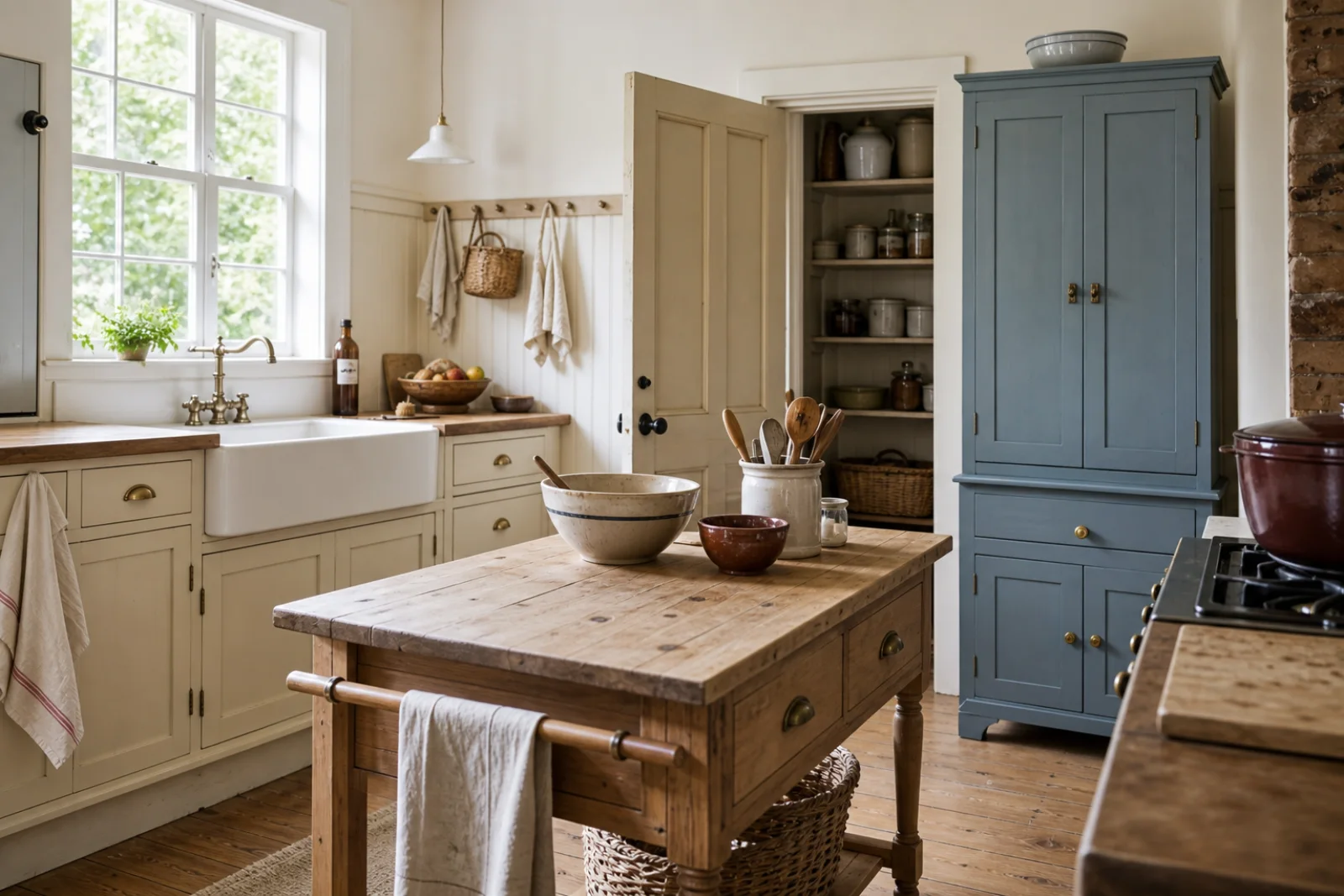
Use a freestanding prep table to separate washing, chopping and storage; keep frequently used tools within one step.
Sequence the room from threshold to bench, shoe space, hooks and closed cupboard, leaving the door swing completely clear.
Use warm white across the room, then assign blue or sage to one useful storage piece. Let pine and brick contribute their natural color, with red appearing only as a narrow accent.
A forgiving backdrop for beadboard, plaster and mixed furniture without becoming stark.
Gives pantry cupboards and small textiles a calm domestic anchor.
Links painted chairs, utility storage and garden views in modest amounts.
Keeps working tables and floors warm while showing ordinary use honestly.
Adds a small, durable note through floors, stripes or one painted object.
A matte work surface can be cleaned, lightly sanded and renewed rather than protected from every mark.
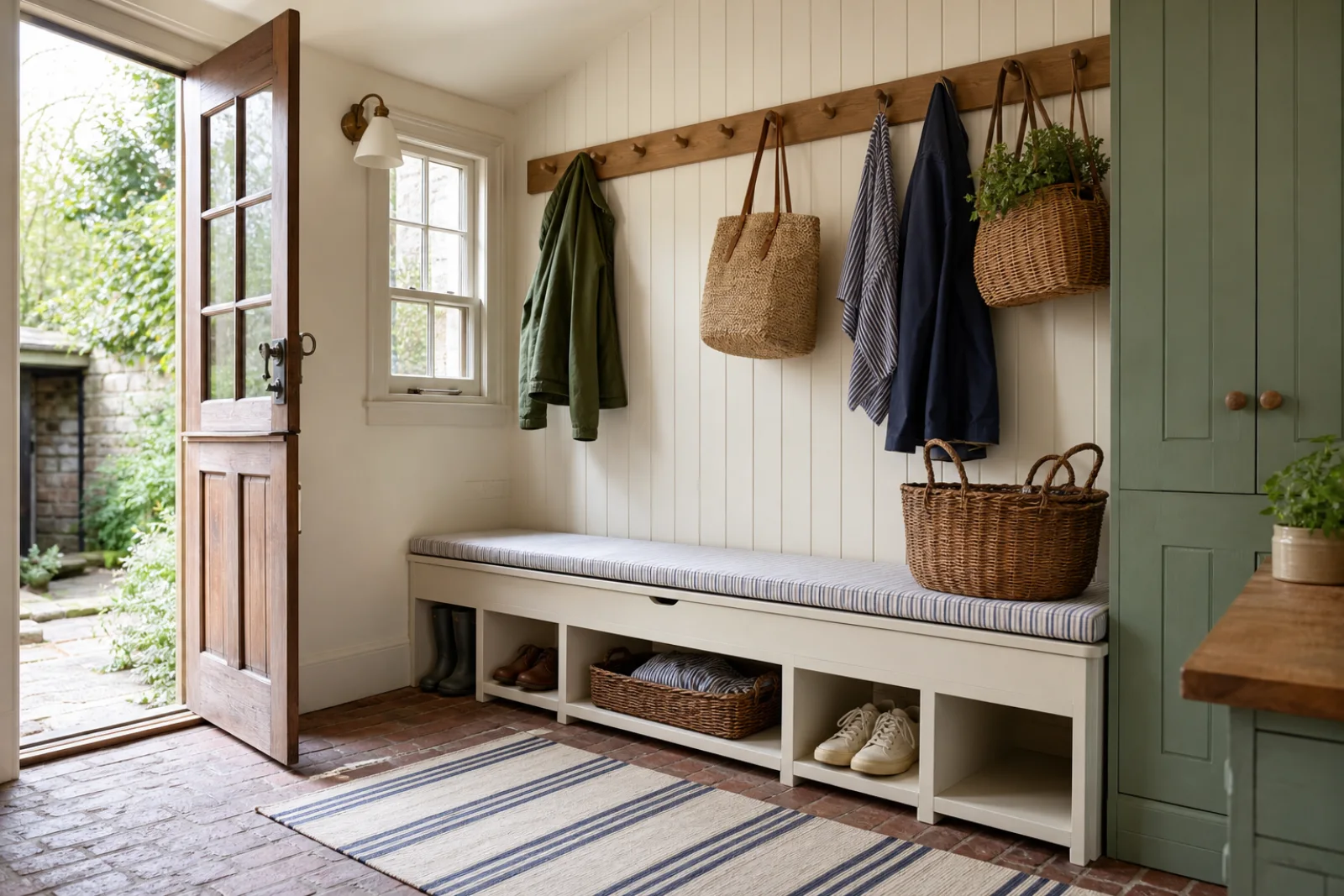
Soft opaque paint unifies additions from different periods and is straightforward to repair.
A narrow stripe provides washable pattern on cushions, runners and utility curtains.
Bowls and crocks earn display space by remaining useful for preparation, serving or storage.
Begin with one repeated household routine, solve it clearly and let the visual character emerge from those useful choices.
Trace how groceries, coats, laundry or meals move through the room before placing storage.
Add one table, dresser, settle or pantry cupboard sized to the task and available floor area.
Use warm white plus two faded colors to connect pieces without making them match.
Style only the items used each week and preserve clear space on tables, counters and benches.
When the room feels wrong, change the underlying decision before adding more decor.
Keep paneling where it protects a wall or clarifies a built-in, and use plain plaster elsewhere.
Replace graphic black accents with dusty blue, sage, aged brass or a narrow red textile note.
Display only frequently used bowls and tools; move reserves and packaging behind painted doors.
Choose sound secondhand pieces or plain new timber and allow wear to appear where hands and work naturally touch.
Farmhouse is not simply a collection of rural motifs. Its clearest identity comes from domestic infrastructure: movable work furniture, accessible storage, repairable finishes and a layout that supports recurring household tasks.
Heavier and more architectural, emphasizing exposed stone, hewn timber, forged iron and substantial forms.
Choose Farmhouse for brighter paint, lighter furniture and a stronger focus on domestic work and storage.
Painted cupboards and cotton ticking replace fieldstone and visual mass.
Cleaner and more graphic, often using broad white fields, black frames, oversized islands and contemporary upholstery.
Choose Farmhouse for mismatched furniture, softer color and a less polished relationship with everyday use.
Freestanding painted pieces replace high-contrast fitted compositions.
Broader and more decorative, varying by region and using more florals, collected ornaments and traditional motifs.
Choose Farmhouse when the room should be organized first around practical household tasks.
Peg rails, worktables and pantry storage lead before decorative rural references.
More romantic and narrative-led, with garden imagery, florals, craft displays and a nostalgic ideal of rural life.
Choose Farmhouse for plainer textiles, stronger utility and less sentimental styling.
Washable ticking and clear work zones replace layered florals and pastoral display.
Look for useful proportions and repairable construction. A well-sized pine table or painted cupboard will carry the style more convincingly than a cart of farmhouse-themed accessories.
Check frame stability and mattress dimensions, then keep bedding simple enough for frequent washing.
Measure shelves around actual jars, cookware and small appliances rather than buying for display alone.
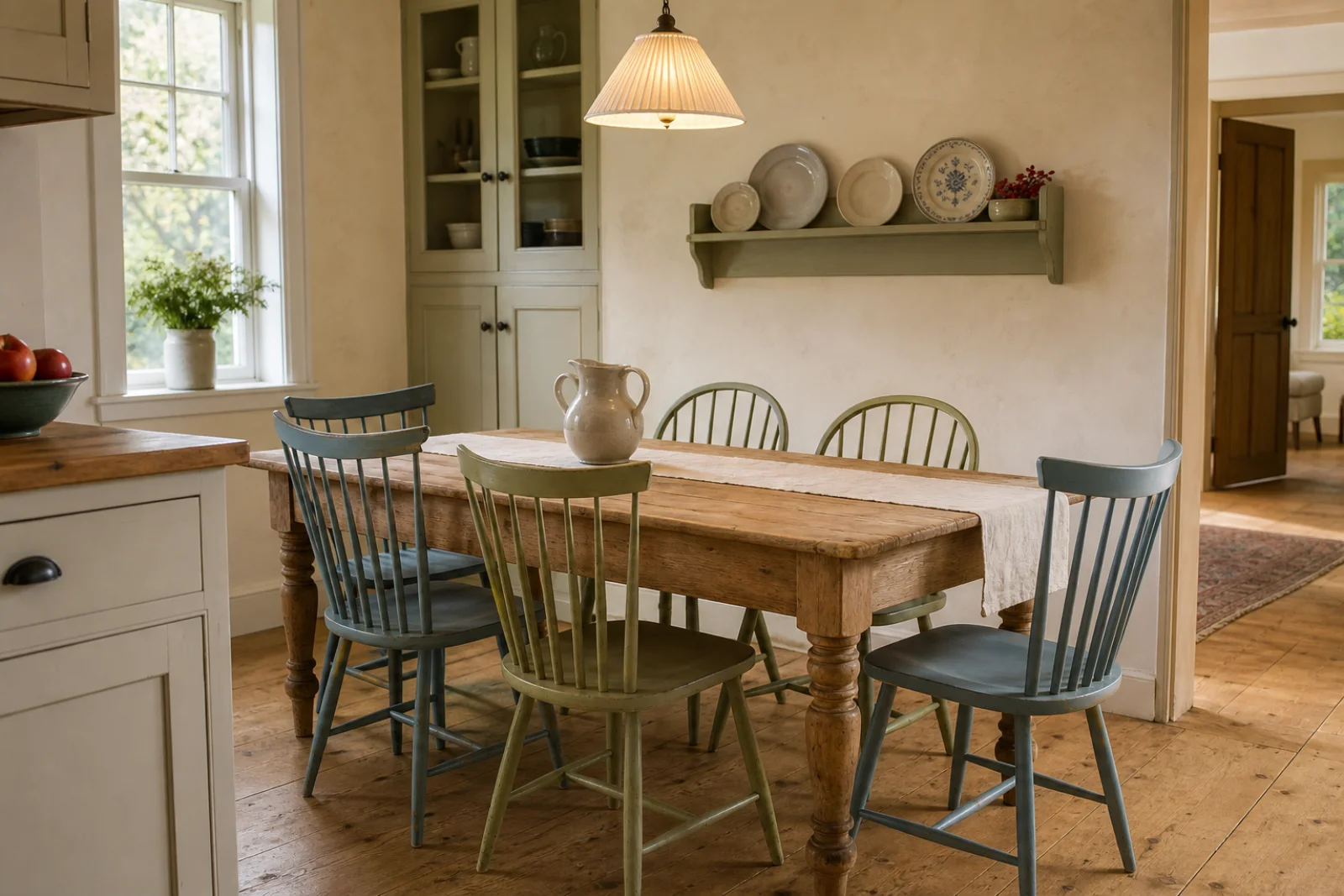
Choose comfortable knee clearance and a repairable top that can serve meals, homework and preparation.
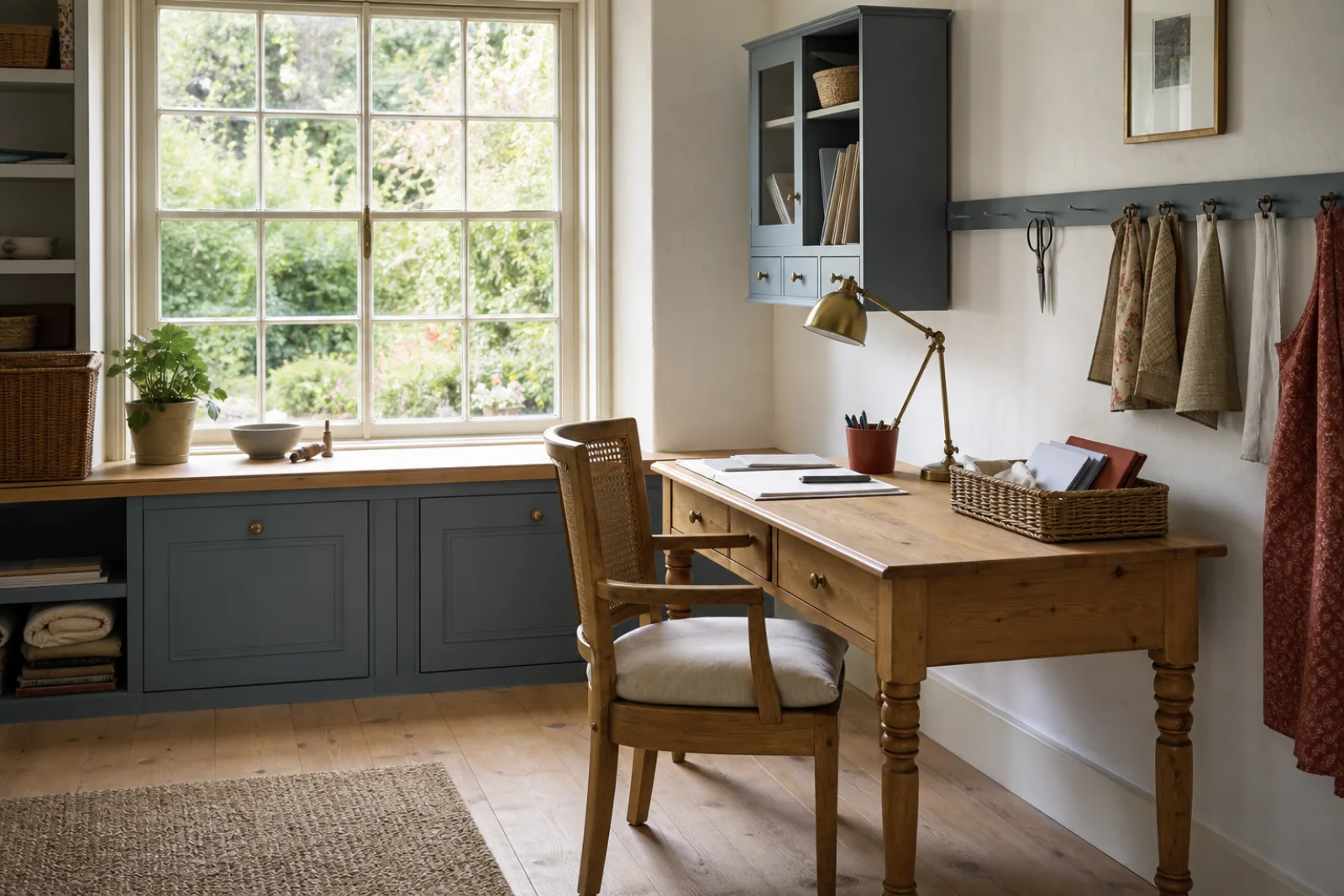
A shallow cupboard keeps household administration close without turning the room into an office suite.
Prioritize a comfortable seat, lift-up storage and open shoe clearance over decorative paneling.
Buy bowls and pitchers with useful capacity, stable bases and glazes suited to food or water.