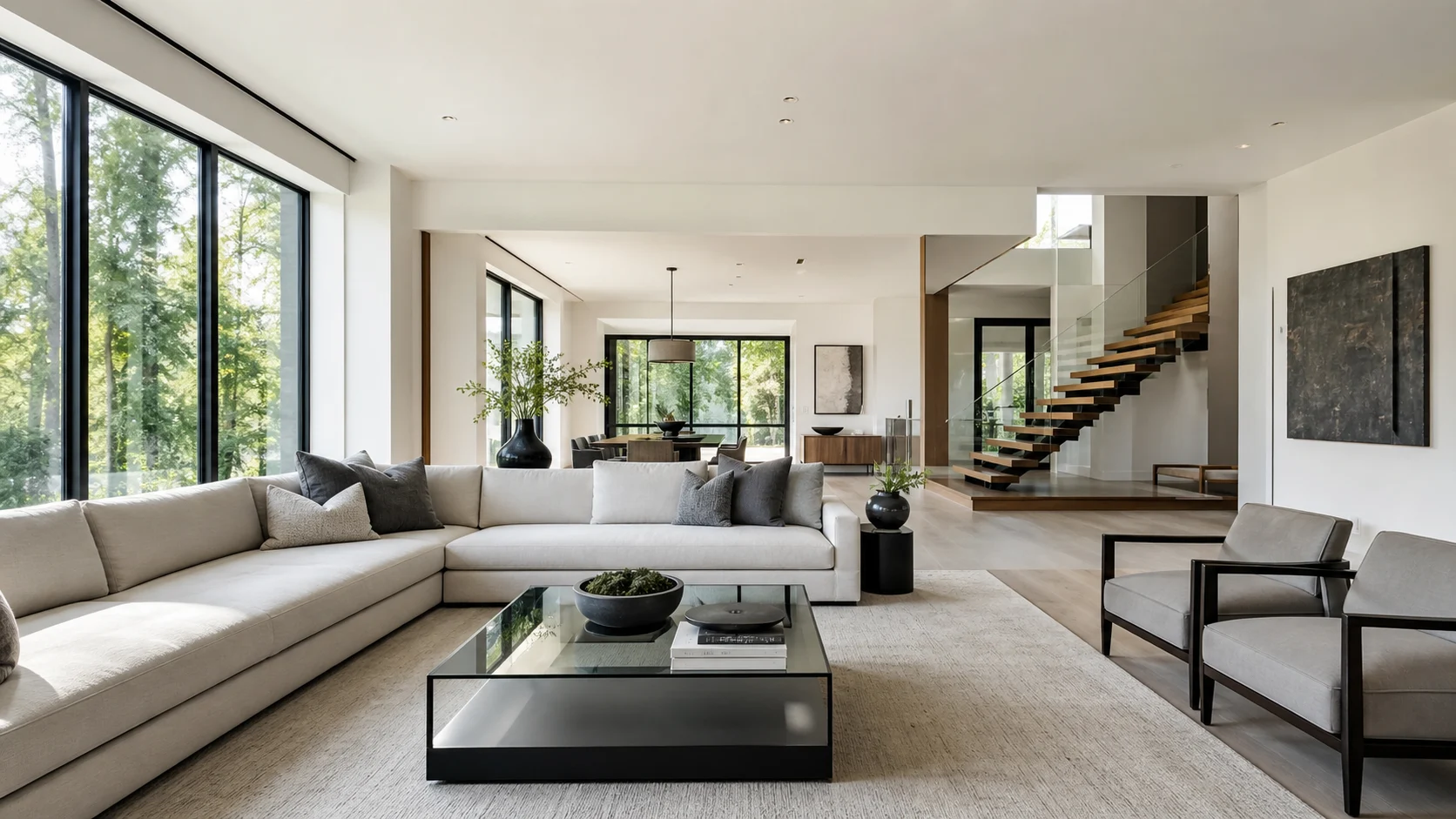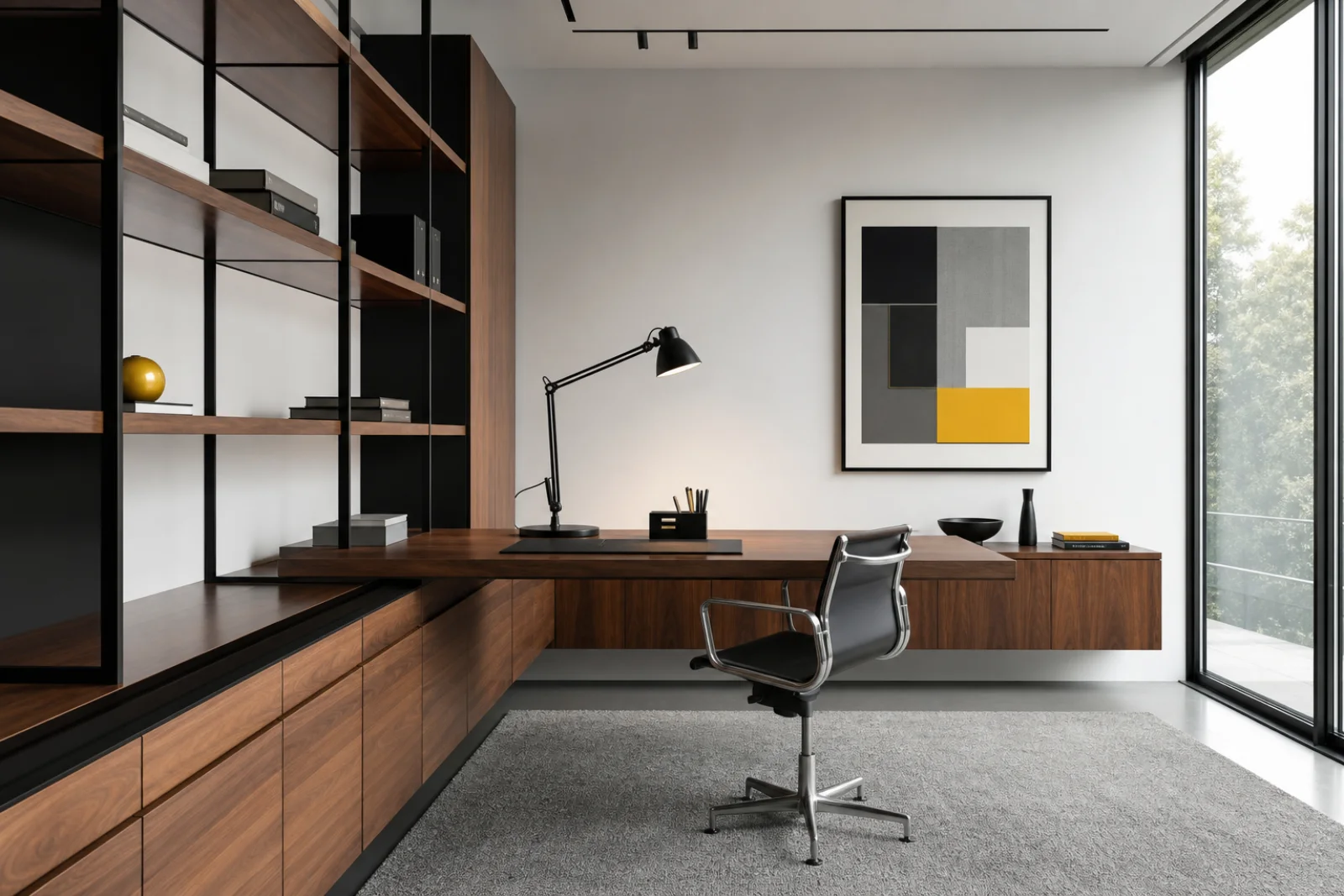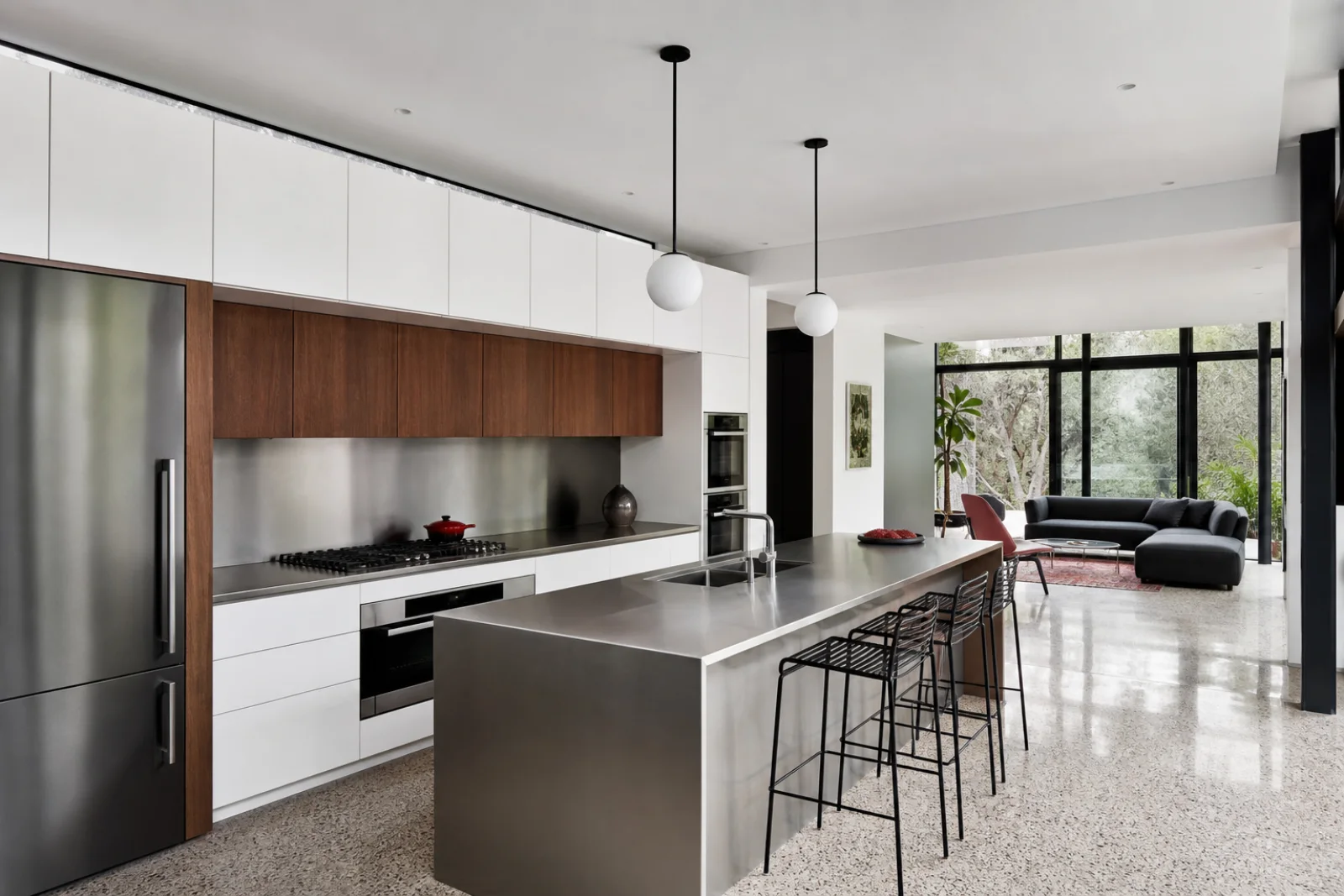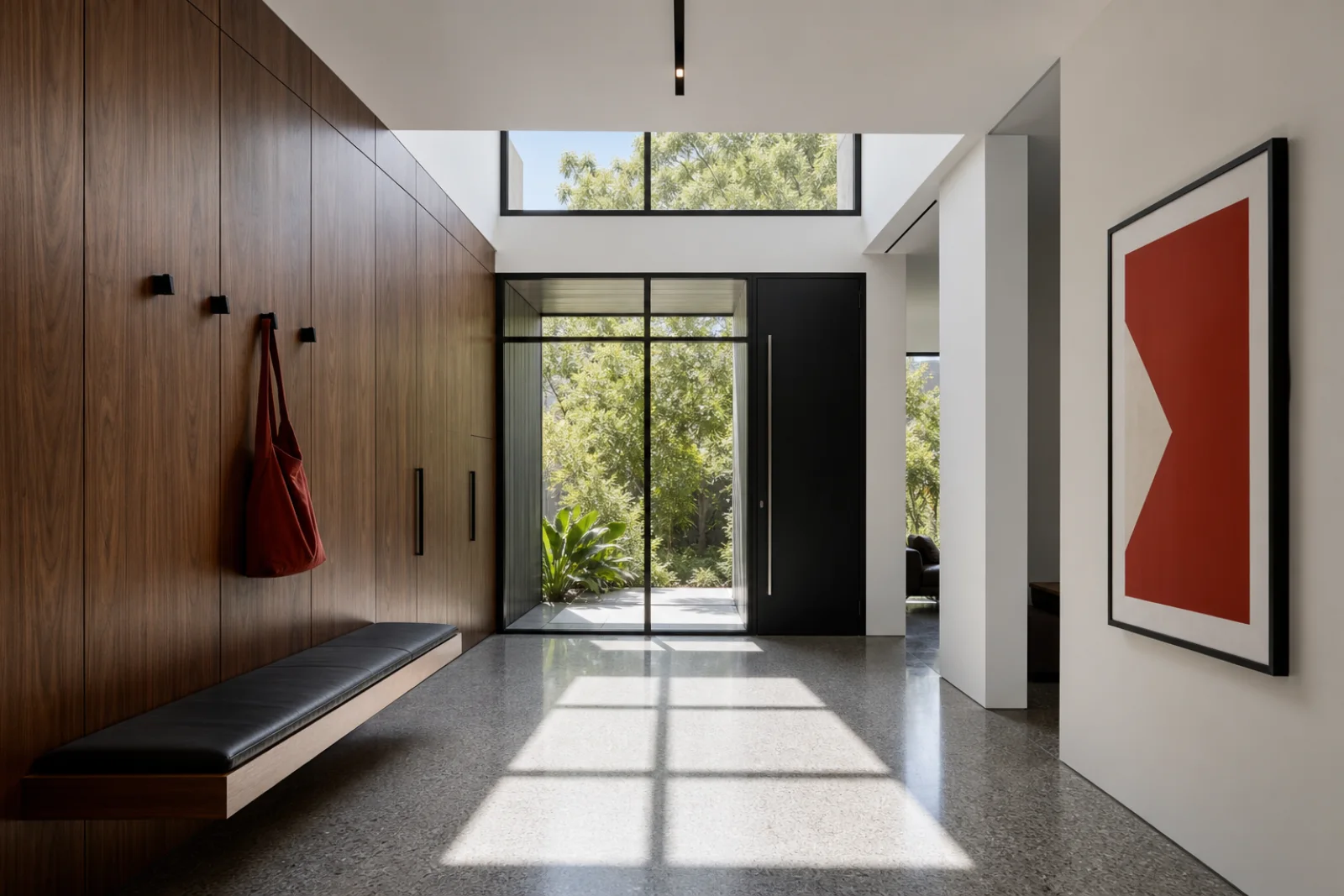
01
Sculptural
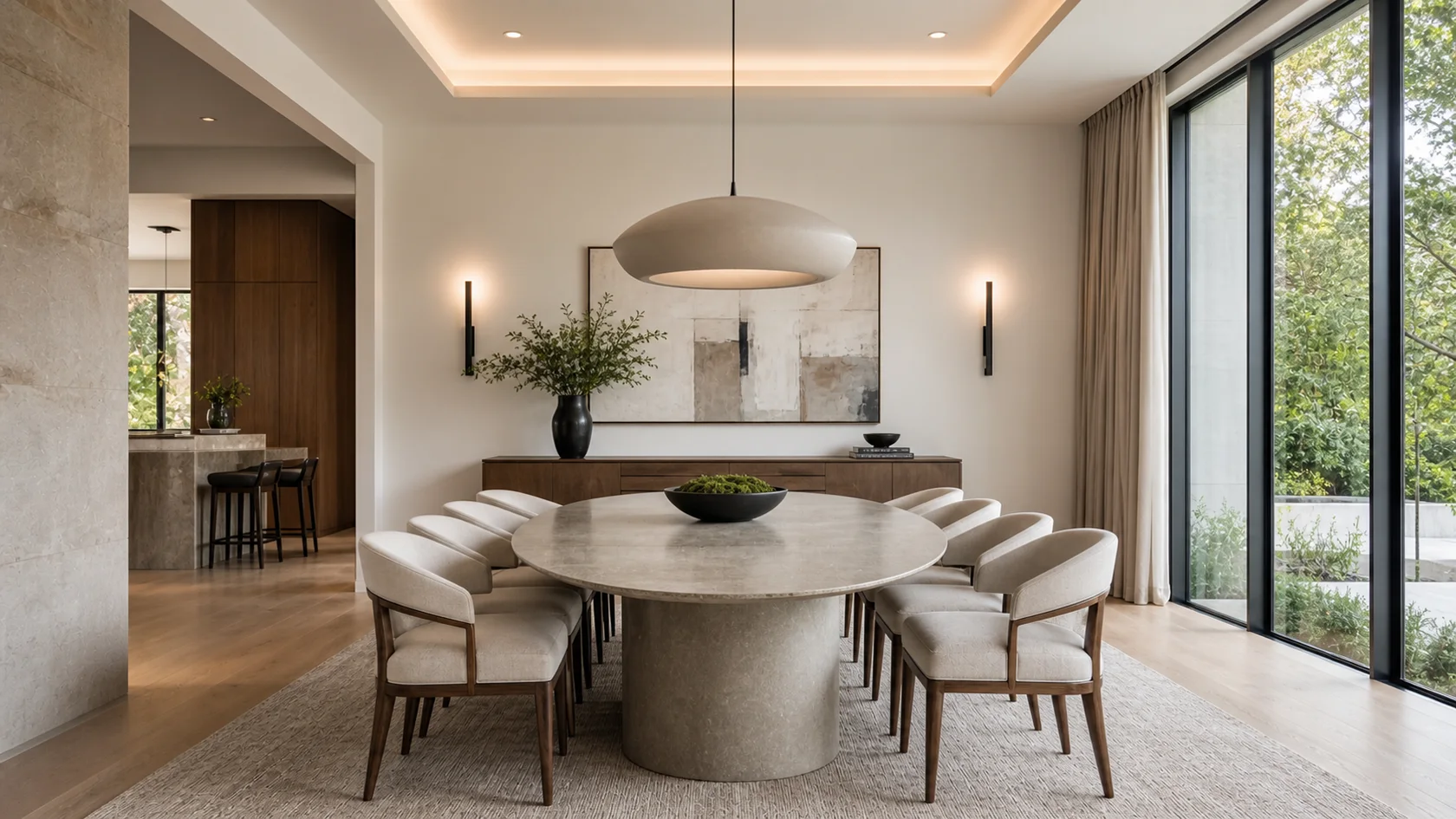
A precise architectural plane establishes hierarchy before loose furniture enters the room. Allow occupied chairs to pull out comfortably and keep the pendant aligned with the tabletop.
Five useful ways to translate modern into a dining room, with different footprints, light conditions and storage needs.
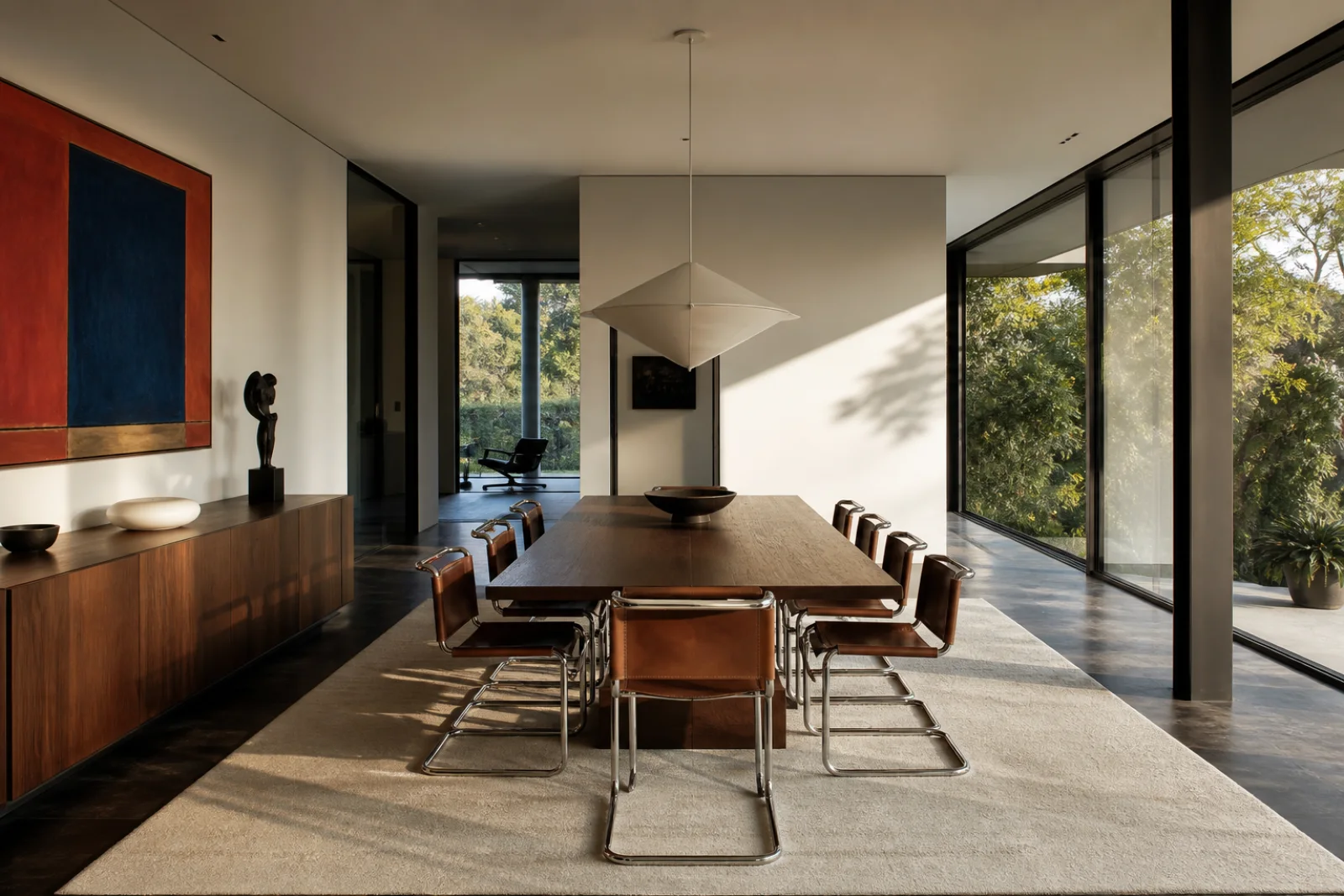
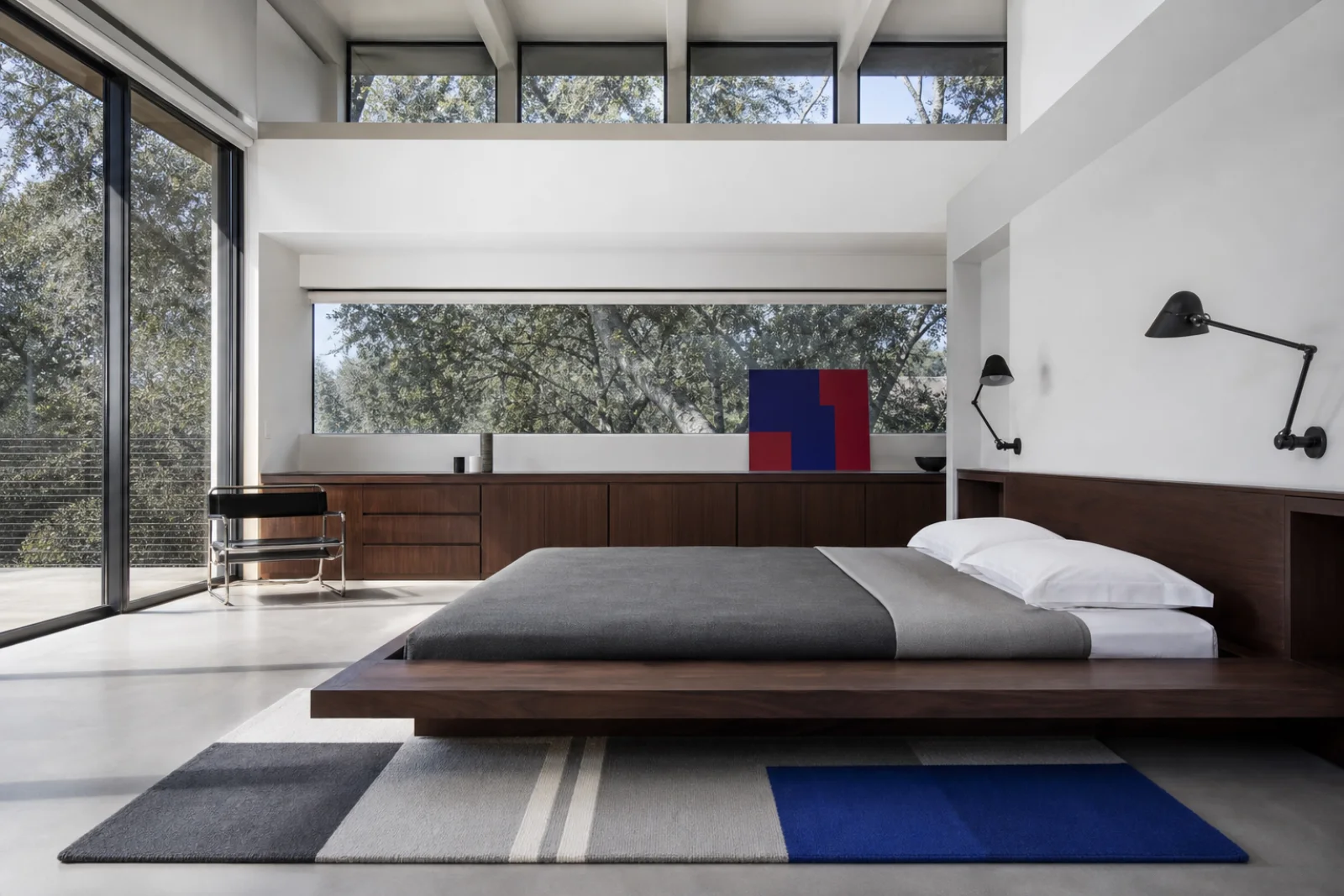
A modern dining room works when the style supports comfortable gatherings, chair clearance and light centered on the table rather than the room. Modern organizes daily life through precise volumes, integrated storage and a controlled contrast between pale architecture and darker anchors.
Resolve alignment, storage and circulation first; use walnut, stone or blackened metal as deliberate planes rather than decorative fragments. The five variations below change the plan and architecture, not simply the camera angle or accessory color.
Use these examples to choose the version of the style that fits your architecture, light and square footage.
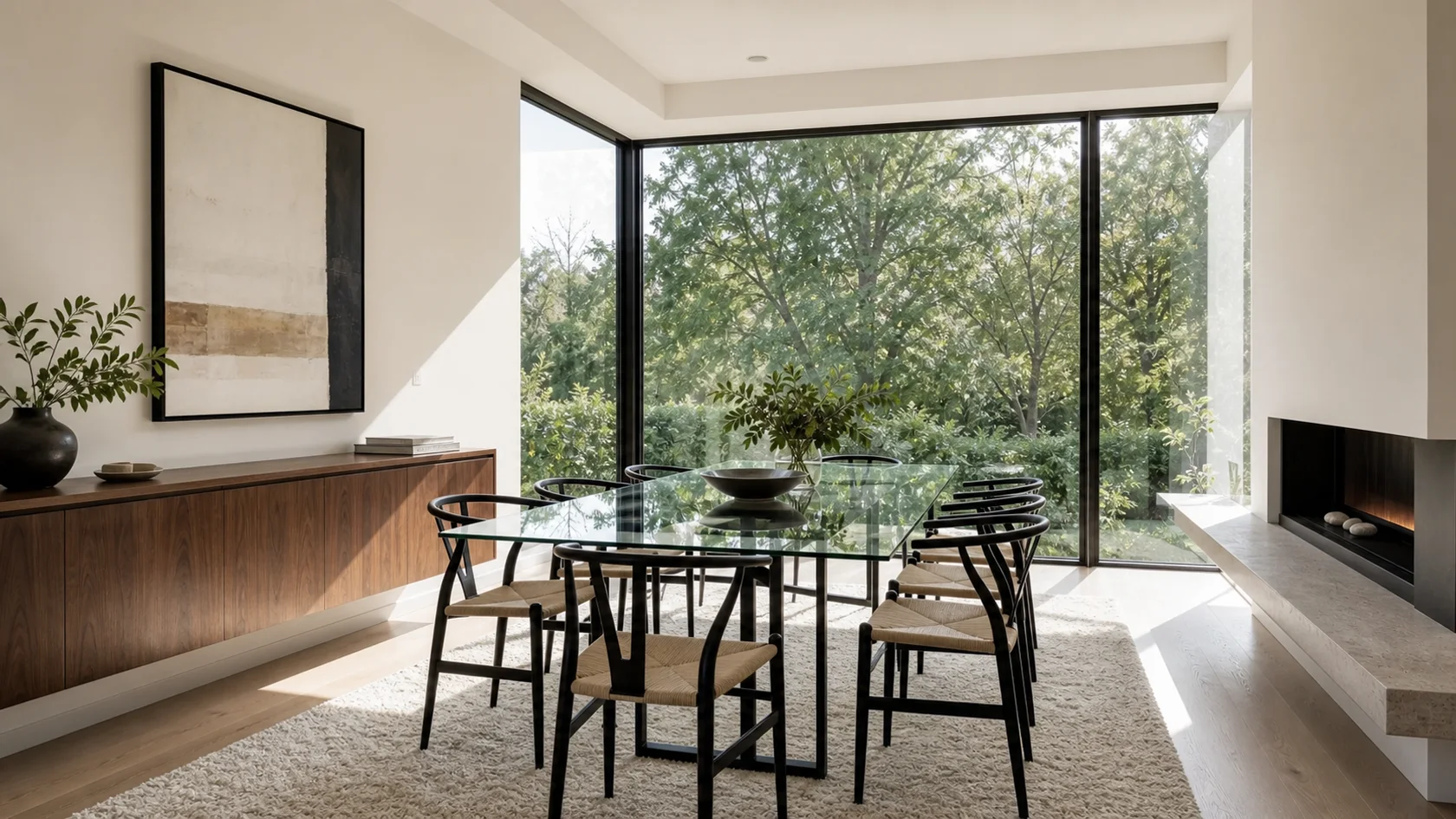
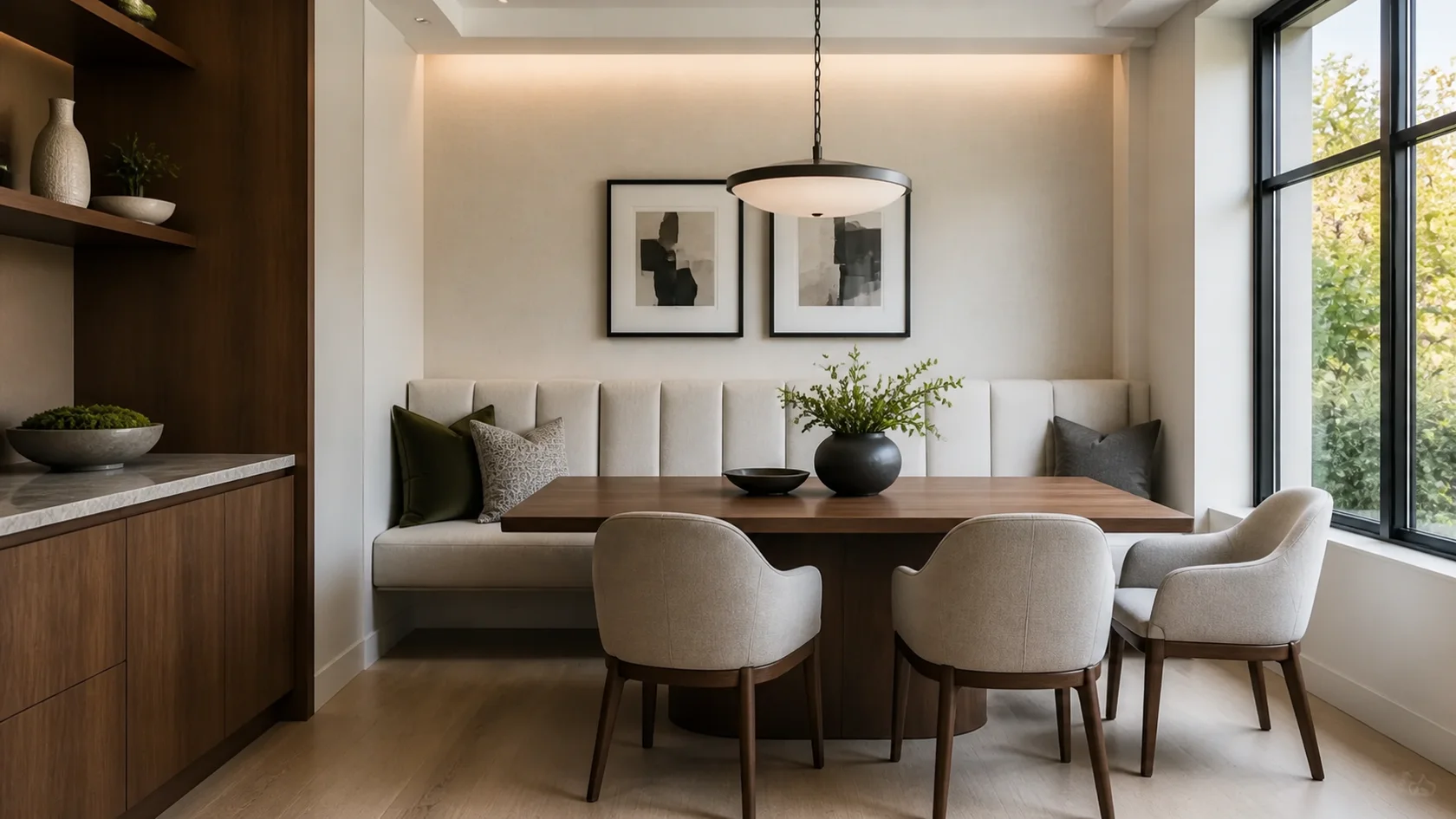
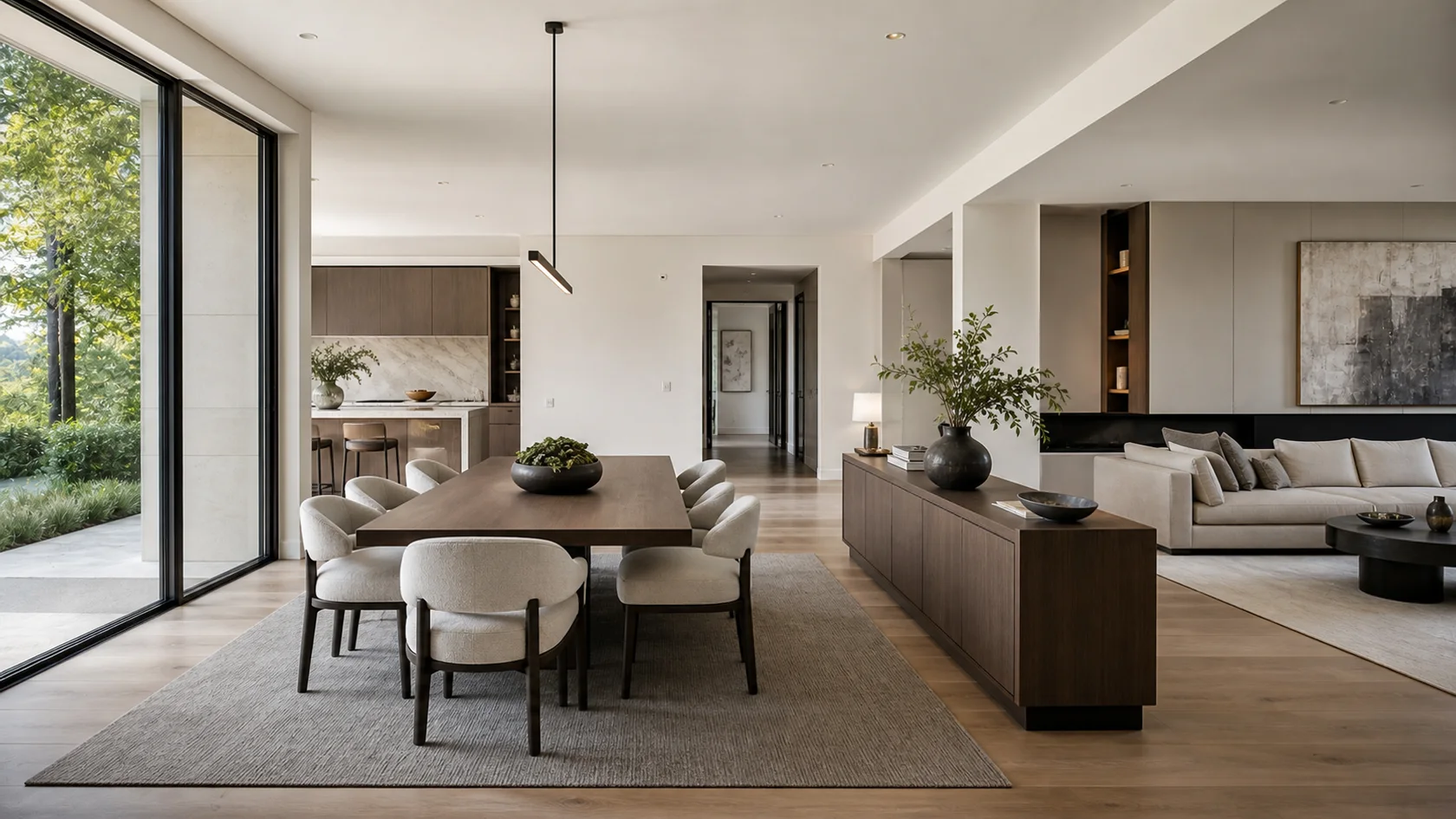
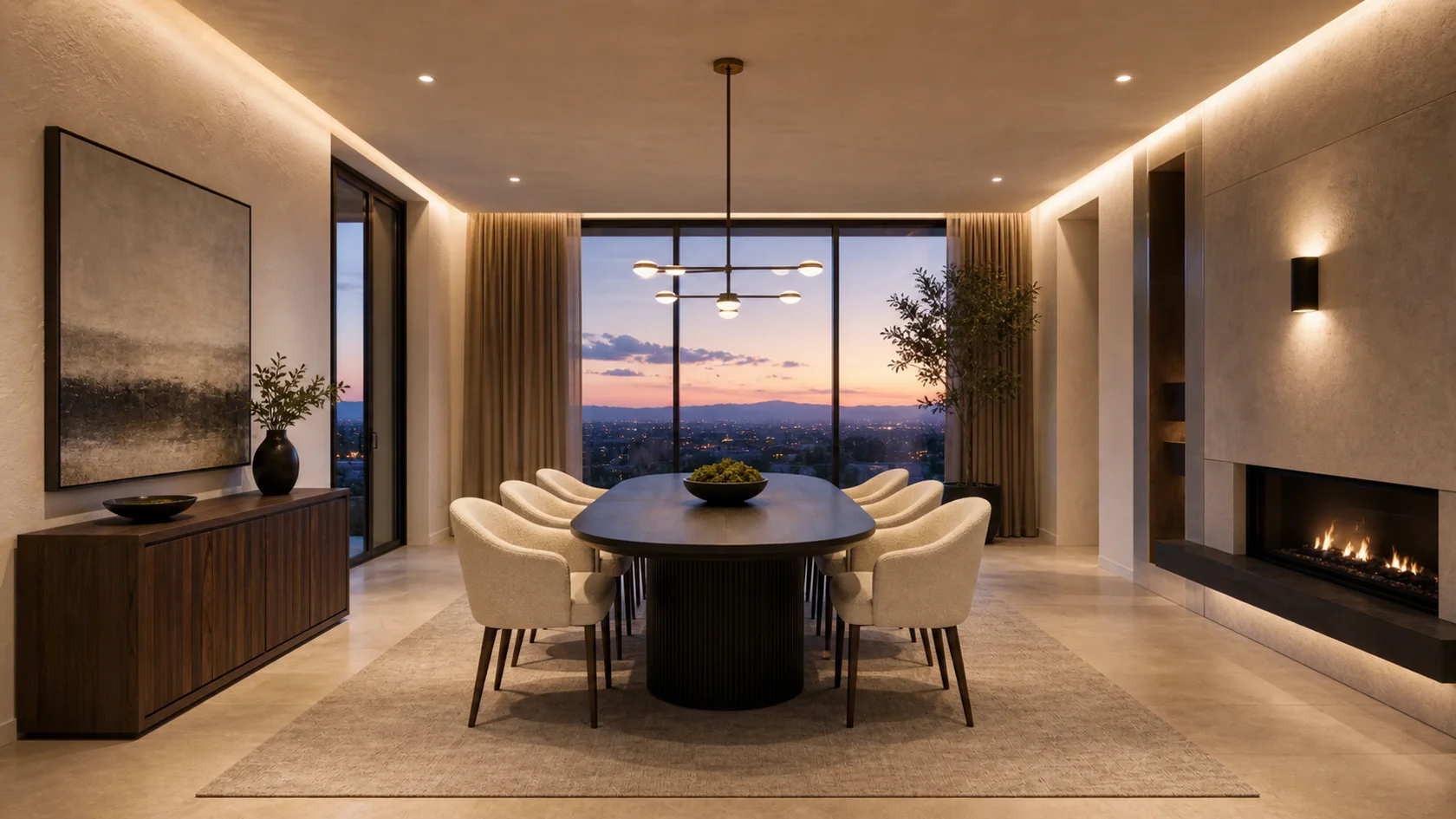
Use the style where it helps the room work: seating, circulation, focal point and material balance.
Allow chairs to pull out without blocking the main route, then choose round, oval or rectangular geometry.
Hang the fixture from the table center even when the table is not centered in the architectural room.
A shallow sideboard or wall niche should support meals without narrowing chair clearance.
Curtains, upholstery or a rug can soften a room dominated by timber, stone or glass.
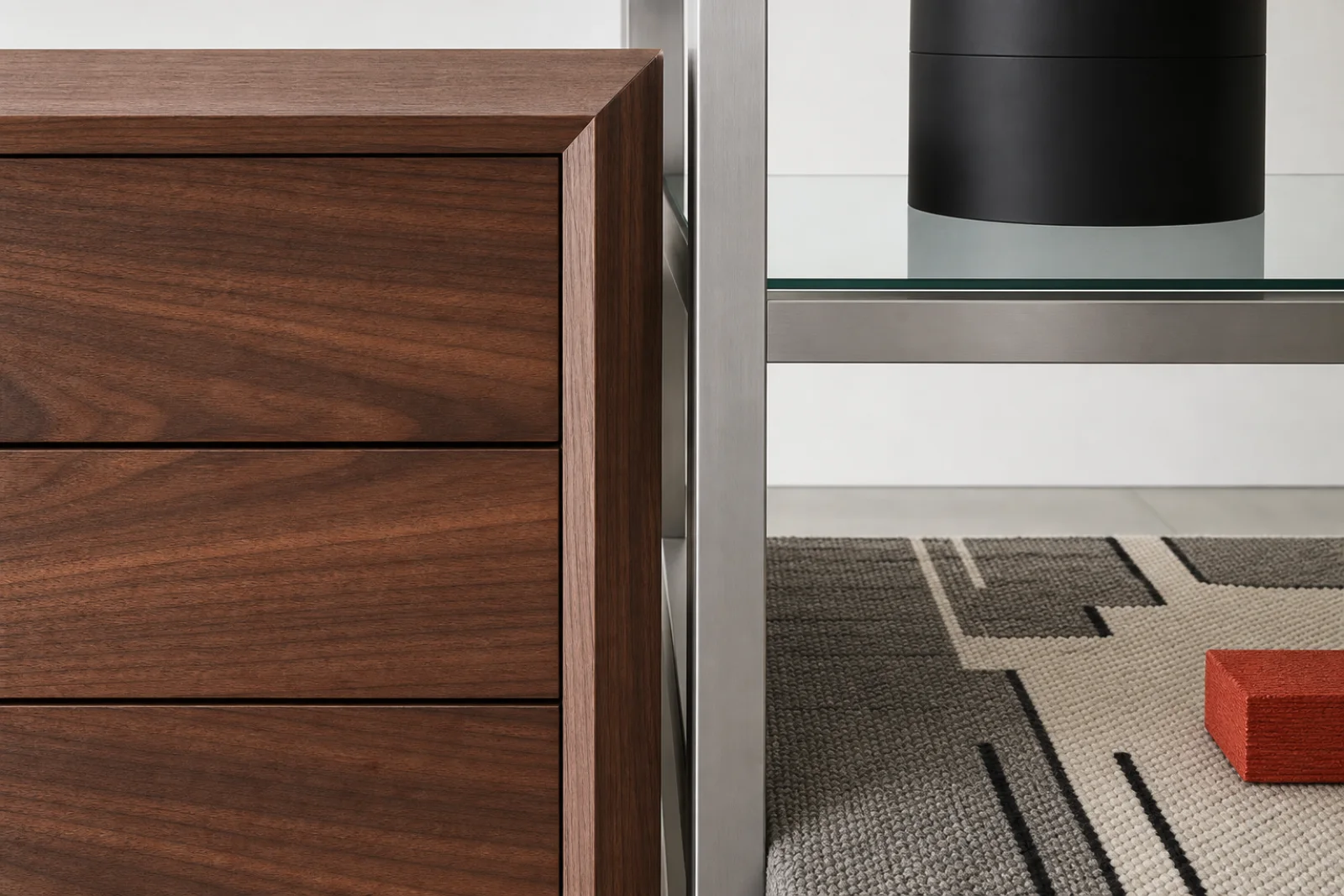
Modern color works as part of the composition: pale architectural planes, one warm wood, dark structural lines and a small graphic accent.
The light plane for walls and ceilings; choose a neutral white that keeps edges crisp.
A concentrated warmth layer for cabinetry, tables and long built-in elements.
Connects appliances, frames, hardware and concrete or terrazzo surfaces.
Defines window grids, lighting, furniture frames and architectural joints.
Use once in art, a chair or a small object to interrupt the neutral structure.
Warm white and pale stone keep the main volumes clear.
Walnut introduces depth through one continuous cabinet or headboard plane.
Graphite and blackened metal sharpen thin functional edges.
Wool and tailored upholstery stop precise geometry from feeling corporate.
For this room, a few strong choices can carry the style better than adding more decor.
Choose the main dining table for real comfort and scale; its silhouette should carry the room before smaller styling arrives.
Resolve alignment, storage and circulation first; use walnut, stone or blackened metal as deliberate planes rather than decorative fragments.
Resolve alignment, storage and circulation first; use walnut, stone or blackened metal as deliberate planes rather than decorative fragments.
Resolve alignment, storage and circulation first; use walnut, stone or blackened metal as deliberate planes rather than decorative fragments.
Use these checks to keep the modern character clear without compromising how the dining room works.
Include pull-out depth and the route behind occupied seats in the plan.
Relate the light to the table position so the composition stays coherent.
Leave enough clear surface for serving and use one low centerpiece.