01
Paneled Headboard
Deep architectural color establishes a confident contemporary frame for familiar forms. Preserve a calm bedside zone and a clear path from the door to storage.
Five materially and spatially different neo-traditional approaches to the bedroom, including a compact plan and an evening lighting study.
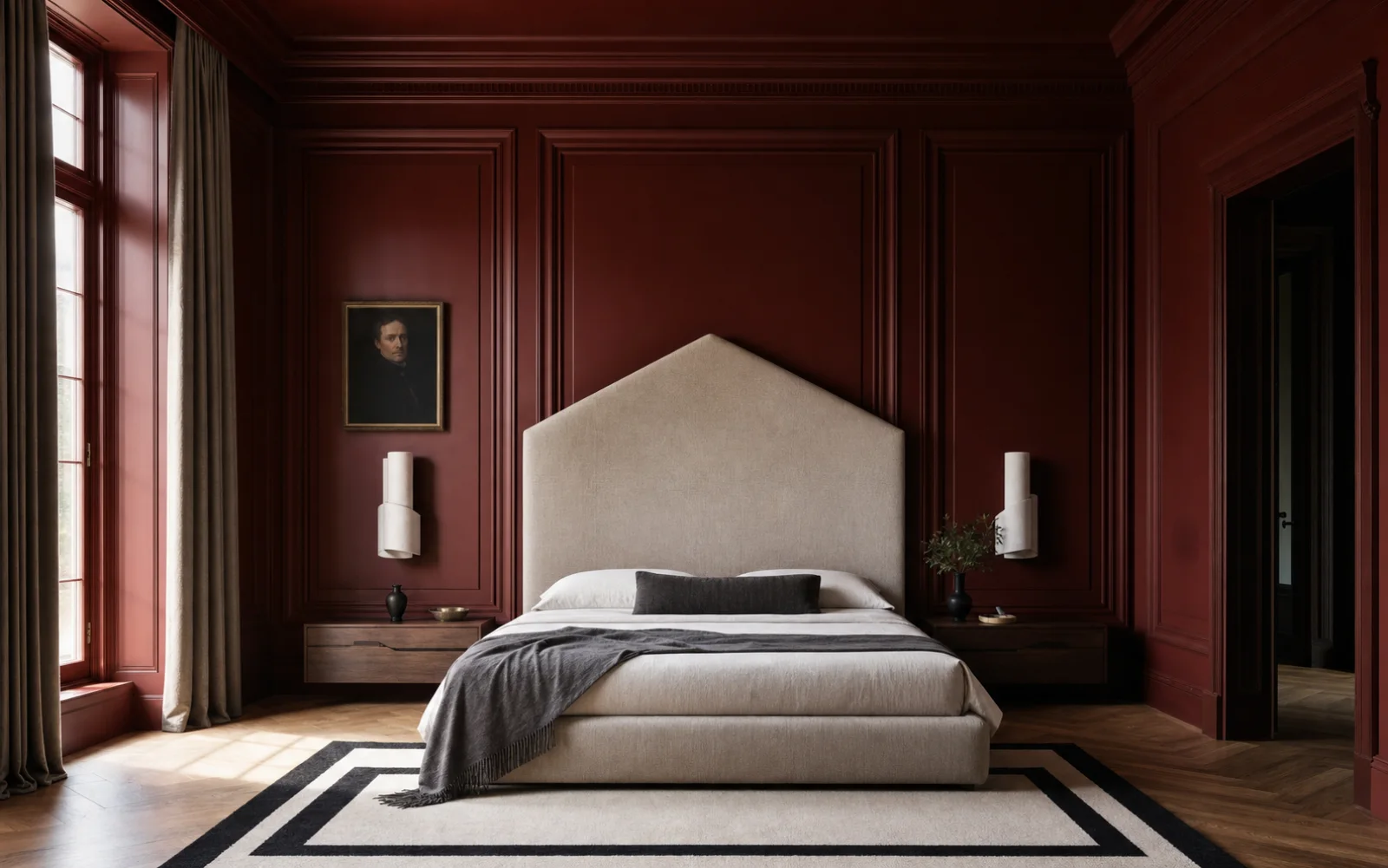
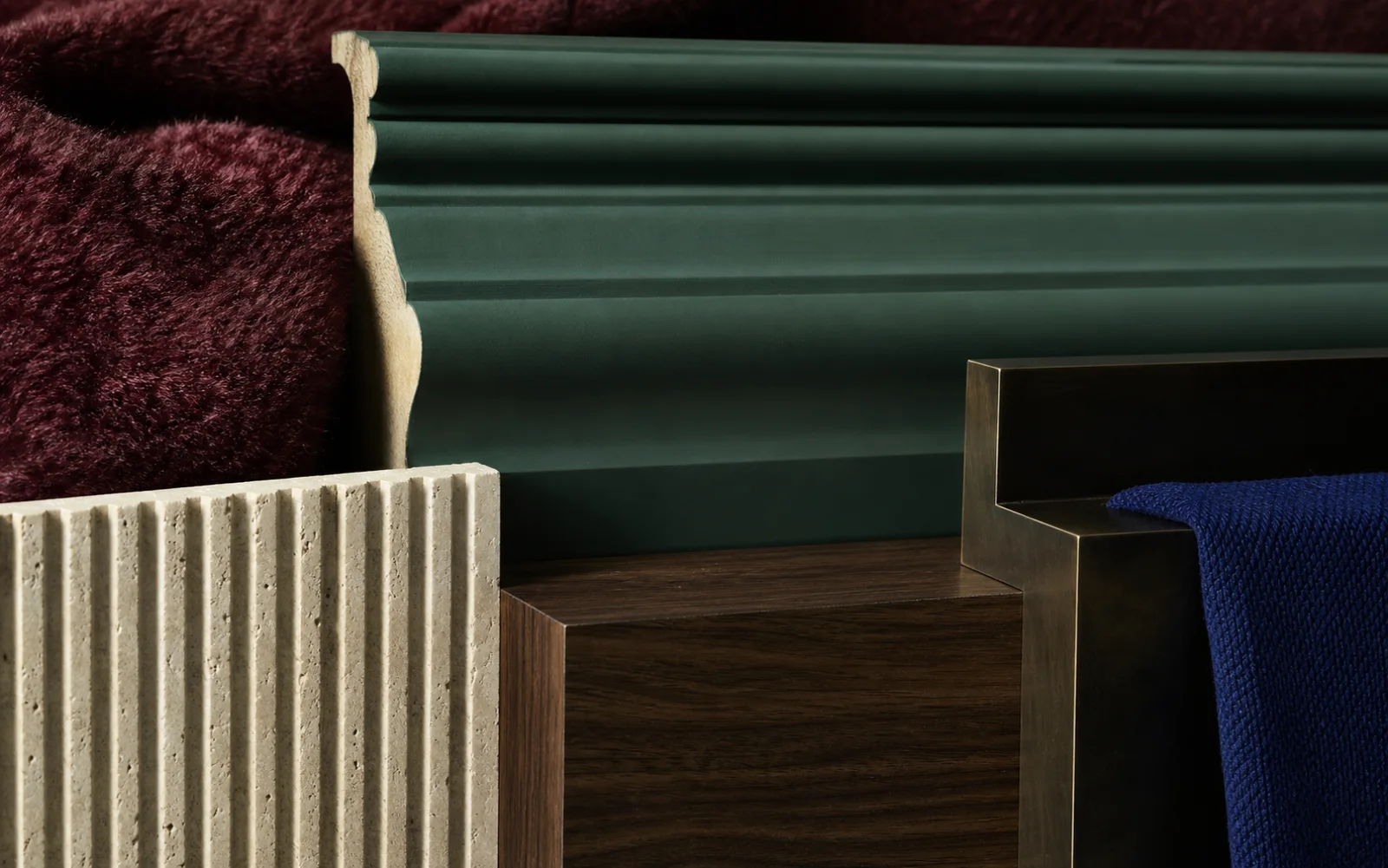
Neo-Traditional reinterprets inherited room forms through deep architectural color, useful antiques, current comfort, bold contemporary art and controlled pattern. In the bedroom, that identity must still support rest, low visual stimulation and an unobstructed route around the bed.
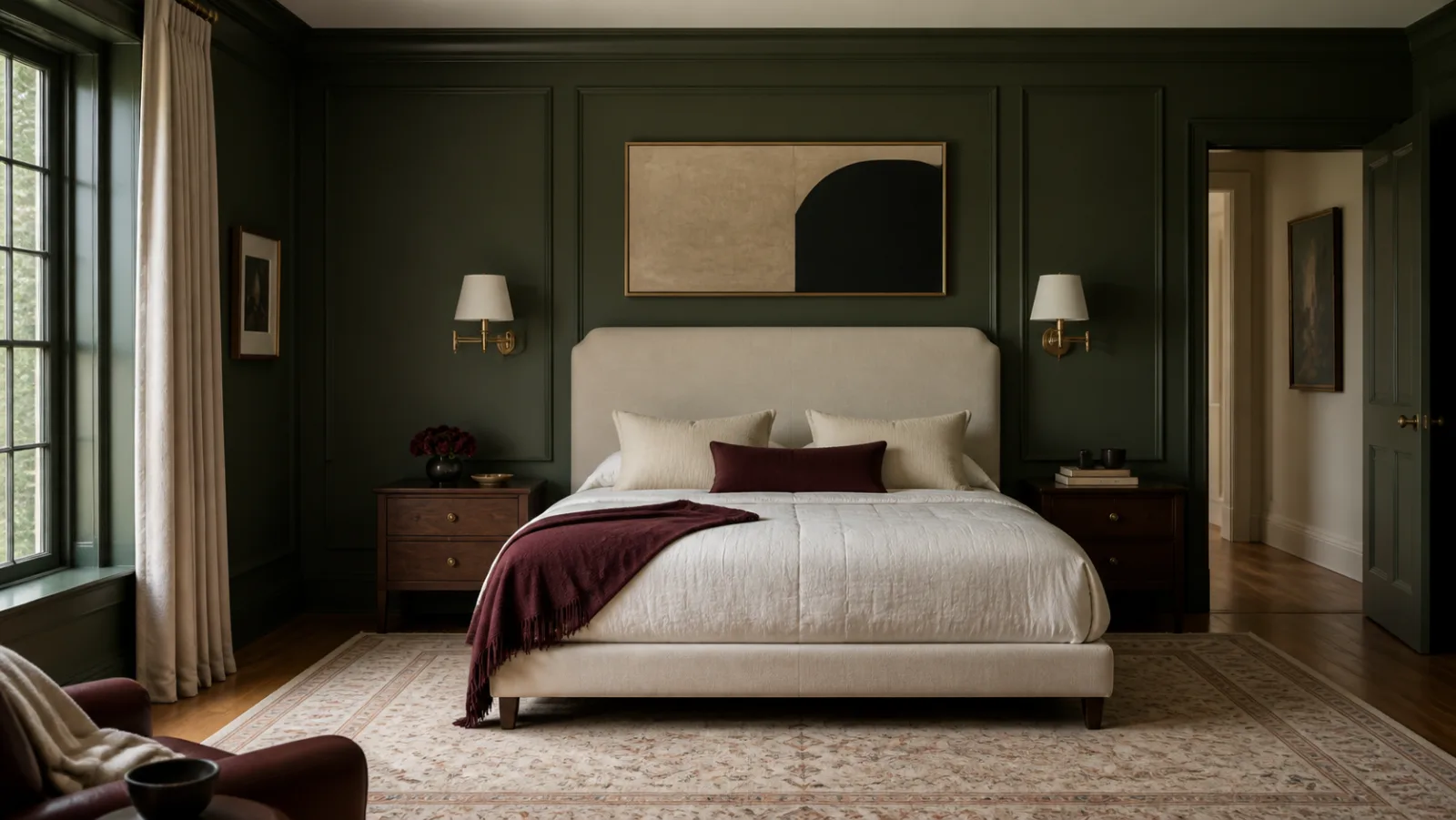
Use dark color behind the bed rather than on every plane, balancing it with crisp bedding, warm lamps and one controlled textile motif. Build contrast around one dark architectural plane and one clearly old piece, then use current seating, light and storage to keep the room livable; avoid gothic theming, matched antique suites and uncontrolled pattern.
Use these examples to choose the version of the style that fits your architecture, light and square footage.
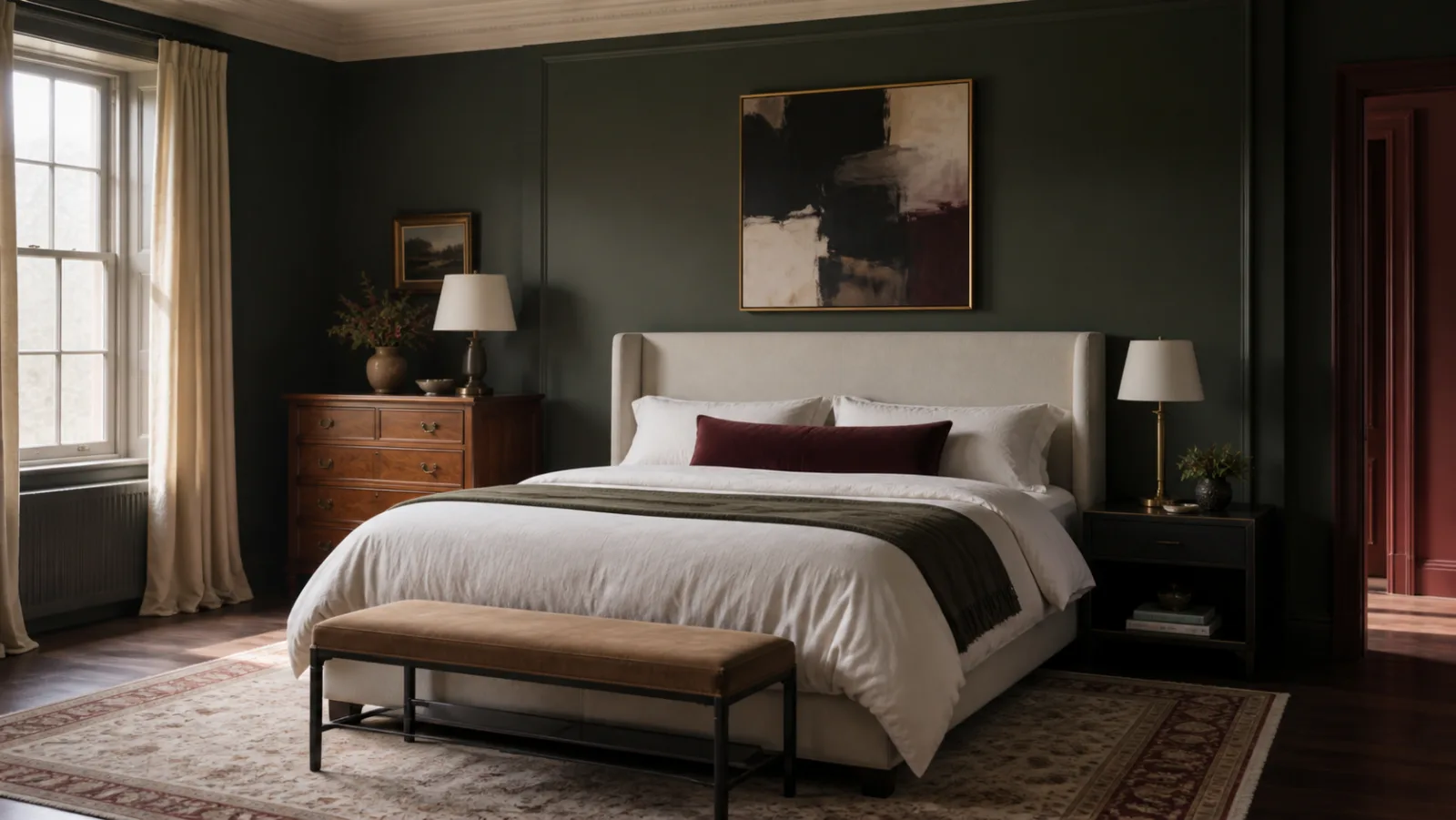
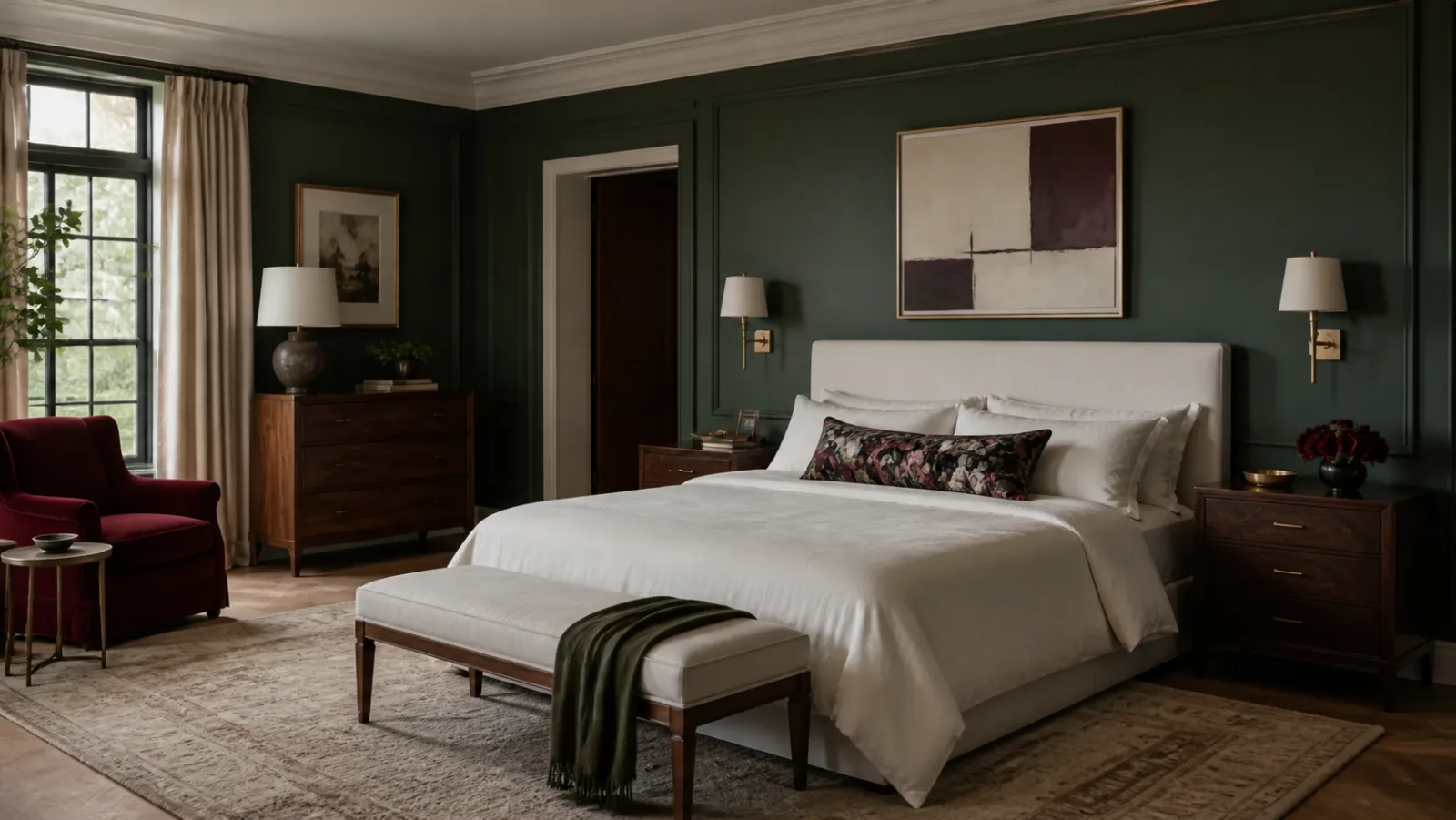
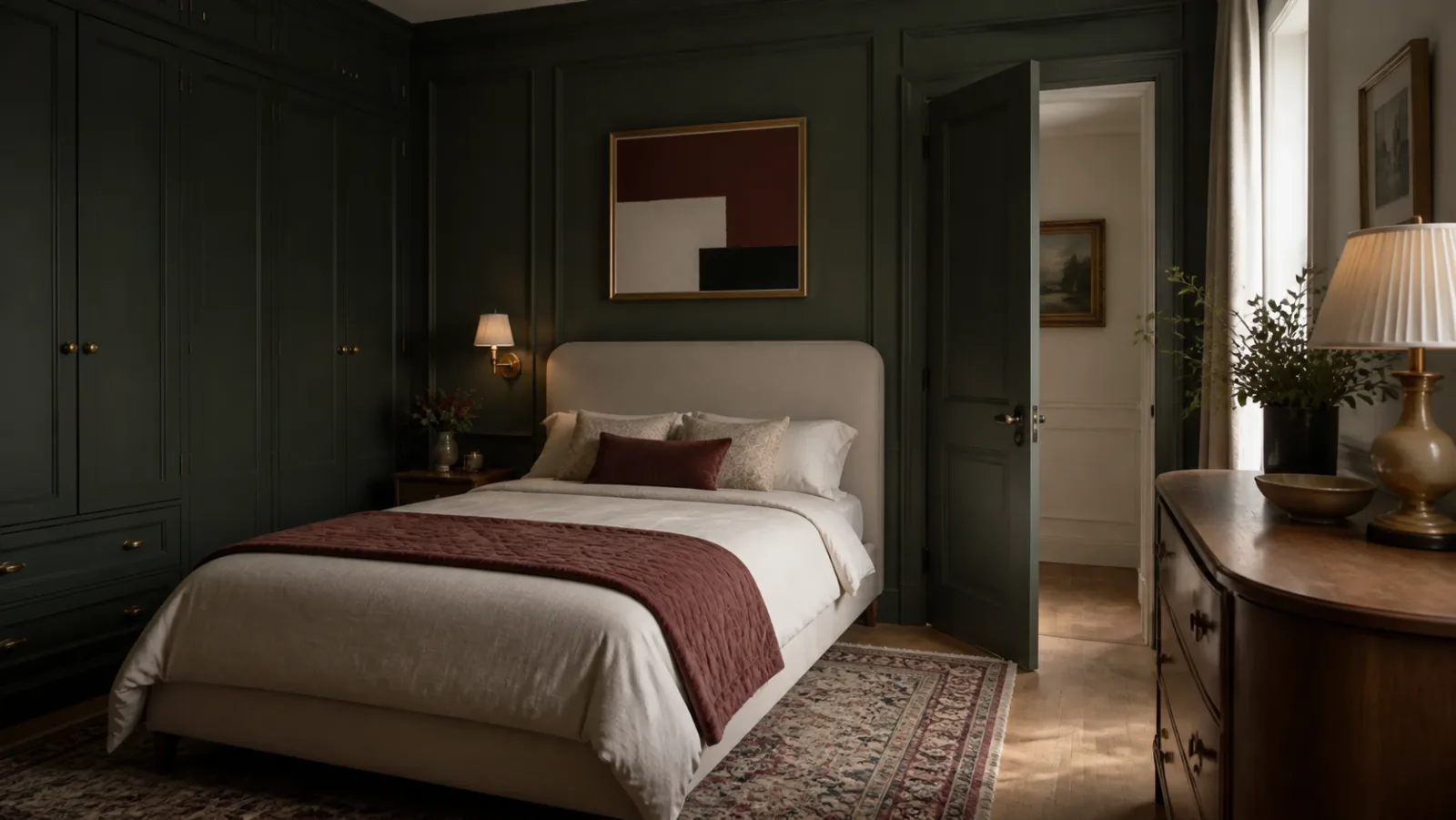
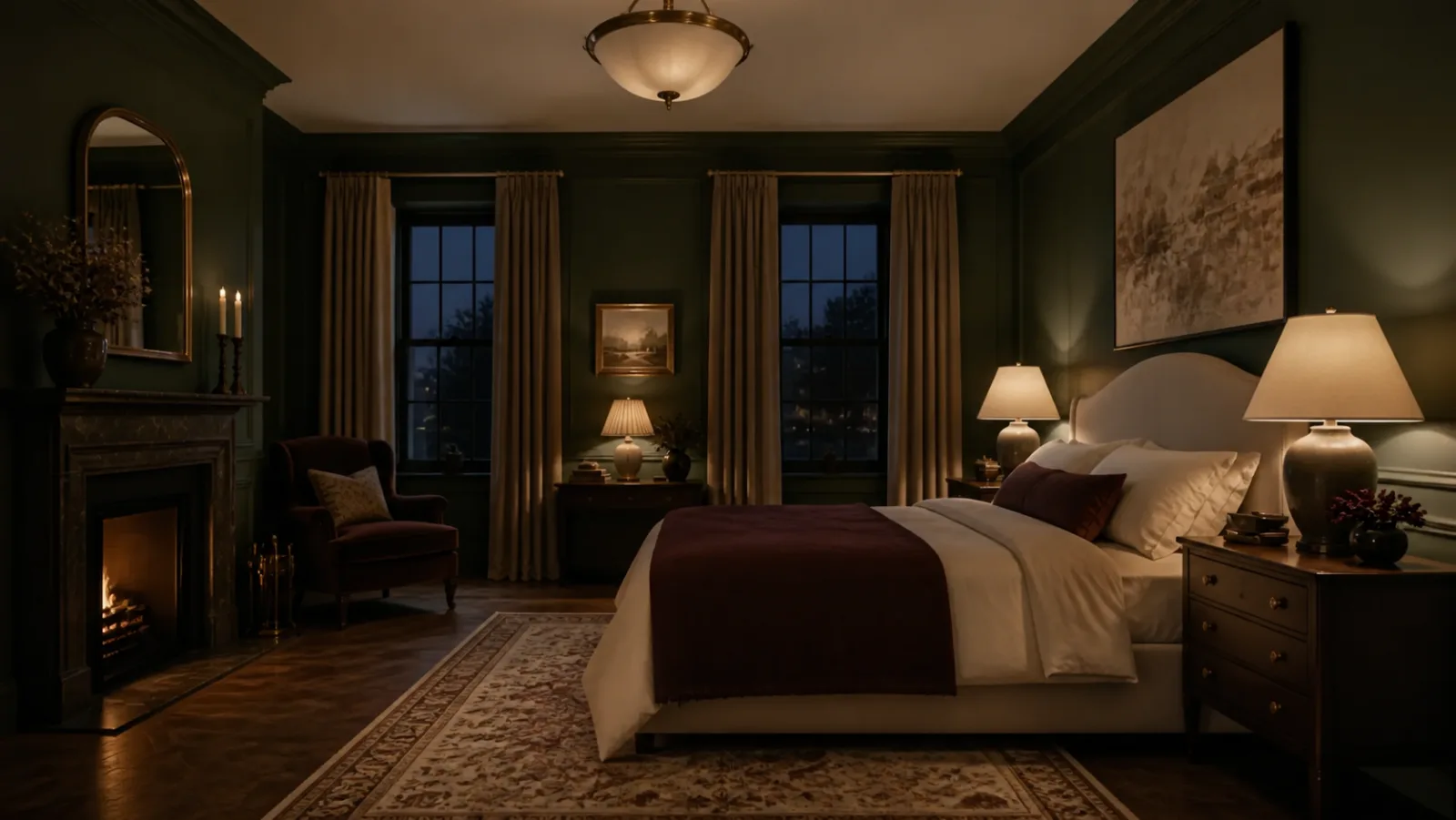
Use the style where it helps the room work: seating, circulation, focal point and material balance.
Place the headboard away from the busiest doorway when possible and preserve a clear approach on both sides.
A flush wardrobe or one resolved chest is calmer than several unrelated storage pieces.
Use bedside and concealed light below eye level instead of relying on a bright central ceiling fixture.
Prioritize breathable bedding, a tactile rug and curtains before decorative objects.
Use one saturated dark color across architecture, one pale mineral mass for contrast and a single high-chroma accent. Avoid distributing every hue evenly around the room.
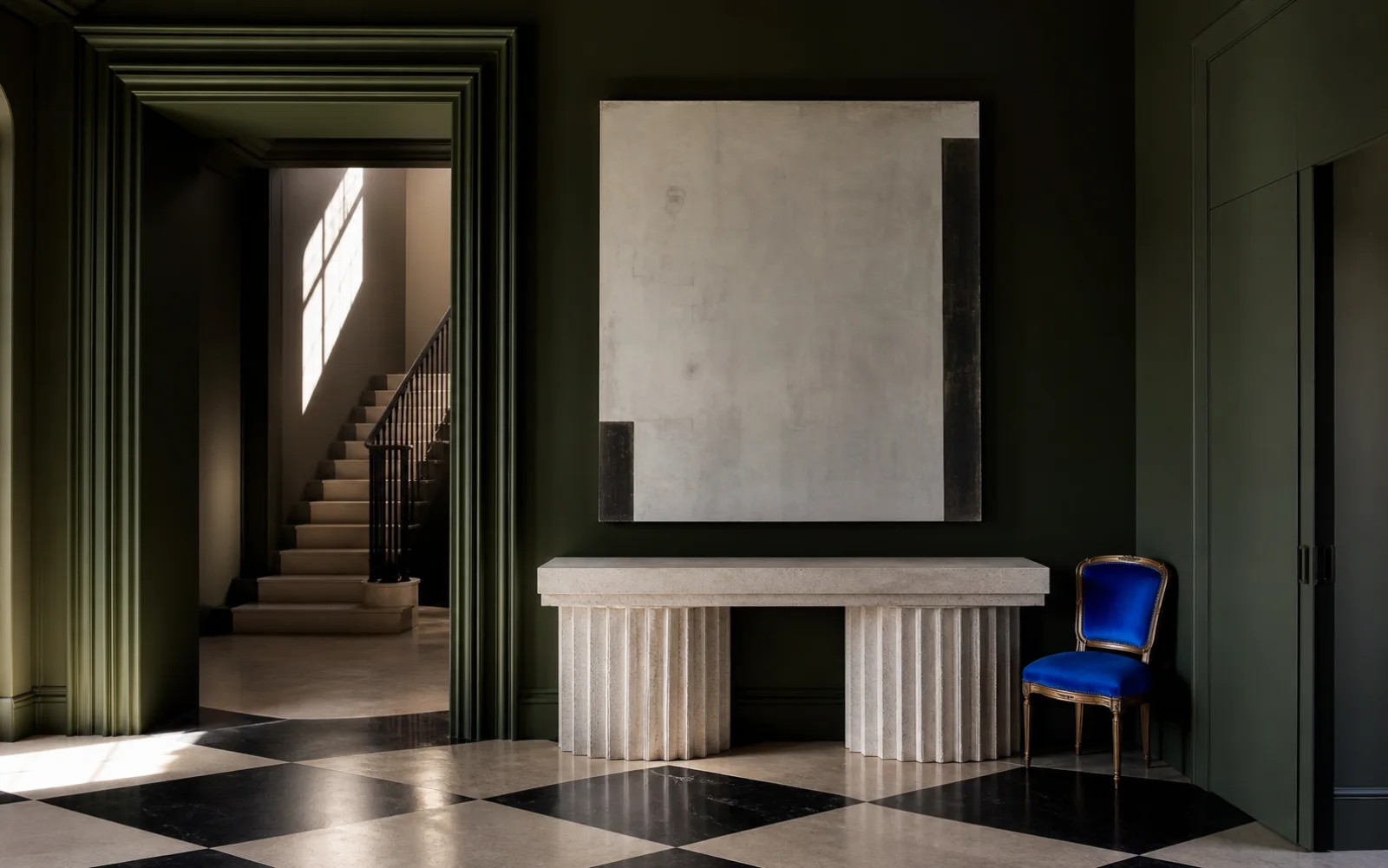
A near-black green that turns classical relief into subtle shadow.
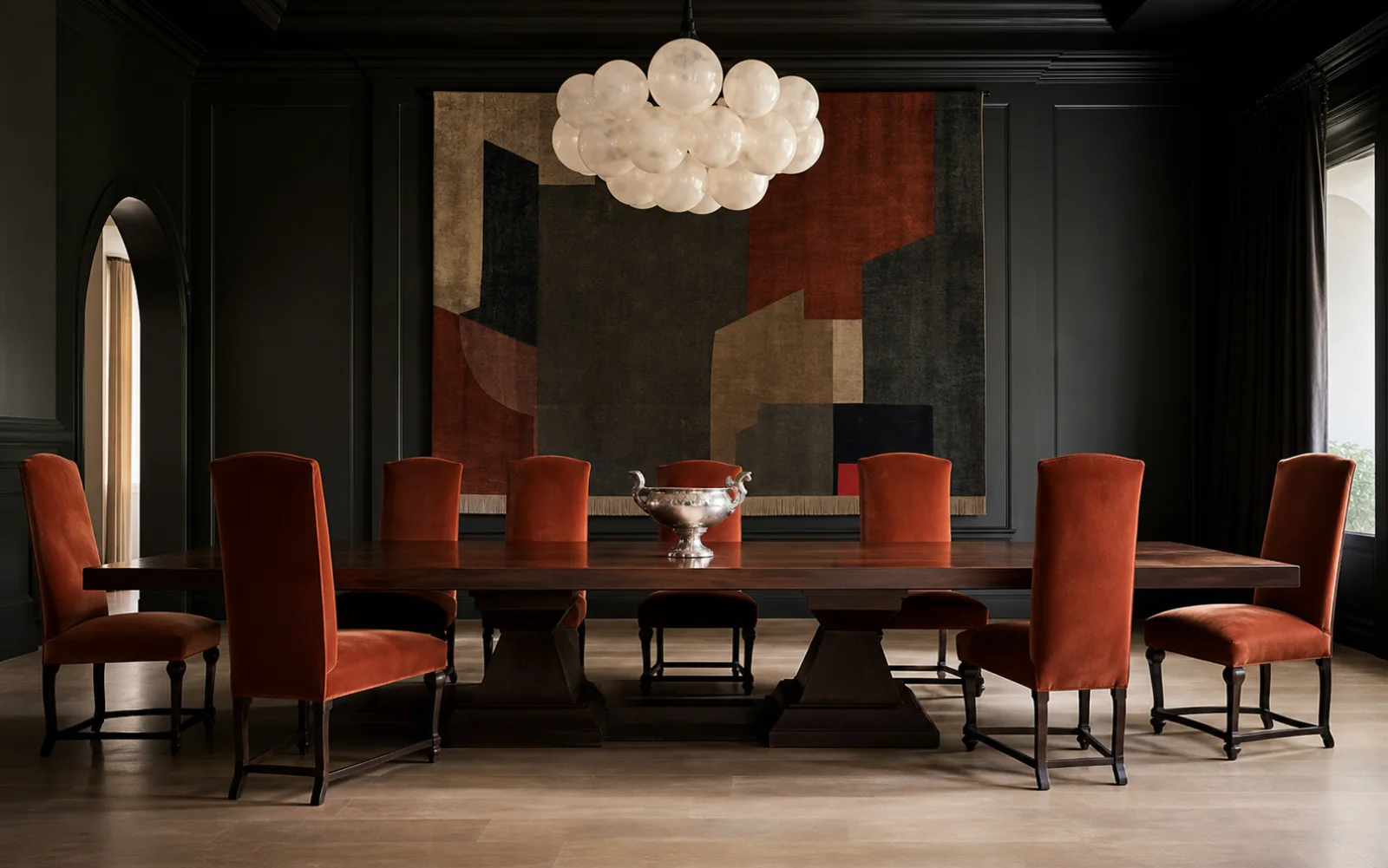
A saturated historical red used across an entire room rather than as a small heritage accent.
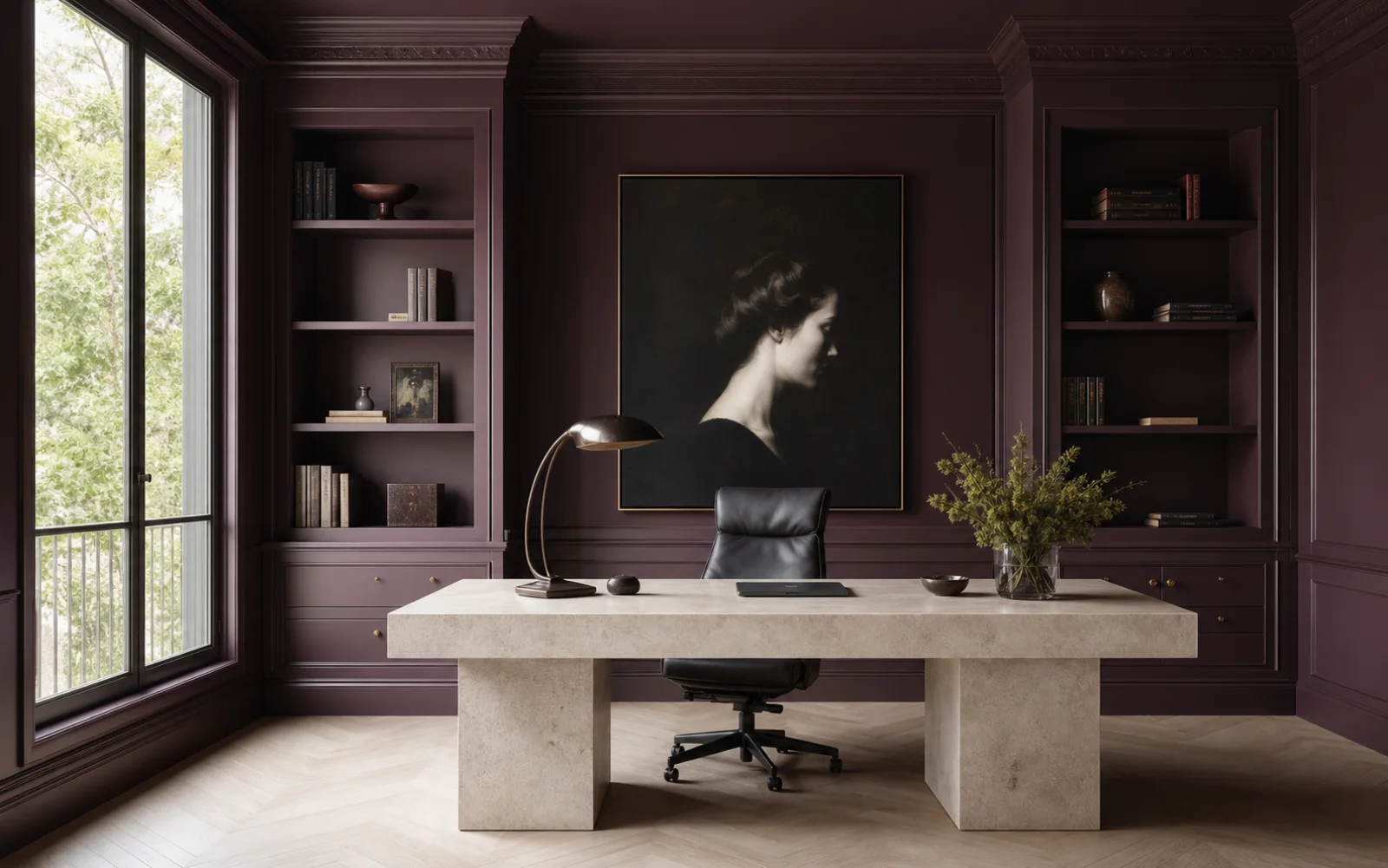
Creates an enveloping study or library with more chromatic depth than charcoal.
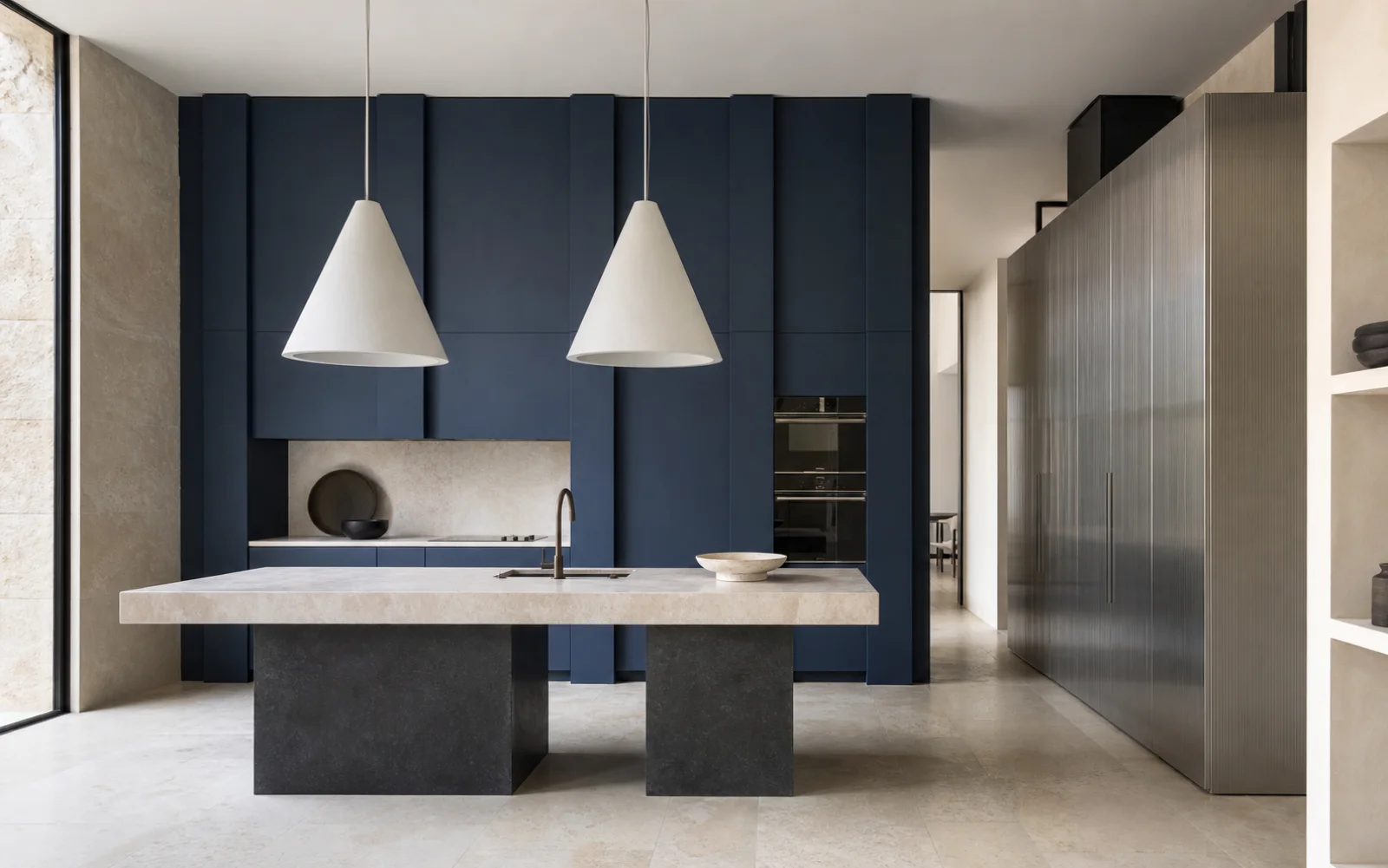
Makes familiar furniture types feel monolithic, mineral and contemporary.
One sharp textile accent interrupts the historical palette without requiring pattern.
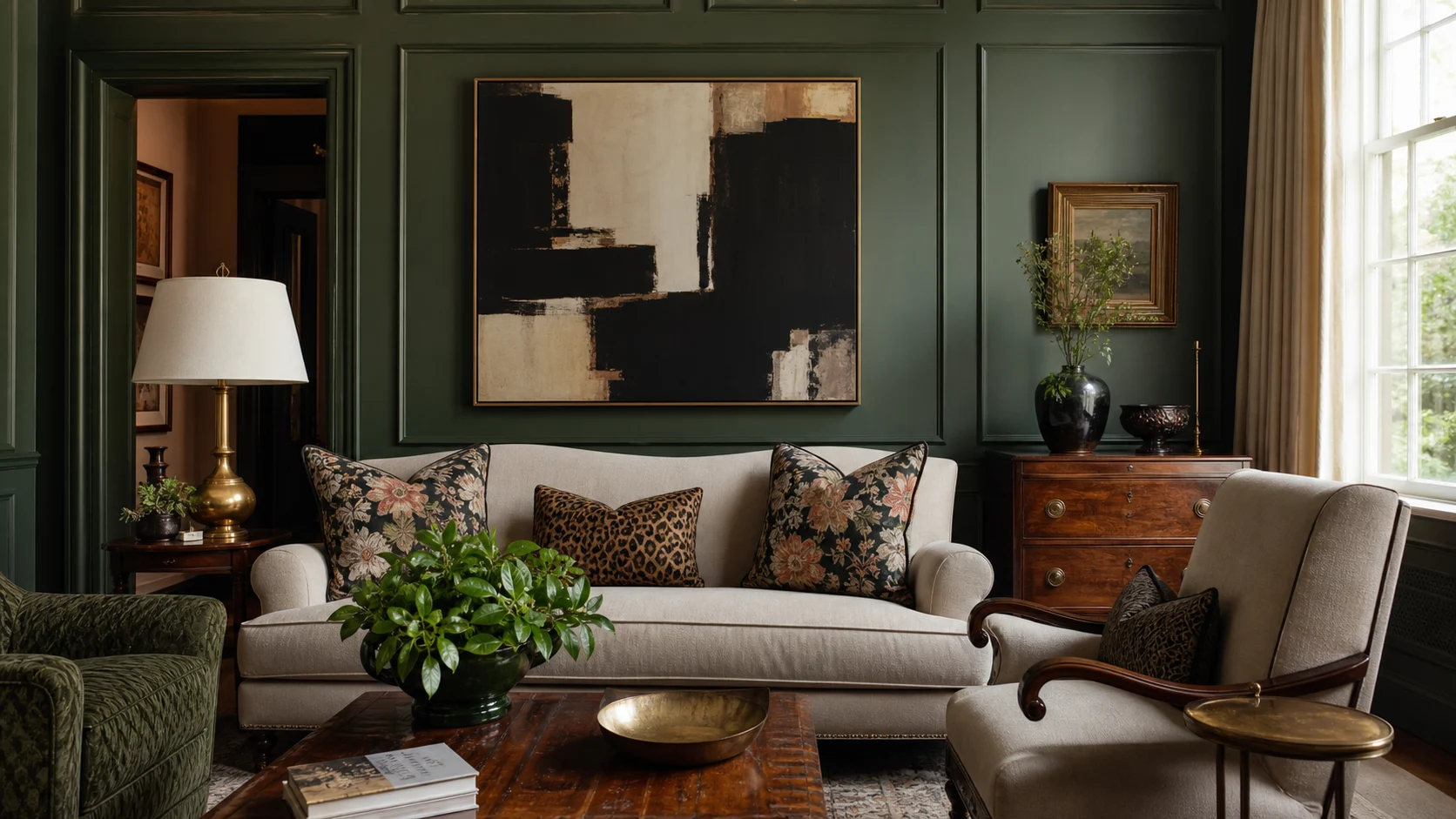
Forest green, black-green or muted burgundy can give paneling and cabinetry deliberate depth.
Cream, parchment and warm stone keep upholstery and work surfaces usable against the darker shell.
Walnut and mahogany antiques supply age, grain and a convincing counterpoint to cleaner forms.
Olive velvet, controlled floral pattern, modern abstraction and aged brass sharpen the composition.
For this room, a few strong choices can carry the style better than adding more decor.
Use dark color behind the bed rather than on every plane, balancing it with crisp bedding, warm lamps and one controlled textile motif. Confirm the bed and headboard by dimensions, comfort and maintenance before choosing its decorative finish.
Build contrast around one dark architectural plane and one clearly old piece, then use current seating, light and storage to keep the room livable; avoid gothic theming, matched antique suites and uncontrolled pattern.
Build contrast around one dark architectural plane and one clearly old piece, then use current seating, light and storage to keep the room livable; avoid gothic theming, matched antique suites and uncontrolled pattern.
Build contrast around one dark architectural plane and one clearly old piece, then use current seating, light and storage to keep the room livable; avoid gothic theming, matched antique suites and uncontrolled pattern.
Use these checks to keep the neo-traditional character clear without compromising how the bedroom works.
Use ledges or compact tables that preserve the route around the bed.
Repeat a narrow family of tones and let weave, not pattern count, create depth.
Layer low bedside light with a dim ambient source for a calmer evening transition.