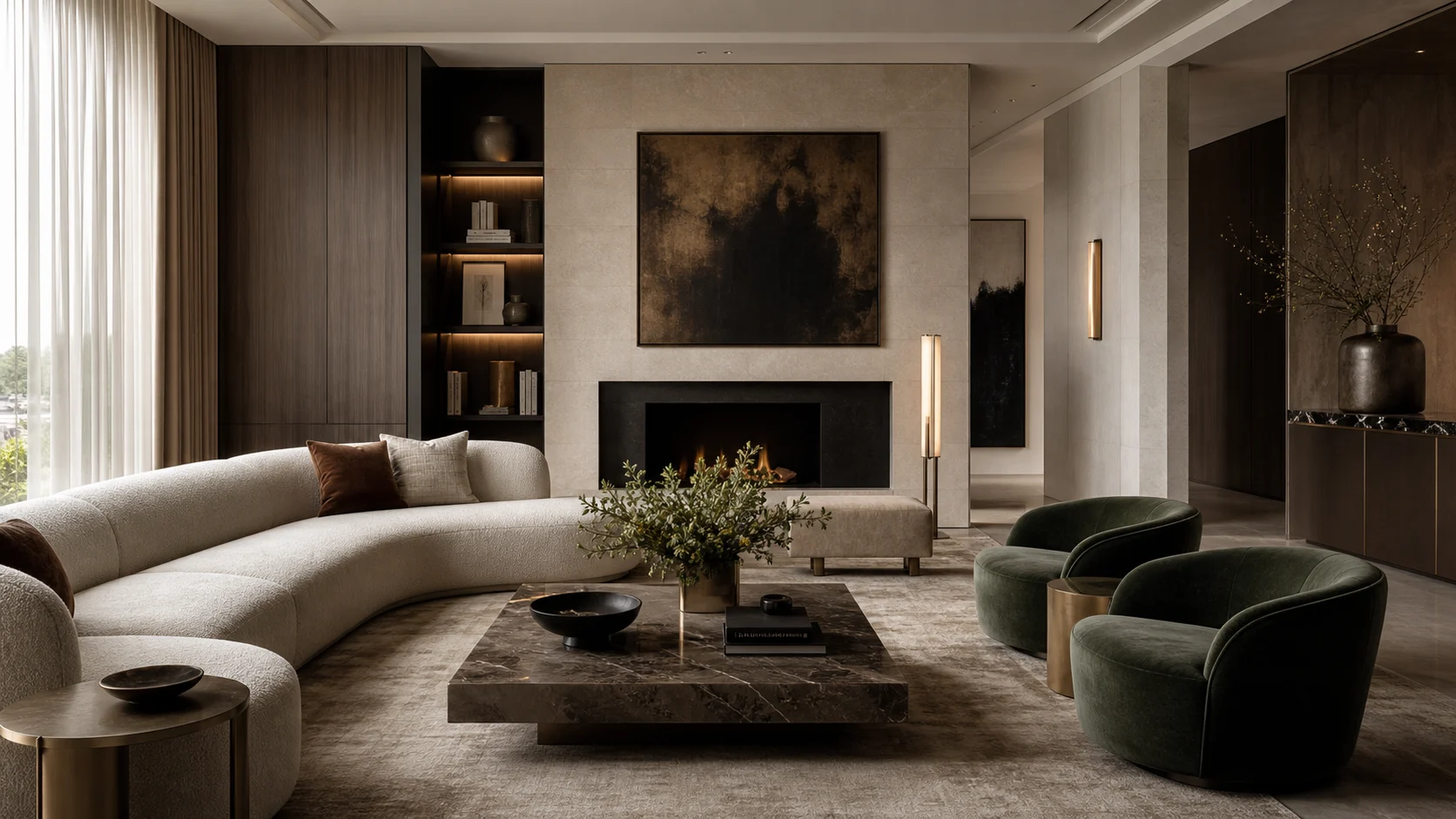
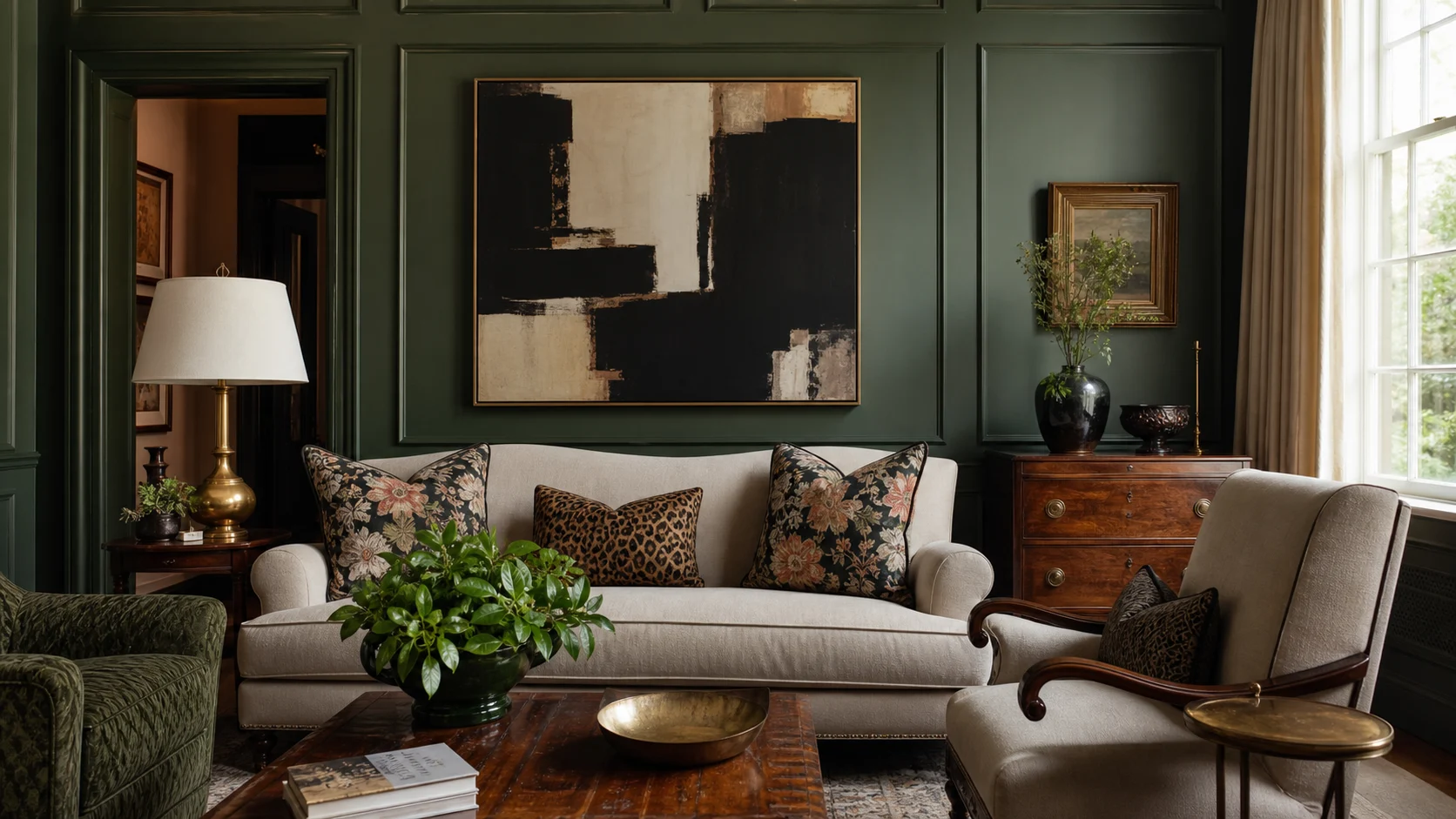
Oversized abstract artwork
Use contemporary scale to interrupt a deeply traditional architectural envelope.
Classical authority reworked through exaggerated scale, saturated architectural color and contemporary material—recognizable, but never reproduced literally.
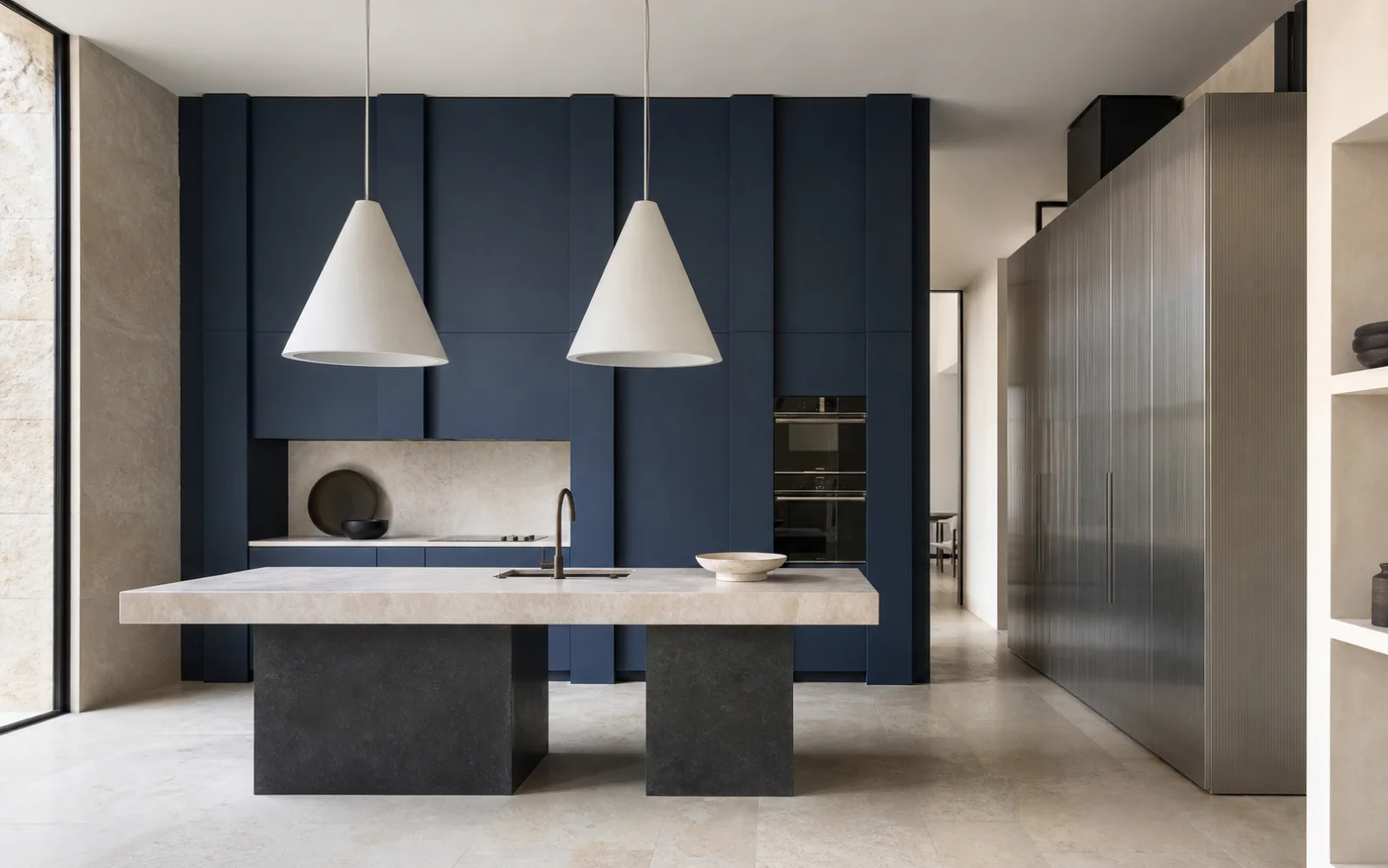
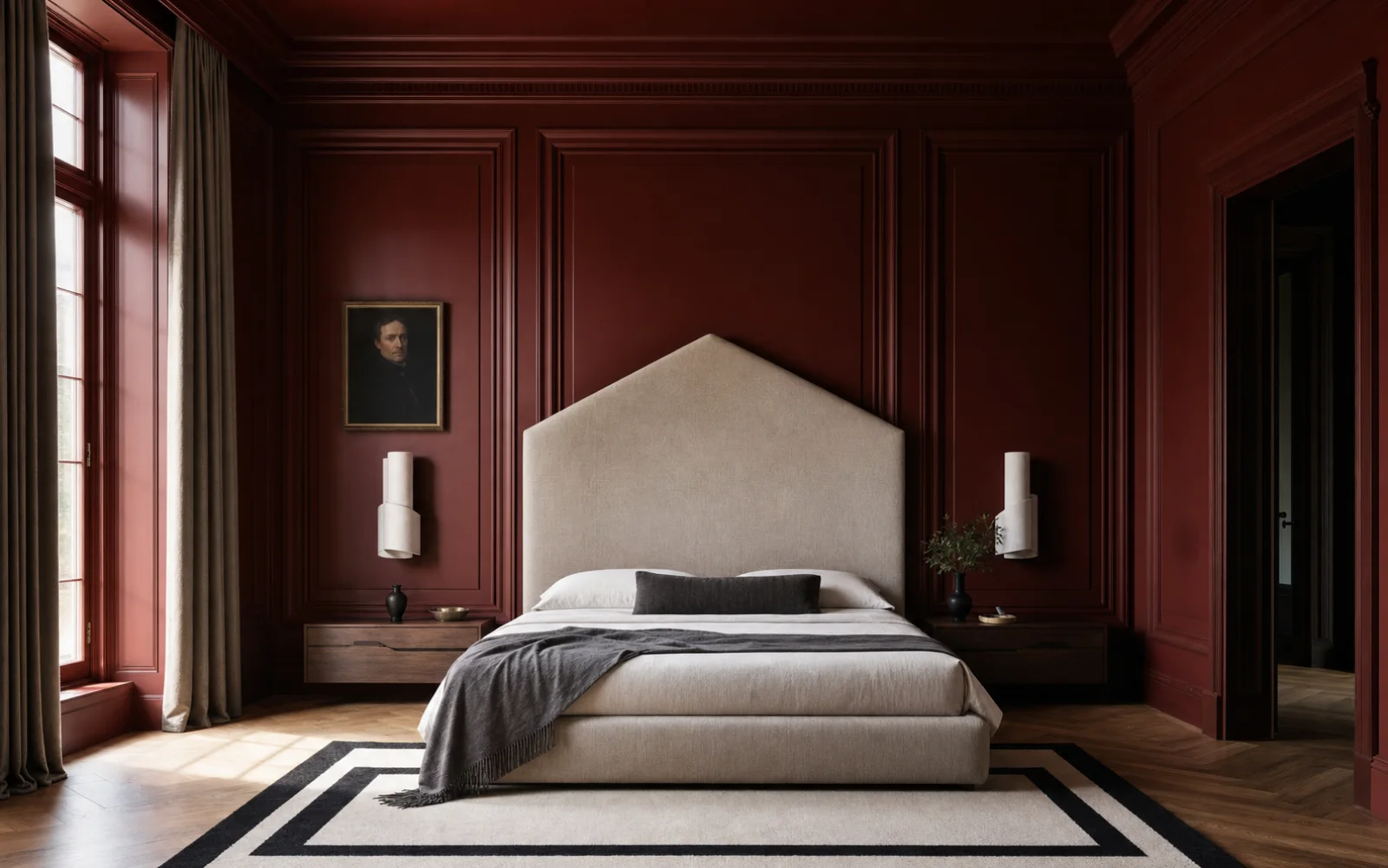
Neo-Traditional design treats classical architecture and furniture as material for reinterpretation. Pediments, portals, trestle tables, partner desks and high-backed chairs remain recognizable, but their profiles may be enlarged, simplified, recolored or translated into stone, steel and other contemporary materials.
Unlike New Traditional, it is less concerned with a warm domestic mix of antiques and familiar pattern. The room often feels more architectural and conceptual: trim and walls become one saturated volume, a refectory table becomes a geometric mass, or a classical console is carved as a monolithic block. Restraint is essential because each gesture carries unusual visual weight.
Start with a portal, headboard, table or bookcase and decide what makes its traditional identity legible.
Alter scale, color, material or level of detail—but not all of them on every object.
Painting walls, trim and built-ins together turns classical relief into shadow rather than decoration.
Pediments, pilasters and arches are simplified into bold outlines and deep relief.
Forest, oxblood or aubergine wraps trim and walls into a single spatial mass.
Traditional furniture types appear in travertine, ribbed steel, plaster or other unexpected contemporary finishes.
Oversized art, lighting and millwork coexist with a small number of carefully selected antique references.
Wrap molding and wall in one deep color, then use oversized abstract art to shift the classic room away from nostalgia.
Reduce a pediment to one monumental upholstered outline and keep surrounding furniture as simple floating blocks.
Enlarge a trestle table and high-backed chair silhouette, but use contemporary upholstery and one huge textile artwork.
Translate the partner desk into stone while hiding current technology within monochrome classical built-ins.
Use exaggerated pilaster rhythm on flush cabinetry and introduce one ribbed metal volume as the contemporary disruption.
A deep portal and stone altar-like console can define arrival without a conventional lamp-and-mirror vignette.
Use one saturated dark color across architecture, one pale mineral mass for contrast and a single high-chroma accent. Avoid distributing every hue evenly around the room.
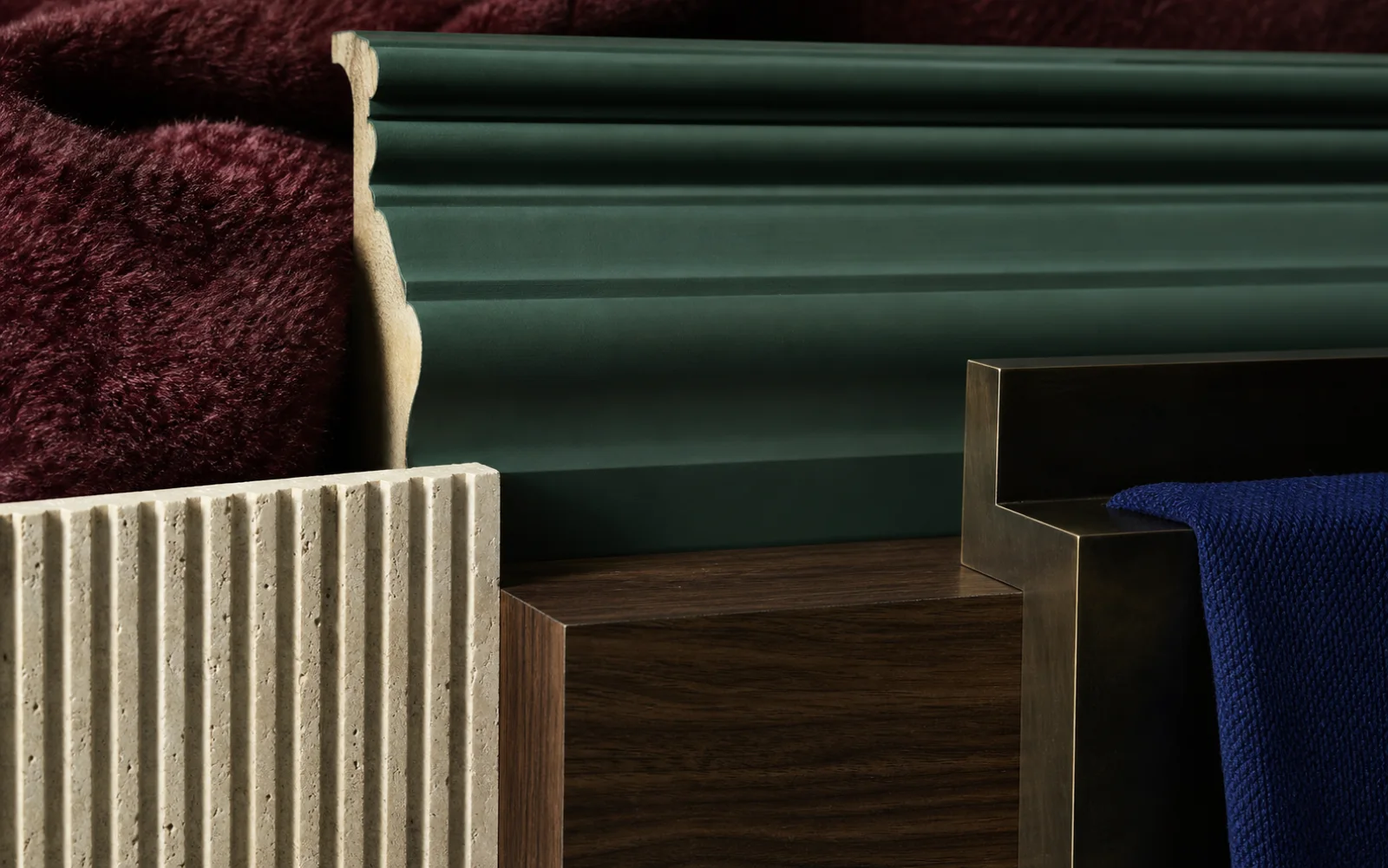
A near-black green that turns classical relief into subtle shadow.
A saturated historical red used across an entire room rather than as a small heritage accent.
Creates an enveloping study or library with more chromatic depth than charcoal.
Makes familiar furniture types feel monolithic, mineral and contemporary.
One sharp textile accent interrupts the historical palette without requiring pattern.
Oversized profiles read through shadow when trim and wall share one matte color.
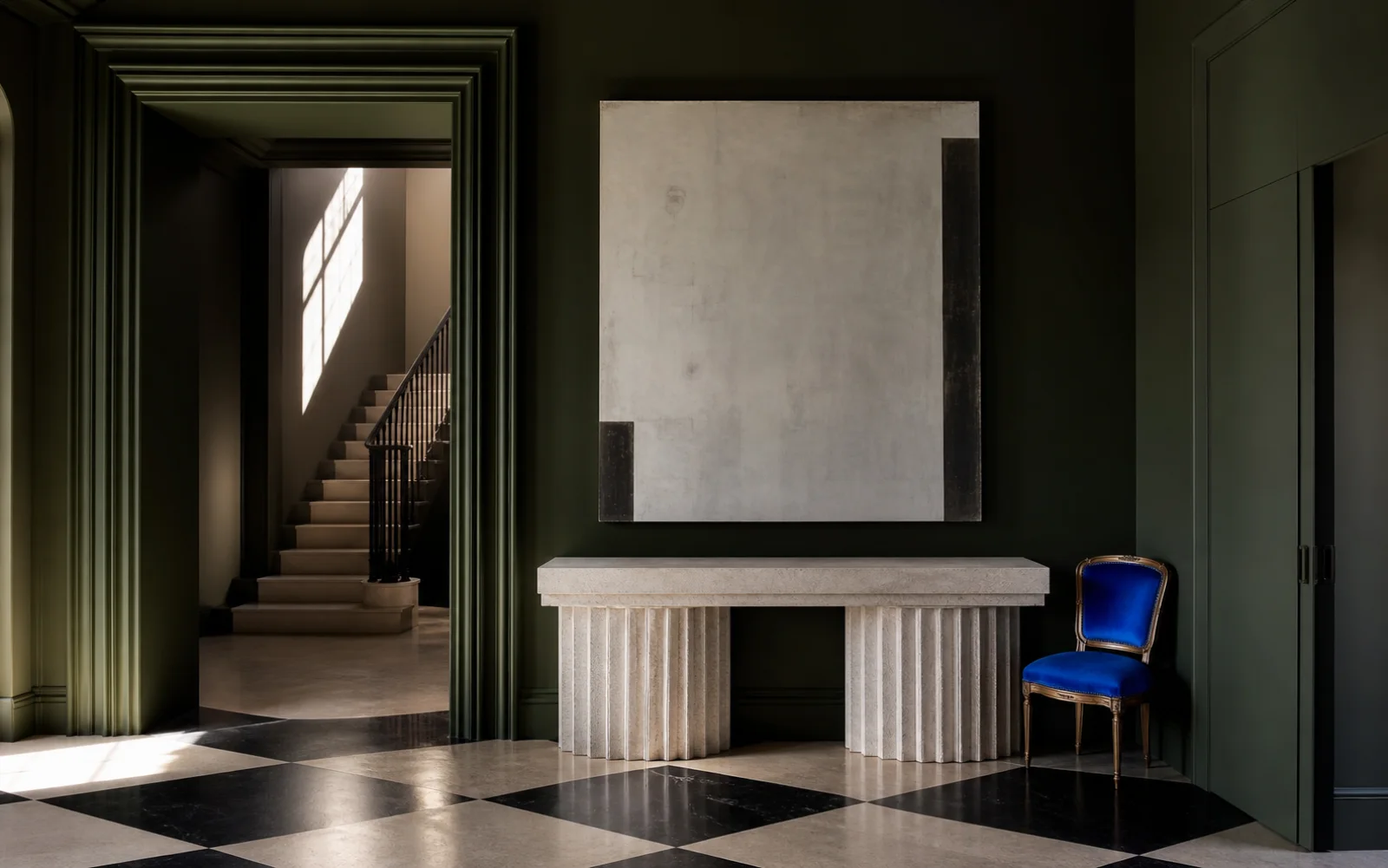
A classical console type becomes contemporary through mineral mass and machined repetition.
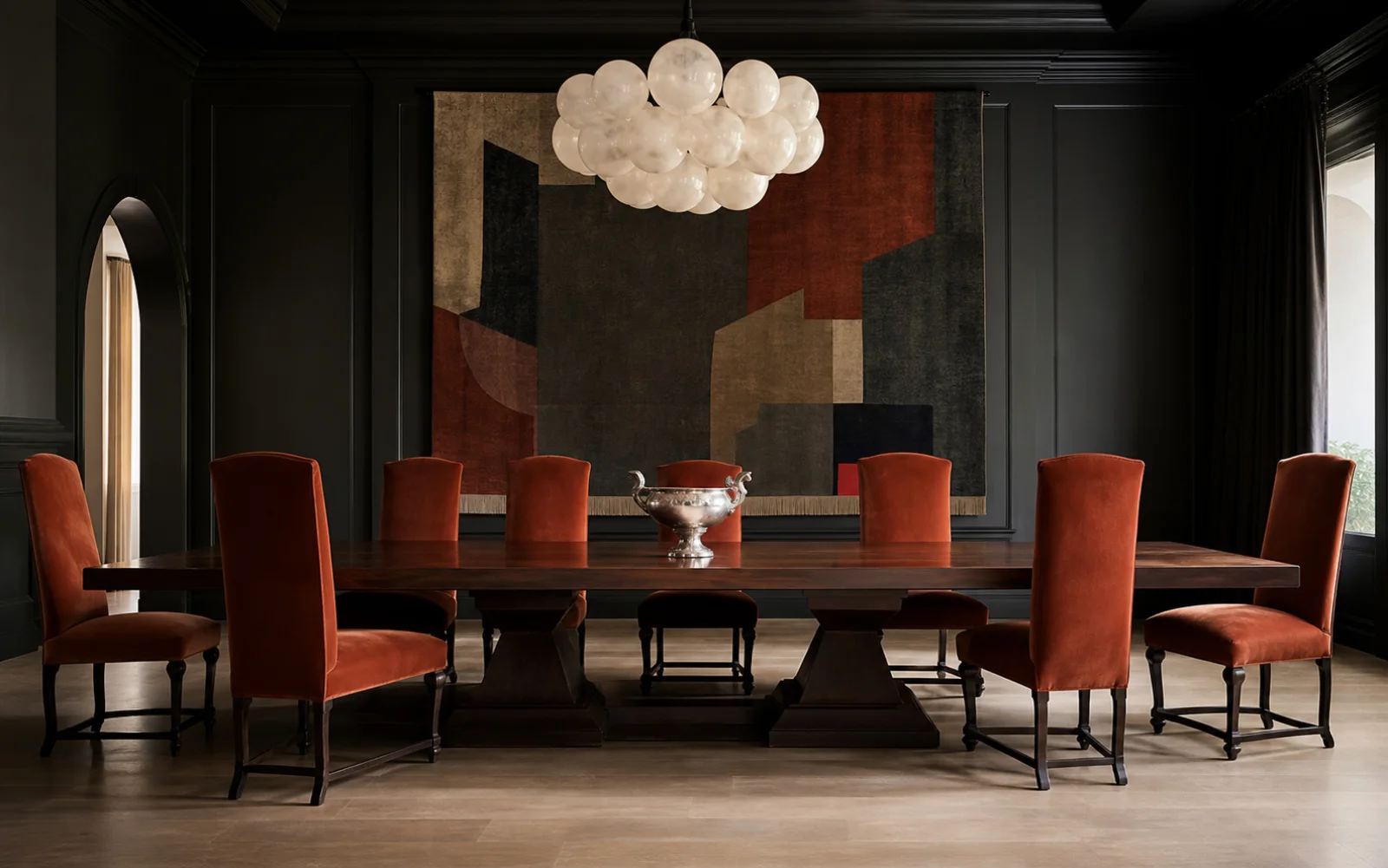
Dense saturated pile gives simplified historical chair forms tactile depth.
Technical and mineral surfaces disrupt the expected timber-and-brass traditional palette.
Neo-Traditional needs a clear proposition. Identify a classical type, preserve the few cues that make it recognizable and transform one variable strongly enough to change its meaning.
Choose one familiar element—portal, trestle, pediment, partner desk or high-backed chair.
Remove applied ornament until proportion and outline alone carry the reference.
Change its scale, material or color to create a deliberate contemporary reading.
Limit objects, pattern and secondary furniture so the transformed archetype remains clear.
When the room feels wrong, change the underlying decision before adding more decor.
Add a genuine transformation in scale, material or abstraction rather than relying on paint alone.
Select one primary archetype and let remaining details become a quiet background.
Keep seating ergonomic, passages clear and technical storage accessible behind the architectural gesture.
Retain one unmistakable historical profile or antique counterpoint to preserve the dialogue with tradition.
Neo-Traditional differs from a routine update because it transforms the classical source itself. The history stays legible, but scale, material or color changes how it operates.
Warmer, more collected and grounded in antiques, familiar prints and contemporary domestic juxtaposition.
Choose neo-traditional for architectural abstraction, monumentality and material experimentation.
Transformed archetypes replace the old-new household mix.
More historically consistent, detailed and respectful of established furniture and decorative vocabularies.
Choose neo-traditional when classical authority should be questioned and reconstructed.
Exaggeration and reduction replace faithful period language.
More purely contemporary and focused on precision, seamless planes and premium material.
Choose neo-traditional when modern luxury should retain a legible historical memory.
Pediments, portals and trestles remain visible beneath the contemporary treatment.
More ironic, referential and playful with historical signs, color and form.
Choose neo-traditional for a more serious, materially grounded reinterpretation of classical authority.
Weight, craft and proportion replace overt quotation and visual wit.
Ordinary retail categories rarely define this style. Prioritize custom millwork, altered vintage pieces and a few objects whose material or scale carries the central idea.
Use contemporary scale to interrupt a deeply traditional architectural envelope.
Reduce the classical outline to one generous upholstered plane without trim or pattern.
Preserve the structural type while simplifying supports into bold geometric masses.
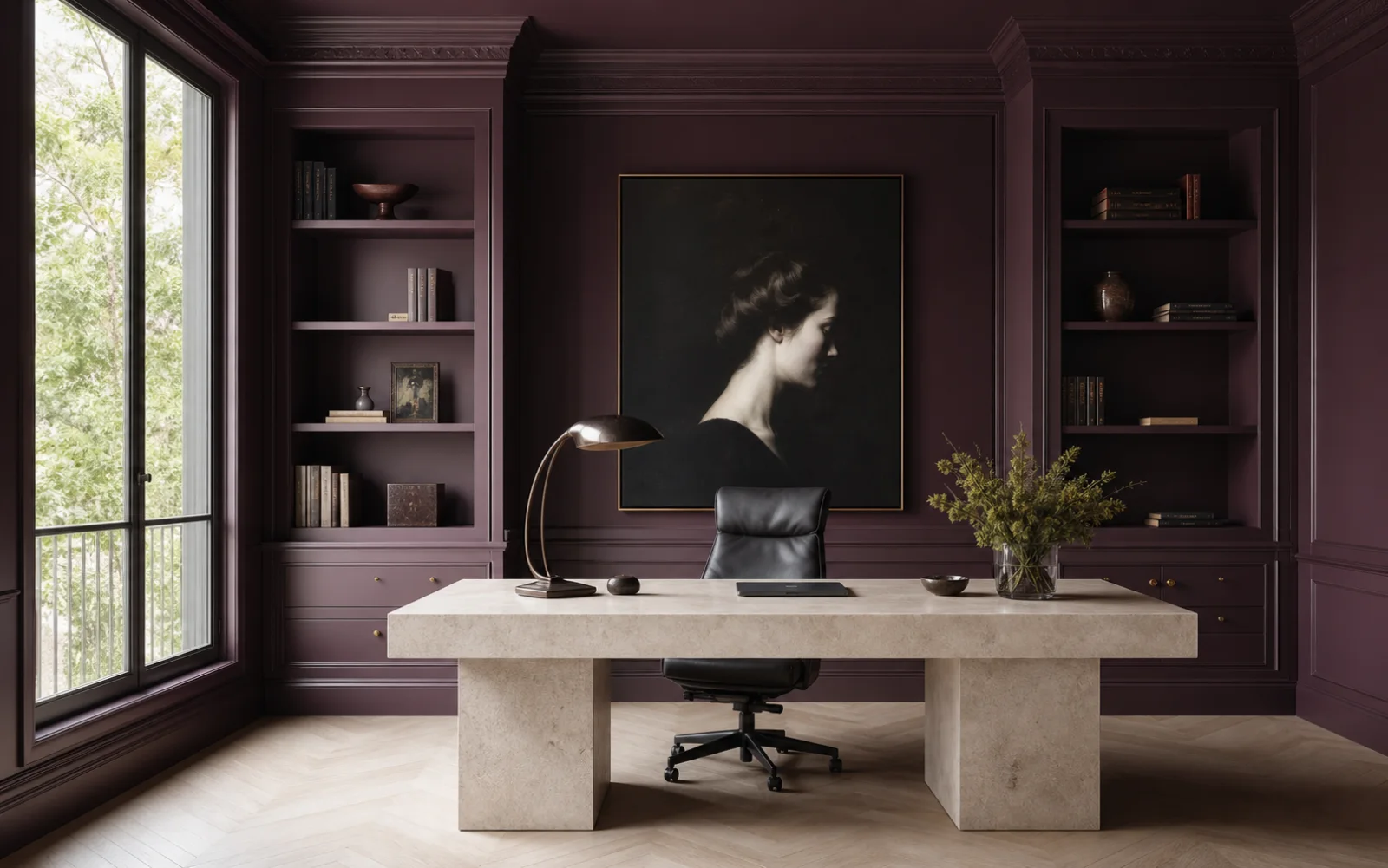
Translate historical authority into a pale mineral object with integrated power and usable knee clearance.
A technical material creates deliberate friction beside oversized classical cabinet rhythm.
One recognizable old silhouette in an unexpected saturated textile sharpens the entire composition.