01
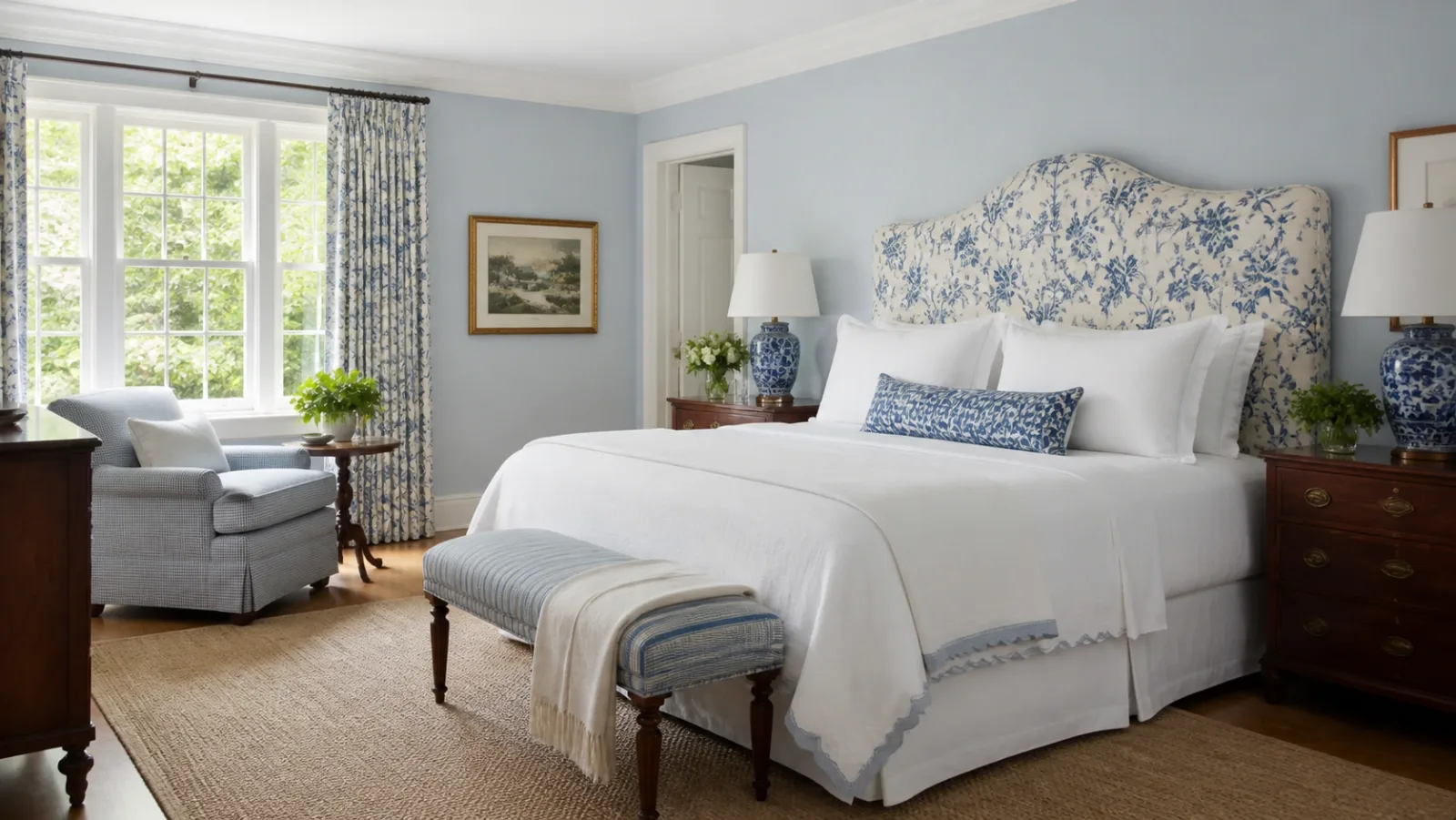
Patterned Headboard
Visible color and a refreshed classic motif create the first clear identity. Preserve a calm bedside zone and a clear path from the door to storage.
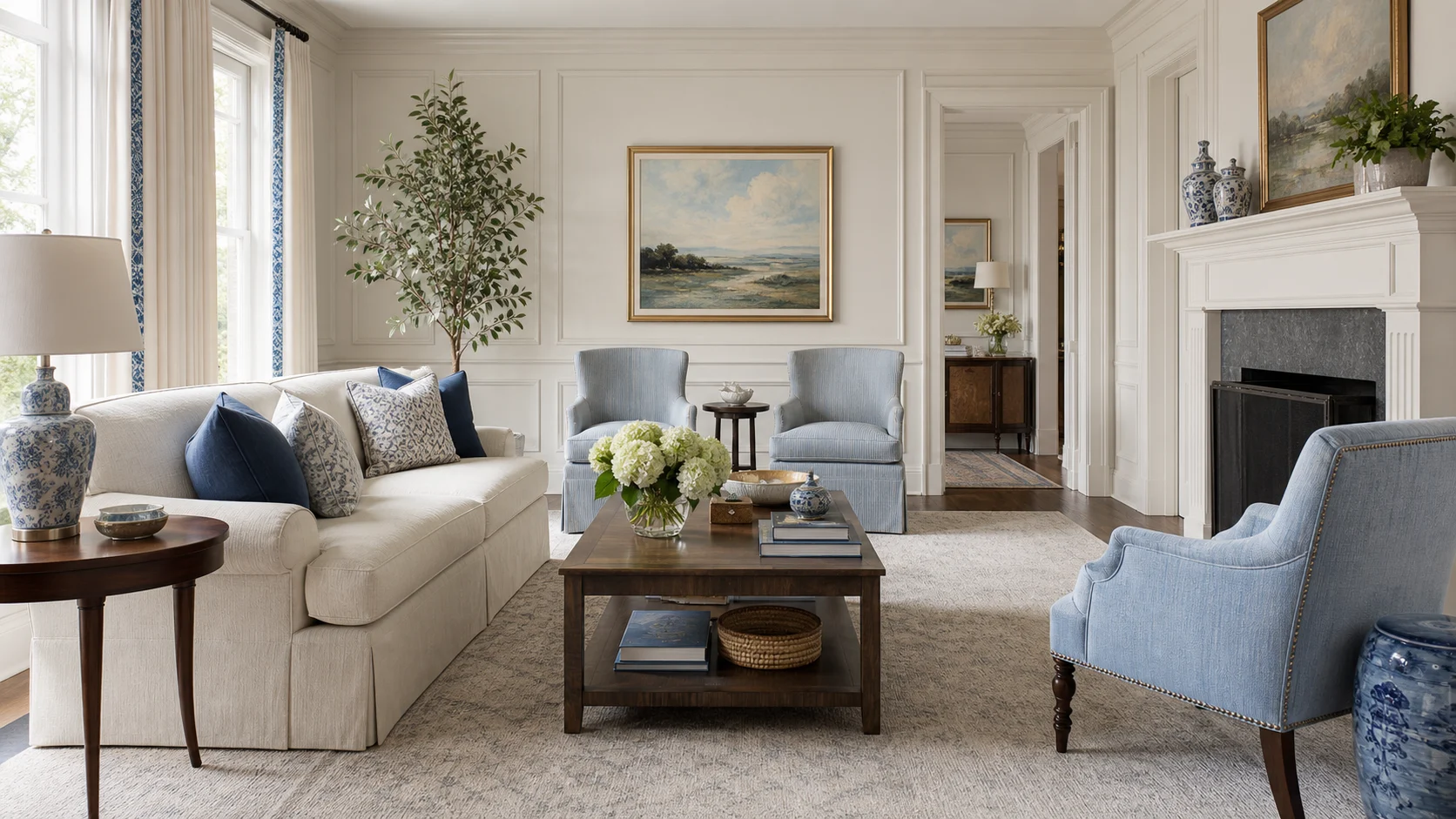
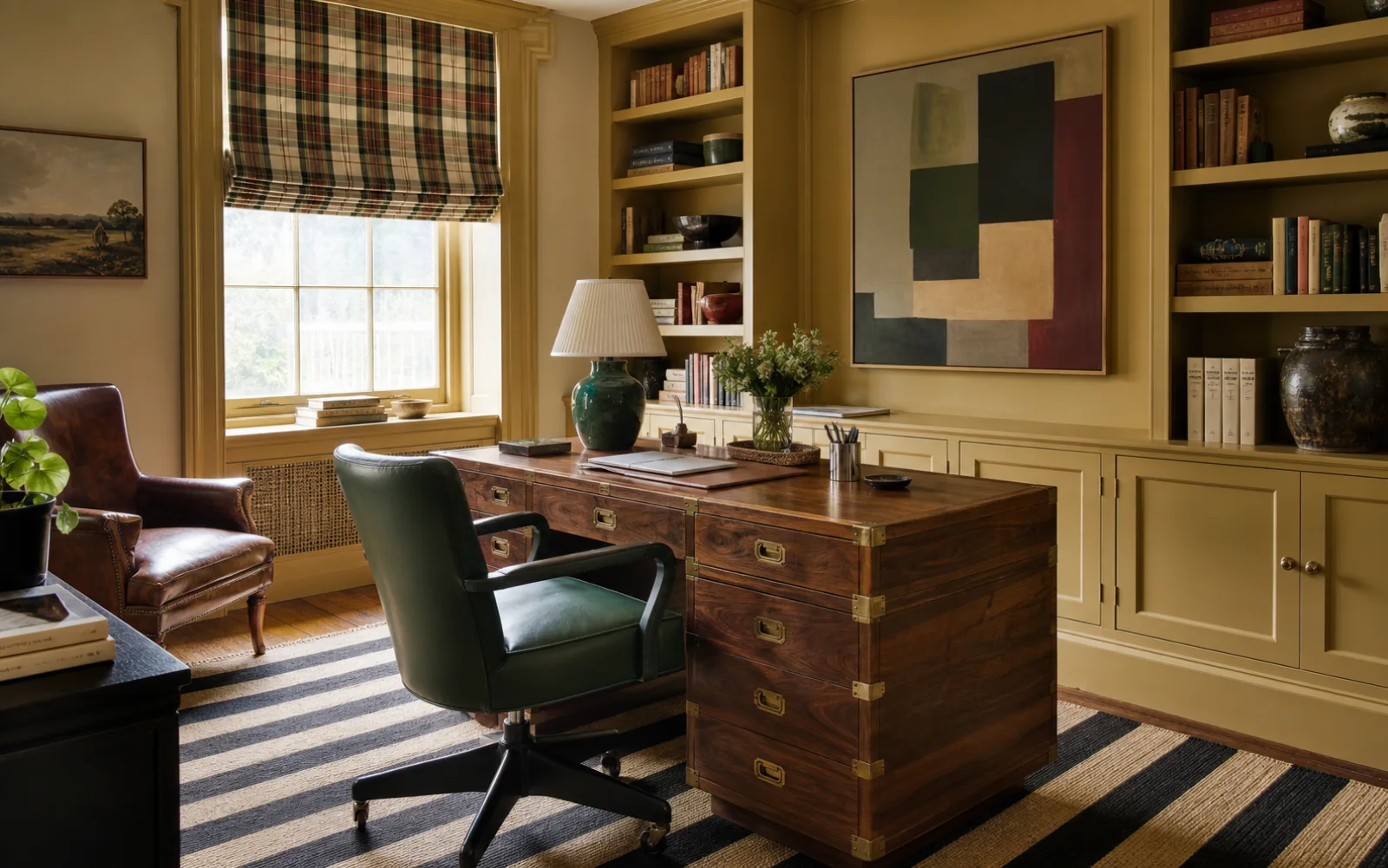
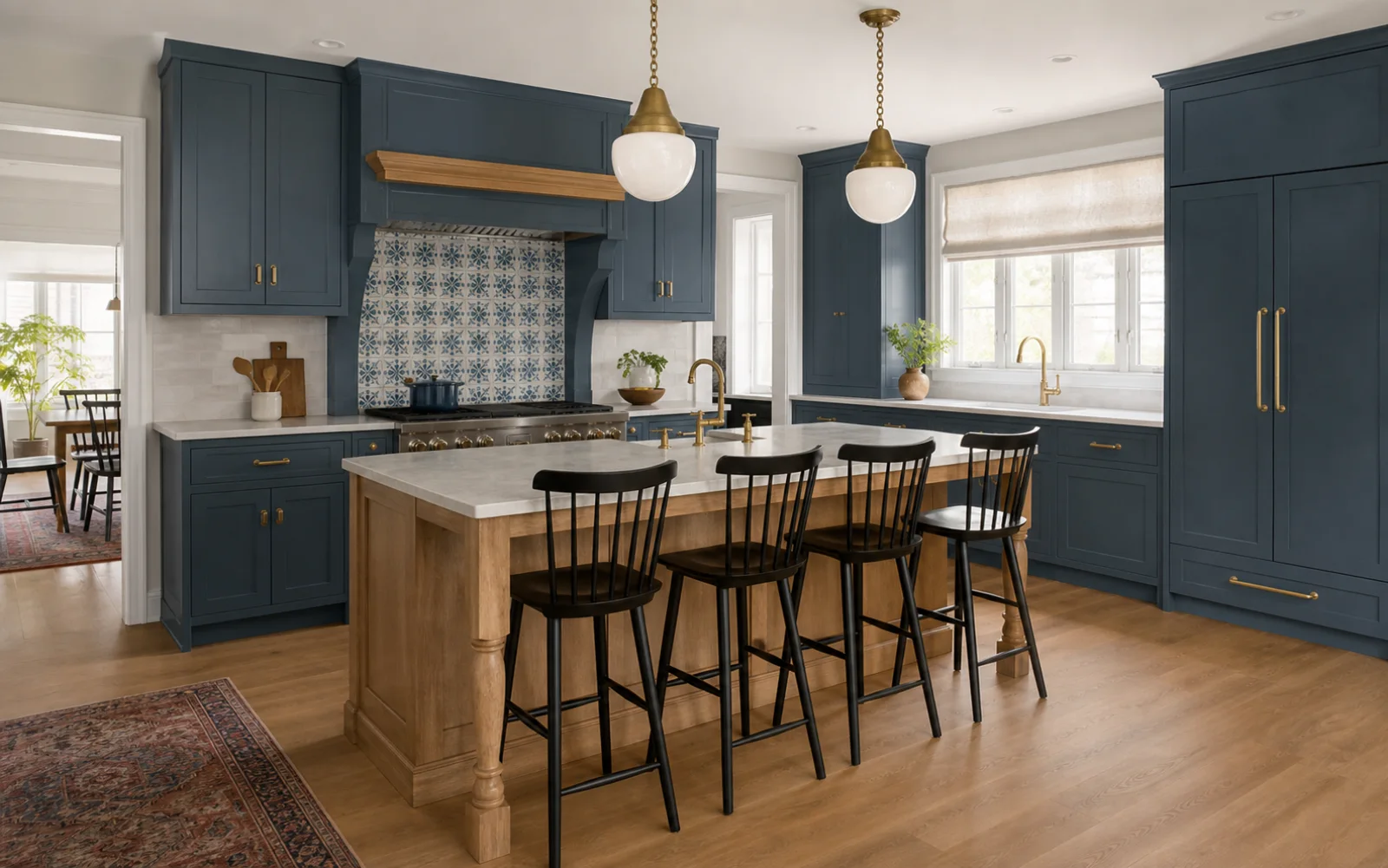
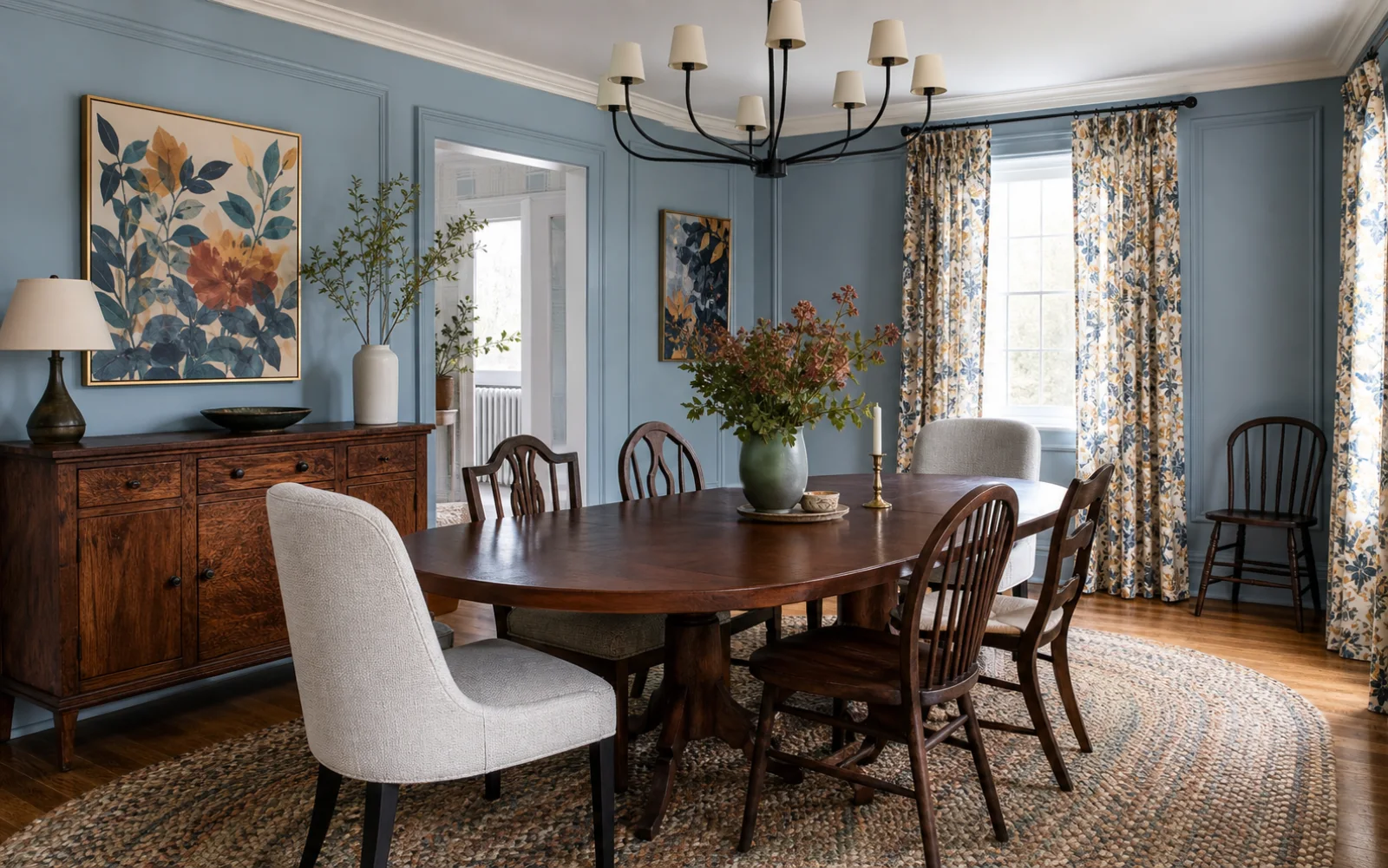
Five materially and spatially different new traditional approaches to the bedroom, including a compact plan and an evening lighting study.
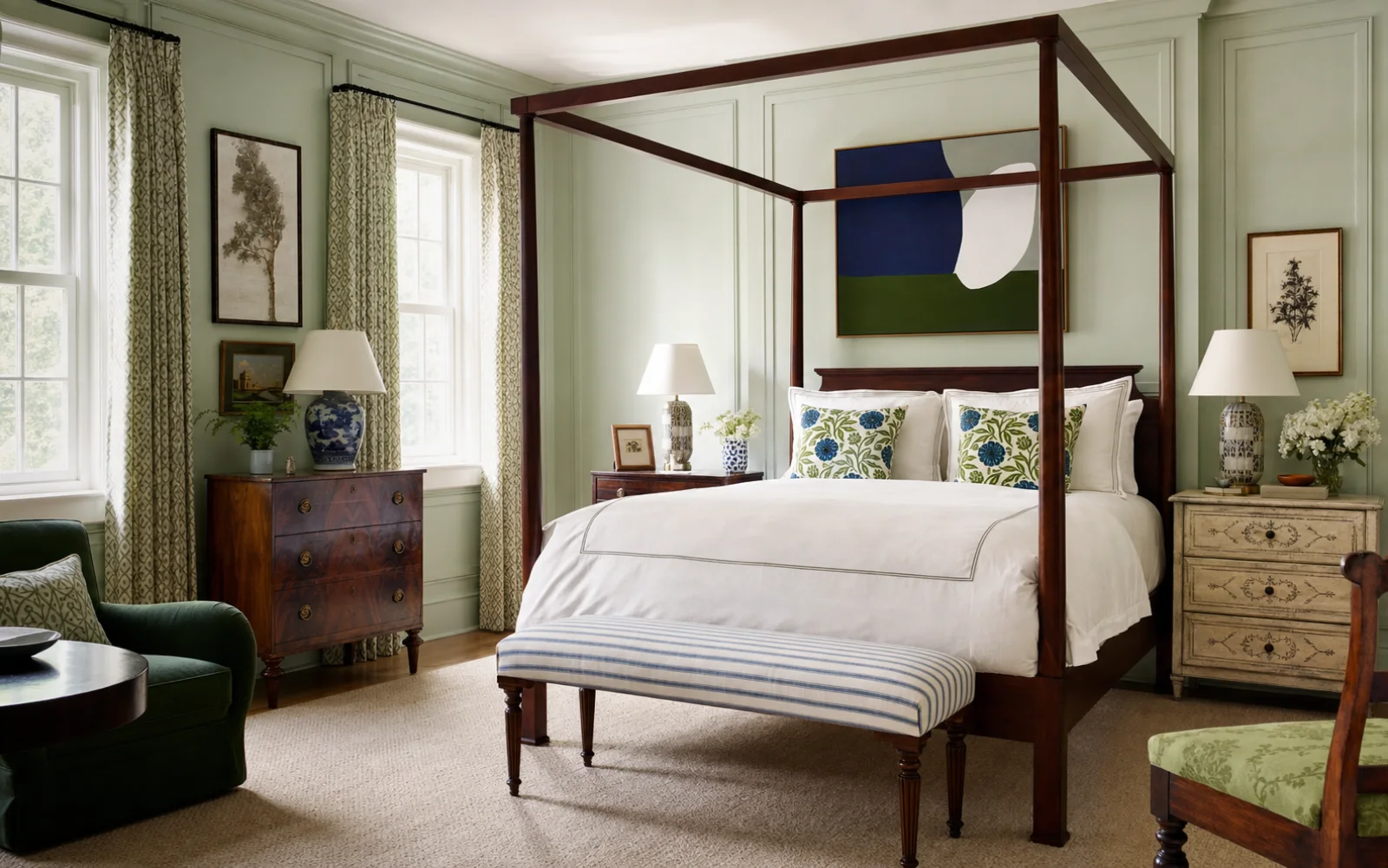
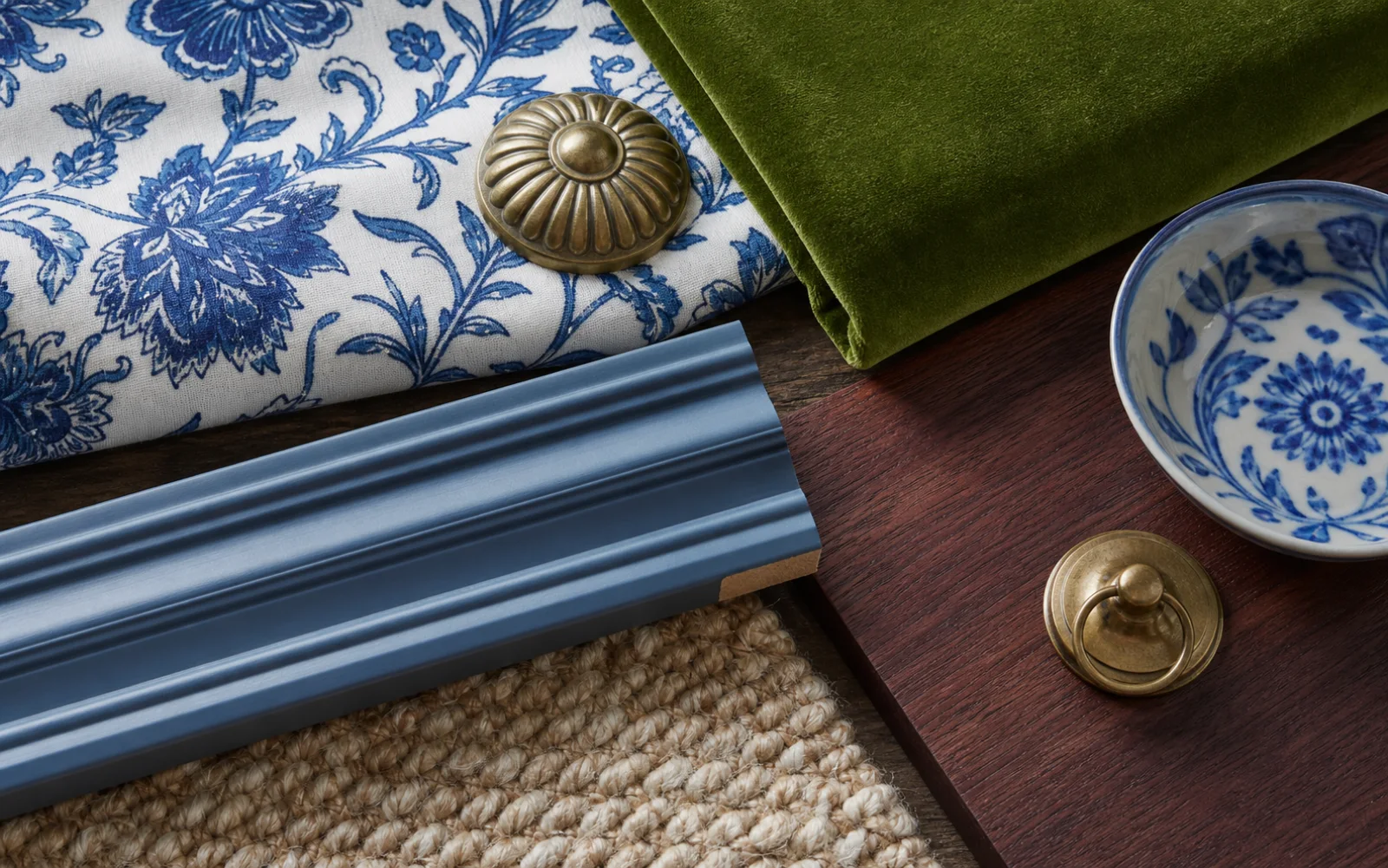
New Traditional refreshes visible classic motifs through expressive color, selective pattern, useful antiques and contemporary comfort. In the bedroom, that identity must still support rest, low visual stimulation and an unobstructed route around the bed.
Let one headboard, canopy or textile carry the motif while the bed remains crisp, breathable and visually restful. Mix old and new deliberately, repeat two colors across the room and give every patterned or antique piece a practical role; avoid both beige transitional blandness and museum-like matching.
Use these examples to choose the version of the style that fits your architecture, light and square footage.
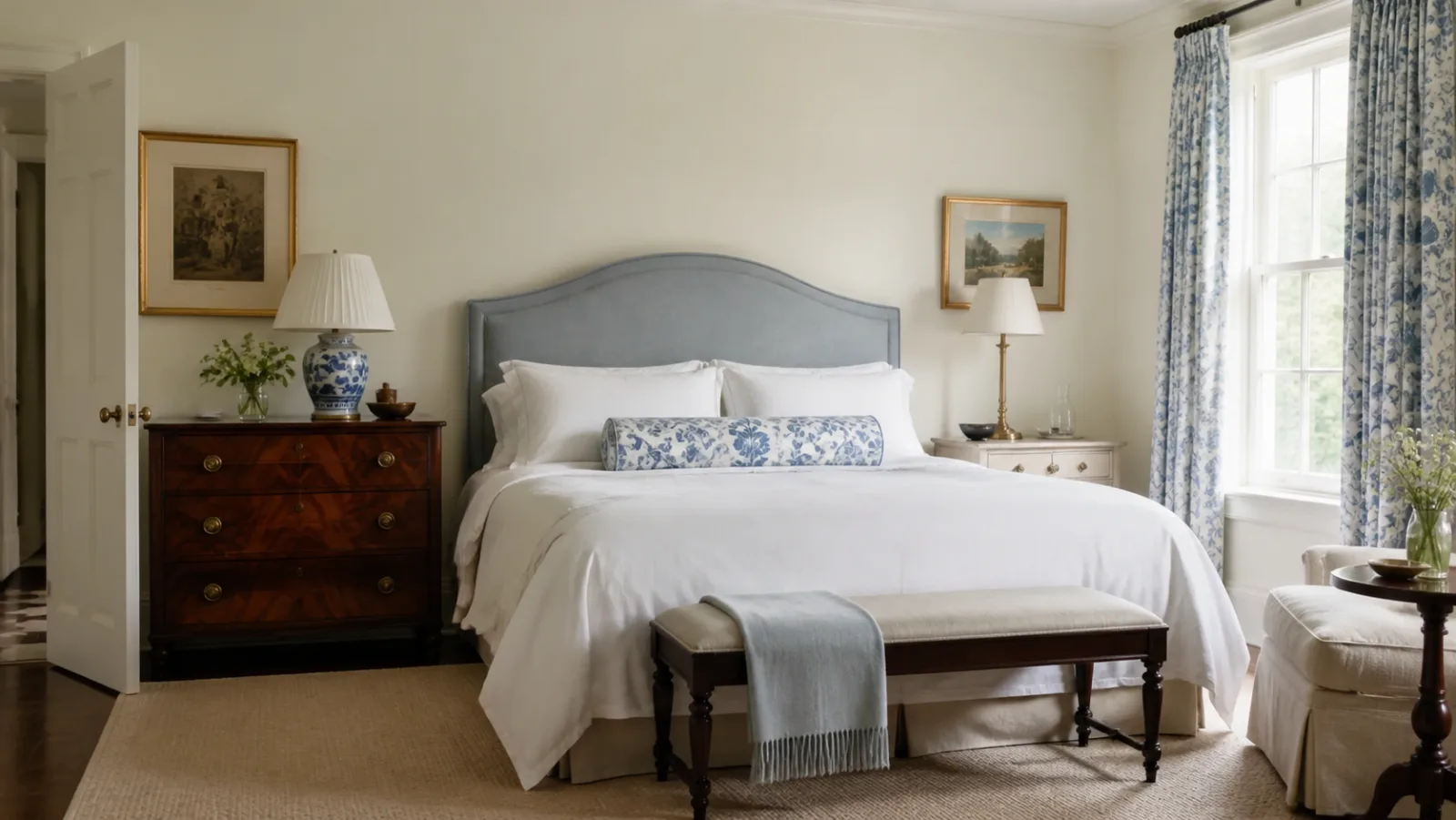
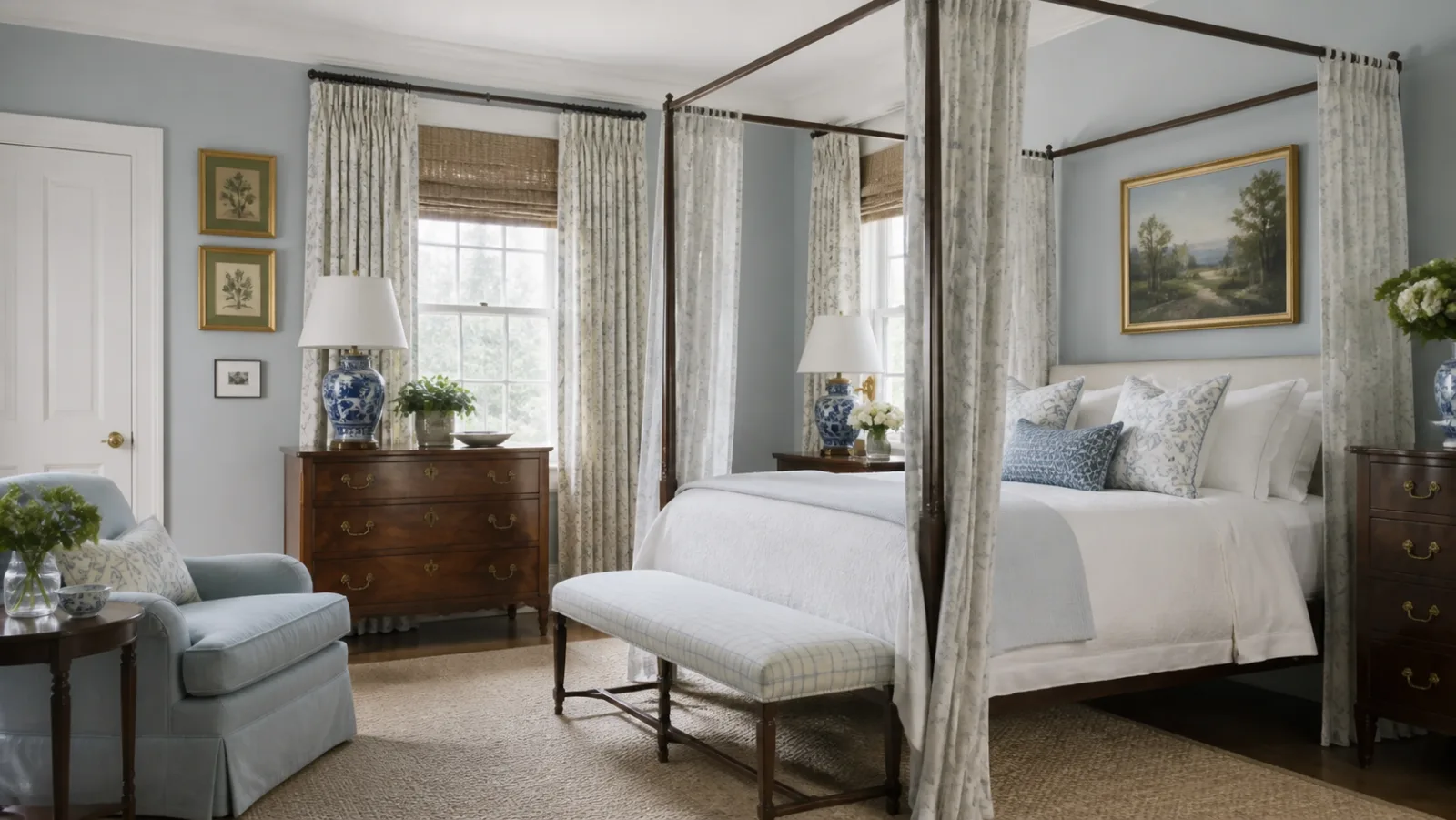
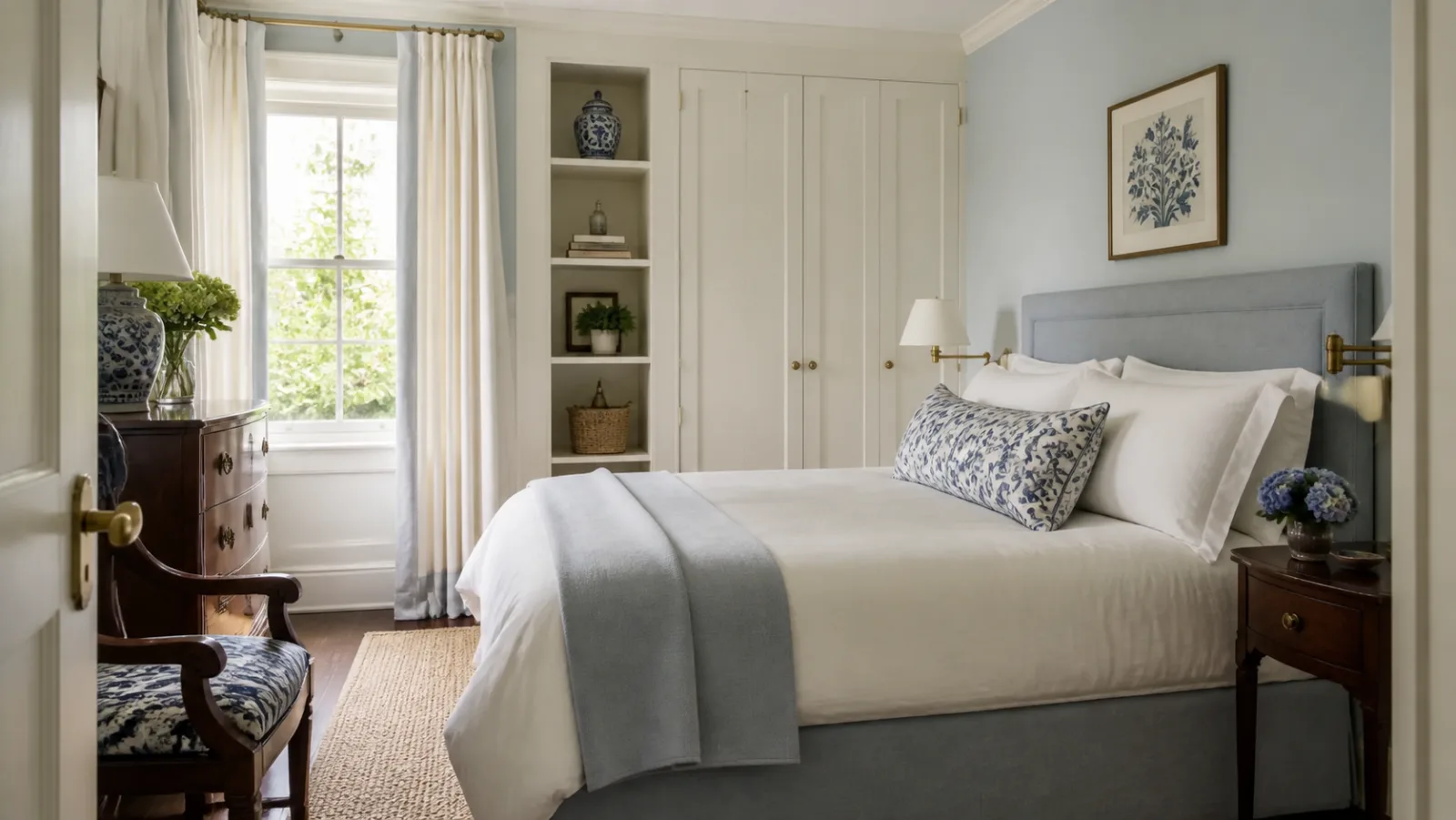
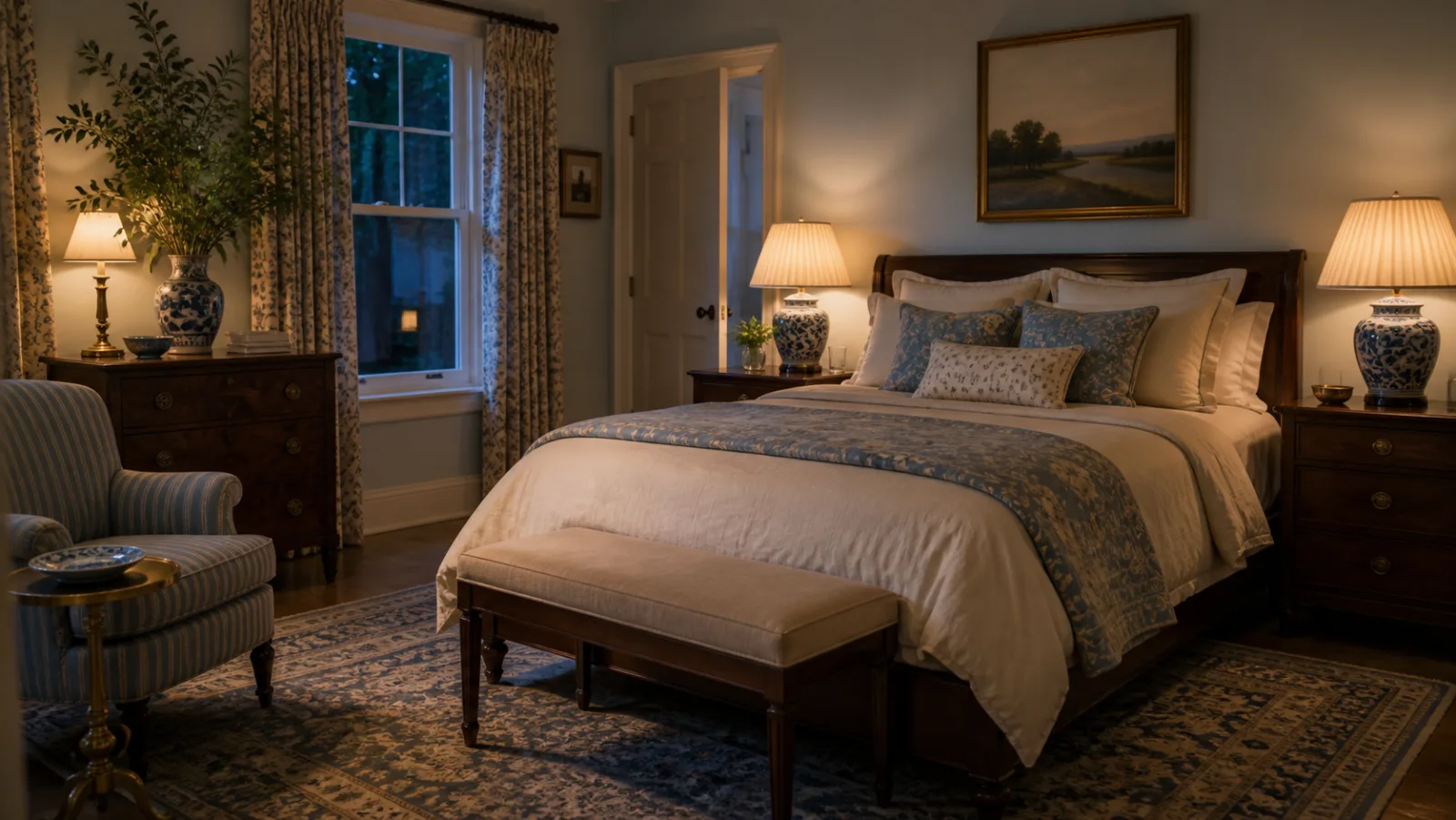
Use the style where it helps the room work: seating, circulation, focal point and material balance.
Place the headboard away from the busiest doorway when possible and preserve a clear approach on both sides.
A flush wardrobe or one resolved chest is calmer than several unrelated storage pieces.
Use bedside and concealed light below eye level instead of relying on a bright central ceiling fixture.
Prioritize breathable bedding, a tactile rug and curtains before decorative objects.
Choose one architectural color for walls or cabinetry, retain dark timber as the historical anchor and repeat two brighter notes through art, print and ceramic.
A fresh wall or millwork color that flatters dark timber and blue-and-white ceramics.
Updates classic painted rooms and connects checks, florals and contemporary art.
A lively velvet or print note that prevents blue schemes from feeling formulaic.
Provides genuine historical weight through useful old furniture.
Best retained on authentic hardware or one familiar light form.
Warm white and soft ivory keep the classic architecture bright.
Sky blue, navy and occasional leaf green carry pattern with a clear hierarchy.
Walnut antiques provide depth against fresher painted and upholstered pieces.
Blue-and-white porcelain and restrained aged brass add a collected finishing layer.
For this room, a few strong choices can carry the style better than adding more decor.
Let one headboard, canopy or textile carry the motif while the bed remains crisp, breathable and visually restful. Confirm the bed and headboard by dimensions, comfort and maintenance before choosing its decorative finish.
Mix old and new deliberately, repeat two colors across the room and give every patterned or antique piece a practical role; avoid both beige transitional blandness and museum-like matching.
Mix old and new deliberately, repeat two colors across the room and give every patterned or antique piece a practical role; avoid both beige transitional blandness and museum-like matching.
Mix old and new deliberately, repeat two colors across the room and give every patterned or antique piece a practical role; avoid both beige transitional blandness and museum-like matching.
Use these checks to keep the new traditional character clear without compromising how the bedroom works.
Use ledges or compact tables that preserve the route around the bed.
Repeat a narrow family of tones and let weave, not pattern count, create depth.
Layer low bedside light with a dim ambient source for a calmer evening transition.