Useful antique chest
Choose sound drawers and real timber; pair the old surface with a contemporary lamp or artwork.
Familiar architecture, antiques and decorative motifs made newly personal through clearer color, contemporary art and an informal mix of eras.
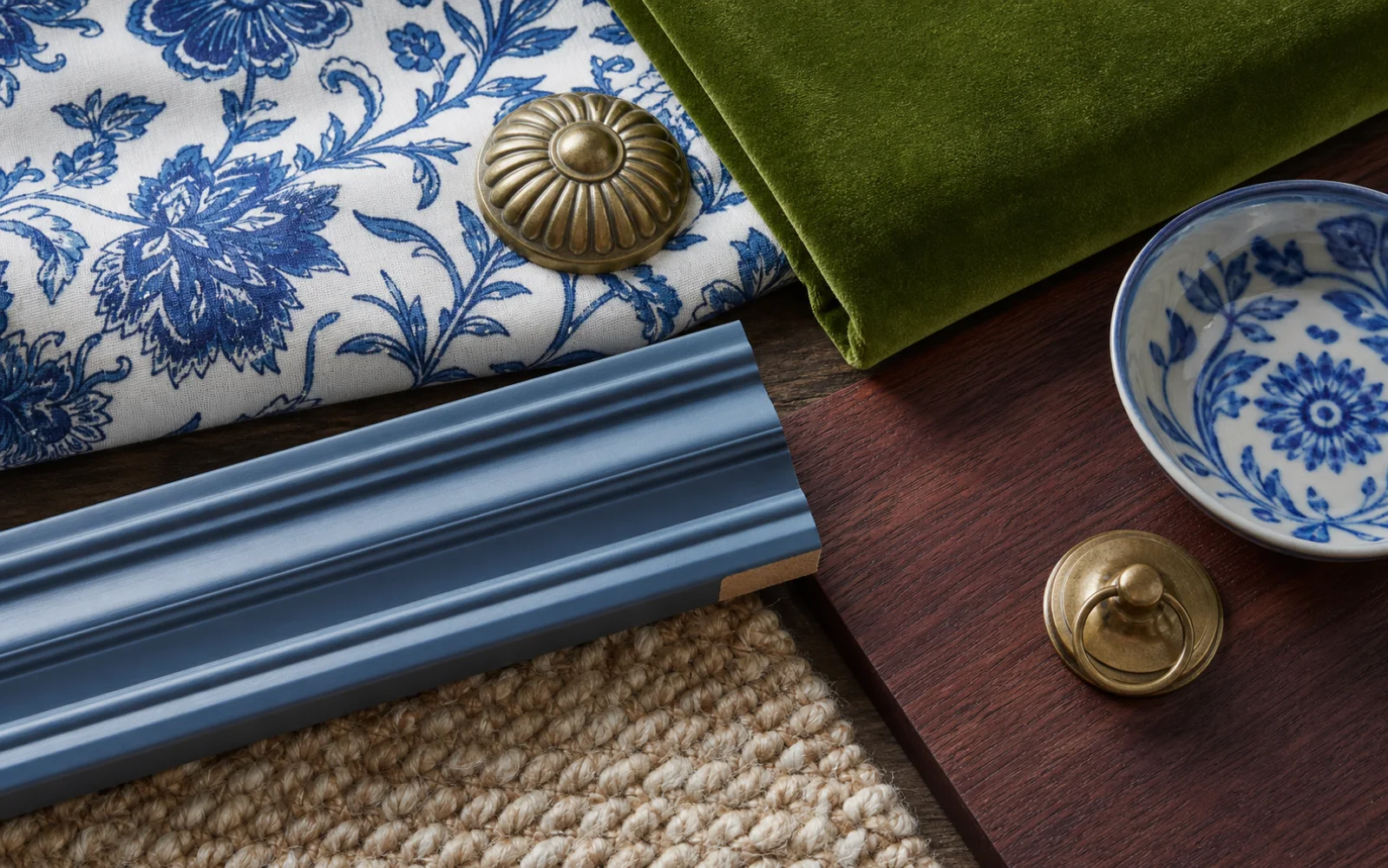
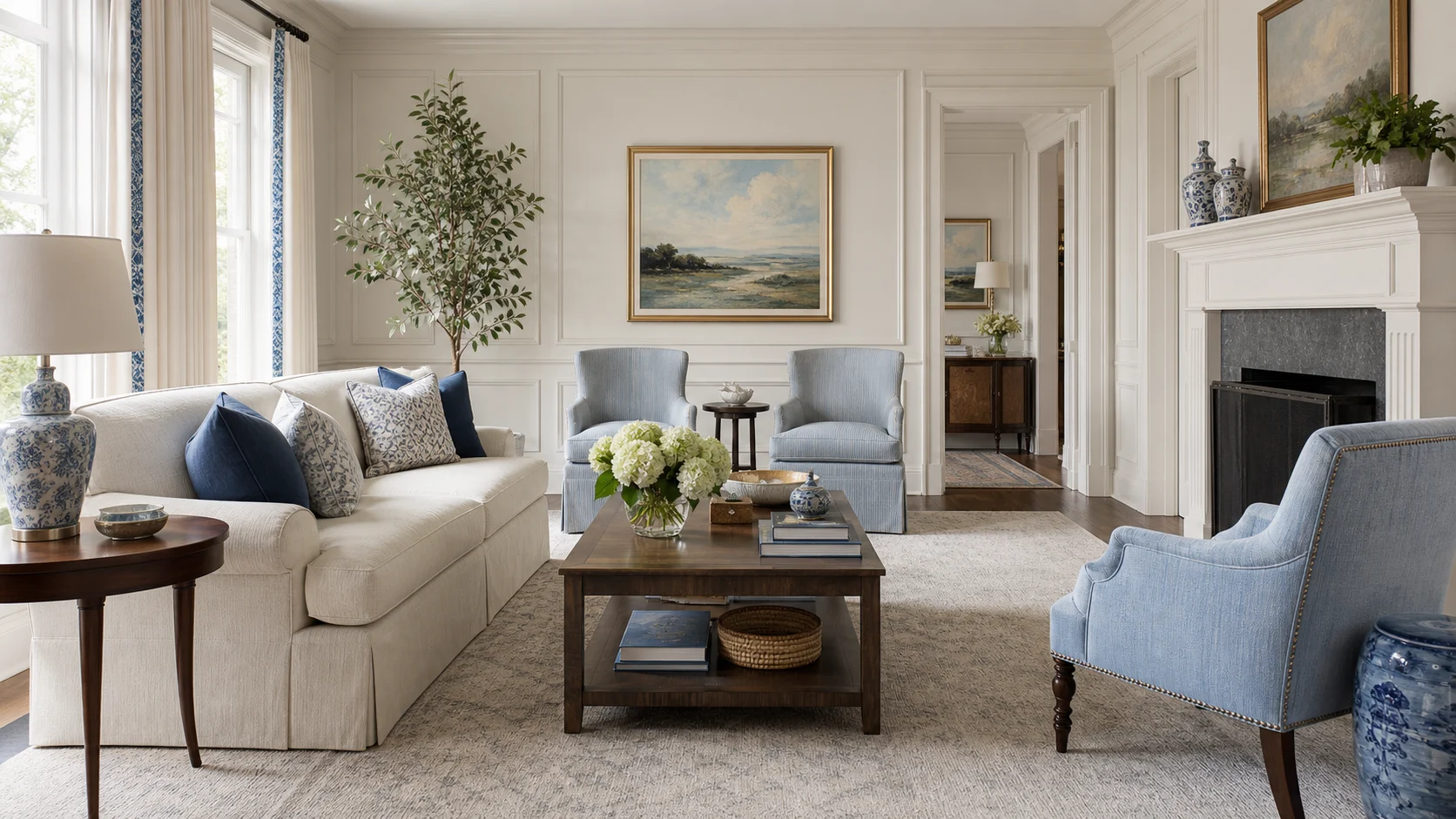
New Traditional design keeps recognizable classical architecture, antique forms and decorative motifs, but frees them from strict period rules. A mahogany table can meet modern upholstered chairs; blue-and-white porcelain can sit beneath abstract art; floral cotton can be recolored and used at a larger, cleaner scale.
Compared with Transitional, the traditional references remain more visible and expressive. The update comes from color, juxtaposition, scale and present-day function—not from neutralizing the room. The strongest examples feel inherited and current at once, with real old pieces supported by comfortable seating, effective storage and contemporary light.
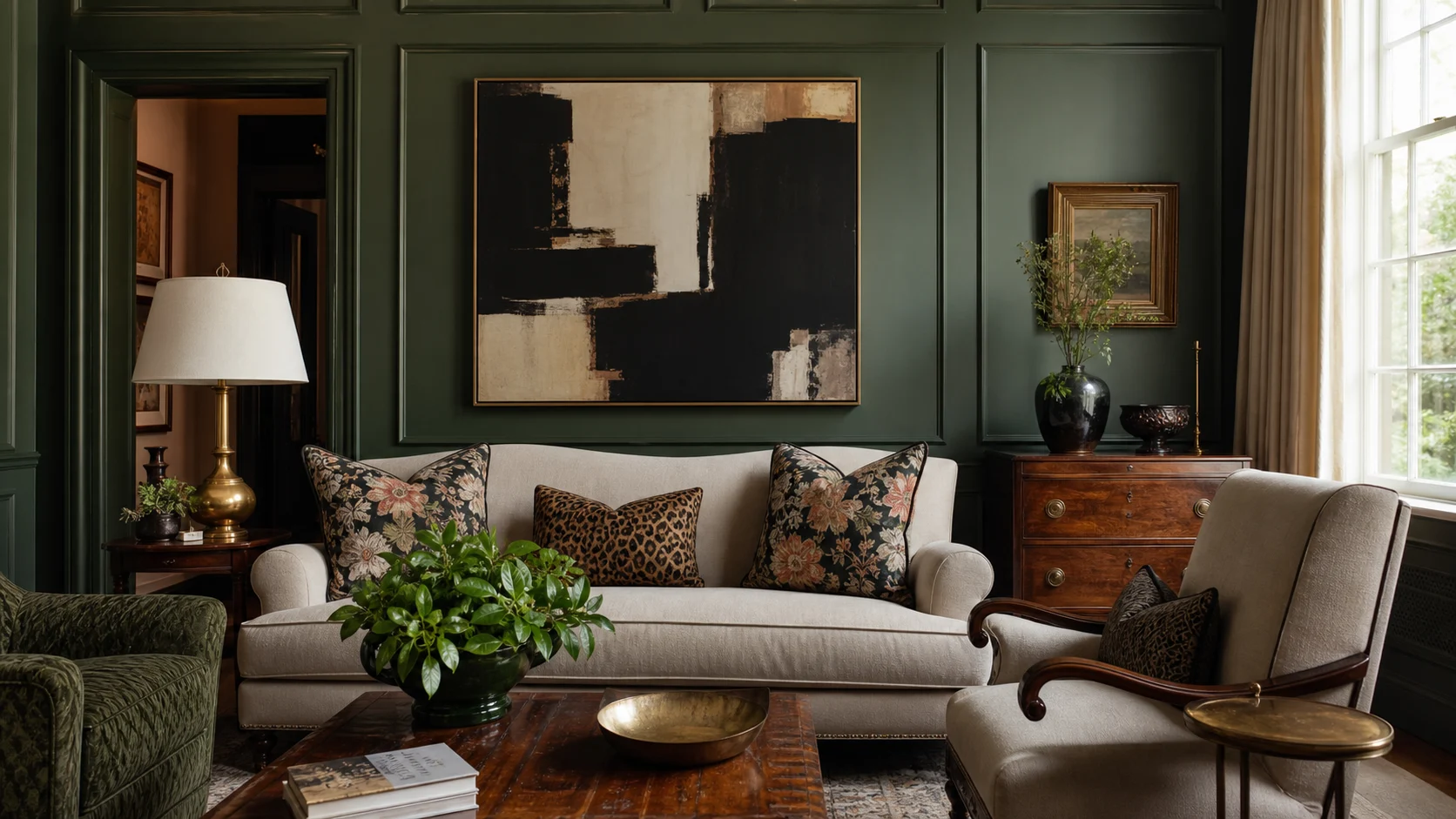
An antique chest, table or chair gives the room history that reproduction accessories cannot simulate.
Place traditional furniture beside modern art, lighting or a clean-lined upholstered form.
Paint trim, cabinetry or a whole room rather than scattering many small colorful accents.
Paneling, turned legs, campaign hardware and familiar furniture types remain recognizable.
Celadon, dusty blue, ochre and deep green refresh classic rooms beyond cream and greige.
Antiques, modern art and contemporary comfort create tension without erasing provenance.
Florals, checks and stripes return in edited palettes, changed scales and less formal combinations.
Keep the fireplace and classic chairs, then introduce clearer blue, larger art and a simpler upholstered sofa.
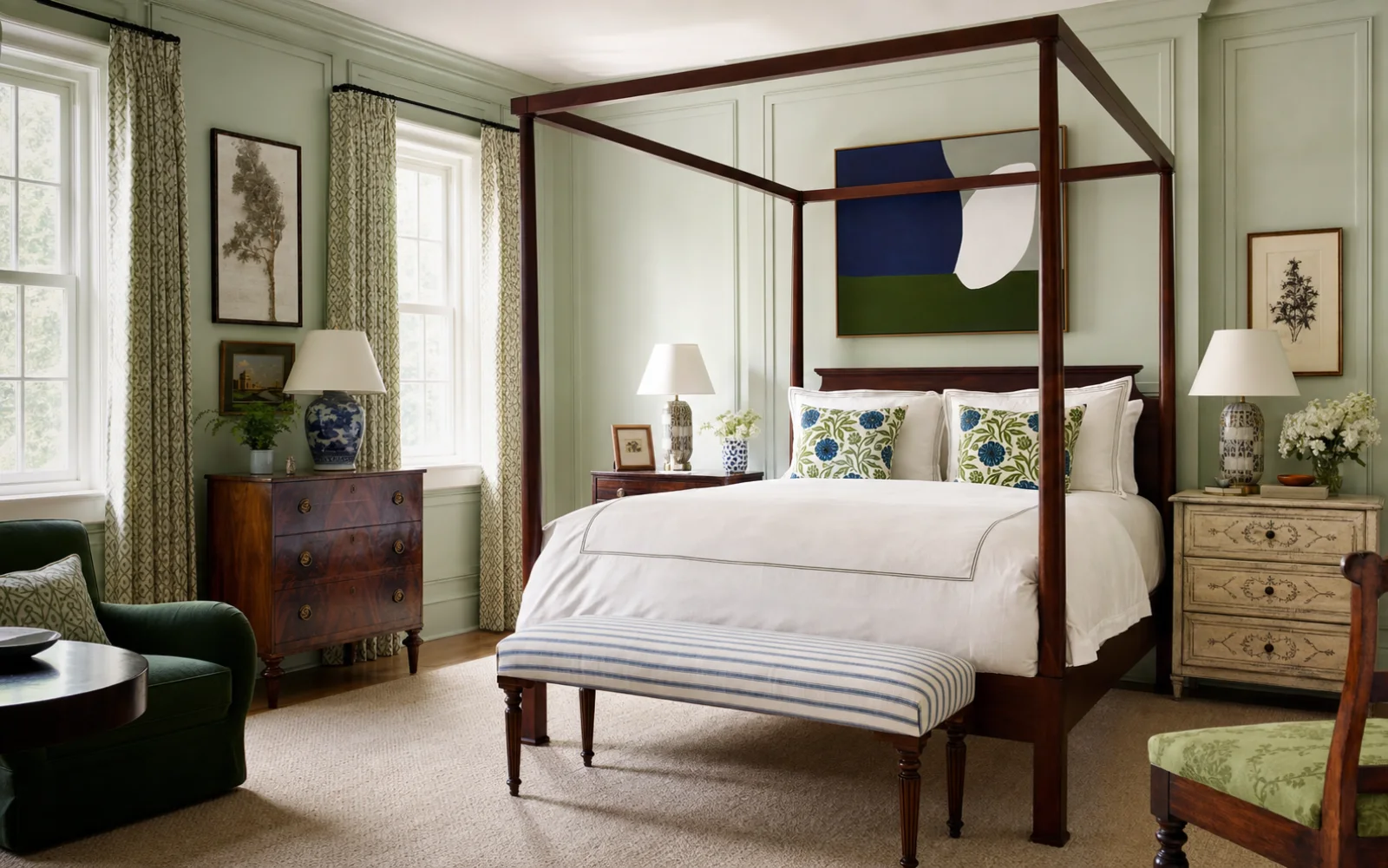
Let one four-poster or antique chest carry history; offset it with graphic art and freshly colored block print.
Mix inherited side chairs with modern host chairs and unify them through wall or textile color.
Pair an antique campaign desk with a proper ergonomic chair and painted built-ins sized for current storage.
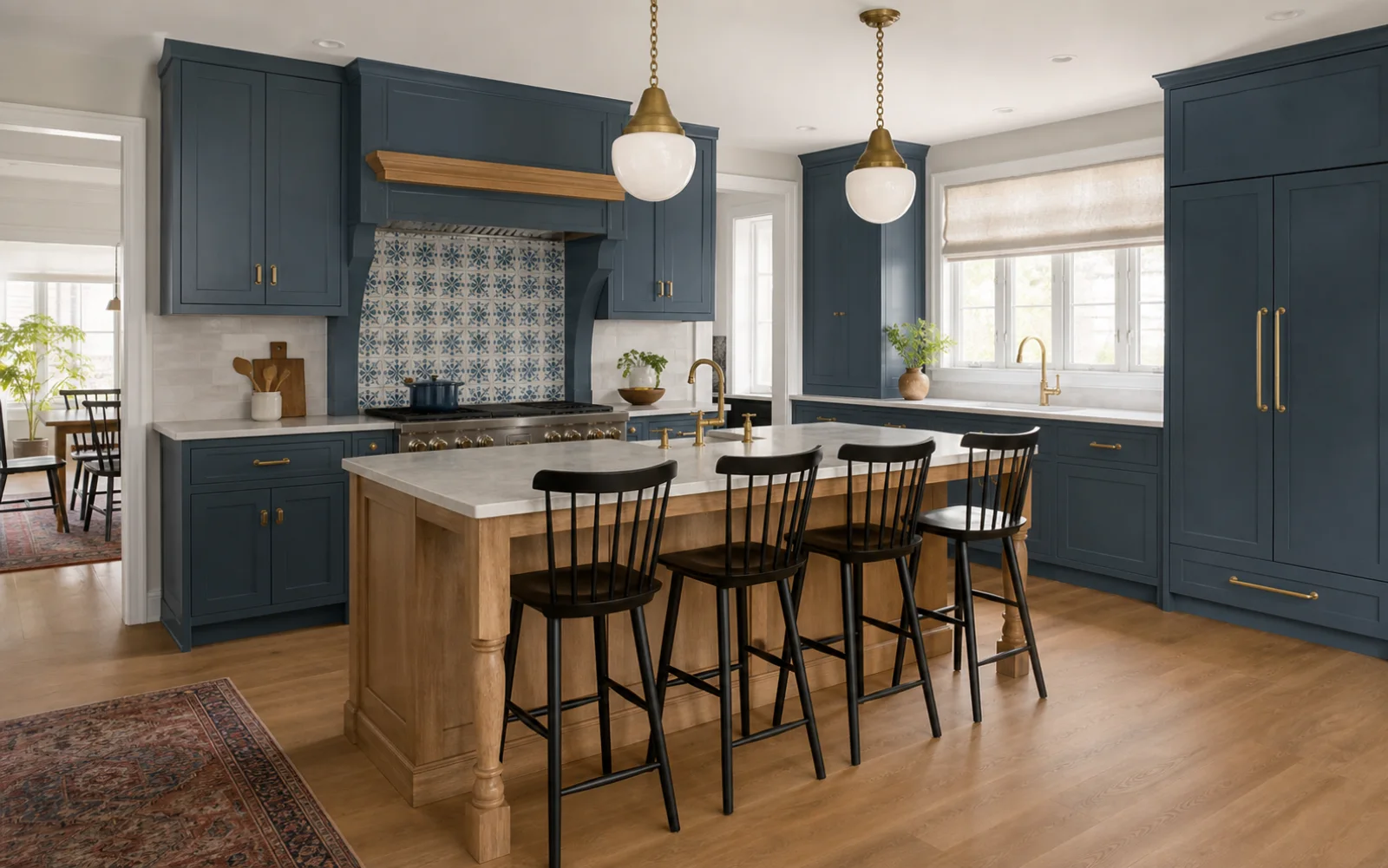
Use traditional inset cabinetry in an assured color, then simplify lighting and integrate appliances.
A real old console and blue-and-white ceramic can sit comfortably beneath oversized contemporary art.
Choose one architectural color for walls or cabinetry, retain dark timber as the historical anchor and repeat two brighter notes through art, print and ceramic.
A fresh wall or millwork color that flatters dark timber and blue-and-white ceramics.
Updates classic painted rooms and connects checks, florals and contemporary art.
A lively velvet or print note that prevents blue schemes from feeling formulaic.
Provides genuine historical weight through useful old furniture.
Best retained on authentic hardware or one familiar light form.
A familiar floral feels current through sharper cobalt, fresh green and generous white ground.
Real age, grain and repair marks give mixed contemporary pieces a credible center.
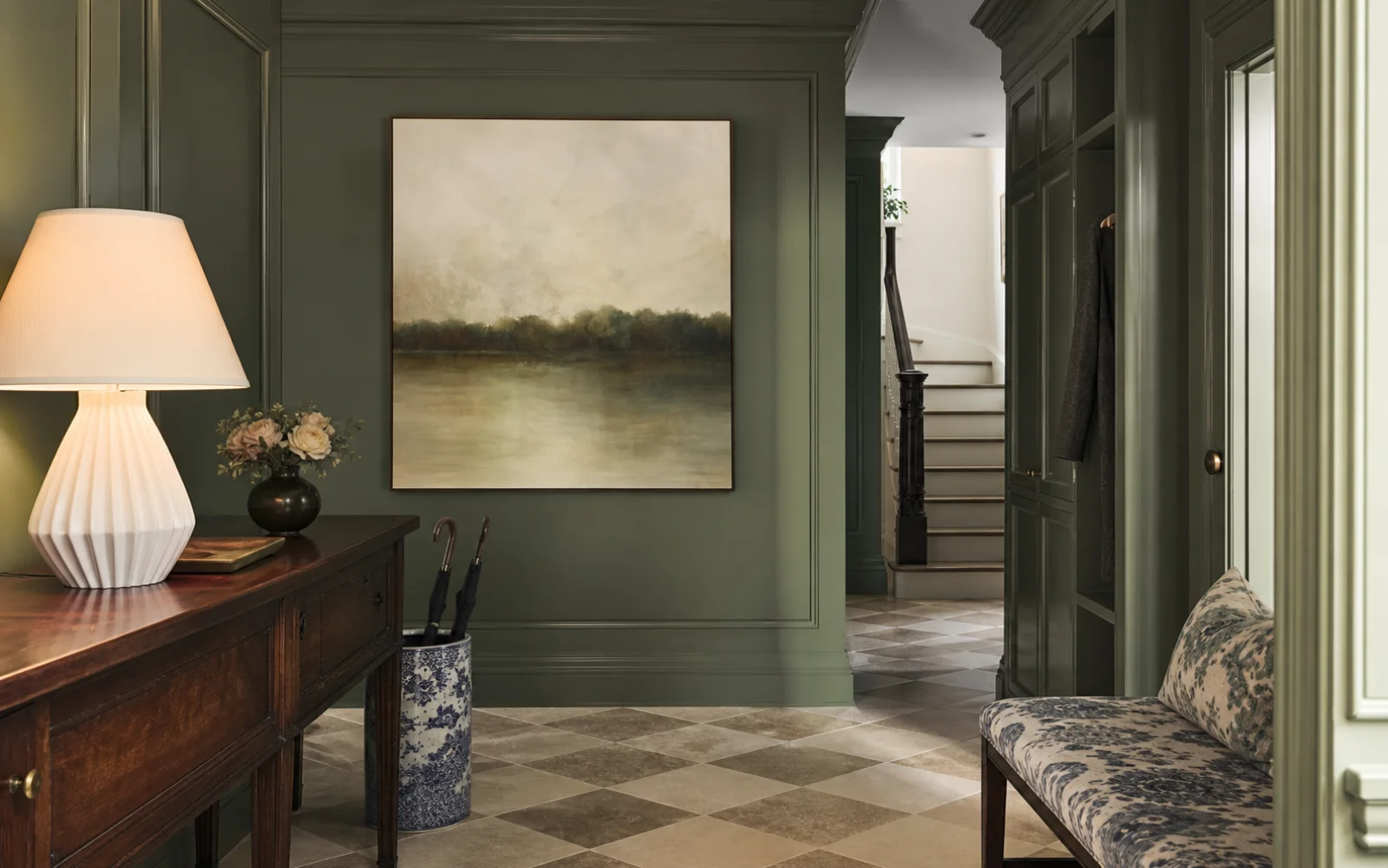
Color applied across trim and panels makes classic architecture feel intentional and new.
Handmade glaze and matte natural fiber bring pattern and use into everyday rooms.
Refresh what already has character instead of replacing it. Identify the historic anchor, choose an architectural color and add contemporary contrast where it changes how the old piece is read.
Select antiques, art and architectural details worth keeping for use, quality or personal meaning.
Paint a room, built-in or cabinetry in one confident muted color drawn from an existing piece.
Introduce modern art, a simpler light or upholstered furniture with updated comfort.
Keep two pattern families and change their scale so floral, stripe and check do not become nostalgic clutter.
When the room feels wrong, change the underlying decision before adding more decor.
Use at least one genuine old piece and allow its wear or repair history to remain visible.
Add a contemporary scale shift through artwork, lighting or upholstery.
Reduce the motif count, enlarge one print and use a fresher, narrower palette.
Keep antique tables and storage, but use current seating where the body needs support.
New Traditional does not dilute tradition; it changes the company traditional pieces keep. Color, art and contemporary comfort make familiar forms feel personal rather than preserved.
Quieter and more neutral, smoothing the transition between classic architecture and contemporary furniture.
Choose new traditional when visible antiques, pattern and color should retain more personality.
Expressive historical references replace neutral material continuity.
More period-consistent and formal in furniture, pattern and arrangement.
Choose new traditional when rules can loosen and current art or function should enter the room.
Unexpected adjacency replaces historical consistency.
More conceptual, architectural and willing to abstract or exaggerate classical forms.
Choose new traditional for a warmer domestic mix grounded in recognizable antiques and textiles.
Collected familiarity replaces bold reinterpretation.
More nostalgic and decorative through chintz, needlepoint, scallops and dense inherited motifs.
Choose new traditional for cleaner pattern use and stronger contemporary counterpoints.
Modern art and architectural color replace overt nostalgic layering.
Look for pieces with provenance, useful storage or a strong familiar silhouette. The update should come from how they are combined, not from buying an entire new collection.
Choose sound drawers and real timber; pair the old surface with a contemporary lamp or artwork.
A recognizable classic form needs little additional decoration when color and art are current.
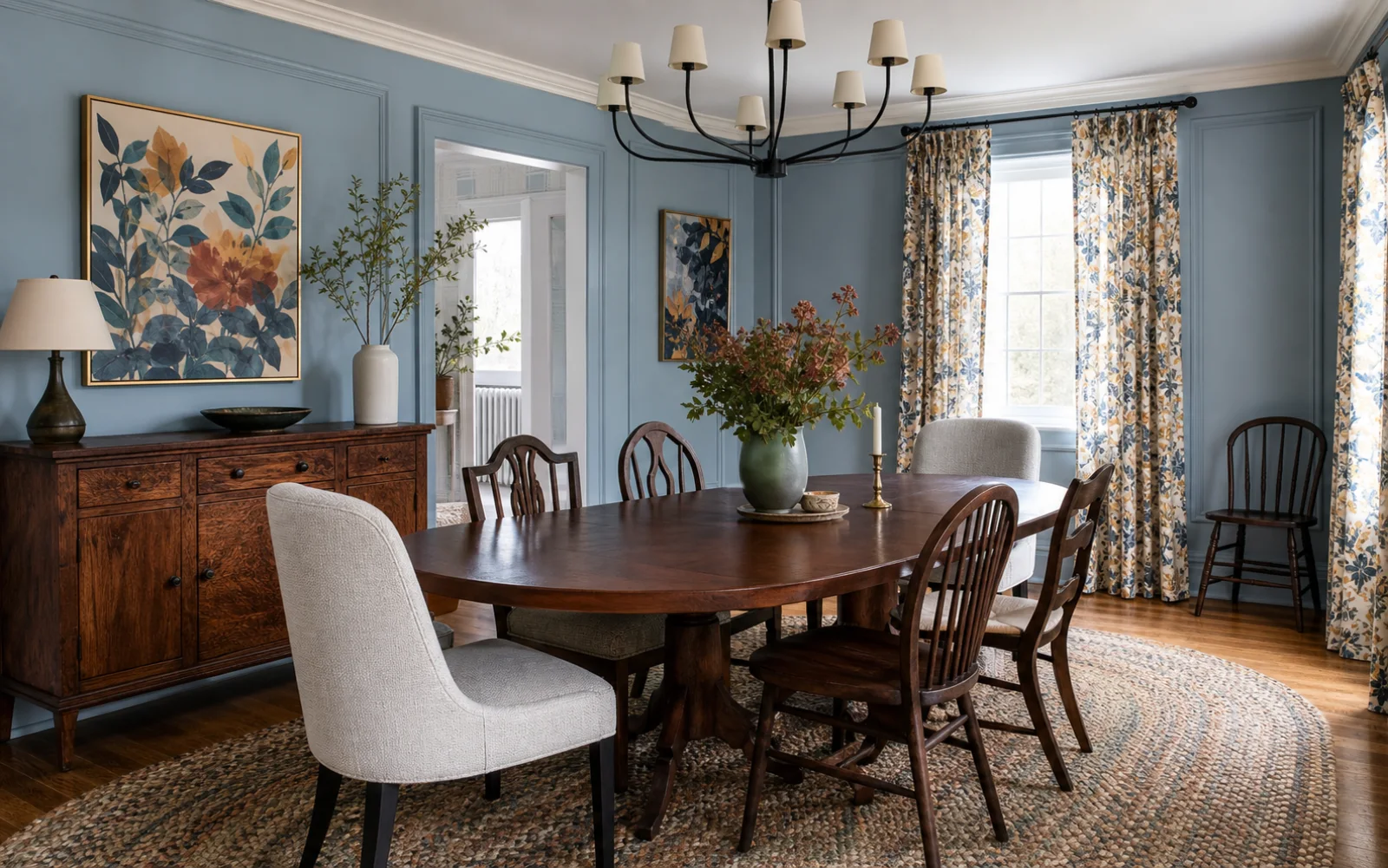
Retain inherited side chairs and add two supportive upholstered hosts rather than forcing a matched set.
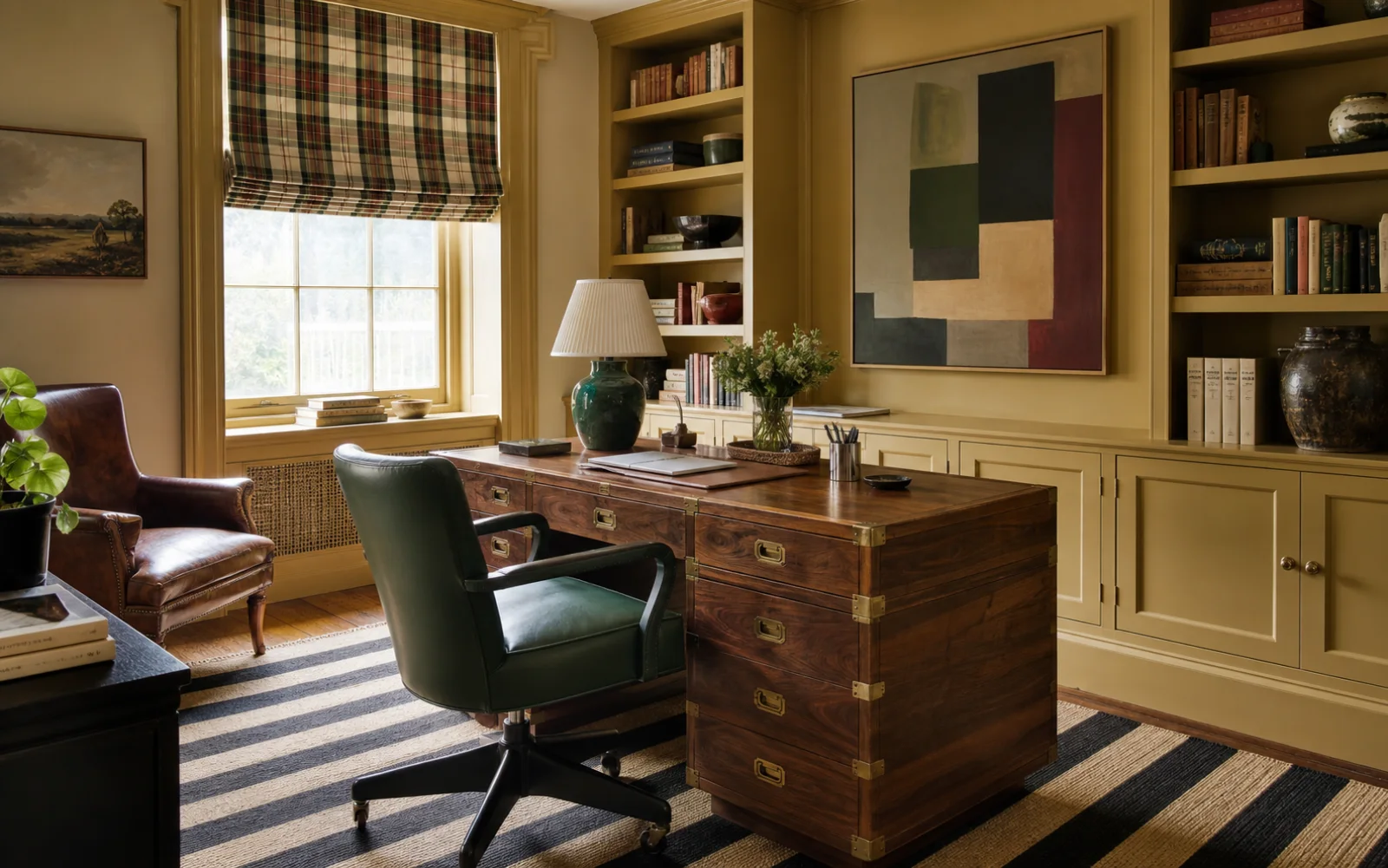
Historical hardware and useful storage make a strong partner for ergonomic modern seating.
A saturated muted blue gives familiar construction a contemporary architectural presence.
Use scale and abstraction to change how an antique console and classic paneling are perceived.