01
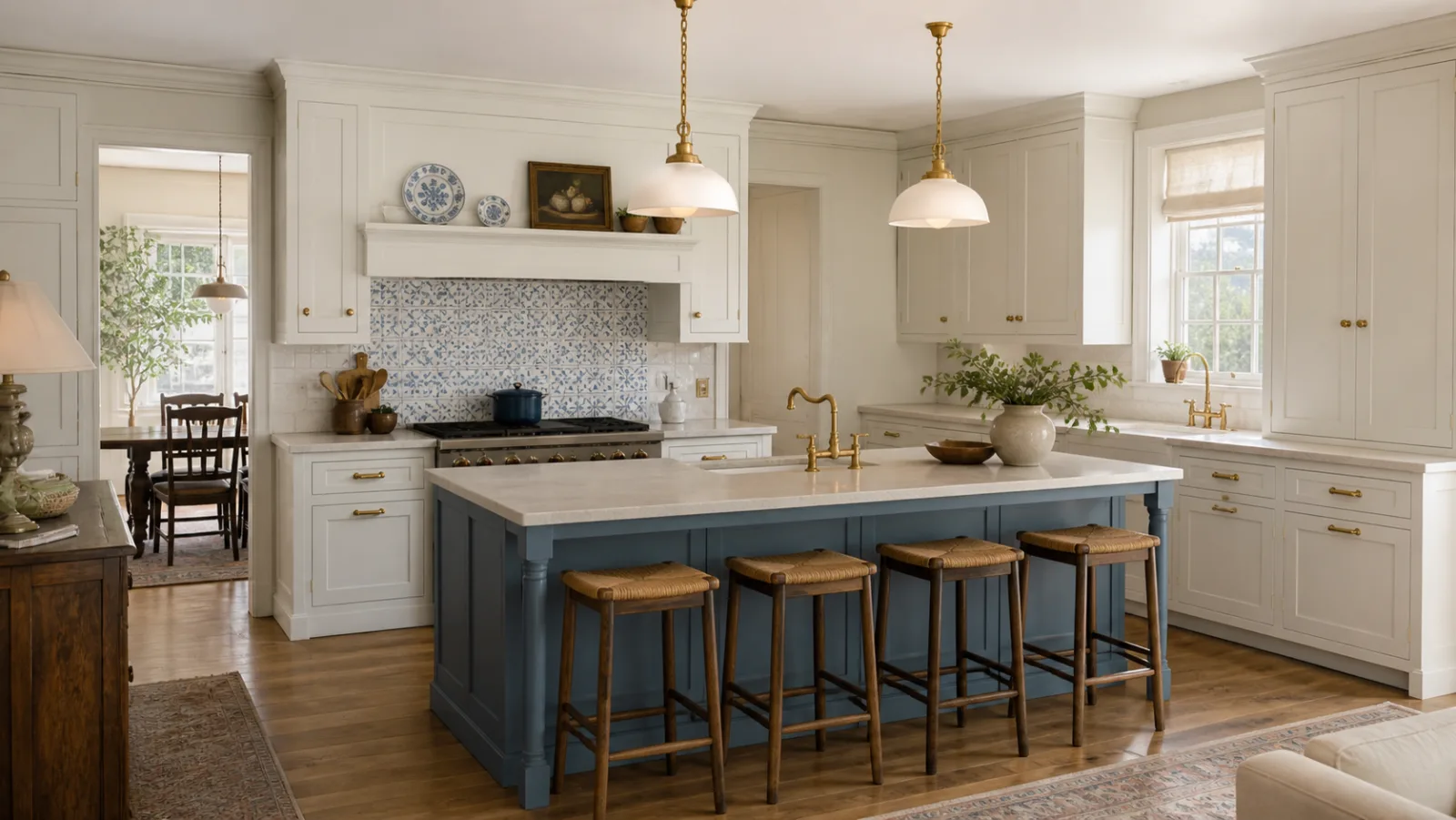
Blue Island
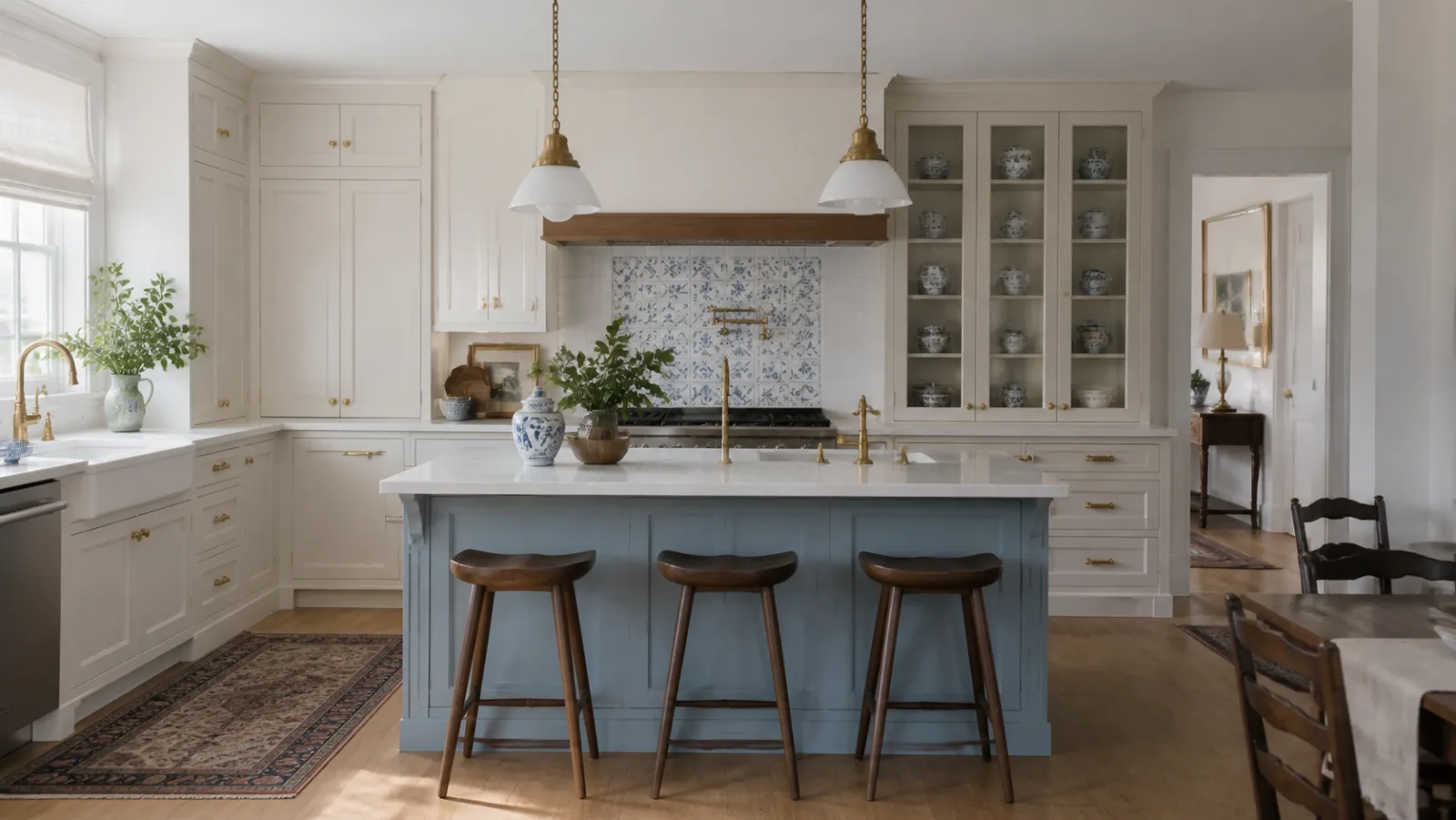
Visible color and a refreshed classic motif create the first clear identity. Verify work aisles, appliance openings and uninterrupted task light around the preparation zone.
Five materially and spatially different new traditional approaches to the kitchen, including a compact plan and an evening lighting study.
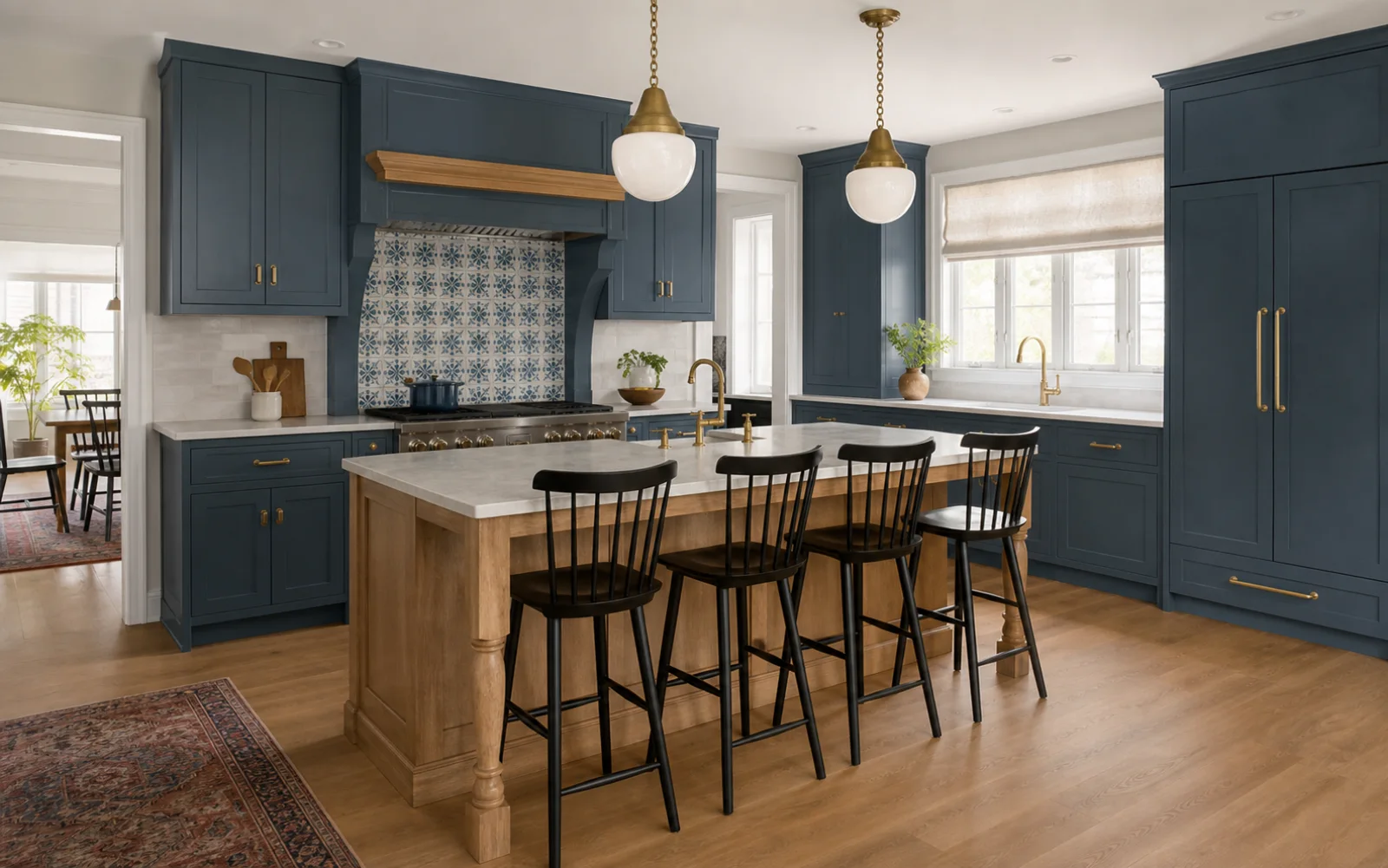
New Traditional refreshes visible classic motifs through expressive color, selective pattern, useful antiques and contemporary comfort. In the kitchen, that identity must still support safe preparation, useful storage and durable surfaces arranged around a clear workflow.
Concentrate color or display in one island, cabinet or shade so the working surfaces and storage remain disciplined. Mix old and new deliberately, repeat two colors across the room and give every patterned or antique piece a practical role; avoid both beige transitional blandness and museum-like matching.
Use these examples to choose the version of the style that fits your architecture, light and square footage.
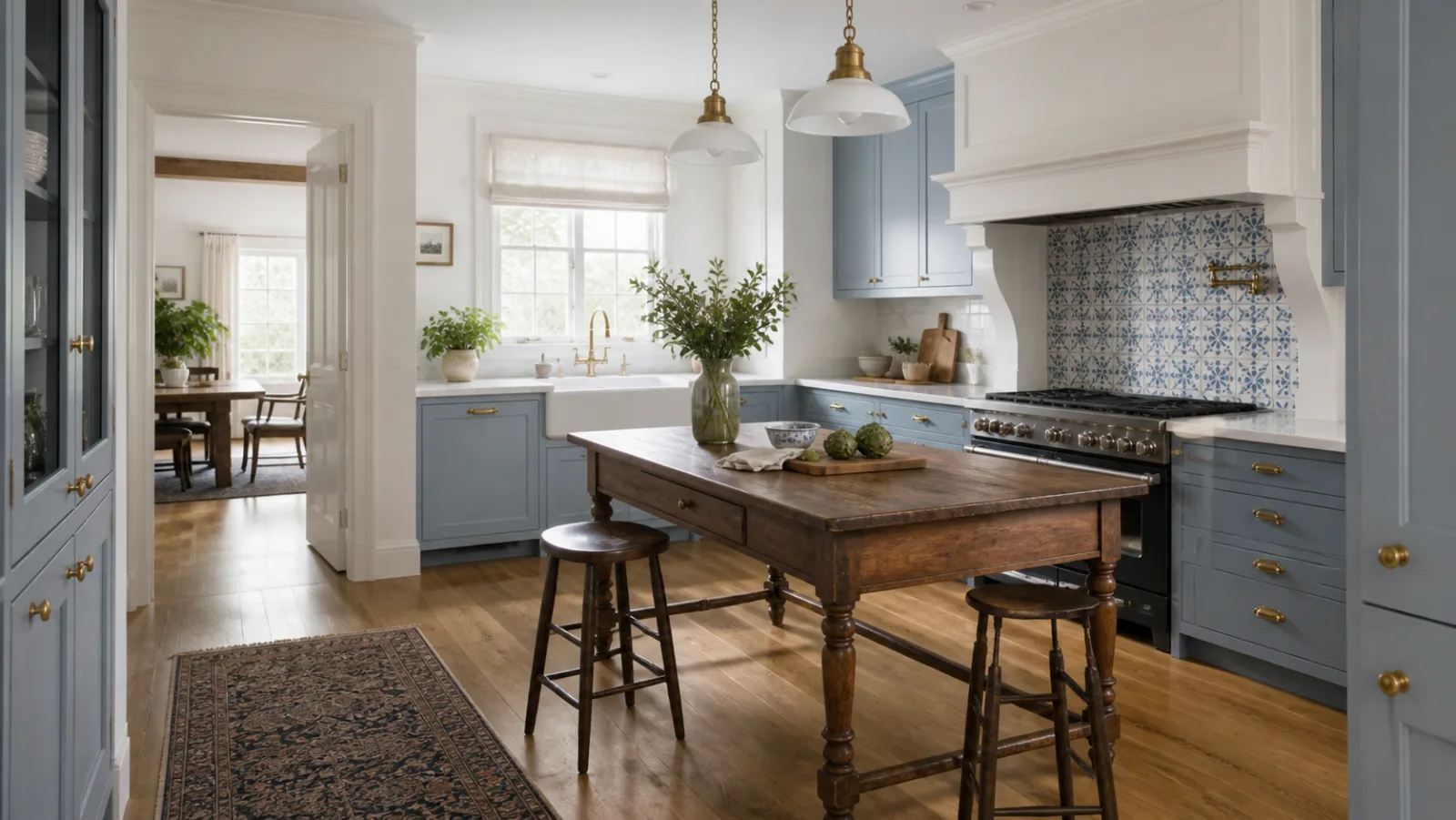
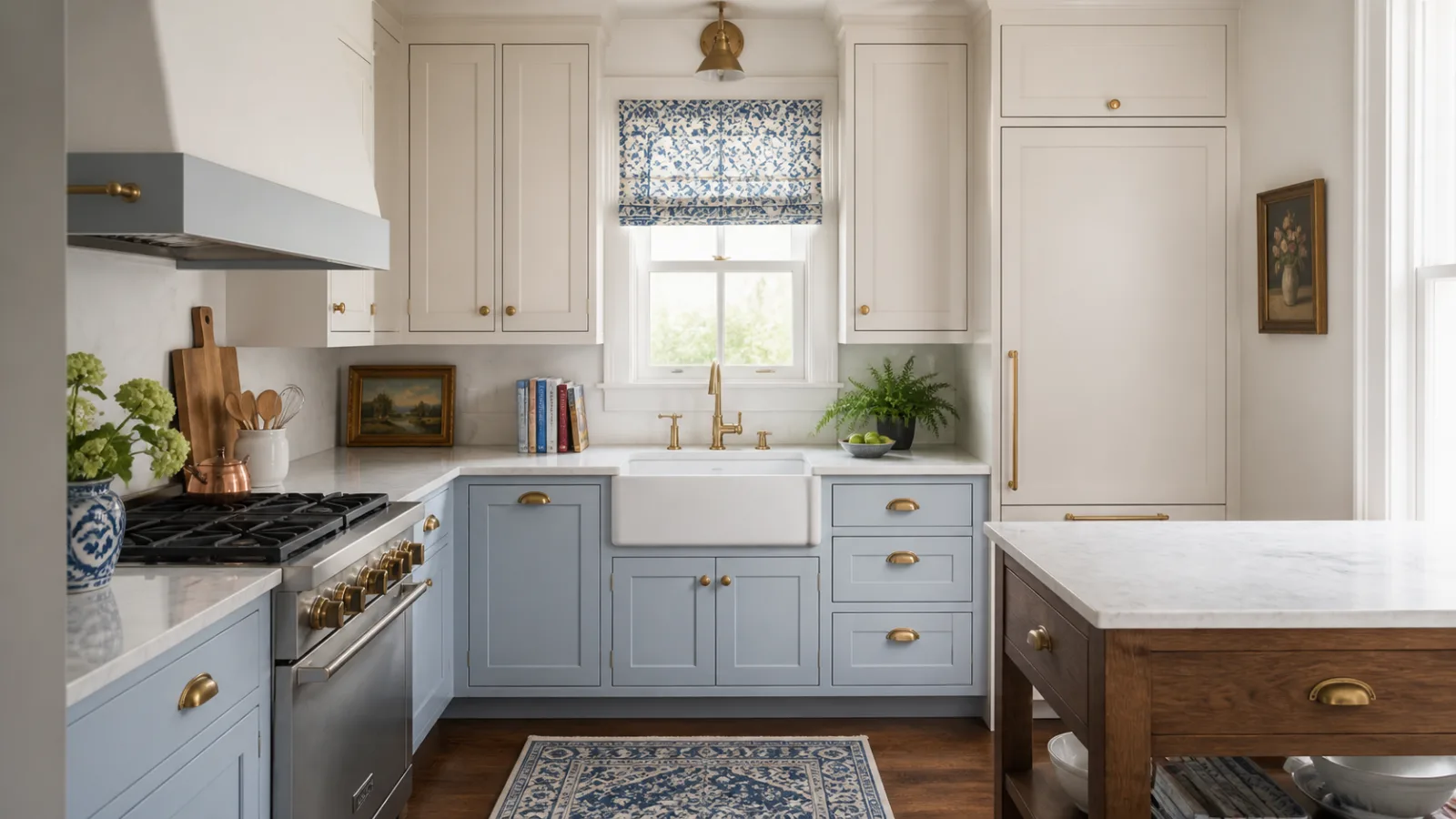
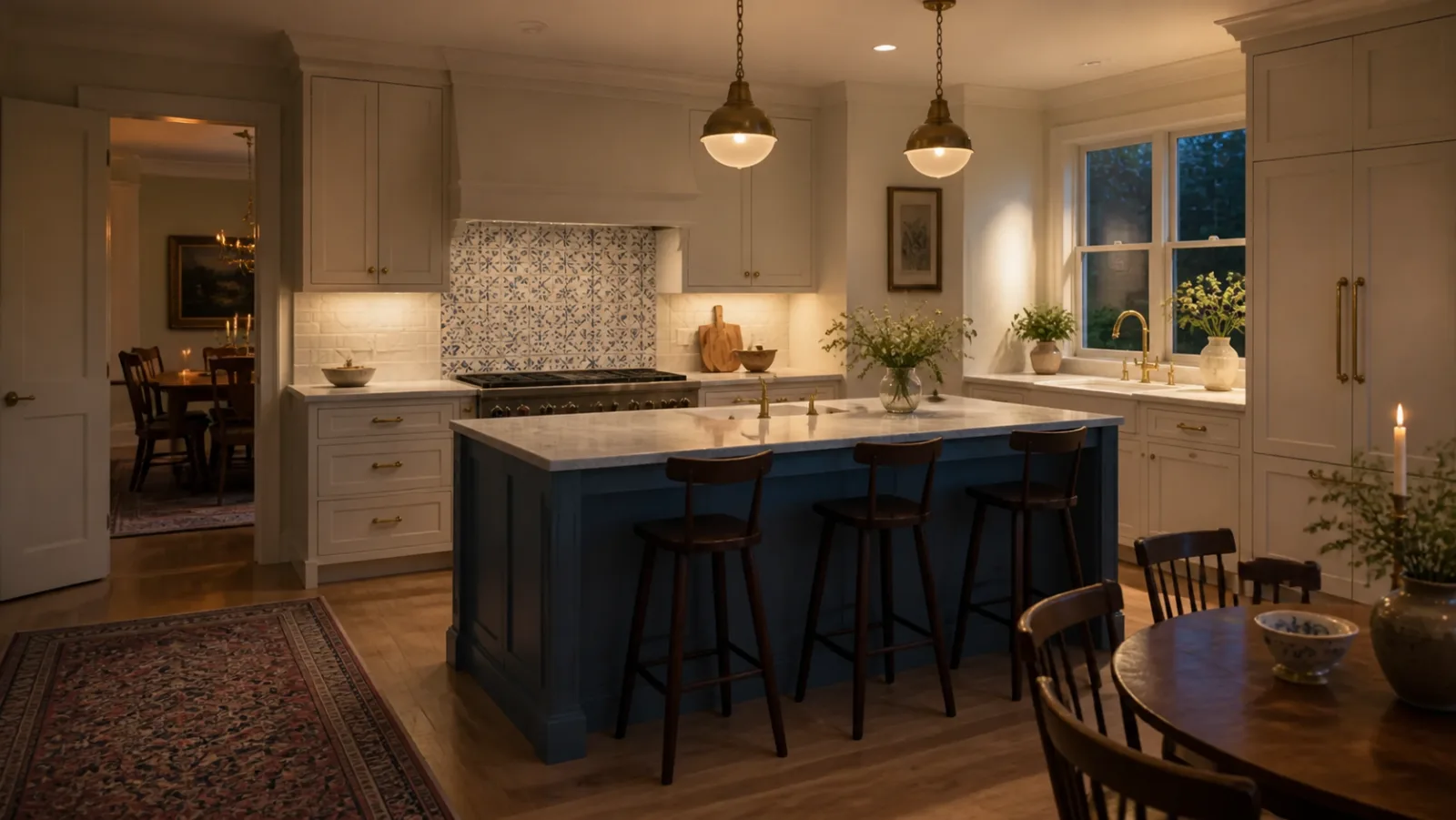
Use the style where it helps the room work: seating, circulation, focal point and material balance.
Keep the sink, cooking zone and cold storage connected without routing household traffic through the main prep area.
Check appliance doors, drawer pulls and seated overhangs before fixing the island or peninsula footprint.
Let one shelf or niche hold useful objects while full-height storage absorbs pantry goods and small appliances.
Worktop light should be continuous and shadow-free; pendants can then provide atmosphere rather than basic visibility.
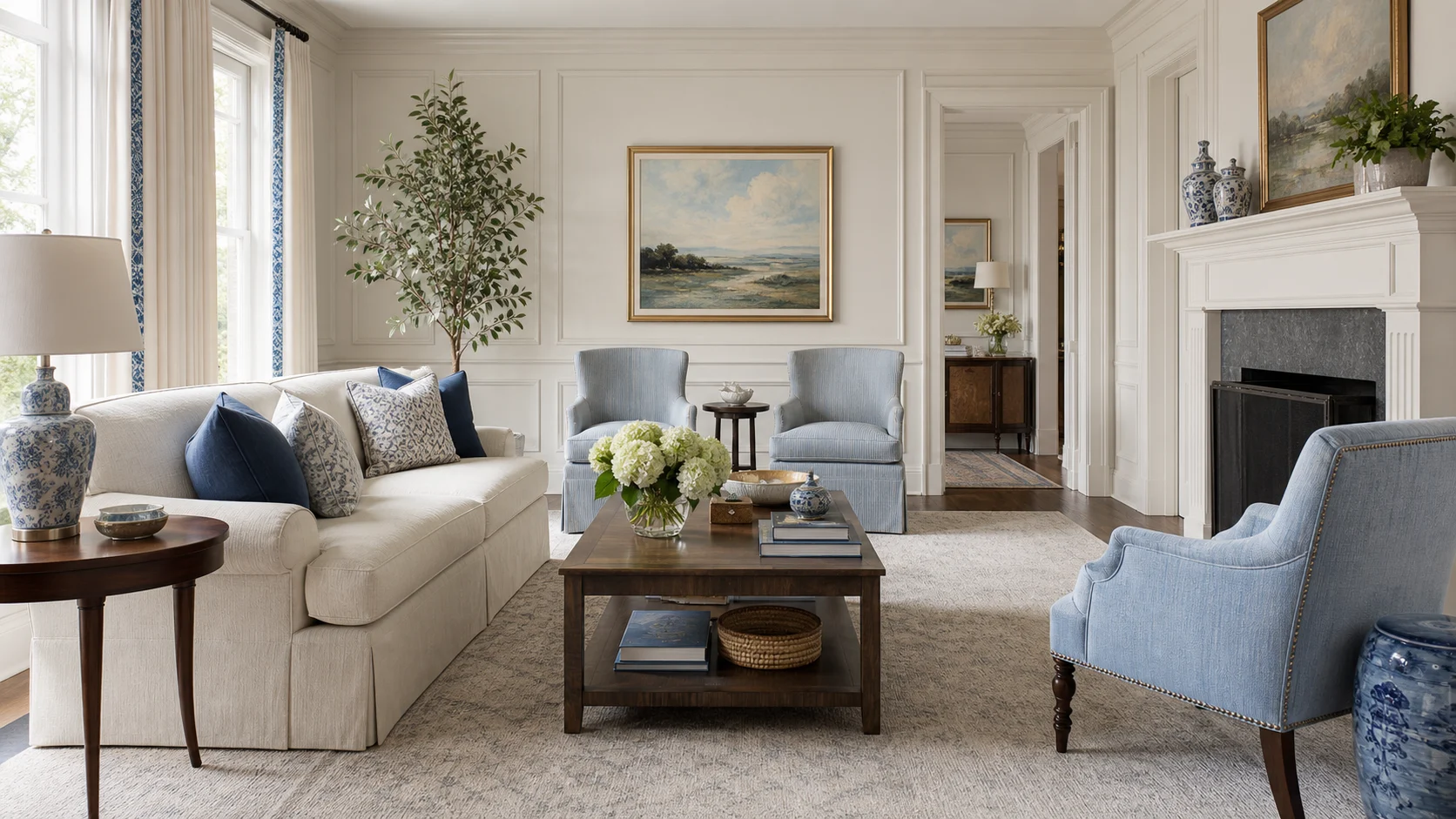
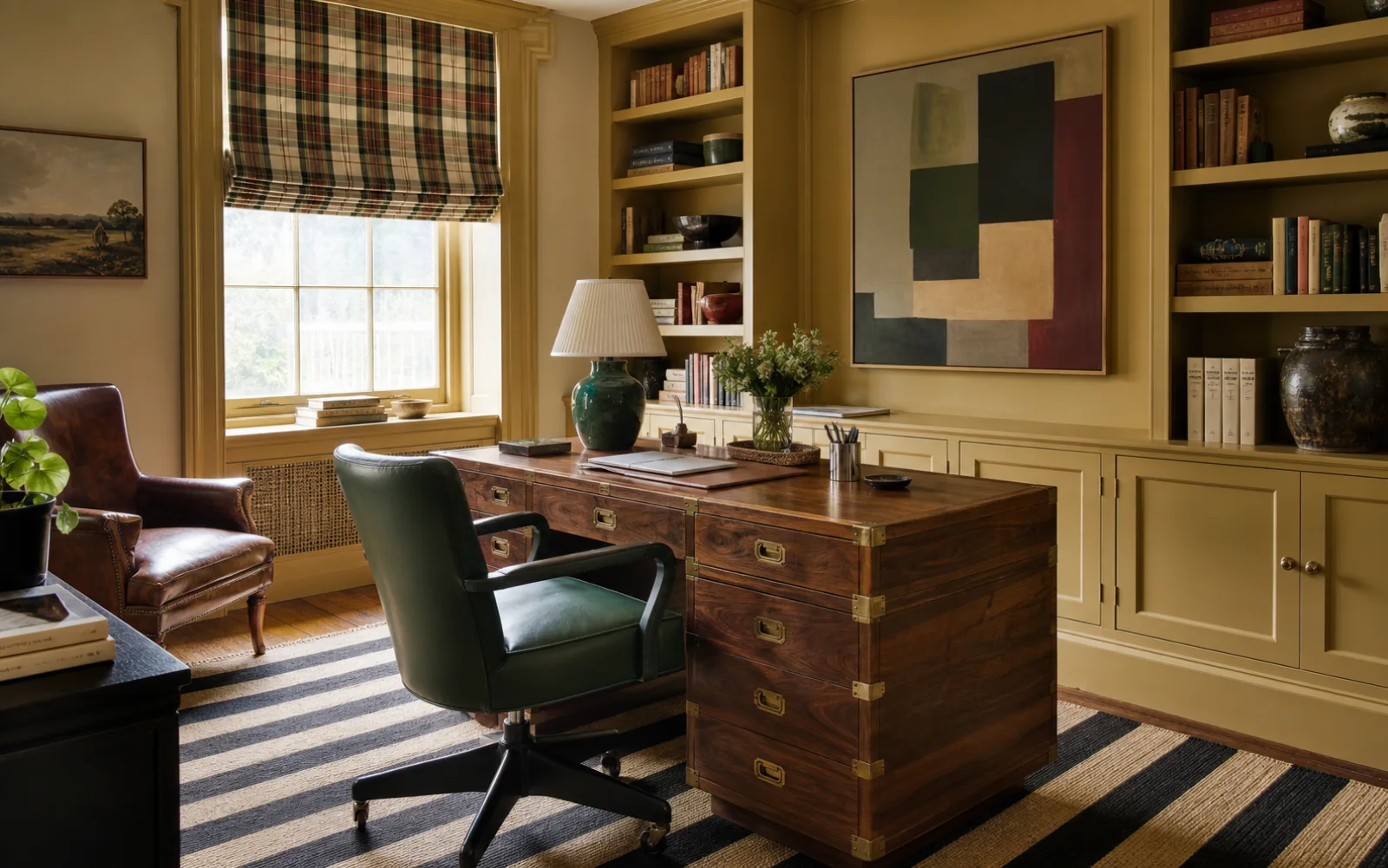
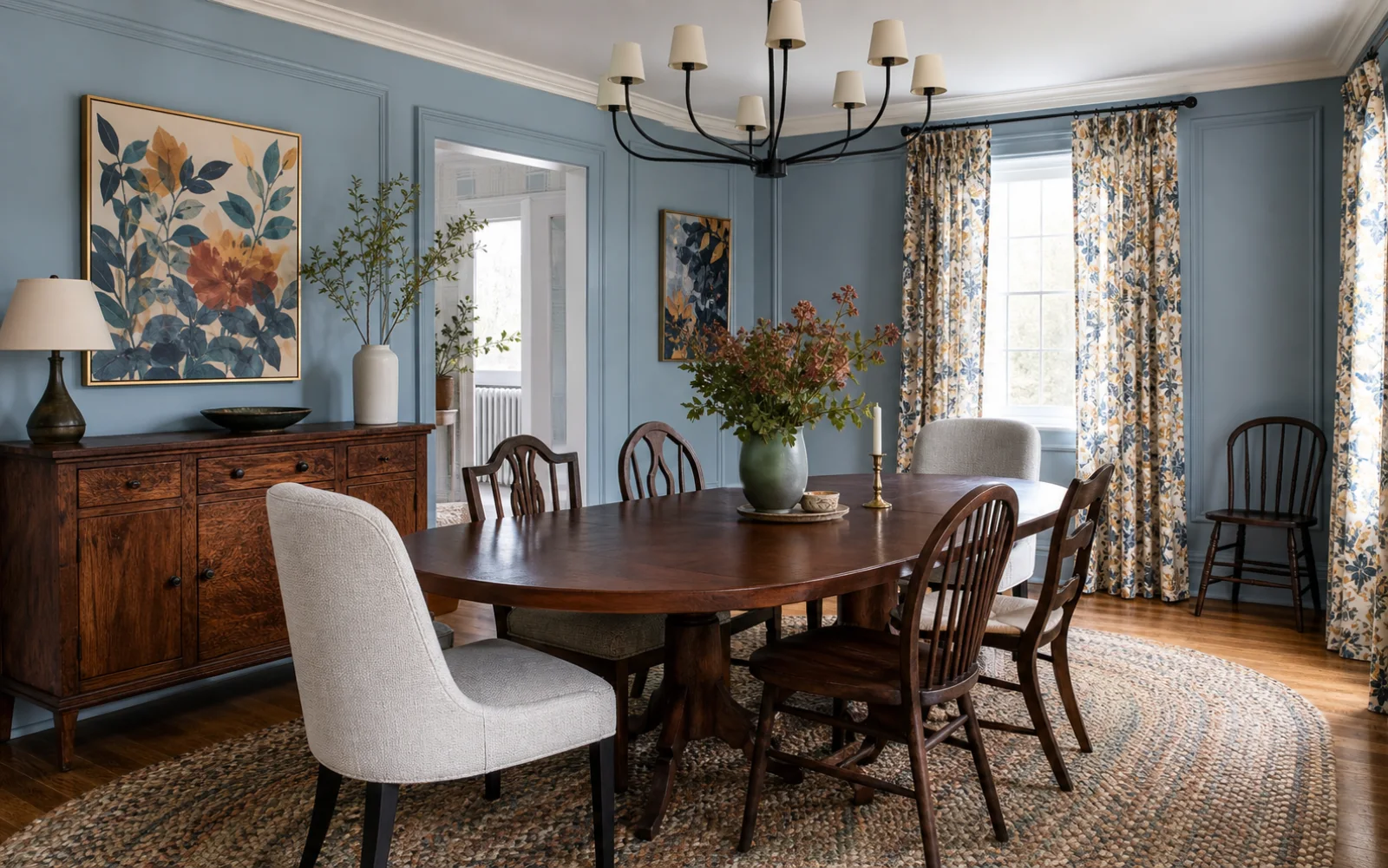
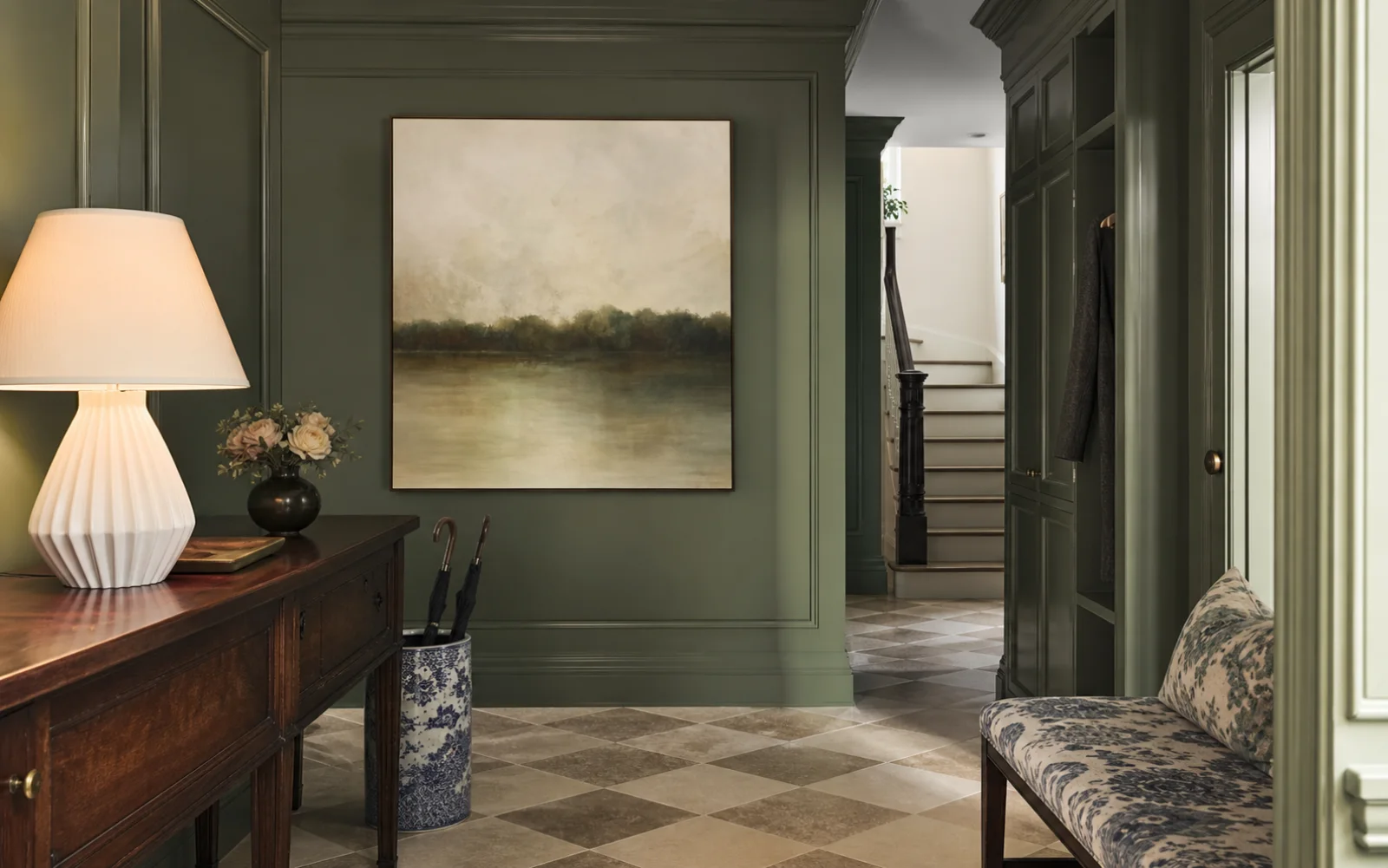
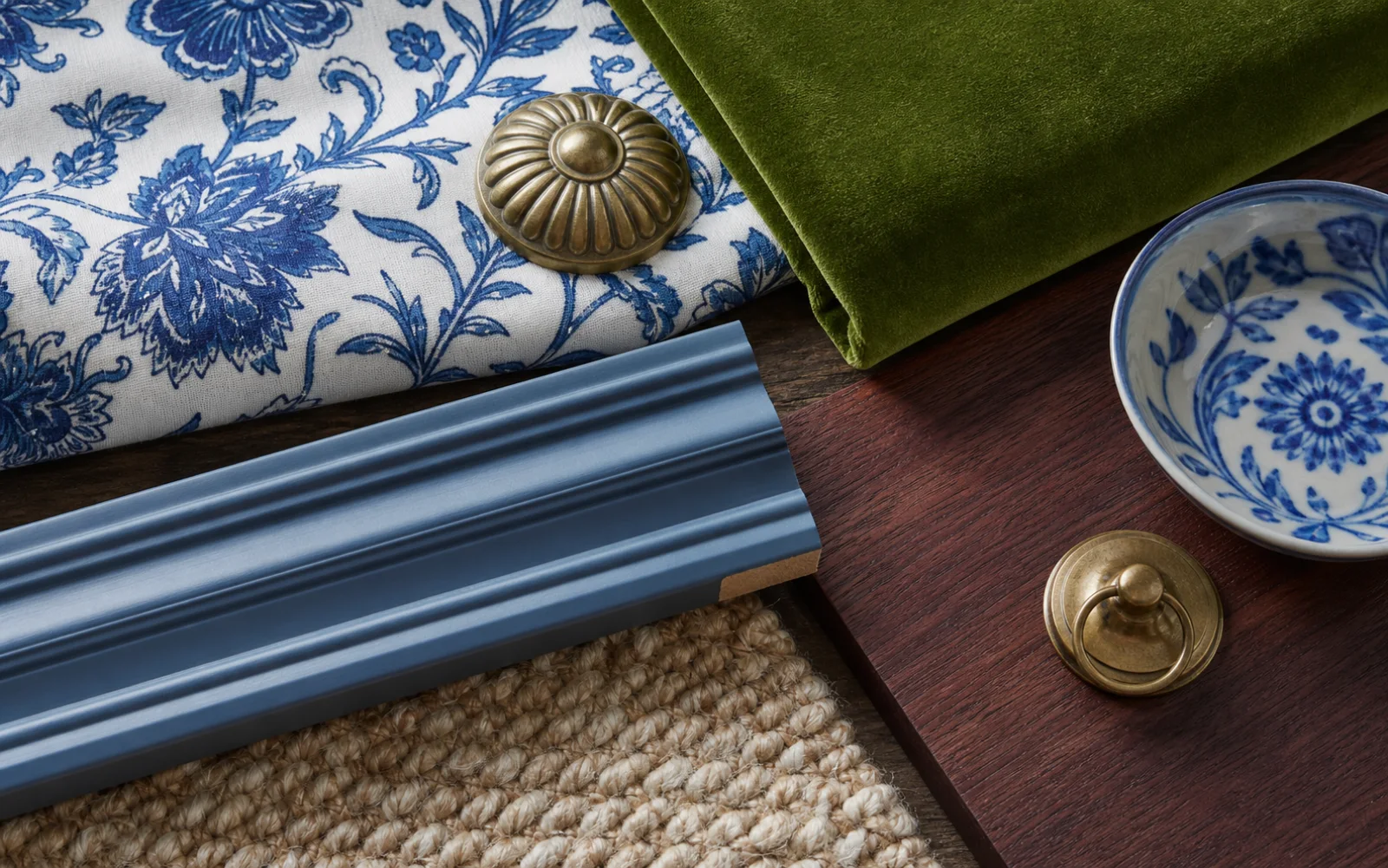
Choose one architectural color for walls or cabinetry, retain dark timber as the historical anchor and repeat two brighter notes through art, print and ceramic.
A fresh wall or millwork color that flatters dark timber and blue-and-white ceramics.
Updates classic painted rooms and connects checks, florals and contemporary art.
A lively velvet or print note that prevents blue schemes from feeling formulaic.
Provides genuine historical weight through useful old furniture.
Best retained on authentic hardware or one familiar light form.
Warm white and soft ivory keep the classic architecture bright.
Sky blue, navy and occasional leaf green carry pattern with a clear hierarchy.
Walnut antiques provide depth against fresher painted and upholstered pieces.
Blue-and-white porcelain and restrained aged brass add a collected finishing layer.
For this room, a few strong choices can carry the style better than adding more decor.
Concentrate color or display in one island, cabinet or shade so the working surfaces and storage remain disciplined. Confirm the cabinet system by dimensions, comfort and maintenance before choosing its decorative finish.
Mix old and new deliberately, repeat two colors across the room and give every patterned or antique piece a practical role; avoid both beige transitional blandness and museum-like matching.
Mix old and new deliberately, repeat two colors across the room and give every patterned or antique piece a practical role; avoid both beige transitional blandness and museum-like matching.
Mix old and new deliberately, repeat two colors across the room and give every patterned or antique piece a practical role; avoid both beige transitional blandness and museum-like matching.
Use these checks to keep the new traditional character clear without compromising how the kitchen works.
Reduce its depth or use a freestanding table when the working aisles cannot remain clear.
Display only frequently used pieces and keep bulk food or appliances behind doors.
Use a quieter cabinet field and give the worktop or island one clear material role.