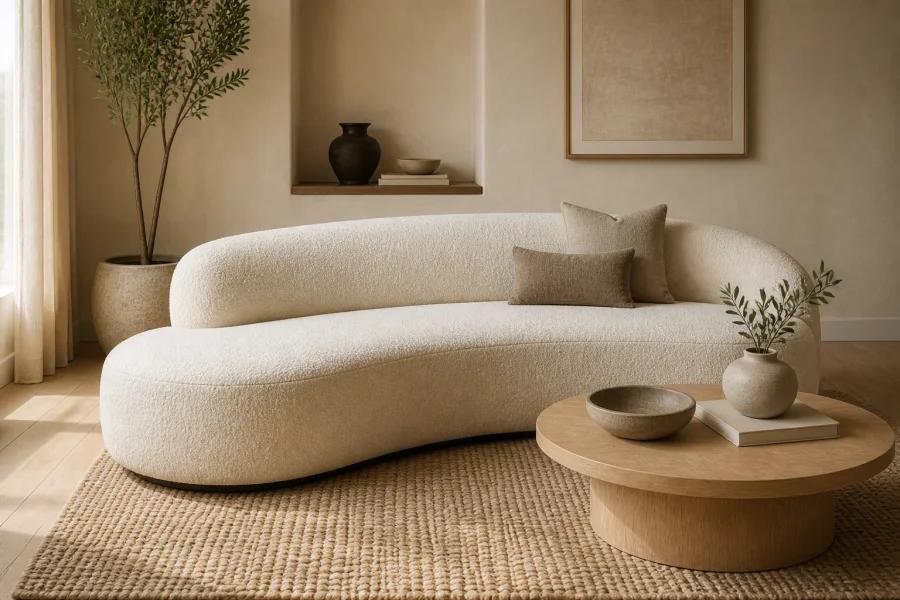
Curved boucle sofa
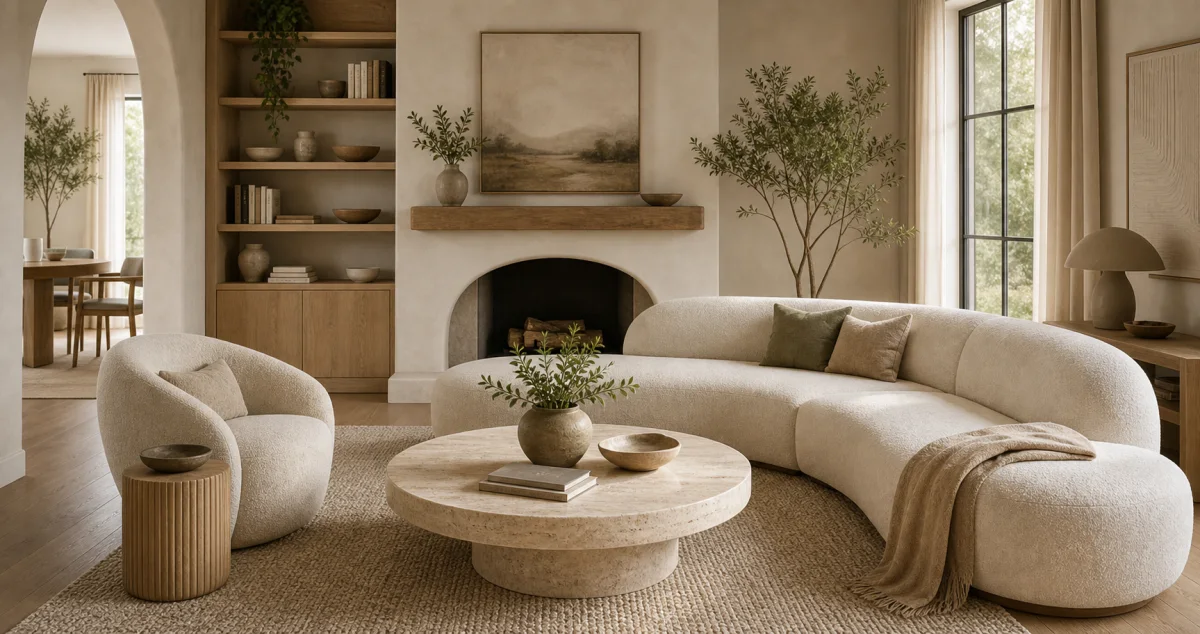
A rounded sofa gives the room its softness and makes a simple layout feel intentional.
Soft modern rooms shaped by curves, warm neutrals, plaster, pale wood, stone and tactile pieces that feel calm without becoming plain.
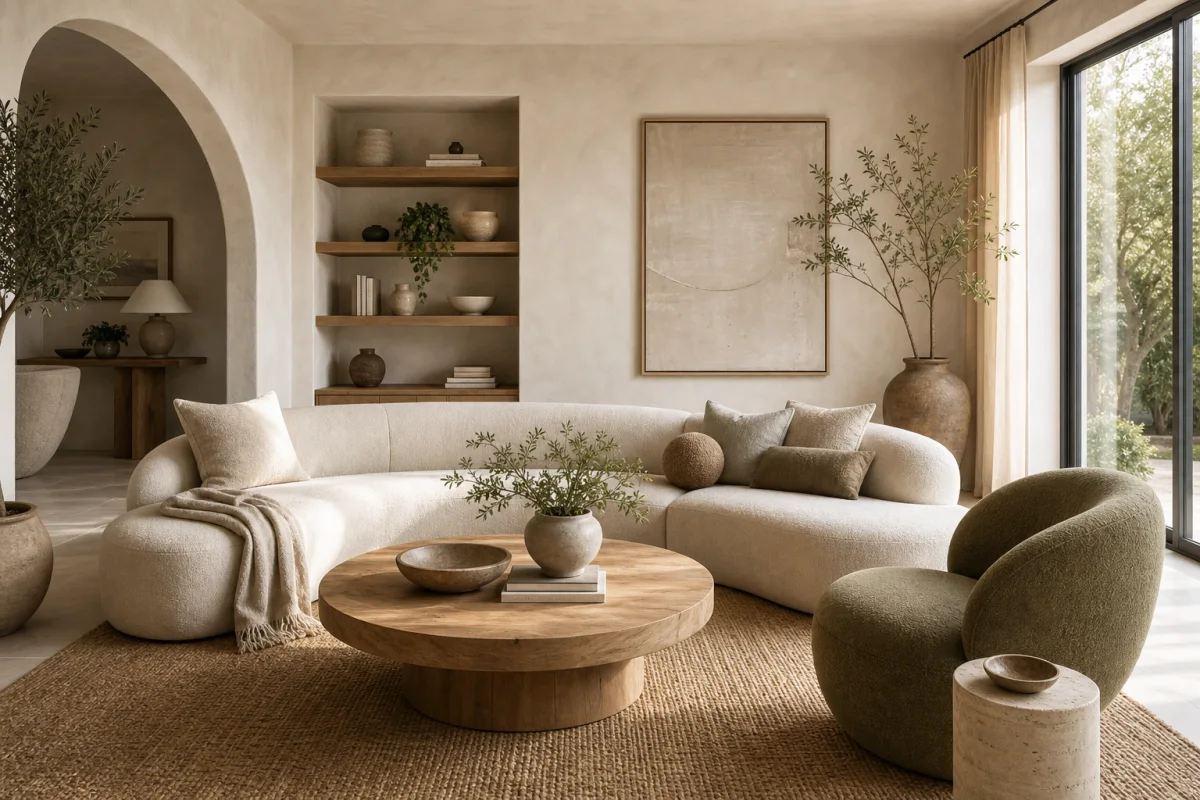
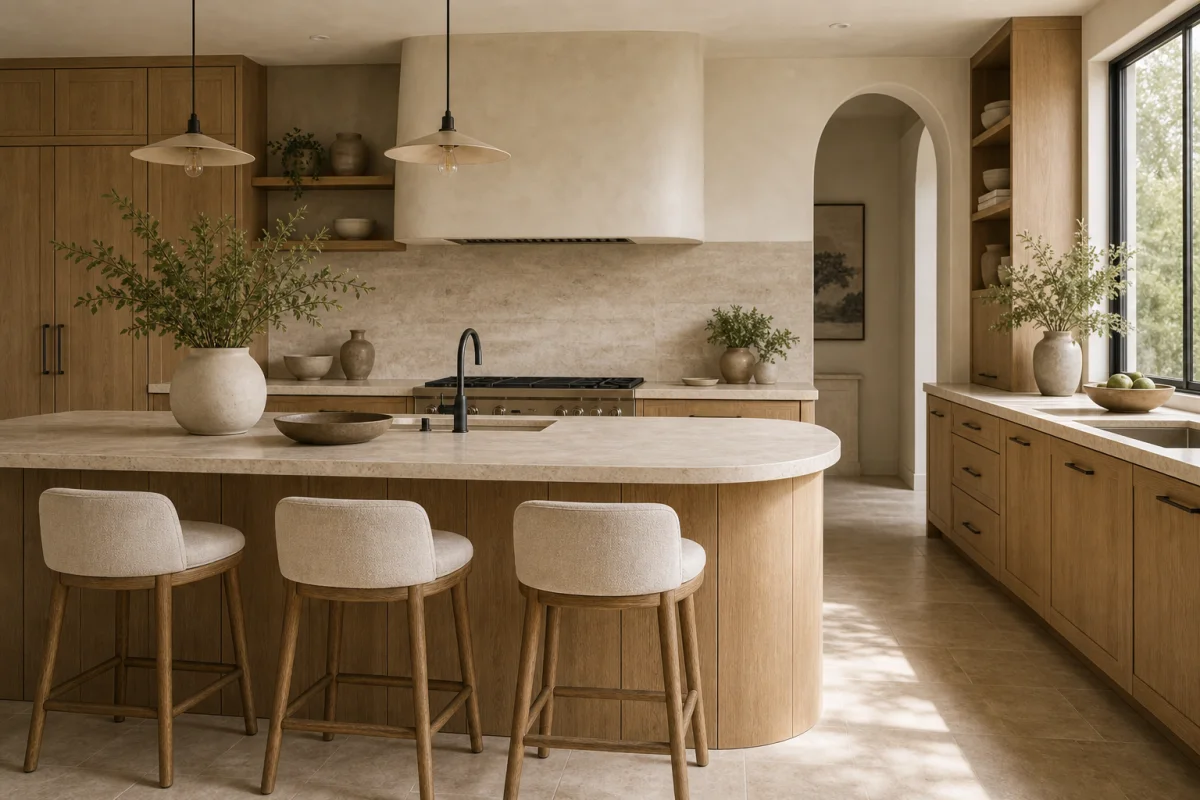
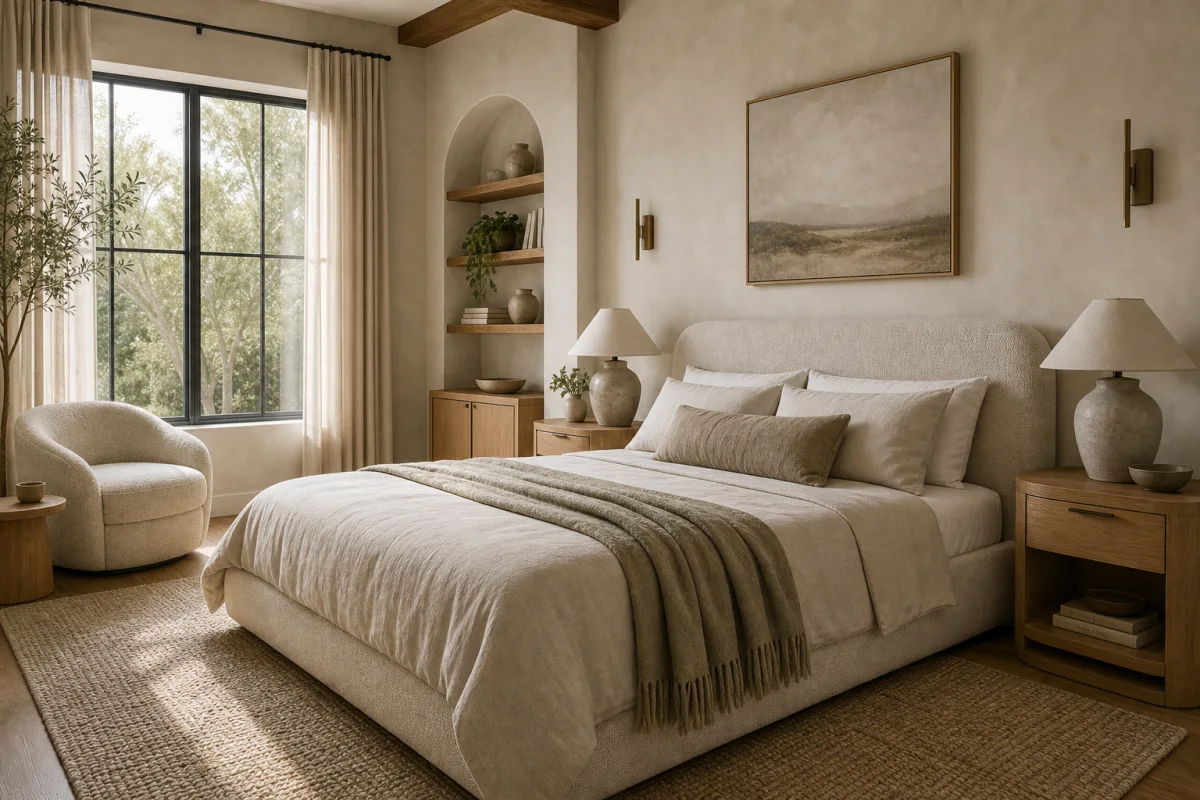
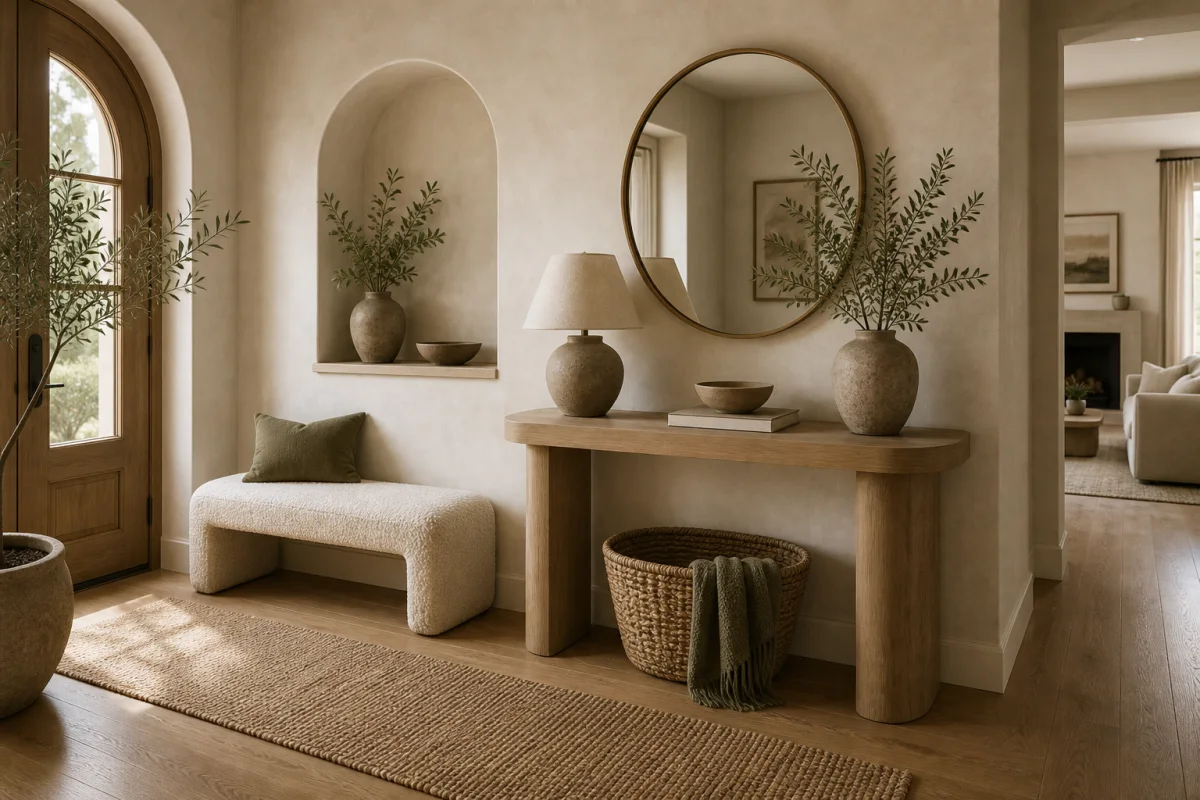
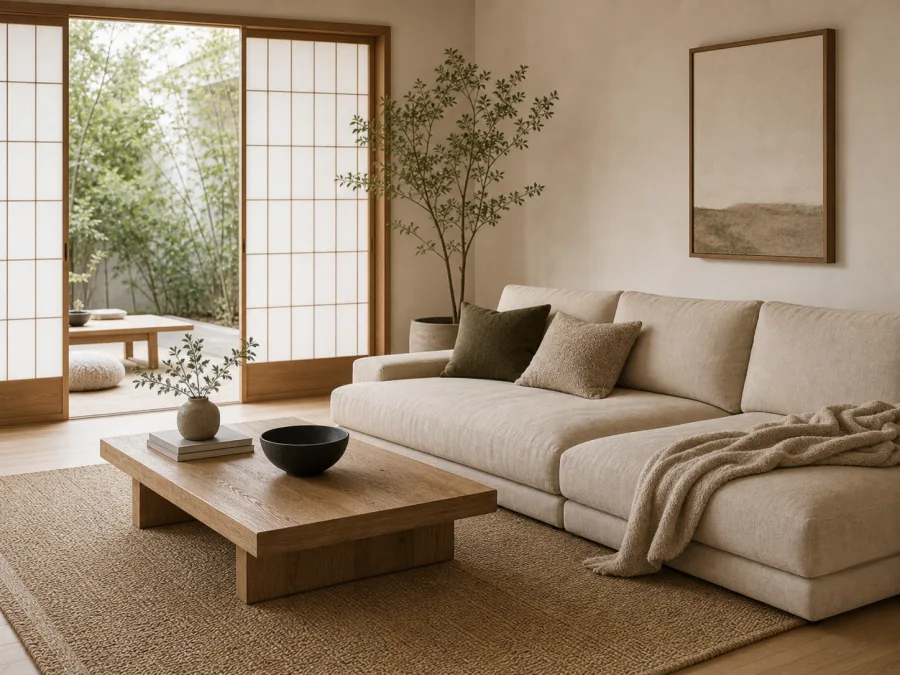
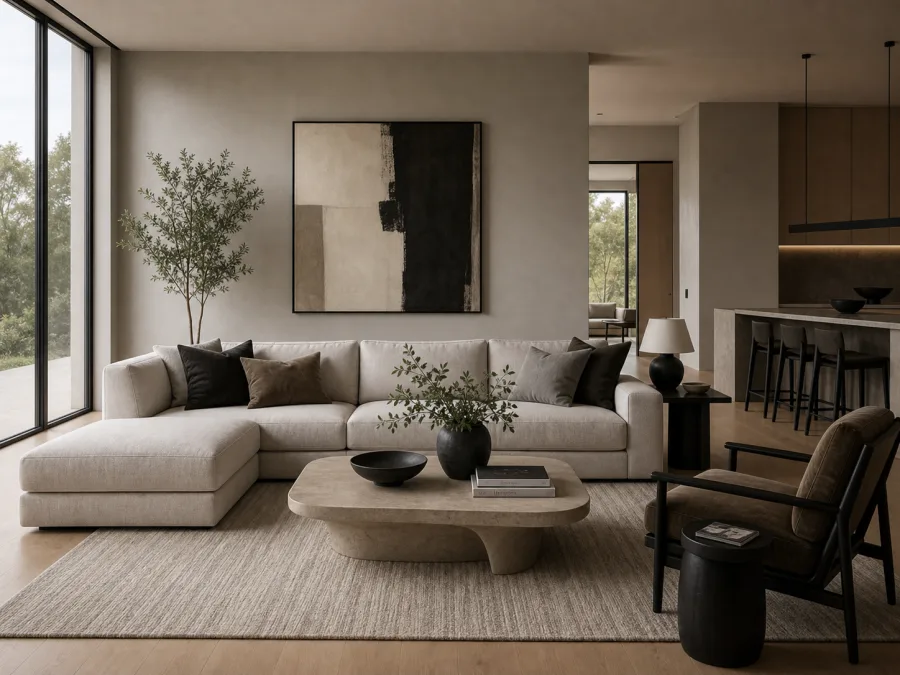
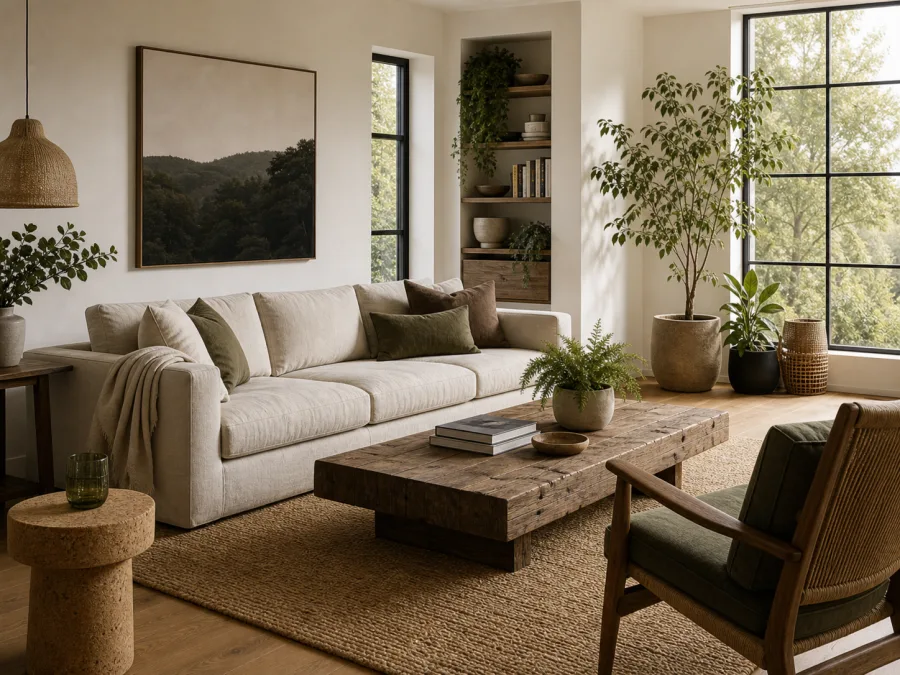
Organic modern interior design takes the clarity of modern rooms and softens it with natural materials, rounded furniture, warm neutral color and tactile surfaces. The room still feels edited, but the edges are gentler: curved sofas, plaster walls, pale oak, travertine, boucle, linen and handmade ceramics.
The style works when the space feels calm without looking empty. Instead of relying on pattern or decoration, organic modern rooms use shape, texture and material color to create interest. A curved chair, a stone table, a limewash wall or a ceramic vessel can carry the room without adding visual noise.
Simple layouts, clean storage and fewer objects keep the look current rather than bohemian or rustic.
Curves, matte texture, natural fibers and imperfect ceramics prevent the room from feeling cold.
Ivory plaster, oak, stone, linen, clay and muted green usually feel stronger than decorative accent colors.
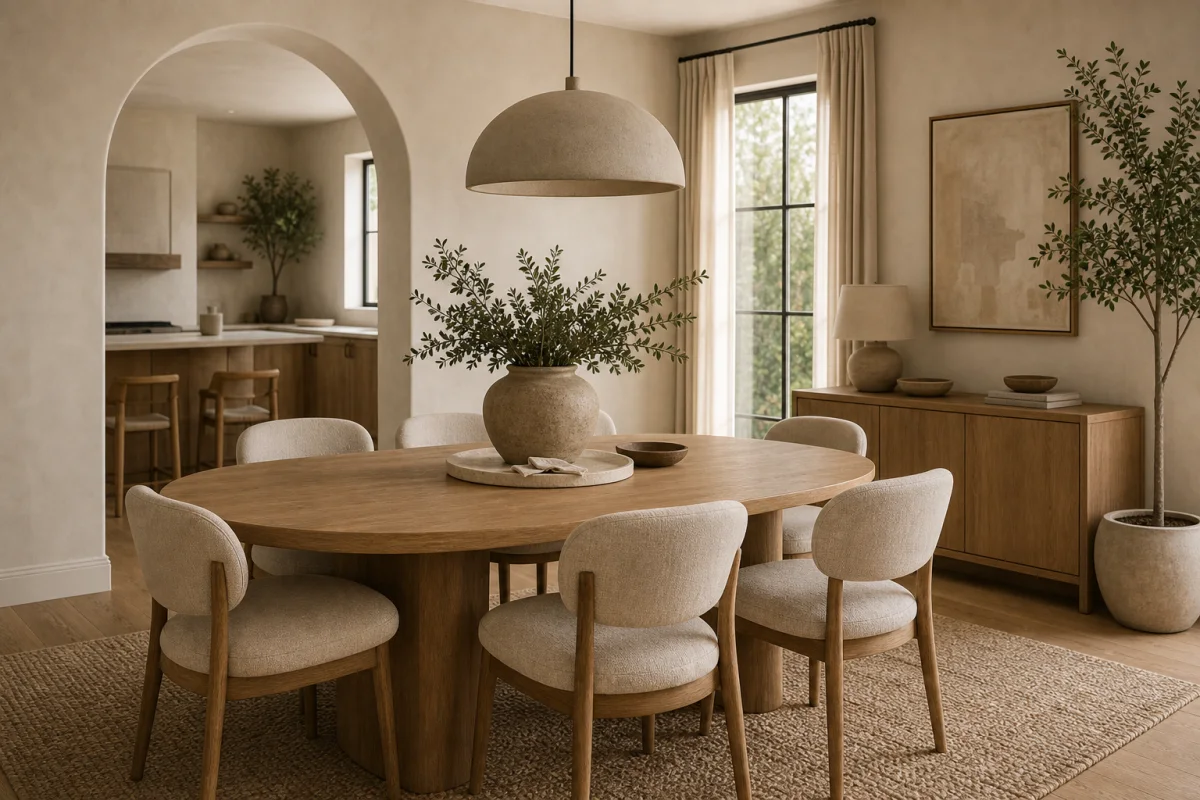
Rounded sofas, arched openings, oval tables and soft chairs make the room feel calm even when the layout is simple.
Plaster, limewash, honed stone, pale oak and handmade ceramics add depth without glossy contrast.
Ivory, mushroom, taupe, oatmeal and clay create a quiet base that lets shape and texture do the work.
Organic modern rooms need fewer objects, but each one should have a useful shape, texture or material presence.
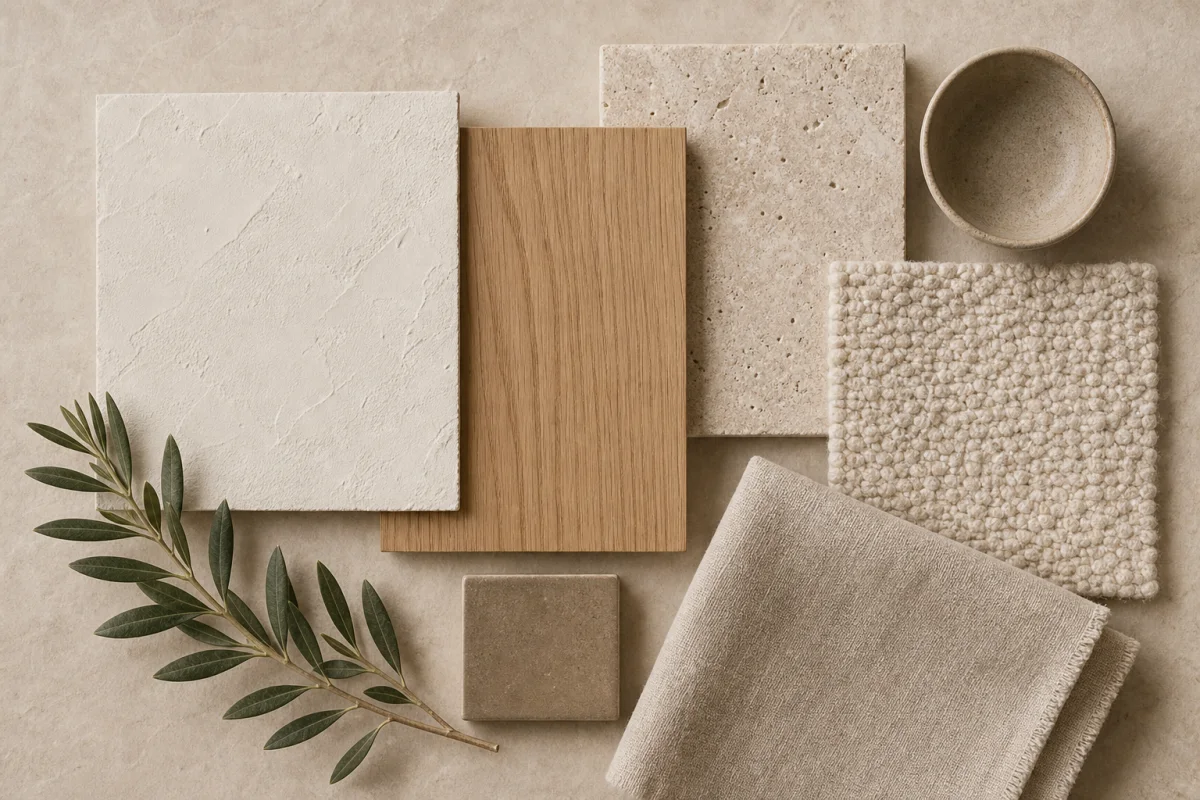
An organic modern palette should feel warm, low-contrast and material-led. Start with ivory or mushroom, add pale wood and stone, then use clay, olive or soft black only where the room needs definition.
Use it on walls, ceilings and large upholstery so the room feels bright without becoming stark.
A soft middle neutral for rugs, plaster, bedding and upholstered pieces.
Adds natural warmth through floors, consoles, dining chairs, shelving and tables.
A stone tone for tables, counters, trays and tile that gives the room quiet weight.
Use sparingly in ceramics, pillows, art or tile to keep the palette warm and human.
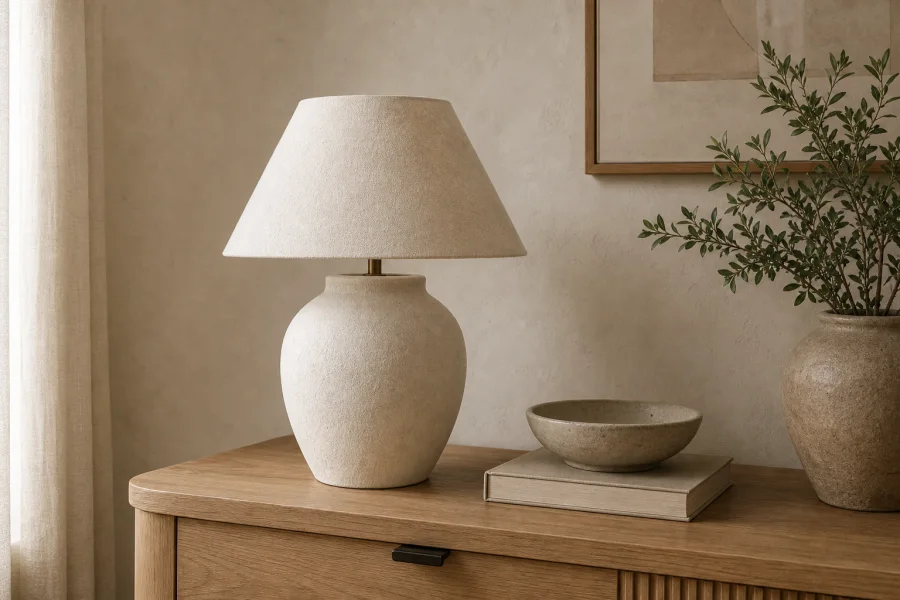
Creates soft movement on walls, lamps and niches without adding pattern.
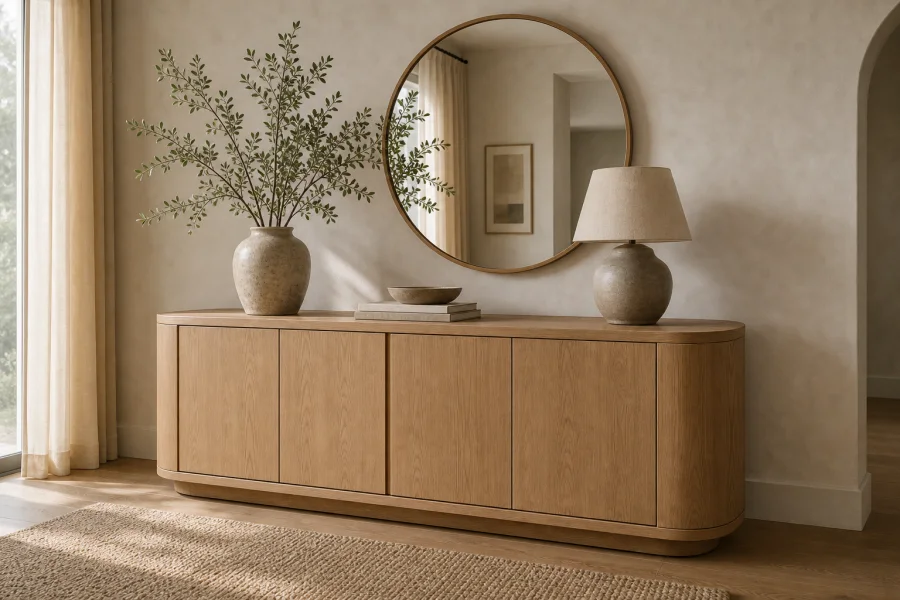
The main warmth layer for tables, storage, floors and shelving.
Soft upholstery balances stone and plaster so the room still feels comfortable.
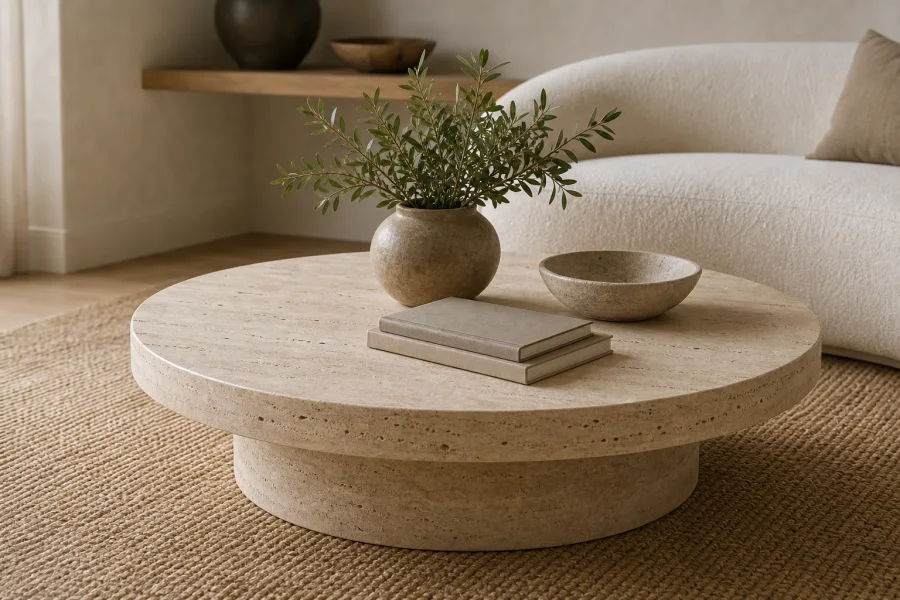
Adds sculptural weight through coffee tables, trays, sinks, counters and side tables.
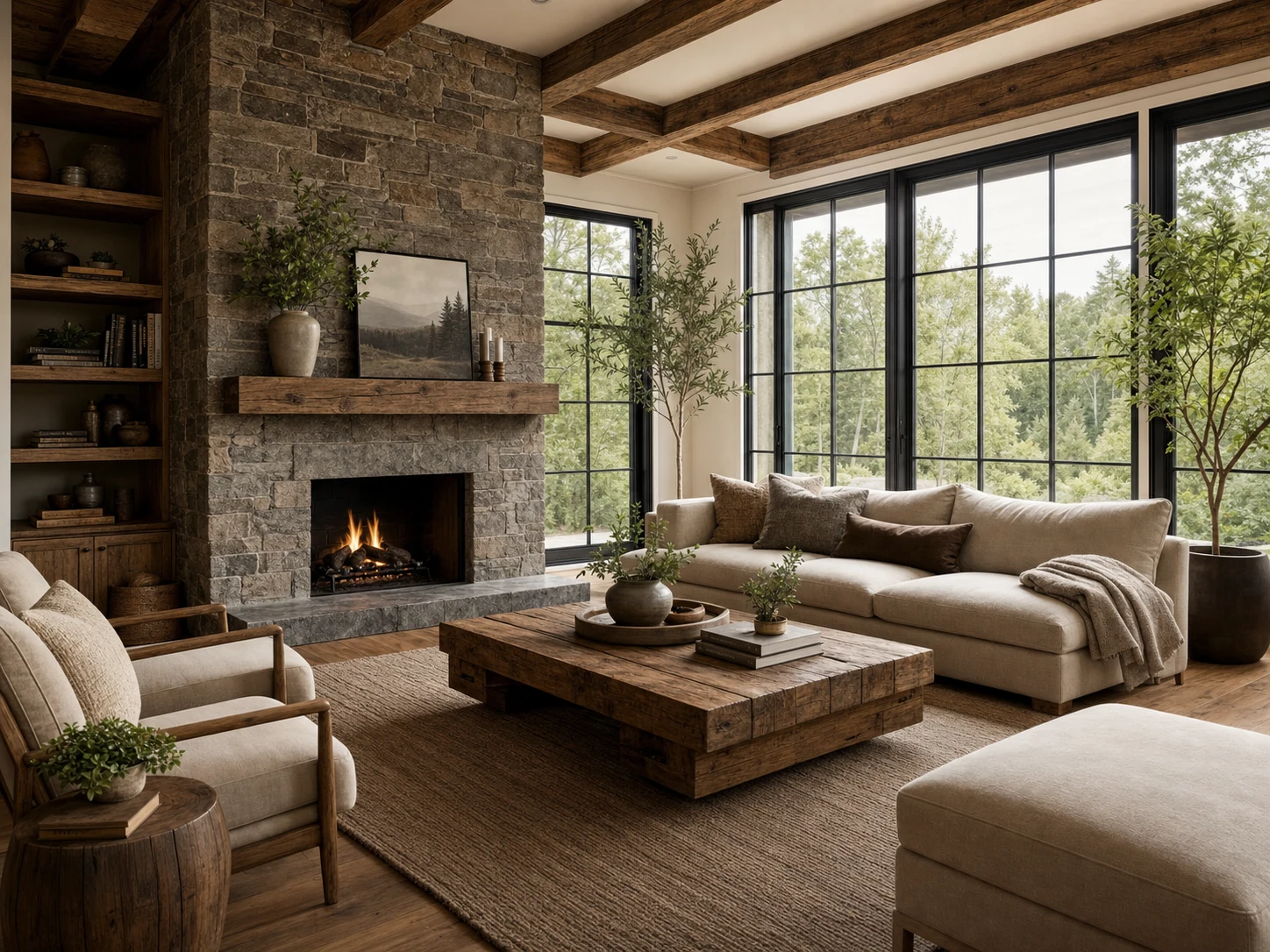
Organic modern overlaps with several natural and modern styles. The difference is usually softness: fewer hard edges, fewer rustic cues and more interest from curves, plaster and tactile neutrals.
Heavier, more rugged and more wood-and-stone forward.
Choose organic modern if you want natural texture with softer curves, lighter wood and less rustic weight.
Use plaster, pale oak, boucle and travertine instead of beams, rough stone and chunky reclaimed pieces.
Lower, quieter and more minimal.
Choose organic modern if you want the calm but prefer fuller curves, warmer upholstery and more sculptural pieces.
Keep the palette restrained, then add rounded sofas, oval tables and plaster texture.
Cleaner, sharper and more polished.
Choose organic modern if contemporary rooms feel too straight or showroom-like.
Soften clean layouts with curved furniture, matte stone and natural fiber texture.
More focused on sourcing, durability and lower-impact choices.
Choose organic modern if the main goal is a soft natural look rather than a material-impact framework.
Prioritize shape, texture and palette, then choose responsible materials where possible.
Organic modern rooms do not need much decor. A few sculptural, tactile pieces can create the whole mood if the palette stays warm and restrained.
A rounded sofa gives the room its softness and makes a simple layout feel intentional.
Honed stone adds weight and shape without the harshness of glossy marble.
A matte lamp adds quiet form and soft light, especially on a console or nightstand.
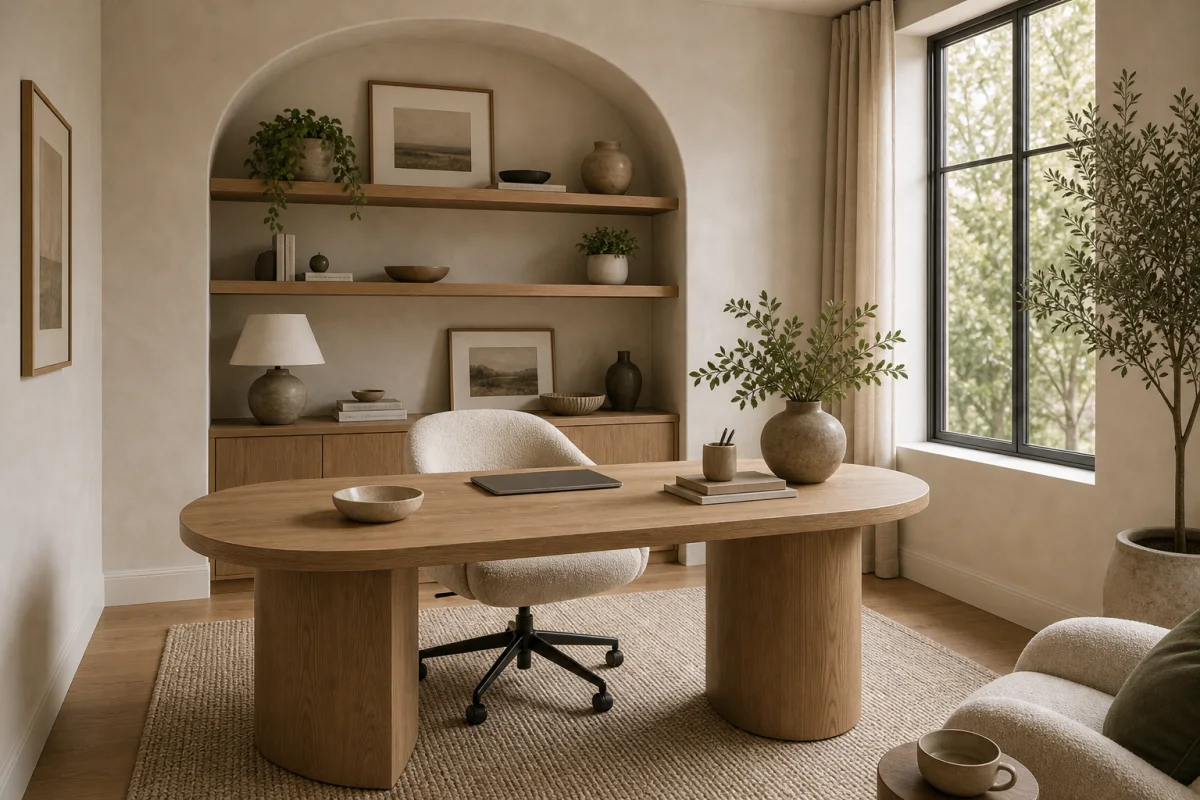
Closed storage keeps the room edited while pale oak keeps it warm.
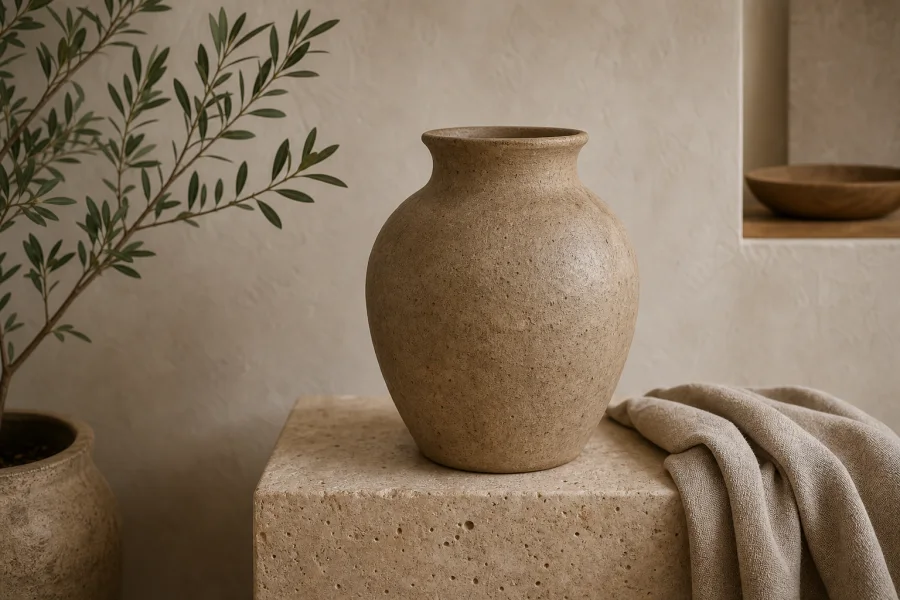
Use one tactile vessel instead of many small accessories.
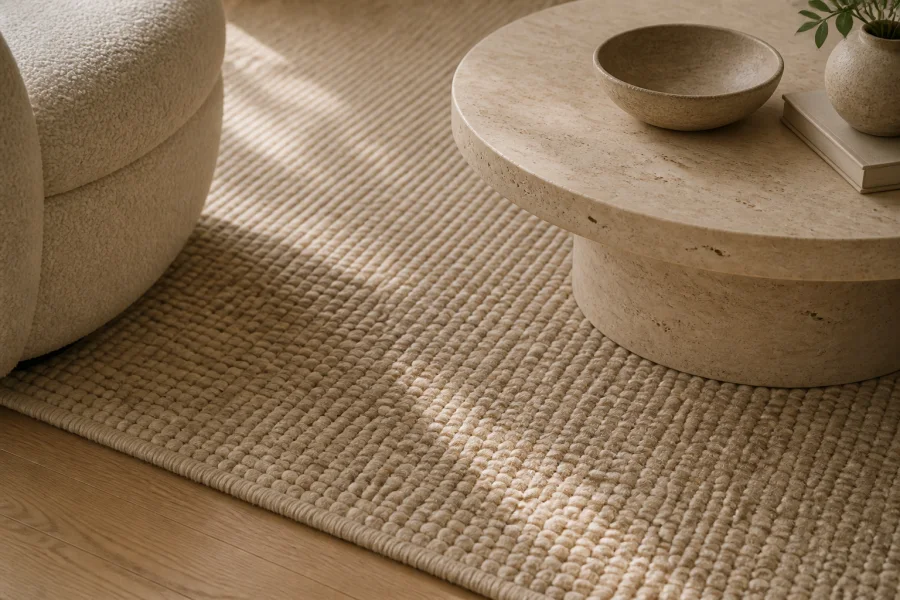
A low-contrast rug connects the seating and adds comfort under stone and wood.