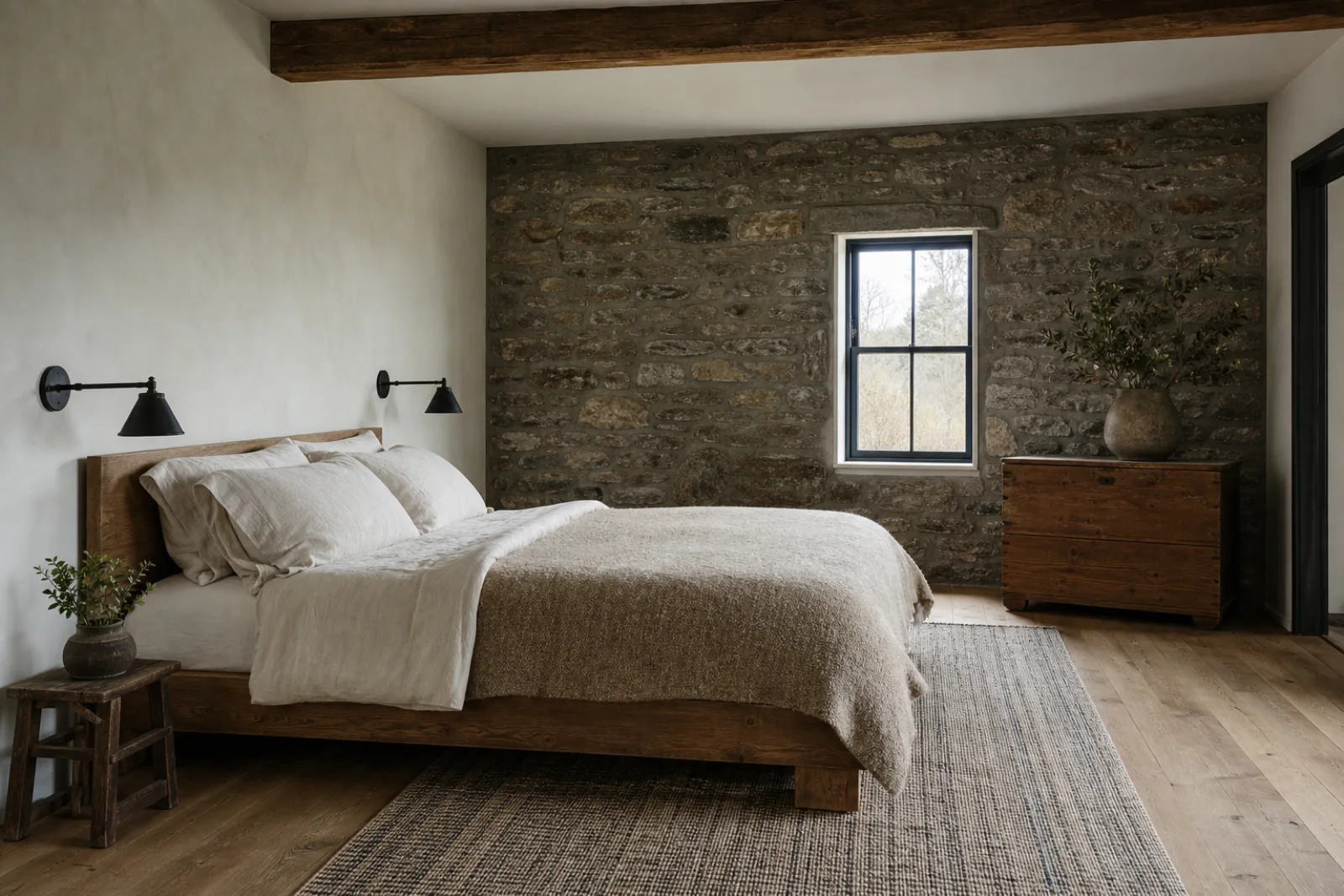
Solid timber bed
Look for stable rails, readable joinery and enough under-bed clearance; avoid thick decorative timber that adds weight without strength.
Weight, grain and useful wear give the room its character—not a collection of country-themed decorations.
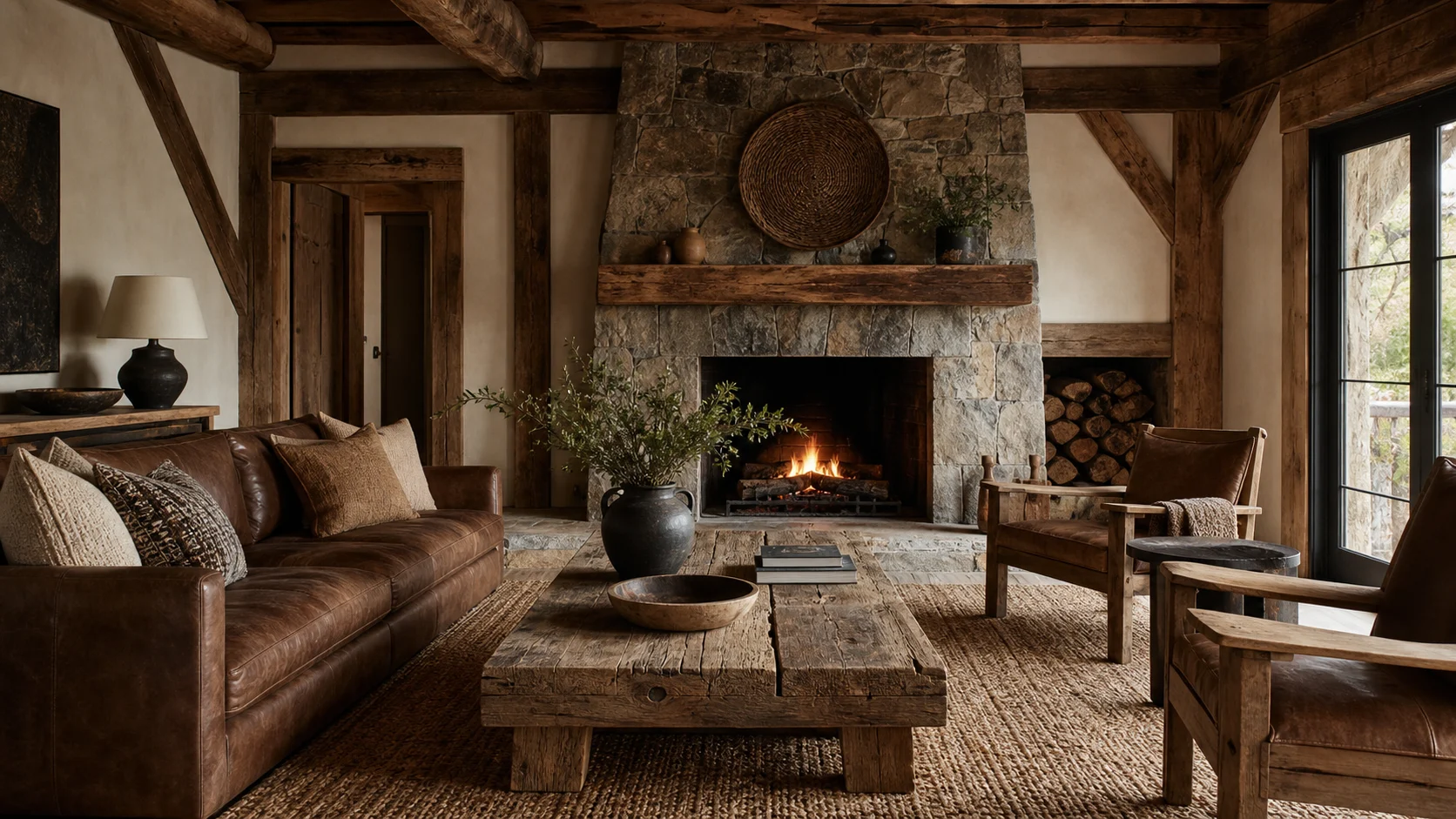
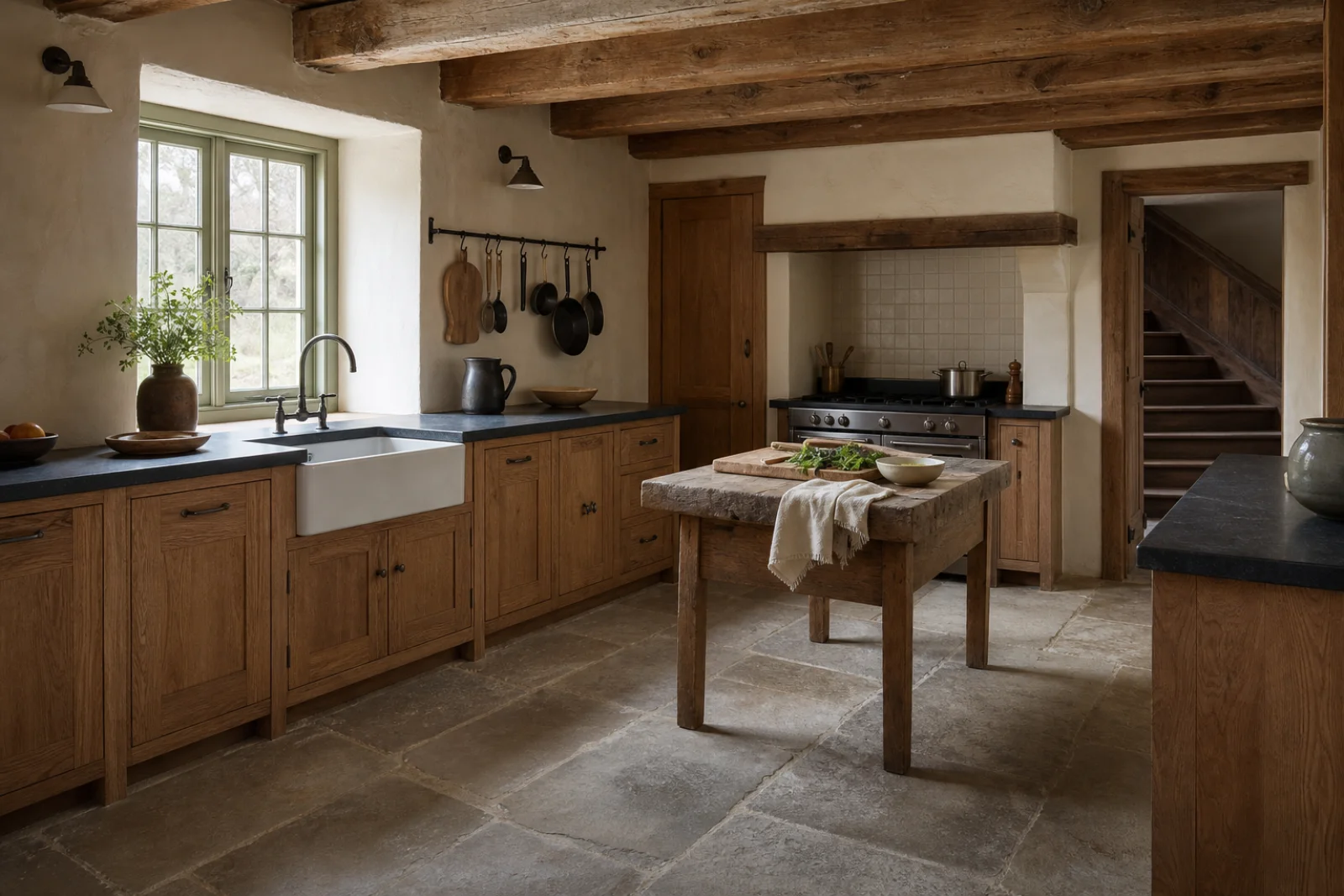
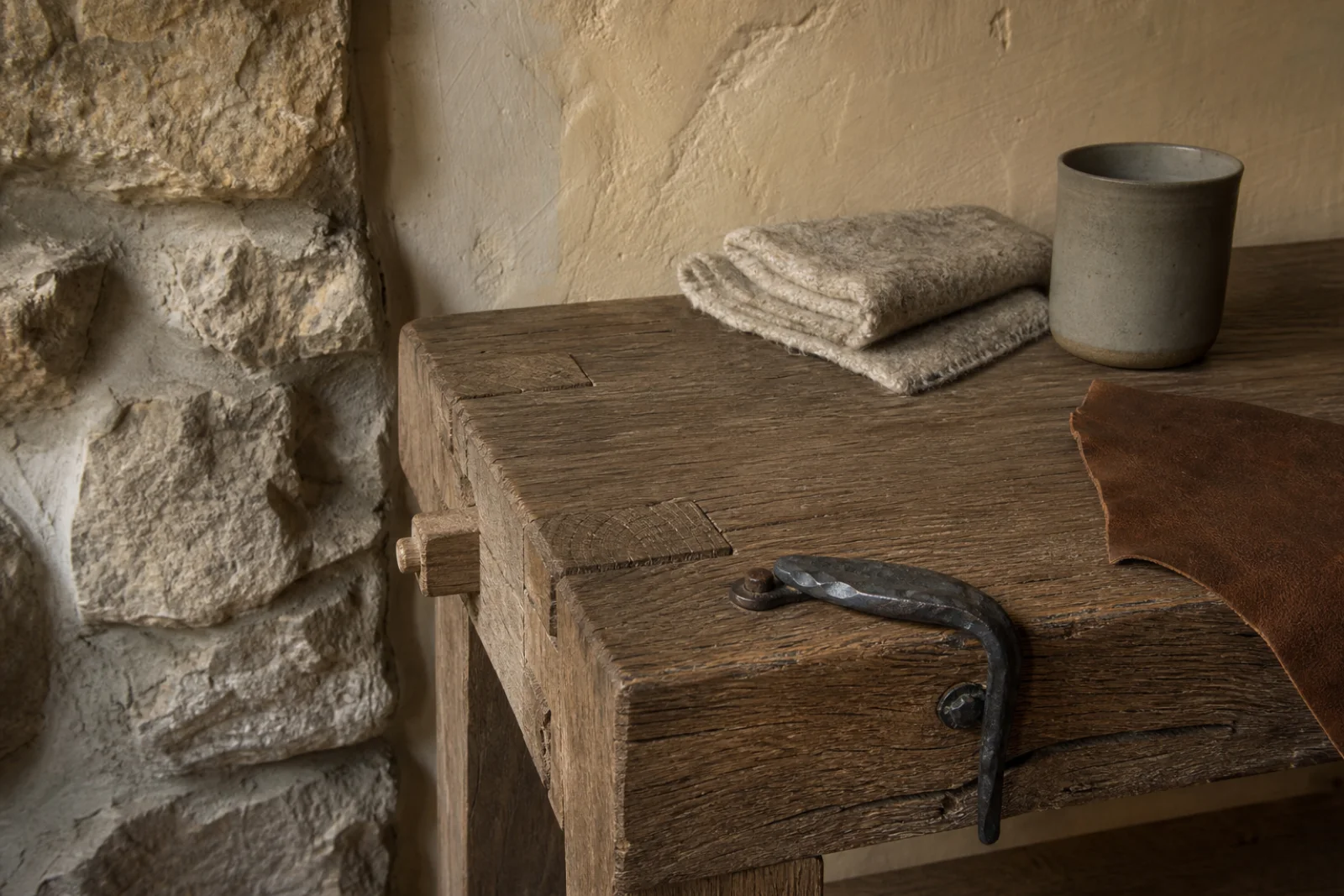
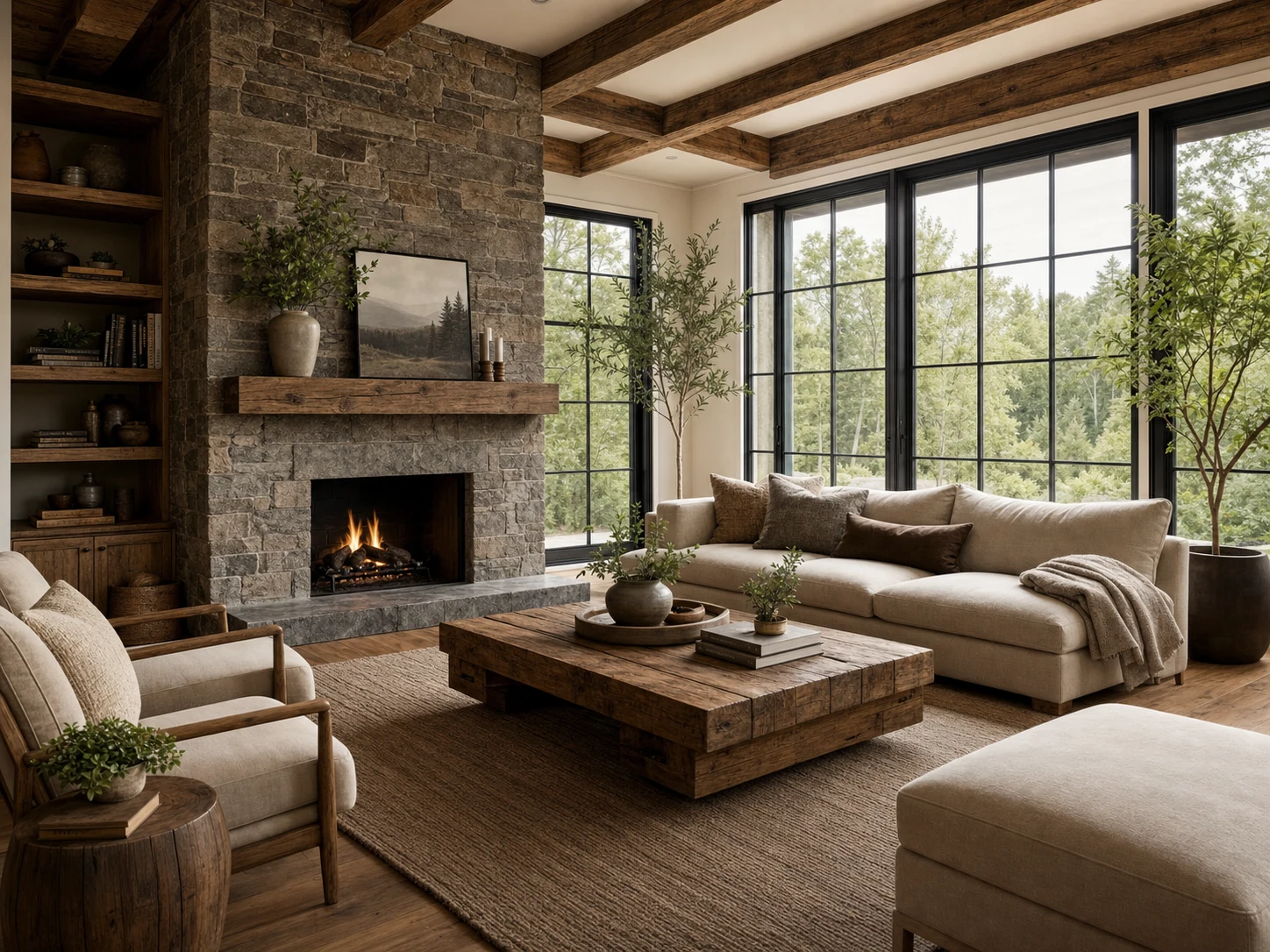
Rustic design draws character from materials that reveal how they were made and how they age: irregular stone, sawn or hewn timber, forged iron, lime plaster, leather and dense natural textiles. The architecture usually carries more visual weight than the accessories. Grain, tool marks, joints and softened edges supply the detail that polished rooms often add through ornament.
A convincing rustic room is sturdy but not necessarily dark, old or rural. Clear walkways, pale mineral walls and a limited number of large pieces keep heavy materials from feeling oppressive. The goal is useful permanence—a table that welcomes daily wear, a slate floor that tolerates boots and storage placed where life actually happens—not a staged imitation of a cabin.
Preserve a real beam, stone reveal or plank floor, then let new furniture support that element rather than compete with it.
Use one thick table, bench or chest as an anchor and balance it with open space and visually lighter seating.
Knots, mineral shifts and wear are valuable when the surface remains sound, cleanable and suited to its job.
Pegged joints, thick lintels and forged hardware make assembly visible instead of disguising it behind trim.
Substantial timber and stone create permanence, while limewash and linen prevent the palette from becoming heavy.
Patina belongs on contact points and working surfaces; random factory distressing does not tell a believable story.
Fewer, larger objects leave room for cooking, gathering, working and arriving with outdoor gear.
Anchor seating with the fireplace or masonry wall, then keep the coffee table low enough that timber mass does not block conversation.
Let one stone wall or ceiling beam lead; use plain linen, a wool blanket and compact iron lighting to keep the room restful.
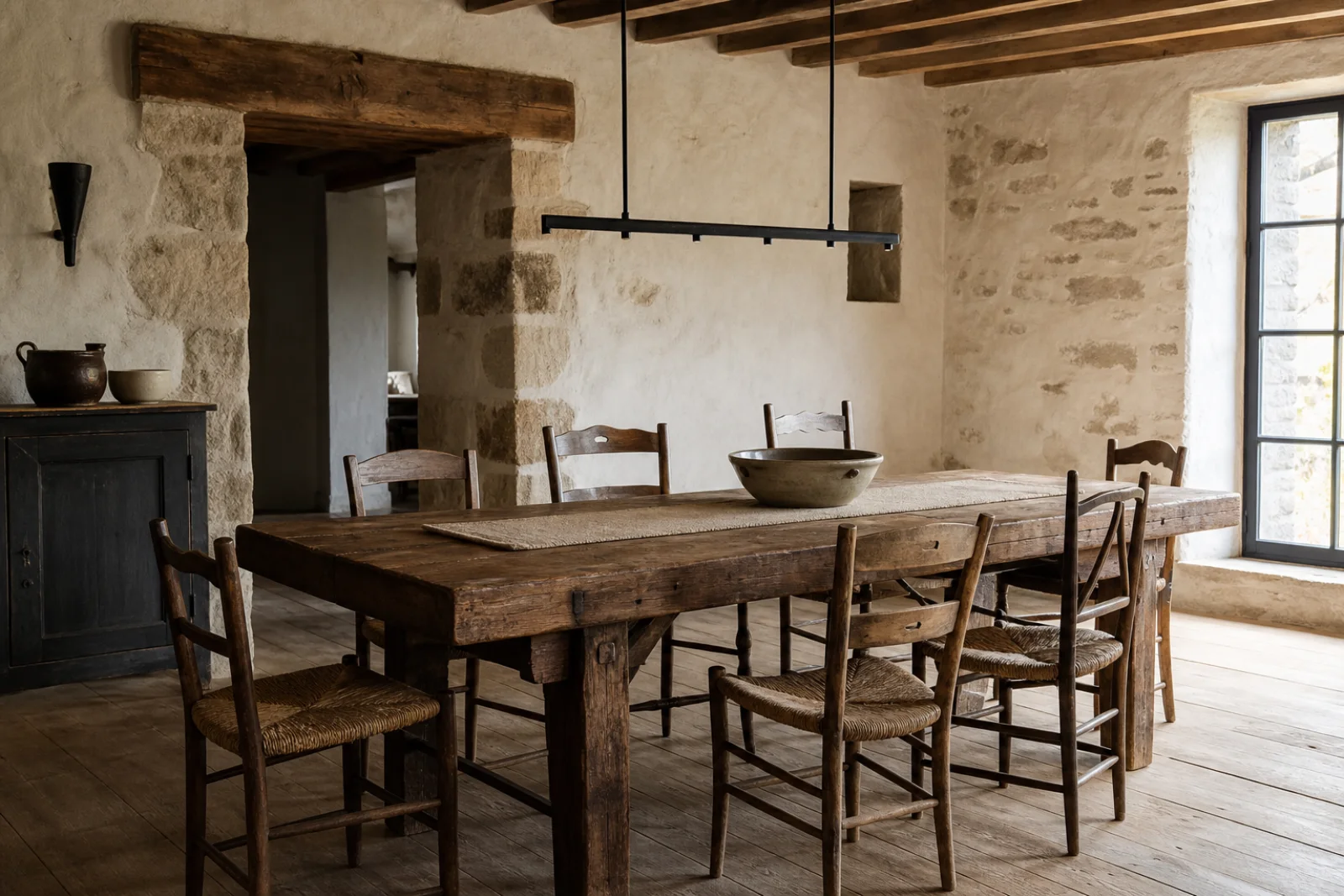
Choose a refectory table with real joinery, then vary chair shapes slightly while matching their seat height and scale.
Pair a sturdy trestle desk with an ergonomic chair and closed boxes; rustic character should never compromise long working hours.
Reserve reclaimed wood for fronts and the preparation table, using soapstone and tile where water, heat and cleaning demand resilience.
Plan for wet footwear first: slate underfoot, open boot clearance, reachable hooks and a bench deep enough to sit on.
Start with the actual colors of stone and timber. Add one pale mineral wall tone, one dark metal note and a muted textile accent; avoid staining every wood surface into the same artificial brown.
A mineral neutral for plaster and masonry that reflects light without looking bright white.
The central wood tone; let natural variation provide movement instead of mixing many stains.
Defines hardware, lamps and window frames in narrow, functional lines.
Softens stone and leather through rugs, throws and upholstery with visible weave.
A restrained natural accent for one chair, coat or textile rather than a themed forest palette.
Use sound boards with visible grain and joinery; seal working surfaces with a repairable matte finish.
Irregular size and mineral color create depth, but selective exposure is calmer than covering every wall.
Forged latches, hooks and lamps add precise dark punctuation without decorative scrollwork.
Dense weave introduces warmth, acoustic softness and comfort against hard floors and masonry.
Build the room from what is permanent to what is portable. Rustic character is strongest when every layer has a practical reason to be there.
Identify stone, beams, floors or deep openings worth revealing, and repair them before adding decorative finishes.
Choose the table, bed, hearth or bench that will carry most of the visual weight.
Place stone, iron and sealed wood where shoes, water, heat and hands will test the room.
Add wool, linen, leather and warm task lighting where the body sits, sleeps or works.
When the room feels wrong, change the underlying decision before adding more decor.
Keep one major texture exposed, lighten adjacent walls and introduce plain oatmeal textiles.
Remove signs, antlers and novelty objects; let structural timber, stone and useful hardware tell the story.
Use them away from standing water or seal them with a matte, repairable finish appropriate to the surface.
Retain one substantial anchor and verify door swings, chair pull-out space and daily walking routes.
Rustic is defined less by a historical period than by material honesty, readable construction and tolerance for useful wear. That makes it broader—and often more restrained—than country styles built around a specific decorative narrative.
Cleaner and lighter, pairing natural texture with contemporary lines, larger glazing and more precise detailing.
Choose Rustic when age, material mass and visible handwork should lead instead of polished modern contrast.
Hewn beams and substantial joinery replace slim profiles and seamless surfaces.
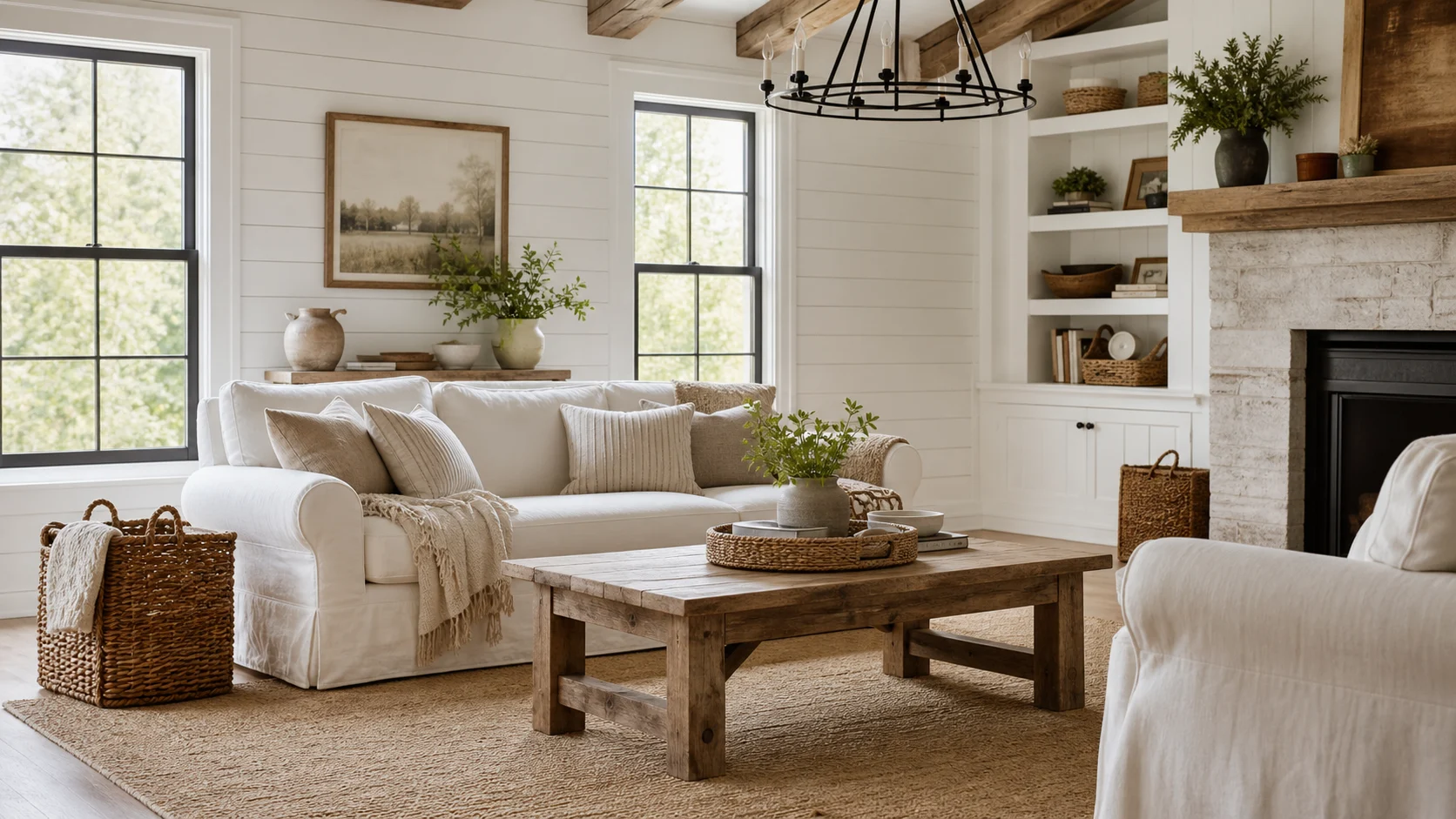
Brighter and more domestic, with painted cabinetry, apron sinks, cotton checks and familiar agricultural references.
Choose Rustic for heavier stone, darker timber and less decorative storytelling.
Structural weight replaces white-painted country charm.
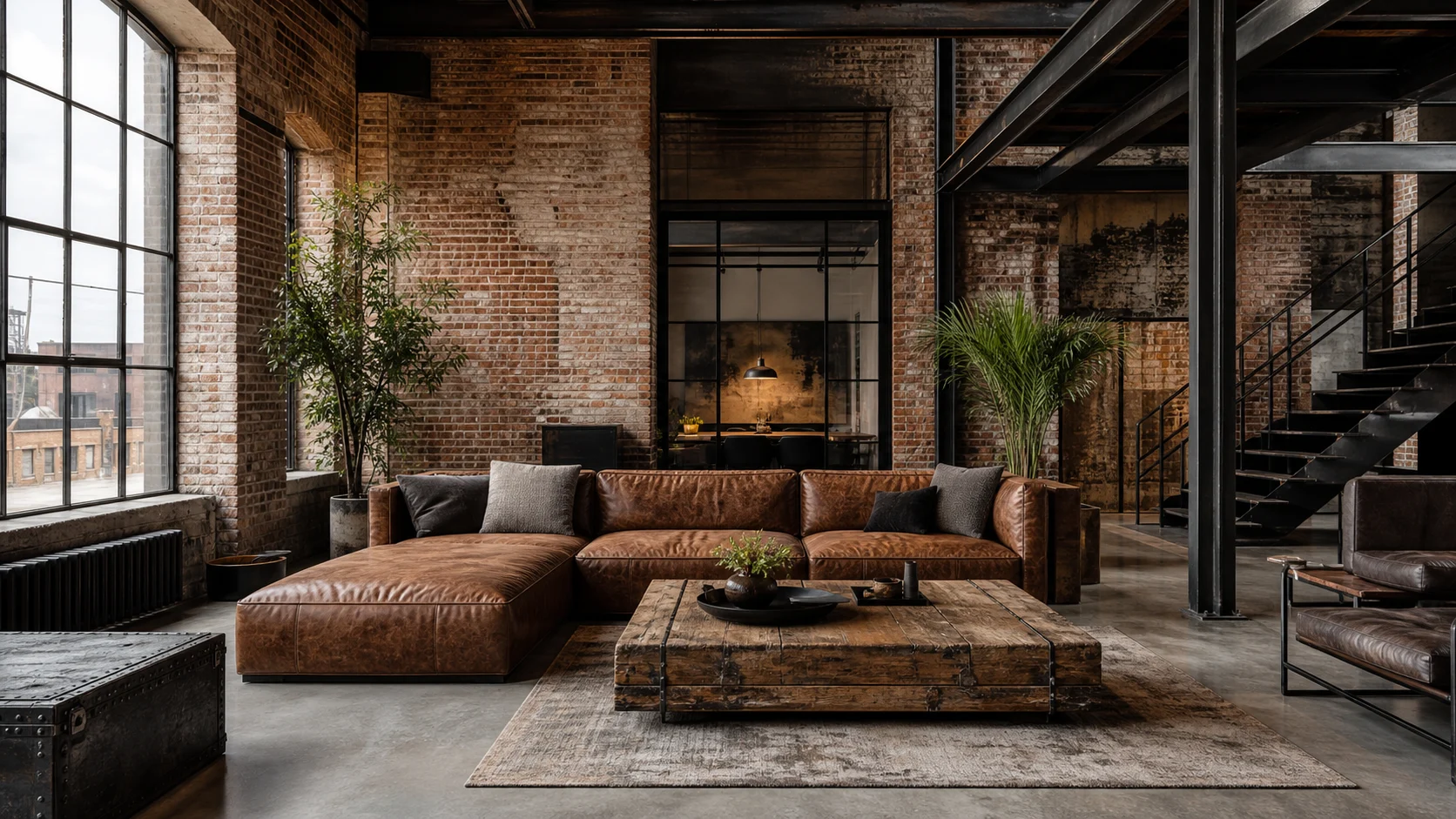
More urban and mechanical, exposing steel, brick, concrete and building services from factory architecture.
Choose Rustic when craft, natural irregularity and tactile warmth matter more than engineered repetition.
Fieldstone and hand-hewn oak replace steel grids, ducts and warehouse brick.
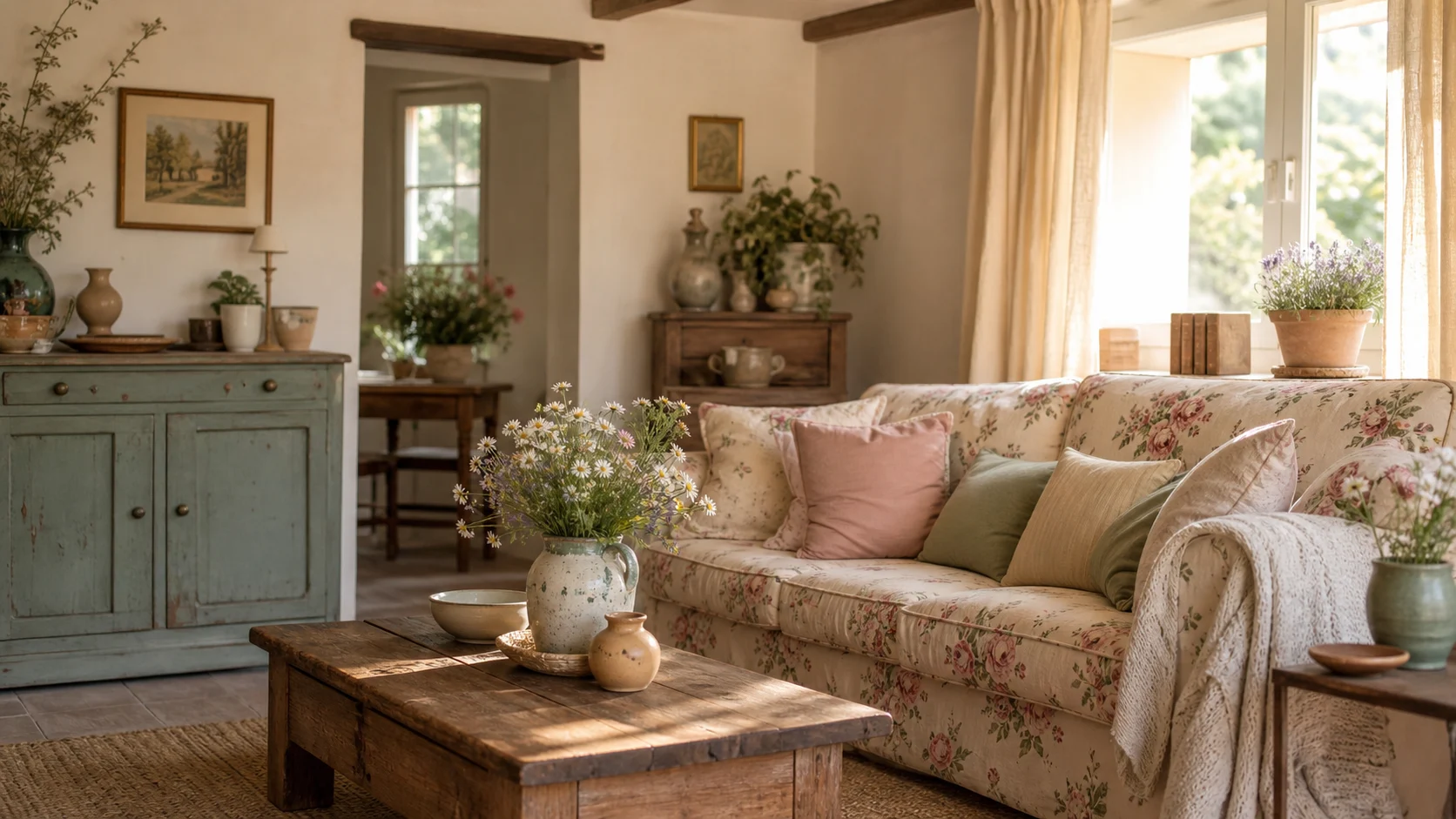
Softer and more romantic, using florals, collected ceramics, handmade detail and a pastoral domestic narrative.
Choose Rustic for functional restraint, architectural material and a less decorative relationship with rural life.
A heavy worktable and plain wool replace florals, dainty furniture and sentimental displays.
Inspect construction before surface character. A sound joint, stable frame and repairable finish matter more than knots, nail holes or a distressed label.
Look for stable rails, readable joinery and enough under-bed clearance; avoid thick decorative timber that adds weight without strength.
Choose a comfortable working height and a surface that can be scrubbed, sanded and resealed over years of use.
Check leg placement against every chair and allow the top to develop an even, honest patina.
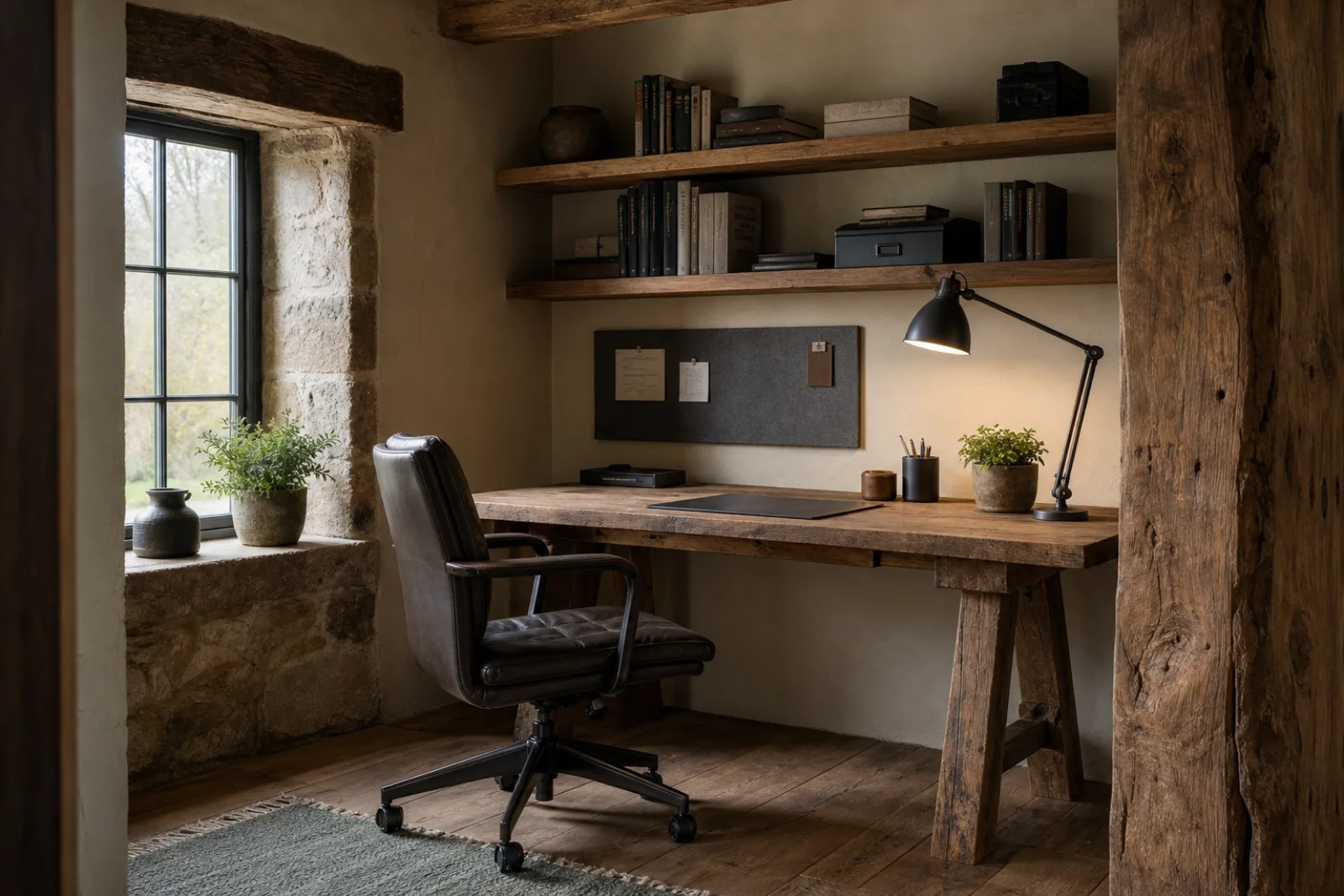
Use adjustable light with a simple dark finish; the mechanism should remain easy to operate and repair.
Prioritize supportive proportions and leather that will crease naturally rather than a uniformly antiqued finish.
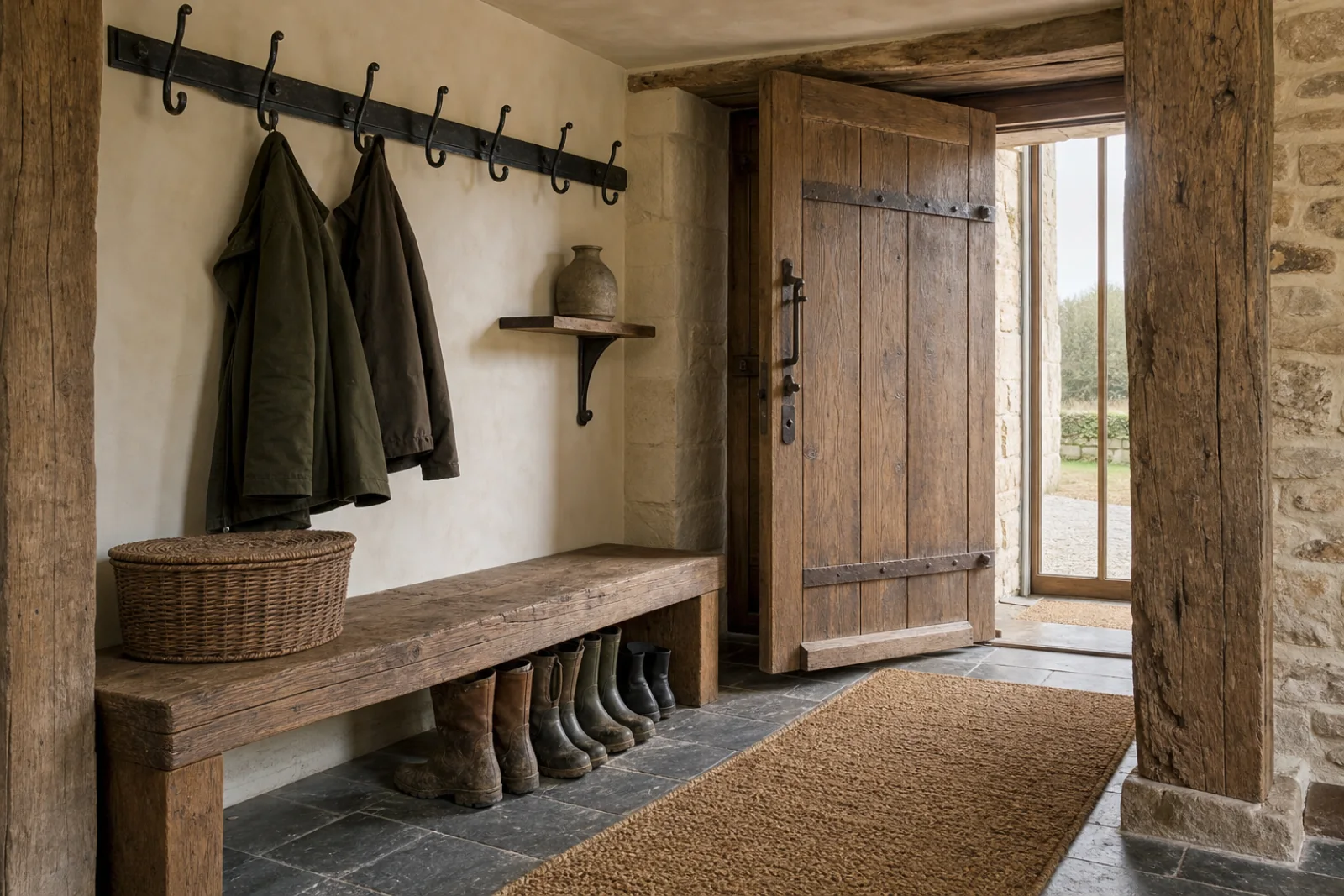
Measure seat depth, footwear height and hook reach so the piece solves arrivals instead of becoming another display surface.