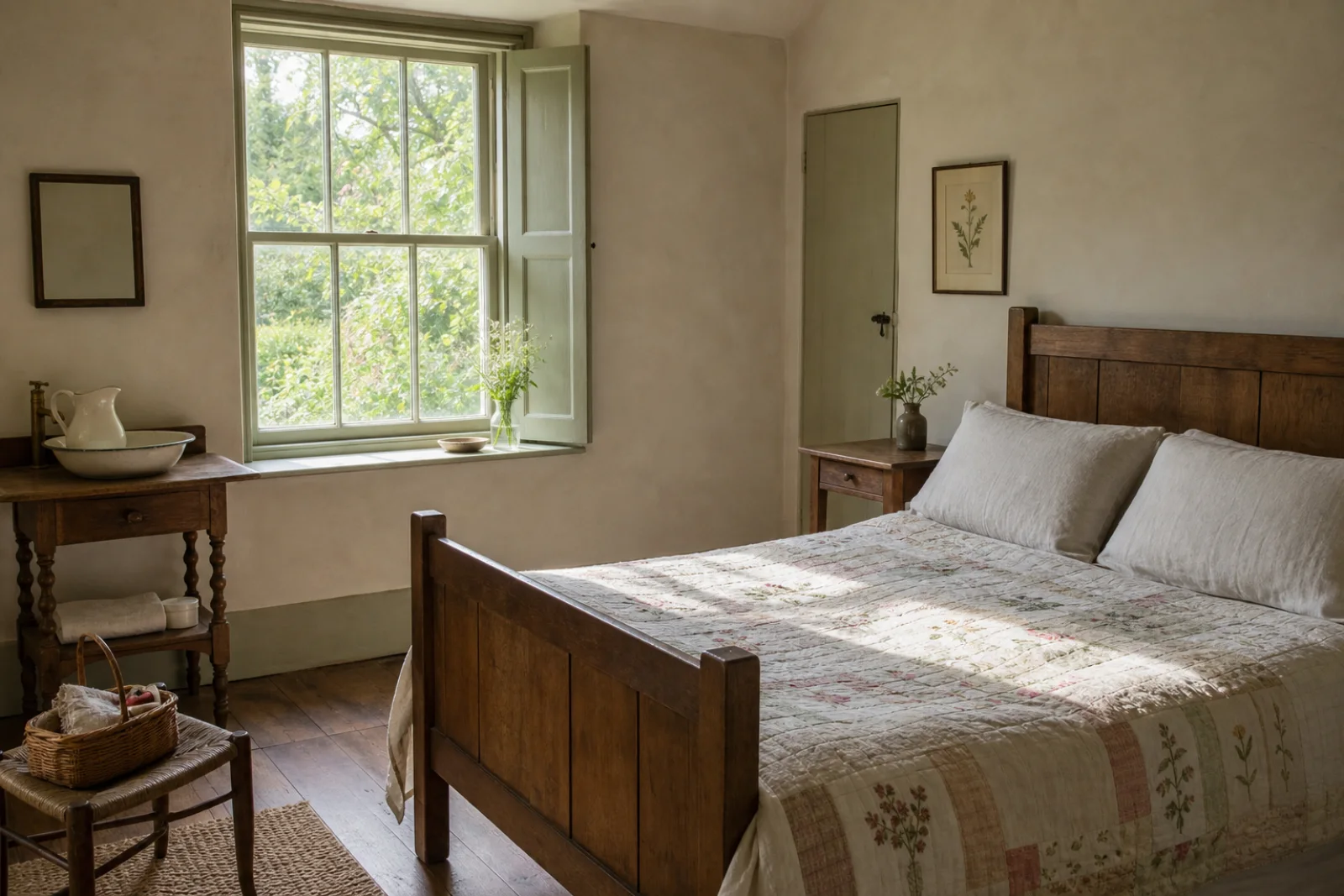
Simple oak bed
Check rail joints and mattress dimensions; let a removable quilt provide the changing pattern.
Garden rhythms, useful old furniture and visible handwork make the home feel tended rather than styled.
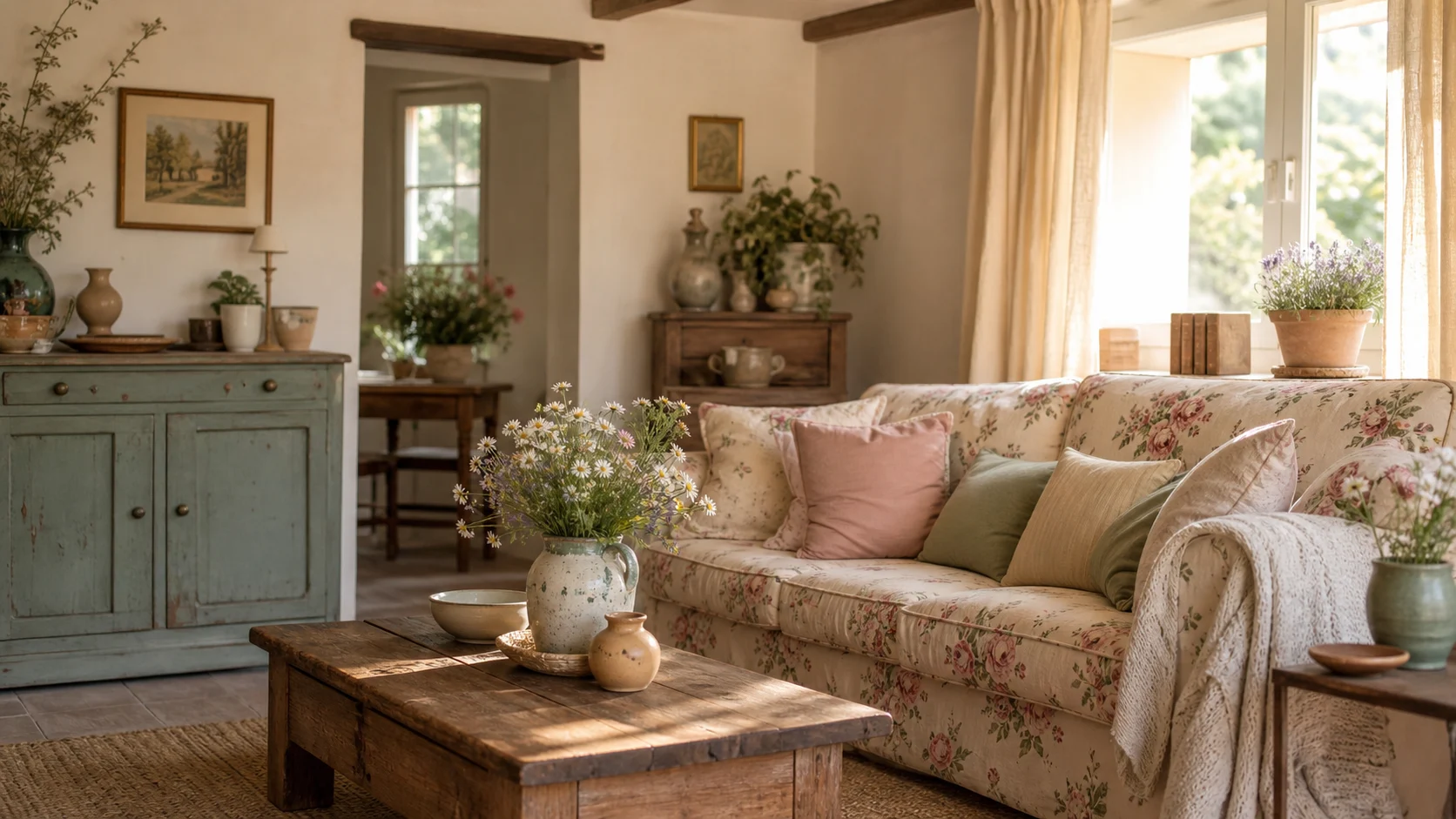
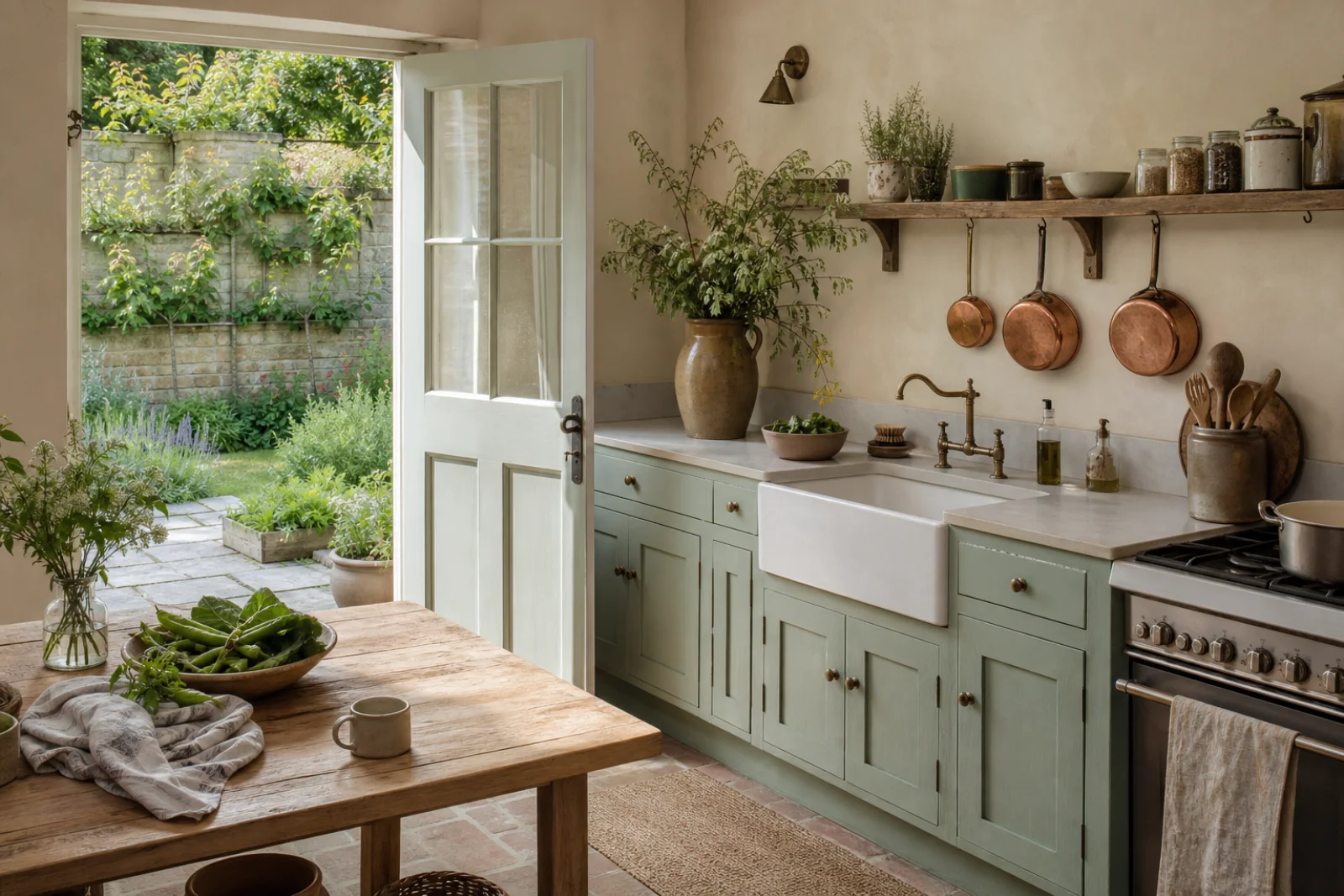
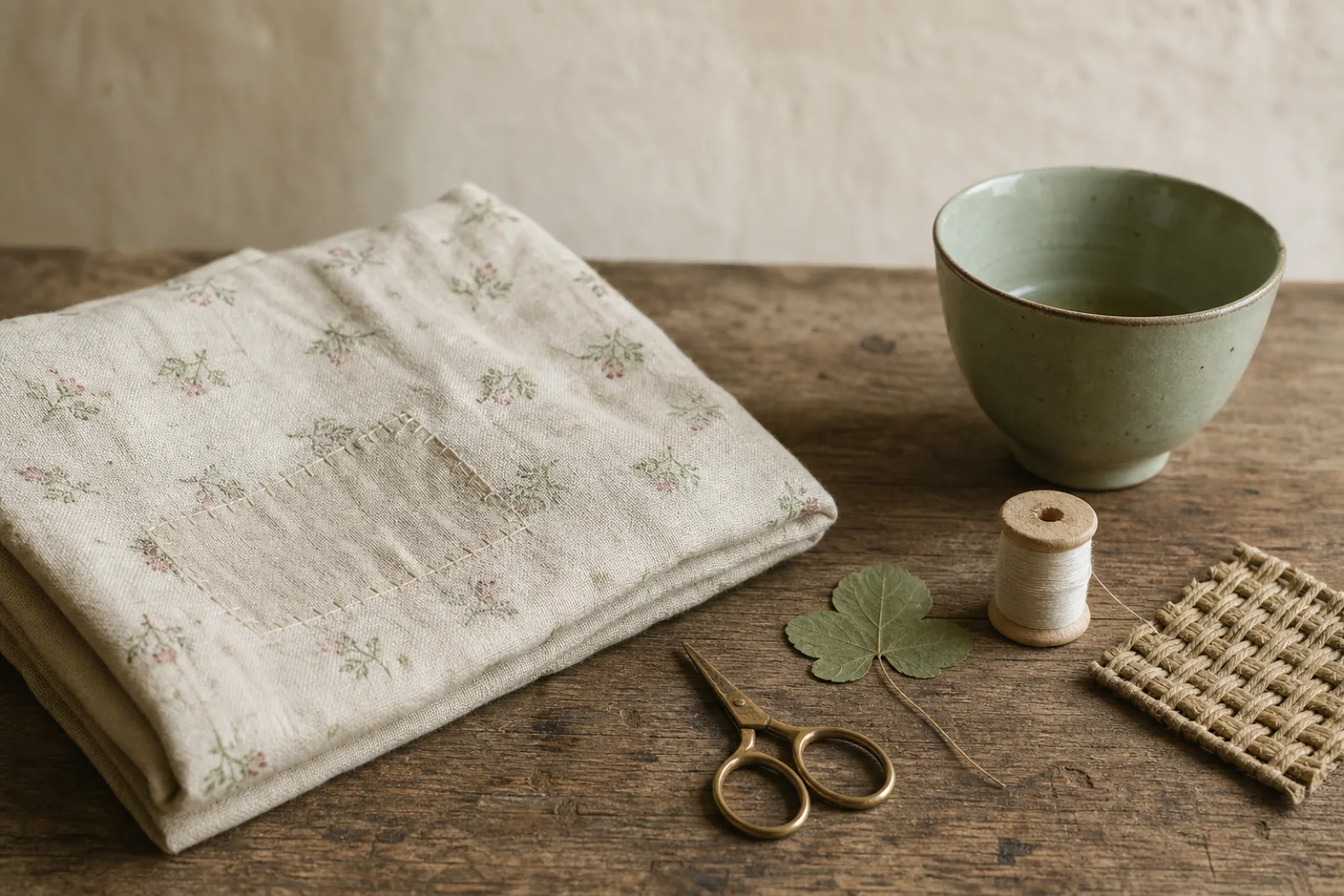
Cottagecore translates an ideal of slower domestic life into rooms for cooking, growing, reading, repairing and gathering. Its character comes from evidence of use: an old table with a sound frame, linen that can be mended, garden tools near the back door and pottery made to be handled.
Florals can belong, but they are not the foundation. Quiet plaster, faded paint and warm oak create enough calm for a quilt, botanical print or garden posy to feel personal. This keeps Cottagecore distinct from polished Grandmillennial pattern and from the workmanlike architecture of Farmhouse style.
Design a place to bake, mend, pot seedlings or read before adding objects that merely symbolize those activities.
Mix one or two genuinely old pieces with simple new basics instead of distressing every surface.
Concentrate florals on one quilt, chair or curtain and let surrounding linen stay quiet.
Herbs, flowers and practical outdoor gear appear where they are grown, cut, cleaned or stored.
Old tables and chairs contribute patina, while sound proportions keep them useful.
Patches, darning and handmade ceramics show attention without becoming decorative clutter.
Limewash, linen and faded paint temper pattern and make changing seasonal details easy.
Let one floral sofa or chair lead, then surround it with plain linen, an honest wood table and useful reading light.
Choose a simple wood bed and one restrained quilt; leave enough clear space that washing, dressing and making the bed stay easy.
Use a table that tolerates daily meals and making projects, with compatible odd chairs rather than a decorative matched suite.
Pair an old writing desk with proper legroom, task lighting and closed storage for supplies that are not in active use.
Keep the sink, range and worktable route clear; place garden produce and useful crocks where they support preparation.
Give boots, coats and secateurs deliberate places near the garden door, then preserve an uncluttered path indoors.
Use cream as breathing room and old oak as the anchor. Celadon can connect doors and storage; keep herb green and faded rose to small living or textile notes.
A soft wall field that holds old timber and small botanical color together.
A calm painted finish for joinery, doors or one storage piece.
A living accent carried by plants and repeated sparingly in textiles.
A weathered pink note for a quilt fragment, rug or single cushion.
The grounding brown for tables and beds with real grain and wear.
Choose a breathable cloth with a restrained repeat and enough strength to accept future repair.
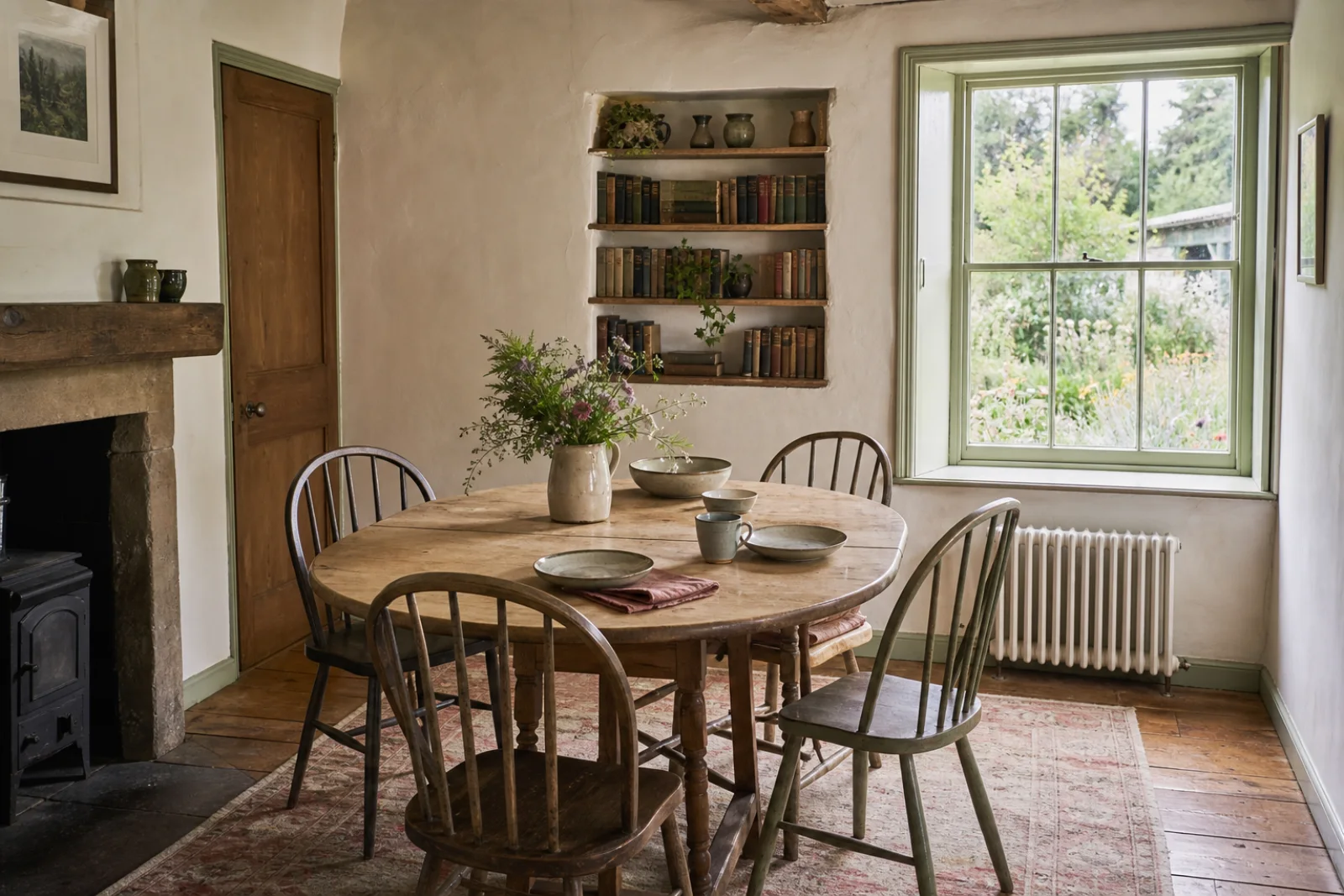
Look for stable joints and a maintainable surface; irregular color matters less than sound construction.
Small variations add life when bowls, jugs and cups remain useful rather than purely displayed.
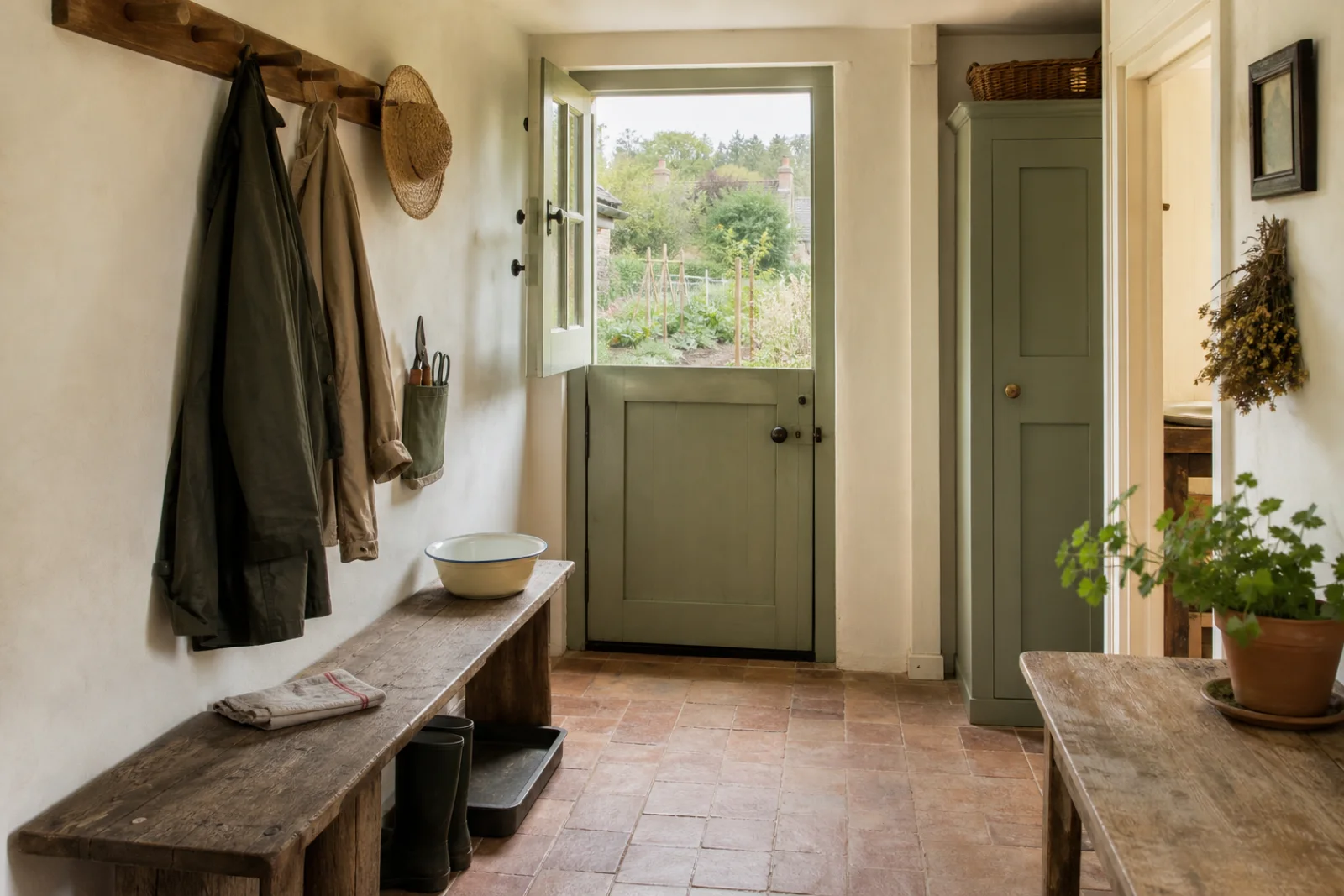
A forgiving garden-side floor that improves with honest wear and simple maintenance.
Choose one domestic activity, one old workhorse piece and one controlled pattern. Build clear storage around them before adding seasonal finds.
Decide whether the room should support cooking, mending, reading, growing or gathering first.
Add one sturdy old table, bed or cupboard whose dimensions fit the actual routine.
Keep the main floral or quilted surface contained and repeat only one of its colors elsewhere.
Keep shelves and tabletops partly open for garden cuttings and seasonal objects that rotate naturally.
When the room feels wrong, change the underlying decision before adding more decor.
Keep one patterned lead and replace secondary prints with plain washed linen.
Stop distressing new finishes; introduce one genuinely old, structurally sound piece.
Use closed storage for most supplies and reserve baskets for active, visible tasks.
Restore work light, washable surfaces and clear routes before adding another soft layer.
Cottagecore is best recognized by what the room enables. Gardening, cooking and handwork create its story; pattern and vintage furniture support that life rather than impersonate it.
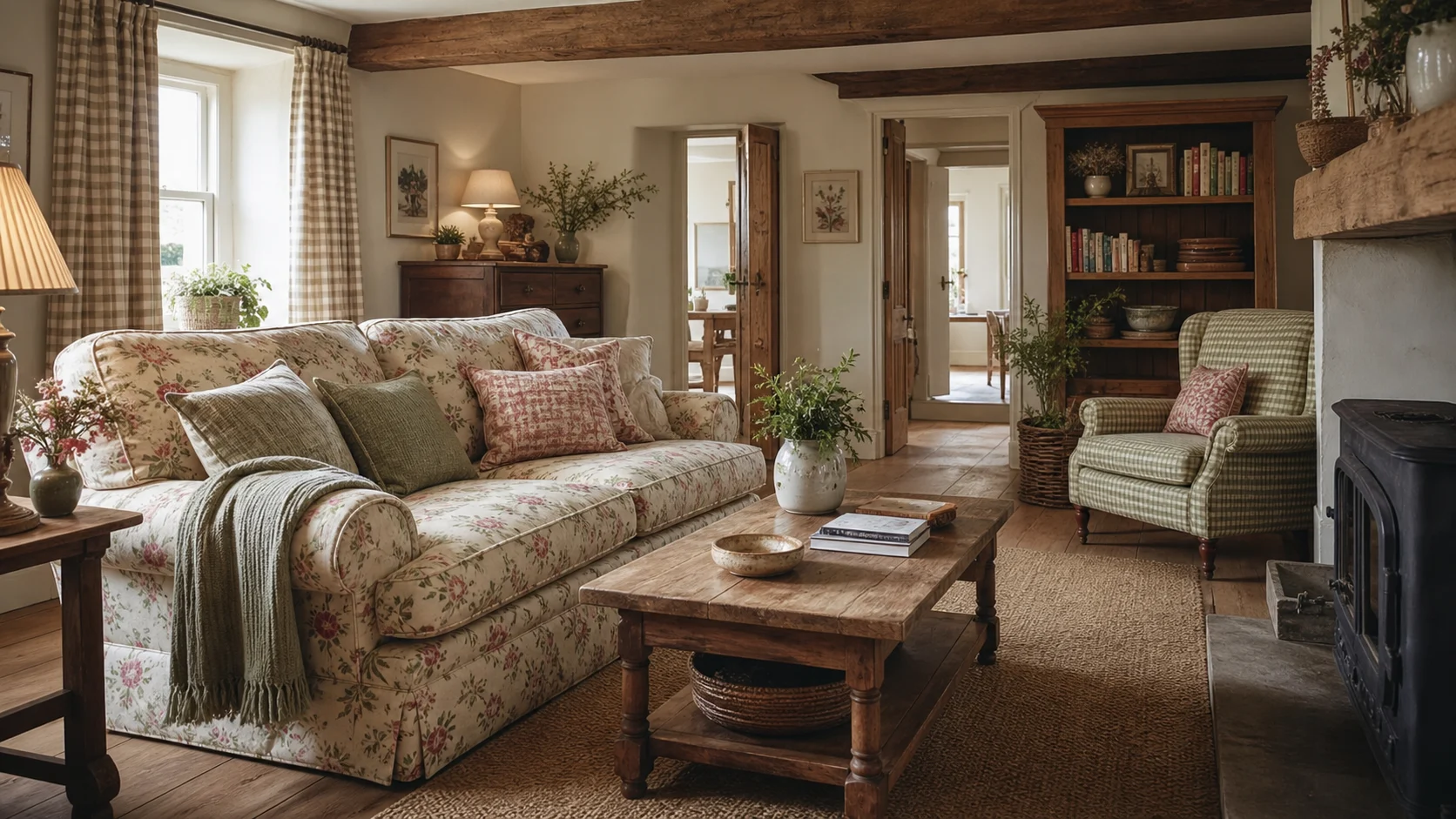
Broader and more regionally flexible, with comfortable traditional furniture, checks and familiar rural references.
Choose Cottagecore for a more narrative focus on gardening, making, repair and seasonal domestic life.
Mended linen and botanical work replace general country comfort.
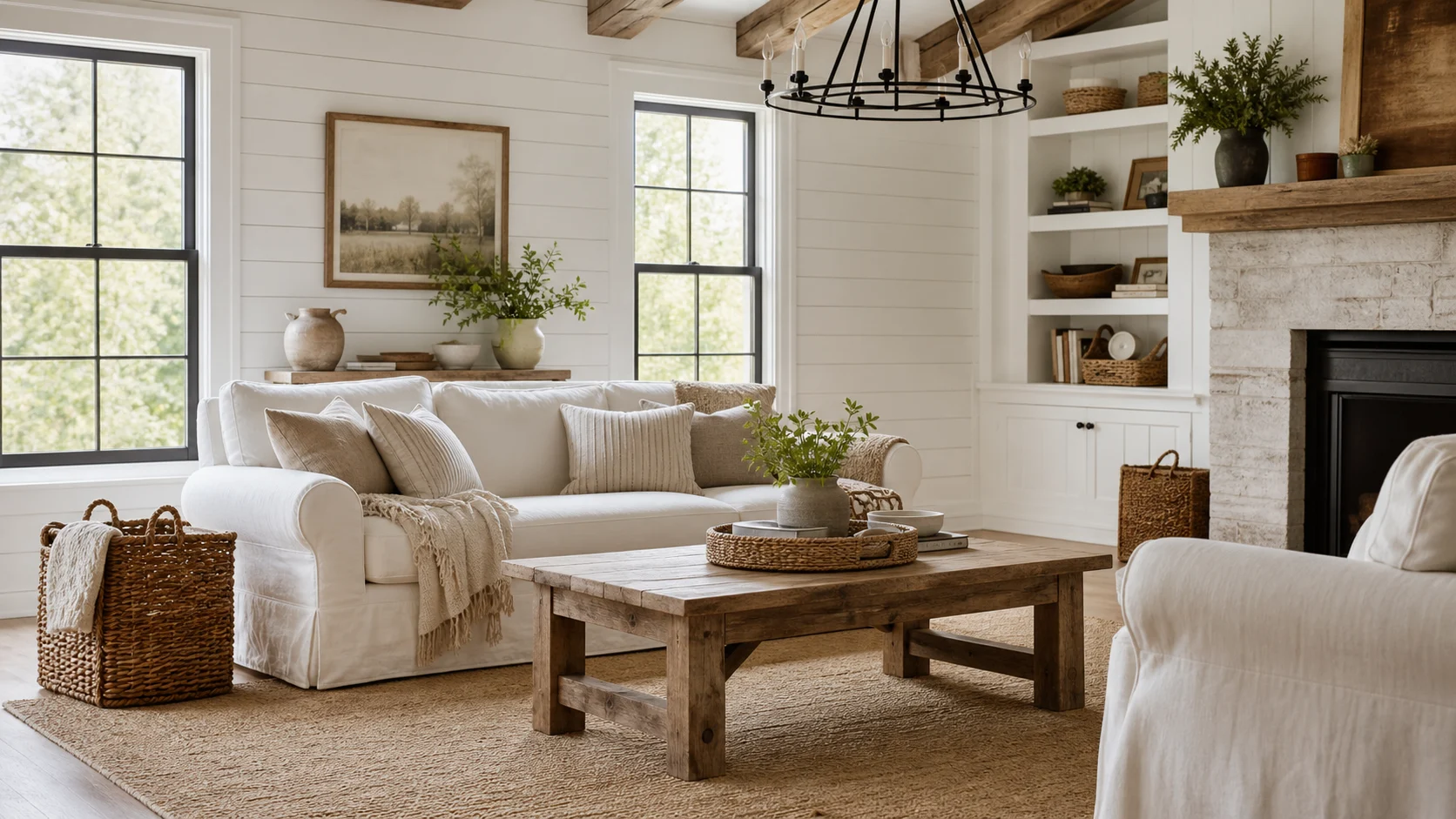
More architectural and workmanlike, favoring practical millwork, apron sinks and larger communal furniture.
Choose Cottagecore when intimacy, handwork and a softer garden relationship matter more than utility-house structure.
Small-scale making replaces broad agrarian architecture.
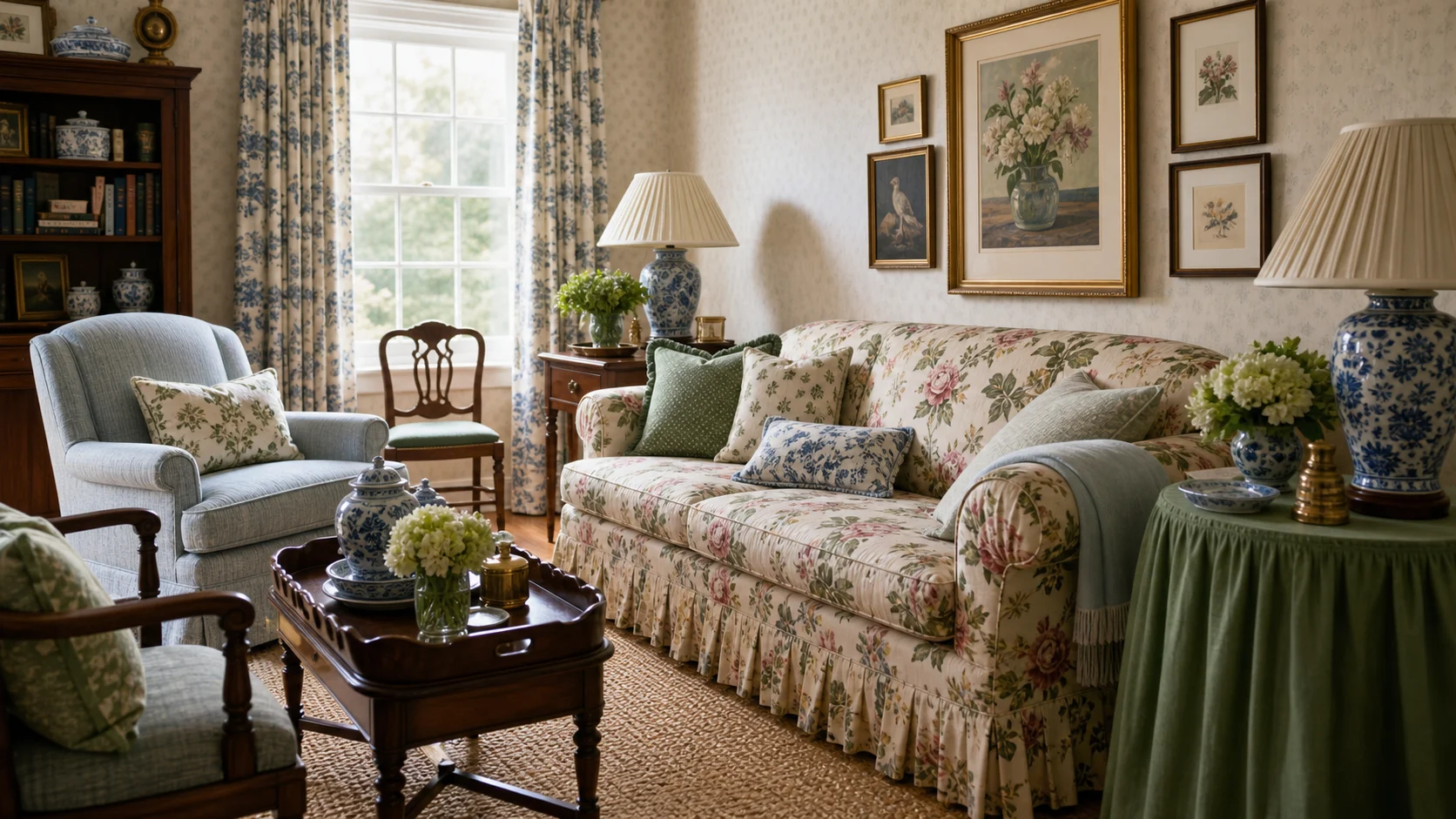
More polished and decorative, mixing classic upholstery, trims, ceramics and layered traditional pattern.
Choose Cottagecore for quieter materials, visible wear and less formal composition.
A repaired quilt replaces coordinated chintz and trim.
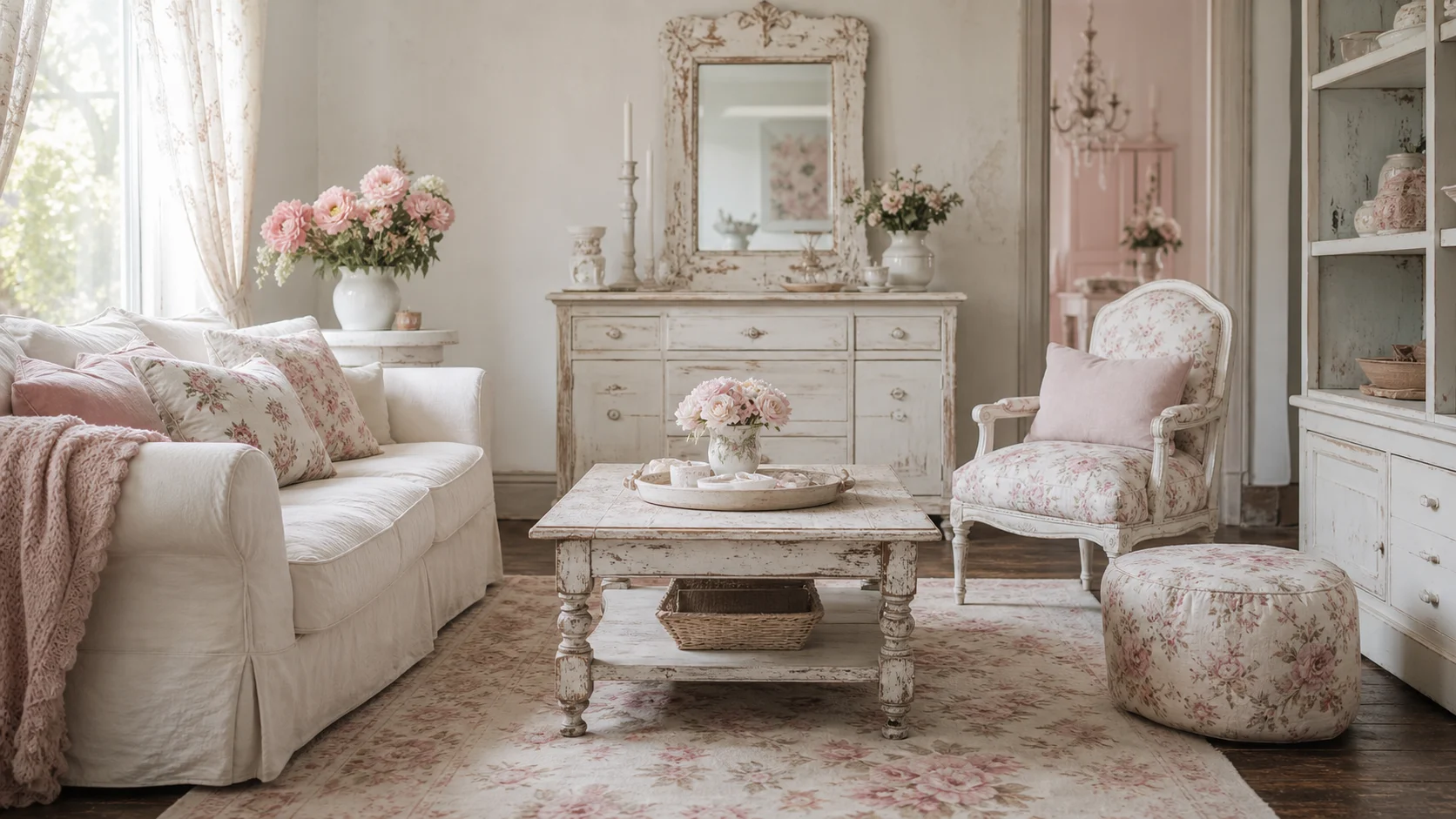
Paler and more romantic, often built around distressed white furniture, ruffles and intentionally faded surfaces.
Choose Cottagecore for natural wood, productive garden references and believable repair.
Old oak and useful tools replace decorative distressing.
Favor repairable objects with a clear job. One sturdy old table, washable textile and useful pot will carry more meaning than a shelf of imitation antiques.
Check rail joints and mattress dimensions; let a removable quilt provide the changing pattern.
Choose a stable, scrub-friendly top at a useful height with clearance around the main cooking route.
Match seat height and structural condition rather than finish; repeat one paint or wood tone for cohesion.
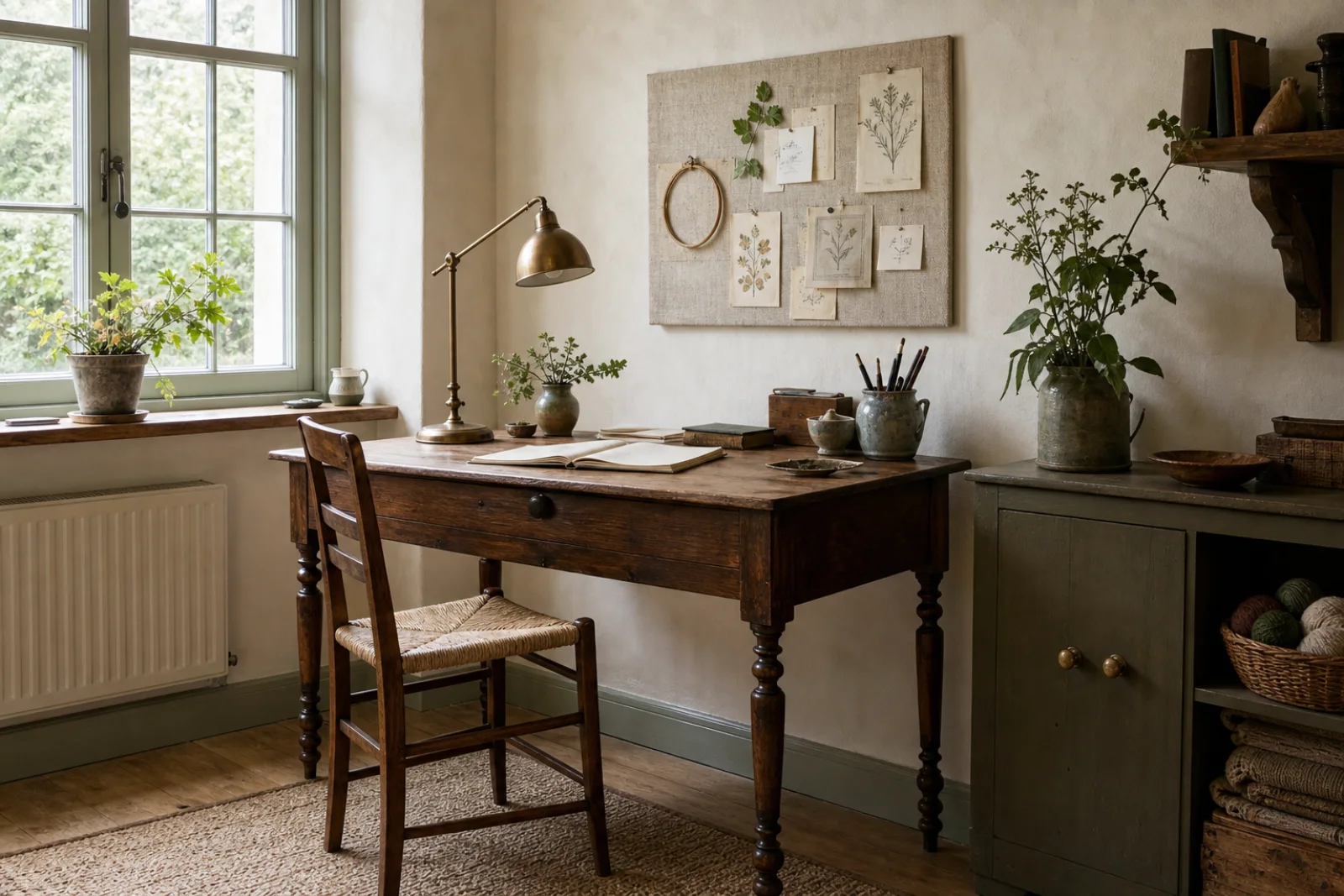
Confirm knee space and surface depth, then add modern task light and seating support discreetly.
Look for ventilation and enough internal depth for outdoor gear without narrowing the doorway.
Choose natural fiber with a durable weave; small stains and tears should be washable or repairable.