01
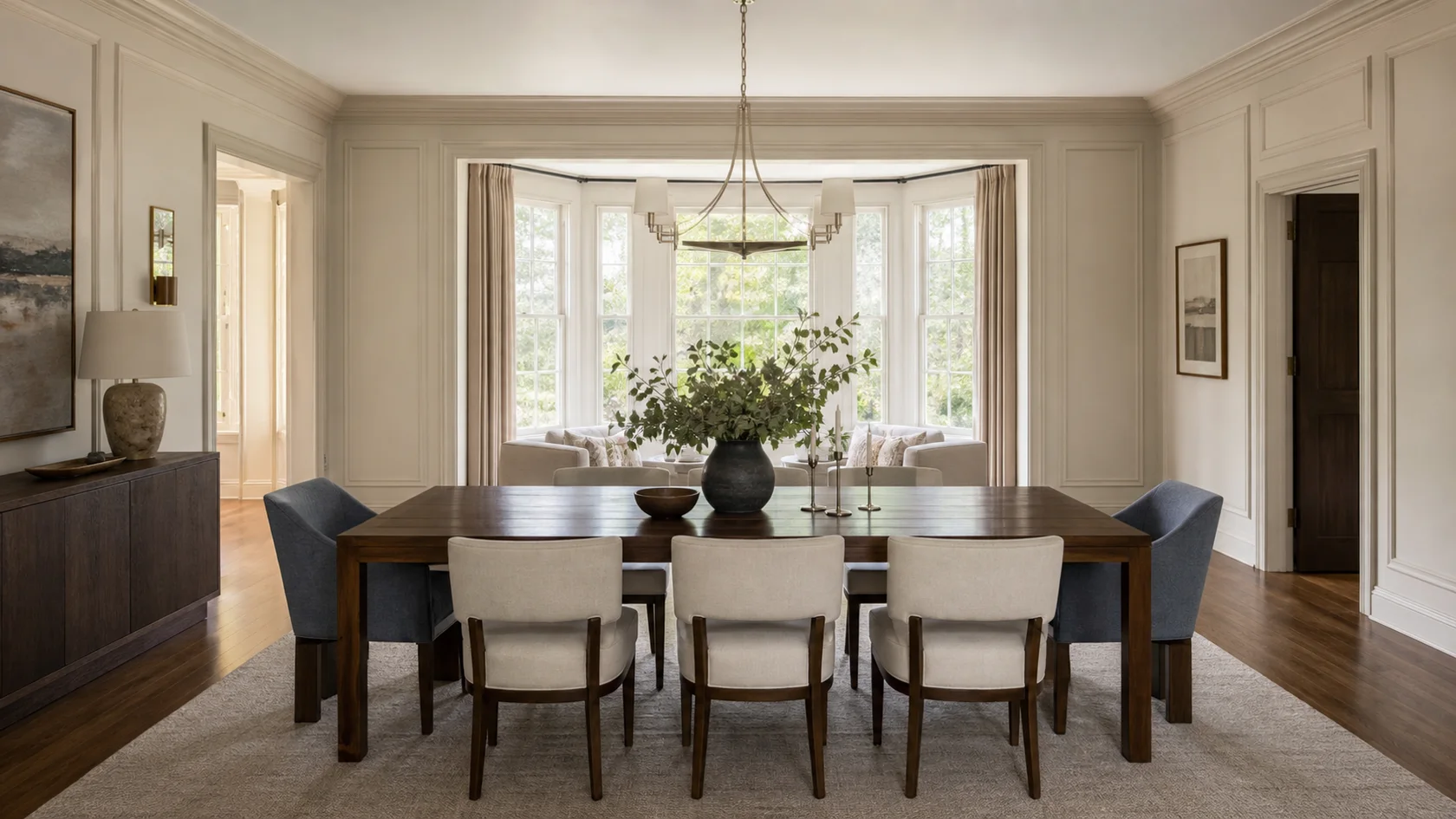
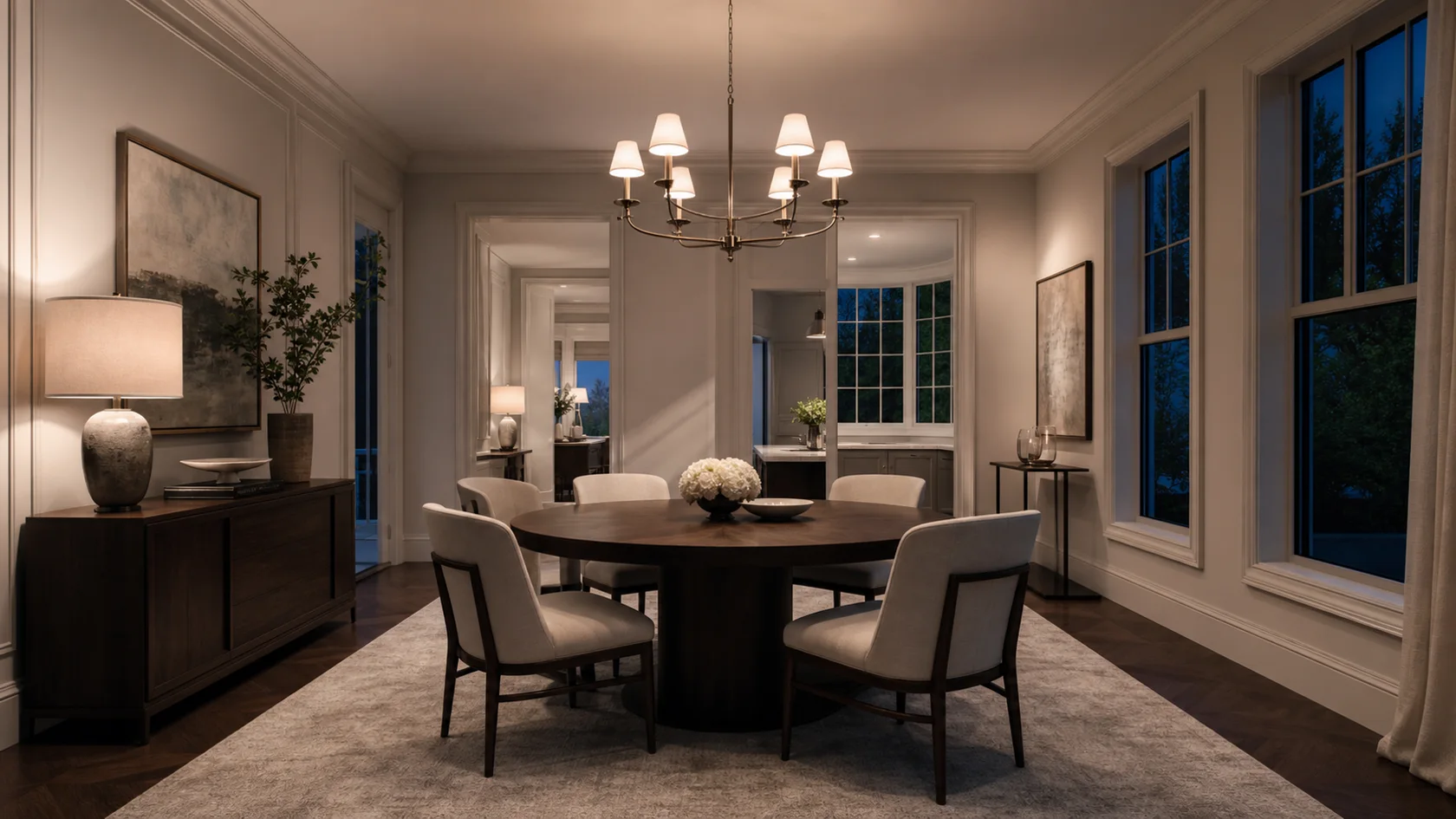
Walnut Table
A centered composition provides classical calm while simplified furniture keeps the room from feeling period-bound. Allow occupied chairs to pull out comfortably and keep the pendant aligned with the tabletop.
Five materially and spatially different transitional glam approaches to the dining room, from a clear daytime plan to a controlled evening mood.
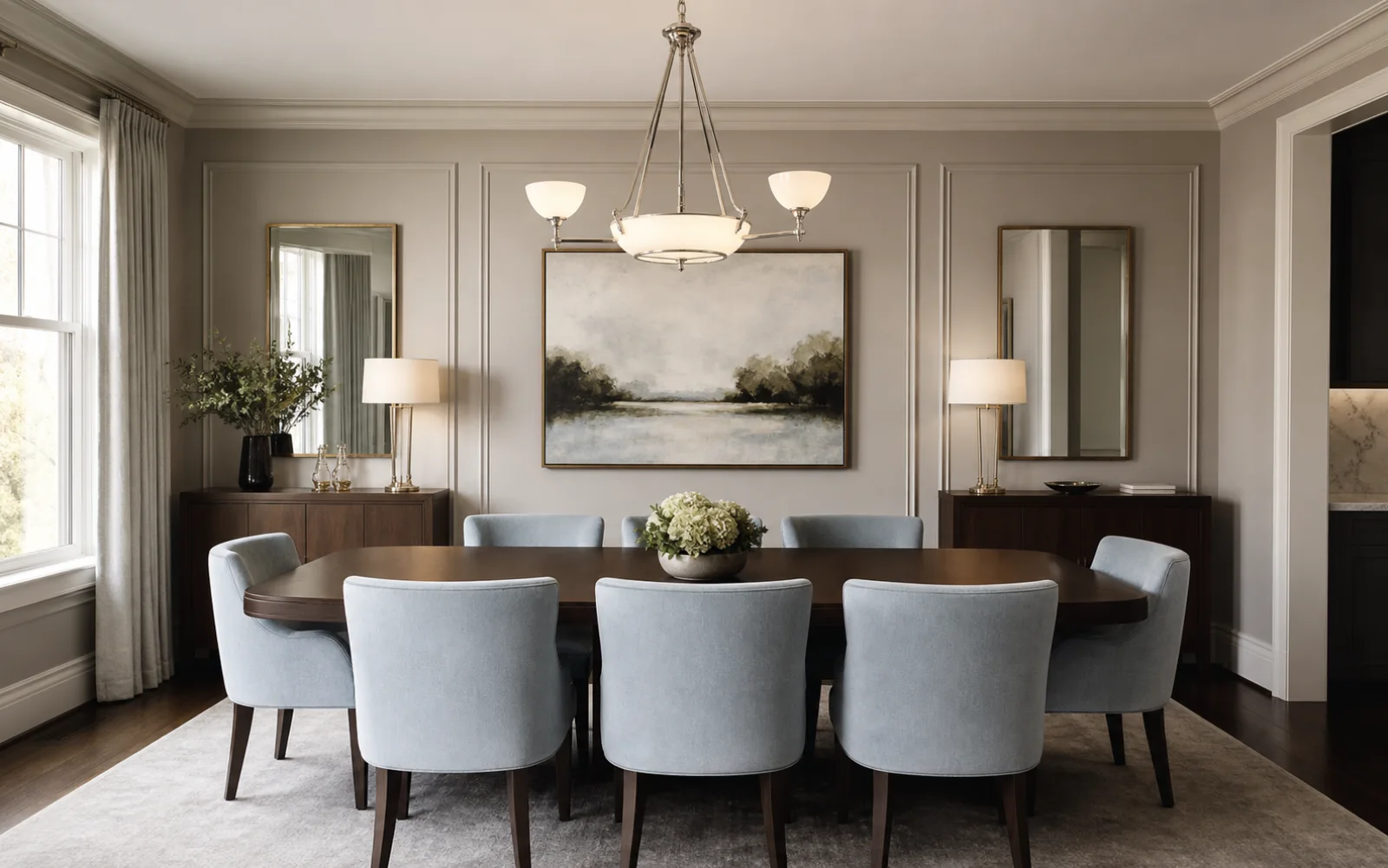
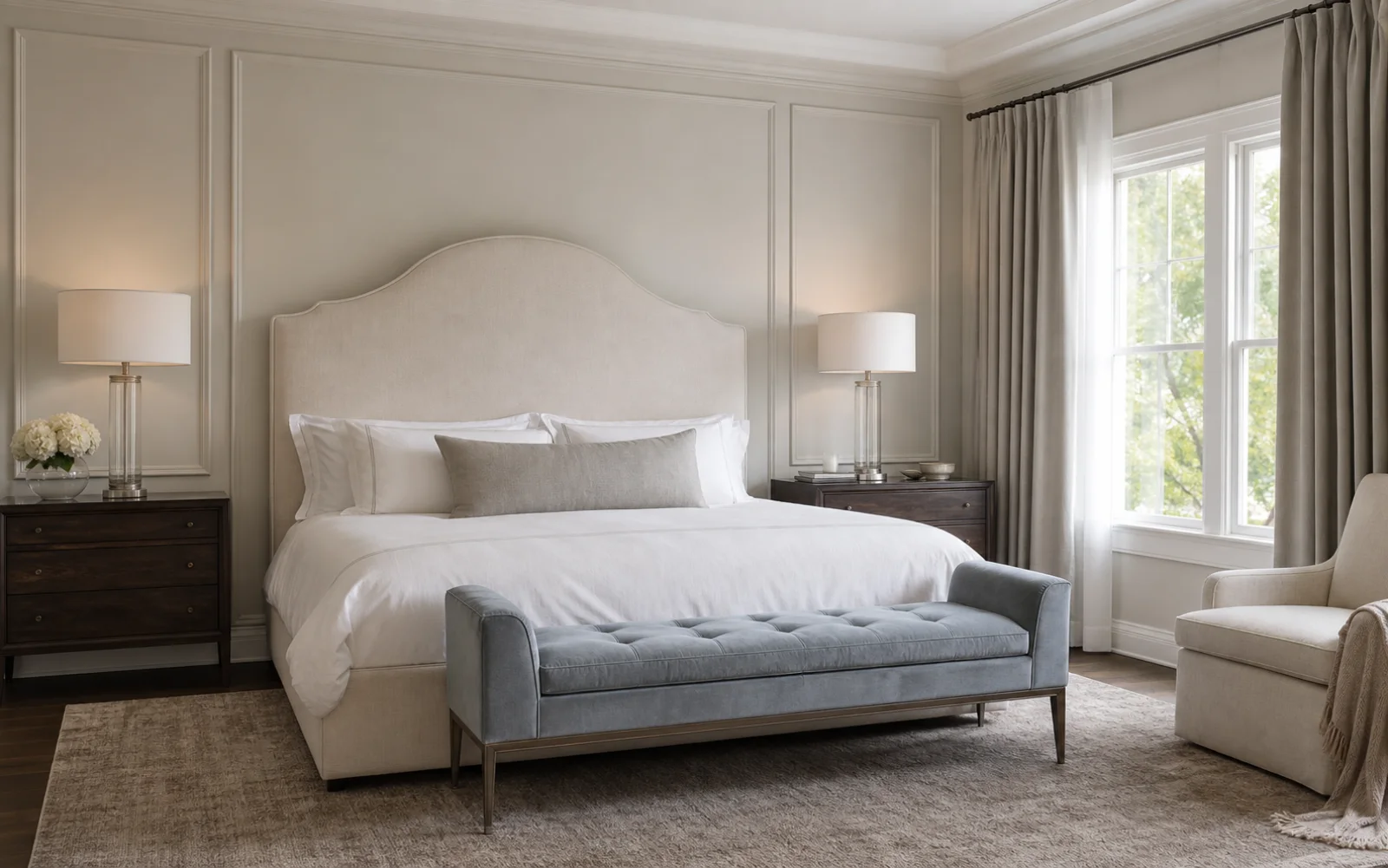
Transitional Glam refreshes classic proportion and balanced layouts with simplified profiles, tactile neutrals and a restrained layer of nickel, glass or aged mirror. In the dining room, that identity must still support comfortable gatherings, chair clearance and light centered on the table rather than the room.
A grounded walnut table, pale upholstered chairs and a formally proportioned but simplified chandelier create measured occasion. Establish the architectural axis and useful furniture first; add polish through pairs, fine edges and lighting rather than mirrored casegoods.
Use these examples to choose the version of the style that fits your architecture, light and square footage.
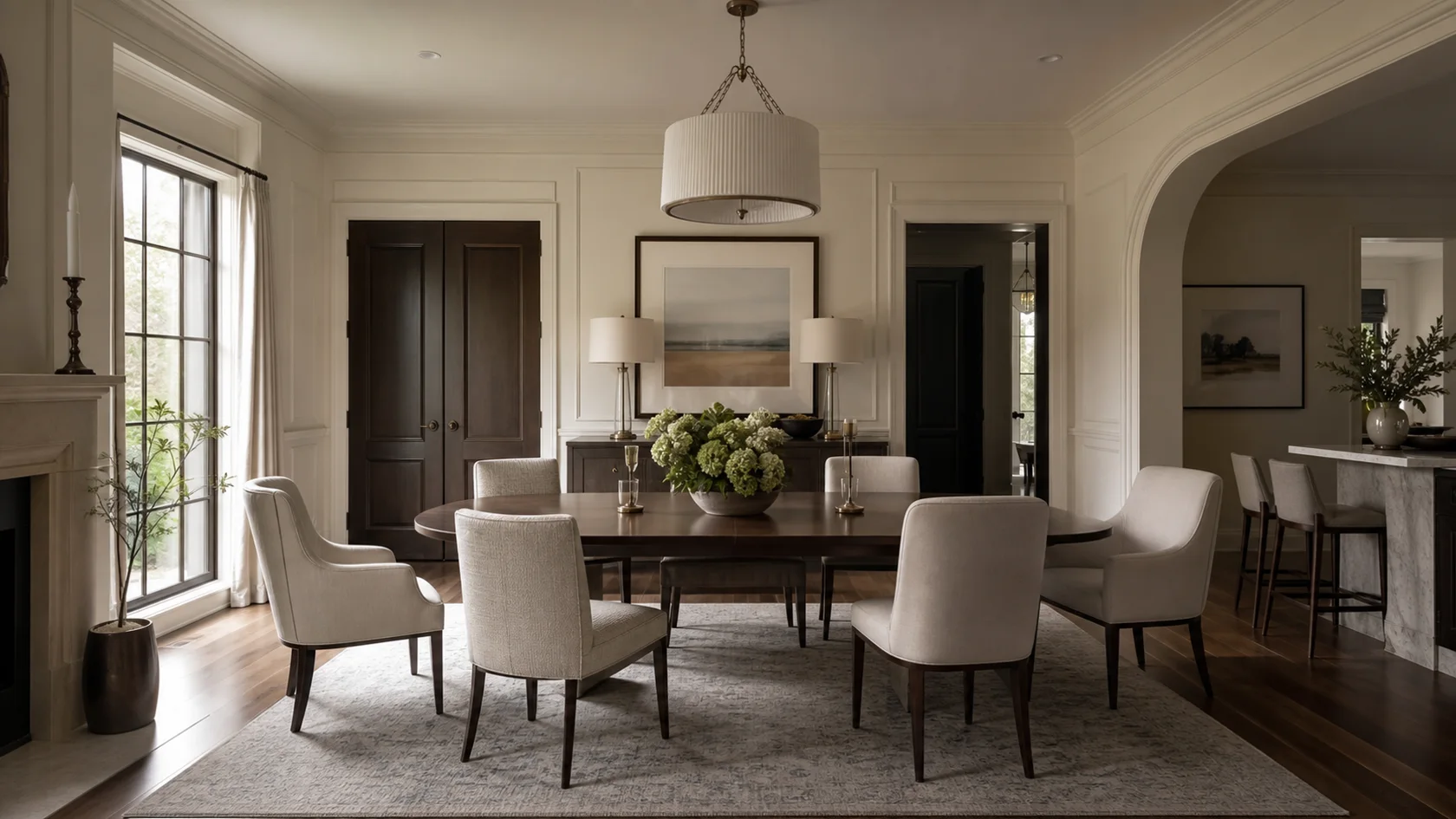
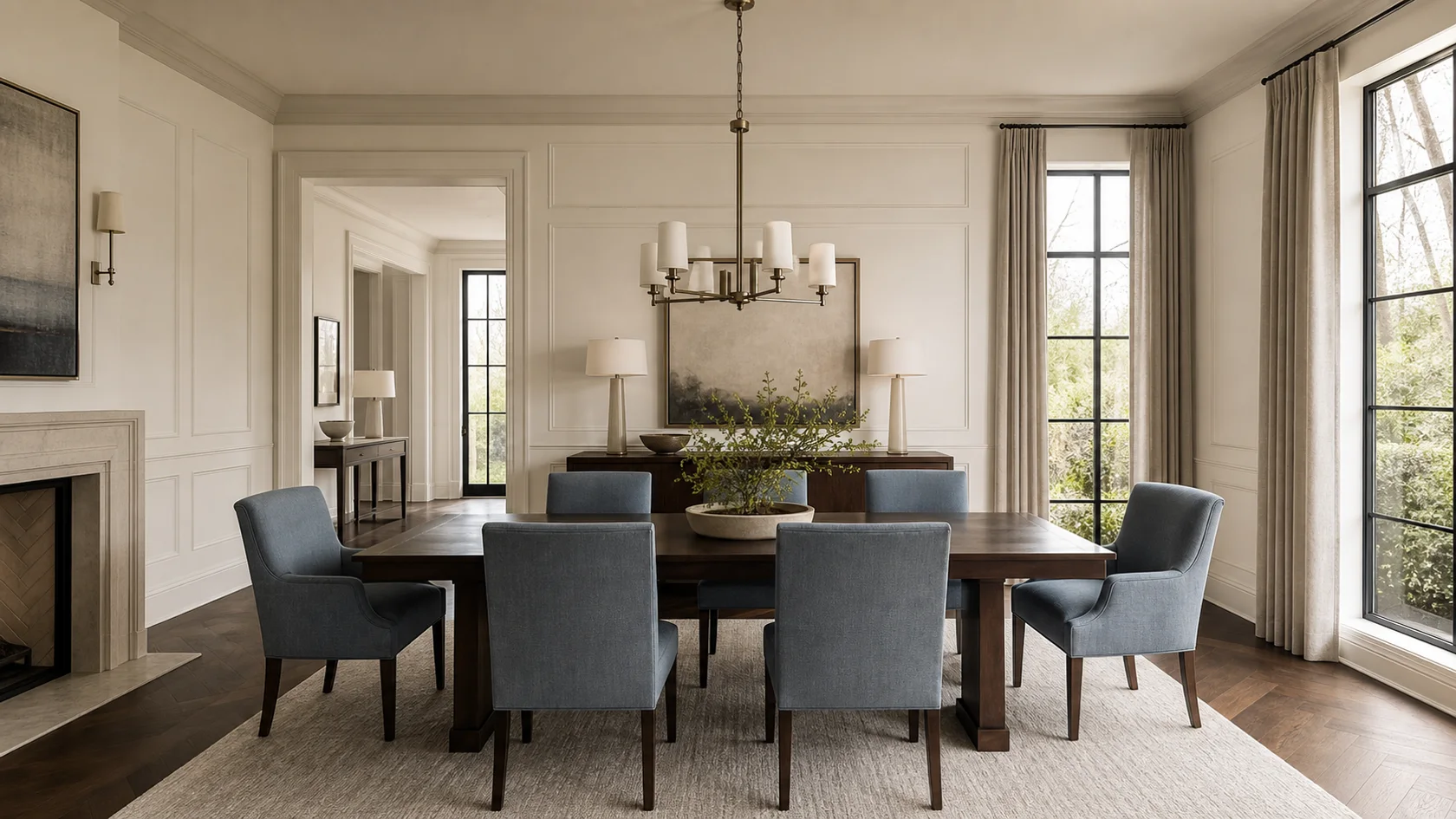
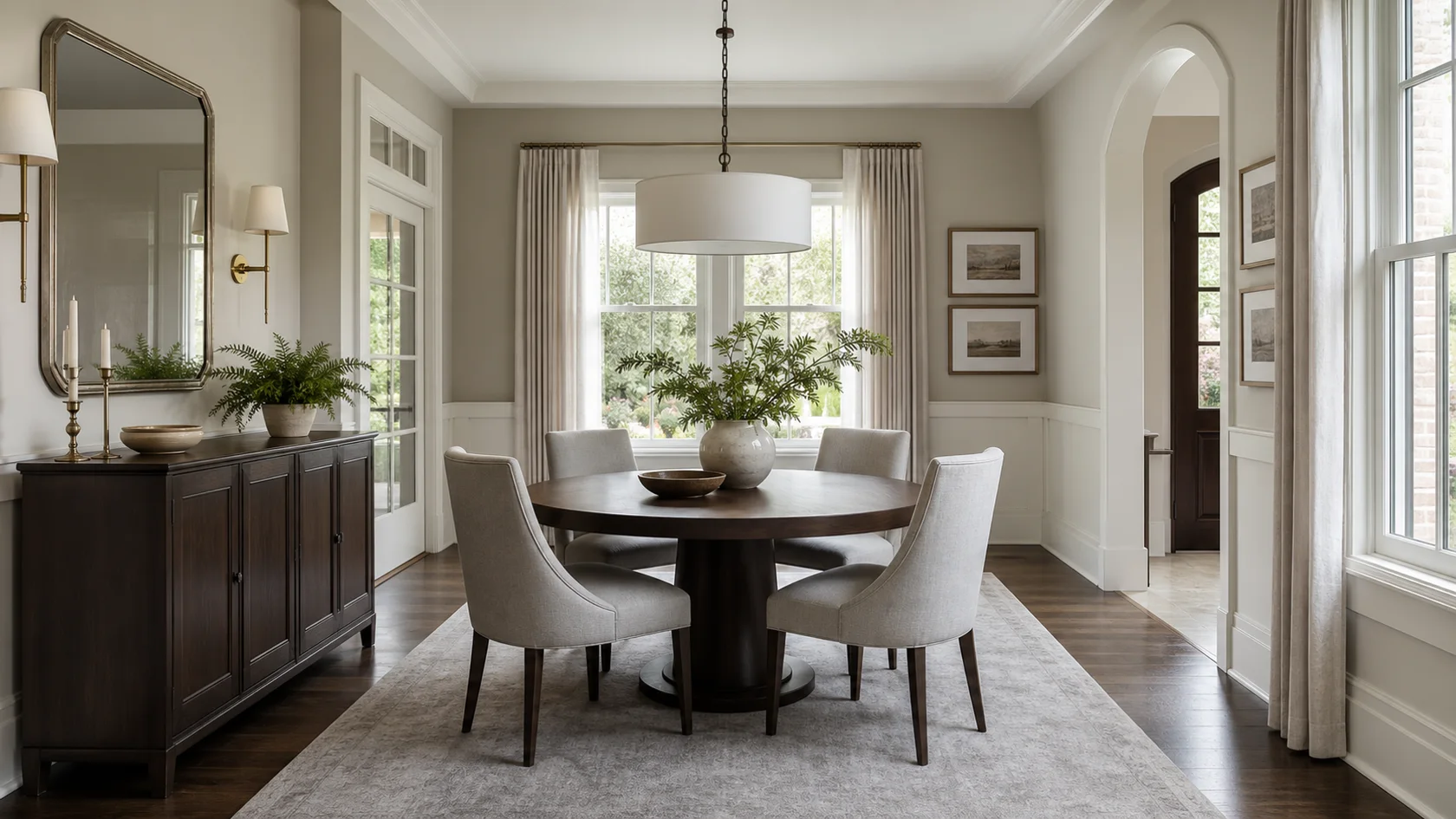
Use the style where it helps the room work: seating, circulation, focal point and material balance.
Allow chairs to pull out without blocking the main route, then choose round, oval or rectangular geometry.
Hang the fixture from the table center even when the table is not centered in the architectural room.
A shallow sideboard or wall niche should support meals without narrowing chair clearance.
Curtains, upholstery or a rug can soften a room dominated by timber, stone or glass.
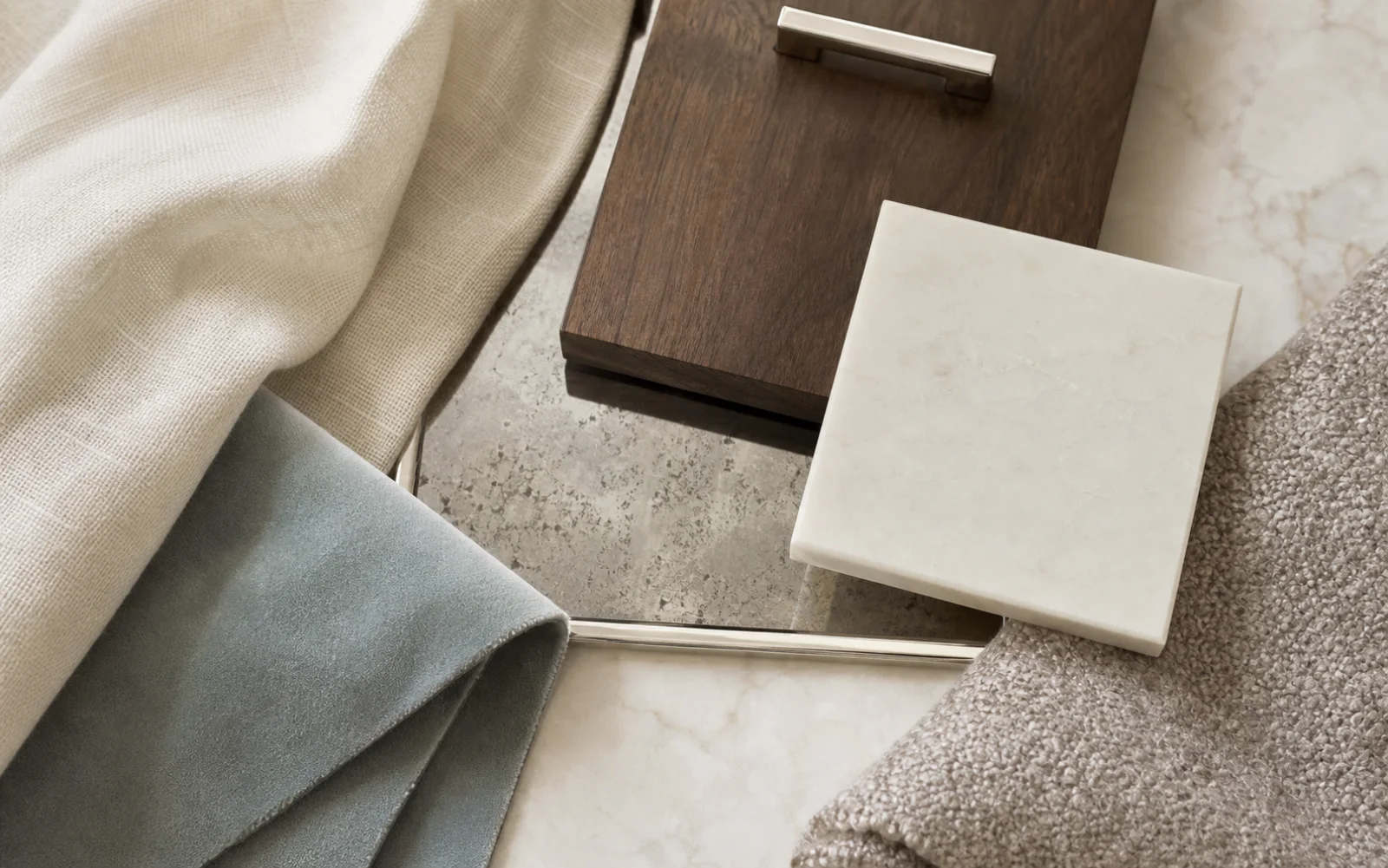
Use ivory and greige across the architecture, walnut to anchor major furniture, and blue-gray on one textile family. Nickel should catch light without becoming a dominant color.
Keeps molding and upholstery light without the coldness of stark white.
Connects pale stone, taupe wool and painted millwork.
A restrained color accent suited to benches, dining chairs or grasscloth.
Adds traditional gravity and prevents an all-neutral room from floating.
A cool, crisp highlight for lighting and hardware used in small areas.
Warm ivory and balanced greige keep molding, stone and upholstery connected.
Dark walnut should anchor one table, island or pair of chests instead of appearing as scattered accents.
Blue-gray, dusty green or muted mauve can distinguish one textile family without interrupting the room’s order.
Nickel, crystal-clear glass and aged mirror belong at eye level in lamps, sconces and hardware.
For this room, a few strong choices can carry the style better than adding more decor.
A grounded walnut table, pale upholstered chairs and a formally proportioned but simplified chandelier create measured occasion. Confirm the dining table by dimensions, comfort and maintenance before selecting its decorative finish.
Establish the architectural axis and useful furniture first; add polish through pairs, fine edges and lighting rather than mirrored casegoods.
Establish the architectural axis and useful furniture first; add polish through pairs, fine edges and lighting rather than mirrored casegoods.
Establish the architectural axis and useful furniture first; add polish through pairs, fine edges and lighting rather than mirrored casegoods.
Use these checks to keep the transitional glam character clear without compromising how the dining room works.
Include pull-out depth and the route behind occupied seats in the plan.
Relate the light to the table position so the composition stays coherent.
Leave enough clear surface for serving and use one low centerpiece.