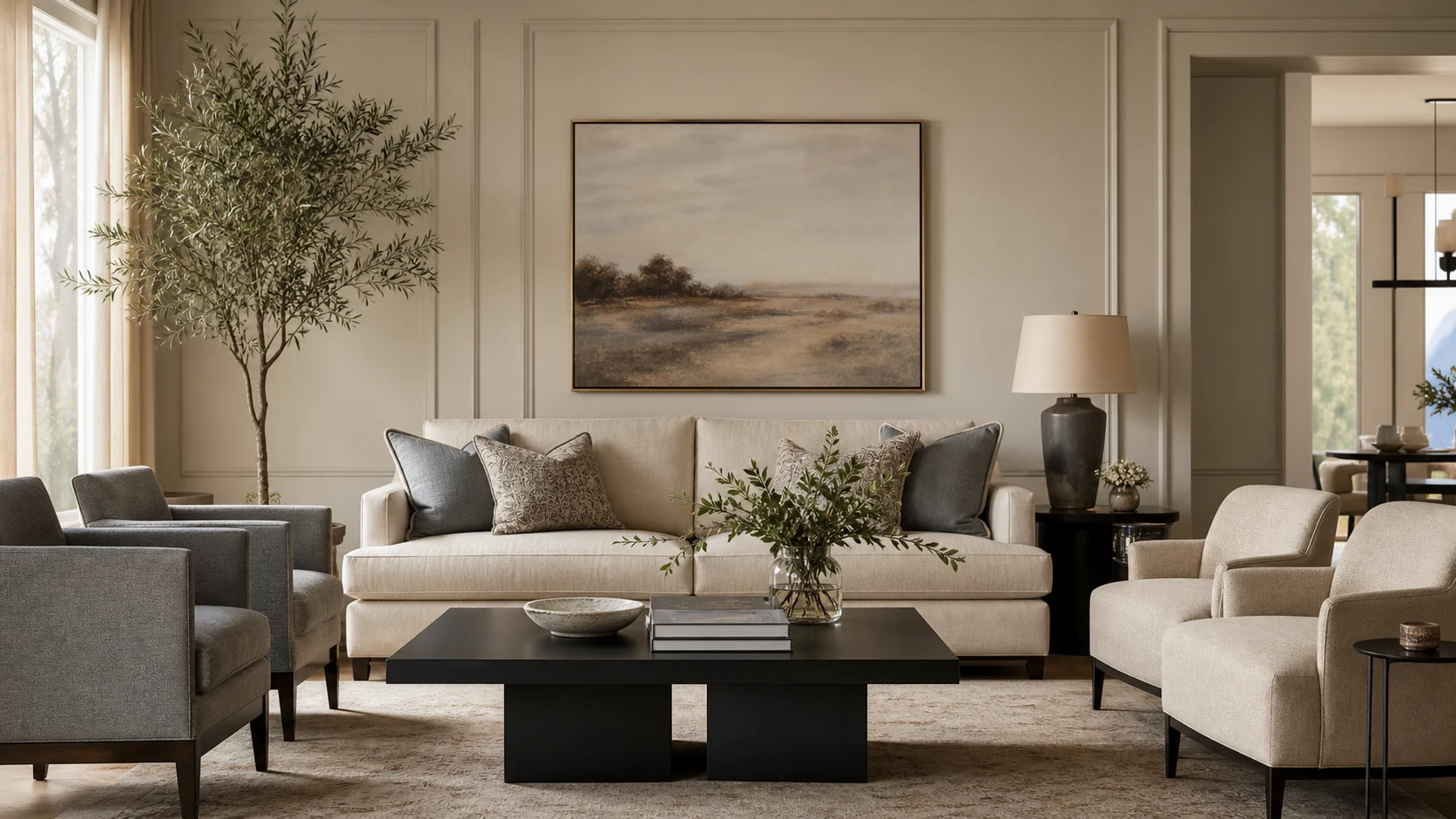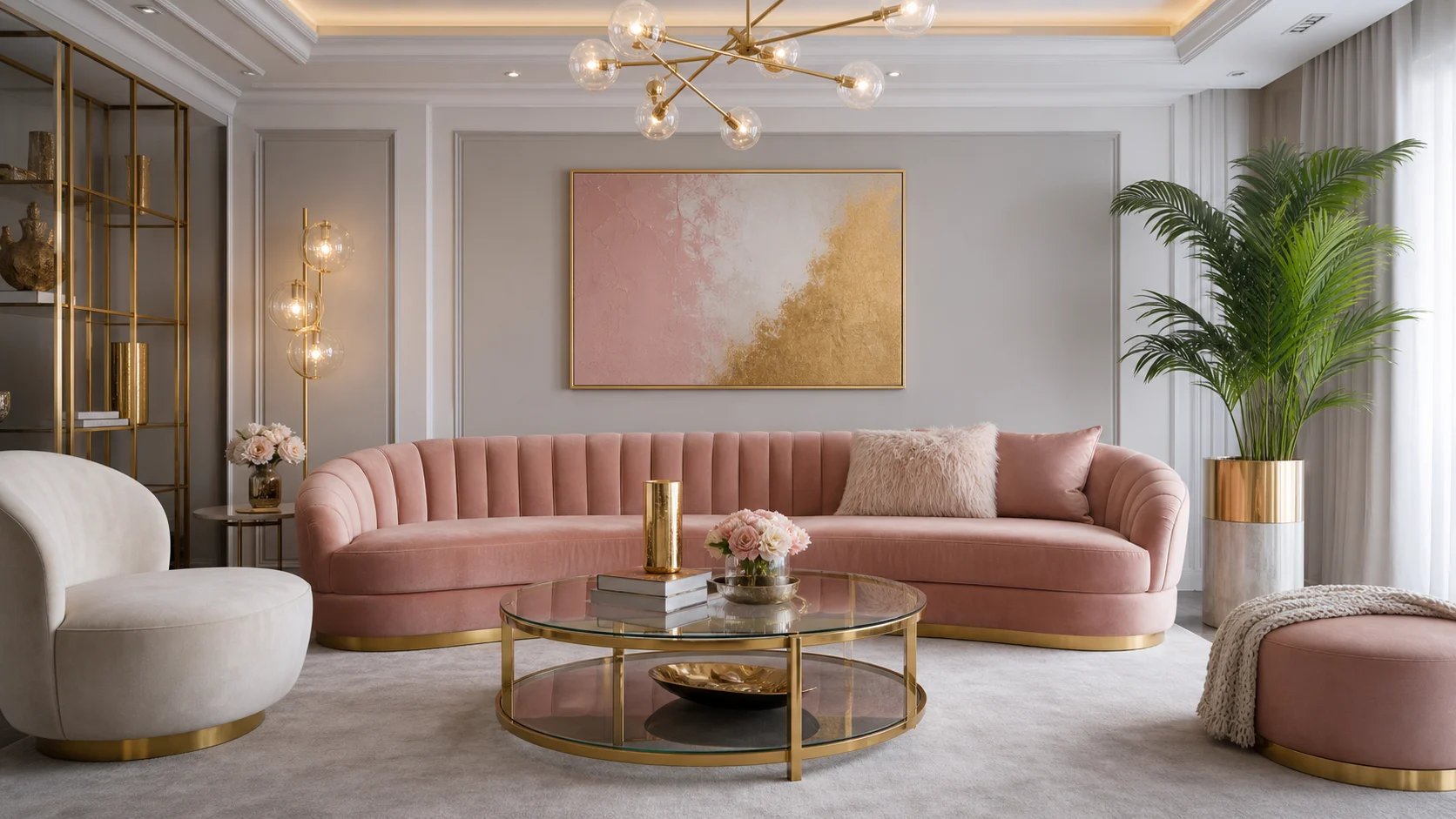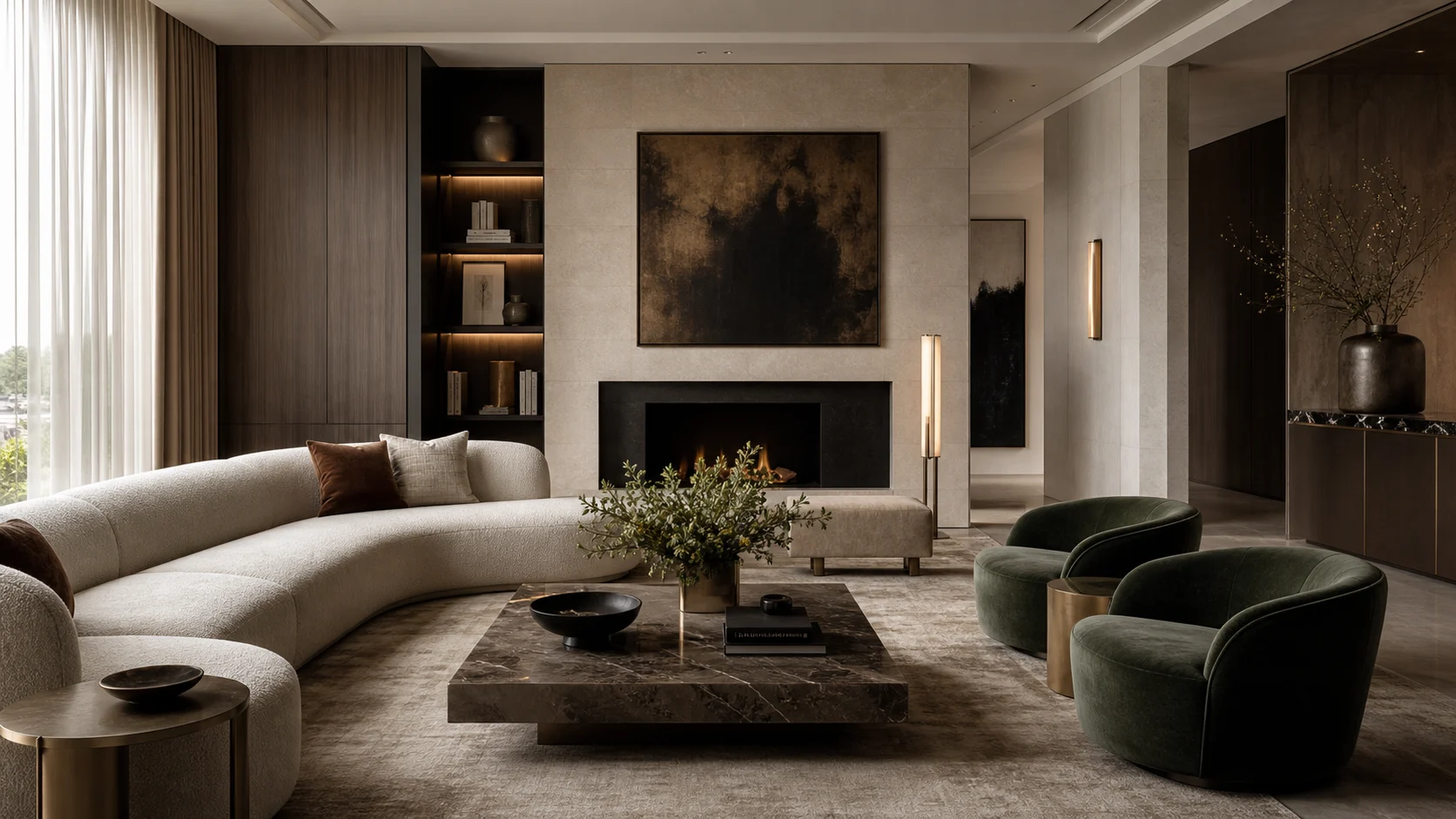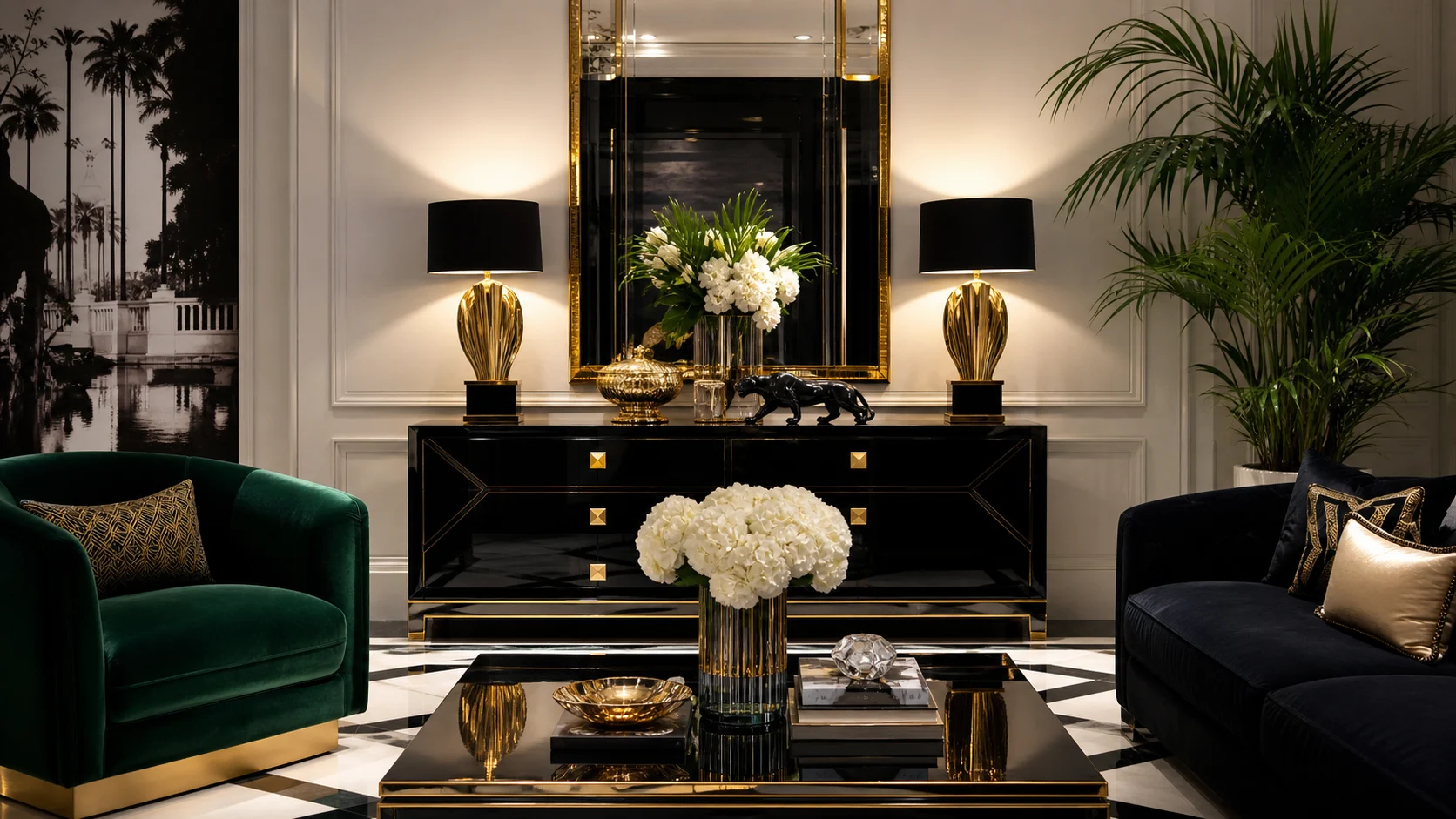
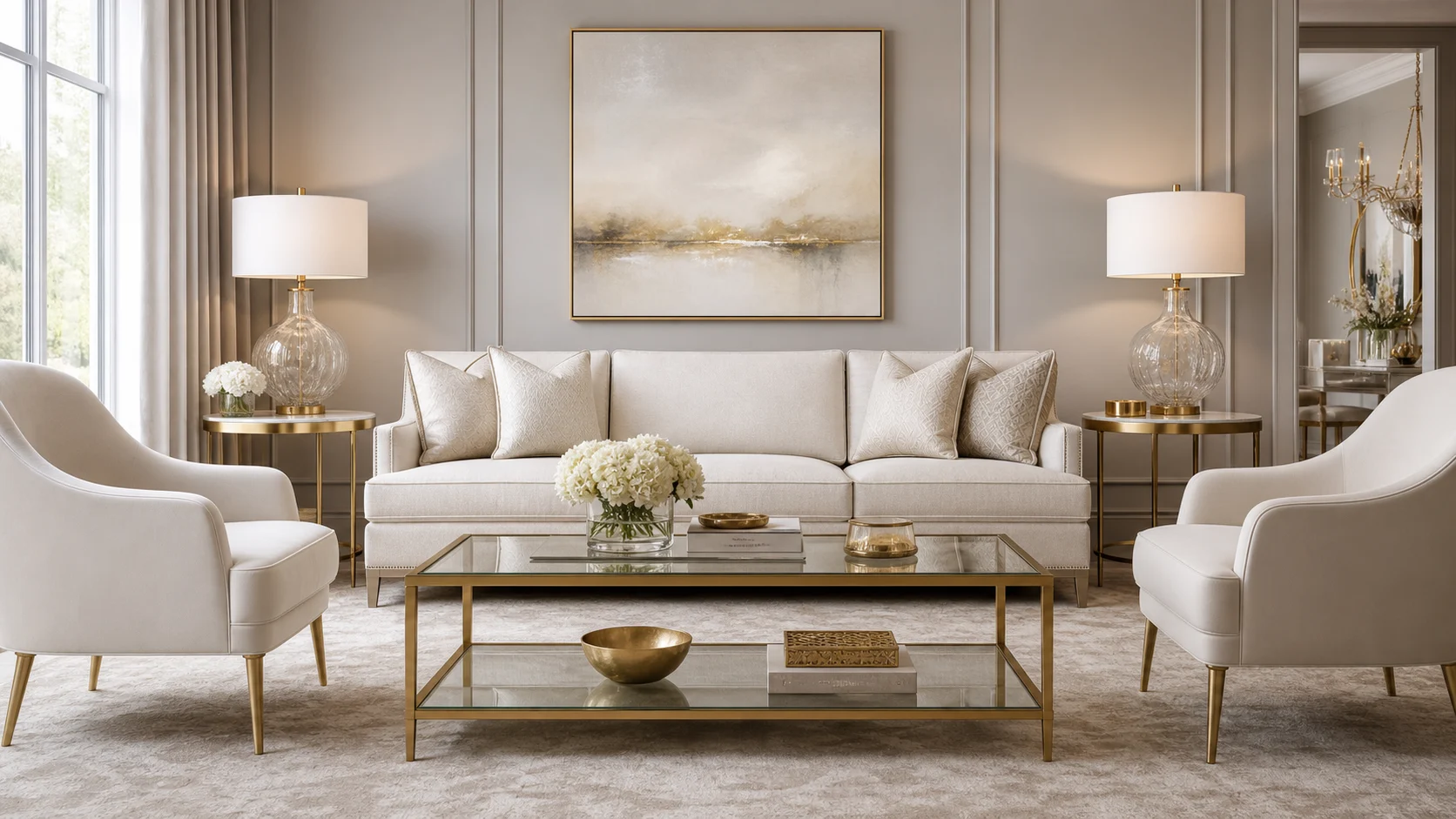
Tailored neutral sofa
Choose a classic width and clean arms; let pillows and lamps supply the subtle sheen.
Classic proportion and familiar symmetry refreshed with cleaner furniture, tactile neutrals and a measured glint of polished metal or antiqued mirror.
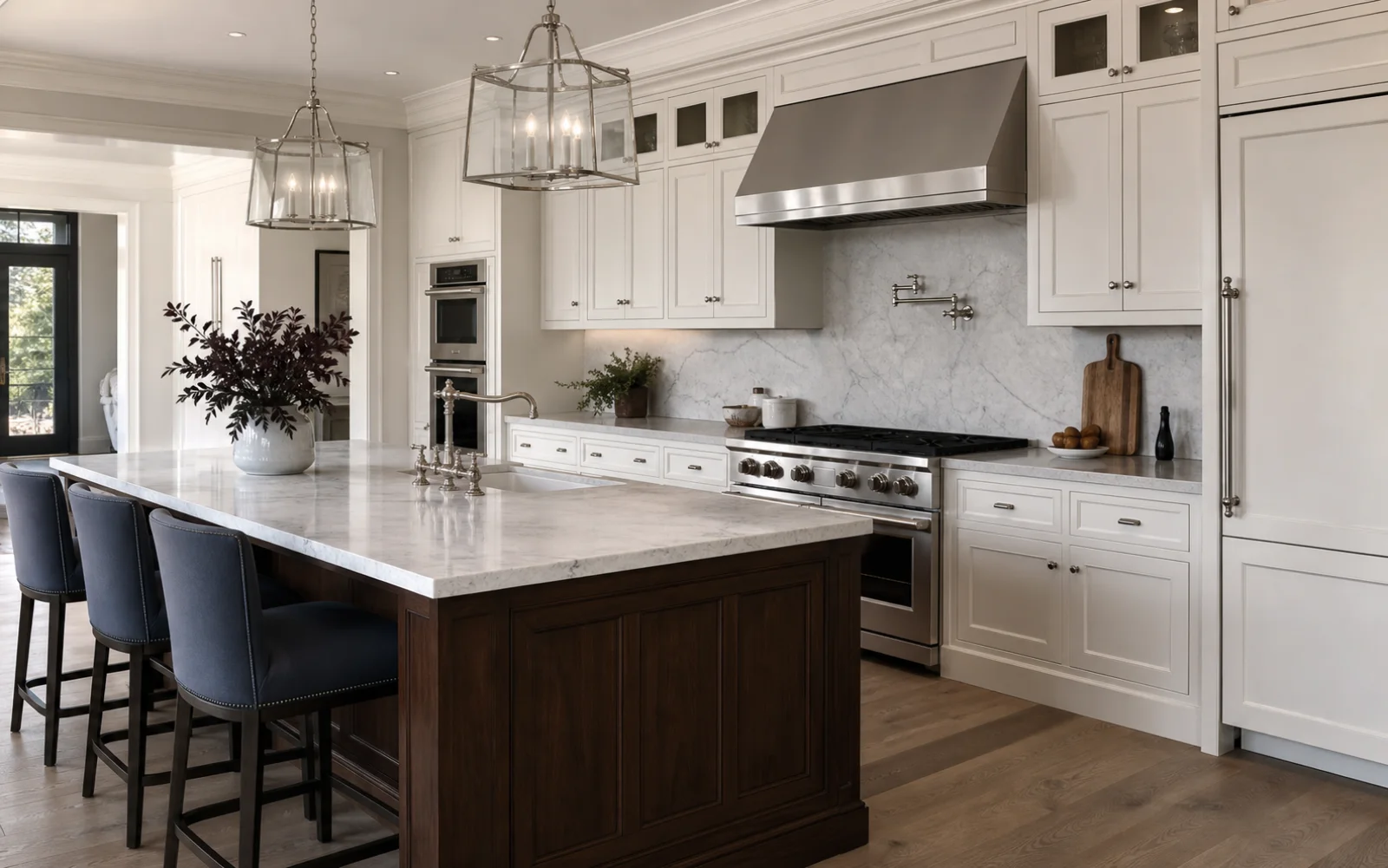
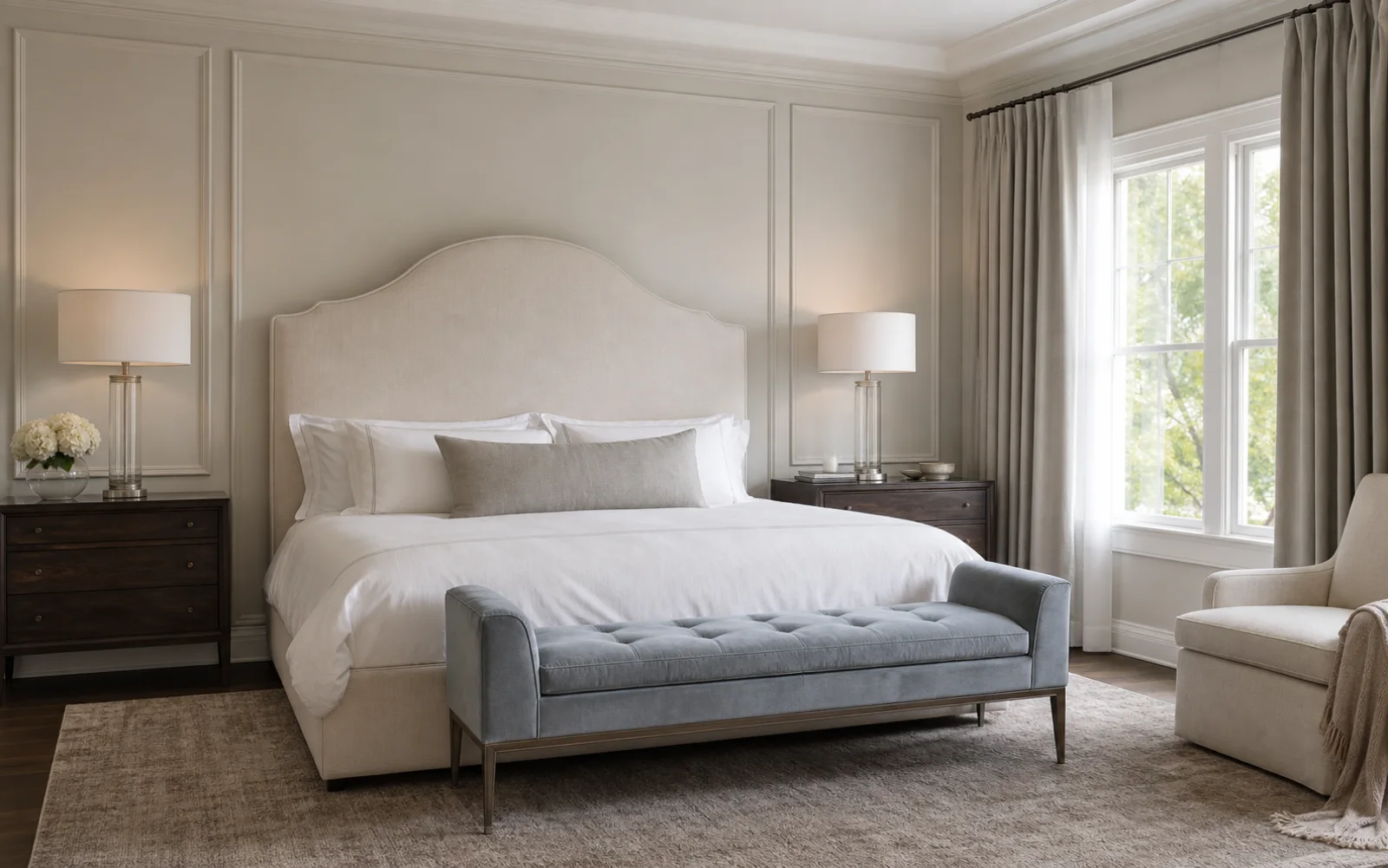
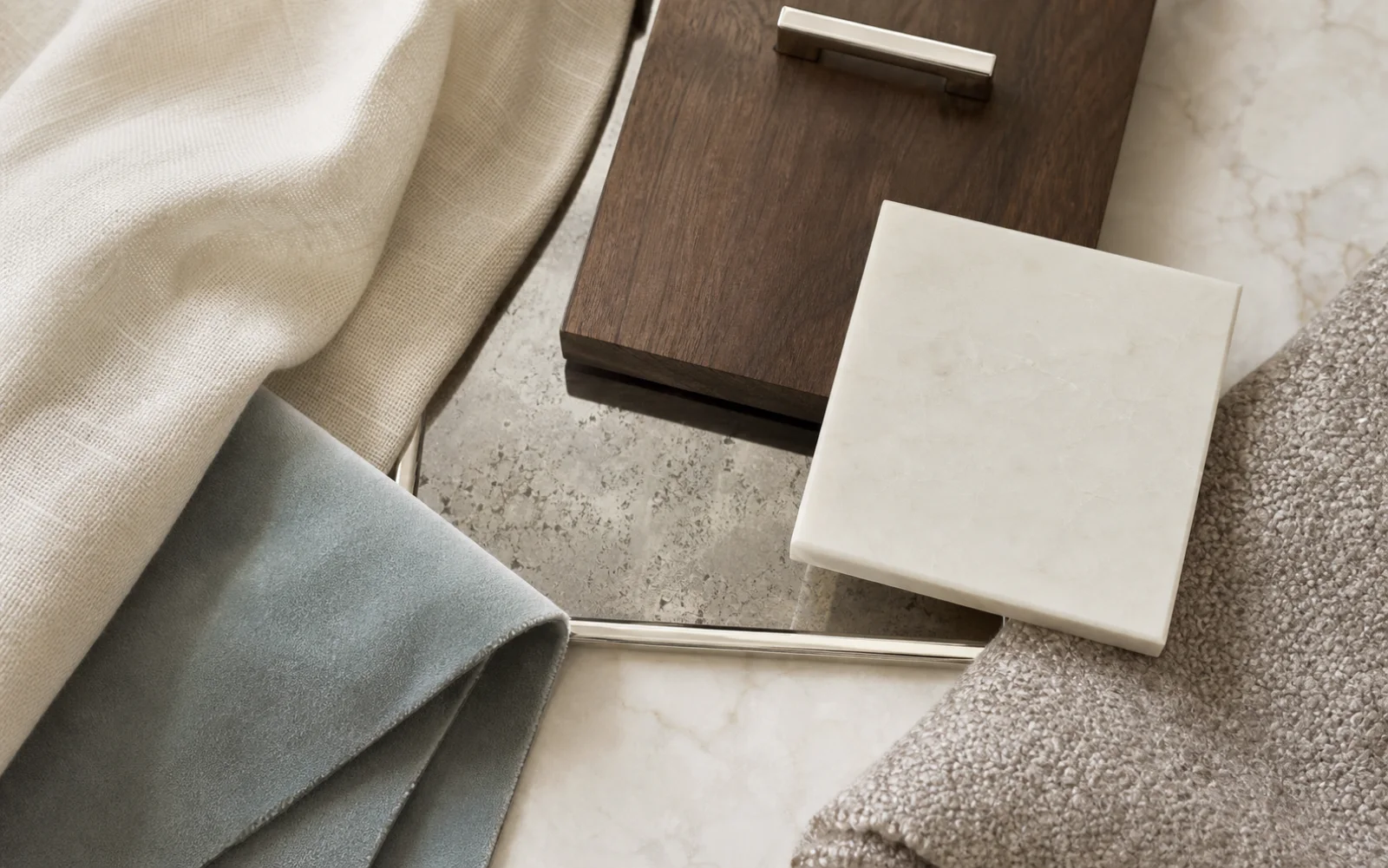
Transitional glam combines the composure of traditional rooms with the cleaner profiles and lighter visual weight of contemporary design. Panel molding, balanced layouts and dark timber provide structure; linen, velvet, honed stone, polished nickel and antiqued mirror introduce softness and controlled luster.
Unlike modern glam, the room does not depend on a dramatic curve or bold statement fixture. Its glamour is quieter and usually appears in pairs, fine edges and light-catching details. Unlike standard transitional design, reflective surfaces and richer textiles receive a deliberate supporting role.
Center the primary furniture or artwork, then use pairs only where they reinforce architecture and function.
Choose shallow moldings, plain cabinet fronts and furniture with edited curves instead of ornate carving.
Sconces, lamps, hardware and one mirror add polish without turning large surfaces reflective.
Paired lamps, balanced storage and centered artwork create calm without making every object identical.
Arched headboards, tapered legs and panel molding reference tradition with fewer lines and less ornament.
Nickel, glass and antiqued mirror appear beside walnut, linen and wool so reflection remains secondary.
Blue-gray, dusty green or muted mauve gives neutral rooms identity without disrupting their timeless base.
Center the sofa and artwork, but vary the armchairs or side-table styling so symmetry does not feel staged.
Pair dark chests and lamps around a gently shaped headboard, then use one blue-gray bench as the color note.
Let a walnut table ground pale upholstered chairs; keep the chandelier formal in proportion but simple in detail.
Use balanced built-ins and picture lights, then give the desk a clean front and genuinely ergonomic chair.
Combine inset cabinetry with a darker island and honed stone; reserve polish for faucet, hardware and pendants.
A centered console, mirror and paired sconces make a clear arrival point while closed storage handles daily clutter.
Use ivory and greige across the architecture, walnut to anchor major furniture, and blue-gray on one textile family. Nickel should catch light without becoming a dominant color.
Keeps molding and upholstery light without the coldness of stark white.
Connects pale stone, taupe wool and painted millwork.
A restrained color accent suited to benches, dining chairs or grasscloth.
Adds traditional gravity and prevents an all-neutral room from floating.
A cool, crisp highlight for lighting and hardware used in small areas.
Dry linen keeps the base relaxed while fine velvet supplies a controlled, light-responsive accent.
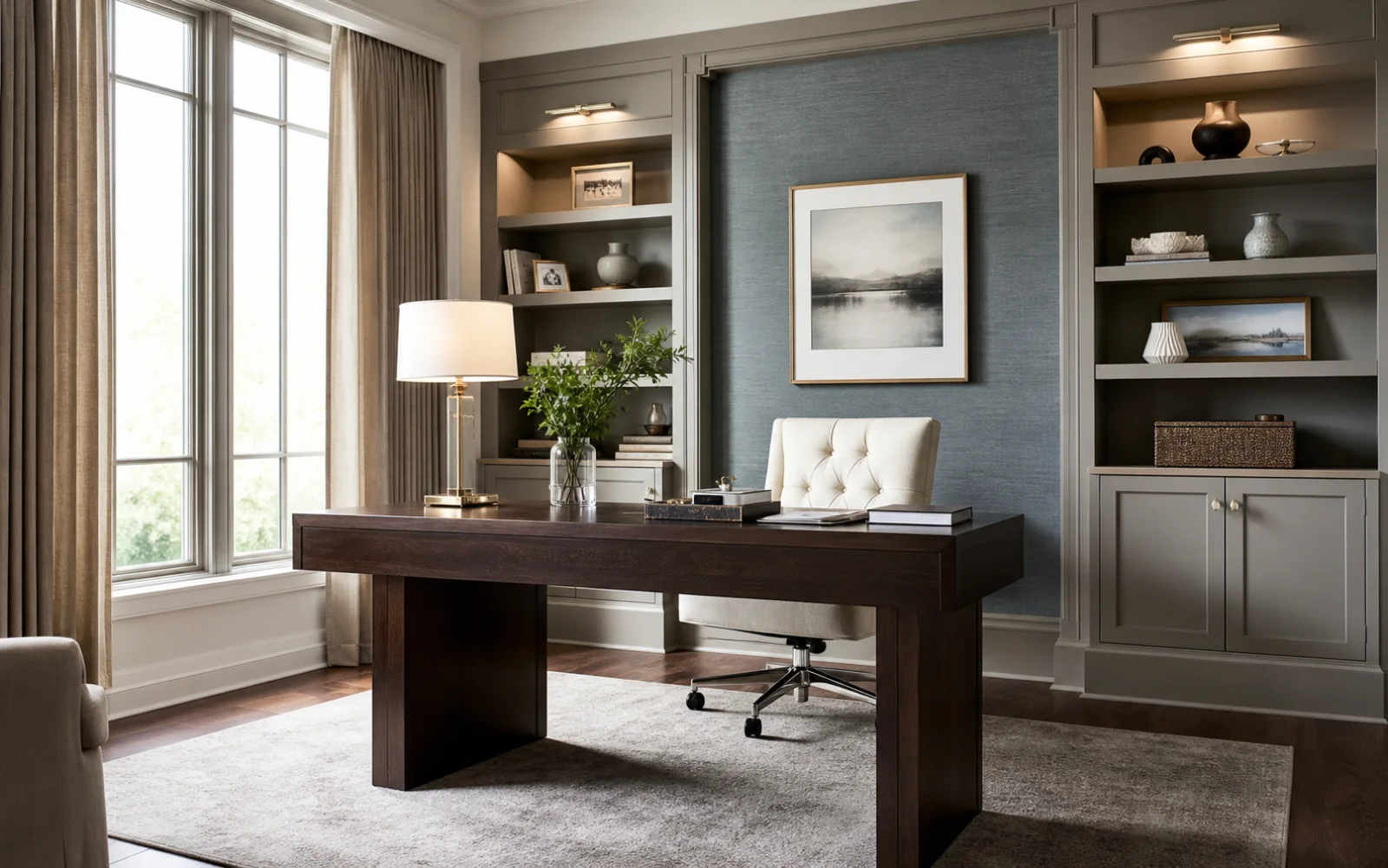
Consistent grain on tables and casework gives the room traditional weight with clean edges.
A soft finish feels refined but remains quieter and more practical than highly polished stone.
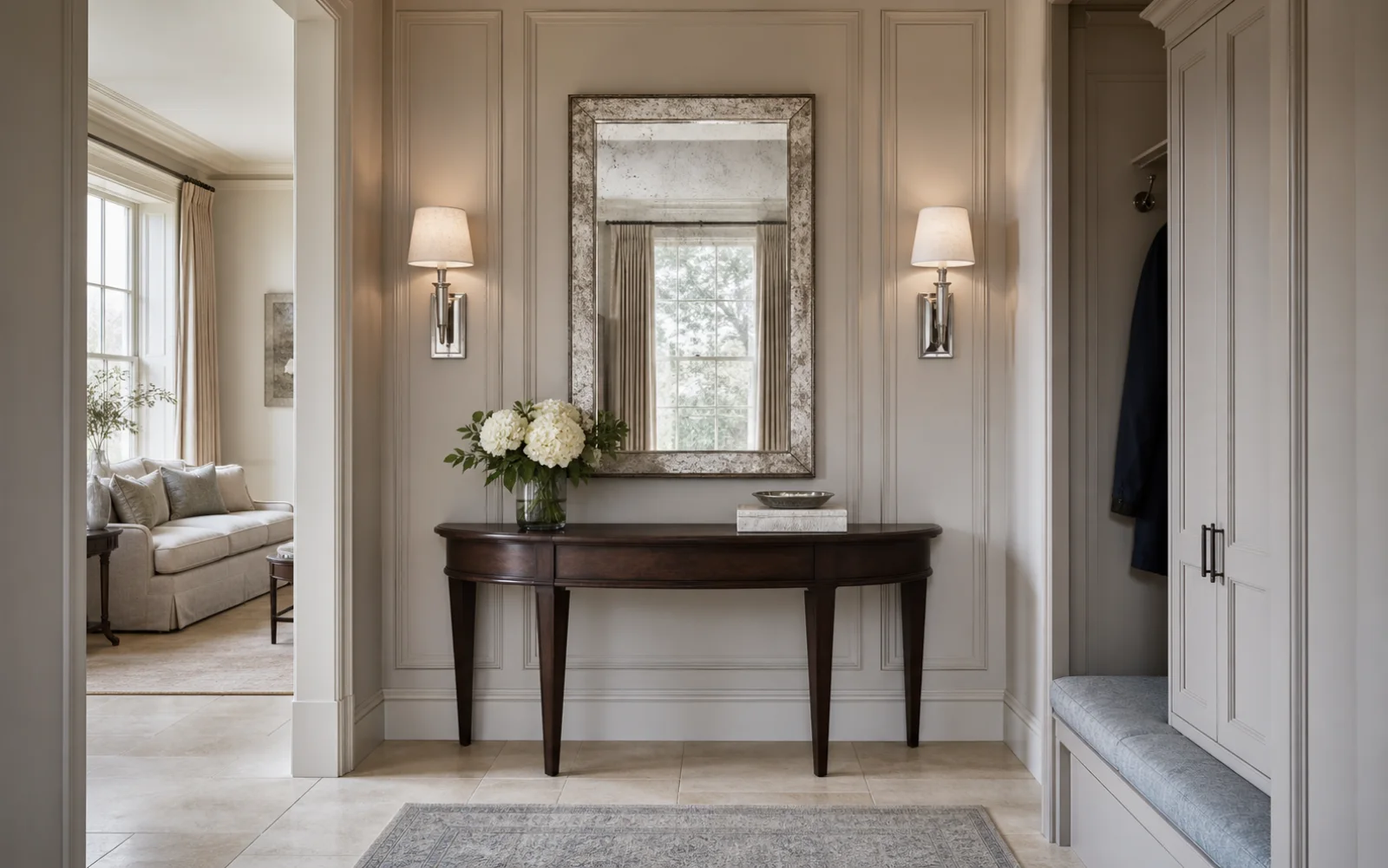
Cool metal sharpens the palette; mottled mirror adds depth without a pristine reflective wall.
Resolve proportion and balance before shopping for glamorous finishes. The style feels convincing when reflection supports an already composed room.
Use a window, fireplace, table or bed to establish the main axis and furniture placement.
Add molding or inset cabinetry with simplified profiles and consistent spacing.
Introduce walnut through one major table, island or pair of chests rather than scattered dark accents.
Repeat nickel or glass through lamps, sconces or hardware, then stop before every surface reflects.
When the room feels wrong, change the underlying decision before adding more decor.
Keep the layout balanced but vary silhouettes, textiles and smaller tables.
Add dark walnut and one muted blue-gray or green textile family.
Remove mirrored casegoods and crystal accents; retain one mirror and coordinated metal details.
Reduce molding depth, simplify profiles and increase quiet wall space.
Transitional glam is a matter of degree: more polished than Transitional, more classically ordered than Modern Glam and less theatrical than Hollywood Regency.
More sculptural, asymmetric and expressive through bold curves, velvet and statement lighting.
Choose transitional glam for quieter symmetry and classically grounded proportions.
Pairs, panel molding and walnut replace the dominant contemporary silhouette.
More neutral and understated, with less deliberate reflection and textile sheen.
Choose transitional glam when lighting, mirror and polished metal should add a visible formal lift.
Nickel, aged mirror and velvet sharpen the familiar transitional framework.
More architectural and minimalist, emphasizing premium surfaces and precise monolithic detailing.
Choose transitional glam when classic room order and familiar furniture profiles matter.
Molding, symmetry and tapered forms replace seamless planes and sculpted stone volumes.
More theatrical, high-contrast and decorative through lacquer, pattern and historical references.
Choose transitional glam for calm longevity and a restrained reflective layer.
Muted color and balanced pairs replace graphic pattern and showpiece decoration.
Buy pieces that establish proportion before sparkle. A well-sized table, headboard or console will carry the room longer than decorative glamour alone.
Choose a classic width and clean arms; let pillows and lamps supply the subtle sheen.
A shallow curve references tradition without ornate carving or deep tufting.
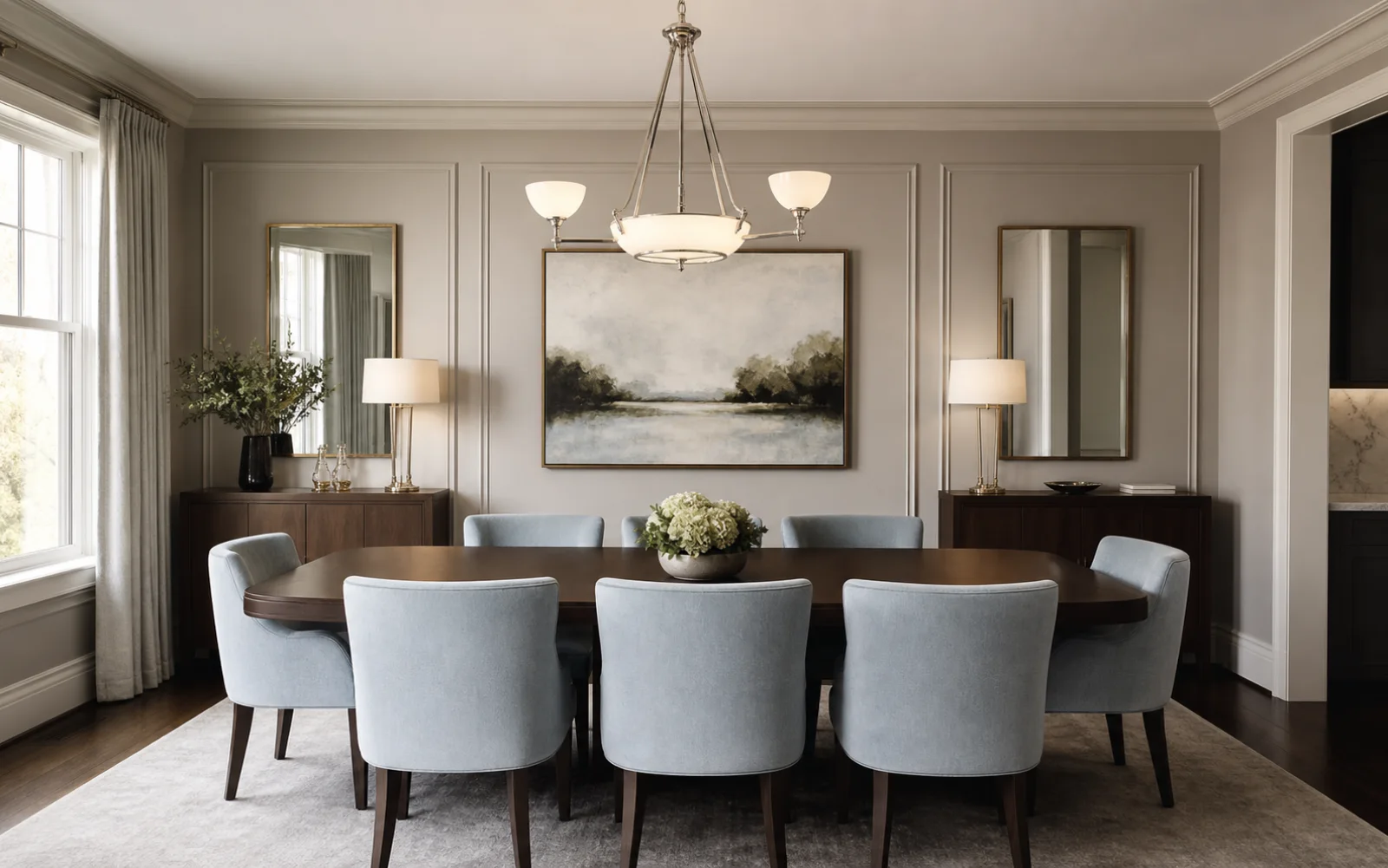
A substantial dark plane grounds pale chairs, mirror and polished lighting.
Integrated light adds polish while closed lower storage protects the balanced composition.
Pair a durable matte top with a dark timber base and limited nickel hardware.
Use one centered reflective plane and check that it frames a calm view.