01
Inset Ivory
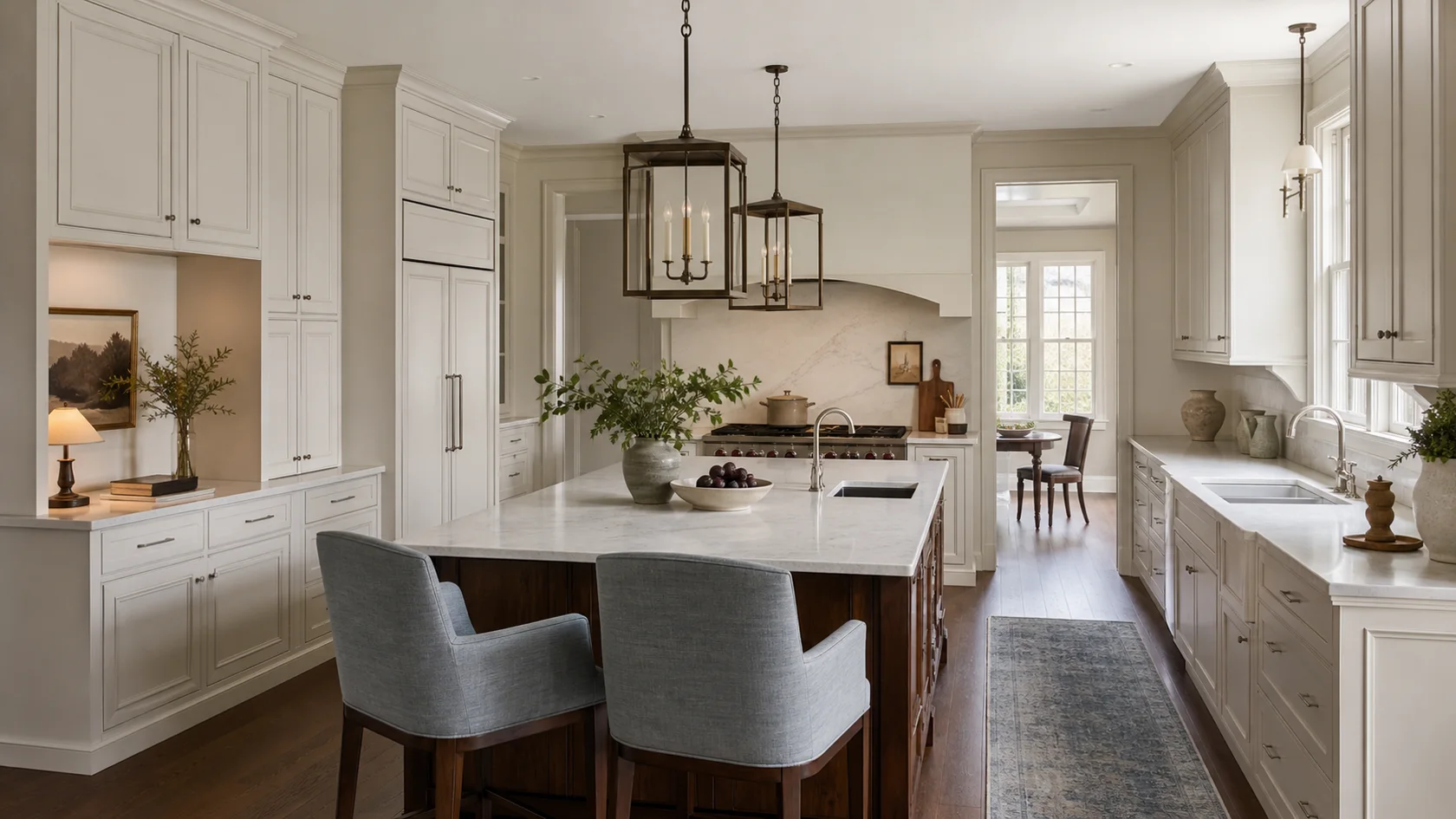
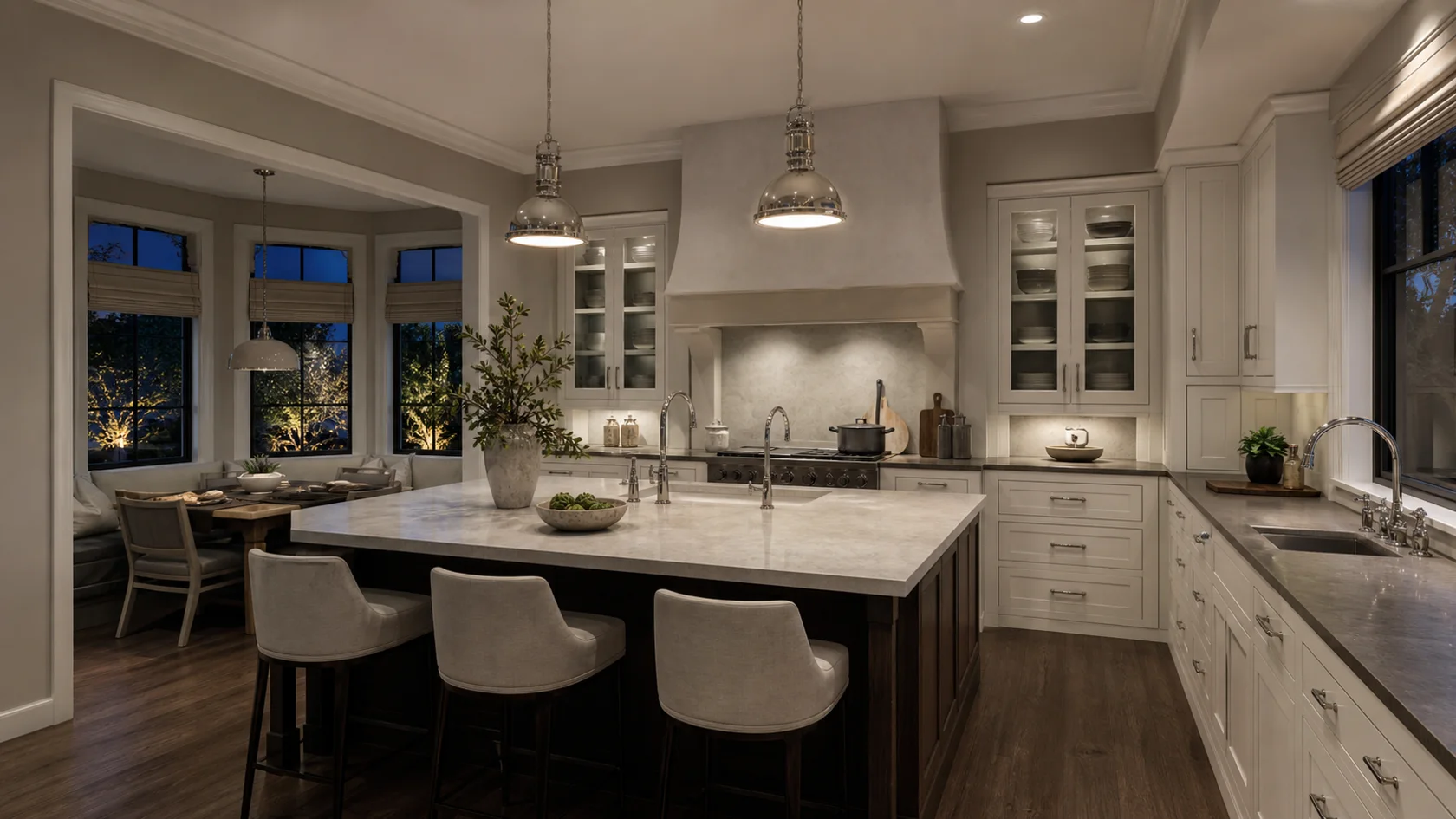
A centered composition provides classical calm while simplified furniture keeps the room from feeling period-bound. Verify work aisles, appliance openings and uninterrupted task light around the preparation zone.
Five materially and spatially different transitional glam approaches to the kitchen, from a clear daytime plan to a controlled evening mood.
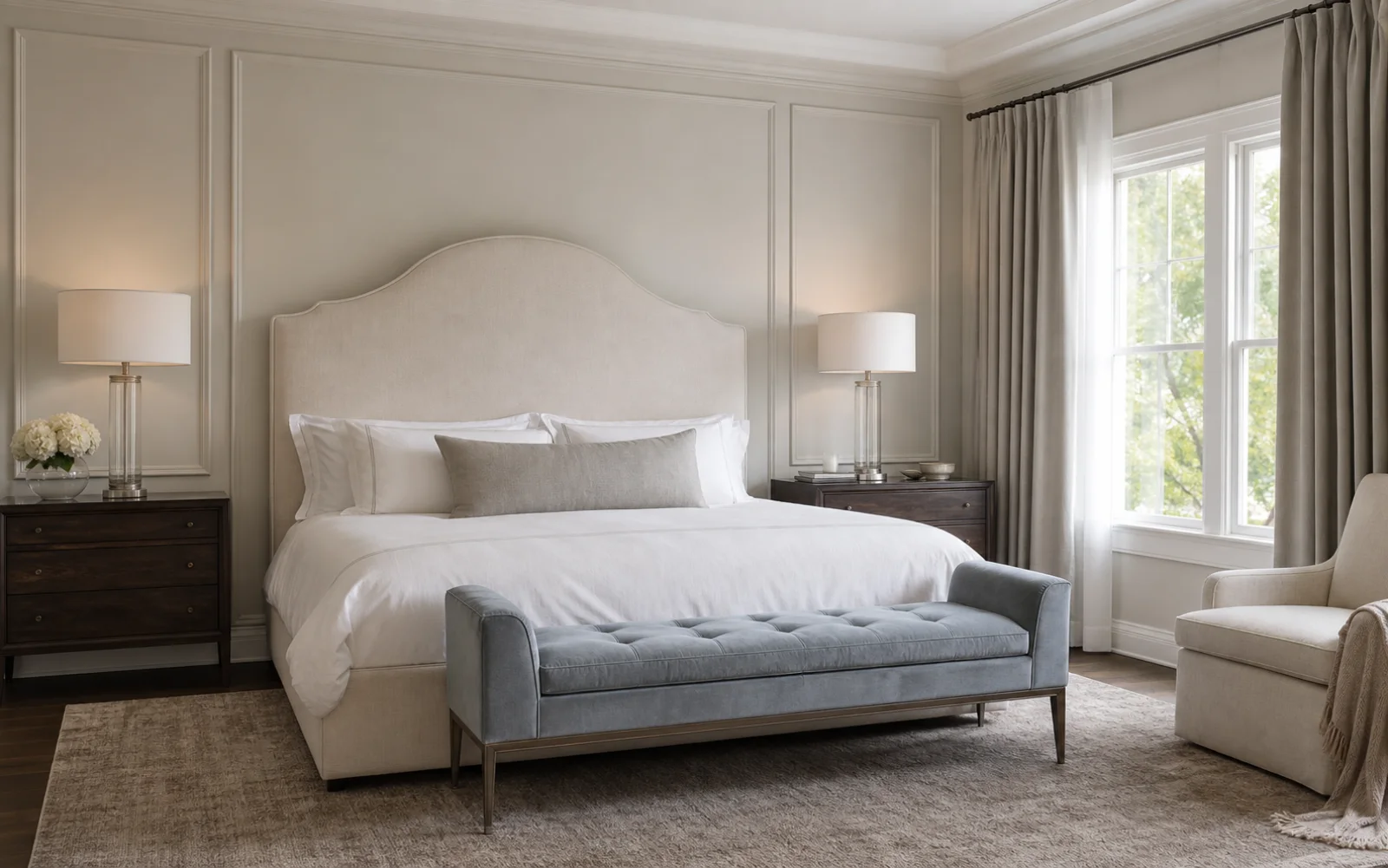
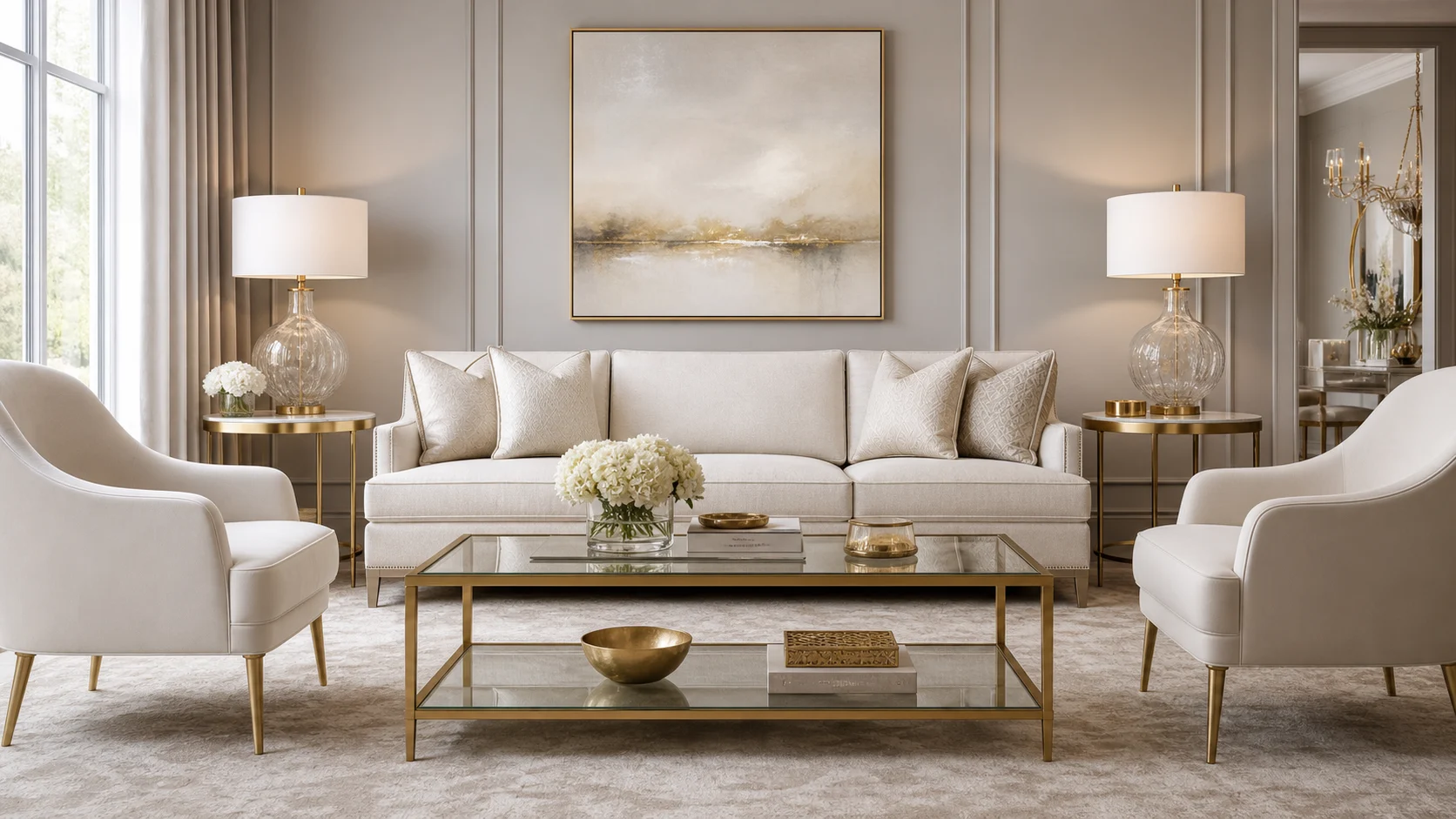
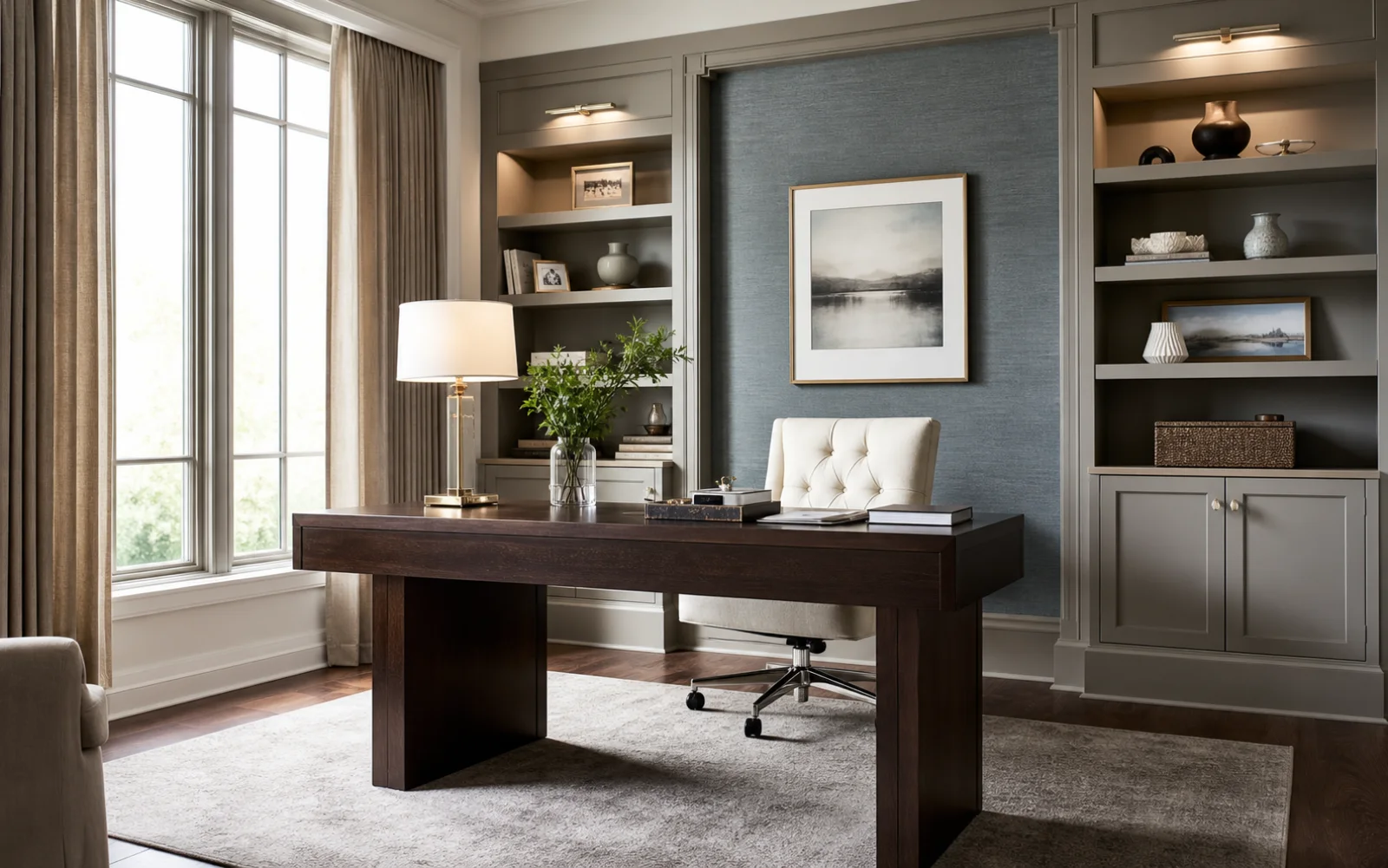
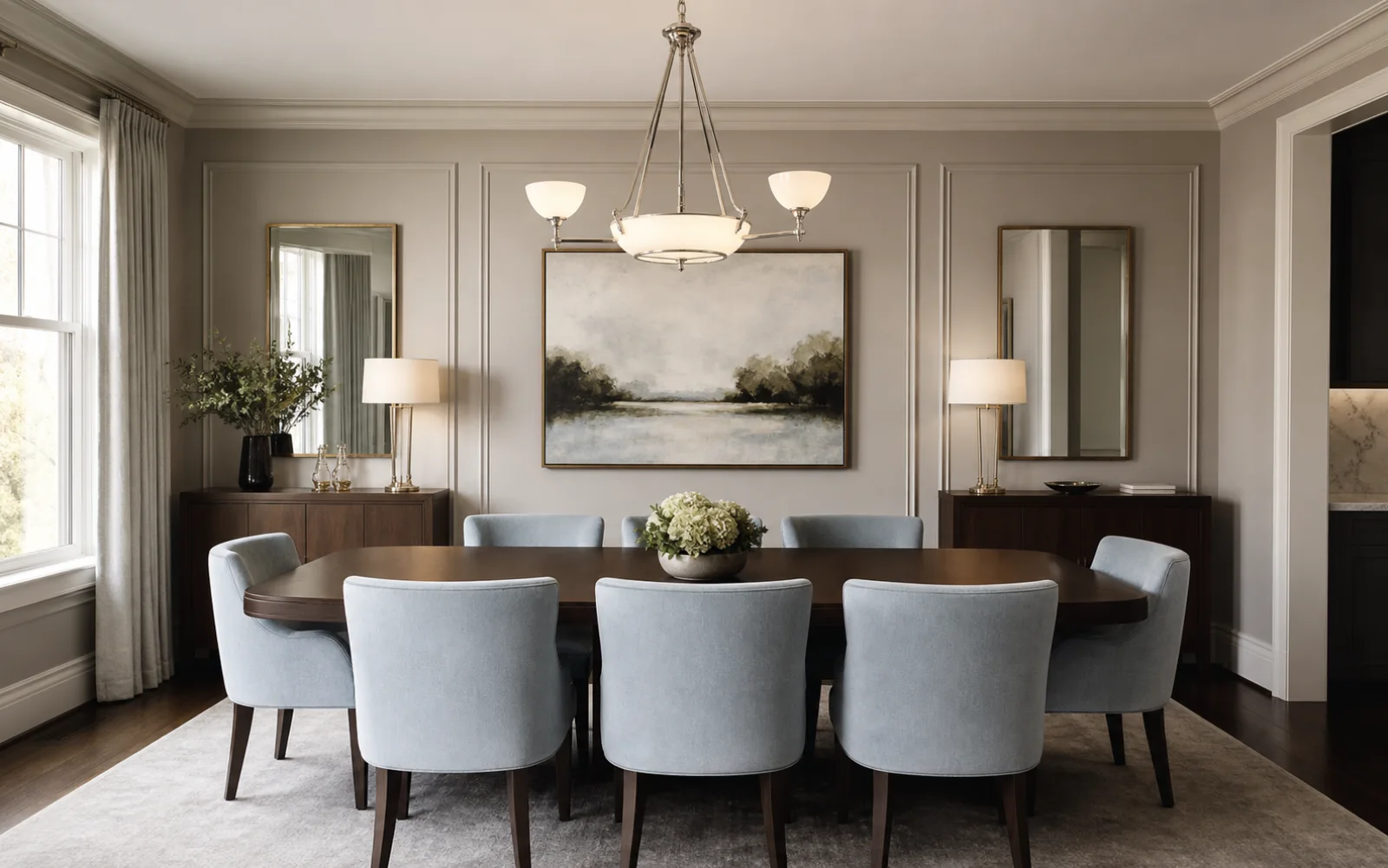
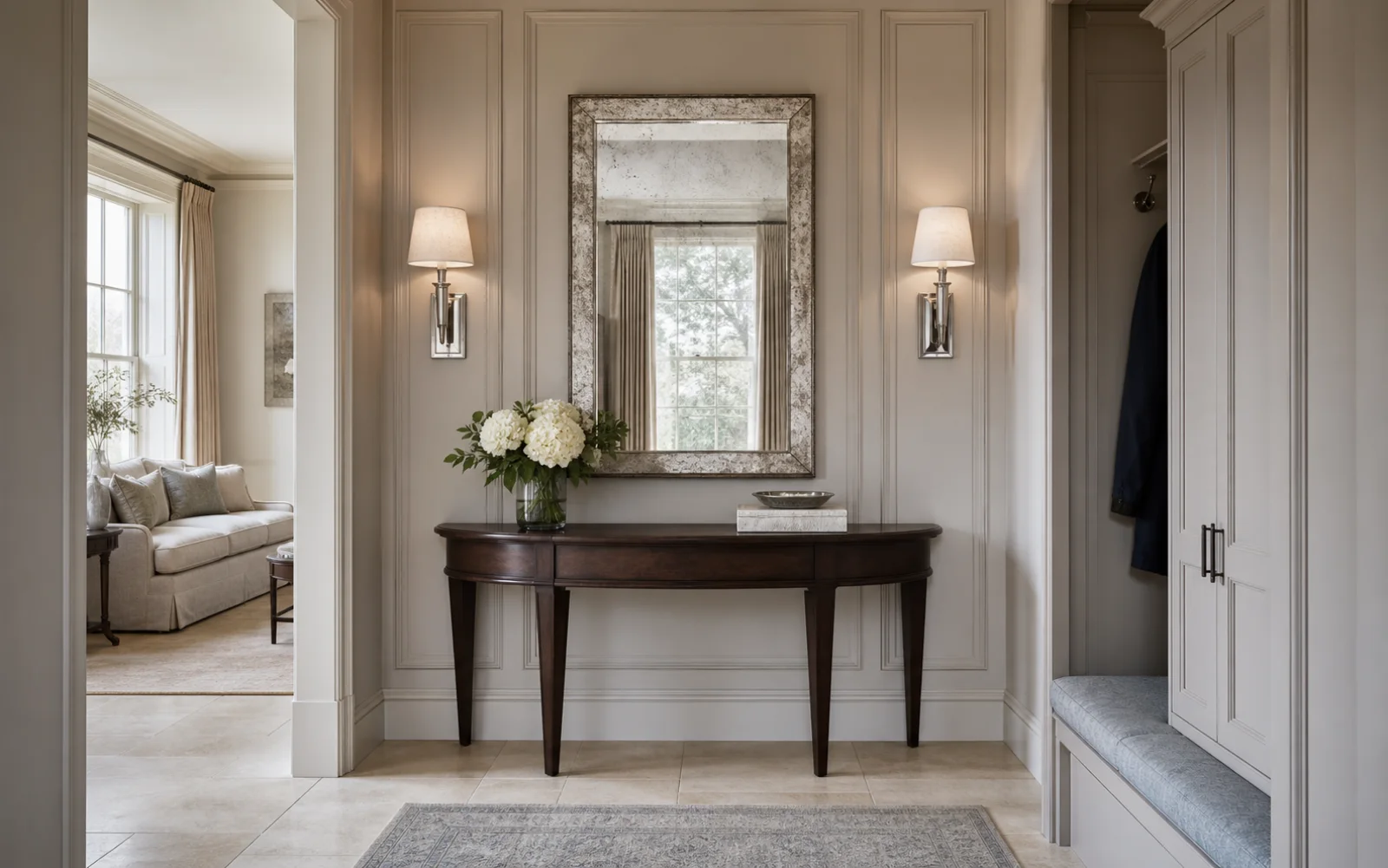
Transitional Glam refreshes classic proportion and balanced layouts with simplified profiles, tactile neutrals and a restrained layer of nickel, glass or aged mirror. In the kitchen, that identity must still support safe preparation, useful storage and durable surfaces arranged around a clear workflow.
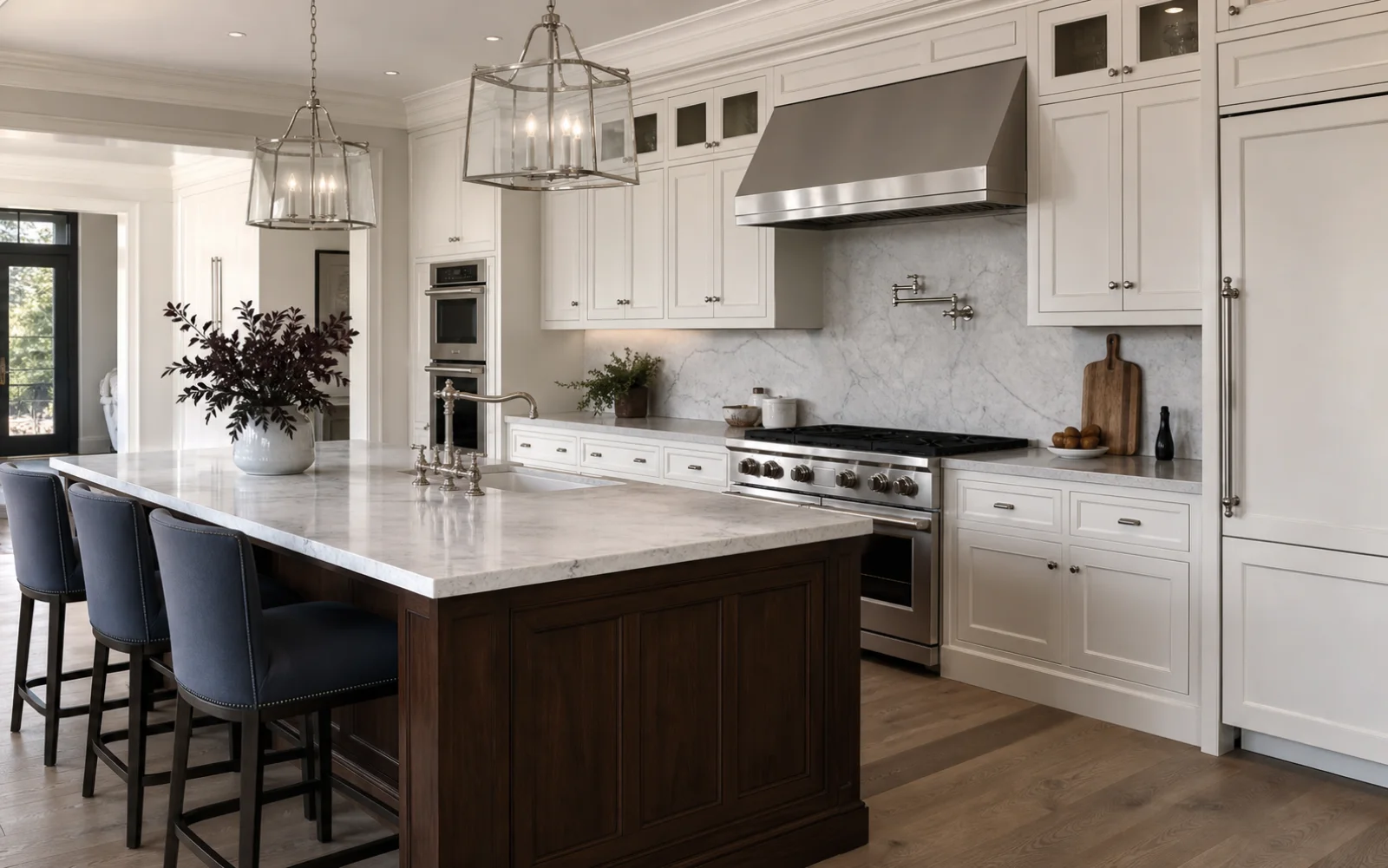
Inset cabinetry and a darker island supply classic order; honed stone and limited polished hardware keep the working room current. Establish the architectural axis and useful furniture first; add polish through pairs, fine edges and lighting rather than mirrored casegoods.
Use these examples to choose the version of the style that fits your architecture, light and square footage.
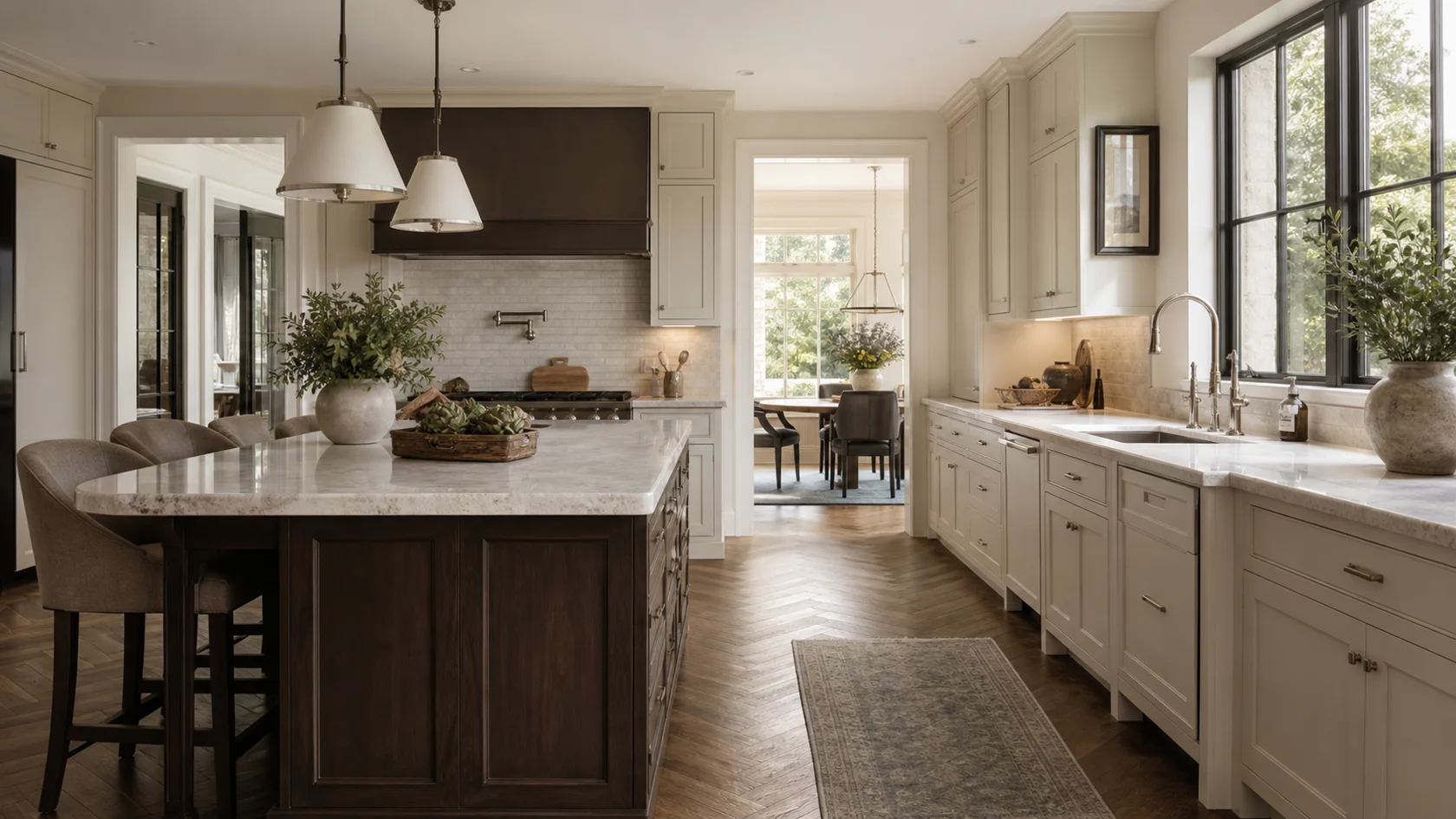
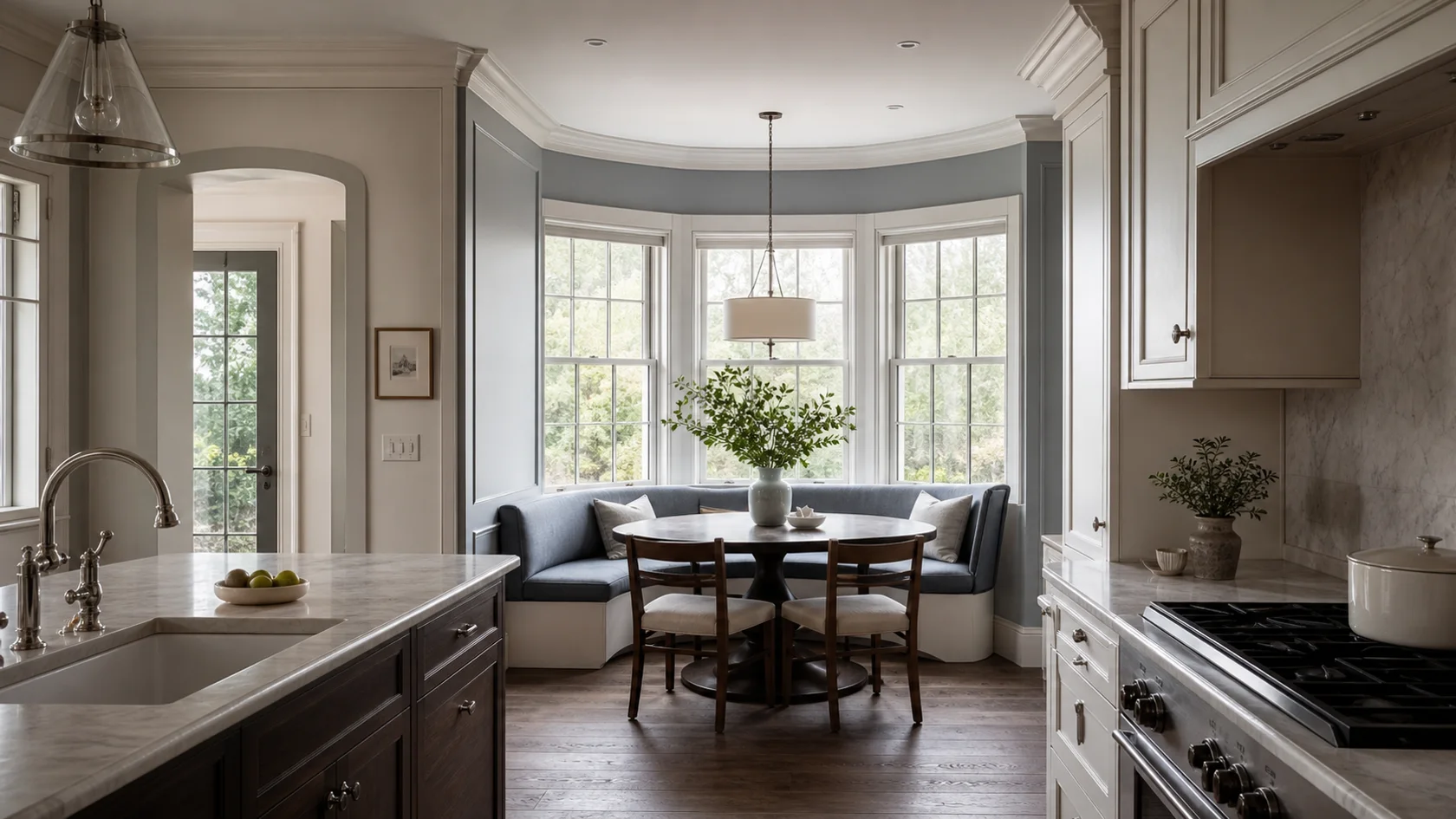
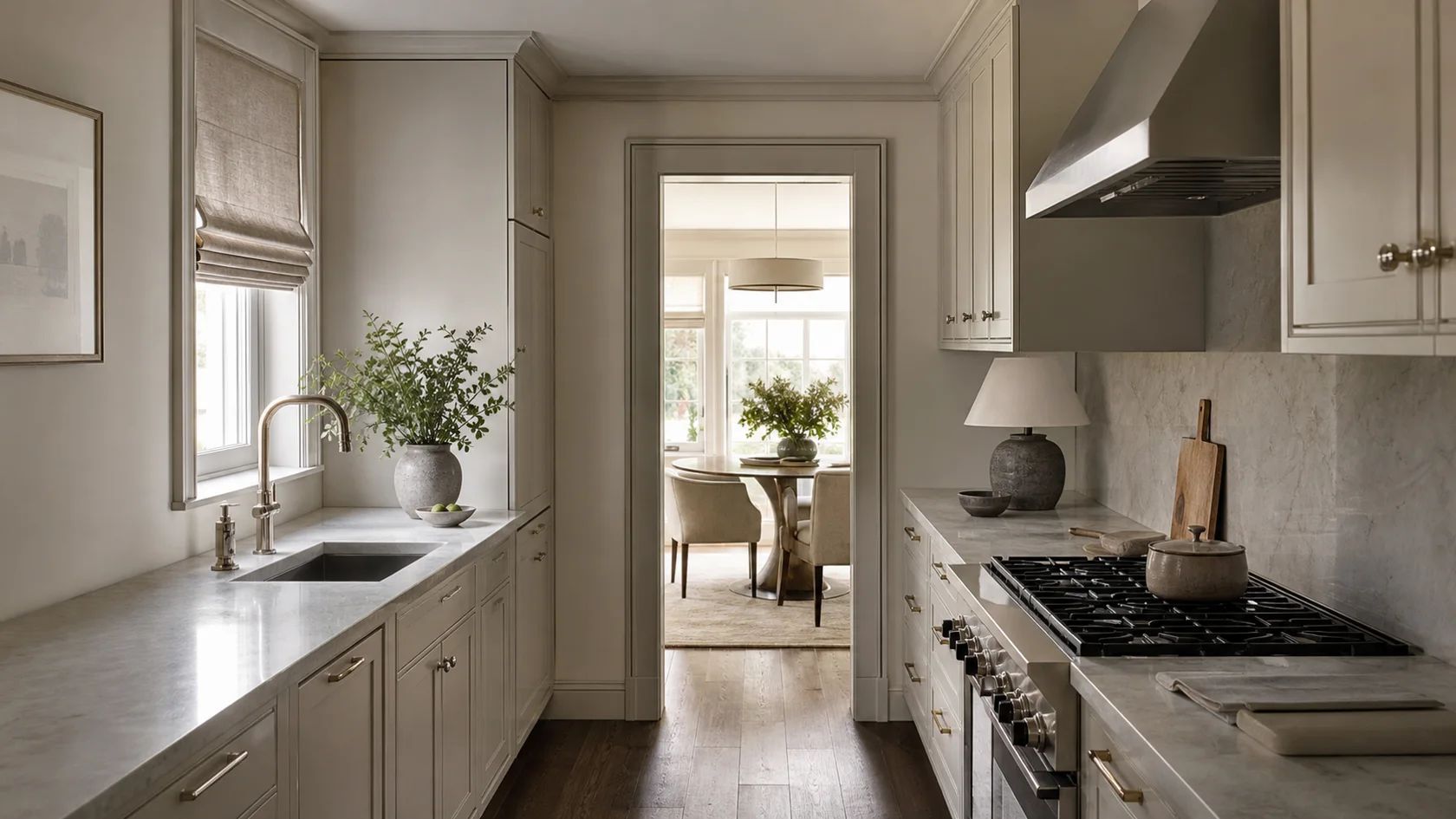
Use the style where it helps the room work: seating, circulation, focal point and material balance.
Keep the sink, cooking zone and cold storage connected without routing household traffic through the main prep area.
Check appliance doors, drawer pulls and seated overhangs before fixing the island or peninsula footprint.
Let one shelf or niche hold useful objects while full-height storage absorbs pantry goods and small appliances.
Worktop light should be continuous and shadow-free; pendants can then provide atmosphere rather than basic visibility.
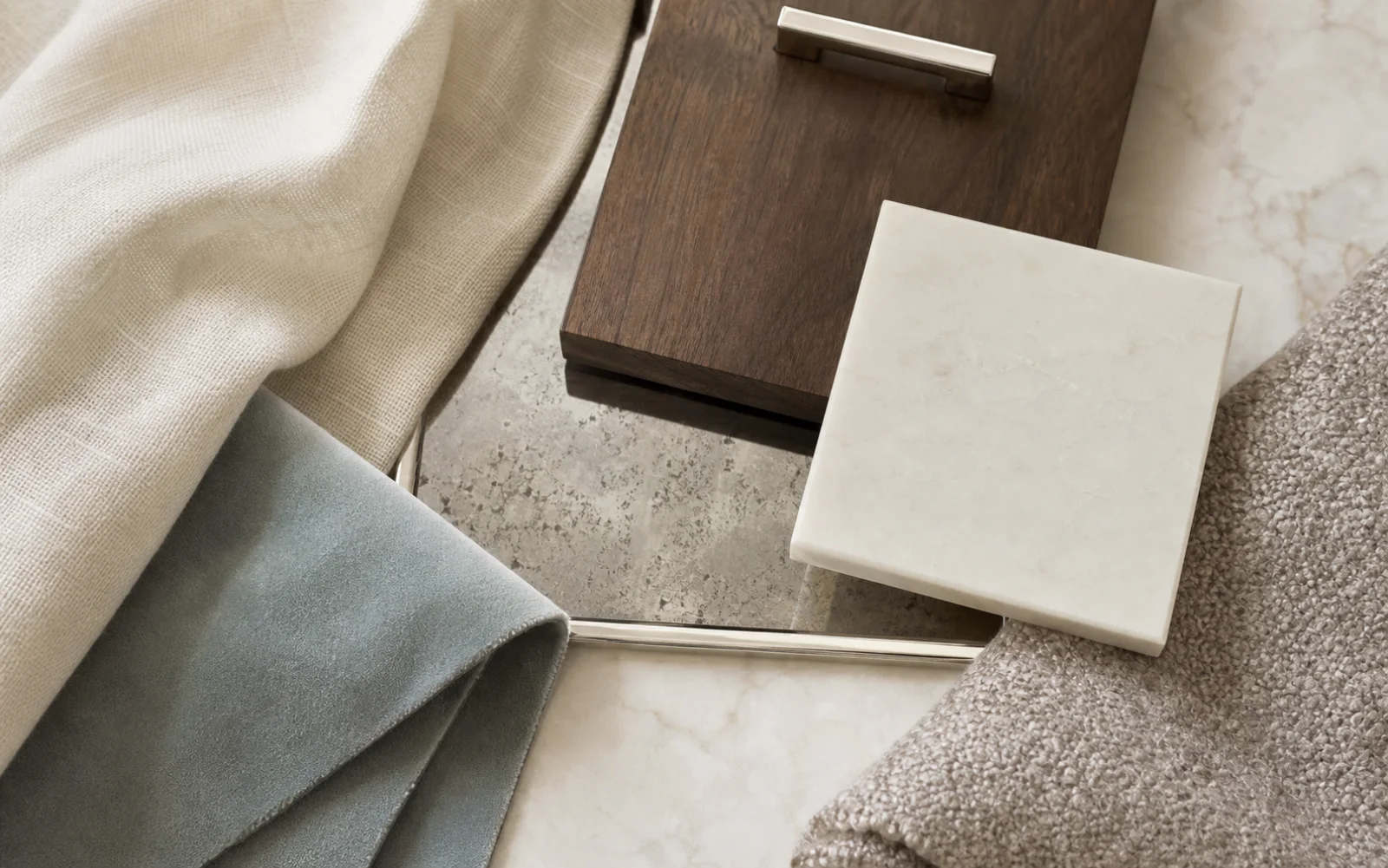
Use ivory and greige across the architecture, walnut to anchor major furniture, and blue-gray on one textile family. Nickel should catch light without becoming a dominant color.
Keeps molding and upholstery light without the coldness of stark white.
Connects pale stone, taupe wool and painted millwork.
A restrained color accent suited to benches, dining chairs or grasscloth.
Adds traditional gravity and prevents an all-neutral room from floating.
A cool, crisp highlight for lighting and hardware used in small areas.
Warm ivory and balanced greige keep molding, stone and upholstery connected.
Dark walnut should anchor one table, island or pair of chests instead of appearing as scattered accents.
Blue-gray, dusty green or muted mauve can distinguish one textile family without interrupting the room’s order.
Nickel, crystal-clear glass and aged mirror belong at eye level in lamps, sconces and hardware.
For this room, a few strong choices can carry the style better than adding more decor.
Inset cabinetry and a darker island supply classic order; honed stone and limited polished hardware keep the working room current. Confirm the cabinet system by dimensions, comfort and maintenance before selecting its decorative finish.
Establish the architectural axis and useful furniture first; add polish through pairs, fine edges and lighting rather than mirrored casegoods.
Establish the architectural axis and useful furniture first; add polish through pairs, fine edges and lighting rather than mirrored casegoods.
Establish the architectural axis and useful furniture first; add polish through pairs, fine edges and lighting rather than mirrored casegoods.
Use these checks to keep the transitional glam character clear without compromising how the kitchen works.
Reduce its depth or use a freestanding table when the working aisles cannot remain clear.
Display only frequently used pieces and keep bulk food or appliances behind doors.
Use a quieter cabinet field and give the worktop or island one clear material role.