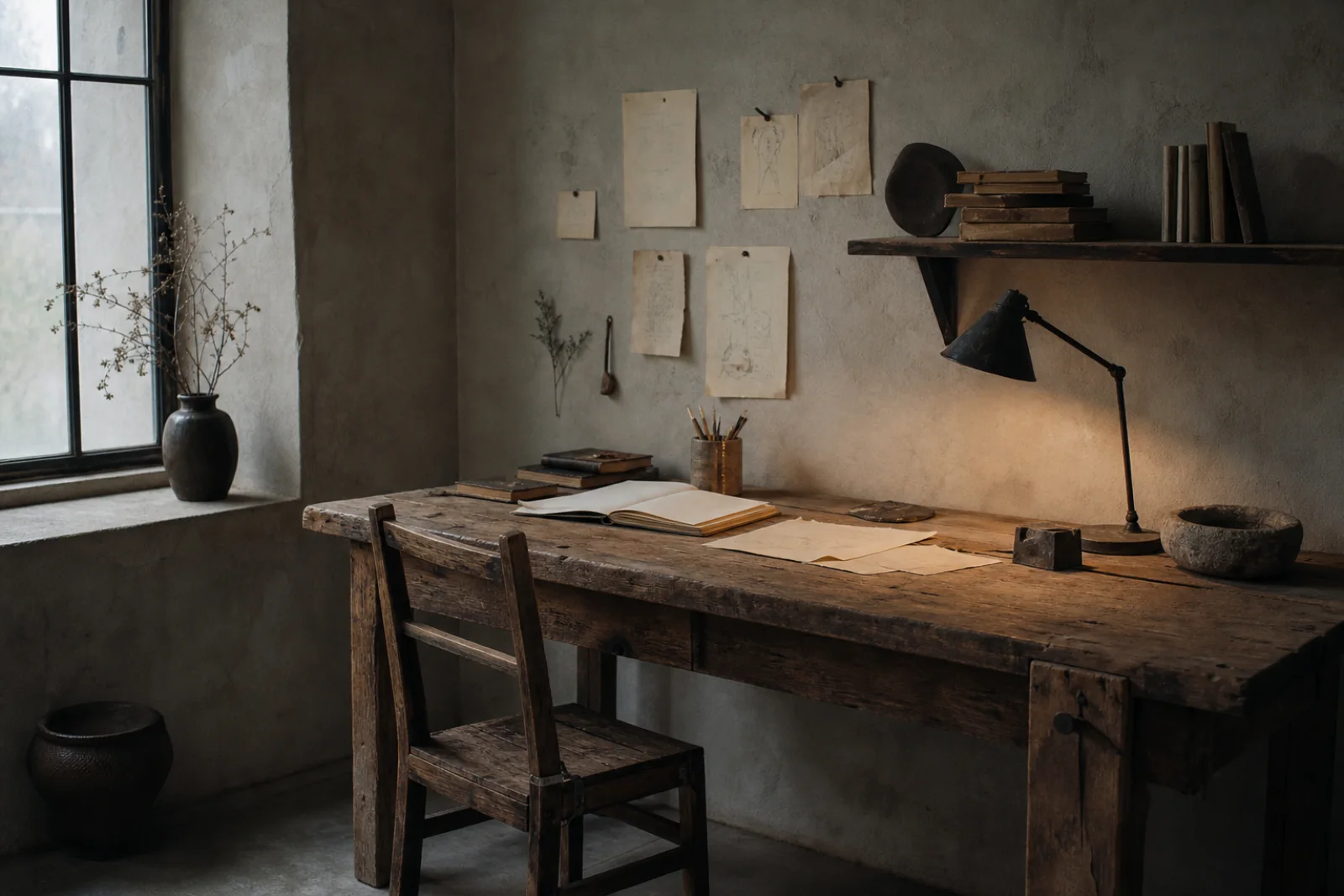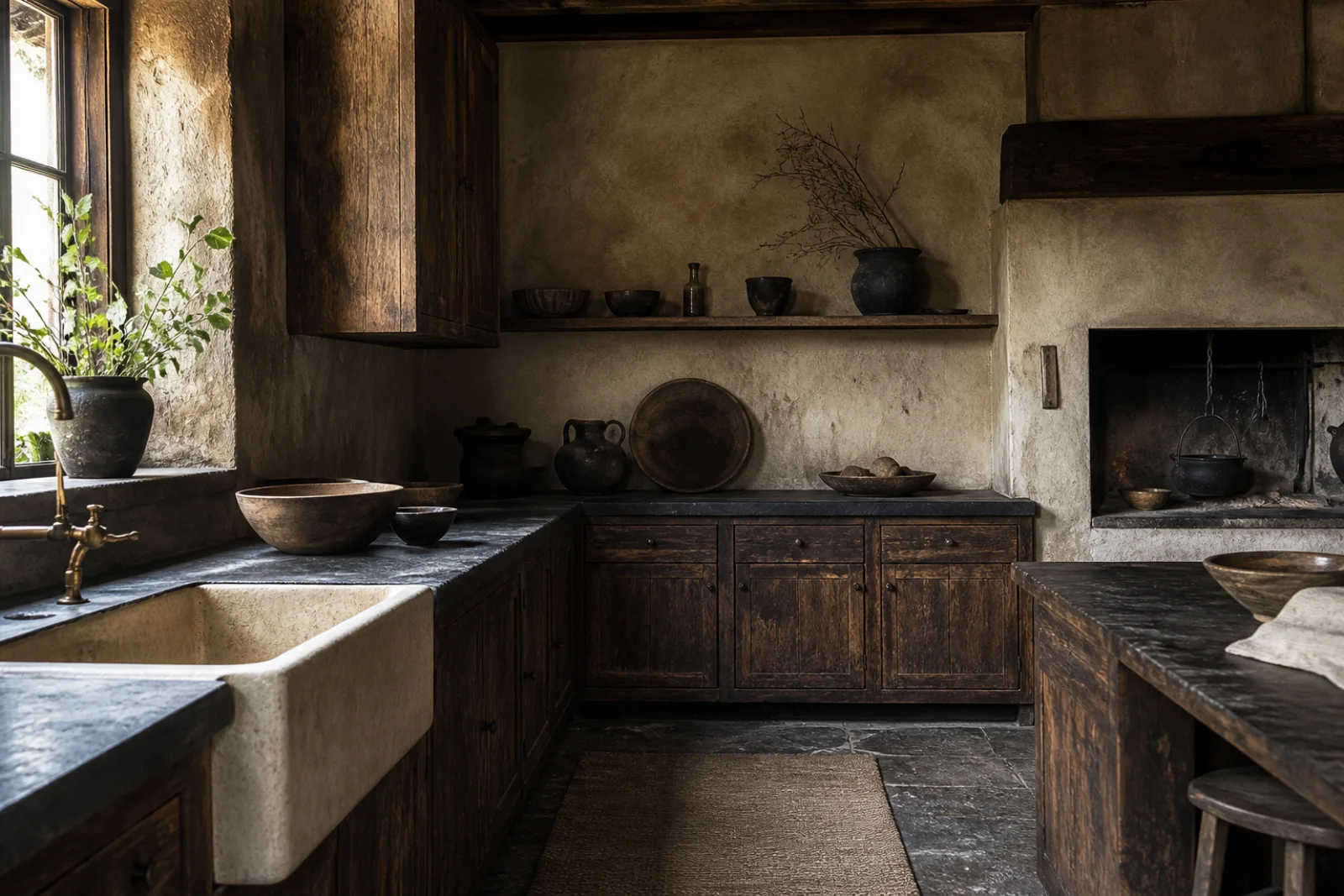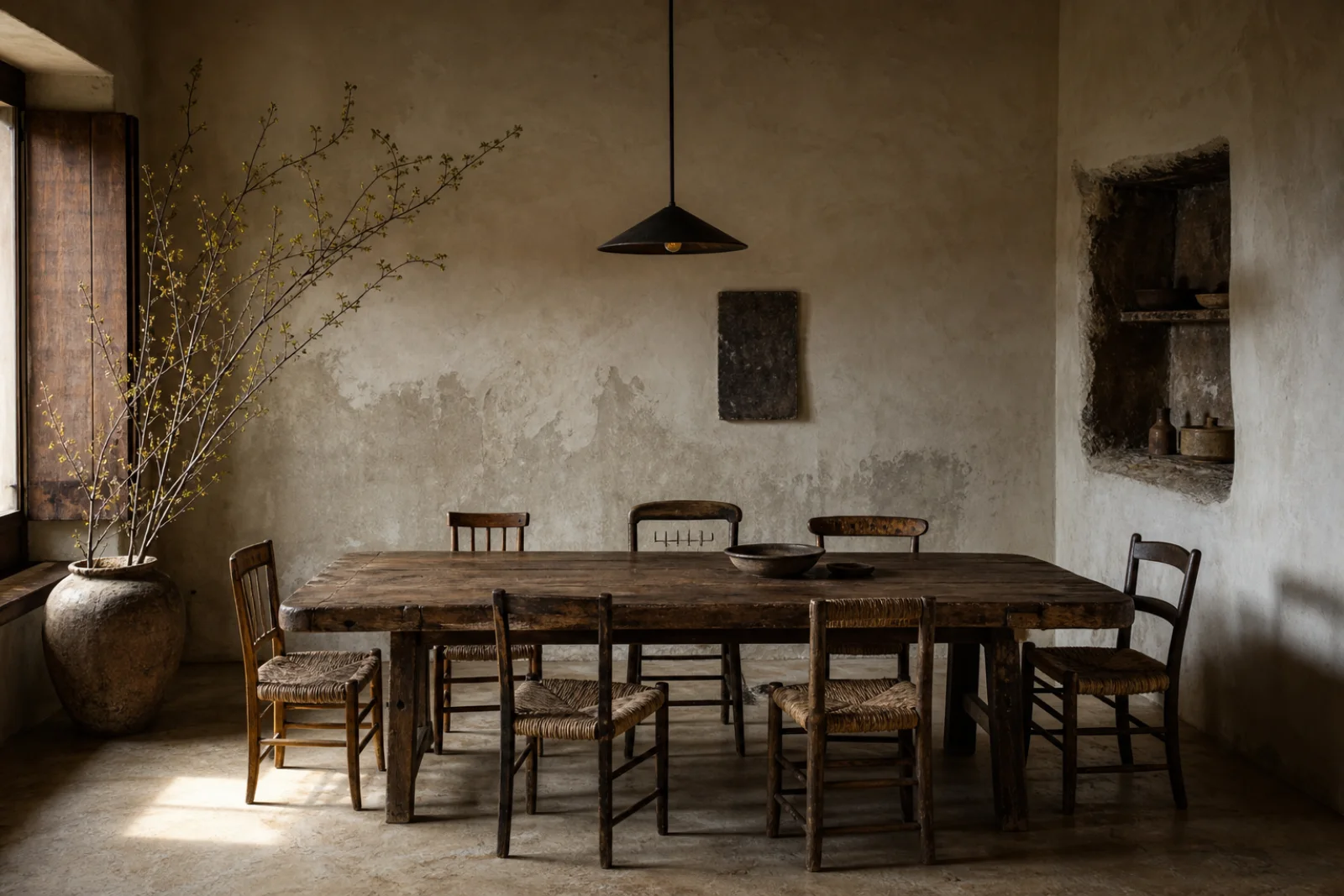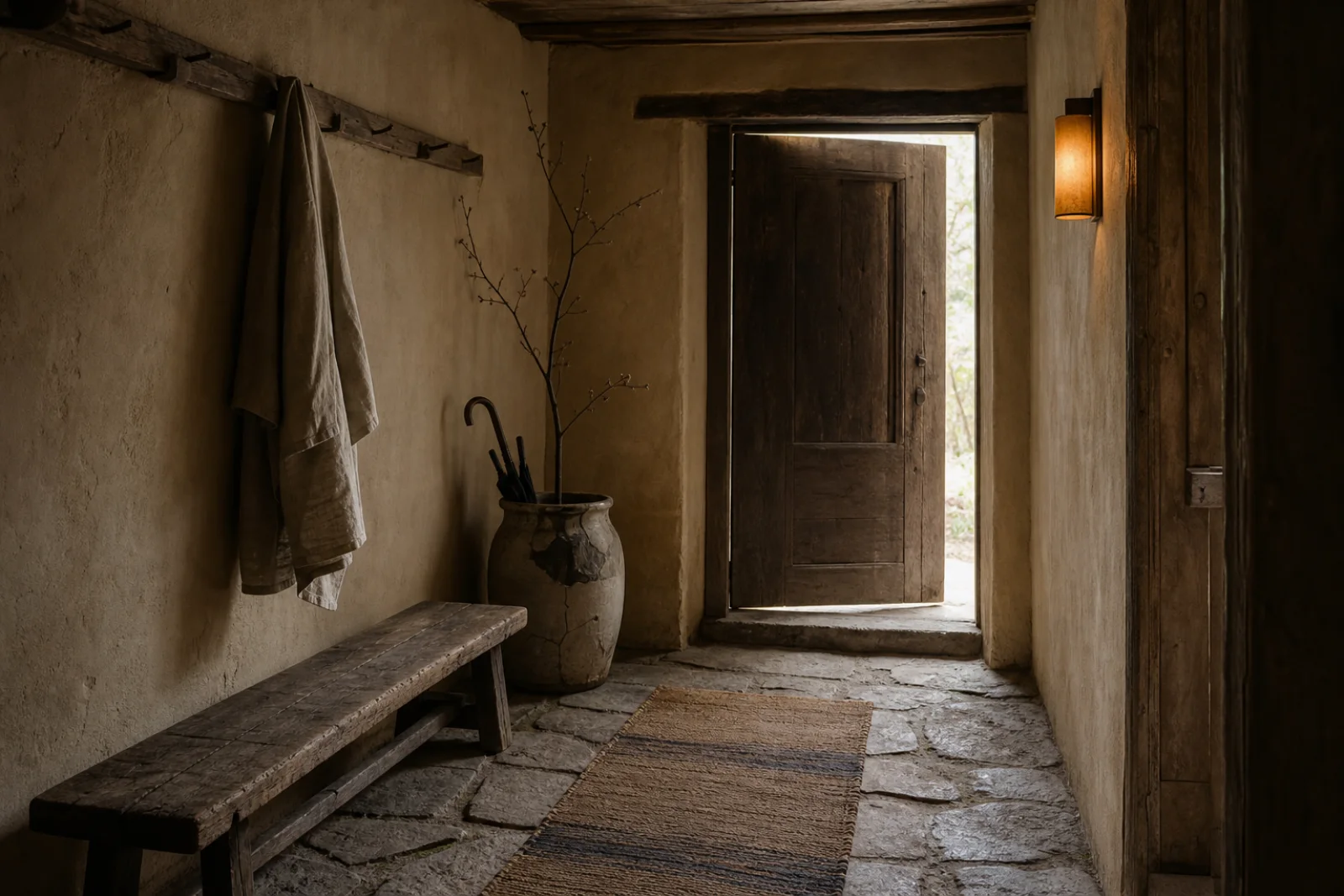
01
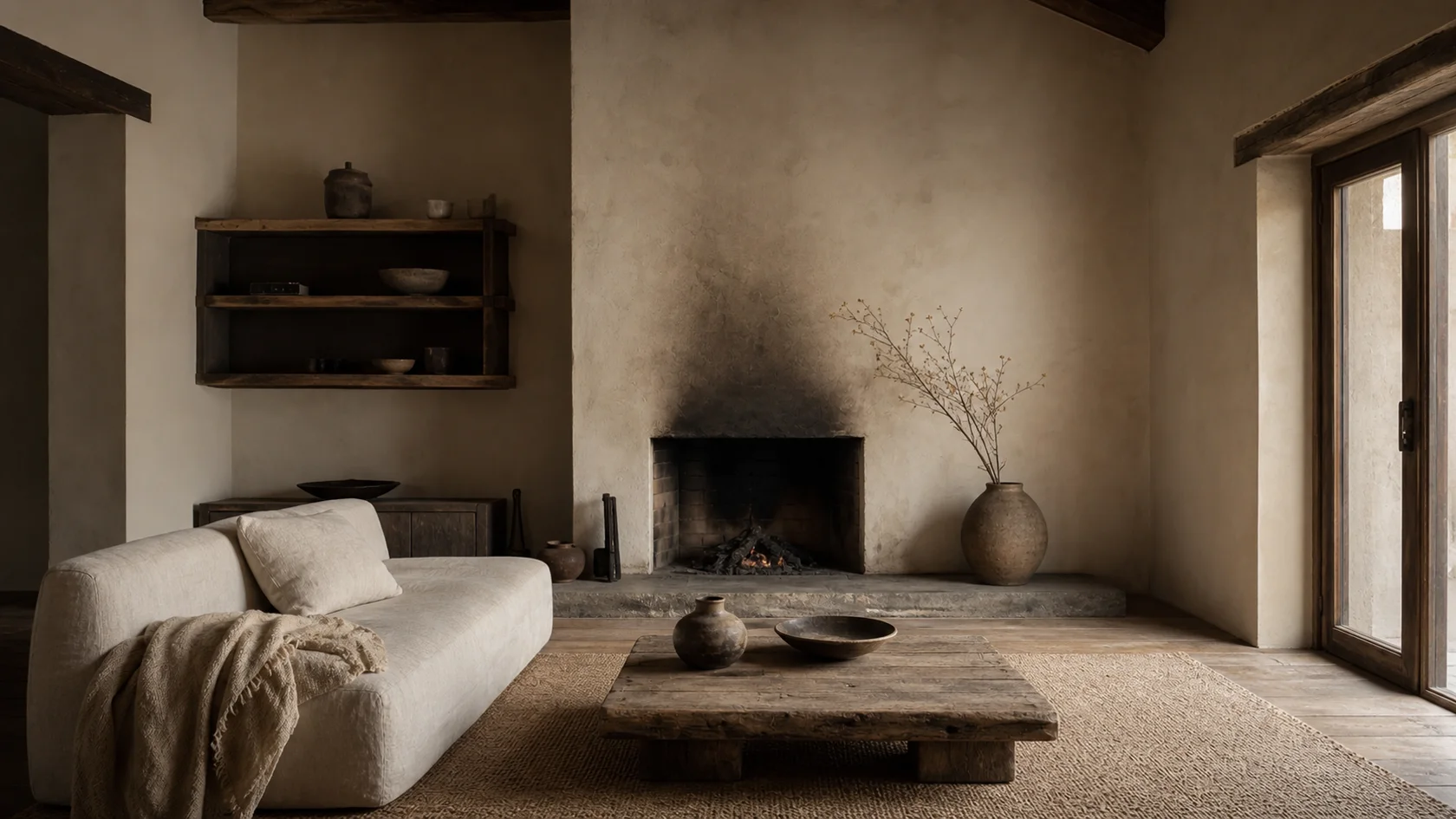
Hearth
One irregular crafted element leads the composition and gives age a useful, legible role. Keep every seat within easy reach of the central table and outside the main walking route.
Five useful ways to translate wabi-sabi into a living room, with different footprints, light conditions and storage needs.
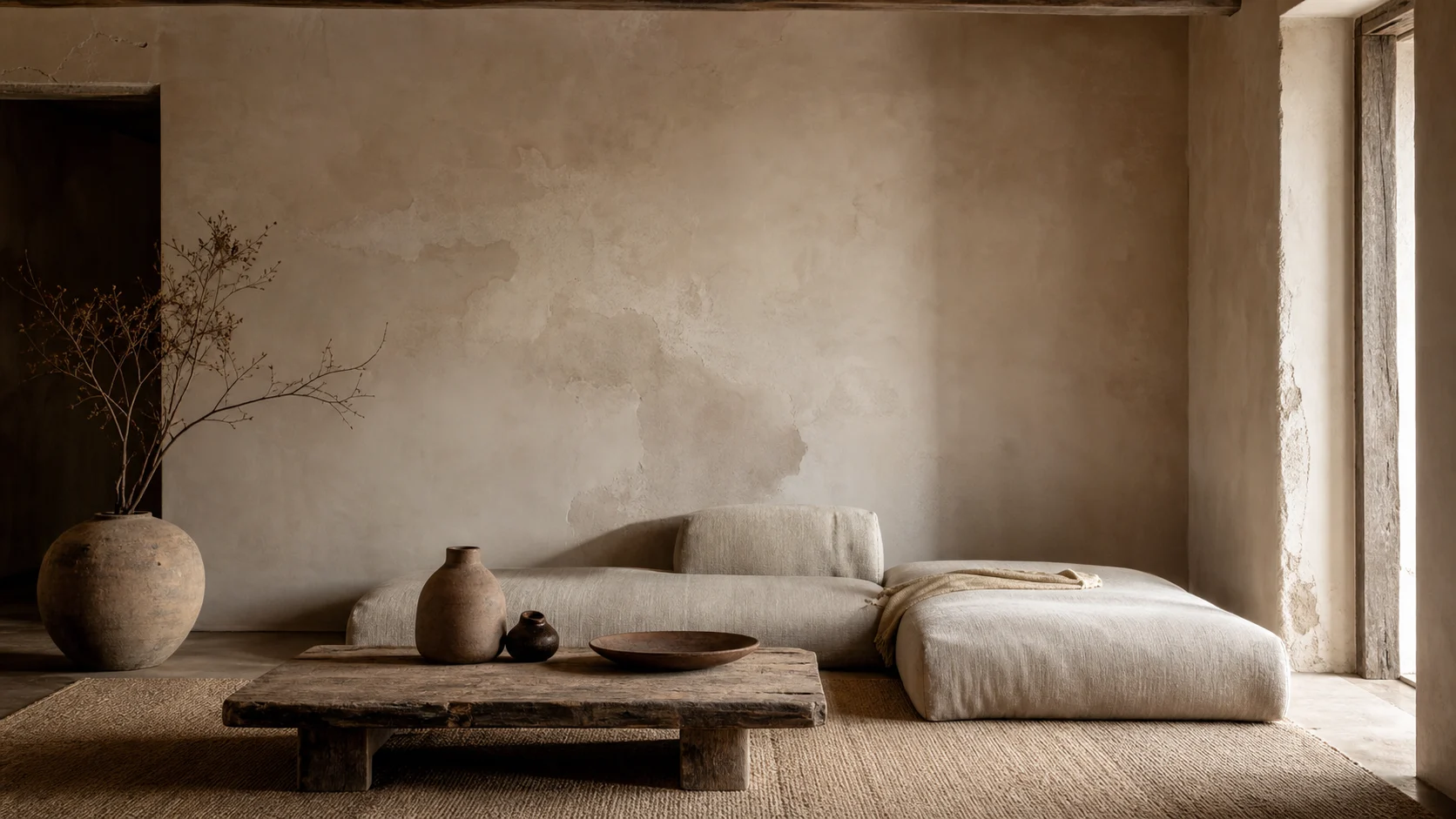
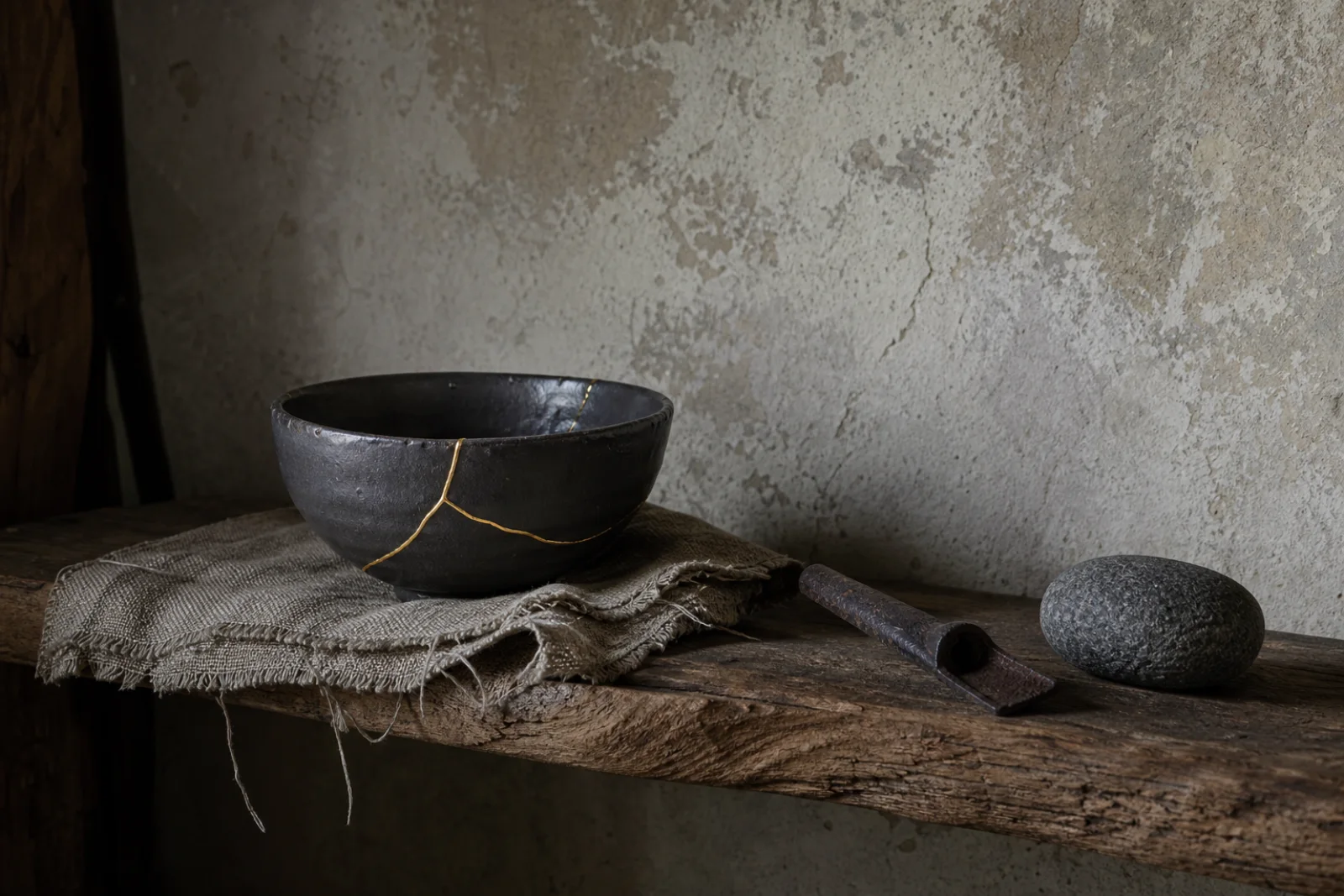
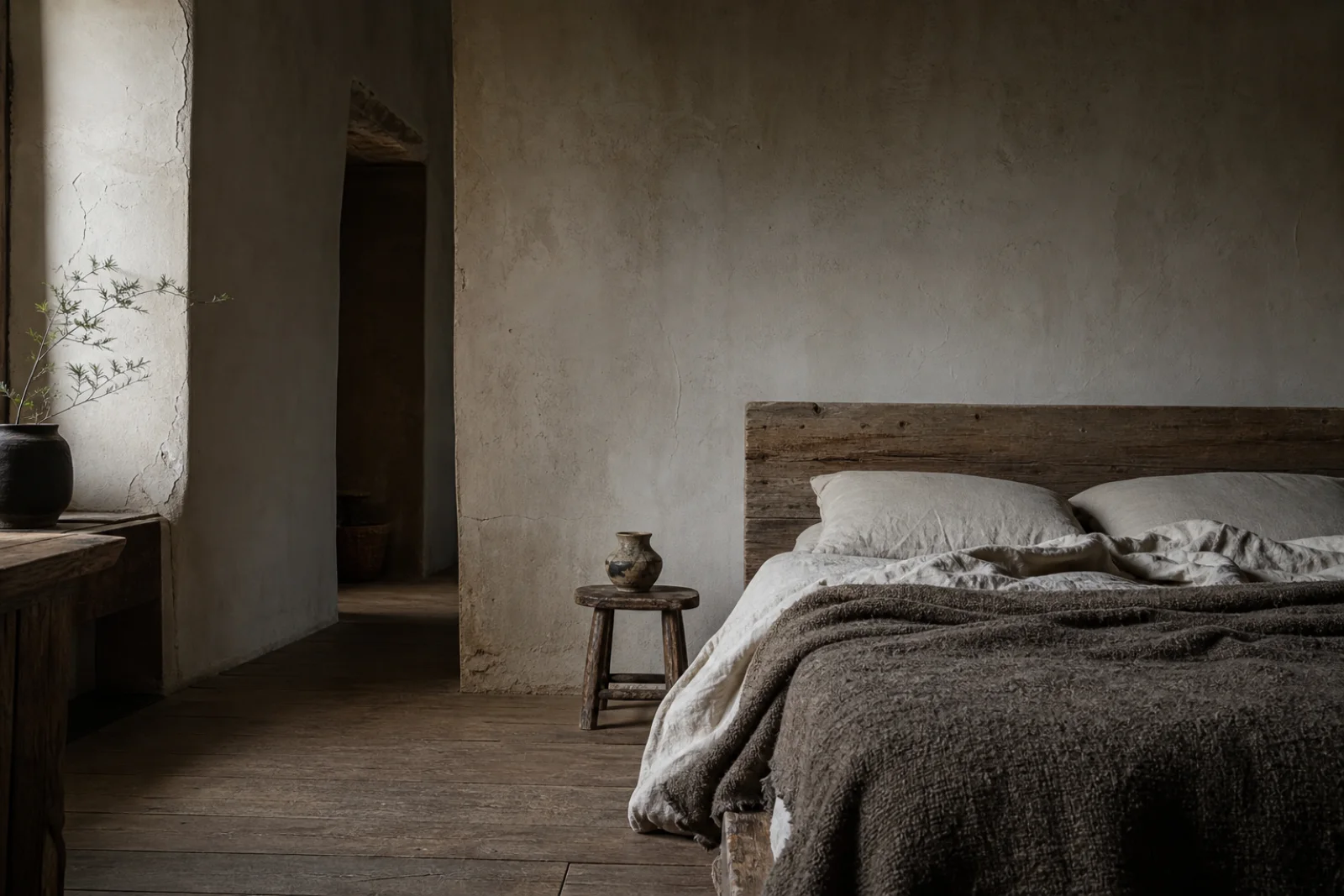
A wabi-sabi living room works when the style supports conversation, everyday comfort and one readable focal point. Wabi-Sabi builds quiet around irregular craft, honest age and useful objects whose surfaces improve through touch.
Allow asymmetry and patina to remain visible, but keep structure safe, circulation clear and object count restrained. The five variations below change the plan and architecture, not simply the camera angle or accessory color.
Use these examples to choose the version of the style that fits your architecture, light and square footage.
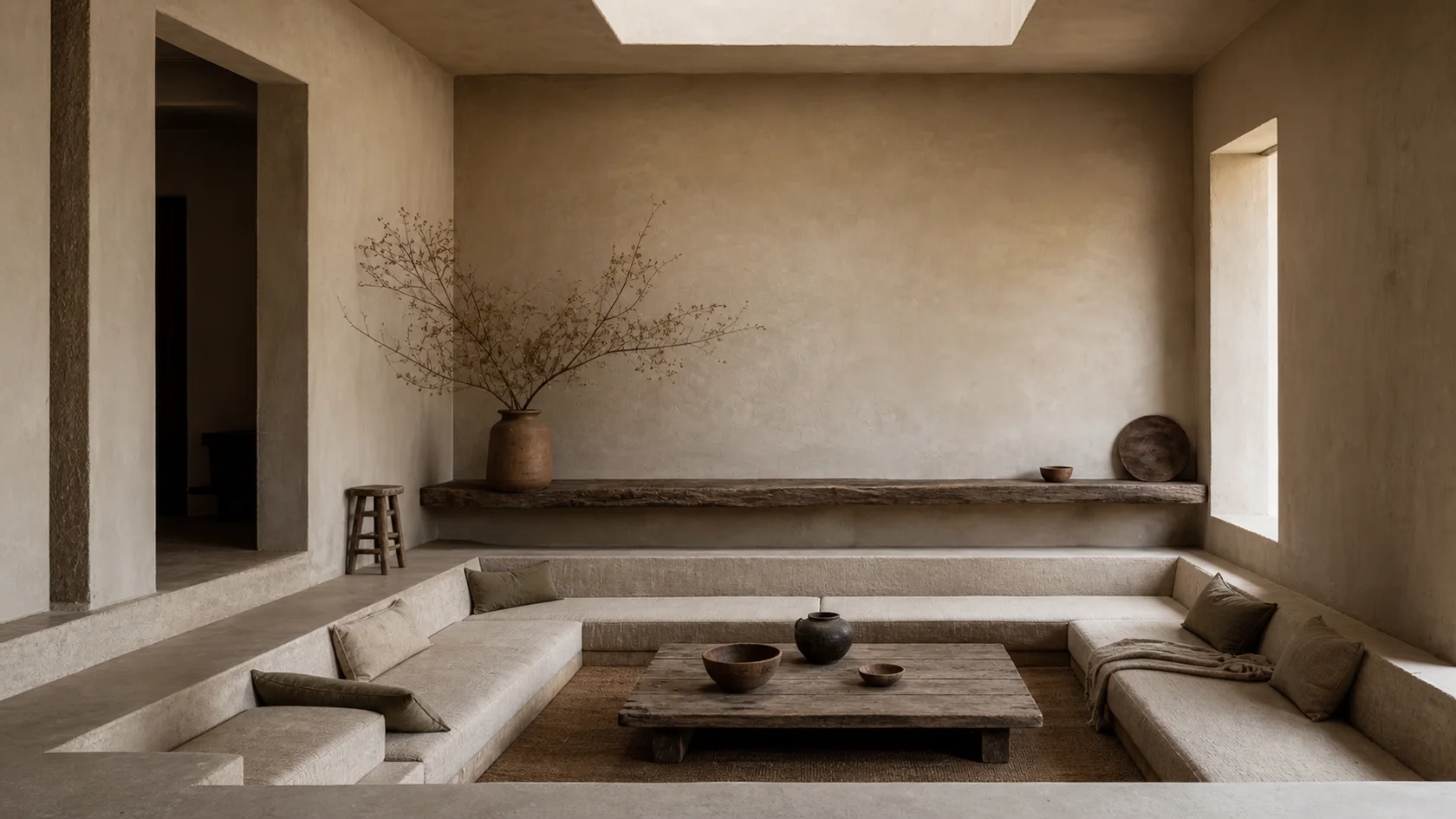
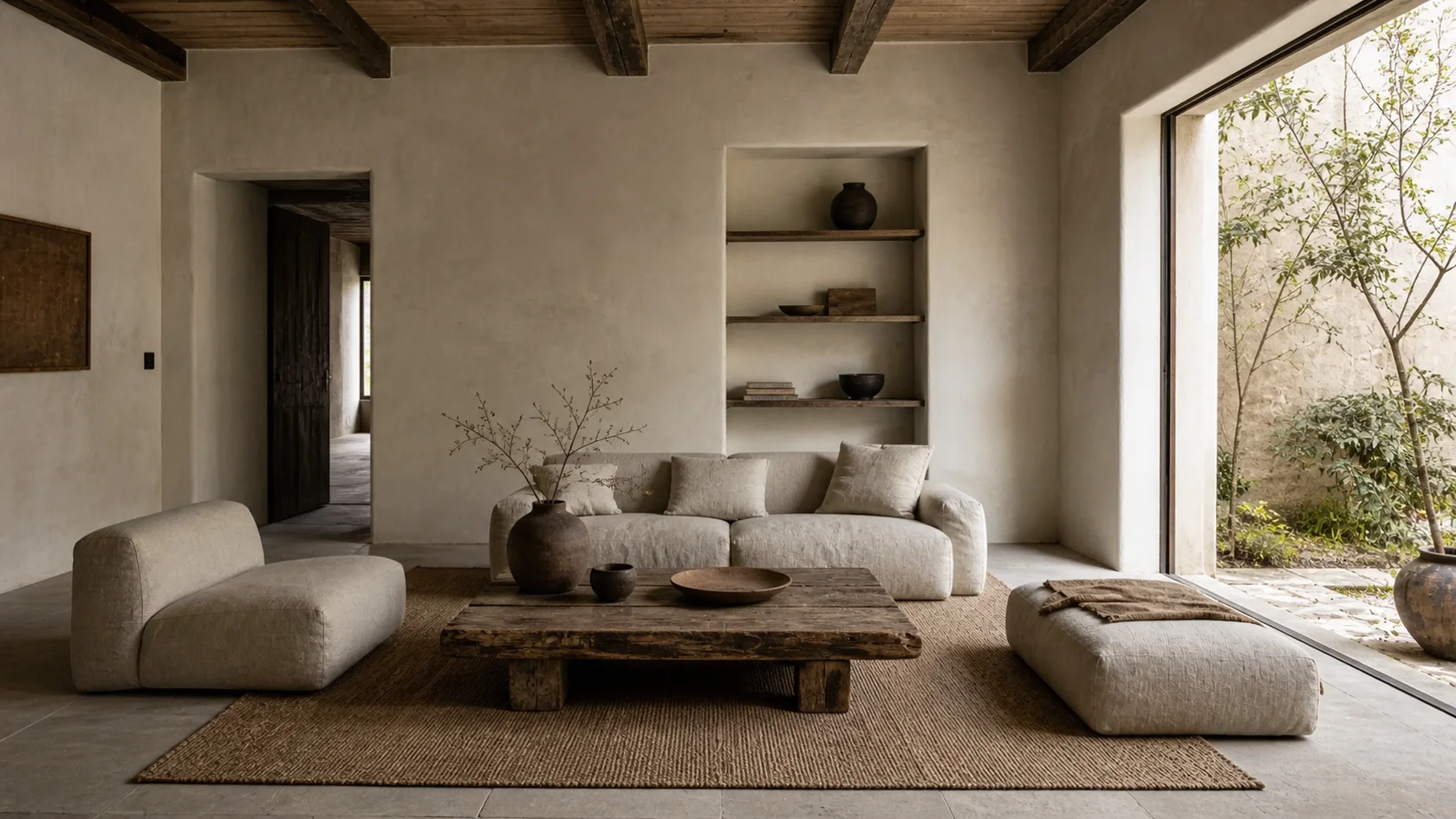
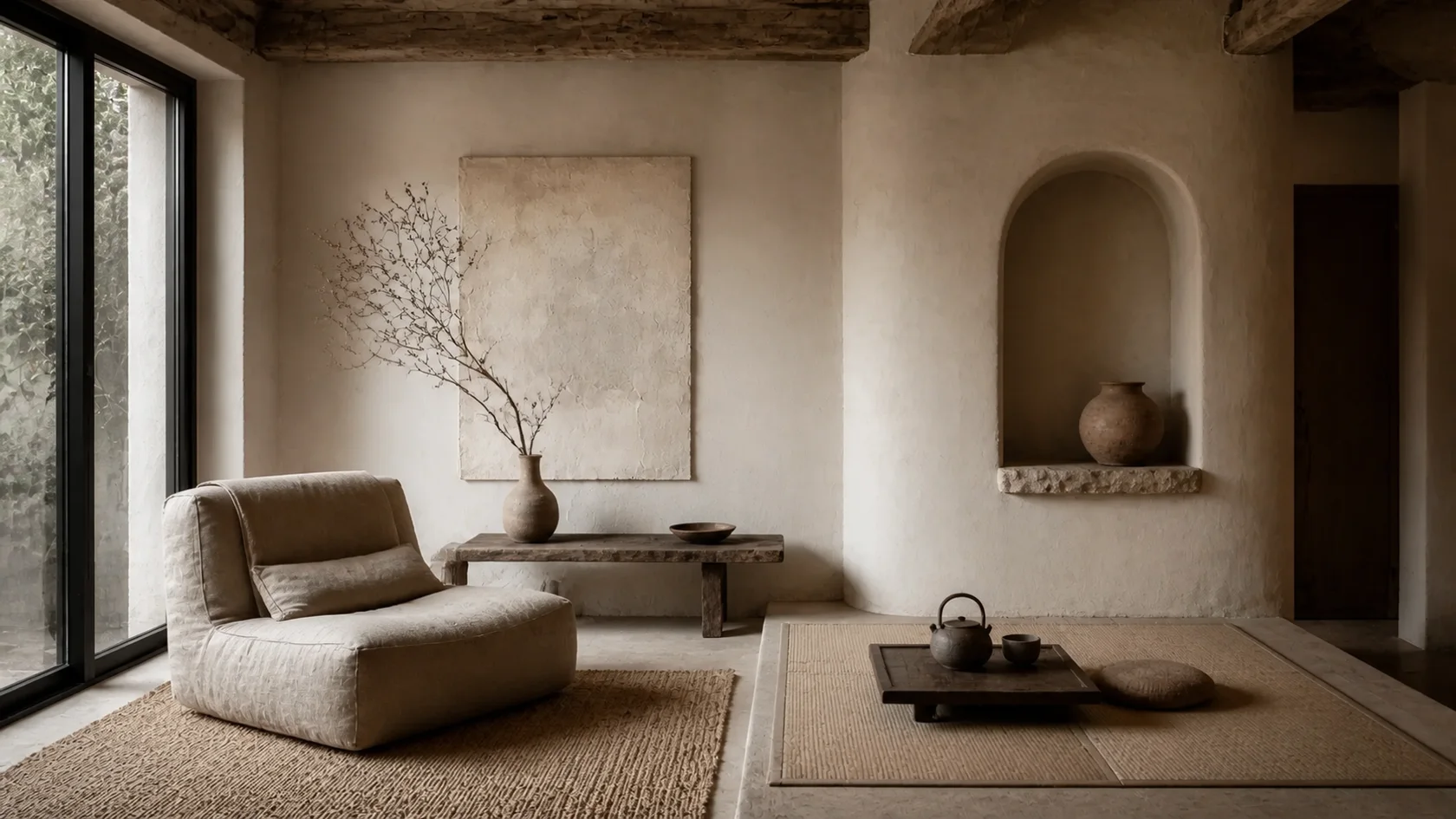
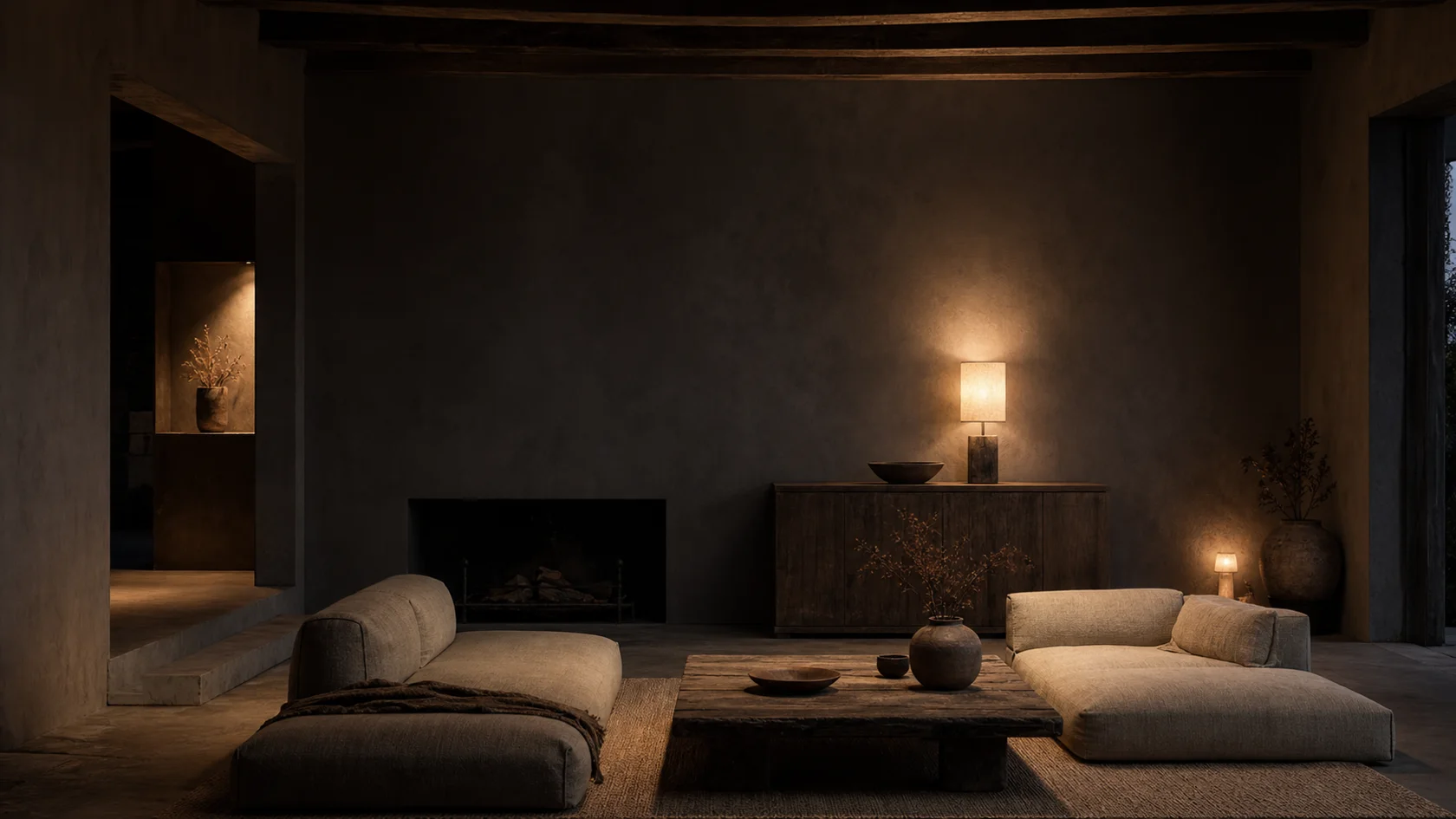
Use the style where it helps the room work: seating, circulation, focal point and material balance.
Keep the main sofa, chairs and table close enough for conversation without closing the route through the room.
Let a hearth, view, artwork or media wall set the furniture direction before adding small objects.
Keep the route from the doorway to adjacent rooms outside the central rug and seating zone.
Use upholstery, a generous rug and curtains to temper stone, timber, glass or metal.
A wabi-sabi palette is read through variation, not perfect color matching. Let lime, clay, timber and fiber shift naturally across their surfaces.
An uneven mineral base that changes gently between daylight and shadow.
A grounded mid-tone found in earthen plaster, fired clay and natural pigment.
Brown softened by gray, appropriate for aged boards and well-used furniture.
A near-black accent for iron, charred wood or a single dark ceramic form.
The textile bridge between pale mineral walls and deeper wood tones.
Weathered lime, flax and clay create a softly varied background.
Aged elm, ash or smoked wood should look repaired and usable rather than artificially distressed.
Soot and charcoal belong in recesses, hearths or one furniture plane.
Handmade ceramic and woven fibre add irregularity in small functional doses.
For this room, a few strong choices can carry the style better than adding more decor.
Choose the main primary seating for real comfort and scale; its silhouette should carry the room before smaller styling arrives.
Allow asymmetry and patina to remain visible, but keep structure safe, circulation clear and object count restrained.
Allow asymmetry and patina to remain visible, but keep structure safe, circulation clear and object count restrained.
Allow asymmetry and patina to remain visible, but keep structure safe, circulation clear and object count restrained.
Use these checks to keep the wabi-sabi character clear without compromising how the living room works.
Pull at least part of the seating group inward so the room has a clear social center.
Choose one primary focal point and let the television, view and artwork take supporting roles.
Resolve seat depth, table reach and lighting before adding decorative layers.