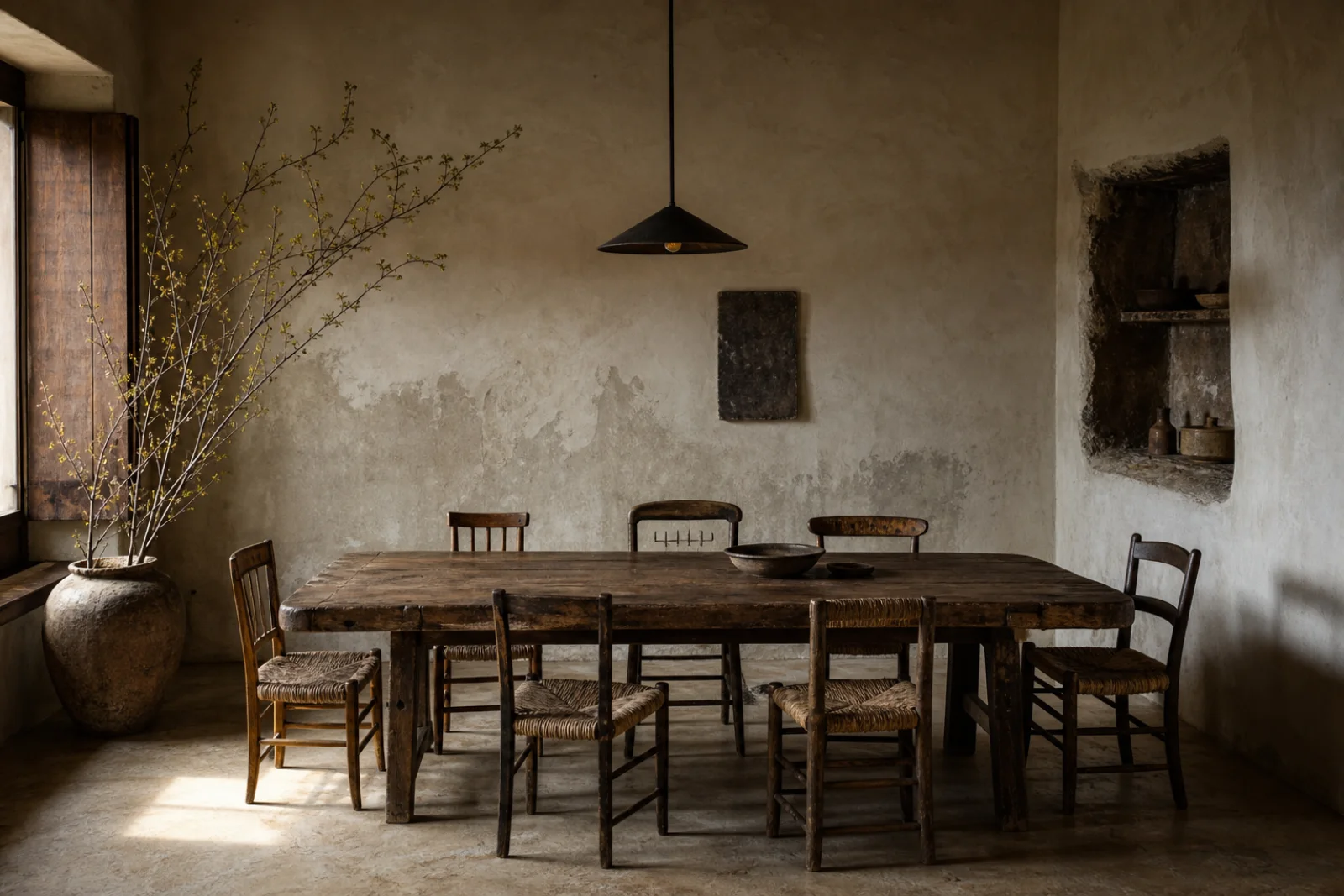
Aged wood table
Check the joints first; authentic wear should support a structurally sound piece.
Rooms that value patina, irregular form and the quiet evidence of time instead of polished perfection.
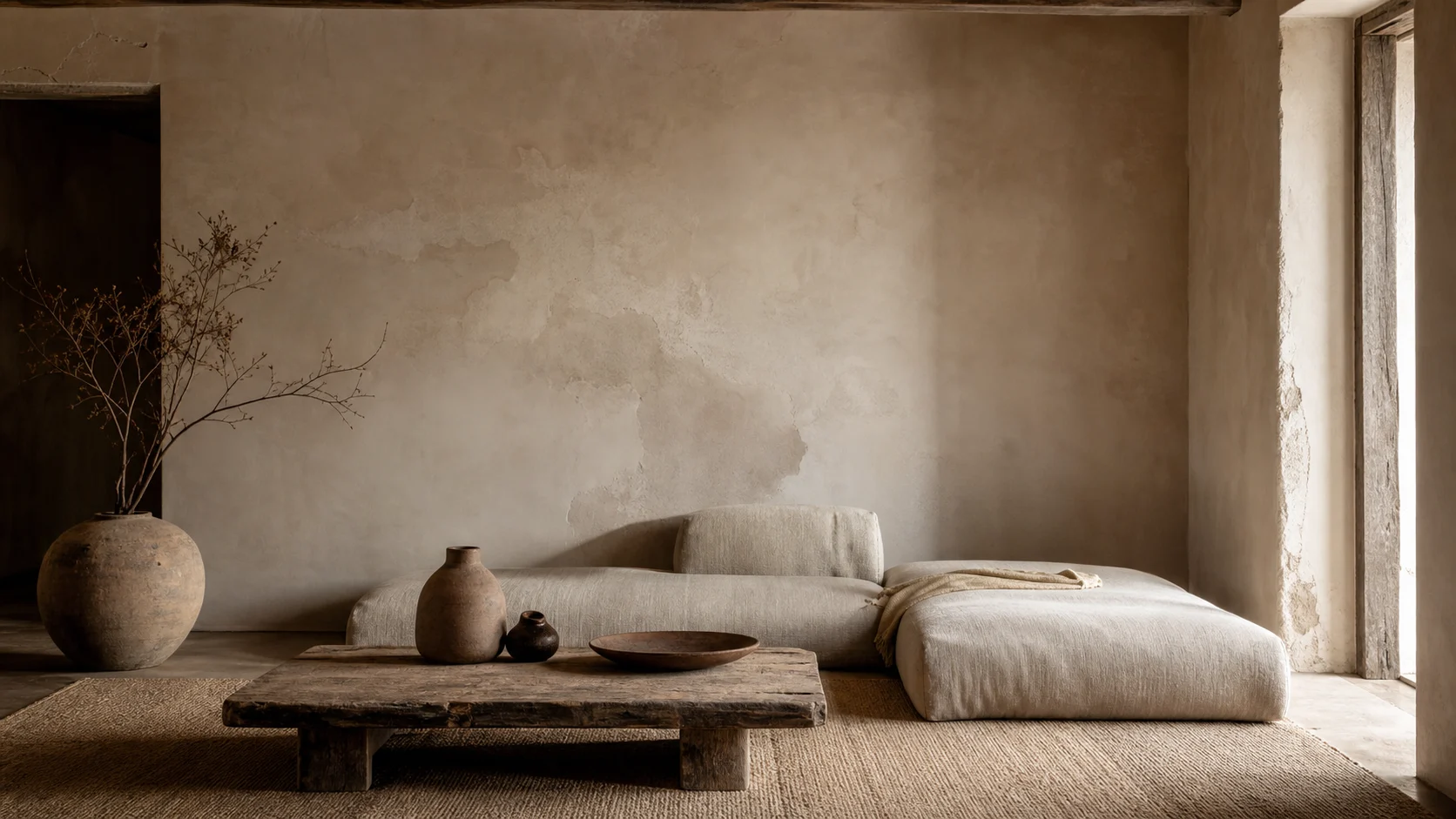
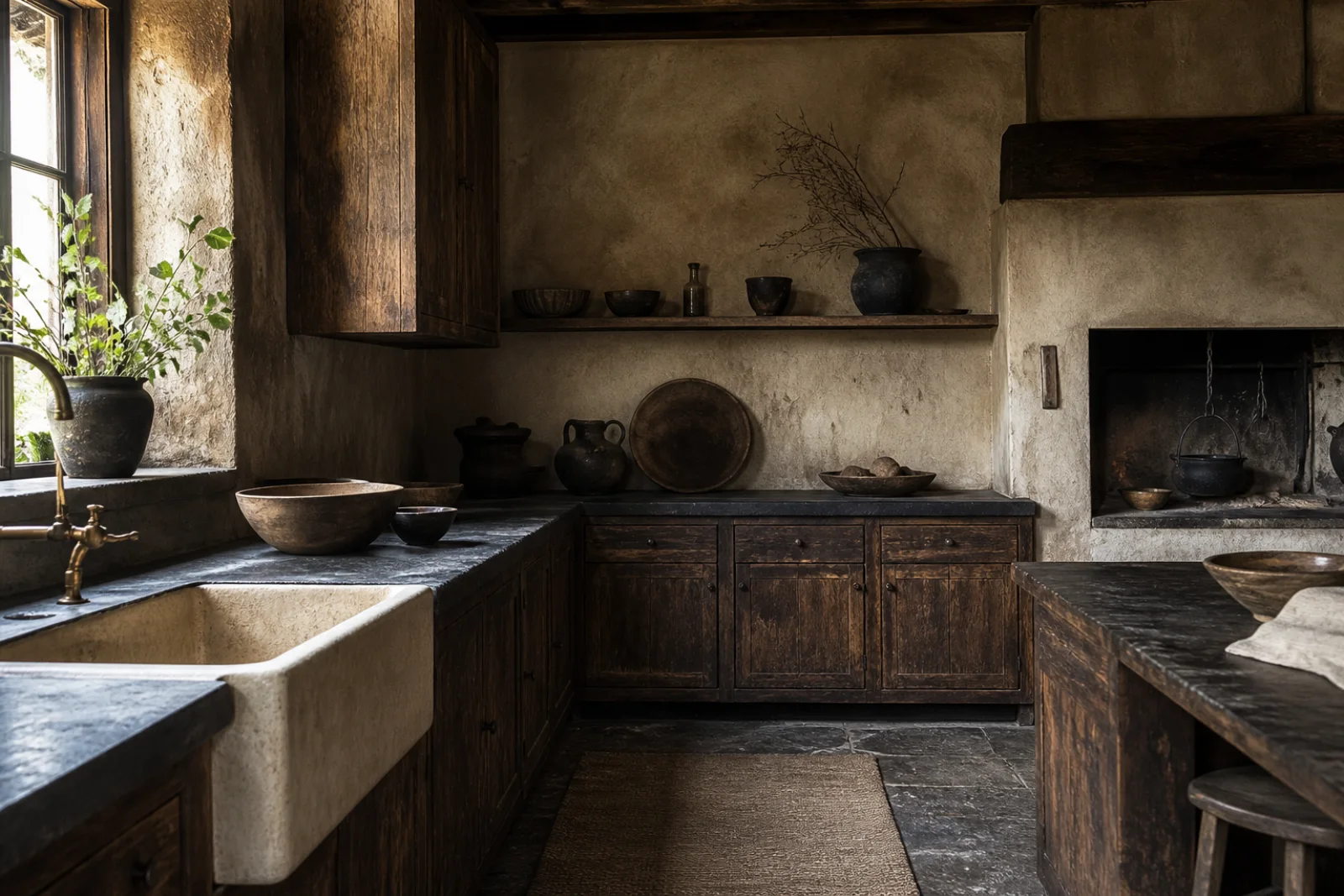
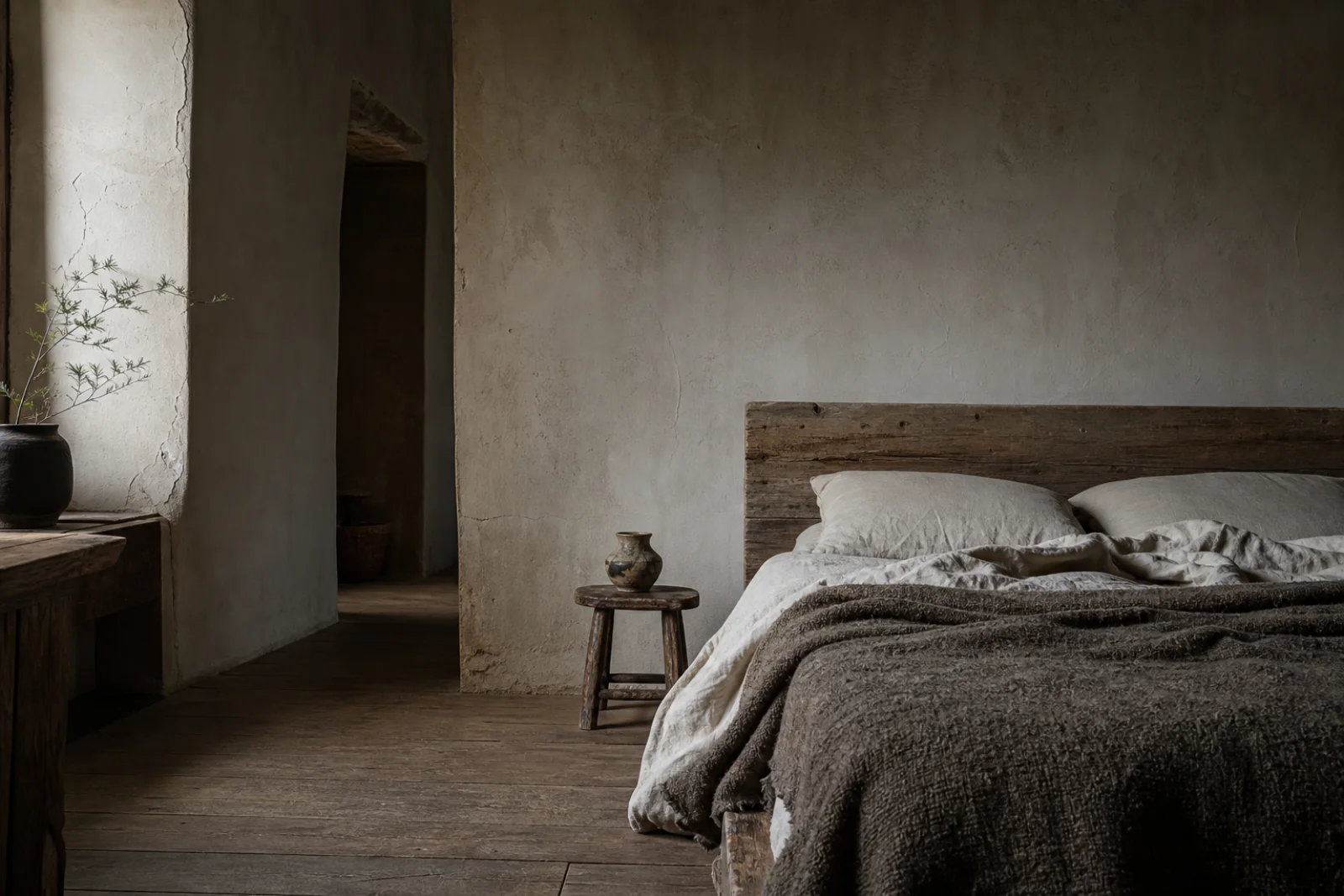
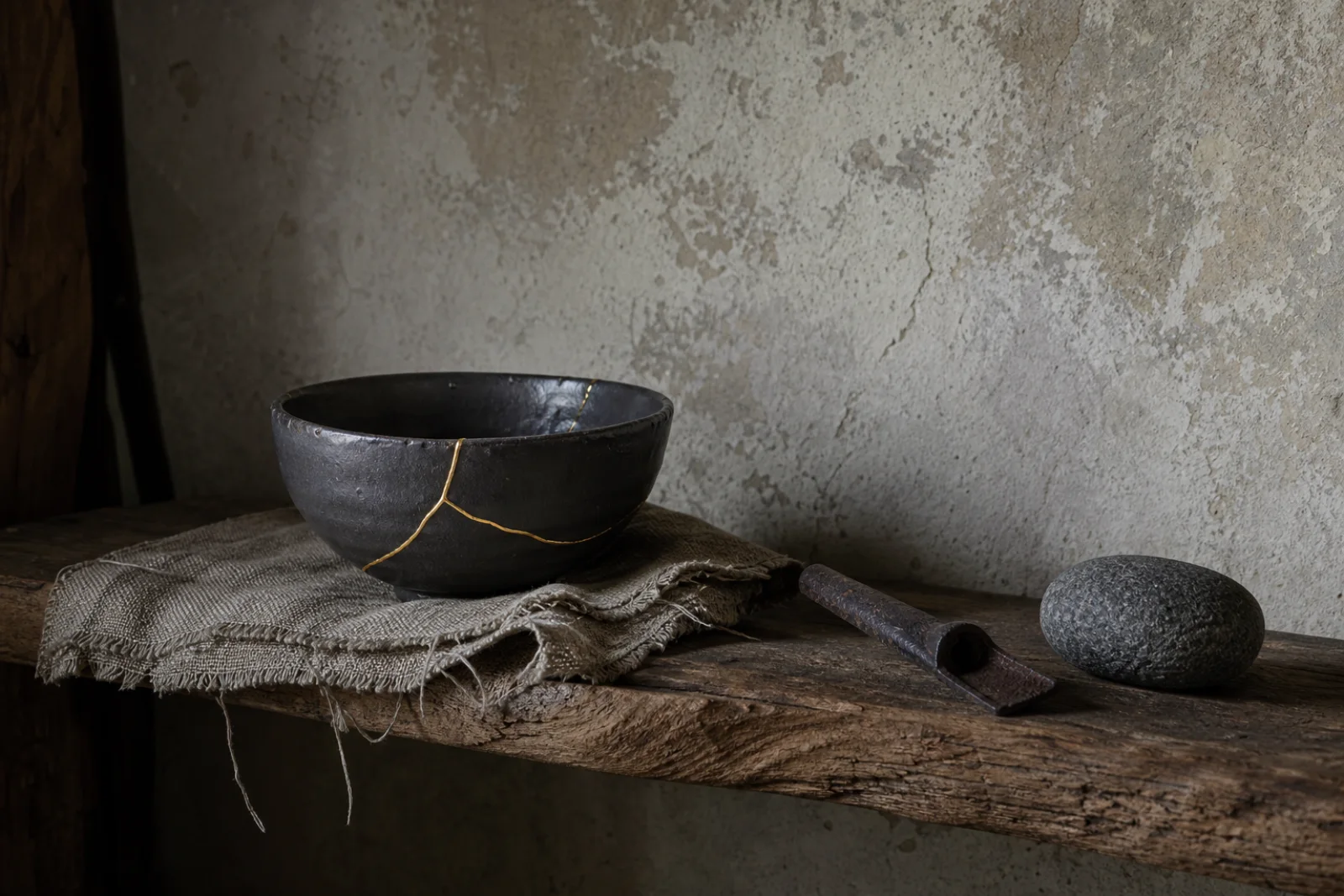
Wabi-sabi is a Japanese aesthetic that recognizes beauty in impermanence, incompleteness and natural change. In an interior, this can appear as a table softened by years of use, lime plaster that records the hand of its maker, linen that wrinkles naturally or a ceramic bowl whose repair remains visible.
The point is not to make a room look old or unfinished. A convincing wabi-sabi space allows materials to age honestly and gives imperfect objects enough room to be noticed. Age, repair and irregularity are meaningful only when they belong to the object rather than being applied as a decorative effect.
Fading, oxidation and wear can improve a material when its construction is sound.
A handmade edge or asymmetrical grouping still needs proportion, usefulness and intention.
A thoughtful patch, join or ceramic repair preserves history instead of pretending damage never happened.
Aged timber, mottled plaster, oxidized metal and worn stone record use through subtle variations in color and texture.
Thrown pottery, woven fiber and joinery reveal small differences that mass-produced matching sets remove.
Objects sit in unequal groupings and open areas are allowed to feel active rather than merely empty.
A bare branch, dried stem or changing daylight acknowledges that the room does not need to look identical all year.
Center the room on one aged piece; let surrounding objects stay quieter.
Choose rumpled natural bedding and low light over decorative layering.
Allow table wear and related, non-matching chairs to tell the story.
An old worktable and visible tools can make daily use part of the composition.
Select counters and hardware that develop patina rather than resist every mark.
A worn threshold, useful bench and repaired vessel make age feel purposeful.
A wabi-sabi palette is read through variation, not perfect color matching. Let lime, clay, timber and fiber shift naturally across their surfaces.
An uneven mineral base that changes gently between daylight and shadow.
A grounded mid-tone found in earthen plaster, fired clay and natural pigment.
Brown softened by gray, appropriate for aged boards and well-used furniture.
A near-black accent for iron, charred wood or a single dark ceramic form.
The textile bridge between pale mineral walls and deeper wood tones.
Trowel movement and gentle tonal changes keep broad walls from feeling sealed or synthetic.
Look for sound construction, softened edges and wear that follows actual touch and use.
Wrinkles, slubs and fading are part of the cloth rather than flaws to be eliminated.
A visible repair can preserve an object, but it should not turn every piece into a gold-lined prop.
Begin with what can age well. Wabi-sabi emerges over time; it should not arrive as a complete themed set.
Keep useful wear, old boards or uneven plaster when they are stable and honest.
Let an aged table, stone floor or clay wall establish the room’s character.
One thrown vessel or woven textile is stronger than a collection of imitation craft.
Use asymmetry and seasonal elements so the room can change without feeling incomplete.
When the room feels wrong, change the underlying decision before adding more decor.
Keep only wear that follows real construction and use; remove decorative damage.
Repair structural problems, clean surfaces and distinguish patina from deterioration.
Add soot, earth, weathered timber and deeper shadow instead of more pale neutrals.
Give one or two irregular pieces space; craft loses meaning when every surface is filled.
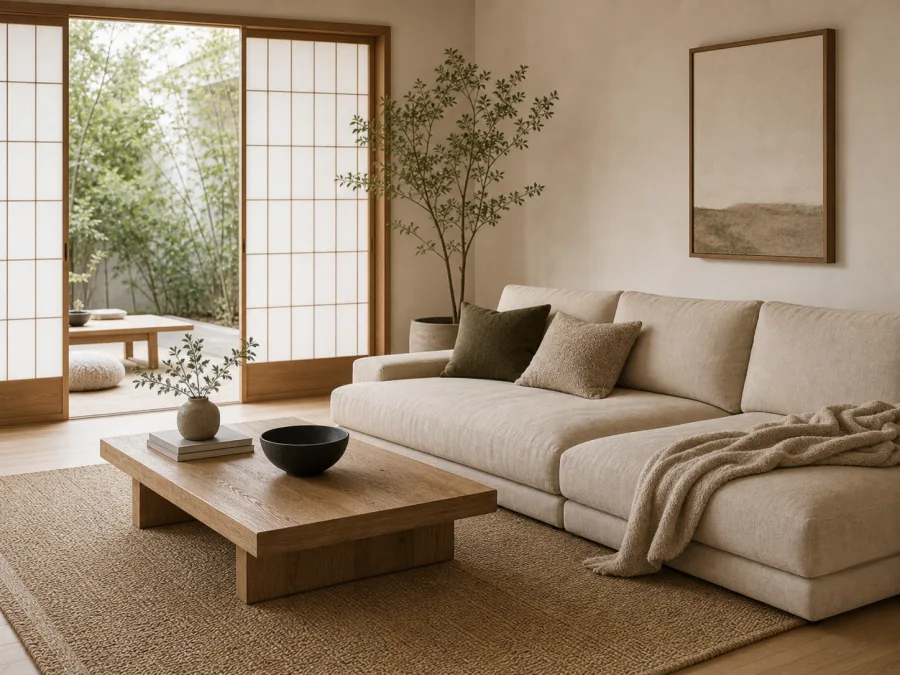
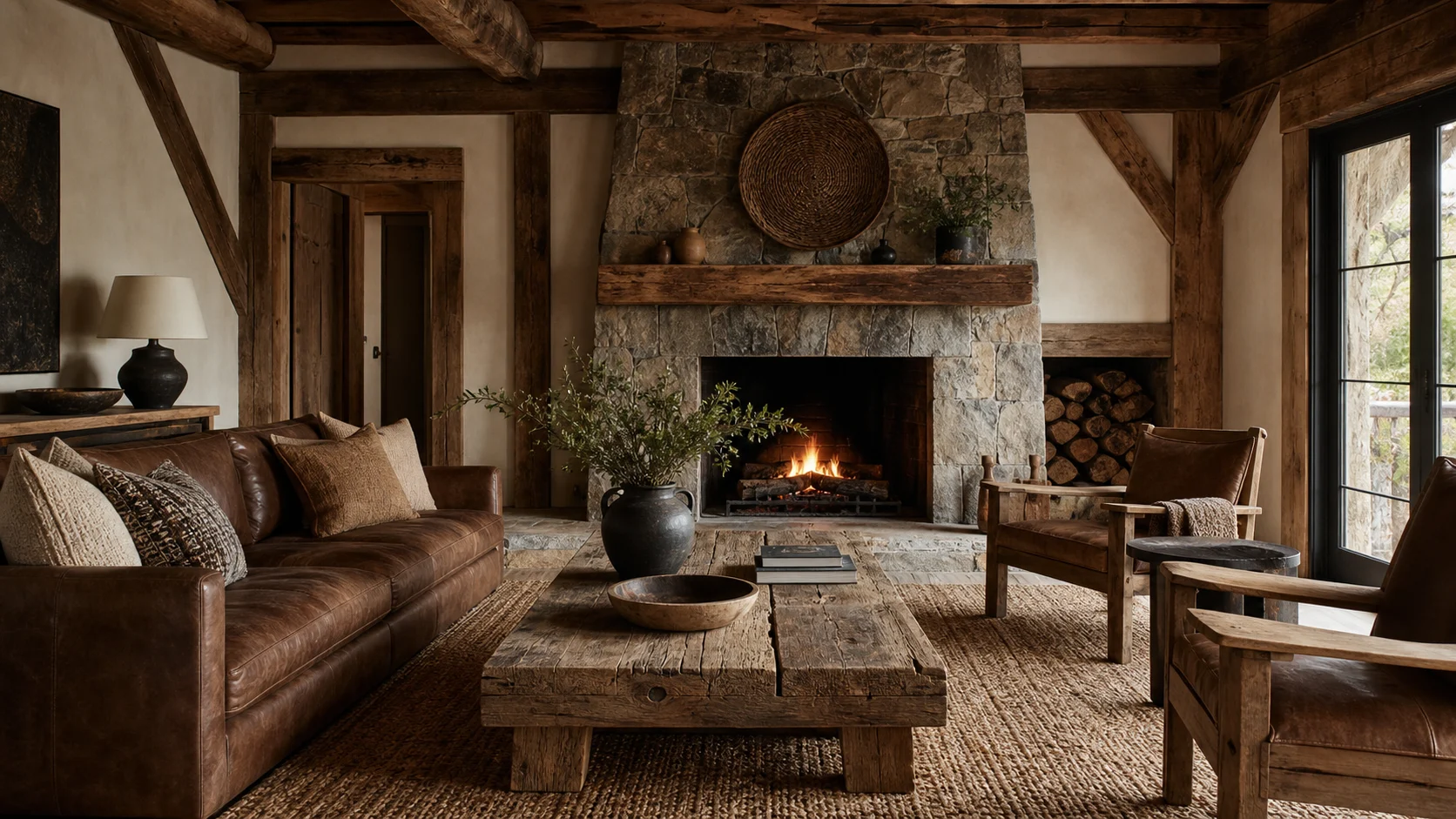
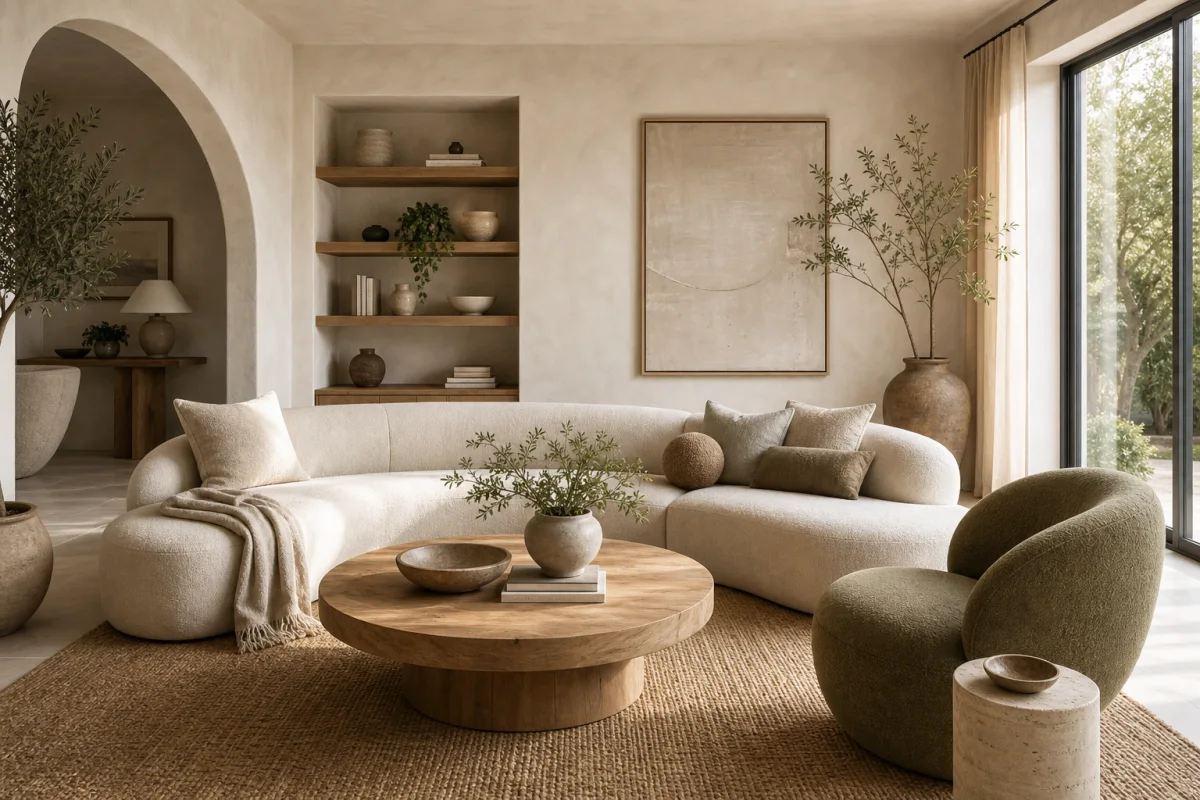
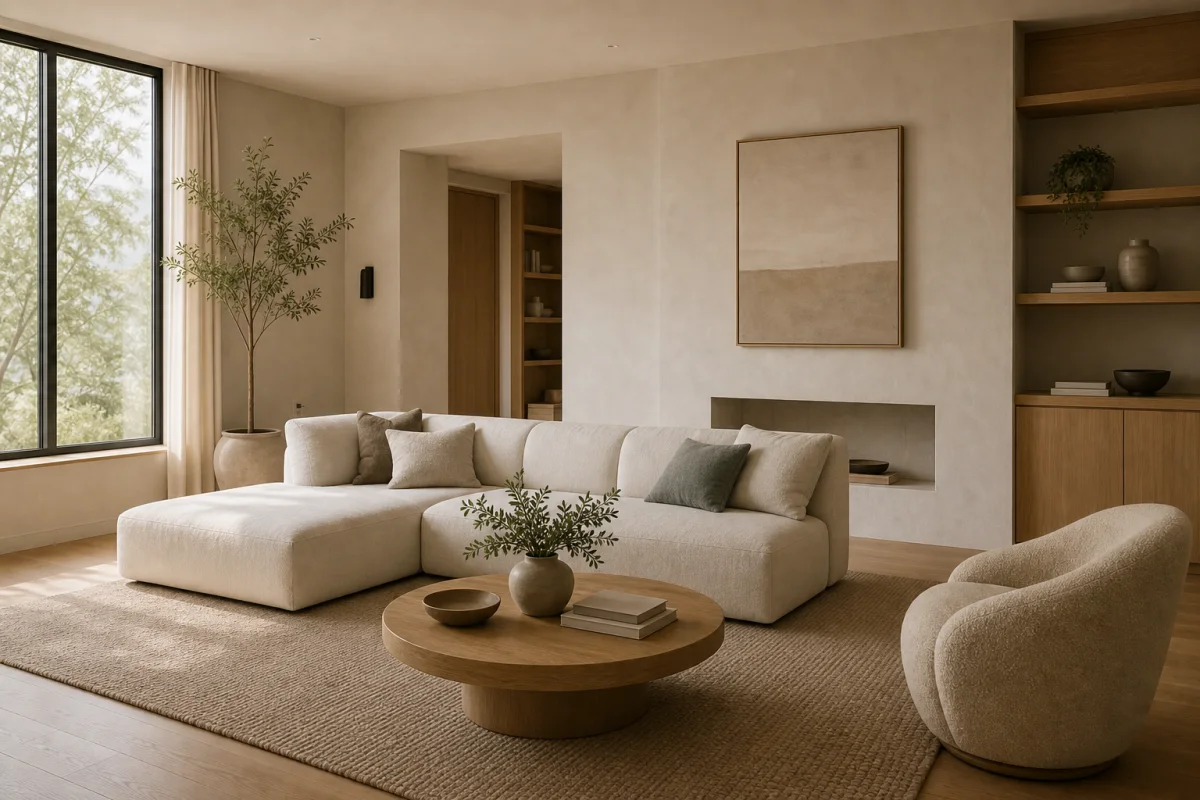
Wabi-sabi can look quiet like minimalism or natural like rustic design, but its defining subject is time: how materials weather, how objects are repaired and how incompleteness is accepted.
Cleaner, lighter and more dependent on disciplined furniture lines.
Choose wabi-sabi if age, erosion and irregular handwork matter more than precise visual order.
Look for patina, visible repair and rougher surfaces instead of pale new oak and paper light.
More robust, rural and focused on heavy natural construction.
Choose wabi-sabi if you want less visual weight and a more reflective approach to imperfection.
Use fewer pieces, quieter color and more deliberate asymmetry.
More polished, sculptural and likely to use new curved furniture.
Choose wabi-sabi if you prefer weathering and humble handwork to smooth statement forms.
Replace pristine plaster and sculptural bouclé with aged wood, raw fiber and repaired clay.
More exact, geometric and concerned with removing visual information.
Choose wabi-sabi if traces of making and use feel richer than flawless reduction.
Allow cracks, uneven tone and objects with history to remain visible.
Do not shop for “the wabi-sabi look” as a matching collection. Search for sound materials, useful objects and pieces whose irregularity comes from making or age.
Check the joints first; authentic wear should support a structurally sound piece.
Choose one form with a useful scale and a surface that rewards close attention.
Undyed or yarn-dyed linen becomes softer and more expressive with washing.
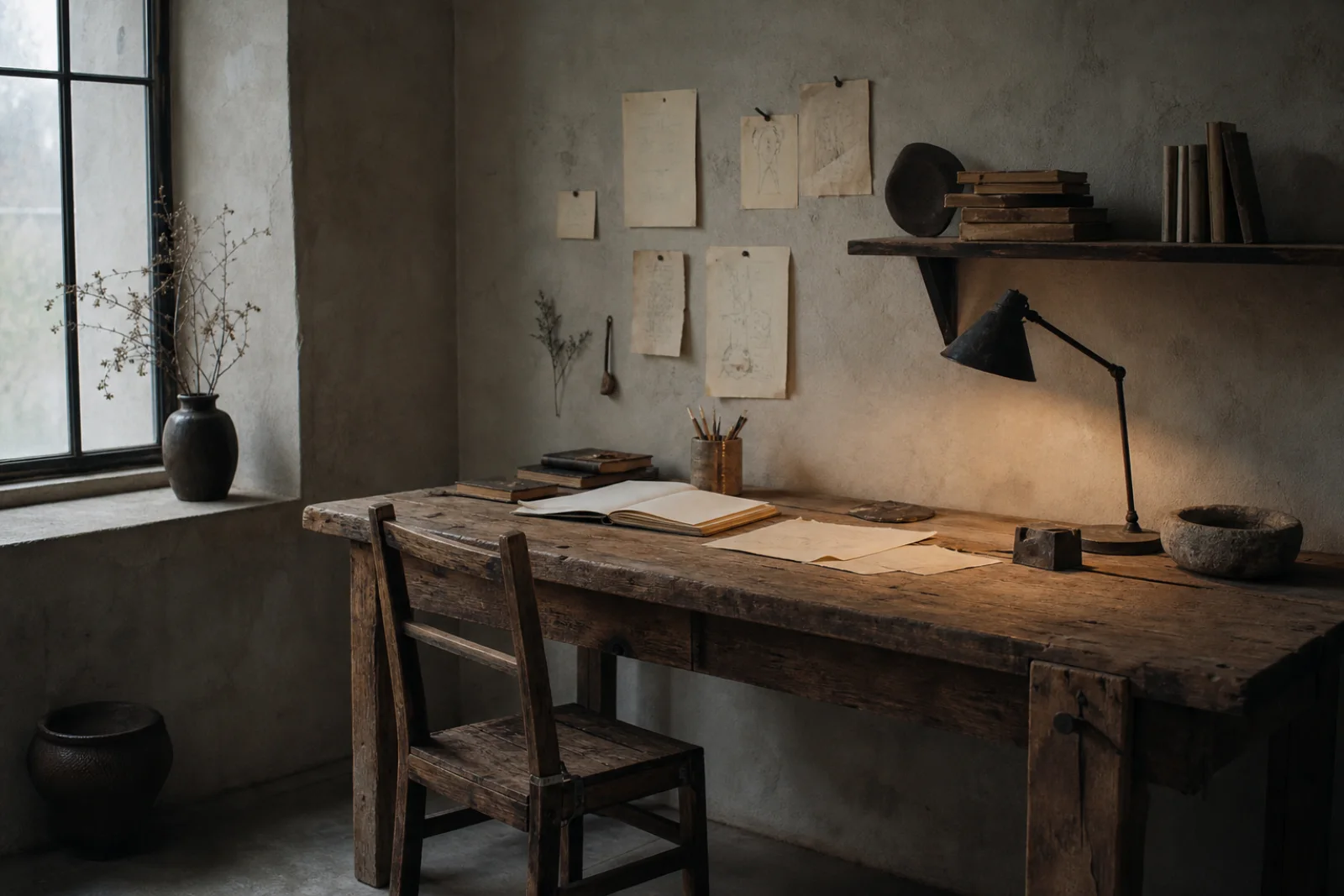
Scars and repairs can remain visible when height, stability and daily function are right.
Soapstone, timber and unlacquered metal change with touch instead of hiding it.
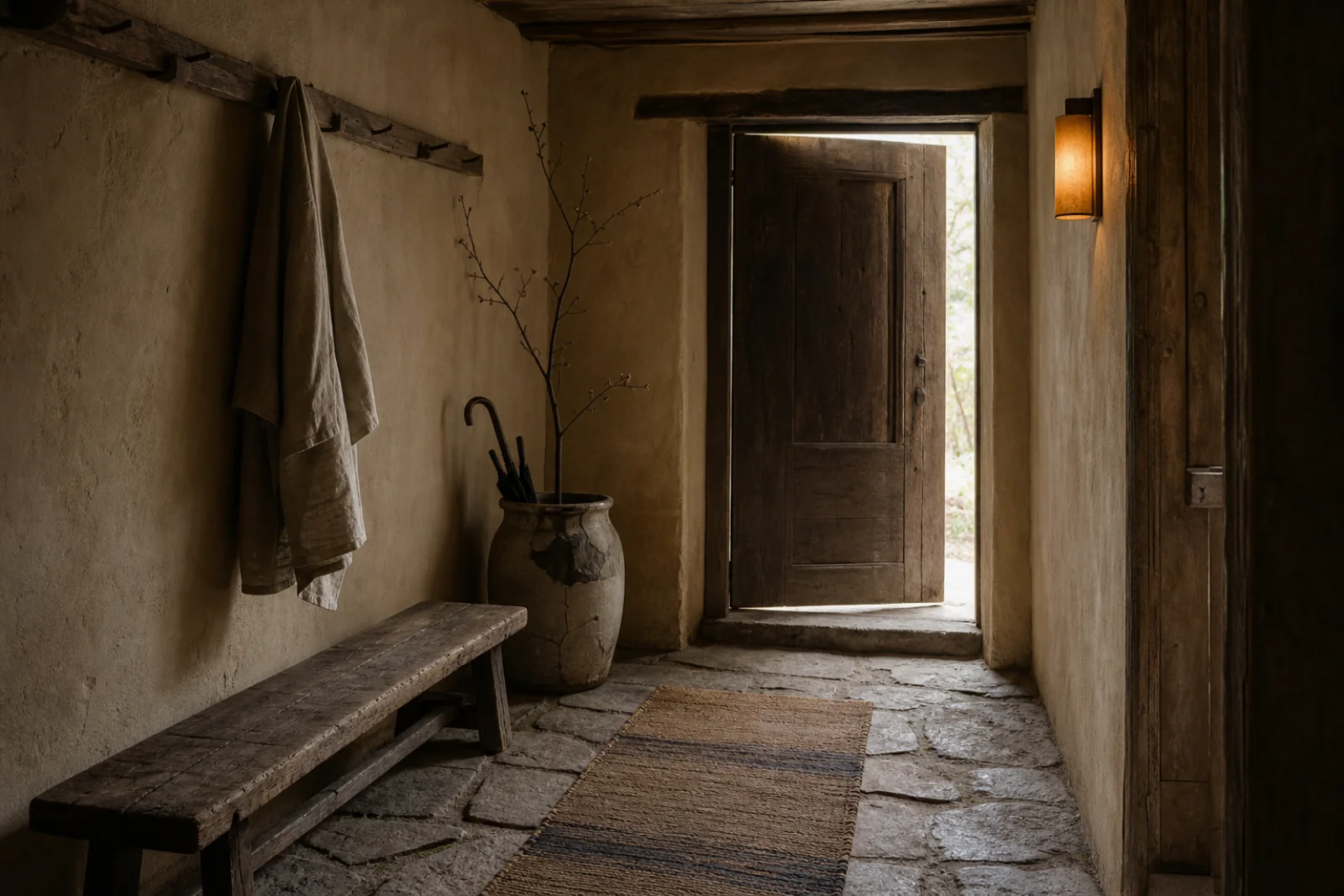
A simple fiber runner accepts wear and gives a hard threshold a quieter rhythm.