01
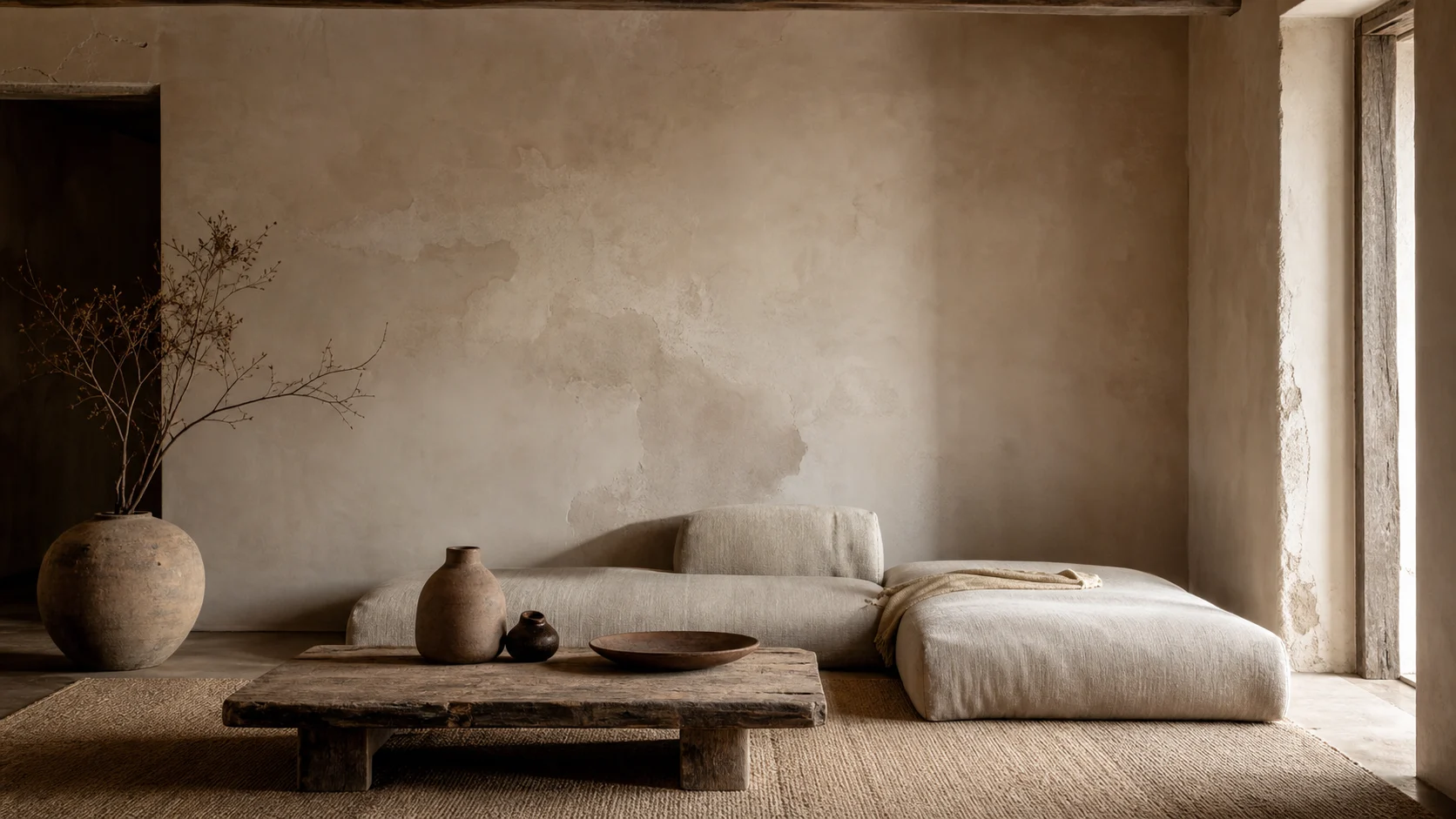
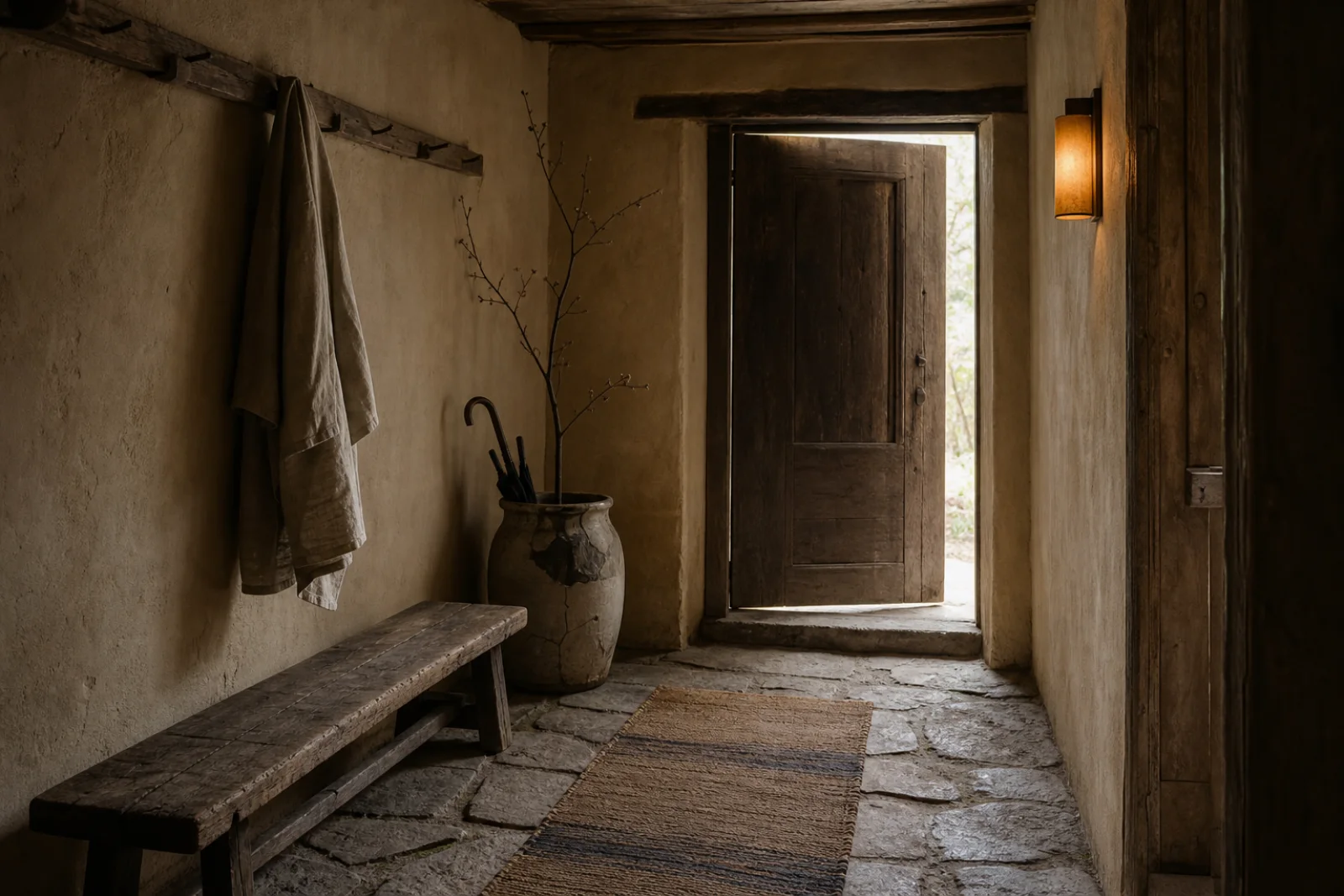
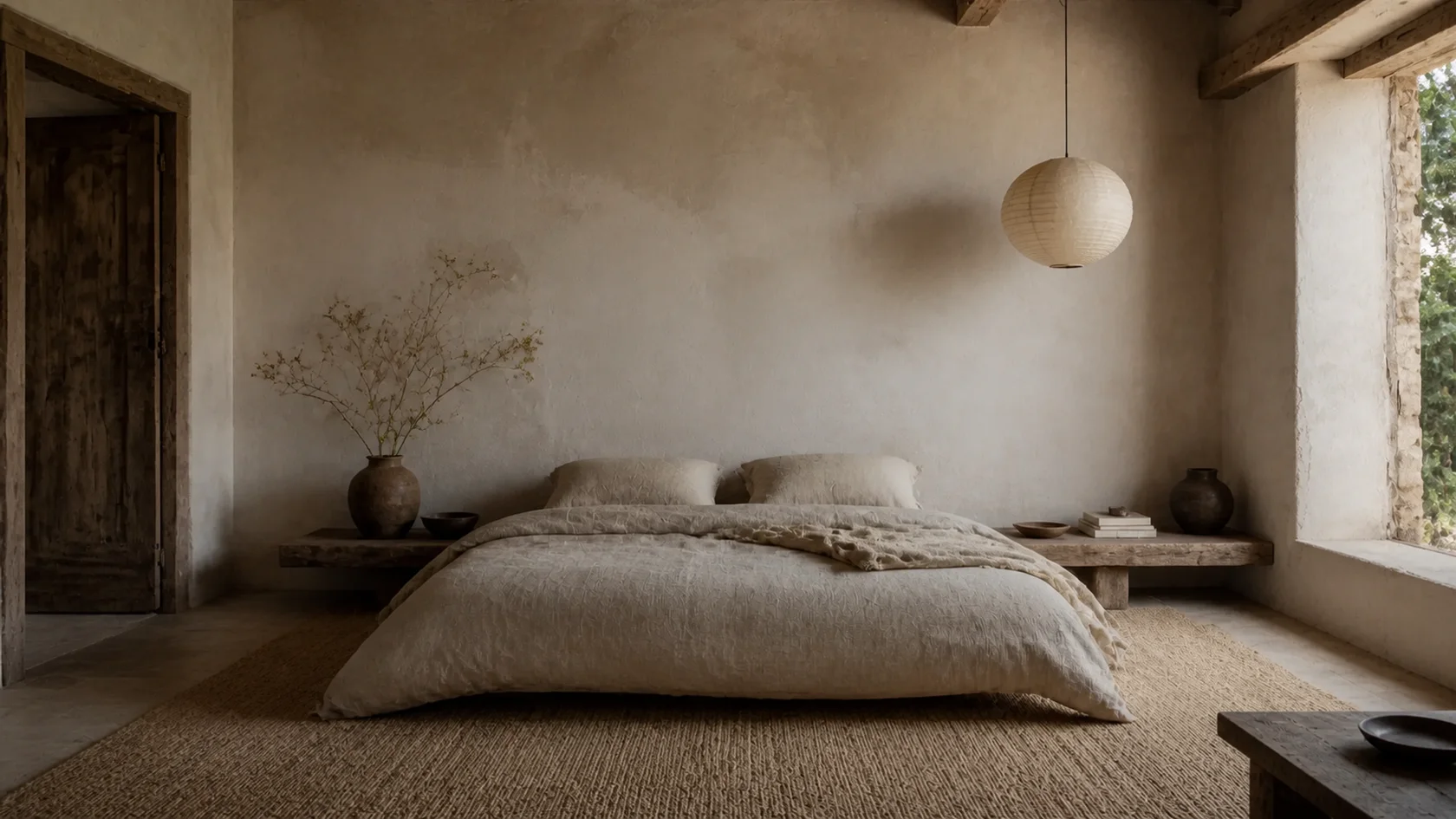
Rough Plaster
One irregular crafted element leads the composition and gives age a useful, legible role. Preserve a calm bedside zone and a clear path from the door to storage.
Five useful ways to translate wabi-sabi into a bedroom, with different footprints, light conditions and storage needs.
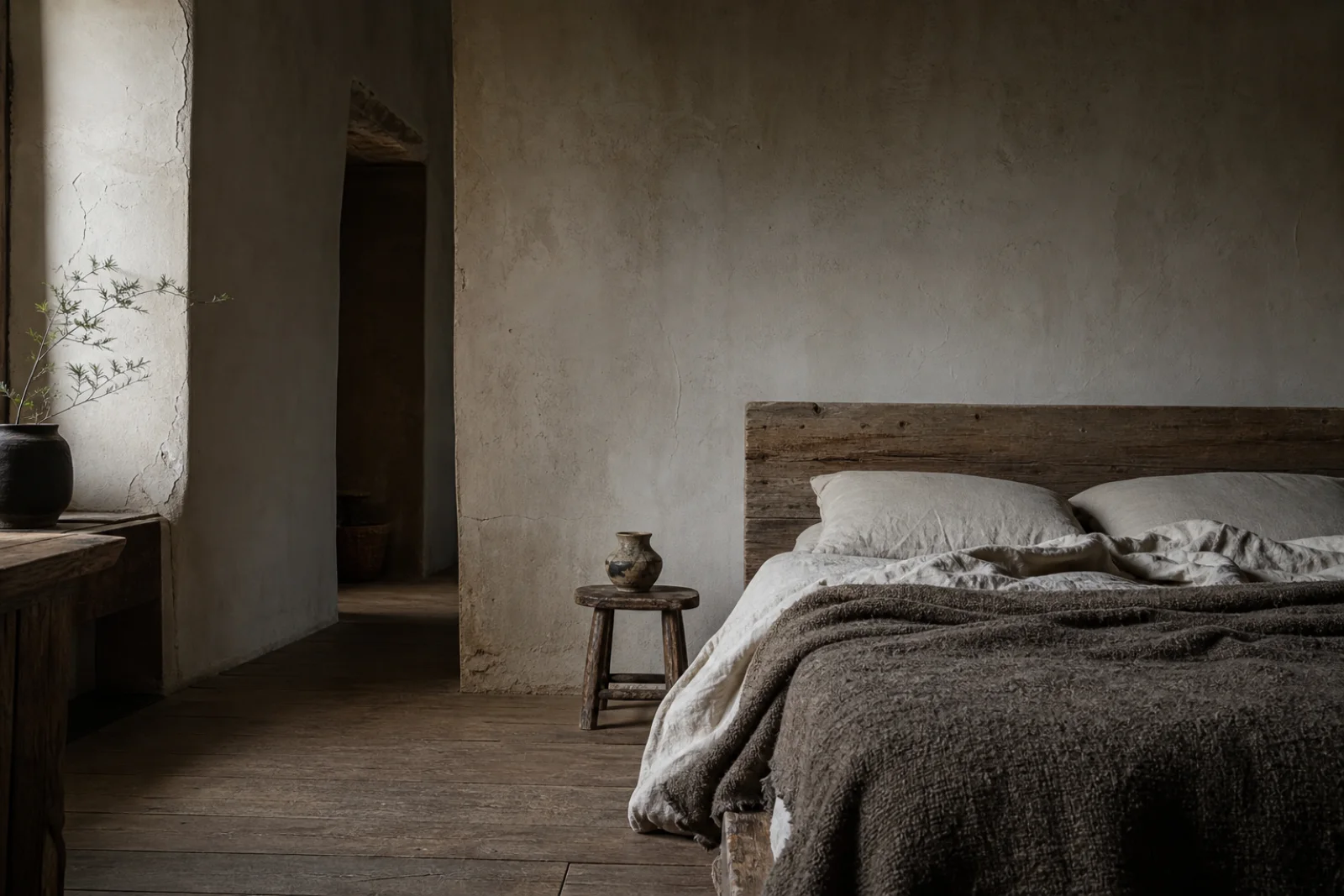
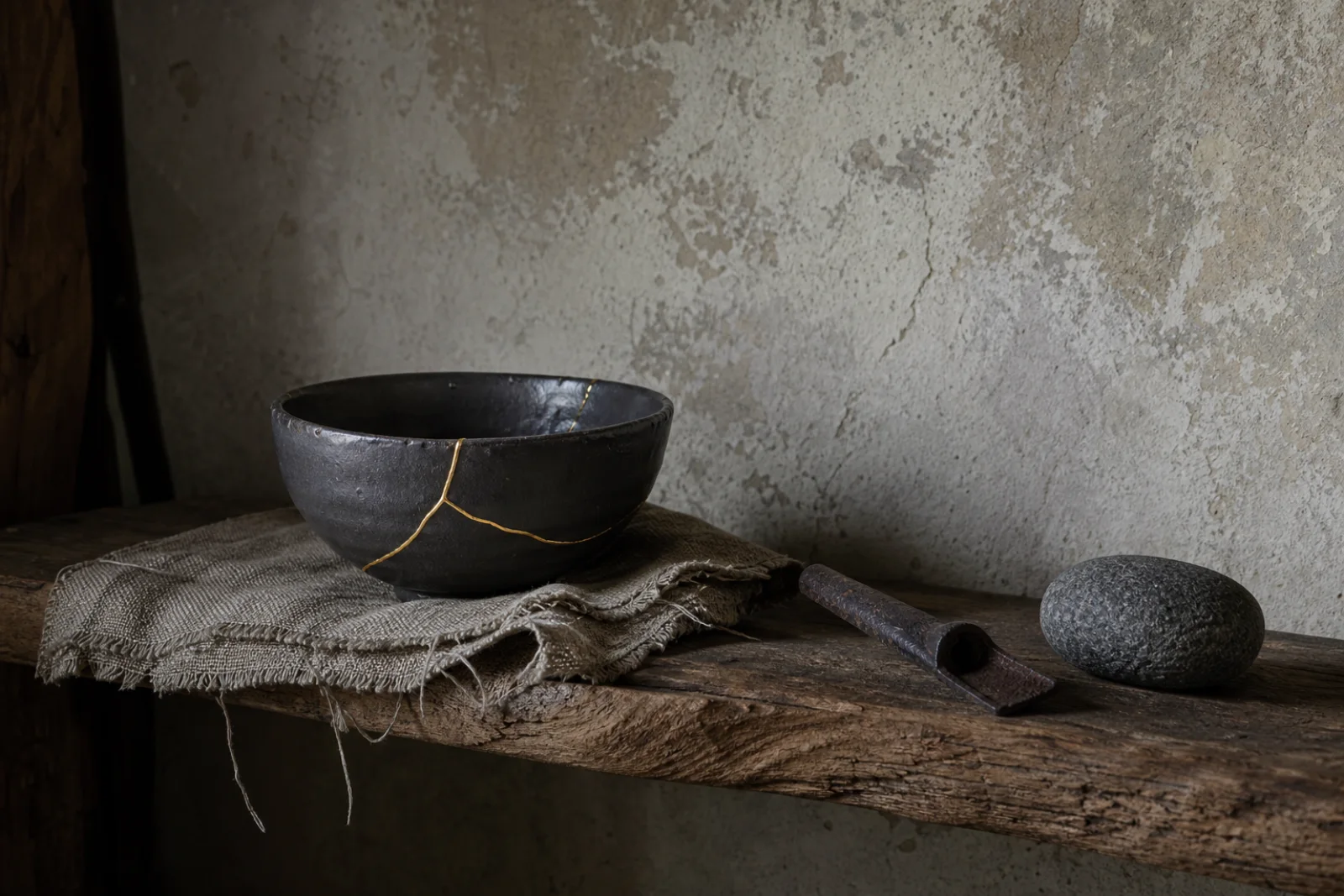
A wabi-sabi bedroom works when the style supports rest, low visual stimulation and an unobstructed route around the bed. Wabi-Sabi builds quiet around irregular craft, honest age and useful objects whose surfaces improve through touch.
Allow asymmetry and patina to remain visible, but keep structure safe, circulation clear and object count restrained. The five variations below change the plan and architecture, not simply the camera angle or accessory color.
Use these examples to choose the version of the style that fits your architecture, light and square footage.
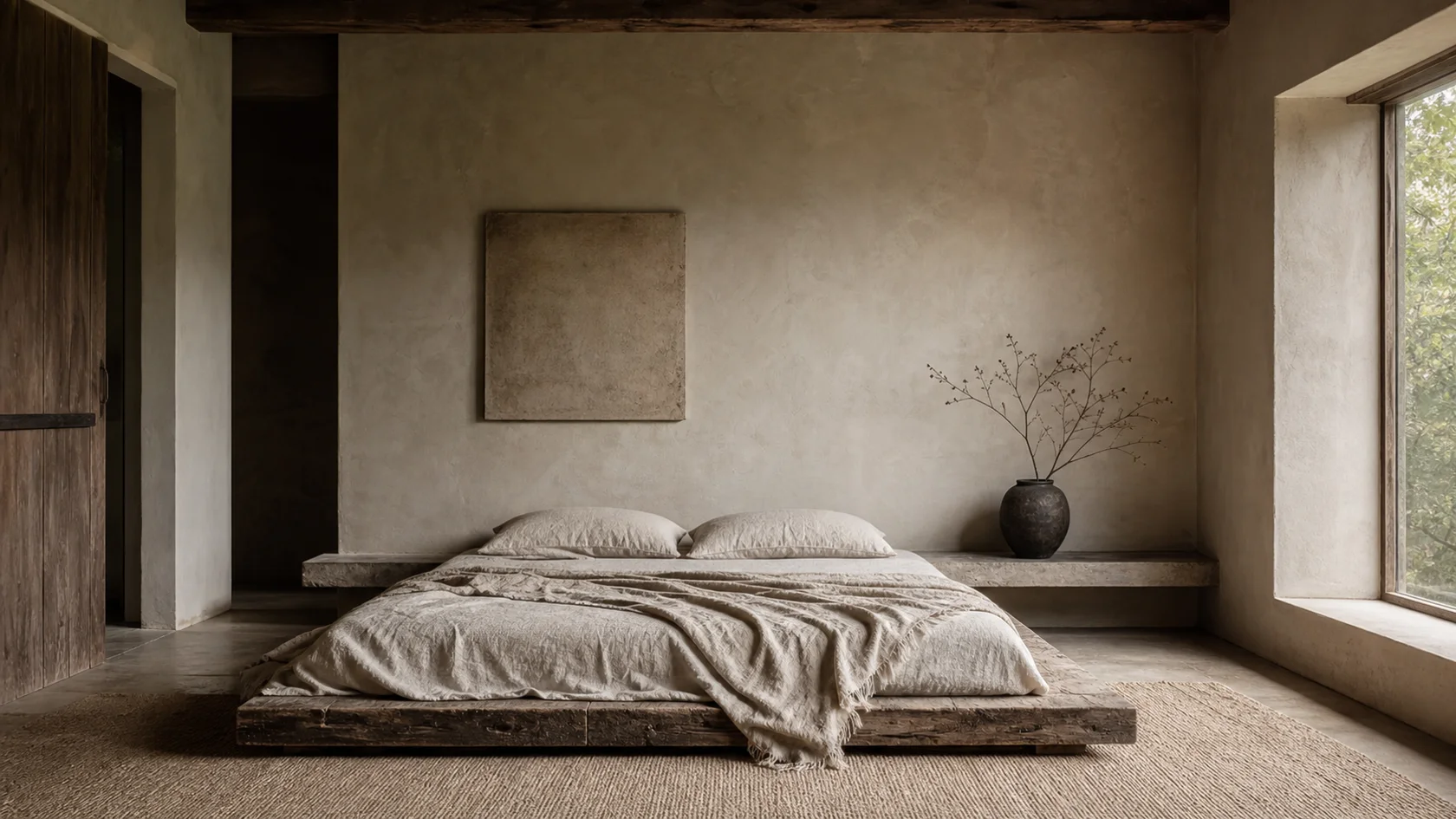
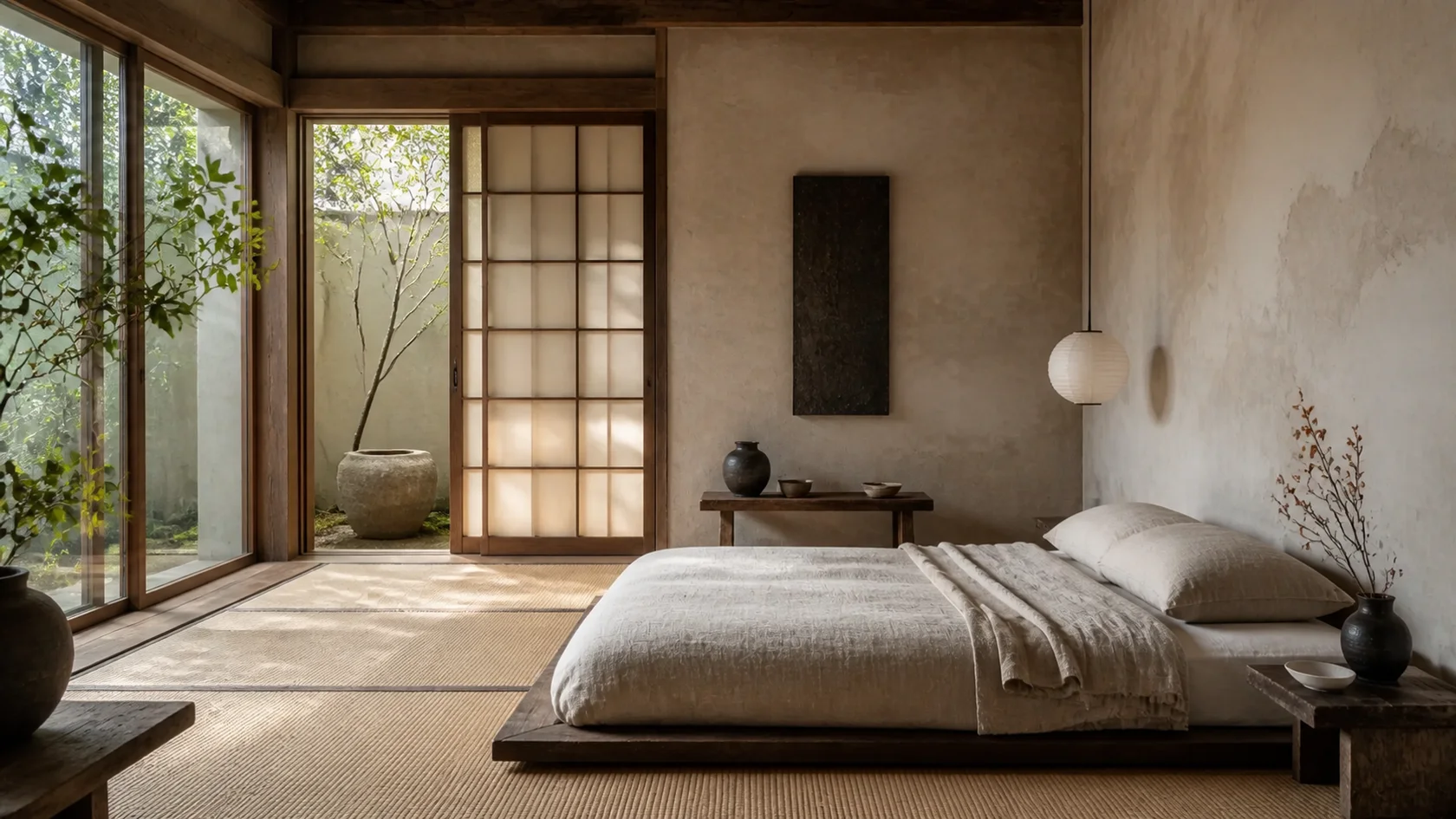
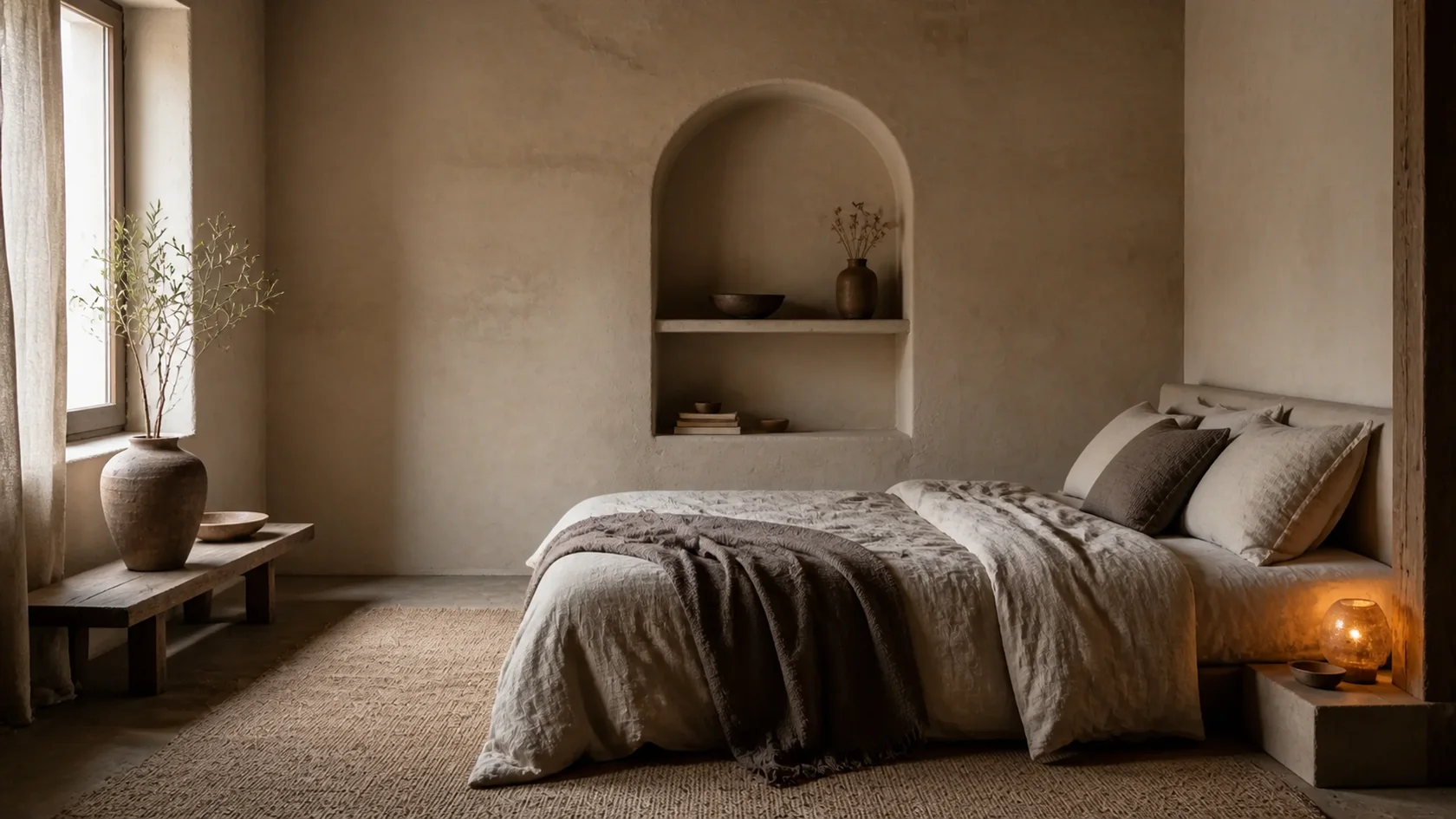
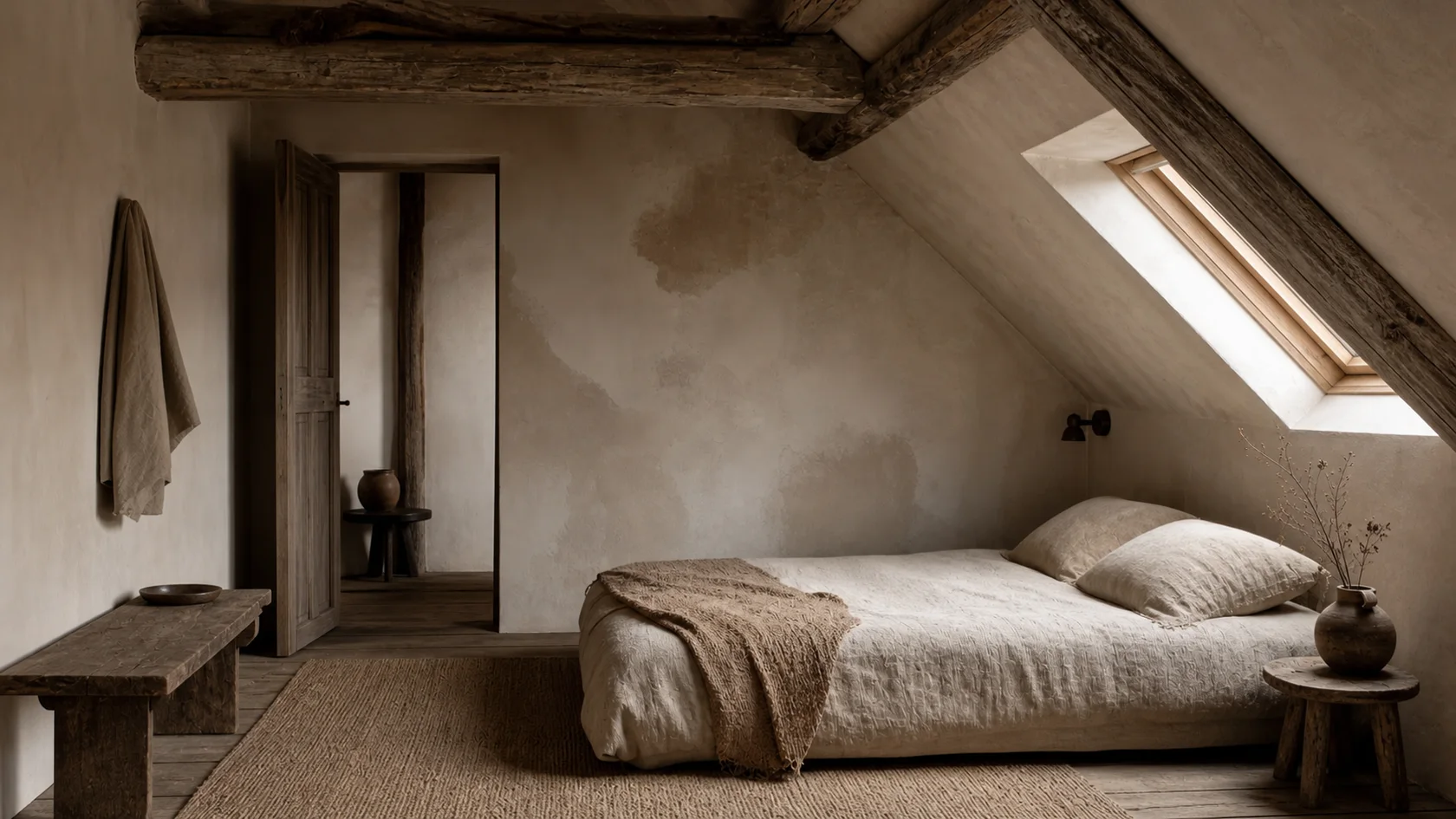
Use the style where it helps the room work: seating, circulation, focal point and material balance.
Place the headboard away from the busiest doorway when possible and preserve a clear approach on both sides.
A flush wardrobe or one resolved chest is calmer than several unrelated storage pieces.
Use bedside and concealed light below eye level instead of relying on a bright central ceiling fixture.
Prioritize breathable bedding, a tactile rug and curtains before decorative objects.
A wabi-sabi palette is read through variation, not perfect color matching. Let lime, clay, timber and fiber shift naturally across their surfaces.
An uneven mineral base that changes gently between daylight and shadow.
A grounded mid-tone found in earthen plaster, fired clay and natural pigment.
Brown softened by gray, appropriate for aged boards and well-used furniture.
A near-black accent for iron, charred wood or a single dark ceramic form.
The textile bridge between pale mineral walls and deeper wood tones.
Weathered lime, flax and clay create a softly varied background.
Aged elm, ash or smoked wood should look repaired and usable rather than artificially distressed.
Soot and charcoal belong in recesses, hearths or one furniture plane.
Handmade ceramic and woven fibre add irregularity in small functional doses.
For this room, a few strong choices can carry the style better than adding more decor.
Choose the main bed and headboard for real comfort and scale; its silhouette should carry the room before smaller styling arrives.
Allow asymmetry and patina to remain visible, but keep structure safe, circulation clear and object count restrained.
Allow asymmetry and patina to remain visible, but keep structure safe, circulation clear and object count restrained.
Allow asymmetry and patina to remain visible, but keep structure safe, circulation clear and object count restrained.
Use these checks to keep the wabi-sabi character clear without compromising how the bedroom works.
Use ledges or compact tables that preserve the route around the bed.
Repeat a narrow family of tones and let weave, not pattern count, create depth.
Layer low bedside light with a dim ambient source for a calmer evening transition.