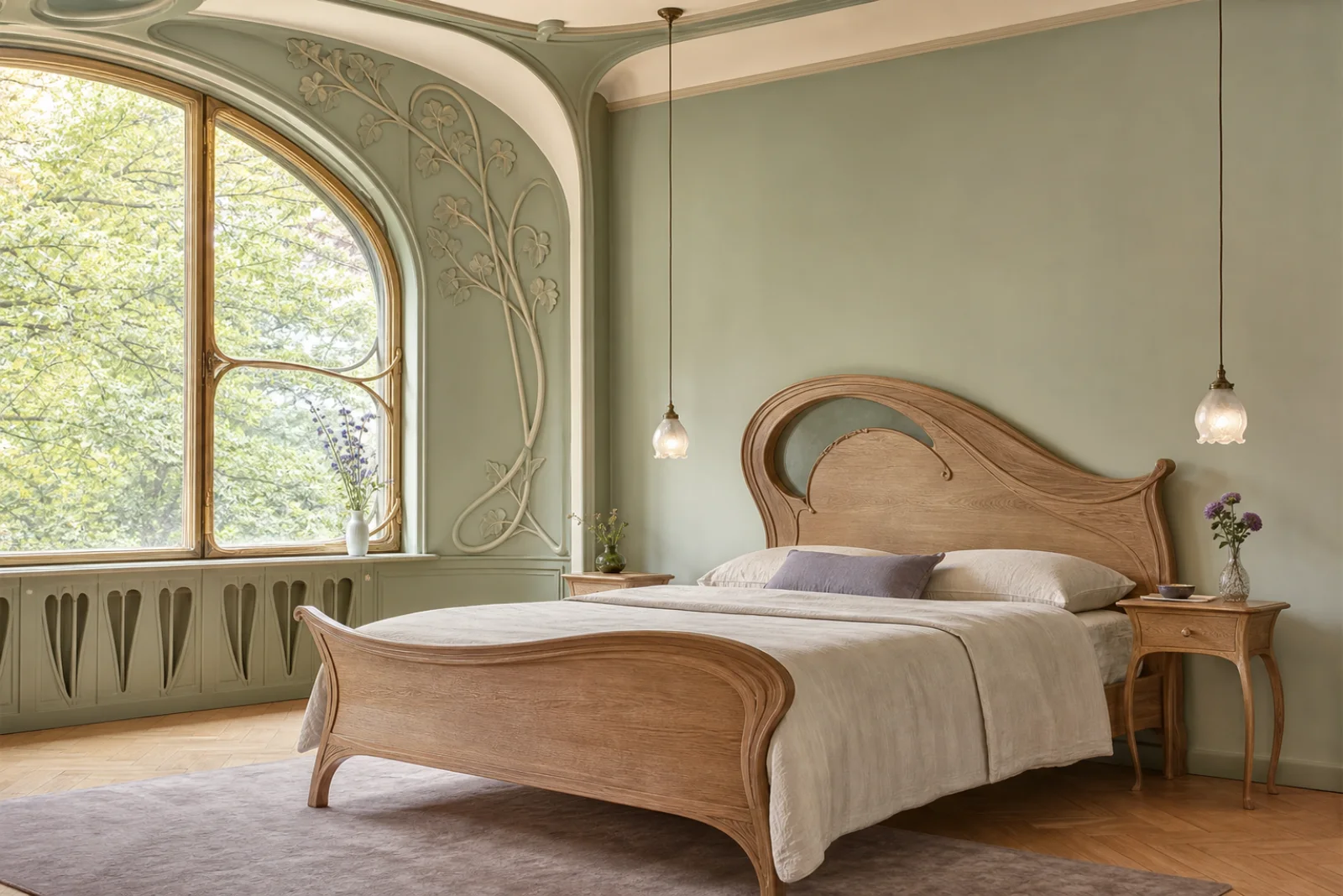
Curved ash headboard
Look for grain that follows the profile and one confident asymmetric sweep rather than applied carving.
A continuous organic line turns window, furniture, glass and hardware into one composed interior rather than a collection of floral motifs.
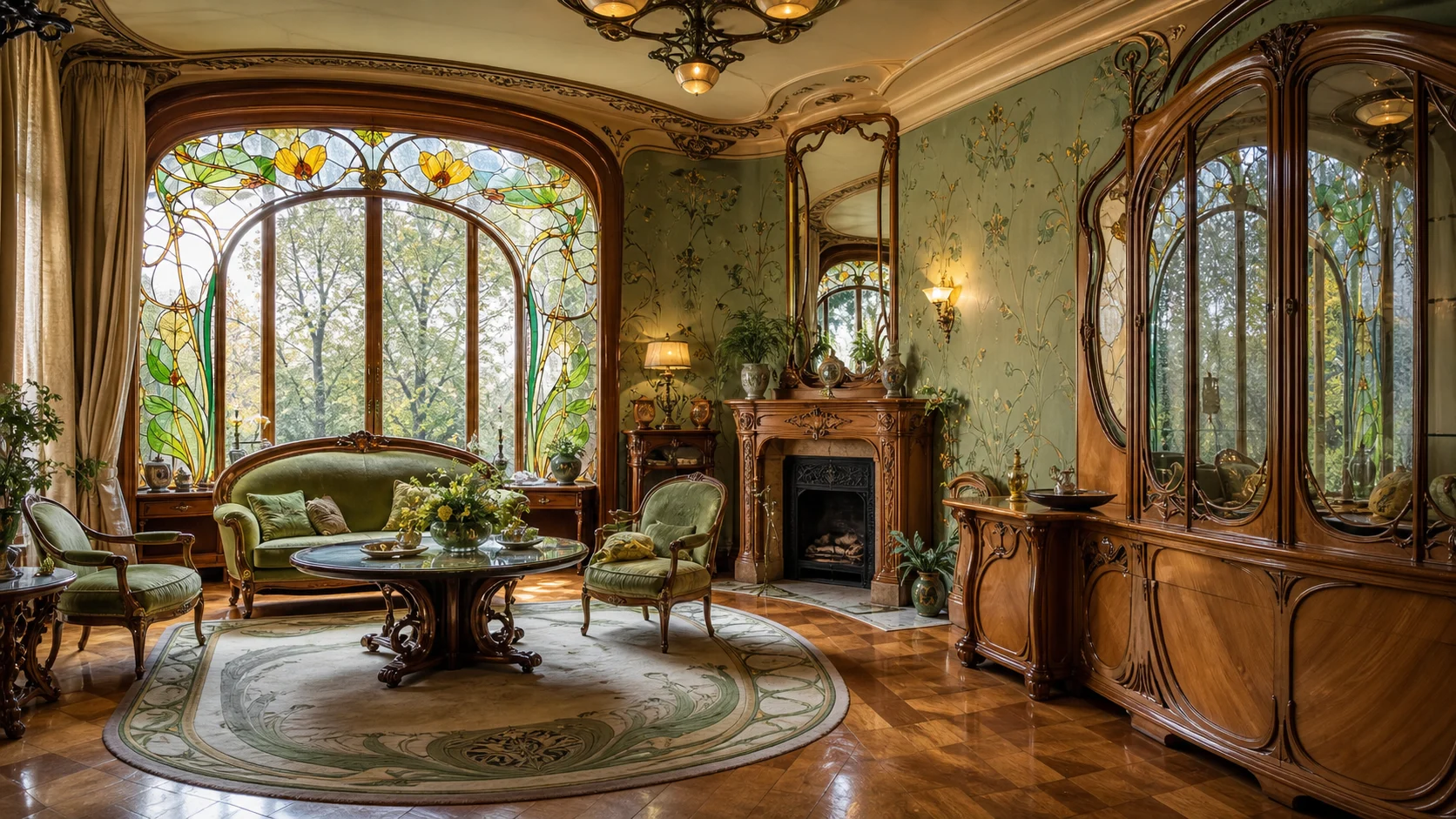
Art Nouveau emerged across Europe around 1890–1910 as designers sought a modern language rooted in nature and total design. Architecture, furniture, glass, metalwork and graphics were conceived together. Stems, wings and waves were abstracted into structural curves, often creating an asymmetrical composition that still feels balanced.
The style is more than floral imagery. Its strongest interiors carry one contour from a door frame into a cabinet, lamp or leaded-glass panel, with materials chosen to support the same movement. Unlike Art Deco, it favors supple growth over stepped geometry; unlike Victorian design, it aims for visual unity rather than an eclectic accumulation of objects and historical references.
Choose an S-curve, stem or asymmetric arch and repeat its direction rather than copying a literal flower.
Build the motif into a frame, handle, chair back or glass seam so ornament also explains construction.
Plain plaster and simple textiles make the crafted lines visible and prevent the room from becoming illustrative.
Long lines accelerate, reverse and taper like stems in motion rather than repeating a fixed geometric module.
Openings, fitted furniture, lights and hardware share a visual grammar without becoming a matching retail set.
Opalescent and stained glass turn daylight into color while lead and bronze provide the drawing.
Iris, ginkgo, vine and insect forms are simplified until growth and movement matter more than literal depiction.
Let one window or built-in define the room’s curve, then use simpler upholstery so the architecture stays legible.
Repeat a soft S-curve between the headboard, window reveal and one pendant; keep bedding mostly plain.
Coordinate an oval table, stem-back chairs and a low pendant through line, not through identical ornament.
Curve fitted joinery around a real work zone and use one sculptural task lamp rather than decorative desktop clutter.
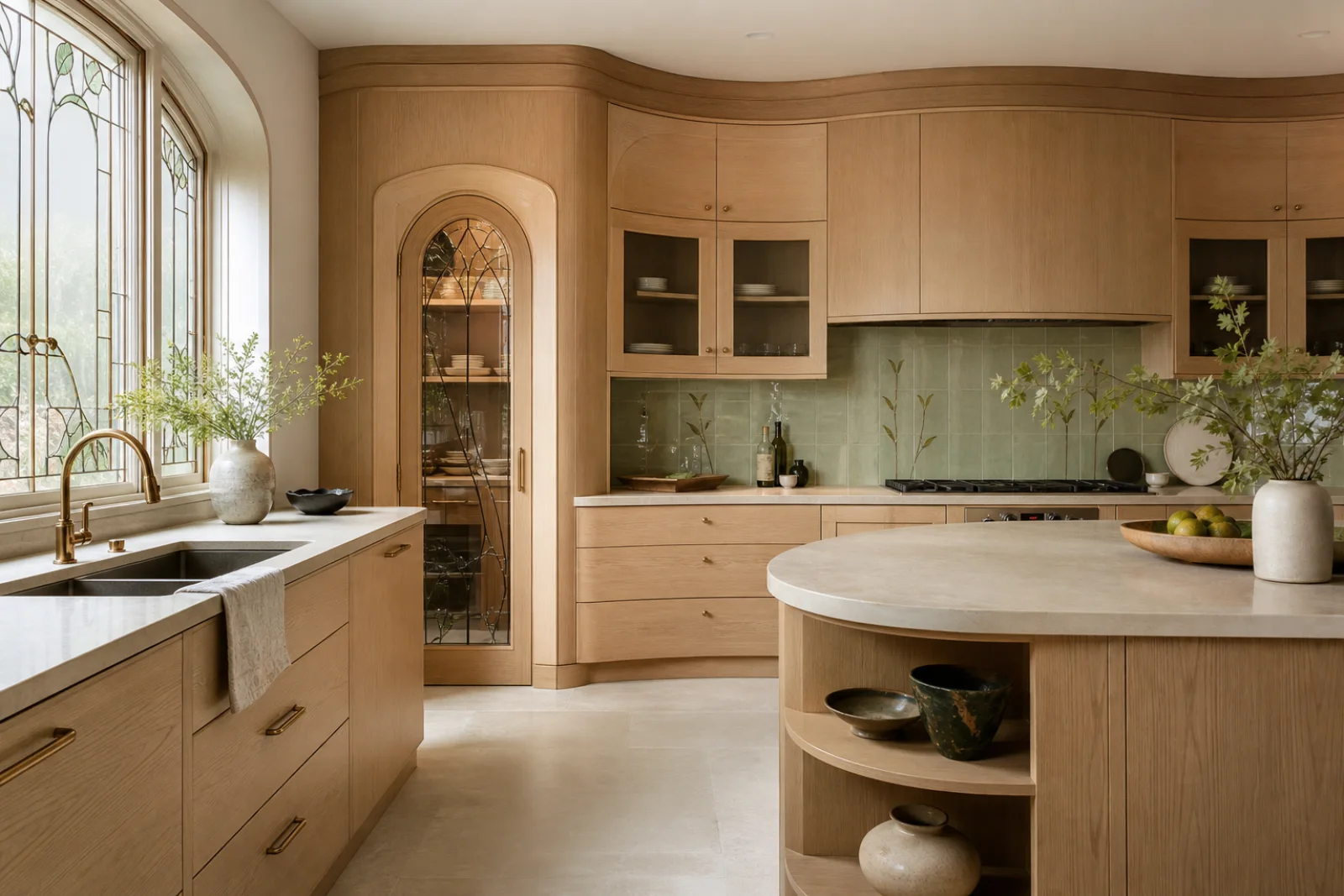
Shape upper rails, a rounded peninsula and one glass pantry door while preserving ordinary cabinet function.
An integrated timber-and-glass door surround can carry the entire style in a small hall.
Start with pale plaster, celadon and honey-toned wood. Let glass introduce translucent green, violet and amber, then repeat only one of those colors in textile.
A pale mineral green that supports timber and colored glass without becoming botanical wallpaper.
A luminous wood tone suited to bent profiles, marquetry and fitted joinery.
A quiet violet for wool, glass or one painted accent.
Adds depth around pale wood while retaining an organic rather than jewel-toned mood.
Activates glass and shaded lamps in small, warm concentrations.
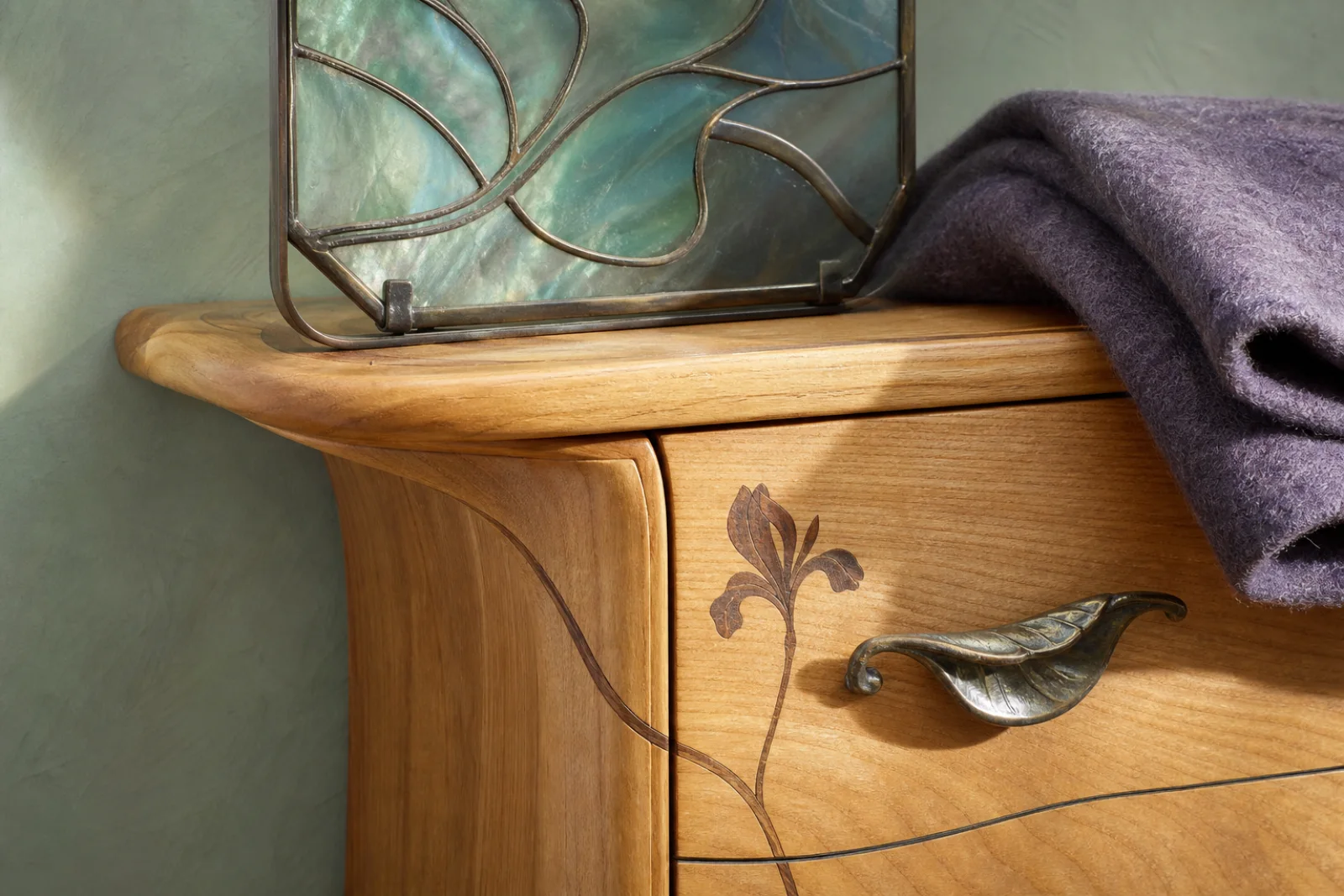
A fine inlaid stem carries line across a cabinet without adding heavy relief.
Color shifts with daylight, making a small panel more dynamic than a large printed motif.
Cast handles and lamps translate leaf structure into touchable, functional details.
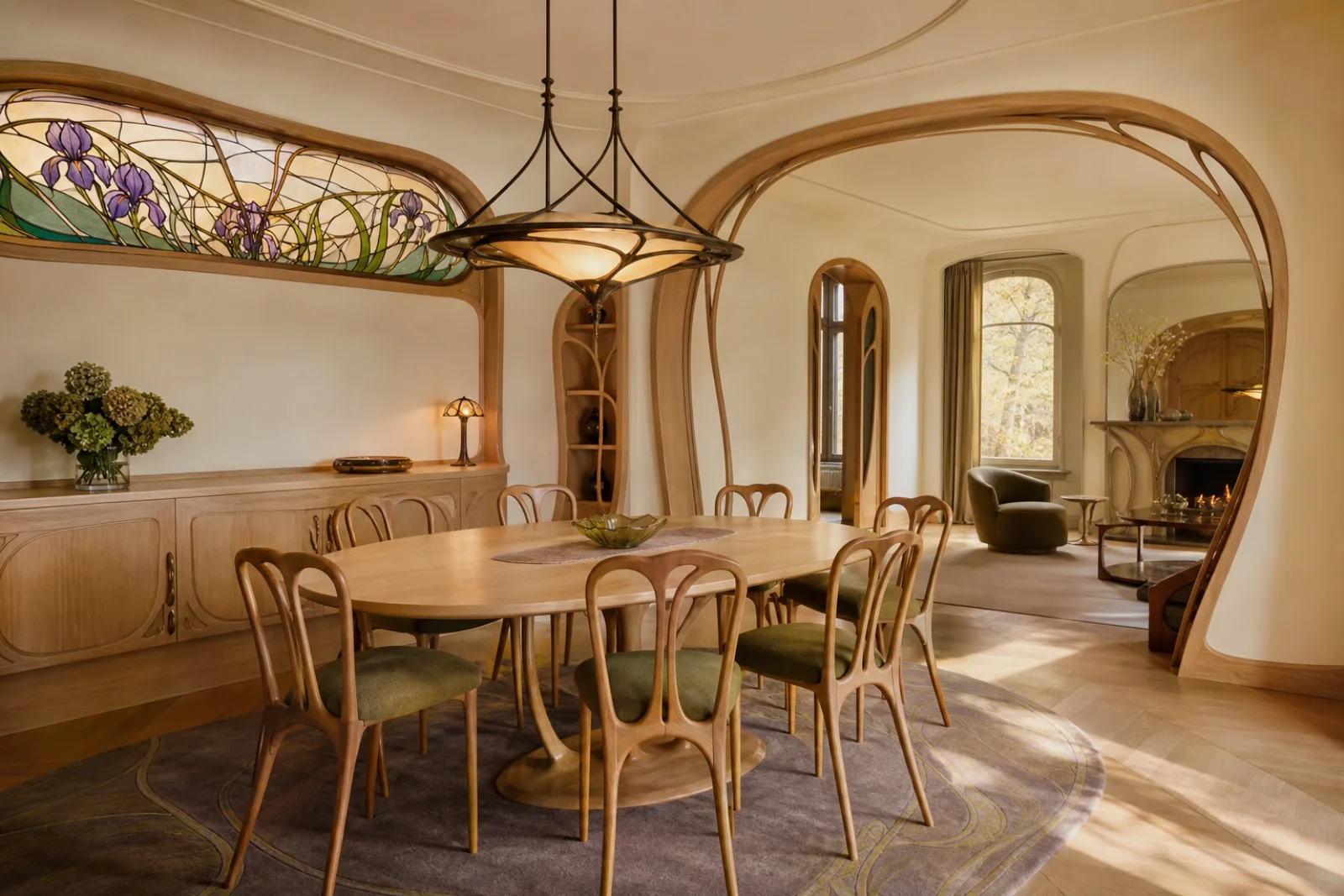
Visible grain follows the profile, reinforcing movement through the material itself.
Choose one source form and carry its movement through a few connected decisions. Art Nouveau becomes convincing through continuity, not through the number of decorative motifs.
Study an iris, ginkgo leaf, wing or wave and reduce it to one directional contour.
Use that contour in the largest crafted element: a window, door, bed or fitted bookcase.
Repeat the movement in a handle, lamp arm or chair back without copying the exact drawing.
Use plain plaster, low-pattern textiles and restrained objects to preserve visual flow.
When the room feels wrong, change the underlying decision before adding more decor.
Replace literal prints with one abstract structural line integrated into wood, glass or metal.
Select one dominant direction and vary its scale rather than introducing unrelated scrolls.
Remove stepped symmetry, sunbursts and hard fan geometry; restore taper, asymmetry and plant-like movement.
Keep shelves adjustable, doors operable and worktops clear beneath the expressive outer profile.
Art Nouveau is distinctive because every scale can participate in the same movement. Its organic forms are designed into the room rather than added as botanical styling.
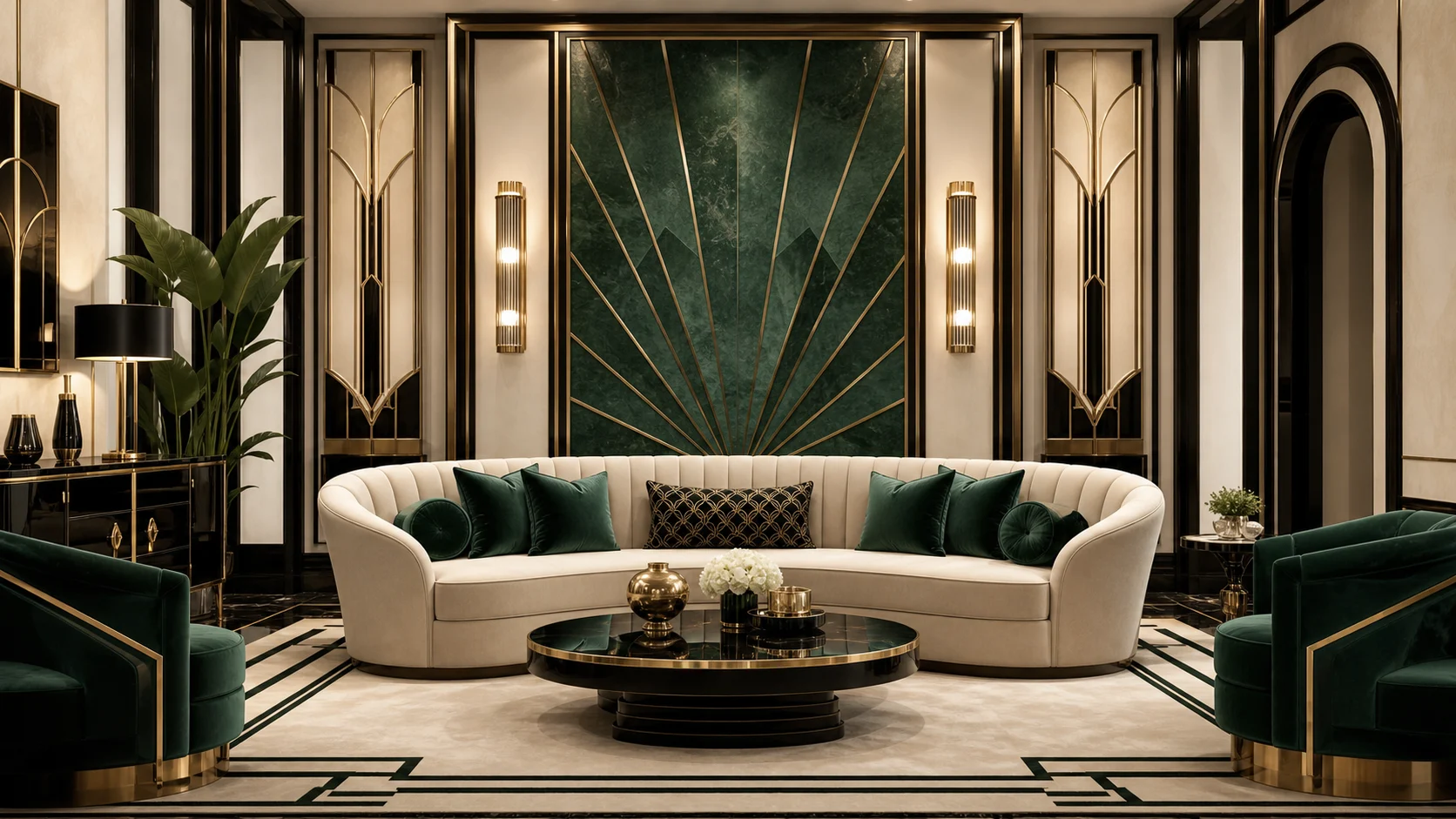
More geometric, symmetrical and polished, using stepped forms, fans, strong contrast and luxurious hard surfaces.
Choose Art Nouveau for asymmetry, fluid growth and craftsmanship that behaves like a drawn line.
Whiplash curves and stems replace sunbursts and repeated geometry.
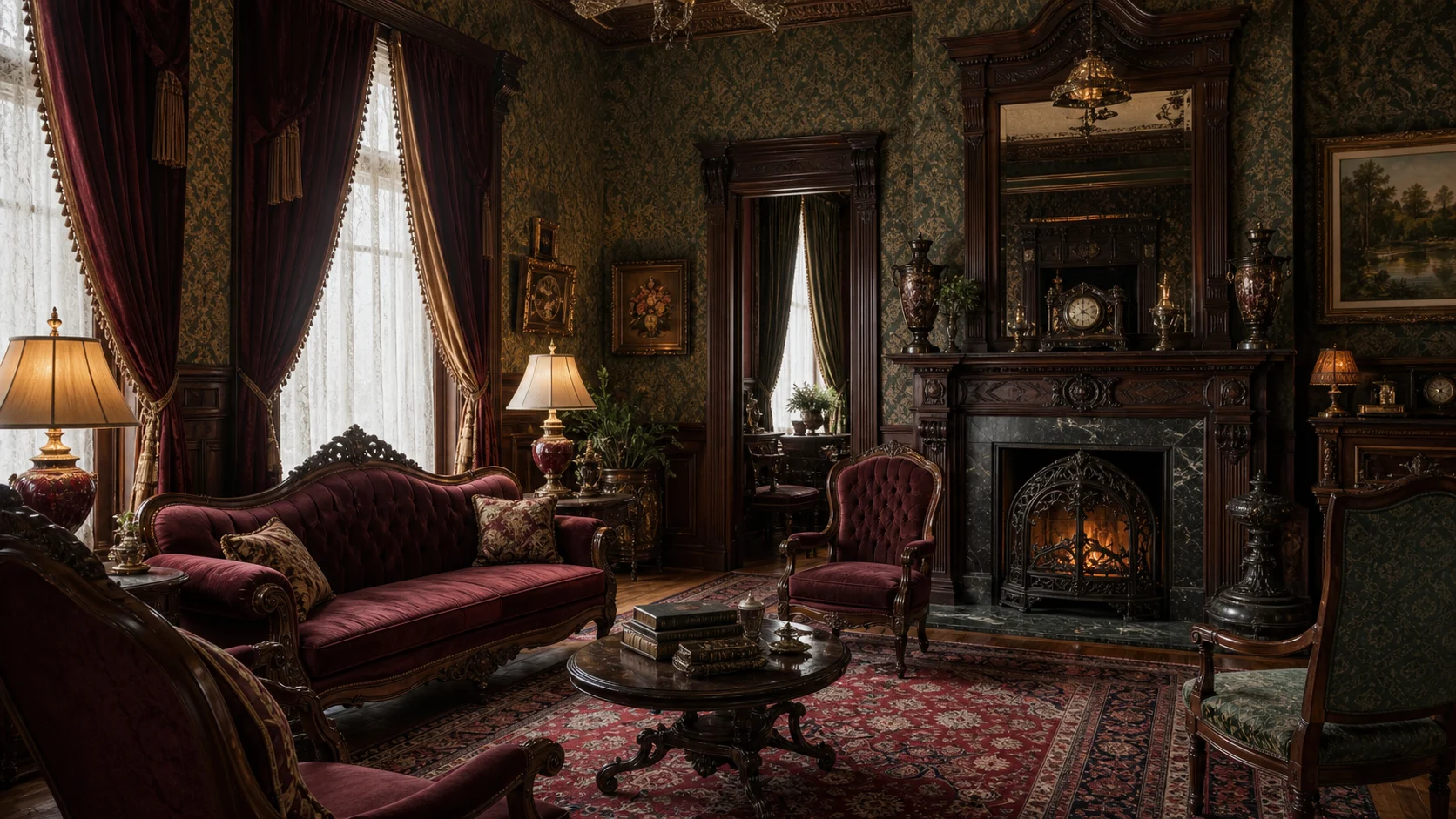
More eclectic and densely layered, mixing historical references, pattern scales and collected household objects.
Choose Art Nouveau when architecture, furniture and decoration should form one coordinated composition.
Integrated joinery and glass replace accumulated pattern and furniture.
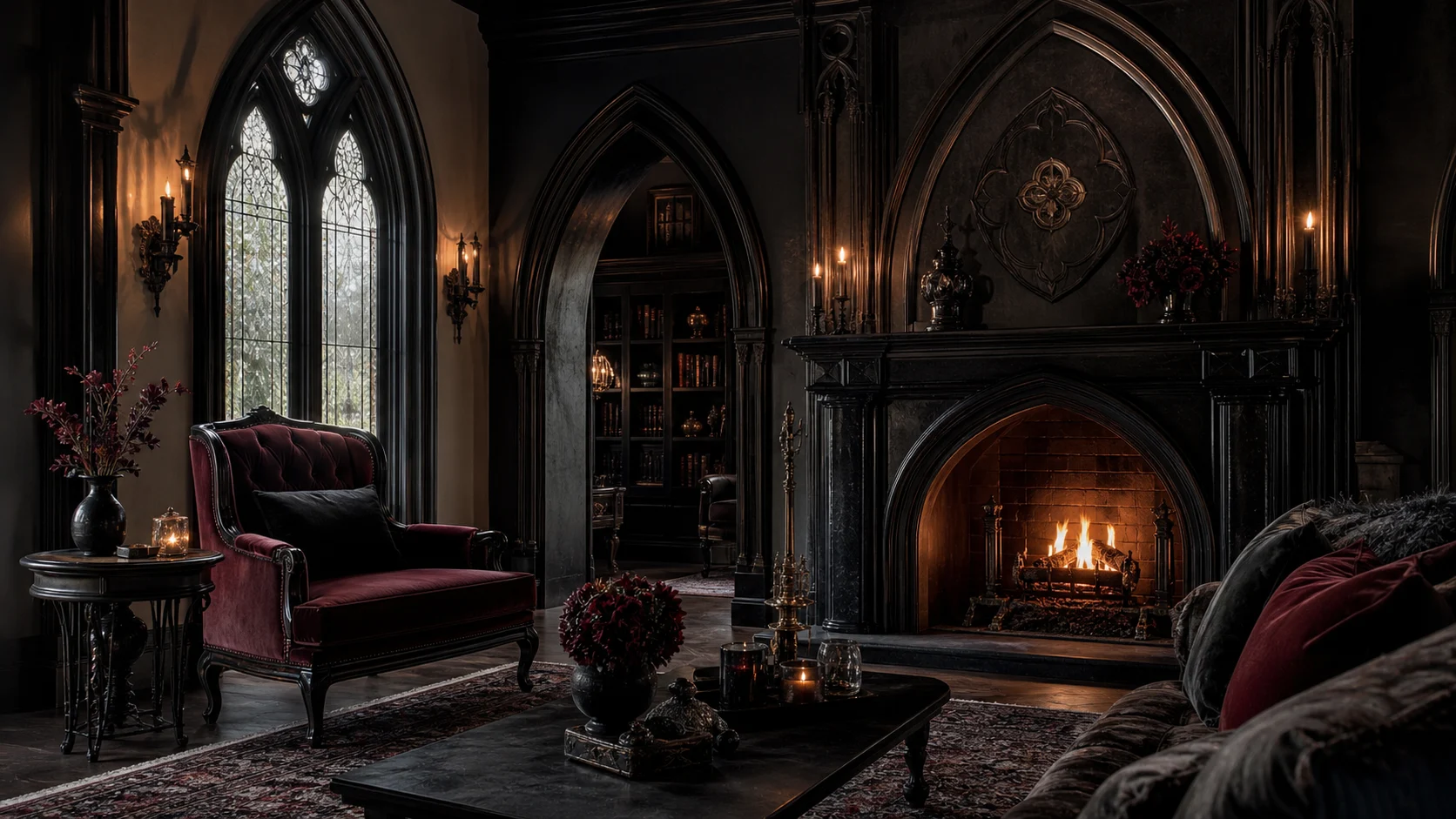
More vertical, weighty and shadowed, with pointed profiles, carved oak, stone and medieval-derived structure.
Choose Art Nouveau for lighter timber, organic asymmetry and a more luminous relationship with nature.
Supple curved openings replace lancets and deep reveals.
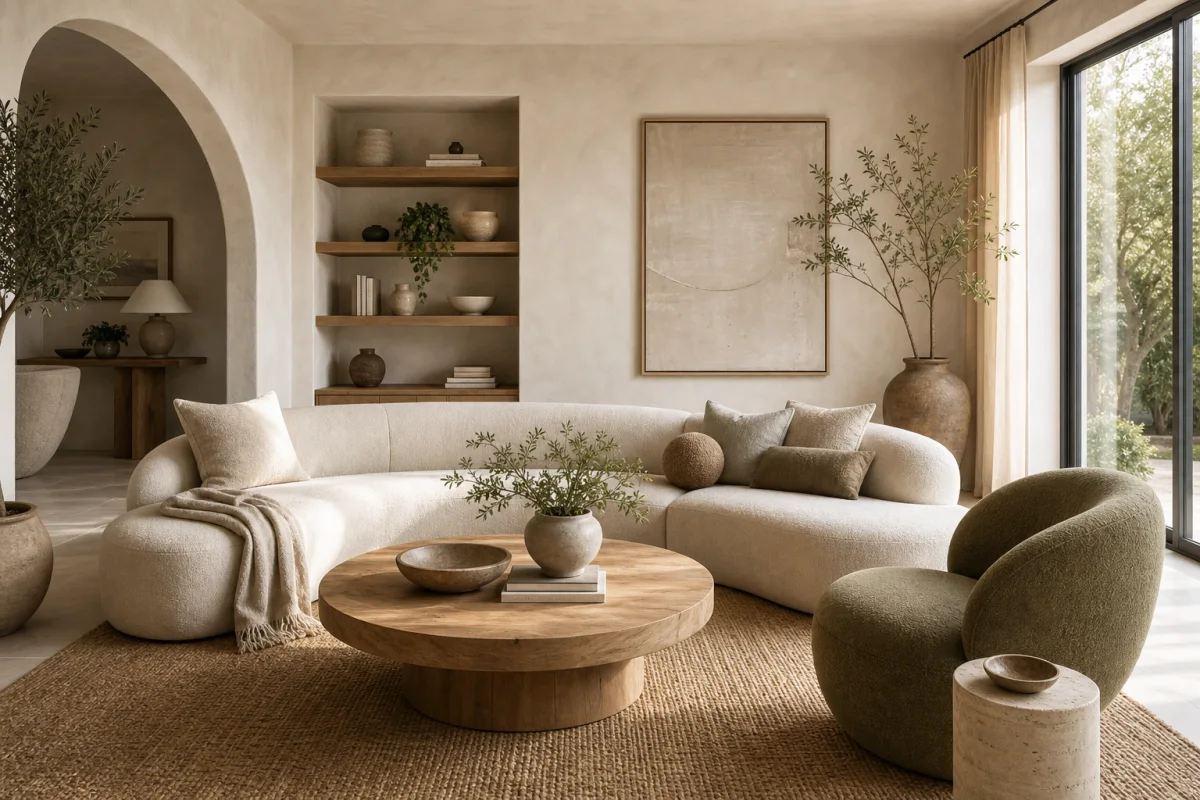
Quieter and more minimal, emphasizing soft contemporary forms, neutral color and natural texture with little ornament.
Choose Art Nouveau when organic form should become explicit line, craft and integrated imagery.
Stained glass and marquetry replace unadorned sculptural volumes.
One authentic crafted element is more effective than a group of themed accessories. Prioritize line quality, material honesty and a useful relationship to the room.
Look for grain that follows the profile and one confident asymmetric sweep rather than applied carving.
A functional opening can introduce translucent color while connecting cabinetry to architecture.
The back should feel light and supportive, with the organic line emerging from construction.
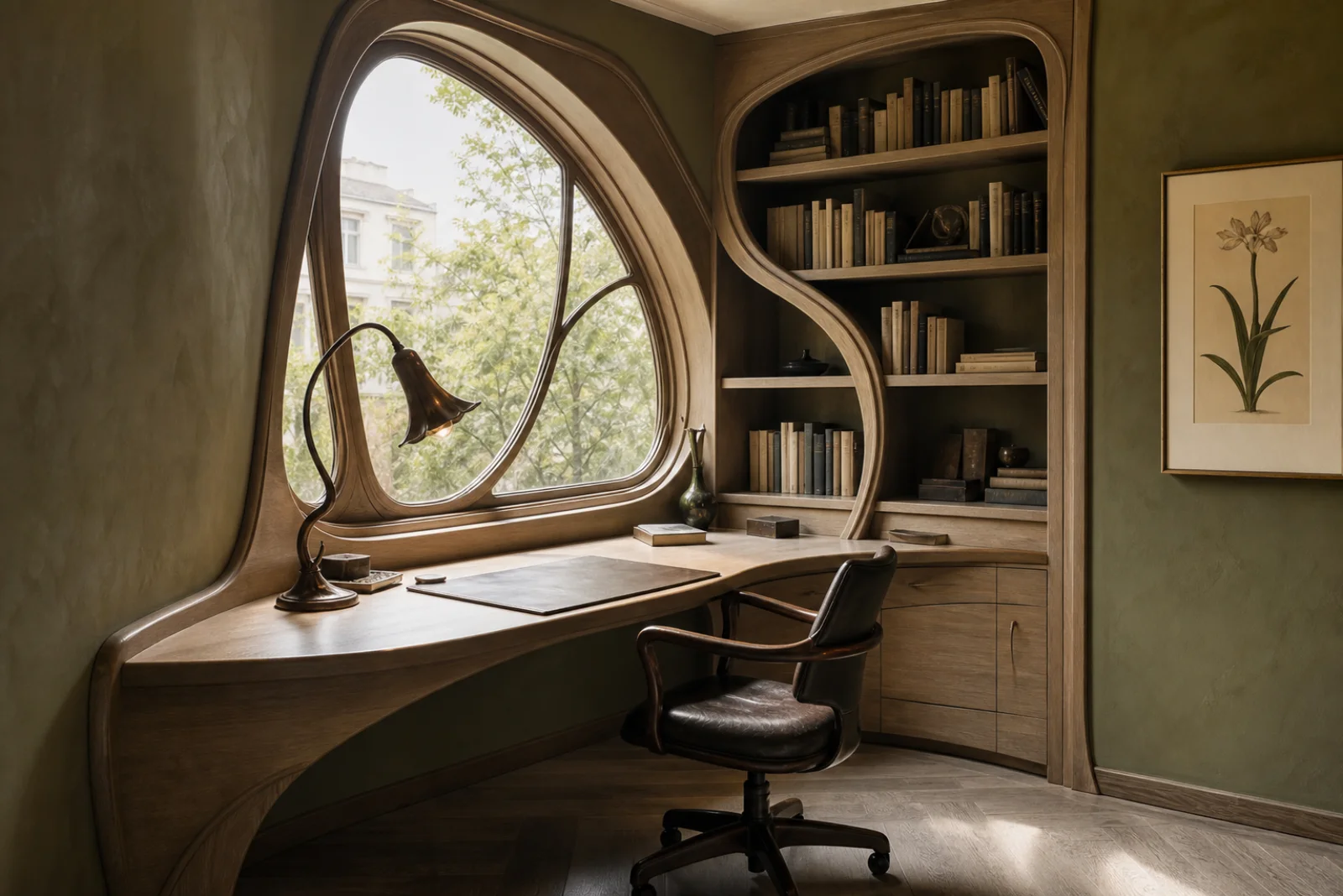
Use a custom contour around the window while preserving cable access, knee room and storage.
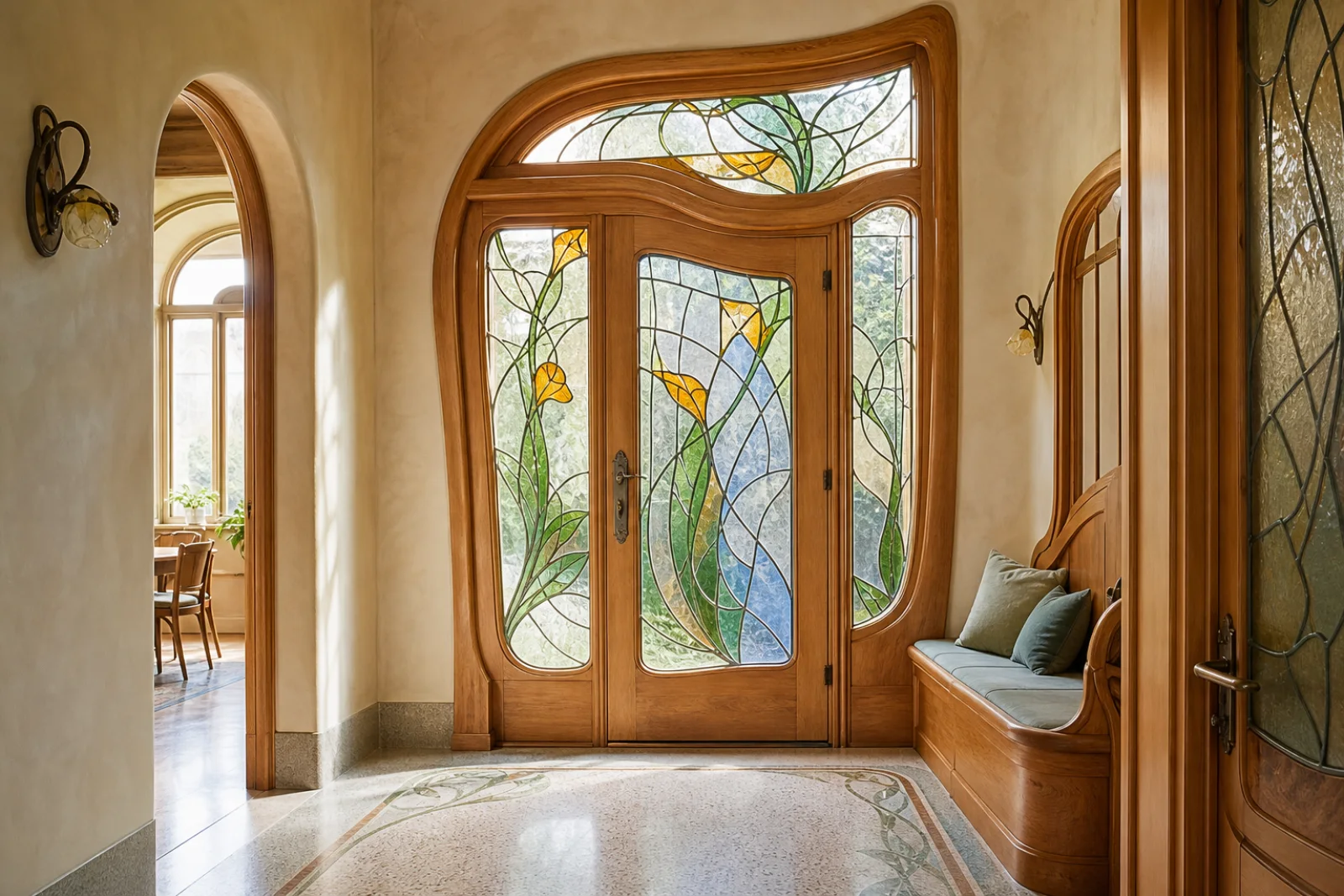
Place colored glass where daylight makes it useful and visible from adjoining rooms.
A small tactile casting can carry more character than a large decorative print.