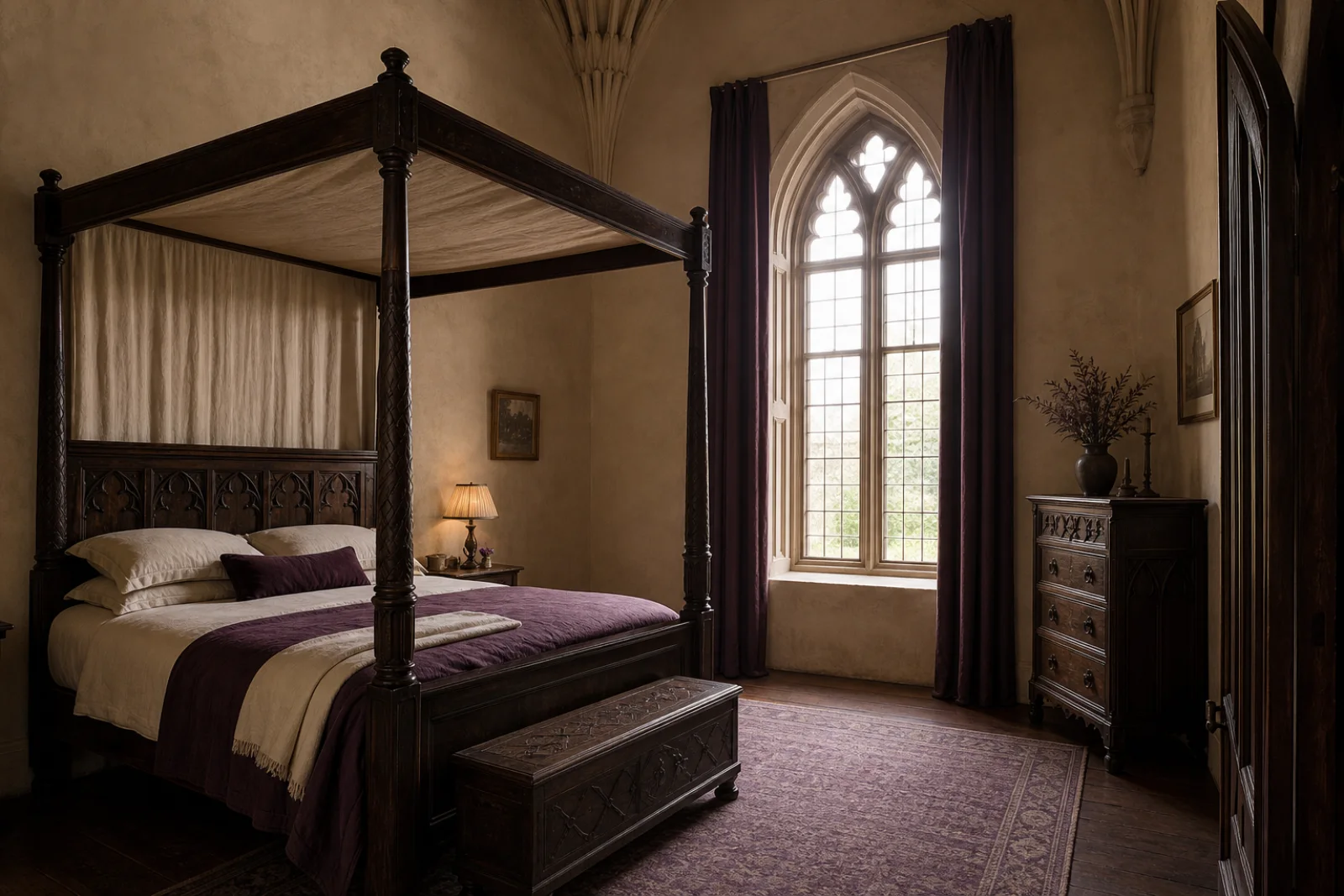
Carved four-poster bed
Choose a clear vertical frame and restrained relief; plain linen keeps the silhouette readable.
Vertical form, deep shadow and visible craft create drama with architectural purpose—not darkness for its own sake.
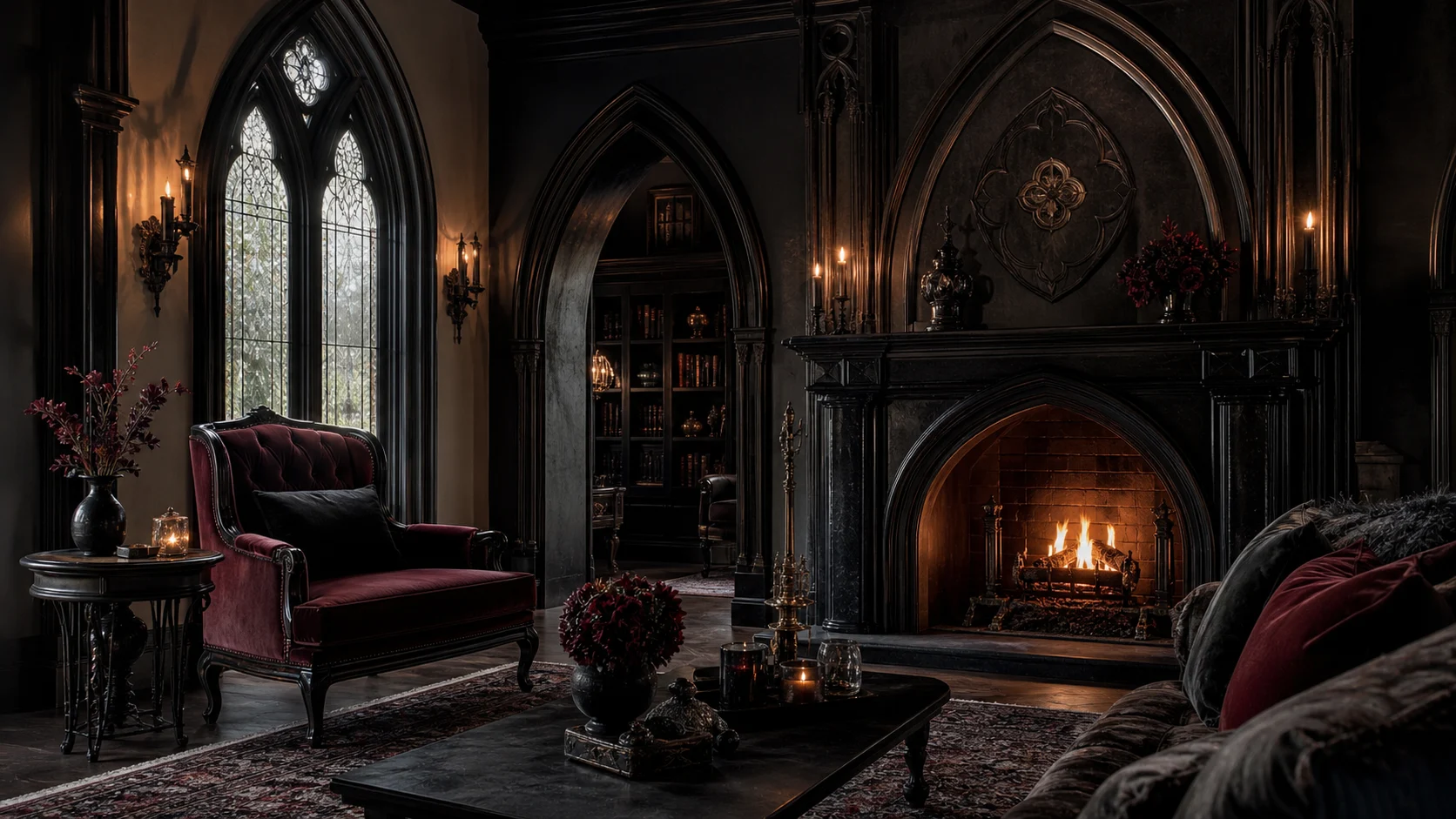
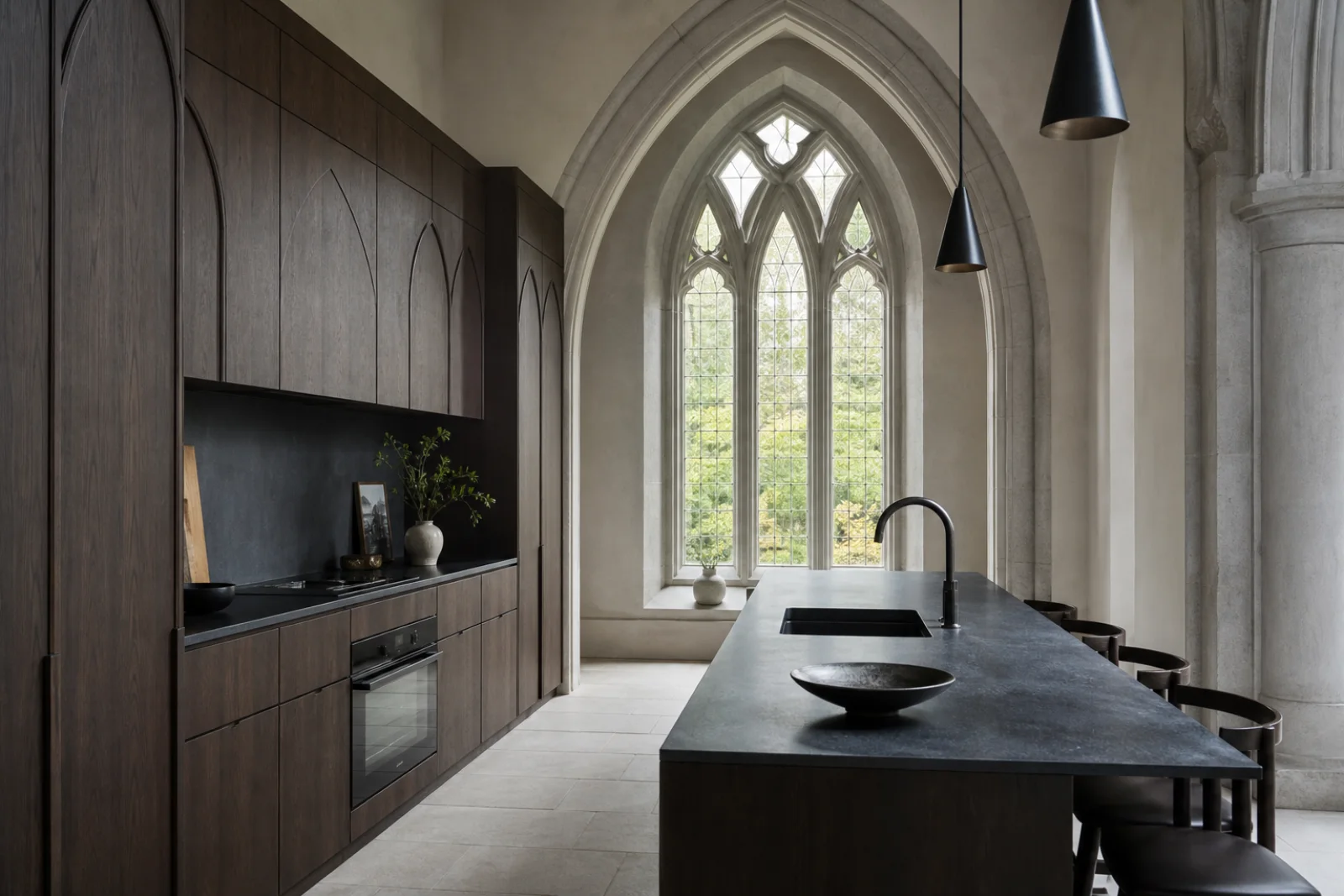
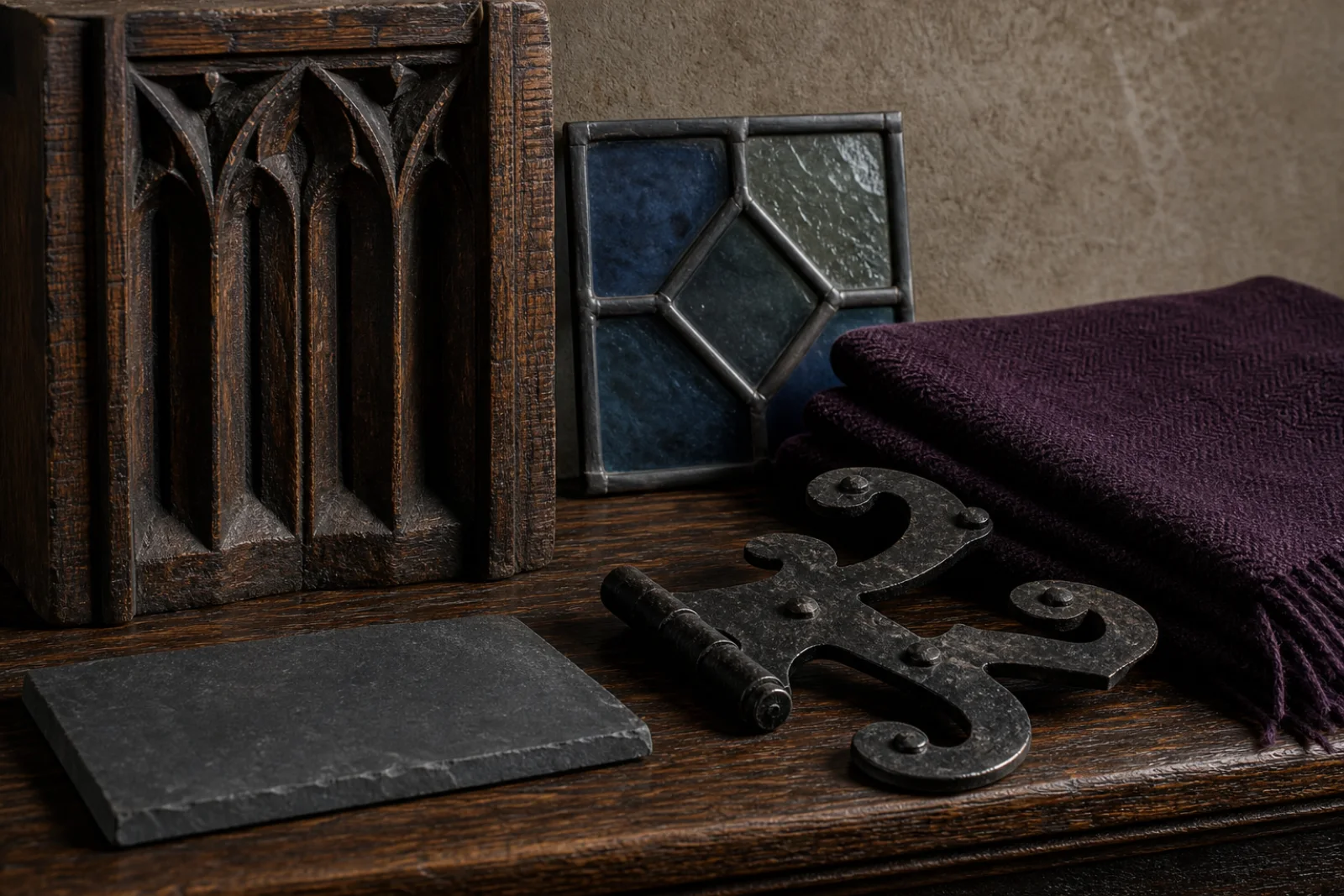
Gothic interior design translates the structural language of medieval European architecture into domestic space: pointed arches, vertical proportions, deep openings, ribbed forms, carved timber and leaded glass. Most homes use the later Gothic Revival interpretation, where those references appear in joinery, furniture and surface detail rather than in cathedral-scale construction.
The style is defined by direction and contrast, not by black paint. A dark oak portal against pale lime plaster, a tall window carrying daylight deep into the room or a high-backed chair repeating a lancet shape can establish the idea. This architectural focus separates Gothic from Victorian eclecticism and from theatrical haunted-house styling.
Repeat a pointed or elongated proportion across openings, shelves and furniture without tracing every surface.
Concentrate craft on doors, benches, handles and case furniture rather than applying motifs as flat decoration.
Combine pale walls, deep timber reveals and focused lamps so relief remains visible throughout the day.
Lancet arches and steep profiles give openings, chair backs and cabinetry an unmistakable upward pull.
Windows, doors and fireplaces gain weight through layered stone or dark timber surrounds.
Linenfold panels, tracery and iron hinges reveal how an object is assembled and touched.
Daylight and shaded task lamps cut through shadow, making texture more important than overall brightness.
Let a tall window or pointed fireplace set the axis, then keep seating lower and simpler so the architecture retains its lift.
Use one four-poster bed with a restrained carved headboard against warm plaster; aubergine wool adds depth without turning the room black.
A long refectory table and high-backed chairs work best when daylight, pale walls and generous circulation temper their weight.
Repeat shallow pointed arches only at the top of built-in shelves and support work with a modern task light.
Keep cabinetry flush and functional, using a lancet-panel rhythm and one stone-framed opening rather than medieval props.
A single dark portal against lime plaster creates more credible drama than filling a narrow hall with ornate furniture.
Balance one dark structural color with a larger pale mineral field. Use aubergine or smoky blue in textile and glass, then keep metal blackened rather than glossy.
A near-dark chromatic field that preserves more depth than flat black.
Reflects daylight and makes carved timber outlines legible.
The structural anchor for portals, furniture and paneled lower walls.
A restrained textile note that brings warmth to slate and timber.
Adds cool translucent color without a bright jewel-tone effect.
Deep relief catches side light and gives doors or furniture a crafted structural presence.
Narrow panes and dark cames emphasize vertical rhythm while filtering daylight.
A quiet mineral plane grounds elaborate joinery without adding another motif.
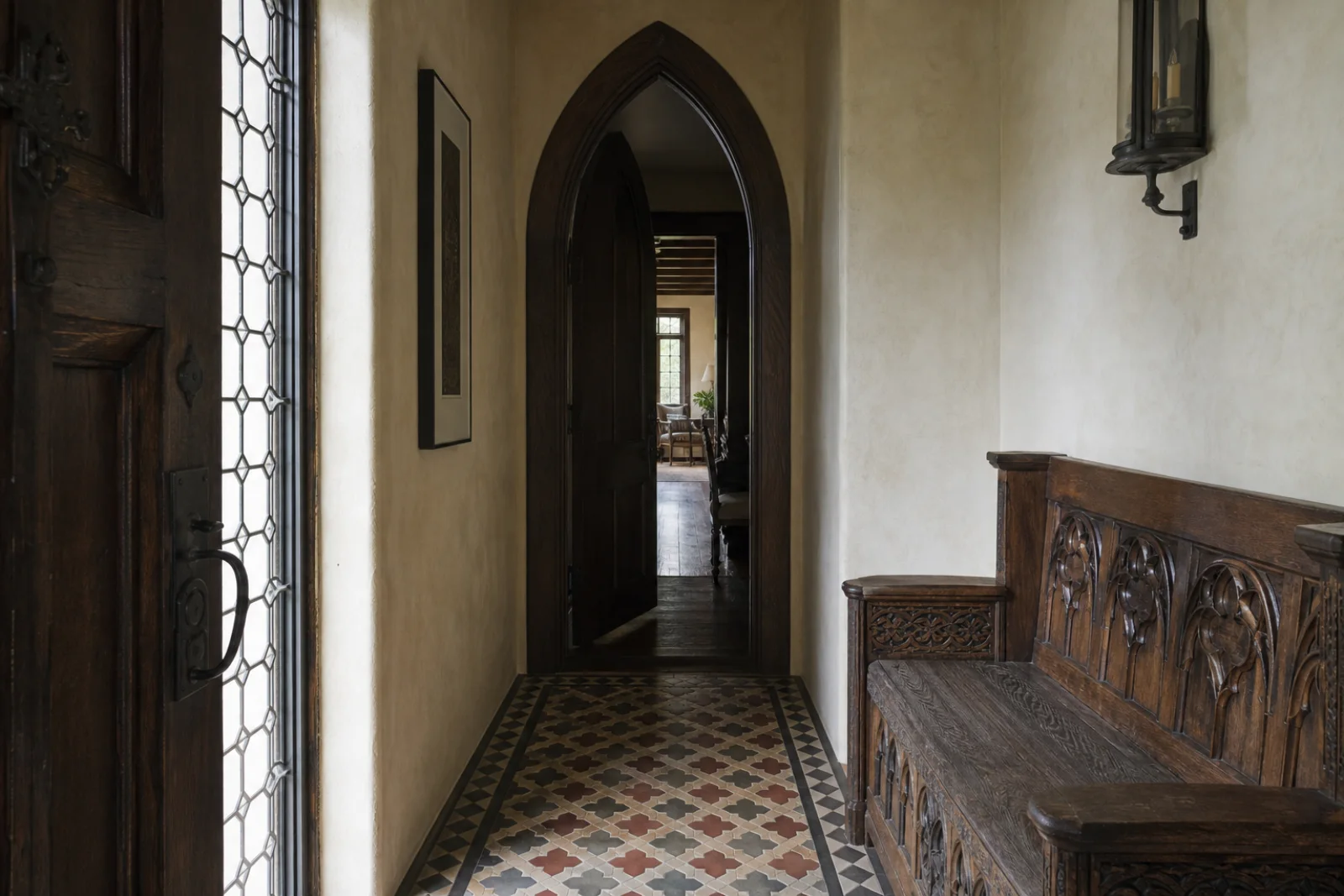
Hand-forged hinges and lanterns bring visible function to the decorative language.
Build the room around one architectural gesture and one clear source of light. Gothic character strengthens when vertical form and material depth are allowed space to register.
Start with a portal, window, bed or bookcase whose elongated proportion can organize the view.
Use warm plaster or stone around the anchor so dark carving reads through contrast.
Echo the pointed line in a chair back, cabinet bay or textile border—not across every object.
Place lamps at reading, dining and work height to reveal texture without flattening the shadows.
When the room feels wrong, change the underlying decision before adding more decor.
Move darkness into timber, iron and deep reveals while restoring pale mineral walls and visible daylight.
Remove armor, skulls and faux-medieval props; invest in one convincing piece of joinery instead.
Choose one repeated contour and let plain stone, wool and timber provide visual rest.
Keep seating ergonomic, task surfaces clear and passages generous behind the strong silhouette.
Gothic is an architectural language before it is a mood. Pointed geometry, depth, craft and controlled light distinguish it from any room that is merely dark or antique-filled.
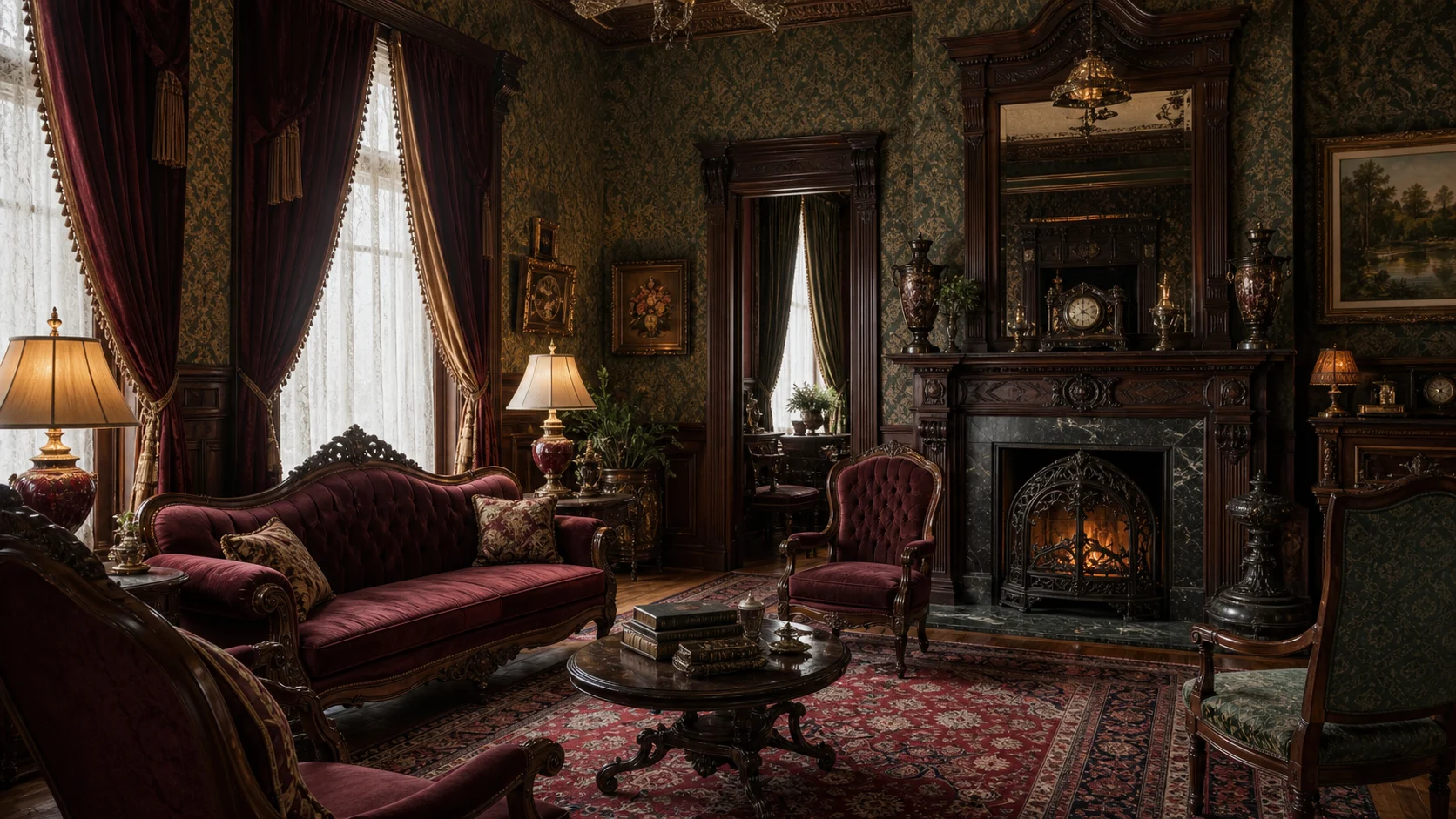
More domestic, eclectic and pattern-rich, with divided walls, florals, collections and furniture for many household rituals.
Choose Gothic for a stronger vertical axis, medieval-derived profiles and concentrated architectural craft.
Lancet forms and deep portals replace broad surface layering.
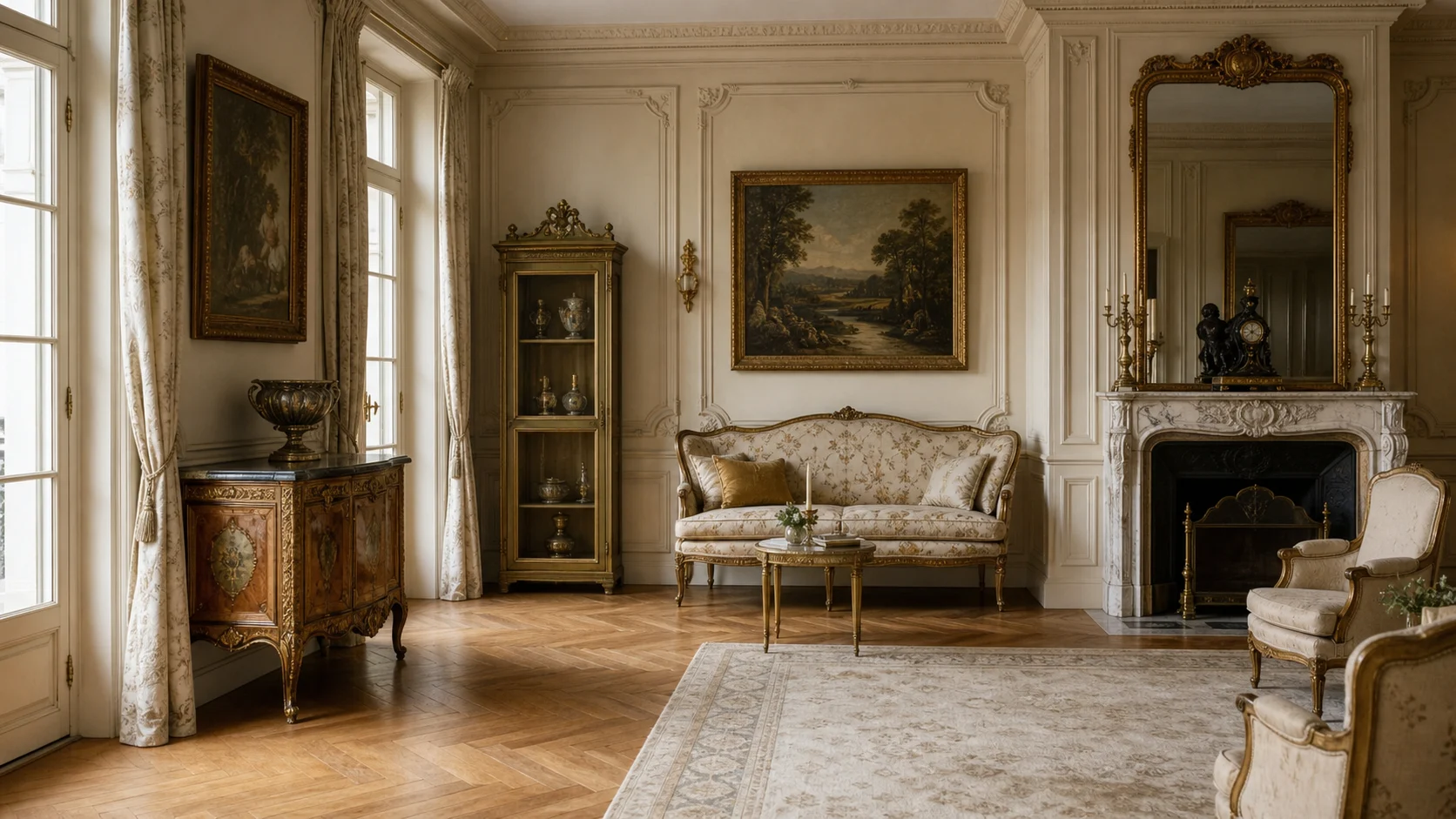
More symmetrical, pale and horizontally composed, with refined antiques and measured classical ornament.
Choose Gothic when the room should feel vertical, shadowed and materially weighty.
Pointed openings and carved relief replace classical panels and balanced axes.
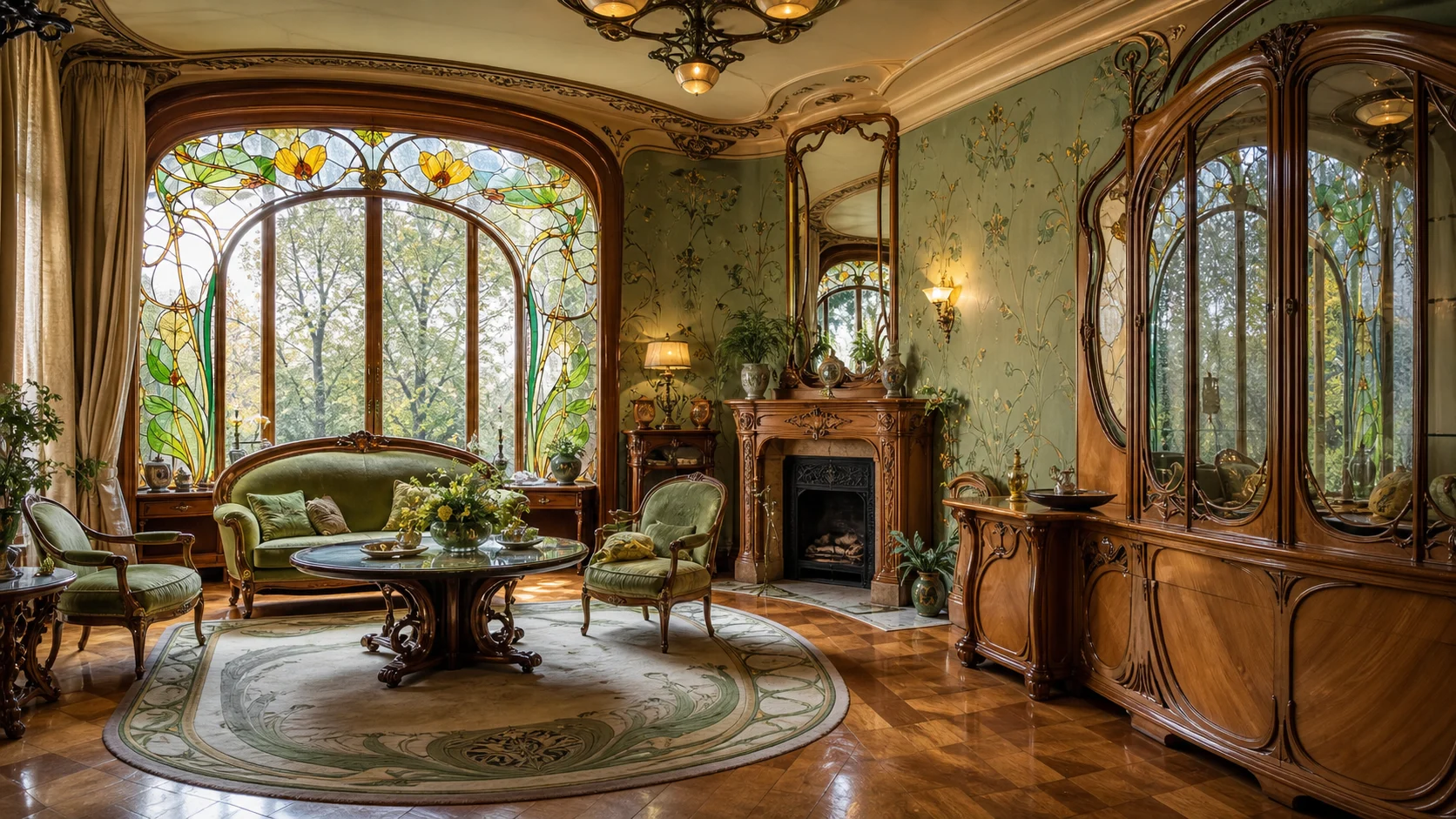
More fluid, botanical and continuous, carrying curved organic line through glass, metal and furniture.
Choose Gothic for angular upward geometry, heavier timber and a more structural atmosphere.
Lancets and ribs replace whiplash curves and stems.
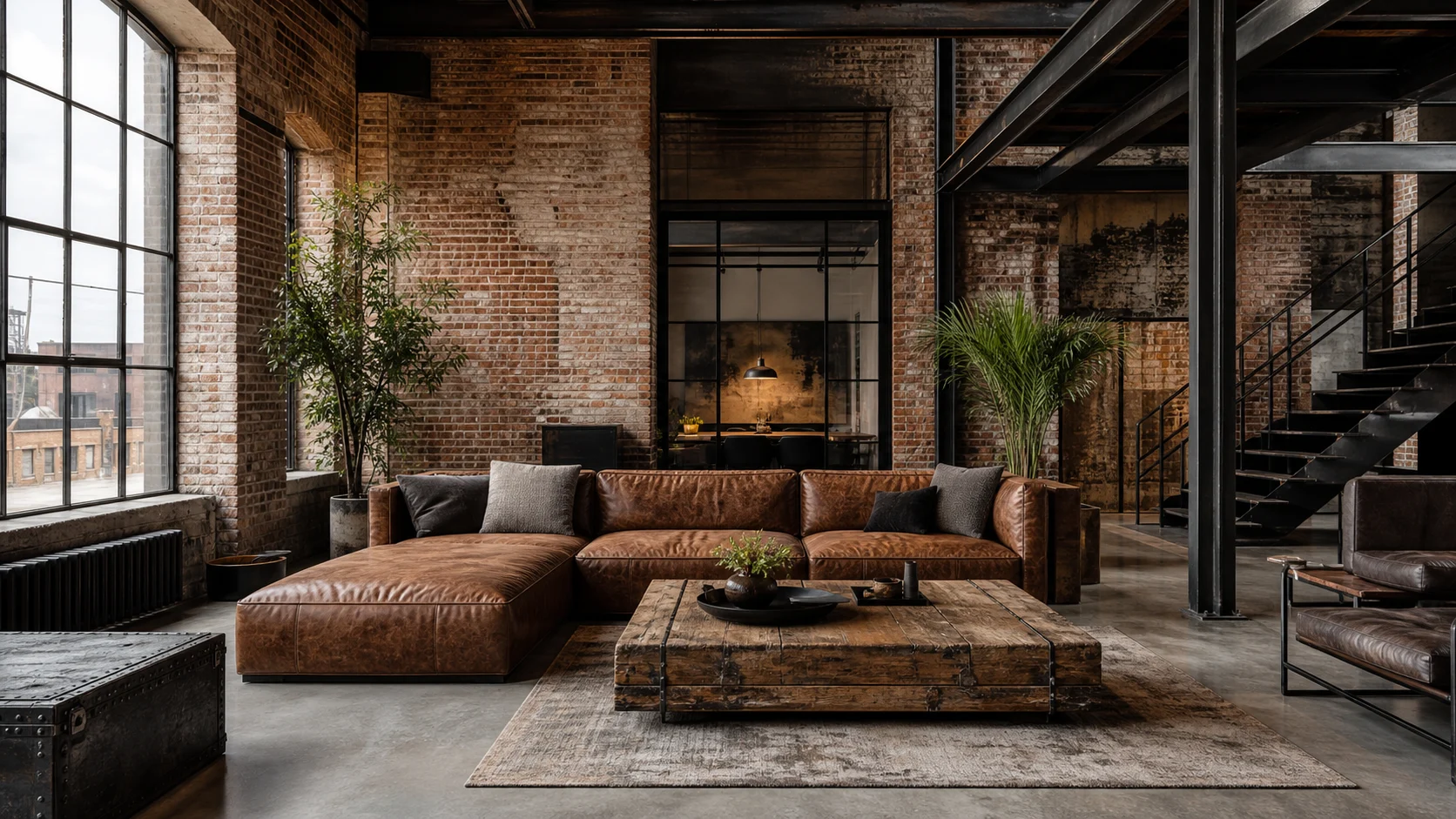
More utilitarian and raw, exposing steel, brick and building services with little historical ornament.
Choose Gothic when darkness should come from craft, masonry and symbolic form rather than factory structure.
Carved oak and leaded glass replace exposed ducts and steel frames.
Look for objects whose construction carries the style. One well-made door, chest or high-backed chair is more useful than a collection of inexpensive Gothic-themed accessories.
Choose a clear vertical frame and restrained relief; plain linen keeps the silhouette readable.
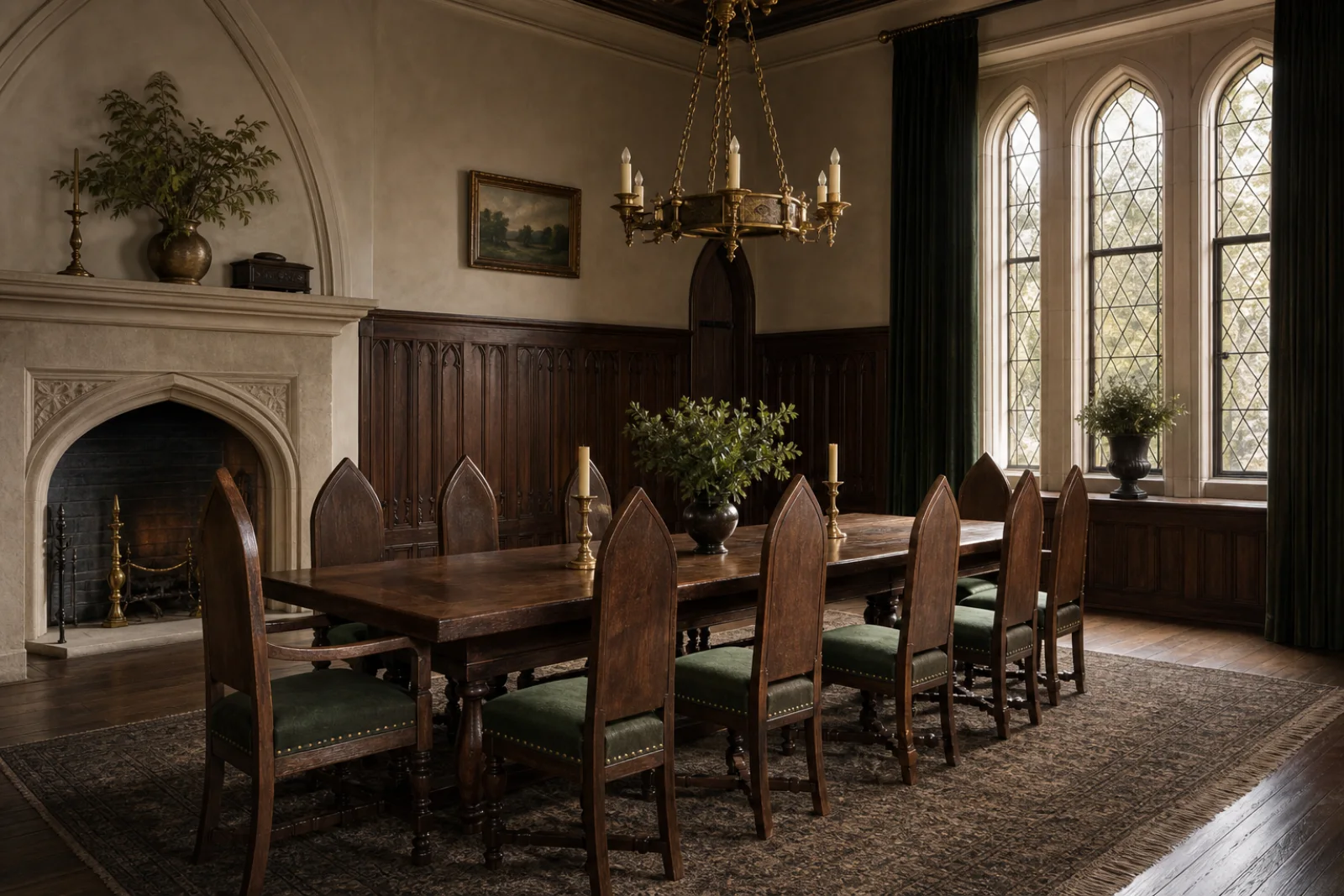
A long solid top and visible trestle structure give the room weight without decorative clutter.
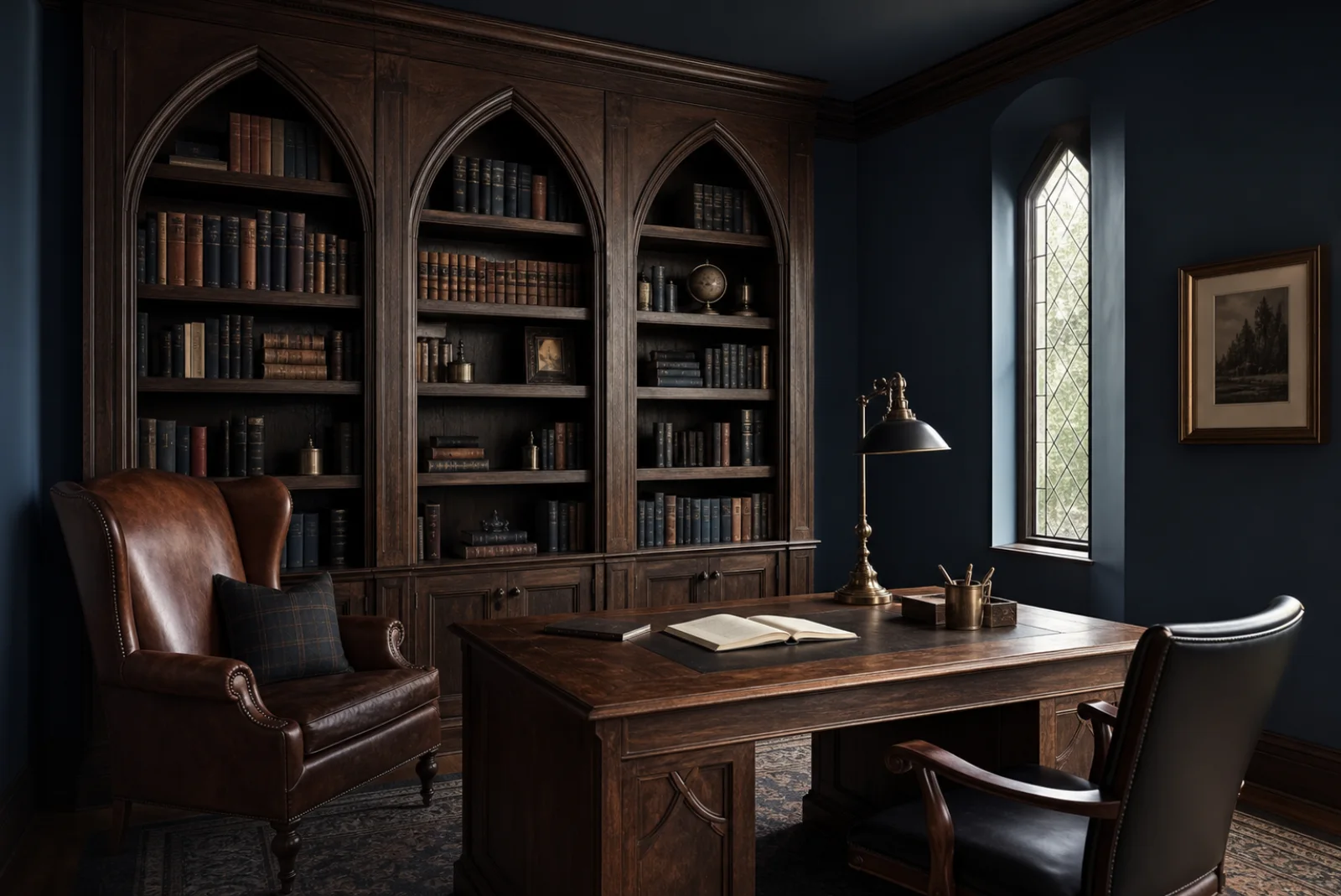
Use pointed upper bays over ordinary adjustable shelves so the reference does not reduce storage.
Its matte dark plane supports oak cabinetry and pale stone without competing pattern.
A narrow useful seat can carry the room’s strongest piece of handwork.
Use smoky, restrained color and place it where real daylight can activate the glass.