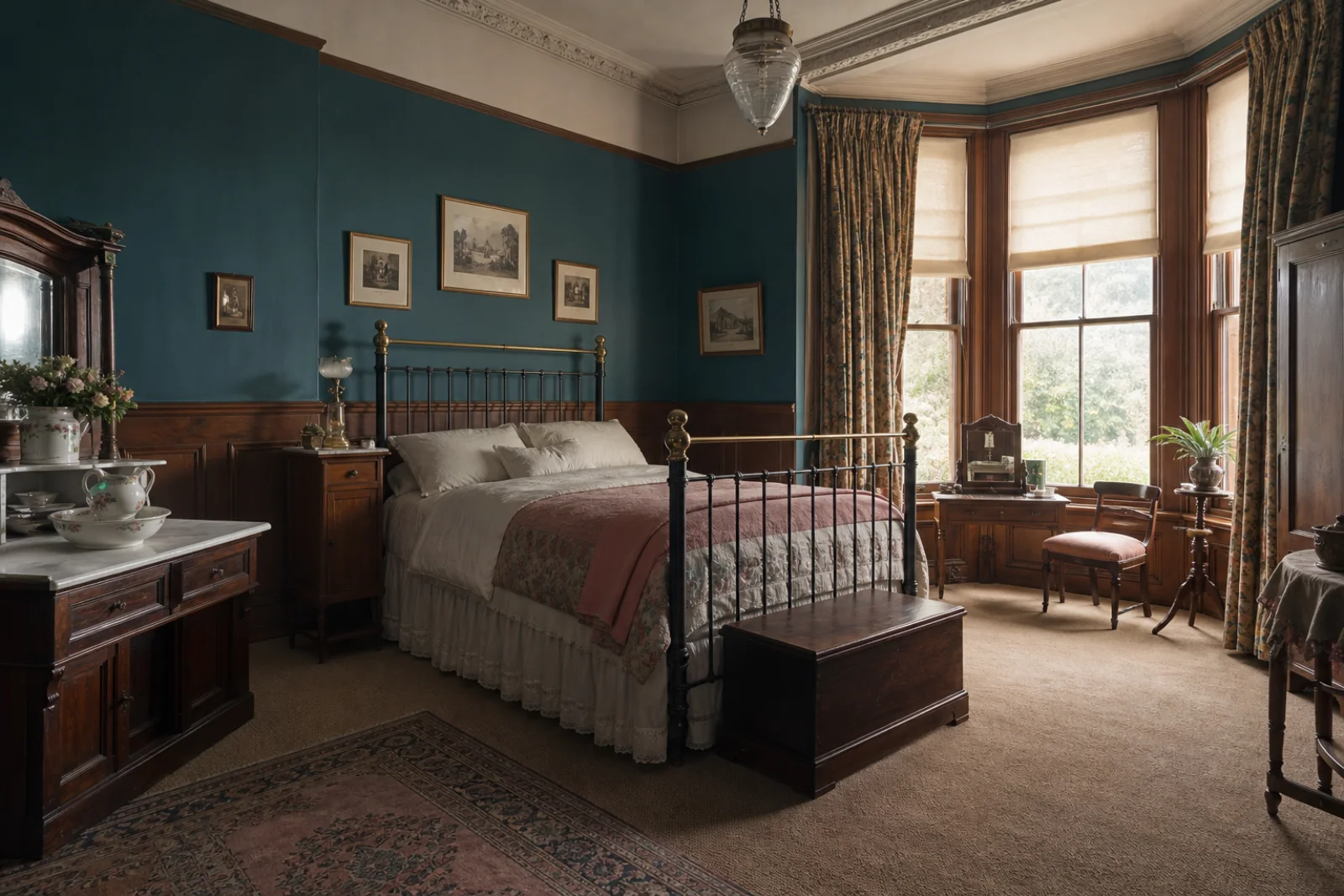
Brass-and-iron bed
Look for a strong outline and secure joints; keep bedding simpler than the frame.
Color, pattern and collected objects arranged with purpose—the Victorian room is generous, expressive and built for daily rituals.
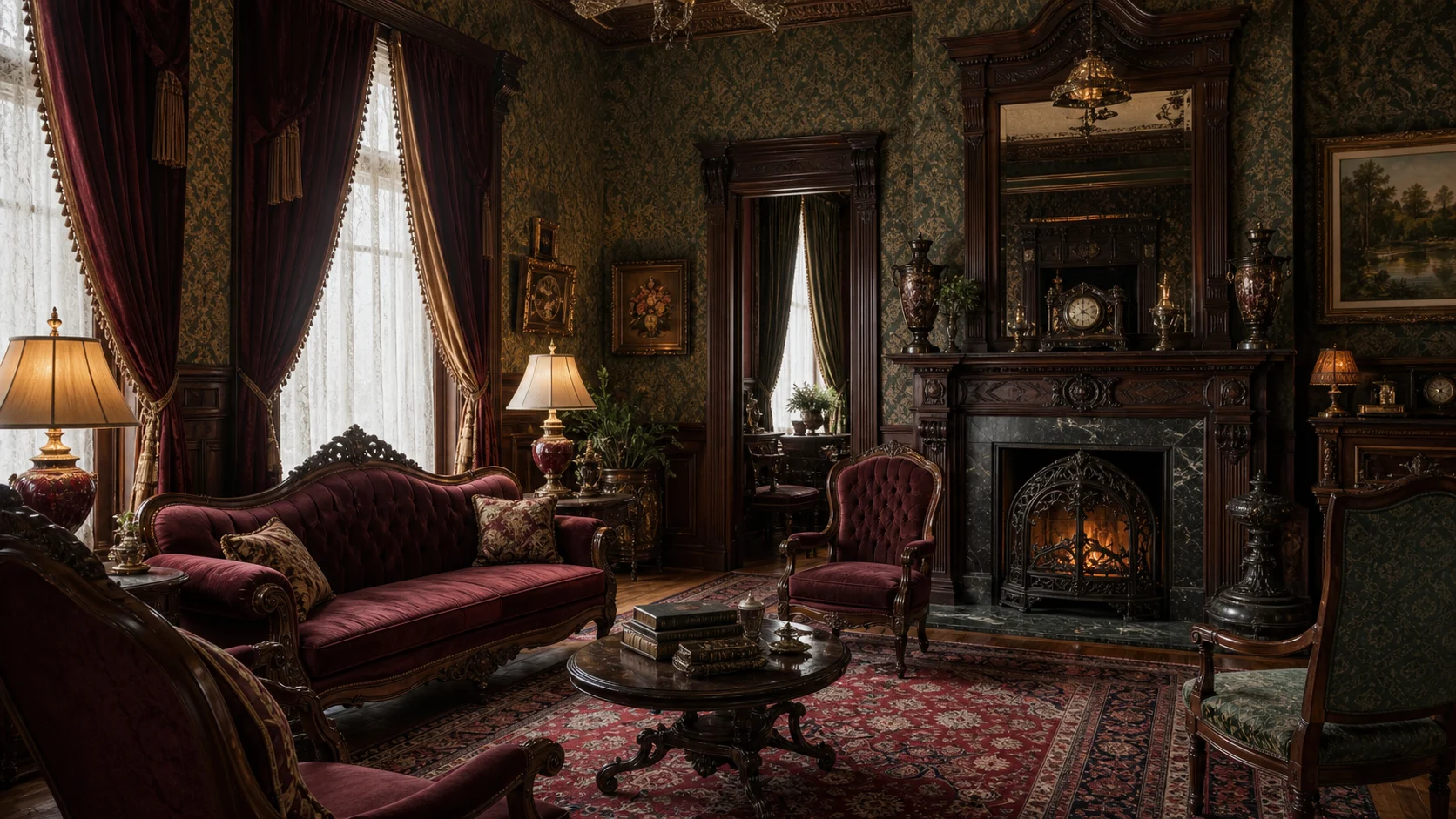
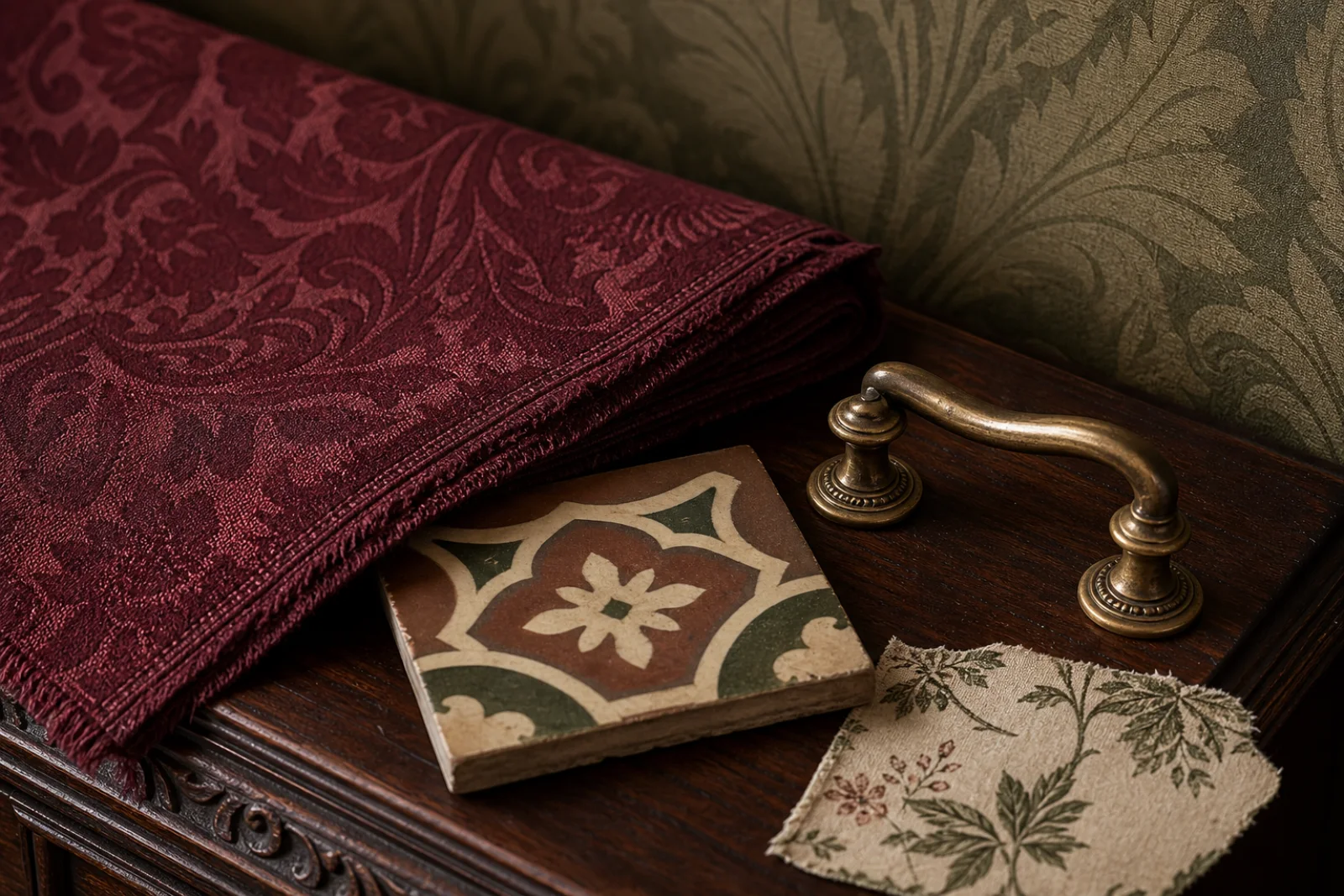
Victorian interior design reflects the long, inventive period from 1837 to 1901 rather than one fixed look. Industrial production broadened access to wallpaper, tile, cast iron, upholstery and furniture, while expanding trade brought new woods, dyes and decorative influences into the home. The result was layered, but rooms still followed a clear social and functional order.
A useful modern interpretation keeps that appetite for color, pattern and collections while editing density. Deep wall color, a patterned floor and substantial timber furniture can carry the character; every lamp, frame and cushion does not need fringe. Unlike Gothic design, Victorian style is domestic and eclectic first—pointed arches and medieval motifs are only one possible strand.
Give floor, wall and upholstery different scales of pattern so they read as an ordered stack rather than visual noise.
A reading chair, writing desk, washstand or hall chair should explain how the room is used.
Keep windows bright and use shaded lamps at several heights; deep hues need luminous edges.
Dado, picture rail and frieze let color, paper and timber occupy distinct architectural bands.
Small botanical prints, geometric tile and broad upholstery motifs coexist without being identical.
Roll-top desks, extending tables and storage cabinets combine visual weight with real utility.
Table lamps and shaded pendants create intimacy while windows keep the room from becoming oppressive.
Use the fireplace as the visual center, then form two close seating groups instead of lining ornate furniture against every wall.
A brass-and-iron bed, divided wall color and one floral textile create period atmosphere without heavy bed drapery.
Ground claret walls with walnut wainscot and keep the table surface mostly clear so the room remains sociable.
Combine a working roll-top desk with low bookcases and a separate reading chair; collections should support the subject of the room.
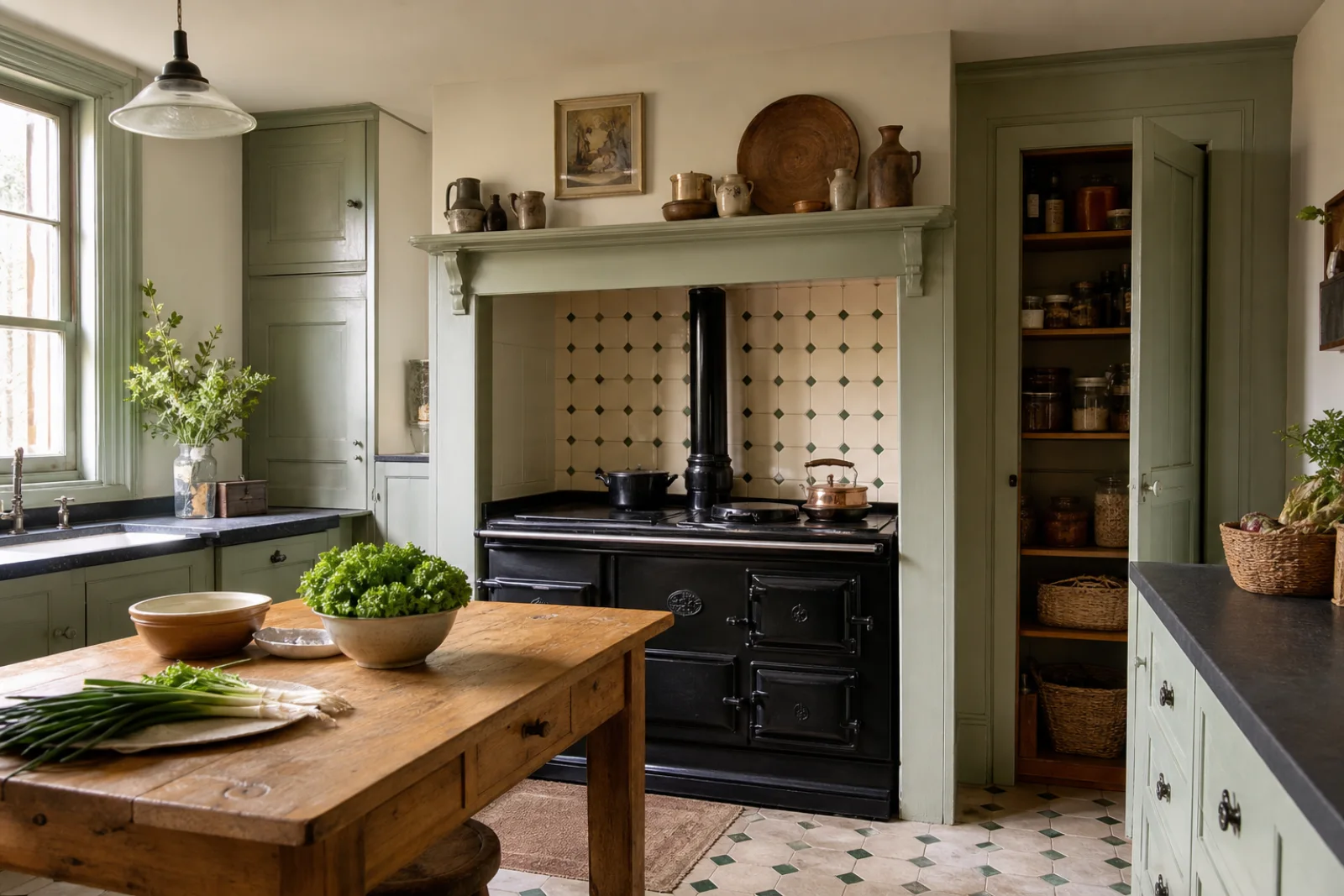
Look to service spaces: plain painted cupboards, a sturdy worktable and black iron feel truer than drawing-room ornament.
Let encaustic tile and stained glass carry the pattern, leaving the narrow passage lightly furnished.
Choose one deep wall color, one dark timber and one lighter ground. Add a neighboring accent—rose with claret or sage with teal—rather than scattering unrelated jewel tones.
A warm red with enough brown to support timber, brass and botanical art.
Rich but cleaner than black, especially effective above a walnut dado.
A scholarly middle tone for studies, papers and painted joinery.
The consistent structural dark across furniture, rails and frames.
Keeps ceilings, window reveals and lace or linen highlights luminous.
Dense woven pattern gives upholstery depth and withstands use better than decorative synthetic velvet.
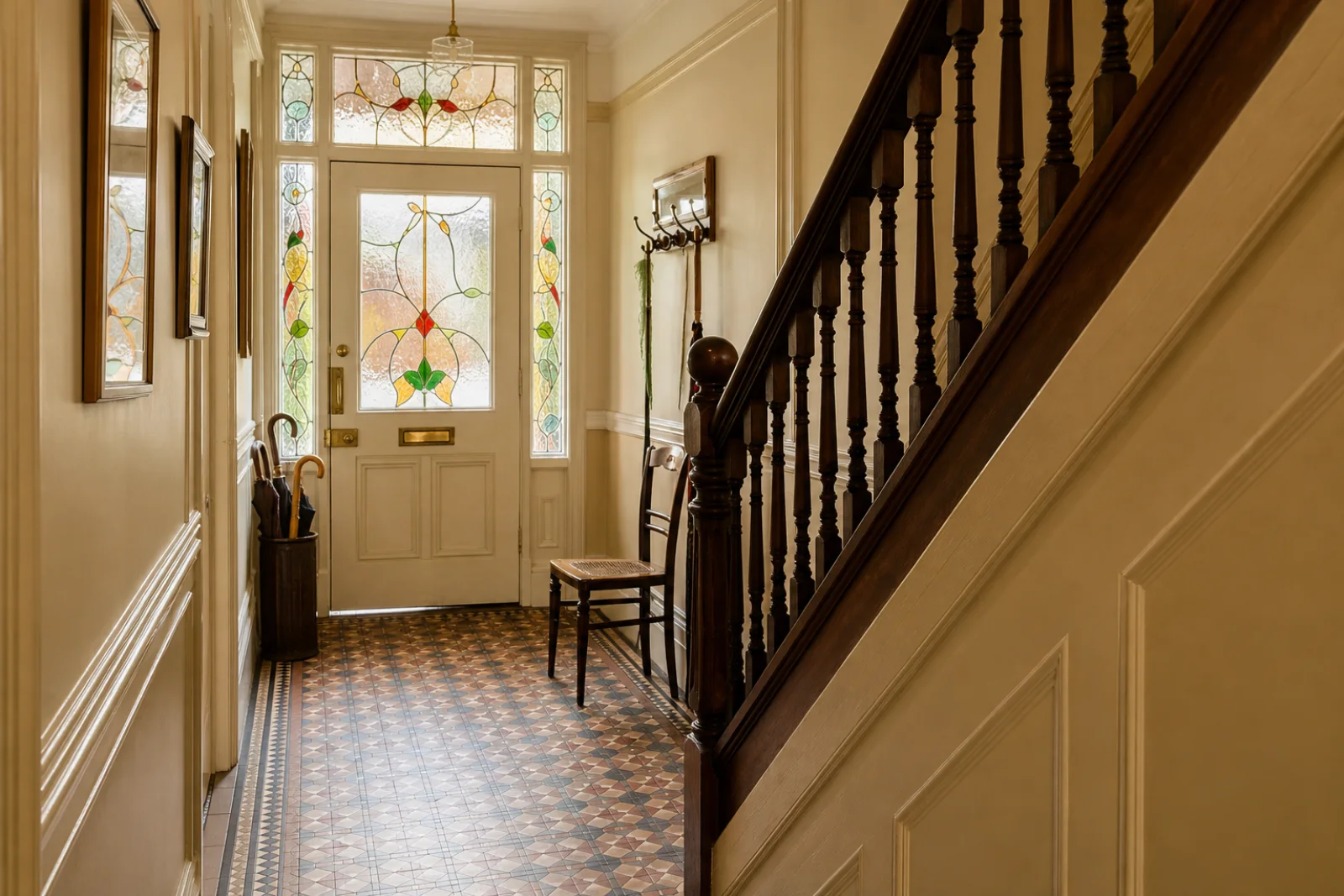
Small repeating geometry creates a durable patterned plane in halls and service rooms.
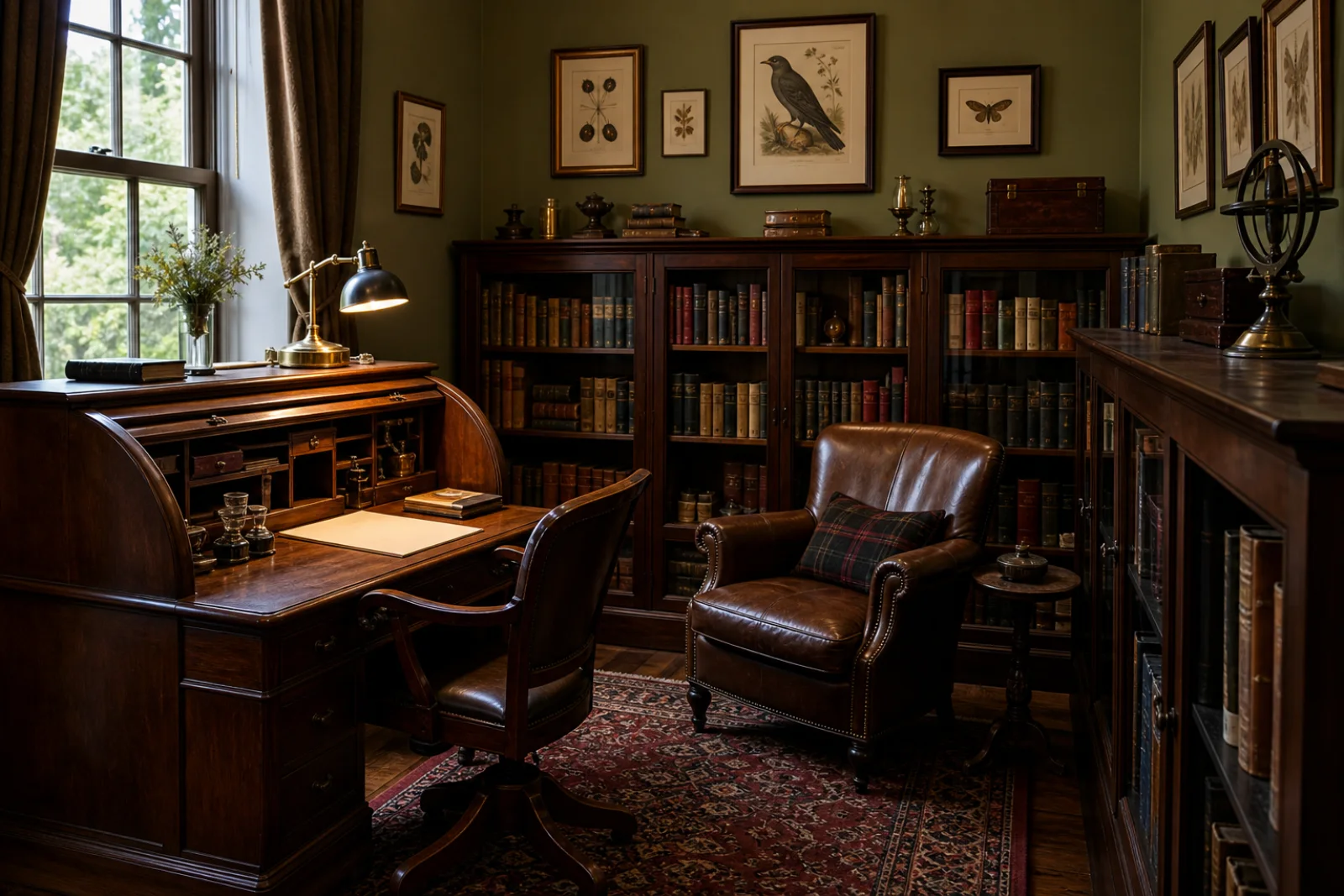
Strong grain and rounded edges give case furniture its grounded silhouette.
Use on handles, lamps and bed rails where touch naturally creates variation.
Start with the room’s function, then build depth plane by plane. A Victorian interior feels abundant because surfaces relate, not because every available space is filled.
Establish dado, wall field and ceiling so strong color and pattern have defined boundaries.
Select the table, bed, desk or sofa that carries the room’s main daily ritual.
Use small on paper or cotton, medium on upholstery and geometric repetition underfoot.
Add focused lamps for reading and work, then edit objects that interrupt those practical zones.
When the room feels wrong, change the underlying decision before adding more decor.
Expose window reveals, lighten the ceiling and introduce warm cream through textiles and paper.
Repeat two colors across patterns and leave one major plane comparatively quiet.
Prioritize domestic florals, practical furniture and colored tile over pointed arches, black finishes and medieval symbols.
Group objects by subject inside a cabinet or on one wall and preserve clear working surfaces.
Victorian style is often reduced to darkness and ornament. Its more useful identity is domestic invention: new materials, purposeful rooms and patterns organized across architectural layers.
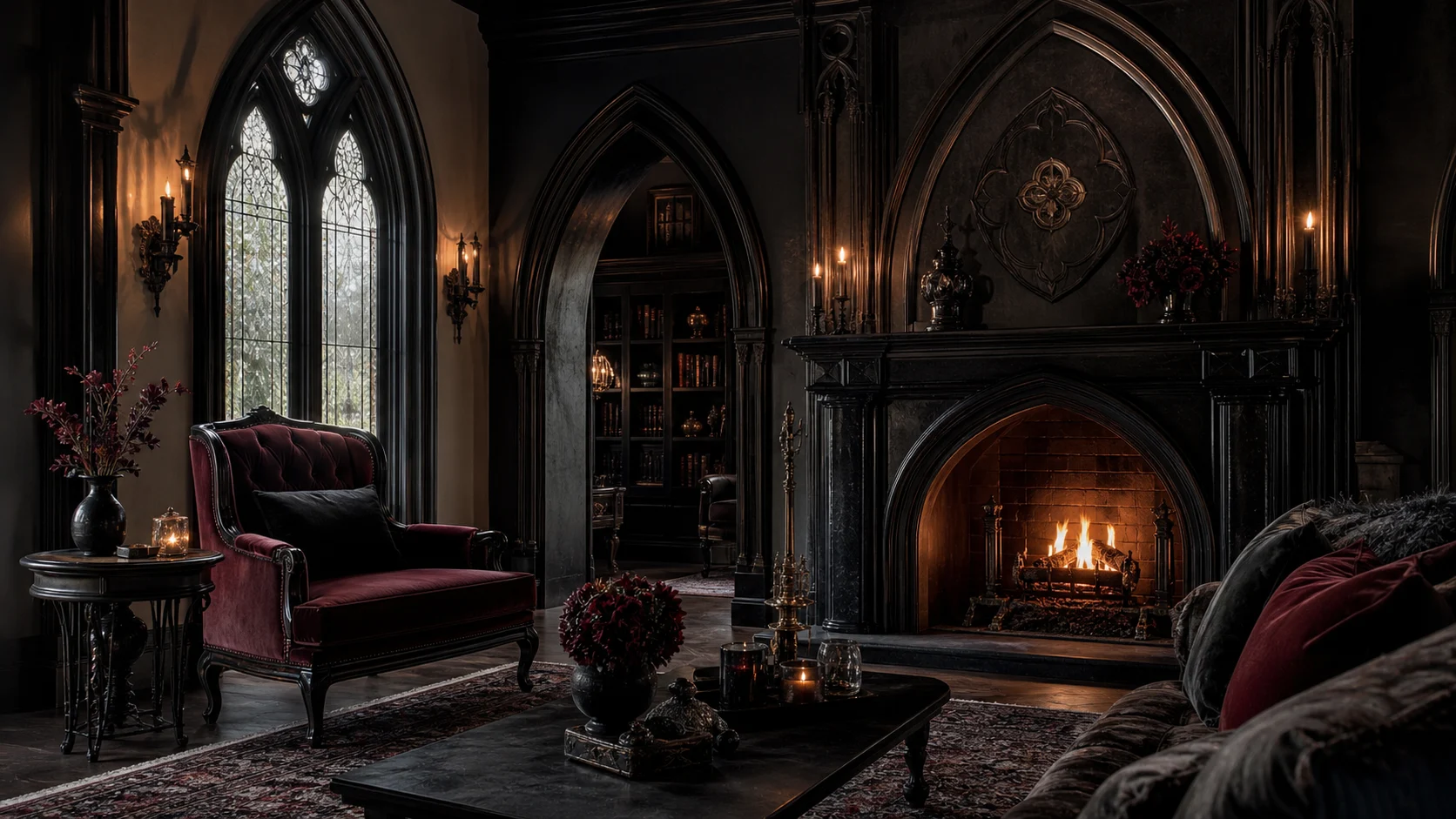
More medieval, vertical and dramatic, often using pointed forms, tracery, iron and near-black color.
Choose Victorian for a broader domestic mix of florals, tile, useful furniture and collected objects.
Bay windows, divided walls and household rituals replace ecclesiastical drama.
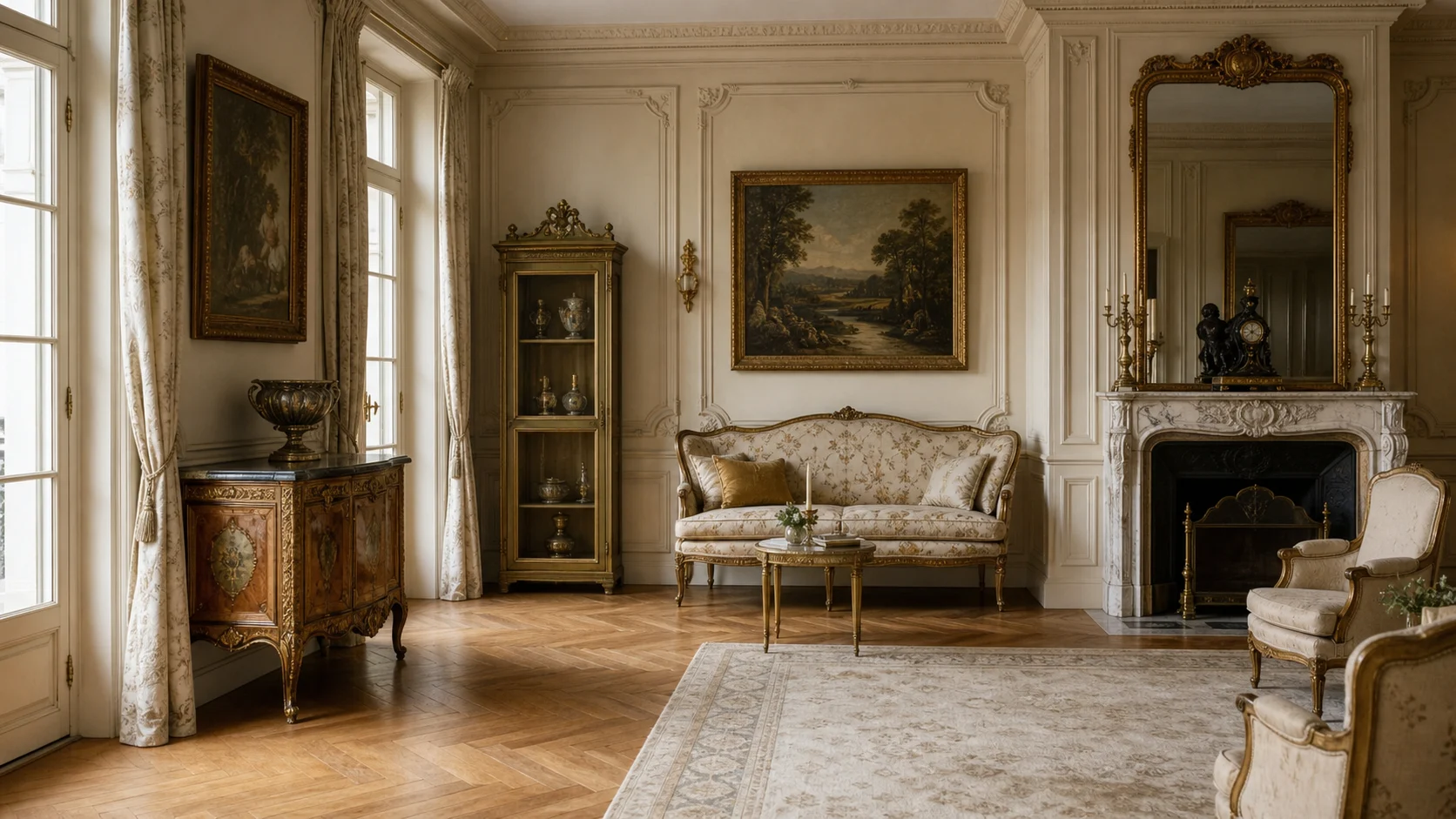
More restrained, symmetrical and architectural, with pale envelopes and fewer, finer furnishings.
Choose Victorian when surface pattern, saturated color and personal collections should be visibly present.
Patterned planes and dense working furniture replace calm formal hierarchy.
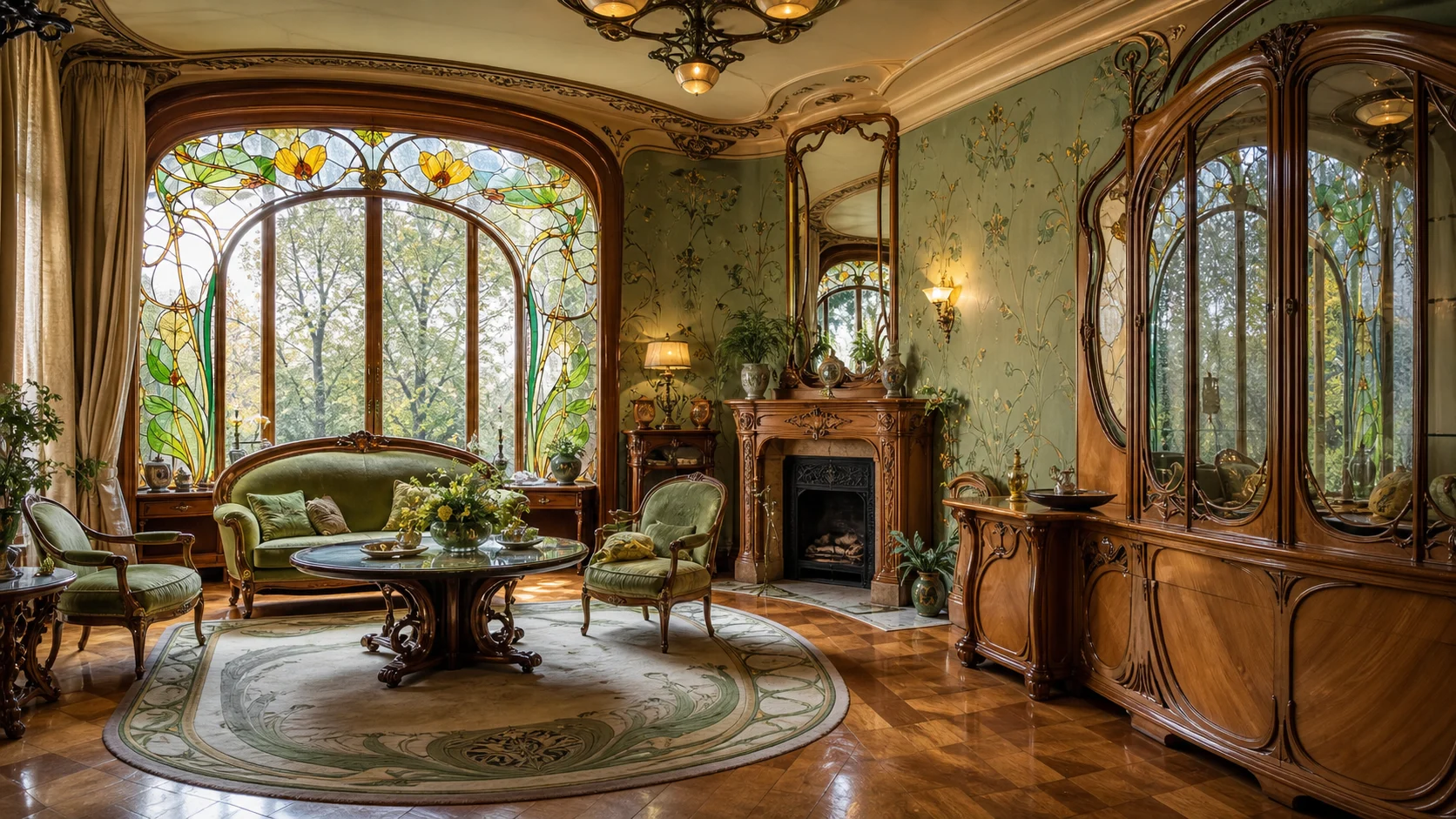
More fluid and unified, with sinuous plant forms designed across architecture, furniture and glass.
Choose Victorian for an eclectic mix of historical sources and clearly separated decorative layers.
Multiple pattern languages replace one continuous organic line.
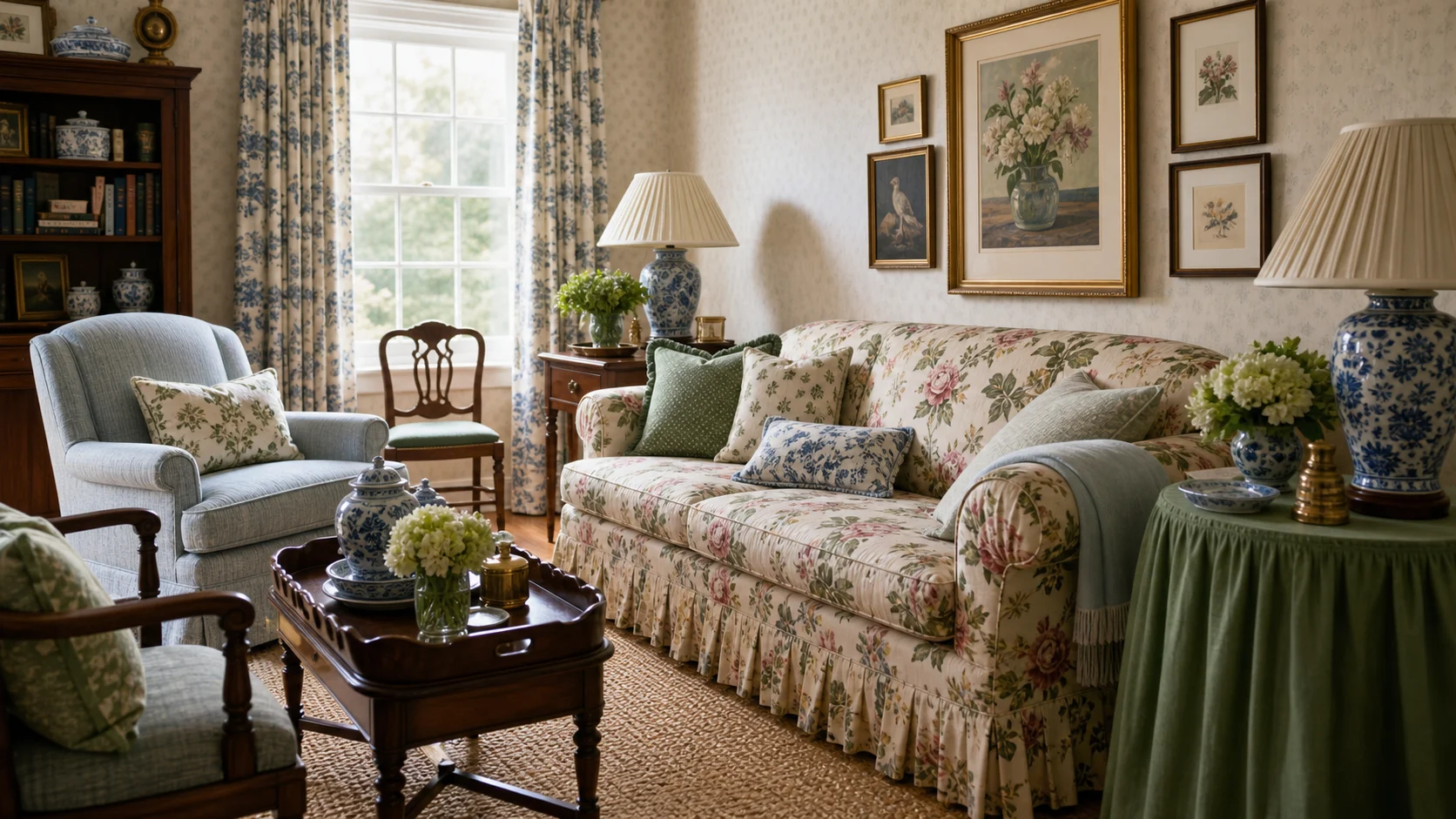
Lighter, cheekier and contemporary, using nostalgic florals and trims without strict period architecture.
Choose Victorian for darker timber, structural wall divisions and a more historically grounded atmosphere.
Encaustic tile and working antiques replace playful granny-chic styling.
Prioritize pieces that still perform their original task. Good Victorian character comes from construction, scale and surface—not from adding tassels to ordinary furniture.
Look for a strong outline and secure joints; keep bedding simpler than the frame.
A freestanding table gives the kitchen honest utility and a lighter counterpoint to black iron.
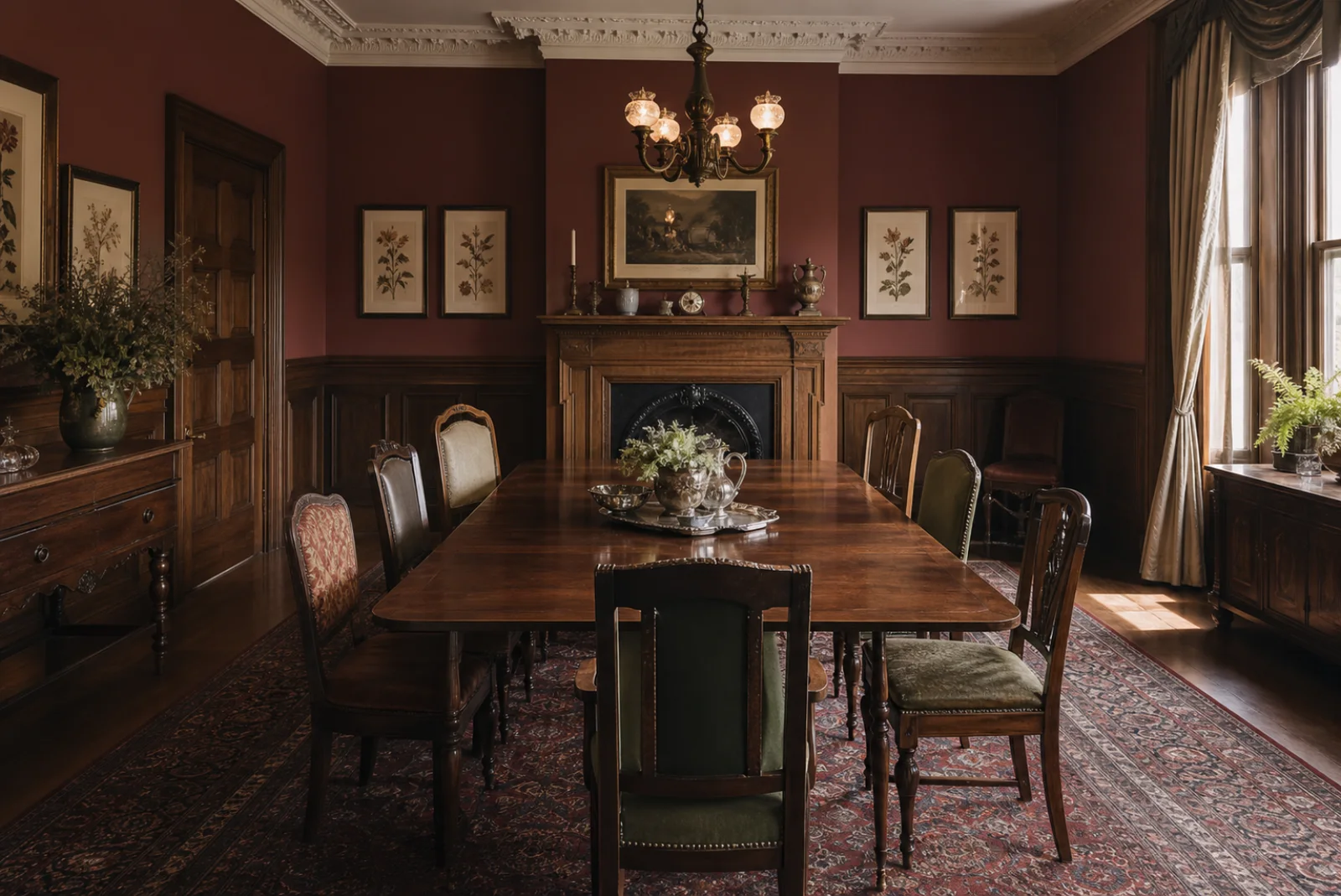
Choose a robust mechanism and leave room for mismatched but related chairs gathered over time.
Confirm knee clearance and usable drawers; the mechanism should conceal current work rather than act as a prop.
Use a repeating border to fit pattern to the hall’s real dimensions.
Reserve the richest weave for one chair, bench or curtain border and repeat its color elsewhere.