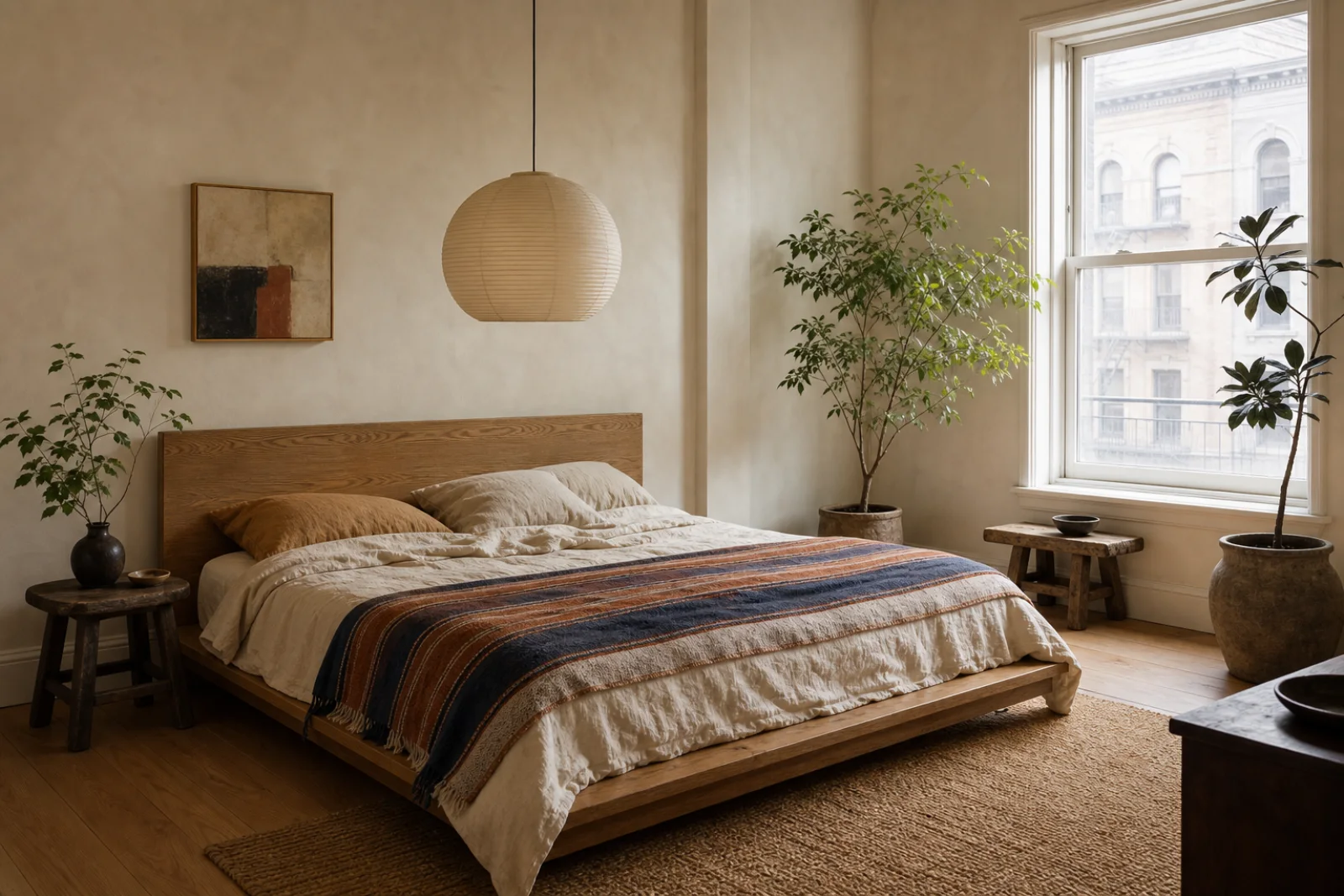
Low oak bed
Confirm standard mattress support and comfortable access; let replaceable linen and one blanket carry most of the color.
Personal objects, low relaxed furniture and one confident textile story make a room expressive without sacrificing space or function.
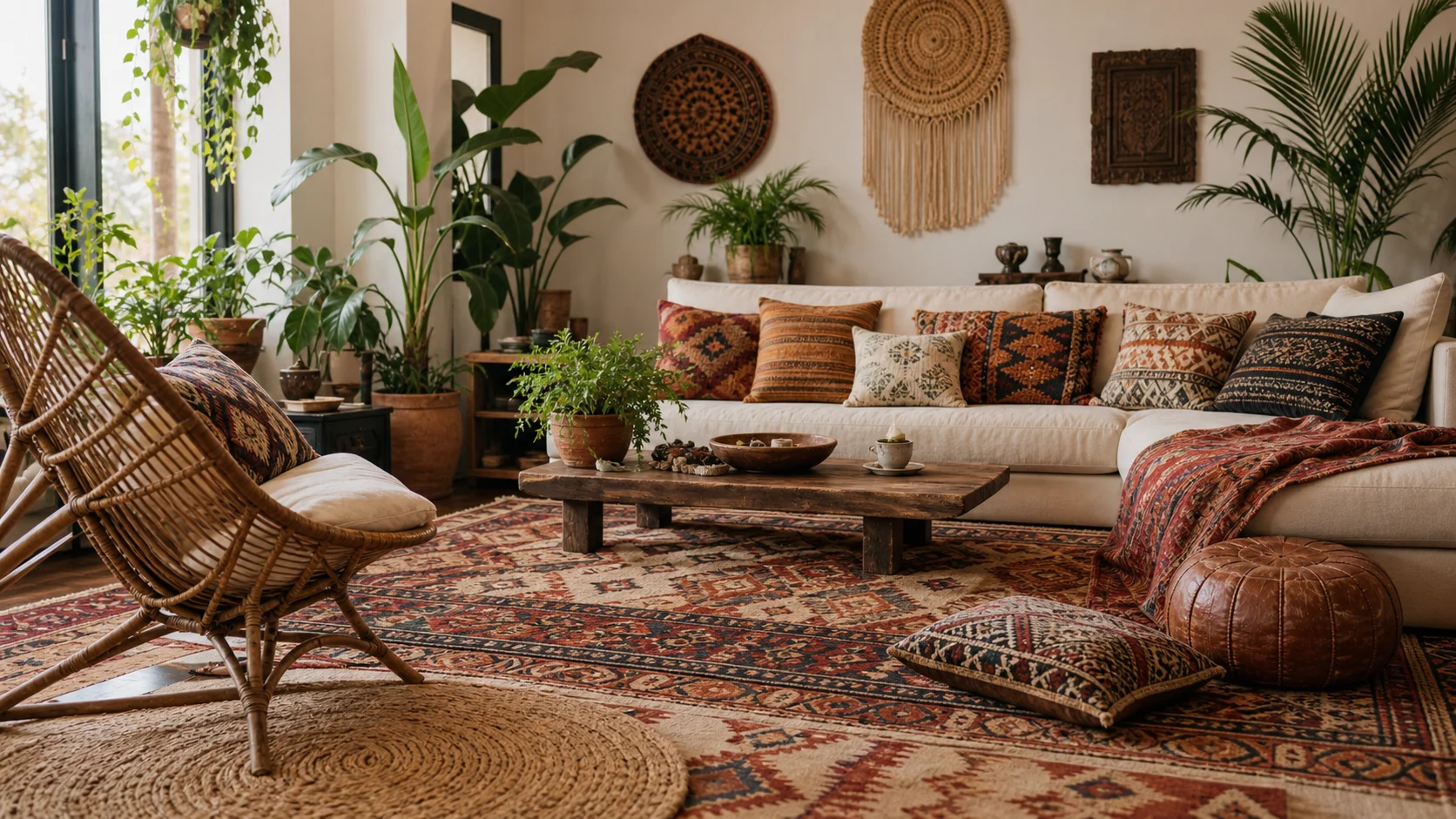
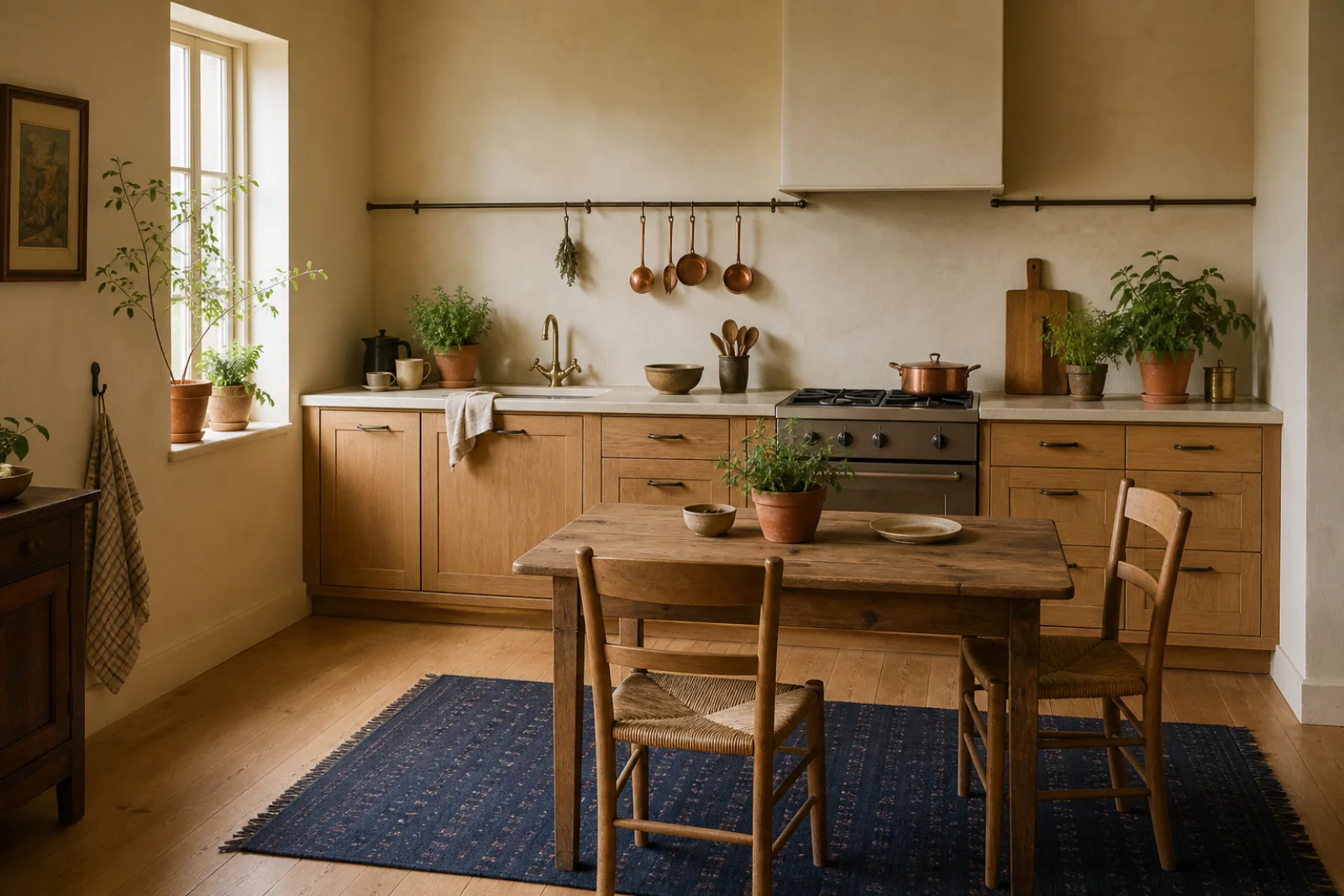
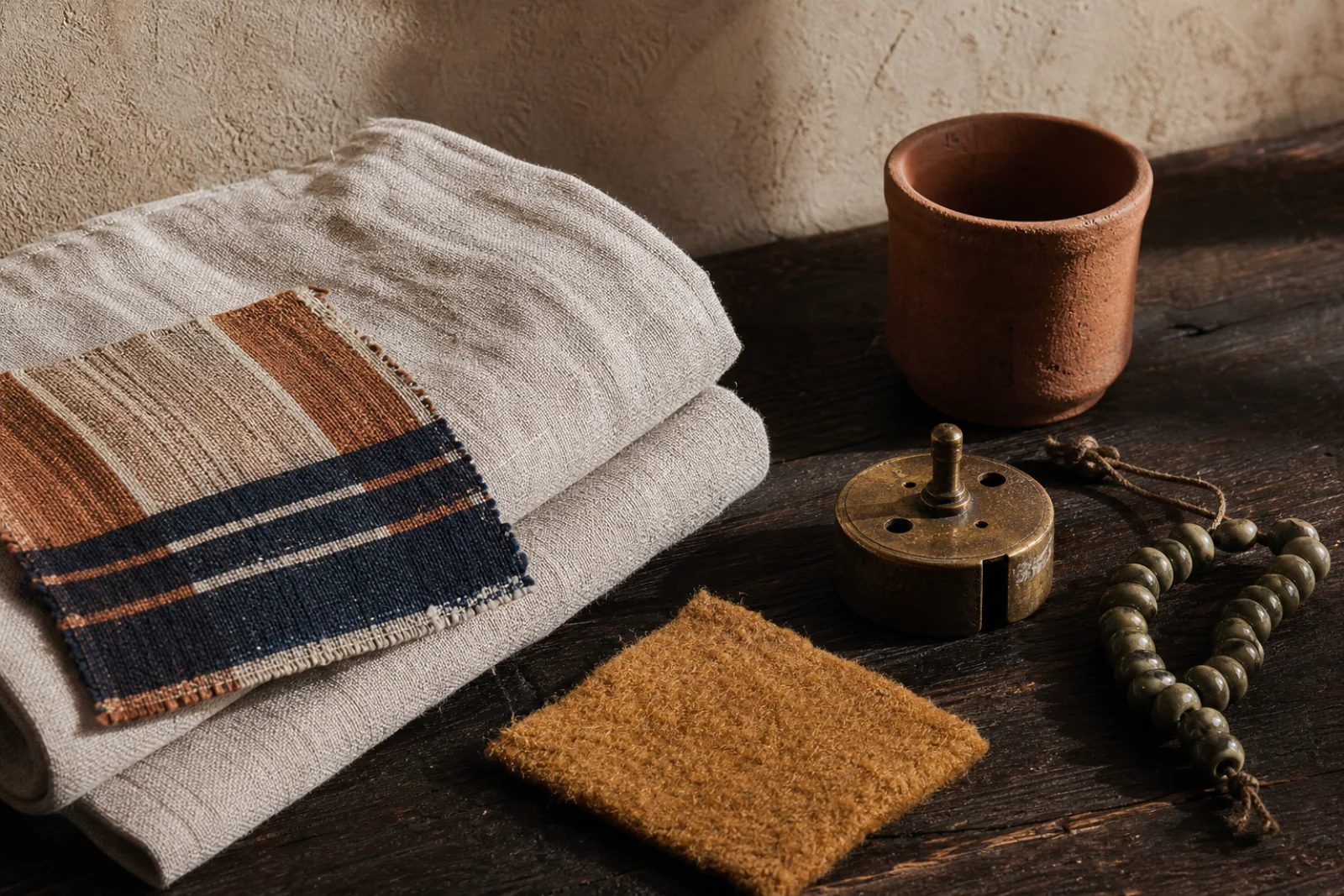
Bohemian interior design is an informal way of composing a home from meaningful textiles, useful older furniture, handmade materials and art gathered over time. It values personality over matching sets, but successful rooms still have rules: a repeated color thread, related furniture scale and enough empty floor and wall space for individual pieces to register.
The style is not shorthand for mixing unrelated cultural symbols. Provenance matters when buying craft, and abstract weave, material quality and personal history are stronger foundations than anonymous “tribal” decoration. Modern lighting, cable management and ergonomic seating can sit comfortably beside worn timber and handwoven cloth.
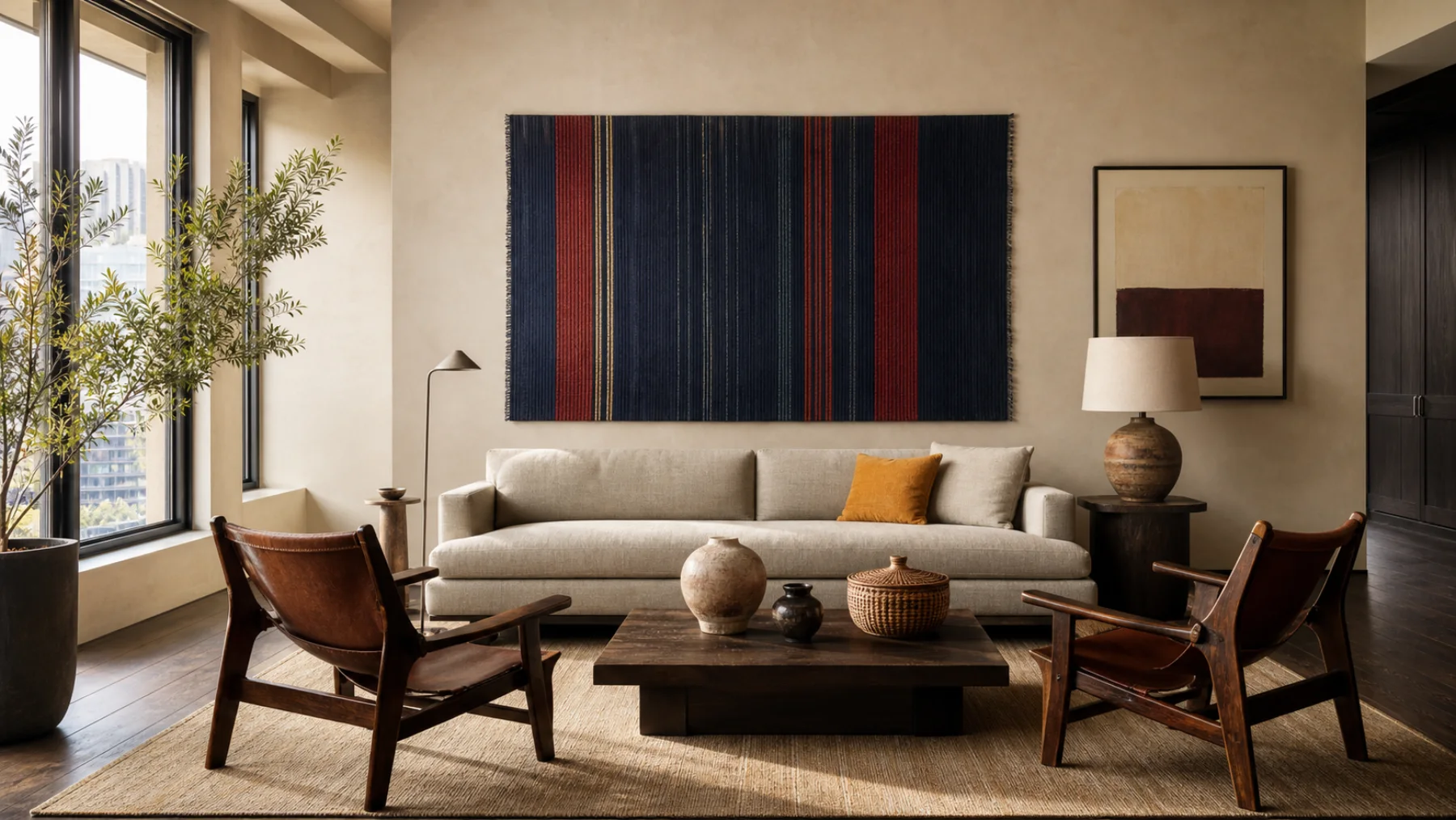
Let a rug, blanket or curtain establish three or four colors, then draw smaller accents from it.
Combine a low table, standard seating and one taller plant or lamp instead of filling every level.
Prefer traceable makers and known materials; avoid treating sacred or culturally specific motifs as generic décor.
Clay, indigo and ochre recur in different materials so varied pieces still belong together.
Low tables and deep seating create ease, balanced by proper dining and working heights.
Visible weave, thrown ceramic and worn timber bring movement without relying on busy pattern.
Books, art and keepsakes appear in small groups with open space around them.
Start with one large rug and comfortable neutral seating; add pattern in two smaller places rather than across every cushion.
Keep the bed and walls quiet, then use one woven blanket, an aged stool and a few plants to create depth without visual noise.
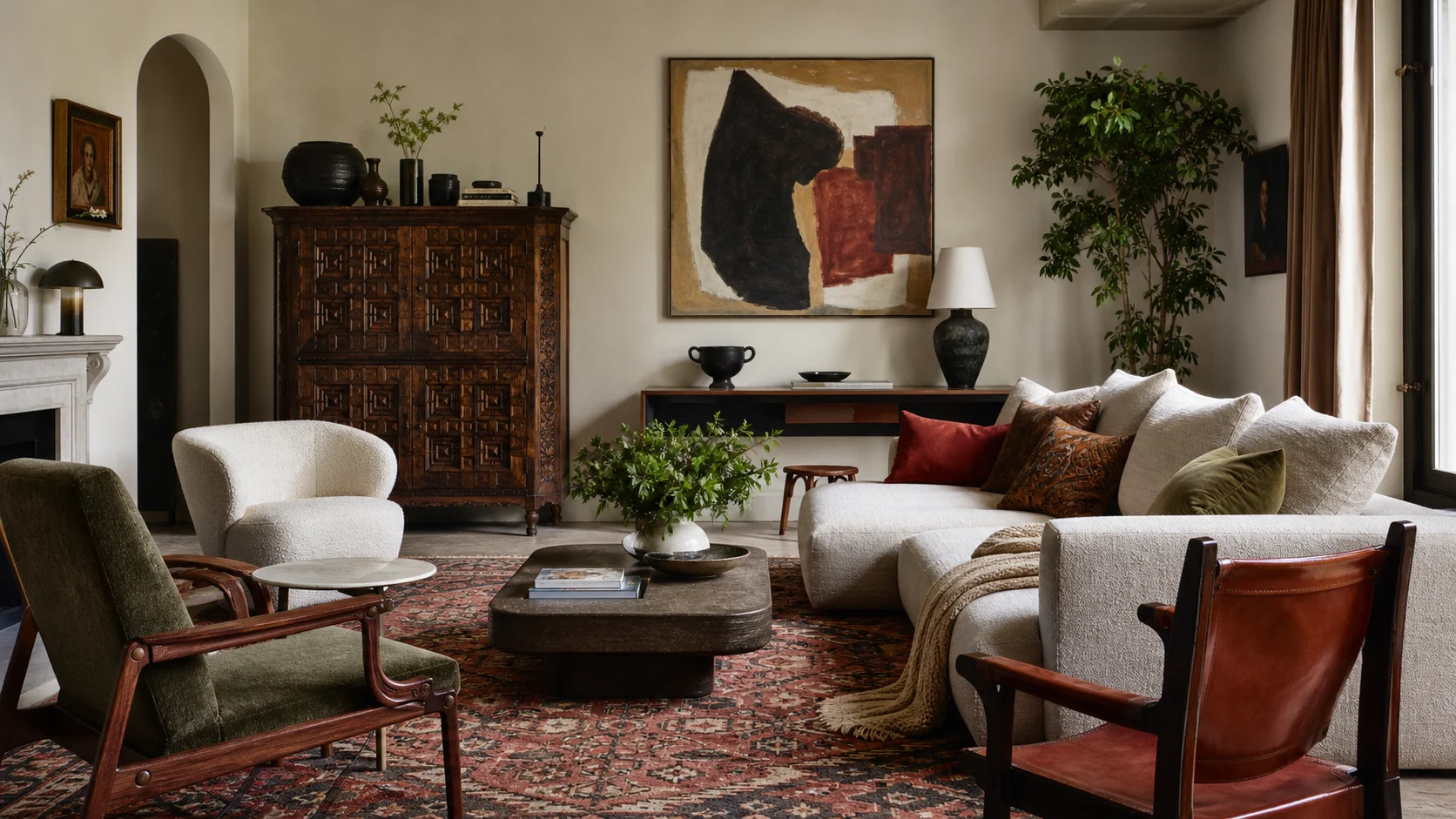
Mixed chairs work when seat heights align and timber tones relate; one strong rug can unite the different silhouettes.
Use an ergonomic chair and focused task light, reserving the handmade character for rug, ceramics and one pinboard.
Group herbs and everyday ceramics by function; keep worktops mostly clear and place color on a runner or table textile.
A lidded woven basket, bench and hooks should solve storage first; one artwork and one textile accent are enough.
Use bone across the largest planes, choose clay or indigo as the leading textile color and repeat the other twice at smaller scale. Ochre and olive should connect materials rather than compete as new themes.
A warm, quiet field that gives saturated textiles and dark timber room to breathe.
The main warm note for a rug, throw, pottery group or single painted plane.
A smaller woven accent that lifts clay and connects naturally to brass and timber.
The cooling anchor, strongest in one substantial textile rather than many small objects.
A natural bridge between plants, glazed ceramic and the warmer earth colors.
Favor clear construction and a limited palette; one generous weave is more useful than many patterned fragments.
A plain breathable layer that calms stronger rugs, pottery and art.
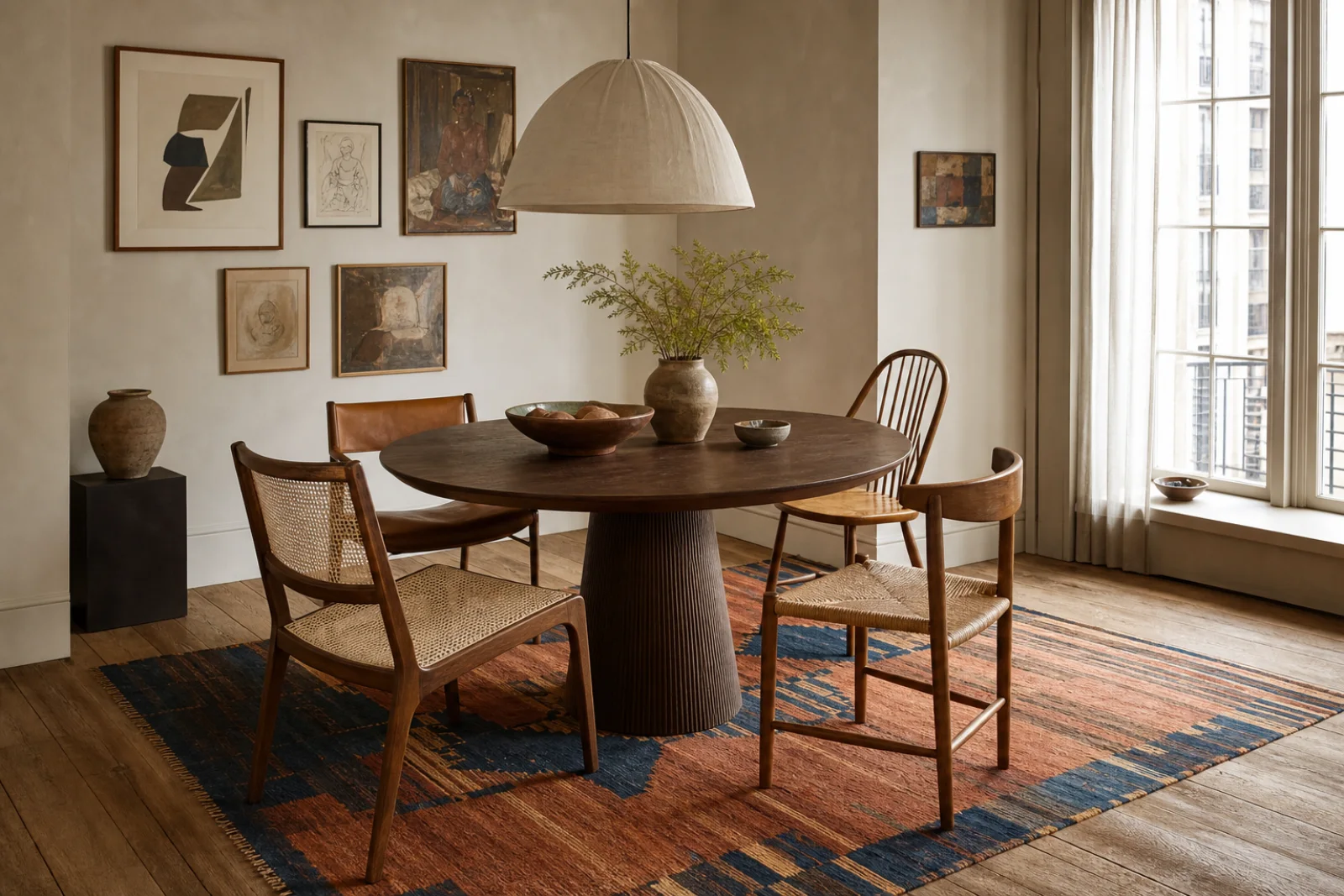
Mixed furniture feels coherent when wood warmth, seat height and visual weight remain related.
Matte clay and dull metal add warm variation without introducing another printed pattern.
Begin with how the room is used, then choose one textile that sets the palette. Add useful furniture by scale, repeat two colors and stop while walls and walking paths still feel open.
Protect circulation, task surfaces and comfortable seating before adding decorative layers.
Select one rug or blanket whose colors can guide wood, art and smaller textiles.
Use timber often, clay several times and brass once or twice to avoid a showroom formula.
Step back and remove any object that merges into a dense, unreadable cluster.
When the room feels wrong, change the underlying decision before adding more decor.
Keep the largest pattern and replace at least half the others with visible solid weaves.
Group healthy plants near suitable light and use furniture or art to balance the remaining room.
Retain objects with personal meaning or known provenance and remove anonymous themed décor.
Use relaxed heights for lounging only; keep desks, dining tables and worktops ergonomic.
Bohemian is defined by informal, personal composition rather than indiscriminate variety. Textile relationships, relaxed scale and traceable craft give it identity while editing keeps it livable.
More contrast-led and stylistically broad, often placing polished, historic and contemporary forms in deliberate tension.
Choose Bohemian when textiles, relaxed posture and handmade surface are more important than formal style collision.
Tactile continuity replaces designed contrast.
More explicitly centered on craft traditions and objects from identifiable regions, with provenance as a major organizing idea.
Choose Bohemian for a personal, informal composition that need not represent several geographic traditions.
Individual narrative replaces geographic breadth.
More decade-specific, with stronger period color, molded forms, chrome, shag and recognizable postwar silhouettes.
Choose Bohemian for looser chronology, handmade materials and a palette that can evolve over time.
Collected texture replaces a period statement.
More restrained and architecturally quiet, using sculptural natural materials within a tightly reduced palette.
Choose Bohemian when art, textiles and visible personal history should carry more of the room.
Expressive layering replaces controlled reduction.
Buy the room slowly. Check fiber, construction, cleaning needs and maker information; a strong rug or useful older table will contribute more than a basket of small themed accessories.
Confirm standard mattress support and comfortable access; let replaceable linen and one blanket carry most of the color.
Check joint movement, height and surface condition before using it as an everyday dining or prep piece.
Choose a flat weave large enough for chairs to remain on it when pulled out, and verify care requirements.
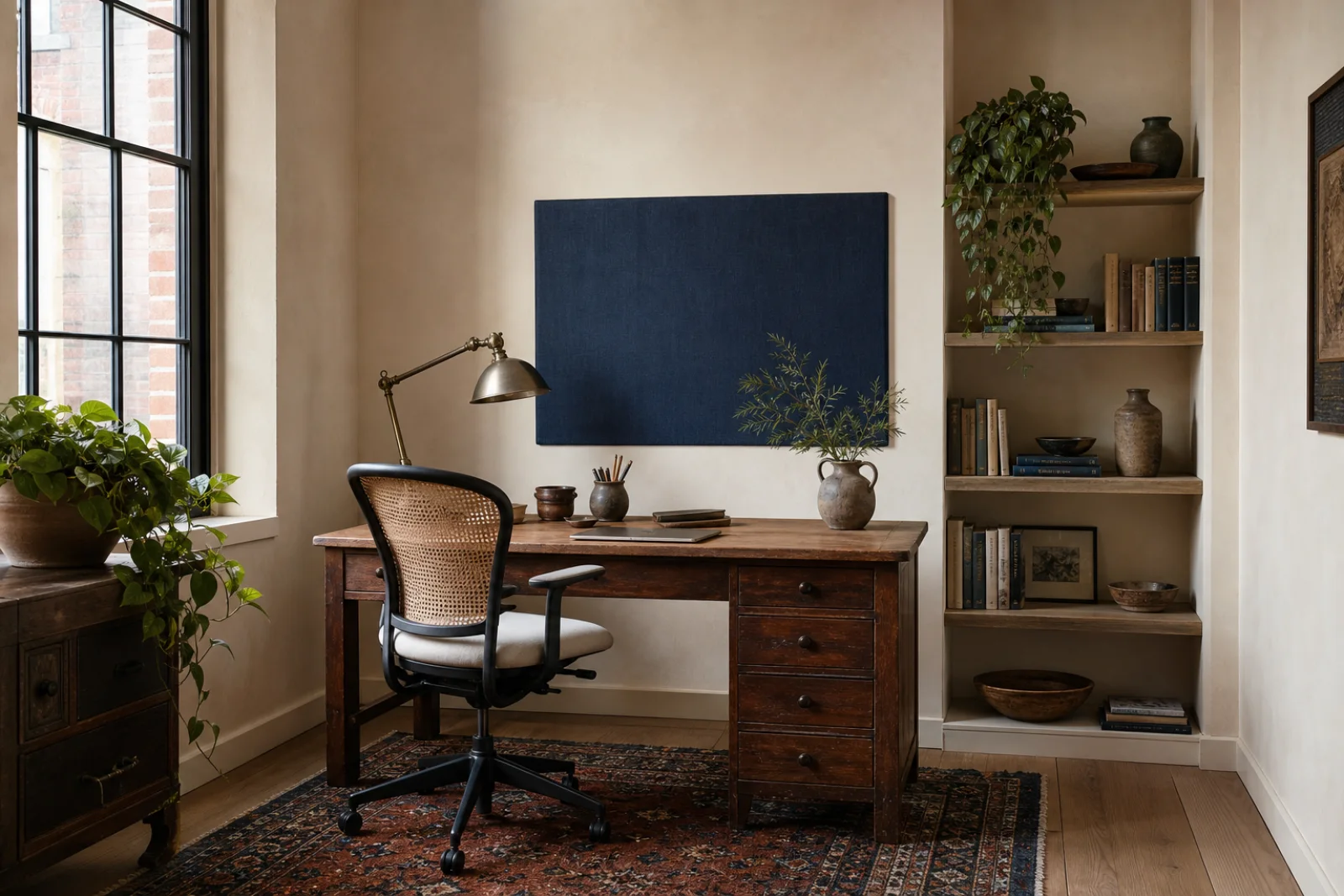
Measure knee room and screen depth; pair characterful timber with discreet ergonomic support.
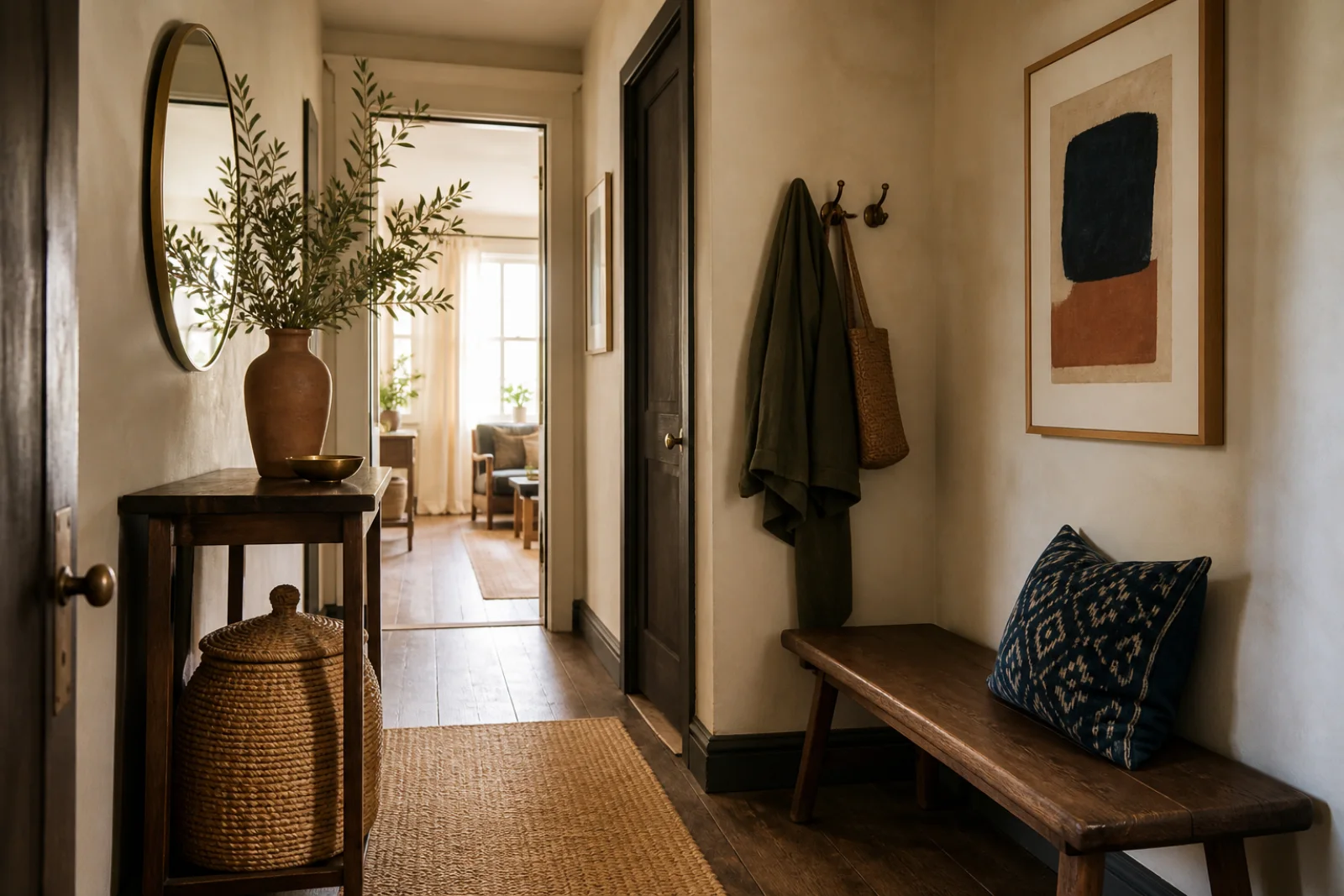
Look for a stable base, smooth interior and a size that handles real entryway items without blocking passage.
Compare weave, clay, ochre and indigo under room light before adding another patterned layer.