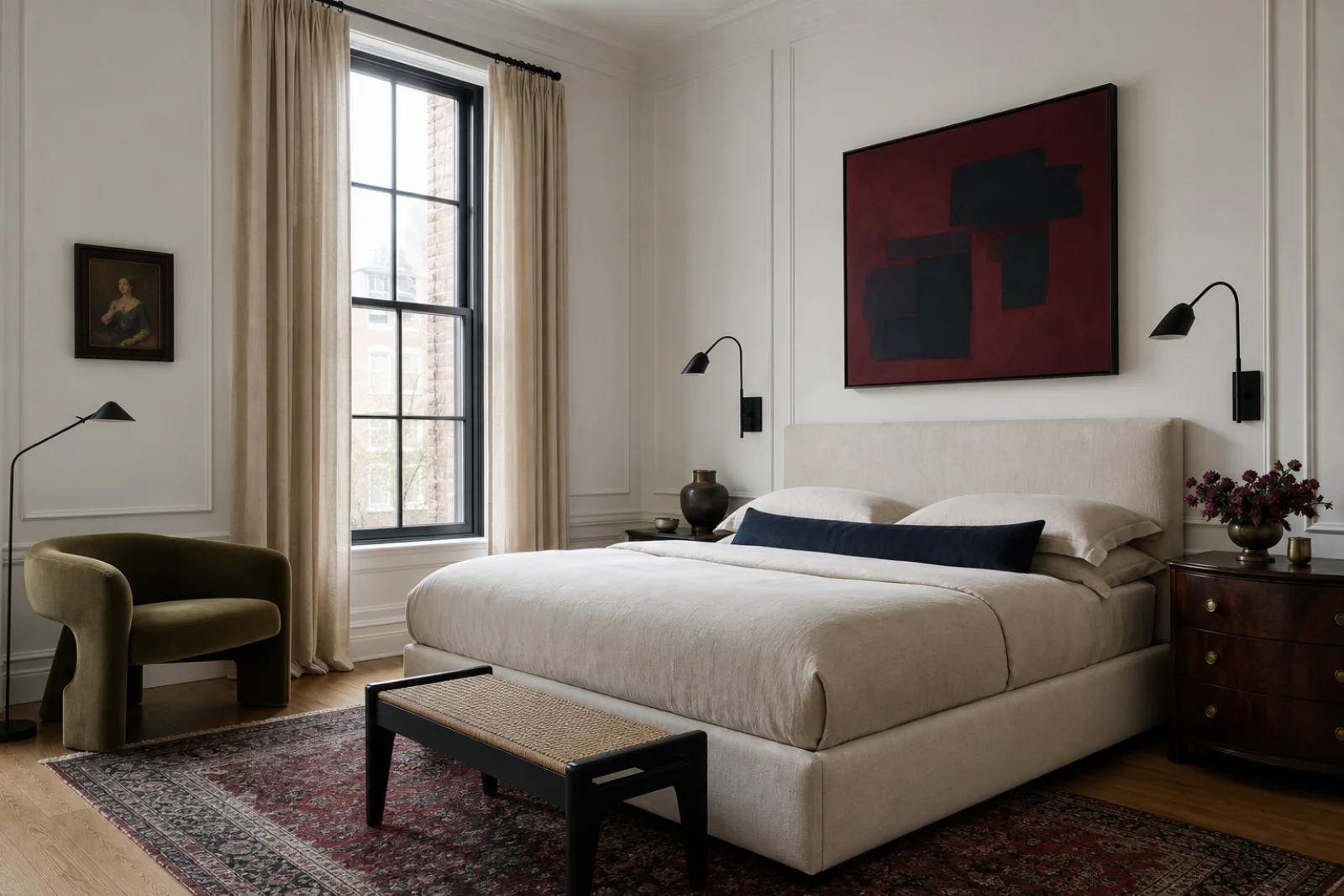
Neutral upholstered bed
A quiet contemporary anchor leaves room for older bedside furniture, a sculptural chair and stronger art.
Different eras become one room when scale, color and line repeat more strongly than the styles disagree.
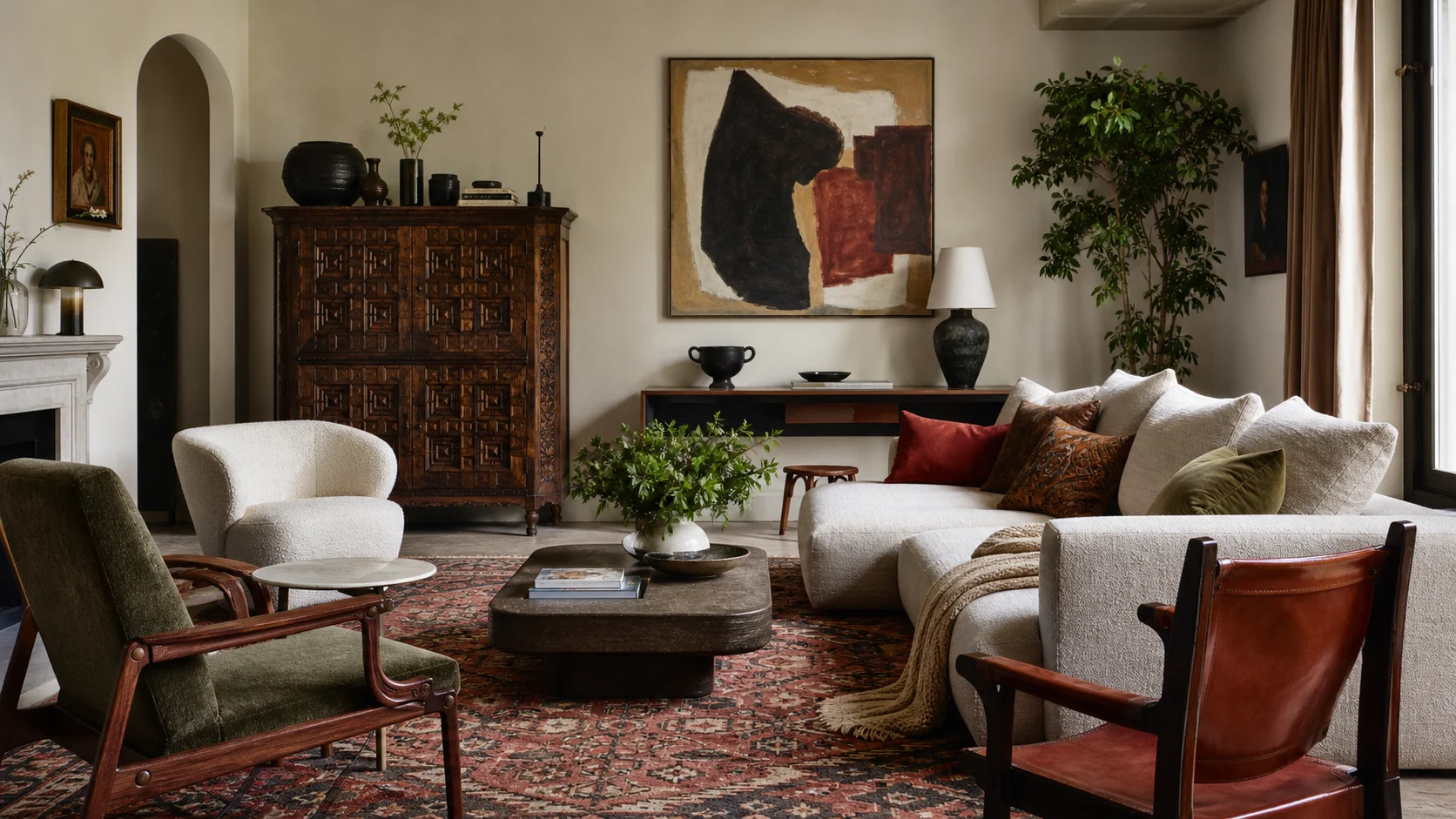
Eclectic interior design deliberately combines furniture, art and lighting from different periods or design languages. It is not a license for random variety. A convincing room establishes a visual contract—perhaps repeated black outlines, related seat heights, one wood family or a limited palette—then uses a few clear departures to create energy.
Contrast needs hierarchy. One major collision, such as a modern table under traditional molding, should lead; secondary pieces can echo its color or geometry without starting new conversations. Function still sets the limits: mixed dining chairs need compatible heights, an antique desk needs modern ergonomics and every route through the room must remain clear.
Before buying, identify the color, line, proportion or material that will make the new piece belong.
Choose a single high-impact pairing and let other differences remain quieter.
Seat height, table clearance, lamp performance and storage depth matter even when styles differ.
Old and new silhouettes remain recognizable rather than being disguised as a matching set.
Repeated color, dark outline or wood tone carries the eye across unlike forms.
One hero piece leads while supporting furniture and art operate at lower intensity.
Different objects still align in working height, comfort, circulation and practical use.
Let one antique case piece or sculptural chair lead, then repeat its darkest tone in art, lighting or a smaller frame.
Keep the bed visually calm and use the bedside pieces, one chair and artwork for the period contrast.
Mix chair eras only when seat heights align; repeat upholstery color or black frames to make the group intentional.
Pair a characterful desk with an ergonomic current chair and contemporary task lamp instead of recreating an old office suite.
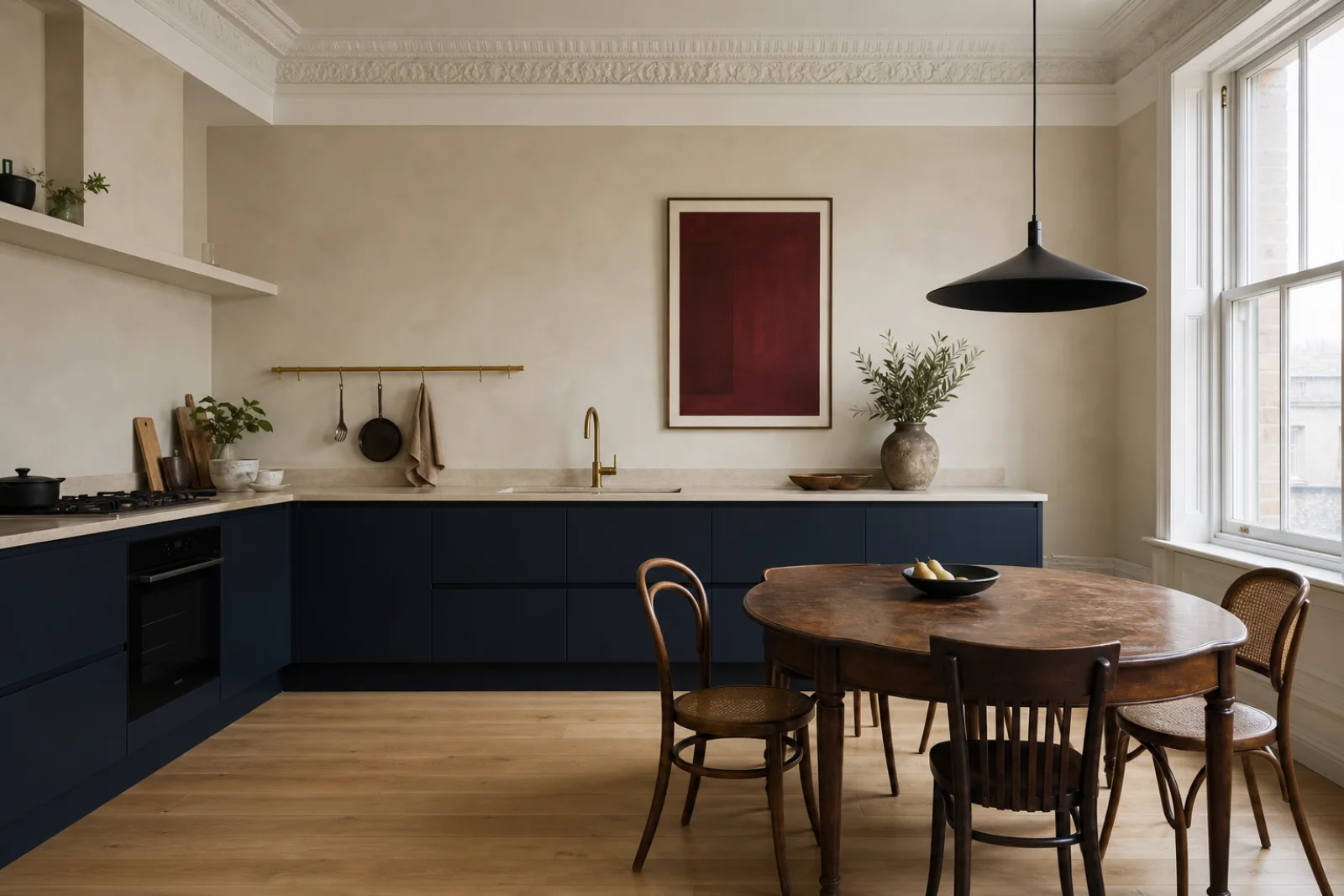
Let modern cabinetry handle performance while a vintage table, pendant or artwork introduces the counterpoint.
Three clear elements—a console, contrasting mirror and simple bench—usually create enough tension in a narrow hall.
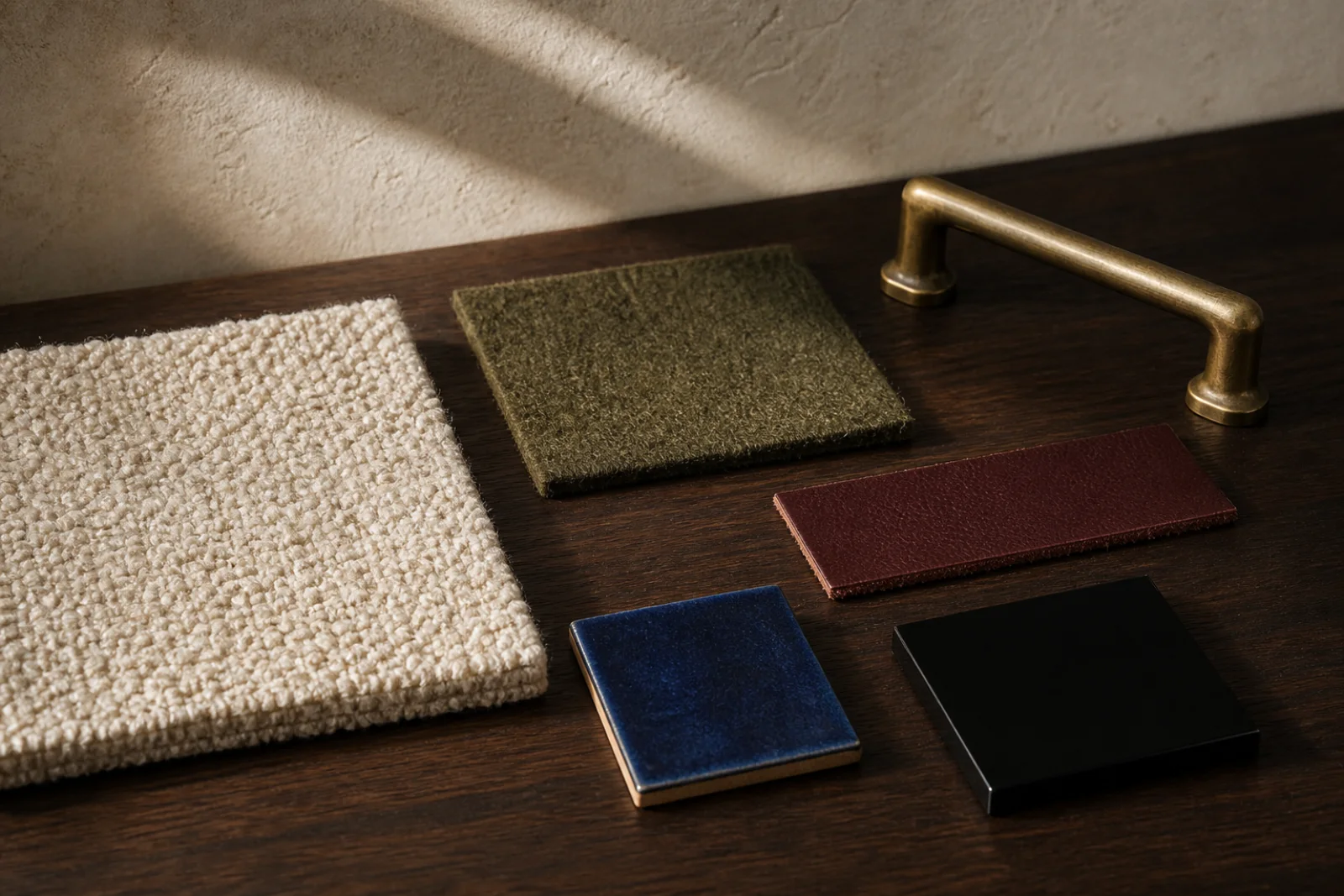
Use parchment to quiet the architecture and walnut as the main furniture neutral. Repeat black across several thin outlines, then choose either oxblood or cobalt as the dominant accent; olive can bridge the two.
A quiet architectural field that allows unlike furniture forms to remain readable.
A mid-value upholstery tone linking aged wood, modern curves and traditional rugs.
The warm dramatic accent for one artwork, leather chair or small lacquered plane.
A cool contemporary counterpoint best concentrated in art or glazed ceramic.
The strongest connector for frames, lamps and slender furniture outlines.
A current tactile neutral that softens hard antiques without introducing another pattern.
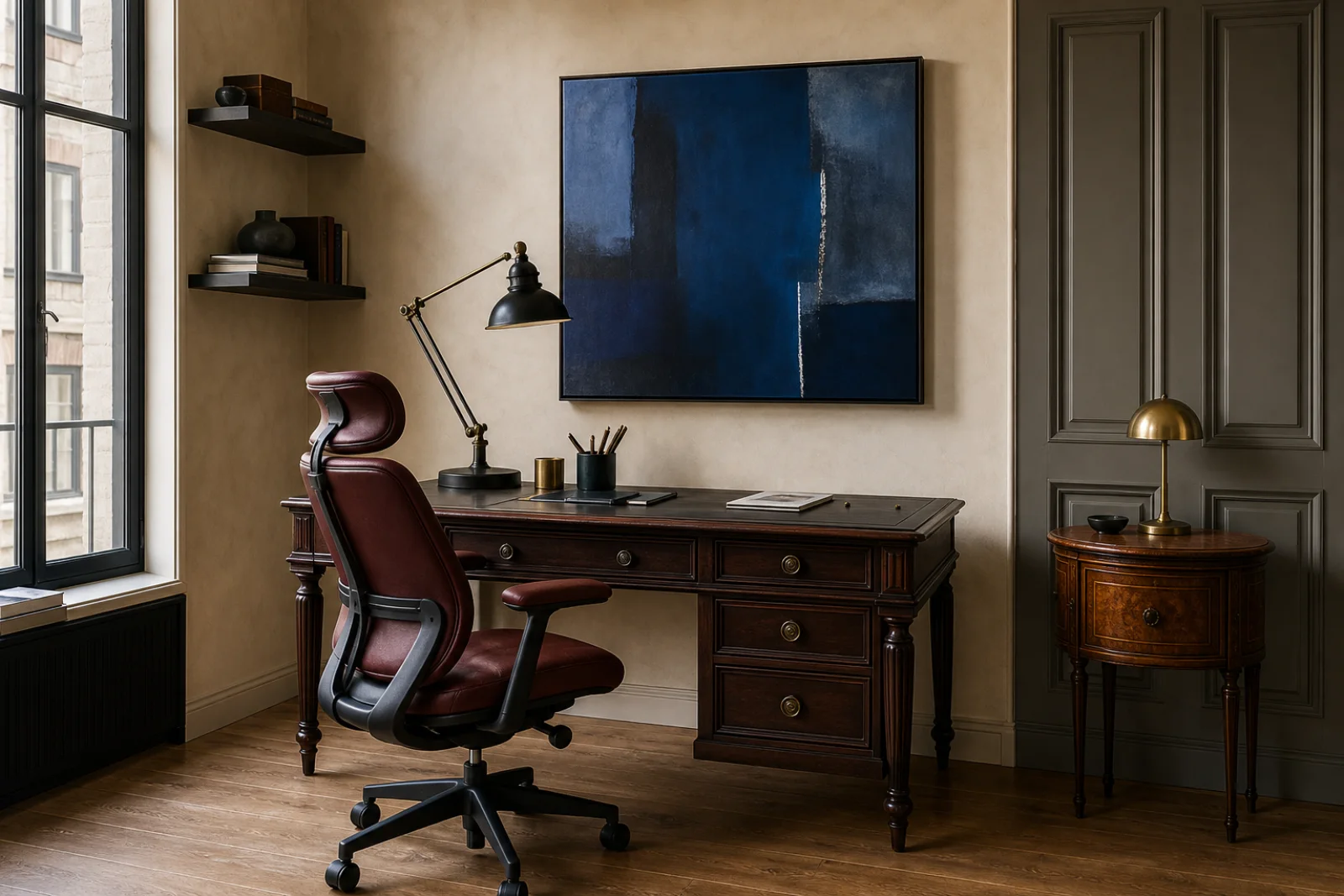
One durable saturated surface can connect traditional wood to contemporary black hardware.
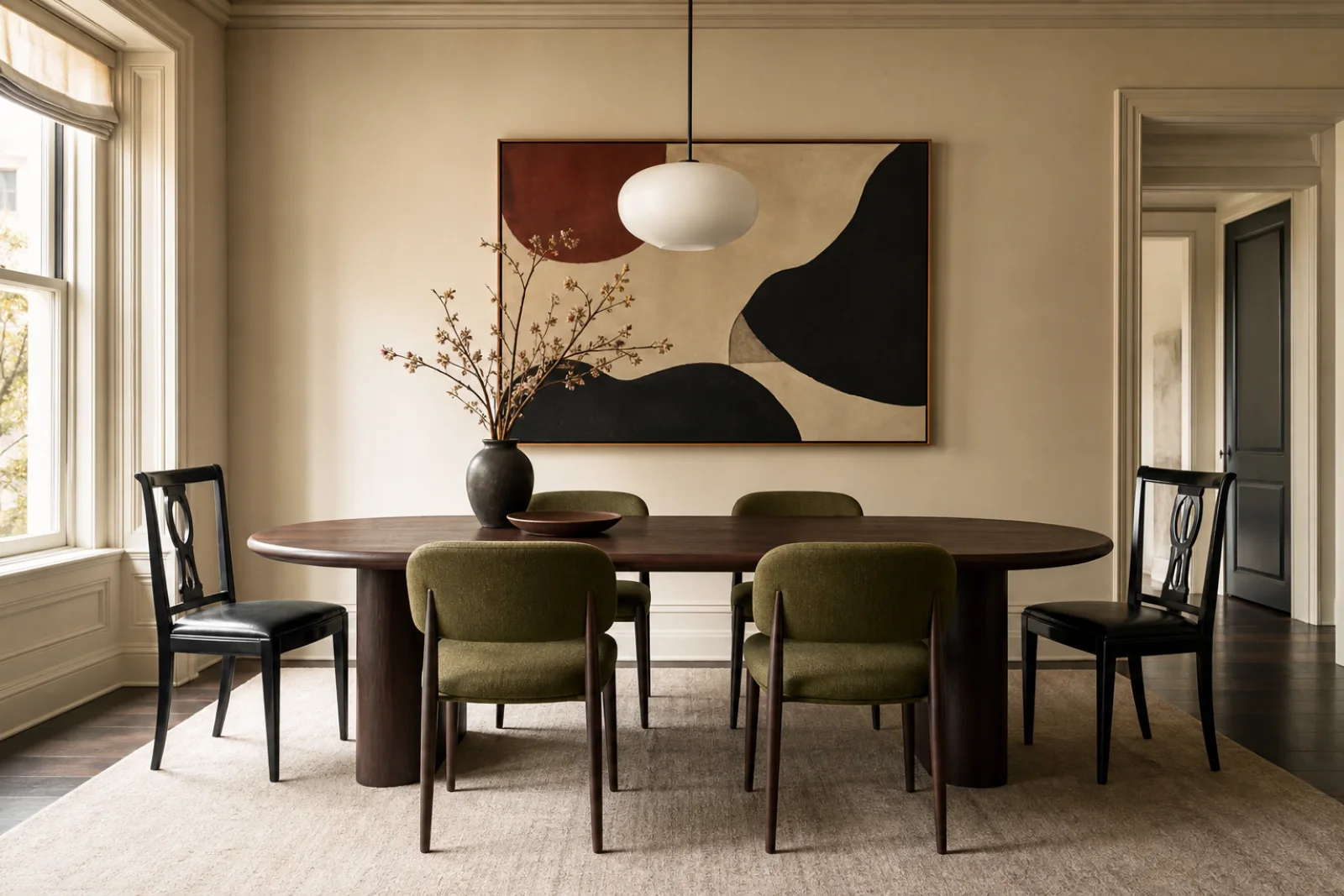
Repeat upholstery across different chair frames when their proportions need a common language.
Small hard finishes create precise contrast; keep each finish to a controlled number of appearances.
Audit what already deserves attention, choose one connector and add a single contrasting era first. Test scale and function before introducing another visual argument.
Identify the artwork, table, cabinet or sofa that should command the first look.
Select one repeated color, outline, timber tone or proportion to link unlike objects.
Contrast the anchor with a clearly different era while matching practical dimensions.
Use quieter rugs, walls and storage so the strongest relationship remains legible.
When the room feels wrong, change the underlying decision before adding more decor.
Repeat one color, material or outline at least three times across the room.
Choose one hero and one counterpoint; let remaining pieces support them.
Align seat height, table clearance and comfort before comparing decorative style.
Remove themed accessories and build contrast through substantial furniture, art or lighting.
Eclectic design is a method of controlled disagreement. Its identity comes from the relationship between distinct pieces, while repeated visual parameters keep the whole room coherent.
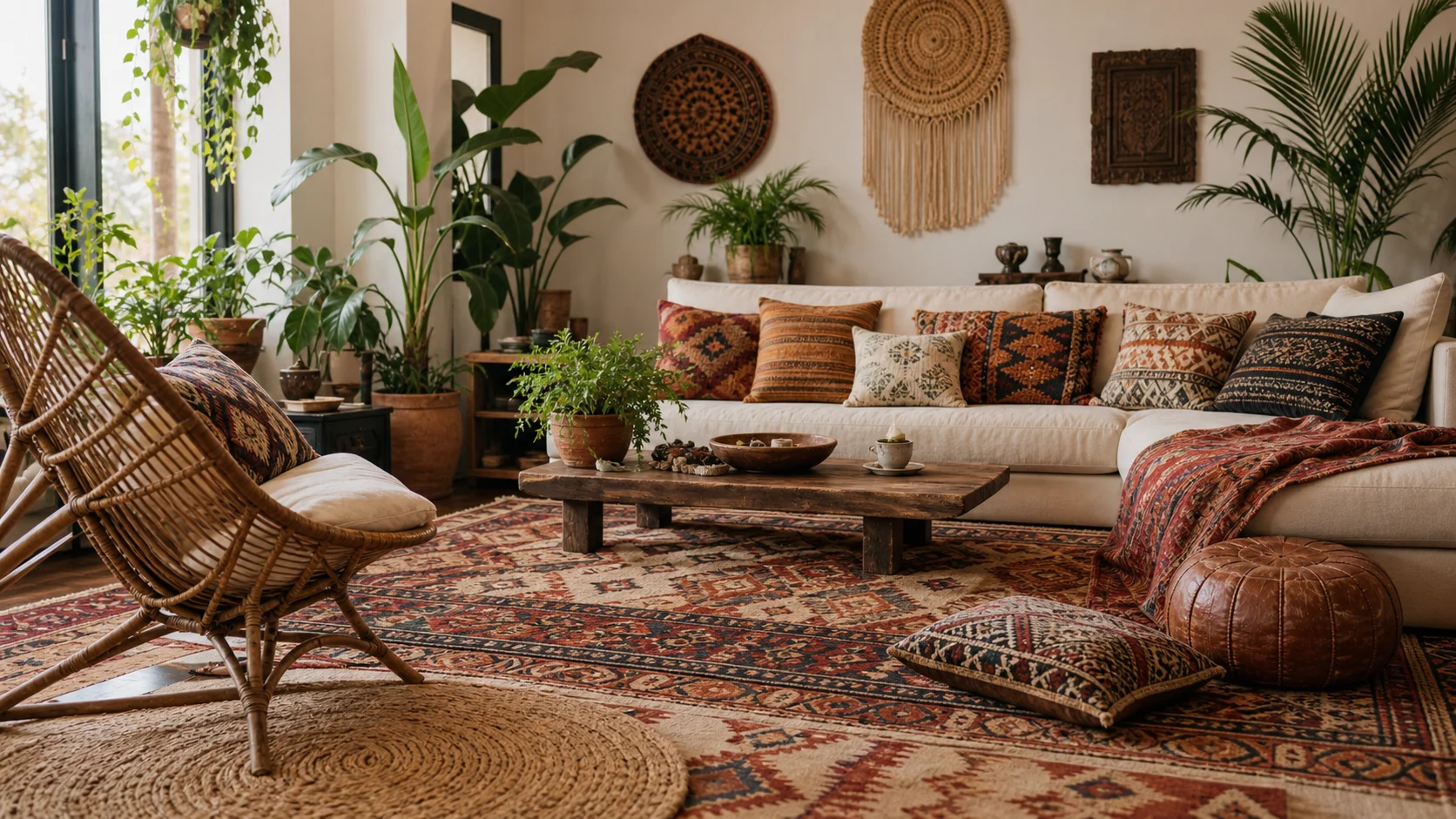
More relaxed and textile-led, using handmade surfaces, plants and informal furniture to create personal continuity.
Choose Eclectic when the room should feature sharper formal collisions between recognizable design languages.
Designed contrast replaces tactile flow.
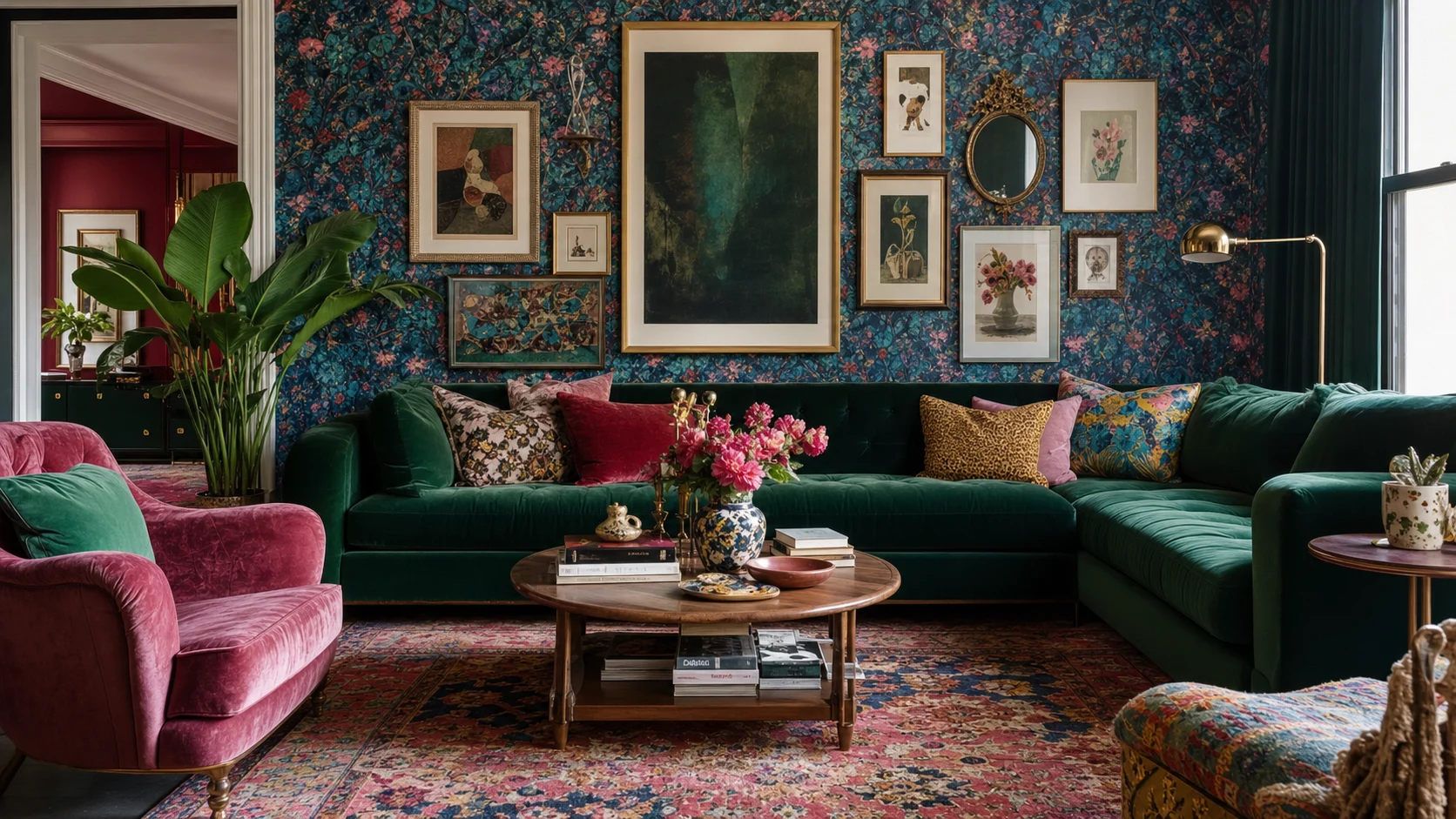
Denser and more immersive, often using abundant pattern, saturated color and collections across most visual planes.
Choose Eclectic for fewer focal points, more open space and contrast built through form rather than sheer quantity.
Selective tension replaces total visual abundance.
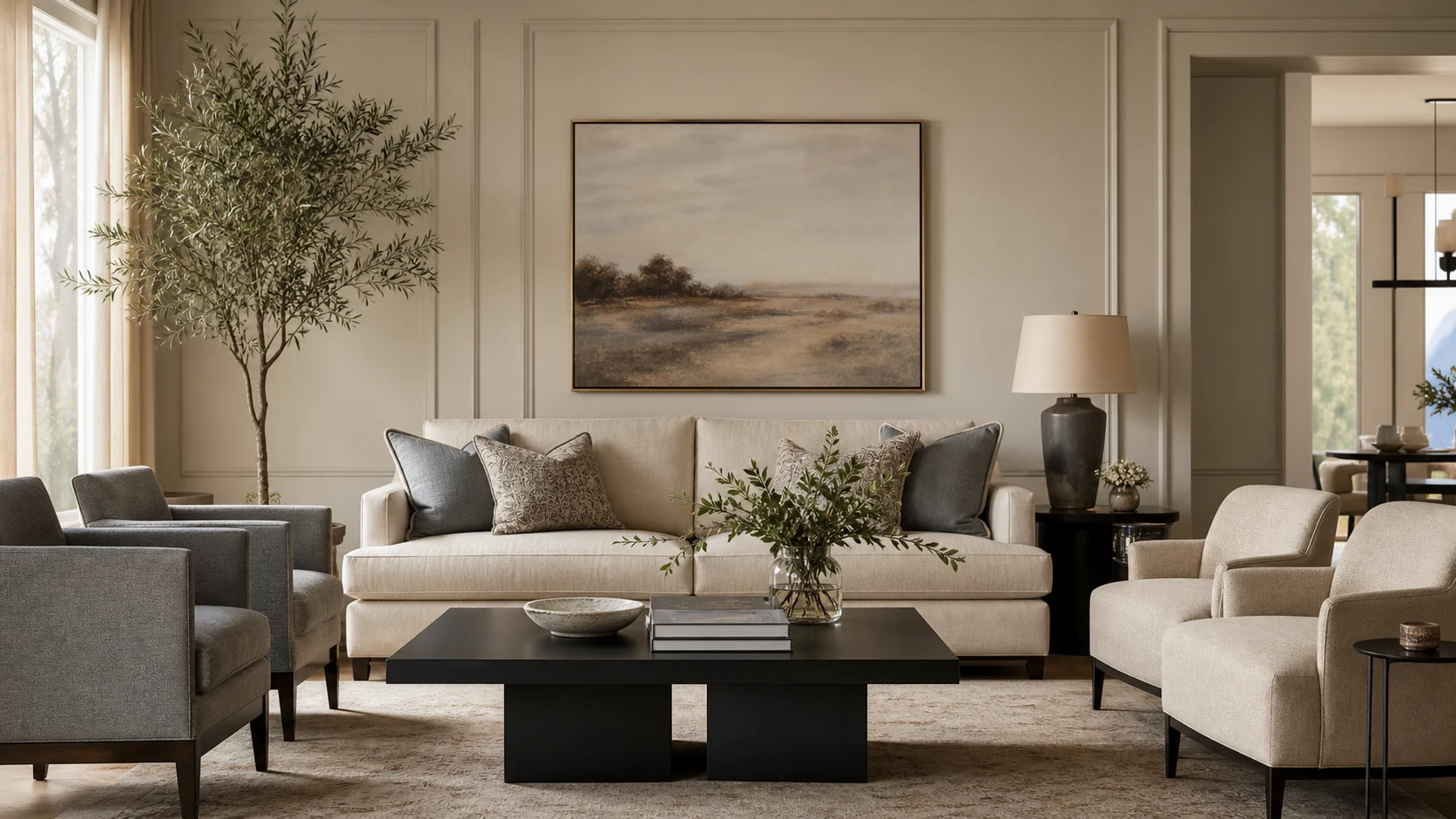
Smoother and more conciliatory, blending traditional and contemporary forms through related neutrals and moderate silhouettes.
Choose Eclectic when differences should remain visible and create controlled friction.
Contrast replaces compromise.
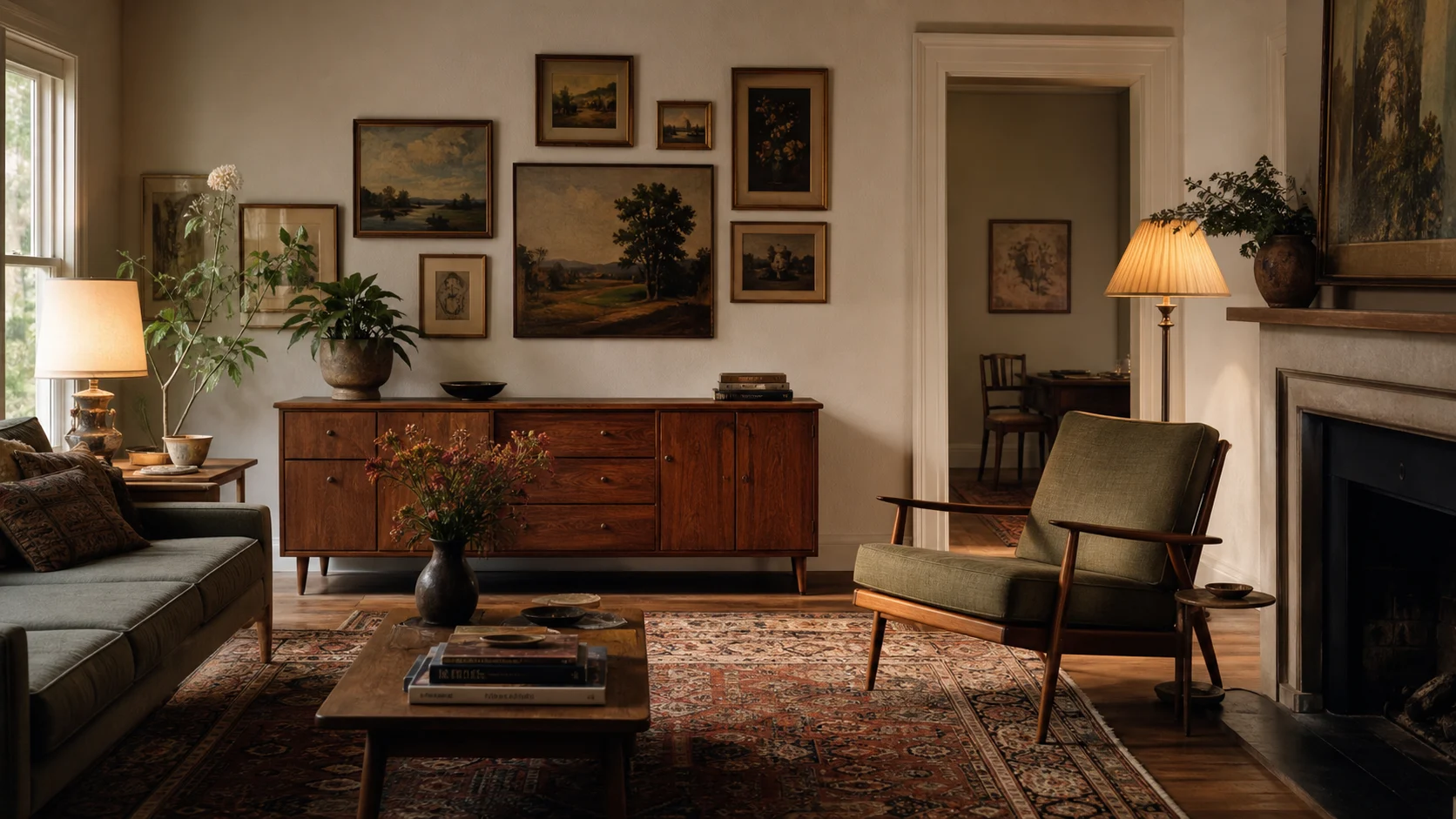
More age-led and provenance-conscious, usually organized around a narrower historical range and restoration strategy.
Choose Eclectic when new, old and cross-period pieces can hold equal legitimacy within one composition.
Stylistic dialogue replaces period continuity.
Do not buy merely because an object is different. Photograph the room, record dimensions and name the connector the candidate will repeat before bringing it home.
A quiet contemporary anchor leaves room for older bedside furniture, a sculptural chair and stronger art.
Check height and stability; its warm timber should contrast modern cabinetry without blocking kitchen circulation.
Match seat height and visual weight, then repeat upholstery or black finish across the different frames.
Current support can sit beside an older desk when leather color and dark hardware echo the room.
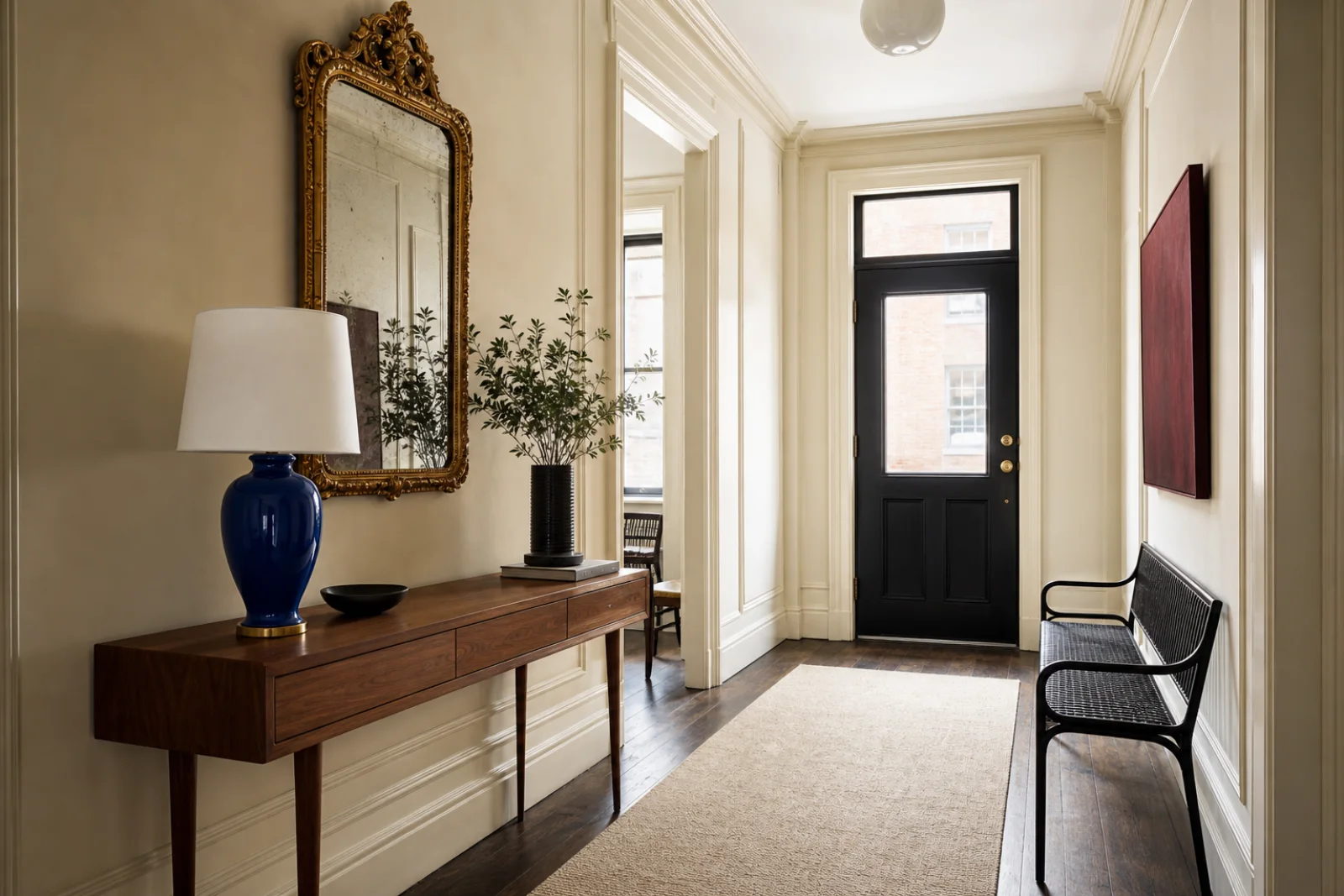
Use one ornate historic form against a restrained console and modern bench; verify safe wall fixing.
Compare soft, glossy and aged finishes together before repeating them across larger furniture.