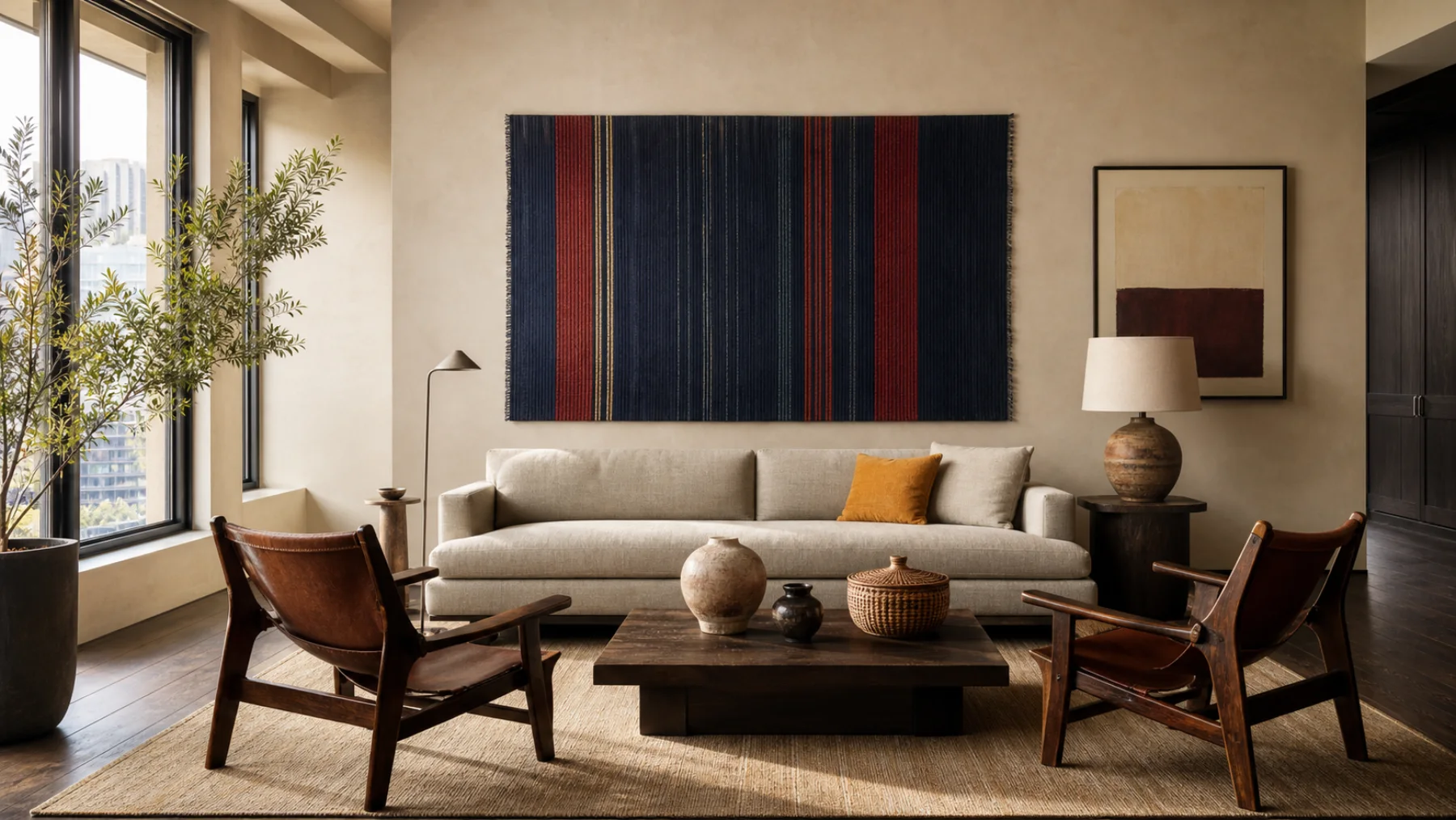
Large handwoven textile
Request maker, fiber, dye and region information; mount heavy work with a method that distributes weight safely.
A few well-documented crafted pieces, given space and daily purpose, create more depth than a room full of anonymous travel motifs.
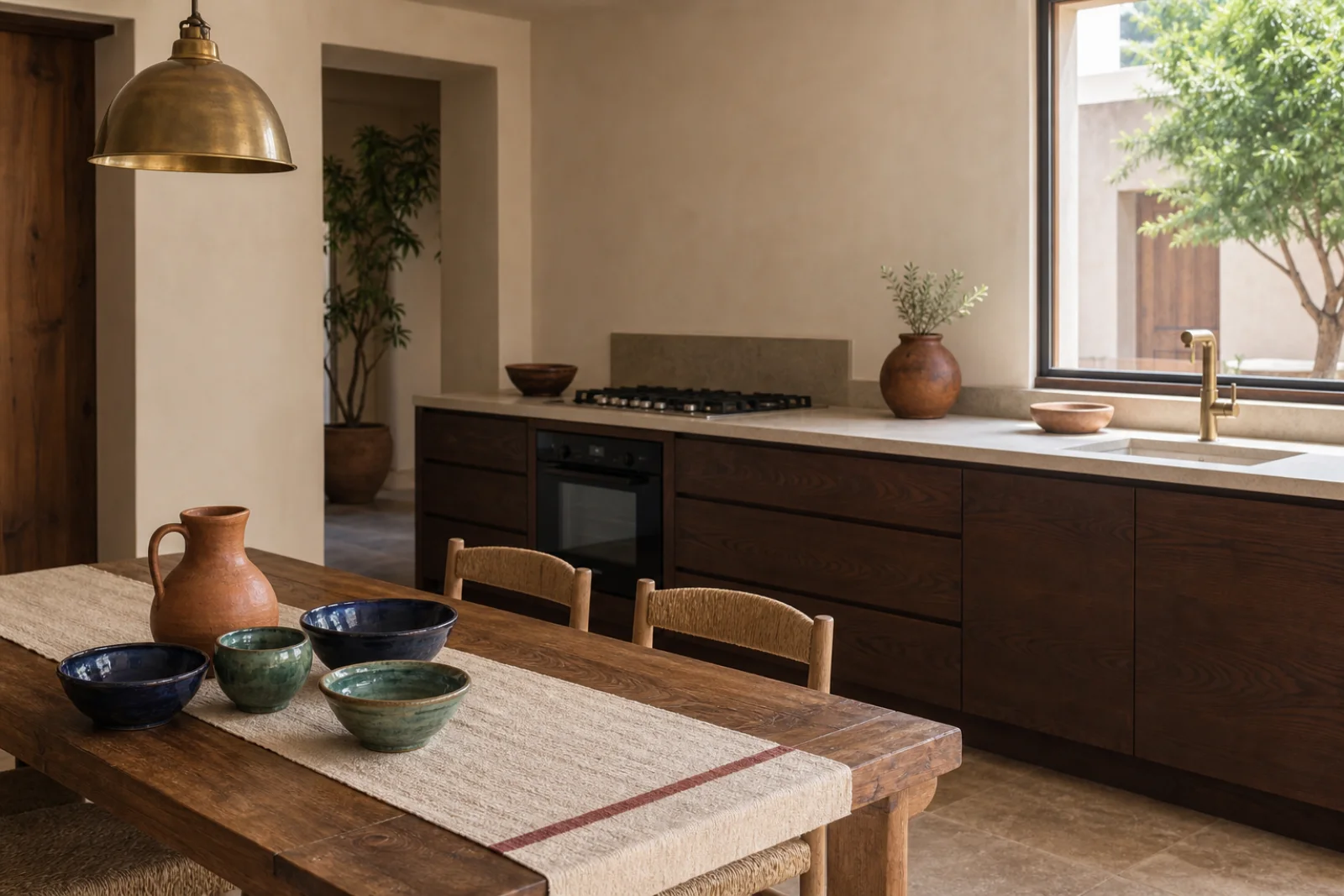
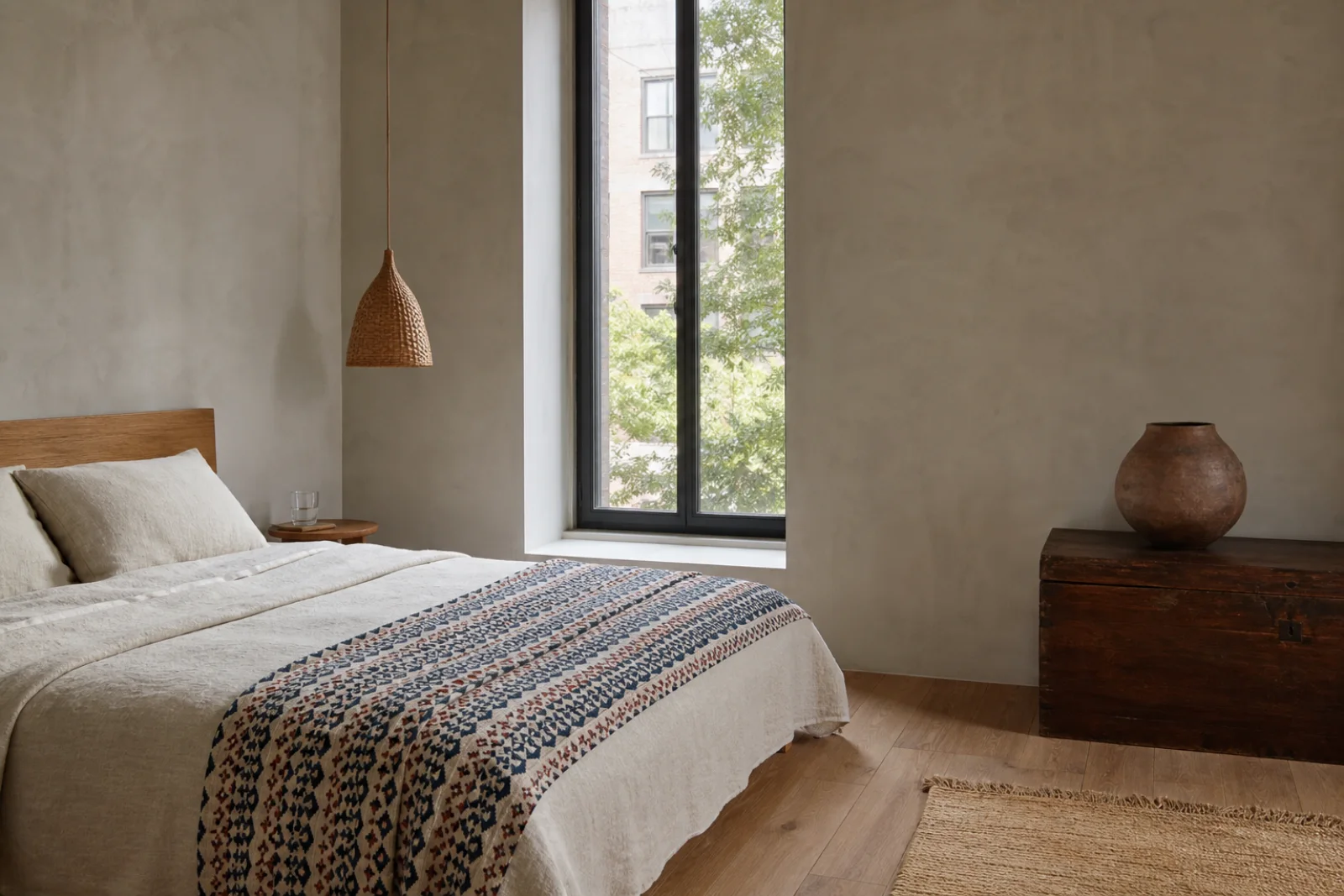
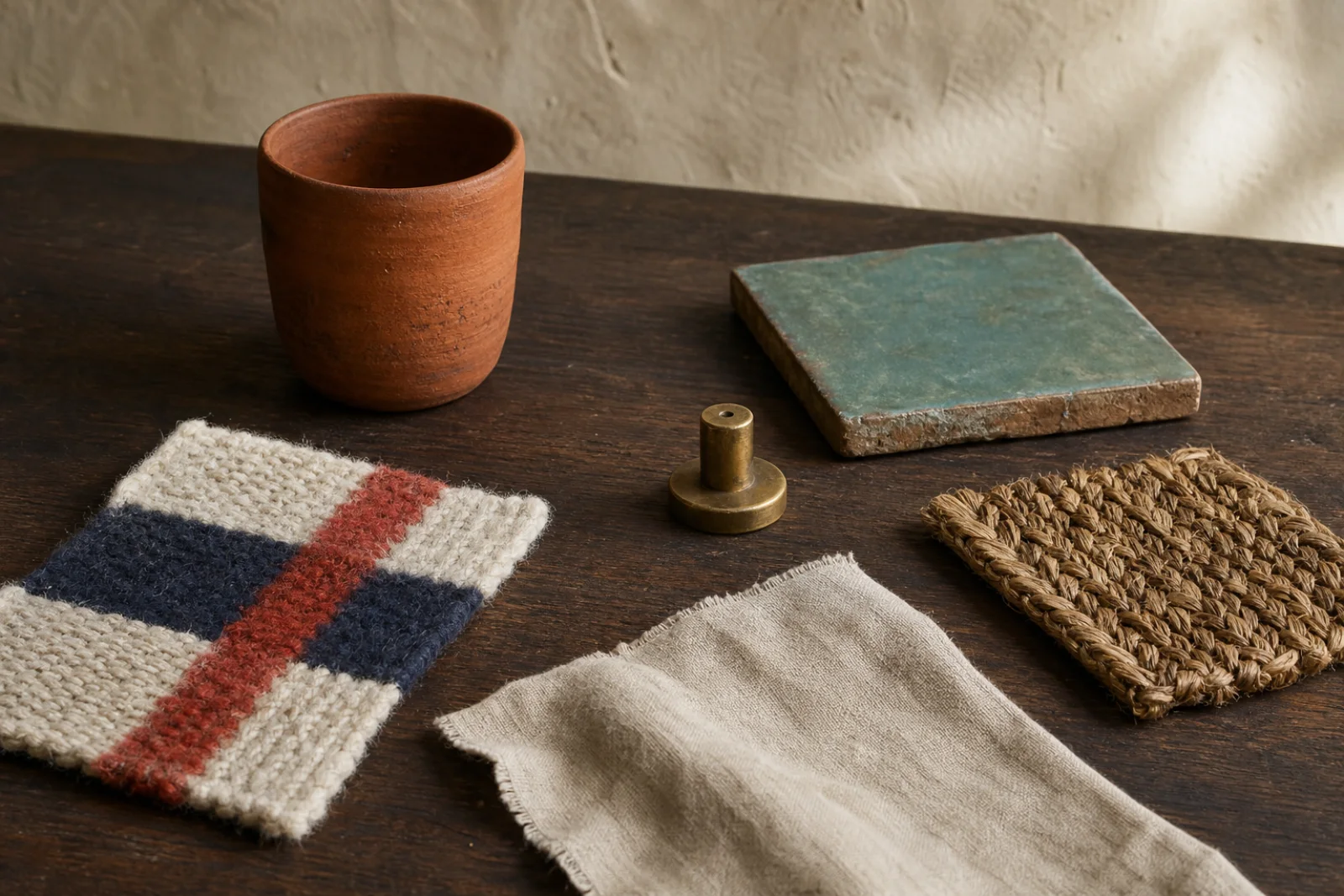
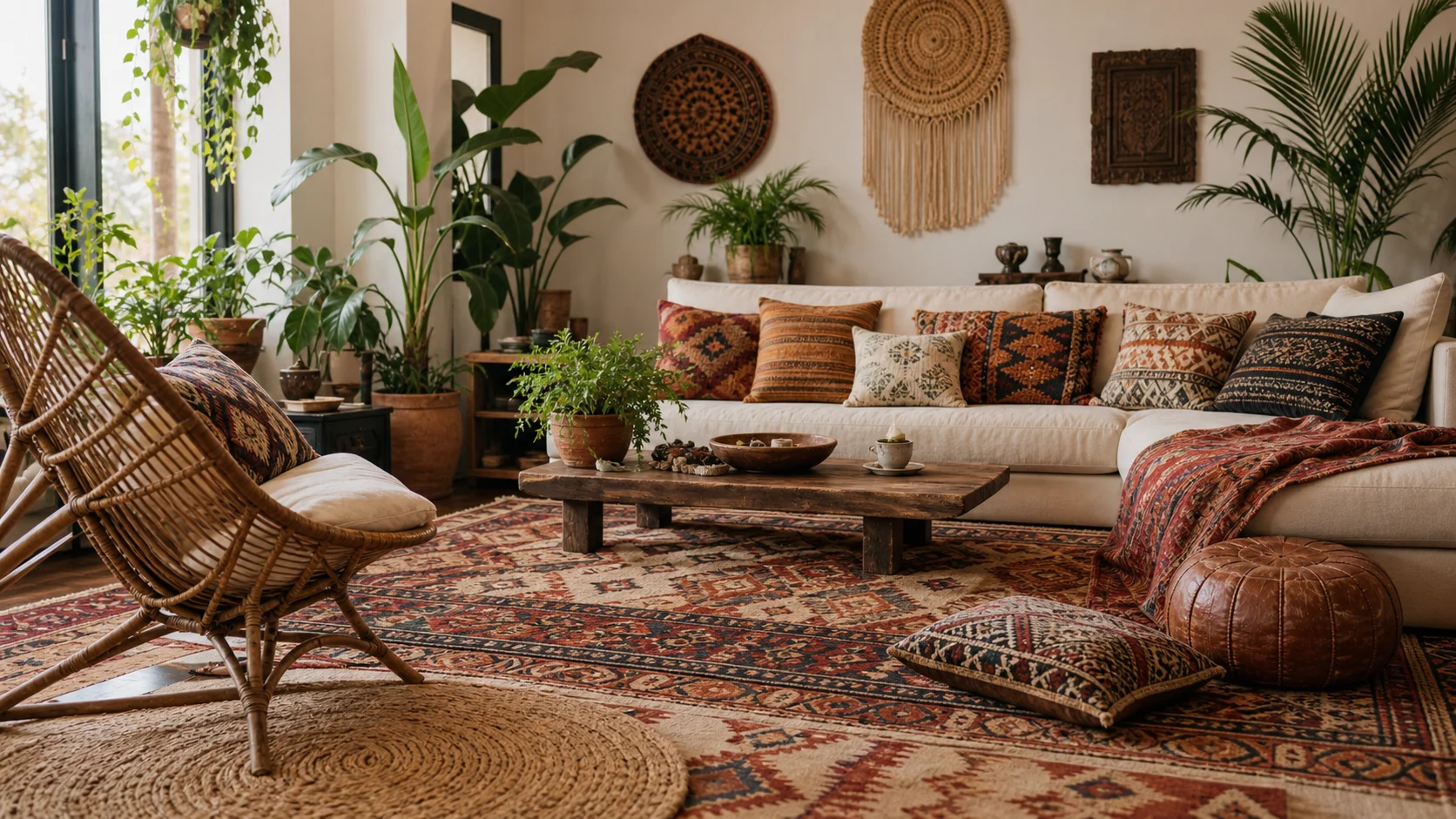
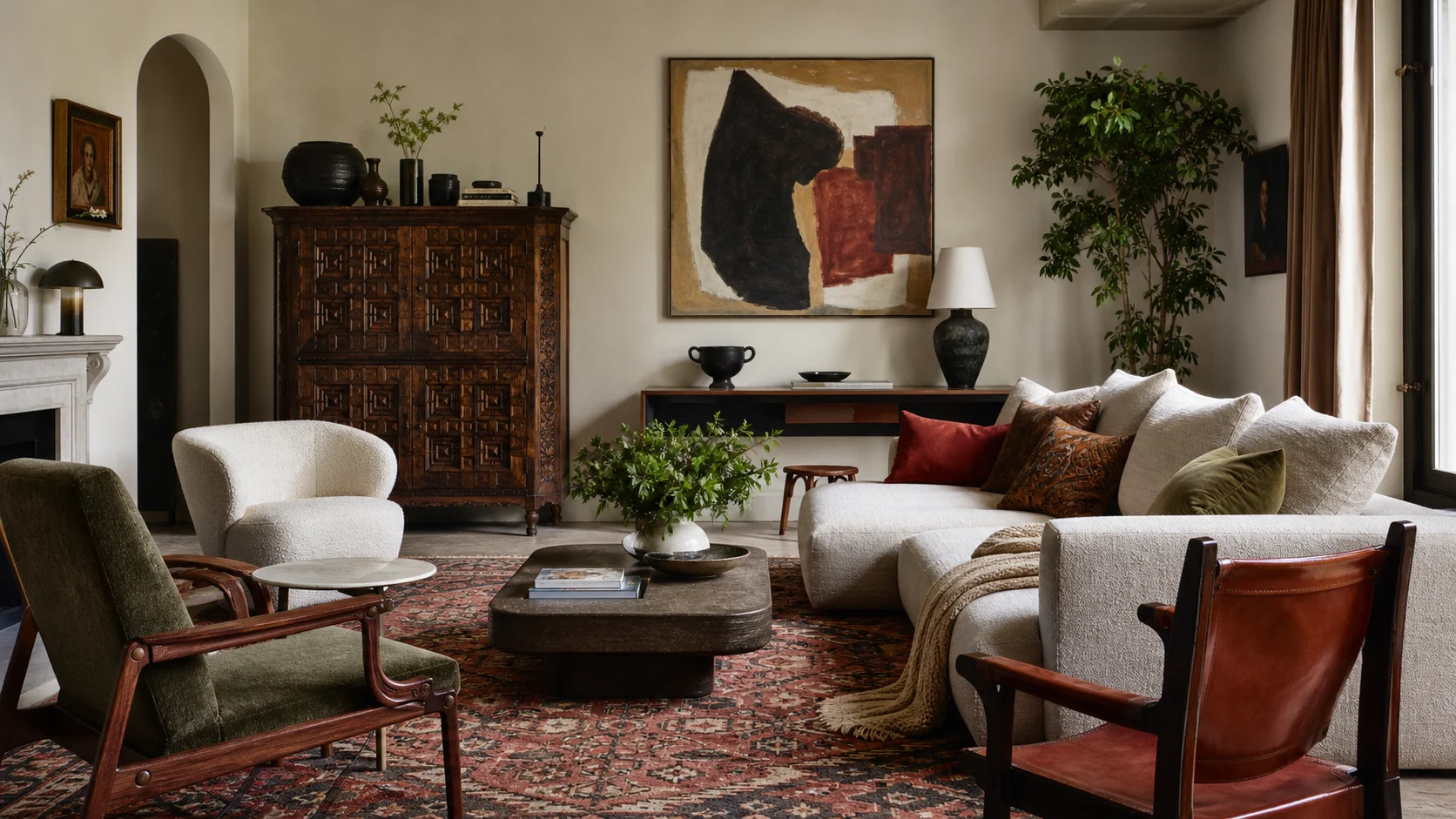
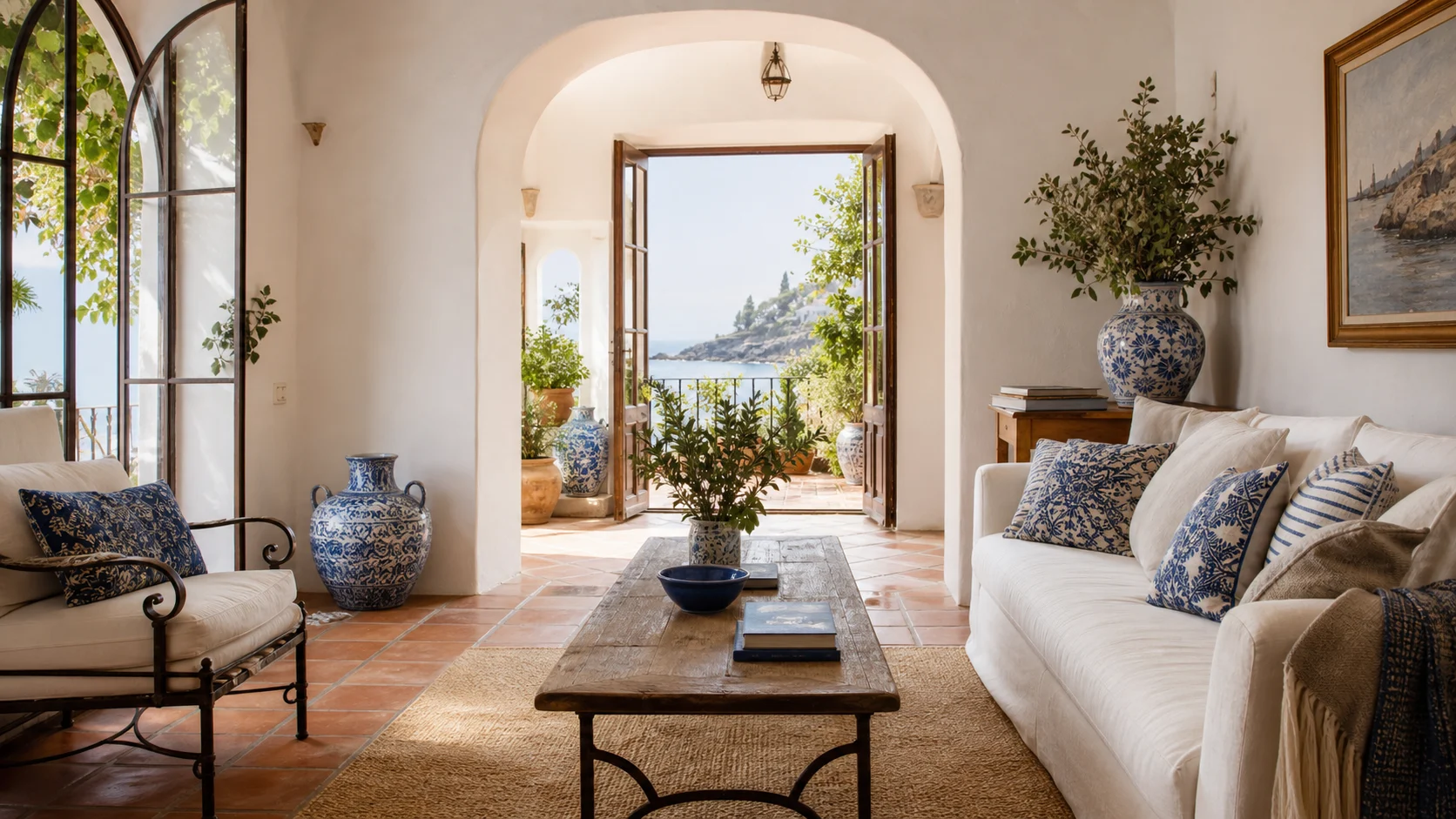
Global interior design brings craft, furniture and textiles from identifiable places into a coherent present-day home. The strongest rooms are not geographic collages. They use a calm architectural base and a small number of objects whose maker, material, technique or region can be described accurately. Function and respect matter as much as visual impact.
A label such as “tribal” or “ethnic” is not useful provenance. Ask who made an item, where, with which fibers or clay, and whether the seller can explain its intended use. Avoid sacred, ceremonial or community-specific objects unless you understand the context and have a legitimate reason to care for them. Everyday weaving, pottery and joinery offer ample material depth without turning identity into decoration.
Keep maker, region, material and care information with important purchases instead of relying on vague style labels.
One textile or vessel group needs a quiet wall or clear tabletop to be read as work, not inventory.
Favor bowls, baskets, rugs and furniture that can serve their intended everyday purpose safely.
Maker, technique and origin matter more than a broad decorative category.
Simple walls and functional furniture keep crafted pieces distinct and useful.
A few related works from understood sources replace a superficial tour of many places.
Sacred imagery, replicas and anonymous stereotypes are excluded from the decorative mix.
Place one major textile on a quiet wall, keep seating plain and group only a few ceramics by material or maker.
Use a documented everyday cloth as the single pattern and let plain linen, timber and clay support its color.
A large traceable flatweave can lead the room; choose robust chairs and tableware intended for regular use.
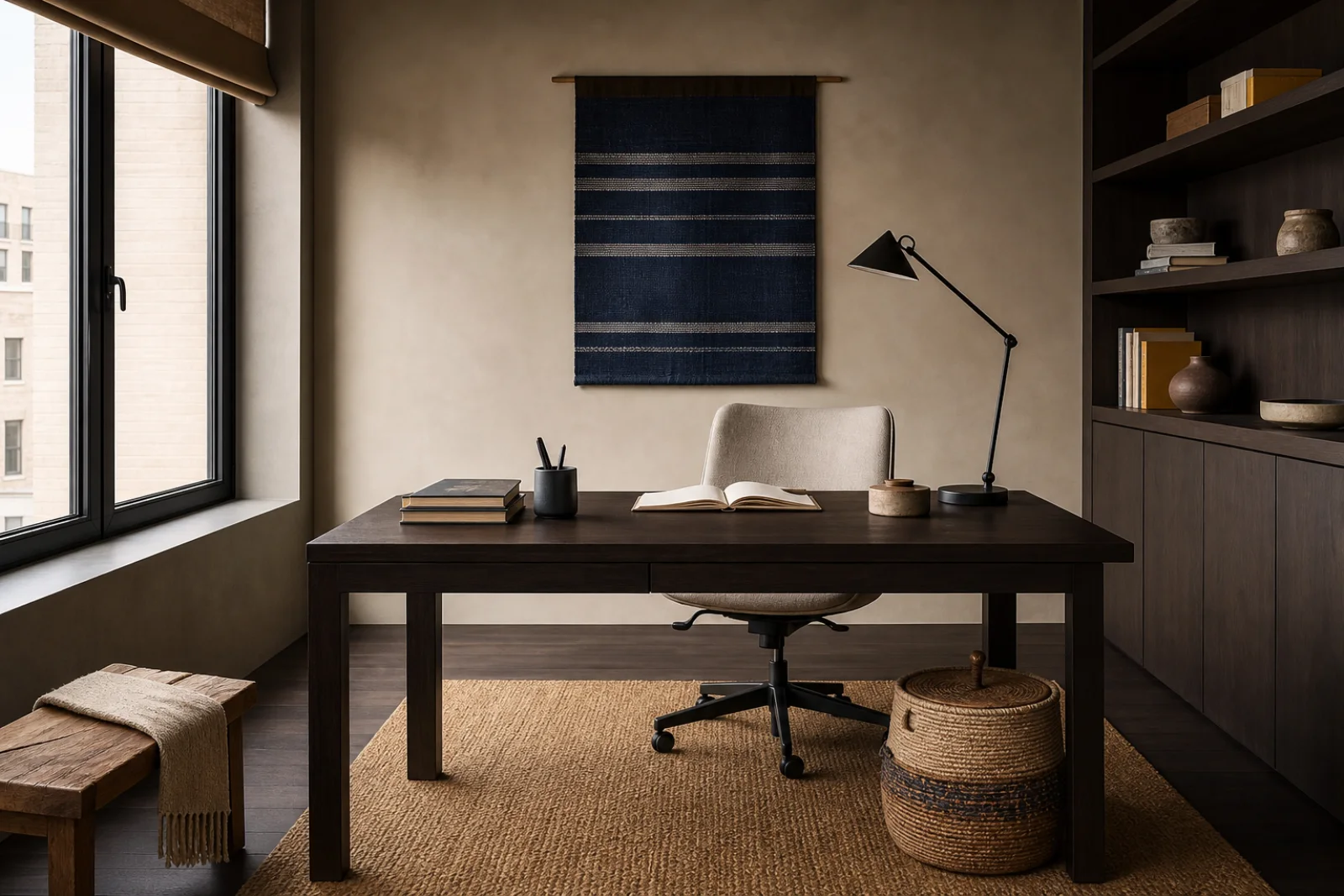
Keep the workstation ergonomic and let one wall textile plus a practical basket provide the crafted layer.
Use food-safe pottery and washable cloth; do not overcrowd worktops with objects purchased only for display.
Choose one durable storage basket and one maker-led lamp or textile, leaving the path and landing surface clear.
Let chalk and cocoa carry architecture and furniture. Choose indigo as the textile anchor, repeat madder sparingly and use verdigris on one ceramic family rather than scattering many unrelated colors.
The quiet wall and linen base that gives darker fibers and clay enough visual separation.
A grounding furniture tone that connects varied natural materials without simulating a region.
A deep textile anchor best used in one substantial weave or a limited ceramic group.
A warm dyed accent for narrow stripes and small repeated notes.
A cool handmade surface that balances timber, terracotta and brass.
Look for fiber, dye, technique, maker or cooperative and region—not a vague “ethnic” product description.
Confirm whether vessels are food-safe and intended for use; retain maker information where possible.
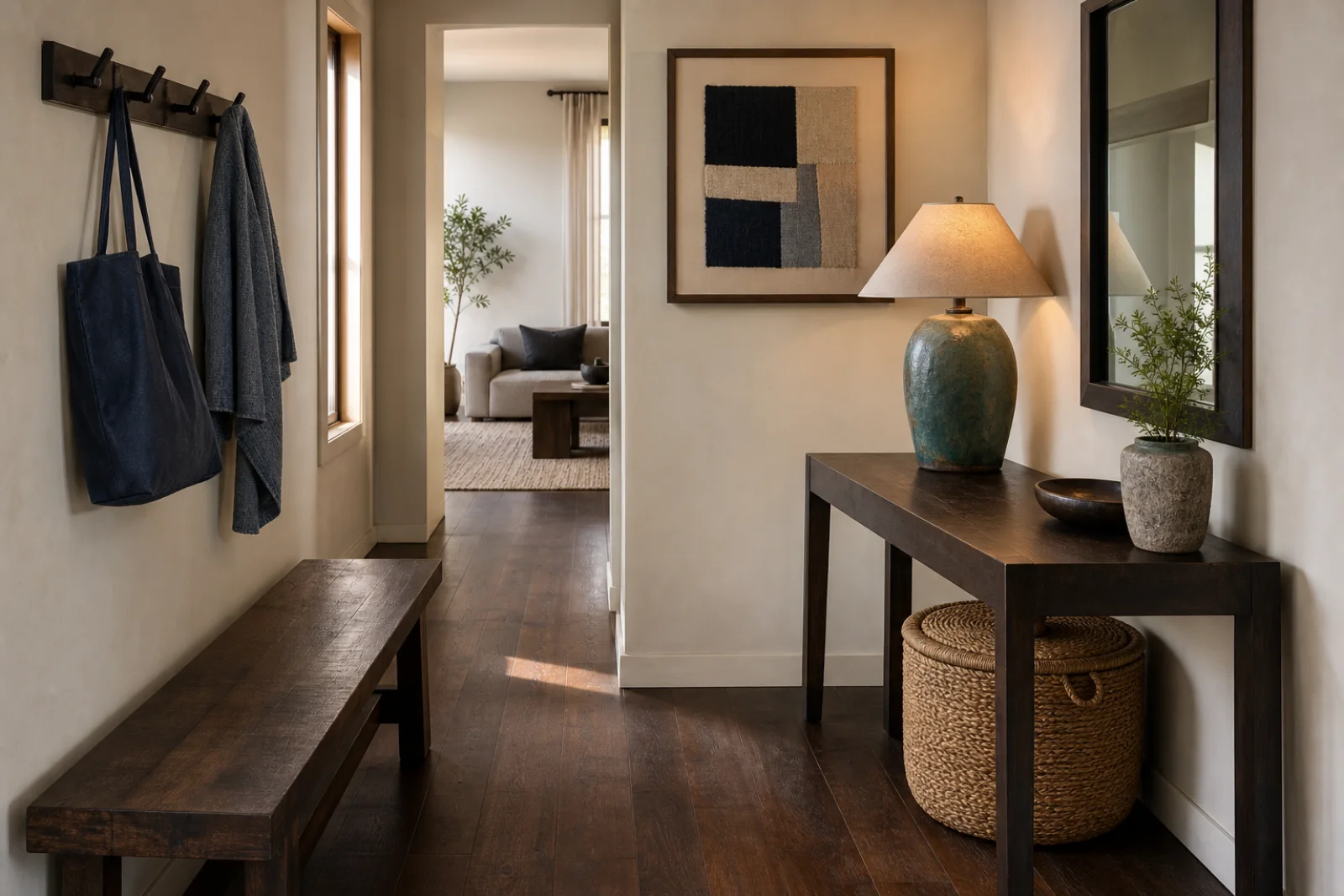
Check the plant fiber, weave stability and practical capacity before treating a basket as decorative storage.
Quiet durable furniture and fittings provide continuity without pretending to represent a specific tradition.
Begin with one object whose origin and use you can explain. Build a quiet functional room around it, repeat two of its colors and add further craft only when it contributes a different technique or daily purpose.
Write down maker, region, material, technique and intended use for each significant crafted piece.
Give the strongest textile, vessel or furniture piece a clear wall, floor area or surface.
Use simple current furniture, storage and lighting to meet comfort and performance needs.
Choose the next item for material or technique—not merely because it comes from another place.
When the room feels wrong, change the underlying decision before adding more decor.
Develop two or three material relationships instead of representing many regions at once.
Ask for maker, technique, material and region; skip sellers who offer only vague descriptors.
Avoid sacred and ceremonial works; prioritize everyday craft you can use and understand.
Reduce small accessories and leave space around each substantial textile, vessel or basket group.
Global design should describe an approach to sourcing and stewardship, not a look assembled from stereotypes. Its value lies in giving documented craft a useful, legible place within contemporary life.
More personal and informal, often using layered textiles, plants and relaxed furniture without requiring geographic documentation.
Choose Global when maker, place and technique are central to why an object belongs in the home.
Provenance replaces free-form layering.
More concerned with formal contrast between periods and design languages than with the origins of craft.
Choose Global when material tradition and responsible sourcing matter more than stylistic collision.
Craft context replaces period dialogue.
More regionally and climatically coherent, using plaster, stone, timber and tile associated with a connected geographic area.
Choose Global for carefully sourced works from more than one region within a neutral contemporary framework.
Curated exchange replaces one regional envelope.
A specific design tradition with its own architecture, craft histories, spatial customs and recognizable material vocabulary.
Choose Global only when the home is not attempting to reproduce one regional tradition and sources remain explicit.
Multiple documented sources replace a single cultural vocabulary.
Ask better questions than “Where is it inspired by?” Seek maker names, cooperative details, region, fiber or clay, production method, care and intended use before purchasing.
Request maker, fiber, dye and region information; mount heavy work with a method that distributes weight safely.
Verify fiber, dye care and production source, then use it as the room’s only major pattern.
Confirm glaze safety, cleaning limits and intended use rather than assuming every handmade vessel is tableware.
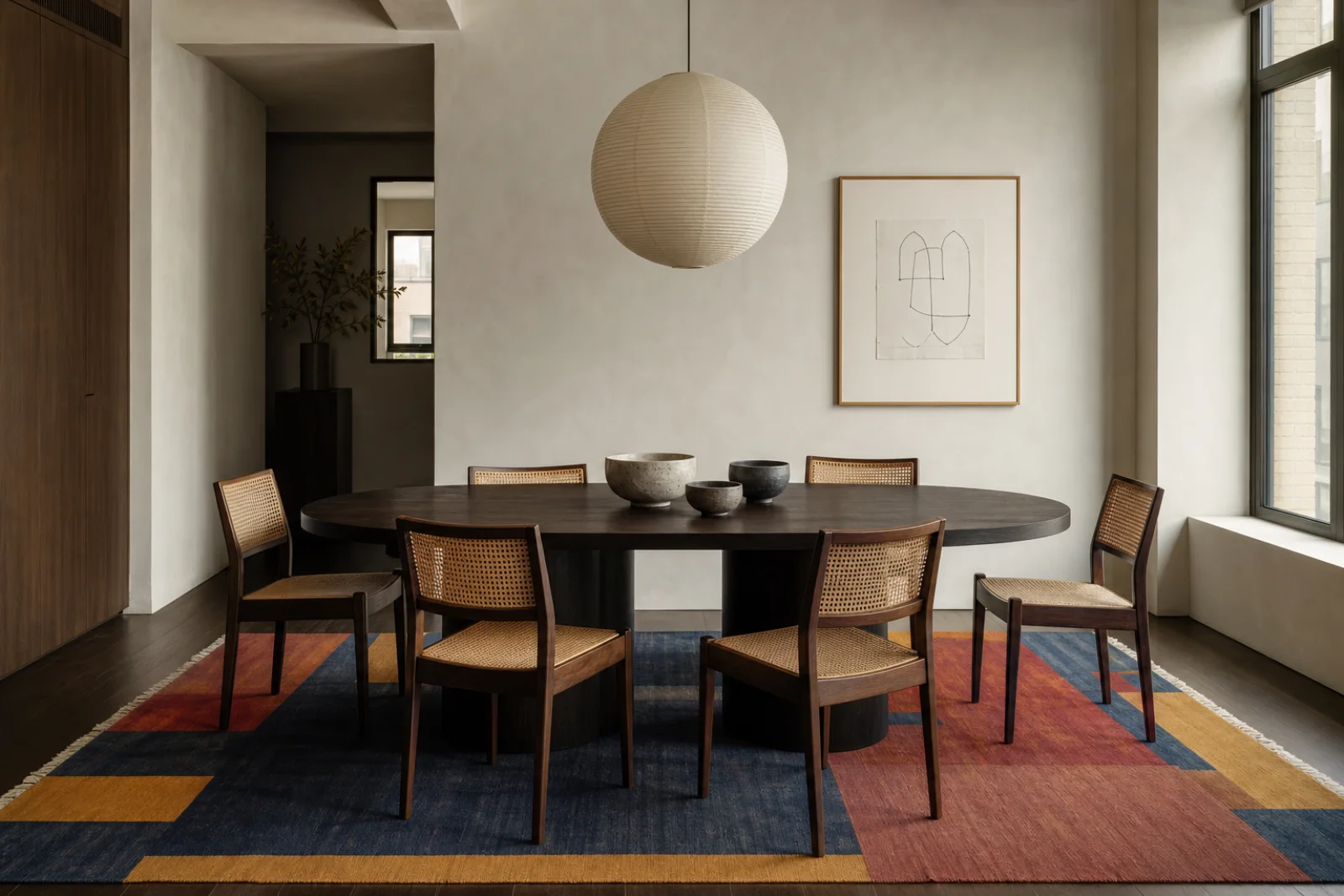
Check maker or cooperative, fiber and repair options; size it for chairs to remain on the rug when pulled out.
Look for named plant fiber, stable handles and a structure suited to the items it will store.
Keep samples and maker notes together so future additions can be compared by technique and material.