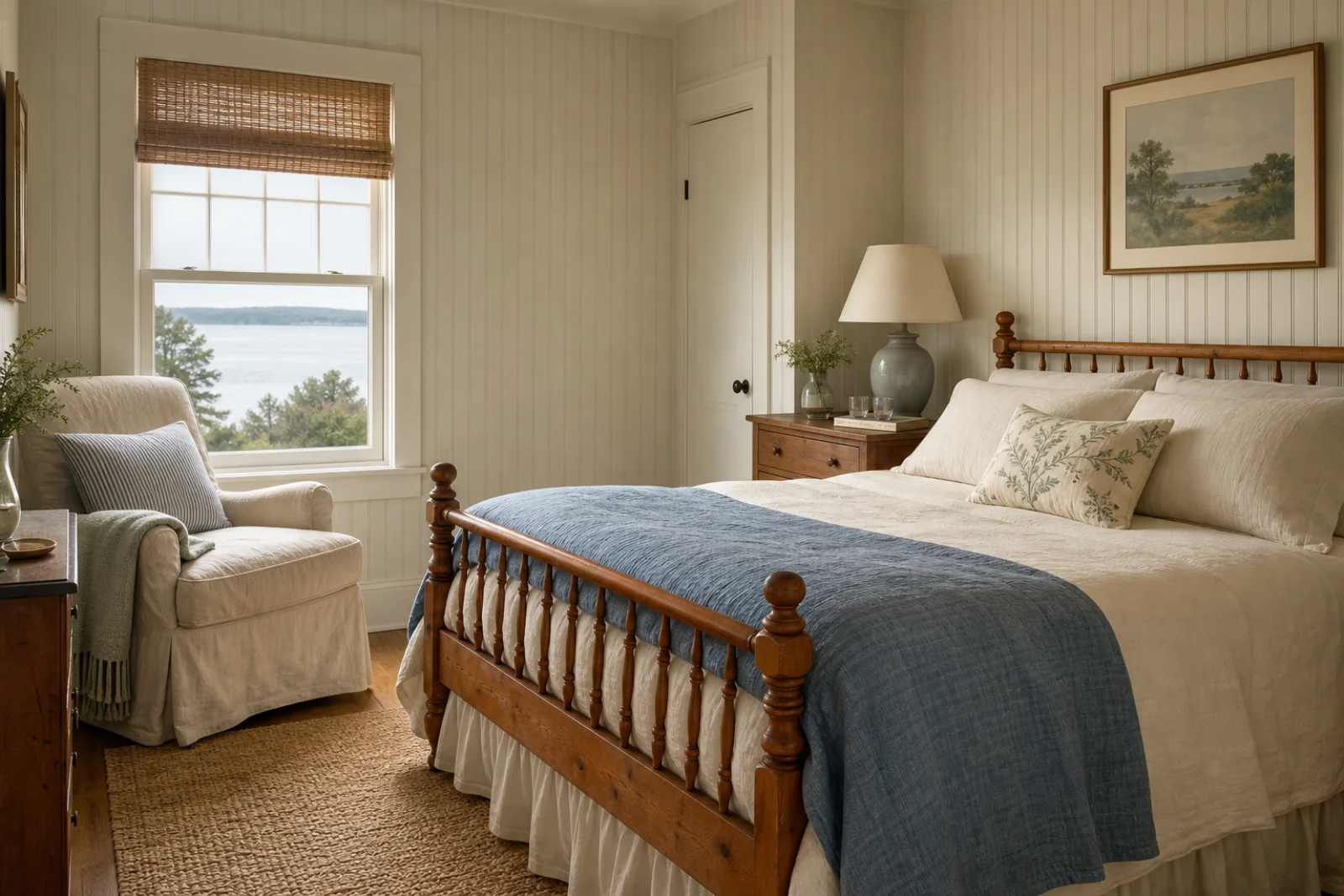
Pine spindle bed
Check frame stability and mattress dimensions; use removable bedding rather than a heavily coordinated suite.
Generous comfort, useful antiques and faded coastal color create a home made for reading, cooking and lingering guests.
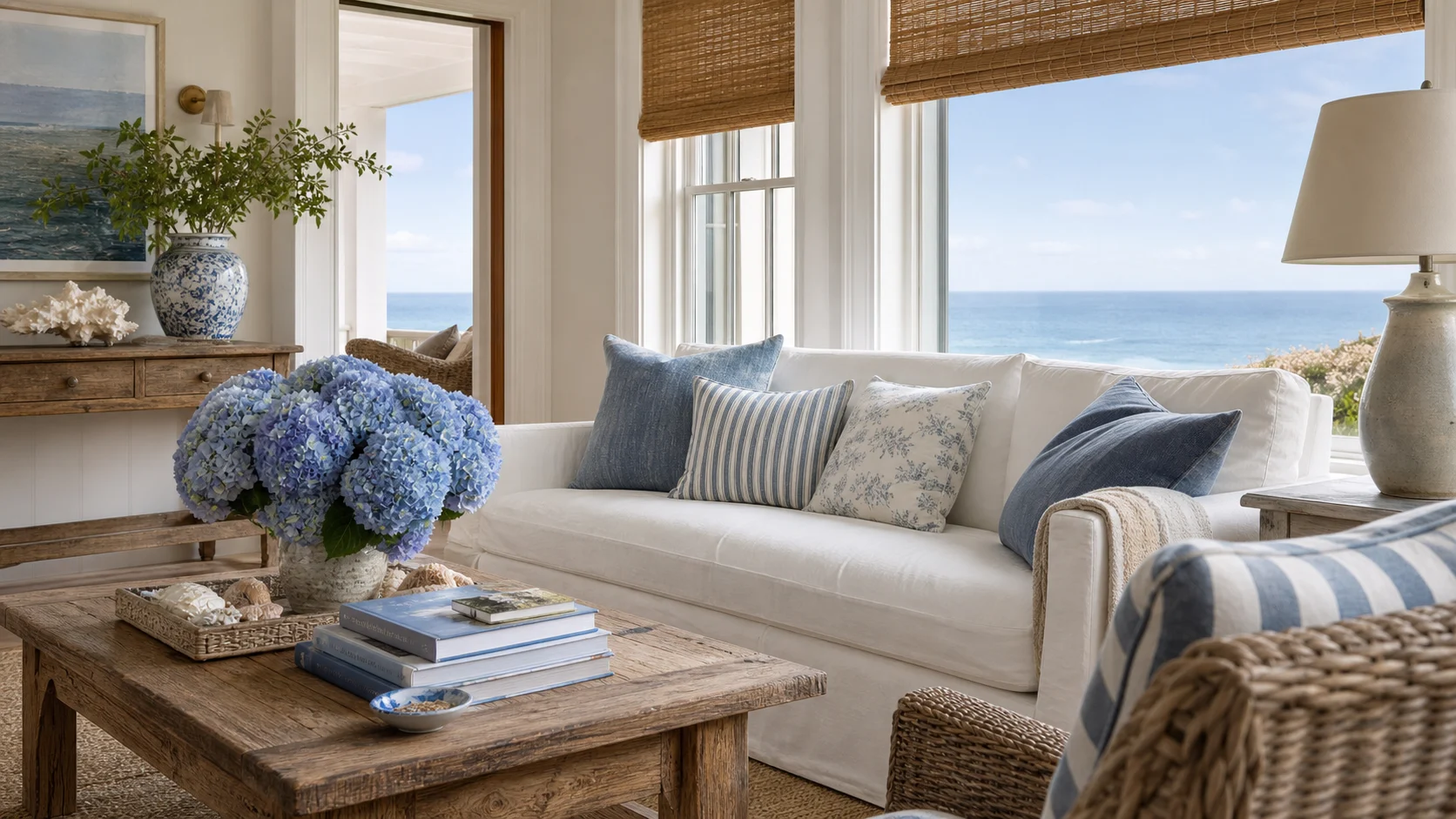
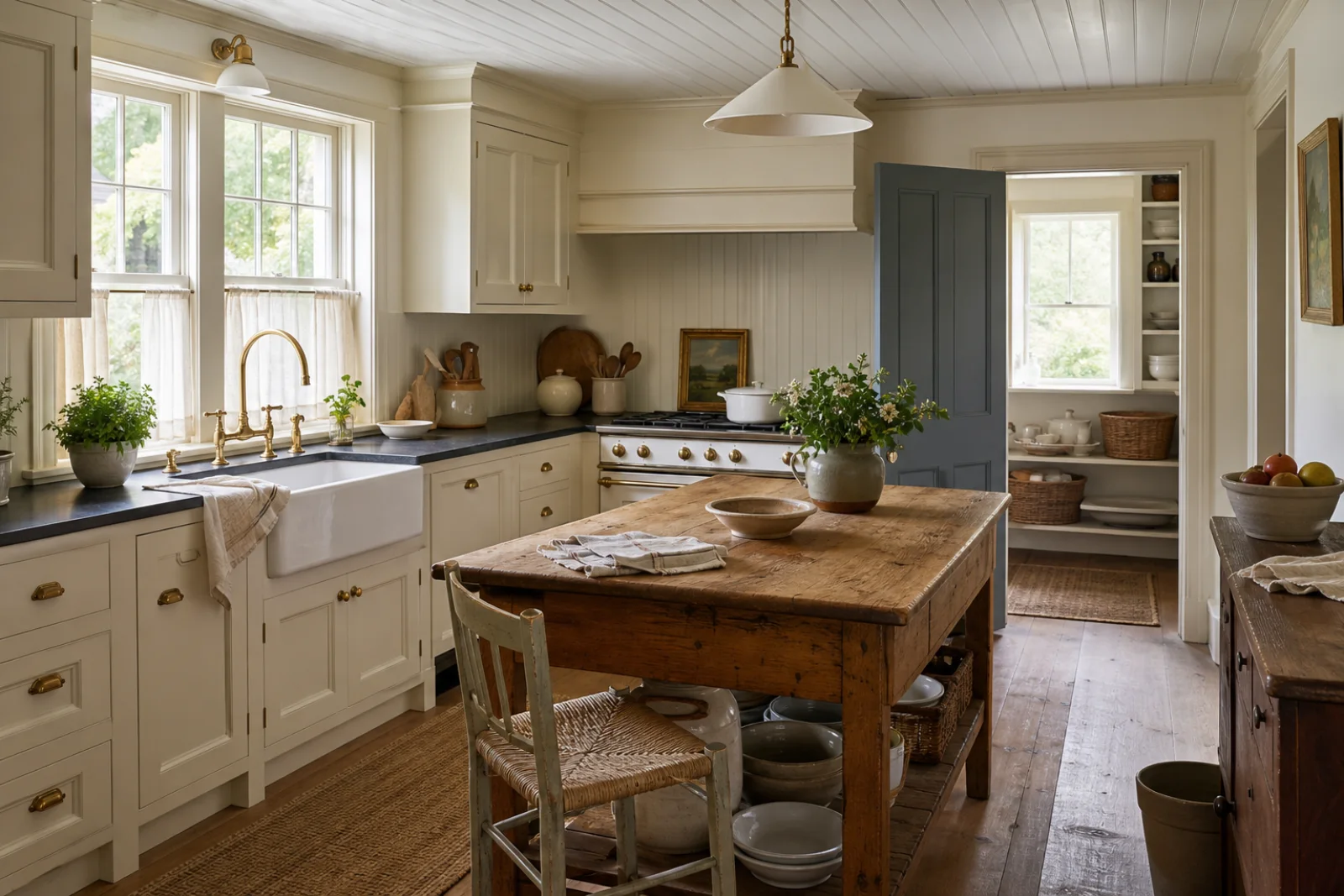
Coastal Grandmother style imagines an easy, well-kept seaside home organized around ordinary pleasures: reading by a window, preparing lunch, setting a table and welcoming someone without ceremony. Traditional furniture gives the rooms familiarity, while linen covers, wicker and faded color stop them from feeling formal.
The name describes an attitude, not the owner’s age. Rooms should feel accumulated but selective: one old pine table, books within reach, a pottery lamp and cloth that improves with washing. Compared with Coastal style, the architecture recedes and the furnishing becomes warmer, softer and more personal.
Choose seat depth, arm height and reading light before deciding whether a chair looks appropriately relaxed.
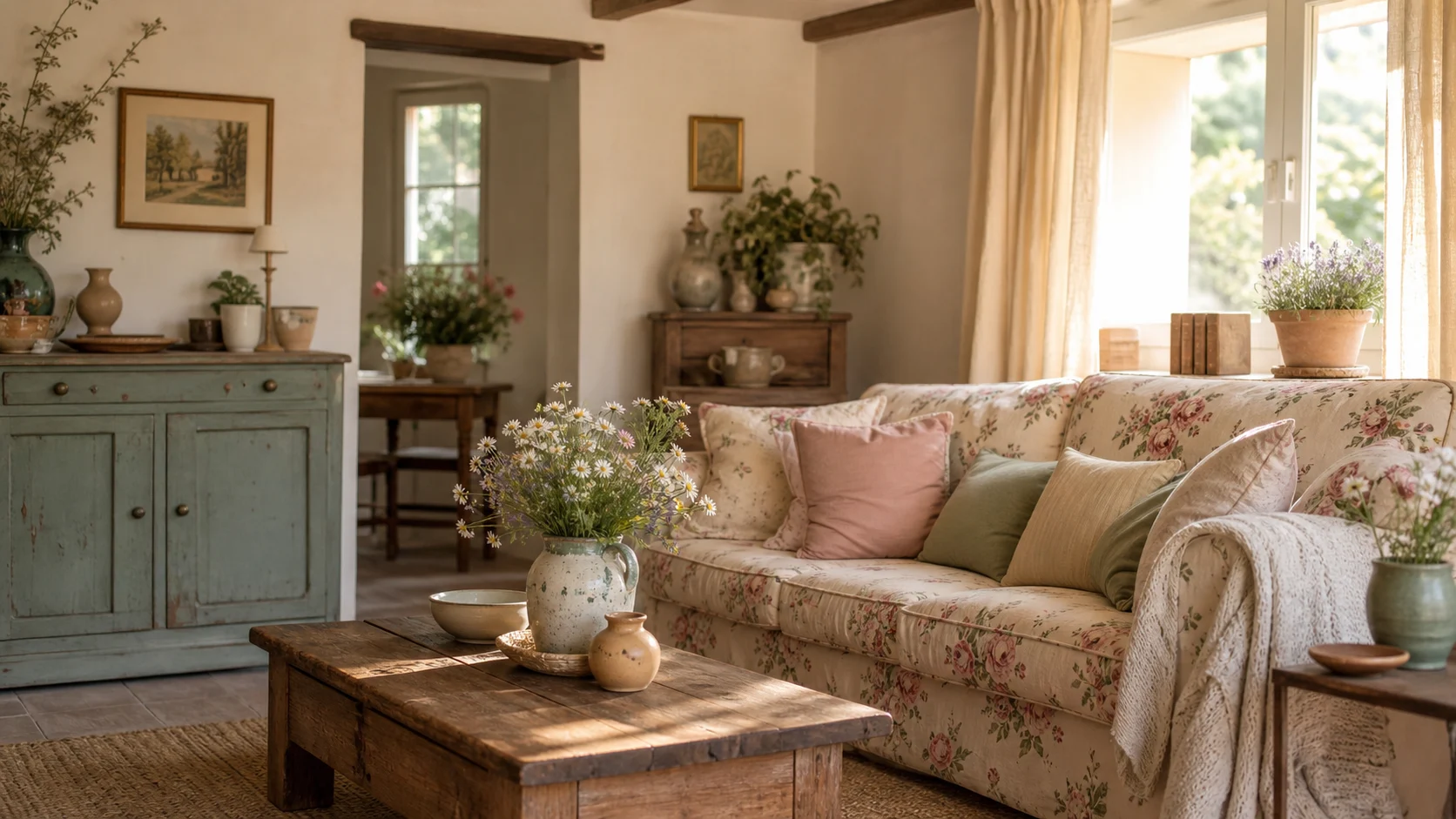
Let one old pine or painted piece carry patina; keep newer upholstery plain and well fitted.
Echo faded blue or sage in two or three materials without buying a coordinated set.
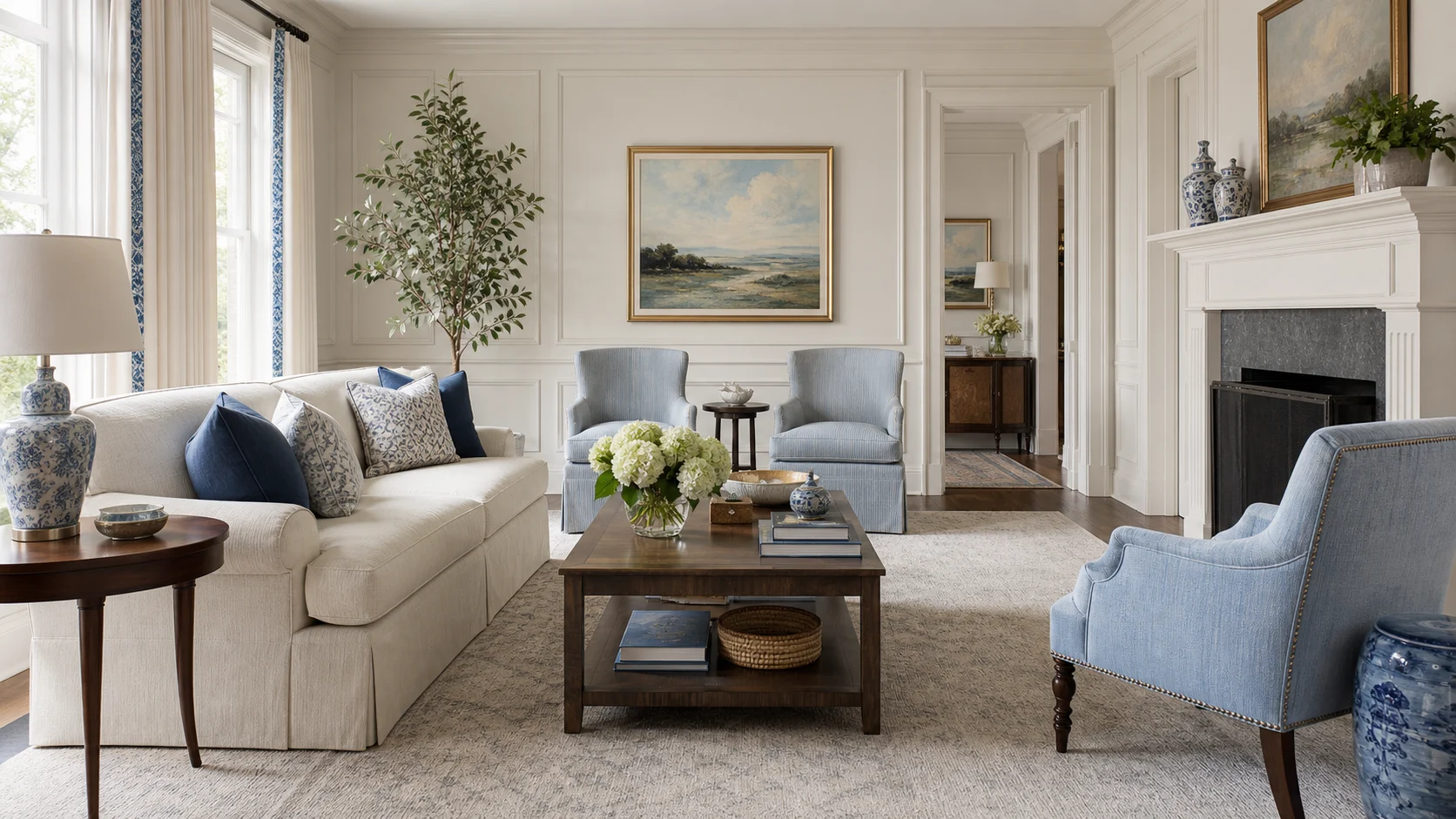
A slipcovered sofa and supportive chairs face one another rather than forming a showroom lineup.
Spindle beds, pedestal tables and old desks contribute familiar forms with practical dimensions.
Linen, ticking and light cotton add softness through removable, maintainable covers.
Books, lamps, pottery and small landscapes appear where they are used, not as themed displays.
Arrange a deep sofa and two genuinely supportive chairs around a reachable table, with a lamp beside every reading seat.
Pair a warm pine bed with washable cream bedding and one faded blue coverlet; reserve the corner for a proper reading chair.
Use a round table to make conversation easy and let compatible Windsor chairs vary slightly instead of forcing a perfect set.
Combine a work desk with a separate reading chair and closed files, keeping books accessible without filling every shelf.
Let an old worktable provide warmth against painted cabinetry; keep the cooking route clear and display only frequently used pottery.
Ground the hall with a painted chest and woven bench, then limit coats and baskets to what the space actually handles.
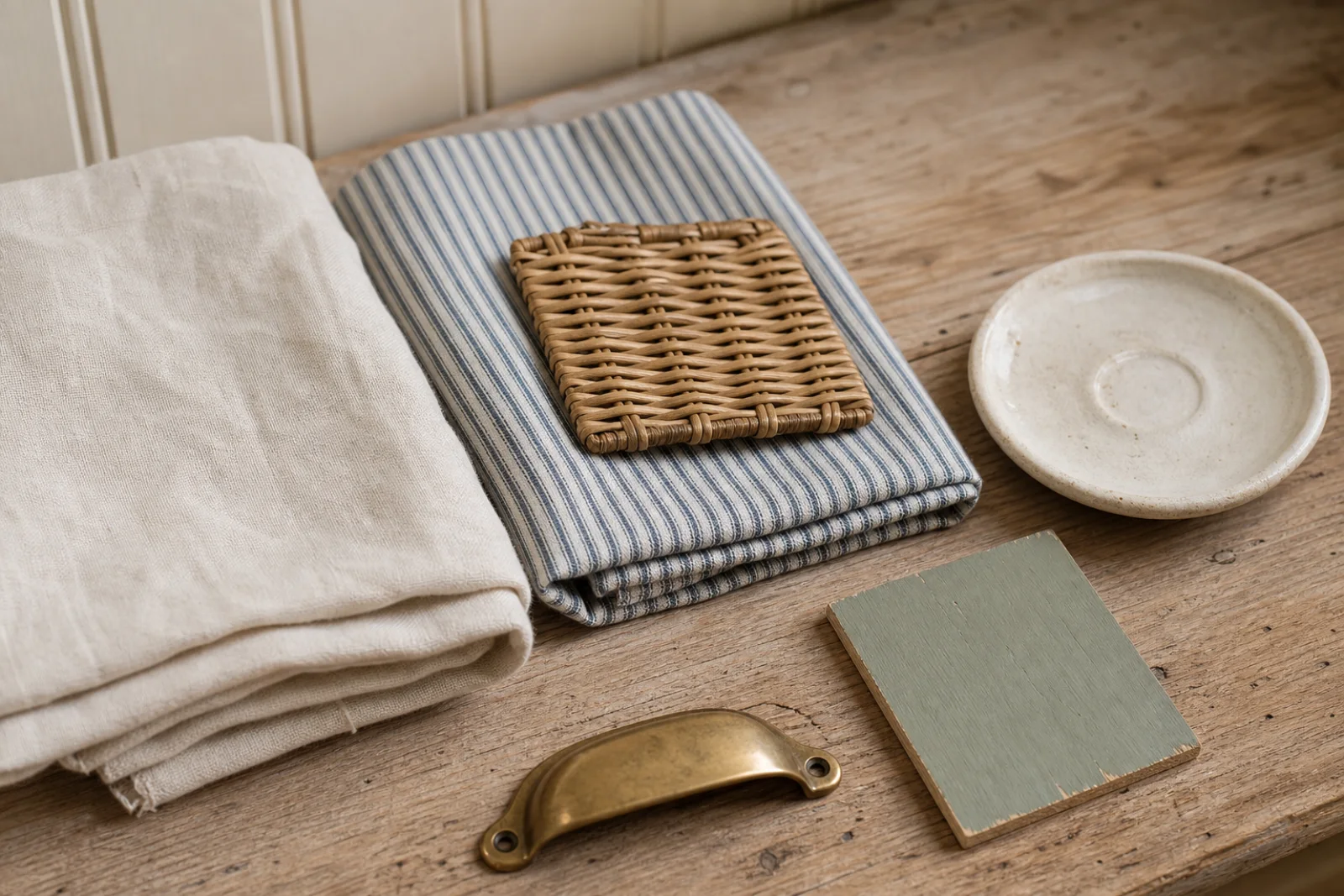
Let cream carry walls and large upholstery, old pine ground the center and faded denim cool one substantial textile. Sage and aged brass should connect smaller working pieces.
A gentle base for beadboard, upholstery and curtains that avoids stark seaside white.
A softened blue for one chair, coverlet or curtain rather than a matching room set.
Adds muted garden color to a chest, pantry door or small textile.
Introduces age and warmth through a table, bed or writing desk.
A quiet warm line for lamps, hooks and cabinet pulls.
A relaxed washable layer for slipcovers and bedding; expect wrinkles rather than fighting them.
Visible wear gives warmth when joints are sound and the surface can still handle daily use.
A small regular stripe that mixes easily with plain linen without turning nautical.
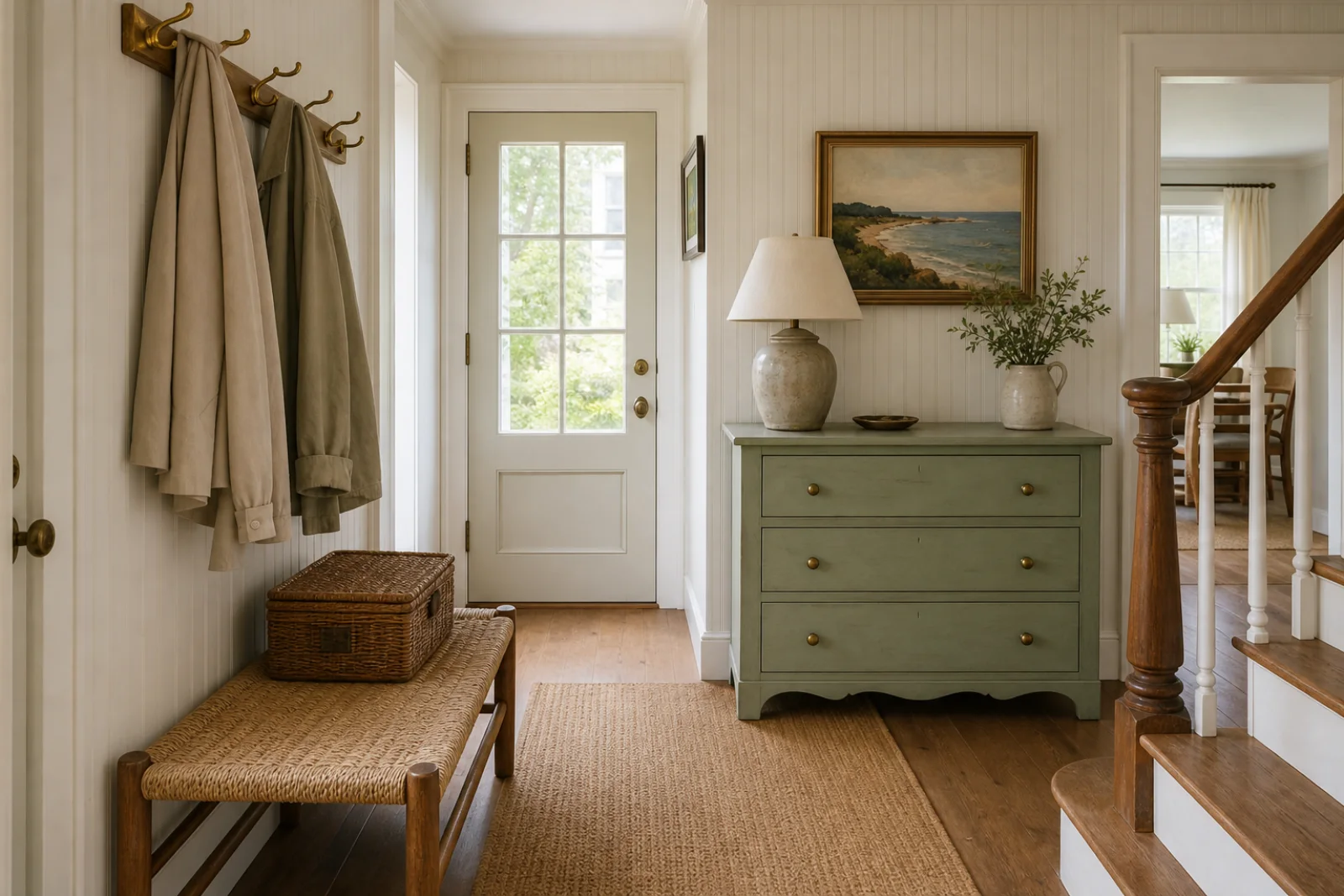
Best used for one chair, bench or lidded basket where its texture also serves a purpose.
Start with one comfortable daily routine, one useful old piece and one faded color. Add traditional layers only where they improve sitting, storing or hosting.
Choose a supportive chair, side surface and shaded lamp before styling the surrounding shelves.
Use an old pine table, chest or desk with sound construction and dimensions suited to its task.
Repeat faded blue or sage across unlike materials rather than buying coordinated accessories.
Keep landscapes and useful pottery; take away shells, coral and objects that only announce the coast.
When the room feels wrong, change the underlying decision before adding more decor.
Keep one faded blue lead and move the rest toward cream, pine, sage and natural weave.
Check seat depth, cushion density and lamp position instead of relying on loose slipcovers.
Group books and pottery near their use, then leave shelves and tables partly empty.
Remove coral, shells and anchors; let views, washed cloth and old timber suggest place.
Coastal Grandmother is distinguished by how it furnishes a relaxed life. Traditional comfort, readable personal history and restrained seaside color matter more than coastal architecture or decorative motifs.
Lighter and more architectural, shaped by sun control, airflow, pale mineral surfaces and cleaner furniture lines.
Choose Coastal Grandmother for traditional forms, layered comfort and a stronger sense of personal history.
Slipcovers and old pine replace screens and limestone.
More tailored and current, refining classic shapes with sharper upholstery, stronger art and deliberate contrast.
Choose Coastal Grandmother for softer cloth, quieter color and a less composed relationship with age.
Washed ticking replaces crisp tailored contrast.
More rural and handmade, centered on gardening, mending, baking and botanical domestic rituals.
Choose Coastal Grandmother for seaside ease, reading and hosting rather than productive cottage life.
Conversation seating replaces visible handwork.
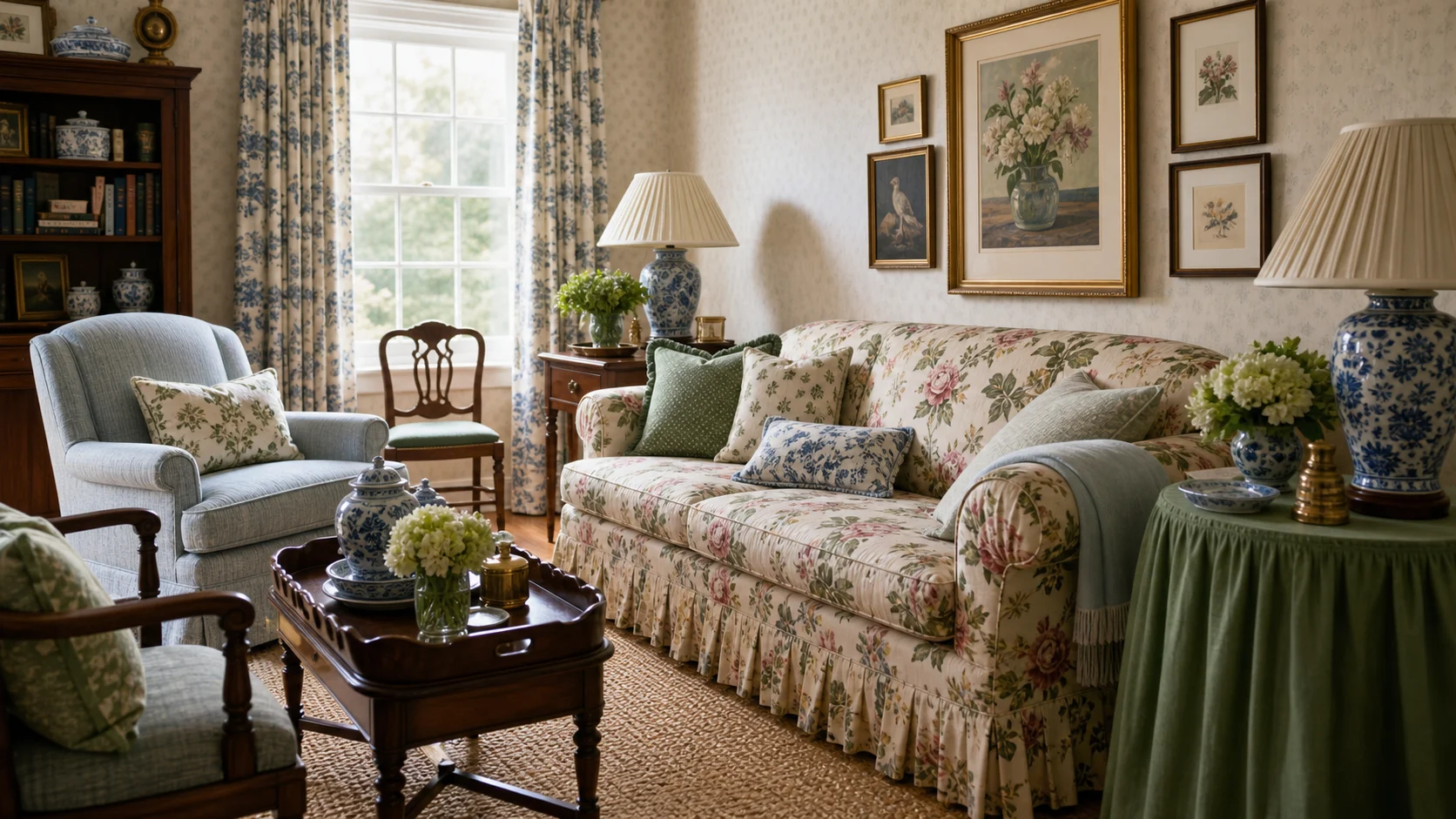
More decorative and pattern-forward, layering chintz, trim, porcelain and classic statement furniture.
Choose Coastal Grandmother for fewer patterns, more washed texture and less formal arrangement.
Faded linen replaces coordinated chintz and trim.
Prioritize comfort, useful dimensions and fabrics that can be maintained. A convincing room grows from a good chair and worktable, not a collection labeled “coastal.”
Check frame stability and mattress dimensions; use removable bedding rather than a heavily coordinated suite.
Confirm working height, joint condition and aisle clearance before embracing its surface wear.
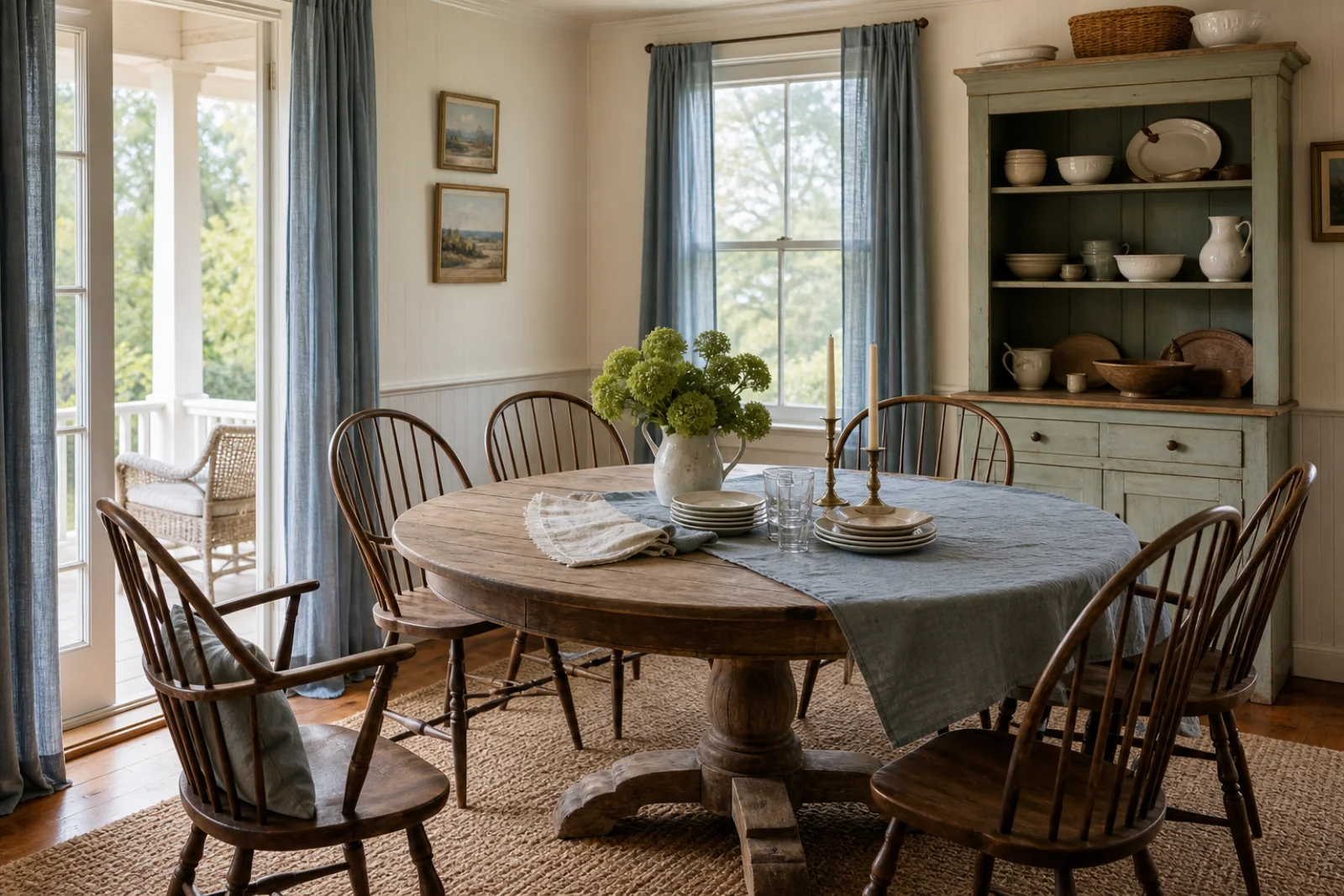
Size the diameter for the room and test knee clearance around the base with every chair occupied.
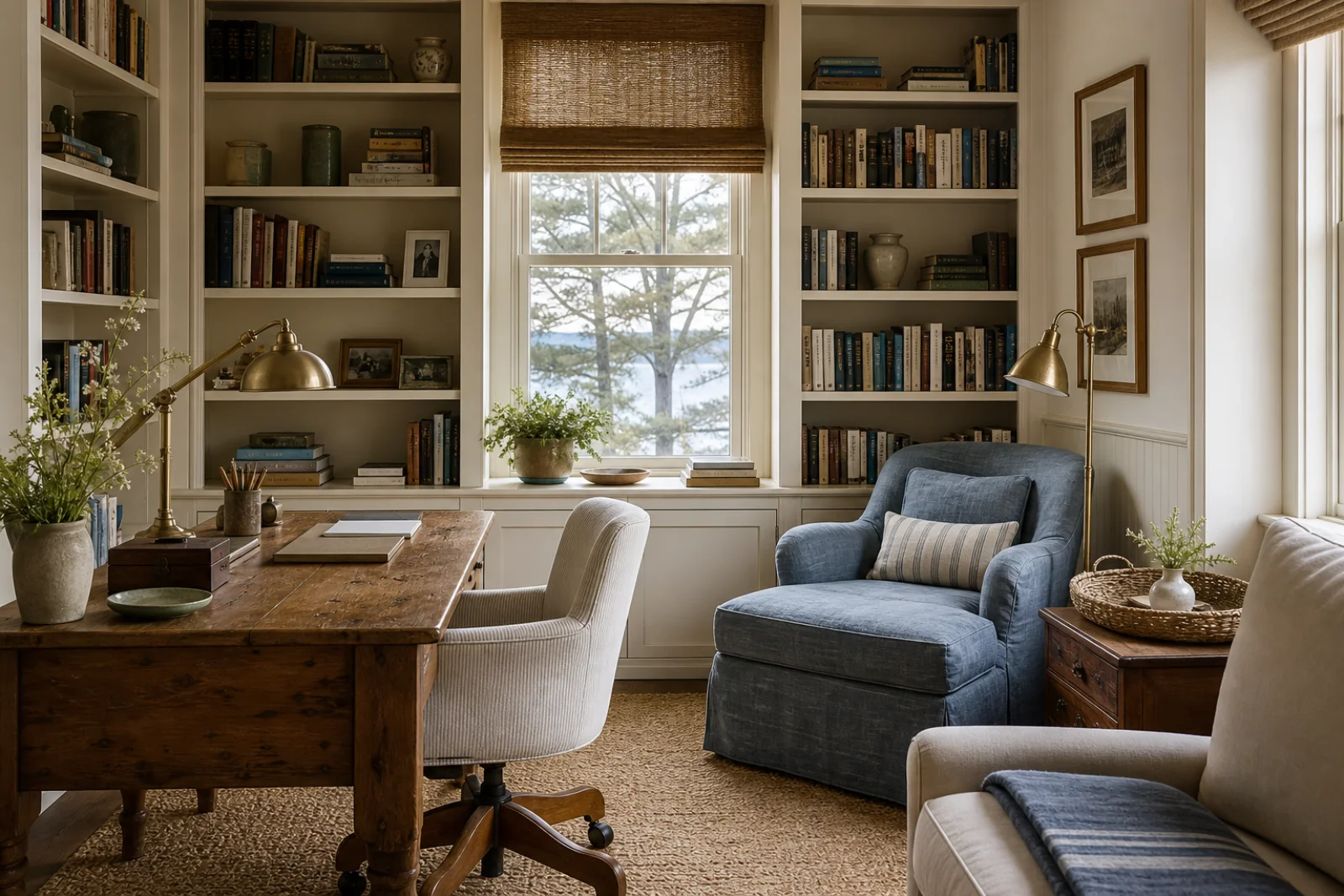
Sit long enough to judge back support, arm height and cushion recovery; add a lamp at shoulder level.
Choose real drawer capacity and a depth that preserves the passage from door to stair.
Review fiber, shrinkage and care instructions; mix the stripe with larger areas of plain cream.