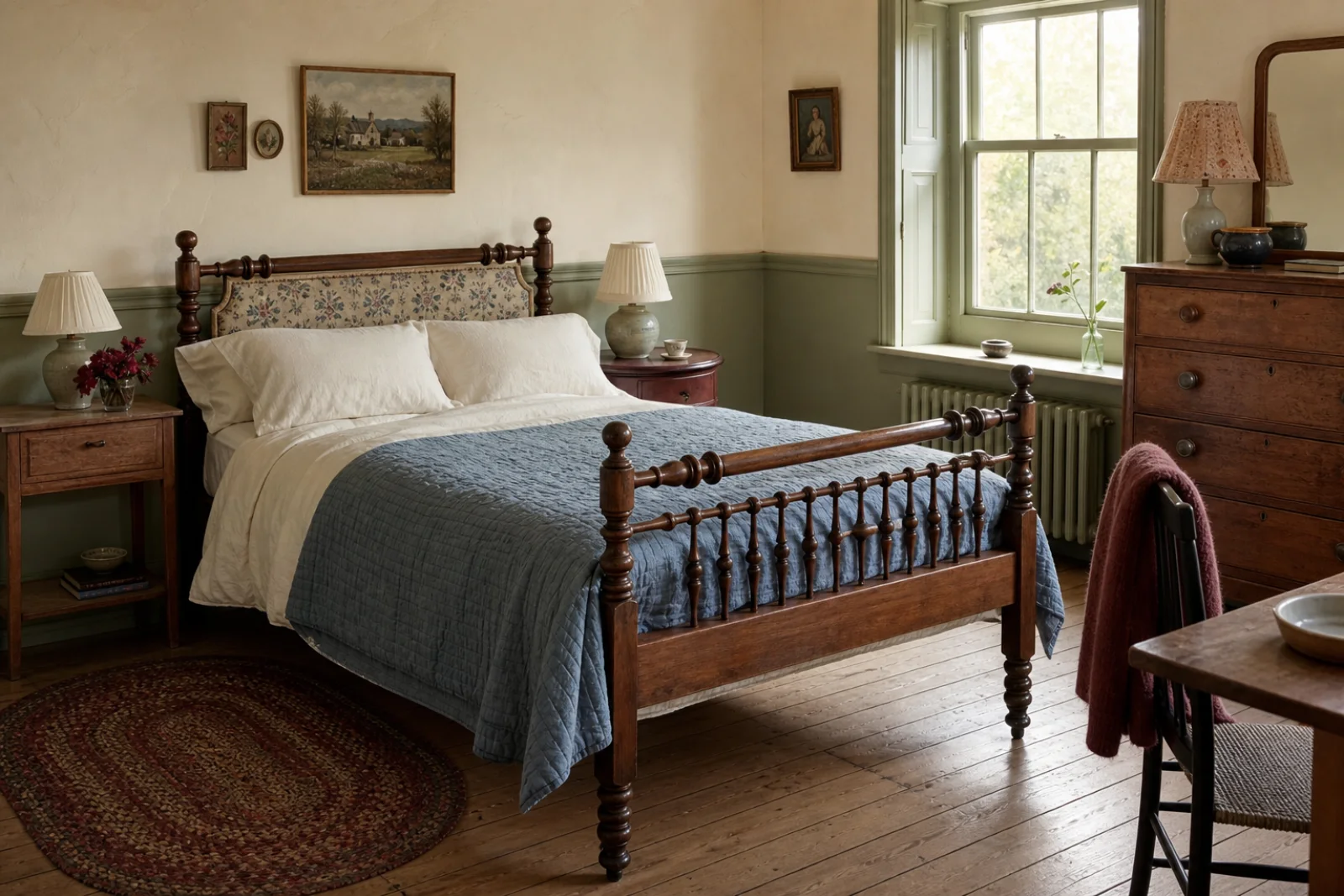
Spindle bed
Choose a stable timber frame with a clear silhouette that can carry patterned textiles without additional ornament.
Soft color, small pattern and furniture gathered across time create comfort that feels personal rather than coordinated.
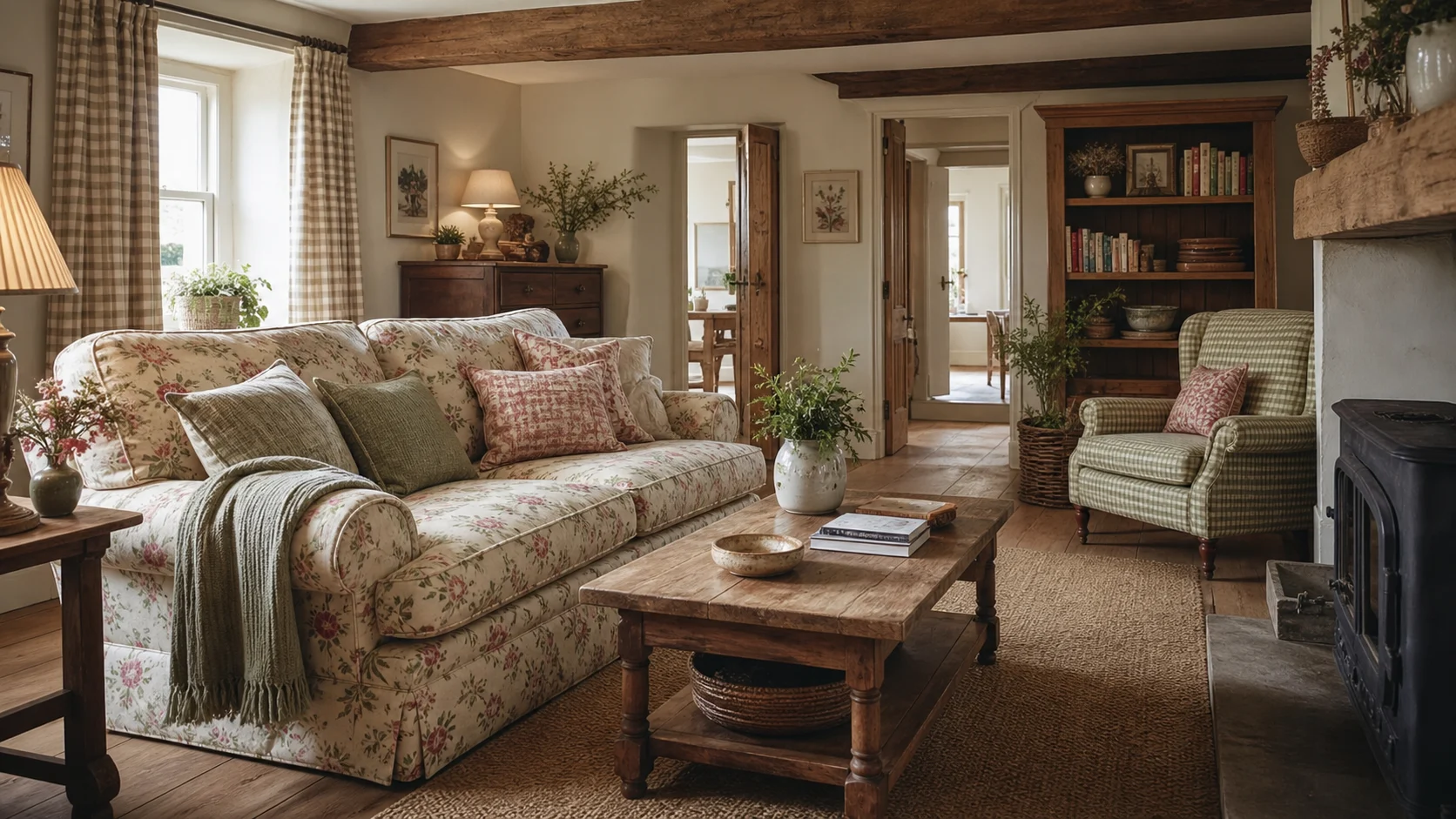
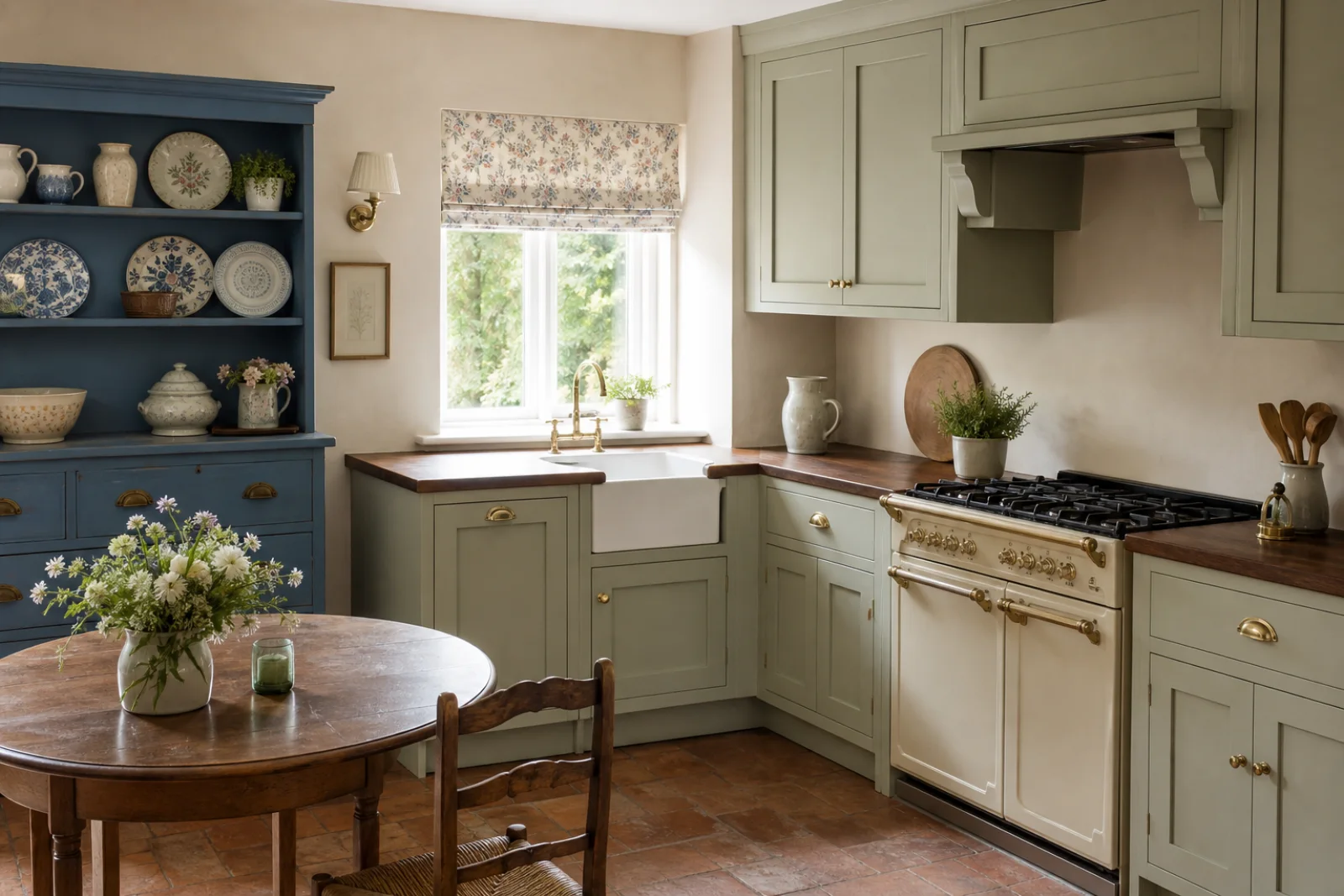
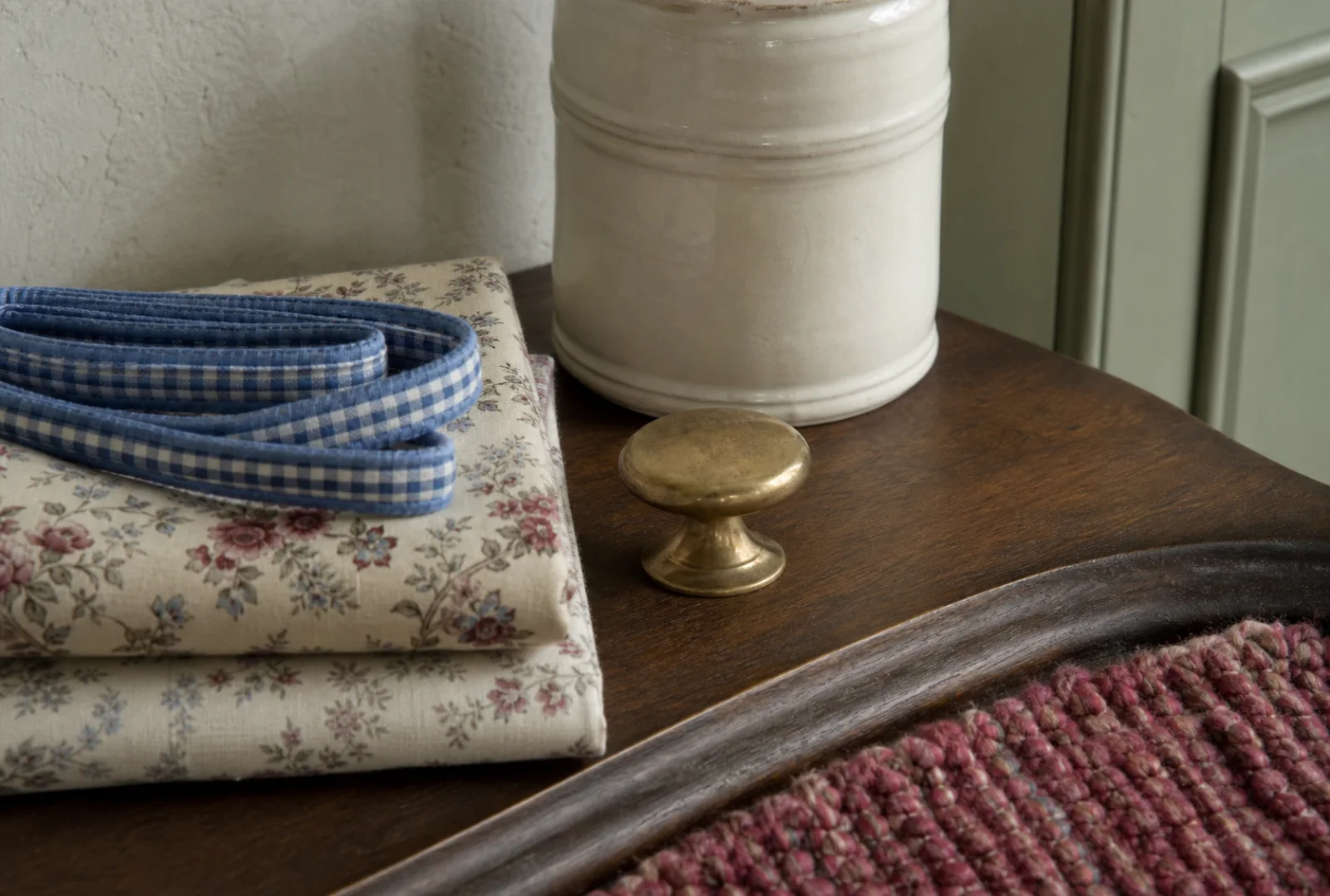
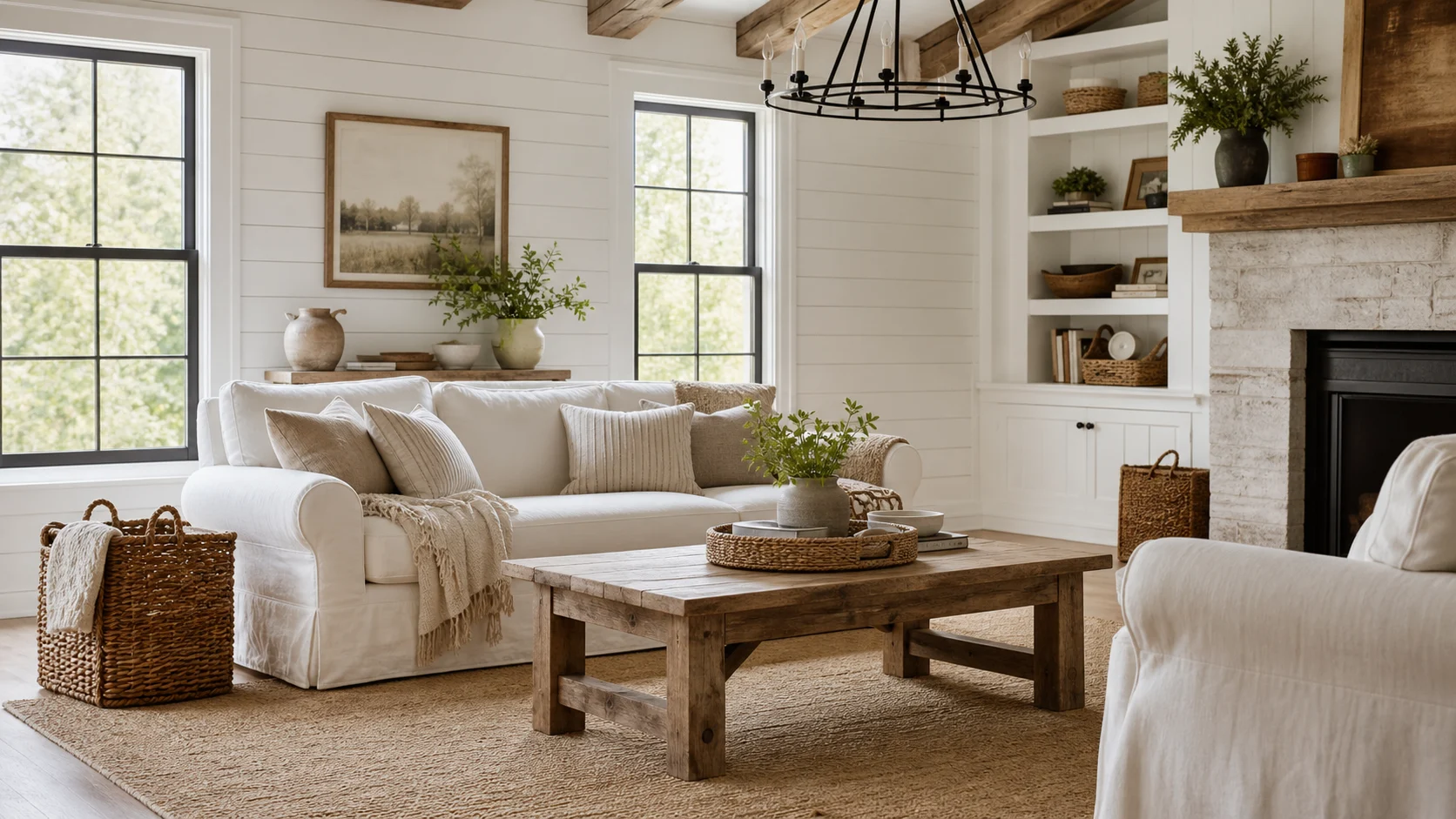
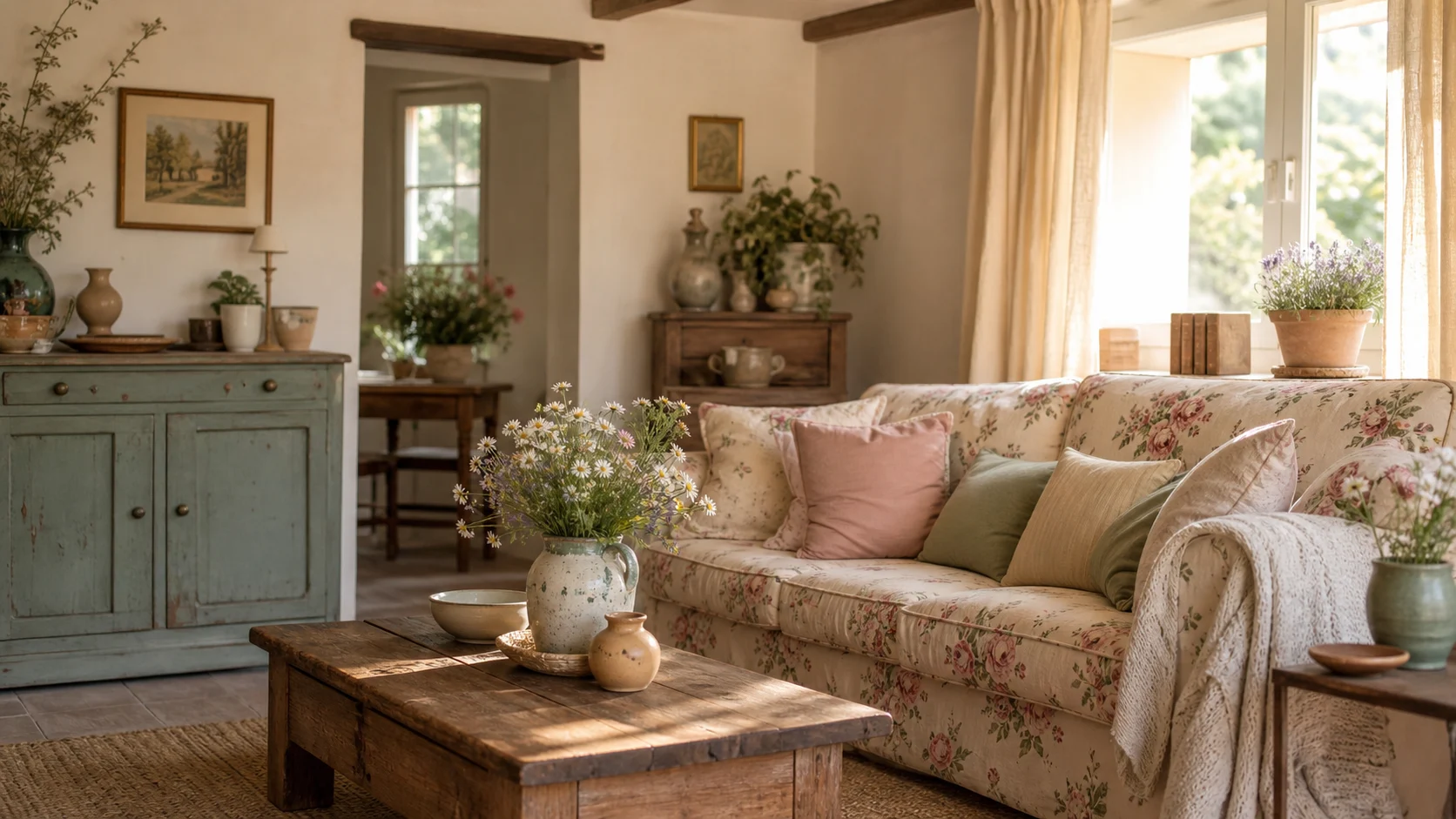
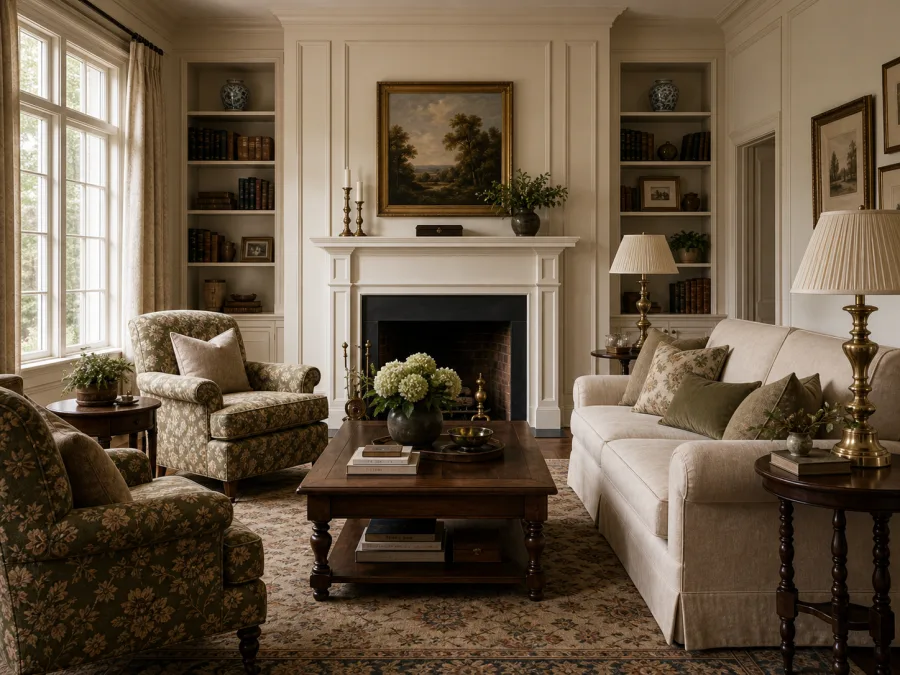
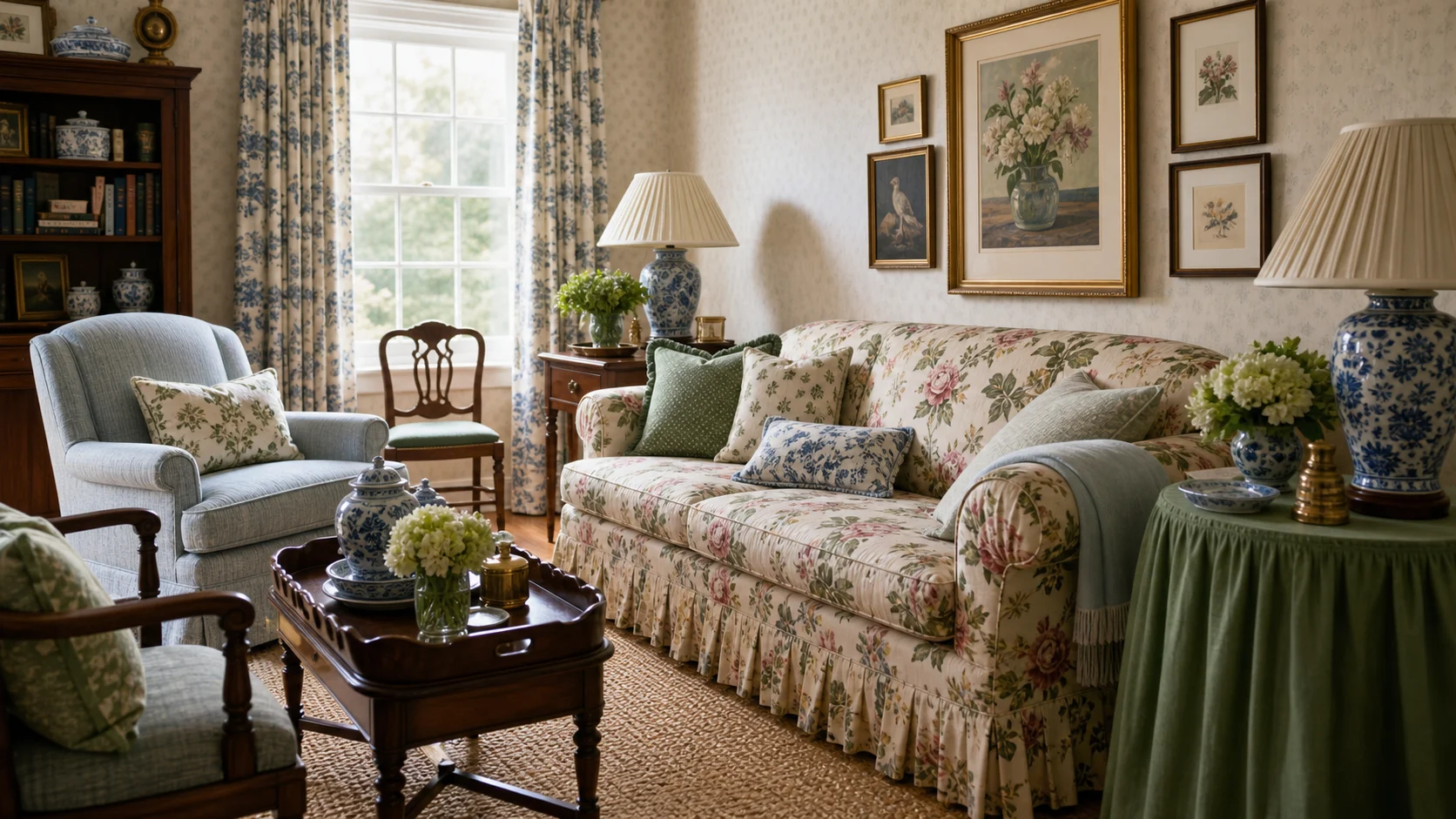
Country design is a broad domestic style built from familiar furniture, garden-informed color and textiles that make a room feel settled over time. Walnut or oak tables, painted cupboards, floral cotton, gingham, glazed ceramics and shaded lamps matter less as individual motifs than as parts of a relaxed, readable whole.
Unlike Farmhouse, Country need not organize itself around agricultural work or utilitarian storage. It is more interested in furnished comfort: a floral sofa beside a checked chair, an antique desk made practical for current use, or a dresser that displays a small ceramic collection. Restraint comes from repeating colors while varying pattern scale, leaving floors and working surfaces visibly clear.
Let a sofa, curtain or wallpaper establish the palette, then support it with one smaller check and generous solid color.
Different periods can coexist when seat heights, timber depth and overall scale feel related.
Plain plaster, painted lower walls and clear tabletops prevent collected objects from becoming visual noise.
Florals, checks and stripes appear at different scales and share two or three recurring colors.
Antique wood, painted storage and comfortable upholstery form a family without becoming a suite.
Sage, faded blue, ochre and berry make rooms feel furnished even when large surfaces stay simple.
Ceramics, landscapes and books are grouped in a few purposeful zones rather than spread everywhere.
Let one floral upholstery plane lead, then use a smaller check, a plain wool rug and dark wood to keep the room grounded.
Pair a spindle bed and faded quilt with painted lower walls; keep the remaining bedding calm so the room stays restful.
Connect mismatched chairs through repeated blue or sage paint while a walnut table provides a stable center.
Use an antique desk at a workable height with a supportive checked chair and closed storage for papers.
Give display to one dresser only; let fitted cabinets remain quiet and use a patterned blind as the main textile note.
Combine an ordinary hall table, painted cupboard and striped bench, preserving the doorway and walking route.
Choose one faded blue or sage as the repeating thread, add warm cream for rest and walnut for depth. Use berry or ochre only inside small patterns and accents.
A mellow field for plaster and larger upholstery that keeps mixed pieces connected.
Carries checks, quilts and painted chairs without feeling crisp or coastal.
Links cabinetry and wall paint to botanical pattern in a restrained way.
Adds depth through tables and case furniture, preventing the palette from becoming sugary.
A warm accent for narrow stripes, rug flecks and small floral details.
A small, spaced repeat is easier to combine and less demanding than a dense oversized bloom.
Use on one chair, piping edge or blind to give florals a clear geometric counterpoint.
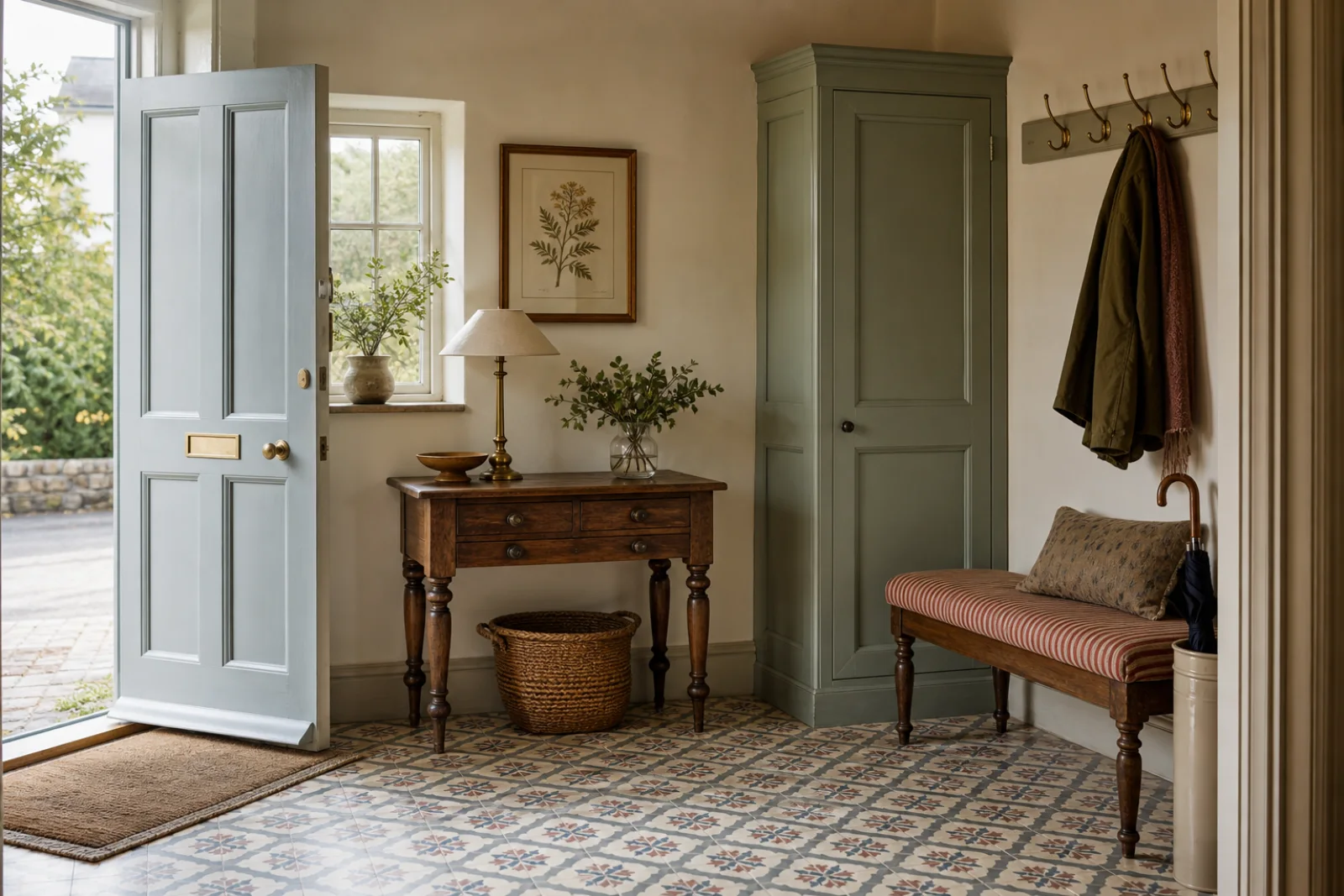
Soft opaque color links cupboards and chairs from different periods without hiding their profiles.
A small useful collection adds variation in shape while a shared glaze family keeps it ordered.
Build the room around one patterned keeper and one useful wood piece, then connect everything else through color rather than exact matching.
Start with the textile or wallpaper you genuinely like and identify its two quietest colors.
Balance one substantial wood piece with lighter painted furniture and comfortable upholstery.
Pair floral with a smaller check or stripe, leaving the largest remaining surfaces plain.
Group ceramics, books or pictures in one or two display zones and clear daily working surfaces.
When the room feels wrong, change the underlying decision before adding more decor.
Keep one lead floral, one small check and return at least half of the visible fabric area to solids.
Add one current lamp or comfortable working chair while preserving the older furniture’s useful role.
Group the best pieces inside one dresser or shelf bay and leave tables available for daily use.
Introduce walnut, aged brass or one deeper olive element to anchor cream, blue and floral tones.
Country is best understood as a flexible method of furnishing: mix eras, repeat soft color, vary pattern scale and preserve enough plain space for the room to remain useful.
More utility-led, with worktables, pantry storage, peg rails and finishes chosen around recurring household tasks.
Choose Country for more pattern, furnished comfort and decorative color beyond the working zones.
Floral upholstery and mixed occasional furniture replace the task-first layout.
More romantic and narrative-driven, emphasizing handmade craft, garden abundance and an idealized rural life.
Choose Country for a more conventional furnished room, clearer editing and less pastoral storytelling.
Structured upholstery and grouped display replace whimsical handmade layering.
More specifically British and often denser, with deeper upholstery, antiques, patterned walls and an estate-house reference.
Choose Country for a broader, lighter interpretation adaptable to many regional homes.
A simpler mix replaces strongly historic British layering.
Brighter and more knowingly nostalgic, with tailored trim, chintz, wicker and sharper old-new contrast.
Choose Country for softer evolution, quieter color and less self-conscious decoration.
Faded inherited comfort replaces playful revival and lacquered accents.
Shop for individual pieces with compatible scale and color rather than a country collection. Comfort, function and an honest finish matter more than decorative age.
Choose a stable timber frame with a clear silhouette that can carry patterned textiles without additional ornament.
Use one dresser for frequently used ceramics and keep the rest of the kitchen visually quieter.
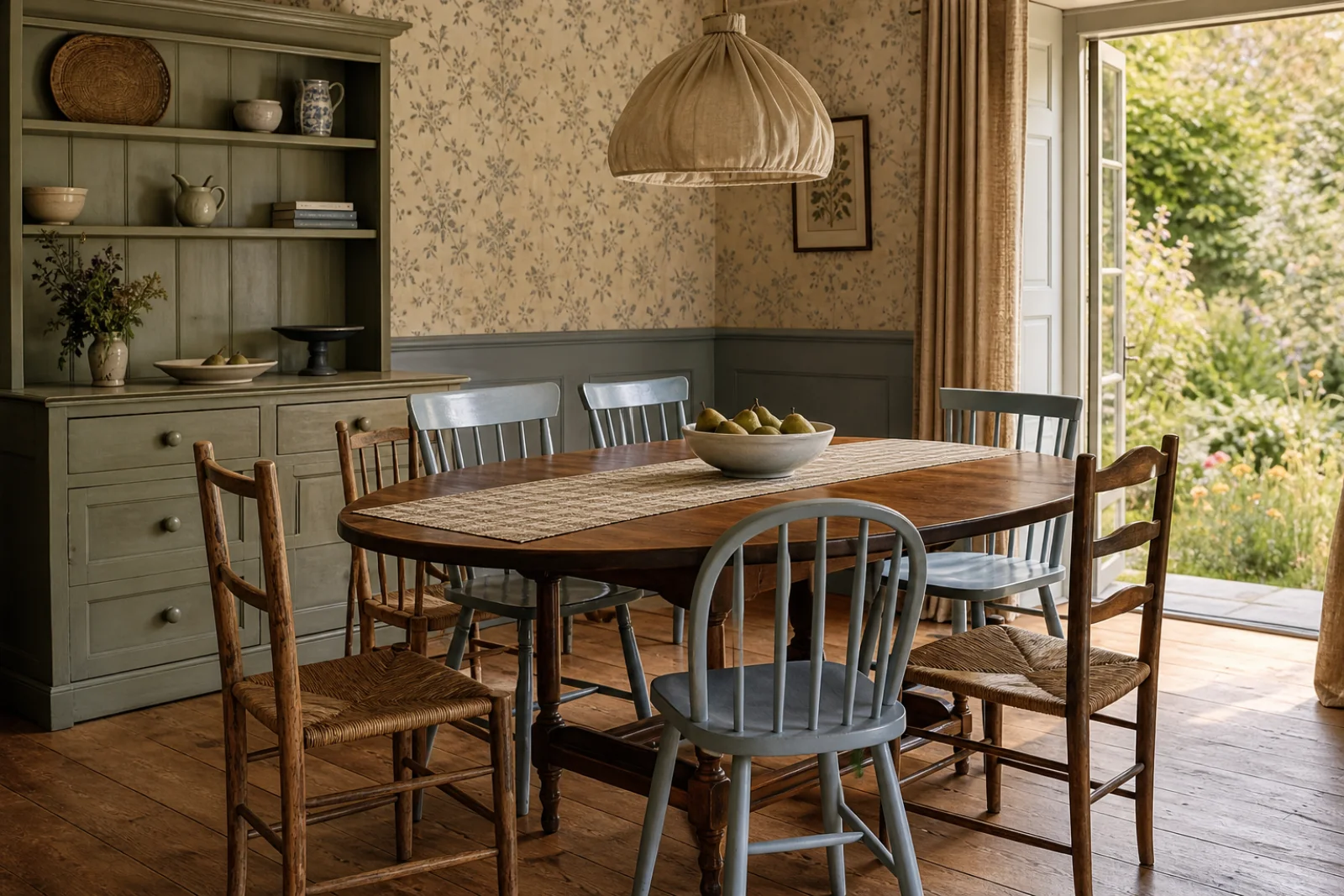
An oval top softens circulation and works with chairs collected from more than one source.
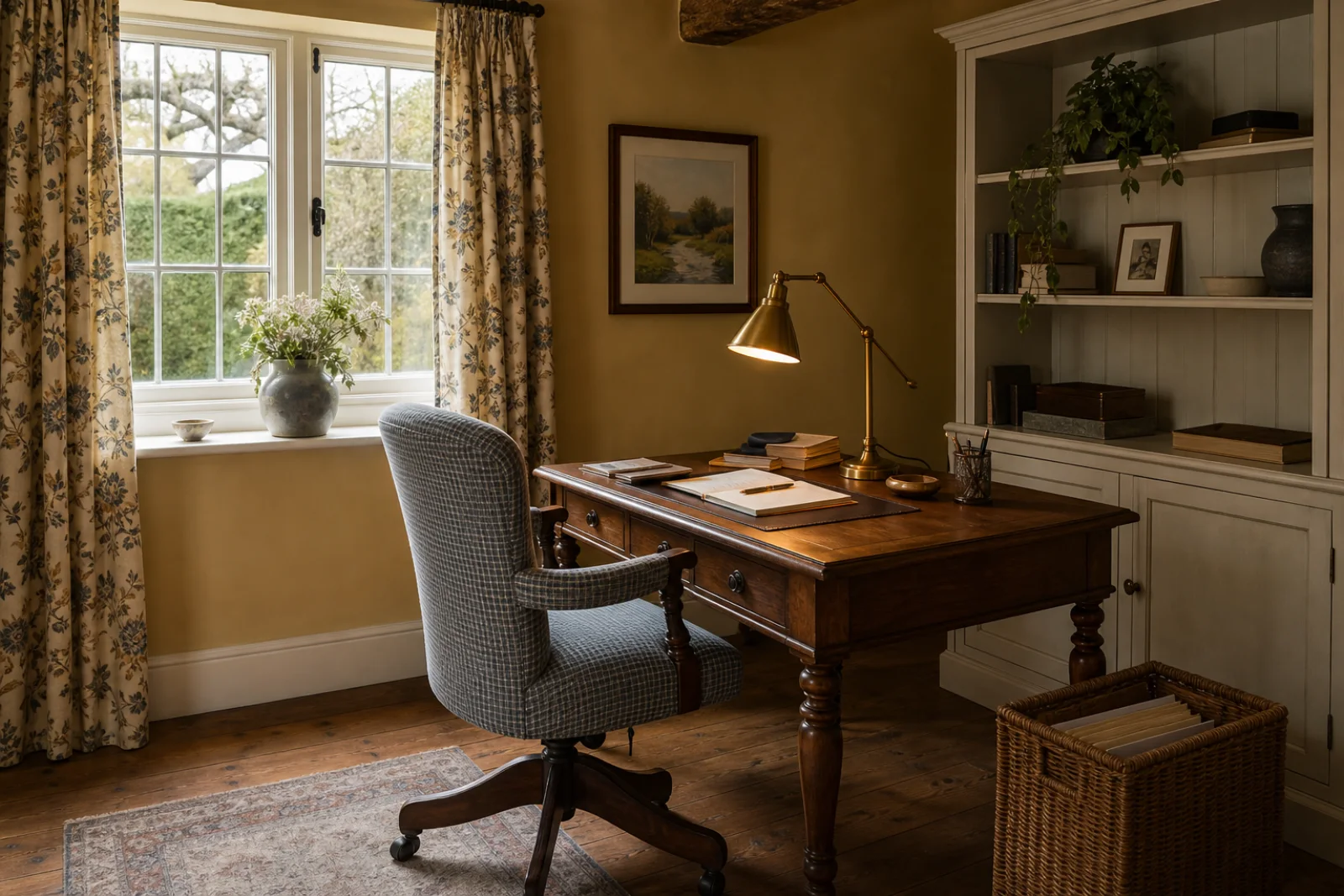
Verify knee space and height, then pair historical character with a genuinely supportive chair.
A shallow piece should hold keys and a lamp without narrowing the arrival route.
Compare repeat scale against the actual chair, curtain or cushion before ordering yardage.