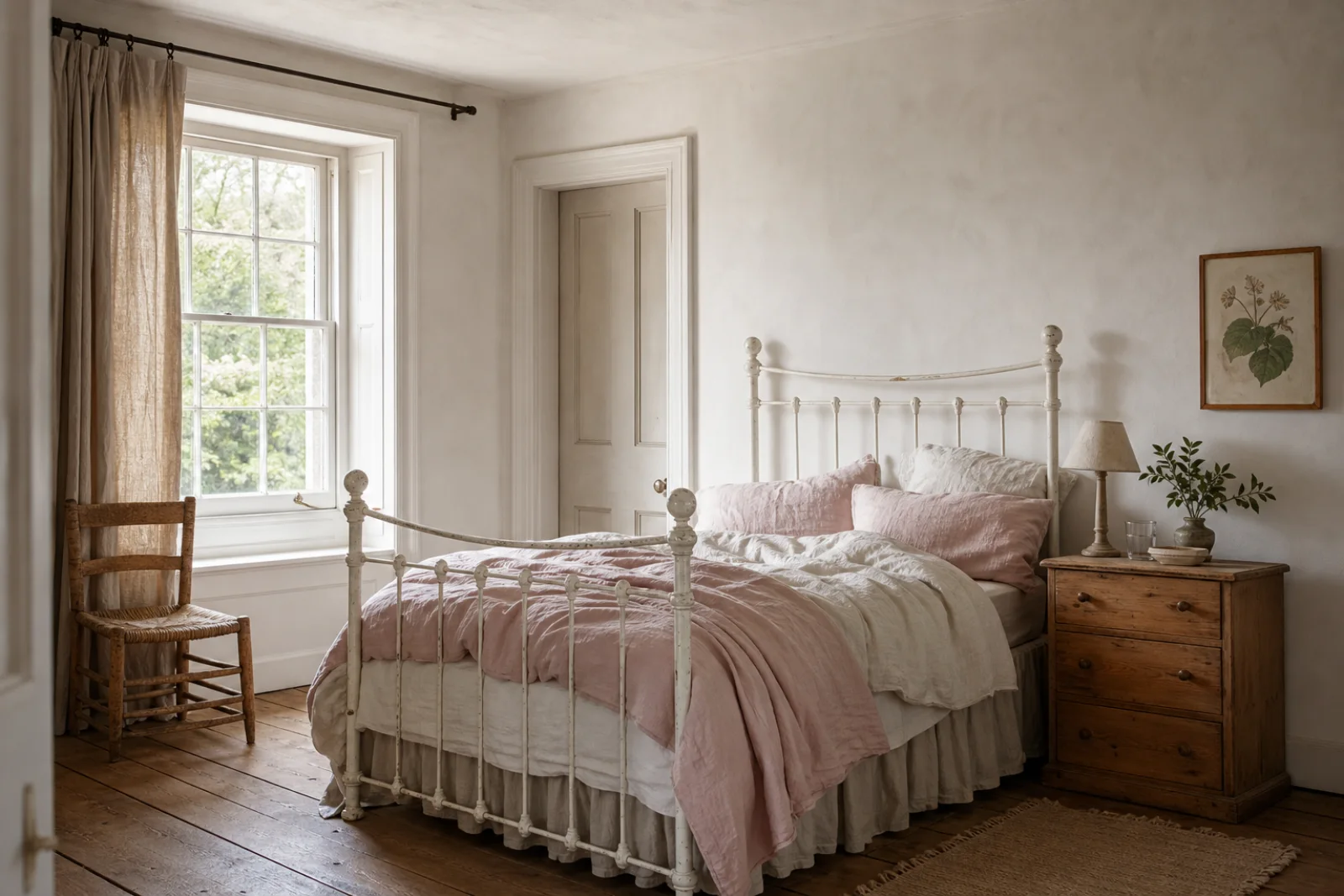
Simple iron bed
Check rail connections and mattress size; use current bedding and let only the frame carry a little age.
Washed textiles, chalky color and one or two gently worn pieces create softness without turning the room into a decorative theme.
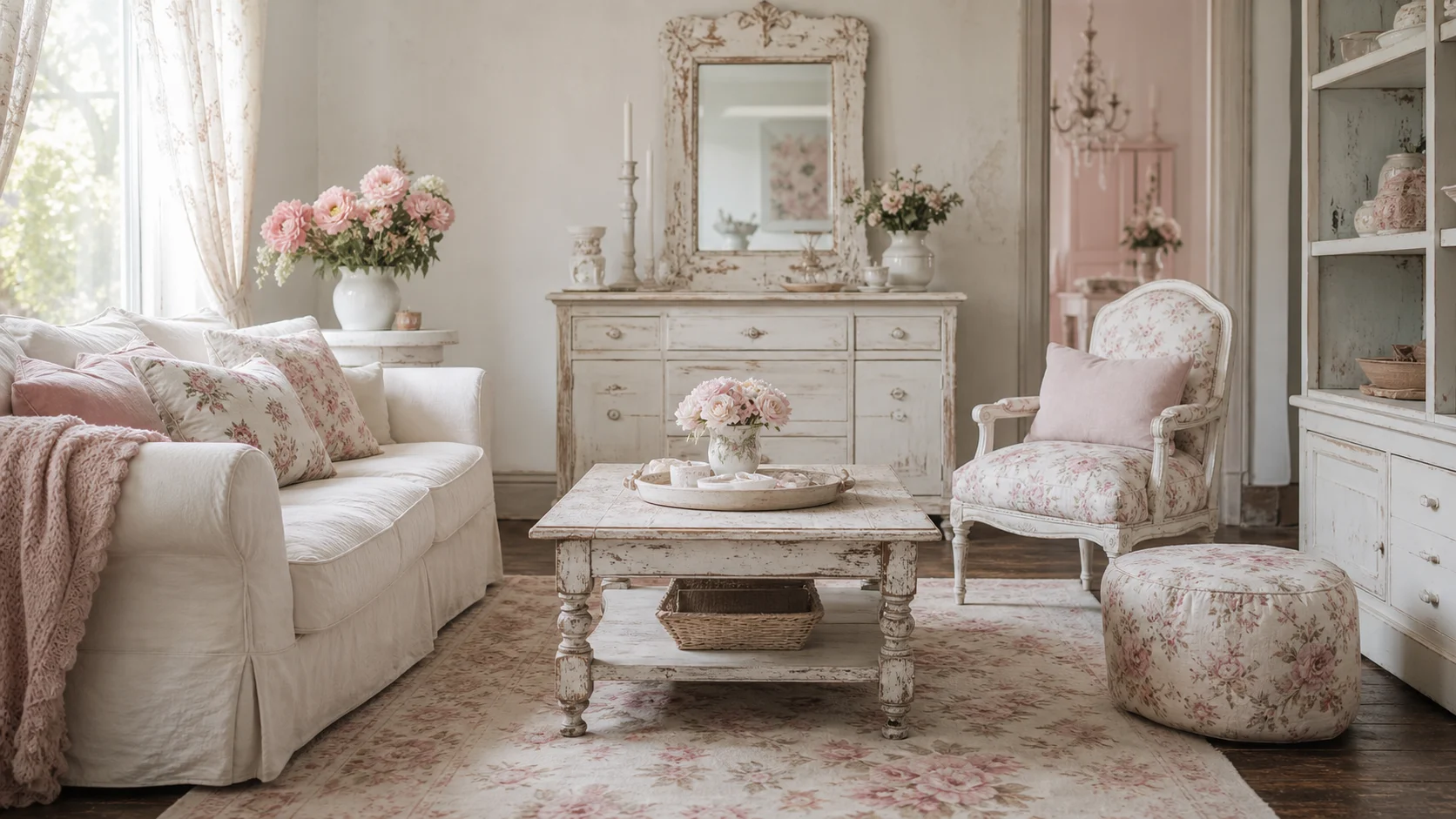
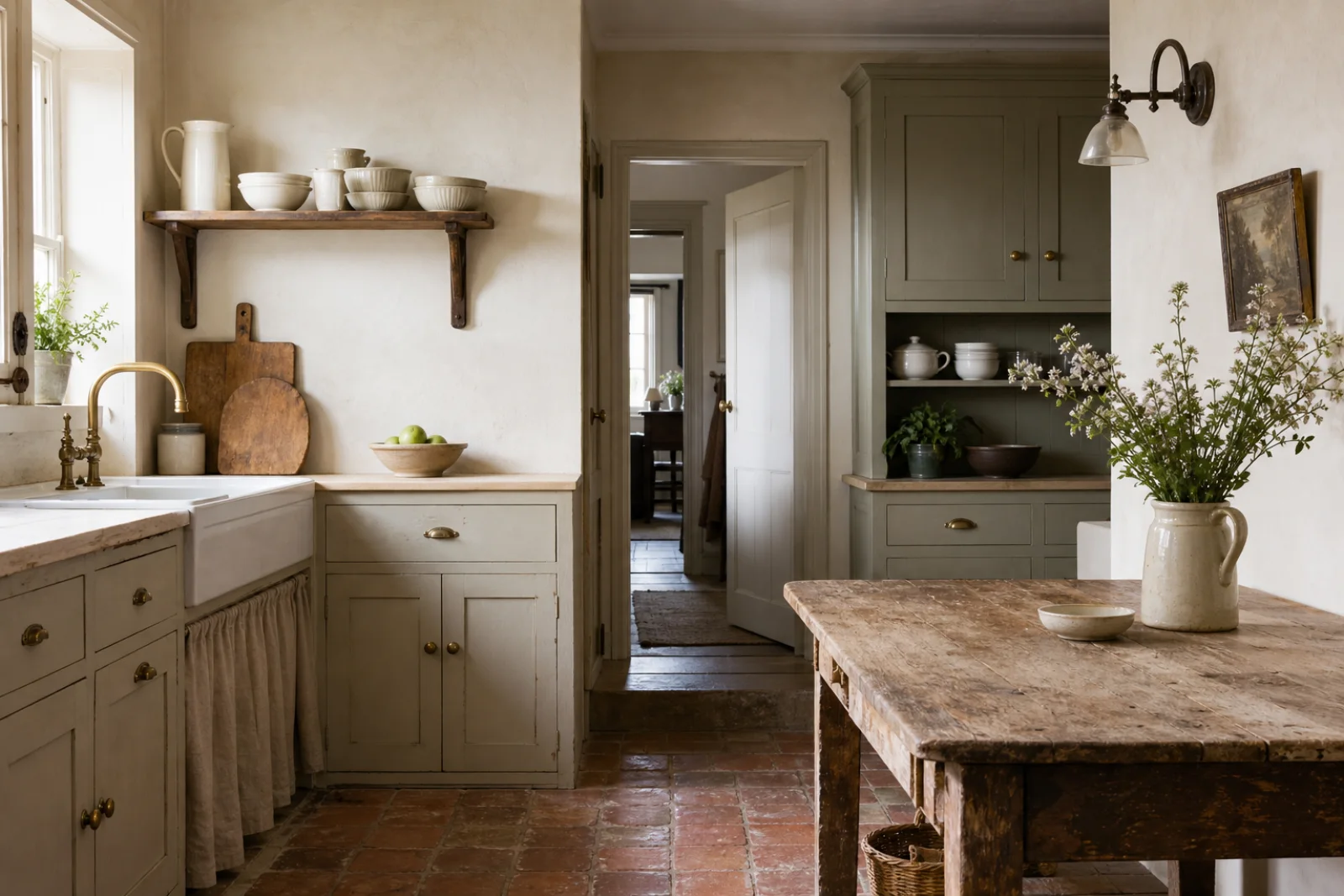
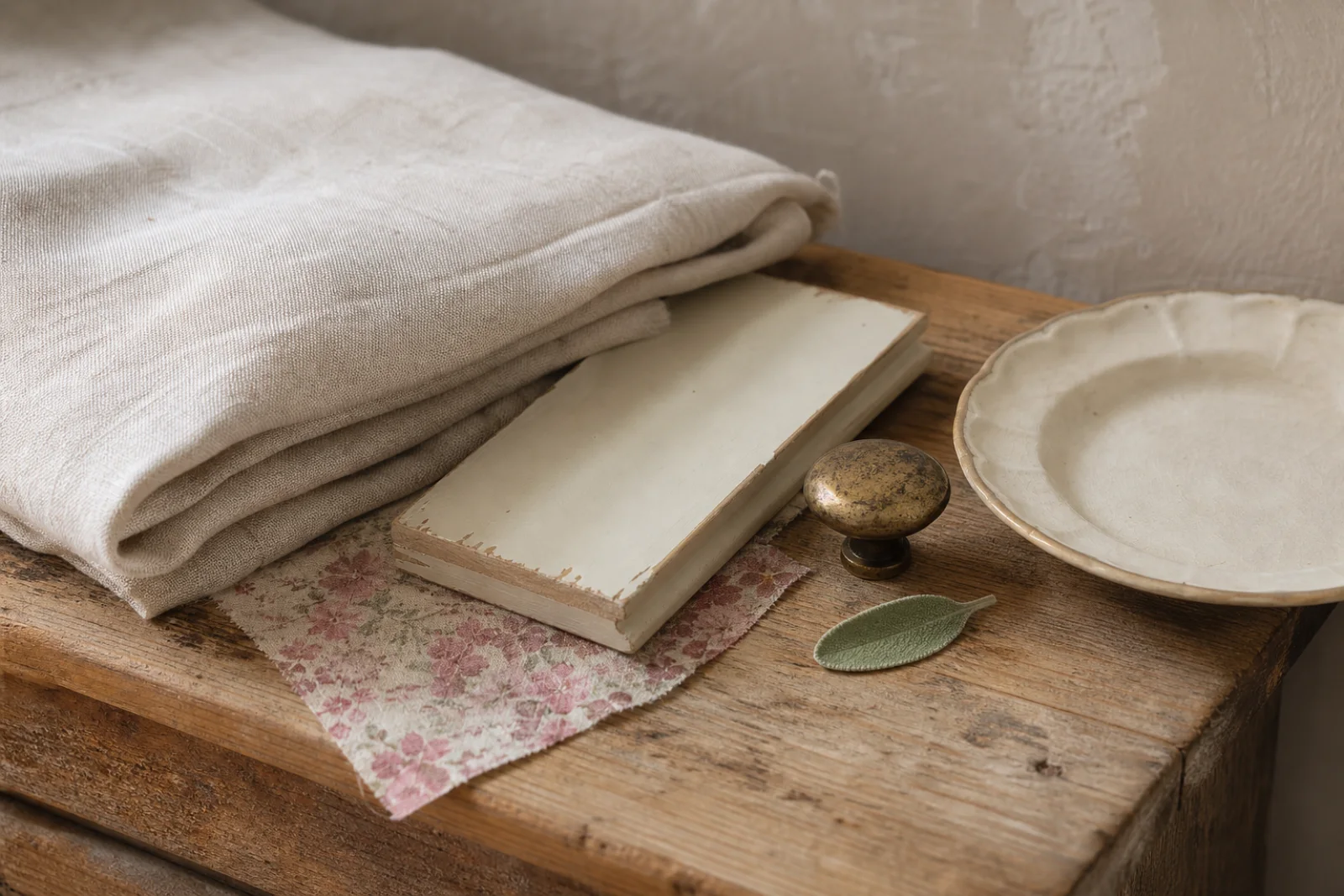
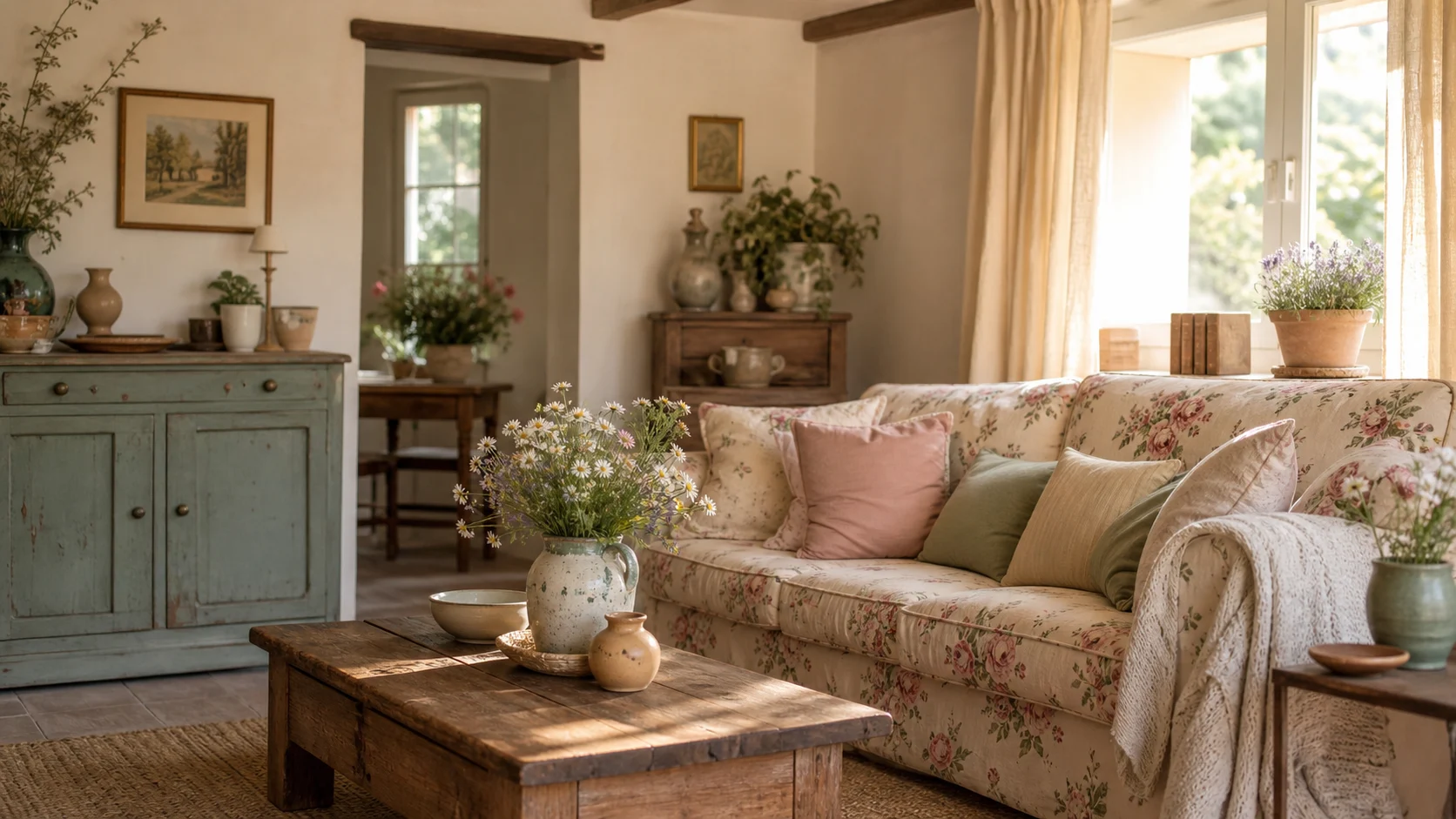
Shabby Chic combines pale, comfortable rooms with furniture and textiles that show softened age. Its character comes from contrast: a scrubbed pine table against chalky walls, loose linen beside a stable painted cabinet, or one faded floral among mostly plain fabrics. The room should feel eased by use, not manufactured to look neglected.
The style works best when wear is selective. Preserve thin paint, rounded edges and washed color on structurally sound pieces; repair loose joints, sharp chips and failing finishes. Current mattresses, task lighting and storage can remain visually quiet while delivering the comfort an older room often lacks.
Let one substantial cabinet, table or bed show patina while most surrounding surfaces remain calm.
Use washed linen, aged cotton and a modest faded weave instead of adding more decorative objects.
Treat dusty rose as a small textile note; chalk, flax and wood should carry most of the room.
Natural wear appears at handles and edges, supported by sound construction and clean surfaces.
Washed linen, cotton and wool soften rooms without lace-heavy or overly formal dressing.
Cream, putty and flax prevent the washed palette from becoming cold or overexposed.
A dresser, scrubbed table or narrow console earns its place through storage and daily function.
Keep the upholstered pieces plain and comfortable; let one painted table or cabinet carry the visible age.
Pair a simple iron or timber bed with washed linen and one small floral rather than a coordinated romantic set.
Mix compatible chair shapes around a sound old table, then repeat one paint color to hold the group together.
Check desk height and drawer function first; a clean task lamp and ergonomic chair can be quietly contemporary.
Reserve worn timber for a worktable or shelf while cabinetry, worktops and plumbing remain durable and easy to clean.
Use a narrow console, basket and hooks for actual routines; keep the walkway and most of the wall visually open.
Let warm chalk and flax occupy most large surfaces. Weathered pine supplies structure, faded sage can define one cabinet and dusty rose should appear in only a few washable textile accents.
A creamy wall color that stays soft without reading as brilliant or bridal white.
The grounding neutral for linen, rush, rugs and unbleached cotton.
A restrained accent for one cushion, faded print or bedside textile.
A useful painted-furniture color that cools cream and warm timber.
The natural wood note that prevents the pale scheme from losing depth.
Choose a visible weave and relaxed drape; softness should come from laundering, not piles of trim.
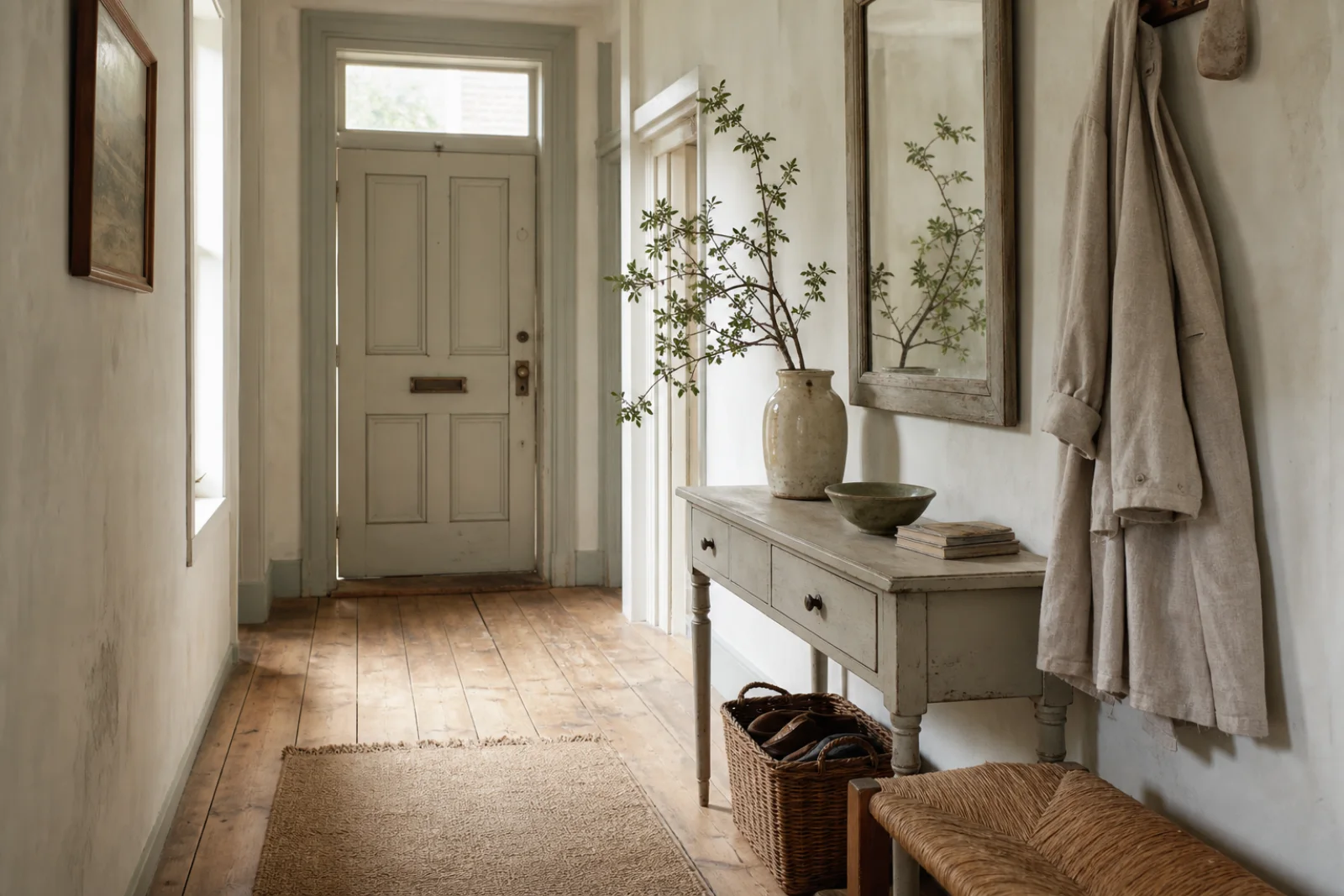
Keep stable edge wear that follows use, but seal powdering paint and repair sharp or loose areas.
A warm counterpoint to pale paint, best concentrated on one table, chest or shelf.
Simple handmade forms add age and utility without filling every surface with collectibles.
Start with a warm pale shell, choose one functional piece worth preserving and introduce softness through washable textiles. Add pattern only after the room works in solids.
Select one sound table, dresser, bed or console whose age will lead the room.
Use warm chalk or putty on large planes and leave some clean, undecorated wall.
Add linen, cotton and a low-pile rug in related faded neutrals.
Introduce a small floral or stripe once, then repeat only one of its muted colors.
When the room feels wrong, change the underlying decision before adding more decor.
Keep visible wear on one or two pieces and let the architecture remain clean.
Replace half the pink with flax, sage or natural timber and remove glossy white.
Use textile texture instead of adding more cushions, flowers and small ornaments.
Repair joints, drawers and finishes before styling; retire pieces that cannot serve safely.
Shabby Chic is defined less by the age of an object than by a carefully edited language of pale surfaces, softened cloth and credible wear. Its strongest rooms remain functional and visually light.
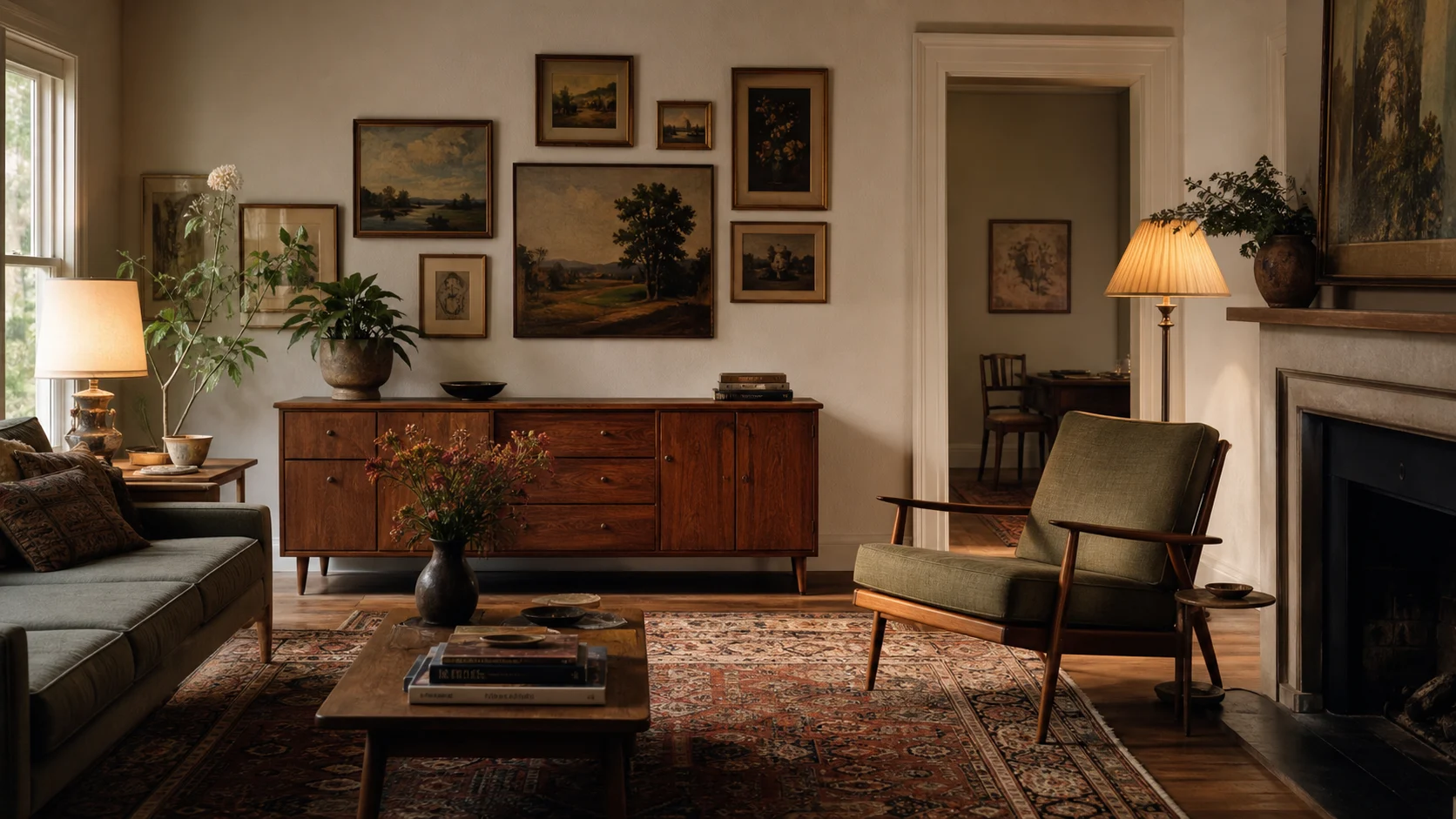
Broader in period and usually richer in original timber, saturated upholstery and visible historical provenance.
Choose Shabby Chic for a paler, softer room where painted furniture and washable textiles matter more than decade accuracy.
Faded ease replaces period-led collecting.
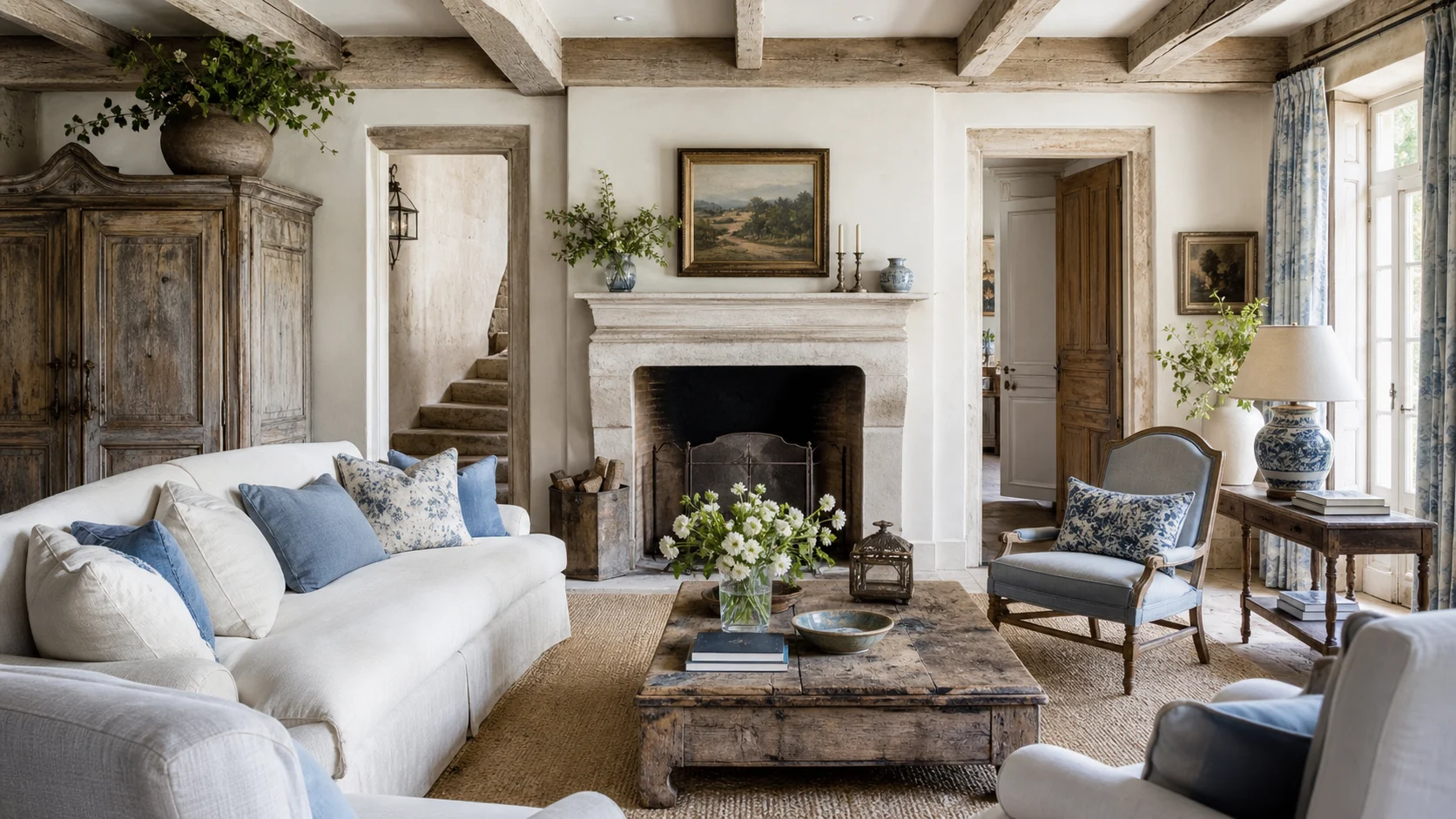
More architectural and rustic, with stone, substantial timber, provincial forms and stronger warm color.
Choose Shabby Chic for lighter furniture, more washed cloth and less emphasis on regional French character.
Airy painted layers replace grounded provincial weight.
More narrative and nature-led, often using handmade objects, botanical abundance and rural domestic references.
Choose Shabby Chic for an edited interior language centered on pale patina rather than pastoral storytelling.
Controlled fading replaces cottage abundance.
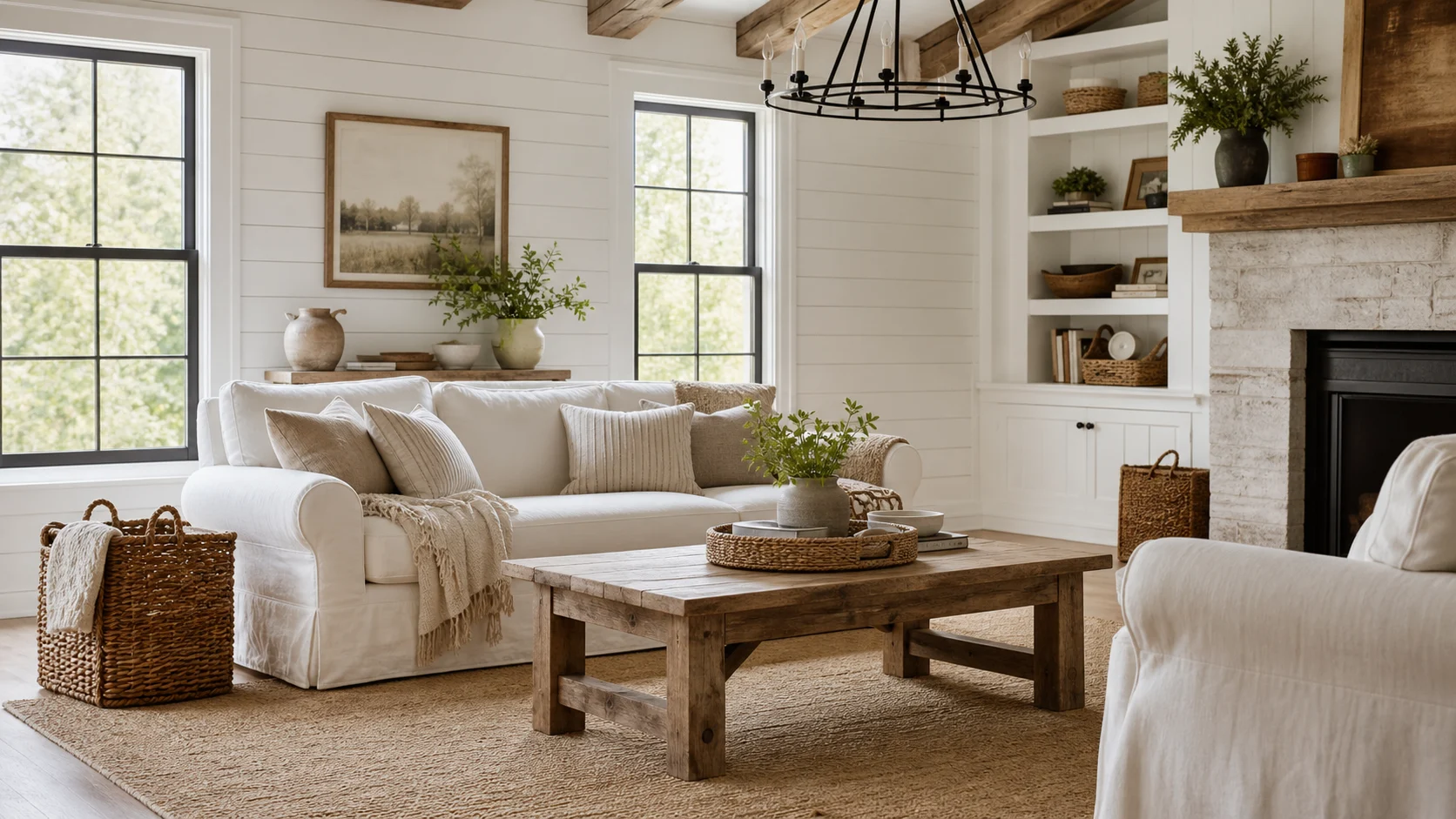
More robust and workmanlike, favoring large tables, practical storage, black iron and stronger architectural utility.
Choose Shabby Chic when the desired effect is lighter, more delicate and textile-driven.
Soft scale replaces agricultural heft.
Look beyond paint color. Test joints and drawers, check old coatings, measure the piece and decide whether the wear is stable before paying for its romantic appearance.
Check rail connections and mattress size; use current bedding and let only the frame carry a little age.
Inspect movement, working height and finish suitability before using an old surface for food preparation.
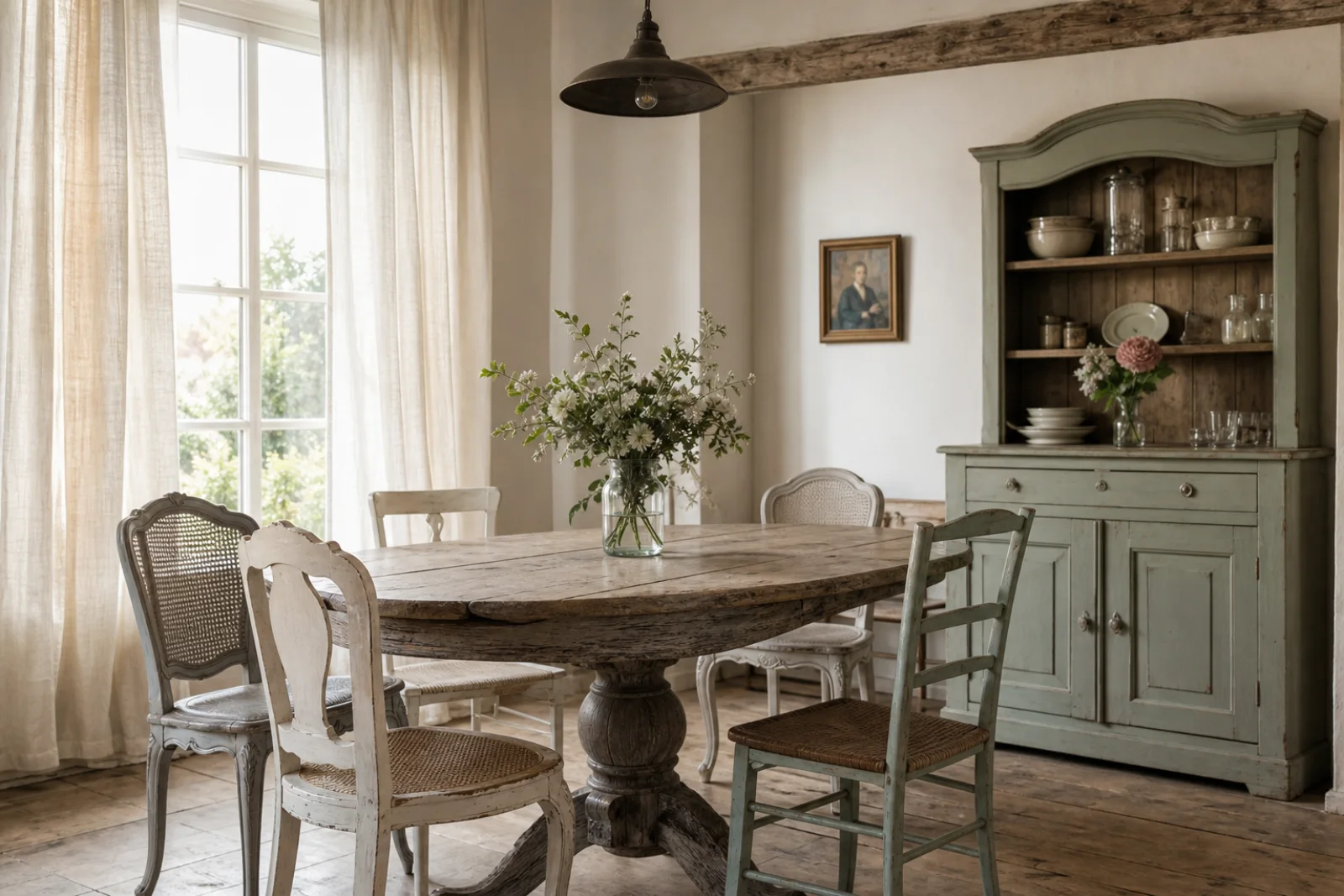
Favor stable paint, useful shelf depth and working doors over dramatic but fragile peeling.
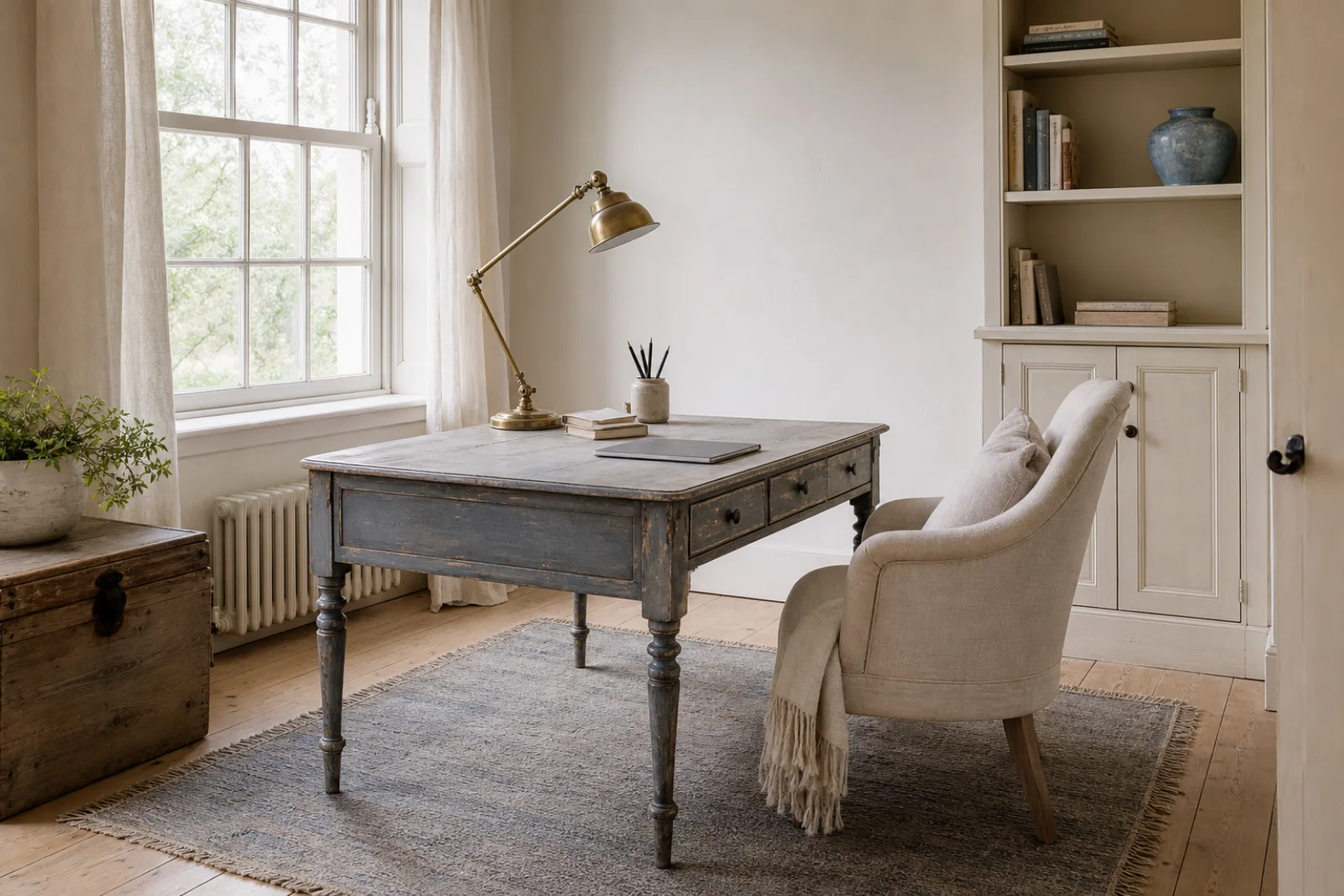
Measure knee clearance and monitor depth; add task performance through discreet modern lighting.
Choose shallow storage with secure legs and drawers that can handle keys, mail and daily use.
Compare cloth, paint and timber under room light before committing to a faded palette.