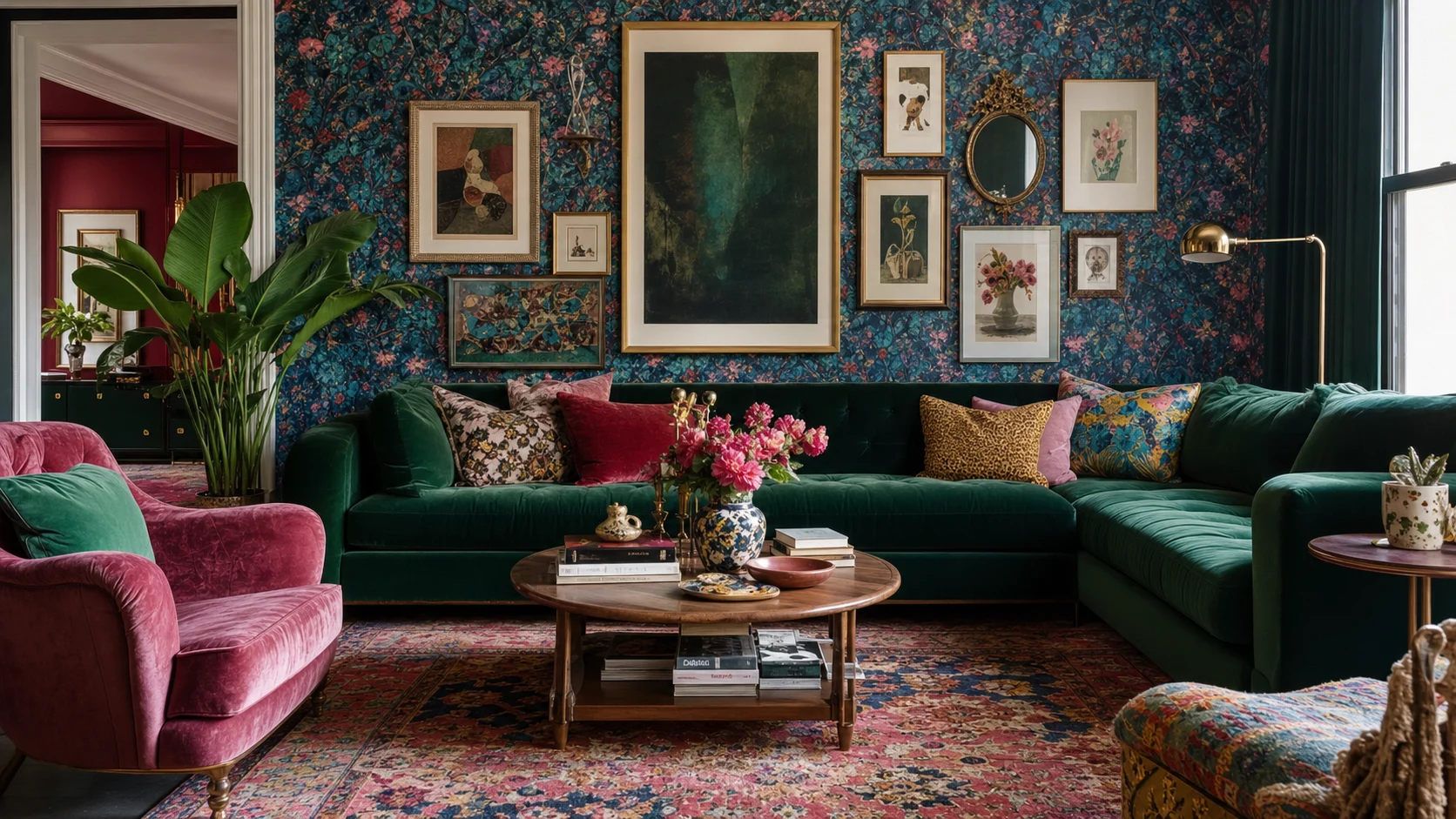
Solid-color statement sofa
A generous saturated block gives complex walls, pillows and rugs a stable visual base.
Expressive rooms where color, pattern, art and collections accumulate around a clear personal story—and every layer still knows its role.
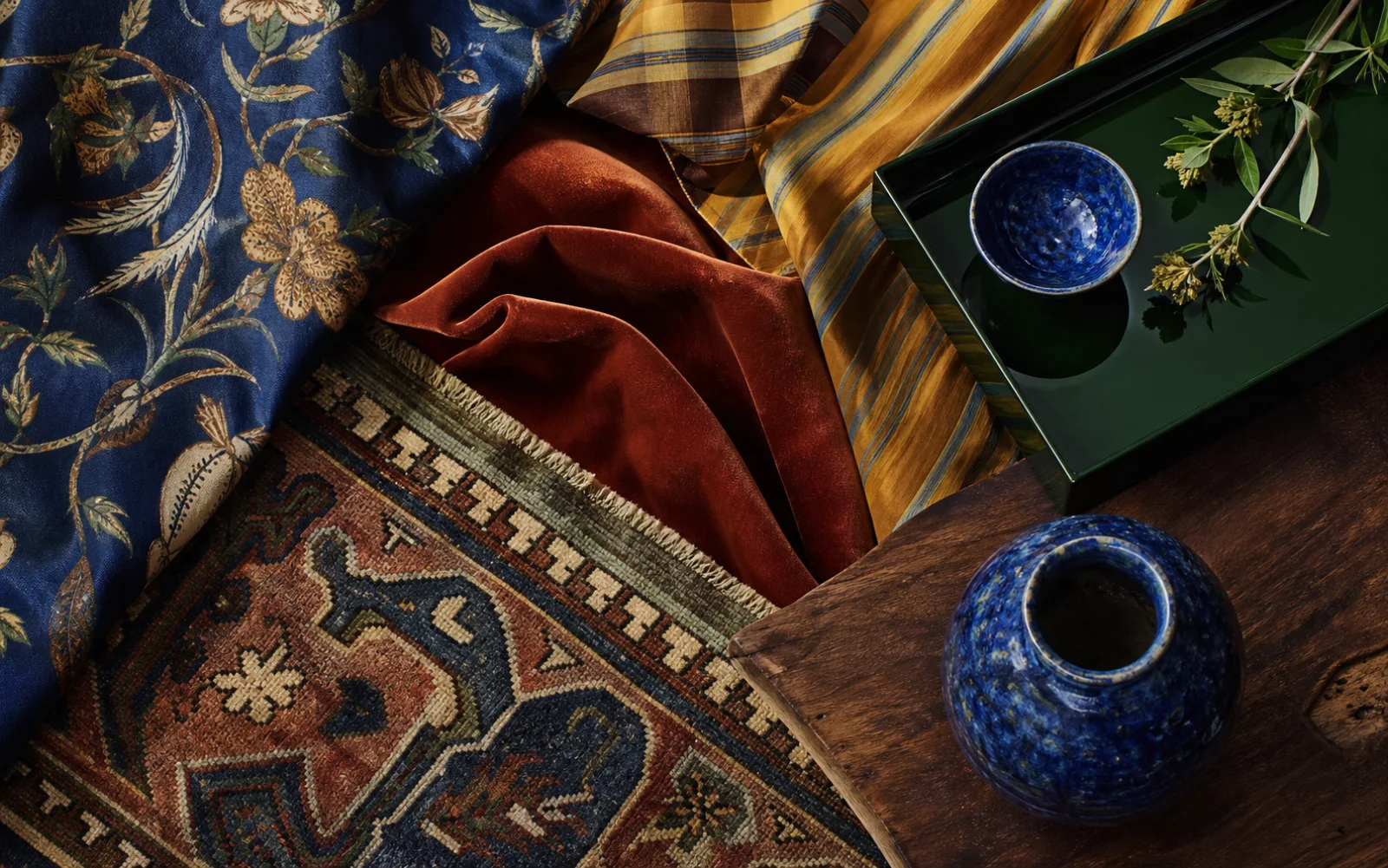
Maximalist interior design embraces visible personality through layered color, pattern, art, books and objects. It is not simply a room containing more things. Strong examples establish a palette, vary scale, repeat motifs or colors and give a few large elements priority so the eye can understand the composition.
Collections matter because they carry history and point of view; storage and editing matter because they keep those collections legible. A patterned wall may act as a background, a large sofa as a visual anchor and a gallery wall as one grouped mass. Quiet ceilings, clear pathways and usable work surfaces provide the pauses that make abundance enjoyable.
Start with an artwork, rug, textile or collection you genuinely value, then extract the room’s recurring colors.
Pair one large scenic or botanical field with medium stripes and small woven detail instead of using equal-size prints.
Treat framed art, ceramics or books as deliberate clusters with edges and breathing room.
Books, ceramics, art and inherited pieces communicate interests rather than filling shelves generically.
A limited set of hues returns in paint, textile, art and objects, making unlike pieces feel related.
Large, medium and small motifs perform different roles instead of competing at the same intensity.
Clear worktops, simple ceilings and open circulation give dense walls and textiles room to register.
Use a large solid-color sofa to anchor wallpaper, gallery art and patterned rugs; repeat two accent colors across the layers.
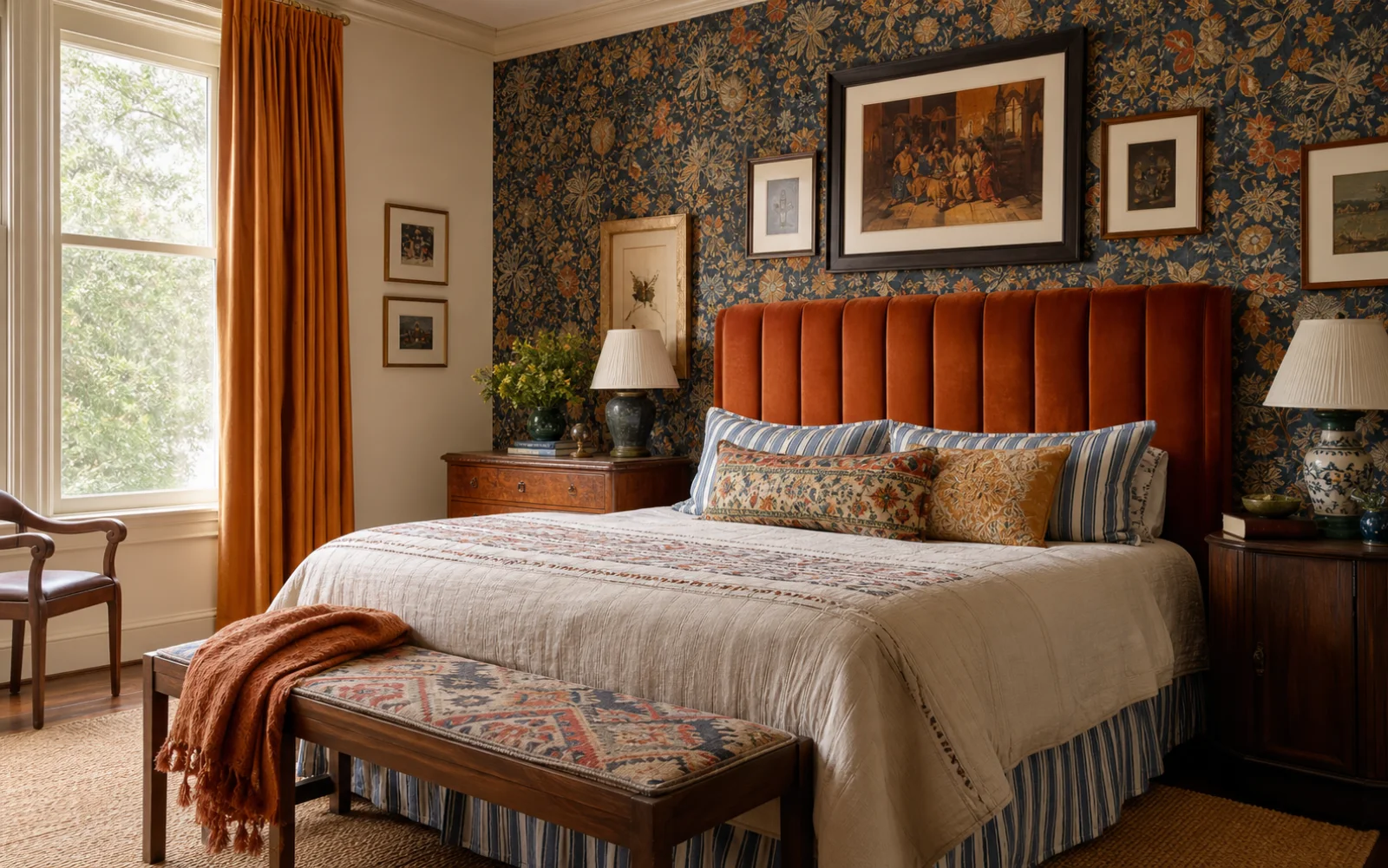
Let wallpaper carry the smallest pattern, keep the bed mostly pale and use stripes to separate it from botanical motifs.
A large scenic mural can replace many small decorations; unify mixed chairs with one upholstery color.
Concentrate density on bookshelves and the gallery wall while keeping the desk surface and task-light zone clear.
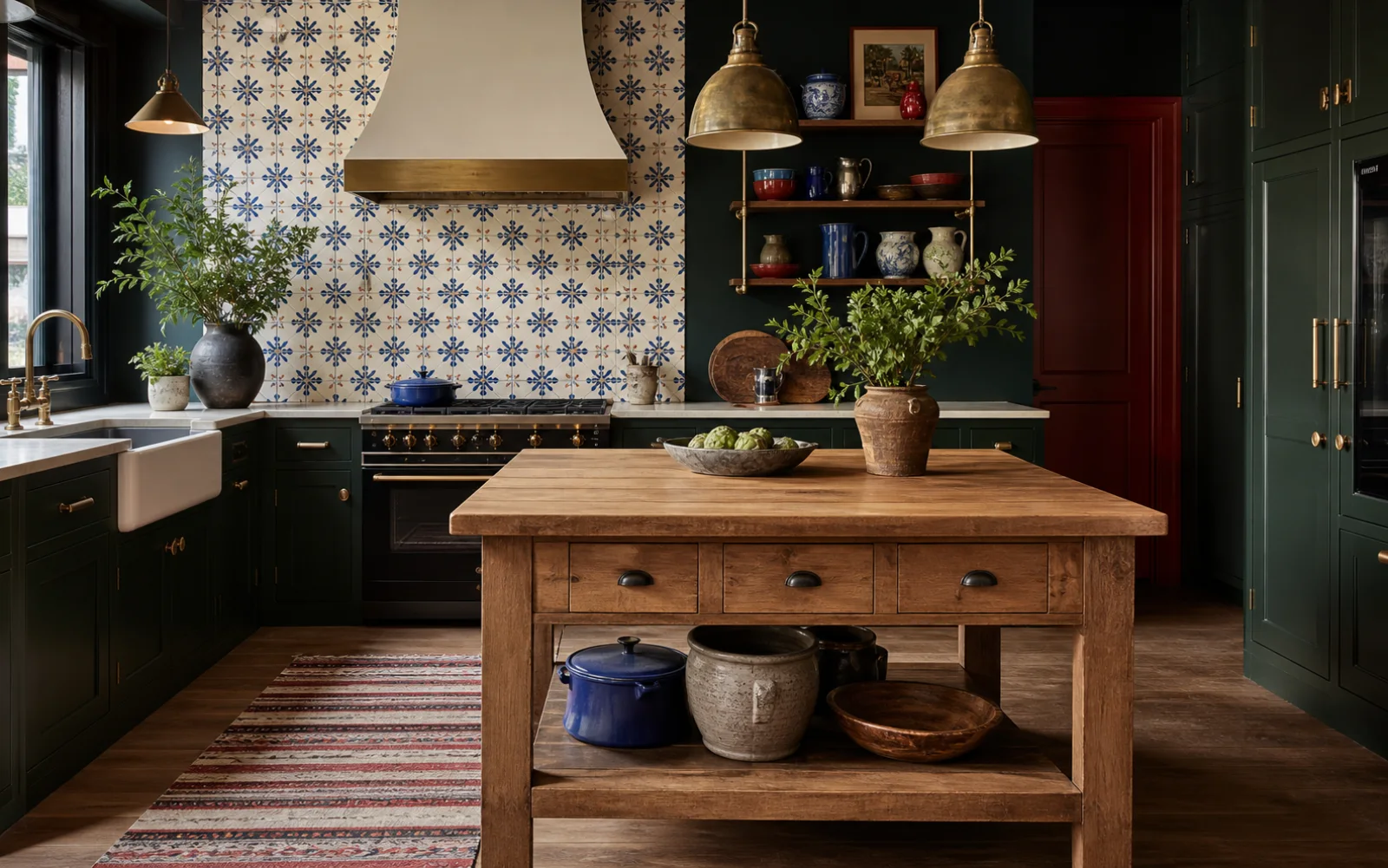
Confine strong tile to the backsplash, repeat its colors in ceramics and preserve uncluttered preparation space.
Choose one panoramic wall, group smaller art separately and keep the arrival path free of display furniture.
Choose three main colors from the anchor piece, assign one to the largest surface or furniture item, repeat the others at different scales and retain a few natural or pale pauses.
A deep blue that can connect wallpaper, ceramics, upholstery and rug details.
Adds warmth through velvet, lacquer or a recurring thread in patterned textiles.
A dark architectural anchor for cabinetry or one large piece of furniture.
A bright but earthy accent best repeated in curtains, stripes and small art notes.
Natural grain gives dense color schemes a consistent, useful foundation.
A narrative botanical or scenic print can supply the palette and the room’s most detailed scale.
Solid pile creates visual weight while a stripe separates multiple organic patterns.
Repeated glaze colors turn varied vessels into a readable collection rather than shelf clutter.
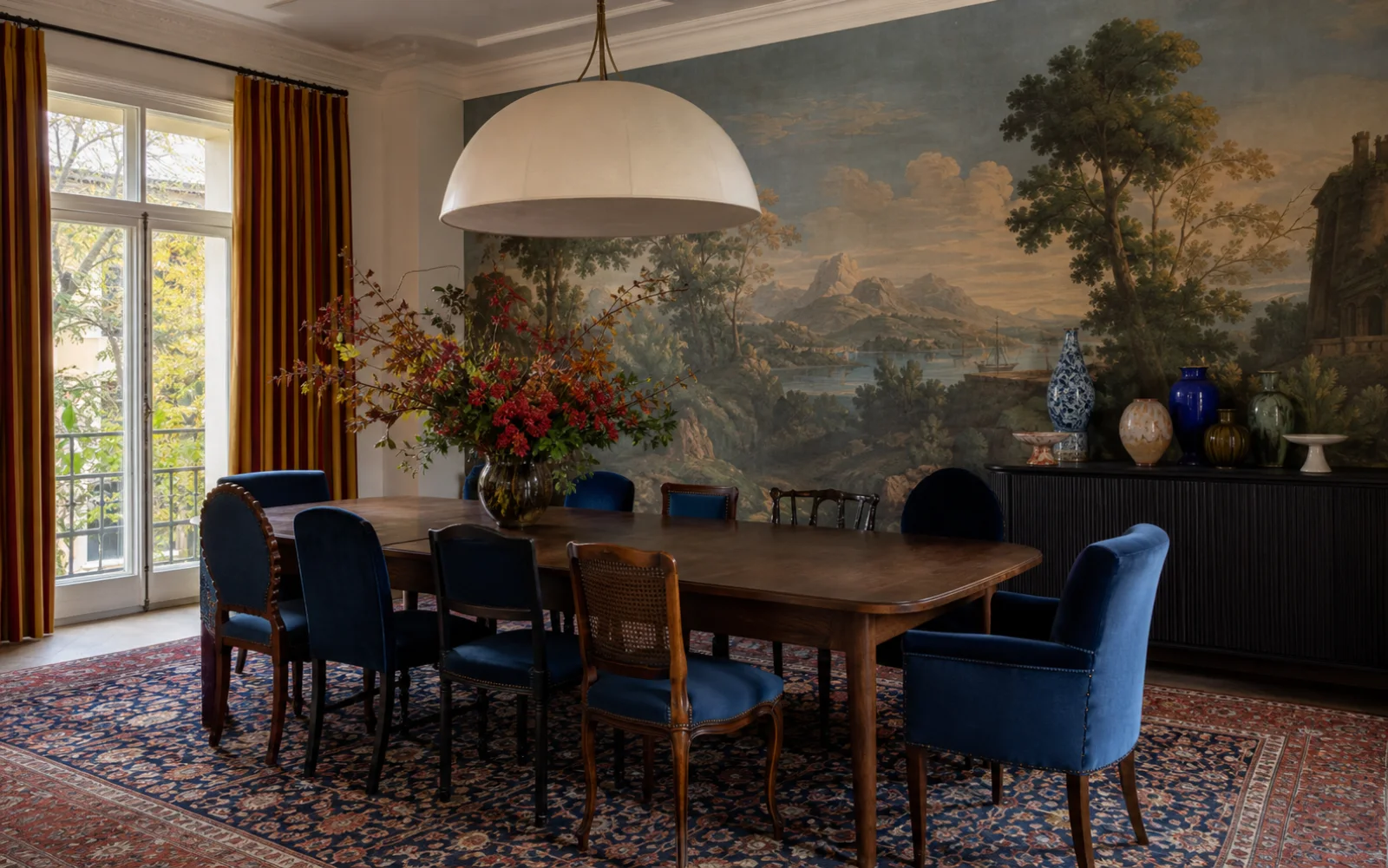
Durable natural materials ground scenic walls, mixed chairs and saturated curtains.
Maximalism grows best from a rule set. Define the story, palette and zones first; additions then strengthen a composition instead of merely increasing its density.
Begin with one meaningful rug, artwork, textile or collection and identify its three strongest colors.
Use one large pattern, one medium geometric or stripe and small texture in cushions or objects.
Group art and objects by theme, color or frame relationship and leave a visible boundary around each group.
Clear pathways, worktops, switches, doors and comfortable seating before adding the final decorative layer.
When the room feels wrong, change the underlying decision before adding more decor.
Extract three recurring colors from one anchor and remove accents outside that family.
Keep one dominant large pattern, introduce a medium stripe and use small motifs sparingly.
Group similar objects, vary height within the group and leave shelf space around its edges.
Move display away from work surfaces, circulation and storage access.
Maximalism overlaps with eclectic and expressive styles, but its defining skill is managing visible abundance through repetition, scale and grouping.
More broadly mixed and often quieter, combining periods and sources without requiring visible abundance.
Choose maximalism when layering, collection display and pattern density are central to the experience.
Multiple coordinated layers replace the more selective eclectic mix.
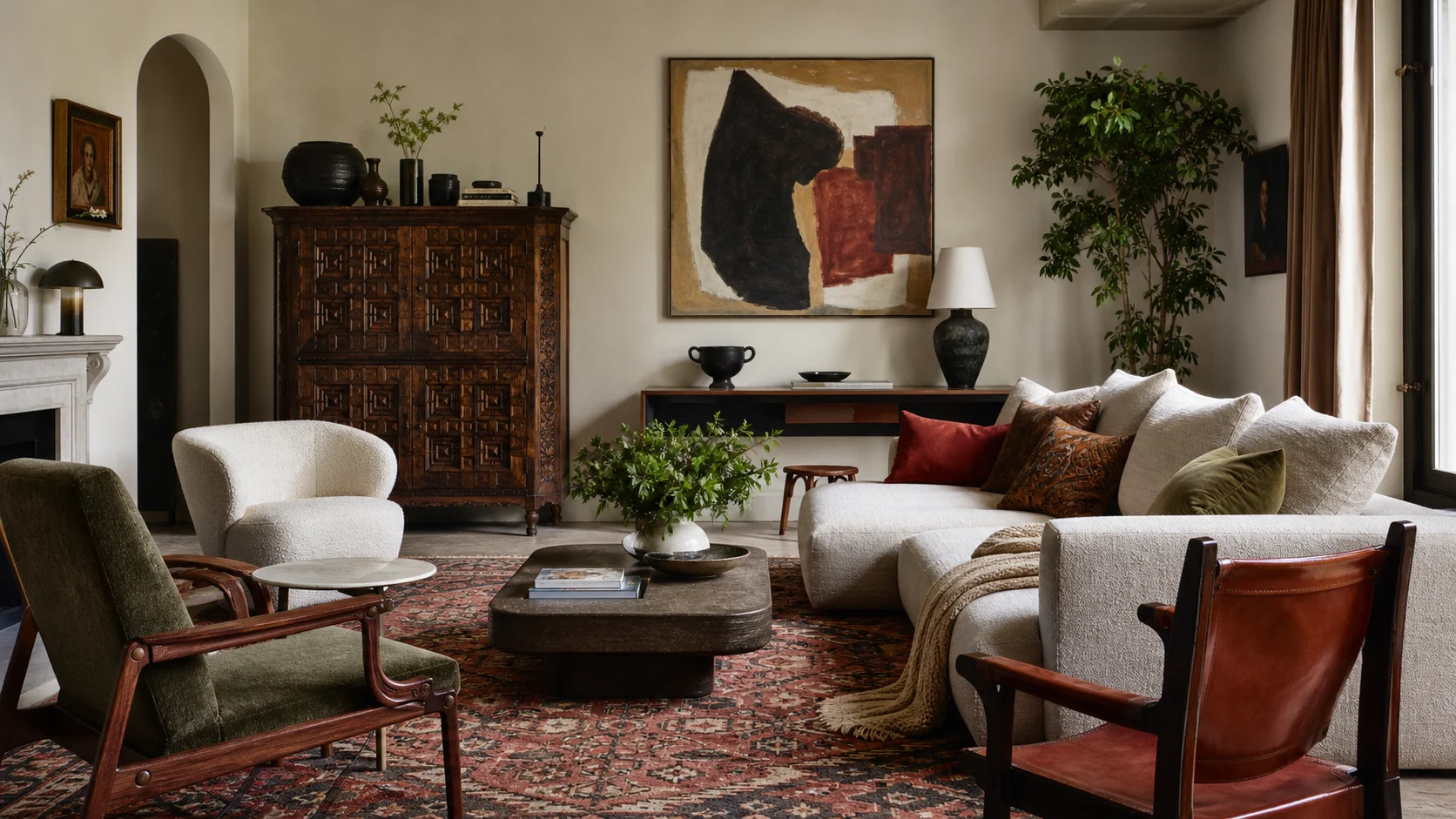
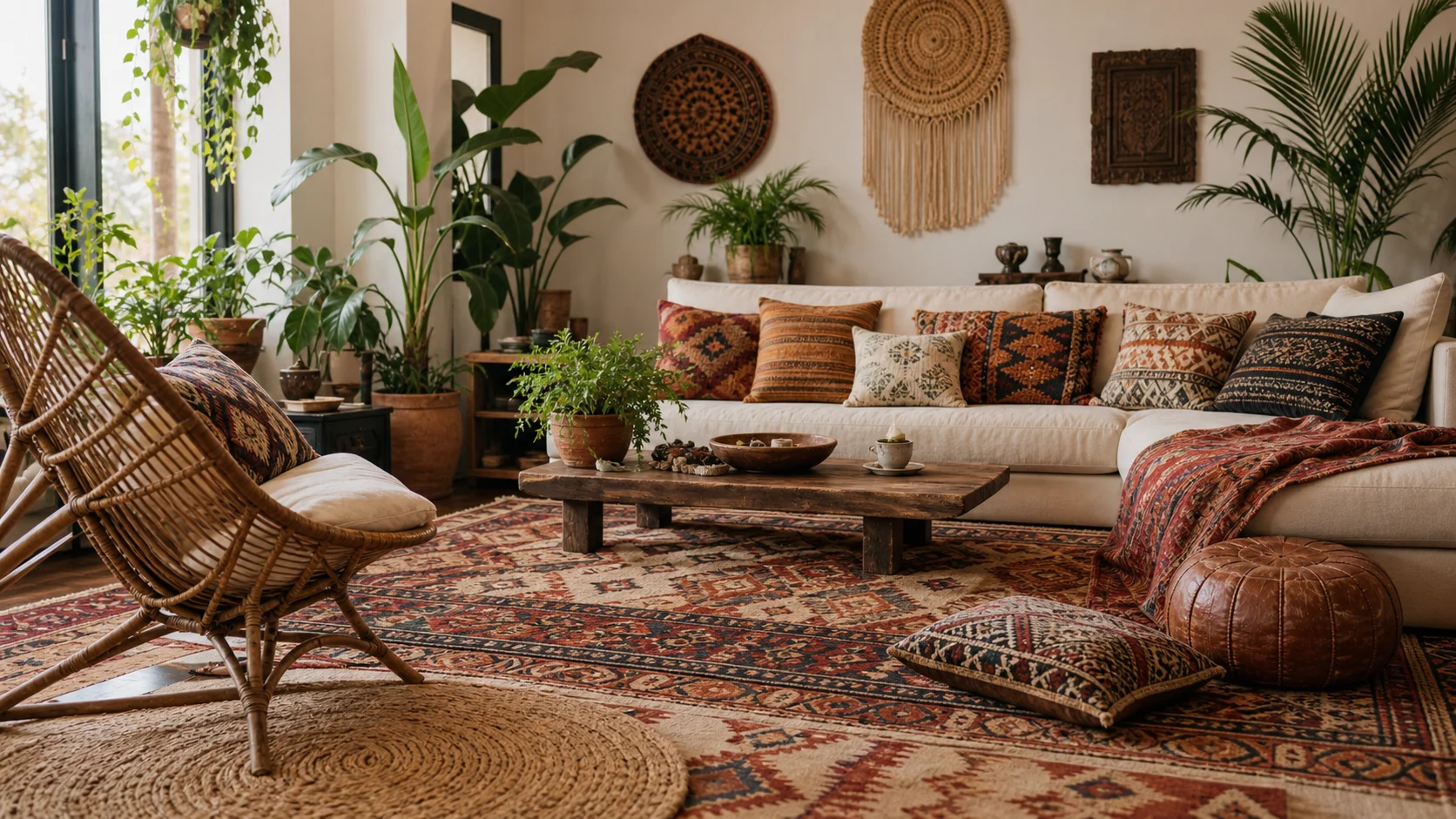
More relaxed, handmade and globally layered through natural fiber, low furniture and informal arrangement.
Choose maximalism for stronger color control, formal display and freedom beyond a bohemian material language.
Gallery composition and saturated paint can replace the casual craft-led base.
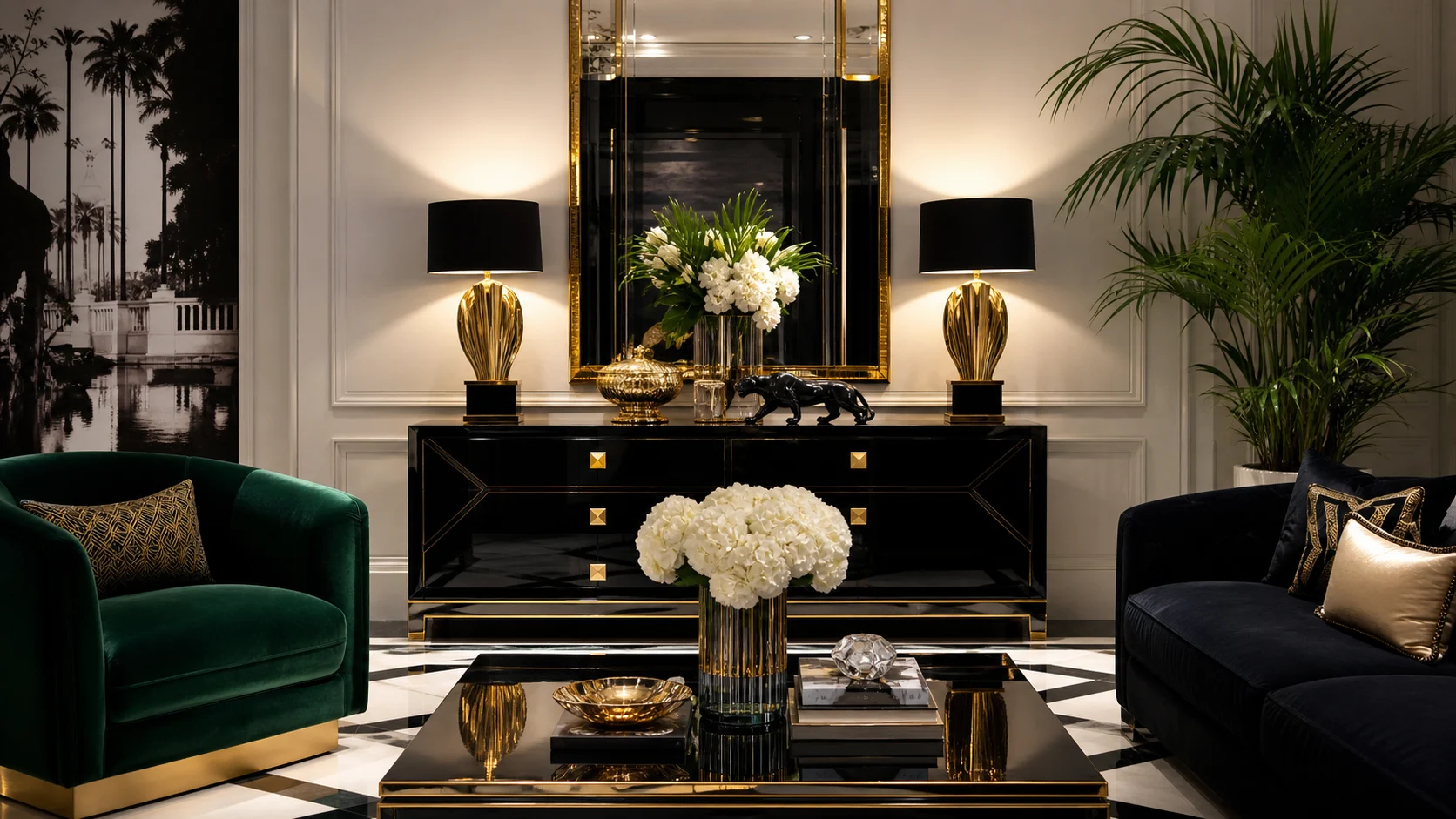
More theatrical, glossy and edited around high-contrast glamorous focal scenes.
Choose maximalism when personal collections and broad pattern mixing matter more than polished drama.
Narrative accumulation replaces lacquer-and-mirror staging.
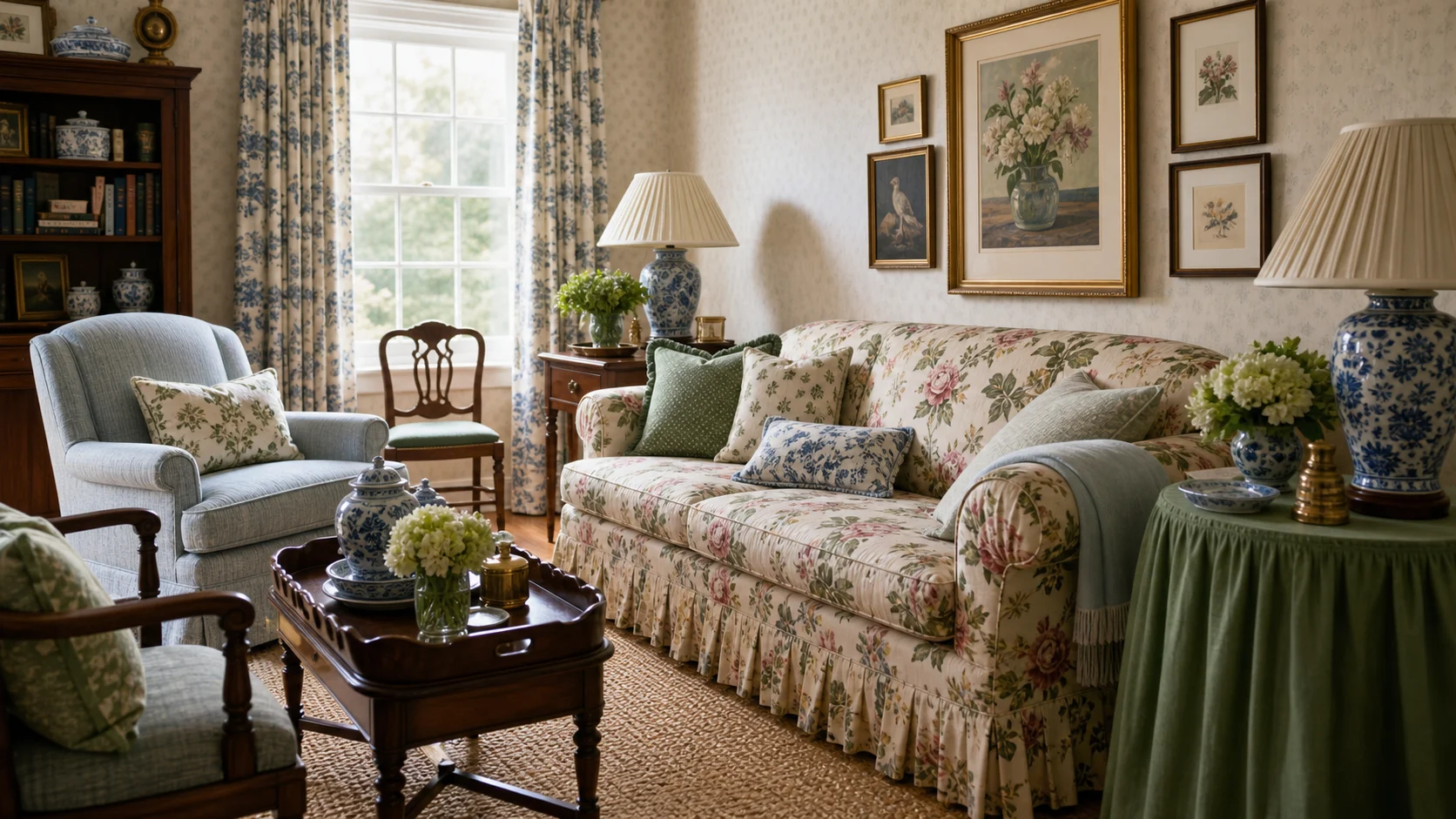
More specifically rooted in traditional florals, antiques, needlepoint and nostalgic domestic references.
Choose maximalism for wider historical and cultural freedom and bolder scale shifts.
Contemporary art and unexpected color can join traditional material without a nostalgic rulebook.
Add pieces that extend the story or solve display and storage. A large anchor usually improves the room more than several small decorative purchases.
A generous saturated block gives complex walls, pillows and rugs a stable visual base.
Choose a print with several usable colors and enough scale to be read from across the room.
One immersive image can deliver depth while reducing the need for multiple small wall objects.
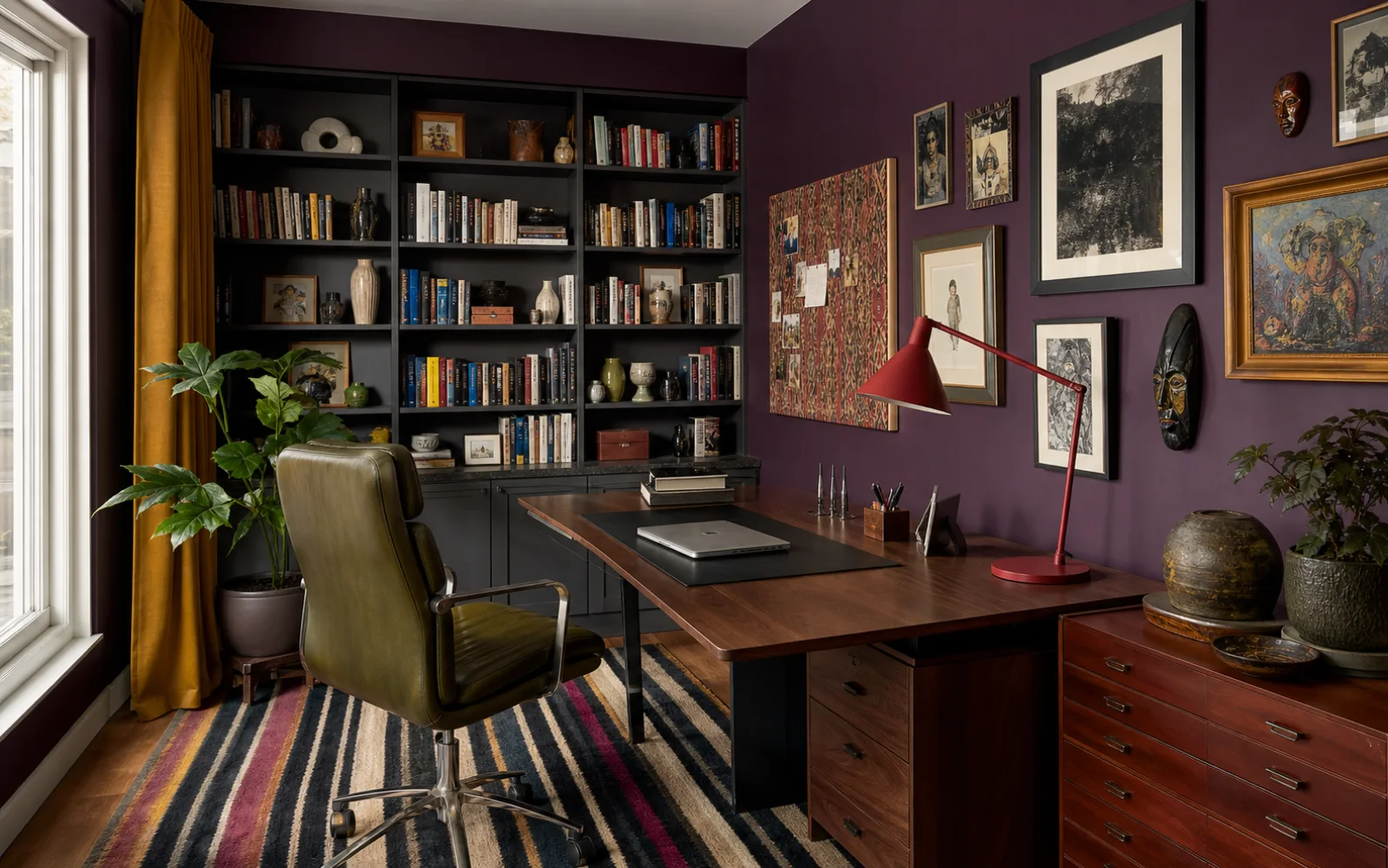
Mix adjustable shelving with closed lower storage so real collections remain organized.
A calm, durable timber surface gives patterned tile and colorful ceramics a neutral working center.
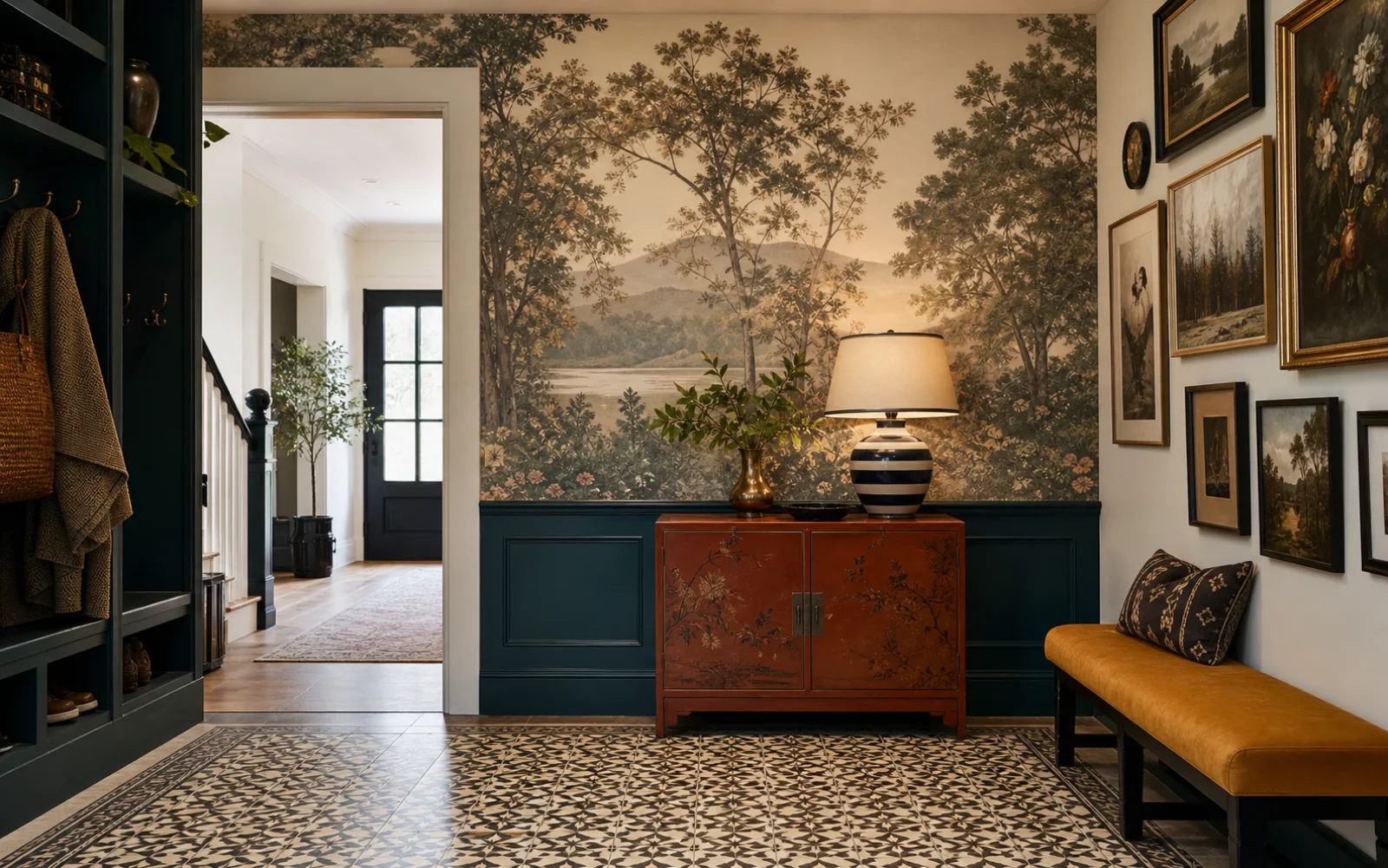
A strong color and useful closed storage earn the piece a place beneath a dense focal wall.