Walnut panel bed
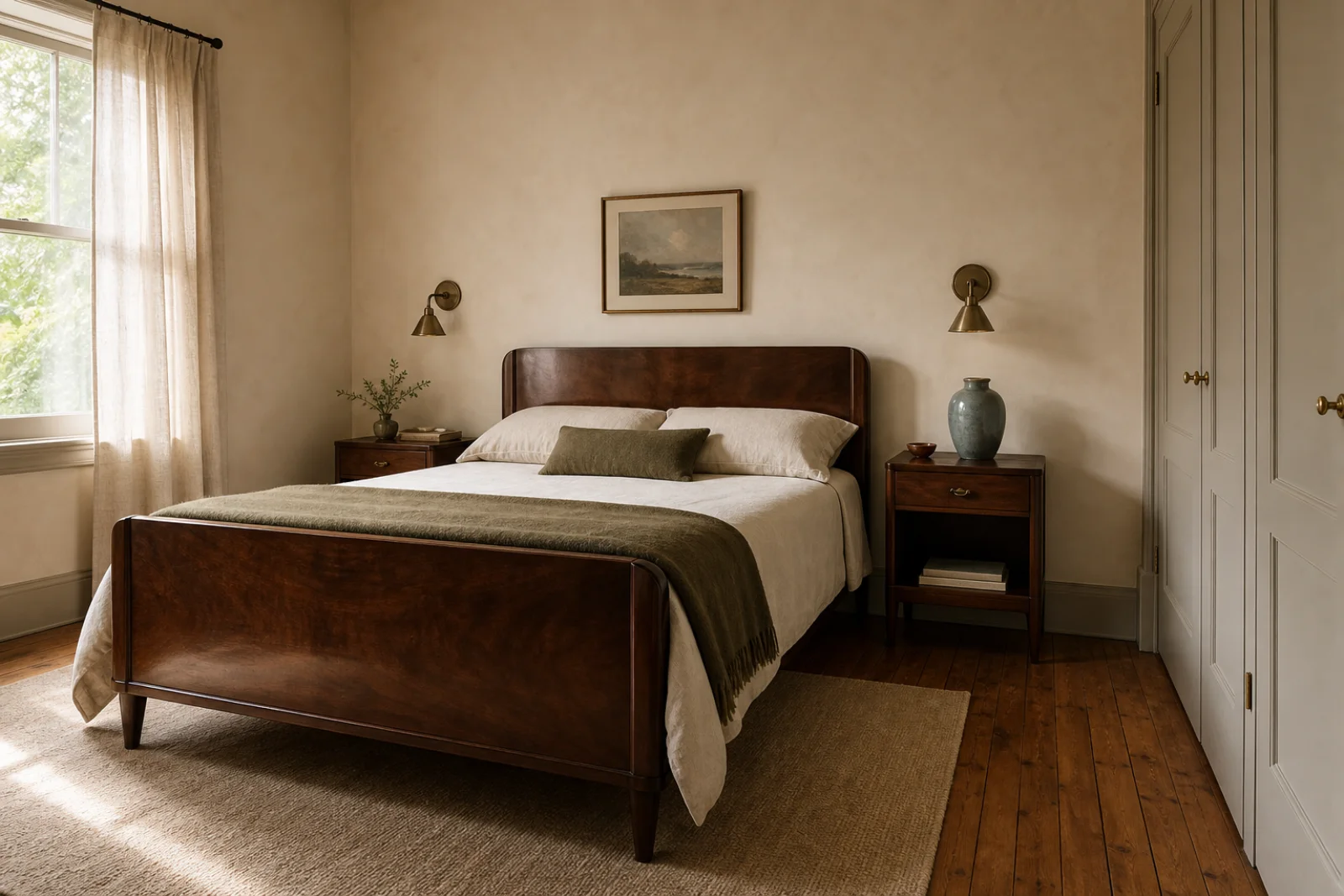
Confirm frame rigidity, mattress size and finish condition; budget for professional veneer work if edges are lifting.
One anchor era, repairable furniture and quiet modern support turn old pieces into a coherent present-day home.
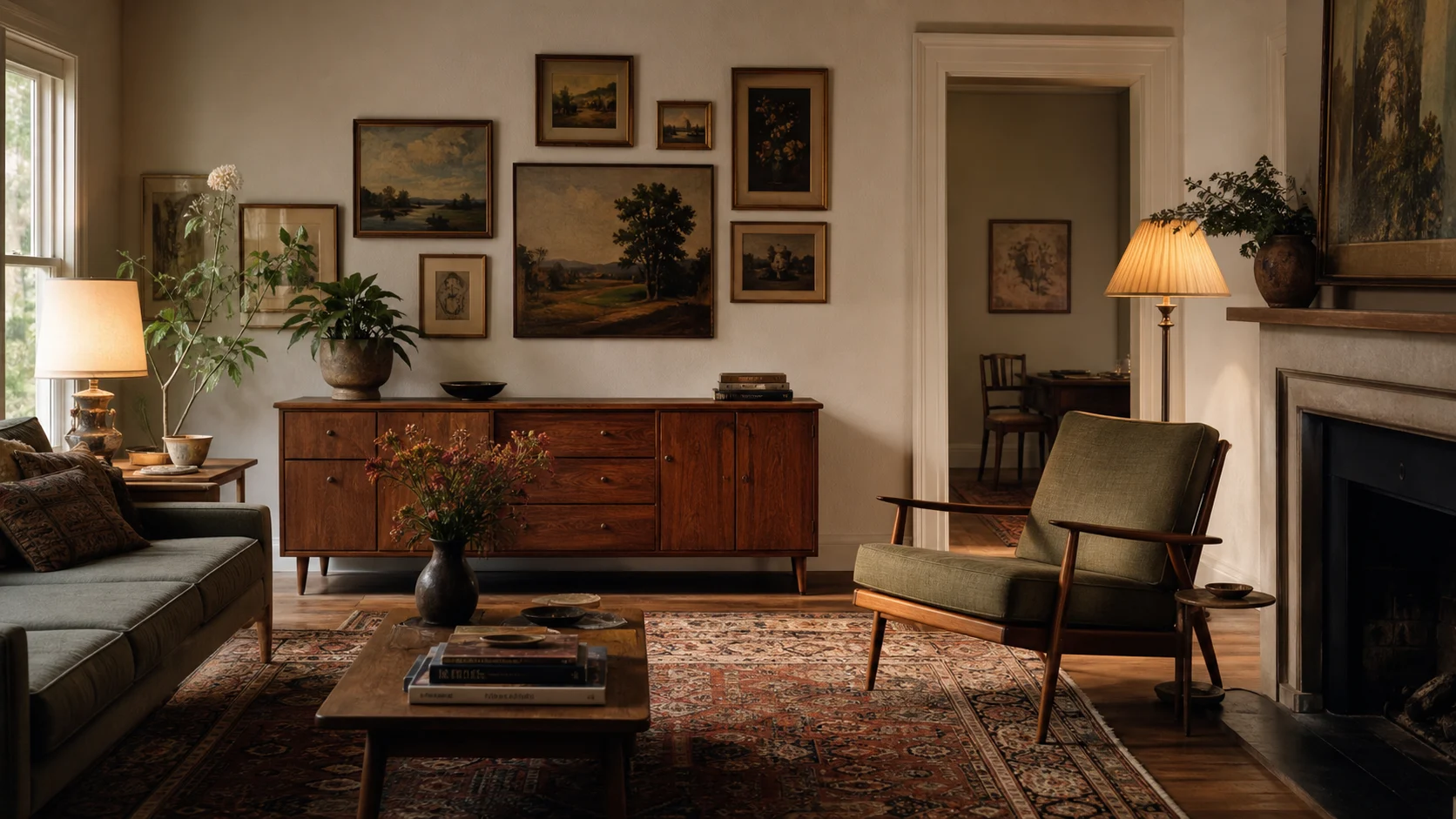
Vintage interior design uses older furniture, lighting, art and textiles as working parts of a current home. It is not one historical style. Coherence comes from choosing a lead period, repeating its proportions and materials, then allowing a small number of earlier, later or contemporary pieces to support daily life.
Condition matters more than theatrical age. Faded color, softened brass and a repaired veneer edge can be valuable patina; loose joints, unsafe wiring and persistent odors are faults to address. The most convincing rooms integrate a good mattress, ergonomic chair and discreet appliances without forcing those essentials to impersonate the past.
Choose one anchor decade and allow most furniture to fall within roughly one generation around it.
Keep stable wear and color variation; repair loose joints, lifting veneer, wiring and compromised upholstery.
Let mattresses, task chairs, appliances and lighting performance be current while their visual presence stays quiet.
One era controls the major silhouettes while smaller pieces introduce limited contrast.
Structural work and gentle cleaning preserve more character than stripping every surface.
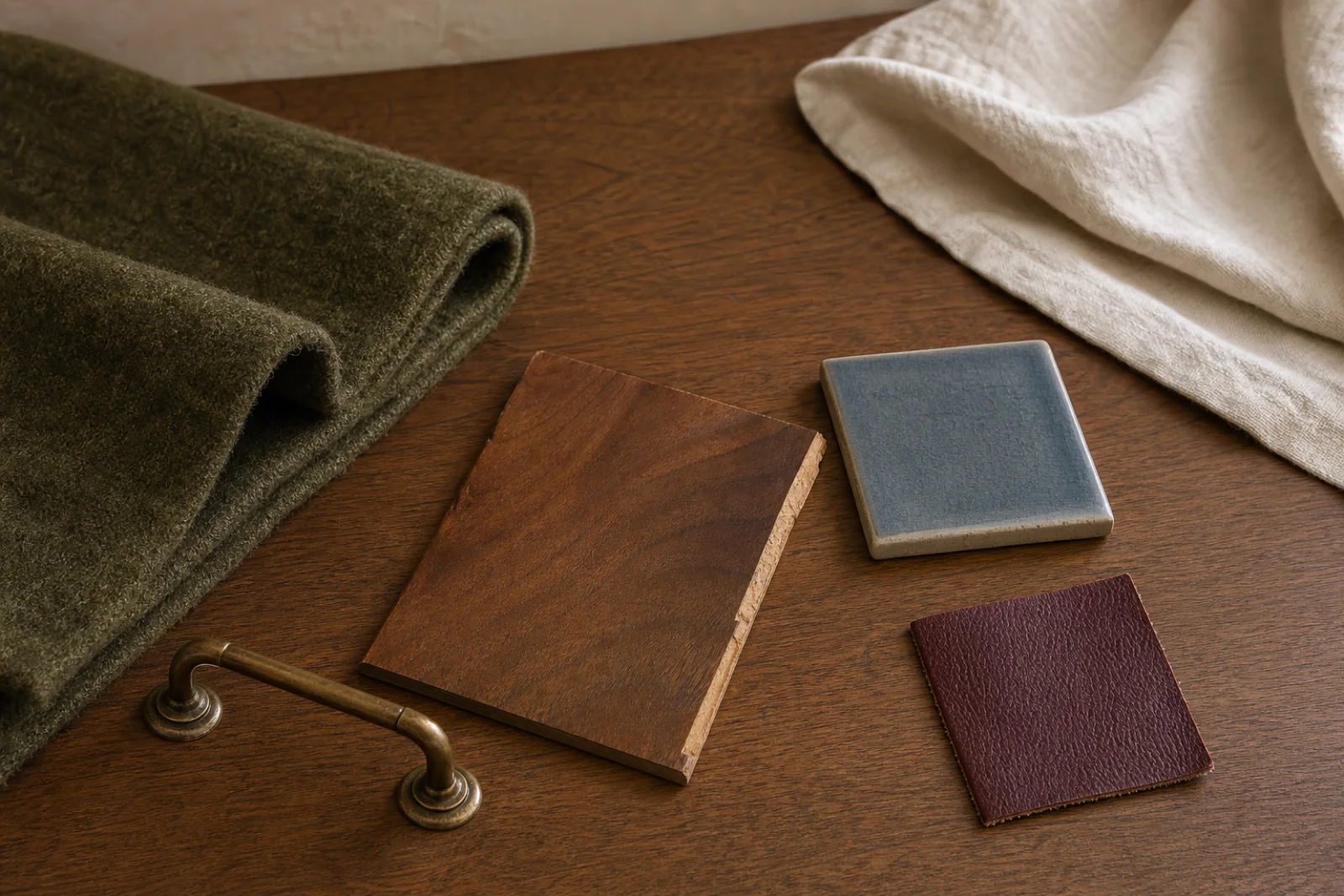
Olive wool, dusty ceramic and oxblood leather add depth without novelty retro palettes.
New storage, seating and technology solve present-day needs without competing for attention.
Choose one strong sofa, chair or sideboard as the period anchor, then give it clear space and contemporary reading light.
Pair a restored bed with a new mattress, plain linen and functional sconces; avoid buying a full matching bedroom suite.
Keep the best table and chairs from one period, then use quieter art, rug and pendant to prevent the room becoming a showroom.
Use a vintage desk only if depth and legroom work; add an ergonomic chair, discreet monitor and safe rewired task lamp.
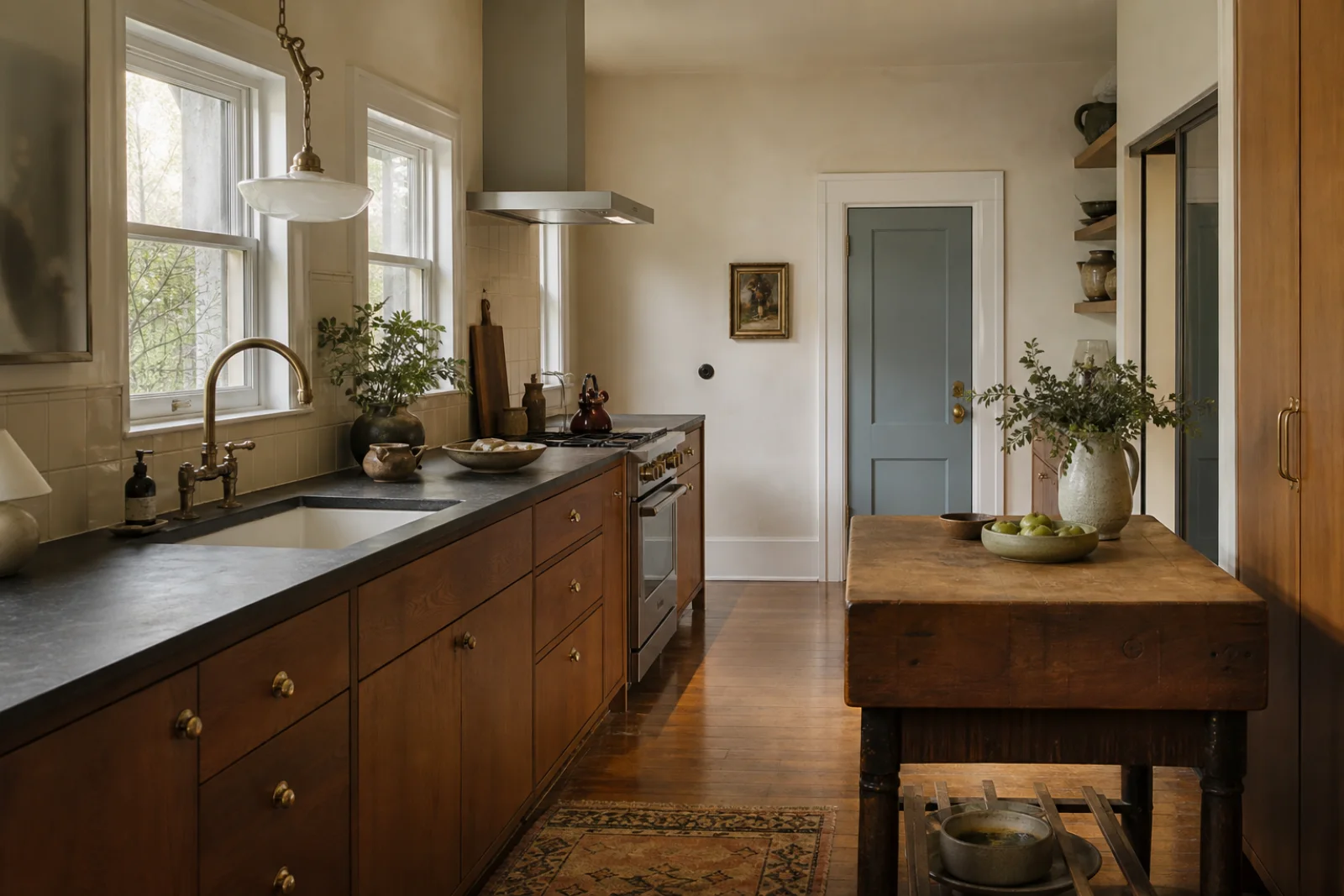
Retain useful cabinet proportions or a butcher table while modern appliances and work surfaces handle performance.
Let one restored chest provide real storage and use a slim new bench to preserve the path rather than filling the hall with finds.
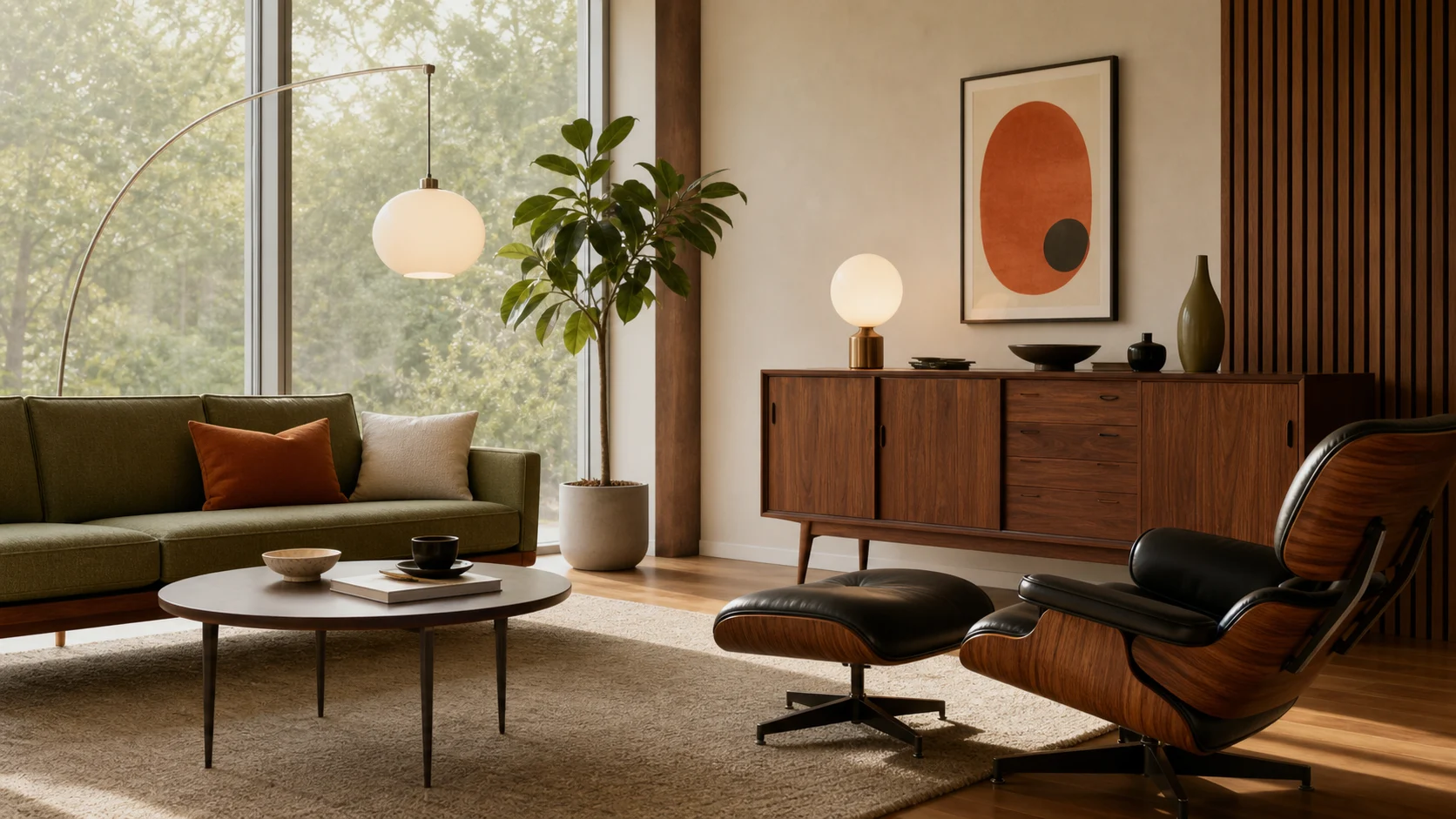
Use parchment as the quiet field and let one walnut family dominate the furniture. Olive can carry upholstery, dusty blue cools a smaller plane and oxblood should appear only once.
A warm wall and linen neutral that connects several wood ages without looking yellow.
The principal furniture tone, strongest on one table, bed, desk or case piece.
A grounded upholstery color that suits mid-century timber and older rugs.
A faded ceramic, painted door or bench note that cools the brown materials.
A small leather or glazed-ceramic accent for controlled depth.
Look for stable substrate and honest edge repair; minor color variation is preferable to lifting veneer.
Clean gently and rewire lighting where needed rather than polishing every surface to a new shine.
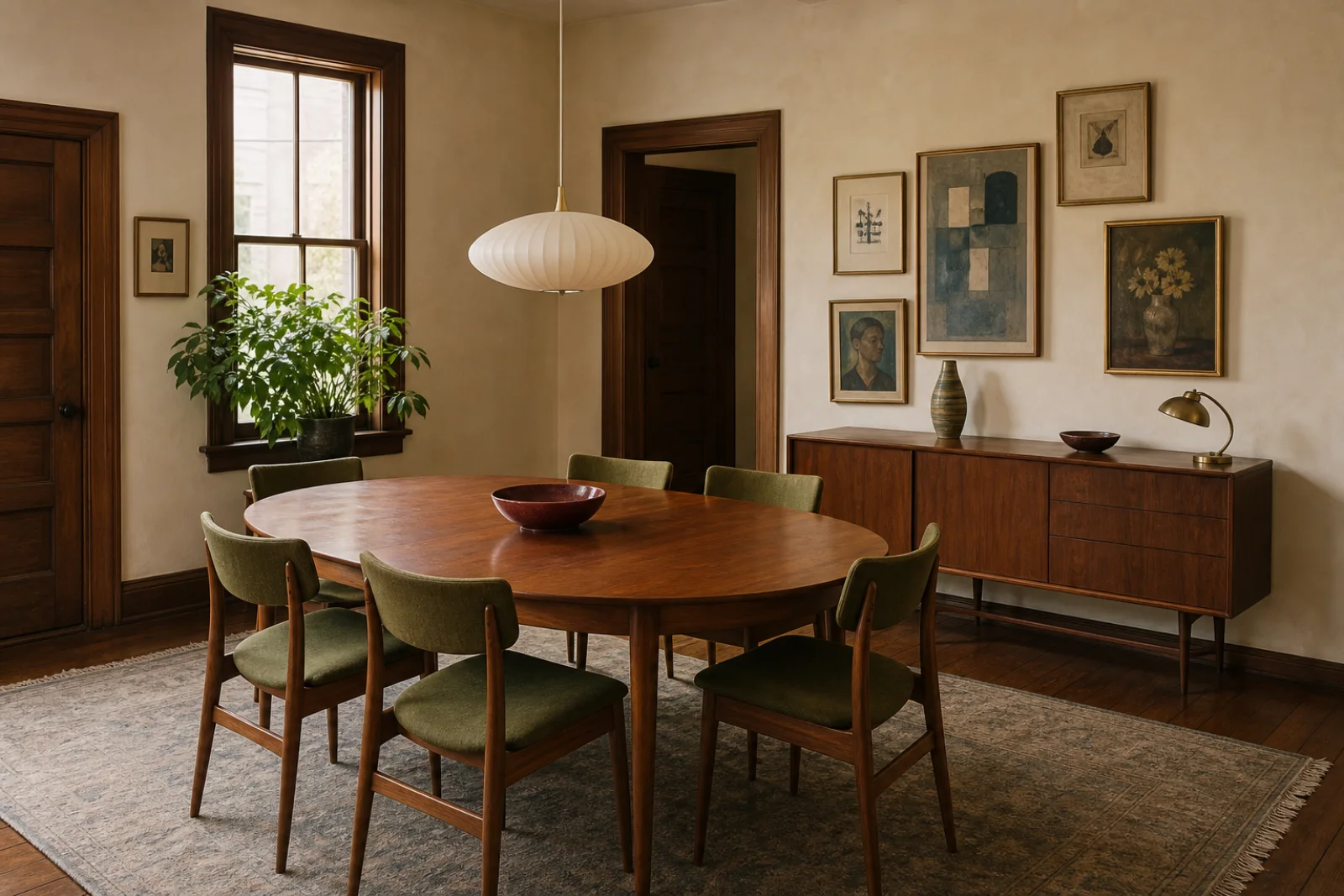
A durable way to refresh sound chair frames while retaining period-appropriate texture.
One muted vessel or tile note adds period color without turning shelves into a collection display.
Choose the anchor period, audit what must function today and restore one substantial piece first. Add contrast only after its proportions and palette are established.
Name the period that will control the main furniture silhouettes and wood tone.
Check joints, veneer, odor, wiring, upholstery and dimensions before budgeting for restoration.
Specify current comfort, storage and technology in forms that remain visually secondary.
Leave walls and surfaces partly open so every old object does not demand equal attention.
When the room feels wrong, change the underlying decision before adding more decor.
Choose one lead decade and repeat its timber tone, leg profile or upholstery scale.
Repair structural, electrical and hygiene issues while preserving stable cosmetic wear.
Add current comfort and technology without disguising every new necessity as antique.
Keep one edited group of objects and clear at least half of each display surface.
Vintage is an age-and-condition strategy rather than one decorative vocabulary. Its coherence depends on an anchor era, credible restoration and enough modern support to keep the home usable.
More historically and formally specific, centered on modernist furniture, clean geometry and postwar material innovation.
Choose Vintage for a looser mix where one mid-century anchor can coexist with earlier art and later practical pieces.
Layered provenance replaces strict modernist consistency.
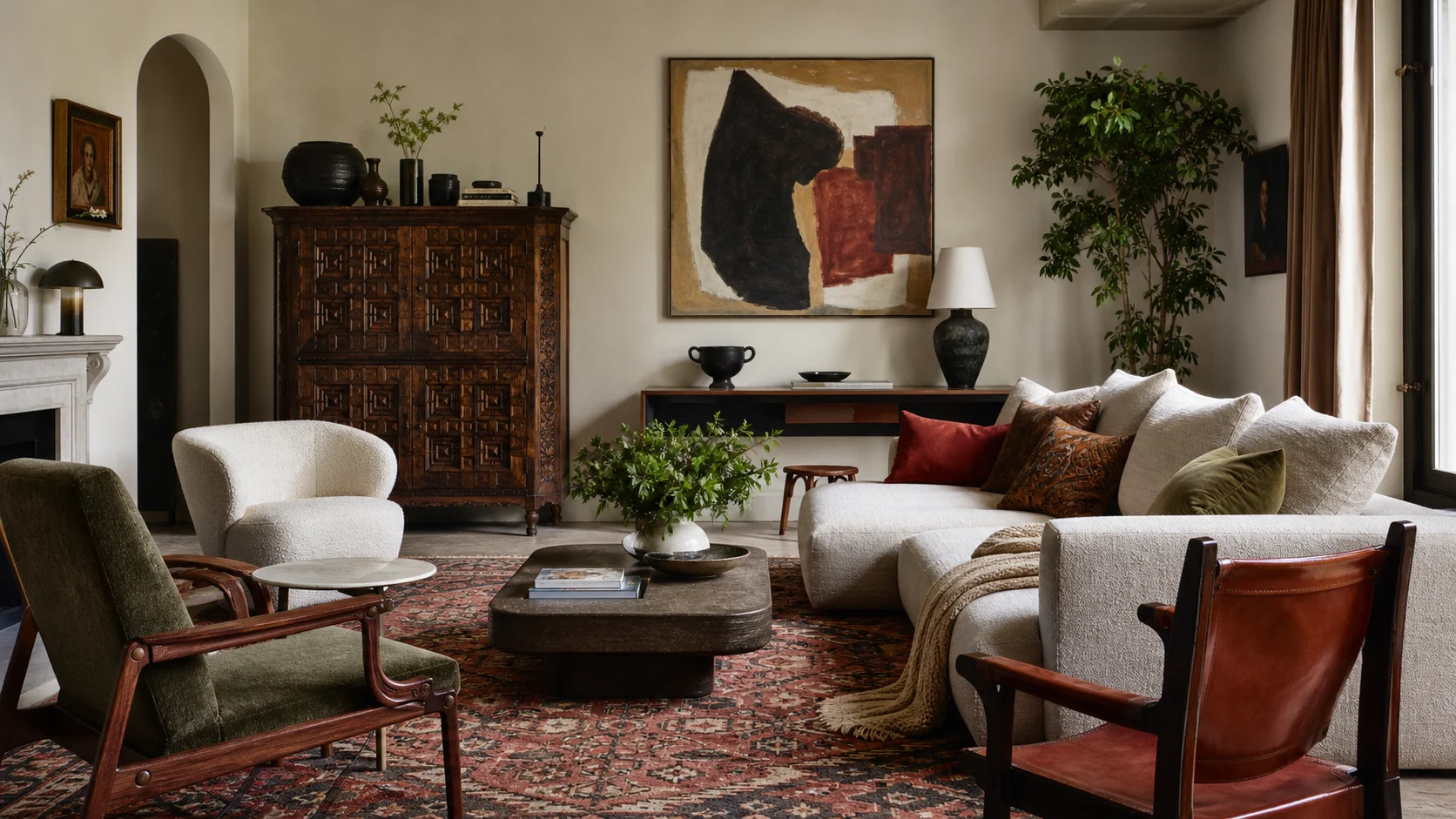
More deliberately contrast-driven, combining eras, colors and cultural references through personal composition.
Choose Vintage when age, restoration and period relationships matter more than stylistic contrast.
A narrow date range replaces broad visual collision.
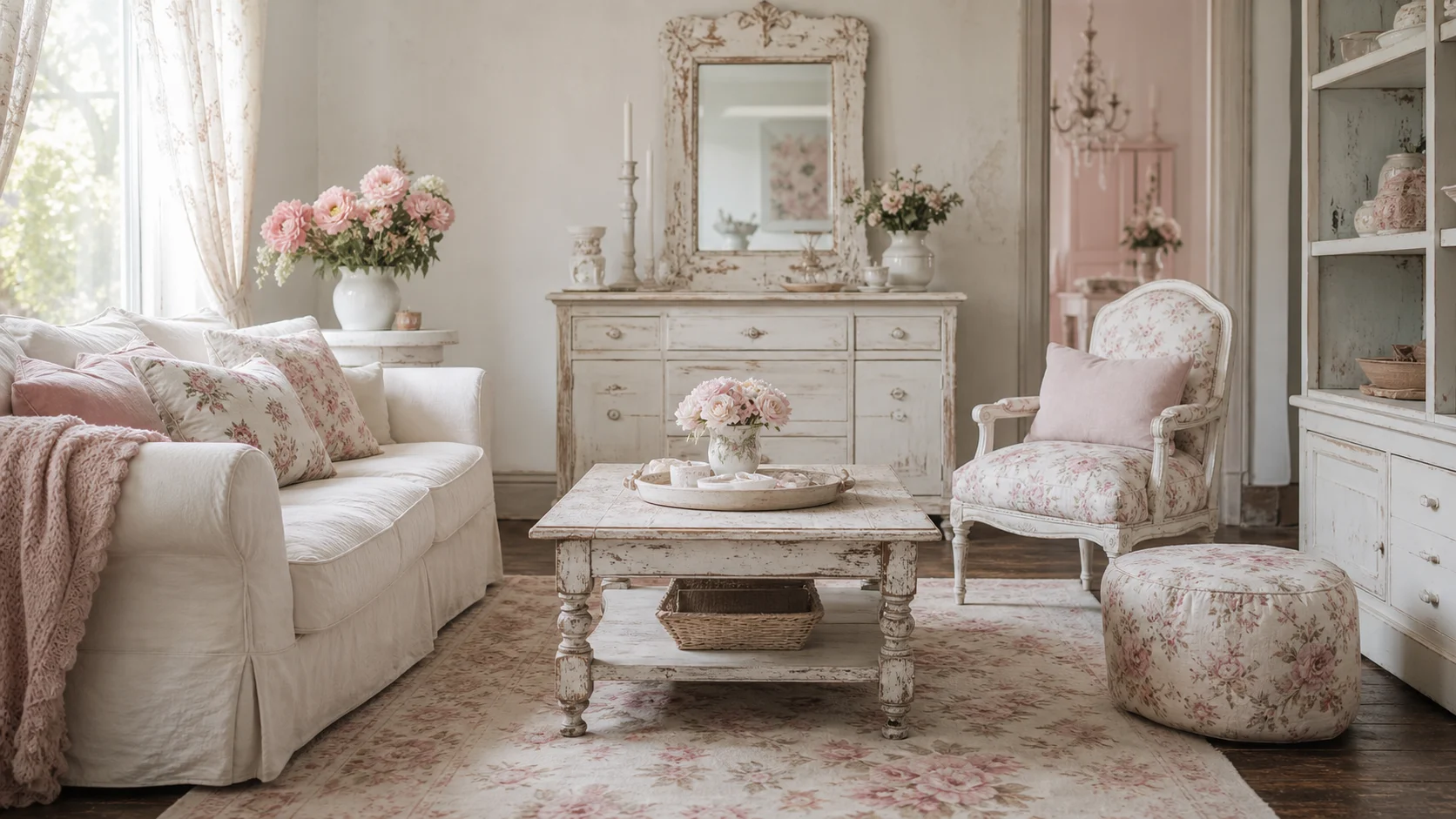
Paler and more romantic, favoring distressed white paint, loose linen, florals and intentionally faded surfaces.
Choose Vintage for richer original timber, clearer period forms and less decorative distressing.
Restored walnut replaces painted artificial wear.
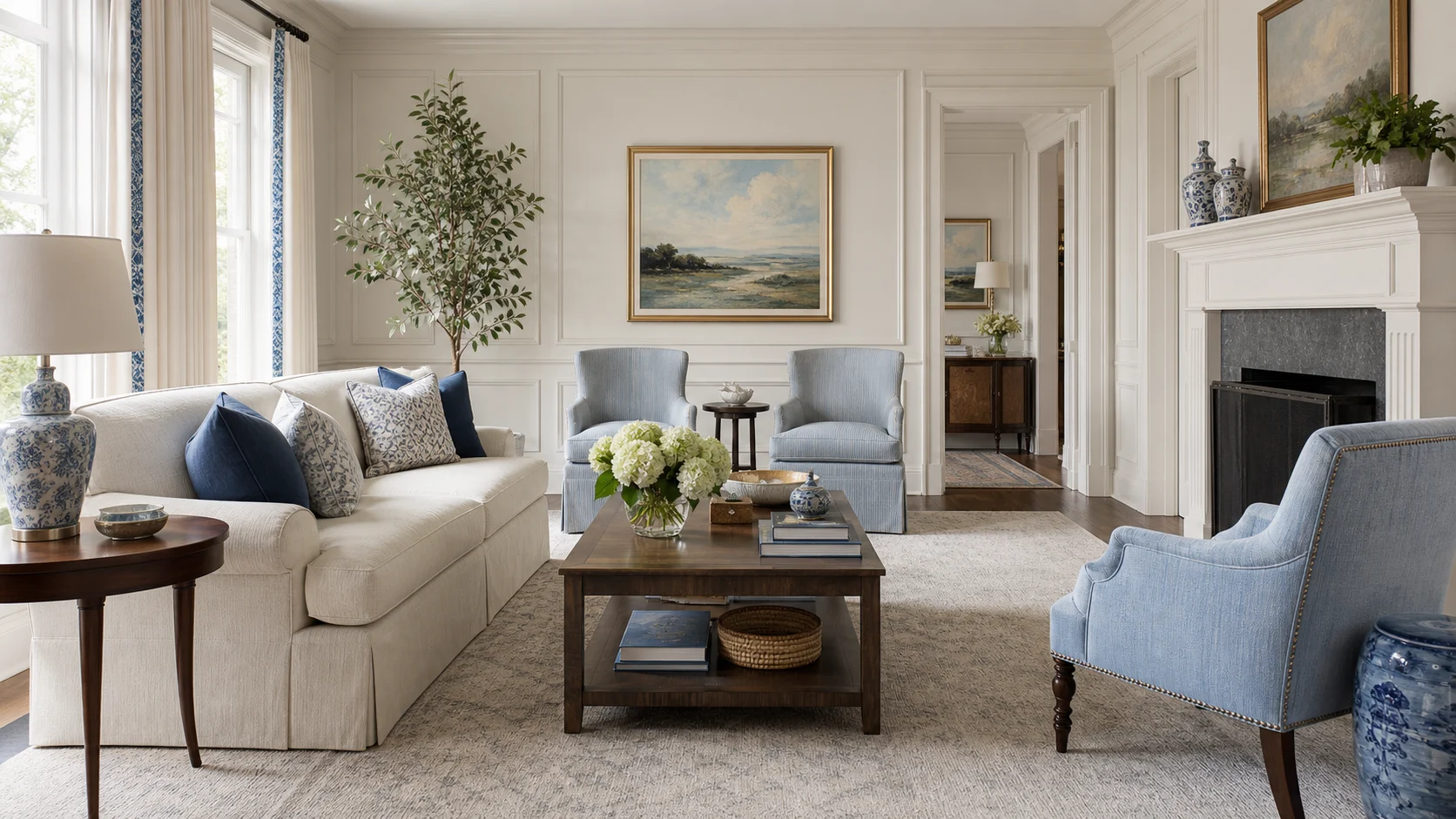
More tailored and current, updating familiar historical forms through sharper upholstery and controlled contrast.
Choose Vintage for actual age, irregular patina and a more visible story of repair.
Original material evidence replaces newly interpreted tradition.
Inspect construction and dimensions before romance takes over. Restoration cost, odor, wiring and missing parts can matter more than the asking price.
Confirm frame rigidity, mattress size and finish condition; budget for professional veneer work if edges are lifting.
Check working height, movement at the joints and whether the surface treatment is suitable for its intended use.
Inspect every chair joint and seat height; reupholster compatible frames together for visual continuity.
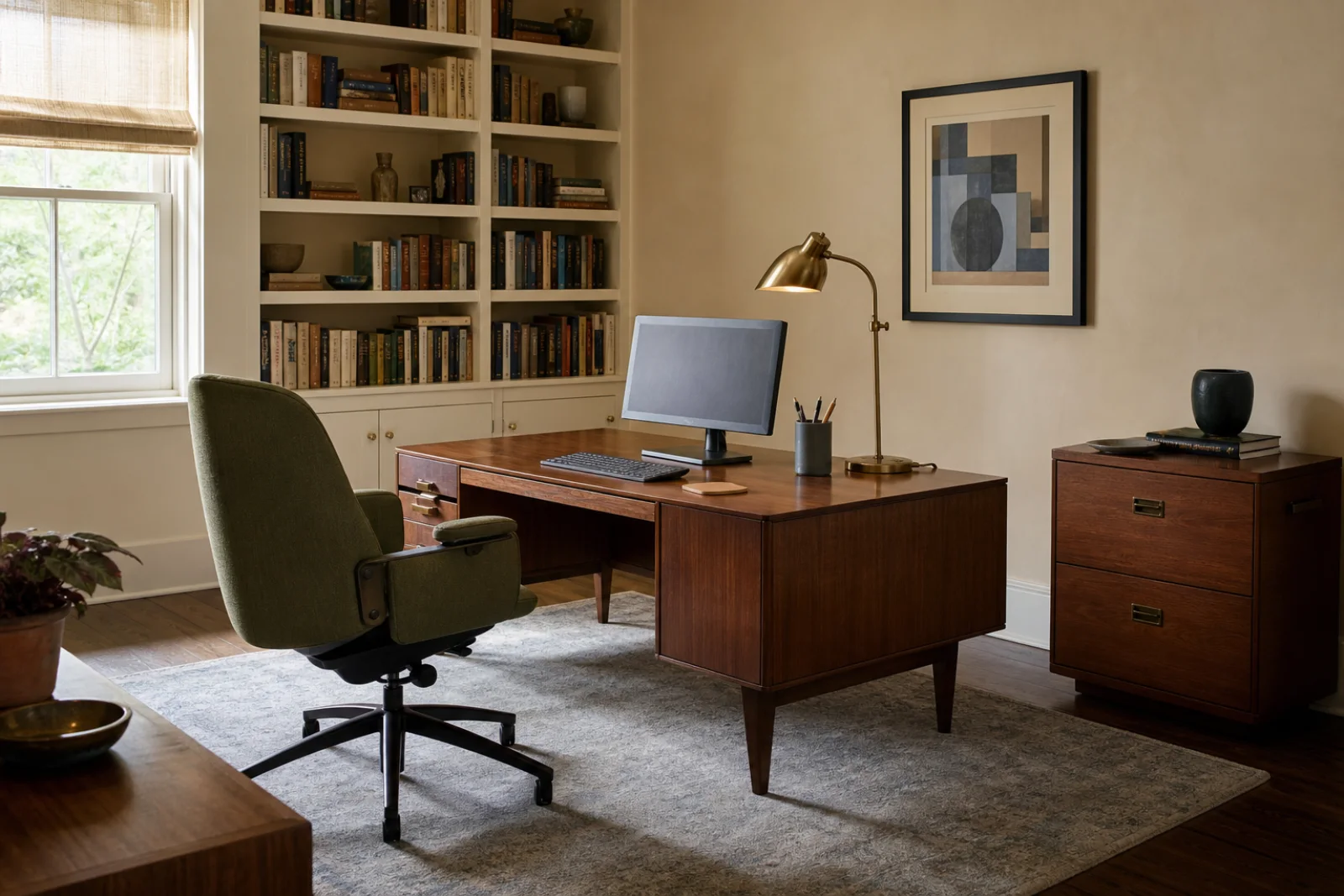
Measure knee space, monitor depth and doorway access before committing to a large restored piece.
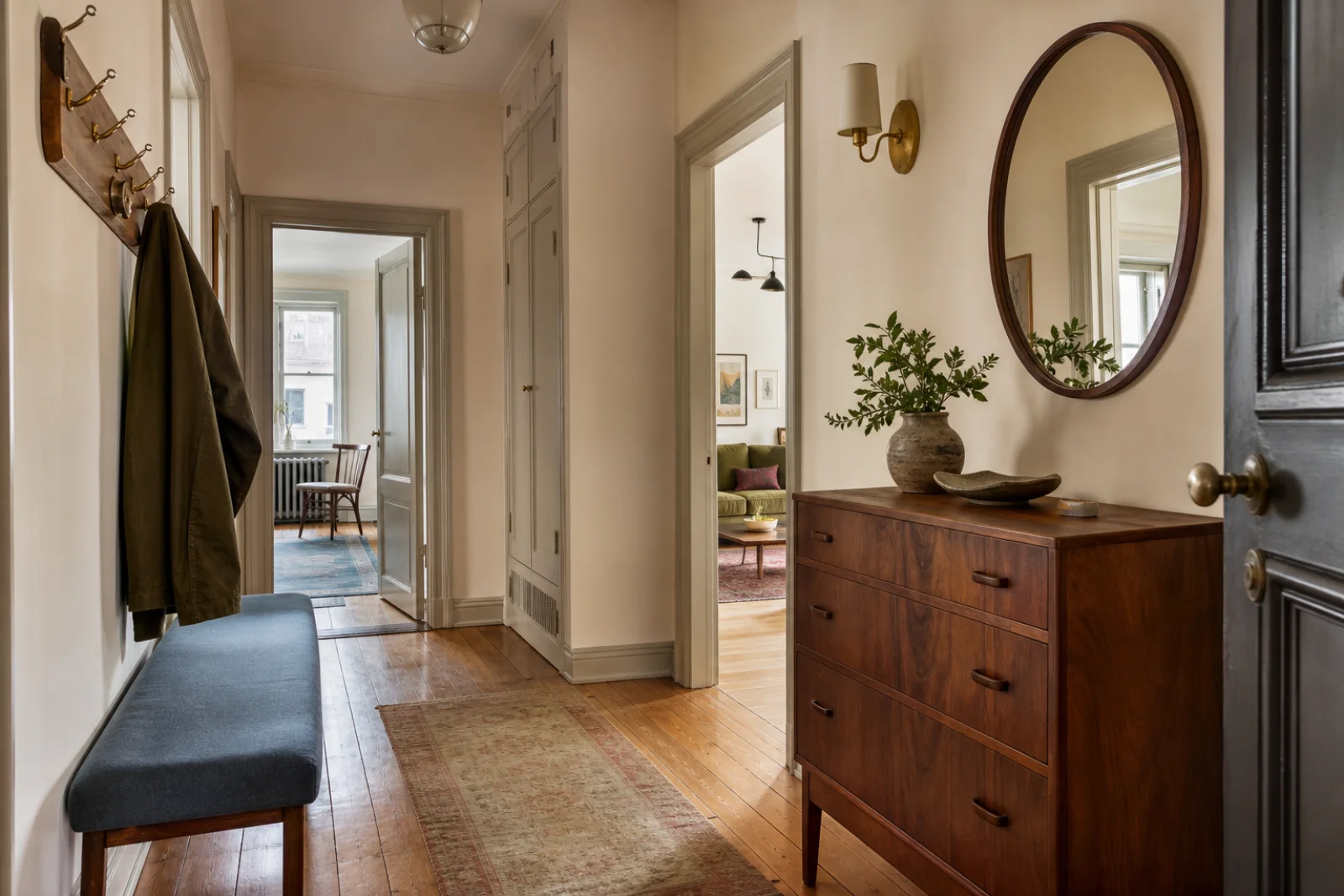
Test drawers, veneer and tipping stability; use discreet restraint hardware where safety requires it.
Compare wood, metal and textile samples under room light before selecting polish, repair tone or new upholstery.